/

Author

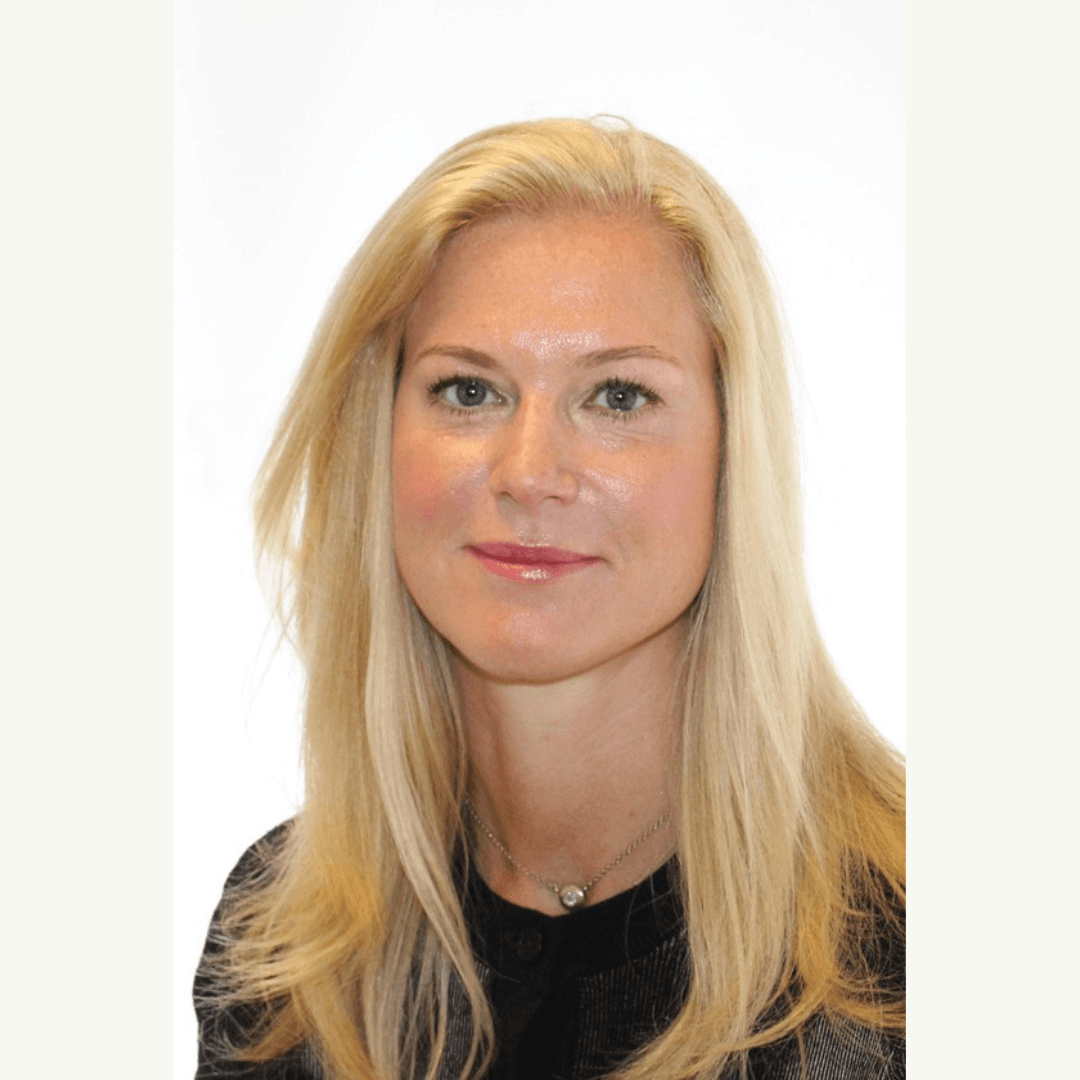
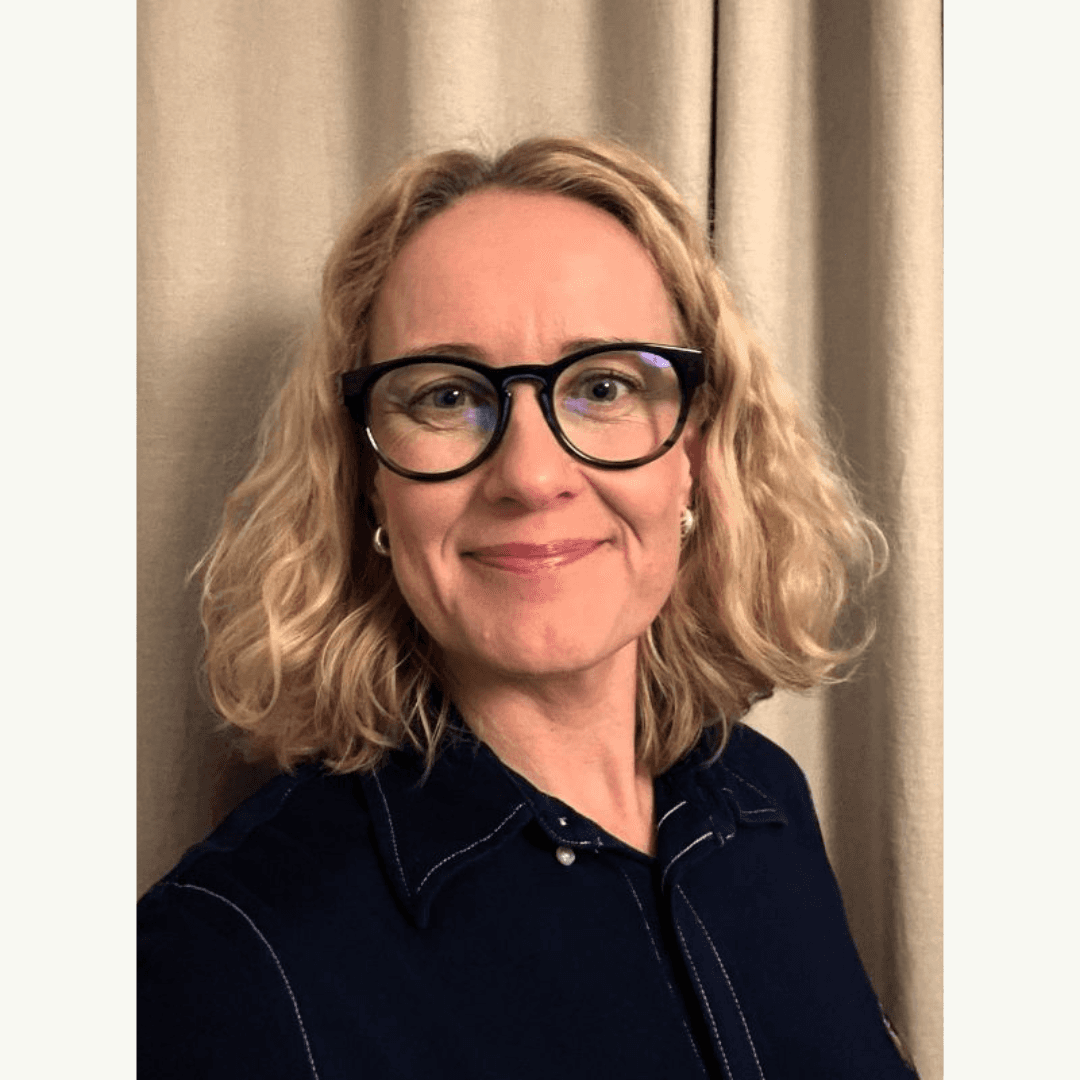
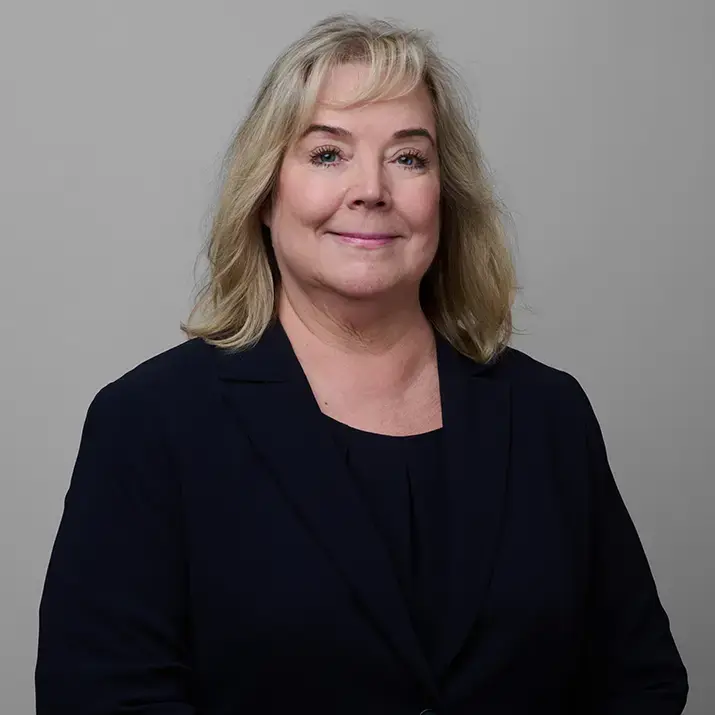
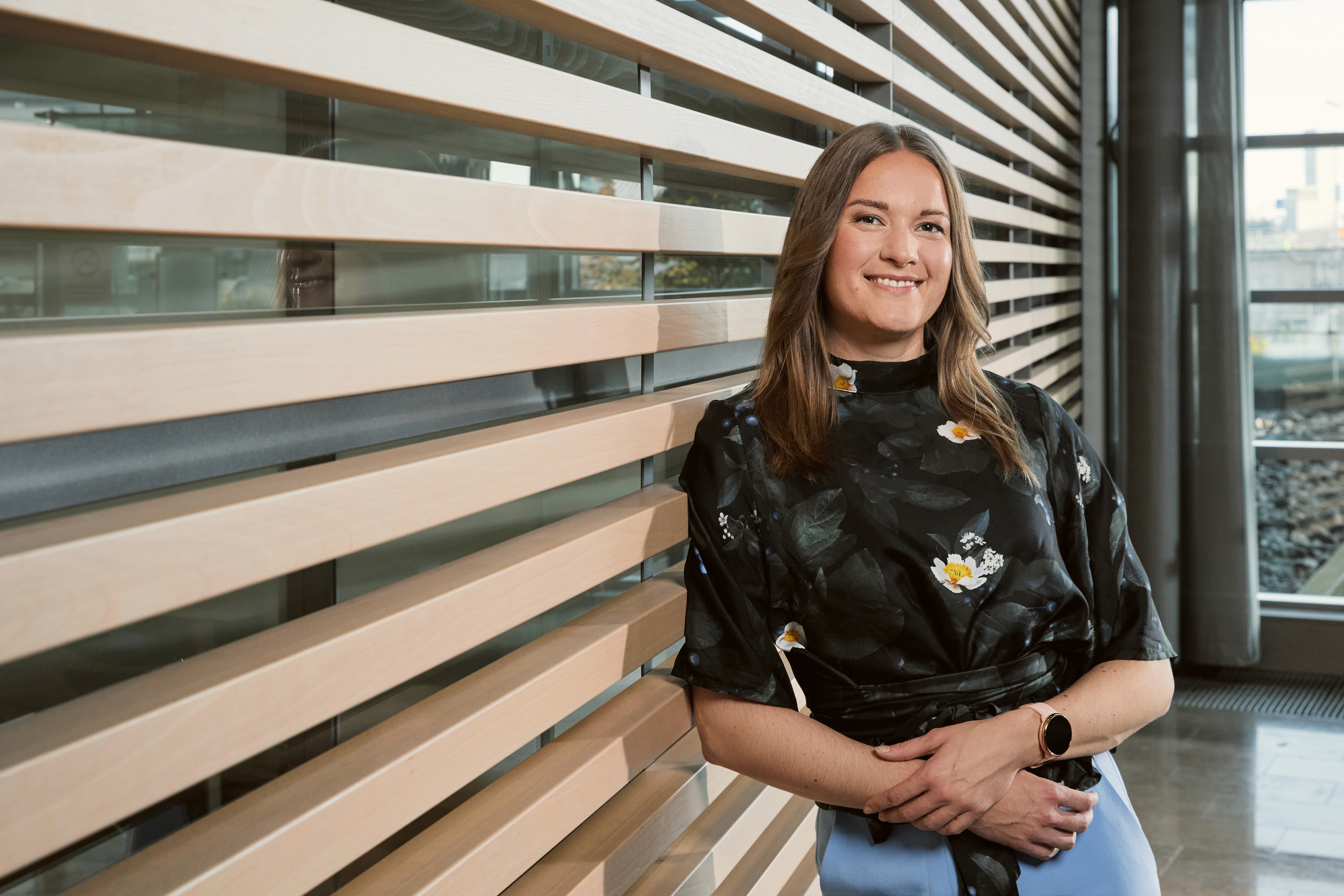
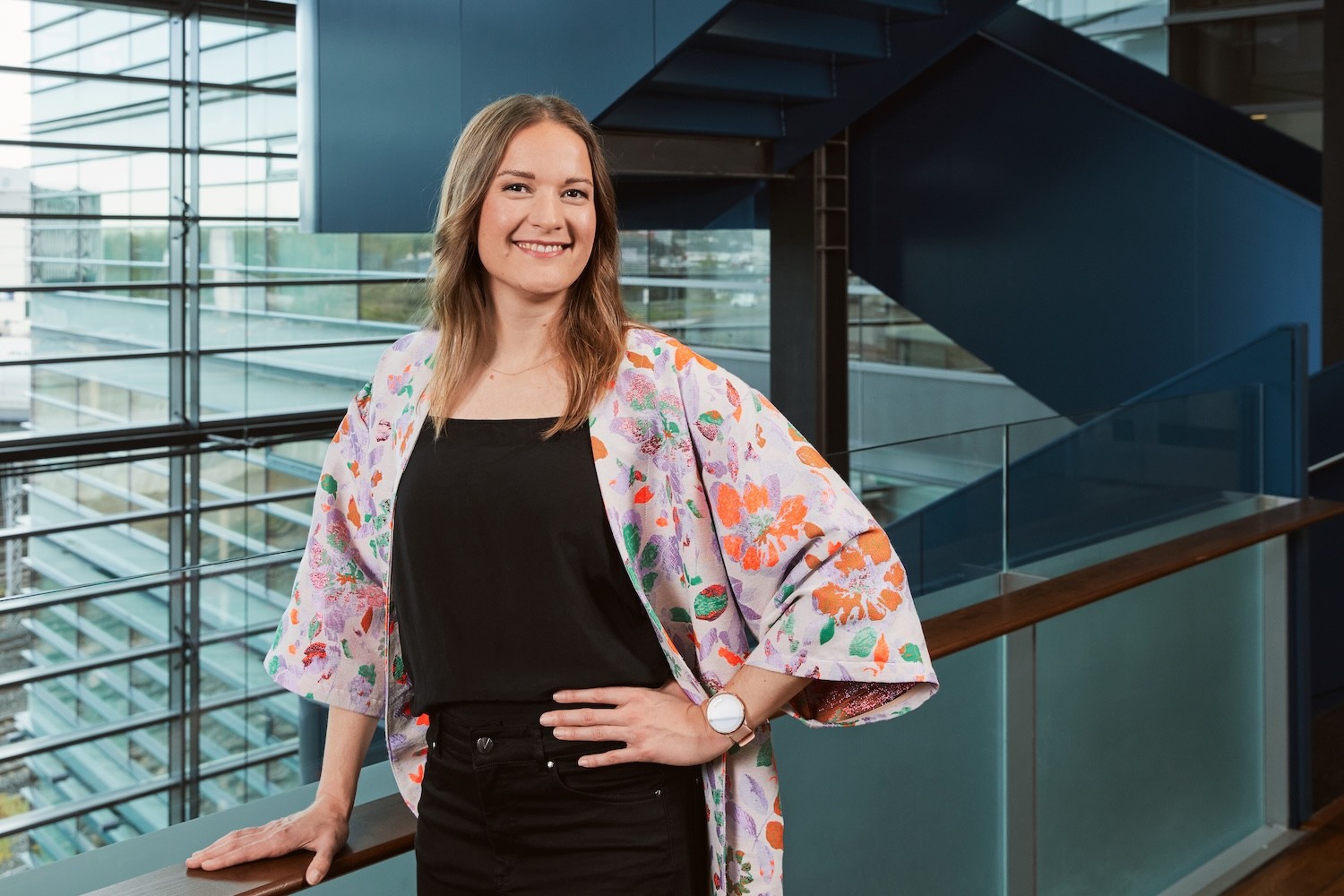
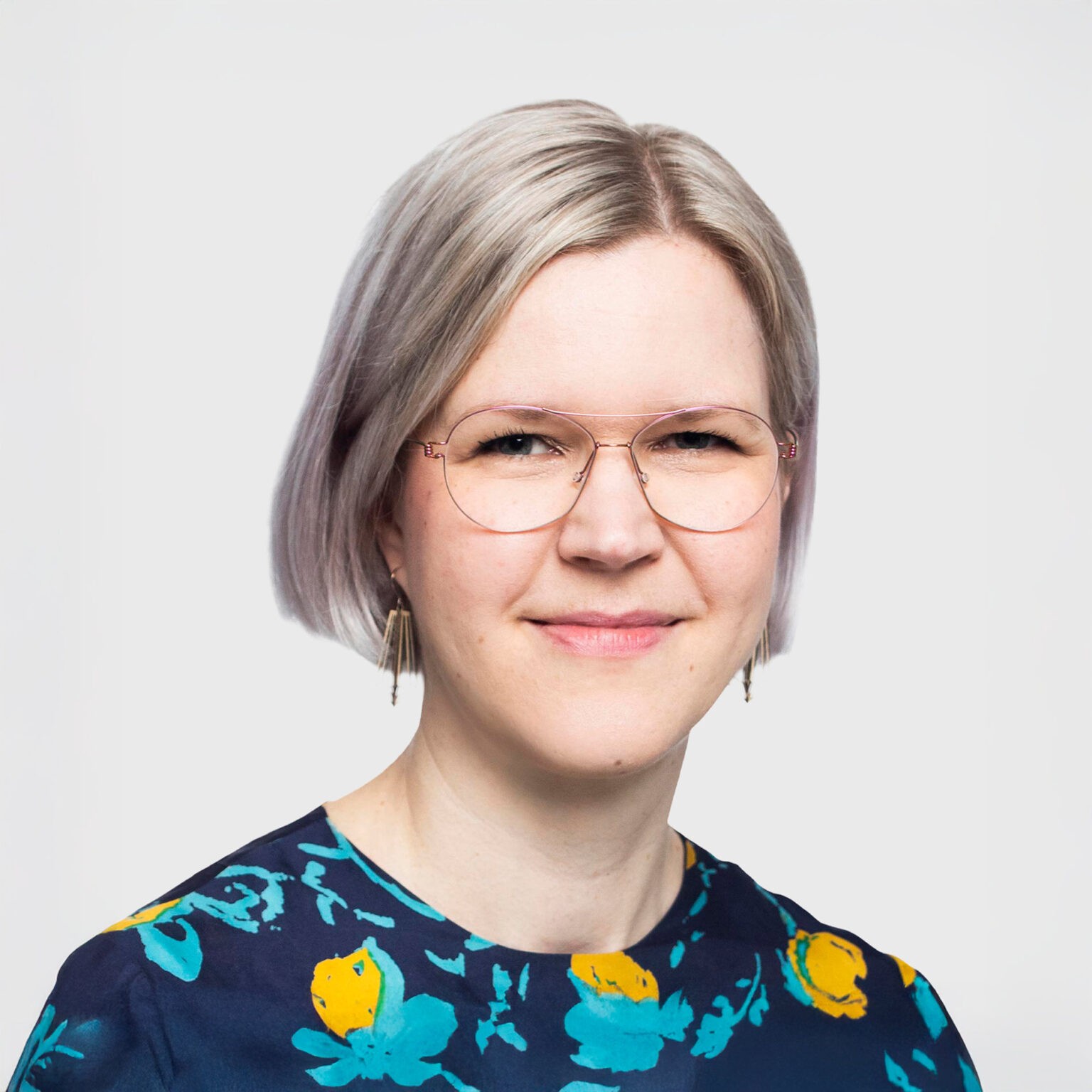
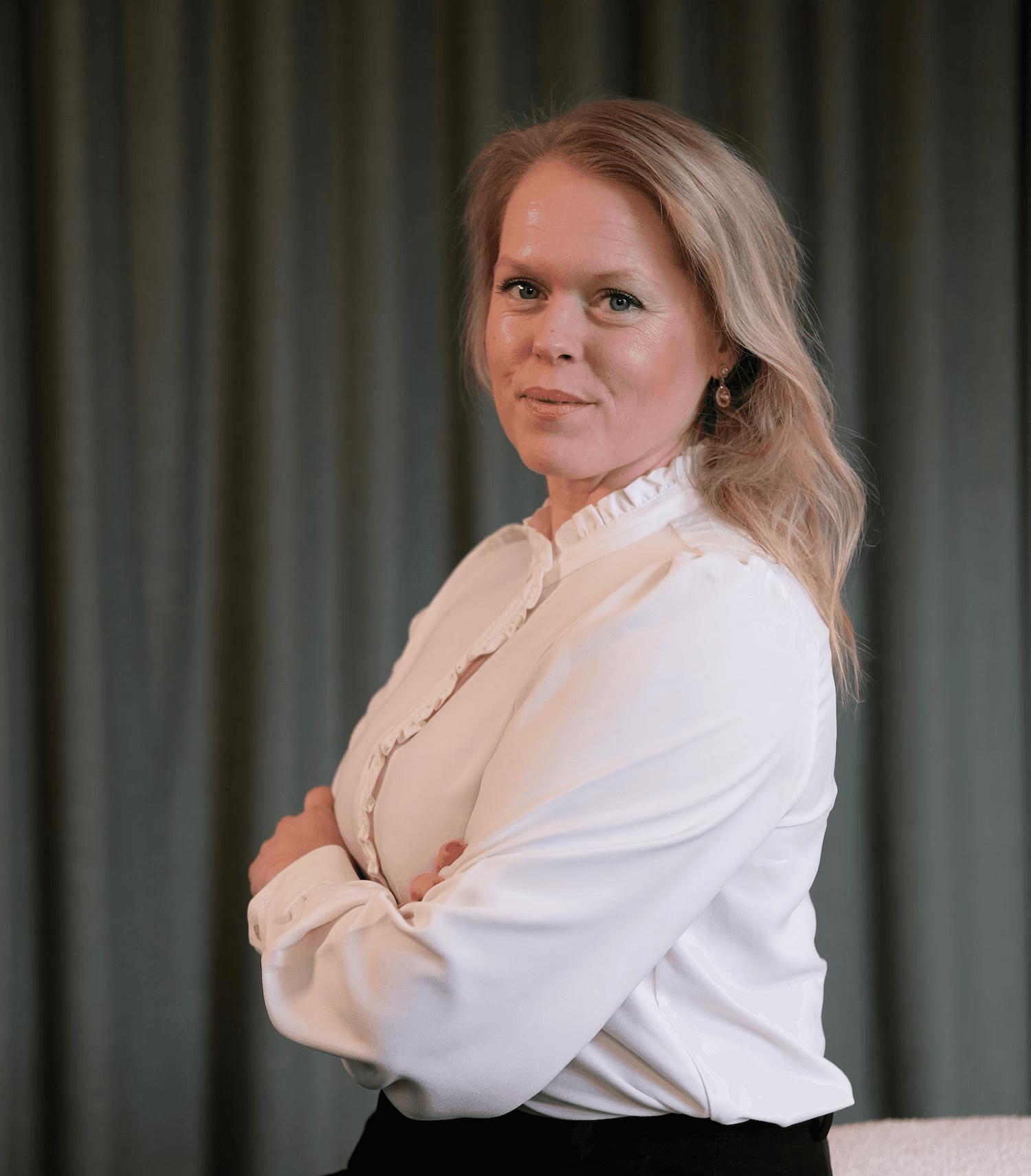
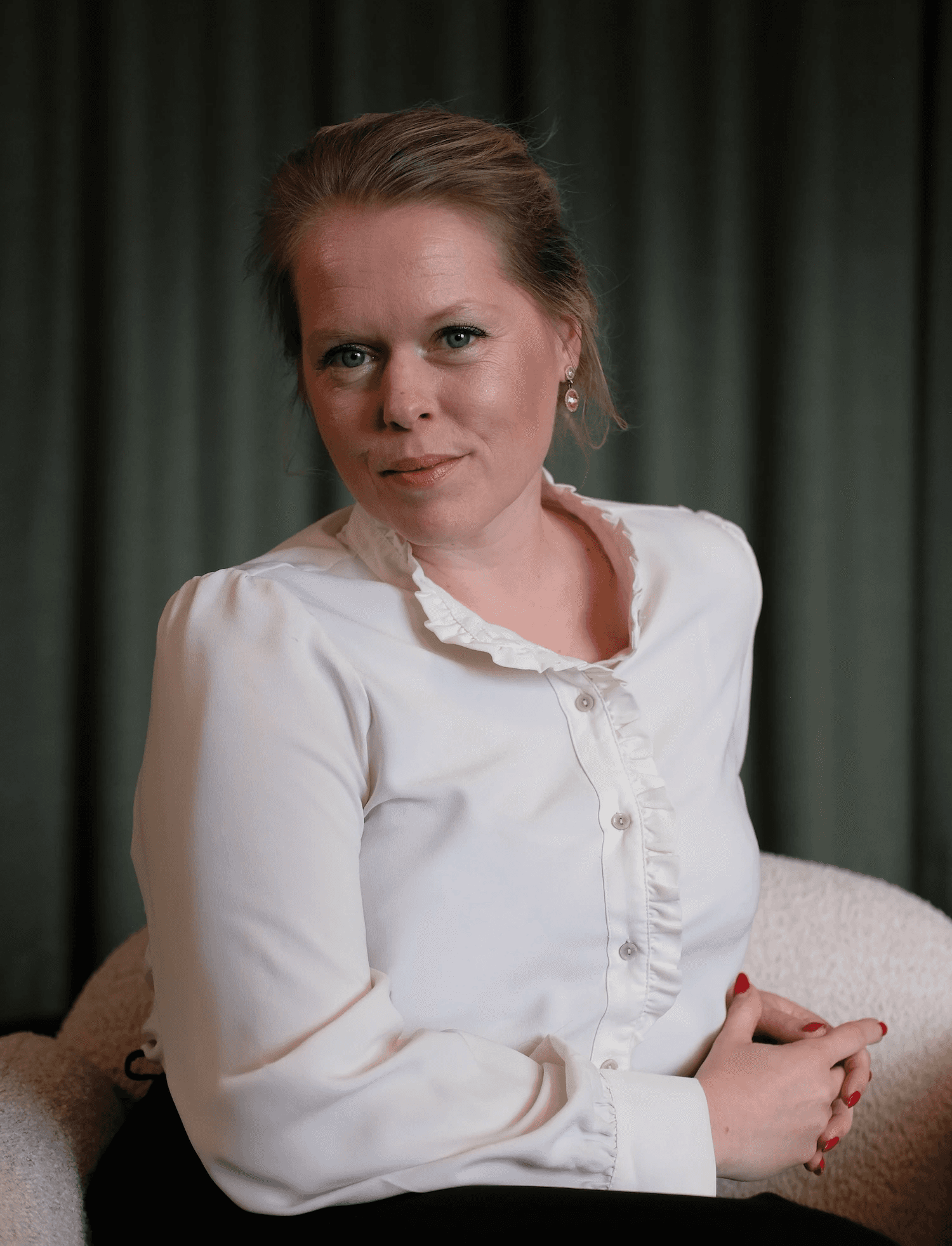
Emmi Laine

Journalist

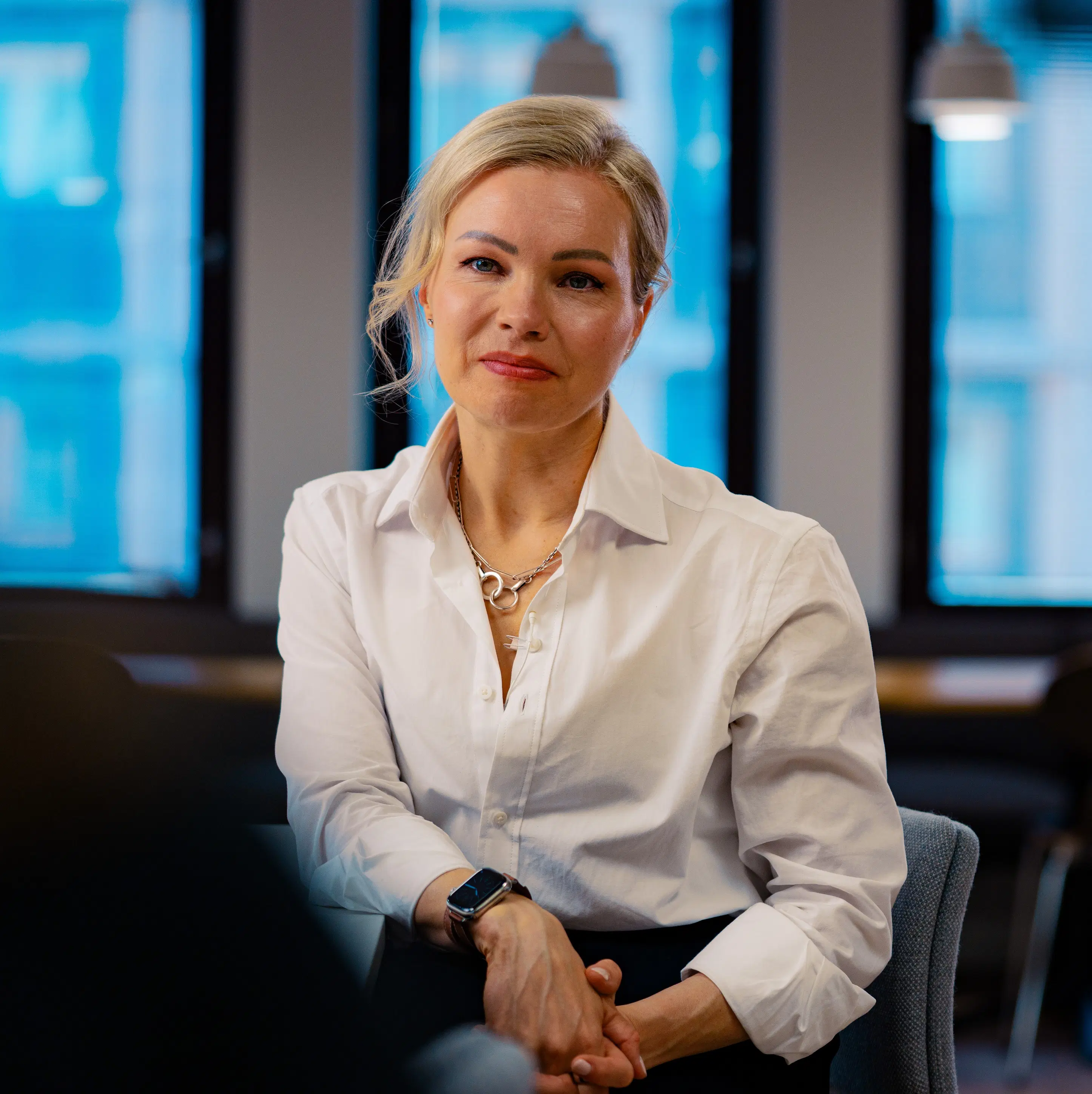
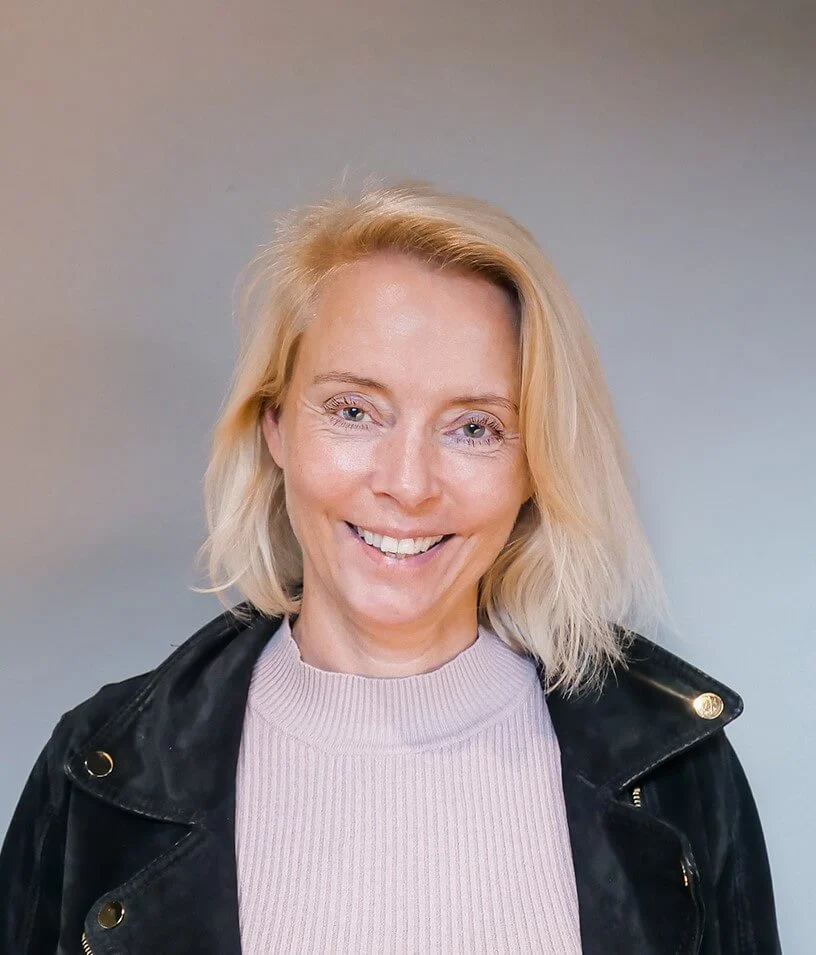
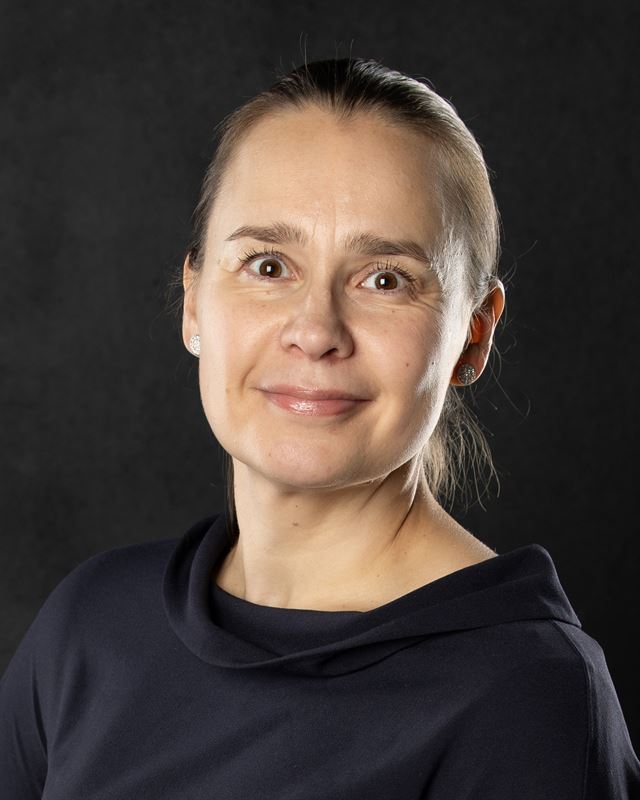
Emmi Laine is head of business content at Listeds and our lead for finance and business coverage. She sets the editorial agenda, interviews Nordic business leaders, and writes stories, newsletters, and social content on timely market and corporate topics. Emmi brings nearly eight years of experience from Shanghai's Yicai Global / Yicai Media Group, where she was awarded for reporting on China’s economy, finance sector, and technology innovation. She holds an MSc in Innovation and Entrepreneurship from ESADE Business School in Barcelona and a Master’s degree in International Design Business Management from Aalto University. She also holds a Bachelor’s degree in Culture Studies with a major in Journalism from Stockholm University and has studied Mandarin Chinese and Chinese culture. Emmi is a Finnish citizen and has lived in Finland, Sweden, China, and Portugal.

/

Author

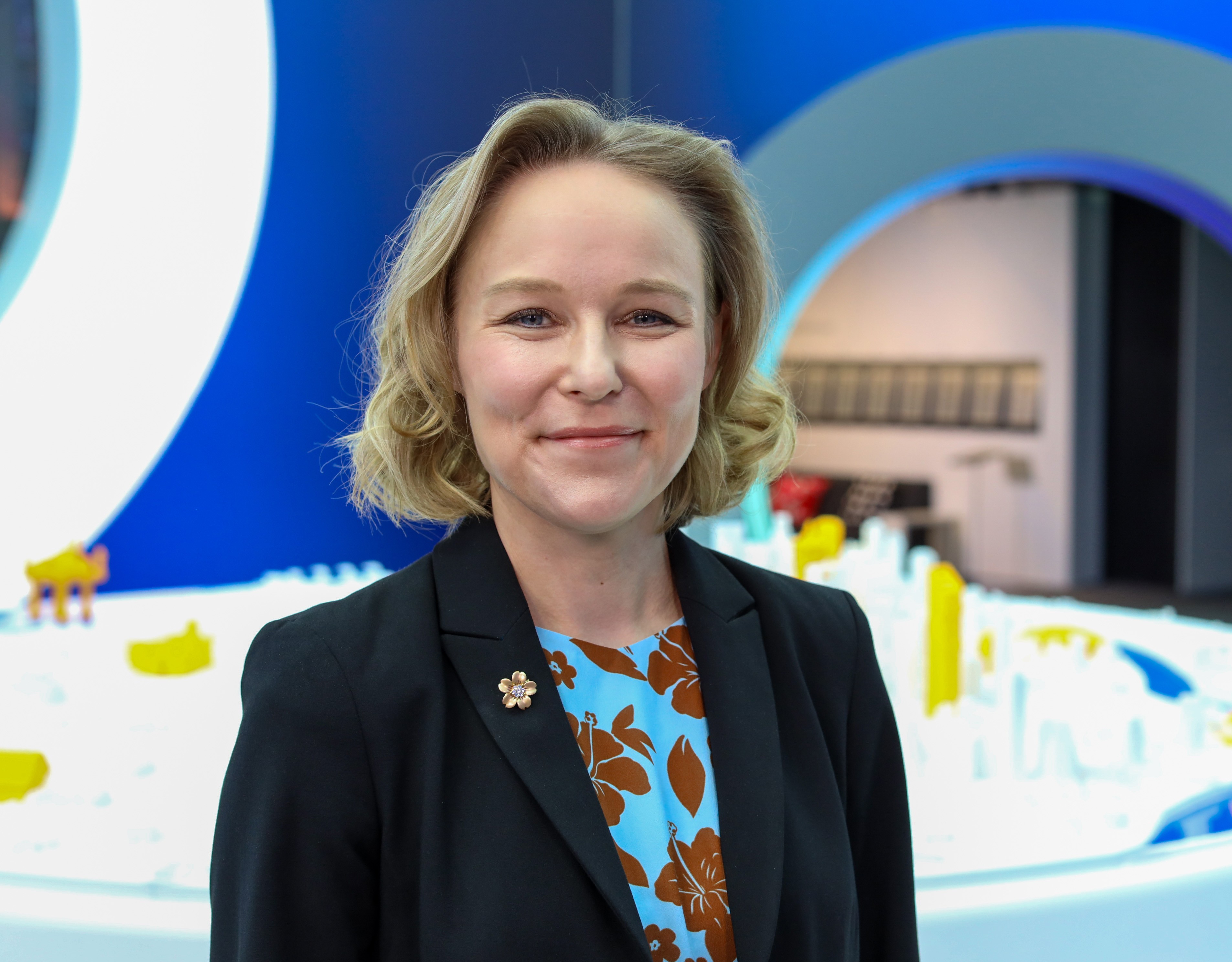
Emmi Laine

Journalist

Emmi Laine is head of business content at Listeds and our lead for finance and business coverage. She sets the editorial agenda, interviews Nordic business leaders, and writes stories, newsletters, and social content on timely market and corporate topics. Emmi brings nearly eight years of experience from Shanghai's Yicai Global / Yicai Media Group, where she was awarded for reporting on China’s economy, finance sector, and technology innovation. She holds an MSc in Innovation and Entrepreneurship from ESADE Business School in Barcelona and a Master’s degree in International Design Business Management from Aalto University. She also holds a Bachelor’s degree in Culture Studies with a major in Journalism from Stockholm University and has studied Mandarin Chinese and Chinese culture. Emmi is a Finnish citizen and has lived in Finland, Sweden, China, and Portugal.

/

Author

Emmi Laine

Journalist

Emmi Laine is head of business content at Listeds and our lead for finance and business coverage. She sets the editorial agenda, interviews Nordic business leaders, and writes stories, newsletters, and social content on timely market and corporate topics. Emmi brings nearly eight years of experience from Shanghai's Yicai Global / Yicai Media Group, where she was awarded for reporting on China’s economy, finance sector, and technology innovation. She holds an MSc in Innovation and Entrepreneurship from ESADE Business School in Barcelona and a Master’s degree in International Design Business Management from Aalto University. She also holds a Bachelor’s degree in Culture Studies with a major in Journalism from Stockholm University and has studied Mandarin Chinese and Chinese culture. Emmi is a Finnish citizen and has lived in Finland, Sweden, China, and Portugal.

Leaders

Taru Salo exits Siili Solutions for Attendo as tech consultancy's executive rebuild continues

Aug 5, 2026

Chief People Officer Taru Salo is leaving Siili Solutions for Attendo, handing the people agenda to Timo Miiluniemi on an interim basis as the AI-focused digital development company navigates a leadership reset while continuing to invest in AI and international growth.

Salo, who joined Siili in 2021, will leave her post at the end of August. Timo Miiluniemi, currently director, people and learning, will become interim CPO on September 1 while the company begins the search for a permanent successor, the Finnish technology consultancy announced yesterday.

Salo's departure marks the fifth change to Siili's management team since September 2025 and comes as the company continues its search for a permanent chief executive following Tomi Pienimäki's departure in May.

Interim CEO Markku Savusalo thanked Salo for her contribution. ”I want to thank Taru for the past five years at Siili – especially for her strong approach to competence development and driving Siili’s AI transformation," he said.

On the same day, Attendo revealed Salo’s next destination. The HR executive will join the Nordic care-services company as chief human resources officer on Sept. 14.

Attendo said the appointment is intended to strengthen its HR capabilities, leadership and organizational renewal as technology and AI reshape care delivery and competition for skilled workers. The company highlighted Salo's experience leading Siili's AI transformation program and noted that she received AI Finland's AI Forerunner Female Award in 2025.

Leadership reset continues

Salo's departure marks the latest executive change during a year of transition for Siili.

In May, CEO Tomi Pienimäki stepped down by agreement with the board of directors after leading the company for four years into what the board described as a “new strategic phase.” Markku Savusalo, previously VP of digital engineering, was appointed interim CEO while the search for a permanent chief executive continues.

The leadership changes have coincided with a difficult operating environment. In April, Siili launched change negotiations covering around 311 employees in Finland after management said AI adoption among Finnish customers had progressed more slowly than expected. The process concluded with temporary layoffs affecting consultants, fixed-term employees and members of management during 2026. Savusalo said the measures were intended to safeguard profitability while the company continued strengthening its sales organization and service offering.

Financial pressure remains

The management changes have unfolded against a weaker operating backdrop. Revenue declined over 3% to EUR 108.1 million in 2025, while adjusted EBITA fell to EUR 4.1 million after Siili cut its earnings guidance in December, citing postponed customer decisions and a technical accounting correction.

The pressure carried into 2026. First-quarter revenue fell over 14% year over year to EUR 25.7 million and adjusted EBITA slipped to a loss of EUR 0.2 million from a EUR 1.3 million profit a year earlier.

Despite the weaker start, Siili reaffirmed its full-year guidance of EUR 102 million to EUR 126 million in revenue and adjusted EBITA of EUR 3.7 million to EUR 6.9 million, and said the layoff negotiations would not affect that outlook.

What Siili is working toward

While managing leadership turnover and weaker demand, Siili has continued executing its strategy around AI, international growth and capability development.

The company became one of the first Finnish businesses to receive ISO/IEC 42001 certification for AI management in 2025. In May, it introduced an AI-driven modernization model featuring its Legacy Code Analyzer, which it says can reduce the initial analysis of legacy systems by 40% to 60%.

Siili also increased its ownership in Hungarian product innovation agency Supercharge to 100% from 85% and in Finnish IT consultancy Integrations Group to 70% from 55% in May. The acquisitions were financed with a bank loan, while the shareholder agreement gives the parties the option to complete the acquisition of the remaining Integrations Group stake during 2027.

Investor watchpoints

Siili's half-year report on August 11 will be the first opportunity for investors to assess performance under interim CEO Markku Savusalo. The results will also show whether the company has begun to recover from a weak first quarter while maintaining its full-year guidance.

Beyond the earnings figures, investors may look for further details on the financial and operational impact of Siili's increased ownership of Supercharge and Integrations Group.

The report will land as Siili continues recruiting both a permanent chief executive and a permanent chief people officer, leaving two key leadership positions on an interim basis during a broader organizational transition.

Leaders

Six CFO seats, one lesson: Finnair’s Pia Aaltonen-Forsell on what survives every crisis

Aug 5, 2026

Few Nordic finance leaders have seen as many industries from the CFO chair as Pia Aaltonen-Forsell. Forestry at Munksjö and Ahlstrom Munksjö. Steel at Outokumpu. Batteries at Northvolt. Aviation at Finnair. She chairs UPM’s Audit Committee, and by January she takes on her next role as CFO of Valmet.

Each industry has its own logic, its own cycles, its own shocks. Yet across all of them, Finnair CFO Aaltonen-Forsell says, the fundamentals that decide whether a company survives disruption barely change.

"We just have to accept the world as it is. There are surprises, there is volatility, and we have to build the way we think, the frameworks we use and the way we act around that," the financial leader of Finland’s flag carrier told Listeds in an exclusive interview.

Before joining Finnair as CFO in 2024, Aaltonen-Forsell held senior finance roles at Vacon, Munksjö, Ahlstrom Munksjö, Outokumpu and Northvolt. She also chairs UPM's Audit Committee and will become CFO of industrial technology supplier Valmet by next January. The experience has shown that resilience depends less on accurate forecasts than on preserving the flexibility to adapt.

Few companies have tested that idea as thoroughly as Finnair. Russia's closure of its airspace dismantled the airline's long-standing advantage on Europe-Asia routes almost overnight, forcing longer flight times and a fundamental rethink of its network. More recently, conflict in the Middle East triggered another wave of disruption as oil prices climbed and airlines adjusted operations.

Many carriers felt the impact immediately. Scandinavian Airlines canceled hundreds of flights because of higher fuel costs. Finnair largely avoided cancellations and fuel surcharges, helped by a fuel hedging strategy that had locked in much of its fuel costs before prices surged. At the same time, reduced capacity from several Middle Eastern airlines increased demand on long-haul routes to Asia, supporting a record comparable operating profit of €78.4 million in the second quarter and prompting Finnair to raise its revenue guidance for 2026.

For Aaltonen-Forsell, the lesson is not how Finnair handled one disruption but how it prepared for many.

Optionality is a strategy

Ask Aaltonen-Forsell what resilience means, and the seasoned CFO starts with the balance sheet.

"From my perspective, resilience means that you have a certain readiness through the structure of your balance sheet, your cash reserves, your factual understanding of the situation, your shared knowledge and your shared view of the situation."

Preparation, however, is only part of the equation. "Because things can change, part of resilience is having that optionality. Not just saying, 'Here's the only right way to do it,' but thinking upfront that there may be two different alternatives. Depending on how things go, we can go this way, or we can go that way."

Few industries feel geopolitical shocks as quickly as aviation. When the Strait of Hormuz closed in late February, global jet fuel prices nearly doubled within weeks, reaching $188 a barrel in April. They eased briefly before jumping almost 30% again in July as renewed tensions disrupted shipping. For the airline industry, the volatility is expected to add around $100 billion to fuel bills this year.

It is why Aaltonen-Forsell returns to the idea of optionality. Rather than betting on a single forecast, companies need enough financial and operational flexibility to change course as conditions shift.

A veteran finance executive, Pia Aaltonen-Forsell has held CFO roles at Finnair, Northvolt, Outokumpu, Ahlstrom-Munksjö, and Vacon, alongside board appointments at several listed companies. Image credit: Finnair

Managing risk without predicting it

Airlines take different approaches to fuel price risk. Some, including American Airlines, have largely abandoned fuel hedging. Most European network carriers continue to hedge, although to varying degrees.

Finnair follows the latter approach. The airline relies on a hedging policy, but Aaltonen-Forsell says it still requires a close understanding of market conditions.

"We have a hedging policy that really gives us direction. But we also need to have our feet on the ground and understand the market. In very volatile markets, it's not a thing that you just call the bank and say, 'I would like to do this.' You still need to be very informed about what's going on and choose the right moments."

The strategy proved its value this summer. By the end of the second quarter, Finnair had hedged roughly three-quarters of its expected fuel consumption for the second half of the year, reducing its exposure as prices rose.

That discipline matters because markets rarely move in predictable ways. "You need to have a certain framework for your thinking. It can't jump around day to day based on the latest news or tweet. Here's the basic plan. Then here are some things we could potentially change in different situations."

Rather than reacting to each headline, whether a breakthrough in peace talks or a fresh escalation, Finnair follows a defined framework while adjusting its decisions as conditions evolve.

Complexity rewards collaboration

The changing nature of risk has reshaped Aaltonen-Forsell's view of leadership. "I think today the world is so complex that it's very difficult to imagine that leadership could be a one-man or one-woman show where one person knows everything. Rather, there needs to be a group of people with different perspectives that can bring in different points of view." 

The approach reflects research on collective intelligence, which suggests that how teams work together is a stronger predictor of group performance than the intelligence of individual members. At Finnair, that means bringing together finance, operations, network planning and commercial teams before decisions are made. 

"What has worked and been really important for us has been strong collaboration between the different teams, having a shared view of the situation and then agreeing on the next steps," Aaltonen-Forsell says. "You actually need several views to really form the full view of what's going on." 

Cash creates options

Working as both an executive and a board member has reinforced another principle. "I've learned to focus on the core of the topic and the fundamentals."

Across every industry she has worked in, one fundamental has never changed. "Cash. Cash is important for a business to run and develop in any industry. I always look at whether the business actually generates cash."

Profitability is essential, but it tells only part of the story. "A lot of people tend to focus on margins and profits, which is really good. That's the first step toward cash flow. But you really need to understand the cash flow itself."

Few industries make those trade-offs more visible than aviation. Airlines commit billions to aircraft that stay in service for decades, even as demand keeps shifting. Finnair's latest fleet renewal reflects that balancing act. The airline has ordered 18 Embraer E195-E2 aircraft, with options for 16 more and 12 purchase rights, while also planning to acquire up to 12 used Airbus A320/321ceo aircraft and lease six A320ceos. The mix is designed to support growth, replace older aircraft and give Finnair the flexibility to match capacity with changing demand.

redit: Finnair. 1: Embraer E190

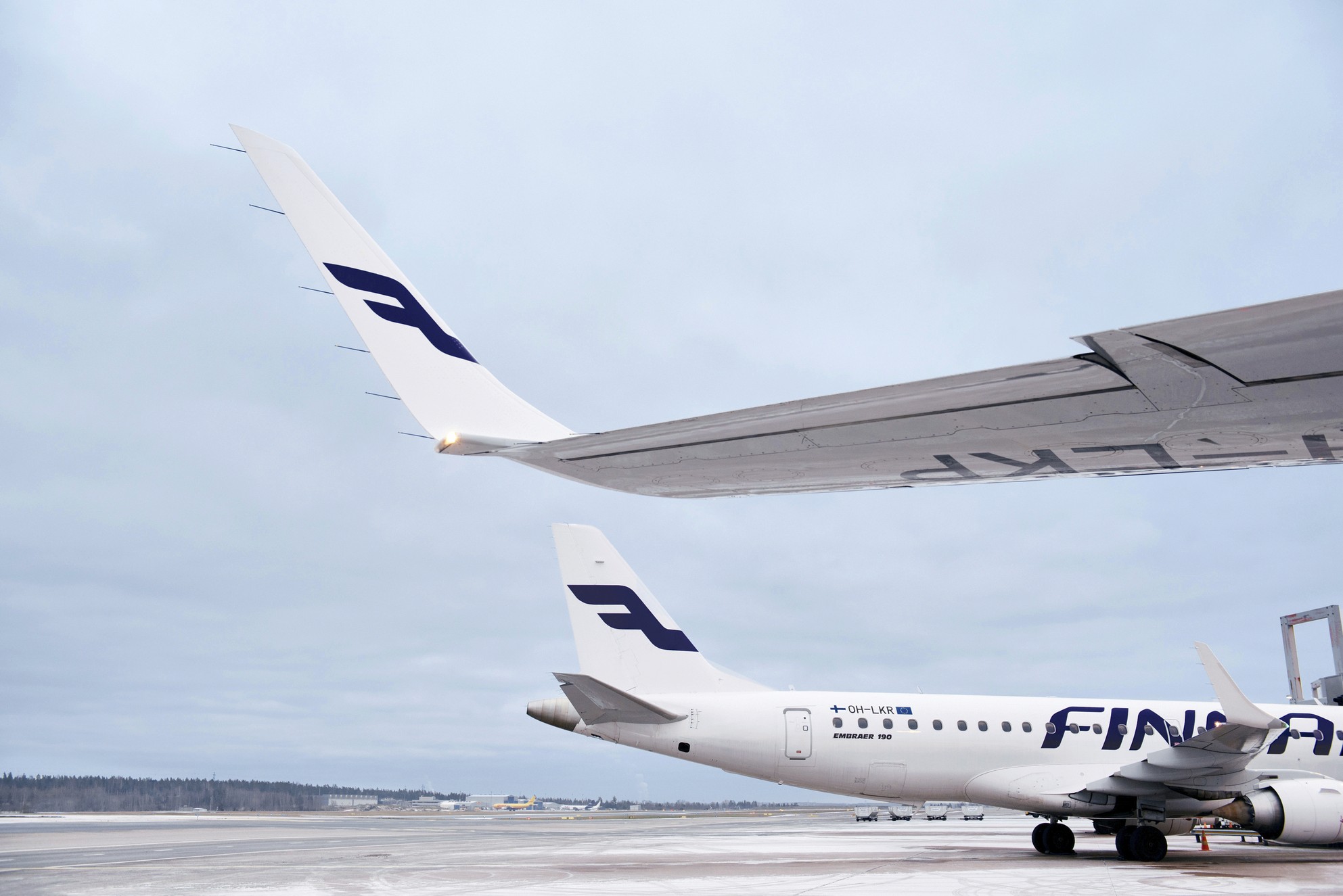
Finnair is planning to renew its fleet with a mix of options, including Embraer E195 narrow-body jets. The image shows Embraer E190 jets used on short-haul European routes. Image credit: Finnair

For Aaltonen-Forsell, those decisions illustrate a broader principle about capital allocation. "The core of capital allocation is still that every euro has a purpose. But having seen very volatile situations, I've learned that you can have the best laid-out plan, but you still don't need to squeeze it to the last cent. You need to build a bit of optionality into those best laid-out plans."

Trust is built before it is needed

Besides optionality, trust is another idea Aaltonen-Forsell returns to. Trust, she says, also has to be built before it is needed. 

"You have to put a lot of effort into building that trust. It doesn't come overnight. It comes from consistently doing what you say you will do and delivering what you promise."

Trust allows management teams and boards to make difficult decisions together. It cannot be built in the middle of a crisis.

As Aaltonen-Forsell prepares to join Valmet, the industry will change, but the challenge will not. Companies cannot predict every geopolitical shock, supply chain disruption or commodity price swing. What they can decide is how prepared they will be when the next one arrives.

Leaders

Valmet's Sampo Immonen joins Spinnova as CTO as sustainable fiber pioneer splits technology leadership

Aug 3, 2026

Sampo Immonen, head of research and development for Valmet's paper and board machines business, will join Spinnova Plc as chief technology officer no later than Oct. 1, 2026, as the Finnish textile-fiber company reshapes its technology leadership while working to restart production and prepare for industrial-scale manufacturing following a difficult 2025.

Immonen will join the management team and report to CEO Janne Poranen, while longtime CTO Juha Salmela moves into the newly created role of chief technology strategy and innovation officer, remaining on the management team, the sustainable fiber pioneer announced recently. The new roles divide responsibility between industrial-scale operations and future technology development.

Founded in 2009, Spinnova develops patented technology for producing textile fiber from wood pulp and waste materials without harmful chemicals or dissolving. The technology originated from research by Juha Salmela at VTT inspired by the way spiders spin silk. The company has already collaborated with brands including The North Face, Puma, Bestseller, H&M Group, Adidas, Ecco and Marimekko. 

Spinnova has been reshaping its leadership throughout 2026 while advancing its production restart plans. Immonen's appointment follows Chief Commercial Officer Mikko Lassila's arrival in April and comes less than two weeks after the company announced Chief Product and Sustainability Officer Shahriare Mahmood would leave in October after five years on the management team, as reported by Listeds earlier.

CEO Janne Poranen said Immonen will help support the company's industrial-scale ambitions. "Sampo is an excellent addition to our team and will play an important role in the company's development and in scaling our technology to industrial scale." 

Immonen joins after more than 14 years at Valmet, where he held a series of technology and R&D leadership roles, most recently heading R&D for the paper and board machines business. His experience spans technology portfolio management, strategic partnerships, piloting and new business development. He said his fiber-industry experience and professional network would help create value for Spinnova and support the company's next stage of development.

Technology leadership split reflects changing responsibilities

The new structure separates responsibility for operating Spinnova's current technology from developing its future technology platform. As CTO, Immonen will oversee industrial-scale technology operations, while Salmela—whose research formed the basis of Spinnova's fiber technology—will concentrate on future technologies, intellectual property and strategic opportunities.

The appointment is the third management team change Spinnova has disclosed this year. As of Oct. 1, the management team will comprise CEO Janne Poranen, CFO and People Officer Santeri Heinonen, CTO Sampo Immonen, CMO Mikko Lassila, Chief Product and Sustainability Officer Shahriare Mahmood until Oct. 20, CTSIO Juha Salmela and General Counsel Johanna Valkama. Mahmood's departure leaves the product and sustainability portfolio without a long-term leader.

The management changes come after a challenging 2025, when Spinnova’s revenue declined almost 55% to EUR 344,000, and operating loss more than doubled to EUR 41.3 million, partly because of an EUR 18.4 million impairment related to the Woodspin joint venture. Since then, Spinnova has focused on preparing to restart production at the Woodspin demonstration facility in Jyväskylä while broadening the commercial network supporting its fiber technology. 

Unlike the management team, the board has remained largely unchanged. At the April 2026 AGM, shareholders re-elected the board and authorized a share issuance. More recently, Pirkka Palomäki replaced Ilkka Kivimäki on the shareholders' nomination board, the body responsible for proposing future board candidates, ahead of the 2027 AGM cycle. 

What Spinnova is trying to accomplish

Spinnova's recent announcements point to several parallel priorities. The company is working to restart production at the Woodspin demonstration facility after trial runs began earlier this year. It is also seeking to improve production economics by lowering energy consumption, reducing recipe additive costs, and developing new fiber-finishing and drying concepts. The revised technology leadership structure supports those priorities.

Commercially, Spinnova continues to broaden the ecosystem supporting its proprietary Spinnova® fiber. The company has added recycling partner Circulose to accelerate technology scale-up, confirmed textile conglomerate NZ TEX Group's support for scaling the fiber, and continued brand collaborations with companies including Ecco, Jack & Jones and Insider. The company will also need to decide how product and sustainability responsibilities are handled after Mahmood's departure in October.

Investor watchpoints

Investors will be watching how the revised technology leadership supports the company's industrial-scale ambitions as production preparations continue at Woodspin. 

Attention will also turn to the rescheduled Half-Year 2026 report on Aug. 31, which will provide the first financial update since the recent management changes. Immonen's planned arrival by Oct. 1 and Mahmood's departure on Oct. 20 are the next milestones as Spinnova works toward restarting production.

Leaders

Elim Yeoh joins Neste from BP to lead new North America renewables unit

Jul 31, 2026

New role follows reorganization of Neste's fastest-growing business

Elim Yeoh, vice president, Biofuels Growth Americas at oil and gas giant BP, will join Neste as president, Renewable Products, North America on Sept. 1, 2026, to lead the Finnish company's new North American business unit as Neste strengthens executive oversight of Renewable Products, one of its two largest operating businesses.

Yeoh will oversee the North American business unit, including commercial operations, feedstock sourcing and the Martinez Renewables joint venture, while reporting to President and CEO Heikki Malinen, the world's leading producer of renewable diesel and sustainable aviation fuel announced recently.

The position has been held on an interim basis by SVP Carl Nyberg since April, when Neste established the regional business unit as part of a broader reorganization of its renewable products business that the company said was designed to accelerate value creation.

New structure puts greater emphasis on renewables

Renewable Products, which produces renewable diesel and sustainable aviation fuel, delivered Neste's strongest earnings growth in 2025, with comparable EBITDA rising nearly 49% to EUR 764 million, making it one of the company's two largest operating segments alongside Oil Products.

Against that backdrop, North America remained Neste’s second-largest market for Renewable Diesel and SAF in 2025, accounting for 28% of sales volumes, compared with 72% in Europe.

Reflecting the segment's growing significance, Neste established the Renewable Products, North America business unit to oversee regional commercial operations, feedstock sourcing and the Martinez Renewables joint venture with Marathon Petroleum. The company said the new structure will support long-term growth without altering its financial reporting structure.

BP executive brings more than two decades of industry experience

Yeoh brings more than 20 years of leadership experience across the downstream, midstream and renewable fuels sectors. At BP, she led biofuels growth across the Americas, focusing on commercial partnerships and business development. Before joining the London-headquartered multinational, she held leadership positions at Chevron spanning refining, chemicals and renewable fuels.

President and CEO Heikki Malinen highlighted Yeoh's track record and industry experience, adding that: "This will be invaluable as we continue to strengthen our regional presence and drive the growth of our Renewable Products business in North America."

What Neste is trying to accomplish

The leadership addition is part of Neste's broader effort to strengthen its renewables business as it expands production capacity, improves profitability and adapts to evolving market conditions. 

The company expects the Rotterdam refinery expansion, which adds renewable diesel and sustainable aviation fuel production to meet growing demand, to increase annual renewables production capacity to 6.8 million tons by 2027. Neste also plans to continue its group-wide performance improvement program after exceeding its 2025 EBITDA improvement target ahead of schedule.

At the same time, Neste is advancing several major priorities in 2026. The company plans to invest more than EUR 400 million in a nine-week maintenance turnaround at its Porvoo refinery between August and October while maintaining uninterrupted fuel deliveries through advance production and storage. It also revised its climate targets in late 2025, replacing its carbon-neutral production goal with a commitment to reduce greenhouse gas emissions from its own operations by 80% by 2040, citing its financial position and a more focused investment portfolio.

North America remains central to those ambitions. The company has expanded renewable diesel and sustainable aviation fuel in the region, strengthened its feedstock sourcing platform through acquisitions, and operates the Martinez Renewables joint venture in California, which produces renewable diesel for the US market. Neste expects long-term demand for renewable fuels to be supported by tightening emissions regulations and is expanding production capacity to meet that demand.

Investor watchpoints

Yeoh joins as North America receives dedicated leadership within Neste's renewables organization. Investors will be watching whether the new structure strengthens the company's commercial position in a market where profitability remains closely tied to evolving US renewable fuel policy, feedstock economics and demand for low-carbon fuels.

Across the broader business, attention is also likely to remain on the more than EUR 400 million Porvoo refinery maintenance turnaround, the Rotterdam expansion and whether Neste can sustain the segment's stronger financial performance while maintaining capital discipline.

Leaders

Jussi Siitonen leaves Fiskars to join Finnair as CFO after airline lifts 2026 revenue guidance

Jul 29, 2026

Jussi Siitonen, CFO and deputy CEO of Fiskars Group, will join Finnair as chief financial officer on November 1, 2026, as the airline enters the next phase of its turnaround with stronger earnings, higher revenue expectations and an ambitious multi-year growth strategy. He succeeds Pia Aaltonen-Forsell, who is leaving after roughly a year in the role to join another employer.

Siitonen, 57, has served on Finnair's board of directors since 2024 and stepped down from the board on the day his appointment was announced. He replaces Aaltonen-Forsell, who joined the flag carrier in August 2025. Her next destination was revealed the same day, with Valmet appointing her as CFO and a member of its executive leadership team, effective no later than the end of January 2027. 

The CFO appointment is the latest step in a broader reshaping of Finnair's leadership. Over the past eighteen months, the airline has appointed Sini Kivekäs as chief people officer, refreshed several board positions and completed another governance cycle at its 2026 AGM. Unlike many companies undergoing significant executive turnover, Finnair is refreshing its leadership while financial performance is improving rather than deteriorating.

A board insider moves into one of Finnair's most important roles

Few incoming finance chiefs arrive with the level of familiarity Siitonen already has with the company. Alongside his executive career at consumer goods company Fiskars Group, he has spent the past two years on Finnair's board, where he most recently served on the audit committee. That gives him an understanding of the airline's strategy, capital allocation priorities and industry challenges before formally taking responsibility for its finances.

For Finnair, the appointment also brings continuity to a finance function that has changed rapidly. Aaltonen-Forsell's departure marks the airline's second CFO transition since mid-2025. Between Kristian Pullola's exit, Aaltonen-Forsell's short tenure and Siitonen's arrival, Finnair will have had three CFOs in just over a year.

The finance function is changing at a very different moment than it was a year ago. When Aaltonen-Forsell joined, Finnair was still working to restore profitability following years of disruption to its long-haul business. Today, the airline is reporting stronger operating performance while beginning to execute a new long-term strategy.

CEO Turkka Kuusisto thanked Aaltonen-Forsell for her contribution and welcomed Siitonen to the finance chief role. "I warmly thank Pia for her short but distinguished time at Finnair and wish her the best of success also in future," he said.

"At the same time, I warmly welcome Jussi to Finnair,” Kuusisto added. Through his role on Finnair's Board, Jussi has a thorough understanding of our strategy and industry, which creates a strong foundation for rapid value creation in the key role of CFO.”

Siitonen said his priority will be ensuring Finnair's financial position supports its long-term ambitions. Having served on the board, he said he already understands the company's high standards and sees the CFO's role as providing the financial foundation needed to achieve them.

A stronger business, but a more complex operating environment

Siitonen inherits a business whose financial trajectory has improved sharply over the past year.

Finnair reported second-quarter revenue of €916.7 million, an increase of over 16% from the same period a year earlier, while comparable operating profit climbed to €78.4 million from €10.3 million. The recovery has been equally visible over the first half of the year, with revenue increasing over 14% to €1.69 billion and the comparable operating result improving to a profit of €77.8 million from a loss of €52.3 million in the first half of 2025.

The stronger performance prompted management to raise its full-year revenue guidance to €3.4 billion-€3.5 billion from €3.3 billion-€3.4 billion, while maintaining its comparable operating profit outlook of €120 million-€190 million.

The outlook is not without trade-offs, however. While management has become more optimistic about revenue, it has reduced planned capacity growth for 2026 from roughly 5% to around 1% as Middle East route suspensions and continuing network adjustments weigh on the flying programme. The revised outlook suggests Finnair expects stronger pricing, ancillary revenue and network optimization—not additional capacity—to underpin second-half performance.

Underlying operating trends have remained supportive. Passenger numbers increased over 7% during the first quarter, while June traffic data showed passenger volumes rising 9%, revenue per available seat kilometre increasing over 10% and cargo volumes growing more than 20%. On-time performance, however, declined because of weather disruption across Europe.

What Finnair is trying to accomplish

Finnair's board approved a new strategy covering 2026-2029 in late 2025, marking a shift from recovery toward profitable, disciplined growth.

Rather than relying primarily on network expansion, management is targeting higher-quality earnings by growing ancillary revenue, strengthening digital retailing capabilities, expanding its loyalty program and automating customer-facing processes. The strategy also calls for continued investment in service quality while improving capital efficiency and financial returns.

The financial targets are equally ambitious. By 2029, Finnair aims to deliver a comparable EBIT margin of 6%-8%, achieve annual passenger demand growth of around 4%, invest €2 billion-€2.5 billion across the business, maintain net debt at one to two times comparable EBITDA and keep cash equivalent to at least 20% of annual sales.

The operational agenda supporting those targets is already underway. Finnair is renewing its fleet with 18 Embraer E195-E2 aircraft, plans to lease six Airbus A320ceo aircraft, has resumed services to Turku and Tampere and continues adapting its route network to geopolitical constraints and fuel-price uncertainty.

That makes the finance function central to the company's strategy. Beyond financial reporting, the CFO will oversee the capital allocation, balance-sheet discipline and investment decisions needed to fund growth while preserving financial flexibility during a period of continued operational uncertainty.

Investor watchpoints

Investors are likely to focus on three themes over the coming quarters.

First, the CFO transition spans Finnair's third-quarter reporting period, making continuity in financial communication an immediate consideration.

Second, Siitonen's appointment leaves a vacancy on the board, with no replacement yet announced.

Finally, revenue guidance has been raised even as planned capacity growth has been reduced from roughly 5% at the start of the year to around 1%. That combination suggests stronger unit economics are expected to support the second half, although the company has not explicitly attributed the revised guidance to those factors. The pace of executive change also remains unusually high, leaving Siitonen to provide continuity as Finnair shifts from recovery to executing its new strategy.

Leaders

Finnair CFO Pia Aaltonen-Forsell joins Valmet as CFO as board weighs two-company split

Jul 27, 2026

Leadership change comes amid broader strategic reset

Pia Aaltonen-Forsell, former CFO of Finnair, will join Valmet as chief financial officer and a member of the executive leadership team no later than the end of January 2027, as the Helsinki-listed industrial technology company advances a strategic review that could separate its two core businesses into independently listed companies. 

Aaltonen-Forsell succeeds Katri Hokkanen, who will leave the role by the end of September 2026 after nearly four years as CFO and almost two decades with the company, Valmet announced on July 24.

On the same day, the board launched a strategic review to assess whether separating the two businesses of Biomaterial Solutions and Services and Process Performance Solutions into independently listed companies would create greater shareholder value.

Valmet is a Finnish industrial technology company serving process industries through two businesses. Originally established as the state-owned Valtion Metallitehtaat in 1950 and re-established as an independent listed company following its demerger from Metso in 2013, its larger Biomaterial Solutions and Services segment accounts for about 70% of revenue and supplies production equipment and maintenance for pulp, paper, tissue and renewable energy plants. Process Performance Solutions generates the remaining revenue, providing industrial automation, software and flow control systems for customers across industries including chemicals, energy, water treatment and paper manufacturing.

Valmet also announced on July 22 that Sami Riekkola, executive vice president of Pulp, Energy and Circularity, will leave for an external opportunity no later than Jan. 22, 2027. The company has begun recruiting his successor.

The business she inherits

Aaltonen-Forsell takes over the finance function as Valmet navigates a mixed financial picture. The company delivered record profitability in 2025 and has reaffirmed its 2026 guidance for net sales to remain at the 2025 level and comparable EBITA to remain at or exceed last year's result. However, orders received declined in both the first and second quarters of 2026, first-half operating cash flow fell to EUR 100 million from EUR 297 million a year earlier, and gearing increased to 39% from 35% at the end of 2025.

Aaltonen-Forsell joins from Finnair, where she has served as CFO since June 2025, helping steer the flag carrier through geopolitical disruptions and higher fuel costs. Most recently, Finnair reported a record Q2 adjusted EBIT of EUR 78 million. Aaltonen-Forsell previously held CFO positions at Northvolt, Outokumpu, Ahlström-Munksjö, Munksjö and Vacon, and earlier worked in finance leadership roles at Stora Enso. She also serves on the board of UPM-Kymmene, where she chairs the audit committee.

CEO Thomas Hinnerskov said Aaltonen-Forsell's experience across global industrial companies will strengthen the company's finance leadership. "As we continue to develop Valmet and execute our strategy, her leadership will be important in driving our financial performance, cost competitiveness, and long-term value creation for our stakeholders."

What the company is trying to accomplish

Valmet is reshaping its portfolio while maintaining its financial targets. Alongside the strategic review, Valmet is expanding Process Performance Solutions through the Severn Group acquisition, broadening its Flow Control business into the refining, energy, and metals industries. It is investing EUR 55 million over five years in its Industrial NEXUS research and development program to accelerate digital and automation technologies.

At the same time, Valmet is reducing its manufacturing footprint in Sweden, Poland and Finland. The measures are expected to generate around EUR 20 million in annual net savings by early 2027, together with approximately EUR 8 million of savings during 2026 from temporary layoffs in Finland.

Valmet reaffirmed its 2026 guidance for net sales to remain at the 2025 level of EUR 5.2 billion and comparable EBITA to remain at or exceed the 2025 level of EUR 620 million. While second-quarter net sales and comparable EBITA increased from a year earlier, orders received declined in both the first and second quarters, highlighting the need to balance profitability with investment in future growth.

Investor watchpoints

The coming months will show how smoothly Valmet completes two leadership transitions, with Hokkanen leaving by the end of September, Aaltonen-Forsell joining no later than January 2027 and a successor still to be named for Riekkola.

Investors will also focus on the board's strategic review, with an update expected alongside the company's full-year 2026 results.

Operationally, attention will remain on whether Biomaterial Solutions and Services continues its recovery in capital orders, whether the planned manufacturing savings are delivered, and how Severn Group contributes to Process Performance Solutions.

Following the first-half decline in operating cash flow, investors will also watch whether cash generation improves over the remainder of the year while Valmet works toward its reaffirmed guidance.

Leaders

Spinnova's product chief exits as Finnish sustainable fiber pioneer works toward 2026 production restart

Jul 24, 2026

After five years on Spinnova's management team, Shahriare Mahmood will leave his role as chief product and sustainability officer, as the textile technology company works to restart fiber production during 2026 following a challenging year and a series of leadership changes.

Mahmood will remain in the role until October 2026, and Spinnova has not named a successor, according to the recent press release. The departure follows several management team changes at the textile innovation company over the past 16 months, including a founder returning to lead as the CEO.

CEO Janne Poranen thanked Mahmood for his work. "I would like to thank Shahriare for his contribution to Spinnova's development. Shahriare has played an important role in advancing our product and sustainability work, and we wish him all the best for the future."

Inspired by an idea from VTT researcher Juha Salmela on how spiders spin silk, Spinnova has developed patented technology to produce textile fiber from wood pulp and waste materials without harmful chemicals or dissolving. Founded in 2009, the Finnish company has already made inroads into commercializing its biodegradable fiber with brands including The North Face, Puma, Bestseller, H&M Group, Adidas, Ecco and Marimekko.

Leadership changes continue

Mahmood's departure follows a difficult 2025 for Spinnova. Revenue fell almost 55% to EUR 344,000 from a year earlier, while the operating loss more than doubled to EUR 41.3 million, partly due to an impairment of EUR 18.4 million on the company's stake in the Woodspin joint venture, which operates Spinnova's main commercial-scale production site. The company proposed no dividend for 2025 and is not providing financial guidance for 2026. 

The product chief’s departure extends a period of high management turnover. Former CEO Tuomas Oijala stepped down in 2025, with founder Janne Poranen returning as CEO. Lasse Holopainen and Ben Selby also left the Management Team, while Mikko Lassila joined as chief commercial officer by April 15, 2026.

At the April 2026 AGM, shareholders re-elected all seven board members. Poranen continued as both CEO and chair, with the company citing its stage of development for departing from the Finnish Corporate Governance Code's recommendation to separate the roles. Shareholders also authorized the board to issue up to 5.2 million new shares, or about 10% of those outstanding, through June 30, 2027.

What Spinnova is trying to accomplish

Spinnova's immediate priority is restarting production at the Woodspin demonstration facility in Jyväskylä, which produces SPINNOVA® fiber. The plant was suspended after high production and investment costs delayed commercialization, and trial runs began in April to validate process improvements at a larger scale. The company's goal is to resume production during 2026 if the trials are successful.

Spinnova says it has reduced energy consumption in its microfibrillated cellulose manufacturing process by more than 50% compared with the previous Woodspin factory concept and lowered recipe additive costs by about one-fifth. It is also developing new fiber-finishing and drying concepts aimed at improving fiber quality while reducing production and investment costs.

Alongside the technology work, Spinnova is building an international consortium to support commercialization. During 2025, German sustainable fashion brand Armedangels, Tommy Hilfiger and Amsterdam-based Fashion for Good—a global platform that connects fashion brands with sustainability innovators—joined the initiative, although management said the partnerships are not yet notably reflected in revenue.

Investor watchpoints

The next leadership milestone is whether Spinnova appoints a successor to Shahriare Mahmood before his notice period ends in October, providing clarity on who will lead product development and sustainability through the next phase.

Investors will also be looking for evidence that the Woodspin trial runs support a return to production and that the company's expanding consortium begins contributing to commercial traction.

The company's half-year report on Aug. 25, 2026, is expected to provide the next update on leadership changes, production progress and commercial developments.

Leaders

Flying Tiger Copenhagen's Martin Sörenhag joins Tokmanni to revive Dollarstore as OKQ8's Ulrika Göransson leads strategy

Jul 22, 2026

The appointments support Tokmanni's push to improve Dollarstore and redefine its strategy 

Tokmanni Group has strengthened its leadership team with two appointments to lead Dollarstore and oversee group strategy, underscoring new CEO Sampo Päällysaho's effort to rebuild the retailer's leadership around the weakest part of its Nordic expansion.

Martin Sörenhag, managing director for the Nordic countries at Flying Tiger Copenhagen, will join Tokmanni as managing director of Dollarstore on Nov. 1, 2026, as the retailer accelerates efforts to restore profitability at its struggling Swedish discount chain, Tokmanni Group, the Finnish discount retailer that owns Dollarstore and Click Shoes, announced yesterday.

Moreover, Ulrika Göransson, director of retail and associations at Swedish fuel company OKQ8, will become Tokmanni’s chief strategy and transformation officer on Sept. 1, where she will help shape the group's next strategic phase.

Tokmanni is one of the Nordic region's largest discount retailers, operating Finland's Tokmanni chain alongside Sweden's Dollarstore and Denmark's Big Dollar. The 2023 acquisition of Dollarstore marked the group's first major expansion outside Finland and underpins its ambition to build a leading Nordic value retailer.

The appointments mark Päällysaho's second executive team reshuffle since taking over as CEO on July 6 following Mika Rautiainen's retirement. Both executives will report directly to Päällysaho. Dollarstore Managing Director Timo Heimo will remain in the role until Sörenhag joins before returning to Finland by the end of the year. 

Two retail executives with Nordic operating experience

Päällysaho said Sörenhag's international retail background and commercial expertise make him well suited to build on the initiatives already underway to improve customer traffic and strengthen Dollarstore's market appeal. He said the new leader will help advance those efforts and support the chain's long-term growth and profitability.

Sörenhag has led Flying Tiger Copenhagen's Nordic business since 2019, overseeing about 160 stores across five countries. He previously managed the retailer's Swedish operations and has held senior positions at COOP, K-Rauta, Apoteket Hjärtat and Lidl, giving him more than two decades of Nordic retail leadership experience.

Göransson joins after serving at OKQ8 since 2025. Earlier roles include CEO positions at Zetas Garden and Teknikmagasinet's Swedish and Norwegian operations, along with senior strategy, business development and marketing roles at Clas Ohlson. 

The CEO also said Göransson "will play an important role in shaping and executing our future strategy and supporting the development of our business."

Dollarstore turnaround becomes an early priority

The appointments come as Dollarstore remains a key focus for Tokmanni. In the first quarter of 2026, the segment increased revenue by over 7% year over year, but comparable EBIT declined over 35% to a loss of EUR 10.5 million as weak like-for-like sales weighed on profitability.

The challenges have also affected the wider group. Tokmanni said Dollarstore's integration contributed to significant additional costs in 2025, when full-year comparable EBIT declined 15% to EUR 84.8 million. In the third quarter, higher Dollarstore expenses weighed on group comparable EBIT despite record comparable EBIT in the core Tokmanni segment. The board also withheld a second 2024 dividend installment to strengthen the balance sheet ahead of planned investments.

Against that backdrop, Sörenhag has been brought in to help drive Dollarstore's turnaround, while Göransson joins as Tokmanni prepares its next phase of strategy under CEO Sampo Päällysaho.

What Tokmanni is trying to accomplish

Together, the hires reflect Tokmanni's effort to balance Dollarstore's turnaround with the group's longer-term strategic priorities.

Sörenhag will oversee the next stage of Dollarstore's turnaround by advancing the broader-assortment pilot stores in Erikslund and Kållered, building on the Billigast low-price campaign and completing the chain's integration into Tokmanni's sourcing organization and back-end systems through 2026.

Göransson, meanwhile, joins as the company updates its strategic and financial targets for the period beyond 2025. Tokmanni has said the process will focus on strengthening synergy utilization and supporting sustainable, profitable growth while it works toward its unchanged 2026 guidance of EUR 1.78 billion to EUR 1.86 billion in revenue and comparable EBIT of EUR 85 million to EUR 105 million.

Investor watchpoints

For investors, the appointments create two clear milestones to follow. The first is whether Sörenhag can improve Dollarstore's performance before further losses weigh on group profitability. The second is whether Göransson helps shape Tokmanni's strategic and financial direction beyond its previous strategy period, which ended in 2025.

The leadership changes also extend a period of rapid transition at the top of the company. Within roughly four months, Tokmanni will have replaced its CEO, chief strategy and transformation officer, and Dollarstore managing director. Investors will also be watching whether the board resumes a discretionary second dividend installment after withholding the equivalent payment for 2024 to preserve balance-sheet capacity.

Leaders

Nokian Tyres adds Tiina Frazer to management team as North America search continues

Jul 20, 2026

Promotion extends leadership overhaul as CEO oversees North America

Tiina Frazer, previously vice president, brand, marketing and communications at Nokian Tyres, has been appointed senior vice president, brand, marketing and communications, effective Aug. 1, 2026. She joins the management team as the Finnish tiremaker continues to strengthen its premium positioning while searching for a permanent leader for its North American passenger car tires business.

Frazer becomes the fourth management team appointment or departure at Nokian Tyres in the past eleven months. She succeeds no departing executive in the role, based on the company’s recent announcement

The Finland-based premium tire manufacturer has reshaped its leadership team over the past year with appointments including Chief Financial Officer Timo Koponen. Frazer’s promotion also follows the announced departure of Christopher Ostrander, SVP, Passenger Car Tyres, North America, who will leave the company on July 31. President and CEO Paolo Pompei has assumed responsibility for the key market on an interim basis until a successor is appointed.

Frazer brings broad brand and commercial leadership experience gained across the consumer goods, healthcare, and design sectors. Before joining Nokian Tyres in September 2025, Frazer was vice president, brands and marketing at HKFoods Finland Oy. She has also held senior leadership roles at Lumene, Roche Pharmaceuticals, and Fiskars. 

"I am delighted to welcome Tiina to the Nokian Tyres Management Team. Her experience in building impactful brands make her an excellent addition to our team as we continue to strengthen our premium position in our key markets," CEO Pompei said.

Financial backdrop

Frazer's promotion comes as Nokian Tyres' earnings recovery gathers pace. In the second quarter of 2026, net sales increased 11% year over year to EUR 379.9 million, while operating profit more than doubled to EUR 34.8 million. For the first half, net sales increased 8% to EUR 659.6 million and operating profit surged to EUR 17.0 million from a loss of 21.1 million. The company reaffirmed its 2026 guidance for continued net sales growth and segments operating profit of 8% to 10% of net sales.

What the company is trying to accomplish

The appointment comes as Nokian Tyres executes its strategy through 2029 under the theme "Making the unpredictable predictable in any weather condition." The company is aiming to build on its heritage in premium tires for demanding weather conditions while reducing its exposure to geopolitical risks following its exit from Russia.

Management has set targets of EUR 1.8 billion to EUR 2 billion in net sales by 2029, segments' EBITDA above 24%, and segments' operating profit above 15%. The strategy centers on accelerating growth in North America and Central Europe, maintaining its strong position in the Nordic markets, generating more than EUR 100 million in profitability improvements through performance initiatives, and strengthening its premium brand. Alongside its growth ambitions, the company is pursuing a net-zero emissions target across Scope 1, 2 and 3 by 2050.

Investor watchpoints

The CEO search adds to an unusually active period of leadership change. Incoming Chief Financial Officer Cristian Arias is due to join no later than Oct. 1 after Michael Kommonen departs at the end of July, following an earlier failed CFO succession, reported by Listeds. Investors will be watching how SSH manages overlapping transitions across two of its most senior executive roles.

Another watchpoint is whether SSH can restore profitability after first-half EBITDA turned to a EUR 0.4 million loss. SSH has yet to update its outlook following the first-half results.

Investors will also be monitoring how quickly the Leonardo partnership translates into reported revenue during 2026 and whether PrivX can maintain its strong growth trajectory. In addition, the board's authorization to issue up to 4 million new shares and repurchase roughly 4% of outstanding shares, valid until June 30, 2027, could become relevant for acquisitions, financing or incentive programs.

Leaders

Rami Raulas to retire from SSH as board begins CEO search after first-half loss

Jul 20, 2026

Leadership transition comes as cybersecurity firm works to restore profitability

Rami Raulas will retire as chief executive of SSH Communications Security Oyj after less than three years in the role, with the board launching a search for his successor as the Helsinki-listed cybersecurity company works to restore profitability while expanding its recurring software business and strengthening its position in defense and critical infrastructure.

Raulas will remain CEO until a replacement is appointed, ensuring continuity, SSH announced recently. The search will consider both internal and external candidates with the support of an external advisor. 

SSH Communications Security is a Helsinki-listed cybersecurity company specializing in privileged access management and quantum-safe network security. The company is expanding its presence in defense and critical infrastructure, supported by a strategic partnership with Italian defense group Leonardo, its largest shareholder following a EUR 20 million investment in 2025.

The board credited Raulas with strengthening SSH's strategic position. Board Chair Henri Österlund said Raulas helped strengthen SSH's position in defense and critical infrastructure, including the company's strategic partnership with Leonardo. 

Raulas said it had been "a privilege" to lead SSH over the past two and a half years, adding that the company had built momentum in its chosen markets and was on the right path.

The CEO change coincides with weaker earnings despite continued revenue growth. Second-quarter net sales rose almost 7% to EUR 5.7 million and first-half revenue increased almost 3% to EUR 11.1 million, but first-half EBITDA turned to a EUR 0.4 million loss from a EUR 0.6 million profit a year earlier. Subscription annual recurring revenue grew over 14% to EUR 14.8 million, while PrivX, its platform for securing privileged access to critical systems, expanded more than 25% to become the company's largest business area.

What SSH is trying to accomplish

SSH's strategy is centered on building a larger recurring software business while capitalizing on growing cybersecurity demand from defense, public-sector and critical infrastructure customers. Subscription ARR has continued to expand, as the company shifts its revenue mix away from traditional license sales.

A key priority is converting its strategic partnership with Italian defense group Leonardo into revenue. SSH expects the partnership to contribute more meaningfully during 2026 after integration work and personnel training delayed the commercial rollout. Management has repeatedly identified the relationship as a long-term growth driver.

SSH continues to expand PrivX. The company continues to add capabilities for non-human identities and agentic AI workloads while expanding deployments across financial services, energy, government, telecommunications, aviation, defense and manufacturing. At the same time, SSH is investing in quantum-safe network security as a longer-term growth opportunity.

The company now faces the challenge of delivering those growth ambitions while restoring profitability after first-half EBITDA turned negative. Growing recurring revenue, commercializing the Leonardo partnership and restoring margins are likely to remain the company's principal priorities over the coming quarters.

Investor watchpoints

The CEO search adds to an unusually active period of leadership change. Incoming Chief Financial Officer Cristian Arias is due to join no later than Oct. 1 after Michael Kommonen departs at the end of July, following an earlier failed CFO succession, reported by Listeds. Investors will be watching how SSH manages overlapping transitions across two of its most senior executive roles.

Another watchpoint is whether SSH can restore profitability after first-half EBITDA turned to a EUR 0.4 million loss. SSH has yet to update its outlook following the first-half results.

Investors will also be monitoring how quickly the Leonardo partnership translates into reported revenue during 2026 and whether PrivX can maintain its strong growth trajectory. In addition, the board's authorization to issue up to 4 million new shares and repurchase roughly 4% of outstanding shares, valid until June 30, 2027, could become relevant for acquisitions, financing or incentive programs.

Leaders

Robit CEO Mikko Kuusilehto to lead Nurminen Logistics after tariff-hit outlook cut

Jul 17, 2026

CEO transition comes as logistics group expands its European rail network while restructuring North Rail

Mikko Kuusilehto, chief executive of drilling tools maker Robit Oyj, will join Nurminen Logistics Oyj as CEO on Jan. 1, 2027, after leading Robit for less than 16 months. The appointment comes as the international rail logistics operator expands in Central Europe while responding to higher Russian railway tariffs through efficiency measures and the restructuring of North Rail.

Kuusilehto succeeds Olli Pohjanvirta, who will remain CEO through Dec. 31, 2026, before becoming an advisor while retaining his board seats at Nurminen Logistics and subsidiary North Rail Oy, the Helsinki-listed logistics company announced yesterday.

The new CEO joins as Nurminen Logistics responds to a tariff-hit outlook. Chair Irmeli Rytkönen said the board is “convinced that he has the right prerequisites to lead Nurminen Logistics in its next phase of development and strengthen the company's position in the international market.”

The incoming CEO said Nurminen Logistics has established a solid position in international rail logistics and believes the company has a strong platform for further development.

Kuusilehto has led Robit since August 2025 after more than seven years at Kuusakoski, where he served as COO before becoming CEO and president. He is expected to remain with Robit through a six-month notice period while the board searches for a successor.

During his tenure, Robit moved into the early stages of an operational recovery. After a weaker 2025, first-quarter 2026 results showed orders received rising 19% year over year and comparable EBIT more than doubling, while the company maintained its 2026 guidance.

What Kuusilehto inherits at Nurminen Logistics

Nurminen Logistics enters the CEO transition after a mixed financial performance. Full-year 2025 net sales increased by over 4% to EUR 109.4 million, with comparable EBITA of EUR 18.3 million and operating cash flow improving to EUR 20.1 million. The first quarter of 2026 was weaker, however, as net sales fell over 21% year over year to EUR 25.5 million and comparable EBITA declined to EUR 3.5 million, reflecting lower Baltic transport volumes and severe ice conditions at Finnish ports.

Alongside those near-term challenges, the company continues to pursue its international expansion strategy. It plans to double capacity on its Italy-Sweden block train route and launch a Sweden-Spain rail connection in January 2027, building on its expansion into Sweden and Central Europe. At the same time, Nurminen Logistics is implementing approximately EUR 1.5 million in efficiency measures and continuing the restructuring of subsidiary North Rail, where change negotiations target around EUR 3 million in annual savings.

The company lowered its 2026 outlook on July 2 after Russia increased railway tariffs for transport to Finland. Nurminen Logistics estimates the tariff changes will reduce 2026 net sales by around EUR 4 million to EUR 5 million and now expects full-year net sales to reach or fall slightly below the 2025 level. Comparable operating profit is expected to decline year over year while remaining at what the company describes as "a good level" of profitability.

Investor watchpoints

Investors will be watching whether Nurminen Logistics' efficiency measures and North Rail restructuring offset the impact of the revised outlook during the second half of 2026. The planned launch of the Sweden-Spain block train connection in January 2027, coinciding with Kuusilehto's first month as CEO, will also mark an early milestone in the company's Central European expansion strategy.

Investors will also watch Robit's CEO succession following Kuusilehto's departure, while Pohjanvirta's continued role as advisor and board member at Nurminen Logistics and North Rail provides continuity during the leadership transition.

Leaders

Sonata Gutauskaitė-Bubnelienė to lead SEB's Baltic integration; Niina Äikäs moves to Finland

Jul 15, 2026

SEB changes Baltic division head and Finland country manager

Sonata Gutauskaitė-Bubnelienė, CEO of SEB Lithuania, has been appointed head of SEB's Baltic division and will join the group executive committee on Sept. 1, 2026. Niina Äikäs, who has led the Baltic division since 2021, will become country manager of SEB in Finland as the Swedish bank merges its Baltic subsidiaries into a single entity to streamline operations across the region.

Gutauskaitė-Bubnelienė will retain her role as country manager and CEO of SEB Lithuania while leading the Baltic division during the ongoing merger process. Äikäs will leave the group executive committee and join SEB's senior leadership committee as part of her move to Finland, SEB announced on July 15. 

The legal merger is expected to be completed in early 2027, creating SEB Bank AS, headquartered in Estonia, while the bank's operations in Latvia and Lithuania will continue as local branches. SEB said earlier that the new structure is intended to increase its corporate financing capacity, simplify governance, and speed up product rollouts across the Baltic markets.

Explaining the decision, President and CEO Johan Torgeby said on July 15: "With more than 25 years at SEB and proven leadership skills across the Baltic organization, Sonata has successfully led our business in Lithuania, delivered strong results and driven important transformation initiatives." He added that Äikäs had successfully led the Baltic business, including the ongoing merger.

Gutauskaitė-Bubnelienė joined the Nordic banking group in 1999. She has held several senior leadership positions, including head of Baltic Retail Banking, and has served as country manager and CEO of SEB Lithuania since 2021. Äikäs joined SEB in 2008 and has held leadership roles, including head of Large Corporates Coverage in Finland and head of SEB in Shanghai, before becoming head of the Baltic division five years ago.

Strong quarter supports leadership transition

The appointments were announced alongside SEB's second-quarter 2026 results. Operating profit before items affecting comparability increased 14 percent year over year to SEK 10.8 billion, while net profit rose 5 percent to SEK 8.7 billion. Return on equity reached 15.7 percent, and the CET1 capital ratio was 17.2 percent. SEB attributed the results to higher net interest income from lending growth, increased Corporate & Investment Banking activity, growth in fee and commission income, and continued cost discipline.

During the earnings call, SEB reaffirmed its long-term financial targets and 2026 cost guidance, while management said fee income is expected to normalize after a record second quarter and that third-quarter activity is likely to be quieter.

Investor watchpoints

The appointments are subject to regulatory approval before taking effect on Sept. 1, 2026. Attention will then turn to the completion of SEB's Baltic merger, scheduled for early 2027. 

Another leadership change is also underway after Head of Group Brand, Marketing and Communication Ulrika Areskog Lilja announced her departure. She will stay through October while SEB recruits her successor.

Leaders

Canatu names CTO and CMO to support 2030 growth strategy

Jul 15, 2026

Appointments expand executive leadership after June reorganization

Canatu Plc has appointed a new chief technology officer and chief marketing officer as the Finnish deep technology company builds the leadership structure needed to deliver its updated 2030 strategy.

Walter Braun, who has held senior leadership roles at Scrona AG, a Swiss developer of precision microfabrication and semiconductor printing technology, will join as CTO on Sept. 1, 2026. Bernd Meier, most recently vice president of global service sales at American robot developer Teradyne Robotics, will join the same day as CMO, the tech company announced recently. 

Vantaa-headquartered Canatu develops carbon nanotube materials, components and manufacturing equipment used in semiconductor manufacturing, automotive technologies—including windshield and ADAS camera heaters—and point-of-care medical diagnostics.

The two appointments follow Canatu's June leadership restructuring, which introduced a new management model under which executive management, business unit leaders, and operational leaders report directly to CEO Maximilian Slawinski. The changes are intended to create clearer accountability and strengthen alignment between business units and corporate functions. 

"Walter and Bernd bring an impressive track record of leadership that combines deep technical expertise with strong commercial execution," said CEO Slawinski, who joined Canatu in May.

Braun brings experience from SÜSS MicroTec SE, Manz AG and Homag Machinery Shanghai across industrial automation, semiconductor equipment and advanced manufacturing. Meier has more than 25 years of leadership experience in sales, product management, and executive leadership across semiconductor, industrial technology, and robotics markets, including Semikron Danfoss and Infineon Technologies.

What Canatu is trying to accomplish

The appointments come as Canatu moves on with its strategy approved in March after withdrawing its previous long-term financial targets earlier that month. By 2030, the company aims to generate EUR 100 million to EUR 150 million in revenue while achieving an EBIT margin of 25% to 30%, adjusted for goodwill amortization under Finnish Accounting Standards.

Semiconductors are expected to become Canatu's primary growth driver through a predominantly recurring revenue model. The company aims to become the leading provider of carbon nanotube pellicle membrane technology for EUV lithography, supported by an installed base of 10 to 20 CNT100 SEMI reactors by 2030.

In automotive, Canatu is targeting commercial adoption of its carbon nanotube technology in full-windshield heaters, ADAS camera heaters and solar cell applications. It aims to have at least one customer reach commercial market entry for windshield heater or solar cell applications by 2030 and to manufacture ADAS camera heaters for at least one high-volume vehicle model.

The company is also seeking a leading position in point-of-care diagnostics for hormone and sepsis testing while manufacturing electrochemical biosensors for at least one commercial hormone-testing application. Alongside its core businesses, Canatu plans to develop two to five focused product families through its New Business Development activities. Capital expenditure is expected to peak at EUR 14 million to EUR 18 million in 2026 before returning to an annual average of EUR 5 million to EUR 6 million.

The ambitious targets follow a challenging 2025. Revenue declined over 29% to EUR 15.6 million as delayed customer approvals postponed revenue recognition and semiconductor reactor orders. Gross profit fell by almost 18% to EUR 11.3 million, EBITDA declined to EUR -8.4 million, and the operating loss widened to EUR -10.7 million. 

Despite the weaker financial performance, Canatu has gained some new orders. It signed a 17-month joint development agreement with DENSO Corporation, entered a separate 24-month automotive development agreement with a global technology supplier, secured a follow-on semiconductor reactor order and achieved ISO 13485 certification for its point-of-care diagnostics program during the first half of 2026.

Investor watchpoints

The appointments put new leaders in two roles. Braun takes responsibility for Canatu's technology organization as the company advances its semiconductor, automotive, and medical diagnostics businesses. Meier will lead sales, marketing, and business development as Canatu works to turn recent customer agreements and semiconductor reactor orders into revenue.

Investors will be watching whether the company can rebuild revenue following the 2025 decline, expand its installed base of CNT100 SEMI reactors, grow recurring semiconductor revenue and reach commercialization milestones in automotive applications while making progress toward its 2030 revenue and profitability targets.

Business

US inflation eases, but the Fed is not ready to declare victory

Jul 15, 2026

US inflation slowed more than expected in June, reducing market expectations of a Federal Reserve interest rate increase this month but doing little to convince policymakers that inflation has been defeated.

The Consumer Price Index fell 0.4 percent from May, the largest monthly decline since April 2020, while annual inflation slowed to 3.5 percent from 4.2 percent in May. Core inflation, which excludes food and energy, eased to 2.6 percent year over year and was unchanged on the month. Lower gasoline prices drove much of the decline, while shelter and food prices continued to rise, according to the US Bureau of Labor Statistics. Inflation nevertheless remains above the Federal Reserve's 2 percent target.

Financial markets welcomed the report yesterday. According to Kauppalehti, citing CME FedWatch data, the implied probability of a July interest rate increase fell to 17 percent from 42 percent the previous day. Major US stock indexes edged up.

The inflation figures also marked an early test for Kevin Warsh, who became Federal Reserve chair in late May. Testifying before the House Financial Services Committee, Warsh said the June report was better than expected but warned against declaring victory. According to Bloomberg, he told lawmakers, "I'm not going to show up here and say mission accomplished," adding that there is "plenty of work to do." Warsh also said the Fed has the tools to respond if inflation remains persistently high, although he stopped short of signaling an imminent rate increase.

Economists interviewed by Salkunrakentaja said the June data make a July rate increase less likely. OP Pohjola Senior Market Economist Jari Hännikäinen said the report had "poured a bucket of cold water" on expectations of a July move, while Nordea Chief Analyst Jan von Gerich wrote that the Fed is unlikely to change rates before receiving more economic data ahead of its September meeting.

Leaders

Timo Mustaniemi joins Apetit from Huhtahyvät as production director amid factory restructuring

Jul 14, 2026

Mustaniemi will oversee the Säkylä factory and contract farming as Apetit pursues its 2028 earnings targets

Timo Mustaniemi, most recently factory manager at Huhtahyvät Oy, will join Apetit Plc as production director on Sept. 1, 2026, taking responsibility for the food company's Säkylä factory and contract farming operations as it works through a factory restructuring, integrates a recent acquisition and pursues a multi-year profitability plan.

Mustaniemi will report to CEO Esa Mäki and join Apetit's corporate management team, the Finnish producer of plant-based food products and oilseed products, announced on July 13. He succeeds Ari Kulmala, who announced his resignation in March after serving on the management team since 2019. Kulmala will remain with Apetit through the end of 2026 in project-based assignments to support the transition. 

Mustaniemi brings more than two decades of operational and manufacturing leadership in the food industry. Before joining Huhtahyvät in 2023, he served as chief operating officer at Landeli Group, CEO of Maalaistuote Vataja, operated a K-Supermarket in Ikaalinen, and held production director and factory manager roles at HK Ruokatalo. He holds a Bachelor of Engineering in Bio and Food Technology and a Master of Engineering in Bioeconomy and Energy Production Management. 

"I warmly welcome Timo to Apetit to develop Apetit's Food Solutions further," CEO Esa Mäki said. Apetit said Mustaniemi will oversee production at its Säkylä facility in southwestern Finland together with contract farming, including the Räpi experimental farm.

Mustaniemi joins Apetit following a series of leadership and operational changes. Since late 2025, the company has refreshed its management team, appointed a new board chair and three new directors, completed the Foodhills acquisition, announced the closure of its Pudasjärvi frozen pizza factory and sold its Kantvik biosteam plant.

Financial backdrop

The production leadership change comes after a series of weaker financial updates.

In April, Apetit lowered its 2026 earnings guidance, saying operating results are expected to clearly decline from the comparable 2025 operating result of EUR 5.9 million, excluding the Foodhills acquisition accounting gain. The company cited Foodhills' integration costs and around EUR 2.3 million of one-off expenses related to closing the Pudasjärvi factory.

A week later, Apetit reported a first-quarter operating loss of EUR 1.4 million compared with an operating profit of EUR 2.3 million a year earlier, while net sales increased over 5% to EUR 46.1 million. Management attributed the weaker result to integration costs, higher electricity prices, and continued pressure in its Oilseed Products business.

What Apetit is trying to accomplish

Apetit's 2026-2028 strategy, "A Season of Growth," targets operating profit of more than EUR 10 million and return on capital employed above 7% by 2028. The plan focuses on expanding higher-growth businesses, particularly frozen peas, strengthening the company's Swedish operations following the Foodhills acquisition, and growing BlackGrain, its rapeseed-derived protein ingredient sold under the Yellow Fields brand.

Management has said earnings will come under pressure early in the strategy period as the company invests before profitability improves later in the plan. Several recent operational moves support that objective. The closure of the Pudasjärvi frozen pizza factory is expected to reduce future investment needs by about EUR 3 million while generating annual savings of around EUR 0.7 million from 2027. Meanwhile, selling the Kantvik biosteam plant allows Apetit to retain a long-term energy supply agreement while directing more capital toward its core food and oilseed businesses.

Mustaniemi's appointment places him at the center of that execution effort. He takes responsibility for manufacturing and contract farming as Apetit seeks to improve operational performance, integrate Foodhills, and return to earnings growth while navigating a more challenging near-term environment.

Investor watchpoints

  • Whether Mustaniemi's appointment brings stability to production leadership as Apetit completes the Pudasjärvi factory transition within its guided EUR 2.3 million one-off cost envelope.

  • Whether Foodhills integration and the Swedish business begin improving profitability during the second half of 2026 after management said it expects a rapid turnaround.

  • Whether the company can move toward its 2028 targets of operating profit above EUR 10 million and return on capital employed above 7% following a reduced 2026 outlook and first-quarter operating loss.

Leaders

Michael Eastabrook joins Hiab from Labrie as North American waste push grows

Jul 13, 2026

Michael Eastabrook, former president and CEO of Canadian solid-waste equipment manufacturer Labrie Environmental Group, joins Hiab as president of Environmental Vehicle Solutions and a member of its leadership team, as the Finnish industrial machinery company deepens its presence in the North American waste and recycling market through its USD 1 billion acquisition of Labrie.

Eastabrook, who has led Labrie since 2021, will head Hiab's newly created Environmental Vehicle Solutions business area, built around the acquired operations. The appointment follows Hiab's reorganization from six divisions into broader business areas to improve scalability and customer focus. According to Hiab's recent press release, Environmental Vehicle Solutions becomes the company's fourth business area.

Eastabrook previously spent more than two decades at 4Front Engineered Solutions, an Assa Abloy division, including as president and CEO from 2018 to 2021 after serving in senior operations roles. Earlier, he was operations manager at Entrematic. He holds a BBA from Baylor University and an MBA from the University of Dallas. 

A leadership rebuild after the Cargotec demerger

Hiab, a provider of smart and sustainable load-handling solutions, became an independent listed company through Cargotec's multi-year demerger last year. Following the spin-off of Kalmar and the divestment of MacGregor, shareholders approved renaming the parent company to Hiab Oyj, which began trading on Nasdaq Helsinki under the ticker HIAB in April 2025.

Hiab enters the integration phase after a broad leadership overhaul following its separation from Cargotec. According to the Listeds CEO Index 2025, produced in partnership with SAM Headhunting, Hiab CEO Scott Phillips oversaw 19 management changes after becoming CEO, the largest post-CEO leadership transformation among Finnish listed companies. Eastabrook's appointment extends the top-level build-out.

Phillips called Hiab's acquisition of Labrie "a significant milestone in our growth journey" and said it is "perfectly aligned with our strategy of profitable growth communicated in 2024." The USD 1 billion transaction is Hiab's largest since becoming an independent listed company and is expected to contribute significantly to sales, profit, and cash flow from the third quarter of 2026.

What Hiab is trying to accomplish

The Labrie purchase advances the profitable growth strategy Hiab outlined in 2024. The acquisition is the company's second in six months, following the purchase of Brazilian loader-crane manufacturer ING Cranes, and expands Hiab's presence in two priority markets: North America and Brazil. Together with the new operating model, the acquisitions are intended to strengthen scalability and customer focus.

The expansion follows a year of resilient profitability despite softer demand. In 2025, sales declined 6% to EUR 1.6 billion, while the comparable operating profit margin increased to a record 13.7% from 13.2%, supported by record Services performance and cash flow from operations before finance items and taxes of EUR 308 million. After weaker US demand weighed on the second half of 2025, first-quarter 2026 orders increased to EUR 402 million, the order book grew to EUR 562 million, and the comparable operating profit margin recovered to 13.5%.

Hiab has maintained its 2026 guidance for a comparable operating profit margin above 13.5% following the acquisition. The transaction was financed with bank loans and cash on hand, while the company reported net cash of EUR 219 million and cash conversion above 100% before closing the deal. Hiab also continues to expand its services business, increase sales of its eco-portfolio products—which represented 46% of first-quarter 2026 sales—and pursue its climate targets of net-zero emissions from its own operations by 2040 and across its value chain by 2050.

Investor watchpoints

The third quarter of 2026 will be the first reporting period to include Labrie, providing investors with the first indication of the acquisition's contribution to sales, profitability and cash flow. The approximately 9.2-times EBITDA purchase multiple leaves investors focused on whether Hiab can translate the acquisition into higher earnings and cash generation while preserving its operating margin above 13.5%. Goodwill amortization will also weigh on reported earnings.

Eastabrook's appointment provides leadership continuity for the acquired business as Hiab integrates Labrie into its new Environmental Vehicle Solutions business area while pursuing its broader growth strategy.

Weekend

What Kyrö's Game of Thrones deal reveals about building a Finnish brand abroad

Jul 13, 2026

When Kyrö Distillery announced a Game of Thrones whisky partnership this spring, the collaboration seemed unusually ambitious for a company from Isokyrö, a municipality of fewer than 5,000 people on Finland's west coast.

The bottles may grab the headlines. The more interesting story is how Kyrö earned Warner Bros' attention in the first place. For many Finnish founders, global entertainment brands, luxury groups, and multinational corporations can feel inaccessible. Partnerships of that scale appear to belong to a different league. Kyrö found the gap was smaller than it looked.

According to Global Brand & Marketing Director Matti Kovanen, the partnership did not begin with a grand licensing strategy. The deal traces its origins to a chance introduction. A mutual contact introduced Kyrö to HBO Finland. The initial discussions focused on events and activations. 

Kyrö soon floated a bigger idea. "We kind of put out the idea that, hey, would it be possible to create proper collaborative products?"

The company was eventually introduced to Warner Bros' licensing organization. Discussions moved through several franchises before landing on Game of Thrones, resulting in two limited- edition rye whiskies inspired by House Targaryen and its motto, Fire and Blood.

"It's a matter of asking the first question rather than being afraid of the answer already," Kovanen says.

Matti Kovanen joined Kyrö in 2022 and became the global brand and marketing director in January 2026.

The real challenge came after the agreement

Securing the deal turned out to be the easy part. The agreement was signed in December. By January, key decisions around product concepts, packaging, approvals, and production needed to be finalized.

"We think of ourselves as being very agile. But even then, the schedule was very ambitious." The timeline would have been challenging for any consumer products company. Whisky added another layer of complexity.

"Whisky is not a hasty product to create," Kovanen says. While designers, licensing teams, and marketers worked against deadlines, Kyrö's distillers had to create products that could stand alongside both brands.

Kovanen is quick to credit the team. "Luckily, our distillers are so great at producing these beautiful liquids. They quickly came up with the answers to this concept and the proper products and liquids to put in the bottles."

Opportunities rarely arrive on a convenient schedule. By the time they appear, the capabilities already need to be there.

All of Kyrö's whiskies are produced at its distillery in Isokyrö, a municipality in Finland's South Ostrobothnia region near Vaasa.

Why Warner Bros took Kyrö seriously

Kyrö's story began more than a decade ago when five friends sat in a sauna drinking rye whisky and asking a simple question: why wasn't anyone making Finnish rye whisky?

That question eventually became a distillery. There was one problem. Whisky takes years. Once the first barrels were maturing, the founders realized they needed something else to sell while they waited. So they made a gin. As it turned out, the side project changed everything.

In 2015, while co-founder Miika Lipiäinen was on a cycling trip in Estonia, he received an unexpected phone call. Kyrö Napue Gin had been named the world's best gin for gin and tonic at the International Wine and Spirit Competition in the United Kingdom.

The recognition helped introduce Kyrö to audiences far beyond Finland. The company sold out of its gin within days.

More recently, Kyrö's whisky business has built a reputation that extends well beyond Finland. The distillery has appeared in Drinks International's World's Most Admired Whiskies list for five consecutive years, most recently in 2025. By the time Warner Bros entered the picture, Kyrö was no longer an unknown Nordic distillery.

Kovanen suspects that familiarity helped. "They already knew us, and they were kind of fans of our brand. They felt secure enough from the very beginning that this is a respected premium brand."

Many founders focus on the pitch. Kovanen's experience suggests that partnerships are often won long before the first conversation takes place.

Find your version of Finland

Kyrö's brand is deeply Finnish. The company was founded in a sauna. Its spirits are made from Finnish wholegrain rye. Production remains in Isokyrö.

Yet Kovanen draws a distinction between using Finnishness and relying on it. "We are not selling Finland abroad. We are selling ourselves and our brand."

The difference is subtle but important. For Kyrö, Finnishness works when it is connected to something specific: the founding story, the ingredients, the production methods, or the people behind the company.

A recent conversation with an American distributor reinforced that point. The distributor encouraged Kyrö to talk more about Finland's long summer days, foraging culture, and growing conditions. To Finns, those details can feel unremarkable. To international audiences, they can help explain why the product is different.

"Because of the long growth season, our crops tend to have a different taste profile than somewhere else in the world," Kovanen says. The lesson is not to hide where you're from. It is to understand which parts of your story matter to people who are not from there.

Finnishness looks different around the world

What resonates in one market often falls flat in another. 

Kovanen points to Germany and Asia as examples. In Germany, he says, Finnish eccentricity travels surprisingly well. "The quirkiness, the humor, the kind of craziness of Finnish culture resonates much more."

In Asia, he says, the appeal often comes from somewhere else. "There, the premiumness and the Nordic stillness are much more prominent."

The audience changes. The story adapts. Kyrö has learned to listen carefully to what different markets see in the brand.

Think neighborhoods, not countries

Kovanen believes many Finnish companies underestimate the scale of international markets.

"Thinking about Finland as a market, but then thinking about Berlin as a market, there is of course a big difference."

Kyrö learned that lesson during its growth in Germany. Instead of trying to build awareness across the entire country, the company concentrated its efforts in specific neighborhoods in Berlin. "We tried to make a big impact in a very small area."

Growth abroad also changed how the company thinks about distribution. Many smaller brands assume the best distributor is the biggest one. Kovanen has reached a different conclusion. "We've felt that we need to be the big brand in a certain distributor's portfolio rather than being one of the smaller players." The observation comes from experience. Large distributors can offer impressive reach, but they also divide their attention across dozens of brands.

Kyrö found greater success when it became strategically important to a partner rather than another label in a catalog. For a company from Isokyrö, being noticed has often mattered more than being everywhere.

Building for the long term

Asked what advice he would give Finnish founders building internationally, Kovanen does not talk about growth hacks, marketing tactics, or fundraising.

Instead, he talks about consistency. "We haven't had to change the fundamentals that much." He also talks about honesty. "Whatever we tell, we try to be as transparent and as honest as possible."

And he talks about Finland. "The fact that the company comes from Finland is a positive. You certainly shouldn't hide it."

More than a decade after five friends first discussed rye whisky in a sauna, those principles have taken Kyrö from Isokyrö to markets around the world and, eventually, to Westeros.

Leaders

Reaktor recruits Ahlsell finance chief Antti Akkanen as CFO after oversubscribed IPO

Jul 10, 2026

Ahlsell Finland CFO Antti Akkanen will join Reaktor Group as chief financial officer on October 1, 2026, succeeding Ilkka Kosola as the Finnish software and technology company prepares for its first reporting cycle as a listed business following its oversubscribed June IPO.

The appointment will see Akkanen report to CEO Pekka Horo as a member of the global leadership team, the Finnish technology company that designs, builds, and sells software products and digital solutions announced yesterday.

Kosola, who has led Reaktor's finance function for several years, will leave at the end of September following a planned succession first announced in spring 2026. 

Akkanen joins just weeks after Reaktor raised around EUR 20 million in its IPO. Trading began on Nasdaq Helsinki in June after investor demand exceeded the shares available. As Listeds reported when the offering closed, the IPO attracted strong institutional backing and positioned Reaktor to accelerate its software products business and international growth. 

Akkanen joins from Ahlsell, where he served as CFO of the technical wholesale company's Finnish operations. Earlier in his career, he held senior finance leadership roles at Kone, Oriola, Microsoft, and Nokia, with experience spanning financial planning, controlling, business finance, and mergers and acquisitions. He holds a Master of Science in Finance from the University of Vaasa.

"Antti has built and steered global finance functions through real change. He has great experience from publicly listed companies and understands how technology businesses grow and create value. We are glad to have him with us," CEO Pekka Horo said.

Akkanen said he aims to strengthen the company's financial platform. "Reaktor has shaped some of the most demanding digital products and services in the world while building an exceptional company culture. As CFO, I want to help ensure the company's financial foundation is as strong as the engineering that powers its success."

IPO shifts focus to growth

The appointment marks Reaktor's next phase as a listed company, with investor attention moving from the success of the IPO to the company's ability to deliver on the growth ambitions it presented to the market.

Reaktor began trading on Nasdaq Helsinki in June after pricing its IPO at EUR 8.25 per share, giving the company a market capitalization of around EUR 210 million. In the morning session today, the shares traded at around EUR 7.80, leaving the stock modestly below its IPO price.

Akkanen joins during Reaktor's first reporting cycle as a listed company. The company will publish its half-year report on August 19 during the transition period, followed by its January-September interim report on November 11 after he has assumed the CFO role.

Incoming CFO inherits stronger financial momentum

Reaktor reported a sharp improvement in first-quarter performance. 

Revenue increased over 30% year-on-year to EUR 39.1 million, while EBITDA almost quadrupled to EUR 10.1 million. Operating profit increased nearly sixfold to EUR 9.1 million, profit for the period climbed over 330% to EUR 7.4 million, and return on equity rose to 155.7% from 20.7% a year earlier, helped by a major Defence & Security licence agreement and higher billable hours.

The balance sheet remains an important focus. The reported equity ratio improved to 16% from 11.9% a year earlier, while net debt moved to negative EUR 1.5 million. Reaktor also reports an adjusted equity ratio of 56.2% after accounting adjustments, an area that will remain under close scrutiny as the company settles into life on the public market.

What Reaktor is trying to accomplish

Reaktor is using the IPO proceeds to accelerate its transition from a predominantly consulting-led business into a broader technology group where software products contribute a materially larger share of revenue and profit.

CEO Pekka Horo has said the new capital will be invested in three priorities: expanding the Software Product Business, particularly in Defence & Security; supporting international and domestic growth through organic expansion and selective acquisitions; and accelerating the Reaktor Ecosystem venture business.

The company's defence ambitions have already gathered pace. Reaktor recently appointed former Finnish Minister of Defence Jyri Häkämies as Senior Advisor for Defense and Security and signed a fourth licence agreement with a NATO member country. Its Intelligence Software Suite is now used in four NATO countries and is designed to provide secure, interoperable software for defence and security organisations.

Reaktor's medium-term targets include annual organic revenue growth of 8-12% and an adjusted EBIT margin of 10-12% for the Technology Solutions Business. By the end of 2030, it aims to grow the Software Product Business to EUR 60-90 million in annual revenue and EUR 30-45 million in adjusted EBIT while maintaining a dividend payout ratio of 20-40% of group profit.

Investor watchpoints

  • How smoothly the CFO transition unfolds as Reaktor completes its first reporting cycle as a listed company.

  • Whether the company can sustain the revenue growth and margin expansion reported in the first quarter.

  • Progress in strengthening the balance sheet, particularly the reported equity ratio and capital structure.

  • Progress in expanding the Defence & Security business and investing the IPO proceeds in software products, international expansion, and selective acquisitions.

  • Progress toward the medium-term financial targets presented at the IPO.

Ilkka Lohi

Leaders

Aspocomp adds quality to the top table as PCB demand outpaces capacity

Jul 10, 2026

Aspocomp has elevated quality management to the executive level as demand for advanced printed circuit boards continues to outpace European manufacturing capacity.

Former Acon Chief Operating Officer Ilkka Lohi joins Aspocomp as quality director on Sept. 2, 2026, becoming the first executive to hold a dedicated quality role on the printed circuit board manufacturer's management team.

Lohi will report to President and CEO Manu Skyttä and become the seventh member of Aspocomp's management team, according to the Finnish PCB maker’s recent press release. The role does not replace an outgoing executive but adds quality management to the leadership level for the first time. 

"As Aspocomp's strategy and our ongoing investment program progress, quality plays an increasingly central role," Skyttä said, adding that the company expects the new role to improve production quality, throughput, and profitability. "This is a strategically important new role for us that helps us systematically manage production quality and promote the company's quality culture.

Two decades of quality leadership

Lohi brings more than 20 years of quality-management experience across electronics and industrial manufacturing. At Finnish trampoline manufacturer Acon, he most recently served as chief operating officer after previously serving as CEO and leading supply chain and quality. Earlier in his career, he held quality leadership roles at Innohome, a provider of smart fire safety products, and Tongyu Technology Oy, a telecommunication component manufacturer.

Aspocomp, a Finnish manufacturer of high-end printed circuit boards used in semiconductor testing equipment, defense systems, telecommunications, and industrial electronics, is elevating quality as it builds on its financial turnaround. 

Net sales increased almost 40% to EUR 38.2 million in 2025, while the company returned to an operating profit of EUR 0.9 million after two years of losses. It is now investing more than EUR 10 million to modernize its only manufacturing plant, in Oulu, Finland, where it produces advanced high-density interconnection and high-layer-count circuit boards, to improve production quality and increase capacity by up to 50% by 2027.

What Aspocomp is trying to accomplish

The appointment supports Aspocomp's strategy to capitalize on rising European demand for high-complexity PCBs driven by defense spending and AI-related semiconductor investment.

In an interview with Listeds in April, Skyttä said Europe is entering a period where PCB demand is increasing even as regional manufacturing capacity continues to decline, creating an opportunity for suppliers of advanced boards. Aspocomp's Oulu plant has been running at full capacity since early 2025, with customers increasingly seeking to secure future production capacity. Alongside the Oulu investment, the company is shifting sourcing away from China toward European and Southeast Asian partners while focusing on high-value, complex PCBs.

Based on the Q1 guidance, management expects higher net sales and an improved operating result in 2026 as it expands capacity and strengthens quality and delivery reliability.

Investor watchpoints

Throughput and profitability. Management has said demand is no longer the primary constraint. Investors should watch whether quality improvements help convert Aspocomp's record EUR 23.5 million order book into deliveries while rebuilding operating margins.

Quality improvements. The new quality director gives executive ownership to one of the company's identified operational risks. Future results should show whether lower defect rates and improved delivery reliability translate into stronger profitability.

Investment program. The more than EUR 10 million modernization of the Oulu plant is central to Aspocomp's growth strategy. Investors should monitor capital spending, cash flow and balance-sheet strength as new capacity is phased in through 2027, alongside progress toward the company's 2026 guidance for higher net sales and an improved operating result.

Leaders

Finland’s SSH hires Neural DSP CFO Cristian Arias to improve profitability

Jul 8, 2026

Appointment follows 56% EBITDA decline and first-quarter loss

Cristian Arias, CFO of Neural DSP Technologies, will join SSH Communications Security as chief financial officer and a member of the executive management team by Oct. 1, 2026, following the withdrawal of the company's previous CFO appointee. He joins the Helsinki-listed cybersecurity company as it works to convert its Leonardo partnership into revenue, expand recurring software sales and return to stronger profitability.

Arias succeeds Michael Kommonen, who will remain CFO until the end of July, SSH announced yesterday. The appointment follows an unusual leadership sequence after Maria Alahuhta, who was appointed CFO in April, decided not to take up the role and joined another employer instead, prompting SSH to reopen the search.

Founded in 1995, SSH Communications Security develops cybersecurity software that helps organizations control access to critical systems and protect communications from emerging cyber threats.

Arias arrives as SSH looks to improve its financial performance after a weaker 2025 and a soft start to 2026. Last year, net sales declined 2% to EUR 21.6 million, and EBITDA fell 56% to EUR 1.5 million. The pressure continued into the first quarter, when net sales slipped another 2% to EUR 5.3 million and EBITDA moved to a EUR 0.6 million loss from a EUR 0.2 million profit a year earlier. One bright spot was operating cash flow, which improved to EUR 2.1 million from EUR 0.7 million. Management attributed the weaker profitability to increased investment in PrivX integrations and expanded sales and marketing, while maintaining its guidance for positive full-year EBITDA and operating cash flow.

CEO Rami Raulas said Arias' experience leading international finance organizations and supporting growth made him well-suited to the role. "His strategic mindset and broad operational experience make him an excellent addition to our Executive Management Team," Raulas said. Arias previously held senior finance positions at Nokia and Techint in Italy, where his responsibilities included finance, strategy, business development, and business transformation.

Arias said SSH's technology foundation and growth ambitions attracted him to the role. "I look forward to working together to strengthen the company's financial performance and accelerate its long-term growth," he said. 

What SSH is trying to accomplish

SSH has outlined several priorities over the past year that will shape the finance function under Arias.

The company's immediate focus is on converting its strategic partnership with Leonardo into revenue. Leonardo, an Italian aerospace, defense, and security group, became SSH's largest shareholder following a EUR 20 million investment in 2025, and management expects the partnership to begin contributing to revenue in 2026 after integration work delayed the initial impact.

SSH is also expanding recurring software revenue. Subscription-based annual recurring revenue grew 13% in 2025 to EUR 13.8 million, while recurring revenue accounted for about 97% of total sales. PrivX, its privileged access management platform, recorded revenue growth of 20% in the first quarter as SSH expanded the product with support for non-human identities and agentic AI. The company also announced new customer agreements, adding close to EUR 1 million in annual recurring revenue.

SSH is increasing its focus on defense, critical infrastructure, manufacturing operational technology, and public-sector customers while positioning quantum-safe network security as a long-term growth area. Financially, management has maintained its guidance for positive full-year EBITDA and operating cash flow after reporting a first-quarter EBITDA loss, making profitability, recurring revenue growth and cash generation the company's main financial priorities for 2026.

Investor watchpoints

The finance leadership transition remains one area to monitor. Michael Kommonen will leave at the end of July, while Arias is scheduled to begin up to two months after that, leaving a possible handover period before the new CFO takes office.

Investors are also likely to watch whether the Leonardo partnership begins contributing to revenue during 2026 after integration work delayed the initial commercial impact. Progress in PrivX, recurring subscription revenue, and new annual recurring revenue will indicate whether SSH's software strategy continues to offset weaker license sales.

Profitability will remain in focus after first-quarter EBITDA turned negative. Management continues to guide for positive full-year EBITDA and operating cash flow, making margin development and cash generation important indicators through the remainder of 2026.

Insights

Finland’s executive hiring outpaces board renewal in June as governance activity slows

Jul 8, 2026

Leadership activity eased in June, but companies continued adding senior executives as board changes fell sharply following the AGM season.

According to Listeds data, Finnish listed companies recorded 69 board and management changes during the month, down 26% from May's 93 changes. Boards accounted for 18 changes, a 53% decline from May, while management teams recorded 51 changes, down just 7% month over month.

The figures suggest that the annual governance cycle has largely run its course. After April's extensive board renewal and May's return to executive hiring, June was characterized by targeted leadership appointments aimed at strengthening operating teams rather than reshaping governance.

Board renewal slows after AGM season

Board activity declined sharply from the previous two months, with changes concentrated in only a handful of companies rather than spread across the Finnish listed market.

Summa Defence recorded the month's largest board renewal with 10 board changes after shareholders ordered a special audit into the company's finances and replaced the entire board, as reported by Listeds earlier. Juha Pinomaa was appointed chair alongside new members Ville Jaakonsalo, Ville Heikkinen, Tapani Kiiski, Jyrki Heinimaa, and Mikko Haapala. 

Biotech company Biohit followed with three board changes, appointing Kari Syrjänen as chair and Anssi Kariola as a board member. Car dealership Wetteri added Aarne Simula, the largest shareholder, to its board while Mika Aho assumed the role of chair, continuing the leadership renewal that has characterized the company lately. Listeds reported in June that Simula has returned as CEO while Wetteri plans to return to a positive adjusted operating profit this year. QPR Software also strengthened its board with the appointment of Patrik Sallner. 

The pattern differed from the previous two months. Rather than broad-based board renewal across the market, June's governance changes were concentrated in a handful of companies.

Executive hiring remains active

Management teams continued to evolve across listed companies, with the busiest activity taking place at Incap, Canatu, and Alisa Pankki.

Incap, a global provider of electronics manufacturing services, recorded the highest number of executive changes with eight management appointments. The company strengthened several regional leadership roles while appointing Helena Maripuu as chief corporate affairs officer, reflecting continued investment in both operational execution and corporate governance.

Canatu followed with seven management changes as new CEO Maximilian Slawinski continued building his leadership team. The company appointed Thomas Gädda to lead its semiconductor business and Nedal Safwat as senior vice president, medical diagnostics.

Alisa Pankki recorded five management changes in June amid its shift away from consumer lending to focus on SME financing. The bank formally appointed Aki Gynther as CEO alongside Sari Salmi as CFO, Satu Uski as chief information officer, and Katja Vähäsilta as general counsel and deputy CEO.

Finance leadership remained a recurring theme in June. Eagle Filters Group appointed Daniel Lähde as CFO, continuing this year's steady stream of finance appointments.

Elsewhere, Finnair appointed Sini Kivekäs as chief human resources officer, while Herantis Pharma named Juha Savola chief medical officer.

The first six months of 2026 now reveal a clear sequence in Finnish corporate leadership. January and February focused primarily on management teams. March reopened boardrooms as AGM season approached. April delivered the largest governance reset of the year. May shifted attention back toward executive hiring. June continued the shift, with management changes once again outnumbering board moves.

In short, if April was about deciding who would oversee the business, June was increasingly about deciding who would deliver its next phase of growth.

Leaders

Sampo Päällysaho leaves SOK to take over Tokmanni Group ahead of new strategy

Jul 6, 2026

New CEO inherits growth and margin pressure

Sampo Päällysaho, former SVP of groceries at SOK, became chief executive of Tokmanni Group today, succeeding Mika Rautiainen after his eight-year tenure. He takes over the Nordic discount retailer as it prepares a new strategic and financial plan following the end of its previous strategy period.

The succession, first announced in July 2025, completed a year-long transition. Rautiainen retired after leading Tokmanni, one of Finland’s largest variety discount retailers, since 2018. Tokmanni operates the Tokmanni, Dollarstore, Big Dollar, Click Shoes, and Shoe House retail chains across Finland, Sweden, and Denmark.

In today’s press release, Päällysaho said he will focus on profitable growth by opening new stores, strengthening the assortment, improving execution and capturing further benefits from recent acquisitions. He also plans to spend his first months meeting employees across Finland, Sweden, and Denmark before finalizing the group's next strategy. 

Effective July 6, Päällysaho also joined the boards of the Finnish Commerce Federation and the Finnish Grocery Trade Association and became vice chairman of Tokep Sourcing.

A new CEO takes over amid margin pressure

Päällysaho inherits a business that continued to grow in 2025 but saw profitability weaken. Revenue rose over 3% to EUR 1.7 billion, while comparable EBIT declined 15% to EUR 84.8 million as higher costs at its Swedish discount retailer chain Dollarstore offset record profitability in the Tokmanni segment. Comparable EBIT also finished just below the company's narrowed guidance range, highlighting the importance of improving margins as Tokmanni enters its next stage.

With Päällysaho, Tokmanni appointed a retail executive with nearly three decades of experience across grocery, consumer goods, and specialty retail. Päällysaho most recently served as SVP of groceries at SOK, the owner of retail brands Prisma, S-market, and Alepa, after previously leading its consumer goods business. Earlier, he was the managing director of Clas Ohlson Oy and held commercial leadership positions at Kesko. 

Tokmanni highlighted Päällysaho’s experience in category management, sourcing, assortment development and omnichannel retailing as well suited to its current priorities, including expanding the SPAR grocery concept and strengthening sourcing across the group. 

On his first day, Päällysaho emphasized the importance of the company's workforce: "The foundation of Tokmanni Group's success is its skilled personnel, and I look forward to getting to know my new colleagues and building the future together with them. Together, we will lead Tokmanni Group into its next strategy period."

Leadership team continues to evolve

Päällysaho joins a management team that has undergone significant changes over the past year. Chief Supply Chain Officer Nina Anttila joined the executive team in September 2025, while Chief Sourcing and Buying Officer Juha Valtonen departed in April 2026. He was succeeded by Janne Pihkala, previously chief strategy and development officer, who assumed the sourcing role on February 1, 2026.

The board also expanded from six to seven members at the 2026 annual general meeting, with Katarina Gabrielson and Jari Latvanen joining the board while Ulla Serlenius did not seek re-election.

What Tokmanni aims to accomplish: goals for the next chapter

Päällysaho's arrival marks the beginning of a new strategic cycle. Tokmanni's previous strategy period ended in 2025, and one of his first priorities will be setting new strategic and financial targets for 2026–2030, expected in the second half of 2026. The strategy will provide the first indication of how the new CEO plans to improve profitability while sustaining growth.

Management's priorities include expanding the store network, strengthening the product assortment, and improving the execution of integration initiatives following recent acquisitions. The company is also continuing the rollout of the Spar and Eurospar grocery concepts in Finland, while working to restore profitability at its Dollarstore business as it expands in Sweden and Denmark. 

Tokmanni also remains committed to its science-based target of reducing absolute Scope 1 and 2 emissions by 42% by 2030 from a 2024 baseline.

Investor watchpoints

The new strategy and its financial targets will be the first major test of Päällysaho's leadership. Investors will also watch whether management can improve the Dollarstore brand’s profitability while maintaining Nordic expansion and whether the Spar rollout contributes to growth.

Capital allocation remains another key theme after the board withheld a second installment of the 2024 dividend to strengthen the balance sheet and fund investments, while completing a EUR 3 million share buyback in June 2026. Quarterly results throughout 2026 will provide the first evidence of progress under the new management team.

Leaders

Bioretec's third CFO in a year exits after less than six months 

Jul 3, 2026

Tuukka Paavola, former CFO of Nightingale Health, has left Bioretec as chief financial officer with immediate effect after serving less than six months, making him the medical device maker’s third finance chief within roughly a year. 

Controller Anna-Mari Venola will assume the CFO role on an interim basis while Bioretec begins recruiting a permanent successor, extending a period of management turnover that had appeared to stabilize when Paavola joined in January.

Bioretec and Paavola mutually agreed he would not continue in the role, the company announced yesterday. No reason beyond the mutual agreement was disclosed, and the company said no financial reporting issues were associated with the departure. 

Listeds reported earlier that Paavola had joined Bioretec early this year, succeeding interim CFO Anne-Mari Matikainen, who had taken over following Johanna Salko's departure. His appointment had marked what appeared to be a return to permanent leadership in the finance function after a period of interim management. 

A short tenure during a company reset

Paavola entered the company as it sought to reset its strategy after a turbulent 2025 marked by withdrawn financial targets, restated financial results, and changes across the executive team.

His first quarterly report as CFO showed net sales declining 13% year over year to EUR 1.2 million. The decline was driven by Rest of the World sales, while the company's priority markets expanded rapidly. US sales surged by more than five times to EUR 0.3 million, and European sales tripled to EUR 0.4 million. Adjusted sales margin improved to 70.1%, although EBITDA widened to a loss of EUR 1.4 million.

Following the quarter, Bioretec completed a rights issue raising around EUR 12.9 million in gross proceeds to strengthen its balance sheet and fund targeted growth.

Paavola also became one of the company's more heavily invested executives during his brief tenure, subscribing for EUR 20,000 of shares in April before purchasing a further EUR 9,900 on the market in May. Company records show he held almost three million shares at the time of his departure.

Bioretec is rebuilding around lower growth targets

Bioretec is executing a revised 2026-2028 strategy after withdrawing more ambitious financial targets last year.

The company now aims to exceed EUR 10 million in annual net sales by the end of 2028 while maintaining an average adjusted sales margin above 70% across the strategy period. Management also plans to expand sales in the United States and Europe, broaden the RemeOs product family, continue investing in research and clinical evidence, and operate with a leaner cost base following two rounds of production change negotiations that resulted in three positions being eliminated in Finland.

Despite its modest revenue base, Bioretec has continued to expand regulatory approvals. The RemeOs implant platform, which uses an absorbable metal alloy designed to promote natural bone healing, received its first US market authorization in 2023 and CE mark approval in Europe in January 2025. Bioretec's products are used in around 40 countries, while its Activa product family comprises fully bioabsorbable orthopedic implants cleared in both Europe and the United States.

Bioretec has also continued strengthening its leadership team, appointing Conan Cavanagh as head of research and development effective Sept. 1, 2026, to advance technology development, clinical evidence, and regulatory capabilities.

Investor watch points

The immediate priority is appointing a permanent CFO. A fourth finance leader in roughly two years would further raise continuity questions as management works to deliver its revised 2026-2028 targets.

Investors will also be watching whether Paavola retains or sells his sizeable shareholding following his departure. They will also be looking for progress against Bioretec's rebased revenue and profitability targets. A further test will be whether strong growth in the US and Europe can offset weaker sales in other markets.

Investors will also monitor the company's cash runway following the EUR 12.9 million rights issue, as management does not expect positive operating cash flow during the current strategy period.

Huhtamäki

Leaders

Huhtamäki appoints TC Transcontinental CEO Thomas Morin as Fiber Packaging president

Jul 3, 2026

Thomas Morin, former chief executive at TC Transcontinental, will join Huhtamäki Oyj as president, Fiber Packaging, on Sept. 1, strengthening the executive team as the packaging group executes its 2030 strategy and reports improving sales trends.

Morin will report to President and CEO Ralf K. Wunderlich, the Finnish maker of sustainable packaging for food, beverages, and personal care products, announced recently. He succeeds Sara Engber, who recently became Huhtamäki’s president for North America following Ann O'Hara's departure. Engber has led Fiber Packaging on an interim basis since then. 

With Morin, Huhtamäki is bringing in an executive with more than 25 years of global packaging experience as business momentum begins to improve. He has led packaging businesses across North America, Europe, Asia-Pacific, the Middle East and Africa, having previously held senior roles at Amcor, Alcan and Pechiney. He has served as CEO of TC Transcontinental and holds a master's degree in finance from EM Lyon Business School. 

The Fiber Packaging business Morin will lead accounted for 10% of Huhtamaki's 2025 net sales, and manufactures molded fiber products, including consumer egg cartons and transport trays, fruit and vegetable trays, and berry boxes.

Completing a broad leadership reset

Morin's appointment caps an extensive rebuilding of Huhtamäki's leadership under Wunderlich, who became president and CEO in January 2025 after serving on the company's board. 

Since the new CEO joined, the company has made several key appointments. It chose Changsheng Wu to lead procurement, Engber to North America, Axel Glade to lead Flexible Packaging, Katariina Kravi to head HR, Safety and Communications, and Riikka Tieaho to lead Sustainability, Corporate Affairs and Legal. 

When Morin joins in September, only CFO Thomas Geust and President, Foodservice Packaging Fredrik Davidsson will have served on the executive team before the transition.

Supporting Huhtamäki's 2030 strategy

The executive rebuild supports Huhtamäki's 2030 strategy, which focuses on expanding its profitable core businesses, developing sustainable packaging innovations with customers, improving operational performance, and investing in capabilities for long-term growth. 

The company sees the shift toward more sustainable packaging as a structural growth opportunity and is targeting carbon-neutral production and a portfolio of products that are 100% recyclable, compostable, or reusable by 2030. Its Science Based Targets initiative-validated goals call for reducing Scope 1 and 2 emissions by more than 50% and Scope 3 emissions by 25% from 2022 levels by 2030, with a pathway to net zero by 2050.

The strategy comes as operating trends improve. Comparable net sales returned to 1% growth in the first quarter of 2026 after declining 1% in 2025, while the adjusted EBIT margin held at 10%. Management expects trading conditions to remain relatively stable through 2026. Huhtamäki reported EUR 3.96 billion in 2025 net sales and proposed a 17th consecutive annual dividend increase.

Investor watchpoints

Morin's arrival gives Huhtamäki a permanent leader for a business at the center of its fiber packaging ambitions. Investors will be watching whether the segment can sustain its recent comparable growth while supporting the company's broader sustainability strategy.

Attention will also remain on North America, where Engber took over in March. The region has been the weakest part of Huhtamäki's portfolio in recent quarters, with severe weather, pricing pressure, and a weaker US dollar weighing on reported sales.

More broadly, Morin joins Huhtamäki during a period of significant leadership change. Since January 2025, the company has appointed a new president and CEO, added six new members to its global executive team, and elected two new board members. Investors will be watching how the refreshed leadership team executes the company's 2030 strategy and delivers on its 2026 outlook.

Vincit

Leaders

Vincit adds three business-area leaders to management team as AI strategy takes shape

Jul 3, 2026

Vincit Oyj, a Finnish software development and digital services company, has added the leaders of its three revenue-generating business areas to its management team, aligning its top leadership with an AI-integrated strategy and a business-unit-led operating model.

Suvi Albert, business director of Core, Data & Analytics; Riku Kärkkäinen, business director of Composable Commerce; and Jarno Rikama, business director of Digital Solutions, joined the management team after previously serving in Vincit's extended leadership group. All members report to Chief Executive Officer Julius Manni. 

The company said the appointments strengthen decision-making and reinforce the role of business-area leaders in executing its strategy. 

Business-unit leaders move to the center of decision-making

Albert joined Vincit in February 2025 as business director of SAP Solutions & Core Processes after serving as head of SAP at KONE. She previously held roles at Fujitsu, Innofactor, and the Finnish Prime Minister's Office. She now leads the newly established Core, Data & Analytics unit, which combines SAP, data, and analytics capabilities following the Data Clinic acquisition.

Kärkkäinen, who joined Vincit in 2017, has led the Composable Commerce business since 2025 after earlier positions at Reima and Fiskars.

Rikama joined Vincit from Siili Solutions in January 2026 after serving there as a business director and management team member between 2022 and 2025. Earlier in his career, he held roles at Accenture and Solita.

The management team now comprises CEO Julius Manni, Chief Revenue Officer Mika Immo, Chief People Officer Mari Kuha, CFO Kimmo Kärkkäinen, and the three business directors.

Leadership overhaul completes broader restructuring

The appointments cap roughly a year of changes to Vincit's leadership. In August 2025, the company moved several executives, including Anssi Kuutti and Chief Marketing and Communications Officer Petra Sievinen, from the management team into an extended leadership group. In January 2026, Deputy CEO and Chief Growth Officer Jens Krogell left the company, with his responsibilities absorbed by Julius Manni and the remaining leadership team.

The management changes have coincided with a board refresh. At the March 2026 annual general meeting, shareholders elected Taaleri CEO Ilkka Laurila and Posti Group SVP, General Counsel and M&A, Kaarina Ståhlberg to the board, adding listed-company finance and transaction experience as Vincit continues to pursue acquisitions.

What Vincit is trying to accomplish

The new leadership structure reflects Vincit's strategy for 2025–2027. The company aims to achieve a 10 percent adjusted EBITA margin by 2027, return to 10 percent annual organic revenue growth during 2026–2027, and strengthen selected business areas through acquisitions. AI is now integrated across all services, while the new Core, Data & Analytics business brings together SAP, data and analytics capabilities following the acquisition of Data Clinic.

The strategy comes as Vincit works to reverse declining revenue. First-quarter 2026 revenue fell 15 percent year over year to EUR 16.4 million, although adjusted EBITA remained positive at 2 percent after improving over the previous two quarters. The reshaped leadership team will be measured on whether it can sustain margin improvement while returning the business to growth.

Investor watchpoints

  • Margin trajectory: Whether adjusted EBITA continues to improve toward the company's 10 percent margin target by 2027.

  • Data Clinic integration: Early revenue and profitability contribution from the Core, Data & Analytics business under Albert's leadership.

  • Leadership capacity: Growth responsibilities remain with Julius Manni following Jens Krogell's departure, while headcount has declined.

  • Organic growth: Whether Vincit can deliver its targeted 10 percent organic revenue growth after consecutive quarters of double-digit revenue declines.

Business

IQM jumps in Helsinki after dual market debut

Jul 3, 2026

IQM Quantum Computers shares climbed 21.3% to €18.20 in early trading on Nasdaq Helsinki today, extending momentum after the Finnish quantum computing company began trading in the US a day earlier.

The company's American depositary shares closed their first session on Nasdaq at USD 13.03, up 2.1% from the previous close, before easing to USD 12.90 in after-hours trading. The US listing became effective on July 2 under the ticker IQMX, marking the company's arrival on public markets through a dual listing in Helsinki and New York.

The strong opening in Helsinki suggests investors are placing a premium on direct access to Europe's first publicly traded pure-play quantum computing company. Trading volume reached roughly €6.3 million during the morning session, with the stock touching an intraday high of €19.00.

As Listeds reported earlier this week, IQM completed its public market debut through its merger with Nasdaq-listed special purpose acquisition company Real Asset Acquisition Corp. Rather than raising fresh capital through a traditional IPO, the transaction brought the Espoo-based company to market using capital already secured through the SPAC structure.

Earlier Listeds reporting also noted that the transaction valued IQM at around USD 1.8 billion and left the combined company with more than USD 450 million in cash to fund technology development and international expansion. In March, the company further strengthened its balance sheet with a €50 million financing package from funds managed by BlackRock.

The market reaction gives IQM a strong start as one of Europe's few listed quantum computing specialists, although attention will now turn to whether the company can convert investor enthusiasm into commercial growth.

Leaders

Duell cuts management team from seven to four as CEO reshapes leadership

Jul 2, 2026

Duell has streamlined its management team as the Finnish powersports distributor accelerates a broader organizational reset under CEO Tomi Virtanen.

Effective July 1, the management team has been reduced from seven members to four. It now consists of Virtanen, Chief Financial Officer Caj Malmsten, Chief Digital Officer Heidi Markkanen, and Supply Chain Director Jukka Smolander. Virtanen will also assume a more active role in sales management as Duell pursues a leaner operating model centered on supply chain management and digital services, the company announced yesterday.

Duell added that Commercial Director Jarkko Ämmälä, UK Managing Director Pete Lloyd, France Managing Director Jean Marc Autheman, and Customer Service, Marketing and Communications Director Marianna Kiviranta will report directly to the CEO. Investor Relations Director Pellervo Hämäläinen will report to the CFO.

The restructuring is the latest step in a period of sustained leadership change. Last month, Listeds reported that Chief People Officer Anne May Asplund will leave the company in September, marking the fourth senior leadership appointment or departure in 10 months. Those changes followed the departure of former CEO Karl Magnus Miemois in March, Virtanen's appointment as interim CEO and confirmation as permanent CEO in May, and the appointment of new leadership for Duell's French business. 

The leadership changes come as Duell's performance shows signs of stabilizing. In the March to May quarter, net sales increased 4% year over year to EUR 39.5 million, while adjusted EBITA remained broadly stable at EUR 2 million. Net working capital also improved to EUR 51.7 million, reflecting the company's focus on operational efficiency.

For investors, the latest changes reinforce Virtanen's strategy of simplifying decision-making and concentrating leadership around the functions most critical to improving execution and restoring profitable growth. Duell generated EUR 127 million in revenue in 2025 and serves around 8,500 dealers across Europe.

Leaders

Herantis Pharma hires Spark Therapeutics' Juha Savola as CMO ahead of pivotal Parkinson's trial

Jul 2, 2026

Former Spark Therapeutics Vice President, Clinical Development, Juha Savola, joins Herantis Pharma as chief medical officer as the biotech company prepares to test HER-096, an experimental therapy designed to slow the progression of Parkinson's disease rather than simply manage its symptoms.

Savola will oversee clinical development, regulatory strategy, and partnering efforts as Herantis enters its next phase of development following positive FDA feedback and recent financing milestones, the drug developer announced recently.

Founded in 2008, Herantis Pharma is a Finnish clinical-stage biotech company focused on neurodegenerative diseases. Its lead program, HER-096, is advancing toward Phase 2 testing, while the company remains pre-revenue with no approved products.

CEO Antti Vuolanto said Savola’s appointment strengthens the company's ability to execute on its clinical ambitions. "We are delighted to welcome Juha as our Chief Medical Officer. He brings a rare combination of scientific, clinical and strategic leadership experience, with a proven track record of guiding innovative therapies through critical development and regulatory milestones."

Savola said joining Herantis aligns with his mission to develop disease-modifying treatments for Parkinson's disease.

Before joining Herantis, Savola served as vice president, clinical development at Spark Therapeutics, where he led ophthalmology and neurology programs spanning Huntington's disease, Parkinson's disease, and epilepsy. Earlier, he held senior roles at Teva Pharmaceuticals, F. Hoffmann-La Roche, Santhera Pharmaceuticals and Juvantia Pharma, contributing to clinical development and regulatory programs across the US, Europe and Asia. 

A physician-scientist, Savola holds MD and PhD degrees from the University of Oulu, previously served as an associate professor at the University of Turku, and has authored more than 70 peer-reviewed publications.

What Herantis is trying to accomplish

Savola arrives as Herantis moves from early clinical validation to preparing one of the company's most important value-creation milestones. 

Following positive FDA feedback in June, the company is finalizing a Phase 2a proof-of-concept study designed to enroll around 100 newly diagnosed Parkinson's disease patients across Europe, while preserving the option to activate US sites should it submit an Investigational New Drug application. The study is expected to begin in 2027 and will evaluate twice-weekly subcutaneous dosing of HER-096 over six months, followed by a six-month open-label extension.

Financing remains equally important. As a pre-revenue biotechnology company, Herantis is working to complete funding for the Phase 2 program through a combination of strategic partnerships, equity financing, and non-dilutive funding. Management has said more than half of the required funding has already been secured or identified, supported by an expected EUR 8 million Horizon Europe grant awarded to a consortium led by Herantis.

The company is also trying to improve the quality and efficiency of the trial itself. In May, Herantis partnered with Basel-based TechBio company Indivi to integrate smartphone-based digital biomarkers capable of measuring motor and cognitive function, aiming to detect treatment effects more sensitively than conventional clinical assessments. 

Bringing Savola into the executive team adds experience that aligns closely with those objectives. His background leading global clinical programs and working with both the FDA and the European Medicines Agency is expected to support regulatory execution, clinical operations, and discussions with potential development partners as HER-096 advances.

Investor watchpoints

The biggest question for investors is whether Herantis can convert recent momentum into clinical progress. Positive FDA feedback, non-dilutive funding, and a strengthened leadership team have improved the company's position as it prepares for the Phase 2 program. With negative equity reported at the end of 2025, financing developments are likely to remain as important as scientific milestones.

The next catalyst will be the transition from preparation to patient enrollment. Investors will be watching for confirmation that the Phase 2a study begins on schedule in 2027, along with updates on recruitment, regulatory interactions and any decision to file an IND that would allow US clinical sites to participate. Each milestone would further validate the company's development strategy.

Strategic partnerships could become another inflection point. Management continues to evaluate potential partners alongside financing alternatives, and any collaboration with a larger pharmaceutical company would provide both additional resources and external validation for HER-096 as Herantis seeks to position the therapy as a disease-modifying treatment for Parkinson's disease.

Picture of Tomi Hyryläinen

Leaders

Tieto CFO Tomi Hyryläinen to leave as software-led strategy gathers pace

Jul 1, 2026

Finance chief exits as Tieto advances leadership reset and 2026–2028 transformation

Tomi Hyryläinen, chief financial officer of Tieto, will leave the software and digital-engineering company at the end of December 2026 after nearly eight years in the role, opening a search for his successor as the company advances its software-led strategy and works toward its 2026–2028 financial targets.

Hyryläinen decided to leave on his own initiative to pursue opportunities outside the company and will remain on the group executive team through December to ensure an orderly handover, Tieto announced yesterday.

The search for a new chief financial officer begins immediately. Hyryläinen’s departure follows a board refresh, a series of executive team changes and the appointment of a new chief executive over the past year.

One of the architects of Tieto's transformation

Hyryläinen joined Tieto in 2018 from PricewaterhouseCoopers, where he served as assurance leader and partner. Born in 1970, he holds an MSc (Econ.) from the Helsinki School of Economics and Business Administration and has worked internationally, including in Sweden and Silicon Valley.

During Hyryläinen’s tenure at Tieto, he helped oversee the company’s transformation from Tietoevry into a more focused software and digital-engineering business. The group divested its Tech Services business, adopted the renewed Tieto brand, and reorganized around four businesses: Tieto Banktech, Tieto Caretech, Tieto Indtech, and Tieto Tech Consulting.

President & CEO Endre Rangnes credited Hyryläinen with playing a central role in the transformation. "I would like to thank Tomi for his leadership and commitment in driving the strategic transformation of Tieto. His finance leadership capabilities combined with solid business understanding have been highly valued and recognized across the company. I wish Tomi every success in his future endeavors," Rangnes said.

Leadership transition continues

The finance succession is the latest step in a wider leadership overhaul. Kimmo Alkio stepped down as chief executive in May 2025, with board member Endre Rangnes initially taking over on an interim basis before becoming permanent president and CEO. In May 2026, Bent Phillipps became interim managing director of Tieto Indtech, Johan Enger Nygaard moved to interim managing director of Tieto Tech Consulting, and Pär Johansson left the group executive team.

Hyryläinen's departure removes one of the longest-serving executives from the leadership team that led the company's transformation and leaves another key appointment to complete as management implements its new strategy.

What Tieto is trying to accomplish

Management has positioned 2026 as a transition year following the sale of the Tech Services business and the simplification of the group into four software-focused businesses. The strategy is to build a more focused software and digital-engineering company with stronger profitability, a simpler operating model, and greater exposure to software and consulting markets.

The company has set financial targets for 2026–2028 that the incoming CFO will inherit. Tieto is targeting annual revenue growth of more than 5% in 2027 and 2028 after a flat-to-slightly-negative 2026, while lifting its adjusted operating margin above 16% by 2028 from 13.8% in 2025. It also plans to complete a EUR 130 million cost optimization program by the end of 2026 and maintain net debt below two times EBITDA.

Management's strategy rests on four priorities: putting customers first, simplifying the business, pursuing selective expansion, and maintaining a competitive cost base. Portfolio reshaping has continued alongside the new strategy, with the sale of Bekk Consulting in Norway and two software businesses to EG, while acquisitions of OpenSpring and GrupoOnetec have expanded the company's presence in Spain.

Early progress has been encouraging. Tieto reported adjusted operating profit of EUR 256.5 million in 2025, up from EUR 225.4 million a year earlier, despite a 1% decline in revenue to EUR 1.85 billion. The company described the first quarter of 2026 as showing strong profitability and solid software performance. Capital returns remain a priority, with a EUR 150 million share buyback running through March 2027 and 810,000 repurchased shares cancelled in late June.

Moreover, Tieto is reshaping its listing structure. Following the March 2026 name change from Tietoevry Oyj to Tieto Oyj, the company has proposed delisting from Oslo Børs and is evaluating a potential delisting from Nasdaq Stockholm, leaving Nasdaq Helsinki as its primary trading venue.

Investor watchpoints

  • CFO succession: Whether Tieto appoints an internal or external successor ahead of Hyryläinen's departure at the end of December 2026.

  • Margin delivery: Progress toward lifting the adjusted operating margin above 16% by 2028 while completing the EUR 130 million cost optimization program.

  • Portfolio execution: Whether management continues to reshape the business through acquisitions and divestments in support of its software-led strategy.

  • Listing structure: The proposed Oslo Børs delisting and review of a Nasdaq Stockholm delisting, concentrating trading in Helsinki.

  • Capital returns: Progress on the EUR 150 million share buyback and any further share cancellations.

Business

Economists surprised as Finland's output grows 2.8% in May

Jun 30, 2026

Finland's economy is showing firmer signs of recovery than many economists expected just a few weeks ago. Fresh data suggest the upswing that began earlier this year is continuing, offering cautious optimism after a prolonged period of weak growth, Kauppalehti reported today, citing two chief economists.

Finland's total output increased 2.8 percent in May compared with the same month last year, adjusted for working days, Akava Chief Economist Pasi Sorjonen posted on X today, citing official data. Output also rose 0.8 percent from April, while April's growth figures were revised upward. Sorjonen said the second quarter has started "much stronger than expected."

MuniFin (Kuntarahoitus) Chief Economist Timo Vesala reached a similar conclusion. "The economy's momentum has genuinely turned," he posted on X, while cautioning that monthly indicators can fluctuate. He added that the overall picture has "changed significantly for the better during the past month."

The stronger data comes despite earlier concerns that geopolitical risks, including potential disruption to shipping through the Strait of Hormuz, could weaken second-quarter growth. Those fears have yet to appear in the domestic figures.

Both economists stopped short of declaring victory. Sorjonen warned that it is too early to assume the current pace of growth will continue throughout the year. Vesala said a durable recovery will depend on stronger household spending and a decline in unemployment. If private consumption strengthens, he believes Finland's economy could recover at a pace approaching 3 percent.

Leaders

Raute begins search for services EVP as Kurt Bossuyt departs during market downturn

Jun 30, 2026

Kurt Bossuyt, one of Raute's longest-serving executives, will leave the Lahti-based wood technology company as executive vice president of services and a member of the executive board by Sept. 24, 2026, as the company continues reshaping its leadership during a sharp downturn in demand. Raute has launched the search for his successor immediately.

Bossuyt joined Raute in 2016 and has served on the executive board since September 2019, making him, alongside EVP, Wood Processing Jani Roivainen, one of the longest-tenured members of the current leadership team and its only non-Finnish member. His departure will temporarily reduce the executive board from seven members to six until a successor is appointed. 

The company acknowledged Bossuyt's role in developing its services business. "I would like to thank Kurt for his valuable contribution in the Executive Board and the development of Raute's Services business unit, and wish him success in his future endeavors," President and CEO Mika Saariaho said in the company’s recent press release.

Bossuyt's departure caps a year of management changes. Arto Kaikkola was confirmed permanently as chief commercial officer in May after initially joining on an interim basis in late 2025, while Timo Kupsanen became EVP, Analyzers, and an executive board member on May 1, 2026, replacing long-serving executive Markus Sirviö in the leadership team. 

At board level, Anna Hyvönen joined as a director following the April AGM, while Chair Laura Raitio and Vice Chair Joni Bask remained in place, providing continuity as the executive team evolved.

What Raute is trying to accomplish

Raute is pursuing a strategy designed to make its business more resilient through the cycle while strengthening its position as a technology partner to the global wood products industry. 

The company says its purpose is to be "the partner to future-proof the wood industry" and has built its strategy around three priorities: advancing the industry's ESG agenda, growing faster than the market by expanding its business profile, and increasing profitability while reducing earnings volatility.

In the near term, management is focused on delivering its revised 2026 guidance after a sharp deterioration in market conditions. The company expects 2026 net sales of EUR 125 million-160 million, down about 9%-29% from 2025, and comparable EBITDA of EUR 10 million-19 million, down about 27%-62%, after lowering its revenue outlook following weaker demand.

The first quarter illustrated how quickly market conditions deteriorated. Net sales fell 35% year over year to EUR 33.5 million, comparable operating profit halved to EUR 3 million, and the order book declined to EUR 81 million, underscoring the scale of the slowdown.

A central part of Raute's plan is expanding its services business, which generates more recurring revenue through modernization projects, maintenance, and lifecycle support than its equipment business. That makes the search for a new services EVP particularly significant, as the company is relying on services to reduce earnings volatility during weaker investment cycles.

At the same time, Raute is investing in AI-enabled production technologies to support future growth. The company recently introduced production-proven AI defect detection for veneer, plywood and LVL manufacturing and secured an order from Chilean forestry company ARAUCO for AI-based Visual Analyzer R7 panel-repair systems, with deliveries scheduled for late 2026.

Management is also adapting the cost base to lower demand through temporary layoff negotiations covering up to 140 employees in Finland and by transferring technical documentation operations to Etteplan. 

Despite the downturn, Raute continues to emphasize shareholder returns and financial strength through a proposed EUR 0.65 per-share dividend for 2025, a share repurchase program launched in February 2026, and repayment of EUR 3 million in convertible junior loans.

Investor watchpoints

Raute enters the second half of 2026 with a leadership team still taking shape. 

CCO Arto Kaikkola was confirmed in May, Timo Kupsanen only recently assumed responsibility for the analyzers business, and the services unit now faces a leadership transition just as management is relying on recurring service revenue to reduce earnings volatility. 

How quickly Raute appoints a successor, and whether the EUR 81 million order book reported at the end of the first quarter begins to recover, will be key indicators of whether the company can deliver its revised 2026 guidance.

Business

IQM to begin trading on Nasdaq Helsinki this week after US market debut

Jun 30, 2026

Finnish quantum computing company IQM Quantum Computers has taken the final step toward becoming a publicly listed company by applying to list its shares on Nasdaq Helsinki. Trading is expected to begin on July 3 under the ticker IQMX.

The Helsinki debut follows IQM's merger with Nasdaq-listed special purpose acquisition company Real Asset Acquisition Corp., according to IQM’s press release. Trading in American depositary shares representing IQM stock is expected to begin on the Nasdaq Stock Market in New York on July 2, giving the company a dual listing in the US and Finland.

The listing gives Nordic investors direct exposure to one of Europe's most advanced quantum hardware companies at a time when investment in quantum technologies continues to accelerate.

Unlike a traditional IPO, the transaction does not include a new public share offering. Instead, IQM is entering the public markets by merging with an already listed SPAC, allowing it to complete its listing using capital previously raised from private investors.

As Listeds reported in February, the SPAC transaction valued IQM at around USD 1.8 billion, positioning it to become Europe's first publicly traded pure-play quantum computing company. The combined company is expected to have more than USD 450 million in cash to support technology development and international expansion.

Listeds also reported in March that IQM secured a €50 million financing package from funds managed by BlackRock, strengthening its balance sheet ahead of the public listing.

Founded in 2018, the Espoo-based company employs more than 400 people and develops superconducting quantum computers for enterprises, research institutes, high-performance computing centers, and national laboratories.

Leaders

Sami Tanner exits Musti Group as head of strategy amid second management team vacancy

Jun 29, 2026

Two senior departures leave strategy and pureplay leadership unresolved

Sami Tanner, head of strategy at Musti Group, will leave the Nordic pet care retailer in autumn 2026 after serving on its group management team since 2018, as the company works to integrate its Portuguese acquisition and sustain double-digit growth.

Tanner is leaving to pursue a role outside the company and will remain through autumn to support the transition, Musti announced recently.

His departure follows the April announcement that Annamaija Hujala, head of Group Pureplay, will also exit at the end of September, leaving two vacancies in Musti's ten-member management team. The company has not named successors or said whether either role will be replaced or restructured.

CEO David Rönnberg thanked Tanner for his contribution during his eight years on the management team. "I would like to express my warmest thanks to Sami for his extensive contribution at Musti Group and wish him all the best in his future endeavours," Rönnberg said.

Musti Group, a Nordic pet care retailer operating across seven markets, is expanding following its acquisition of Portuguese chain ZU, whose General Manager Tobias Azevedo joined the group management team after the deal closed in late 2025. The acquisition contributed EUR 8.4 million of revenue in the first quarter of 2026 as the company continued integrating the business while expanding its store, veterinary, and grooming network.

What Musti is trying to accomplish

Musti is expanding its omnichannel pet care business across seven markets while integrating Portuguese retailer ZU. The deal added veterinary clinics and grooming spas to the group's footprint, and the appointment of ZU General Manager Tobias Azevedo to the group management team underscores the importance of embedding the Portuguese business into the company's long-term operations.

Another priority is increasing production of own-brand pet food to strengthen margins through greater vertical integration. Gross margin improved to 44 percent in the first quarter from 43 percent a year earlier, which the company attributed to a higher share of own-brand products manufactured in its own factory.

At the same time, Musti is investing in its technology backbone, optimizing its product assortment and services, and expanding geographically to outpace the broader pet care market. CEO David Rönnberg said the first-quarter performance reinforced confidence that these initiatives would continue to drive market share gains and profitable growth.

The company has so far balanced expansion with earnings growth. First-quarter 2026 net sales increased 16 percent year over year to EUR 138.5 million, while adjusted EBITDA rose 12 percent to EUR 14.2 million despite continued investment in infrastructure and the ZU integration. Full-year 2025 revenue reached EUR 508.9 million, up 14 percent, marking a return to double-digit annual growth.

Investor watchpoints

The immediate question is succession. Musti has yet to announce replacements for either Tanner or Hujala, leaving uncertainty over whether the company will refill both positions, consolidate responsibilities or reshape the management structure.

Investors will also be watching the execution of the ZU integration. With the Portuguese business already contributing EUR 8.4 million in quarterly revenue and represented on the group management team, Tanner's departure raises questions about who will lead the long-term strategic integration of Musti's largest recent acquisition.

Leaders

Tommi Valento exits Elenia to steer Lumo Kodit's post-Varma finance agenda

Jun 26, 2026

Tommi Valento, CFO of Finnish electricity distribution company Elenia, will join Lumo Kodit Oyj, Finland's largest private residential rental company, as chief financial officer and a member of the management team no later than Jan. 13, 2027, to lead its post-Varma financing priorities.

Valento succeeds CFO Erik Hjelt, who retires on July 1 after 11 years in the role, the property company, previously known as Kojamo, announced yesterday. CEO Reima Rytsölä said Valento brings "strong CFO experience in a capital-intensive industry and very strong expertise in capital structure management."

The appointment completes a three-stage succession plan. Hjelt will retire after serving as CFO since 2015 and as interim CEO between November 2024 and June 2025. Antti Syvänen, director of group accounting and financial administration, will serve as interim CFO until Valento assumes the role. 

Leadership renewal continues

Valento joins amid the most extensive leadership renewal in the company's recent history. Since Rytsölä became CEO in June 2025, Lumo Kodit has appointed Tuomas Kaulio as EVP, data & technology, and Katri Viippola as EVP, people, brand & sustainability. 

By the time Valento starts, five of the company's six senior management positions will have changed since it operated under the Kojamo name, while EVP Ville Raitio and EVP Janne Ojalehto provide continuity across investments and housing operations. 

The management changes coincide with the company's rebranding to Lumo Kodit, the integration of a 4,760-plus-apartment portfolio acquired from Varma, and a broader strategic reset.

The appointment brings in an executive with deep experience managing capital-intensive businesses. Valento has served as CFO of Elenia since 2015, leading the finance function during a period of significant investment in electricity network infrastructure. Earlier, he was CFO of Pohjolan Voima and held a debt advisory role at KPMG, bringing experience in capital-intensive businesses, financing structures, and debt markets that aligns with Lumo Kodit's priorities.

Valento said he was drawn to the company's strong foundation and ambitions for its next phase. "I am delighted to have been given the trust and excited about the opportunity to join the Lumo team at this exciting stage in the company's development. The company has a strong foundation, ambitious goals, and an important role in Finnish society. I look forward to working with Lumo's employees, management team, and board of directors in building the company's next development phase," he said.

What Lumo Kodit is trying to accomplish

Valento arrives as Lumo Kodit works to return to growth after reshaping its portfolio. 

The acquisition of over 4,760 rental apartments from Varma is expected to restore growth following apartment disposals in 2025, while management seeks to improve funds from operations per share and strengthen recurring earnings. The company is also refinancing a €600 million acquisition facility through the capital markets, maintaining a high hedge ratio against interest-rate risk and preserving balance-sheet flexibility.

Operational priorities include improving customer experience after achieving a record Net Promoter Score of 60 in March 2026 and completing the transition to a single Lumo brand following the company's name change from Kojamo earlier this year. 

Lumo Kodit reaffirmed its full-year 2026 guidance for revenue of €484 million to €497 million, implying 6%–9% annual growth, and funds from operations of €147 million to €157 million, implying 4%–11% growth, excluding non-recurring items. Management expects the recently acquired Varma portfolio to drive much of the second-half contribution needed to reach those targets.

Investor watchpoints

The handover also creates several near-term checkpoints for investors. The immediate test for the incoming CFO will be refinancing the €600 million acquisition facility, making use of the capital markets expertise that underpinned his appointment. 

Investors will also monitor whether the Varma acquisition delivers sufficient earnings growth to meet 2026 guidance, any financing activity overseen by interim CFO Syvänen before Valento's arrival, and governance developments as the shareholder nomination committee prepares proposals for the next AGM.

Leaders

Niko Haavisto joins Fiskars as CFO to lead push toward 2.5x leverage target

Jun 26, 2026

Niko Haavisto, former CFO of Nokian Tyres, will join Fiskars Group as chief financial officer on Aug. 10, 2026, succeeding Jussi Siitonen after five years in the role. Haavisto arrives as the Helsinki-listed consumer goods group begins executing its new 2026–2030 strategy, with responsibility for strengthening capital allocation, improving financial transparency, and supporting the company's deleveraging efforts.

Haavisto will become a member of the group leadership team, reporting to President and CEO Jyri Luomakoski, Fiskars announced recently. Siitonen, who has also served as deputy to the CEO, will remain through a transition period before leaving to pursue opportunities outside the company.

Experienced listed-company CFO joins at pivotal stage

Haavisto brings more than 25 years of finance leadership experience across listed companies, private equity, audit, and healthcare. Most recently, he served as CFO of Nokian Tyres between 2023 and 2025. Before that, he spent 13 years at CapMan as CFO and later senior adviser, developing expertise in capital allocation, portfolio management, and investor relations.

Earlier roles at Oriola-KD, GE Healthcare, and PricewaterhouseCoopers broadened his experience across financial control, treasury, and corporate governance. He also serves on the boards of Kuusakoski Group, Kuusakoski, Tulikivi, and SAKA.

"I am excited to join Fiskars Group, which is known for its iconic brands. I look forward to shaping, together with our teams, the Group's role as an effective portfolio and capital steward," Haavisto said. Fiskars owns homeware and outdoor brands including Gerber, Iittala, Royal Copenhagen, Wedgwood, and Georg Jensen.

CEO Luomakoski said Haavisto's experience as CFO of two listed companies made him well-suited to Fiskars' operating model.

"I am happy to welcome Niko Haavisto to our team. With his background as CFO of two listed companies, one of them being a private equity sponsor, he has the experience and relevant track record for our structure," he said.

Siitonen departs after completing organizational overhaul

Siitonen leaves after overseeing one of the most significant organizational changes in Fiskars' recent history. During his five-year tenure, the company shifted from a centrally managed organization to two operationally independent business areas — BA Vita and BA Fiskars — each with its own profit-and-loss and balance-sheet accountability.

The restructuring, announced in 2024 and completed during the first quarter of 2026, is expected to deliver annual run-rate cost savings of around EUR 12 million.

Siitonen also helped develop the group's new long-term financial framework, unveiled at Capital Markets Day in May, making him one of the architects of the strategy Haavisto will now be responsible for delivering. Fiskars has not announced a successor to Siitonen's deputy CEO responsibilities.

What Fiskars is trying to accomplish

Haavisto takes over as Fiskars shifts its focus from restructuring to execution. At its May Capital Markets Day, the company introduced new financial targets through 2030 aimed at delivering faster profitable growth, stronger cash generation, and a more disciplined balance sheet while increasing accountability within its two business areas.

Fiskars is targeting a marked improvement from 2025, aiming to lift its comparable EBIT margin to at least 12% by 2030 from 6.7% last year, while reducing net debt-to-comparable EBITDA to no more than 2.5x from 3.31x. BA Vita targets annual organic sales growth of 4%–6% and BA Fiskars 3%–5%. The group also plans cash conversion of at least 75% of EBIT, a stable, gradually increasing dividend, and expanded Business Area-level financial reporting.

"The new financial targets provide a clear framework and ambition for 2026–2030 and a path towards sustainable profitable growth, while taking into account the dynamic operating environment we continue to navigate," Luomakoski said when presenting the strategy. "They also reflect our current way of operating with increased accountability at the Business Area level and continued central oversight at Group level."

Financial context

Haavisto inherits a finance function with several priorities already underway.

Fiskars generated EUR 1.1 billion in net sales during 2025 across its portfolio of brands. In the first quarter of 2026, comparable net sales increased 2% to EUR 282.9 million, but comparable EBIT declined 7% to EUR 25 million from EUR 26.8 million, partly due to a more than EUR 2 million currency headwind from the stronger euro against the US dollar.

The balance sheet remains a focus. Net debt stood at EUR 545.8 million at the end of March, leaving leverage at 3.55x comparable EBITDA—well above the board's long-term target of 2.5x. Earlier this month, the company completed a EUR 50 million tap of its sustainability-linked bond to support refinancing and general corporate purposes, making treasury and capital allocation immediate priorities for the incoming CFO.

Operationally, BA Vita also continues to face pressure. In May, Fiskars Finland (Vita) launched change negotiations at the Iittala glass factory involving 132 employees, with plans to eliminate up to 15 positions as part of a broader transformation and organizational renewal program. Progress on improving BA Vita's profitability will be one of the earliest tests of the group's new operating model.

Investor watchpoints

Investors will be watching whether Haavisto can accelerate progress toward Fiskars' financial targets while maintaining discipline on costs and capital allocation.

Key areas include improving BA Vita's margins following the restructuring program, reducing leverage toward the 2.5x net debt-to-EBITDA target, optimizing the group's debt portfolio ahead of the 2028 maturity of its sustainability-linked bond, and determining whether Fiskars permanently separates the deputy CEO responsibilities from the CFO role.

The leadership transition comes less than three months after Fiskars completed its organizational overhaul and only weeks after unveiling its new five-year strategy, making Haavisto's early execution a key focus for investors.

Business

Piippo's final trading day closes more than a decade on the stock market

Jun 26, 2026

Trading in Piippo Oyj, a Finland-based manufacturer and distributor of ropes, twines, and net wraps, will end on Nasdaq First North Growth Market Finland on June 29, completing the company's planned delisting after a six-month protection period.

In the morning, Piippo's shares traded at €1.77, giving the company a market capitalization of around €2.3 million. The share price was down almost 80% from March 2015, when the company went public. 

The delisting follows Piippo's application to Nasdaq Helsinki in December 2025 to terminate trading in its shares. Nasdaq approved the request last December. Piippo already ended its operating business at the end of 2025 after selling its core assets and has said it has no plans to start a new business.

The company's latest half-year report reflects the transition. Revenue fell to €838,000 in the first half of fiscal 2026 from €6.3 million a year earlier as operations ended. Operating profit improved to €1.9 million, primarily because of gains from asset sales. Average headcount declined to six employees from 60 a year earlier.

Piippo has also said it intends to begin a voluntary liquidation of the parent company after the delisting. According to its latest half-year report, the proposal will be considered once the company's remaining industrial property in Outokumpu has been sold.

For shareholders, next Monday marks the last day Piippo shares can be traded on a public market. The shares will remain in Finland's book entry system, but the company will no longer be subject to the disclosure obligations that apply to listed companies.

Leaders

Largest shareholder Aarne Simula returns as Wetteri CEO, waives salary to execute growth plan

Jun 25, 2026

Aarne Simula, Wetteri's largest shareholder and former CEO, has returned as chief executive officer with immediate effect after Pietu Parikka stepped down by mutual agreement. Simula will forgo his CEO salary until August 2027 as he leads the automotive retailer's plan to restore profitability through higher new-car sales and industry consolidation.

Parikka had served as CEO for less than 11 months after succeeding Simula last August. As part of the leadership changes, Mika Aho was elected chairman, replacing Simula, who had held the role since the May AGM, according to Wetteri’s press release from yesterday. Simula remains a member of the board while serving as CEO. 

The board is bringing back a familiar operator as Wetteri enters the execution phase of its 2026-2028 strategy. After a loss-making first quarter, management is seeking to restore profitability by increasing new-car sales, expanding its used-car business through trade-ins, and pursuing acquisitions in Finland's consolidating automotive retail market.

Veteran executive returns to lead next phase

Simula, 61, brings more than four decades of automotive industry experience. He led Wetteri Oy from 2008 and became CEO of the listed group in 2022 before stepping aside last year to remain the company's largest shareholder, board member, and adviser to management.

Chairman Mika Aho said the board believes Simula's experience, manufacturer relationships, and knowledge of Wetteri's operations will accelerate execution of the company's strategy for profitable growth.

"Over his long career, Aarne has gained an exceptionally strong and wide-ranging understanding of the car business and of the strengths of Wetteri's operations," Aho said.

Simula has also agreed to forgo CEO salary until Aug. 1, 2027, with the board approving the arrangement.

What Wetteri is trying to accomplish

Simula returns to accelerate Wetteri's existing 2026-2028 "Ohittamaton (Unbeatable)" strategy rather than introduce a new one. The plan centers on growing new-car sales to generate more trade-in vehicles for the used-car business, improving profitability, and pursuing consolidation in Finland's fragmented automotive retail market.

The company targets annual organic revenue growth of more than 10%, adjusted operating profit of 3% of revenue, an equity ratio of at least 25%, and doubling used-car sales from 2025 levels. The strategy follows a 2025 restructuring expected to generate about EUR 4 million in annual cost savings and is supported by expansion initiatives, including new Mazda operations in Kuopio, the Sports Car Center Airport Helsinki maintenance acquisition, and strong growth in used EV sales.

"The volume of car sales is growing, and Wetteri offers the country's best brands across a nationwide sales network. We are therefore now directing our resources towards growing new car sales," Simula said.

Financial backdrop

Simula returns with the turnaround still unfinished. Wetteri reported first-quarter 2026 revenue of EUR 107.8 million, down 7% year over year, while posting a EUR 3.1 million net loss and an adjusted operating loss of EUR 1.5 million. The company nevertheless continues to expect revenue to increase and adjusted operating profit to turn positive during 2026.

The balance sheet has also been managed conservatively. Shareholders approved no dividend for 2025 and authorized the board to issue up to around 32 million new shares, equivalent to about 20% of outstanding shares, providing flexibility to fund acquisitions.

Investor watchpoints

  • Profitability: Wetteri continues to target a profitable 2026 despite reporting a EUR 3.1 million first-quarter loss. Margin improvement over the coming quarters will be the key test.

  • Consolidation: The board's authorization to issue up to 20% new shares provides firepower for acquisitions but also creates dilution risk if deals fail to generate returns.

  • Owner alignment: Simula will forgo his CEO salary until August 2027, reinforcing alignment with shareholders while concentrating execution risk in the company's largest owner.

  • Governance: With Simula returning as CEO weeks after serving as chairman, investors will watch how effectively the refreshed board maintains independent oversight.

Business

Summa Defence falls after shareholders order special audit and replace board

Jun 25, 2026

Summa Defence shares fell 4.1% to €0.58 in the afternoon after shareholders ordered a special audit, refused to grant discharge from liability to the previous board and CEOs, and replaced the company's entire board. The latest decline extends an almost 90% slide over the past year and follows weeks of mounting concerns over the defense technology group's finances. 

The AGM yesterday approved a special audit covering the period from January 1, 2025, to June 24, 2026. The review was requested by shareholder Oy Haapalandia Invest Ltd, with support from Jerovit Investment Oy and PM Ruukki Oy, and will examine the use of IPO proceeds, the rapid depletion of funds during 2025, the company's financial crisis, acquisitions, disclosures, and the administration and use of corporate assets. The supporting shareholders said they collectively hold more than one-tenth of the company's voting rights, meeting the threshold required under the Finnish Companies Act. 

The AGM also marked a complete boardroom reset. Shareholders elected Ville Jaakonsalo, Ville Heikkinen, Juha Pinomaa, Tapani Kiiski, Jyrki Heinimaa, and Mikko Haapala as directors, replacing the previous board in full. At its first meeting, the new board appointed Pinomaa as chair and established an audit committee led by Jaakonsalo.

Shareholders approved the 2025 financial statements, decided not to pay a dividend after the company reported a €21.4 million loss, and authorized a rights issue of up to 70 million shares alongside broader authority to issue up to 100 million new shares.

The governance overhaul comes less than a month after Summa Defence disclosed that negotiations on a planned rights issue had ended without result, leaving its liquidity position "extremely tight." At the time, the company warned that failure to secure fresh financing could ultimately lead to restructuring, liquidation, or bankruptcy, as previously reported by Listeds.

Business

AI is raising the value of human skills, not replacing them, PwC AI Jobs Barometer finds

Jun 25, 2026

Artificial intelligence is creating two distinct labor markets, and companies that use AI to strengthen expertise rather than simply automate routine work are pulling ahead in productivity, hiring, and wages, according to PwC Finland.

"The companies seeing the greatest benefits from AI use it to strengthen human expertise, accelerate innovation, and create entirely new sources of value," Juuso Laatikainen, partner, markets leader, and strategy consulting at PwC Finland, said in the Finnish release today on the 2026 Global AI Jobs Barometer. "As a result, they are increasing productivity and growing their business faster than companies focused primarily on automation."

PwC argues that AI is reshaping jobs in two ways. For some occupations, the technology removes repetitive work and raises the value of judgment, creativity, and specialist knowledge. For others, it lowers the skill threshold, allowing less experienced employees to perform tasks that previously required deeper expertise.

The conclusions are based on PwC's global report, released on June 15, which analyzed more than one billion job advertisements across 27 countries alongside company and productivity data. The study finds that occupations where AI increases the need for human expertise are growing twice as fast as jobs where the technology reduces the expertise required. Workers with AI skills now command a 62 percent wage premium, while demand for AI specialists grew 69 percent in 2025, nearly eight times faster than the overall labor market.

The report also challenges one of the most common assumptions about AI adoption. Companies operating in the sectors most exposed to AI recorded productivity growth of 34 percent between 2018 and 2025, compared with 24 percent for sectors with the lowest exposure. Headcount grew faster as well, rising 52 percent versus 36 percent. The top fifth of AI-exposed companies increased productivity by 163 percent over the period, suggesting the biggest gains come from redesigning work rather than simply replacing people with software.

The shift is reshaping hiring as much as technology. According to the global report, entry-level jobs in AI-exposed occupations are now seven times more likely to require leadership, creativity, judgment, and face-to-face communication skills than comparable roles with limited AI exposure. 

In the Finnish release, PwC Finland's HR and Workforce Services Leader Leenamaija Heinonen said organizations should rethink how they develop talent as employees are expected to demonstrate these capabilities much earlier in their careers. As routine work disappears, companies will need to give younger employees opportunities to build judgment, leadership, and decision-making skills sooner than in traditional career paths.

Leaders

Betolar GC Soila Söderström exits ahead of CEO transition

Jun 24, 2026

Soila Söderström, Betolar Plc's general counsel and management team member whose remit extends across legal affairs, human resources, communications and sustainability, will leave the company on July 15, 2026, less than three weeks before incoming CEO Vibeke Krohn takes office.

The departure comes less than a week after Betolar appointed Vibeke Krohn as its next president and CEO, effective August 1, 2026. This means that Söderström's exit will precede the leadership handover by roughly two weeks. Outgoing CEO Tuija Kalpala will remain with the company as an executive advisor until the end of 2026.

Kalpala said in today’s press release that Söderström "has had an important role in the company's strategic transformation." Kalpala credited Söderström with building and leading Betolar's legal function while supporting the board and management team through a period of significant change.

"Her expertise and ability to lead complex functions during times of change have strongly supported Betolar in achieving its objectives," Kalpala said. Betolar said it has started the search for a successor. 

Betolar's leadership structure has been changing steadily since 2024. Söderström's departure is the latest change in a management team that has added Chief Growth Officer Jyri Talja, EVP Circular Materials Amir Wafin and incoming CEO Vibeke Krohn over the past 18 months.

June alone has brought a series of announcements, including a new CEO, a financing partnership, a long-term raw material supply agreement and now a management team departure.

Wider remit than a typical general counsel

Söderström joined Betolar as general counsel and secretary to both the board of directors and management team, placing her at the center of the company's governance structure. She was appointed to the management team in May 2024, expanding her responsibilities beyond legal affairs to include public affairs and advocacy, intellectual property, human resources, communications and sustainability.

Her role also made her one of the main links between the board and executive organization, combining governance responsibilities with oversight of several corporate functions.

Her departure removes one of the company's most institutionally embedded executives at a time when Betolar is executing several complex initiatives. In recent days, the company secured exclusive rights to around 10 million tonnes of titanium-bearing tailings from the Otanmäki Mine and announced a strategic partnership with Lithuanian investment firm Scalewolf, including an initial EUR 3 million convertible financing commitment and a planned EUR 8 million equity investment tied to a dedicated metal extraction technology subsidiary.

What Betolar is trying to accomplish

Söderström's exit comes as Betolar pursues a more focused strategy built around three priorities.

The first is scaling its metal extraction technology toward industrial production. The recently announced Otanmäki feedstock agreement provides access to approximately 10 million tonnes of material containing titanium and vanadium, while the EU-backed MINERVA project is intended to support technology validation.

The second is commercializing critical infrastructure protection products. Betolar's partnership with Enersense targets growing investment in electricity grid resilience across Europe, a market the company views as one of its fastest routes to revenue growth.

The third is reaching positive EBITDA by the end of 2027. In Q1 2026, Betolar reported revenue of EUR 441,000, almost triple the level a year earlier, while order intake increased 146% to EUR 221,000. EBITDA remained negative at EUR 972,000, although losses narrowed slightly from the prior year. Cash and short-term investments stood at EUR 5.2 million at the end of the quarter, down from EUR 10.3 million a year earlier.

The company entered 2026 with momentum from a record 2025, when order intake reached EUR 2.3 million. The challenge now is converting that growing commercial activity into recurring revenue quickly enough to meet its 2027 profitability target.

Investor watchpoints

The immediate question for investors is succession. Söderström's responsibilities stretched across legal affairs, communications, sustainability and human resources, and Betolar has not yet disclosed how those duties will be managed before a replacement is appointed.

Investors will also be watching the completion of the Otanmäki and Scalewolf agreements, both of which remain subject to definitive documentation. The timing is delicate: transactions of that complexity would typically involve substantial legal oversight, yet Betolar will be searching for a new general counsel while simultaneously onboarding a new CEO.

Attention will then shift to the company's August 12 half-year results, which will provide the first operational update under Krohn's leadership and the clearest indication of whether Betolar's strategic refocus is translating into commercial momentum. The report will also be the first opportunity for investors to assess whether the record revenue growth reported in the first quarter is being sustained.

Leaders

Nokian Tyres loses North America chief from market central to 2029 growth plan

Jun 24, 2026

Christopher Ostrander, former member of Nokian Tyres' board of directors, will leave his role as SVP, Passenger Car Tyres, North America, on July 31, 2026, creating a leadership vacancy in one of the markets Nokian Tyres is counting on to achieve its 2029 financial targets.

President and CEO Paolo Pompei will assume responsibility for the business on an interim basis until a successor is appointed, the Finnish tiremaker announced yesterday.

Ostrander joined the management team on Sept. 1, 2025, after stepping down from the board days earlier to take operational responsibility for the company's North American passenger car tire business. His tenure lasted less than 11 months. No reason for the departure was disclosed. 

"I would like to thank Christopher for his contributions in leading our North American business and for laying a solid foundation for the future development of our operations. We wish him all the best in his future endeavors," Pompei said. 

From boardroom to operating role

Ostrander's move from non-executive director to senior executive was one of the more unusual governance decisions at Nokian Tyres' post-Russia reset. The appointment signaled the board's confidence in his ability to help rebuild a business that had lost its largest manufacturing base following the company's exit from Russia in 2023.

His departure comes amid a broader period of leadership change. In September 2025, EVP Heavy Tyres Manu Salmi left the company, prompting interim management arrangements across both the Heavy Tyres and Manufacturing functions. Nokian Tyres also completed a CFO succession this year, with former Normet CFO Timo Koponen joining in April 2026. Board turnover has stabilized since the March 2026 AGM, when Jouko Pölönen succeeded Jukka Hienonen as chair.

Recovery gains traction

The leadership change comes as the company's financial recovery continues to strengthen. First-quarter 2026 net sales rose 4% year-on-year to EUR 279.6 million, while operating profit improved to EUR -17.8 million from EUR -35.9 million a year earlier. Cash flow from operations improved to EUR -71.4 million from EUR -121.8 million.

For full-year 2025, net sales increased 7% to EUR 1.4 billion from 2024, while operating profit jumped over 20-fold to EUR 35.8 million, marking the company's first meaningful earnings recovery since the Russia exit.

North America remains central to the strategy

North America has become an increasingly important market for Nokian Tyres as it rebuilds after exiting Russia. The region generated EUR 298 million of net sales in 2025, or about 22% of group revenue, and accounted for roughly 24% of sales in the first quarter of 2026.

Management highlighted North America as significantly outperforming the broader market in 2025, while the company continued investing in production capacity through its US factory and the ramp-up of its new Romanian plant.

Against that backdrop, Ostrander's departure creates a leadership vacancy in a market expected to play a key role in Nokian Tyres' plan to grow revenue by as much as 46% by 2029.

What Nokian Tyres is trying to accomplish

Under its strategy, "Making the unpredictable predictable in any weather condition," Nokian Tyres is targeting net sales of EUR 1.8 billion to EUR 2 billion by 2029. The company is building a geographically diversified manufacturing footprint while emphasizing its heritage in premium tires designed for demanding weather conditions.

The strategy combines growth and capital efficiency targets with sustainability objectives. The 2026–2028 Performance Share Plan measures executives against relative total shareholder return, average return on capital employed and reductions in Scope 1 and 2 CO₂ emissions intensity. The company has already reduced absolute Scope 1 and 2 emissions by more than 38% from its 2022 baseline, against a 2030 target of 42%.

Investor watchpoints

The immediate question for investors is how quickly Nokian Tyres can appoint a permanent North American leader. Pompei has previously assumed interim responsibilities following senior management departures, but a prolonged vacancy in one of the company's key growth markets would increase execution risk.

Investors will also monitor whether North America can maintain its growth trajectory as Nokian Tyres pursues its 2029 revenue ambitions and continues ramping production outside Russia. The company's new Restricted Share Plan, covering up to 120,000 shares for selected key employees, underscores management's focus on retention during a period of organizational change.

Business

Nokia ranks first in Finland, fourth globally in TIME sustainability ranking

Jun 24, 2026

Nokia was the highest-ranked Finnish company in TIME and Statista's World's Most Sustainable Companies 2026 ranking, placing fourth globally, up from 37th last year.

With a score of 90.80, Nokia was also one of only two Nordic enterprises in the top 10 this year, alongside Swedish real estate company Castellum (#8), according to the ranking released yesterday. No Nordic company made the global top 10 in the 2025 edition. The annual ranking evaluates firms based on sustainability-related criteria, including environmental impact, transparency, and accountability. 

The top spot went to French energy management and automation company Schneider Electric, followed by Japanese consulting and IT services firm Nomura Research Institute and Italian luxury fashion brand Moncler.

Nineteen Finnish companies appeared on the list of 750 companies. After Nokia, telecommunications operator Elisa ranked 61st with a score of 84.87. Tire manufacturer Nokian Tyres placed 100th, followed by retail and wholesale group Kesko at 103rd and forestry and renewable materials company UPM-Kymmene at 107th. Software and IT services provider Tieto ranked 182nd, while industrial technology supplier Metso and crane manufacturer Konecranes placed 285th and 306th, respectively.

The ranking was published amid a challenging year for corporate sustainability initiatives. In its accompanying report, TIME noted that companies are operating against a backdrop of geopolitical tensions, energy security concerns, evolving sustainability standards, and changing regulatory frameworks. Despite these pressures, TIME cited continued corporate focus on long-term climate and sustainability commitments.

Highest-ranked Finnish companies in TIME's World Most Sustainable Companies 2026

  1. Nokia (#4)

  2. Elisa (#61)

  3. Nokian Tyres (#100)

  4. Kesko (#103)

  5. UPM-Kymmene (#107)

  6. Tieto (#182)

  7. Metso (#285)

  8. Konecranes (#306)

Business

Savox shares rise on Helsinki debut after heavily oversubscribed IPO

Jun 23, 2026

Investors gave Savox a positive reception on its first day of trading, pushing the defense communications company's shares above their IPO price following a heavily oversubscribed offering.

Savox shares opened at €10.90 on Nasdaq Helsinki's Prelist market today, 1.7 percent above the final subscription price of €10.72. By 10:24 a.m., the stock had traded between €10.75 and €11.06, giving the company an intraday market value of as much as €196 million. At the time of writing, shares were trading at around €10.85, with volume exceeding two million shares and turnover reaching €21.6 million.

The market debut follows strong demand for Savox's IPO. The company announced yesterday that both its share offering and secondary share sale had been multiple times oversubscribed.

The listing adds another data point suggesting investor appetite is returning to Finland's IPO market, particularly for companies exposed to defense and security spending, as Listeds reported earlier. Savox develops mission-critical communications systems used by military, public safety, and industrial customers. In 2025, the company generated revenue of €56.1 million and adjusted EBIT of €7.7 million, with defense accounting for just over half of sales.

Before the offering, institutional investors including Elo, Tesi, DNB Asset Management, Danske Invest Finnish Equity Fund, and Protean Funds Scandinavia had committed around €26 million to the transaction.

The stock's first day performance suggests those investors were not alone in seeing room for further growth.

Leaders

Karnov's Åquist joins Enento as Sweden chief as recovery gains traction

Jun 22, 2026

Alexandra Åquist, chief revenue officer and country manager for Spain and Portugal at Karnov Group, will join Enento Group as country director for Sweden and a member of the executive management team no later than the beginning of 2027. The appointment comes as Sweden returns to growth, with local sales increasing 2% at comparable exchange rates in the first quarter after a difficult period for one of Enento's most important markets.

Åquist will report directly to CEO Teppo Paavola, the Finnish credit information provider announced recently. Carl Brynielsson, who has served as interim country director for Sweden, will return full-time to his role as country director for Norway and Denmark. The appointment is the latest management team change since Paavola joined Enento in January 2026, following a broader restructuring of the company's leadership and operating model.

The hire follows a stronger start to 2026 for Enento after a challenging period in Sweden. The group’s first-quarter net sales increased 5% to EUR 39.6 million, adjusted EBITDA rose 9% to EUR 13.5 million, and free cash flow climbed 59% to EUR 11.1 million.

Sweden moves from restructuring to recovery

Åquist joins as Enento seeks to build on early signs of improvement in Sweden.

The market weighed on group performance through 2024 and 2025, as regulatory uncertainty affecting loan brokers suppressed demand for consumer credit information services. Full-year 2025 net sales were EUR 152.7 million, flat at comparable exchange rates, with growth primarily driven by Business Insight operations in Finland.

Management responded by introducing a country-based operating model in March 2026, creating separate profit-and-loss responsibility for Finland and Sweden. Brynielsson assumed interim responsibility for Sweden while the search for a permanent leader was conducted.

The first quarter showed signs of improvement, with consumer credit volumes stabilizing, real estate services delivering growth, and compliance services securing new contracts.

Compliance and growth experience

Åquist joins from Karnov Group, where she most recently served as CRO and country manager for Spain and Portugal. Her career has included leadership positions across insurance, fundraising and legal information services, with much of her senior executive experience coming within Karnov's legal information and compliance business.

"We are excited to welcome Alexandra Åquist to Enento,” CEO Paavola said. “Her experience in transformations and driving growth will be instrumental to our next steps in Sweden. The role is crucial in supporting our growth agenda, improving speed-to-market, and delivering even stronger value to our customers." 

Åquist said she looks forward to leading Enento's Swedish business and building on the company's market position through innovation and customer value creation.

What Enento is trying to achieve

Enento is focused on expanding higher-growth areas, including compliance services, real estate data, and SME products, while improving performance in Sweden. 

Earlier this month, the company acquired Swedish ownership data provider Eivora AB, which management said strengthens its position in ownership and compliance data and supports the development of data- and AI-enabled services.

Enento is also seeking to balance growth investments with strong cash generation. It generated EUR 34.1 million of free cash flow in 2025 and has highlighted cost discipline, IT infrastructure consolidation and vendor optimization as ongoing priorities.

Investor watchpoints

Investors will be watching whether the recovery in Sweden continues through the second half of 2026, particularly as regulatory developments affecting Swedish loan brokers remain an important variable for consumer credit information demand.

Åquist's start date, developments within the Swedish organization, and the integration of Eivora will also be key areas to monitor. The company has yet to announce a successor to former Group General Counsel Panu Pökkylä, who left the business in April 2026.

Business

Olvi completes acquisition of Estonia's leading mineral water producer 

Jun 22, 2026

Olvi has completed its acquisition of Värska Originaal, bringing Estonia's leading mineral water producer into the Finnish beverage group's growing portfolio of non-alcoholic brands.

The transaction closed on June 19 after receiving approval from Estonia's Competition Authority and overcoming a challenge from a third party, whose request for interim legal protection temporarily delayed completion, Olvi announced recently. The acquisition was carried out through Olvi's Estonian subsidiary, A. Le Coq, which acquired 100% of Värska Originaal's shares.

The deal was first announced in September 2025 as part of Olvi's strategy to increase the share of non-alcoholic products in its business. At the time, the company said the acquisition would increase its non-alcoholic beverage sales volume by about 10% while strengthening its position in a category benefiting from growing consumer demand for healthier drinks.

"Already, more than 40% of our total sales volume comes from non-alcoholic products," Olvi Group CEO Patrik Lundell said when the acquisition was announced. He described the deal as "another concrete step in executing our multi-local growth strategy."

Founded in 1993, with production roots dating back to 1973, Värska Originaal produces natural mineral water, infused waters, and functional beverages from southeastern Estonia. The company employs around 70 people and produced 44 million liters of beverages in 2025.

The acquisition continues a period of expansion for the Iisalmi-based group. Over the past year, Olvi has acquired Latvia's Valmiermuižas alus, Bosnia and Herzegovina's largest brewery Banjalučka Pivara, and a majority stake in Brewery International, a beverage import and distribution group operating in Norway and Sweden.

The addition of Värska Originaal broadens Olvi's business beyond its brewing roots and highlights a wider shift across the beverage industry toward non-alcoholic categories and wellness-focused products.

Leaders

HidraMed COO Conan Cavanagh joins Bioretec as head of R&D to lead pipeline expansion

Jun 19, 2026

Conan Cavanagh, currently chief operating officer and head of research & development at HidraMed Solutions, will join Bioretec Oy as head of R&D on Sept. 1, as the Finnish absorbable orthopedic implant developer works toward launching new products and reaching more than EUR 10 million in annual sales by 2028.

Cavanagh will join the management team and report to CEO Sarah van Hellenberg Hubar-Fisher, the medical technology company announced recently.

Cavanagh’s appointment follows the hiring of CFO Tuukka Paavola in January and the restructuring of the company's technology organization, which included CTO Timo Lehtonen's transition to an external executive advisor role effective July 6 and the creation of separate product development and clinical affairs positions. 

Orthopedic device veteran joins leadership build-out

Cavanagh brings more than 25 years of experience across medical device and biomaterial development, from concept generation through commercialization.

He currently serves as COO and head of R&D at HidraMed Solutions, a wound care and tissue engineering company. Previously, he was the engineering director at Smith & Nephew, where he led the development and commercialization of orthopedic and sports medicine products.

His experience spans clinical studies, regulatory affairs, and intellectual property management, areas that are becoming increasingly important as Bioretec expands its portfolio of bioresorbable metal alloy RemeOs™ internationally.

"We are thrilled to welcome Conan Cavanagh to Bioretec," van Hellenberg Hubar-Fisher said. "We look forward to his leadership and input as we continue on our mission to become the global market leader in absorbable orthopedic implants."

Cavanagh said he was joining the company at an important stage in its development and looked forward to advancing growth through innovation and new technology.

R&D sits at the center of the growth plan

Bioretec has set two financial targets for its 2026–2028 strategy period: exceed EUR 10 million in annual net sales by the end of 2028 and maintain an average adjusted sales margin above 70%.

The company has tied those ambitions to a series of operational priorities. Proceeds from its April 2026 rights issue are earmarked to support commercial expansion, particularly in the United States, advance the development pipeline, launch three new products within 18 months, improve production capabilities and fund working capital requirements.

Cavanagh's responsibilities map directly onto those objectives. As head of R&D, he will oversee research strategy, product portfolio management, and execution of the development program behind the planned launches.

The appointment also fills one of the leadership positions created when responsibilities previously held by Lehtonen were split into dedicated product development and clinical affairs functions.

Growth markets are expanding, but the financial backdrop remains demanding

The hire comes as Bioretec continues to invest in growth while operating at a loss.

First-quarter net sales declined 13% year over year to EUR 1.2 million, while EBITDA widened to a loss of EUR 1.4 million. Cash and cash equivalents stood at EUR 1.9 million at the end of March, down from EUR 4.4 million a year earlier.

The headline decline masked stronger performance in the company's priority markets. US revenue increased over fivefold year over year to EUR 292,000, while European revenue tripled to EUR 434,000. Adjusted sales margin improved to 70.1%, reaching the level Bioretec has targeted for the current strategy period.

Management has also been reducing costs. In June, the company concluded change negotiations affecting its Finnish production operations, resulting in three job reductions and around EUR 0.2 million in annual savings. Together with measures announced in late 2025, the cuts reflected management's assessment that production capacity exceeded current sales volumes.

Building a team for the 2028 targets

Bioretec's leadership changes have been accompanied by a new long-term stock option program covering around 30 key employees and consultants. The plan includes up to 182.9 million options vesting over four years and carries a theoretical market value of about EUR 3.1 million.

The timeline is revealing. Within six months, the company has appointed a new CFO, reorganized its technology leadership structure, and hired a new head of R&D. The option program extends through the company's 2028 target period, when management expects net sales to exceed EUR 10 million.

Taken together, the moves suggest Bioretec is assembling a leadership team intended not only to manage the current expansion effort but also to remain in place when the company's long-term targets are put to the test.

Investor watchpoints

One of the clearest measures of progress will be product launches. Bioretec has committed to bringing three new products to market within 18 months of completing its April rights issue, placing the development pipeline under increased scrutiny.

Investors will also be watching whether rapid growth in the US and Europe can offset continued weakness elsewhere. Revenue outside those regions fell almost 60% year over year in the first quarter and remained the largest drag on overall sales performance.

A further question is whether Bioretec fills the clinical affairs position created during the restructuring. The role remains vacant as Cavanagh prepares to join in September, leaving one part of the leadership redesign still incomplete.

Leaders

Infinited Fiber Chair Vibeke Krohn joins Betolar as CEO amid push for 2027 profitability

Jun 19, 2026

Vibeke Krohn, executive chair of Infinited Fiber, will join Betolar Plc as president and CEO on Aug. 1, 2026, as the Finnish materials technology company accelerates commercialization of its metal extraction technology and critical infrastructure protection businesses. 

Krohn succeeds Tuija Kalpala, who will remain in the role through July 31 before transitioning to executive advisor through the end of 2026, the company focused on metal recovery and low-carbon construction solutions announced yesterday.

The leadership change comes days after Betolar sharpened its focus on metal extraction technology and critical infrastructure protection as its two primary growth areas. Kalpala will support the transition to ensure continuity as the company scales those operations.

Betolar is turning to Krohn's experience in scaling industrial and sustainability-focused businesses as it seeks to convert technology development into larger commercial opportunities. Krohn most recently served as executive chair of Finnish textile circularity company Infinited Fiber and previously was CEO of Tomra Textiles, part of Norwegian recycling technology group Tomra Systems. Earlier in her career, she was an associate partner at McKinsey & Company and held international leadership positions across the telecom and financial services sectors.

"I am excited to join Betolar at a pivotal time for the company," Krohn said. "I am truly impressed with the Betolar deep materials technology expertise and see great potential in developing solutions with customers and partners to meet global needs. I am delighted to join the team to accelerate commercialization and create long-term value for shareholders."

Experience aligned with Betolar's next phase

Krohn's background closely matches the company's current priorities. At Tomra Textiles, she gained experience in industrial waste stream recovery and resource efficiency, capabilities that align with Betolar's efforts to extract critical and strategic metals from mine tailings and industrial sidestreams. At Infinited Fiber, she helped guide the commercialization of a deep-technology circular economy company, offering a relevant blueprint for Betolar's own journey from technology development to broader market adoption.

Board Chair Anders Dahlblom said Krohn brings "a strong track record in leading growth companies and commercialization of technology-based solutions," adding that her experience is "well aligned with Betolar's strategic focus and the opportunities we see in our selected growth areas."

Kalpala leaves after advancing technology and commercial milestones

Kalpala departs after leading Betolar through a period of transformation. During her tenure, the company advanced its metal extraction technology, which it says can recover up to 99% of critical and strategic metals from mine tailings, and secured its first commercial order from Anglo American for the Sakatti project.

She also oversaw record order intake of EUR 2.3 million in 2025, more than double the prior year, and guided the company's expansion to the OTCQX International marketplace in the United States.

"I would like to thank the entire Betolar team as well as our partners and stakeholders for the collaboration during my tenure," Kalpala said. "Having brought the company to this stage, I am pleased to hand over the leadership to Vibeke Krohn."

The transition follows several management changes over the past 18 months, including the appointment of Chief Growth Officer Jyri Talja in April 2025 and Executive Vice President, Circular Materials, Amir Wafin in December 2025, reflecting the company's increasing focus on commercial execution.

What the company aims to accomplish

Krohn takes over as Betolar enters a critical execution period. The company's first priority is scaling its metal extraction technology from demonstration projects to industrial deployment.

A key milestone is the EUR 2.1 million EU LIFE-funded MINERVA project in Eastern Lapland, which is expected to run for about three and a half years. Betolar says the project will demonstrate the technology under Arctic mining conditions and help advance it beyond the proof-of-concept stage.

The second priority is commercializing its critical infrastructure protection business. Betolar has developed modular protective structures for electrical substations using its materials technology platform. A letter of intent signed with Enersense International in May 2026 provides an early commercial route into a market supported by rising investment in European electricity grids.

Financially, Betolar is targeting positive EBITDA by the end of the fourth quarter of 2027. The company plans to reach that milestone through growth in circular materials sales, infrastructure-related projects, and broader commercialization of its technologies.

Financial momentum supports transition

Betolar enters the leadership transition with improving commercial indicators. First-quarter revenue increased 169% year over year, while order intake rose 146%.

The EBITDA loss narrowed 3.5% from a year earlier, and the company reaffirmed guidance that net sales will grow significantly in 2026.

Cash and short-term investments declined 23% from year-end 2025 to EUR 5.2 million at the end of the first quarter, though management has pointed to growing order activity, new customer projects and technology deployment as drivers of future growth.

Investor watchpoints

Investors are likely to focus on Krohn's initial strategic priorities after she takes office in August and on whether additional management appointments follow.

The company's half-year review on Aug. 12 will be Kalpala's final major financial disclosure and Krohn's first as CEO. Performance against the record first quarter will provide an early indication of whether commercial momentum is continuing.

Further progress on the MINERVA project will be closely monitored as a key technology validation milestone. Investors will also be watching whether the Enersense letter of intent converts into a full commercial agreement, a step that could determine the pace at which the critical infrastructure protection business scales.

With these factors combined, the leadership transition comes at a pivotal point for Betolar as it seeks to translate years of technology development into sustainable revenue growth and achieve its target of positive EBITDA by the end of 2027.

Weekend

AI is becoming part therapist, part advisor, part colleague, HBR analysis shows

Jun 19, 2026

Research published by Harvard Business Review suggests AI is evolving from a productivity tool into something far more personal.

For the past three years, AI has largely been framed as a workplace tool. It drafts emails, summarizes reports, writes code, and automates routine tasks.

But according to the latest AI in the Wild study, published in the Harvard Business Review, people are increasingly using AI for something else: support. The research analyzed more than 12,000 real-world AI use cases between March 2025 and February 2026 and found that therapy and companionship remained the most common use case for a second consecutive year. Relationship advice, workplace guidance, and decision support also ranked among the most popular applications.

The biggest shift from last year is not what sits at number one. It is what has risen around it. In 2025, users frequently turned to AI for enhanced learning, finding purpose, generating ideas, and organizing their lives. Those categories have largely given way to more interpersonal uses. People increasingly rely on AI to navigate relationships, workplace interactions, and difficult decisions.

The trend is visible across the dataset. Personal and professional support now accounts for 34% of observed AI use cases, up from 17% in 2024.

The new sounding board

For many professionals, AI has become a place to test ideas before sharing them with others.

One user described using it to pressure test arguments rather than generate them: "I use AI all the time to evaluate an argument I've written and have the AI try to poke holes in it. I then assess if I'm missing something and go back to refine it myself. AI is a mirror, not a genie."

Used this way, AI functions less as an assistant and more as a sparring partner. It helps users challenge assumptions, refine arguments, and think through decisions before taking action.

When support becomes dependence

The same study highlights a less comfortable possibility.

The researchers point to a growing risk they call "thinkslop" — the habit of outsourcing too much judgment to AI.

One participant described the shift in personal terms: "With excessive use of ChatGPT and all these AI tools, I realized I hadn't been using my brain the same way. It's so easy to let AI write for you. I was literally outsourcing my brain."

The concern is not simply that AI may produce poor answers. It is that people may stop wrestling with problems themselves.

The workplace relationship

Many respondents reported using AI for career advice, difficult conversations, and interpreting interactions with colleagues.

One user said: "I got stressed overthinking about a message my boss sent me so I got ChatGPT to be my emotional support and decipher the message for me."

The numbers suggest that example is far from unusual. Personal and professional support has doubled as a share of AI use since 2024, becoming the study's largest category. People are increasingly turning to AI not just for answers, but for advice.

Leaders

Aki Gynther takes permanent CEO role at Alisa Bank as focus shifts to SME growth

Jun 18, 2026

Aki Gynther, who has served as Alisa Bank's interim CFO and deputy CEO since March, has been appointed chief executive officer with immediate effect, becoming the permanent successor to Sampsa Laine, who left the role in February.

Gynther joined the Helsinki-based digital bank in January to prepare for CFO cover responsibilities and stepped into the management team following Laine's departure. His appointment ends four months of interim leadership and gives Alisa Bank a permanent chief executive as it seeks to turn a completed restructuring into profitable growth in SME financing.

He brings more than 20 years of leadership experience in Finland's financial sector, having held senior positions at S-Bank and OP Group, including CFO, chief risk officer, and business line leadership roles. The board said his background positions him to combine technology, business, and risk management as Alisa Bank scales its SME financing operations.

A turnaround completed, growth now the challenge

Gynther takes over as Alisa Bank emerges from a significant strategic reset. The company exited consumer lending and completed the sale of around three-quarters of its consumer loan portfolio to Sweden's Bankaktiebolaget Nordiska in January 2026 for EUR 51 million.

The transaction generated a EUR 2.4 million one-off gain but also resulted in EUR 0.8 million of impairment losses tied to the withdrawal from consumer finance.

The bank's 2025 results reflected a business in transition. Operating income declined 12% to EUR 14.9 million from EUR 17 million a year earlier, while operating expenses increased 7% to EUR 13.7 million. Result before non-recurring items and taxes fell to a loss of EUR 3.4 million, compared with a EUR 0.1 million loss in 2024.

The restructuring also reshaped Alisa Bank's balance sheet. The business customer loan portfolio declined 5% to EUR 45.4 million, while the consumer loan portfolio contracted 87% to EUR 13.4 million as the exit progressed. Total lending fell 61% to EUR 58.9 million at year-end 2025 from EUR 149.5 million a year earlier.

One outcome of the transformation was a substantially stronger capital position. The total capital adequacy ratio nearly doubled to 34.6%, while the liquidity coverage ratio stood at 1,210% at year-end 2025, giving the bank a well-capitalized platform for growth.

Growth momentum has been strongest in partner channels. Payments processed through Alisa Bank's financial software partner network increased by more than fivefold in 2025, and more than half of all invoice financing customers were acquired through those channels. The network now reaches around 160,000 SMEs, making partner distribution the bank's largest acquisition channel.

Board backs Gynther to execute growth strategy

Chairman Olli-Petteri Lehtinen said Gynther's experience at S-Bank and OP Group provides the right foundation for the company's next phase.

“We are pleased to welcome Aki Gynther as the new CEO of Alisa Bank. Aki has extensive experience and strong credentials in long-term, result-oriented business leadership, both at S-Bank and OP Group.

“We are confident that his background provides an excellent foundation for combining technology, business and risk management in a way that supports the company’s strategy of scalable growth in SME financing. Aki is well positioned to move Alisa Bank forward together with the rest of the management team.”

The appointment follows broader management renewal during 2026. Marko Ahola joined as chief risk and compliance officer in April, while Satu Uski became chief information officer on June 1.

Two additional appointments took effect alongside Gynther's promotion. Katja Vähäsilta was named deputy CEO, and Sari Salmi interim CFO, both covering for CFO Kukka Lehtimäki during parental leave. Lehtimäki briefly served as interim CEO following Laine's departure before Gynther assumed deputy CEO responsibilities in March.

All three appointments remain subject to the Finnish Financial Supervisory Authority not raising objections.

What Alisa Bank is trying to accomplish

Alisa Bank's strategy centers on three priorities: growing SME invoice financing volumes, expanding Banking-as-a-Service partnerships, and launching services in Sweden.

The company expects to remain loss-making before non-recurring items and taxes during the first half of 2026, before returning to profitability in the second half, contingent on growth in corporate financing volumes. Achieving that target is now Gynther's immediate mandate.

His comments as acting CEO suggest the bank is betting heavily on embedded finance delivered through software platforms.

“In the future, business financing will no longer be a standalone service but a core part of a company’s infrastructure, much like accounting or payments.

“When financing is based on real-time financial data and is available where businesses already operate, decision-making fundamentally changes.”

The strategy is already visible in integrations with software platforms such as Netvisor and through Banking-as-a-Service partnerships. A partnership signed with Nordea in late 2025 gives entrepreneurs access to invoice financing through Alisa Bank's technology platform.

The company's stated objectives also include reducing its non-performing loan ratio and further improving operational efficiency, with cost-saving measures expected to become more visible during 2026.

Investor watchpoints

Goal

Detail

Grow SME invoice financing volumes

Core strategic priority; partner channel payments grew over 400% in 2025 

Expand Banking-as-a-Service partnerships

Nordea partnership live; additional software and financial sector partners targeted 

Launch BaaS in Sweden

Named as a strategic development priority in the 2025 financial statements bulletin 

Achieve profitable H2 2026

Company guidance: loss-making H1, profitable H2, contingent on financing volume growth 

Reduce NPL ratio

Stated objective in 2025 financial review 

Strengthen cost structure

Cost-saving measures expected to become more visible in 2026 

The permanent CEO appointment shifts investor attention from restructuring to execution.

The first test is profitability. Alisa Bank has guided for a profitable second half of 2026 before non-recurring items and taxes, making the coming quarters an early measure of whether the turnaround can translate into sustainable earnings.

The second is loan growth. The business customer portfolio declined 5% in 2025 to EUR 45.4 million, and reversing that contraction will be the clearest indicator of demand and execution.

Third is partner-channel scaling. Payment volumes through software partners grew more than 400% last year, but investors will be watching whether that momentum converts into larger financing volumes, recurring fee income, and profitable growth.

Finally, investors will be looking for progress in Sweden. Banking-as-a-Service expansion in the Swedish market was identified as a strategic priority in the company's 2025 financial statements bulletin, but execution milestones have yet to be disclosed.

For Gynther, the challenge is no longer restructuring the bank. That work is largely complete. The task now is proving that Alisa Bank's technology-led SME financing model can scale profitably.

Leaders

Relais M&A chief Seppänen steps up as interim CFO amid returns-focused strategy

Jun 18, 2026

Sebastian Seppänen, Relais Group's director of M&A and business development, has been appointed interim chief financial officer, as the vehicle aftermarket consolidator shifts its focus from acquisition-led expansion toward profitability, cash generation and returns on capital. 

Seppänen succeeds Thomas Ekström, whose departure was announced in April and will take effect no later than October, the company announced yesterday.

Seppänen will retain responsibility for M&A and business development while overseeing the finance function, giving him a dual mandate at a pivotal point in Relais' development. The company continues to search for a permanent CFO. 

"Sebastian knows our business and strategy well,” CEO Christian Gebauer said. “Through his M&A role, he has been deeply involved in Relais Group's financing processes over the past four years, and I am confident in his ability to lead our finance function during this transition." 

An insider takes the finance helm

Seppänen is one of the executives most closely associated with Relais' acquisition strategy. During the past four years, he has been involved in transactions, financing arrangements, and business development initiatives that helped transform the company into one of the Nordic market's most active consolidators.

The scale of that expansion accelerated in 2025. Relais completed eight acquisitions during the year, extending its presence beyond the Nordic region into markets including the Benelux. Net sales increased to EUR 383.4 million from EUR 322.6 million in 2024.

His appointment suggests continuity rather than a change in direction. By keeping M&A responsibilities with Seppänen, management is signaling that acquisitions remain part of the growth agenda even as the company places greater emphasis on profitability and returns.

Growth remains strong, but the finance agenda is changing

The leadership change comes against a backdrop of strong operating performance.

Relais reported record first-quarter net sales of EUR 119 million, up 44% from EUR 82.8 million a year earlier. Adjusted EBITA increased 40% to EUR 12.8 million, while adjusted earnings per share rose 13% to EUR 0.38.

The most important figure may have been cash generation. Operating cash flow increased to EUR 10.4 million from EUR 2.7 million in the prior-year period.

For investors, that improvement reflects a broader shift underway inside the company. During the past several years, the priority was building scale through acquisitions. The next phase requires turning that larger platform into stronger cash generation and higher returns on invested capital.

That changes the nature of the CFO role. The focus is no longer solely on financing acquisitions and integrating new businesses. It increasingly involves capital allocation, balance-sheet discipline, and ensuring that acquired businesses generate acceptable returns.

Leadership and governance continue to evolve

Seppänen's promotion is the latest step in a broader reshaping of Relais' leadership structure.

Christian Johansson Gebauer became CEO in January 2026, succeeding founder Arni Ekholm, who later joined the board. Earlier this year, Relais reorganized its operations into three business segments: Commercial Vehicle Services, Products and Solutions, and Technical Wholesale.

Governance has also become more structured. At the June board meeting, directors established an Audit and Risk Committee chaired by Olli-Pekka Kallasvuo and a Financing and Investment Committee chaired by Board Chair Jesper Otterbeck.

The new committee structure reflects the company's increasing focus on capital allocation. As Relais moves beyond its most aggressive acquisition phase, decisions about investment returns, financing, and portfolio priorities become more important than simply adding revenue through deals.

Turning growth into returns

Relais made that shift explicit at its Capital Markets Day in May.

Under the theme "Turning growth into returns," management outlined three financial targets for 2026–2028: average annual double-digit EBITA growth, return on capital employed above 13%, and dividend distributions equivalent to 30% of fully diluted earnings per share on average over a business cycle.

Those goals mark a subtle but important change in emphasis. During the company's acquisition phase, growth was the primary measure of success. The new framework places greater weight on profitability, cash conversion, and the returns generated by capital already deployed.

The company has not abandoned acquisitions. In April, Relais acquired Norway-based Service-Ekspressen AS, a workshop equipment services company with NOK 28.6 million in 2025 net sales. Future transactions, however, are expected to face greater scrutiny through the lens of return on capital employed and cash generation.

Investor watchpoints

The timeline for appointing a permanent CFO remains a key question. Relais has not disclosed when the recruitment process will conclude, although Ekström is expected to leave no later than October 2026. Investors will likely watch for updates on the search process and whether a permanent appointment is announced before the transition is completed.

Profitability will also remain in focus. In the first quarter, net sales increased 44% to EUR 119 million and adjusted EBITA rose 40% to EUR 12.8 million. However, adjusted EBITA margin declined slightly to 10.8% from 11.0% a year earlier. Future results will show whether the company can maintain or improve profitability as recently acquired businesses are integrated into the group.

The impact of the new Financing and Investment Committee is another area to monitor. Established on June 16, the committee will oversee financing and investment matters and includes Board Chair Otterbeck, former CEO Arni Ekholm, and Lars Wilsby. Investors will be looking for evidence of how the new governance structure influences capital allocation and acquisition decisions.

Relais' target of achieving return on capital employed above 13% during 2026–2028 may become one of the most closely followed metrics in the updated strategy. Progress toward that target will provide a measurable indication of how effectively the company converts growth and acquisitions into returns on invested capital.

Leaders

Fastest-growing business head Sami Asikainen becomes Wulff CEO

Jun 17, 2026

Sami Asikainen, former head of Wulff Group's personnel services business, has been appointed chief executive officer of Wulff Group Plc, effective immediately. The 54-year-old succeeds Elina Rahkonen after less than nine months on the group executive board and takes charge as the company pursues an ambitious plan to nearly double revenue by 2030.

Asikainen will also serve as chair of the group executive board while continuing to lead the personnel services business, the company's newest business segment, the Nordic provider of workplace products, staffing, and accounting services, announced yesterday. 

The appointment comes just 25 days after Rahkonen announced her departure and nearly two months before her formal handover date of August 14, suggesting the board moved quickly to elevate an internal successor already viewed as a key figure in the group's growth plans, as reported by Listeds earlier.

Asikainen joined the group executive board in October 2025 after building Wulff's personnel services business, which launched in 2024 and includes staff leasing, recruitment, direct search and consulting. The segment sits within the broader worklife services division, which grew 47% year-on-year in the first quarter, making it the fastest-growing part of the group. His promotion places the executive responsible for that expansion in charge of the wider company at a time when growth, rather than restructuring, has become the priority.

"Sami Asikainen is a leader that people trust and are happy to follow. He combines a strong commercial vision, a result-oriented approach and a human, equal way of leading," Chair of the Board Heikki Vienola said. "He has the ability to see growth opportunities and get people involved in change."

The leadership transition takes place against a backdrop of boardroom stability. Former Wulff CEO Heikki Vienola returned as chair in April 2026, providing operational familiarity during the handover period. New board member Petteri Kilpinen, former CEO of TBWA Helsinki and current chair of the Finnish Olympic Committee, adds marketing and brand expertise, while directors Jussi Vienola, Kristina Vienola and Lauri Sipponen provide continuity.

From restructuring to growth

Asikainen inherits a company that has already completed much of its operational reset. Under Rahkonen, Wulff conducted three rounds of workforce negotiations between 2024 and January 2026, affecting 142 employees and eliminating 24 positions. The measures generated annualized savings of EUR 1.8 million and helped return the Finnish products business to positive operating profit growth in the first quarter.

The financial backdrop is favorable. First-quarter net sales rose 16% year-on-year to EUR 31.5 million, while EBIT increased to EUR 2.5 million from EUR 0.3 million a year earlier. The quarter also included a EUR 1.8 million gain from the sale and leaseback of the company's Tuusula warehouse.

The challenge facing the new CEO is less about restructuring and more about balancing growth across three different businesses. He now oversees personnel services, which he built; accounting services, where management expects acquisitions to play a central role; and products for work environments, a mature distribution-focused business emerging from several years of restructuring.

"It is great to be able to lead Wulff in its next growth phase. We have a clear direction: we are building profitable growth in three complementary business areas: Personnel services, Accounting services, and Products for Work Environments," Asikainen said.

What Wulff is trying to achieve

The leadership transition comes with a clear strategic roadmap already in place. Wulff reaffirmed its 2025–2030 strategy at its AGM in April, targeting net sales of EUR 230 million by 2030, nearly double the EUR 122.3 million reported in 2025. The company is also aiming to increase comparable operating profit to EUR 20 million by the end of the decade.

The growth plan combines organic expansion in personnel services and consulting with acquisition-led growth in accounting services. Management has also identified opportunities across Scandinavia, where product sales increased during the first quarter. The strategy, branded "A better world one encounter at a time," places customer experience, sales culture, and sustainability at the center of the group's development.

Asikainen's first comments as CEO closely align with that framework. His focus on sales execution, customer encounters, and people leadership suggests continuity rather than a change in direction, reinforcing the board's decision to promote from within.

Investor watch points

The first question for investors is whether Asikainen can successfully balance his dual responsibilities. He remains head of personnel services while assuming responsibility for the entire group, giving him direct oversight of Wulff's fastest-growing business but also concentrating leadership responsibilities in a single executive. Whether the company appoints a successor to lead personnel services will be closely watched.

A second focus is accounting services, which Wulff has identified as a key growth platform through acquisitions. Rahkonen was closely involved in developing the segment and its acquisition pipeline, making continuity in deal activity an important measure of execution against the 2030 plan.

Attention will also turn to Wulff's half-year results on July 16. Although Rahkonen remains CEO through the reporting period and formally departs on August 14, Asikainen's commentary alongside the results will provide investors with their first indication of how he intends to allocate capital and prioritize growth initiatives.

Finally, investors will assess whether the strong first-quarter momentum can be sustained. Wulff maintained its guidance for higher net sales and a good level of comparable operating profit in 2026. Performance in the seasonally important worklife services business will be a key indicator of whether the company remains on track toward its long-term targets.

By appointing the executive who built its fastest-growing business, Wulff has chosen continuity over reinvention. The board's bet is that the leader who helped create the group's newest growth engine can now scale the entire company.

Business

Statistics Finland upgrades 2025 growth outlook to 0.8% after export surge

Jun 17, 2026

Finland’s economy performed better than expected in 2025, but the recovery remains uneven. Revised figures show GDP grew 0.8 percent, four times the pace initially estimated, driven largely by stronger exports and a rebound in several industrial sectors.

Exports were the main force behind the upgrade. Statistics Finland revised its earlier growth estimate from 0.2 percent to 0.8 percent today after stronger data from foreign trade and key industries. Growth was strongest in information and communications, mining, pharmaceuticals, oil refining, and defense manufacturing.

The improvement in external demand is beginning to filter through to the labor market. Industries that expanded exports added jobs even as total employment across the economy declined. Finland’s current account also returned to surplus in 2025, reflecting stronger trade performance.

Not every sector is participating in the recovery. Paper manufacturing continues to face structural challenges, while construction remains stuck in a prolonged downturn. Output has stabilized, but a clear return to growth has yet to emerge.

The contrast is equally visible in domestic demand. Private investment remains subdued, weighed down by weak construction activity, although data center projects have provided pockets of growth. Household consumption also remained restrained as the savings rate rose to 6.1 percent and household indebtedness continued to fall.

The latest figures point to an economy that is recovering, but one still dependent on demand from abroad rather than a broad-based domestic rebound.

Leaders

Duell's fourth leadership change in 10 months as CPO Anne-May Asplund exits

Jun 16, 2026

Anne-May Asplund will leave Duell Corporation as chief people officer on September 15, 2026, becoming the fourth senior leadership departure or appointment at the company in the past 10 months as CEO Tomi Virtanen reshapes the management team.

Duell announced that Asplund, a member of the management team since July 2025, will depart in September and that a recruitment process for her successor will begin immediately. Her departure comes six weeks after Tomi Virtanen was confirmed as permanent CEO following a two-month interim period. 

Asplund joined Duell's management team in 2025. During her tenure, the Finland-based importer and wholesale distributor continued to develop its European operations while navigating weaker demand across several markets. Duell serves around 8,500 dealers across Europe, offers more than 100,000 products from over 500 brands, and operates logistics centers in Finland, Sweden, the Netherlands, France, and the UK.

"I would like to thank Anne-May Asplund for her contribution to Duell and the development of the company," Virtanen said.

Leadership changes continue

Asplund's departure follows a period of change across Duell's leadership structure. The company saw board changes at its annual general meeting in November 2025, while former CEO Karl Magnus Miemois left the company in March 2026. Virtanen was appointed interim CEO the following day and was confirmed as permanent CEO on May 7.

The CPO role becomes the latest vacancy within the leadership organization as Duell continues recruitment efforts for key positions.

What the company aims to accomplish

Since his appointment as permanent CEO, Virtanen has outlined three priorities for Duell: restoring profitable growth, strengthening the company's position in target markets, and improving working capital efficiency.

The company has already taken several steps aligned with those objectives. In April, Duell established a dedicated supply chain organization focused on working capital management. The same month, it announced a distribution agreement with Quad Lock covering Finland, Sweden, and Norway, expanding its product offering in the Nordic market.

Duell has also sought to strengthen its position in France. Earlier this year, the company appointed Jean-Marc Autheman to lead French operations as it works to improve performance in the market through a stronger product portfolio and updated sales plan.

Alongside those initiatives, Duell has continued investing in operational efficiency. In May, the company's Mustasaari warehouse received the Warehouse Excellence Award 2026 from Elisa Industriq Finland after improving warehouse efficiency by nearly 40% and increasing peak-season order handling capacity by 30% to 40%.

What to watch

Duell's third-quarter results, scheduled for July 2, will be the first financial update under Virtanen's permanent leadership. Investors will likely focus on developments in working capital management, inventory efficiency, and sales trends given the priorities outlined by management.

The company expects FY2026 organic net sales to decline by around 9% and reported a 6.6% year-over-year decline in net sales during the first half of the fiscal year. Net sales totaled EUR 127 million in FY2025.

The recruitment process for a new CPO will also be a notable leadership development ahead of Duell's annual general meeting on November 24. The July third-quarter report and full-year results expected in October will provide further updates on the company's progress against its stated priorities.

Leaders

Danfoss CTO Janne Kuivalainen joins Kempower as CTO

Jun 16, 2026

Janne Kuivalainen, CTO and head of technology at Danfoss Power Electronics and Drives, will join Kempower Oyj as chief technology officer and a member of its global leadership team in October 2026. The appointment brings more than 25 years of experience in power electronics, software platforms, and international R&D leadership to the Finnish EV charging company as it expands internationally, invests in AI-driven engineering capabilities, and works to improve profitability.

Kuivalainen joins from Danfoss, where he led global technology strategy, international R&D teams, and AI-based engineering productivity initiatives. Before that, he served as senior vice president responsible for next-generation product platforms at Danfoss Drives and held leadership positions at ABB and Vacon. He succeeds the interim arrangement under Chief Operating Officer Sanna Otava, who has overseen the CTO function since the role was created earlier this year, Kempower announced yesterday.

The hire completes a six-month restructuring of Kempower's leadership organization. The company created the CTO role in January as part of a broader effort to strengthen innovation, customer responsiveness, and execution. The overhaul also saw Chief Markets Officer Jussi Vanhanen become chief product officer, expanded North America President Monil Malhotra's responsibilities to include digital solutions leadership, and established a dedicated services and aftermarket function led by former Kone executive Katri Piirtola from May 2026.

“As Kempower continues to scale globally, technology leadership is at the core of our competitiveness and growth,” CEO Bhasker Kaushal said. The company said Kuivalainen's experience in power electronics, software-driven products, and international technology organizations will support its next phase of growth.

Final piece of a broader leadership reset

Kuivalainen's appointment caps a period of significant leadership change since Kaushal became CEO in June 2025. Since then, Kempower has added a chief services and aftermarket officer, appointed a new CIO effective August 2026, and announced the departure of CFO Jukka Kainulainen, who will leave in September after five years with the company. A search for his successor is ongoing. Four of the company's eleven leadership team positions have changed hands since mid-2025, with the finance function still unresolved.

The changes come as Kempower pursues a more technology-focused strategy. By separating product management, technology development, and aftermarket operations into dedicated executive functions, management is aiming to accelerate innovation while improving execution and customer support. The addition of both a CTO and CIO role within months of each other also reflects a growing emphasis on AI-enabled productivity across engineering, product development and internal operations.

Growth accelerates as margins remain under scrutiny

The leadership transition is unfolding alongside improving business performance. Kempower reported first-quarter revenue of EUR 66.8 million, up 54% year over year, while order intake rose 16% to EUR 69 million and order backlog increased 32% to EUR 140.7 million. Energy delivered through its charging infrastructure more than doubled to 311,830 MWh, and the company added eight new customers during the quarter. Operative EBIT improved to a loss of EUR 3.5 million from a loss of EUR 7.3 million a year earlier.

Growth has increasingly been driven by markets outside the Nordics. Revenue in Europe excluding the Nordic region grew 87% year over year, while North American revenue increased more than threefold. The Nordics represented 27% of first-quarter revenue, down from 44% a year earlier, underscoring management's efforts to diversify geographically.

Investors are likely to focus on whether that growth translates into stronger profitability. Gross margin fell to 45.3% from 49.5% in the first quarter due to pricing pressure, geographic mix and elevated costs associated with product enhancements. Management says a cost-reduction program launched in the second half of 2025, including supplier negotiations, subcontractor consolidation and product cost initiatives, is expected to deliver increasing benefits through the remainder of 2026.

Technology, profitability, and succession in focus

Against that backdrop, Kuivalainen arrives with a mandate that extends beyond technology leadership. Kempower is seeking to strengthen software and AI capabilities, improve engineering productivity, and support margin recovery while continuing to scale internationally. The company reiterated its outlook for 2026 revenue growth of 10% to 30% from 2025 revenue of EUR 251.3 million and expects operative EBIT to improve significantly from last year's EUR 12.4 million loss.

For investors, three issues stand out. First is the execution of the technology roadmap under a newly established CTO function. Second is whether management can reverse recent margin pressure while maintaining growth. Third is the unresolved CFO succession, with Kainulainen's departure approaching and no replacement yet announced. With a new CIO joining in August, a new CTO arriving in October, and a CFO search underway, Kempower's leadership transition is set to continue through at least the end of 2026.

Business

Ministry trims Finland’s 2026 growth outlook to 0.8% as energy costs rise

Jun 16, 2026

Finland's economy is still growing, but the recovery now looks more fragile than the finance ministry expected six months ago.

In its summer forecast published today, the ministry said rising energy prices, higher interest rates, and uncertainty linked to the Middle East crisis are slowing the country's return to stronger growth. GDP is forecast to expand by 0.8 percent in 2026, before accelerating to 1.6 percent in 2027 and 1.7 percent in 2028.

That marks a downgrade from the ministry's December 2025 forecast, which projected 1.1 percent growth in 2026. At the time, officials expected improving household consumption, stronger employment, and a gradual recovery in construction to support the economy.

The biggest change is the external environment. Higher oil prices have pushed inflation higher, weakened household purchasing power, and darkened export market prospects. Consumer confidence remains subdued, while the labor market has deteriorated more than expected. The ministry now expects unemployment to reach 10.4 percent in 2026. In December, it anticipated employment would begin improving this year, and that unemployment would gradually fall.

The fiscal outlook has changed little. In both forecasts, the ministry warned that economic growth alone will not repair Finland's public finances. Today's report projects public debt will approach 99 percent of GDP by 2030, up from an estimate of just over 96 percent in last December's forecast.

The shift in the forecasts is small in percentage terms but meaningful in direction. Finland's economy is still moving forward. The public finances underpinning it are moving further into the red.

Leaders

Carpenter Co.'s Sami Huusari joins Eagle Filters Group as CEO

Jun 15, 2026

Sami Huusari, most recently division manager at Carpenter Co., will join Eagle Filters Group Oyj as chief executive officer on Aug. 24, 2026, as the filtration technology company enters a new phase of growth backed by a record €7.7 million order backlog. Huusari succeeds Acting CEO Jussi Joki-Tokola, who will step down from the executive role and continue as vice chairman of the board.

Huusari brings more than two decades of industrial manufacturing experience from companies including Carpenter Co., Recticel, and Evonik Finland. Eagle Filters said the recruitment process was launched to support the company's production expansion and the execution of its growth plans. 

The appointment follows the June 10 promotion of Daniel Lähde to CFO, completing a leadership transition across the company's top operational and financial roles, as Listeds reported earlier. 

Eagle Filters Group, a Finnish filtration technology company focused on clean energy and industrial applications, is entering the next stage of its development after a sharp improvement in demand. Huusari served as division manager at Carpenter Co. from 2023 to 2026. Before that, he was operations manager at Recticel between 2019 and 2023 and plant manager at Evonik Finland from 2014 to 2019. He holds a Bachelor of Engineering in Industrial Engineering and Management and an MBA in International Business Management.

"The Board considers Sami Huusari to be the best candidate to lead Eagle Filters Group and to strengthen the company's position in its key focus areas," the company said.

Continuity alongside change

The transition is notable because Joki-Tokola is not leaving the company. By remaining vice chairman, he preserves continuity between the board and the management team as Eagle Filters moves into its next operating phase.

The arrangement allows the company to bring in an external CEO with deep manufacturing experience while retaining institutional knowledge at the board level. The board said the CEO search was initiated to support production expansion and the execution of the company's growth plans.

A double leadership reset

Monday's announcement follows another senior leadership change disclosed less than a week earlier. On June 10, Eagle Filters appointed Daniel Lähde as CFO after promoting him from his role as group controller.

Lähde succeeded Timo Linnainmaa, who announced his resignation in January and left the company during the spring.

Together, the appointments place new leaders in the company's two most important executive positions within five weeks. The combination pairs an internally developed finance leader with an externally recruited chief executive officer whose background is rooted in industrial operations.

What Eagle Filters aims to accomplish

The leadership changes come as Eagle Filters seeks to turn improving commercial momentum into sustainable financial performance.

Management has identified production expansion as a key priority. The company plans to increase production staffing and make targeted manufacturing investments to support deliveries against its growing order book. The board directly linked Huusari's appointment to that objective, stating that the recruitment process was launched to support the production scale-up phase and the execution of growth plans.

Profitability is the second major objective. While Eagle Filters remains loss-making, recent results suggest progress. First-quarter EBITDA improved to a loss of €132,000 from a loss of €934,000 a year earlier, bringing the business close to breakeven.

The company is also strengthening its financial position to support future growth. A €2.6 million capital raise completed in May and June provides additional funding for investment, while shareholders have authorized the board to issue up to 80 million shares and 10 million stock options, giving the company flexibility to pursue future expansion initiatives.

Recent demand has been driven by continued growth in the clean energy business area, which contributed to a 190% increase in order intake during the first quarter.

The financial backdrop

Huusari inherits a business whose commercial performance has improved dramatically but which has not yet reached profitability.

For full-year 2025, Eagle Filters reported revenue of €3.1 million and EBITDA of negative €2.7 million after customer-driven delivery delays weighed on sales. The first quarter of 2026 showed a markedly different trend.

Order intake rose 190% year-on-year to €3.0 million, while the order backlog reached a record €7.7 million, almost fivefold from the prior year. Revenue more than doubled to €1.6 million, and EBITDA improved to negative €132,000.

The balance sheet has also strengthened. Alongside the recent capital raise, Business Finland forgave an outstanding loan of €708,000 plus accrued interest, reducing financial pressure as the company prepares for further investment.

The challenge ahead

The central question facing Eagle Filters is no longer whether demand exists. The record backlog provides clear evidence that customer demand is strengthening.

The challenge is converting that backlog into revenue and profitability.

Huusari's first full reporting period as CEO will be the second half of 2026. By then, investors should have a clearer view of whether Eagle Filters can translate growing demand into sustained revenue growth and positive earnings.

Business

Kesko makes its biggest acquisition yet with Dahl deal

Jun 15, 2026

Kesko has agreed to acquire Dahl's operations in Sweden, Norway, and Denmark from French building materials group Saint-Gobain in a deal valued at €1.2 billion, excluding lease commitments. The acquisition, the largest in Kesko's history, would add nearly €2.1 billion in annual revenue and strengthen the retailer's position in one of the Nordic construction market's more resilient segments.

The timing is notable. Kesko's sales grew 3% in May to €1.13 billion, driven largely by building and technical trade. Division sales increased 10%, while technical trade sales rose 9% on a comparable basis. Grocery sales were broadly flat, and car trade sales fell 9%, reinforcing the importance of the division Kesko is now expanding most aggressively.

Dahl is a leading distributor of heating, plumbing, air conditioning, and infrastructure products across Sweden, Norway, and Denmark. The business operates around 190 stores, serves more than 70,000 customers, and generates roughly half of its sales from renovation projects, with another third linked to infrastructure construction.

The acquisition would significantly increase Kesko's international footprint. More than 70% of sales in its building and technical trade division would come from outside Finland, up from 58% today. The company believes long-term demand will be supported by infrastructure investment, urbanization, renovation activity, and the increasing technical complexity of buildings.

The transaction remains subject to regulatory approval and is expected to close in early 2027.

Business

Puuilo founder sells €6.2 million worth of shares

Jun 15, 2026

A notable insider sale at Puuilo has drawn attention just as the discount retailer accelerates its expansion plans.

Board Member Markku Tuomaala sold 400,000 Puuilo shares on June 11 at a volume-weighted average price of €15.47 per share, according to a managers' transactions filing. The transaction was worth around €6.2 million.

The sale carries particular weight because Tuomaala is not a typical board member. He founded Puuilo and served as CEO from 1995 to 2017, overseeing the company's transformation from a local discount retailer into a national chain. He returned to the board in 2025 and remains closely associated with the company's long-term development.

The transaction came one day after Puuilo reported strong first quarter results. Net sales increased 16% year on year to €103.8 million, while adjusted EBITA rose 50% to €16.3 million. The company reiterated its full-year guidance and continues to target the opening of its first Swedish store within 15 months.

Investors often scrutinize insider sales for signals about management confidence. In this case, however, the transaction appears against a backdrop of operational momentum rather than weakening performance. Puuilo recently appointed Annu von Weymarn as permanent CFO, a leadership move Listeds covered in May, while preparations for its first international expansion continue.

For shareholders, the more important question may not be why a founder sold shares, but whether Puuilo can sustain the growth that has made the stock one of Finland's standout retail performers.

Leaders

SSH Communications loses incoming CFO before start date

Jun 12, 2026

Maria Alahuhta will no longer join SSH Communications Security Corporation as chief financial officer, reversing a high-profile executive appointment announced just two months ago and extending the cybersecurity company's search for finance leadership.

Alahuhta, CFO and COO at Yousician Oy, had been appointed CFO and a member of SSH’s executive management team in April, with a planned start date of Oct. 1, 2026. The company said today that she has decided to join another employer and will therefore not take up the position. 

SSH has launched a new recruitment process while putting measures in place to ensure continuity of its finance function. The change is not expected to have a material impact on financial reporting or business operations.

The development follows a broader leadership reset at SSH, a Finnish cybersecurity company focused on Zero Trust privileged access controls and quantum-safe network security. In Listeds’ earlier coverage, Alahuhta’s appointment was presented as part of a significant management overhaul under CEO Rami Raulas. The company had removed six management team members during 2026 and was seeking to return to growth after reporting 2025 net sales of EUR 21.6 million, down 2% year-over-year, alongside a wider operating loss.

When announcing Alahuhta’s appointment in April, Raulas highlighted her experience in scaling international technology companies, driving growth and leading turnarounds. SSH must now restart its CFO search as it continues executing its turnaround plans and expansion into defense, critical infrastructure, manufacturing operational technology security and public safety markets.

Leaders

Robit CEO Mikko Kuusilehto to exit amid growth turnaround and management reshaping

Jun 12, 2026

Mikko Kuusilehto, who has led Robit Plc's turnaround efforts since August 2025, will leave the Finnish drilling tools manufacturer as chief executive in December 2026 after less than 16 months in the role, the company announced today. His departure comes as Robit works to return to growth following a difficult 2025 and prepares to execute a newly secured pipeline of mining supply agreements worth EUR 7 million to EUR 10 million across Australia, North America and South Africa.

Kuusilehto succeeded Arto Halonen as CEO in August 2025 and is expected to remain with the company through a six-month notice period ending around Dec. 11, 2026. The board has initiated a search for his successor. No reason was provided for the departure beyond the standard statement that he will pursue opportunities outside the company. 

"The company thanks Kuusilehto for his contribution to Robit and for his work in developing the company's business. Robit wishes him all the best in his future endeavors," Chair of the Board Harri Sjöholm said. 

Turnaround showed early signs of progress

Kuusilehto inherited Robit, a Nasdaq Helsinki-listed supplier of drilling consumables and solutions for mining, construction and geotechnical applications, during a challenging period. 

The company's 2025 results showed net sales declining 13% to EUR 78.8 million from EUR 90.3 million a year earlier, while comparable EBIT fell 32% to EUR 1.7 million. A profit warning had already been issued in October 2025 as construction market demand weakened.

His mandate was clear: restore growth and improve profitability.

By the first quarter of 2026, early signs of progress had emerged. Received orders increased 19% year-over-year to EUR 24.1 million, while comparable EBIT more than doubled to EUR 1.4 million. Comparable EBIT margin expanded to 6.5% from 2.9%. Net sales remained broadly flat at EUR 21.3 million, but the Americas grew 31%, and the Geotechnical business expanded 53%. Management attributed the improvement to increased sales activity, distributor support, operating model changes, and lower fixed costs. Robit subsequently reaffirmed its guidance for improved net sales and comparable EBIT in 2026.

Architect of Robit's commercial expansion

Much of Robit's commercial activity during the first half of 2026 carried Kuusilehto's signature.

He served as the company's primary public spokesperson while Robit renewed a long-term supply agreement with Agnico Eagle's Kittilä mine, signed new long-term agreements with Endomines' Pampalo and Hosko mines, appointed Jan Schroeder as VP Canada, and recruited Kimmo Kuusela from Glaston as incoming VP sales & marketing.

Only one week before his departure was announced, Kuusilehto welcomed Kuusela to the company and emphasized the importance of strengthening sales leadership to support growth.

The company also announced a portfolio of new mining supply agreements worth EUR 7 million to EUR 10 million in Australia, North America, and South Africa. In that announcement, Kuusilehto said the agreements reflected customer confidence in Robit's products and validated years of work testing products in demanding mining environments.

The timing is notable. The executive who spent recent months rebuilding the sales organization, securing new contracts, and positioning the company for growth will not oversee much of their execution. Deliveries under the newly announced agreements are expected to begin in the third quarter of 2026, during the CEO transition period.

Leadership changes continue across the company

Kuusilehto's departure is the most prominent move in a broader reshaping of Robit's management team.

Since March 2025, the company has recorded at least five senior departures and four appointments. Former CFO Ville Peltonen exited in April 2025 and was replaced by Ari Suokas. Halonen departed as CEO in August 2025 before Kuusilehto took over. More recently, VP Down the Hole Perttu Aho announced his departure effective Aug. 16, 2026, while Schroeder and Kuusela were recruited to strengthen Robit's North American and global sales organizations.

The overlap creates additional execution risk. Aho's departure will leave a vacancy in the Down the Hole business only months before Kuusilehto exits, creating simultaneous transitions in two senior leadership positions during a period when Robit is attempting to convert a stronger order book into sustained growth.

What the next CEO inherits

The incoming chief executive will inherit a strategy that is already underway rather than one that needs to be created.

The first priority will be sustaining the recovery that began in early 2026 and delivering on guidance for improved net sales and profitability. With received orders up 19% in the first quarter and comparable EBIT already reaching EUR 1.4 million against a full-year 2025 comparable EBIT of EUR 1.7 million, the trajectory has improved, but execution remains critical.

North America is likely to remain at the center of Robit's growth ambitions. The region was the company's strongest-performing market in the first quarter, with sales increasing 31%, and management has invested heavily in expanding commercial leadership across Canada, the United States, and Mexico.

The new CEO will also need to ensure that recently announced supply agreements convert into revenue. Mining deliveries are scheduled to begin in the second half of 2026, making operational execution during the leadership transition particularly important.

Another challenge is the Top Hammer business. Net sales in the segment declined 15% during the first quarter, making it Robit's weakest-performing business area despite remaining the company's largest source of revenue. A recovery in Top Hammer could have a significant impact on overall growth performance.

The incoming chief executive will also be responsible for integrating incoming VP Sales & Marketing Kimmo Kuusela, filling the vacancy left by Aho's departure, and managing an ongoing patent dispute with Sandvik Mining and Construction Tools AB.

Robit disclosed in March that Sandvik had filed a patent infringement claim related to a drill bit solution with a preliminary dispute value of EUR 2 million. Robit has denied the claim, and legal proceedings are expected to continue through at least the end of 2026.

What to watch

The board has provided no indication of how long the CEO search may take. While Kuusilehto's six-month notice period provides some runway, an external candidate could face notice obligations of their own, potentially extending the transition into 2027.

Investors will also be watching Robit's second-quarter results, expected in late July, for evidence that stronger order intake is translating into revenue growth. Progress in the Top Hammer segment, execution of newly won mining contracts, and the appointment of a successor to Aho in the Down the Hole business will be additional indicators of whether Robit's recovery remains on track.

The next CEO will arrive at a company showing signs of improvement, but one still in the middle of a commercial, operational, and leadership reset.

Business

Layoffs and restructuring in Finnish plcs

Jun 12, 2026

Reaktor's IPO attracted far more demand than available shares, prompting the company to close its public offering early. According to Kauppalehti, the retail tranche was multiple times oversubscribed, underscoring investor appetite for one of Finland's most closely watched technology listings in recent years.

The response validates a story Reaktor began telling when it unveiled its listing plans in May. As Listeds reported at the time, the company is positioning itself as more than a traditional IT consultancy, highlighting growth opportunities in AI, defense software, and international expansion. The IPO is expected to raise roughly €20 million in new capital to support those ambitions.

Investor demand was helped by strong institutional backing. Anchor investors including Ilmarinen, Mariatorp, the Herlin family's investment company, WIP Asset Management, and funds managed by Danske Bank, Aktia, and SP committed around €45 million before the offering closed.

The IPO is also creating a new group of Reaktor millionaires. Existing shareholders are selling shares worth a combined €34.6 million, according to Kauppalehti. Among the biggest beneficiaries are founders and major shareholders including Hannu Terävä. Chief Executive Pekka Horo is selling less than €1 million worth of shares but will retain shares valued at more than €2.5 million. Most founders will remain significant shareholders after the listing.

At €8.25 per share, Reaktor will debut with a market value of roughly €210 million. Kauppalehti Analyst Veera Saarelainen noted that the valuation implies a historical P/E ratio of around 21, above the peer average of 14, meaning investors are betting that the company's recent acceleration can continue.

That bet is not without support. First-quarter revenue rose 31% year over year to €39.1 million, while adjusted operating profit increased nearly fivefold to €10.4 million from €2.2 million. For a company valued above many listed peers on historical earnings, those figures help explain why investors were willing to overlook the premium.

The founders are taking some money off the table. Investors, meanwhile, are putting fresh capital to work and betting the company's strongest years are still ahead.

Leaders

Finago’s Pekka Alli joins LeadDesk as CTO as CFO Teemu Rautiainen exits

Jun 11, 2026

LeadDesk Oyj is overhauling its leadership team, appointing Pekka Alli as chief technology officer, preparing for the departure of CFO Teemu Rautiainen, and moving VP of Engineering Jarno Tenni out of the group management team as the company enters its next growth phase.

Alli, director of engineering & architecture at Finago Group, will join LeadDesk on Sept. 15, 2026. At the same time, Tenni will step down from the group management team and continue as VP of engineering, reporting to the new CTO. Rautiainen, who joined the company in April 2025, will remain in his role until Oct. 2 as LeadDesk searches for a successor. 

LeadDesk, a Finland-listed provider of cloud-based customer communications and contact center software, said Alli brings experience in software architecture, SaaS product development and technology leadership. He joins from Finago Group and previously served as CEO of workforce management software company Planier and held senior architecture roles at Accountor HR Solutions. His background includes software company integrations and platform consolidation, capabilities that have become increasingly relevant following LeadDesk's recent acquisition activity.

"Pekka brings to LeadDesk strong experience in software architecture, SaaS product development and leading technology organizations. He also has practical experience in connecting software companies and platforms from a technology perspective," CEO Olli Nokso-Koivisto said. "Our goal is to build LeadDesk into Europe's most trusted AI-powered customer interaction platform, with a particular strength in the voice channel," he added. 

Alli said he looks forward to developing the company's technology, product development organization, and artificial intelligence solutions together with the existing team.

CFO exits after finance transformation

CFO Rautiainen leaves after roughly 18 months in the role, during which LeadDesk strengthened its reporting capabilities, expanded the use of SaaS metrics in decision-making and completed a broad overhaul of its finance organization.

"I am particularly proud that we have successfully carried out a major transformation of the finance function and established the organisation and operating model needed to support LeadDesk's next phase of growth," Rautiainen said.

His departure comes after a period of improving profitability. LeadDesk reported EUR 39.4 million in revenue in 2025 and achieved a record EBITDA margin of 16.9%. The company has yet to name a successor.

Management team continues to evolve

The June 10 announcements extend a broader reshaping of LeadDesk's leadership team over the past 14 months.

Former CFO Kaisa Rönkkö left in March 2025 and was succeeded by Rautiainen the following month. Saija Pouru departed as VP of operations in June 2025, while Samuel Lehtonen joined the management team in January 2026. In October 2025, Michael Ramm Østgaard, former CEO of acquired subsidiary Zisson, became chief revenue officer as LeadDesk integrated the business into its wider organization. At the same time, VP of Sales Kai Leppänen left the management team and moved into the revenue organization.

Following the September and October transitions, LeadDesk's management team will consist of CEO Nokso-Koivisto, CRO Østgaard, COO Samuel Lehtonen, CTO Alli, and a CFO yet to be appointed.

What LeadDesk is trying to achieve

The leadership changes are tied to a set of objectives that management has outlined repeatedly over the past year.

At the center is LeadDesk's ambition to build Europe's most trusted AI-powered customer interaction platform, with voice services serving as its primary point of differentiation. The company is also working to accelerate AI-driven product development, integrate technologies acquired through recent transactions, and expand its presence in regulated sectors such as healthcare.

Recent moves support those goals. The acquisition of Fluentic added multilingual AI translation capabilities to the platform, while a EUR 1.3 million contact center agreement with the Hospital District of Helsinki and Uusimaa strengthened LeadDesk's position in a compliance-intensive market. Management has also emphasized the importance of integrating acquired businesses and technologies, including Zisson and Fluentic, into a unified platform.

Alongside those growth initiatives, LeadDesk is focused on improving profitability and strengthening its SaaS operating model. Revenue from new AI solutions grew 26% year over year in the first quarter of 2026, while the company maintained guidance for a 15-20% EBITDA margin for the full year.

Against that backdrop, Alli's appointment brings architecture and integration expertise to a company increasingly focused on platform development, while the search for a new CFO will determine who takes over the financial discipline and reporting framework established during Rautiainen's tenure.

Weekend

Finns plan to spend €1,280 on summer vacations, the highest level on record, Nordea poll finds

Jun 11, 2026

Finns are planning to spend more on their summer vacations this year, offering one of the clearest signs yet that consumer confidence is recovering.

According to the results of a new Nordea survey, the average summer vacation budget for 2026 is €1,279, up 9% from last year. It is the highest figure recorded since the bank began tracking the data in 2019.

The increase comes after several years in which rising living costs constrained household spending. While nearly half of respondents said inflation still affects their vacation plans, that share has declined steadily over the past four years. The result suggests that many households are beginning to feel more comfortable spending on experiences rather than focusing solely on essential expenses.

“The growth in summer vacation budgets is once again a strong signal of strengthening consumer confidence and an improving economy,” said Jani Eloranta, head of personal banking at Nordea Finland.

The survey reveals notable differences across demographic groups. Families with children and residents of the Helsinki metropolitan area are planning the largest budgets, with almost one quarter expecting to spend more than €2,000 during the summer. At the other end of the spectrum, around half of respondents under 25 expect to spend no more than €500.

Perhaps the most notable finding is how vacations are financed. Most respondents continue to rely on salaries and savings rather than borrowing. Savings played a slightly larger role than a year ago, suggesting that Finns remain cautious even as confidence improves.

Business

ECB prepares first rate hike since 2023 as inflation pressure returns

Jun 11, 2026

The European Central Bank is expected to raise interest rates today for the first time since 2023, marking a significant shift in Europe’s monetary policy stance. Economists surveyed by Bloomberg expect the ECB to lift its deposit rate by 25 basis points to 2.25% as policymakers respond to inflationary pressure linked to the ongoing conflict in the Middle East.

Inflation in the euro area reached 3.2% in May, well above the ECB’s 2% target. Higher energy prices have been the primary driver, but policymakers are increasingly concerned that price pressures are spreading more broadly across the economy. Updated ECB forecasts are expected to show higher inflation projections for both 2026 and 2027.

The more important question for markets is what comes next. Here, economists are unusually divided.

According to Kauppalehti, Danske Bank expects the ECB to deliver two rate increases this summer before beginning to cut rates in early 2027. Nordea sees a very different path. Chief analyst Jan von Gerich expects two additional hikes after the summer, taking the policy rate to 3.0%, with no rate cuts next year.

The disagreement reflects a broader debate inside financial markets. If higher energy prices caused by the Iran conflict prove temporary, the ECB may only need limited tightening. If inflation spreads beyond energy and becomes embedded in wages and services, policymakers may have to keep rates higher for longer.

For Nordic executives, the decision matters beyond Frankfurt. Higher rates increase financing costs, weigh on investment decisions, and could delay the recovery in sectors such as housing. Both Nordea and Danske Bank expect the summer hikes to slow Finland’s housing market, where transaction volumes are already running well below last year’s levels.

The ECB's challenge is straightforward but uncomfortable. Inflation is moving away from target just as growth is losing momentum. Today's rate increase addresses the first problem. The next few months will reveal whether it worsens the second.

Leaders

Incap promotes three executives as regional overhaul follows acquisition drive

Jun 10, 2026

Incap Corporation has promoted three executives and added a new C-suite position as the Finnish electronics manufacturing services group reorganizes its leadership around regional operations following a series of acquisitions.

Murthy Munipalli was appointed regional president Asia Pacific, Dr. Ralf Hasler was named regional president Europe, and Helena Maripuu became chief corporate affairs officer and joined the management team. President and CEO Otto Pukk will also assume responsibility for the Americas and the rest of the world until a regional president is appointed, the company announced today.

The changes reflect the growing scale of Incap's business following several acquisitions, most recently Germany-based Lacon Group, which added operations in Germany and Romania and more than 600 employees. Munipalli will retain his role as managing director of Incap India until a successor is appointed, while Hasler will continue as managing director of the German and Romanian operations during the transition. Incap employs more than 3,000 people across Europe, Asia, and North America.

"As a result of our acquisitions in the past few years, we operate on a broader geographical scale than before," CEO Pukk said. "Organising our management structure by regions on the group level supports more effective leadership, enables us to manage the company in a more efficient way and supports the execution of our growth strategy and decentralised business model."

Regional structure aligns leadership with growth priorities

The restructuring replaces a country-based operations model with three geographic regions: Asia Pacific, Europe, and the Americas. The move comes as Incap integrates Lacon and prepares an updated group strategy expected later this year.

Munipalli's promotion places one of Incap's longest-serving executives in charge of the company's largest operational region. India accounted for almost three-quarters of the group's workforce at the end of 2025 and hosts three production facilities, making Asia Pacific the backbone of Incap's manufacturing network. Munipalli joined the company in 2008 and previously served as director of operations, India, and sales APAC.

Hasler's appointment underscores the importance of Europe following the Lacon acquisition. Europe generated EUR 125.2 million of revenue in 2025, making it Incap's largest customer market, while the acquisition established a platform for further expansion in Germany, Europe's largest EMS market. Hasler joined Incap's management team in February after the acquisition closed and previously served as CEO of Lacon.

Pukk will oversee the Americas on an interim basis. While operationally smaller than Europe and Asia Pacific, North America generated EUR 63.7 million of revenue in 2025, up from EUR 44.6 million a year earlier, highlighting the region's growing importance to the group.

The leadership changes follow a period of mixed financial performance. First-quarter 2026 revenue rose 7% year-over-year to EUR 56 million, while comparable EBITA declined 14% as foreign exchange headwinds and component availability issues weighed on profitability. Incap expects both revenue and comparable EBITA to increase in 2026, supported by the contribution from Lacon.

Separately, Director of Operations UK Jamie Maughan is expected to leave the company by the third quarter of 2026 after resigning earlier this year.

What Incap is trying to achieve

The restructuring signals a shift toward a more regional growth model as Incap integrates recent acquisitions and prepares a strategy update later this year.

The new regional president structure pushes decision-making closer to customers and operations in Asia Pacific, Europe, and the Americas. Hasler's promotion highlights the importance of Germany and Romania following the Lacon acquisition, while the group is also expanding its presence in defense electronics, where first-quarter order intake reached a record high.

The changes appear to be laying the groundwork for Incap's next phase of growth. Investors will now be watching for a permanent head of the Americas, succession plans in India and Germany, and further details of the strategy update expected before year-end.

Leaders

Group Controller Daniel Lähde promoted to CFO at Eagle Filters Group

Jun 10, 2026

Daniel Lähde, group controller at Eagle Filters Group, has been appointed CFO effective today, completing a five-year rise through the company's finance organization as the filtration technology company enters a new phase of production expansion backed by a recent €2.6 million capital raise.

Lähde succeeds Timo Linnainmaa, who announced his resignation in January and departed no later than April. The appointment fills a vacancy that remained open for nearly five months while Eagle Filters completed a directed share issue, published its first-quarter results, and strengthened its balance sheet. 

Eagle Filters Group, a Finnish material science company focused on filtration solutions for the energy industry, promoted from within rather than recruiting externally. Lähde joined the company in 2021 after a career in auditing at KPMG, where he most recently served as an Authorized Public Accountant (KHT). He holds a Master's degree in Economics and Business Administration and has overseen group-level financial reporting and controls as group controller. His appointment brings continuity as the company works through a record order backlog and scales production capacity.

"Lähde has broad experience in financial management and a wide range of financial and business management skills," the company said in the bourse release today.

Internal successor takes finance helm during recovery

The promotion closes a succession process that began when Linnainmaa announced his departure on January 20, 2026. His resignation came before the company published full-year results that later showed revenue had fallen 59% and EBITDA reached negative €2.7 million, creating a leadership gap during a challenging period for the finance function.

Rather than bringing in an external executive, the board selected a finance leader who had already worked inside the business throughout both the difficult 2025 period and the stronger start to 2026. Lähde was also part of the finance team during the company's recent directed share issue, which raised €2.6 million and resulted in the issuance of 37.7 million new shares.

Growth momentum improves as backlog reaches record level

The new CFO takes office as operating performance improves. In the first quarter of 2026, order intake increased 190% year-on-year to €3 million, revenue rose 113% to €1.6 million, and order backlog expanded almost fivefold to a record €7.7 million. EBITDA improved to negative €0.1 million from negative €0.9 million a year earlier.

Management has said the company's priority is to increase production capacity, add manufacturing personnel, and accelerate deliveries to convert the growing backlog into revenue. Eagle Filters also received a boost after Business Finland forgave a €708,000 loan and all accrued interest, further strengthening its financial position.

What to watch

The appointment is a continuity move rather than a strategic reset. The key question for investors is execution. With a record backlog and fresh capital in place, the company's ability to accelerate deliveries and recognize revenue will be the clearest measure of progress under Lähde's financial leadership.

The H1 2026 report will be the first set of results prepared under his direct oversight as CFO and will provide an early indication of whether the capital raise, production ramp-up and stronger order intake are translating into sustainable profitability.

Business

Sitowise exits Sweden in strategic reset 

Jun 10, 2026

Sitowise has agreed to sell its Swedish subsidiary, Sitowise Sverige AB, to engineering and consulting giant Sweco, marking a significant step in the Finnish engineering consultancy’s efforts to improve profitability and sharpen its strategic focus.

The transaction follows several years of challenges in the Swedish market, where weak construction activity, intense competition and declining demand weighed heavily on performance. In 2025, the Swedish business generated net sales of €26.3 million and employed around 265 people, but remained loss-making despite extensive restructuring efforts.

The sale comes less than a year after Sitowise recorded a €39.6 million goodwill impairment related to its Swedish operations, reflecting lower expectations for the business's future earnings potential. Since then, management has implemented cost reductions, reorganized operations and strengthened sales efforts, creating what it describes as the conditions necessary for a successful divestment.

Under the agreement, Sweco will acquire the entire Swedish consulting business for an enterprise value of around €3 million. The deal also includes a potential earn-out of up to €2 million linked to long-term lease liabilities, payable between 2027 and 2029 if certain conditions are met.

"The transaction marks a new phase for Sitowise," acting CEO Jannis Mikkola said in a statement. He added that the company's remaining businesses, Infra, Buildings and Digital Solutions, now provide a solid platform for growth and improved profitability.

Sitowise's Digital Solutions operations in Sweden, formerly known as Infracontrol, are not part of the transaction and will remain within the group.

The deal is expected to close during the third quarter of 2026, subject to regulatory approvals and customary closing conditions.

Listeds interviewed Sitowise CEO Anna Wäck for an in-depth story about the company’s strategic direction in April. You can find out more about those insights here.

Leaders

Kesla sales chief Kaj Koskela retires amid defense-driven transformation

Jun 9, 2026

Kaj Koskela, Kesla Plc's sales and customer care director and a management team member since 2025, will retire on July 1, 2026, as the Finnish machinery maker enters a pivotal period shaped by surging defense demand and an ongoing profitability turnaround.

Koskela will continue as a senior advisor focused on developing Kesla's distribution network while the company searches for his successor, the engineering group announced yesterday. CEO Pasi Nieminen will assume responsibility for the sales and customer care function in the interim. Kesla also announced that it has initiated recruitment for a new sales and customer care director. 

CEO Nieminen thanked Koskela for his one-year contribution. "I would like to extend my warm thanks to Kaj for his valuable work and contribution to Kesla. On behalf of the entire company, I wish Kaj all the best in this new phase of life and in his role as senior advisor," he added.

Second management exit in six weeks

The retirement marks the second management team departure disclosed by Kesla in less than six weeks. Jukka Sadinmäki, the company's product development manager and a management team member since 2022, left in May following the announcement of his resignation in April. Recruitment processes are underway for both positions as Kesla seeks to execute a year that management has described as critical for new product launches, operational improvements, and defense growth.

The departures leave vacancies in two functions central to the company's near-term priorities: commercial execution and product development.

Board-level continuity has provided a degree of stability during the management transition. Shareholders re-elected all existing directors at the annual general meeting in May, while Kristiina Helenius joined as the board's only new member.

Defense orders change the picture

The leadership changes come against a markedly improved order backdrop. First-quarter revenue declined 3.5% year-on-year to EUR 8 million, and the operating result remained negative at EUR 740,000, but orders received more than doubled to EUR 27.8 million. The increase was driven primarily by Kesla Defence, including a EUR 17 million order from a NATO country for Kerberos multi-purpose trailers announced in March.

Deliveries under the defense contract are scheduled to begin during summer 2026 and continue for around one year. The order helped lift Kesla's order backlog to EUR 27.5 million, almost tripled from a year earlier, while operating cash flow improved to EUR 929,000 from negative EUR 229,000 in the comparison period.

CEO Pasi Nieminen previously said the NATO order would significantly improve factory utilization and create a stronger foundation for profitability improvement.

From orders to delivery

Alongside the defense ramp-up, Kesla is targeting full-year revenue of EUR 38-45 million and an operating result between negative 2% and positive 2% of revenue. The company is also preparing product launches across all four business areas, completing a structural review of its operations and seeking to repay up to EUR 5 million of bridge financing by the end of 2026.

For investors, the key question is no longer whether Kesla has demand. The focus is shifting to execution: filling two senior management vacancies, delivering its largest defense contract to date, and translating a rapidly expanding order book into sustainable profitability.

Leaders

Markus Muurinen to exit Eezy as staffing group navigates leadership turnover and turnaround plan

Jun 9, 2026

Departure marks the fourth management-level exit since October as Eezy pushes for growth, profitability, and a broader shift toward technology-enabled staffing.

Markus Muurinen, business director for staffing services in Turku and Seinäjoki, will leave Eezy Plc on July 31, 2026, stepping down from the group's management team after serving in several senior sales and business leadership roles. His departure comes as the Finnish staffing and recruitment company works through an ambitious turnaround program aimed at restoring growth and lifting profitability.

"Markus has worked in many central sales and business roles at Eezy. He has driven Eezy's strategy forward with determination, always ensuring that customer needs remain at the core of all activities," CEO Johan Westermarck said in the bourse release. "I would like to thank Markus for his excellent work at Eezy and wish Markus all the best for the future."

Eezy has divided responsibility for Muurinen's business areas during the transition period. Nora Räbinä, commercial director of staffing services, will assume responsibility for operative staffing services in Turku and report directly to CEO Johan Westermarck, while Heikki Tyrväinen, business and sales director, will take responsibility for the Seinäjoki business unit in addition to his current responsibilities. The company has begun recruiting a successor. 

Management team in motion

Muurinen's departure is the latest change in what has become a period of notable executive turnover. Since October 2025, Eezy has recorded four management-level departures and two senior appointments.

Communications and Sustainability Director Marleena Bask left in October 2025 following a broader reduction of communications activities. Business Solutions Director Päivi Salo departed in February 2026 after overseeing the nationwide rollout of Eezy's AI-assisted ERP platform, while interim CFO Sari Lehto left the management team in January 2026 following the appointment of Esko Puolusmäki as chief financial officer.

The additions have included Tyrväinen, who joined the management team in October 2025 as business and sales director for the franchise entrepreneur network and national customers, and Puolusmäki, who assumed the CFO role in January 2026. The pattern is not one of wholesale turnover, but it does reflect an organization reshaping itself while executing a significant strategic shift.

Financial pressure remains

The leadership changes come during a prolonged period of revenue pressure. In the first quarter of 2026, group revenue declined 8% year-on-year to EUR 30.9 million from EUR 33.7 million, while chain-wide revenue fell to EUR 51.4 million from EUR 53.0 million. For full-year 2025, group revenue totaled EUR 139.3 million and chain-wide revenue reached EUR 233.8 million.

Profitability showed signs of improvement despite weaker sales. EBITDA increased to EUR 1.9 million in the first quarter from EUR 1.3 million a year earlier, while EBIT improved to negative EUR 0.2 million from negative EUR 0.4 million. Management attributed part of the revenue decline to the transfer of operations into the franchise entrepreneur network and continued weakness in the staffing market.

The company also strengthened its financial position through a fully underwritten rights issue that raised around EUR 10 million in gross proceeds. The funding is intended to accelerate implementation of the strategy unveiled in December 2025 and support the balance sheet during the transformation.

What Eezy is trying to accomplish

Eezy's updated strategy sets ambitious targets for 2028: chain-wide revenue exceeding EUR 330 million, group revenue exceeding EUR 200 million, and EBIT exceeding 5% of group revenue.

Those targets imply a substantial improvement from FY2025, when group revenue stood at EUR 139.3 million, and EBIT margin was 0.1%. Achieving them will require both renewed growth and a significant increase in operating efficiency.

A central element of the strategy is Eezy's AI-assisted staffing platform. By the end of 2025, the system was fully deployed across staffing operations. According to the company, 74% of shift orders in December were entered directly by customers, artificial intelligence assigned nearly half of all shifts ordered through the Eezy Asiakkaat service, and one-quarter of orders were filled within one minute. Management has described the platform as a competitive advantage through faster matching, improved efficiency, and a better customer experience.

A second priority is the expansion of the franchise entrepreneur network. During 2025, Eezy added entrepreneur-led operations in Jyväskylä, Vaasa and Kuopio. While the model has weighed on reported group revenue as operations move outside the consolidated structure, management views it as an important component of future growth.

The third pillar is concentration on core staffing and recruitment services. In April 2025, Eezy sold Farenta Oy's pharmacist and pharmacy technician staffing business, saying the divestment would allow greater focus on its core operations.

Board stability contrasts with executive turnover

While the management team has changed considerably, the board has remained stable. At the March 2026 AGM, shareholders re-elected all seven directors, including Chair Tapio Pajuharju, for another term. The AGM also approved a proposal not to distribute a dividend for the 2025 financial year.

The contrast between board continuity and executive-level movement suggests the changes are being driven by execution and organizational priorities rather than a shift in overall strategic direction.

Investor watchpoints

Investors will likely focus on three areas following Muurinen's departure.

First, the recruitment of a permanent successor and the effectiveness of the interim leadership structure in Turku and Seinäjoki.

Second, whether Eezy can translate its technology investments into measurable financial improvement. The company has highlighted growing automation rates and faster staffing processes, but investors will want evidence that those gains support revenue growth and margin expansion.

Third, progress against the strategy's 2028 targets. With group revenue declining and profitability still modest, future quarters will be closely watched for signs that the franchise network, AI-enabled operations and sharper focus on core staffing activities are beginning to deliver the scale and earnings improvement management has promised.

Insights

Four new CEOs and six CFOs in May signal a return to executive hiring

Jun 9, 2026

Four new CEO appointments and six new CFO hires marked a return to executive hiring among Finnish listed companies in May, as leadership activity shifted away from the boardroom after April's AGM-driven peak.

According to Listeds data, Finnish listed companies recorded 93 board and management changes during the month. Boards accounted for 38 changes, including 21 appointments and 17 departures. Management teams recorded 55 changes, consisting of 38 appointments and 17 departures.

The contrast with April is notable. April produced an exceptional 226 leadership changes as the AGM season reached full intensity. May still reflected the same governance cycle, but the pace became more selective as companies completed the largest board renewals and shifted attention back toward executive teams.

Board renewal remains active

Several companies continued reshaping their boards during May.

Car dealership Wetteri recorded seven board changes, the highest number among listed companies during the month. The company appointed Aarne Simula as chair alongside Mika Aho, Minna Kurunsaari, and Jarmo Rankinen as new board members, while Hannu Pärssinen, Mikael Malmsten, and Martti Haapala departed.

Revenio recorded five board changes following its acquisition of Visionix International, which closed on May 28. As part of the transaction, Marc Abitbol, Charles Vilgrain, and Nicklas Hansen joined Revenio's board, while Ann-Christine Sundell and Pekka Tammela stepped down. The appointments expand the board's expertise as Revenio integrates Visionix, a deal that significantly increases the company's scale in ophthalmic diagnostics.

Sanoma, the owner of Helsingin Sanomat and Aamulehti, also refreshed its governance structure. Timo Lappalainen became chair while Tiina Alahuhta-Kasko joined the board. The changes coincided with the departures of long-time chair Pekka Ala-Pietilä and board member Anna Herlin.

Elsewhere, KH Group and Modulight each recorded four board changes, while Faron Pharmaceuticals completed a three-person board reshuffle.

The pattern differs from April's broad-based AGM wave. Instead of dozens of companies making simultaneous changes, May's activity was concentrated in a smaller group of companies undertaking more extensive board renewals.

Executive appointments regain momentum

Management activity strengthened again after slowing during the height of the AGM season.

The month included four CEO appointments. Canatu appointed Maximilian Slawinski as CEO, succeeding Juha Kokkonen. Duell confirmed Tomi Virtanen as CEO after serving in the role on an interim basis. Martela appointed Panu Ala-Nikkola as CEO, while Siili Solutions named Markku Savusalo, VP of digital engineering, interim CEO.

Finance leadership remained a recurring theme. Six companies appointed new chief financial officers during the month, including Enersense International, F-Secure, Puuilo, Rebl Group, Scanfil, and Suominen.

Companies also continued to strengthen commercial, growth, and people leadership functions. Admicom appointed Jesse Pärnänen as chief growth officer, while Metso named Jonathan Allen chief growth officer. Sitowise appointed Elisa Rusama as chief human resources officer, and Duell added Anne-May Asplund as chief people officer.

One company stood out for executive activity. Revenio Group recorded seven management changes, including six vice president appointments, as the company reshaped parts of its leadership structure.

The first five months of 2026 now reveal a clear sequence in Finnish corporate leadership. January and February focused primarily on management teams. March reopened boardrooms as AGM season approached. April delivered the largest governance reset of the year. May suggests that the cycle is entering a new phase: board renewals are still taking place, but leadership activity is gradually shifting back toward operating teams and execution.

If April was about deciding who sits around the board table, May was increasingly about deciding who runs the business day to day.

This monthly read is part of Listeds Leadership Intelligence, where we follow the leadership changes across the Finnish market. Subscribe to our Pulse newsletter or the platform to follow the moves as they happen. The CEO Index, produced with SAM Headhunting, tracks every new chief executive, quarter by quarter.

Business

Iceye becomes Finland’s third decacorn with €10.5 billion valuation

Jun 9, 2026

Finnish satellite company Iceye has raised more than €1 billion in fresh funding, becoming one of Europe's most valuable privately held defense technology companies.

The company announced a €450 million primary funding round today led by General Atlantic. Combined with a secondary share sale, the transaction exceeded €1 billion. Investors include Solidium, Tesi, Varma, Ilmarinen, Nokia, Lifeline Ventures, Qatar Investment Authority, and TCV.

According to Tesi, the round values Iceye at €10.5 billion, making it Finland's third decacorn after Supercell and Oura. Tesi described the transaction as one of the largest growth funding rounds ever completed by a Finnish company.

The valuation reflects growing demand for technologies that give governments direct access to intelligence and surveillance capabilities. Iceye operates the world's largest synthetic aperture radar satellite constellation, producing imagery regardless of weather conditions or time of day.

Seven governments have procured sovereign satellite systems from Iceye, according to the company. Earlier this year, it delivered a fully operational space intelligence system to the Polish Armed Forces within 12 months of contract signing. The company says it is now replicating the model across Europe, the Middle East, and Asia.

The business has also reached a scale rarely seen among European space companies. Iceye reported more than €250 million in revenue and over €100 million in EBITDA in 2025, alongside a contracted backlog exceeding €1.5 billion. Satellite production is expected to double from 50 units annually today to 100 by 2028.

The funding round also leaves Finland with a meaningful stake in one of its most strategically important technology companies. According to Tesi, the state investment company will own around 7% of Iceye following the transaction. Through Tesi and Solidium, the Finnish state will control roughly 12%, while Finnish institutional investors collectively hold around 17%.

For Finland, the milestone extends a short list of globally significant technology companies founded in the country. For Europe, it highlights how quickly space-based intelligence has moved from a specialist capability to part of the continent's broader security infrastructure.

Leaders

Lehto's CFO exits as battery storage strategy takes shape

Jun 8, 2026

Veli-Pekka Paloranta will leave Lehto Group at the end of August. His successor will join a company still operating under a restructuring program while pursuing ambitious growth plans in battery energy storage.

Lehto Group announced recently that CFO Veli-Pekka Paloranta and the company had agreed to end his employment by the end of August 2026. Once known for construction, Lehto Group is a Finnish company now focused on developing and operating battery energy storage projects.

Paloranta will remain available to the company in an advisory capacity following his departure. Lehto said the arrangement is intended to ensure continuity in financial reporting and the fulfillment of listed-company obligations while a successor is recruited.

Paloranta has served as CFO through one of the most challenging periods in the company's history. During his tenure, Lehto navigated the bankruptcy of three operating subsidiaries in 2024, continued under a court-confirmed restructuring program, and began building a new business in battery energy storage.

A search for a new CFO is underway.

A different company than it was two years ago

Lehto's 2025 financial statements show the extent of the transformation.

Revenue increased to EUR 1.4 million from EUR 1.1 million in 2024, while the operating loss narrowed to EUR 2.6 million from EUR 5.7 million. The improvement was driven largely by lower personnel and operating expenses as the company scaled down its legacy construction operations.

Cash stood at EUR 2 million at year-end, compared with EUR 2.2 million a year earlier.

The sale of the Oulainen factory by subsidiary Lehto Components Oy in November 2025 generated EUR 4.7 million and enabled the repayment of all secured restructuring debt. About EUR 3.2 million of unsecured restructuring liabilities remain payable through 2029.

The company ended 2025 with a negative equity ratio of 17.9%.

The focus has shifted to energy storage

Battery energy storage now sits at the center of Lehto's strategy.

By the end of 2025, the company had eight battery storage units with a combined capacity of approximately 11.4 MW either operating or under installation. Four units had entered productive use and were participating in electricity markets.

In the company's 2025 financial statement release, CEO Hannu Lehto described energy storage as a business that builds on capabilities developed in construction.

"The energy storage business has many similarities to traditional construction. We develop projects, secure permits and financing for them, and design and build the facilities."

Lehto's largest announced project is located in Kalajoki. In January 2026, the company signed an agreement to acquire rights, contracts, and permits related to a battery storage project that includes a 30 MW grid connection agreement, with the possibility of increasing capacity to as much as 100 MW.

Construction is expected to begin during the second half of 2026, with productive operations targeted for the first half of 2027.

The next CFO inherits ambitious targets

Lehto has set a goal of generating around EUR 25 million in annual revenue from battery energy storage by 2028 and achieving an operating margin exceeding 10%.

The company also plans to build significant additional storage capacity, pursue an early exit from its restructuring program if conditions allow, and transfer trading from Nasdaq Helsinki's Main Market to First North Growth Market during the second half of 2026.

Those objectives represent a substantial increase from the company's current scale. Revenue in 2025 was EUR 1.4 million, and battery storage remains in the early stages of development.

The next CFO will take over as Lehto attempts to convert a growing project pipeline into a revenue-generating energy business while continuing to manage the financial obligations of its restructuring program.

Leaders

Glaston redraws its commercial map as Tuomo Nuottimäki joins leadership team

Jun 5, 2026

Glaston's appointment of Tuomo Nuottimäki to its executive leadership team is notable. The restructuring behind it is more so.

The Finnish glass-processing technology company announced today that Nuottimäki will become SVP EMEAI and a member of the executive leadership team, effective July 1. He succeeds Kimmo Kuusela, who leaves the company at the end of June.

At the same time, Glaston is dismantling the regional structure it put in place only a year ago.

The former EMEA and APAC organization will be split into two management areas. Nuottimäki will lead Europe, the Middle East, Africa, and India (EMEAI). China and Southeast Asia will report directly to President and CEO Miika Äppelqvist.

The change reduces the span of control of one of Glaston's largest commercial roles and places responsibility closer to individual markets.

"I am very pleased that we can fill this role from within Glaston with a person who has a thorough knowledge of our customers and industry. Tuomo brings decades of experience to our commercial leadership and is committed to developing how we serve customers and enable growth," Äppelqvist said in the company's stock exchange release.

A key market gets dedicated leadership

The decision matters because EMEA remains Glaston's most important region.

In 2025, EMEA generated around 45 percent of group revenue, compared with 31 percent from the Americas and 24 percent from APAC. For a company whose fortunes are closely tied to customer investment cycles, the region remains the center of gravity.

Most of Glaston's equipment ends up in the architectural glass industry, serving residential and commercial construction markets. Those markets have been weak for an extended period. Customers have postponed investments, demand for new tempering capacity has been limited, and activity in insulating glass equipment has slowed.

Management has pointed to potential support from recovery programs in countries including Germany and Austria. The Middle East also showed signs of improving activity toward the end of 2025.

If demand recovers, EMEA is likely to be one of the first places where it becomes visible in Glaston's order book.

An internal appointment with deep market knowledge

Nuottimäki brings more than 20 years of experience at Glaston and has spent most of his career in customer-facing roles.

Most recently, he led sales across the Middle East, Africa, Southeast Asia, and India. His promotion gives the leadership team someone with long-standing customer relationships across many of the markets that now form the new EMEAI region.

That experience could prove valuable in a market where equipment purchases are infrequent, sales cycles are long, and service relationships often continue for years after an installation is completed.

The appointment also continues a broader pattern within Glaston. Since Äppelqvist became CEO in 2025, the company has largely rebuilt its executive team through a combination of internal promotions and targeted external hires.

Although Nuottimäki is the newest member of the leadership team, his tenure at the company makes him one of its most experienced executives.

China moves closer to the CEO

The other half of the restructuring may prove just as important.

Rather than appointing a separate executive to oversee China and Southeast Asia, Glaston has chosen to place the region directly under Äppelqvist.

That decision reflects the different dynamics facing the business in Asia.

While architectural glass markets remained weak across much of APAC during 2025, China continues to play an important role in automotive glass, solar energy and other segments where glass content is increasing. The electrification of transport and growing investment in energy-efficient technologies continue to support long-term demand for advanced glass processing equipment.

Direct CEO oversight does not necessarily mean further organizational changes are coming. It does suggest that management wants a closer view of developments in a region that remains strategically important despite near-term market weakness.

The timing is challenging

The restructuring comes as Glaston navigates a difficult market environment.

First-quarter net sales fell 21 percent year-on-year to EUR 40.9 million, while orders received declined 14 percent to EUR 40.5 million. Although profitability improved, management maintained guidance that both net sales and comparable EBITA will fall below 2025 levels.

The company has also cited uncertainty around customer investment decisions and geopolitical tensions in the Middle East as factors weighing on demand.

That leaves Nuottimäki with a clear assignment from day one: strengthen commercial execution in the region that contributes nearly half of group revenue while preparing for a recovery that has yet to materialize.

The appointment itself is unlikely to change investor expectations. The organizational structure behind it may. Glaston is placing more accountability in its largest market and bringing Asia closer to the CEO. The first indication of whether that approach is working will come in the second half of 2026, when investors begin looking for signs that orders are recovering.

Business

Morningstar says SpaceX is worth less than half its IPO valuation

Jun 5, 2026

As SpaceX prepares for what could become the largest IPO in history, Morningstar has delivered a stark warning: the company may be worth less than half of what investors are being asked to pay.

The research firm values SpaceX at roughly $780 billion, compared with the company's planned IPO valuation of about $1.77 trillion. Morningstar argues that SpaceX is "significantly overvalued" and warns that xAI, the company's artificial intelligence division, poses a "material threat of value destruction" due to the uncertainty surrounding its long-term profitability, CNBC reported, citing Morningstar.

That skepticism stands in sharp contrast to the story SpaceX is presenting to investors. The company plans to raise $75 billion by selling around 555.6 million shares at a fixed price of $135 each, an unusual approach for a US IPO. At that price, SpaceX would become one of America's most valuable public companies from day one, according to Bloomberg.

The company's current economics offer support for both sides of the debate. Starlink generated $3.26 billion in quarterly revenue and accounted for 69 percent of total sales. Yet SpaceX still reported a net loss of $4.28 billion, while xAI lost $2.5 billion and the space business remained unprofitable.

SpaceX argues that its opportunity extends far beyond today's earnings. In its IPO prospectus, the company points to a potential $28.5 trillion market spanning artificial intelligence, satellite infrastructure, and future space-based services.

The question facing investors is whether that future justifies paying for it today.

Leaders

Martela shrinks management team as new CEO takes direct control of portfolio

Jun 4, 2026

Martela's leadership transition is turning into something broader than a CEO change.

The Finnish workspace company said today that VP, HR & Sustainability Suvi-Maarit Kario and VP, Brand & Portfolio Eeva Terävä will leave in August to pursue opportunities outside the company.

The announcement follows the departure of VP, Customer Success Kimmo Hakkala in May and comes less than two weeks after Panu Ala-Nikkola returned as CEO, as Listeds reported.

A smaller management team

Three departures in a short period would attract attention at any company. What matters more is how Martela plans to respond. The company is not appointing replacements.

Instead, Martela will reduce the size of its group management team. Brand and portfolio will report directly to the CEO, while the remaining responsibilities will be distributed across the existing leadership team. The decision provides one of the first indications of how Ala-Nikkola intends to organize the company.

The move points to a simpler organization with fewer reporting layers and more authority concentrated around the CEO. It also arrives at a time when Martela is under pressure. In April, the company cut its 2026 revenue guidance to EUR 75–85 million and withdrew expectations of a profitable year.

Portfolio moves closer to the CEO

The decision is particularly notable because of the function moving under Ala-Nikkola's direct oversight.

Terävä joined Martela in 2016 and has led the company's brand and portfolio work since joining the group management team in 2021. During that period, she helped shape much of the product offering Martela is relying on to meet changing workplace demand.

By bringing portfolio responsibility under the CEO, Martela is concentrating oversight of one of its most important commercial functions.

Different departures, one direction

The two departures represent different losses for the company.

Terävä leaves after nearly a decade at Martela and with deep knowledge of the company's products and workplace strategy. Kario joined in 2023 and brought experience from Finnlines, Destia, Alstom Finland, GS-Hydro, and HKScan, helping integrate people management and sustainability into the broader business.

Yet the announcement is less about who is leaving than about the structure that remains.

An early indicator of leadership

Ala-Nikkola has inherited a company navigating weaker demand and declining profitability. Martela's response to the departures is to streamline the management structure rather than rebuild it.

Whether that proves to be a temporary arrangement or a longer-term operating model remains unclear. What is clear is that Martela's leadership transition is now extending beyond the CEO office and into the way the company itself is organized.

Leaders

Joonas Rauramo joins UPM's executive team as energy gains prominence

Jun 3, 2026

UPM has appointed Joonas Rauramo executive vice president of UPM Energy and a member of the group executive team, effective October 1. He will report directly to CEO Massimo Reynaudo.

The appointment comes at a notable time for the company. In May, UPM agreed to place its Communication Papers business into a joint venture with Sappi. The business generated €2.5 billion in revenue in 2025, equivalent to roughly a quarter of UPM's €9.7 billion group sales.

While the transaction remains subject to regulatory approval, it ranks among the company's most significant recent portfolio decisions. Against that backdrop, UPM has chosen an executive whose career has been built in power generation, renewable energy development, and industrial decarbonization.

An energy executive joins the group executive team

Rauramo arrives with nearly two decades of experience in the energy sector.

Most recently, he served as chief executive officer of Coolbrook, the Finnish industrial decarbonization technology company. Before that, he spent 14 years at Fortum, where he held several leadership positions, including vice president, wind, and vice president, solar and wind development.

He also serves on the board of renewable energy developer Korkia and on the International Energy Agency's Technology and Innovation Advisory Board.

His academic background combines engineering and business. Rauramo holds a Master of Science in Technology from Helsinki University of Technology and a Master of Science in Economics from Aalto University School of Economics.

In announcing the appointment, Reynaudo highlighted Rauramo's experience in power generation, industrial decarbonization, energy markets, project financing, mergers and acquisitions, and global partnerships.

"These are capabilities that are increasingly critical as demand for reliable, emission-free electricity continues to grow and the energy system undergoes profound transformation," Reynaudo said.

The appointment also comes after a strong start to the year for UPM Energy. In its first-quarter results, UPM described the business as having delivered record first-quarter results, supported by high electricity consumption in Finland.

Leadership changes continue across UPM

Rauramo's appointment is the latest in a series of leadership changes across the company.

In September 2025, Tuija Suur-Hamari joined the management team as executive vice president of UPM Plywood. At the annual general meeting in April 2026, shareholders elected Magnus Groth and Piia Karhu to the board, while Piia-Noora Kauppi and Kim Wahl stepped down. Henrik Ehrnrooth was re-elected chair, and Martin à Porta became deputy chair.

Taken together, the changes amount to a meaningful refresh of UPM's leadership structure over the past year.

A company in transition

The leadership changes have coincided with broader changes across the business.

In May, UPM signed a definitive agreement to combine UPM Communication Papers with Sappi's European paper business in a 50/50 joint venture. The transaction would place a €2.5 billion revenue business into a separately financed company, with UPM receiving €475 million in cash proceeds, a €98 million shareholder loan receivable, and a 50% ownership stake in the new entity.

The agreement followed another major decision in the paper business. In October 2025, UPM closed paper machine 1 at its Kaukas mill, reducing coated mechanical paper capacity by 300,000 tonnes annually and affecting 220 positions.

Together, the moves reduce UPM's exposure to graphic paper, a market that has been shrinking across Europe for years.

UPM's first-quarter results offered another snapshot of the company's changing mix. Group sales declined 5.3% to €2.5 billion and comparable EBIT fell 5% to €274 million. Yet UPM Energy delivered record first-quarter results, UPM Biofuels reported strong performance, and UPM Adhesive Materials announced an investment in a new slitting and distribution terminal near New Delhi, India.

Rauramo arrives from a different part of the industrial economy. His career has been built around power generation, renewable energy development, and industrial decarbonization. At the same time that UPM is reshaping its portfolio, it has brought that experience into its top leadership team.

A €2.5 billion revenue business is heading into a joint venture. Paper capacity has been reduced by 300,000 tonnes annually. UPM Energy has reported record first-quarter results. Rauramo's appointment is the latest addition to a growing list of changes across the company.

Leaders

Marimekko separates supply chain from product management, hires Ganni veteran Karolin Stjerna

Jun 3, 2026

Marimekko's appointment of Karolin Stjerna comes with a broader change to the way the company is organized.

The Finnish design house announced yesterday that Stjerna will join the management group as chief operating officer, supply chain, reporting directly to CEO Tiina Alahuhta-Kasko. At the same time, Marimekko is separating supply chain management from product portfolio management, two functions that previously sat under a single executive.

The decision creates separate leadership structures for operations and product direction as the company continues its international expansion.

A new supply chain leader

Stjerna joins from Danish fashion brand Ganni, where she served as COO and a member of the executive committee. Before that, she held leadership positions in supply chain, logistics, and customer service at both Ganni and L'Oréal.

Announcing the appointment, CEO Tiina Alahuhta-Kasko highlighted Stjerna's experience scaling international operations:

"I am excited to welcome Karolin to our management group. Her versatile experience in leading global operations in our industry to support international scaling is a great asset for us on our growth journey. Strategic supply chain management has an increasingly important role in building Marimekko's future competitiveness and enhancing our productivity, flexibility and agility."

The appointment places an executive with international operations experience in charge of sourcing, logistics, quality control, product development, and Marimekko's printing factory in Helsinki.

The end of a combined role

Stjerna's arrival follows the departure of Tina Broman, who served as chief supply chain and product officer. Broman stepped down on June 2 by mutual agreement.

Her role combined responsibility for sourcing, production, logistics, product development, and portfolio management. Those responsibilities will now be divided between separate functions.

Supply chain activities will move under Stjerna's leadership. Product portfolio management and development will move to the merchandising team, which is responsible for shaping the product range in line with Marimekko's brand and business objectives.

The company has started recruiting a permanent merchandising director. Until then, CMO Sanna-Kaisa Niikko will oversee the function.

Alahuhta-Kasko credited Broman with building the foundation for the next stage of development. "Under Tina's leadership, Marimekko's sourcing, own production and logistics as well as product development and portfolio management have been lifted to a new level. Together with her team, Tina has created a strong foundation for us to now move on to a new phase in supply chain and product portfolio management according to Marimekko's SCALE strategy."

Growth plans continue

The reorganization comes as Marimekko continues to expand internationally.

First-quarter 2026 net sales increased 5 percent to EUR 41.4 million. Comparable operating profit rose 19 percent to EUR 5.3 million, representing a margin of 12.7 percent. International sales grew 9 percent, while retail sales increased 20 percent across all market areas.

The company maintained its guidance for 2026, forecasting net sales growth and a comparable operating profit margin of around 16 to 19 percent.

Expansion plans also remain unchanged. Marimekko expects to open 10 to 15 new stores and shop-in-shops during 2026, primarily in Asia, while adding Indonesia and the Philippines to its franchise network.

The company is also using its 75th anniversary year to increase visibility through brand collaborations, including collections with Finnish jewelry icon Kalevala Jewelry and Hong Kong-based phone accessory company CASETiFY.

Separate ownership for two priorities

Marimekko said the reorganization reflects the growing importance of supply chain management in a more dynamic operating environment and the need for stronger product portfolio management to support international growth.

The result is a structure in which supply chain management and product portfolio management no longer sit under a single executive.

One function now reports through a chief operating officer focused on operations. The other sits within merchandising, under leadership responsible for the brand, product range, and market needs.

The company is still recruiting the executive who will permanently lead merchandising. Stjerna, meanwhile, takes responsibility for the operational side of the equation from June 8.

Business

Danske Bank lowers Finland's growth forecasts as oil shock hits households

Jun 3, 2026

Danske Bank has cut its 2026 growth forecast for Finland to 1.1% from 1.5% and more than halved its 2027 forecast to 0.8% from 1.9%, citing higher energy prices, rising interest rates and renewed uncertainty following the disruption to global energy markets. 

The shift marks a clear change from the more optimistic outlook seen earlier this year, even as exports, industrial activity and data center investments continue to support growth, according to the Nordic Outlook report published today.

The downgrade comes after a surprisingly strong start to the year. Finland's economy expanded by 0.9% in the first quarter, the fastest quarterly growth rate since 2021. The recovery that began in late 2025 had been gaining traction, supported by improving manufacturing activity and resilient export demand.

The main drag on the outlook is households. Higher fuel costs and rising mortgage rates are reducing purchasing power, while consumer confidence remains weak. Although real earnings are expected to continue growing and inflation is forecast to remain below 2% on average in both 2026 and 2027, the labor market remains soft. Danske Bank expects unemployment to average 10.5% this year and 10.1% next year.

The housing sector continues to weigh on growth. Residential construction remains close to post-financial-crisis lows, new building permits are scarce, and house prices are expected to fall 2.8% this year before recovering modestly in 2027. Housing transactions and mortgage lending have improved from their lows, but activity remains subdued.

Elsewhere, the picture is stronger. Manufacturing order books have improved, particularly in the metals industry, where new orders are approaching the peak levels seen in 2022. Finnish exports have remained resilient despite trade tensions, while competitiveness has improved relative to many European peers.

One of the clearest shifts is in investment. Construction permits for transport and communications buildings, a category increasingly driven by data center projects, have risen sharply while residential permits remain depressed. Outside construction, private investment volumes were nearly 20% above pre-pandemic levels at the end of 2025.

The result is an increasingly uneven economy. Manufacturing, exports and data center investments are providing support for growth, while housing activity and the labor market continue to lag behind.

Business

Patient satisfaction falls in Finland’s private healthcare, while public providers gain ground, EPSI Rating reports

Jun 2, 2026

Patient satisfaction declined across Finland's private healthcare sector this year, while public healthcare improved from last year, according to poll results. The shift narrowed the gap between the two sectors, although private providers continue to enjoy a clear lead in patient perceptions.

Public healthcare's satisfaction score rose to 60.6, according to the latest report on Finnish healthcare from Stockholm-headquartered market research company EPSI Rating Group. Private healthcare remained significantly higher at 70.2, but the sector's overall score weakened compared with 2025 as two of its largest providers lost ground. The study is based on interviews with over 870 Finnish healthcare users conducted in spring 2026.

The sharpest declines were recorded by the listed operators. Terveystalo's satisfaction score fell to 67.7 from 71.4 a year earlier, while Pihlajalinna dropped to 68.4 from 72.3. Mehiläinen, which is not listed, moved in the opposite direction, improving to 74.6 from 74.1 and strengthening its position as the sector leader. 

The results suggest that Finland's private healthcare market is becoming increasingly divided. While Mehiläinen has managed to improve patient perceptions despite a challenging operating environment, both listed rivals are seeing customer satisfaction weaken at the same time as financial performance comes under pressure.

Terveystalo reported an 11 percent decline in first-quarter revenue to EUR 308.2 million, while adjusted EBIT fell 30 percent. Earnings per share dropped 49 percent to EUR 0.14. Pihlajalinna's revenue declined 22 percent to EUR 142.1 million following the expiry of outsourcing agreements, while earnings per share fell 24 percent to EUR 0.35.

Investors have responded cautiously. Over the past 12 months, Terveystalo's share price has fallen roughly 35 percent and Pihlajalinna's around 26 percent.

While customer satisfaction is only one measure of performance, EPSI notes that academic research has found a relationship between satisfaction levels and long-term financial outcomes. The latest results suggest patient experience is becoming an increasingly important indicator of competitive strength in Finnish healthcare.

Business

Claude developer Anthropic moves toward public markets ahead of OpenAI 

Jun 2, 2026

Anthropic, the developer of Claude, has taken a significant step toward becoming a public company, confidentially filing draft paperwork for an initial public offering that could arrive as early as this fall. If the timeline holds, the company may reach Wall Street before its longtime rival OpenAI.

The filing marks another milestone in what has become the defining corporate rivalry of the artificial intelligence industry. Over the past year, Anthropic and OpenAI have competed aggressively for enterprise customers, talent, and investor capital. Increasingly, the contest is also about scale.

Anthropic's position has strengthened rapidly. The company recently raised funding at a reported valuation of $965 billion, surpassing OpenAI's valuation for the first time, Bloomberg reported yesterday. Its Claude models have gained traction in areas such as software development and cybersecurity, helping attract large corporate customers and driving revenue growth.

According to Bloomberg, Anthropic expects to generate $10.9 billion in second-quarter revenue and is on track to deliver its first profitable quarter. The company has also told investors that its annualized revenue run rate could exceed $50 billion by the end of June, according to people familiar with the matter.

For investors, the filing signals that the AI industry's next phase may be shifting from private fundraising toward public market scrutiny. While private capital remains abundant, a stock market listing provides access to a broader investor base and creates liquidity for employees and early backers.

OpenAI is reportedly preparing its own IPO filing, although Chief Executive Sam Altman has downplayed suggestions of a race. The market, however, is likely to view the two companies through a competitive lens. The question is no longer whether AI leaders can raise capital. It is whether they can justify valuations approaching the scale of the world's largest technology companies.

Business

Defence tech startup Savox plans Nasdaq Helsinki listing at up to €160 million valuation

Jun 2, 2026

Savox plans to launch an IPO and list on Nasdaq Helsinki as the Finnish maker of critical communications systems seeks funding for its next phase of growth.

The planned transaction consists of a share issue worth approximately €30 million and a secondary share sale by Savox S.A., the company's largest shareholder and an entity controlled by Chairman Paul Ehrnrooth, the company announced today.

The planned listing comes as activity begins to return to Finland's IPO market following a prolonged slowdown. Earlier this year, Auroora Group listed on Nasdaq Helsinki, while investment company KPY opened subscriptions for its First North offering this week.

Bittium, Savox's listed peer in Helsinki, has been performing strongly, surging almost five times in value in the past 12 months.

Savox said Danske Invest Finnish Equity Fund, DNB Asset Management, Elo, Protean Funds Scandinavia, and Tesi have committed to subscribe for around €26 million of shares, subject to certain conditions, including a pre-money valuation of no more than €160 million.

Savox generated revenue of €56.1 million in 2025 and reported adjusted EBIT of €7.7 million. Defense accounted for 51 percent of revenue last year as the company expanded its presence in military communications systems.

At the end of March, Savox reported an order backlog of around €61 million, including €35 million in confirmed orders and €25 million in options that management considers likely to materialize.

The company said proceeds from the offering would be used to strengthen its balance sheet, support customer and development programs, and provide additional financial flexibility. Savox is targeting average annual revenue growth of at least 20 percent through 2030 and an operating margin above 20 percent over time.

Business

Lamor's turnaround remains a second-half story

Jun 2, 2026

Finnish environmental services company Lamor entered 2026 with three priorities: restoring growth in its environmental services business, bringing the Kilpilahti circular oil plant into production, and refinancing a green bond maturing later this year. The first quarter showed progress in cost control, but little evidence yet that the broader turnaround is taking hold.

The provider of pollution response, remediation, recycling, and water treatment services reported a 25% year-over-year slump in revenue to €14.3 million, while EBIT declined to a loss of €0.4 million from a profit of €1.6 million a year earlier, according to the recent first-quarter report. Orders received dropped to €8.3 million from €27.6 million, and the order backlog contracted 39% to €60.4 million.

The numbers do not invalidate Lamor's full-year guidance of €80–92 million in revenue, but they increase the amount of execution required in the second half.

Order intake raises the pressure on H2

The revenue decline was largely anticipated. Lamor had already indicated that the first half would be weak and that performance would be weighted toward the second half of the year.

The more important signal was order intake. New orders totaled €8.3 million during the quarter, down nearly 70% from the comparison period. Although the company ended March with a €60.4 million backlog, that figure was down from €98.9 million a year earlier.

Revenue remained heavily concentrated. The Kuwait soil remediation project contributed €4.3 million, broadly unchanged from €4.2 million a year earlier. Equipment deliveries in Europe and service projects in South America accounted for much of the remaining revenue.

The largest new orders announced during the quarter were a €2.5 million environmental protection technology order in Kazakhstan and around €1 million orders from the UAE and Peru. While meaningful, they are modest relative to the revenue required to reach full-year guidance.

Kilpilahti remains the key strategic project

The Kilpilahti circular oil plant remains central to Lamor's long-term growth plans. The facility is designed to convert plastic waste into certified circular oil and support Finland's broader recycling objectives.

During the first quarter, work focused on preparations for the ramp-up of the first production line. According to the company, supplementary installations related to exceptional operating situations are still being completed in cooperation with the Finnish Safety and Chemicals Agency (Tukes). The target remains to begin production ramp-up by the end of June.

CEO Fred Larsen highlighted the project's long-term potential:

"We see significant long-term value-creation potential in the chemical recycling of plastics and in certified circular oil, and we are progressing systematically with the commercialisation of the concept."

Lamor expects revenue from circular oil production to increase gradually toward the end of the year. The company is also evaluating partners for a future majority sale of the recycling plant.

Financing remains a critical issue

Operational performance cannot be separated from Lamor's financing position.

The company's senior green bond matures during the third quarter of 2026. Lamor disclosed that it did not comply with the covenant limiting the ratio of net debt to adjusted EBITDA to below 3.5x. Lenders have waived the breach, but refinancing discussions remain ongoing.

At the end of March, net gearing stood at 100.9%, while the equity ratio was 33.7%, compared with a covenant floor of 30%.

The company's auditor, Ernst & Young, highlighted material uncertainties related to the refinancing process in its audit opinion on the 2025 annual report. That emphasis remains in place.

Cost reductions are showing results

The clearest area of progress was cost control.

Lamor's new global operating model and related efficiency program reduced fixed costs by €1 million year over year during the quarter. The company continues to target €8 million in annualized savings by the end of 2026 compared with 2024 levels.

Headcount fell from 729 employees at the end of the first quarter of 2025 to 567 employees a year later, a reduction of 22%.

Cash flow also improved. Operating cash flow remained negative at €0.7 million but improved significantly from the €5.6 million outflow recorded a year earlier. Net working capital declined from €55.8 million to €35.1 million, helping ease near-term liquidity pressure.

The next milestones matter

Lamor's long-term investment case remains intact. Environmental services, pollution response, and chemical recycling continue to be supported by regulatory and environmental trends.

The challenge is timing.

To meet its 2026 objectives, Lamor must deliver on several fronts simultaneously. The bond refinancing must be completed, Kilpilahti must enter production and ramp up successfully, and the core business must convert backlog and new orders into substantially stronger second-half revenue.

The company's half-year report on July 28 is likely to provide much clearer evidence on all three. By then, investors should have greater visibility into the status of the refinancing process, the start-up of Kilpilahti, and whether the revenue trajectory required to meet full-year guidance remains achievable.

Leaders

L&T builds its post-demerger leadership team

Jun 1, 2026

Lassila & Tikanoja's appointment of Arttu Lindroos as senior vice president of human resources is more than a routine executive hire. It is another step in the company's effort to build the leadership team that will carry it through its next phase as a standalone circular economy business.

The appointment comes less than a year after one of the biggest changes in the company's history. At the end of 2025, L&T completed a demerger that split the group into two separately listed companies.

The former Lassila & Tikanoja became Luotea Plc, focused on property services. The Circular Economy business was separated into a new listed company that retained the Lassila & Tikanoja name. The demerger was approved by shareholders at an Extraordinary General Meeting on December 4, 2025, and completed on December 31, 2025.

The result is a more focused company, but also one facing a new set of challenges.

A hire built for operational change

Lindroos will join L&T on September 1, 2026, reporting to president and CEO Eero Hautaniemi and joining the group executive board, the company announced today. He arrives from VR Group and has previously held HR leadership positions at Teknos and Posti.

The common thread across those organizations is operational complexity. Each relies on large frontline workforces and faces the challenge of balancing productivity, workforce planning, and organizational change.

That experience appears well aligned with L&T's current priorities.

The company employs approximately 2,300 people across Finland and Sweden and entered 2026 under pressure to improve profitability. First-quarter net sales increased 6 percent to EUR 94.8 million, but adjusted EBITA fell to EUR 0.2 million from EUR 2.6 million a year earlier. Management cited lower waste volumes, rising fuel costs, pressure on waste treatment pricing, and higher amortization expenses.

L&T has already launched a review of its waste management cost structure and implemented price increases. Restoring margins is now one of management's most immediate priorities.

Hilppa Rautpalo heads to Terveystalo

Lindroos succeeds Hilppa Rautpalo, who will leave L&T in August 2026.

Rautpalo currently serves as senior vice president of legal affairs, human resources and EHSQ and is a member of the management team. She has been appointed senior vice president, human resources, and a member of the management team at Terveystalo, where she will start no later than August 14, 2026, Listeds reported in February.

Her departure marks the loss of one of L&T's most experienced executives. It also signals a subtle organizational shift.

Rautpalo's role combined legal affairs, HR, environmental health, safety, and quality under a single executive. Lindroos arrives with a dedicated HR mandate, suggesting people, culture, and organizational development are becoming more prominent priorities as the company adapts to life after the demerger.

Preparing for the next CEO era

The appointment carries additional weight because of another leadership change already on the horizon.

Hautaniemi is scheduled to leave the company in June 2027 after leading L&T through the demerger and its repositioning as a pure-play circular economy company. No successor has been announced.

That gives Lindroos less than a year working alongside the current CEO before the next leadership transition begins.

Viewed in that context, the hire looks less like a replacement and more like part of a broader effort to strengthen the executive team before a CEO succession.

What L&T is trying to achieve next

The company's direction is becoming clearer.

First, management is deepening L&T's identity as a circular economy specialist. The demerger removed the complexity of managing two fundamentally different businesses and allows management to focus entirely on recycling, waste management, environmental services, and resource efficiency.

Second, profitability has become a pressing issue. While revenue continues to grow, earnings remain under pressure. Cost reviews, pricing actions, and operational improvements are expected to play a central role in the recovery effort.

Third, L&T continues to expand selectively. In May, the company agreed to acquire Kempeleen Siirtokuljetus and Kempeleen Jätekuljetus, two waste management and recycling businesses in Northern Finland with combined annual revenue of approximately EUR 14 million. The transaction remains subject to regulatory approval.

Taken together, the leadership changes, acquisitions, and operational initiatives point to a company moving from structural transformation to execution.

The demerger answered the question of what L&T wants to be. The next challenge is proving that a standalone circular economy company can deliver stronger growth and profitability than the structure it left behind.

Business

KPY opens First North IPO as over 140-year-old investor moves closer to public market

Jun 1, 2026

Just over a week after unveiling its listing plans, Finnish investment company KPY has launched its First North Helsinki IPO.

The subscription period opened on June 1 and is expected to run until June 9 for retail and employee investors, according to KPY’s website. Trading is scheduled to begin on June 12, assuming the offering proceeds as planned.

Listeds reported on KPY's listing ambitions in May, when the company outlined plans to use IPO proceeds to fund expansion across its investment operations. The offering consists entirely of newly issued shares priced at €5.10 each.

The listing marks the latest chapter in a transformation that has reshaped KPY from a regional telecommunications cooperative into a diversified investment company. Founded in 1883, the organization today counts around 19,000 owners and manages investments across infrastructure, private equity, and balance sheet holdings. Its largest asset is Novapolis, the Kuopio-based business campus operator.

KPY reported 2025 revenue of €167.4 million and operating profit of €14.8 million. Net asset value stood at €246.3 million, or €9.65 per share, according to the company's listing materials. The offer price, therefore, represents a notable discount to the reported net asset value.

Chief Executive Officer Anssi Lehikoinen described KPY as "an active owner" seeking to build growth through its three investment portfolios. Management has previously argued that a public listing would improve access to capital, broaden the shareholder base, and strengthen the company's profile among investment partners and acquisition targets.

KPY's IPO also adds to a growing group of Finnish listed investment companies. Following Auroora Group's market debut earlier this year, investors are once again being asked whether they see value in backing long-term owners rather than traditional operating businesses. The answer should become clearer over the next nine days.

Leaders

Only two directors remain as Wetteri overhauls its board

May 29, 2026

Wetteri's shareholders approved a significant boardroom overhaul at the company's latest AGM, replacing three of five directors and appointing a new chair.

Only two directors from the previous board, Aarne Simula and Satu Mehtälä, retained their seats, the car dealership announced recently. Joining them are three new members: Mika Aho, Minna Kurunsaari, and Jarmo Rankinen. Meanwhile, former Chair Hannu Pärssinen and Directors Mikael Malmsten and Martti Haapala left the board.

The changes were largely mapped out in advance. In April, Wetteri's Shareholders' Nomination Committee proposed a five-member board and argued that the new composition would provide the expertise needed to execute the company's strategy and support shareholder value creation.

The most consequential appointment is Simula's elevation to chair. He served as CEO between 2022 and 2025 and has been a board member since the company's listing. His appointment suggests shareholders are seeking fresh perspectives in the boardroom without breaking from the company's strategic direction.

The three new directors broaden the board's expertise. Kurunsaari brings senior retail leadership experience from Kesko, while Rankinen adds decades of banking and corporate finance experience from Nordea. Together with Aho, they strengthen the board's capabilities across finance, operations, and business development.

Four of the five directors, except for ex-CEO Simula, are considered independent of both Wetteri and its significant shareholders.

The board changes come as Wetteri works to improve profitability. The company reported a 7% decline in first-quarter revenue and an adjusted operating loss of €1.5 million, although new car orders increased 23% and the order backlog grew 39%. The refreshed board will now be tasked with helping convert that improving demand into sustainable earnings growth.

Business

Finnish software companies’ hiring plans point to renewed confidence

May 29, 2026

Finland's software sector is sending a notably different signal than much of the broader economy.

More than 76 percent of software companies expect revenue growth over the next six months, according to the findings of the latest Sykemittari survey from the Software Finland Association. More than half plan to recruit new employees during the same period, based on the poll conducted among the organization’s over 600 members, including software companies and their leaders. 

The contrast with the wider SME market is striking. In the Spring 2026 SME Barometer from the Federation of Finnish Enterprises, only 41 percent of companies expected growth. Software companies appear to be operating on a different trajectory.

Software Finland CEO Rasmus Roiha sees the results as evidence that investment appetite is returning despite continued economic uncertainty. "Year 2023 was marked by a focus on improving profitability, but since then, we have been on an upward growth path. This year's results show that the positive development is continuing and strengthening," Roiha said.

Artificial intelligence is emerging as a key driver. Earlier member research conducted by the association found that more than 80 percent of companies had already acquired AI expertise through hiring or external services. More than one-quarter said they expect to recruit specifically for AI roles.

Restructuring gives way to expansion

The hiring outlook also contrasts with recent workforce restructuring among Finland's listed technology companies. 

During the first quarter of 2026, several publicly listed companies in the information technology & services sector, such as Digia, Vincit, Solteq, and Netum, announced change negotiations covering a potential 195 positions, based on Listeds data. The final outcome was considerably smaller: 94 confirmed reductions, with three of the four negotiations concluded within the same quarter. The figures suggest the sector's adjustment cycle may have been shorter and less severe than many feared.

The latest survey results point to a different phase. More than half of software companies now expect to recruit during the next six months, while over three-quarters anticipate revenue growth. If those expectations materialize, the sector could move from workforce optimization back to net job creation faster than many other parts of the Finnish economy.

The survey also highlights a policy question. Nearly 62 percent of respondents sell services to the public sector, while more than 95 percent would prefer to work directly with public buyers rather than through intermediary in-house entities.

According to Roiha, public procurement will play an important role in determining how much of the sector's growth potential is realized. "Growth does not emerge in a vacuum. Public procurement culture can either open and accelerate markets or lock them into old operating models that slow growth and productivity," he said.

The significance of the survey results extends beyond the technology sector itself. Software increasingly underpins productivity, automation, and competitiveness across the economy. When software companies begin hiring and investing again, they are often among the earliest indicators that corporate confidence is returning.

Business

Summa Defence plunges 33% after financing talks end without result

May 28, 2026

Shares of Summa Defence slumped 32.6 percent to €0.55 in the afternoon after the Finnish defence technology company said negotiations related to a planned rights issue had ended without result, raising further concerns about the group’s liquidity position.

The decline leaves the stock down almost 80 percent since the start of the year. Shares traded still at €2.50 in early January but have fallen steadily as financing pressure and operational challenges have intensified.

In a company announcement today, Summa Defence said it continues to pursue alternative equity and debt financing solutions to strengthen its financial position. The company added that its liquidity position remains “extremely tight.”

The statement follows an earlier warning issued on May 13, when Summa Defence said its existing working capital would not be sufficient for the next 12 months without new financing or payment arrangements. At the time, the company estimated its current liquidity would cover roughly two months of operations if planned financing arrangements progressed as expected.

Today’s update suggested those plans have not materialized. “The negotiations concerning the rights issue have, however, concluded without result,” the company said in the release.

Summa Defence also repeated that failure to secure financing could materially compromise its ability to continue as a going concern. The company said a loss of liquidity could lead to restructuring proceedings, liquidation, or bankruptcy.

The financing pressure comes less than a week after Summa Defence announced the sale of its renewable energy subsidiary Rasol Oy for EUR 5,000 as part of a broader strategic review, as reported by Listeds. The company said the review is intended to strengthen its capital structure and support its focus on defense and security technologies.

The troubles emerge amid broader leadership changes at Summa Defence. Earlier this month, Listeds reported that General Counsel Hanna Kyrki will leave the company in November, following the appointments of a new CEO and CFO.

Summa Defence is a Finnish defense and security technology group focused on maritime, land, and dual-use technologies. The company’s shares are listed on Nasdaq First North Growth Market Finland.

Leaders

F-Secure’s product chief exits as the company shifts focus to execution

May 27, 2026

F-Secure’s leadership reshaping continues.

The Finnish cybersecurity company said recently that Chief Product Officer TL Viswanathan will leave in mid-August to pursue new opportunities. His departure marks the fifth senior leadership transition at the company in less than a year, following changes across finance, strategy, and technology.

His exit comes as F-Secure moves deeper into the commercial rollout of the telecom partnerships, embedded security products, and AI-driven development initiatives built over recent years.

Viswanathan helped build much of that foundation.

The executive behind embedded security

Viswanathan joined F-Secure roughly four years ago and became one of the central figures behind the company’s product expansion strategy.

During his tenure, he led the creation of F-Secure’s Embedded Security business and oversaw the acquisition and integration of Lookout Life, which expanded the company’s consumer identity protection capabilities.

“I want to sincerely thank TL for his outstanding contributions to F-Secure over the past years,” CEO Timo Laaksonen said in the company announcement. “TL has played a central role in setting up our Embedded Security business as well as the Lookout Life acquisition and integration.”

Laaksonen also credited Viswanathan with rebuilding the company’s product organization and strengthening its focus on consumer experience.

Viswanathan described the role as “some of the most meaningful” work of his career and said he leaves with “full confidence in the mission, the strategy, and the people executing it.”

The business he helped shape is now entering a more commercially demanding phase.

In March, F-Secure raised its 2026 revenue outlook after announcing a partnership with Verizon and stronger-than-expected business performance. The company said new Tier 1 services are expected to begin generating revenue during 2026. A separate Tier 1 Communications Service Provider agreement signed in December 2025 is also expected to reach consumers during the second half of this year.

The focus is shifting from deployment to scale.

An interim successor while the search continues

Katja Kuusikumpu, currently director of portfolio governance & operations, will become interim chief product officer effective August 17.

F-Secure has not announced a permanent successor or a timeline for the appointment.

The next product leader will inherit a business already under pressure to prove that its Embedded Security model can scale profitably through telecom operator relationships.

That makes the appointment more than a routine replacement. Product execution now sits close to the center of the company’s growth strategy.

Nearly every major leadership function has changed

Viswanathan’s departure is part of a broader turnover cycle that has reshaped much of F-Secure’s executive structure since late 2025.

In October 2025, the company appointed Santeri Kangas as CTO. In December, CFO Sari Somerkallio announced her departure, with former Revenio Group finance chief Robin Pulkkinen named as successor.

In February, former F-Secure executive Jyrki Tulokas returned as chief strategy officer after leadership roles at Verkkokauppa.com. Earlier this year, SVP of Corporate Development Antero Norkio also exited the company.

Taken together, the changes point to a company rebuilding key parts of its leadership structure while preparing for a different stage of growth. 

The appointments also reveal a clearer operational direction. Kangas brings a stronger AI-native engineering focus. Tulokas combines previous F-Secure experience with channel and e-commerce strategy expertise. Pulkkinen arrives with a mandate likely centered on profitability discipline and leverage reduction.

The company’s priorities increasingly appear aligned around three areas: scaling telecom partnerships, improving operational efficiency through AI, and expanding margins.

The strategy is becoming more defined

F-Secure’s medium-term targets now look more focused than they did immediately after the company’s 2022 separation from WithSecure.

Management has said the company is targeting high single-digit annual revenue growth, with additional upside from major Tier 1 partnerships. Once revenue reaches EUR 200 million, F-Secure expects adjusted EBITA margins to approach 40%.

Several recent product launches support that direction. Halo, F-Secure’s scam protection product, entered beta this year. Horizon, a new partner business platform designed to support telecom operators, is also in beta. Neither is expected to materially contribute to revenue this year, but both are positioned as infrastructure for future scaling.

The company is also embedding AI deeply into its development organization. F-Secure has said nearly 80% of its software development work is already fully AI-generated or AI-assisted, reducing development cycle times by more than half. That figure helps explain the importance of the CTO appointment last year and the broader emphasis on engineering efficiency.

The strategic direction itself is becoming easier to identify. The harder part now is execution.

The next phase is delivery

The financial backdrop remains mixed.

First-quarter revenue fell 2.1% year over year to EUR 36.3 million, while adjusted EBITA margin declined to 31.8% from 35.4% a year earlier. Currency-neutral revenue still grew 2.1%, and the partner channel linked to Embedded Security grew 4.6% on the same basis.

Management attributed the weaker profitability partly to restructuring costs and to investments required ahead of Tier 1 revenue ramp-up.

At the same time, net debt stood at EUR 142.3 million at the end of the quarter, leaving leverage above the company’s own long-term target.

F-Secure now has a strategy that is more coherent than it was two years ago. The company has committed heavily to telecom partnerships, AI-enabled development, and consumer security subscriptions tied to operator distribution.

The remaining challenge is proving that the model can deliver durable growth while protecting margins.

Viswanathan helped build the platform. The leadership team now has to show it can scale it.

Leaders

Finland is opening the door to younger CEOs but the room hasn't changed

May 28, 2026

A generational shift is underway in Finnish listed companies, but it is happening at the edges rather than at the core, according to the latest CEO Index — Finland | Q1 2026, produced in partnership with SAM Headhunting.

New CEO appointments in the first quarter of 2026 point to a clear change in profile. The average age of newly appointed CEOs dropped to 49-50 years, as much as five years below the overall CEO population, which stands at 53-54. At first glance, this suggests a meaningful renewal of leadership. Look closer, however, and the broader structure changes far more slowly.

“We are seeing a gradual shift toward younger CEOs, particularly those with strong operational backgrounds,” says Leena Hellfors, managing director at SAM Headhunting. “Boards are looking for leaders who can combine execution with adaptability in uncertain environments.”

The emphasis on operational capability is visible across appointments. Several of the new CEOs have stepped directly from senior execution roles: Anna Wäck at Sitowise was previously executive vice president for digital solutions, Juho Ahosola at Talenom served as deputy CEO, and Markku Taskinen at Dovre Group led a subsidiary as CEO of Suvic. 

Others bring similarly hands-on experience, such as Matti Erkheikki at QPR Software, who was chief product officer, and Pauli Anttila at EcoUp, who stepped up from the CFO role. These are not outsiders brought in to redefine strategy, but operators with deep familiarity in running businesses and delivering results. In a context where most of the companies in question reported declining profitability, this is not surprising.

“While some companies are undergoing significant changes, these should be viewed in the light of longer-term sector pressures. Industrial transformation, regulatory demands in financial services, and profitability pressures continue to shape leadership decisions,” says Taru From, senior partner at SAM Headhunting.

From also points to a clear shift in what companies are asking for. “Nearly every leadership search now asks for a step change and for renewal. Companies are looking for leaders who can bring, create, and lead through change. That means having a clear vision, alongside the experience and track record to back it up.”

Continuity beneath the surface

What is more striking is what has not changed. Despite the influx of younger leaders, diversity metrics remain largely static. Women account for just 8.8% of all CEOs and 7.7% of new appointments in the quarter. Nationality follows a similar pattern. While new hires are slightly more international, the CEO population is still overwhelmingly Finnish, at more than four out of five.

This creates a clear divide between entry and structure. Renewal is happening at the point of selection, but it is not yet reshaping the system itself.

A similar pattern is visible across Europe. Data from European listed companies show that while a slight majority of CEO appointments in 2025 were external, larger firms continued to rely heavily on internal candidates, with two-thirds of appointments in companies above $20 billion coming from within (Spencer Stuart, 2025). This reflects a broader preference for continuity across Europe, as boards invest in succession pipelines and promote leaders with proven operational experience.

Individual cases illustrate the shift in age. Juho Ahosola of Talenom and Anna Wäck of Sitowise, both born in 1988, represent a move toward earlier leadership transitions. At the same time, appointments such as Teppo Paavola at Enento show that experience remains in demand, particularly in roles requiring financial and technological depth.

The result is not a clean break between generations, but a layering of profiles. Younger CEOs are entering the system, yet they are doing so within a framework that continues to favor familiar backgrounds and networks.

For boards, this raises a more strategic question. If the goal is adaptability in uncertain markets, is refreshing the age profile enough? Or does real renewal require a deeper shift in how leadership potential is defined and sourced?

For now, the data suggest a cautious answer. Finnish companies are opening the door to a younger generation of CEOs. They are just not changing the room that those leaders walk into.

Business

Nokia executive makes company’s largest insider purchase of the year

May 27, 2026

A senior Nokia executive has increased his exposure to the Finnish telecom equipment maker through two share purchases worth a combined roughly $1.1 million, marking the company’s largest insider purchase disclosed so far this year.

Konstanty Owczarek, Nokia’s chief corporate development officer, acquired 32,595 shares on May 22 at an average price of $15.35 on the New York Stock Exchange, a transaction worth about $500,000. Four days later, he purchased another 37,405 shares at $15.99 per share, worth nearly $598,000. The two transactions amount to 70,000 shares bought in less than a week.

The purchases stand out not only for their size, but also because large-scale insider buying remains relatively uncommon among large European technology companies outside compensation-related programs. Nokia’s only larger manager transaction this year moved in the opposite direction. In March, Chief Customer Officer Raghav Sahgal disclosed a €1 million share disposal after selling 150,000 shares at an average price of €6.71 each.

Owczarek joined Nokia in 2025 after a career spanning investment banking, corporate strategy, mergers and acquisitions, and AI infrastructure. Before Nokia, he held senior leadership roles at Hewlett Packard Enterprise’s AI and high-performance computing business and at insurer AIG, where he led strategy and M&A functions. Earlier in his career, he worked in investment banking in New York, including within Bear Stearns’ technology, media, and telecom group.

The timing also aligns with stronger momentum at Nokia. In its first-quarter results, the company reported 4 percent comparable revenue growth and a 54 percent increase in comparable operating profit, supported by accelerating demand from AI and cloud customers.

Leaders

GRK Infra brings in Perttu Piilo as acquisition-driven growth intensifies

May 26, 2026

A new chief financial officer is stepping into one of the most demanding finance roles in Nordic infrastructure.

GRK Infra announced recently that Perttu Piilo will become CFO and a member of the group management team from July 1, succeeding Markku Puolanne after a transition period. 

Piilo arrives as GRK moves through its most expansionary phase since listing: a record order backlog, a major acquisition, larger infrastructure contracts in Sweden and Finland, and a broader push beyond its traditional public sector base.

The appointment looks less like routine succession planning and more like preparation for a more financially complex company.

A CFO hire aligned with the next phase

Piilo joins from Fira Oy, where he served as CFO. Earlier finance leadership roles at Nordic Waterproofing AB and Aro Systems Oy gave him experience in construction and telecommunications, sectors where project execution, capital allocation, and working capital discipline tend to matter more than headline growth alone.

CEO Mika Mäenpää framed the hire explicitly around GRK’s expansion plans.

“I am pleased to welcome Perttu to GRK at this strategically important stage, as the company is transitioning into the next development phase and seeking growth both organically and through acquisitions. Perttu's strong experience in financial management excellently supports the implementation of GRK's strategy.”

That strategy is becoming clearer. GRK is no longer operating purely as a Nordic infrastructure contractor competing for domestic public projects. It is building a broader infrastructure platform with greater exposure to energy, industrial construction, rail, and data center related work across multiple countries.

The outgoing CFO leaves behind a different company

Puolanne departs after overseeing GRK’s transition into listed company life and a period of rapid growth. During his tenure, the company expanded revenue to EUR 872.3 million in 2025, up 20% year over year, while building a significantly larger project pipeline.

Mäenpää acknowledged that transformation in the announcement.

“At the same time, I would like to thank Markku for his important role at GRK during these significant years. We have grown rapidly, started a new phase as a listed company and made determined progress towards our strategic goals. We wish Markku all the best in the future.”

Puolanne’s departure coincides with what is likely the most operationally demanding financial transition in the company’s history. His successor inherits not a stabilization brief, but an integration and scaling challenge.

The acquisition that explains the timing

The clearest signal came four days before the CFO announcement.

On May 18, GRK signed an agreement to acquire Keski-Suomen Betonirakenne Oy and its subsidiaries in a transaction valued at up to EUR 97.55 million including earn-outs. The structure includes roughly EUR 58.7 million in cash and 1.67 million new GRK shares valued at EUR 16 each.

KSBR generated EUR 124 million in revenue and EUR 10.9 million in operating profit in 2025, while growing revenue by 63% year over year. Its year-end order book stood at EUR 110.3 million.

The acquisition is expected to close on July 1, the same day Piilo officially assumes the CFO role.

That alignment is unlikely to be accidental.

The deal materially changes GRK’s financial profile. It expands the company deeper into concrete structures, energy infrastructure, industrial projects, and data center construction. It also broadens the customer mix toward private sector clients, reducing reliance on public procurement cycles that have historically shaped Nordic infrastructure contractors.

More importantly, it increases financial complexity immediately. Integration costs, acquisition financing, working capital requirements, and multi-year earn-out obligations now sit alongside a rapidly expanding project portfolio.

A larger Nordic infrastructure platform is emerging

GRK’s recent contract wins suggest the company is positioning itself for larger and longer-duration projects across the Nordics.

In Finland, the company was selected for the first phase of the Turku Tramway Alliance project. GRK’s share of the initial phase is estimated at roughly EUR 12 million, but the full project could eventually reach approximately EUR 190 million for the company if later phases proceed as expected.

In Sweden, GRK secured a SEK 595 million rail bridge infrastructure contract linked to the Norrbotniabanan railway project. Management described the award as another step in strengthening the company’s Swedish growth platform.

The strategic direction is becoming easier to read. GRK is concentrating on infrastructure segments tied to long-cycle public investment and the green transition: rail, energy, electrification, industrial infrastructure, and urban transport.

The KSBR acquisition accelerates that positioning rather than changing it.

The financial backdrop is more nuanced than the backlog suggests

At first glance, GRK’s first-quarter numbers looked weaker. Revenue fell 36% year over year to EUR 111.9 million after several large projects completed during 2025.

But the underlying picture was stronger than the top line implied.

Adjusted operating margin improved to 5.3% from 5.0%, while EBITDA margin rose to 9.4% from 6.8%. The equity ratio strengthened to 54.2%. Meanwhile, the order backlog reached a record EUR 883.1 million.

Once KSBR’s EUR 110.3 million backlog is added, GRK will likely be operating with the largest project pipeline in its history as a listed company. That creates opportunity and pressure at the same time.

Large infrastructure groups rarely struggle because demand disappears. They struggle when growth outpaces operational control, integration discipline, or balance sheet capacity. GRK’s leadership changes suggest the company understands that the next phase depends as much on financial execution as on winning contracts.

Piilo is stepping into the role at precisely that moment.

Leaders

Martela hands the turnaround to returning executive Panu Ala-Nikkola

May 26, 2026

Martela has chosen a familiar face to lead the next phase of its transformation. The Finnish workspace company appointed Panu Ala-Nikkola as chief executive officer, starting today, ending Ville Taipale’s five-year tenure and extending a broader leadership reset already underway at the company.

The appointment arrives at a difficult moment for Martela. The company is navigating a sharp slowdown in Nordic office demand, weakening order intake, and pressure on profitability, while simultaneously trying to reposition itself around lifecycle services and circular workspace solutions.

The board appears to have concluded that the next phase of the transition requires less operational restructuring and more commercial execution.

A returning executive, not an outside hire

Ala-Nikkola is not new to Martela. He spent more than a decade at the company between 2001 and 2013, holding senior commercial and business leadership roles, including director, business unit Finland, sales director, and group product & marketing director.

That background matters. Martela’s challenge is no longer simply operational efficiency. The harder task is rebuilding growth in a structurally changing office market while defending customer relationships across the Nordics.

Since leaving Martela, Ala-Nikkola has built broader industrial and governance experience through senior leadership positions at Huhtamäki and later as chairman of the board and chief operating officer at Aina Group.

Chairman Tapio Pajuharju framed the decision around continuity and sector understanding.

“Panu knows Martela, the industry and our customers extremely well. His strategic vision and extensive experience strongly support Martela's ongoing transformation.”

The wording is notable. The emphasis is not on disruption or reinvention. It is on familiarity, execution, and customer understanding.

The end of the Taipale era

Outgoing CEO Ville Taipale joined Martela in 2018 as vice president of operations before becoming CEO in 2021. His background was heavily operational, spanning supply chain and industrial leadership roles at Nokia, Fiskars, Componenta, and Patria Land Systems.

That profile fit the company’s earlier priorities: cost discipline, operational efficiency, and stabilizing performance after difficult years in the office furniture sector.

The company said the departure was mutually agreed. Chairman Pajuharju publicly thanked Taipale “for his work in advancing Martela’s performance.”

Still, the timing suggests a broader reassessment of what Martela now needs from leadership.

A broader leadership reset is underway

The CEO transition is only one part of a wider governance and management reshaping.

Within weeks of Ala-Nikkola’s appointment, Martela also confirmed the departure of Kimmo Hakkala, vice president, customer success, who oversaw sales and customer operations across Finland, Sweden, Norway, and the international dealer network.

That means both the chief executive role and one of the company’s most commercially important management positions changed hands almost simultaneously.

The leadership changes followed a broader board renewal at Martela’s AGM in April. Shareholders elected Tapio Pajuharju as chairman of the board and Anni Vepsäläinen as vice chairman, while reshaping committee responsibilities and governance structures.

Taken together, the changes point to something larger than routine succession planning. Martela appears to be resetting both governance and commercial leadership at the same time.

The financial backdrop explains the urgency

The scale of Martela’s financial deterioration helps explain why the board moved now.

In April, the company issued a negative profit warning, cutting its 2026 revenue guidance to EUR 75–85 million from 2025 revenue of EUR 93.7 million. It also abandoned earlier expectations of a profitable year, revising comparable operating profit guidance to a range between EUR +1 million and EUR −2 million.

The reasons were clear: weaker Nordic demand, fewer large office projects, and softer-than-expected order intake.

The first-quarter results confirmed the pressure. Revenue fell 32 percent year over year to EUR 17.5 million, while operating profit weakened to EUR −1.9 million. Orders declined across all Nordic markets. The equity ratio dropped to −13.5 percent.

Martela noted that cost reductions and efficiency measures were not enough to offset the decline in sales volumes.

Taipale had already signaled that any recovery in larger office projects was likely delayed until the second half of the year. The company pointed to newer offerings such as the Sono acoustic pod range and Maia sofa series as products aimed at more flexible workplace demand.

Why the board chose an insider

Against that backdrop, the board’s decision starts to look less like a traditional CEO succession and more like a targeted commercial intervention.

Martela is trying to defend a long-term strategic transition during a cyclical downturn. That creates two simultaneous pressures: preserving customer relationships today while repositioning the business model for tomorrow.

An external turnaround specialist might have brought operational rigor. Instead, the board selected a leader who already understands Martela’s products, Nordic customer base, and internal culture.

That choice suggests the company believes the core strategy remains intact, but execution needs to accelerate.

One early test will be how Ala-Nikkola restructures the commercial organization after Hakkala’s departure. The decision to replace the role directly, redistribute responsibilities, or redesign the customer organization will offer an early signal about how aggressively the new CEO intends to reshape the business.

Insights

CEO Index — Finland | Q1 2026

May 26, 2026

A sharper reset cycle, but a narrower one

Produced in partnership with SAM Headhunting

Finnish listed companies appointed 13 new CEOs in the first quarter of 2026.  At that quarterly pace, 2026 would deliver roughly 52 CEO changes, compared with 44 in 2025 — a step change in the rate of renewal at the top of the Finnish stock market.

But pace is only part of the story. Against the 2025 annual index, four shifts stand out in Q1 2026: Large Cap turnover has collapsed from more than one in three companies in 2025 to zero in Q1 2026; external hires now account for 62% of appointments, up from 45%; new CEOs are averaging 49-50 years, roughly five years younger than the active population; and the share of women among new appointments has slipped to 7.7%, below the 9.3% baseline. The reset is sharper at the point of entry — and narrower, concentrated at the smaller end of the market.

Highlights

  • 13 new CEOs in Q1 2026 — annualized pace of ∼52 vs 44 in 2025

  • Zero CEO changes in Large Cap, down from >33% turnover in 2025

  • External hires: 62% of Q1 appointments, up from 47% in 2025

  • Average age of new CEOs: 49-50 years as of May 2026, vs 53-54 for the active population

  • Women: 1 of 13 new CEOs (7.7%), below the 9.3% active CEO population share

  • Two international hires, leaving the overall nationality mix essentially unchanged

The findings draw on the Listeds Executive Intelligence platform and cover all CEO appointments in Finnish listed companies in the period 1 January to 31 March 2026. Baseline figures for the active CEO population refer to the CEO Index — Finland | 2025 published in February 2026.

New CEOs stepped into challenging circumstances

Most of the 13 companies that changed CEO in Q1 2026 reported a decline in profitability in their most recent fiscal year, according to their annual reports. Enento Group and Duell Corporation were among the notable exceptions, both reporting improved operating profits.

Enento and Sitowise both recorded modest net-sales growth of around 3% in the fourth quarter of 2025 and are among the cases where new CEO appointments coincided with wider management changes. These situations represent the more active end of the spectrum; the full picture of follow-on organizational change will only become visible in the Q2 index, when a longer post-appointment window is available.

Large cap goes from most active to most stable

The most striking shift in the quarter is where CEO change did not happen. In 2025, large cap had the highest turnover rate of any segment, with more than one in three of the 32 large-cap companies changing CEO during the year. In Q1 2026, large cap recorded zero appointments.

Every change in the quarter happened below that tier:

  • Small cap: 6 CEO changes

  • Mid cap: 4

  • First North: 3

  • Large cap: 0

The burden of renewal has moved one tier down the market, where companies operate with tighter resources and fewer layers, and where leadership changes translate more directly into execution moves.

“While some companies are undergoing significant changes, these should be viewed in the light of longer-term sector pressures. Industrial transformation, regulatory demands in financial services, and profitability pressures continue to shape leadership decisions,” says Taru From, senior partner at SAM Headhunting.

From also points to a clear shift in what companies are asking for. “Nearly every leadership search now asks for a step change and for renewal. Companies are looking for leaders who can bring, create, and lead through change. That means having a clear vision, alongside the experience and track record to back it up.”

Renewal at the point of entry: new CEOs are five years younger

New CEOs appointed in Q1 2026 average 49-50 years of age, compared with 53-54 across the active CEO population. The nearly five-year gap is one of the clearest signals in the quarter that renewal is happening at the margins, even while the overall leadership base shifts only slowly.

At the lower end of the range, Juho Ahosola (Talenom) and Anna Wäck (Sitowise), both born in 1988, illustrate this move toward earlier leadership transitions. At the other end, Teppo Paavola (Enento), born in 1967, reflects the continued demand for experienced financial and technology leaders.

“We are seeing a gradual shift toward younger CEOs, particularly those with strong operational backgrounds. Boards are looking for leaders who can combine execution with adaptability in uncertain environments.” — Leena Hellfors, managing director, SAM Headhunting

Boards are hiring externally more than before

Of the 13 appointments in Q1 2026:

  • 8 were external hires

  • 4 were internal hires

  • 1 came from the board

In 2025 as a whole, external hires accounted for 20 of 44 appointments (45%). The Q1 2026 share is 62%, a meaningful jump. Internal experience remained a factor — several new CEOs were drawn from COO, business unit, or CFO roles — but the quarter leaned more decisively on outside talent than the 2025 average.

The examples illustrate the mix of backgrounds rather than a single pattern:

  • Aki Gynther (Alisa Bank) and Alexander Schoschkoff (Alexandria) bring sector-specific financial expertise.

  • Anna Wäck (Sitowise) and Matti Erkheikki (QPR Software) represent internal operational continuity.

  • Fred Larsen (Lamor) and Markku Taskinen (Dovre Group) bring governance and project leadership backgrounds.

“Boards are becoming more deliberate in CEO selection. The mandate is often clearer from day one, which reduces the need for a long transition period.” — Leena Hellfors

Across both internal and external hires, the common thread across the quarter is readiness to execute rather than transition gradually.

Gender representation moves in the wrong direction at the point of entry

Women accounted for 7.7% of Q1 2026 appointments — one of 13 new CEOs — below the 9.3% share of women in the active CEO population as measured in the 2025 annual index. Single-quarter figures are volatile given the small base, but the direction matters: renewal at the point of entry is not currently narrowing the gender gap.

Sector-level patterns have shifted compared to the 2025 index. Industrials now show the highest representation of female CEOs, followed by health care, with consumer staples, financials, and consumer discretionary forming a middle tier. Basic materials and technology remain at the lower end, with only limited female representation at the CEO level.

International hires remain the exception

The quarter saw two international appointments, leaving the overall nationality mix largely unchanged.

Individual cases highlight where international recruitment adds value. Jean-Charles Gaudechon, a French gaming-industry veteran, now steers Remedy Entertainment. Christian Gebauer, a Swedish expert in decentralized management, was appointed to lead Relais Group in January. Both illustrate targeted international hires where specific expertise is required, rather than a broader shift toward international leadership across the market.

Sector pressure continues from 2025

Leadership changes in Q1 2026 are visible across sectors, with industrials, financials, technology, utilities, and consumer-facing businesses all represented. Industrials led with Sitowise, Dovre Group, and Talenom. Financials were represented by Alisa Bank and Alexandria. Technology saw QPR Software, utilities saw Lamor, and consumer discretionary saw Remedy Entertainment change hands.

Industry-level data show that CEO changes remain concentrated in a few sectors, but the pattern has evolved since 2025. Industrials continue to account for the largest number of new CEO appointments, while financials and consumer discretionary now follow closely behind. Technology remains active but at a lower level, and utilities continue to see limited turnover.

Follow-on management change: too early to generalize

The 2025 index reported an average of 4.2 group management changes per new CEO (2.3 hires, 1.9 resignations), with the appointment of Scott Phillips at Hiab driving the largest post-CEO restructuring of the year (19 changes, linked to the Cargotec/Kalmar demerger).

For Q1 2026, it is too early to report a comparable figure: most appointments only happened in February or March, and the full pattern of post-CEO management change will not be visible until the Q2 index. Early indicators from Enento and Sitowise suggest that leadership transitions are again coinciding with wider management adjustments at more than isolated companies.

Conclusion

Thirteen appointments in a single quarter, at a pace that would exceed 2025’s full-year total, is the sharpest signal yet that the CEO reset cycle is tightening. Boards are moving faster, hiring more externally, and appointing younger leaders than the active population would suggest.

But the reset is narrower than the headline numbers suggest. Large Cap is quiet after a year of unusual activity. Women remain underrepresented at the point of entry, and international hires are the exception rather than the norm. The renewal is real. The profile of who is being renewed, less so.

The CEO Index — Finland will next be updated at the end of Q2 2026. Readers can follow the CEO Newsletter for interim leadership signals. They can also discover a more visual and concise version of the CEO Index Q1 2026 by viewing or downloading a slide deck.

At a glance: 2025 annual vs Q1 2026

Metric

2025 annual

Q1 2026

Direction

Pace of CEO changes

43/year

13/qtr (∼52 annualized)

+21% run rate

Large Cap turnover

>33% of firms

0%

Full stop

External-hire share

47% (20/43)

62% (8/13)

+15 pts

Avg new-CEO age

53-54

49-50

∼5 yrs below pop.

Women among new CEOs

9.3% (pop. baseline)

7.7% (1/13)

–1.6 pts

Finnish share

84.2%

83.1%

Effectively flat

About the data

The analysis draws on the Listeds Executive Intelligence platform and covers all CEO appointments in Finnish listed companies made between 1 January and 31 March 2026. Active-population figures are carried forward from the CEO Index — Finland | 2025 published in February 2026, which covered 183 active CEOs across 184 listed companies as of 29 January 2026.

Leaders

Kempower rebuilds its leadership team for a more global, software-driven business

May 25, 2026

Kempower CEO Bhasker Kaushal spent May reshaping the company’s leadership team around a clear strategic direction: more global operations, more software capability, and a larger services business.

Within two weeks, the company appointed Sami Teininen as chief information officer, confirmed the departure of CFO Jukka Kainulainen, and continued building out roles tied directly to services and international expansion. The moves come as Kempower launches its new Kempower 2.0 strategy and prepares for a more operationally demanding phase of growth.

The leadership changes matter because Kempower is trying to become more than a charging hardware company.

The Finnish EV charging group wants to reach a top-three global position in DC fast charging by 2030 while expanding recurring revenue from software, services, and aftermarket operations. That shift requires different capabilities than the company needed during its earlier expansion phase.

Sami Teininen’s appointment reflects the growing role of software and data

On May 25, Kempower appointed Sami Teininen as CIO and member of the global leadership team, effective August 2026.

Teininen joins from industrial automation company Fastems, where he oversaw global IT strategy, cybersecurity, analytics, governance, and digital transformation. Before that, he held senior international IT leadership roles at Nokian Tyres, including responsibility for North American operations.

Kaushal framed the appointment as part of Kempower’s broader scaling effort:

“As Kempower scales globally, IT has become central to how we operate, serve customers, and compete. It is no longer a support function, but a strategic enabler and differentiator.”

The emphasis on digital infrastructure aligns closely with Kempower 2.0. The company expects its installed base to expand more than 2.5 times by 2030, while aftermarket and services revenue are expected to grow faster than the company overall.

Energy delivered through Kempower chargers already increased 104% year over year in the first quarter of 2026, reaching 311,830 MWh. That growth increases demands for software, cybersecurity, data management, and operational visibility across markets.

Teininen’s background in industrial IT environments appears closely aligned with those needs, particularly as Kempower expands internationally.

Jukka Kainulainen exits during a critical stage of the company’s growth

Earlier in May, Kempower announced that CFO Jukka Kainulainen will leave the company after five years to pursue new opportunities. He will remain in the role until early September while the company searches for a successor.

Kainulainen helped lead Kempower through two important capital markets milestones: its Nasdaq First North listing in 2021 and its move to the Nasdaq Helsinki Main Market two years later.

His departure comes as Kempower introduces updated long-term financial targets and prepares for its Capital Markets Day presentation.

The company is targeting:

  • 15% to 25% annual revenue growth between 2025 and 2030

  • 10% to 15% operative EBIT margins by 2030

  • A top-three global position in DC fast charging

First-quarter figures showed continued momentum. Revenue rose 54% year over year to €66.8 million, while North American revenue more than tripled. Operative EBIT improved to negative €3.5 million from negative €7.3 million a year earlier. Order backlog stood at €140.7 million.

The CFO transition does not change those targets, but investors will likely watch closely how the company manages execution and capital allocation during the leadership handover.

The broader leadership structure mirrors Kempower’s strategy priorities

The rest of the leadership team increasingly reflects Kempower’s strategic priorities.

Katri Piirtola joined the management team in May as chief services and aftermarket officer, directly supporting the company’s push to expand lifecycle revenue. Monil Malhotra continues to lead North America, one of Kempower’s most important growth markets.

At the same time, Sanna Otava remains COO and interim CTO while the company searches for a permanent technology leader.

That combination suggests technology, software, and operations are becoming more central to how Kempower organizes itself as the business grows internationally.

Kempower is entering a different phase

The company’s recent partnerships reinforce the scale of that ambition.

In May, Kempower signed a three-year global framework agreement with APM Terminals, part of A.P. Moller–Maersk, to supply charging infrastructure across the terminal operator’s network. It also expanded its partnership with Circle K into additional European markets.

Kempower estimates the addressable DC fast-charging market across Europe, North America, and Asia-Pacific, excluding China, will grow from roughly €4.5 billion in 2025 to more than €10 billion by 2030.

The leadership changes announced in May do not look like isolated personnel decisions. They align closely with a company preparing for larger international operations, a bigger installed base, and a business model increasingly tied to software and recurring services alongside hardware sales.

Leaders

Elina Rahkonen leaves Wulff after turning an office supplier into a Nordic services group

May 25, 2026

Elina Rahkonen is leaving Wulff Group at a moment of unusual strength for the Helsinki-listed worklife services and products group. Just three and a half weeks before announcing her resignation, Wulff reported its strongest quarterly result in years: Q1 2026 net sales rose 16% to EUR 31.5 million, while operating profit climbed +730% to EUR 2.5 million.

Rahkonen, who has led Wulff since 2019, will remain CEO until August 14 while the board searches for a successor. The departure closes a seven-year period in which Wulff shifted from a traditional office products company into a broader Nordic worklife services group, with staffing, consulting, and accounting services becoming increasingly central to growth.

A CEO who knew the company before leading it

Rahkonen’s tenure was shaped by unusually deep familiarity with the business. Before becoming CEO, she served as Wulff’s CFO between 2014 and 2017 and briefly as interim CEO in 2016–2017. She returned to lead the company after serving as CEO of Aallon Group and CFO of Ahlsell Finland.

Her background combines finance, auditing, and operational leadership. Earlier in her career, she worked at Deloitte and held several financial management positions between 2002 and 2011. Alongside her executive role, she currently serves on the boards of Kreate Group, LapWall, Olas Group, and Duell.

As of December 31, 2025, Rahkonen held 40,000 Wulff shares, representing 0.6% of the company’s shares and votes.

From office products to worklife services

The board’s framing of the transition reflects how substantially the company changed during Rahkonen’s tenure. Wulff’s FY2025 net sales reached EUR 122.3 million, up from EUR 102.8 million in 2024 and more than double the level when she took over. Operating profit and market value also more than doubled during the period.

“It has been a privilege to help transform a traditional workplace product company into a diversified partner for the modern workplace,” Rahkonen said in the resignation announcement. “Our growth has been made possible by our colleagues, partners, and customers.”

A major part of that shift came through acquisitions and the expansion of Wulff’s workplace services platform. Staples Finland, acquired in 2021, now operates as an integrated part of the group after effectively doubling Wulff’s net sales through the transaction. The business serves large companies and public sector organizations with contract supply solutions covering workspaces, breakrooms, and IT services.

Alongside that, Wulff’s Products for Work Environments segment provides workplace solutions across Finland, spanning offices, remote workstations, and industrial sites. Its catalog includes more than 40,000 products, ranging from office and IT supplies to cafeteria products, ergonomics, cleaning equipment, and first aid solutions.

The transformation included repeated restructuring inside the Finnish Products for Work Environments segment. Between 2024 and early 2026, Wulff conducted three rounds of change negotiations tied to the Staples Finland integration, organizational simplification, and strategic renewal. In total, 142 employees were involved, 24 roles were eliminated, and the measures are expected to generate EUR 1.8 million in annualized savings.

The pattern across those negotiations suggests a company steadily reducing legacy complexity rather than responding to a single operational shock. The first round in February 2024 focused on integrating Staples Finland, acquired in 2021. The second, announced in March 2025, centered on reallocating resources toward customer impact and sales capability. The third round concluded in January 2026 and focused on improving service capability in customer interactions.

The effect became visible in Q1 2026, when the Finnish products business returned to positive operating profit growth. Wulff also strengthened its balance sheet in March through the sale and leaseback of its Tuusula warehouse, recording a EUR 1.8 million one-off gain.

The next phase is already defined

Chair Heikki Vienola’s comments accompanying the resignation announcement read less like a reset and more like a handover between phases of the same strategy.

He credited Rahkonen with renewing the company’s strategy, integrating acquisitions, building new service businesses, and strengthening performance culture during a period shaped by the pandemic, geopolitical instability, and softer customer demand.

More importantly, the board’s public messaging makes clear what Wulff now sees itself becoming. The company is no longer positioning itself primarily as a workplace products distributor. Its 2025–2030 strategy centers on worklife services, particularly staffing, consulting, and accounting.

The targets are ambitious: EUR 230 million in net sales and EUR 20 million in comparable operating profit by 2030, nearly doubling revenue from current levels.

Worklife Services is already driving much of the momentum. In Q1 2026, the segment grew 47.4% year over year, materially faster than the rest of the group. Management has also signaled continued acquisition activity in accounting services alongside organic expansion in staffing and consulting.

Rahkonen herself directly oversaw Wulff’s accounting business alongside the CEO role, making accounting expansion central to the company’s growth strategy rather than an adjacent initiative.

A transition with continuity

The board composition reinforces the sense of continuity around the CEO transition. April’s AGM installed Heikki Vienola as chair, returning a former group CEO to a governance role during the leadership change. Petteri Kilpinen also joined the board, bringing branding and marketing experience from TBWA Helsinki and the Finnish Olympic Committee. Jussi Vienola, Kristina Vienola, and Lauri Sipponen were re-elected.

That continuity reduces some of the uncertainty usually associated with small-cap CEO departures. Wulff enters the transition with publicly defined financial targets, a recently updated strategy, and a board led by someone with direct operational familiarity with the business.

The more important question is what kind of leader the board now wants for the next stage. The recent growth narrative points toward a services-oriented operator capable of scaling staffing and consulting businesses across the Nordics. At the same time, Wulff’s accounting strategy and acquisition activity suggest transaction and integration experience may become increasingly important.

Whoever succeeds Rahkonen will inherit a company that has already completed much of its structural reset. The challenge now is execution: integrating acquisitions, expanding Worklife Services while preserving margins, and delivering against a 2030 strategy that depends less on reinvention and more on sustained operational growth.

Business

Reaktor seeks €20 million in Helsinki listing amid AI market reset

May 25, 2026

Finnish tech stocks have struggled through the AI transition. Reaktor believes it can emerge as an exception.

The Finnish software and consulting company said today that it plans to list on Nasdaq Helsinki’s main market and raise roughly €20 million in new capital to fund growth in defense software, international expansion, and acquisitions.

Reaktor’s listing comes at an unusual moment. Helsinki has largely missed the AI listing wave that has swept through US markets, leaving Reaktor positioned as one of the first companies in Finland to test investor appetite for an AI-led equity story. Helsingin Sanomat described the company as “the first AI IPO on Fabianinkatu,” referring to the street where Finland’s stock exchange is located.

The IPO also comes during a difficult period for Finnish IT consulting stocks. Shares in Gofore have fallen roughly 38 percent over the past year, while Siili Solutions has dropped nearly 59 percent, reflecting broader investor concerns about slowing consulting demand and the long-term impact of AI on software development work.

Reaktor’s pitch goes beyond consultancy. Founded in 2000, the company has spent years building software for defense and security clients, alongside its traditional digital consulting business. Chief Executive Pekka Horo told Helsingin Sanomat that AI should become the company’s single largest growth driver in the coming years. “The need for different digital solutions and software will only grow,” he said.

The company’s recent numbers help explain the confidence. Revenue rose more than 30 percent year over year in the first quarter, helped partly by a NATO-related defense software agreement signed earlier this year.

Cornerstone investors, including Ilmarinen and Danske Invest’s Finnish Equity Fund, have already committed around €45 million in the planned offering at a pre-money valuation of up to €190 million.

Business

Novapolis owner KPY eyes First North Helsinki listing to fund expansion strategy

May 25, 2026

Finnish investment titan KPY is preparing for a listing on Nasdaq First North Finland, a move that would give the over 140-year old company broader access to capital markets as it expands its investment operations.

The planned IPO would consist entirely of newly issued shares, with no existing shareholders selling stock in the offering. Proceeds are earmarked for anchor investments in funds, development projects within existing holdings, expansion of fund operations, and working capital. Danske Bank is acting as lead adviser.

KPY traces its roots back to 1883 and today has around 19,000 owners, reflecting its history as a regional telecommunications cooperative. Over the past decade, it has reshaped itself into a diversified investment company with three focus areas: infrastructure, private equity, and balance sheet investments. Its largest asset is Novapolis, a business campus-operator based in Kuopio.

The company reported 2025 revenue of €167.4 million and EBITDA of €22.4 million. Net asset value stood at €245.1 million at the end of March 2026, equivalent to €9.61 per share.

Chairman Juha Yrjänheikki said the listing has been a long term objective, particularly to improve liquidity for existing owners and broaden the shareholder base. Management also sees the public listing as a way to strengthen KPY’s profile among potential investment targets and partners.

KPY’s plans also follow a recent wave of Finnish investment company listings. Earlier this year, serial acquirer Auroora Group completed its IPO on Nasdaq Helsinki, highlighting continued market appetite for domestic long term ownership and private market investment stories.

Business

Finland’s biggest CEO payouts went to Lindholm and Hotard

May 22, 2026

Casimir Lindholm, Justin Hotard, and Torbjörn Magnusson led Finland’s chief executive pay rankings last year, though only one of them still runs the company behind the payout. 

Lindholm, the former Hiab chief executive, topped the list with €14.3 million in compensation for 2025, while Nokia’s recently appointed Chief Executive Justin Hotard earned €6.8 million and former Sampo leader Torbjörn Magnusson collected €6.4 million, Kauppalehti reported today, citing listed companies’ remuneration reports.

The ranking underlines how long-term incentives, restructuring bonuses, and exit agreements increasingly shape executive compensation in Nordic listed companies.

Lindholm’s payout stood far above the rest of the field. He worked at Hiab for only part of the year before moving on to become chief executive of Meyer Turku. Most of the compensation came through long-term share-based incentives linked to the restructuring of Cargotec into Hiab and Kalmar, a process he helped oversee.

Hotard ranked second after joining Nokia from Intel, where he led the company’s data center and artificial intelligence operations. His compensation package reflected both Nokia’s global search for technology leadership and the need to replace unvested stock awards from his previous employer.

Magnusson, who previously led Sampo through a major strategic reshaping into a more focused Nordic insurance group, received most of his compensation through short and long-term incentive programs rather than salary.

The rest of the top six was dominated by sitting chief executives. Nordea’s Frank Vang-Jensen earned €3.9 million, Wärtsilä’s Håkan Agnevall received €3.5 million, and Kemira CEO Antti Salminen collected €3.3 million.

Kauppalehti pointed out that former Valmet CEO Pasi Laine also remained near the top with €3.28 million despite leaving the company earlier. Laine, who led Valmet for roughly a decade and now chairs the boards of Neste and Konecranes, continued receiving salary payments even after stepping down.

According to Valmet’s remuneration report, the board decided to continue paying his salary until July 2025, in addition to severance compensation and long-term incentive awards tied to earlier performance periods.

Business

Smart ring maker Oura joins new wave of tech listings

May 22, 2026

Oura, the Finnish-founded smart ring maker, has taken its first formal step toward a US stock market listing, joining a growing queue of technology companies heading for public markets.

The wearables company said yesterday it has confidentially filed registration papers with the US Securities and Exchange Commission, a process that allows companies to prepare an IPO behind closed doors before publicly revealing financial details.

The move marks a notable shift in tone from last autumn, when Chief Executive Tom Hale told Yle that Oura had no concrete timetable for going public. At the time, the company had just completed a record €776 million funding round that valued the business at roughly €9.5 billion.

The timing now looks more deliberate than sudden. Earlier this year, Oura moved its headquarters to Delaware, the corporate home of much of the listed America because of its business-friendly legal framework. In practice, Oura’s leadership and commercial operations have already been heavily US-centered for years, even as the company continued to lean on its Finnish identity and engineering roots.

The IPO filing also arrives as investor appetite for technology listings returns after a muted period for public offerings. Oura is part of a broader rebound in tech IPO activity. Elon Musk’s SpaceX filed an IPO prospectus this week, while ChatGPT maker OpenAI is reportedly preparing its own listing plans.

Oura has become one of the few European consumer technology companies to break into the global wearables market at scale. The company says it has sold more than 5.5 million rings, with revenue expected to climb sharply this year as consumers increasingly favor lighter health tracking devices over traditional smartwatches.

Business

Summa Defence sells renewable energy unit Rasol for EUR 5,000 as strategic review begins

May 22, 2026

Summa Defence has divested its renewable energy subsidiary Rasol Oy to the company’s management for EUR 5,000, down from the acquisition price of EUR 3.9 million two and a half years ago, marking the first concrete move in the strategic review the defence technology group announced last week.

The review covers IntLog Oy, Lightspace Group Inc and its subsidiaries, Aquamec Oy, and Rasol Oy. In a press release today, CEO Robert Blumberg said the process is intended to support Summa Defence’s long-term strategy, strengthen its capital structure, and accelerate growth in its defence businesses.

Sold for EUR 5,000

The sale price for Rasol could be described as modest since just over two years ago, Rasol was acquired at a valuation of roughly EUR 3.9 million.

However, Summa Defence said all intercompany debts between Rasol and the group will be settled in connection with the transaction.

As a result of the sale, the company expects to recognize an impairment of about EUR 2 million in its full-year 2025 results. After the impairment, the carrying amount of group goodwill will be around EUR 167 million.

Renewable energy business remained weak

Rasol supplies and installs solar power systems, battery packs, and air source heat pumps in Germany, Denmark, and France.

The company generated EUR 2.7 million in revenue in 2025, down from EUR 3.1 million in 2024. EBIT remained negative at EUR -0.2 million in both years. Rasol employs around 15 people, all of whom will transfer to the buyer.

Weak profitability in renewable energy operations had already appeared in Summa Defence’s latest business review. The company reported that its Renewable Energy business posted an operating loss of EUR -2.7 million during January–September 2025.

Executive turnover and financing pressure

The divestment comes during a period of broader management changes at Summa Defence.

CEO Robert Blumberg and CFO Petter Ruda took their positions in April, while General Counsel Hanna Kyrki announced her departure earlier this month after less than a year in the role.

The company also warned last week that its existing working capital is expected to be sufficient for only around two months without additional financing arrangements. Summa Defence estimated it would require EUR 10–20 million in additional funding over the next 12 months.

Shares in Summa Defence traded at EUR 0.94 in the afternoon, down 2.9 percent on the day.

Leaders

Finnair brings in financial services veteran Sini Kivekäs to lead people strategy as Asia traffic grows

May 21, 2026

Finnair is looking outside aviation for one of its most important leadership appointments.

The Helsinki-based carrier has named Sini Kivekäs, 51, as chief people officer and a member of the executive board from June 1, 2026. Kivekäs joins from financial services after nearly three decades at Nordea and Aktia, a move that says as much about Finnair’s strategic priorities as it does about her background.

The appointment, disclosed in a stock exchange release today, comes at a moment when Finnair’s operational performance is strengthening, and its leadership team is being reshaped around the next phase of the airline’s strategy.

Kivekäs succeeds Kaisa Aalto-Luoto, who announced in January 2026 that she would leave Finnair by the end of June for a position outside the company.

Why Finnair hired outside aviation

Kivekäs holds a Master of Laws and most recently served on Aktia’s group executive committee, where she oversaw group functions and HR. Before joining Aktia, she held several senior leadership roles at Nordea. She arrives without aviation industry experience, but with deep exposure to talent management, organizational change, and leadership development in one of the Nordic region’s most competitive white-collar sectors.

That appears intentional.

“I warmly welcome Sini to Finnair, as we continue to develop our employee experience as a key enabler of our Finnair strategy,” CEO Turkka Kuusisto said in the release. “Sini brings with her a wealth of experience, and a solid understanding of how a holistic people plan and leading employee experience contribute to a company’s success.”

Kivekäs framed the role in similar terms. “Finnair’s clear strategy and values, and its determined forward-looking approach in a changing and increasingly unpredictable world, strongly resonate with me,” she said. “ I believe that engaged and highly skilled personnel are key to a company’s success, as employee and customer experience ultimately form one shared experience and differentiating factor.”

That distinction matters for Finnair. The airline has won Skytrax’s Best Airline in Northern Europe award 15 consecutive times, and service quality remains one of the few defensible advantages available to a mid-sized Nordic carrier competing against larger European rivals and Gulf airlines with structurally lower costs.

A broader leadership reset

The appointment also fits into a broader reshaping of Finnair’s leadership group.

In August 2025, Pia Aaltonen-Forsell joined as chief financial officer, replacing Kristian Pullola. At the board level, three long-serving directors departed at the March 2025 AGM and were replaced by Andreas Bierwirth, Nicolas Boutin, Lisa Farrar, and Mika Ihamuotila. All four were re-elected in March 2026 alongside Chair Sanna Suvanto Harsaae.

Taken together, the changes point to a company that has refreshed much of its senior leadership within a relatively short period while keeping continuity at the top.

Operational momentum supports the strategy

The timing is favorable. Finnair’s April 2026 traffic figures showed clear operational momentum. Passenger volumes rose 6.3% year on year to 1.03 million, while revenue per available seat kilometer (RASK) increased 14.7%. Passenger load factor improved to 78.0%, and Asia traffic continued to outperform, with passenger growth of 12.7% and load factors reaching 84.9%.

The strength in Asia is central to Finnair’s strategy. The airline has added frequencies to Osaka and Nagoya while scaling back parts of its North Atlantic network, reinforcing its long-standing positioning around Helsinki’s geography as a shorter connection point between Europe and Asia.

At the same time, operational reliability improved materially. On-time performance reached 87.5% in April, up from 80.2% a year earlier.

There are still constraints. Finnair suspended Middle East flights in February because of the regional security situation, leaving capacity and passenger numbers on those routes at zero in April. But industry-wide disruptions have also tightened capacity across overlapping corridors, helping support pricing elsewhere in the network.

What the hire says about Finnair’s next phase

Against that backdrop, the Kivekäs hire looks less like a routine HR appointment and more like a statement about where Finnair believes competitive advantage will come from next.

Kuusisto appears to be building a leadership team around two assumptions: that Asia remains the airline’s strongest structural opportunity, and that customer experience will increasingly depend on employee engagement rather than scale alone.

The choice of a banking executive to lead that effort reflects a broader shift in how the company views people strategy. Financial services may not be a traditional talent pipeline for airlines, but it is an industry shaped by constant transformation, sophisticated workforce expectations, and intense competition for high performers.

Those capabilities transfer.

Kivekäs will arrive just as Finnair enters its busiest summer travel period. Her first months will offer an early indication of how aggressively the airline intends to turn workforce culture into a commercial advantage rather than simply an HR function.

Business

Fazer, Supercell, and Kone top Finland’s employer rankings for 2026

May 21, 2026

The latest talent survey suggests employer reputation is becoming a long-term competitive advantage, especially in the race for experienced specialists.

Bakery and confectionery brand Fazer has been named Finland’s most attractive employer for 2026, according to a new Taloustutkimus survey commissioned by Duunitori. Gaming company Supercell, elevator manufacturer Kone, aerospace company Iceye, and defense behemoth Patria rounded out the top five in a ranking based on responses from 5,440 Finns aged 15 to 64.

The results reveal a pattern that extends beyond recruitment marketing. Finland’s strongest employer brands are increasingly built on familiarity, credibility, and employee advocacy rather than visibility alone, according to Duunitori’s report released today.

Several companies in the top 10 — including Fazer, Valio, Paulig, and Hartwall — are consumer brands deeply embedded in Finnish daily life. Others, such as Iceye and Patria, reflect growing interest in technologically advanced and strategically important sectors.

“Strong employers do not remain just well-known names. They create a feeling of what it would actually be like to work there,” Duunitori’s Principal Consultant Lauri Vaisto said.

That distinction matters in a labor market where experienced specialists remain difficult to attract. According to Duunitori’s recruitment study, nearly half of employers consider recruiting senior professionals challenging, even as the overall number of open positions has declined.

The survey also points to a broader shift in how employer reputation spreads. Ninety percent of respondents said positive employee conversations make an organization attractive as a workplace. In practice, that means employer branding is moving away from carefully managed campaigns toward something harder to manufacture: genuine employee experience.

Leaders

Pasi Flinkman leaves Raisio just as profitability improves and the turnaround starts to show

May 21, 2026

Pasi Flinkman is leaving Raisio less than two years after taking over as CEO of the Finnish food company. The announcement landed today as an inside information release on the Helsinki stock exchange, nine days after Raisio reported one of its strongest quarterly profitability improvements in recent years.

Flinkman will remain in the role until November 2026 or until a successor is appointed. The board has already started the search process.

The timing is unusual because Raisio is not in crisis. The company enters the transition with improving profitability, a more focused portfolio, and a strategy already in motion. In practice, the next CEO inherits a business that has largely completed its restructuring phase and is now trying to turn operational discipline into sustained growth.

Chairman Arto Tiitinen framed the handover as continuity rather than redirection. In the company’s release, he credited Flinkman with renewing Raisio’s operations and improving profitability, adding that the company now has “strong foundations to continue the determined execution of its strategy.”

That strategy has become considerably clearer during Flinkman’s tenure.

The executive who simplified Raisio

Flinkman, 56, joined Raisio in June 2024 after spending most of his career inside Nordic consumer goods and food companies.

Before Raisio, he served as CEO of Orkla Suomi between 2018 and 2024, having previously worked as deputy CEO and earlier as CEO of Orkla Confectionery & Snacks Finland. Earlier roles included leadership positions at Chips, Leaf, and CSM in Finland, the Baltics, China, and the Netherlands. He holds a Master of Science in Economics and lives in Turku.

He also serves on the board of the Finnish Food and Drink Industries Federation and sits on Varma’s consultative committee for employers.

At Raisio, his main task was simplification.

The company had spent years balancing businesses with uneven strategic fit and inconsistent profitability. Under Flinkman, Raisio sold its plant protein business and concentrated resources around two areas where it still had category strength and pricing power: Benecol® and Elovena®.

The financial impact became increasingly visible during 2025 and early 2026.

Comparable EBIT from continuing operations reached EUR 28.5 million in 2025 on net sales of EUR 224.2 million, equivalent to a margin of 12.7%. In the first quarter of 2026, comparable EBIT rose to EUR 7.5 million on net sales of EUR 57.5 million, lifting the margin to 13.1% from 10.6% a year earlier. Cash flow improved, and return on invested capital increased to 11.3%.

The company also maintained enough balance sheet flexibility to continue investing while distributing EUR 0.15 per share in dividends in April.

More importantly, Raisio now looks strategically coherent in a way it did not several years ago.

The next phase is harder

The next CEO will not be starting with a turnaround mandate. The operational cleanup is largely done.

Instead, the challenge shifts toward execution: scaling brands internationally, maintaining margin discipline, and modernizing the company’s operating systems simultaneously.

Raisio’s current strategy rests on three connected priorities.

Benecol® still carries the international ambition

The Heart Health division remains central to Raisio’s long-term plans even though recent performance has been mixed.

First-quarter net sales in the segment declined 2.0% to EUR 29.3 million, partly because of pound sterling weakness and the timing of industrial sales. Flinkman nevertheless described the business foundation as solid and pointed toward expected improvement during the rest of the year.

The company is investing heavily in the Benecol® brand.

In March, Raisio launched Benecol® yogurt drinks in Spain, extending the brand further into Southern Europe. At the same time, the company is carrying out the largest redesign of Benecol®’s visual identity and communications in more than three decades.

The shift is not cosmetic. Raisio is trying to reposition the brand from a narrowly clinical cholesterol product toward a broader lifestyle and wellness proposition.

That creates both opportunity and risk.

Benecol® remains Raisio’s most internationally exposed business, and European consumer health categories are expensive to build across fragmented markets with different retail structures and consumer habits. The next CEO will inherit that expansion effort midway through execution.

Elovena® has become Raisio’s strongest operating asset

The stronger momentum currently sits inside Breakfast, Snacking & Food Solutions.

Net sales in the segment increased 4.8% in the first quarter to EUR 27.3 million. The Elovena® brand grew by almost 11%, supported by strong domestic demand and favorable raw material costs.

Elovena® matters strategically because it combines several trends at once: health-focused consumption, oats, sustainability, and domestic sourcing credibility. In March, consumers once again ranked it as Finland’s most sustainable brand.

The division is now led by Noora Pöyhönen, who joined Raisio as chief business officer in February 2026. Her arrival adds another relatively new executive voice to the company’s growth phase.

One of the larger unanswered questions for Raisio is whether Elovena® can remain primarily a strong Finnish category leader or evolve into a broader Nordic consumer brand over time.

The ERP transformation may define the next CEO’s tenure

Alongside brand expansion, Raisio is carrying out a company-wide enterprise resource planning system renewal.

ERP projects rarely attract much public attention unless they fail, but strategically, the overhaul may become one of the most consequential parts of Raisio’s transition.

Flinkman consistently described the project as a growth foundation rather than a cost reduction exercise. The objective is to create a more unified and scalable operating structure as the company becomes increasingly focused on fewer international brands.

The project is progressing according to plan, but continues to create near-term cost pressure.

That balance will become one of the defining management questions for the next CEO: how aggressively Raisio can invest in systems, international growth, and innovation without losing the profitability discipline that rebuilt investor confidence in the first place.

Raisio is also tightening its supply chain

The company has simultaneously taken steps to strengthen its domestic sourcing position.

On May 7, Raisio announced that it would shorten grain payment terms to 14 days from the industry standard of 30 days. The change affects more than 700 farmers in southwestern Finland and takes effect in June.

The decision reflects how strategically important Finnish grain has become for Raisio, particularly oats, which sit at the center of the company’s largest growth category.

The move also comes during a period when food producers across Europe are paying closer attention to supply resilience, domestic sourcing, and agricultural cost pressure.

A board in transition, but not in reset

The succession process will be overseen by a partially refreshed board following Raisio’s annual general meeting in April.

Shareholders elected Satu Ahomäki and Patrik Lundell as new directors, while Arto Tiitinen, Reija Airas, Antti Elevuori, Leena Niemistö, and Pekka Tennilä were re-elected.

Nothing in the company’s language around the transition suggests a strategic reset is under consideration.

Raisio maintained its 2026 guidance and continues to invest in innovation, capacity expansion, and the ERP transformation while expanding internationally. The company enters the CEO transition period with improved profitability, a narrower portfolio, and a clearer operating structure than it had only a few years ago.

The harder part begins now.

The next CEO inherits a company that has already done much of the painful restructuring work. The question is whether Raisio can turn that cleaner structure into durable international consumer brand growth without sacrificing the operational discipline that produced the turnaround in the first place.

Leaders

Labor law expert Sanna Honkinen: Finnish companies face an AI restructuring question that the law hasn't fully answered

May 20, 2026

Chinese courts have ruled that AI adoption alone does not justify dismissing workers. Finnish employers have far broader discretion — but the legal risk emerges earlier than many boards realize.

When a Hangzhou tech company tried to replace its AI quality-assurance supervisor with a large language model — offering him a 40% pay cut to a different role, then firing him when he refused — China's courts ruled the dismissal illegal. The Hangzhou Intermediate People's Court decision, published in late April as part of a set of typical AI-related labor cases, established a principle now drawing international attention: AI adoption alone does not justify firing workers.

Finnish employers operate under very different rules, but the underlying question Chinese courts raised is one Finnish boards will face soon, if they aren't facing it already: at what point does deploying AI shift from being a productivity-driven investment to a decision that results in a reduction of the workforce?

"There is no black and white answer to that," says Sanna Honkinen, head of employment practice at Hannes Snellman. And that ambiguity, she warns, is where the legal risk lives.

The Chinese precedent

The Hangzhou ruling, upheld on appeal on April 28, centered on a quality assurance supervisor identified only as Zhou. Hired in 2022 at a monthly salary of 25,000 yuan (USD3,676) to oversee his employer's AI output, Zhou was told in 2025 that the company intended to replace his role with a large language model. He was offered a different position at 15,000 yuan — a 40% pay cut — and dismissed when he refused.

The Intermediate People's Court ruled that AI-driven job replacement does not constitute a "major change in objective circumstances" under China's Labor Contract Law, the legal threshold normally required to justify redundancy-based termination. The court also found the reassignment offer unreasonable on its own terms. The ruling built on a December 2024 Beijing arbitration decision involving a map data worker dismissed after AI took over his role, reaching the same conclusion: adopting AI is a business choice, not an unforeseen event, and its costs cannot be shifted unilaterally onto employees.

The cases have drawn international legal attention because they cut against the assumption — common in at-will jurisdictions like the United States — that AI-driven restructuring is a straightforward business decision. Finland's framework sits between these poles.

The Finnish legal reality

Finnish employers have considerably more discretion than their Chinese counterparts to restructure around AI.

"In Finland, the employer has the right to decide what business activities are operated and how business and roles within the company are organized," Honkinen says.

Roles can be terminated for financial, production-related, or reorganization reasons linked to technological development, including AI adoption, provided the amount of work has genuinely declined. But that discretion comes with procedural strings attached.

Under Finland's Co-operation Act, employers with at least 50 employees must begin change negotiations if planned measures could materially affect employees' work tasks, working methods, working hours, or lead to layoffs or dismissals on financial or production-related grounds. Employers with 20 to 49 employees face similar obligations in cases involving broader personnel reductions.

Employers must also assess whether employees can be reassigned or retrained before dismissals take place. "The employer has to consider whether the employee can be placed into another role or trained for another role," Honkinen says.

That retraining obligation is narrower than it sounds. Companies do not have to educate employees into entirely new professions — the expectation is shorter-term training into adjacent roles where employees already possess the core capabilities needed.

The timing trap

The harder question for Finnish boards is not whether they can reduce roles, but when AI adoption becomes serious enough to trigger the formal negotiation process.

That is Honkinen's central warning. Companies that drift from AI experimentation into operational deployment without recognizing the transition can find themselves on the wrong side of the procedural line.

"At what point does the company have sufficient information on the estimated impacts on employees?" she says. There is no clean answer in the statute — and the timing matters, because employers cannot make business decisions that directly result in headcount reductions before change negotiations have been completed. 

At the same time, change negotiations cannot be held on a “just in case” basis without a concrete plan and an assessment of workforce impacts. "That is something that needs to be remembered," Honkinen says.

As understanding of AI’s concrete impact on business operations grows, it becomes increasingly likely that we will see more change negotiations carried out already at the stage when new AI investments are being considered, she adds.

The Chinese rulings flagged a structurally similar issue from the opposite direction. Courts there argued that if AI restructuring becomes necessary, employers should first prioritize retraining workers, offer reasonable reassignment terms, and provide support measures before moving to dismissals. Two very different legal systems have landed on overlapping employer obligations.

The transition is already underway

A 2025 survey commissioned by OP Financial Group found that 38% of large Finnish companies had already replaced some work tasks with AI, while more than half said they planned to do so in the future. The same survey found that 84% of companies had trained employees to use AI tools.

An IMF paper published earlier this year estimated that around one-fifth of Finland's workforce faces a risk of AI-related job displacement, particularly in software development, finance, and administrative work — even as Finland remains among the countries best positioned to benefit from AI adoption overall.

Honkinen says the largest impact is likely to fall on knowledge-work sectors where companies can automate parts of expert workflows without removing the need for human oversight. She pointed particularly to junior roles, including in the legal sector itself, where AI can increasingly automate repetitive tasks previously handled by entry-level employees.

"The most junior roles are, of course, roles where there might be the most impact," Honkinen says. But she argued the issue is more complicated than simply reducing headcount. "You can't really have senior employees in the future without first having junior employees."

That tension is likely to become more visible across Nordic companies as AI takes over portions of administrative, analytical, and documentation-heavy work that traditionally formed the training ground for younger professionals.

Rather than eliminating entire professions, Honkinen says many companies are likely to redesign workflows and redistribute responsibilities. "It's more a matter of changes in the scope of work. New skills and new tasks might be introduced."

Most companies are still approaching AI cautiously rather than aggressively replacing workers. "At the moment, the general assumption is that individuals are still needed to verify the results of AI," she says.

What boards should actually ask

Honkinen says boards should focus less on immediate labor savings and more on whether management has a credible long-term workforce strategy.

"What they should ask from management is whether there is systematic development of employee skills and capabilities taking place in the company," she says.

She describes the current moment as a "strategic transformation of working life," where companies need clearer plans for training employees, introducing AI tools, and adapting organizational structures over time.

In practical terms, that points to several questions Finnish boards and management teams should be working through now:

  • Is there a documented workforce skills plan tied to the AI roadmap, not just a cost-savings case?

  • At what threshold does a pilot become a deployment that triggers change negotiation obligations — and who inside the company is responsible for flagging that line?

  • Are AI usage policies in place before deployment scales, including rules on what data employees can share with external tools and how confidential information is handled?

  • Are change-negotiation timelines built into AI rollout plans, rather than treated as an afterthought once decisions have effectively been made?

"In many companies, there is a growing need for new policies and new instructions to employees as to how to use AI," Honkinen says.

Despite the pace of technological change, she does not see a strong need for entirely new labor legislation in Finland. "The thing with law is that when we have technological innovation, it might be difficult to have a legal framework that is always able to follow the technological innovations."

The larger challenge for Finnish employers, she suggests, is operational rather than legislative. Companies need to decide when AI adoption stops being a technology experiment and becomes a workforce restructuring process — and act before the law makes that decision for them. At the same time, they need to ensure employees are systematically trained to use AI effectively and responsibly.

Business

Global bond markets send a warning far beyond Wall Street

May 20, 2026

Global bond markets are repricing inflation risk at a speed not seen since the financial crisis. The US 30-year Treasury yield slightly retreated this morning after hitting 5.2% the previous day, its highest level since 2007, while long-dated bond yields in the UK and Japan remain near multi-decade highs.

Investors are pulling money from government debt as fears grow that inflation will remain stubbornly high amid the Iran war, rising energy prices, and widening fiscal deficits. CNN reported yesterday that the US 10-year Treasury yield has also surged toward 4.7%, reflecting expectations that interest rates may stay higher for longer. Bloomberg reported today that a global gauge of sovereign debt yields has reached its highest level since July 2008.

The immediate trigger is oil. Brent crude has climbed above $110 a barrel after the closure of the Strait of Hormuz disrupted global energy flows, according to Bloomberg. Higher energy prices are feeding through into transport, food, and industrial costs, raising concerns that inflation will spread deeper into the global economy.

Markets increasingly expect central banks to maintain elevated interest rates and possibly tighten further. The arrival of Kevin Warsh as the next Federal Reserve chair has reinforced expectations of a more hawkish policy stance. Investor sentiment has shifted accordingly. Bondholders are demanding higher compensation for inflation risk and fiscal uncertainty, while equity investors are reassessing valuations in a higher-rate environment.

For Finland, the implications are direct, even if the country is outside the center of the geopolitical crisis. TradingEconomics data from today showed Finland’s 10-year government bond yield at 3.51%, up 0.43 percentage points from a year ago. Higher sovereign yields feed into corporate borrowing costs, mortgages, and investment decisions across the economy.

The stock market is also beginning to reflect the shift. Higher bond yields reduce the relative appeal of equities and increase financing costs for companies. Nordic exporters already facing weak industrial demand now confront tighter capital conditions and more volatile markets.

Leaders

Alisa Bank promotes Satu Uski from compliance to CIO after year-long management overhaul

May 19, 2026

Satu Uski, Alisa Bank’s compliance officer since January 2025, has been promoted to chief information officer, effective June 1, 2026, as the Helsinki-listed digital bank completes a year-long reconstruction of its leadership team and sharpens its focus on scalable SME banking and regulatory-heavy growth areas. 

The appointment, still subject to FIN-FSA approval, places a compliance and financial crime specialist at the center of the bank’s technology strategy at a time when Alisa is repositioning around Banking-as-a-Service, SME financing, and tighter operational discipline.

Uski succeeds Tomi Pulkkinen, who will remain at the company as head of IT, preserving technical continuity while shifting management emphasis toward the intersection of technology, compliance, and business execution. 

“Scalability of our services and technology-driven development play a key role in our strategy,” Acting CEO Aki Gynther said in the company’s announcement today, also linking the move to the recent appointment of Marko Ahola as chief risk and compliance officer. Together, the changes mark another major step in Alisa Bank’s unusually broad management reset over the past 12 months.

A CIO shaped by regulation and digital banking

The promotion changes the balance of power inside the organization. Uski is not a traditional infrastructure CIO. Her background sits at the increasingly strategic layer between banking technology and regulatory control: Know Your Customer (KYC) procedures, Anti-Money Laundering (AML) frameworks, fraud prevention, identity verification, and digital customer lifecycle management. 

Before joining Alisa Bank, she spent five years at Tieto in senior financial services business development and compliance roles focused on financial crime prevention and regulated digital banking processes. Earlier in her career, she led Tieto’s eBanking unit with profit-and-loss responsibility across four countries and held transformation roles at Aktia. 

That profile matters because Alisa’s future growth depends less on adding lending volume and more on building a scalable, compliant digital banking infrastructure that can support SME lending and embedded banking partnerships.

A strategy built around embedded banking

The management rebuild makes most sense against Alisa Bank’s full-year 2025 results and published strategy. Operating income came in at EUR 14.9 million, while the loss before taxes reached EUR -2.1 million. At the same time, the bank’s capital adequacy ratio surged to 34.6% from 17.6%, largely because Alisa sold a significant portion of its consumer loan portfolio for EUR 51 million in December 2025. The bank described the transaction not as a distress move, but as “part of a refocusing of its business and efforts to improve profitability.”

That repositioning has clarified the bank’s strategic direction. Invoice financing has emerged as the primary growth product, while Banking-as-a-Service partnerships are becoming the core distribution model. During 2025, Alisa added partnerships with Nordea, Administer, Fennoa, and Netvisor, deepening its embedded banking ambitions. The board has also set explicit medium-term financial targets for the 2024–2027 strategy period: return on equity above 15%, annual income growth of around 20%, and a cost-to-income ratio below 50% by the end of 2027, compared with 92% at the end of 2025. That gap is what the rebuilt management team has been assembled to close.

Uski’s CIO appointment fits directly into this framework. In a Banking-as-a-Service-led bank, scalable technology, compliant digital customer journeys, and KYC/AML infrastructure are not support functions. They are part of the product itself.

That shift helps explain why the bank has rebuilt nearly every major operating function in sequence. Since mid-2025, Alisa has replaced or restructured leadership across funding, risk, business banking, and executive management. The CRCO role elevated compliance to the management team level. Uski’s promotion now extends that same logic into technology leadership. The rebuild reflects a bank focused less on growth at any cost and more on scalable, tightly governed expansion.

Execution becomes the next test

The internal impact may be equally important. By moving Pulkkinen into a specialized head of IT role rather than losing him outright, the bank avoids the disruption that often accompanies a technology leadership change during transformation periods. At the same time, Uski’s appointment gives the management team a stronger operational bridge between compliance, product development, and customer onboarding. In practice, that likely means technology priorities become more closely tied to automation, regulatory resilience, and scalable onboarding capabilities rather than standalone infrastructure modernization.

The bank’s own 2026 outlook anticipates a loss-making first half, with profitability before non-recurring items and taxes expected to turn positive in the second half. A similar back-half profitability target had also been set for 2025 but was not achieved, making the H1 2026 interim results the first real scorecard for the rebuilt leadership team.

Beyond the numbers, the unresolved CEO situation remains one of the most important structural questions around the company. Former CEO Sampsa Laine signed the 2025 Annual Report in February 2026 but had already departed by the time it was published. Acting CEO Aki Gynther’s tenure has now stretched across the consumer portfolio exit, the management overhaul, and multiple senior appointments. Whether the board eventually removes the “acting” designation may say more about Alisa Bank’s long-term direction than any single executive hire.

Alisa Bank enters 2026 leaner, more focused, and with a management team built almost from scratch around its revised strategy. The targets are public. The organizational architecture is now largely in place. What remains is execution, and Satu Uski, elevated from compliance into the CIO role, is central to that effort.

Leaders

Puuilo names Annu von Weymarn CFO as retailer prepares Sweden expansion

May 18, 2026

Annu von Weymarn, who has served as interim CFO since January, has today been appointed chief financial officer and management team member at Puuilo Plc, effective immediately, cementing the Finnish discount retailer’s finance leadership as it prepares to enter Sweden and continues an aggressive domestic store rollout.

The appointment closes the succession process that began after former CFO Ville Ranta departed and gives Puuilo permanent finance leadership at a moment when the company is balancing expansion, governance changes, and shareholder returns. Von Weymarn had already been leading the finance function for more than four months before the permanent appointment. 

Puuilo also announced last week that Venetia Messini will join as country manager of Swedish subsidiary Puuilo Varuhus AB on June 1, giving the retailer a dedicated in-country leadership structure ahead of its first Swedish pilot stores.

Internal succession after external search

Puuilo, a Finland-based discount retail chain, promoted von Weymarn from within after nearly seven years at the company. She joined in 2019 as financial controller, became head of financial controlling in 2021, and stepped into the interim CFO role at the start of 2026.

Her background is heavily weighted toward retail finance and compliance. Before joining Puuilo, she spent seven years as an IFRS specialist at Kesko and six years as an auditor at KPMG, giving the company a finance chief with deep technical accounting and reporting experience as its operating structure becomes more complex through international expansion.

The wording around the appointment is notable. CEO Juha Saarela specifically referenced a ‘thorough recruitment process’ before confirming von Weymarn permanently in the role after more than four months as interim CFO. The move reduces execution risk at a time when Puuilo is simultaneously expanding its Finnish store network and preparing its first market entry outside Finland.

Von Weymarn linked the role directly to the company’s international strategy. “It is great to continue contributing to Puuilo’s growth in my new role as CFO,” she said. “The company is in a strong phase of development, and as international expansion progresses, it is exciting to support the company’s success in international markets.”

Sweden push taking shape

The CFO appointment came a few days after Puuilo named Venetia Messini country manager for its Swedish business, effective June 1, creating a clearer operational structure for the expansion effort.

Negotiations are underway for the company’s first Swedish pilot store locations, though Puuilo has not disclosed sites or opening dates. The decision to appoint a dedicated Sweden country manager before launch suggests the company intends to operate the market locally from the outset rather than manage expansion directly from Helsinki.

Taken together, the appointments point to a deliberate sequencing of Puuilo’s next phase: establish permanent finance leadership, install country-level management in Sweden, and then move into pilot-store execution.

Governance reset now stabilizing

The leadership changes follow a broader reset across Puuilo’s governance structure over the past year.

At the company’s last AGM on May 12, shareholders re-elected all five existing board members: Susanne Hounsgaard, Jens Joller, Mammu Kaario, Tuomas Piirtola, and Markku Tuomaala. The re-election is significant because the board itself was substantially rebuilt in 2025 when several directors departed, and both Hounsgaard and Tuomaala joined.

The company also formalized its committee structure, with Piirtola chairing the audit committee and Joller chairing the HR and remuneration committee. Kaario continues as board chair.

The broader picture is of a retailer moving from transition into execution mode. Over the past twelve months, Puuilo has rebuilt parts of its board, transitioned finance leadership internally, and added operational leadership for Sweden while continuing to expand its Finnish store network with openings planned in Espoo, Lahti, Kangasala, Raasepori, Kurikka, and Turku. The success of the Sweden pilot stores is now likely to become the defining operational test for the company’s current leadership team.

Leaders

Martela loses customer success chief as board locks in new leadership structure

May 15, 2026

Kimmo Hakkala, vice president of customer success at Martela Oyj, will leave the Finnish office furniture company’s group management team on June 1, 2026, extending a broader leadership reshaping underway at the Helsinki-listed company as a newly configured board settles into place.

Hakkala, who joined Martela’s management team in January 2023, will remain with the company through an agreed transition period after stepping down from the executive group. His departure removes the company’s dedicated customer-facing commercial executive at a moment when Martela is trying to convert its sustainability positioning and Workplace-as-a-Service model into more recurring customer relationships and long-term growth. 

No successor has been named, leaving open whether Martela opts for continuity through an internal promotion or uses the opening to reset the commercial structure more broadly. 

“I would like to thank Kimmo for his contribution to developing Martela's sales and customer success function, and I wish him success for the future,” CEO Ville Taipale said in a press release on 13 May. 

Customer success function loses leadership voice

Martela, which specializes in workplace and office furniture solutions, kept customer-facing operations central during Hakkala’s tenure. 

In Finland’s Työelämän Päättäjät survey of 586 business decision-makers in 2023, the company ranked first overall among office furniture suppliers for the ninth consecutive year. Martela also received leading scores in professional customer service, product quality, ergonomics, and delivery reliability, reinforcing the strategic importance of the function Hakkala oversaw. His exit now creates uncertainty around how the company maintains that commercial momentum during a period of wider leadership transition.

The move follows several management and governance changes that have gradually reshaped the company since mid-2023. Suvi-Maarit Kario joined as vice president of HR & sustainability in August 2023, followed by Henri Berg as CFO in October that year. 

Board continuity meets executive turnover

At the board level, shareholders largely maintained continuity at the April 8, 2026 AGM while still reshaping leadership at the top. 

Eero Martela, Hanna Mattila, Jan Mattsson, Anni Vepsäläinen, and Jacob Kragh were re-elected, while Tapio Pajuharju joined as a new board member and was immediately elected chair of the board. Vepsäläinen was confirmed as vice chair. The combination of board stability and executive turnover suggests Martela’s owners are tightening governance oversight while preparing the company for a potentially broader strategic or operational transition.

Leadership transition amid challenging operating conditions 

Martela’s leadership transition is also unfolding during a significantly weaker operating period. In its January–March 2026 interim report published on May 12 , the company reported a 31.9% decline in revenue to EUR 17.5 million, while the operating result weakened to EUR -1.9 million from EUR -1.6 million a year earlier. 

CEO Ville Taipale cited weakened customer demand, elevated market uncertainty, and a sharp decline in large office projects across the Nordic region. The company has accelerated efficiency measures to improve profitability and competitiveness while continuing to invest in workplace-focused product development, including its Sono meeting pod range and Maia sofa series. The softer operating environment increases the importance of maintaining stability in customer relationships and commercial execution during the management transition. 

The timing matters because Martela’s strategy increasingly depends on execution in customer relationships rather than manufacturing alone. The company aims to become carbon neutral by 2035, with the largest emissions reductions expected to come not from operations, where emissions have already fallen sharply through zero-emission electricity, but from extending product lifecycles through refurbishment, reuse, and circular service models. That places commercial leadership at the center of the strategy. A prolonged gap in customer success leadership, therefore, introduces operational risk precisely when Martela needs to deepen recurring revenue and scale adoption of its circular Workplace-as-a-Service offering.

For investors and governance observers tracking Helsinki-listed companies, the question is becoming less about whether Martela has the right strategic positioning and more about whether the organization can maintain execution discipline while leadership changes continue across both the boardroom and management team.

Leaders

Iiris Heiskanen steps in as Scanfil CFO with group targeting EUR 1 billion turnover

May 15, 2026

Iiris Heiskanen, former CFO of Abloy Oy and a finance executive within ASSA Abloy’s Global Solutions division, has been appointed chief financial officer of Scanfil effective immediately, succeeding Kai Valo after a decade in the role. 

The appointment caps a broader management refresh that has unfolded across the Finnish electronics manufacturing services group over the past year.

Heiskanen joined Scanfil in early 2025 as director of group reporting and tax and spent roughly sixteen months inside the organization before taking the finance helm. Her appointment also brings her into the group management team, replacing Valo, who has led Scanfil’s finance organization through a decade of expansion and operational modernization. 

“Her strong drive, profound understanding of accounting and finance, and high ambitions make her an ideal person for this role,” CEO Christophe Sut said in the company’s announcement on 13 May. 

A planned succession, not a reactive hire

The succession appears carefully staged rather than reactive. Sut described Valo as “the driving force behind the modernization of Scanfil’s finance function” and said he had built capabilities that now allow the role to pass “to one of his colleagues.” The wording matters. During Valo’s tenure, Scanfil evolved into a company now targeting EUR 940–1,060 million in annual turnover, with a larger international manufacturing footprint and rising operational complexity following acquisitions and expansion into new geographies.

That context helps explain the profile of the incoming CFO. Before joining Scanfil, Heiskanen spent more than seven years at Abloy Oy in finance roles before becoming CFO of ASSA Abloy’s Global Solutions division, later returning to Abloy as CFO from 2022 to 2025. The experience gave her exposure to multi-currency treasury management, cross-border reporting structures, and finance operations inside one of Europe’s largest industrial groups, capabilities increasingly relevant for Scanfil as it scales internationally.

Management renewal underway since 2025

The CFO transition is part of a wider reshaping of Scanfil’s leadership structure that has been underway since mid-2025. Teemu Ohtamaa joined the group management team in June 2025, while Christina Wiklund moved into a new role within the team. Riku Hynninen exited the management team in July, followed by Mari Tuominen-Reini joining in August. Heiskanen’s appointment now completes a year-long sequence of leadership changes that together suggest a company repositioning itself for a more expansionary phase rather than responding to operational disruption.

At the same time, the board has largely chosen continuity. At Scanfil’s annual general meeting on 24 April 2026, all six existing board members were re-elected, with Harri Takanen continuing as chair. The company also reorganized its audit committee, appointing Juha Räisänen as chair alongside Christina Lindstedt and Minna Yrjönmäki.

The pattern inside the finance organization is particularly notable. Both Ohtamaa and Heiskanen were executives already known internally before stepping into larger leadership responsibilities. Heiskanen’s sixteen-month progression from director of group reporting and tax to CFO suggests the succession decision may have been under evaluation long before it became public.

Commercial momentum raises the stakes for finance

Commercial momentum has continued alongside the management transition. On the same day as Heiskanen’s appointment, Scanfil disclosed a new EUR 25 million supply agreement with an unnamed industrial automation customer belonging to a global technology group. The contract sits within the company’s Energy & Cleantech segment and carries potential for additional volume growth over the next three years.

“This agreement demonstrates Scanfil’s strong capabilities in electronics manufacturing,” said Lars Skanke, sales & account management director, energy & cleantech. “It also supports our strategy to grow with global customers by leveraging our international manufacturing network.”

The agreement fits a broader strategic pattern already visible in Scanfil’s recent moves. The company has been anchoring global customers within emerging production geographies, particularly in Southeast Asia, where the earlier Laerdal Medical manufacturing agreement strengthened operations in Johor Bahru, Malaysia. Energy & Cleantech, alongside Medtech & Life Science and Aerospace & Defense, has emerged as one of Scanfil’s fastest-growing verticals.

The financial backdrop facing Heiskanen is more demanding than the one inherited by her predecessor a decade ago. Scanfil’s net debt-to-EBITDA ratio climbed to 1.57 in the first quarter of 2026 from 0.22 a year earlier following acquisition activity, including the expansion around MB Elettronica. The company will host its September 2026 Capital Markets Day at MB Elettronica’s facility in Italy, signaling that Central Europe and the US market opportunities are expected to play a larger role in the next phase of growth.

Whether Heiskanen’s mandate proves primarily consolidatory, tightening capital discipline after a period of expansion, or more aggressively growth-oriented will likely become clearer later this year. But the structure of the succession already sends a message of its own: Scanfil believes the finance organization Valo spent a decade building is mature enough to produce its next CFO from within.

What Scanfil is aiming to accomplish

Cross EUR 1 billion in annual turnover in 2026

The company’s full-year guidance of EUR 940–1,060 million is backed by Q1 organic growth of 6.5% and acquisition contributions.


Scale the MB Elettronica acquisition

The September 2026 Capital Markets Day will be held at the MB Elettronica plant in Italy, signalling a deep dive into Central Europe and US market opportunities.

Grow through key verticals

Energy & Cleantech, Medtech & Life Science, and Aerospace & Defense. The EUR 25 million automation deal reinforces Energy & Cleantech momentum.

Maintain a disciplined capital structure

Net debt/EBITDA climbed to 1.57 in Q1 2026 from 0.22 a year earlier. The new CFO’s background points to active balance-sheet management.

Leaders

Kempower’s capital markets architect departs for Revenio as CFO Kainulainen closes a five-year chapter

May 15, 2026

Kempower, a Finnish EV charging manufacturer that rode two Nasdaq listings to global ambition, now faces a major executive transition, just as it expands across Europe and launches megawatt charging hardware. The choice of successor will shape how Kempower navigates its next phase.

Shortly before the Ascension Day break, Kempower announced that CFO Jukka Kainulainen will leave the company after five years in the role. He will remain until early September to support the transition while the board searches for a successor.

Hours later, Revenio Group announced Kainulainen as its incoming CFO and leadership team member, effective no later than 1 September 2026.

The release itself was short. The significance is not.

Kainulainen joined Kempower before its public market era and became one of the key executives behind the company’s transition into a listed Nordic growth company. During his tenure, Kempower completed its 2021 listing on Nasdaq First North Growth Market Finland before moving to the Nasdaq Helsinki Main Market in 2023, a step that broadened the company’s institutional investor reach as it expanded internationally.

“Jukka has played a key role at Kempower over the last 5 years, in particular the company’s listing on Nasdaq First North Growth Market Finland in 2021 and the transfer to the Nasdaq Helsinki Main Market two years ago,” CEO Bhasker Kaushal said. “On behalf of the entire Kempower team, I want to thank Jukka and wish him every success in the next chapter.”

The emphasis in Kempower’s statement was notable. The company framed Kainulainen’s contribution primarily through the lens of listings, governance, and corporate development rather than operational finance.

That reflects the role he played during Kempower’s transition from growth company to publicly traded industrial technology group. His departure leaves a gap at a moment when investor communication and capital discipline remain central to the company’s credibility story.

Expansion continues while profitability remains in focus

Kainulainen exits during an active period for Kempower commercially and strategically. In the same week, the company announced an expanded European charging infrastructure partnership with Circle K, building on more than 200 charging points already deployed in Sweden and Norway. The agreement extends the relationship into additional European markets over the coming years.

Kempower also introduced its Mega Satellite Flex charger at the ACT Expo in Las Vegas on 6 May. The new system supports both high power CCS charging of up to 560 kW and Megawatt Charging System charging of up to 1.2 MW. Commercial availability in Europe and North America is scheduled for July 2026.

At the same time, the company is still working through the economics of scaling. Kempower reported a net loss of EUR 26.2 million for 2025, and shareholders approved no dividend at the 2026 AGM.

The board itself remained largely stable at the AGM held on 6 May in Lahti. All eight directors were re-elected. Vesa Laisi became chair, while Antti Kemppi was confirmed as vice chair.

Shareholder authorizations approved at the meeting also give management flexibility during the transition period. The board received authorization to repurchase up to 5% of outstanding shares and issue up to 10% new shares, including up to 2 million shares for incentive programs.

What comes next for Kempower

Kempower has not provided further detail on the CFO succession process, including whether the search is internal or external. But the appointment will carry weight beyond finance alone.

The incoming CFO will inherit a company balancing several priorities simultaneously: scaling European infrastructure partnerships, commercializing megawatt charging technology, managing expansion across Europe and North America, and improving profitability after a loss-making year.

Just as importantly, the successor will become a central figure in maintaining investor confidence during the next stage of Kempower’s growth story.

What Kempower is aiming to accomplish

Path to profitability

Having recorded a EUR 26.2M net loss in 2025, the incoming CFO must demonstrate a credible trajectory toward break-even and positive cash generation.

European infrastructure leadership

The Circle K partnership targets broad European deployment over multiple years, building on 200+ chargepoints in Sweden and Norway.

Megawatt charging (MCS) transition

The Mega Satellite Flex (available July 2026) positions Kempower to own the infrastructure layer of the MCS shift for heavy-duty commercial vehicles.

US manufacturing growth

With facilities in Finland and the US, Kempower is deepening North American supply-chain domesticity — a tariff hedge and competitive differentiator.

Sustainability leadership

The 2026 NC State Manufacturing Leadership Award signals a deliberate effort to embed environmental performance into the corporate narrative.

Board-level capital discipline

Buyback and share issuance authorizations, alongside zero dividend, frame a posture of preserving flexibility and protecting the balance sheet.

Leaders

Summa Defence General Counsel Hanna Kyrki exits amid sweeping C-suite reshuffle and liquidity pressure

May 15, 2026

General Counsel Hanna Kyrki will leave Summa Defence Plc by 13 November 2026, ending a nine-month tenure that began shortly after the Finnish defence and security technology group was formed through its merger with Meriaura Group.

Her departure follows a six-week stretch of executive turnover at the Nasdaq First North Growth Market-listed company. Robert Blumberg assumed the role of CEO on 13 April alongside new CFO Petter Ruda, while Interim CEO Timo Huttunen stepped down from the position. 

Summa Defence said Kyrki is leaving for personal reasons and that her responsibilities will be absorbed by the existing management team rather than assigned to a direct replacement, the company announced on 13 May.

Defence-sector legal experience exits during integration phase

Kyrki joined Summa Defence’s executive management team on 4 August 2025, weeks after the merger between Meriaura and Summa Defence closed. Her background brought deep defence-sector governance experience to the newly assembled company. Before Veikkaus, she served as general counsel, chief compliance officer, and executive management team member at Finnish defence company Patria. Earlier roles at Nokia, Tellabs, Sonera, and Kone gave her experience across telecoms, technology, and industrial engineering.

The timing adds further pressure to a company still integrating multiple corporate transformations. On the same day it disclosed Kyrki’s departure, Summa Defence warned that its current working capital is expected to be sufficient for only around two months without additional financing arrangements. The company estimated it will require EUR 10–20 million in additional funding over the next 12 months. Following the Ascension Day market holiday, shares fell 36.8% to EUR 0.80 this afternoon, underscoring investor concern over the company’s liquidity position.

Against that backdrop, the decision not to immediately recruit a successor suggests management is keeping a close watch on costs while the post-merger organization stabilizes.

Leadership rebuild continues under new CEO

Blumberg acknowledged Kyrki’s role in the company’s formative post-merger period. “We thank Hanna for her contribution to the development of Summa Defence Plc and wish her all the best for the future,” CEO Robert Blumberg said in the company statement.

The sequence of changes amounts to the most substantial leadership reset since Summa Defence’s creation in 2025. What follows now is execution: a new CEO, a recently appointed CFO, and an organization still building governance structures after successive mergers. 

Whether the company appoints a new general counsel before Kyrki’s departure in November will be an early signal of how aggressively it intends to build out its permanent executive bench.

Business

[Earnings wrap] Rapala jumps 20% as Helsinki market falls, Marimekko gains on margin growth

May 13, 2026

Rapala VMC, the Finnish fishing tackle maker, surged more than 20% shortly after reporting stronger first-quarter profitability and maintaining its outlook, sharply outperforming a weaker Helsinki market where the OMX Helsinki 25 index fell 0.35% in the afternoon. Marimekko also gained nearly 7%, while Qt Group rose modestly and Relais Group traded lower despite beating analyst expectations. Citycon is scheduled to publish its first-quarter report after the market close.

Rapala said first-quarter net sales rose 6% to EUR 69.5 million, or 13% at comparable exchange rates, while comparable operating profit increased 39% to EUR 7.8 million. Operating profit rose to EUR 7.7 million from EUR 6 million a year earlier.

CEO Cyrille Viellard said demand was supported by new product launches including the CrushCity Mooch Minnow and Claptail lures, as well as strong fill rates for seasonal retailer orders.

“A positive start to 2026 with 13% sales growth at comparable exchange rates, supported by exciting new product introductions and efficient supply chain execution,” Viellard said.

The company maintained guidance for full-year comparable operating profit to improve from 2025 despite continued geopolitical uncertainty and inflationary pressure on raw materials.

Marimekko, the Finnish lifestyle and textile design company, reported a 5% increase in first-quarter net sales to EUR 41.4 million, while comparable operating profit rose 19% to EUR 5.3 million. The company said growth was driven particularly by wholesale sales in Scandinavia and Finland, while international sales climbed 9%.

Qt Group, which develops software tools for embedded systems and user interfaces, reported net sales growth of 11.6% to EUR 52.7 million, while annual recurring revenue increased 32.7% to EUR 155.9 million. Profitability weakened sharply, however, with EBITA falling 40% to EUR 5 million.

CEO Juha Varelius said customers remained cautious on new product development spending amid geopolitical tensions and weak economic conditions. Qt reiterated guidance for at least 10% comparable currency revenue growth in 2026 and an EBITA margin of at least 15%.

Relais Group, the Nordic vehicle aftermarket consolidator, reported a 44% increase in first-quarter net sales to EUR 119 million. Adjusted EBITA rose to EUR 12.8 million from EUR 9.2 million a year earlier, ahead of the EUR 12.3 million consensus forecast compiled by Modular Finance, although the stock traded down around 1.7%.

Leaders

Nokia picks Siemens exec Emma Falck to lead mobile infrastructure amid broader leadership reset

May 13, 2026

Nokia has spent the past six weeks reshaping key parts of its leadership structure, from the board and management team to its largest business unit.

Between its April AGM and today’s appointment of Emma Falck as president of mobile infrastructure, the Finnish telecom company refreshed its board, expanded its leadership team, and named a new leader for its biggest business segment.

Individually, the changes look incremental. Together, they suggest Nokia is positioning itself for a more AI-driven phase of network infrastructure. 

Falck’s appointment is the clearest signal yet. She will take over mobile infrastructure on 1 September and join the group leadership team, moving from Siemens, where she most recently served as executive vice president, products, smart infrastructure buildings. The unit she inherits is not peripheral. Mobile Infrastructure remains Nokia’s largest business and the division most exposed to competitive pressure from Ericsson and Huawei.

The choice to recruit externally matters. Rather than selecting a longtime telecom executive, Nokia chose a leader whose background spans industrial automation, operational transformation, software, and large-scale systems businesses. That choice aligns with Nokia’s recent emphasis on operational execution and software-led infrastructure.

Why Nokia chose an outsider

Falck’s background combines technical depth, international operational experience, and transformation management. Before Siemens, she spent five years as a partner and managing director at Boston Consulting Group. Earlier, she held senior roles at KONE, including responsibilities tied to the Greater China market. She also holds a PhD in engineering physics from Aalto University.

The emphasis from both Falck and Hotard was notably operational rather than visionary. “As AI moves toward physical AI, networks need to become AI-native by design for both 5G Advanced and 6G,” Hotard said in Nokia’s announcement.

Falck framed the challenge even more directly. “Customers need partners who can deliver with speed and predictability, and turn technology roadmaps into real-world performance.”

That framing reflects how Nokia has recently positioned its infrastructure business. Alongside network performance and scale, the company has increasingly emphasized software-led infrastructure, AI-native networks, automation, and operational execution in both its leadership messaging and recent product announcements.

Rather than presenting AI as a standalone product category, Nokia has increasingly framed it as part of how future networks will be designed, managed, and monetized. That ambition has become visible across several recent moves, including Nokia’s 12 May 2026 launch of agentic AI capabilities for home and broadband networks.

At Mobile World Congress in March, Nokia and Telia announced a collaboration around AI-RAN commercialization, targeting industrial and mission-critical use cases. Earlier the same month, Nokia expanded its long-running relationship with Virgin Media O2 through a multi-year 5G RAN agreement in the UK. The company has also continued investing in data center networking and software-led infrastructure.

Its new 55,000 square meter “Home of Radio” campus in Oulu, opened last year, is designed to centralize R&D and manufacturing around future network technologies. Meanwhile, the company’s Aurelis data center management platform reflects a broader push into software-defined infrastructure with lower power consumption and fewer hardware dependencies.

A broader leadership reset

These are not disconnected initiatives. The company’s recent investments, partnerships, and leadership changes increasingly point in the same direction.

“The internet supercycle fundamentally redefined networks from voice-centric to data-centric,” Hotard said in an earlier internal message. “As we begin the AI supercycle, I believe we will see a similarly radical transformation.” Nokia’s recent leadership and infrastructure decisions increasingly align with that broader framing of AI-driven network transformation.

At Nokia’s AGM in April, Timo Ihamuotila formally became chair of the board, with SAP executive Thomas Saueressig appointed vice chair. Meredith Whittaker, known internationally for her work on AI governance and digital ethics, also joined the board. Earlier in April, Kristen Pressner entered Nokia’s leadership team as chief people officer.

Taken together, the changes point to a company expanding the range of experience around its leadership table, particularly in software, AI, enterprise technology, and organizational transformation.

That matters because Nokia’s challenge increasingly extends beyond technology itself. The company already possesses much of the engineering capability required to compete in advanced network infrastructure. The harder question is whether it can consistently translate technical capability into stronger execution, software-led revenue growth, and commercial momentum.

Falck’s background in industrial technology and operational leadership appears aligned with that broader focus on execution and scalability.

Her experience at Siemens and KONE exposed her to businesses where industrial reliability, software integration, and operational predictability matter as much as product innovation. Those pressures are becoming more relevant for telecom infrastructure providers as networks become increasingly software-defined and AI-dependent.

The recent changes also extend beyond operations and technology. Nokia’s recent share transfers tied to long-term incentive programs, alongside its substantial remaining treasury share position, suggest a company preparing for a multi-year transformation cycle rather than a short-term reset.

The leadership structure now looks materially different from where Nokia started the year.

The next test is execution

Nokia’s technology roadmap is increasingly clear. The harder test is whether the company can translate that roadmap into faster deployments, more software-led revenue, and stronger commercial momentum before competitors do the same.

Falck joins Nokia as the company continues reshaping its leadership structure around AI, software, and operational execution.

Business

[Earnings wrap] Kamux slides, Raisio gains and Outokumpu dips after Q1 reports

May 12, 2026

Kamux, Raisio and Outokumpu all reported first-quarter earnings today, with investors sending the Finnish used-car retailer sharply lower while lifting food products maker Raisio and pushing stainless steel producer Outokumpu slightly below the broader market. Kamux fell 5.5% in the afternoon, Outokumpu slipped 0.6% and Raisio gained 2.0%, compared with a 0.8% rise in the OMX Helsinki 25 index.

Kamux, the Finnish used-car retailer, reported an 11.8% drop in revenue to EUR 205.1 million in the January-March period as the number of cars sold declined 6.6% to 13,727 vehicles. Adjusted operating profit improved to a loss of EUR 1.0 million from a loss of EUR 1.9 million a year earlier, while gross profit per sold car rose 12.4% to EUR 1,386.

CEO Juha Kalliokoski said weak consumer confidence and higher energy and fuel costs continued to weigh on demand. “Competition remained fierce, and the purchasing market was also tight,” he said. Kamux maintained its guidance for adjusted operating profit to improve in 2026.

Raisio, the Finnish food products maker behind the Benecol and Elovena brands, posted improved profitability despite broadly flat sales. Comparable EBIT increased to EUR 7.5 million from EUR 6.1 million a year earlier, while comparable EBITDA rose to EUR 9.8 million from EUR 8.5 million. Net sales edged down 0.7% to EUR 57.5 million.

CEO Pasi Flinkman said the company had moved into “the phase of accelerating growth” after laying the groundwork last year. Growth in the Breakfast, Snacking & Food Solutions business, including an almost 11% increase in Elovena sales, supported earnings. Raisio reiterated its guidance for both net sales and comparable EBIT to increase in 2026.

Outokumpu, the Finnish stainless steel producer, reported first-quarter adjusted EBITDA of EUR 65 million, up from EUR 10 million in the previous quarter and EUR 49 million a year earlier. Stainless steel deliveries increased 27% quarter-on-quarter to 465,000 tonnes, while operating cash flow strengthened to EUR 85 million.

CEO Kati ter Horst said the EU’s Carbon Border Adjustment Mechanism had reduced imports of cold-rolled stainless steel into Europe and supported demand for lower-emission European production. Outokumpu expects second-quarter adjusted EBITDA to improve further from the first quarter.

Business

Robert Ingman makes Etteplan’s largest insider purchase since February 2025 after weak quarter

May 12, 2026

Etteplan Board Chair Robert Ingman has made the company’s largest managerial share purchase in more than a year shortly after the engineering services group reported weakening profitability and a falling share price.

Two managers’ transactions published on May 11 show Ingman buying a combined 55,000 Etteplan shares on May 8 at €7.19 per share.

The larger purchase came through closely associated entity Ingman Group Oy Ab, which acquired 50,000 shares worth roughly €359,500. Ingman also directly purchased 5,000 shares worth about €36,000. Combined, the transactions totaled around €395,000.

The insider purchases suggest Ingman is willing to increase exposure while sentiment around the stock remains weak. At roughly €395,000, the May purchases are the company’s largest insider acquisition since February 2025, when Ingman Group Oy Ab acquired 90,000 shares at €10.625 per share in a transaction worth roughly €956,000.

The purchases substantially increase Ingman’s direct disclosed ownership in Etteplan. Management ownership data dated April 30 showed Robert Ingman holding 65,000 shares, equivalent to 0.26 percent of shares and votes, only second to CEO Juha Näkki.

Buying into weakness

The timing is notable. Etteplan shares are down roughly 16 percent year to date and traded at €7.80 this afternoon, close to the company’s 52-week low of €7.02.

One day before Ingman poured into the shares, Etteplan reported that its first-quarter revenue fell 4.6 percent year over year to €90.5 million, while EBITA declined 36.1 percent to €3.7 million. EBIT margin slipped to 2.4 percent from 4.4 percent a year earlier.

CEO Juha Näkki described market conditions as “very difficult,” citing geopolitical tensions, delayed customer decisions, and postponed industrial projects across most customer industries outside defense and energy.

Despite the slowdown, Etteplan continued investing in AI-related services. The company said the share of revenue derived from AI driven solutions rose to 6 percent in the quarter, up from 2 percent a year earlier.

Etteplan maintained its 2026 revenue guidance of €360 million to €380 million but narrowed its EBIT guidance to €19 million to €23 million, from the previous €19 million to €25 million range.

Business

Nordea cuts Finland’s 2027 growth forecast as energy prices cloud outlook

May 12, 2026

Nordea has lowered its growth outlook for Finland next year, warning that higher energy prices and rising interest rates are beginning to weigh on the recovery that appeared to strengthen earlier this year.

In January, the bank forecast Finnish GDP growth of 1 percent for 2026 and 2 percent for 2027, supported by recovering exports and stronger household consumption. In its updated outlook published yesterday, Nordea kept this year’s growth forecast unchanged at 1 percent but lowered next year’s estimate to 1.5 percent as geopolitical tensions and energy market disruptions cloud the outlook.

The revised forecast comes despite stronger than expected economic data in recent months. Finland’s economy expanded at the end of last year and continued growing during the first quarter as private consumption, industrial production, and investments improved.

“Card data from March and April suggest consumption has remained strong despite rising fuel prices and interest rates,” Nordea Economist Juho Kostiainen said in the bank’s related press release today.

Industry and data centers support growth

Industrial activity has improved steadily since last autumn, particularly in engineering, shipbuilding, and defense industries. Growing order books are expected to support exports and employment during the rest of the year.

“Employment in industry has already turned clearly positive, and the strong development in new orders suggests industrial growth will continue strengthening toward the end of the year,” Kostiainen said.

Construction activity remains divided. Residential construction is still weak because of higher interest rates, oversupply in rental markets, and subdued housing demand. At the same time, data center investments are supporting the broader construction sector.

“Data centers have pushed permits and project starts for other construction segments back into growth,” Kostiainen said.

Nordea said risks surrounding the forecast remain elevated because of geopolitical tensions and uncertainty in energy markets linked to the Middle East crisis.

“If the energy market stabilizes and interest rates begin to fall, economic growth could clearly exceed our forecast,” Kostiainen predicted.

Leaders

Canatu turns the page as Juha Kokkonen hands over to semiconductor veteran Maximilian Slawinski

May 11, 2026

Canatu is entering a new phase of growth. After a decade leading the Finnish carbon nanotube company, CEO Juha Kokkonen stepped down today as the board appointed Dr. Maximilian Slawinski as his successor, effective immediately.

The leadership transition, disclosed as inside information, marks the end of a transformative chapter for the Nasdaq First North Helsinki-listed deep tech company. Kokkonen will remain as an advisor through the end of 2026 to support the handover.

“Leading Canatu has been a privilege,” Kokkonen said in the company release. “When I joined in 2016, the company was a promising technology. Today, I am proud of what Canatu's highly talented team has achieved—growing revenue by nearly 100x, increasing the company's valuation tenfold, and especially establishing a leadership position in CNT pellicle membranes in these ten years.”

Under Kokkonen, Canatu evolved from an early-stage university spin-off into a commercial supplier serving semiconductor, automotive, and medical diagnostics markets. Its CNT pellicle membranes are now used in the EUV lithography process behind advanced AI chips, placing the company inside one of the world’s most strategically important technology supply chains.

From research project to AI infrastructure supplier

Chair Timo Ahopelto framed the achievement in unusually direct terms.

“I want to thank Juha for his exceptional contributions to Canatu, leading Canatu from a project capable of manufacturing a stamp sized CNT piece to a globally operating company that supplies a critical part of the AI enabling EUV chip process,” Ahopelto said.

The timing of the transition appears deliberate. At its Capital Markets Day in March, Canatu presented updated strategy targets extending to 2030 and refreshed its leadership structure for what it describes as the company’s scaling phase.

That next phase now falls to Slawinski, a German semiconductor executive whose background closely mirrors Canatu’s strategic priorities. He joins from French semiconductor materials company Soitec, where he led the automotive and industrial division. Earlier, he spent six years at German chip manufacturer Infineon Technologies in senior product and marketing leadership roles.

Ahopelto described the appointment as a strategic fit for an IP-driven materials company operating across semiconductors and automotive technology.

“He brings a rare blend of deep semiconductor expertise, understanding of IP-centered advanced materials platforms, and high clock speed of execution,” Ahopelto said.

What investors should watch next

Recent investments suggest Canatu is preparing aggressively for scale. In recent months, the company expanded its long-standing collaboration with Japanese automotive supplier DENSO through a new joint development program focused on larger transparent CNT film manufacturing equipment. The move signals that automotive applications, particularly ADAS film heaters, remain a major growth priority alongside semiconductor materials.

What investors will watch next is whether Slawinski can accelerate commercial execution without disrupting momentum. The semiconductor business is currently Canatu’s most mature growth engine, but the company’s medical diagnostics platform remains an important long-term wildcard. Analysts will also monitor whether the new CEO pursues additional partnerships, licensing deals, or manufacturing investments as Canatu pushes toward its 2030 targets.

Slawinski struck an ambitious tone in his first statement as CEO. “I am honored by the opportunity to lead Canatu,” he said, adding that he looks forward to working closely with Canatu’s team, customers, and partners to accelerate the company’s next phase of growth and value creation.

For Canatu, the next decade now begins with a different challenge: scaling from a promising Nordic deep tech success story into a globally significant advanced materials company.

Business

Top average salaries in Helsinki-listed companies exceed €13,600 a month

May 11, 2026

Asset management companies paid the highest average salaries among companies listed on the Helsinki Stock Exchange last year, according to a review of annual reports compiled by Kauppalehti Analyst Ari Rajala.

EQ topped the ranking with an average monthly salary of €13,681, followed by CapMan at €12,340 and Taaleri at €9,472, the report published today shows. The figures were calculated by dividing reported salary and compensation costs, including board remuneration, by average headcount. The dataset excludes companies with fewer than 50 employees.

The data highlight how scalable the wealth management business can be. Large pools of capital are often managed by relatively small teams, while performance-related compensation can significantly lift earnings in strong years.

At the other end of the ranking was electronics manufacturer Incap, where the average monthly salary stood at €717. Much of the company’s manufacturing workforce is based in India. Scanfil, another contract manufacturer with operations across Eastern Europe and Asia, reported an average monthly salary of €2,447.

Among Finland’s largest listed employers, Neste reported the highest average salary at €7,349 per month. Nordea followed at €7,090 and Nokia at €6,775. Kone, which employs a large global installation workforce, reported a lower average of €5,090.

The review also showed differences within retail. Musti Group reported an average monthly salary of €2,553, while Kamux and Duell exceeded €4,000. Tokmanni’s average stood at €3,305, compared with €3,133 at Puuilo.

Rajala also compared operating profit against salary costs to measure how efficiently companies turn labor expenses into earnings. Property investor Citycon ranked highest on that measure, generating more than 14 euros in operating profit for every euro spent on salaries. The figure reflects the capital-intensive nature of property investment businesses, where rental income and property valuation gains can produce strong profits with relatively small workforces, Rajala noted.

Leaders

From boardroom to the books: Jan-Elof Cavander takes over as Enersense CFO

May 8, 2026

Finnish energy and infrastructure company Enersense is handing its finances to someone who already knows where everything is buried.

Today Jan-Elof Cavander officially stepped into the CFO role after less than a year on the company’s board. The move is unusual in Finnish listed companies, where directors rarely cross directly into executive management unless ownership wants continuity and close control during a critical phase.

That appears to be exactly the case at Enersense.

Cavander arrives with a background built around financially demanding businesses. Before joining Enersense’s board in August 2025, he served as CFO at Purmo Group and Rapala VMC, overseeing international operations, investor communication, and balance sheet discipline. Most recently, he worked as COO at Virala Oy Ab, the parent company of Nidoco AB, one of Enersense’s largest shareholders.

The ownership connection is notable. Both Cavander and Chair Anders Dahlblom work at Virala, giving Enersense’s largest owner strong influence over both strategy and financial execution at a time when the company is shifting from restructuring to growth.

And the restructuring phase has been significant.

From turnaround to growth

Outgoing CFO Jyrki Paappa leaves behind a much stronger balance sheet than the one he inherited in 2024. By the end of Q1 2026, Enersense had improved its equity ratio to 34.8% while cutting net gearing to 36.8%, following divestments, refinancing measures, and a tighter strategic focus.

Now the company is turning outward again.

Just a day before Cavander officially started, Enersense raised its long-term growth target and sharpened its focus on electrification and data centers. The company’s order book climbed to a record EUR 413 million, driven by growing demand for grid infrastructure and energy-related projects across the Nordics.

For the new CFO, that creates a different kind of challenge.

The turnaround years were about stabilizing the company. The next phase is about turning a growing order book into profitable and cash-generative growth while managing long project cycles, supply chain delays, and working capital pressure.

The first real test

Cavander enters the role with one major advantage: he already knows the system from the inside. During his time on the board, he sat on Enersense’s Audit Committee and reviewed the same reporting structures and controls he now oversees operationally.

The first major checkpoint comes in August, when Enersense publishes its Half Year Financial Report, the first set of results formally signed off by Cavander as CFO.

Investors will be watching for one thing above all: whether Enersense’s record order book is finally starting to translate into stronger margins and sustained growth.

Business

[Helsinki bourse week] Nokian Tyres jumps while Neste and Nokia retreat

May 8, 2026

The OMX Helsinki 25 index fell 1.2% over the past five trading days, as gains in industrial and software shares were outweighed by declines in energy and telecom names.

Tire manufacturer Nokian Tyres was the strongest performer in the index, rising 6.9% during the week as of this afternoon. The company recently reported first-quarter 2026 net sales of EUR 279.6 million, up 3.8% year over year, while operating profit improved significantly. CEO Paolo Pompei said the company achieved its fourth consecutive quarter of year-over-year growth and reaffirmed its 2026 guidance.

Steelmaker SSAB gained 6.4%, while software company Qt Group advanced 6.1%. In April, Qt announced a broad operational reorganization aimed at improving efficiency and capturing acquisition synergies. The company expects annual cost savings of around EUR 20 million, fully realized by 2027.

Hiab climbed 5.9% after securing a EUR 37 million order in the United States for MOFFETT truck-mounted forklifts from a home-improvement-sector customer. Deliveries are expected to begin in the fourth quarter of 2026. Mining technology company Metso also posted a 4.1% gain.

On the losing side, Neste dropped 9.9% after reaching its year-to-date high on Monday. The renewable fuels producer recently reported a sharp improvement in first-quarter earnings. Comparable EBITDA more than quadrupled to EUR 861 million, while net profit reached EUR 533 million compared with a loss a year earlier.

Telecom equipment maker Nokia fell 8.7%. In April, the company reported first-quarter comparable net sales growth of 4% to EUR 4.5 billion and maintained its full-year outlook. Moreover, utility company Fortum lost 4.8%, while Elisa slipped 1.5%.

Leaders

From logistics to the top: Duell confirms Tomi Virtanen as permanent CEO

May 8, 2026

Duell has confirmed Tomi Virtanen as permanent chief executive officer after a two-month interim period, concluding a leadership transition that began when Karl Magnus Miemois, former CEO, stepped down in March.

The decision comes during one of the toughest periods in Duell’s recent history. The Nordic powersports and cycling distributor reported a 6.6% decline in net sales during the first half of fiscal 2026 and lowered its full-year guidance, now expecting a 9% organic sales decline.

Virtanen only joined Duell in January as logistics director before stepping into the interim CEO role the day after Miemois announced his departure. Rather than recruiting an external turnaround specialist, the board promoted a leader already working inside the company’s operational core.

An operator, not an outsider

Duell’s biggest challenges are tied closely to inventory management, supply chains, and working capital efficiency, areas where Virtanen has built much of his career. He brings experience in international operations, aftermarket distribution, and distributor sales.

Anna Hyvönen, chair of the board, said Virtanen’s operational background and international experience provide “an excellent foundation” for strengthening the company and executing its strategy.

The new direction is already visible. In April, Duell established a dedicated Supply Chain organization focused on improving net working capital management, a move that carries clear signs of Virtanen’s influence. For distributors, inventory discipline often determines whether weak demand becomes manageable pressure or a prolonged financial problem.

Growth ambitions remain intact

Duell still holds a significant market position. The company distributes more than 100,000 products from over 500 brands through roughly 8,500 dealers across the Nordic region and Europe. Net sales reached EUR 127 million in 2025.

Despite softer demand, the company has continued selective expansion. In April, Duell secured distribution rights for Quad Lock products across Finland, Sweden, and Norway. The company also strengthened its French operations, one of its target growth markets in Europe.

Virtanen now faces a straightforward but difficult mandate: stabilize operations, improve cash efficiency, and return the business to profitable growth.

The next quarters will show whether operational discipline can translate into a broader recovery.

Business

[Earnings wrap] Mandatum rises, Tokmanni slides after quarterly reports

May 8, 2026

Mandatum, the Finnish financial services group, rose 0.8% in the afternoon while Tokmanni Group, the Nordic discount retailer, plunged 16.5%, as investors reacted to sharply different first-quarter earnings reports against a 2.6% decline in the OMX Helsinki 25 index.

Mandatum reported a first-quarter pretax loss of EUR 25.9 million compared with a EUR 62 million profit a year earlier, mainly due to a EUR 36.2 million one-off negative impact from a change in discount rate assumptions. Excluding the accounting-related item, pretax profit totaled EUR 10.3 million.

The company’s capital-light pretax profit increased 35% to EUR 26.8 million, while fee result rose 10% to EUR 20.6 million as client assets under management climbed 10% to EUR 15.4 billion. CEO Petri Niemisvirta said the quarter was “successful despite the unstable environment,” citing strong net inflows and growth in private wealth management. Mandatum kept its 2026 outlook unchanged and still expects fee result growth this year.

Tokmanni’s first-quarter revenue rose 6.4% to EUR 363.6 million from EUR 341.8 million a year earlier, helped by low-price campaigns, new store openings in Sweden, and the timing of Easter. Comparable EBIT widened to a loss of EUR 13.7 million from a loss of EUR 11.2 million, while diluted earnings per share stayed at negative EUR 0.32.

CEO Mika Rautiainen said the Tokmanni segment improved for a third straight quarter, but the Dollarstore business remained weak. “The challenges in Dollarstore are primarily company-specific and relate to customer traffic and perceived attractiveness of the concept,” he said.

Dollarstore’s comparable EBIT loss widened to EUR 10.5 million from EUR 7.8 million despite revenue growth of 7.3%. Tokmanni maintained its 2026 guidance, expecting revenue of EUR 1.78 billion to EUR 1.86 billion and comparable EBIT of EUR 85 million to EUR 105 million.

Leaders

Glaston loses longtime sales leader Kimmo Kuusela to Robit amid broader executive overhaul

May 8, 2026

Glaston Corporation is losing one of its longest-serving commercial leaders as Kimmo Kuusela, EVP sales & service for EMEA & APAC, departs after 21 years to join Robit Plc as VP sales & marketing. The move leaves Glaston with a leadership vacancy across two of its largest geographic markets during a period of weak industrial demand and extensive executive restructuring.

Robit said yesterday that Kuusela will join the mining technology company and its management team on August 24, 2026, with responsibility for global sales and marketing.

Glaston announced the departure yesterday but did not name a successor. Kuusela joined the company in 2005 and became a member of the executive leadership Team in May 2025, when he was appointed EVP sales & service for EMEA & APAC. His promotion came at the same time Joe Butler joined the management team as EVP sales & service for the Americas, while former Chief Sales Officer Sasu Koivumäki exited the leadership group.

The changes formed part of a broader restructuring period under President and CEO Miika Äppelqvist, who assumed the CEO role in 2025 and has since overseen a substantial reshaping of the executive team.

“I would like to warmly thank Kimmo for his contribution to Glaston’s development over many years and the many positions he has held in the company,” Äppelqvist said. “On behalf of all Glaston, I wish him success for the future.”

A company in transition

Although Kuusela spent more than two decades at Glaston, his time on the executive leadership team lasted only one year. During his career, he held leadership positions across sales, service, R&D, and strategic accounts in Europe, the Americas, and Asia-Pacific, including assignments in Singapore and the US.

His departure is the latest in an unusually active period of executive turnover at the company. According to Listeds data, Glaston has recorded more than 10 leadership changes since March 2025, suggesting a deliberate redesign of the organization rather than routine management rotation.

Among the changes were the appointments of CFO Magnus Sjöblom, EVP Services Robert Jenks and EVP Solutions & Operations Jens Mayr, alongside the departures of former CEO Toni Laaksonen, former CFO Päivi Lindqvist and former General Counsel Kaisa Latva. Most recently, Riikka Laitasalo, SVP people & culture, left the company in April 2026.

The scale of the changes means few senior executives from the pre-Äppelqvist era remain in unchanged roles. Kuusela, one of the company’s longest-serving leaders, represented an important link between Glaston’s previous leadership structure and its new operating model.

Business

[Earnings wrap] Harvia jumps as OMX Helsinki 25 hovers near record high

May 7, 2026

Finnish stocks traded near record levels this morning, with the OMX Helsinki 25 index rising 0.2% and hovering close to its all-time high, as investors rewarded strong earnings from sauna equipment maker Harvia and renewable materials group Stora Enso. 

Harvia surged more than 12%, outperforming the broader market, while Stora Enso gained over 4%. Pet care retailer Musti Group also edged higher, while Sanoma and Oma Savings Bank lagged the benchmark. These are some of the largest companies based on market cap that reported their first-quarter earnings today.

Harvia, which makes sauna and spa products, posted record first-quarter revenue of EUR 58.6 million, up 12.7% year-on-year and driven entirely by organic growth. Adjusted operating profit increased to EUR 12.9 million from EUR 11.9 million, with a margin of 22.0%. CEO Matias Järnefelt said healthy demand in North America and Northern Europe, combined with newer products, supported growth. The company said upgrades at its Muurame factory and IT systems could temporarily move EUR 3-5 million of deliveries into the third quarter.

Stora Enso, the packaging and renewable materials company, reported stable sales of EUR 2.36 billion in the first quarter, while adjusted EBIT fell 9% to EUR 159 million as the ramp-up of its Oulu consumer board line and foreign exchange effects weighed on profitability. CEO Hans Sohlström said the company continued to “drive performance through our own actions across operations, costs, commercial excellence, and procurement” despite weak demand and geopolitical uncertainty. Stora Enso reiterated that the Oulu line should reach full capacity during 2027.

Musti Group rose nearly 1% after reporting 15.6% revenue growth to EUR 138.5 million, helped by strong sales in Norway and the acquisition of Portuguese pet retailer ZU. Gross margin improved to 44%.

Oma Savings Bank shares fell more than 1% even though comparable pre-tax profit nearly tripled to EUR 13.7 million. Investors appeared concerned about weaker core banking income and asset quality trends. Net interest income fell 23.7% to EUR 35.8 million, missing analyst expectations, while non-performing loans increased to EUR 543 million, or 9.3% of the loan portfolio, from EUR 485 million a year earlier. The bank also reiterated guidance for slightly lower comparable pre-tax profit in 2026.

Sanoma slipped more than 1% despite reporting a smaller-than-expected adjusted operating loss of EUR 16.1 million, helped by efficiency gains from its Solar cost-saving program. Investors nevertheless focused on weak advertising demand in the media business and cautious comments on the operating environment, even as the company kept its 2026 outlook unchanged.

Insights

AGM season drives record boardroom changes across Finnish listed companies

May 6, 2026

Leadership turnover among Finnish listed companies accelerated sharply in April, as AGM season pushed governance changes to their highest level of the year so far.

According to Listeds data, companies recorded 226 board and management changes during the month. Boards clearly dominated the activity. April included 168 board changes, consisting of 104 appointments and 64 departures. Management teams accounted for another 58 changes, with 33 appointments and 25 departures.

The contrast with the beginning of the year is striking. January recorded 73 total leadership changes, most of them within management teams. February activity then eased slightly to 65 changes, including only five board moves, largely because the AGM season had not yet started. March marked the turning point, with total activity jumping to 155 changes and boards overtaking management teams for the first time this year.

AGM season reshapes Finnish boardrooms

April took that governance shift much further.

Several companies carried out broad board renewals during the month. Apetit recorded five board appointments, continuing an active leadership cycle after strengthening management earlier this year with the appointment of Karl Vilhelm Beckman, CEO of Apetit Sweden, to the group management team. HKFoods and Honkarakenne each added four new board members. Alma Media, Atria, Nokia, Raisio, and UPM-Kymmene also logged multiple board appointments as shareholders approved refreshed governance structures.

Among the recurring names in April’s board reshuffles was Mammu Kaario, who appeared in the AGM season changes while continuing to hold five active board seats across Finnish listed companies, including Puuilo, CapMan, NoHo Partners, and Gofore. Kaario, former managing director of Partnera Oy (now known as Foamit Oyj) and a long-time finance and governance executive, has become one of Finland’s most visible professional board directors.

Anna Hyvönen also featured in the April data and currently holds board positions at Neste, Raute, and Duell, where she serves as chair. Hyvönen most recently worked at Nokian Tyres, where she held several senior leadership positions between 2016 and 2025, including executive vice president of passenger car tyres and Vianor. The prominence of both executives also highlights how a relatively concentrated group of experienced operators continues to shape governance across Finland’s listed market.

Executive hiring slows after active start to the year

Management turnover, meanwhile, remained more measured after the heavy executive reshuffling seen earlier in the year, although April still included several notable appointments.

Boreo named Tuomas Kahri as CEO after previously leading the company’s electronics business area, while Investors House appointed Jukka Akselin as CEO following leadership roles in real estate and investment businesses. Moreover, both Sampo and Nokian Renkaat strengthened their finance leadership with new CFO appointments. Hiab and Neste also announced multiple senior executive additions as part of broader organizational adjustments.

January alone included 42 management appointments, among them Anna Wäck becoming CEO at Sitowise Group and Sanna Sormaala taking over as CFO. February followed with 30 appointments and 30 departures within management teams, while March recorded 43 management changes in total. April’s slower executive pace suggests many operational reorganizations had already been completed before earnings season and AGM season reached full intensity.

Taken together, the first four months of 2026 now reveal a clear sequence in Finnish corporate leadership. January and February focused on executive adjustments ahead of AGM season. March reopened boardrooms. April transformed that process into a broader governance reset across listed companies.

Business

[Earnings wrap] CapMan jumps, Luotea slides as Helsinki market advances

May 6, 2026

Helsinki-listed companies reporting first-quarter earnings traded mixed today against a firmer broader market, with the OMX Helsinki 25 index up 0.9% in the afternoon.

Private equity investor CapMan led gainers, climbing 7.2% after reporting a 22% increase in fee income to EUR 15.9 million and a 48% rise in fee profit to EUR 2.2 million. Assets under management remained stable at EUR 7.2 billion, while operating profit slipped to EUR 5.6 million from EUR 6.9 million a year earlier.

“We continue to deliver on our growth strategy,” CEO Pia Kåll said, citing fundraising momentum and expansion into European infrastructure debt.

Nordic property and casualty insurer Sampo outperformed the benchmark with a 3.3% rise after lifting its 2026 underwriting result outlook and launching a EUR 350 million share buyback program. Operating result rose 17% to EUR 347 million, while underwriting result increased 10% to EUR 368 million, and insurance revenue climbed 8% to EUR 2.36 billion. Reported net profit fell to a EUR 46 million loss due to market volatility.

Food company HKFoods also beat the OMX Helsinki 25, rising 1.4% after comparable EBIT improved 23.7% to EUR 5.7 million on stronger retail and food service sales. Net sales grew 3.8% to EUR 242.5 million, and the company maintained its guidance for comparable EBIT growth in 2026.

By contrast, wine and spirits group Anora underperformed sharply, falling 6.5% despite a 9.7% increase in comparable EBITDA to EUR 8.8 million. Net sales declined 4% to EUR 135.8 million as Nordic alcohol markets remained weak.

Facility services provider Luotea was the weakest performer in the group, dropping 7.5% after adjusted EBITA edged down to EUR 0.3 million and operating profit widened to a EUR 0.4 million loss. The company nevertheless reiterated its outlook for adjusted EBITA growth in 2026, saying the turnaround in Sweden was progressing as planned.

Leaders

KH Group picks Endomines CFO Minni Lempinen to guide heavy machinery shift

May 6, 2026

Minni Lempinen, former CFO of Endomines Plc, will join KH Group Plc as chief financial officer on Aug. 17, 2026, to help the company hone its focus on heavy machinery.

Lempinen succeeds Tommi Rötkin, who will leave the company by June 3 after serving as CFO for two years, while Pekka Raatikainen will act as interim CFO during the transition period, the owner of KH-Koneet announced today.

Lempinen joins KH Group as the Helsinki-listed company continues its strategic transformation from a private equity-focused firm into a heavy machinery-focused corporation. She was awarded the Future CFO of the Year 2025 by the Nordic Listed Leaders. She previously worked as group business controller at the mining company, auditor at Business Finland, and group finance manager at Solwers Plc.

“Minni brings strong experience and knowhow to KH Group as our company is on a strategic journey to transform from a stock listed private equity company to a corporation focusing on heavy machinery,” said CEO Carl Haglund, who joined KH Group last year.

KH Group is a Nordic industrial company focused on sustainable construction and critical infrastructure through its KH-Koneet construction machinery business and Nordic Rescue Group rescue vehicle manufacturing unit. It sold its majority stake in Indoor Group, a Finnish furniture and interior decoration retailer operating the Asko and Sotka chains, last year to focus on more profitable businesses.

“I am pleased to join KH Group at this time of change which gives the opportunity to build the future of the company,” Lempinen said. “We will continue to implement the strategy firmly by focusing on strengthening the core business, by streamlining the corporate structure and by increasing profitability.”

Business

Swedbank pares Finland’s 2026 outlook to 0.9% growth as energy shock interrupts recovery

May 6, 2026

Finland’s economic recovery is losing momentum after Swedbank lowered its 2026 GDP forecast from 1.2 percent to 0.9 percent, citing higher energy prices and weaker consumer confidence tied to the conflict in the Middle East.

The downgrade reflects what the bank describes as “a temporary interruption in the recovery” in its report published today. Inflation is now expected to reach 1.9 percent this year, 0.6 percentage points higher than Swedbank’s January forecast, as rising fuel and raw material costs spread through the economy. Consumer confidence weakened sharply in March and April, although sentiment among companies has remained relatively stable.

Despite the weaker outlook, Finland’s economy began the year on firmer footing than expected. Preliminary data showed GDP growing 0.9 percent in the first quarter compared with the previous quarter. Swedbank still expects domestic demand to support growth through 2026 and 2027.

Households are expected to regain some purchasing power as wages rise faster than inflation. Swedbank forecasts wage growth of 3.5 percent this year, helping offset higher living costs and supporting private consumption over time.

Investment activity remains one of the stronger areas of the economy. Deliveries of Finland’s new fighter jets, broader defense spending, and rapid growth in permits for transport and communications projects, particularly data centers, are expected to sustain investment levels. Housing construction, however, remains weak due to relatively high interest rates, with existing home prices forecast to fall 1 percent this year before recovering in 2027.

Finland’s long-term challenge remains public debt. The country’s debt ratio reached 88.5 percent of GDP last year, prompting parliament to approve a new fiscal “debt brake” that will take effect in 2027.

Business

Finnish companies remain optimistic despite weaker profitability outlook, commerce chamber poll results show

May 6, 2026

Four out of five Finnish companies expect their revenue to either grow or remain stable during the next six months, according to a new business survey by the Finland Chamber of Commerce.

The survey, conducted in April among 1,310 companies across Finland, found that 36 percent expect revenue growth while 45 percent expect turnover to remain unchanged. About 19 percent anticipate a decline, the business organization that represents Finnish companies wrote in a report published yesterday.

The findings were slightly weaker than in January’s survey, but still point to largely positive business expectations.

“The recovery has not been canceled,” said Jukka Appelqvist, chief economist at the central body for Finland’s regional chambers of commerce.

Companies also reported relatively positive expectations for order books and exports. Around 31 percent expect order volumes to increase over the next six months, while fewer than 19 percent foresee a decline.

Export expectations weakened somewhat compared with January, but remained strong overall. Nearly 32 percent of exporting companies expect exports to grow this year, while 13.5 percent predict a decline.

The survey highlighted clear differences between sectors. Construction companies continued to report the weakest order book situation, while industrial companies said order volumes had improved significantly.

Profitability expectations, however, deteriorated. Nearly 32 percent of respondents expect profitability to weaken during the next six months, compared with just under 30 percent expecting improvement.

According to Appelqvist, rising energy and raw material costs linked to the conflict involving Iran have increased pressure on companies. Many firms are finding it difficult to pass higher costs on to customers, squeezing margins despite stable demand.

Business

Otava strengthens its hold on Alma Media with a €10M+ share purchase

May 4, 2026

Otava Oy acquired 700,000 Alma Media shares today for EUR 10.2 million, nudging its ownership past a critical threshold and solidifying its position as the Finnish media company’s largest shareholder.

The move follows regulatory approval from Finland’s Competition and Consumer Authority, clearing the way for Otava to move from a strong minority position to effective control. After the transaction, Otava holds just over 40 percent of Alma Media’s shares and voting rights, Alma Media’s bourse notice shows today.

The shift is notable when set against Otava’s position only weeks earlier. At the end of March, the company held 39.22 percent of Alma Media, equivalent to roughly 32.3 million shares. 

Otava’s Chief Executive, Alexander Lindholm, struck a careful tone in outlining the company’s intentions. In February, he described Alma Media as “well managed” and emphasized continuity, adding that Otava aims “to remain a long-term, significant shareholder.”

He also underlined that the goal is “to keep Alma Media independent” and “to preserve its status as a listed company,” pointing to the stability public markets provide for future growth.

Alma Media is a digital media and marketplace company operating in 10 European countries, with brands including Kauppalehti, Talouselämä, Iltalehti, Etuovi.com, and Nettiauto. In 2025, it generated €327 million in revenue, 86 percent from digital business, and is listed on Nasdaq Helsinki.

Business

[Earnings wrap] Aktia slides against rising market, Incap and Sunborn also lower after mixed updates

Apr 30, 2026

Aktia Bank, a Finnish financial services group, fell 5.6% to EUR 10.84 in the afternoon, sharply underperforming a 1.9% gain in the OMX Helsinki 25 benchmark, after first-quarter earnings were hit by weak life insurance income. Incap and Sunborn International, two other companies that revealed their early-year earnings today, also traded lower, down 1.6% and 3.6% respectively.

Aktia reported a comparable operating profit of EUR 18.7 million, down 35% year-on-year, as net income from life insurance dropped 84% to EUR 1.1 million due to negative market value changes linked to geopolitical tensions, rising long-term interest rates, and falling equity markets. Net interest income declined 9% to EUR 32.0 million, while net commission income rose 5% to EUR 32.3 million, supported by asset management. 

CEO Anssi Huhta said market volatility, particularly in life insurance investments, weighed heavily on results, though underlying operations remained stable and broadly in line with expectations. Aktia expects its 2026 comparable operating profit to remain roughly in line with 2025.

Incap, an electronics manufacturing services provider, posted 7.3% revenue growth to EUR 56.0 million, helped by the acquisition of German EMS company Lacon Group, but profitability weakened. Comparable EBITA fell 14.2% to EUR 5.2 million, and operating profit dropped 16.7% to EUR 4.8 million, as foreign exchange movements and component shortages weighed. Net profit edged up to EUR 3.9 million.

CEO Otto Pukk said demand remained stable despite a challenging environment, with temporary component delays and lower volumes pressuring margins early in the quarter before conditions began to improve toward the end. The company expects revenue and comparable EBITA to be clearly higher in 2026.

Sunborn International, a yacht hotel developer and operator, reported net sales rising 1.8% to EUR 5.23 million. Growth in London, where sales increased 14%, was offset by weaker performance in Gibraltar, where revenue fell 9% due to softer room demand and cancellations tied to geopolitical developments.

CEO Hans Niemi described the period as mixed, with strong trading in London balancing a softer quarter in Gibraltar, while the company continues to advance refinancing and development projects.

Business

ECB is likely to hold rates steady today as oil prices jump and Fed pauses

Apr 30, 2026

The European Central Bank is expected to leave interest rates unchanged today, maintaining its deposit rate at 2 percent, after similar restraint shown by the Fed yesterday amid surging oil prices.

Policymakers are assessing the economic effects of the Iran war, with a focus on medium-term impacts rather than immediate energy price movements. President Christine Lagarde has pointed to the “double uncertainty” around how long the shock will last and how strongly it will pass through to inflation, Bloomberg reported today.

Economists surveyed by Bloomberg expect the ECB to begin raising rates later this year, with a quarter-point increase projected for June and additional moves priced in by markets.

Energy prices remain a central factor. Brent crude has risen above 125 dollars per barrel, its highest level in four years. Before the escalation of the conflict in late February, prices were around 70 dollars per barrel. The increase has been linked to uncertainty around Iran and reports of potential new US military actions, according to Financial Times coverage cited in Finnish media.

In the United States, the Federal Reserve held its policy rate unchanged yesterday at 3.5 to 3.75 percent. The central bank said “economic activity has been expanding at a solid pace,” while noting that “inflation is elevated, in part reflecting the recent increase in global energy prices.” 

The Fed added that it will “carefully assess” incoming data before making further decisions and remains committed to returning inflation to its 2 percent target.

Leaders

Ville Mansikkamäki joins Nokian Tyres from Ponsse as SVP heavy tyres

Apr 30, 2026

Ville Mansikkamäki, former VP, Europe at Ponsse Plc, joins Nokian Tyres as senior vice president, heavy tyres, and a member of the management team on October 1, 2026. 

Mansikkamäki succeeds Tron Gulbrandsen, who has led the heavy tyres unit on an interim basis alongside his role as SVP, passenger car tyres, Nordics, Nokian Tyres announced yesterday. 

Mansikkamäki brings broad machinery industry experience, having held senior roles at CNH Industrial, Valtra, and AGCO. In his new role, he will be based in Nokia, Finland, reporting to President and CEO Paolo Pompei. 

Besides this appointment, Nokian Tyres has made one management team addition this year, naming Timo Koponen CFO two weeks ago, based on Listeds data.

Nokian Tyres plc is a Finland-based manufacturer of premium tires for passenger cars and heavy equipment. In the first quarter of 2026, the company reported net sales of EUR 279.6 million, up 4.9% in comparable currencies, while operating profit improved significantly, supported by pricing and cost efficiencies. The heavy tyres segment delivered stable performance with EUR 54.9 million in sales and a 15.7% operating margin.

“I am pleased to welcome Ville Mansikkamäki to Nokian Tyres. His deep expertise in the machinery industry and strong international leadership background will significantly support the continued development of our heavy tires business,” said CEO Paolo Pompei.

Business

[Earnings wrap] Neste, Kesko gain while Konecranes, Kone lag OMX Helsinki 25 after results

Apr 29, 2026

Neste and Kesko rose after earnings today, outperforming a slightly weaker OMX Helsinki 25 benchmark, while Konecranes and Kone declined sharply despite broadly solid quarterly updates.

The OMX Helsinki 25 index was down 0.2% in afternoon trading. Against that backdrop, Neste, the renewable fuels and oil refining company, jumped 5.6%, the strongest move among the group of large caps. Kesko, the retail operator, gained 2%. In contrast, Konecranes, which makes material handling equipment, dropped 9.8%, while Kone, the elevator and escalator manufacturer, fell 4.4%. Fortum, the Nordic energy company, slipped 2%, and UPM-Kymmene, the materials solutions provider, was broadly flat.

Neste’s rally followed a sharp improvement in profitability, with comparable EBITDA surging to EUR 861 million from EUR 210 million and net profit reaching EUR 533 million from a loss a year ago. The jump was driven by soaring product prices and volatility tied to the Middle East conflict, alongside gains from its performance program.

Fortum posted solid growth but still trailed the market, with comparable EBITDA rising to EUR 600 million from EUR 538 million and operating profit climbing to EUR 536 million. Higher power prices and generation volumes supported results, even as cash flow declined.

Kone’s decline came despite modest growth, with sales up 1.3% to EUR 2.7 billion and adjusted EBIT increasing 5% to EUR 293.6 million. CEO Philippe Delorme said the quarter showed “good momentum in strategy execution,” supported by service and modernization growth, though China remained a headwind. Apart from this, Kone said today it is planning to acquire its German rival TKE to become one of the world’s largest elevator and escalator companies.

Konecranes saw the steepest share price drop as sales fell 7.7% to EUR 908 million and comparable EBITA edged lower, reflecting delivery timing and softer volumes, even as margins improved.

Kesko delivered steady gains, with sales rising 7.1% to EUR 3 billion and comparable operating profit increasing to EUR 102 million, supported by growth across all divisions. UPM reported a softer quarter, with sales declining to EUR 2.5 billion and comparable EBIT down 5%, though energy and biofuels units performed strongly. 

Separately, UPM said it plans to spin off its plywood business into a new listed company, WISA Group, with completion targeted for October 2026 pending shareholder approval.

Overall, earnings highlighted a divide between companies benefiting from energy market volatility and those facing volume or regional demand pressures.

Leaders

Europe is focusing on the wrong tech problem, Columbia Law Professor Anu Bradford says

Apr 29, 2026

The idea that Europe is regulating itself out of competitiveness has become a familiar refrain. It surfaces in policy debates and boardrooms alike, often as a simple explanation for why the continent lags behind the United States in technology. But according to Anu Bradford, Henry L. Moses Professor of Law and International Organization at Columbia Law School, that diagnosis misses the point.

“The debate about digital regulation is a sideshow to the main problems underlying Europe’s technical system.”

Bradford does not dismiss the importance of competitiveness. On the contrary, she frames it as fundamental. “There’s no security without prosperity. Europe needs more economic growth, and technology is key to that.”

But focusing on regulation, she argues, risks distracting from deeper structural constraints that have shaped Europe’s tech ecosystem for years.

A fragmented market at home

The most immediate of these constraints is internal fragmentation. Despite decades of integration, Europe remains far from a seamless market.

“There’s no true digital single market in Europe. We still have a very fragmented marketplace.” For companies, this makes scaling fundamentally different from the United States. Instead of expanding within one large market, European firms must navigate many.

“European tech companies have to scale across 27 different markets, with different languages, consumer preferences, and regulatory fragmentation.”

The cost of this fragmentation is not abstract. “If you translate those internal barriers into tariff equivalents, it’s about 60% for goods and close to 100% for services.”

These are not formal tariffs, but they illustrate how difficult it is to operate across Europe as if it were a single market.

Why scaling remains difficult

Bradford zeroes in on four issues that explain why this competitiveness problem persists: market fragmentation, capital, risk culture, and talent.

She has already pointed to fragmentation as a core constraint. Capital is another. “European companies do well in early funding rounds, but when they need larger amounts of capital, they often turn to US investors or get acquired.”

Risk culture also plays a role. “In Europe, if you fail, you’re often done. It’s very hard to raise money again.”

She contrasts this with the United States. “In the US, failure is part of the model. After bankruptcy, investors may still back you if you’re working on something ambitious.”

Talent flows reinforce the gap. “Europe is losing talent to the US, where the capital, top universities, and concentration of talent are.”

Taken together, these factors describe a system where innovation exists, but scaling remains constrained.

Anu Bradford is the Henry L. Moses professor of law and international organization at Columbia Law School and director of its European Legal Studies Center. Her research focuses on international trade law, EU law, and antitrust.

A world without a dominant model

The global environment is also shifting. The expectation that one model of technology governance will prevail is fading.

“There won’t be a single regulatory model that becomes global.” Bradford explores this dynamic in Digital Empires, where she outlines competing American, Chinese, and European approaches to regulating technology.

In the interview, she notes that each model faces its own pressures. “They’re all having a moment, but also facing headwinds.”

The result is not convergence, but coexistence.

The rise of tech sovereignty

For companies, this fragmentation is already reshaping strategy.

“Tech companies are now expected to offer sovereign solutions, where governments retain control over data and operations.”

Meeting those expectations often requires duplication. “That means replicating infrastructure, like building data centers in different parts of the world.”

Global operations are becoming less uniform and more complex, as firms adapt to political and regulatory demands.

Leaders as geopolitical actors

This environment is changing what leadership requires.

“Leaders need to understand geopolitics. In many ways, they have to become diplomats.”

Executives are no longer navigating markets alone. Regulation, security concerns, and political expectations increasingly shape strategic decisions.

Bradford also emphasizes the importance of consistency. “You need to be agile, but also clear about your principles. Companies need to communicate who they are and how they make decisions.”

Europe’s unfinished agenda

Amid global complexity, Bradford returns to Europe’s internal challenges. “The digital single market should be the number one priority.”

She also highlights the need to improve how regulation is implemented. “We need to avoid overlaps and inconsistencies.”

The issue, in her view, is not whether Europe regulates too much, but whether it has built the conditions that allow companies to scale. For Nordic firms, the implications are direct. Their home markets are small, making European scale essential, yet difficult to achieve.

This question of scale also shapes how Bradford views the AI debate. She pushes back against the idea of it as a race to be won. “There won’t be a single country or company that wins the AI race.”

Instead, she shifts the focus to where value is created. The more important question is not who builds the most advanced models, but who applies them effectively. The real gains come from adoption and use, not necessarily just from dominating the underlying technology.

What emerges is a more complex environment, where competitiveness depends on structural reform at home and the ability to navigate a fragmented global system.

Leaders

Tieto appoints interim managing directors for units, marking first 2026 exec hires

Apr 29, 2026

Finnish software company Tieto, formerly known as Tietoevry, has looked within and found two interim managing directors for its business units, signaling the first executive appointments this year.

Johan Enger Nygaard, former managing director of Tieto Indtech, joins Tieto Tech Consulting as interim managing director on May 1, 2026, to accelerate the unit’s strategic transformation and performance uplift, while Bent Philipps steps in as interim managing director of Tieto Indtech effective the same date. Nygaard succeeds Pär Johansson, who will pursue opportunities outside the company, the software and digital engineering services company announced today.

Tieto operates through specialized software businesses—Tieto Caretech, Banktech, and Indtech—delivering industry-specific solutions, alongside its Tech Consulting unit, which provides advisory and implementation services across data, cloud, and AI. In the first quarter of 2026, the company reported revenue of EUR 448.3 million, down 3% organically, while adjusted EBITA margin improved to 14.7% from 10.6%, supported by strong performance in software businesses despite weaker consulting markets.

After recording as many as nine management team additions last year, the latest moves mark the first appointments this year, based on Listeds data.

Nygaard brings extensive C-level experience, most recently leading the Indtech business within Tieto. Philipps, currently heading the Public 360 software business unit, brings more than 30 years of leadership experience in the IT industry. Both executives will report to CEO Endre Rangnes and will join Tieto’s group executive team.

“I welcome Johan and Bent to their new roles and thank Pär for his leadership in Tech Consulting, with key milestones in the business’ transformation achieved during this time,” said CEO Endre Rangnes. “To further accelerate the pace of strategic transformation and performance uplift in the prevailing market environment, it called for the changes announced today.”

Business

Kone to acquire rival TKE in Finland’s largest corporate deal

Apr 29, 2026

Kone has agreed to combine with Germany-based rival TK Elevator in a cash and share transaction that would create one of the world’s largest elevator and escalator companies.

According to Kone’s stock exchange release today, the combined group would generate around €20.5 billion in annual sales and more than €2.7 billion in adjusted EBIT, based on the latest financial year. Around 65 percent of revenue would come from service and modernization activities.

The total transaction value is about €29.4 billion, including debt. Finnish public broadcaster Yle reports that the deal would be Finland’s largest corporate transaction to date.

Under the agreement, Kone will acquire TK Elevator through its holding structure. The sellers, a consortium led by Advent and Cinven, will receive €5 billion in cash and up to 270 million newly issued Kone class B shares. Following completion, they would hold roughly 33.8 percent of Kone’s shares and 18.3 percent of voting rights.

Leadership of the combined company will remain with Kone. Philippe Delorme will continue as CEO, Ilkka Hara as CFO, and Antti Herlin as chairman. Herlin is expected to retain over 50 percent of voting rights, ensuring control.

Kone expects annual cost synergies of about €700 million to be achieved within three years of completion. These are expected to come from service network efficiencies, procurement, and combined research and development.

The companies state that the combination will strengthen geographic coverage. Kone has a strong presence in Asia, while TK Elevator is well established in the Americas, a point also highlighted by Yle.

Completion of the transaction is subject to regulatory approvals and shareholder consent. Kone expects the deal to close no earlier than the second quarter of 2027.

Kone CEO Philippe Delorme said: “By uniting, we are laying the foundation for an even more innovative company, well positioned for long-term success.”

Leaders

Tamara de Gruyter replaces nearly four-decade president of services at Kalmar

Apr 28, 2026

Tamara de Gruyter, former president of Wärtsilä energy storage, joins Kalmar Corporation as president of services on September 1, 2026, replacing a long-term executive after a record of logged orders.

She will also become a member of the Kalmar leadership team, reporting to President and CEO Sami Niiranen. De Gruyter succeeds Thomas Malmborg, who will step down after more than 36 years with the company and remain until year-end to support the transition, Kalmar Corporation announced today.

In the role, de Gruyter will lead Kalmar’s global services operations and drive its transition toward a more service-driven business model, overseeing the full lifecycle of the company’s service portfolio. De Gruyter brings almost three decades of experience from Wärtsilä, where she most recently led the energy storage business. 

Kalmar Corporation, a Finland-based provider of material handling equipment and services for ports, terminals, and logistics operations, was formed following the partial demerger of Cargotec in June 2024 and listed on Nasdaq Helsinki in July 2024. The company reported 2025 sales of €1.74 billion, with comparable operating profit of €223 million and a margin of 12.8%, alongside record order intake of €1.82 billion.

“We are excited to welcome Tamara,” said CEO Sami Niiranen, citing her track record in transformational leadership. De Gruyter added that she looks forward to accelerating Kalmar’s services growth journey and delivering stronger customer value.

Leaders

Finland needs a more forward-looking discussion about growth, says SDP Economist Youssef Zad

Apr 28, 2026

Finland’s strained public finances leave little room for error. For Youssef Zad, that makes one thing clear. Growth funding needs to be far more deliberate.

“We are operating within very tight constraints,” says Zad, who recently moved from the startup world into politics. “That means we have to be extremely deliberate about where we allocate resources for growth.”

Earlier this month, Zad moved from chief economist at the Finnish Startup Community to a one-year economist position within the Social Democratic Parliamentary Group. The shift brings him closer to policymaking, even if indirectly. “I don’t hold decision-making power myself,” he notes, “but I now have a more direct channel to contribute ideas that shape policy.”

Capital is more pressing than talent in scaling phase

If one constraint stands out in his thinking, it is capital, though not at the expense of talent. “Talent is a challenge, but it is manageable through policy,” he explains, pointing to immigration and tax incentives. “The more pressing issue is access to capital.”

He notes that the United States has built much of its innovation capacity on the back of highly skilled immigration, a model Europe could draw from. In that sense, the talent question is solvable. Capital, however, becomes decisive as companies scale. “Competing with the scale of investment in the United States is difficult, and Europe needs stronger local funding mechanisms.”

Before his latest appointment, Zad served the Finnish Startup Community first as an economist and later as chief economist for four years. Photo provided by Zad.

That perspective reflects his background in the startup ecosystem, where access to funding often determines whether ideas scale. The move into politics, however, has changed the pace of decision-making. “The biggest change is the pace of work,” he says. In the startup world, there is time to analyze and reflect. In politics, decisions move quickly. “You have to respond in real time, often without the luxury of deep background work.”

The shift itself is less ideological than it might appear. “Founders tend to be pragmatic. They are willing to work with any party that brings forward good ideas.” His own path followed a similar logic. “This wasn’t a predetermined choice. It evolved over time through collaboration and dialogue.”

Growth through technology

What remains consistent is his view on growth. “Sustainable economic growth ultimately comes from technological progress. Small, young companies are often the ones driving those breakthroughs.”

Artificial intelligence is a clear example. “AI is a foundational technology, comparable to electricity or the steam engine. The key question is not only who builds the best models, but who applies them most effectively across industries.”

He also sees a growing overlap between defense and energy policy. “Security today extends beyond traditional defense. It includes energy resilience and the ability to maintain critical systems under pressure.” Technologies that strengthen both areas, from renewable energy to dual-use innovations, are likely to play a larger role.

At the same time, innovation can emerge from less obvious sectors. He points to Finnish company Solar Foods, which produces a protein using a fermentation process powered by air and solar energy. “If food production can be decoupled from geography, it fundamentally changes how we think about supply chains and resilience.”

Underlying his thinking is a broader critique of Finland’s economic conversation. “There is a strong focus on fiscal adjustments and spending cuts,” he says. “But we need a more forward-looking discussion about growth. Without that, it becomes difficult to build a credible long-term strategy.”

For now, Zad is still adjusting to his new role, with his attention firmly on one issue: how to convert innovation into long-term economic growth.

Business

SSAB up after Q1 earnings; Revenio, Valmet and Wärtsilä lag OMX Helsinki 25

Apr 28, 2026

Helsinki-listed steelmaker SSAB’s shares rose about 1 percent on Tuesday afternoon, outperforming the OMX Helsinki 25 index, which was down roughly 0.6 percent. The rest of the reporting companies declined more than the broader market after releasing first-quarter results.

SSAB bucked the downward trend after reporting an operating profit of SEK 2.2 billion (EUR 203.2 million), up from SEK 1.35 billion a year earlier, driven by stronger performance in its Europe and Americas divisions. “The shipments of advanced steels were at a good level in the first quarter,” the Swedish company said, pointing to its focus on higher margin products.

Bank of Åland shares fell around 2 percent. Net operating profit decreased 6 percent to EUR 17.2 million, while return on equity remained above its long-term target. The bank said it delivered “good results in a world marked by rising geopolitical turbulence and increasing uncertainty,” with higher commission income partly offsetting lower net interest income.

Wärtsilä, which provides technology and lifecycle solutions for marine and energy markets, and construction group YIT both dropped just over 5 percent. Wärtsilä reported a 10 percent increase in order intake to EUR 2.1 billion and a 16 percent rise in comparable operating profit to EUR 199 million, supported by growth in energy and marine equipment. Chief executive Håkan Agnevall said the company saw “a strong start to the year in Marine and Energy,” although cash flow weakened due to higher working capital.

YIT reported an operating loss of EUR 18 million, compared with a profit a year earlier, with results impacted by negative fair value changes and restructuring costs despite stable revenue.

Share of Valmet, a supplier of technologies and services for process industries such as pulp and paper, declined more than 7 percent. Orders received fell 18 percent to EUR 1.1 billion, reflecting weaker capital project activity, while comparable EBITA decreased 6 percent to EUR 114 million due to a lower margin project mix. The company said that “strategy execution progressed in the first quarter, while sales mix impacted the results.”

Revenio, which develops ophthalmic diagnostic devices, was the weakest performer, down nearly 11 percent. Operating profit fell to EUR 2.4 million from EUR 6.6 million, mainly due to around EUR 3.1 million in acquisition-related costs and other one-off items. The company is in the process of acquiring France’s Visionix to expand its position in ophthalmic diagnostics. 

After a day of shrinking stock prices, investors will have more to take in tomorrow, with several large caps, including Kone, UPM-Kymmene, Neste, Fortum, and Kesko set to report their first-quarter results.

Business

Framery, Kreate, Wulff rise while Aspo falls after interim earnings

Apr 27, 2026

A group of Finnish listed companies reporting interim earnings on Monday saw varied share price reactions, diverging from the broader Helsinki market, which rose 0.4% in the afternoon.

Framery, which produces soundproof office pods, surged 15.4% to EUR 7.73. Revenue remained at EUR 58.4 million, while earnings per share increased to EUR 0.13. CEO Samu Hällfors said, “Organic growth in the first quarter, excluding our largest customer, was an excellent 15.2%.” Framery is doubling down on building its first factory in the US this year to serve the North American market.

Kreate, an infrastructure construction company, gained 9.4% to EUR 18.65. Revenue increased to EUR 97.6 million from EUR 52.4 million, marking a record quarterly revenue, while its order backlog rose to EUR 689.0 million, also a record level. CEO Timo Vikström said this represents “an entirely new level in the company’s history.” 

Wulff, which provides workplace services and office supplies, rose 6.4% to EUR 3.47. Net sales grew 16.0% to EUR 31.5 million, and comparable operating profit increased to EUR 0.9 million. CEO Elina Rahkonen said the comparable operating profit more than doubled.

Aspo, a conglomerate focused on shipping and chemicals distribution, declined 2.5% to EUR 6.22, reflecting a decline in revenue. Net sales decreased to EUR 114.1 million from EUR 116.0 million, while comparable EBITA from continuing operations was EUR 7.1 million. CEO Rolf Jansson said, “ESL Shipping’s performance suffered from the challenging market and operating environment.”

Tomorrow, investors can expect to digest the interim reports of Wärtsilä, Valmet, and Lindex.

Leaders

Nordic wealth manager Evli brings in Kaisa Paatsola to scale int’l business

Apr 27, 2026

Nordic wealth manager Evli Plc has formed a new role to strengthen its global outreach and appointed Kaisa Paatsola, former head of Finnish business and client operations at Fidelity International, as the head of international business today.

The appointment underscores Evli’s push to expand its global footprint and deepen relationships with institutional investors, with Paatsola tasked with strengthening and scaling international operations. The role is central to building on the firm’s presence across more than 14 countries, where international clients already account for a significant share of assets, the company announced today.

Paatsola brings more than two decades of experience in asset management and banking, including senior positions at Danske Capital and Handelsbanken. 

Evli Plc is a Nordic wealth manager providing investment solutions and portfolio management services to institutions, corporates, and private clients, with €21.5 billion in assets under management. In the first quarter of 2026, the company reported net revenue of €34.8 million and operating profit of €16.1 million, both up year-on-year.

“We have actively strengthened our position in international markets, and it is a pleasure to welcome Kaisa to accelerate this work further,” said CEO Maunu Lehtimäki. “Her experience and track record with demanding institutional clients bring strong capabilities to expand our international footprint.”

Business

AI ETFs offer a shortcut into the boom, with returns up to 50 percent

Apr 27, 2026

AI-focused ETFs' recent surge highlights both strong returns and a concentration in companies developing the technology, according to Kauppalehti's analysis of three major AI-oriented investment funds.

The Global X AI UCITS ETF delivered returns of up to 50 percent over the past year. The fund focuses on companies building AI systems, with a large share of its holdings in electronics and semiconductor firms. Its total market value has reached around 6.8 billion dollars.

A comparable fund, Xtrackers AI and Big Data ETF, returned 44.3 percent during the same period. In addition to AI developers, it includes companies involved in Big Data and cybersecurity. The fund’s market value stands at around 5.7 billion euros.

Both funds share similar top holdings, including Samsung Electronics and SK Hynix, though their weightings differ. Samsung accounts for more than seven percent of the Xtrackers fund, while Global X distributes its holdings more evenly. Across the funds reviewed, US companies make up more than 60 percent of total assets.

A third fund, iShares AI Adopters and Applications, focuses on companies expected to benefit from AI over time rather than those developing it. Its return was 14.5 percent over the past year. The fund is weighted toward healthcare and financial companies, including Thermo Fisher Scientific, AstraZeneca, Citigroup, and Morgan Stanley.

Kauppalehti Analyst Viljo Hautala said the strong returns reflect high investor interest and elevated valuations in AI-related sectors.

The comparison shows that recent gains in AI ETFs are largely driven by companies building the underlying technology.

Business

S&P Global cuts Finland’s credit outlook to negative, retains AA+ rating

Apr 27, 2026

S&P Global Ratings has revised Finland’s credit outlook from stable to negative while affirming its AA+ rating, the second highest on its scale, the finance ministry announced recently.

The American credit rating agency cited persistent risks to public finances driven by low economic growth, an aging population, and rising defense and interest costs. It also noted significant spending pressures that limit the impact of the government’s adjustment measures and warned that public debt may continue to rise between 2026 and 2029.

A negative outlook signals that a downgrade is possible if economic and fiscal conditions do not improve. In practice, this can raise borrowing costs for the government and ripple through to the wider economy.

Finance Minister Riikka Purra said the decision was expected. “Unfortunately, Finland’s figures have made it quite clear that this was coming. Our economic growth has been slower than we expected, and the crisis in the Middle East is the latest bad news,” she said.

S&P said policymakers will need to advance fiscal adjustments while supporting economic activity, while also managing the effects of higher energy prices linked to geopolitical tensions.

Purra emphasized that reforms are underway. “The Government has implemented significant growth measures and structural reforms. Naturally, it is a pity that these measures are not having a visible effect at the moment, but they will boost our economy moving forward,” she said.

The agency also described Finland’s new fiscal framework as an important longer-term anchor.

Looking ahead, S&P said it could return the outlook to stable if the government implements further front-loaded measures over the next two years and places public debt on a clear downward path. The next review is scheduled for October.

Purra highlighted the scale of upcoming fiscal decisions. “The fiscal adjustments that will have to be made in the next parliamentary term, which current estimates place at 8–11 billion euros, will be extremely difficult politically for every party,” she said.

Business

[Helsinki bourse week] Neste jumps while Qt Group slides

Apr 24, 2026

Helsinki stocks were broadly mixed over the past week, with energy and industrial names leading gains while tech and chemicals lagged on the OMX Helsinki 25.

Neste stood out among the top performers, climbing about 12% over five days as oil prices kept rising amid the prolonged Iran War. Cargo-handling equipment maker Hiab followed with a roughly 9% gain, supported by its latest quarterly update showing a 7% rise in organic orders, a growing order book, and a solid 13.5% comparable operating margin. 

Tire maker Nokian Renkaat rose over 7%, after reporting higher sales across all regions and a sharp improvement in operating profit, driven by better pricing and lower costs as its turnaround strategy gains traction. Engineering group Wärtsilä, known for marine and energy solutions, added nearly 6%, and telecom giant Nokia gained about 5%. 

On the downside, software company Qt Group dropped more than 13%, making it the week’s biggest loser after announcing major restructuring plans that could cut up to 200 jobs and target €20 million in annual cost savings, highlighting slowing growth and integration-related efficiencies following its recent acquisition. 

Pharmaceutical firm Orion fell around 10%, even as it reported strong first-quarter results with revenue up nearly 18% and operating profit jumping over 40%, prompting a slightly improved full-year outlook. Chemicals company Kemira also declined about 10%, after reporting weaker quarterly results with revenue and profitability falling amid soft demand and pricing pressure, as the company accelerates cost and efficiency measures to counter a challenging market. Mining technology provider Metso Outotec slipped nearly 8%, while packaging company Huhtamäki, which produces food and consumer packaging, lost close to 7%.

Overall, the index itself was little changed for the week, suggesting investors are rotating rather than exiting the market. Gains in energy and industrials were offset by declines in tech and materials, highlighting a cautious but active trading environment on the Helsinki bourse.

Business

Why Finnish equities outpaced growth in Europe and US in 2025, Sijoittaja.fi founder explains 

Apr 24, 2026

Finnish equities have delivered an unexpected performance, and Timo Heikkilä, a co-founder of investment information platform Sijoittaja.fi, sets out to explain the reasons behind the rally in a new column. 

The OMX Helsinki 25 index returned 35.2 percent in 2025, outpacing Europe’s 25.8 percent and far exceeding the 3 percent achieved by US equities in euro terms, Heikkilä wrote in a column for Arvo today.

The strength is striking because it runs counter to the domestic backdrop. Finland’s economy has struggled for four consecutive years, with unemployment among the highest in Europe. Yet equity markets, as Heikkilä reminds readers, rarely move in lockstep with the real economy.

Part of the explanation lies in timing. Helsinki’s stock market endured a prolonged decline beginning in late 2021, creating a low base from which the recent rally could build. “When you rebound from the bottom, percentage returns look strong,” Heikkilä writes. In relative terms, Finnish equities had also lagged global peers for years, making a period of catch-up almost inevitable.

Another factor is the forward-looking nature of markets. Stock indexes tend to anticipate economic turning points six to 12 months ahead. Finland’s economy showed early signs of recovery in 2025, with expectations of stronger growth in 2026. The rally in equities may reflect that shift rather than current conditions.

Crucially, the composition of the OMX Helsinki 25 reduces its dependence on the domestic economy. Many of its largest companies generate most of their earnings abroad. Companies such as Nokia, Kone, and UPM are tied more closely to global demand than to Finnish GDP, allowing them to perform even as the local economy falters.

Looking ahead, Heikkilä sees supportive conditions continuing into 2026, though geopolitical risks remain.

Business

Hiab, Vaisala, and Telia rise while Kemira and Terveystalo fall after earnings

Apr 24, 2026

Hiab, Vaisala, and Telia moved higher after today’s first-quarter earnings, while Kemira and Terveystalo declined, underscoring a split market reaction across Nordic listed companies.

Hiab, which provides load handling equipment and services for logistics and construction, led the group with a 10.3 percent gain in the afternoon. Orders increased 7 percent organically to EUR 402 million, and the order book expanded, even as sales fell 7 percent. Comparable operating profit margin improved sequentially to 13.5 percent, suggesting some stabilization in profitability despite lower volumes.

Vaisala, a measurement technology company serving industries such as weather, energy, and data centers, followed with a 3.4 percent rise. Orders grew 5 percent, and net sales increased slightly. Profitability remained steady, with an EBITA margin of 15.1 percent. Growth was supported by its industrial measurements segment, while other business areas were more stable.

Helsinki-listed telecom operator Telia gained 3.1 percent. Revenue remained flat at SEK 20.0 billion, but service revenue increased 2.1 percent. Adjusted EBITDA rose 4.0 percent, and net income more than doubled year over year to SEK 1.8 billion. The results point to improved profitability alongside limited top-line growth.

Kemira, a chemicals company focused on water treatment and industrial solutions, saw the steepest decline, with its share price down 9.0 percent. Revenue decreased 4 percent, and operative EBITDA fell 13 percent, with margins declining to 17.3 percent. Pricing pressure and weaker demand weighed on performance.

Terveystalo, a private healthcare provider offering medical and occupational health services, dropped 7.1 percent. Revenue fell 11.2 percent and adjusted EBIT declined 29.6 percent. Earnings per share slumped to EUR 0.14, reflecting a weaker demand environment across healthcare services.

Business

Electricity prices in Finland set for a stable year despite rising demand, Talouselämä reports

Apr 23, 2026

Electricity prices in Finland are expected to remain moderate through the rest of the year, offering a more predictable outlook after a volatile winter, according to Talouselämä.

Futures-based estimates suggest prices will stay below six cents per kilowatt hour during the summer, before rising gradually. In the final quarter, the average is forecast to peak at around 8.09 cents, the financial magazine wrote today.

This follows a sharp correction earlier in the year. In January and February, average prices reached 14.72 and 17.22 cents per kilowatt hour. Warmer weather then reduced demand, pushing March down to 3.49 cents. More recently, prices have stabilized, with the past week averaging 9.16 cents and the 30-day average at 6.17 cents.

Demand, however, is clearly rising. Electrification and the expansion of data centers are adding sustained pressure on the system and reshaping consumption patterns.

Finland's transmission system operator Fingrid’s Senior Advisor Risto Kuusi stresses the importance of aligning demand and supply. “What would be essential here is that major new industrial electricity consumers, including data centers, enter into power purchase agreements that enable the construction of additional electricity production,” Kuusi says.

At the same time, the growing share of wind power introduces variability, increasing the need for flexible capacity such as hydropower and bioenergy.

In Finland, the average taxed spot electricity price in 2025 was about 5.09 cents per kilowatt hour, the lowest in Europe in a country-by-country comparison. The key challenge is how quickly it can expand clean electricity production to keep pace with demand.

Business

Nokia overtakes Nordea as Helsinki’s most valuable company; Fiskars, Atria and Tallink move on mixed earnings

Apr 23, 2026

A busy earnings day in Helsinki saw major names such as Nokia and Orion report first-quarter results, with markets delivering a mixed verdict across sectors.

Nokia stood out as the clear winner, its shares rising 10.7 percent to EUR 9.42 in the afternoon after results that combined modest growth with a sharp improvement in margins. The move had a broader consequence. With a market value of roughly EUR 54 billion, Nokia overtook Nordea Bank to become the largest company listed in Helsinki. Nordea’s shares slipped today after yesterday’s earnings release.

Investors appear to have focused less on Nokia’s 4 percent comparable revenue growth and more on the acceleration in AI and cloud demand, which management highlighted as a key driver.

Behind Nokia, Fiskars delivered a quieter but still notable gain, with the stock up 5.4 percent to EUR 13.20. The market response suggests that investors welcomed improving cash flow and signs of progress in restructuring its Vita segment, even as comparable EBIT declined slightly.

Atria also moved higher, rising 2.9 percent to EUR 18.00, continuing the trend of defensive consumer names holding up relatively well during the session.

Tallink Grupp’s shares edged up just 0.5 percent to EUR 0.63. Its earnings showed improving volumes and a return to positive EBITDA, but losses remain substantial, leaving investors cautious.

On the downside, Olvi and Orion saw the sharpest declines despite both reporting their quarterly figures. Olvi fell 4.0 percent to EUR 31.15, as profit declined due to acquisition-related costs and weaker performance in Denmark.

Orion dropped 3.1 percent to EUR 71.10, even after delivering strong growth and raising its outlook. The reaction suggests expectations had already been elevated.

Tomorrow, investors can wait for interim reports of household names such as Kemira, Terveystalo, and Vaisala.

Leaders

Wärtsilä Finland promotes Project Management Director Magdalena Granö to CEO

Apr 23, 2026

Wärtsilä has promoted Magdalena Granö, project management director in Wärtsilä’s marine business, to CEO of Wärtsilä Finland Oy, effective May 1, 2026. She will continue in her current role alongside the new position.

Wärtsilä Finland Oy, the Finnish subsidiary of Wärtsilä, announced today that Granö succeeds Hannu Mäntymaa, who will transition to global sales director for the marine business, the Finland-based provider of technologies and lifecycle solutions for the marine and energy sectors announced today.

This marks the second management team hire at Wärtsilä this year, besides legal expert Nora Steiner-Forsberg, according to Listeds data. 

Wärtsilä, which has more than doubled its share price in the past 12 months, reported a 16% increase in operating result last year. It expects improving demand in its Energy and Energy Storage segments, while Marine demand is projected to remain stable over the next 12 months, per its 2025 earnings bulletin.

Granö has held several leadership roles in supply chain and customer deliveries at Wärtsilä since 2013. Prior to that, she worked in sourcing and logistics roles at Nokia, IKEA, and Vacon, now part of Danfoss. 

“We are in a very exciting phase. Wärtsilä has a strong market position and a solid foundation for sustainable growth. Over the past eight years, Wärtsilä has invested more than €400 million in Vaasa, including a €140 million investment announced in February to expand capacity and the global supply chain. We are now focused on successfully executing these investments and delivering on our commitments to customers and shareholders,” Granö said.

Business

Evli and OP lead Finland equity funds with strongest short-term returns

Apr 23, 2026

Evli and OP are leading the pack of Finland-focused equity funds, even as their portfolios closely resemble those of their competitors, Kauppalehti reported today.

Evli Suomi Select and OP Suomi delivered over 25 percent returns over the past year, placing them at the top of the rankings, based on the March report by Suomen Sijoitustutkimus Oy. Close behind are funds from Säästöpankki and POP, while players like Eq Suomi lag, despite holding many of the same names.

The largest holdings of Finland-focused equity funds are largely the same large companies, so the differences in returns mainly arise from how portfolio managers weight individual stocks, the report revealed.

Wärtsilä offers a clear example. It is a top holding in both Evli and OP funds and has rallied strongly, helping explain their lead. Nokia and Nordea, also widely held, have supported returns across most portfolios. The real divergence begins just below these core holdings, where managers take different views on position sizes and secondary bets.

Short-term performance has been strong across the board. Nearly all funds delivered returns above 20 percent over the past year, supported by a broader recovery in Helsinki equities. However, the longer-term picture is more subdued. Over three to five years, annualized returns are significantly lower, and none of the funds have consistently beaten the OMX Helsinki Cap Index.

Fees add another layer. Annual costs range from around 1.4 percent at Danske, the lowest in the group, to roughly 1.9 percent at Säästöpankki, with POP, Aktia, and Evli not far behind at the higher end. The gap can quietly erode returns over time in a market where outperformance is already scarce. When portfolios are this similar, lower costs and steady execution tend to separate the winners from the rest.

Business

Rates set to rise as Nordea CEO signals inflation pressure, Kauppalehti reports

Apr 22, 2026

It is becoming increasingly clear that interest rates could rise as inflation pressures build, Kauppalehti reported today, citing Nordea CEO Frank Vang-Jensen, who points to energy markets and geopolitical tensions as key drivers.

His remarks add a more explicit macro view to Nordea’s first-quarter earnings release, which remained more restrained. The bank noted that markets were affected by “unexpected sharp increases in EUR and SEK interest rate expectations,” which “led to exceptional losses across certain desks.” 

“However, it is very difficult to say how much and how quickly interest rates will rise. Energy consumption is such a central part of the production of many goods and services, so changes in energy prices spread more widely across society, and then inflation accelerates and interest rates rise,” Vang-Jensen told Kauppalehti. “This has a negative impact on economic growth globally and also in the Nordic countries.” 

At the same time, uncertainty remains elevated. The pace and scale of rate increases will depend on how the geopolitical situation evolves and how persistent the energy shock proves to be. 

For now, Nordea’s financials still reflect a lower-rate environment. Net interest income was down 4 percent, “following policy rate reductions,” highlighting the lag between macroeconomic shifts and bank earnings.

For the bank, higher rates offer short-term support, but stability remains the preferred outcome. While official guidance is unchanged, the CEO’s comments suggest that rising inflation may soon translate into higher borrowing costs.

Business

Digital Workforce leads as earnings moves diverge in Helsinki

Apr 22, 2026

Earnings day in Helsinki produced a mixed pattern. The index moved little, but individual stocks told very different stories. The OMX Helsinki 25 edged lower, even as sharp post-result moves highlighted where investors see momentum.

The strongest reaction came from Digital Workforce Services. The software company rose roughly 9 percent in the afternoon, making it the day’s clear outperformer. CEO Jussi Vasama said in the financial statement: “In the first quarter of 2026, we reached a 45 % revenue growth leap, resulting from both organic growth and the acquisition of October 2025,” referring to the acquisition of UK-based healthcare company e18 Consulting.

Nokian Renkaat followed. The tire maker initially surged more than six percent before settling around a 2 to 3 percent gain. CEO Paolo Pompei said: “Nokian Tyres increased net sales across all regions, while operating profit improved significantly. This marked the fourth consecutive quarter of year-over-year improvement in both sales and operating profit, demonstrating that our disciplined strategy execution is delivering tangible results.”

Finnair ranked next, gaining around 1.4 percent. The airline delivered a stronger-than-usual first quarter, with revenue up 12.1 percent and its comparable operating result close to break-even despite seasonal weakness. Demand, particularly on Asian routes, helped offset higher fuel costs and geopolitical disruption.

Further down the list, Nordea delivered steady gains of about 1 percent after reporting solid profitability. Return on equity remained above 15 percent, reinforcing the durability of Nordic banking despite market volatility.

The laggards were more telling. Software company Vincit slipped just over 2 percent as revenue declined by more than 15 percent, reflecting slow client decision-making, according to CEO Julius Manni. Industrial machinery behemoth Metso fell close to 5 percent despite stable margins and rising orders, a reminder that expectations had already priced in resilience.

Leaders

Aktia Bank revamps exec committee, appoints Rekola and Abdeen as EVPs

Apr 22, 2026

Aktia Bank Plc is reorganizing its executive committee and business structure, splitting its banking operations into private and corporate segments and integrating group business support functions into core operations.

Part of the changes, Karin Rekola and Ilari Abdeen will join the leadership team in new executive vice president roles effective May 1, 2026, and by September 1, 2026, respectively, the Finnish lender announced today.

Rekola, who has held profit-and-loss leadership roles at Aktia since 2021, has been appointed EVP of private customer business and executive committee member. Moreover, Abdeen, former CEO of Kivra Oy, will become EVP of corporate customers and a member of the committee.

The announcement signals the first 2026 management team additions for the provider of banking, asset management and life insurance services, based on Listeds data.

During the transition, Anu Vainio will continue to lead corporate customers before moving to oversee premium and personal banking within the private customer unit. Chief Financial Officer Sakari Järvelä has been named deputy CEO. As part of the restructuring, Sini Kivekäs, head of group business support, will depart as her unit is dissolved and integrated into business areas.

“It is a pleasure to welcome Karin Rekola and Ilari Abdeen to Aktia’s Executive Committee,” CEO Anssi Huhta said, adding that the changes support the bank’s growth strategy and customer-focused approach.

Business

Savox, Varjo explore IPOs as defense tech draws investor interest

Apr 21, 2026

Two Finnish defense technology companies are quietly exploring stock market listings in Helsinki, underscoring how Europe’s shifting security priorities are reshaping both industry and capital markets.

Savox Communications and Varjo Technologies have begun early discussions with investors about potential initial public offerings, Bloomberg reported yesterday, citing people familiar with the matter.

Savox, which produces communication systems for defense and emergency services, is reportedly considering a listing that could raise around €100 million. Varjo, known for its advanced virtual reality headsets used in military training, may pursue a smaller offering. 

Kauppalehti disclosed more financial details of the startups. Varjo remains in a growth phase, with revenue of €19.5 million in 2024 and an operating loss of €12.3 million, employing 192 people. Savox, by contrast, appears more established, generating €52.1 million in revenue and €5.9 million in operating profit with a workforce of 278.

Defense has been surging in Helsinki this year. For example, Bittium has almost quintupled its share price in the past 12 months. The secure communications company reported 2025 net sales growth of 40 percent to €119.3 million, driven largely by its defense and security segment. 

Neither Savox nor Varjo is committing yet. “As a growing company, we regularly assess possible transactions that could support our growth,” Varjo CEO Timo Toikkanen said to Bloomberg. “An IPO at some point in the future could be possible to support the realization of our strategy.”

For Helsinki, potential listings would broaden a market often dominated by industrial exporters, while highlighting growing investor interest in defense technology.

Business

United Bankers leads as Incap and Orion follow in Helsinki quality ranking

Apr 20, 2026

A new ranking of Helsinki-listed companies shows that quality is abundant, but attractively priced quality is not. 

Arvopaperi Analyst Ari Rajala’s latest quality screen puts asset manager United Bankers first with 236 points, followed by electronics manufacturer Incap at 238, drugmaker Orion at 248, investment company Alexandria at 259, and marine and energy equipment maker Wärtsilä at 260, according to a report released today.

The methodology is deliberately structured and long-term. It evaluates companies across seven criteria that measure profitability, financial risk, growth, and the consistency of earnings. Key inputs include return on equity over a 10-year median, net debt to equity, revenue and earnings growth, and earnings volatility, measured through a coefficient of variation. 

“The framework is built on three pillars: profitability, safety, and earnings quality,” Rajala says. “Together they define a company’s financial strength.” Stability plays a central role. “A stable and predictable earnings profile signals a structural competitive advantage,” he adds.

The top candidate, United Bankers, illustrates this well. The asset manager combines high returns on capital with steady growth and relatively low risk. Its capital light model, focused on wealth management and fee-based services, allows it to scale without tying up significant balance sheet resources. This efficiency translates into consistently strong returns on equity.

Incap, ranked second, stands out for its exceptional profitability. The electronics contract manufacturer has delivered unusually strong margins, reflecting operational efficiency and a focused production model. However, forecasts suggest some normalization in return on equity in the coming years, which tempers the overall picture.

Orion, in third place, represents a different kind of quality. The pharmaceutical company combines high profitability with modest leverage and steady earnings development. The nature of the industry supports predictability, but much of this stability is already reflected in a relatively high valuation.

The final question, then, is not which company is best, but which stock offers the best return. Rajala’s data suggests that the gap is widening. Many of the highest quality names trade on elevated multiples, reflecting market confidence in continued earnings growth. That confidence leaves little margin for error. Companies like Vaisala, for instance, score highly on quality, yet their expected returns remain modest at current valuations.

This is where selectivity becomes critical. The strongest opportunities tend to emerge when quality and reasonable pricing coincide, not when excellence is already fully priced in. On Rajala’s list, Konecranes and Evli stand out as examples where solid fundamentals meet more moderate valuation levels, offering a more balanced risk-return profile.

Leaders

Energy infrastructure builder Enersense picks next CFO from the board

Apr 20, 2026

Jan-Elof Cavander, former chief operating officer of industrial group Virala Oy, who was part of Enersense International’s board until now, joins Enersense as its chief financial officer on May 8, 2026.

Cavander will also become a member of the group leadership team, while stepping down from Enersense’s board of directors, where he has served since August 2025. The board will continue with four members, the Finnish provider of energy and infrastructure services announced today.

His appointment follows the planned departure of current CFO Jyrki Paappa, who will leave after a handover period in May 2026, after leading a financial turnaround. 

Enersense’s turnaround progressed in 2025, with full-year revenue of EUR 306.9 million and EBITDA of EUR 25.3 million, while operating profit reached EUR 16.4 million, compared with a loss a year earlier. The company’s order book grew to EUR 392 million at year-end, supported by divestments of non-core businesses and efficiency improvements under its Value Uplift program. 

The CFO appointment follows several leadership updates in 2026, including hires across energy transition, HR, and communications functions, Listeds data show.

Cavander brings extensive financial leadership experience, having previously served as CFO of Purmo Group and CFO of Rapala VMC. “I am happy to join Enersense as CFO. Having served as a Board member, I already know the company. I am convinced that with our lifecycle partner strategy, we can create profitable growth and generate shareholder value,” he said.

Business

[Helsinki bourse week] Qt Group jumps while Neste slides

Apr 17, 2026

Stocks on the OMX Helsinki 25 posted modest gains over the past week, with the index rising about 1.3% over five days, signaling a relatively stable market environment.

Qt Group, which develops software tools for cross-platform applications, led the winners with a sharp gain of over 18%. Interestingly, Arvopaperi reported today that Qt Group is also the most shorted stock in Helsinki at the moment. 

Nokia, the telecommunications equipment provider, climbed more than 7% in the past week despite a weaker-than-expected earnings of its Swedish rival Ericsson today. Steel producer SSAB advanced around 5%, while Kone, known for its elevators and escalators, gained roughly 3.5%. IT services company Tieto also edged higher, rounding out a strong week for technology and industrial names.

On the losing side, energy companies faced notable pressure. Neste, a producer of renewable fuels that has been feeling the brunt of the rising oil prices amid the Iran War, fell about 9%, making it the weakest performer of the week. Utility group Fortum declined over 7%, reflecting broader softness in the energy sector. Chemical company Kemira dropped more than 3%, while Hiab, which provides load-handling equipment, slipped about 2.4%. Telecom operator Elisa also saw a modest decline of around 2.4%.

Overall, the week showed a clear split in the Helsinki market, with investors favoring technology and industrial stocks while moving away from energy-related names.

Business

Qt Group surged to the top of the list of Helsinki’s most shorted stocks 

Apr 17, 2026

Short sellers are circling a select group of Helsinki-listed companies, even as the broader market has climbed, while one name stands above all others.

Public data show at least 14 companies with disclosed short positions above the 0.5 percent reporting threshold, offering a window into where institutional skepticism is concentrated, Arvopaperi reported today, citing data platform Holdings.

Qt Group, the developer of software tools such as Qt Creator and Qt Design Studio, stands out. Short interest has surged from just over 3 percent to 9.46 percent of shares outstanding within months. At the same time, 11 separate investors have disclosed positions, an unusually high figure in the Finnish market. Roughly 8.19 percent of Qt’s shares are also on loan, reinforcing the scale of bearish positioning.

Qt Group’s 2025 earnings weakened despite modest top-line growth, with net sales increasing 3.5 percent to €216.3 million while EBITA fell to €51.8 million, reducing margins to 24.0 percent from 34.1 percent and cutting earnings per share nearly in half to €1.25. For 2026, the company expects a return to stronger growth, guiding for at least 10 percent revenue increase at comparable exchange rates and an EBITA margin of at least 15 percent.

After Qt Group, most short sellers had their eyes on Nokian Tyres. The tiremaker carries a short interest of 5.41 percent, with shares on loan reaching 7.78 percent, and disclosed positions worth about €71 million. Tokmanni follows closely at 5.20 percent short interest, while an even larger 9.14 percent of its shares are on loan, suggesting continued pressure.

In capital-intensive sectors, Stora Enso has €249 million in disclosed short positions, despite a more moderate 3.07 percent short interest. Metsä Board and Valmet sit at 2.81 percent and 2.34 percent, respectively, while smaller names such as Harvia, Tieto, and UPM-Kymmene cluster around 1 to 1.25 percent.

Short selling is not always outright bearish. It can hedge risk or reflect relative bets, though high short interest still points to near-term skepticism. It can also fuel rebounds, as rising prices may force short sellers to buy back shares quickly, accelerating gains.

Leaders

Iran conflict reshapes risks for Finnish leaders, Danske Bank’s Kuusisto calls for a new playbook

Apr 20, 2026

For years, Nordic companies optimized for efficiency. Lean supply chains, just-in-time logistics, and global sourcing defined the model. That model is now under strain.

“Geopolitics has become a key driver for economies and markets,” says Minna Kuusisto, head of macro research in Finland at Danske Bank. Kuusisto has been closely following the Iran War and its implications for Finland.

The International Monetary Fund has warned that the conflict is a “major test” for the global economy, while a tentative ceasefire between Iran and the US hinges on keeping the Strait of Hormuz open, a route that carries roughly 20 percent of global oil and LNG flows.

For companies, the change is now visible on the ground in their operations. “You need to understand your critical supply chains and your supplier network,” Kuusisto says. “Study different risk mitigation possibilities.”

That can mean uncomfortable trade-offs. “Maybe you should diversify your supplier network. Maybe you should consider holding larger inventories in key components.”

Finnish companies may be better prepared than peers, but gaps remain

Preparedness is uneven across Europe. “My overall perception is that in Finland, many companies are more alert and more awake than companies elsewhere,” Kuusisto says.

The reason is recent history. Exposure to Russia forced many firms to reassess geopolitical risk earlier than others.

But even in Finland, blind spots remain. “We may be used to seeing the Middle East solely through the lens of energy,” she says. “But they also produce a bunch of other key raw materials.”

She points to helium used in semiconductors and fertilizers critical for food production. “There are still a lot of companies that have not necessarily understood that events like this can affect their supply chains quite drastically.”

Minna is head of macro research in Finland at Danske Bank, leading analysis on the Finnish economy. Her background spans roles at Finnfund, the Finnish Ministry for Foreign Affairs, and Gaia Consulting, shaping a broad view on global risk and strategy.

Jet fuel shortages could be the first real-world signal of a deeper crisis

The first signals may not come from macro indicators. They may come from logistics.

“In some airports in Europe, we might actually see that jet fuel is not available to all flights,” Kuusisto says.

“If the situation still drags on, by summer, we will be in a situation that perhaps 10 to 20 percent of the flights planned in Europe will actually be cancelled.”

Even before cancellations, the transmission has started. Higher fuel costs are already visible and will continue to spread through supply chains into industrial inputs and consumer prices.

The era of weaponized economics is here to stay

This is not only a market shock. It is also a shift in how economic power is used. “Economic tools are being weaponized across the globe,” Kuusisto says.

The Strait of Hormuz illustrates the mechanism. But the assumptions behind it did not fully hold. “I think everyone very much underestimated Iran,” she says.

In particular, the expectation that Iran would avoid closing the strait because of its own reliance on oil exports proved incomplete. In practice, Iran has shown it can restrict the waterway while still maintaining parts of its own exports.

The result is a different kind of leverage, where supply constraints can be used strategically.

Energy shocks are no longer temporary. Markets may be misreading the Iran conflict

Markets have reacted, but not consistently. “I am slightly concerned that the market is mispricing the longer-term impacts,” Kuusisto says.

The divergence is visible within energy markets themselves. “It has been particularly these refined products that have become more expensive,” she notes, with jet fuel among the hardest hit.

Her concern is what happens next. “The truth is that a lot of the damage has already happened,” she says. Even if a ceasefire holds, the system does not reset. Infrastructure across the Gulf has been damaged, supply chains disrupted, and geopolitical risk premiums are likely to persist.

On top of that, countries will need to rebuild buffers. They will need to refill strategic reserves, creating additional demand even as supply recovers.

“We cannot just go back to where we were in February.”

Stagflation risk is rising quietly in Europe

The macro picture is becoming more complex. “This is strictly a supply-side shock,” Kuusisto says.

That distinction matters. Lower supply pushes prices higher while weighing on growth at the same time. “I would not yet say that we end up in stagflation, but stagflationary risks are on the rise.”

The effects are already moving through the economy. Higher costs feed into inflation, while uncertainty slows hiring and investment.

For households, the transmission runs through both prices and confidence. “The main factor pulling down consumer confidence is the fear of unemployment,” she says.

That creates a feedback loop. Uncertainty affects hiring, hiring affects confidence, and confidence affects consumption.

“We might actually end up in a situation where real wages decline again,” she adds, if inflation accelerates faster than wage growth.

There is only so much policymakers can do. “They cannot do anything to affect oil supply,” Kuusisto says. “There is very little they can actually do in this situation.”

Speed versus reality

There is also a mismatch in timing. Markets tend to price quick resolutions. Politics often demands them. Negotiations rarely move at that pace.

“Trump is pretty impatient,” Kuusisto says. “We have seen him lose patience with Iran twice.”

She points to two moments in particular. The first came in June last year, when Israel attacked Iran, and the United States joined the operation even as nuclear negotiations were still ongoing. The second was the more recent strike in February, which she sees as another sign of impatience, especially given that experts familiar with Iran have long argued that diplomacy could deliver more durable outcomes than military action.

Iran, by contrast, operates differently. “It actually took almost two years” to reach the previous nuclear agreement, she notes. Even now, while there is “some optimism in the air,” she expects any durable deal to take months, if not longer.

That gap between expectations and reality is where volatility builds.

Beyond the shock

For business leaders, this adjustment is not only external. It is also internal.

“It should not be left solely to risk management. Top management needs to be very much on top of these risks,” Kuusisto says.

That requires new capabilities. “You probably need people who understand foreign policy, political analysts, and even some understanding of military matters.”

Strategy, in this environment, becomes conditional. “You might actually do very little with your strategy unless you have also prepared different scenarios,” she says.

Her example shows that for companies willing to adapt, geopolitics is no longer background noise. It is part of how decisions are made.

Business

Finnish leadership improves on the ground but loses trust at the top, Eezy study findings show

Apr 17, 2026

Finnish workplaces are becoming easier to navigate day to day, but harder to trust from the top. Fresh data from Eezy’s annual survey, covering around 200,000 respondents, suggests that while everyday work has improved, confidence in leadership is slipping.

The PeoplePower® index fell slightly from 70.9 in 2024 to 70.6 in 2025, Eezy reported today.

Behind that modest decline lies a sharper shift in sentiment. Trust in leadership weakened, with the share of critical assessments rising by 13 percent. Employee commitment also declined, with engagement dropping by four percentage points and critical views increasing by 7 percent.

“At the same time, working life shows both uncertainty and the results of long-term development. While the overall experience weakens in the short term, daily operations and frontline management practices are in many organizations at a better level than before,” said Johanna Lehmus, director of insight and data at Eezy Flow.

That contrast defines the moment. Employees report smoother daily work, more reasonable workloads, and less stress. Yet top executives feel the opposite, with critical assessments of their workload rising by 19 percent.

The strongest gains are in frontline leadership. Over 10 years, recognition for performance has improved by 9 percent, and interest in employee ideas by 8 percent. Better managers are emerging, even as faith in leadership overall weakens.

Business

Pension insurers trim Neste and Wärtsilä and buy Lumo Kodit, Kone, and Elisa in first quarter

Apr 16, 2026

Finnish pension insurers started the year in rare agreement. Ownership platform Holdings data show pension insurers’ net sales of €670 million in Helsinki-listed equities in the first quarter, Arvopaperi reported today.

At the center was Neste, with roughly €425 million in net sales, followed by Wärtsilä and Metso. Renewable energy giant Neste’s share price has fallen from its March high amid fluctuating energy prices due to the Iran War, yet remaining more than three times elevated in value in the past year. Even Wärtsilä, a developer of solutions in marine and energy industries, has doubled its share price.

Insurers also sold banking giant Nordea, especially early this year, after a bourse rally late last year, but some turned into buyers as valuations softened. The pattern suggests disciplined profit-taking after strong runs in cyclicals and energy. 

Buying was more selective but still revealing. The largest increase came from Lumo Kodit, previously known as Kojamo, at €209.7 million, driven by Varma’s property transaction. Elevator maker Kone saw €60.3 million in net purchases, with telecom giant Elisa (€29.5 million) and property and casualty insurance group Sampo (€28.0 million) close behind. Mid-sized additions included sauna maker Harvia (€21.9 million) and serial acquirer Auroora (€19.9 million), reinforcing a tilt toward steady cash flow businesses.

In short, insurers are rotating out of cyclical and capital-intensive sectors such as energy, heavy industry, and parts of banking, where gains have already been realized. In their place, they are leaning toward more predictable, cash flow stable industries such as housing, services, and high-quality industrials.

Leaders

Suominen names US returnee Liisa Pursiheimo CHRO

Apr 16, 2026

Liisa Pursiheimo, former global director, human resources at American chemicals giant SACHEM, Inc., joins Suominen as chief human resources officer on April 21, 2026.

Pursiheimo, who relocated to Finland in 2025, will also serve as a member of the Suominen leadership team, strengthening the company’s global people strategy amid ongoing transformation efforts. She succeeds Minna Rouru, who is leaving the company to pursue other opportunities, the manufacturer of nonwovens for wipes announced today.

Pursiheimo brings decades of international leadership experience, having spent much of her career in the United States leading global HR initiatives across diverse markets. Besides her, Suominen welcomed one other leader this year, namely Marika Väkiparta, chief strategy and transformation officer and interim general counsel, according to Listeds data.

Suominen had a hard year last year. It reported net sales of EUR 412.4 million in 2025, down from EUR 462.3 million a year earlier, with comparable EBITDA declining to EUR 12.6 million, as operational disruptions and lower volumes weighed on performance.

“I am pleased to welcome Liisa Pursiheimo to Suominen. Her experience spans working with international teams and stakeholders, supporting organizations through growth and transformation in a highly global operating environment,” said President and CEO Charles Héaulmé who joined the company late last year.

Suominen also reminded investors about another upcoming addition. Kimmo Raunio will become its chief financial officer on May 18, 2026.

Business

Finnish defense group Patria names new chair and CEO as listing talk grows

Apr 15, 2026

A quiet shift at Finnish defense group Patria Oyj may signal something larger than a routine leadership change. 

With Panu Routila, a former Konecranes chief executive, stepping in as CEO and Jyri Häkämies, a former Finnish defense minister and business lobby head, taking the chair, the company appears to be preparing for a more ambitious phase, one that could eventually include a stock market listing, Alberto Claramunt wrote in a commentary published on Kauppalehti today.

The timing is not accidental. Europe’s defense sector is expanding rapidly, driven by geopolitical tension and a renewed push for strategic autonomy. Patria, best known for its armored vehicles, is riding that wave. Orders reached a record €2.1 billion last year, pushing the backlog to €3.5 billion. Revenue and profits, while solid rather than spectacular, suggest a business with both momentum and discipline.

A listing would offer obvious advantages. Access to fresh capital could accelerate investment, while retail investors in Finland might welcome a new industrial champion. Comparisons with Fortum and Neste are already circulating.

Yet the obstacles are real. Ownership is split between the Finnish state and Norway’s Kongsberg, itself state-controlled. Any flotation would require political will, particularly in Helsinki, where maintaining majority control has long been a priority.

For now, the leadership reshuffle looks like an opening move. Whether it becomes a full market debut remains an open, and distinctly political, question.

Leaders

Jukka Akselin gets promoted to CEO at Investors House 

Apr 14, 2026

Briefly after reporting on the transition of the previous long-term CEO to chairman, Investors House Oyj said today that Jukka Akselin, former head of service business who recently made a more than EUR0.5 million stock purchase, has been appointed chief executive, effective today.

Akselin has led the company’s service business since December 2024 and previously served as head of subsidiary Infonia. He brings extensive experience from leadership and expert roles in Finland’s real estate sector. 

The signs of Akselin’s widening involvement could be seen earlier this month when the executive acquired roughly 120,000 shares worth over €0.5 million from existing insiders on April 1, in a move aimed at broadening management ownership. 

Akselin succeeds Petri Roininen, who will step down as CEO at the annual general meeting held today. Roininen has served more than 11 years as CEO of the listed company and six years in the unlisted entity, totaling 17 years. 

Investors House Oyj reported a strong 2025 performance, with net profit of €4.6 million and return on equity of 13.6%, alongside its 11th consecutive year of growing dividends.

Chair of the board Petri Roininen said: “We are pleased to make an internal appointment for CEO. Jukka has strong industry experience and has successfully led subsidiary Infonia. He also brings valuable entrepreneurial experience, which aligns with one of our core values.”

Investors House Oyj is a Finland-based real estate investment and services company focused on property ownership, development, and service operations.

Business

Markets brace for a short Middle Eastern conflict, not a lasting shock, S-Pankki estimates

Apr 14, 2026

Investors may be overestimating the long-term damage from the Middle East crisis. S-Pankki expects the conflict between the United States, Israel, and Iran to ease within weeks, with only limited economic fallout if energy supply stabilizes quickly. 

As the bank put it in its news release today: “We see a short duration conflict as more likely for several reasons, so our estimate for key economic indicators is that they will soften only moderately.”

That relatively calm baseline stands in contrast to the sharp market reaction in March. Oil prices surged, equities fell, and rate expectations shifted upward. Yet the underlying assumption from S-Pankki is that these moves may prove temporary, provided that geopolitical tensions do not escalate further.

The central variable is energy. A normalization of supply, particularly through the Strait of Hormuz, would ease inflation pressures and allow growth expectations to recover. From an investor perspective, “it is essential that energy supply normalizes within a relatively short period of time. If this happens, the effects on the economy are likely to remain moderate.”

There is, however, a more persistent layer of impact beneath the surface. Even if the macroeconomic effects fade, capital flows may not fully revert. European investors, in particular, are beginning to question their heavy exposure to US assets after a decade of strong returns.

The Finnish lender cautions that markets may be pricing in too much pessimism, especially if the conflict de-escalates as expected. As S-Pankki concludes, “we believe the situation will calm down slowly and cautiously, and that will be enough to serve as a positive signal for markets.”

Leaders

Sitowise accelerates management renewal, names Tero Hannuksela buildings SVP, Elisa Rusama CHRO

Apr 13, 2026

Tero Hannuksela, currently segment director for construction management and special services, joins Sitowise Group Plc as senior vice president of the buildings business area on May 1, 2026, alongside Elisa Rusama, currently HR manager, who will become chief human resources officer on the same date.

Hannuksela will also join the group executive management team, where he will lead a strategically important business focused on accelerating growth, expanding customer segments, and improving operating models. Rusama will oversee people strategy and culture as the company aims to strengthen its position as a preferred employer. She succeeds Taija Lehtola, who will leave the company on April 30, 2026, Sitowise announced today.

The moves accelerate Sitowise’s management renewal this year, adding to the previous six group appointments, including CEO and CFO, based on Listeds data. Hannuksela has been with Sitowise since 2015 in various leadership roles, while Rusama joined in 2019 and has held HR leadership positions within the infra business area.

Sitowise is a Nordic technical consulting and digital solutions company focused on infrastructure, buildings and digital services. The company recently updated its mid-term strategy to return to profitable growth, with priorities including empowering people, growing with customers, scaling digital offerings, and improving efficiency through automation and AI. 

“The Buildings business is a strategically important part of Sitowise’s overall business,” said Deputy CEO and EVP Jannis Mikkola, highlighting Hannuksela’s leadership track record. CEO Anna Wäck added that Rusama brings a strong understanding of the company’s culture and a people-centered leadership approach.

Leaders

After Europe outsourced a key defense component, Aspocomp’s Manu Skyttä sees a window to reshore PCB production

Apr 13, 2026

After years of offshoring, Europe’s printed circuit board industry is entering a new phase. Demand is rising, fueled by AI and defense, but supply is not following. The result is a growing imbalance in a €10 billion global market. European PCB manufacturing accounts for roughly €2 billion of that total, yet the industry underpins modern electronics.

“The first element of any defense system is the PCB, yet it is missing from most European defense policy discussions.” That omission, according to Aspocomp CEO Manu Skyttä, says a lot about Europe’s industrial blind spots.

For decades, those blind spots were masked by globalization. Production of printed circuit boards steadily moved to Asia, particularly to China, in search of lower costs and scale. Found in everything from defense systems and data centers to cars and medical devices, PCBs underpin modern electronics.

“China today accounts for roughly 65 percent of global PCB manufacturing,” Skyttä says. But the shift came with trade-offs. As manufacturing consolidated around volume, Europe’s capability in complex, high-specification boards weakened. Now, that dynamic is beginning to reverse.

“2025 is the first year since 2000 that the value of European PCB manufacturing has increased,” he says. After years of decline, demand is returning. But the recovery is uneven, and capacity is struggling to keep up.

Manu Skyttä, an aeronautical engineer by training, became the CEO of Aspocomp in 2024.

From survival to surge

The change is recent, and for Aspocomp, abrupt.

“When I joined, the order book was empty. The first priority was survival,” Skyttä says.

That was early 2024, when Skyttä, an aeronautical engineer by training, stepped into the role after a career in operations-heavy industries, including defense group Patria, aviation at Finnair, and industrial services at Wärtsilä.

Within 18 months, the company moved from weak demand to full utilization. Net sales rose 38 percent in 2025 to €38.2 million, and the operating result turned positive at €0.9 million, compared to a €4.0 million loss the year before.

The turnaround was driven by two core segments: semiconductors and defense.

AI and defense reshape demand

Aspocomp’s largest segment is now semiconductors, specifically boards used in chip testing equipment. In 2025, net sales in this segment more than doubled to €17.5 million from €8.5 million the year before.

The shift is not company-specific. The rise of AI is driving a surge in semiconductor demand, fueled by rapid data center expansion and new computing needs, McKinsey recently pointed out.

“The demand is increasingly coming from AI-related development. Data centers are growing rapidly, and chip testing requires more complex boards,” Skyttä says. He points to a deeper technical shift.

“Chip development now requires more and more testing, and that increases the requirements for the testers themselves.”

As chips become more advanced, testing infrastructure must follow. That pushes demand toward high-density interconnect boards, an area where European manufacturers still compete. “These testers require highly complex HDI boards, and we have a strong position in that segment.”

Alongside semiconductors, defense has become a second growth engine. The Security, Defense, and Aerospace segment generated €9.3 million in 2025, up 44 percent year-on-year. While smaller in absolute terms, its role is different.

“This segment provides important stability for the company alongside the semiconductor industry,” Skyttä says. Unlike semiconductors, defense demand is less cyclical and increasingly shaped by geopolitics.

“What we see now is mainly stockpiling,” he says. “For us, this is only the beginning. The real increase in demand will come in the 2030s.”

In that sense, geopolitics is no longer a backdrop, but a direct driver of demand and investment decisions.

Demand rises, capacity does not

The broader European PCB market remains fragmented and constrained.

The scale gap is significant: Aspocomp’s €38 million in revenue is less than one percent of that of the global PCB leader, Taiwan’s Zhen Ding Technology.

“Out of around 170 manufacturers in Europe, about 140 have revenue below €10 million,” Skyttä says. Most companies lack the financial capacity to invest in new equipment or expand production. As a result, supply is tightening even as demand grows.

Europe remains structurally dependent on external electronics supply chains, with capacity still concentrated in Asia despite growing strategic demand, as recent European policy debates have highlighted.

“European capacity is actually decreasing at the same time,” Skyttä says. “That creates a void in Europe.” That void is already visible in customer behavior.

“We see customers being more proactive. They are already asking how to secure capacity in the future.” 

For Aspocomp, the imbalance is immediate. “Our factory has been running at full capacity since early 2025,” Skyttä says. “We could increase capacity by 50 percent immediately if we had it.”

In this environment, operational performance becomes decisive. “Maintenance people are effectively defining our net sales,” he says. “And now the focus is quality, quality, and quality.”

A strategic shift away from China

The company has adjusted its supply strategy in response.

Historically, Aspocomp complemented its own production by sourcing lower-cost boards from China. That approach no longer fits its positioning.

“Trading from China is a volume game, and we don’t have that scale,” Skyttä says. Instead, the company is expanding partnerships in Europe and Southeast Asia.

“We have shifted our strategy to increase partnerships outside China,” Skyttä says, adding that Apsocomp is not competing in high volumes like in China. “Our strength is in highly complex boards.”

Investment meets structural limits

To capture demand, Aspocomp has launched an investment program of more than €10 million at its Oulu plant, aiming to increase capacity by up to 50 percent while improving quality and reliability. The new capacity is expected to come online in phases during 2027.

The investment is supported by debt, a directed share issue, and €1.75 million in EU funding.

But the broader investment environment remains a constraint. “Building a new PCB factory requires around €100 million in equipment alone,” Skyttä says. “In India, you can get more than 50 percent investment support. In Europe, the support is much more limited.”

At the same time, consolidation is underway, but viable targets are scarce. “If you look at the 170 manufacturers in Europe, maybe five to 10 are realistic acquisition targets.”

A narrow window

The result is a market defined by imbalance.

“We are seeing a highly unusual situation: demand is increasing rapidly while capacity in Europe is decreasing.”

“There is a clear window of opportunity right now,” Skyttä says. “And we moved as quickly as we could to capture it.”

For now, companies positioned in high-complexity segments are benefiting. The question is whether Europe can scale that capability before the next phase of demand arrives.

Leaders

Petri Roininen to step down as CEO of Investors House tomorrow after 17 years of service

Apr 13, 2026

Petri Roininen, who has led Investors House for more than a decade, will step down as chief executive in connection with the company’s annual general meeting on April 14, 2026, Investors House Oyj, a Finland-based real estate investment and asset management company, announced today.

Roininen had previously indicated his intention to leave the role during 2026. He is nominated for election to the company’s board at the same meeting and plans to remain a significant shareholder. The board has initiated a search for his successor and will announce the appointment once finalized.

Investors House has a tight, three-member management team, including a CFO and a subsidiary CEO. Roininen has served as CEO of the listed company for over 11 years, and previously led it in its unlisted form for six years. In 2025, Investors House reported a strong financial performance with net profit of €4.6 million and return on equity of 13.6%. The year also marked its 11th consecutive dividend increase, reinforcing its status as a "dividend aristocrat."

“I have led Investors House through financial crises, pandemics and geopolitical uncertainty, and together with our stakeholders we have built a strong company,” Roininen said, thanking employees, customers and partners for their collaboration.

Roininen previously served as CEO of Core Capital and Schauman Investment, held senior roles at Sponda and Nordea, and began his career at SKOL. He has also chaired the board of Ovaro Kiinteistösijoitus since 2017 and holds a master’s degree in engineering.

Insights

[Monthly leadership moves] Board reshuffles pick up pace as March brings broader renewal across Finnish companies

Apr 9, 2026

Finnish listed companies accelerated leadership changes in March, shifting from February’s management-heavy churn to board-level renewal. According to Listeds data, companies recorded 155 board and management moves, with activity clearly moving up the governance chain.

The contrast with February is stark. Companies made just five board changes then, alongside 60 management moves split evenly between 30 appointments and 30 departures. In March, that balance flipped.

Boards took center stage with 112 changes, including 65 appointments and 47 departures. The surge reflects AGM season, but also timing. March sits in the middle of earnings season, when results and strategy updates often trigger board-level recalibration.

Some companies stood out. Enento led with 10 total moves, followed by Tieto with eight and Fiskars with seven. Terveystalo logged six, while Konecranes, Metsä Board, and Alisa Pankki each recorded five, often combining board and executive changes within the same reporting cycle.

C-suite changes continue, but at a slower pace

Management moves eased to 43 changes, down from 60 in February, suggesting that much of the operational reset happened ahead of earnings releases.

The month saw four CEO appointments. Among them was Alexander Schoschkoff, named CEO at Alexandria Pankkiiriliike. Schoschkoff is a seasoned insurance and asset management executive who previously led Fennia Life. Another bank, Alisa Pankki, appointed Aki Gynther as CEO. Gynther is a banking veteran and former deputy CEO of S-Bank, with deep experience across finance, risk, and retail banking.

Duell, for its part, brought in Tomi Virtanen as CEO, an industrial and supply chain operator with prior CEO roles and senior positions at Nokian Tyres and Kone. Remedy Entertainment also appointed Jean-Charles Gaudechon as CEO, adding international gaming industry experience.

Among CFO hires, Antti Ojala stepped in at Aiforia Technologies. He brings more than 15 years of experience in health technology finance and a track record in strategic financing and investor relations.

Technology and product roles also featured. Antti Aalto was named CTO at Easor, arriving from Swappie, where he led product development. At Enento, Francesca Smedberg, formerly VP of product at payments software company Rillion, was appointed chief product officer. Finally, at Metso, Teija Saari took on the role of chief people officer, bringing global HR leadership experience from Wärtsilä and Grundfos.

In short, February focused on management teams, while March, shaped by earnings season and AGMs, shifts attention to boards. If February was about adjusting the engine, March was about deciding who steers.

Want to be sure you don't miss our brief on monthly leadership moves? Subscribe to our once-per-week Pulse newsletter to stay ahead of shifts in Nordic boardrooms.

Business

Finland’s VC fundraising hits record €678 million as late-stage funding gap persists

Apr 8, 2026

Finnish venture capital has entered a new phase of maturity. In 2025, funds raised a record €678 million, while startups attracted €1.9 billion, underscoring both domestic momentum and strong international interest in the ecosystem.

The headline figure came from Lifeline Ventures, whose €425 million fund reshaped expectations in a market where €150 million was once considered large, the Finnish Venture Capital Association noted in a report today. Some of the startups whose funding rounds raised the most last year included Oura (€777M), IQM (€275M), and ICEYE (€150M). 

Assets under management by Finnish venture capital funds have tripled over the past decade, while the total amount of funding raised by Finnish startups has surged by sixfold, said Jonne Kuittinen, deputy chief executive of the FVCA.

Still, structural gaps persist. Finnish investors remain strongest in early-stage financing, while later rounds are increasingly dominated by foreign capital, accounting for roughly 75 percent of total funding. 

As Kuittinen noted, “The Finnish startup ecosystem has made a significant leap forward in recent years. Finnish investors in venture capital funds now need to take a similar leap in order to finance our most successful companies further with domestic capital.”

Policy efforts are underway to address this imbalance. Proposed measures include attracting foreign capital, easing tax constraints, and building globally competitive fund structures to sustain long-term growth.

Leaders

Qt Group turns Ann Zetterberg’s interim CFO role permanent in less than three months

Apr 8, 2026

Qt Group has made its interim CFO Ann Zetterberg the Finnish software company's permanent chief financial officer less than three months after entering the role.

Zetterberg has served as interim CFO since January 2026 following the departure of former CFO Jouni Lintunen and is now confirmed as a permanent member of the management team, Qt Group said yesterday. 

Besides the addition of Zetterberg, Qt Group has hired three management team members this year, involving fields such as sales and software systems, based on Listeds data.

Zetterberg brings extensive experience from finance leadership roles in technology-driven companies. Before joining Qt Group, she was the CFO of Qt Group's Swedish subsidiary, IAR Systems Group, starting in 2021. Her earlier roles include CFO positions at Brighter and Accent Equity Partners, alongside experience in technology start-ups and the non-profit sector. 

Qt Group develops software tools used globally to build applications and embedded systems. In its latest results, the company reported 2025 net sales of EUR 216.3 million, up 3.5 percent, while profitability declined due to acquisition-related costs and higher expenses.

“Ann has had a positive impact during her interim period, and I am very pleased to welcome her permanently to the management team,” said President and CEO Juha Varelius. “Her experience in strengthening financial processes and supporting growth will be a strong asset for Qt Group.”

Leaders

Sari Jussila replaces interim CFO at Dovre Group, marking second interim CFO in six months

Apr 7, 2026

Sari Jussila, an M.Sc. (Econ.), joins Dovre Group Plc as interim chief financial officer and member of the executive management team effective April 13, 2026, succeeding Timo Saarinen.

Saarinen, who has served as interim CFO and executive management team member since September 29, 2025, will leave the company on April 12, 2026, after informing the board of his decision to step down, Dovre Group Plc announced today.

The transition comes as Dovre navigates significant financial challenges, including ongoing debt restructuring proceedings following the bankruptcy of its key subsidiary Suvic Oy. The hard times have been accompanied by a management shake-up. Besides several appointments last year, Dovre hired a new CEO this year, naming Suvic chief Markku Taskinen as its CEO, according to Listeds data.

Dovre Group Plc is a Finland-based project management and consulting company focused on renewable energy, infrastructure, and industrial sectors. The company’s financial position deteriorated sharply in 2025 due to major losses in wind power projects within Suvic Oy, culminating in the subsidiary’s bankruptcy in January 2026 and pushing the parent company into insolvency and restructuring. Interim CFO Saarinen was brought in during 2025 to help stabilize financial reporting and improve transparency amid mounting project losses.

Chairman of the Board Kalervo Rötsä commented on Saarinen's departure. “I would like to warmly thank Timo for his time and contribution at Dovre. He took on the role of CFO in a challenging situation and has played an important role in company’s efforts to handle the challenging conditions. At the same time, I welcome Sari to her new roles.”

Business

Insiders lean in as Auroora finds its footing after IPO

Apr 7, 2026

Serial acquirer Auroora Yhtiöt has made a steady entrance onto Nasdaq Helsinki. The shares, which began trading on April 2 following an oversubscribed IPO, surged above the public subscription price on the second day of trading.

The stock closed at €5.60 today, up just over 5 percent on the day. That places it comfortably above the €5.20 paid by public and institutional investors in the offering, and roughly 19 percent above the €4.68 level reserved for employees and management. 

Auroora reported several managers’ transactions today. It said that on April 1, just ahead of the listing, 10 insiders subscribed to a combined 174,421 shares at an average price of €4.68, investing a total of €816,395.32.

Several executives committed nearly identical sums. Board Chairman Pekka Tammela, Board Members Johanna Lamminen, Ville Voipio, CEO Antti Rauhala, and executives Marko Tulus and Joona Linna, each invested just under €100,000, subscribing to 21,367 shares at €4.68. CFO Ville Peltonen marginally exceeded that, subscribing to 21,569 shares at an average price of €4.68487.

Others followed at smaller but still material levels. Director Sami Savolainen subscribed €35,100, while Board Members Risto Lehtimäki chipped in €32,760, and Reetta Keränen contributed €47,502.

The IPO values Auroora at about €156 million and raises roughly €40 million to support its acquisition-driven growth in electrification, environmental technology, and industrial services.


Insights

Payment delays stay contained in Finland, but expand in Sweden

Apr 7, 2026

Late payments among Finnish and Swedish publicly listed companies are rising.

In Finland, payment remarks – negative records on companies' credit reports due to unpaid bills – remain rare and small in scale. In Sweden, they are concentrated in a handful of companies, but at significantly larger levels, pointing to a more fragile underlying risk. Data from Enento Group, analyzed by Listeds, shows that while only a small share of listed companies in both markets have registered payment arrears, the severity and financial implications differ sharply.

By the end of 2025, 13 of 185 listed companies in Finland, or about 7 percent, had recorded arrears. Total unpaid obligations rose from roughly €0.3 million to €1.1 million over the year. In Sweden, just 15 of 729 companies, or about 2 percent, had arrears, yet the total value increased more sharply, from SEK6.3 million to SEK28.7 million (€572,030 to €2.6 million).

At first glance, Sweden appears more stable, with fewer affected companies across a much larger pool of listed firms. Yet this comparison obscures a more telling contrast. The number of companies in arrears is broadly similar in both countries, but the financial exposure in Sweden is more than double. The issue, then, is less about how many companies fall behind and more about the scale of their obligations.

The rising arrears point to underlying financial distress. In 2025, Finland recorded its highest number of bankruptcies since the 1990s, while Sweden faced record levels of insolvencies, says Pekka Liukkunen, manager of predictive modeling at Enento. The buildup of risk appears to have stabilized early this year; the months ahead will show whether levels begin to decline, he adds.

However, Liukkunen also points to signs of recovery. Both Finland and Sweden have seen a strong number of new market entrants, suggesting potential for renewed growth, he says.

Pekka Liukkunen, manager of predictive modeling at Enento, suggests recovery could be supported by a rising number of new market entrants.

Concentration in both markets, but on a very different scale

In both markets, late payments are highly concentrated. A small number of companies account for nearly all unpaid obligations.

In Finland, the five largest cases make up almost the entire €1.1 million total. These include smaller or mid-sized companies such as Pallas Air, Tecnotree, and Sunborn International, alongside a limited number of larger names. Even among large-cap companies such as Neste, Wärtsilä, Nordea, and Stora Enso, arrears appear but only at minimal levels, typically a few thousand euros. This suggests that, in most cases, late payments in Finland reflect administrative delays rather than deeper financial stress.

Sweden follows the same structural pattern of concentration, but on a very different scale. The five largest cases account for virtually all arrears, pushing the total close to SEK30 million. The companies behind these figures are typically smaller, growth-oriented firms, including TradeDoubler, RightBridge Ventures, Mavshack, Anoto Group, and Adventure Box Technology. Unlike in Finland, arrears in Sweden are measured in millions rather than thousands, and have often increased sharply year on year.

Financial fragility vs operational noise

The financial profiles of these companies reveal a more fragile picture. Many combine weak or negative profitability with low credit ratings, and in some cases operate with limited or even negative equity buffers. Without a sufficient equity cushion, even modest financial pressure can quickly translate into unpaid obligations. Research from the International Monetary Fund has shown that companies reliant on external financing and operating with low profitability are particularly exposed when financial conditions tighten. The Swedish cases align closely with this pattern.

In contrast, companies with arrears in Finland generally retain stronger balance sheets. While profitability may be weaker than peers and credit ratings lower, equity buffers remain intact. This reinforces the view that most Finnish arrears are limited in scope and financial impact, and are more likely linked to timing or administrative factors than structural distress.

A structural market divide

The divergence between the two markets reflects deeper structural differences. Sweden’s equity market includes a larger share of small-cap and growth companies that depend on continuous access to external capital. 

Finland’s market, by contrast, is more heavily weighted toward industrial and established companies with stronger balance sheet discipline and more stable cash flows. As financing conditions tighten, these structural differences begin to show up in payment behavior.

A sharper signal for investors

Across Europe, delayed payments are widespread among small and medium-sized enterprises, with more than half reporting related challenges. Among listed companies, however, arrears remain rare, which makes them a more meaningful signal.

What emerges from the Nordic comparison is not a difference in frequency, but in severity and implication. In Finland, arrears are concentrated yet contained, with limited financial impact. In Sweden, they are equally concentrated but significantly larger and more closely tied to financially weaker companies.

For investors and creditors, this distinction is critical. In Finland, late payments with listed companies largely reflect operational noise. In Sweden, they increasingly function as an early warning signal of concentrated financial stress.

Leaders

Digia names Tero Palokangas as VP, defence & security amid security push

Apr 7, 2026

Tero Palokangas, former head of the C4ISR division at the Finnish Defence Forces Joint Systems Centre, has joined Digia as vice president, defence & security, as the Finnish software company doubles down on the growing demand for modern technology solutions in defence.

This marks the first new executive team appointment at Digia since 2024, according to Listeds data.

Palokangas succeeds Harri Suni, who has returned to international duties, and will lead the growth of Digia’s Defence & Security business in Finland and across Europe, with a focus on data- and AI-driven solutions, the company announced today. The role is central to strengthening Digia’s capabilities in high-security environments and accelerating international expansion through partnerships and ecosystem development.

Palokangas brings more than 25 years of experience from the Finnish Defence Forces, where he most recently led the C4ISR division. “Tero’s experience and deep understanding of the security environment significantly strengthen Digia’s capabilities,” said Senior Vice President, Managed Solutions, Janne Tuominen. “Under his leadership, we will better combine operational needs with modern technology and accelerate growth in Finland and internationally.”

Digia is a Finland-based software and services company focused on digital solutions, integration, and AI-driven services. After reporting a 6 percent increase in net sales last year with a slight decrease in operating profit, Digia revealed a new strategy for 2026-2028 in February. The strategy centers on expanding as a trusted European partner in intelligent business, targeting over 10% annual revenue growth and increased international sales. Last month, the company concluded change negotiations that resulted in 31 job cuts and annual cost savings of around EUR 2.4 million.

Business

Auroora shares trade cautiously on debut as IPO momentum builds

Apr 2, 2026

Serial acquirer Auroora Group’s first day on the Nasdaq Helsinki main list has been steady, with the stock hovering close to its offering level.

Shares opened at €5.40 and traded in a relatively tight range between €5.22 and €5.49 during the session. By mid-afternoon, the price stood at €5.35, slightly above the IPO price of €5.20. Turnover reached just over €1.0 million, suggesting measured participation.

Auroora, which owns companies such as Vuokrakontti and Ekonomivalmennus, had priced its shares at €5.20, implying a market capitalization of roughly €156 million. Demand was strong ahead of listing. The IPO was oversubscribed multiple times, Aurora said yesterday. Still, most of the 7.8 million shares went to institutions as retail investors received only limited allocations.

Auroora describes itself as “a Finnish compounder and industrial owner that builds long-term, profitable growth through acquisitions and operational development. With more than 20 companies, €205 million in revenue, and €13.5 million in adjusted EBITA in 2025, the story is built on capital allocation discipline rather than rapid expansion.

The listing could be a start of a rebound in the Helsinki IPO market after years of slow activity. Daily newspaper Helsingin Sanomat reported in February, citing the Finnish Venture Capital Association, that the Helsinki Stock Exchange could see 49 private equity-backed companies seeking listings in the next five years.

At the same time, macro uncertainty still weighs on timing. According to the same report, slower economic growth and weak consumer demand continue to delay listings, particularly among higher-risk technology companies.

Leaders

Sitowise bets on Anna Wäck to lead turnaround in a shifting market

Apr 6, 2026

Sitowise’s latest CEO appointment comes at a moment when the company is shifting its focus toward the parts of the market that are growing, while much of its business remains under pressure.

When Anna Wäck was appointed CEO in January 2026, she stepped into a weak construction market, a company mid-turnaround, a reshaped leadership team, and a parental leave just months into the role.

On March 17, Sitowise sharpened that context further. With its previous strategy period ending, the company set out a new plan aimed at restoring profitable growth, introducing revised focus areas, financial targets, and a new purpose: “engineering the foundations of Nordic resilience.”

In practice, the strategy marks a shift toward strengthening its people, focusing growth on selected customer segments such as energy and data centers, scaling its digital business, and improving efficiency through smarter ways of working. “It’s about identifying where demand is and making sure we are positioned to capture it,” Wäck says.

Wäck brings a transformation profile aligned with that direction. 

Before becoming CEO, Wäck led Sitowise’s digital solutions business, expanding its software offering. She previously held senior roles at Finnish elevator engineering giant KONE and started her career in consulting at French consulting behemoth Capgemini and Finnish development partner Siili Solutions, combining industrial, digital, and strategic experience tied to Sitowise’s shift.

Anna Wäck entered the CEO role in January 2026 after leading Sitowise's digital solutions business. Photo from Sitowise.

An uneven starting point 

Wäck inherited an uneven balance sheet. In 2025, Sitowise’s net sales declined 2.2 percent to €188.6 million, while adjusted EBITA fell to 4.7 percent of net sales. Operating result dropped sharply into negative territory, largely due to a goodwill impairment in the Swedish business.

The final quarter showed some improvement. Net sales returned to growth, and profitability improved, supported by strong performance in infrastructure. But the recovery remains imbalanced.

The backdrop is visible in the market’s expectations. Sitowise’s share price has fallen roughly 70 percent over the past five years, trading around €2.5, reflecting prolonged pressure on profitability and uneven growth.

For Wäck, the current environment creates room to act. “When the market is weaker, it’s the right time to refine how you operate, so you’re ready when it turns,” she says. Companies, she argues, are operating in an increasingly volatile environment shaped by geopolitical tension, rapid technological change, and the green transition. The task is not only to withstand that environment, but to find opportunity within it.

That requires a different approach to decision-making. A complete picture rarely exists, and waiting for one can become a liability. There is never a perfect amount of data, she says. “Better to make a decision even if it’s just roughly right rather than hold back.”

A strategy built on focus

Sitowise’s strategy now starts with a reset.

The company is focusing on four priorities: strengthening its people, growing in selected customer segments, scaling digital business, and improving efficiency through better project execution and AI. It is also targeting growth above the market and profitability above 10 percent over the mid-term.

In practice, that means narrowing focus. “Growth is concentrated in specific pockets, especially in energy and data centers, where demand remains strong,” Wäck says.

For Sitowise, that requires being close to customers and competing where demand is already visible, rather than waiting for a broader recovery.

Growth, she adds, is also tied to talent. In a business built on expertise, the ability to attract and retain skilled professionals remains a key differentiator.

A business built on people

Success now depends on the people. 

Sitowise employs around 1,900 professionals across more than 130 disciplines. Engineers, software developers, environmental experts, and even insect specialists work side by side in a structure that is both broad and interdependent.

For Wäck, this matters more than any financial metric. The balance sheet, she notes, effectively walks out the door every evening and returns the next morning only if people choose to come back.

That makes team dynamics critical. “A group of unicorns will never outperform a successful team.”

One of her first priorities was aligning the new leadership team. After several changes at the start of the year, clarity of responsibility, shared direction, and trust have become critical for execution. Based on Listeds data, Sitowise has appointed six new management team members this year, including a new CFO and CTO.

The same emphasis on cohesion also shows up in small, deliberate actions. In a previous role, Wäck handwrote 300 personal Christmas cards during a period of heavy integration, a way to make sure people felt seen and appreciated amid change.

She also highlights the role of purpose in attracting and retaining talent. People want to see the impact of their work, whether in improving cities, strengthening infrastructure, or supporting the green transition.

Chosen ahead of parental leave

Wäck’s appointment has also drawn attention for reasons beyond strategy.

She will take parental leave in May, shortly after assuming the CEO role. During that time, Deputy CEO Jannis Mikkola will lead the company.

When discussing the role with the board, Wäck says she was open about her situation from the start. The response was straightforward: “That’s life.”

After releasing the news, the reaction, she says, was overwhelmingly positive and more personal than expected.

“It was a moving day as people shared quite personal stories,” Wäck says. Many of the messages, she notes, came from people who would not normally speak about these topics at work. Some reflected on family challenges, others on career timing, and how difficult it can be to align the two. For Wäck, the reaction highlighted how rarely these conversations surface openly, and how important it is to make them easier to have.

Wäck sees the reaction as part of a broader shift. Finland’s 2022 parental leave reform, which introduced equal quotas and more flexibility, is starting to reshape expectations. More women are entering C-suite roles without delaying parenthood, and parental leave is becoming a normal part of executive careers. Alisa Bank said in February that CFO Kukka Lehtimäki, its interim CEO, would take parental leave this spring. 

Positioning ahead of the cycle

Sitowise is now focused on three priorities: improving profitability, turning around Sweden, and strengthening competitiveness.

Wäck’s approach is to keep moving regardless of the cycle. The work, she says, is to improve how the business runs and stay close to where demand is building.

When the market turns, the difference should already be visible.

Leaders

Tumultuous Summa Defence hires Robert Blumberg to start as CEO on April 13; Petter Ruda named CFO

Apr 2, 2026

Robert Blumberg, CEO of Mapvision, will take on the role of CEO of Summa Defence on April 13, 2026, cutting Interim CEO Timo Huttunen’s tenure to almost six months, the Finnish defence and security technology group announced today.

Blumberg currently serves as CEO of Mapvision and previously held senior roles at Lemminkäinen and Valmet Automotive, where he was COO. Earlier in his career, he spent a decade at Metso in project management and business development roles across Finland and China.

Moreover, Summa said that Petter Ruda will join the company as chief financial officer, also effective April 13, 2026. He will report to Blumberg and serve on the executive management team. Ruda joins from outside the company and brings more than 20 years of financial leadership experience.

The appointments mark the first additions to the executive management team following a turbulent period of leadership changes in 2025. Five management team members left Summa last year, based on Listeds data.

Summa Defence Plc is a Finland-based defence and security technology group focused on building a portfolio of companies across maritime, land, and new technologies. In 2025, the company reported net sales of EUR 100.9 million, up from EUR 79.2 million, while profitability remained negative, with an operating loss of EUR 19.8 million, reflecting restructuring costs and early-stage investments. 

“I would like to warmly thank Interim CEO Timo Huttunen for his successful leadership during the transition period,” said Chairman Arto Räty, highlighting the board’s confidence in the new management team to advance the company’s strategic goals.

Leaders

Metso promotes Jonathan Allen to chief growth officer

Apr 2, 2026

Jonathan Allen, senior vice president of Metso’s grinding, bulk, pyro & smelting business line, joins Metso as chief growth officer on May 1, 2026.

Allen will lead the company’s business growth function, overseeing strategy, M&A, AI, data and analytics, sustainability, safety, quality, communications, marketing, and corporate procurement, the Finland-based provider of sustainable technologies and services for the aggregates, minerals processing, and metals refining industries announced today. 

Allen will report to President and CEO Sami Takaluoma and join the leadership team. He succeeds Claudia Genin, who will leave the company by August 2026 as previously announced.

Besides the appointment, Metso has made just one change in its 13-member management team this year, naming Teija Saari the chief people officer, based on Listeds data.

Metso reported solid earnings for last year. In 2025, Metso reported a 4% increase in sales to EUR 5.24 billion and a 4% rise in orders, with strong cash flow supporting its growth strategy, according to its latest financial statement.

Allen has been with Metso since 2005. He most recently served as SVP of the grinding, bulk, pyro & smelting business line and has held several senior leadership roles across the US and France, including positions in engineered products, screening, and global business management. He holds a bachelor’s degree in mechanical engineering from Penn State University.

“Over the past two decades I have witnessed our company’s remarkable progress, and I look forward to collaborating across our global teams to drive our strategy further,” Allen said. CEO Sami Takaluoma added that Allen’s industry knowledge and leadership experience position him well to advance Metso’s growth strategy.

Business

Head of Services Jukka Akselin buys over EUR 0.5M of Investors House shares to diversify insider ownership

Apr 2, 2026

An Investors House executive purchased over EUR0.5 million of shares from the chief executive and chair in a move to diversify insider ownership.

Jukka Akselin, the real estate investment company's head of service business, acquired roughly 120,000 shares yesterday, according to a press release. The sellers were the chief executive and the chair, each reducing their holdings on equal terms. The €500,000 deal was priced at €4.18 per share, close to the March average and slightly above the latest closing price.

The sale was unusual. While stock-based incentives are common, direct share transfers between insiders are less typical and suggest a deliberate effort to reshape incentives without dilution.

Roininen framed the move in cultural terms:

“The purpose of the arrangement is to broaden management share ownership and increase entrepreneurship in management. Entrepreneurial spirit is one of Investors House’s core values.”

Akselin, who has led the services segment since January 2025, has been with Investors House since 2022 as head of investor services and also serves as CEO of Infonia Oy. The purchase was made through his company Janercon Oy, according to the managers’ transaction filing. After the deal, CEO Petri Roininen and chair Tapani Rautiainen remain the largest shareholders.

Follow Investors House on the Listeds Executive Intelligence platform to discover deals like this.


Weekend

Founder and VC Joakim Achrén: When work became the sleep problem, and why he wrote Sleep Again

Apr 1, 2026

Joakim Achrén had done most of the things founders aim for.

He built a mobile games company and exited to Netflix. He spent years as a VC. And still, there was one problem he hadn’t been able to solve: sleep.

That is what eventually led him to write Sleep Again (April, 2026), an attempt to understand what’s really going on beneath the surface for high-performing people who can’t switch off.

The problem isn’t stress. It’s stimulation.

For a long time, Achrén assumed his sleep issues were stress-related. That made sense during his burnout in 2019.

But what confused him was what came after recovery. The work wasn’t heavy anymore. If anything, it was the opposite. He wasn’t under pressure. He was enjoying it. And yet, the sleep didn’t improve.

At some point, that contradiction forced a different conclusion: “The job was fun. I wasn’t worrying. And I still slept badly.”

It wasn’t stress keeping him awake. It was something harder to switch off. “My nervous system cannot quiet for the night.” And the more engaging the work became, the clearer that pattern got: “It is so much fun that it becomes the problem.”

There’s a biological reason for this. In Sleep Again, Achrén describes how the body is designed to shift out of alert mode in the evening. Cortisol drops, melatonin rises, and the system prepares for recovery. But if you stay mentally active too late, that transition doesn’t happen. The body stays in “on” mode. Once that pattern repeats, the system stops resetting properly, even if you’re technically getting enough hours.

There’s another layer. Sleep isn’t just rest. It’s processing. Sleep researchers describe it as a form of “emotional metabolism.” During REM sleep, the brain processes unresolved thoughts and tensions from the day. Without that, the system never fully resets, as Achrén painfully found out. 

Modern work makes this harder. In the 1970s, around 10–15% of adults reported insomnia. Today, it’s closer to 30%, the book shows. Constant stimulation, global work hours, and always-on expectations have made recovery more fragile.

Why high performers break their own sleep

Like many founders, Achrén approached the problem of sleep with data. He tracked it, measured it, and looked for patterns. At first, it helped. Then it became something else.

“I was looking at streaks. Consecutive nights of above seven hours.” What started as awareness turned into a game that felt obsessive. “That’s a compulsion loop that is not good.”

In Sleep Again, Achrén describes orthosomnia, the fear of not sleeping well. For him, it was reinforced by exposure to content like Andrew Huberman’s, which links poor sleep to Alzheimer’s and cognitive decline, a fear he describes as one of his biggest triggers. Sleep started to feel less like rest and more like risk management, turning it into something he had to get right, which made switching off harder.

The shift: from control to understanding

The breakthrough didn’t come from a better routine. It came after trying the obvious fixes and realizing they weren’t working.

At one point, Achrén experimented with melatonin. “It was like a poison for me. I felt like I didn’t sleep at all.” That forced a deeper question: what is actually causing this? Because the pattern wasn’t random.

When he looked closer, bad nights weren’t just about long days or late screens. They were tied to what carried over from the day. Sometimes anxiety. Often the opposite. “I’m just too excited about something that I’m doing… I can’t stop thinking about it.”

That shifted the focus. Instead of fixing sleep directly, he started looking at inputs. What he was working on. How stimulating it was. Whether his mind had any chance to slow down. Eventually, he created a detailed wind-down routine to calm his racing mind.

Another realization came from something more basic: when he actually worked best. For years, Achrén tried to follow the standard early-founder routine. It never quite fit. 

In Sleep Again, he describes discovering he’s a late chronotype — and how a simple 90-minute shift in his sleep-wake cycle improved both sleep and mental clarity.

What actually helps (according to Achrén)

During the interview, Achrén shared a few pieces of advice for bad sleepers, and Listeds compiled the list below:

1. Track trends, not nights

“It’s more important to follow the trend.”
Use data to understand direction, not judge daily results.

2. Don’t gamify recovery

Once sleep becomes a score, it introduces pressure.

3. Focus on what you do, not just the screen

“Reading a book is very different from scrolling social media.”
It’s about stimulation, not devices.

4. Create a clear shutdown signal

End the day intentionally. Journaling, writing down tomorrow’s tasks, or switching to low-stimulus activities signals the system to power down.

5. Slow down on purpose

“I try to do everything at 0.5x speed in the evening.”
A direct way to shift out of active mode.

6. Anchor your wake-up time

“The timer starts at the same time every morning.”
Consistency in waking matters more than going to be at the right time.

7. Reduce evening intensity

Your brain doesn’t distinguish much between stress and excitement.

The real takeaway

Busy people with poor sleep often assume their biggest constraint is time. But Achrén’s experience points somewhere else.

The real constraint is your ability to switch off. Because if the work is engaging enough, it won’t happen on its own. At some point, the tradeoff becomes visible: “You have to decide: do you sleep better, or do you live this exciting entrepreneur life?”

For a long time, that tension creates pressure — the feeling that sleep is something you need to fix. What changed for Achrén wasn’t eliminating the tradeoff, but understanding it.

“It’s better to be informed and make the decision to sleep badly than not have any information and have anxiety about it.”

And with that shift, something unexpected disappeared:

“When you know what’s going on, the pressure goes away.”

Leaders

Anne Issakainen joins Administer as Sarastia CEO, enters group management team

Apr 1, 2026

Anne Issakainen, former CEO of Numera Palvelut Oy, joins Administer Oyj as chief executive of Sarastia Oy and becomes a member of the group management team today, following Administer's acquisition of the financial and payroll services business of Sarastia’s wellbeing services county customers.

Issakainen’s appointment expands the Administer group leadership team, which now includes eight members representing key subsidiaries and functions. The updated lineup reflects the group’s structure across payroll, accounting, software, and consulting services, Administer announced today.

Administer completed the major acquisition today. "This is the largest merger and acquisition in the Group’s history, making Administer Group the market leader in financial and payroll services for the public sector. We ensure that nearly 300,000 Finns receive their salaries reliably and accurately in their accounts every month. We are the largest payroll management provider in Finland," says Kimmo Herranen, CEO of Administer.


Issakainen brings extensive experience in service-driven businesses. Prior to leading Numera, she held senior service center roles at Barona and has earlier experience in the ICT sector. “Anne’s strong background in service operations and leadership will support the continued development of our group and Sarastia’s role within it,” the company said.

Administer Oyj is a Finland-based provider of payroll, financial management, software, consulting, and staffing services, serving more than 5,000 clients across private and public sectors.


Leaders

Marko Ahola joins Alisa Bank as CRCO

Mar 26, 2026

Marko Ahola, a former risk management and compliance executive across multiple financial institutions, joins Alisa Bank Plc as chief risk and compliance officer on April 1, 2026, amid a broad executive renewal.

Ahola will also serve as a member of the management team, reporting to the CEO. His appointment remains subject to approval by the Finnish Financial Supervisory Authority, the digital bank announced today.

The appointment comes amid broader leadership changes at the bank, following the departure of CEO Sampsa Laine in February 2026. CFO and Deputy CEO Kukka Lehtimäki has taken on the role of interim CEO, with Acting CEO Aki Gynther set to assume interim CEO duties during Lehtimäki’s parental leave, subject to regulatory approval.

Ahola brings extensive experience from expert, management, and consulting roles in risk management and regulatory compliance, with deep knowledge of banking risk frameworks and regulatory requirements.

He succeeds Essi Salmela, who will step down from her role as chief risk officer, remaining with the company through April 30, 2026, to support the transition and serving on the management team until March 31, 2026.

“I would like to warmly thank Essi for her valuable contribution. Her work has been crucial in several stages of the bank’s development. She has played a key role in building and developing the bank’s risk management, laying the foundation for stable and compliant operations,” said Acting CEO Aki Gynther.

Alisa Bank Plc is a Finland-based financial technology company providing digital banking services to SMEs, deposit customers, and partners.

Leaders

Niki Kotilainen, Tiina Tissari join Terveystalo exec team as SVPs

Mar 31, 2026

Niki Kotilainen, senior vice president of operations, healthcare services at Terveystalo Plc, joins the company’s executive team in the same role, and Tiina Tissari, senior vice president of consumer, insurance, and specialty businesses at Terveystalo, joins the executive team as senior vice president of consumer, insurance, and top specialties, both effective April 1, 2026.

The appointments add two healthcare services leaders to the executive team as the unit—responsible for nearly 80% of group revenue—remains central to strategy. Both executives will report to CEO Ville Iho, the private healthcare provider announced today.

Besides these new management team members, Terveystalo has made only one other appointment this year, naming Veera Siivonen the SVP of digital care in January, according to Listeds data.

Alongside the changes revealed today, the company will discontinue the group chief medical officer role and introduce a medical management team chaired by Jukka Pitkänen, integrating medical decision-making more closely with business operations.

Kotilainen has held multiple leadership roles at the company since 2015, including leading business transformation, customer steering, and regional operations before becoming SVP of operations in 2025. Tissari has served in her current role since 2024, overseeing brand, marketing, digital sales, and customer experience, and previously held several vice president roles at Finnair as well as serving as CEO and co-founder of Vestiarium.

“I warmly welcome Niki and Tiina to the Group’s Executive Team,” said CEO Ville Iho, adding that the changes will strengthen decision-making and support strategy execution.

Leaders

One Talenom: Juho Ahosola’s bet on focus after the split

Mar 30, 2026

Talenom has split into two. What remains is a simpler company with a sharper focus on financial management services. Now, its new CEO Juho Ahosola must show that focus can translate into performance.

“When you try to do many things at the same time, it’s hard to be excellent at everything.” Talenom CEO Juho Ahosola pauses briefly. “Now our focus is much more narrow. That makes it easier to be truly good at what we do.”

The comment comes at a moment when Finnish accounting behemoth Talenom has just reshaped itself. Following the demerger completed in February, the company has separated its software business into Easor and is now fully focused on accounting services.

Sitting in the Tampere office, Ahosola senses the shift. “This is a new era. Many feel it’s a fresh start. The focus is clearer, and clarity is usually a very good thing.” What replaces the old structure is a pure service business where performance depends on employees and clients.

Ahosola’s first weeks as CEO have been busy. “I’ve been visiting offices, meeting our people. That’s crucial,” he says, adding that as a service business, everything is about the employees. “In my thinking, it’s all about people.”

Listeds data show that Ahosola is one of Finland’s youngest CEOs, but he is also an insider who knows Talenom from the inside out. He was promoted to the role following the demerger in February after serving as deputy CEO, spending more than a decade rising through the ranks.

A company built around one way of working

At the center of the next phase is what Ahosola calls “One Talenom,” a shared way of operating across countries.

“If we continuously improve employee experience, our teams are more engaged. That leads to better customer experience. When clients are happy, they recommend us, and that drives growth. And growth creates more opportunities for our people.”

Technology supports that system, but does not define it. “We use AI to reduce manual work and free up time. That time should be used with clients.” However, AI accountants have their limitations. “When you have real challenges, you still want a human being.”

Juho Ahosola rose through the ranks, spending more than a decade at Talenom before stepping into the CEO role in February 2026. Photograph from Talenom.

A reset under pressure

The demerger comes after a year that fell short of expectations.

In 2025, Talenom’s continuing operations generated €109 million in revenue, growing 3.2 percent, according to its latest financial statement. Profitability weakened, and the company did not meet its financial targets. At the group level, operating profit declined sharply.

The market reaction has been visible. Talenom’s share price has fallen by more than 40 percent over the past year. Easor, the newly listed software company, has also traded below its initial levels.

“We are not happy that we didn’t reach our financial targets,” Ahosola says. “But we aim to learn from it and maintain strong confidence in the future.”

Still, the road looks clearer after the transition. “When you are executing a split like this, it takes a lot of energy from the organization.” Now, the focus shifts forward. “We can fully focus on what we are doing.”

A CEO who grew up inside the company

Ahosola’s way of thinking is closely tied to his own path. “I started as a financial accountant. I have basically been in all organizational levels.”

Over more than a decade, he has moved through expert roles, development, HR, and international leadership, which comes in handy now. “You understand what kind of concerns people might have in different roles.”

At 38, he is one of the six youngest CEOs of listed companies in Finland, according to data from the Listeds Executive Intelligence platform. Alongside Anna Wäck at Sitowise, Ahosola is one of only two who have taken on the role this year.

Looking back on his journey within one company, Ahosola is grateful for the chances Talenom gave him to grow. “When we are growing, it gives new challenges. That’s one reason why people stay.”

Growth, but on different terms

Growth remains central to the company’s ambitions.

Talenom continues to target more than 10 percent annual growth in the medium term. But Ahosola is clear about the source of that growth. It will not come from acquisitions alone.

“Organic growth is the real growth. It means your product must be better than your competitors’.”

Acquisitions remain part of the strategy, particularly in Spain, where Talenom has been actively building its presence. In 2025 alone, the company completed four acquisitions: Ascofi Berria and Harri Berri, Pagoa Consultoras, Querol & Querol Assessors, and Nova Ceteb, together adding roughly €4 million in annual revenue.

Still, Ahosola is careful to frame their role. “We don’t want to grow only through acquisitions,” he says, adding that above new purchases, the company prioritizes organic growth.

“If we are better day after day in employee experience, everything else follows.”

What Talenom is becoming

Asked what he wants to build for the future, Ahosola does not hesitate.

“I want Talenom to be the most recommended partner by our employees and our clients.” Then he adds, “We are never ready. The day you think you are good enough, that’s the first day of the end.”

The structure is now simpler. The direction is clearer. What remains is the harder part, making it work consistently across countries, teams, and clients. Still, for Ahosola, the foundation is set:

“It starts from people.”

Business

[Helsinki bourse week] Steel stocks rise as Konecranes slumps on stock split 

Mar 27, 2026

The OMX Helsinki 25 index declined 0.9 percent over the past week, reflecting a split between resilient industrial names and sharp drops driven by company-specific developments.

Swedish steelmaker SSAB, listed in Helsinki and Stockholm, led the gainers with a near 6% rise over five days, supported by steady demand expectations. Forestry group UPM-Kymmene, which produces pulp, paper, and renewable materials, climbed roughly 4%, while Kemira, a chemicals company focused on water-intensive industries, posted similar gains. Stainless steel producer Outokumpu also edged higher, rounding out a strong showing for materials-linked stocks.

On the downside, Konecranes, a global provider of material handling solutions, was the standout decliner, plunging more than 60% over the period. Most of the slump happened after its annual general meeting on March 26, where shareholders approved a significant share split—issuing two new shares for each existing one—alongside a €2.25 dividend. The technical adjustment, combined with the dividend detachment, heavily impacted the share price without signaling a fundamental deterioration. 

Elsewhere, renewable fuels group Neste dropped over 8% amid continued pressure on margins. Nordea Bank, one of the largest financial institutions in the Nordics, also declined, alongside residential real estate company Lumo Kodit and energy company Fortum.

Overall, the week underscored how corporate actions and sector dynamics can drive sharp divergences within the Helsinki market, even as the broader index moved modestly lower.

Leaders

When AI floods the internet, trust becomes a scarce resource, says Alma Media’s new AI director

Mar 23, 2026

Artificial intelligence is entering the newsroom. For years, the fear has been that it might replace journalists. But the real disruption may come from something else entirely: a flood of AI-generated content.

Timo Kämäräinen, the newly appointed AI director at Alma Media, sees it differently. “Humans are the real competitive edge,” he says.

Rather than replacing reporters, Kämäräinen believes artificial intelligence will reshape how journalism is done. Machines will increasingly handle routine tasks, while human journalists focus on work that requires judgment, relationships, and credibility.

“AI has already changed the work of journalists a lot,” he says. “At the moment, I feel that we are getting more speed in the transition.”

Kämäräinen spent more than two decades at Finland’s public broadcaster Yle before joining Alma Media in 2024. His new role reflects how central artificial intelligence has become to the strategy of the Helsinki-listed media company.

And AI is already deeply embedded in the newsroom. “We have over 30 different tools for our journalists,” he says.

These systems assist with tasks such as translation, language editing, research support, and headline suggestions. The goal is not to automate journalism but to make everyday editorial work more efficient.

Alma Media itself has been transforming for years. The company has evolved from a traditional newspaper publisher into a digital media and services business operating across Europe. In Finland, its best-known brands include Kauppalehti, Talouselämä, and Iltalehti, alongside marketplaces such as Etuovi.com, Nettiauto, and Nettimoto. The group also operates recruitment platforms in Central and Eastern Europe.

Artificial intelligence is becoming the next step in that transformation. But AI does more than change newsroom workflows. It also changes the economics of information.

The abundance paradox

The most immediate effect of AI is that it makes producing text extremely easy.

“Everybody can use AI to create masses of content, and the internet is full of AI-created content,” Kämäräinen says.

That shift changes the economics of information.

More than fifty years ago, economist and Nobel laureate Herbert Simon described the dynamic that follows when information becomes abundant: attention becomes scarce.

AI accelerates the shift. Publishing is easy. For readers, the challenge is knowing what to trust.

“They want something authentic, unique,” Kämäräinen says.

The trust premium

“In the Nordic markets, we have a very strong relationship with our audience,” Kämäräinen says. “People really come to the front page or the app.”

That direct connection with readers reduces reliance on social media platforms and external traffic. “We are not as dependent on external traffic as, for example, US companies are,” he says.

Strong audience relationships are a defining feature of Nordic media markets. Finland consistently ranks among the countries with the highest levels of trust in news globally. In the Reuters Institute Digital News Report 2025, roughly seven in 10 Finns say they trust most news most of the time.

In an information environment increasingly filled with AI-generated content, that trust becomes a strategic advantage.

“Humans make the news brand credible,” Kämäräinen says. Or as he puts it more bluntly: “Humans are the real competitive edge.”

The centaur newsroom

One way to understand the future newsroom is through what researchers call the centaur model. The term comes from chess, where the strongest teams turned out not to be humans or computers alone, but combinations of both. Humans provided judgment and strategy, while machines handled calculation and pattern recognition.

Researchers writing in Harvard Business Review argue that organizations often gain the most value when AI systems augment human expertise rather than replace it.

Kämäräinen believes journalism is moving in a similar direction.

“It’s a combination of human lead and AI,” he says.

Inside Alma Media’s editorial teams, that collaboration is already visible in daily workflows. Artificial intelligence is used to assist reporters rather than replace them.

One example is the company’s headline generation system. Based on historical data, the AI headline generator produces a range of headline options and then highlights the five with the highest predicted hit potential, Kämäräinen explains.

“The reporter can choose the best one or combine them or even invent something on top.”

The human-led model reflects a broader principle. “In journalism, there’s a strong need for humans to make the last decisions,” Kämäräinen says.

A different job for journalists

As AI takes over routine newsroom tasks, the role of reporters is shifting.

Much of the daily work in journalism involves repetitive processes—rewriting agency copy, translating material, or polishing language. AI can handle many of these tasks faster.

Few reporters are likely to miss transcribing long interviews or checking grammar. “Reporters can already spend more time on research or, for example, meeting people,” Kämäräinen says.

But some parts of journalism cannot be outsourced to machines. “AI doesn’t go to the war zone and interview local people,” he says.

Reporting often depends on trust between journalists and sources, as well as the ability to interpret events in context—tasks that remain difficult for machines to replicate.

“Quite often the most valuable part is something which AI can’t replace,” the AI director says. 

In other words, Kämäräinen encourages journalists to ask themselves: “Where are you better than the machine?”

Investigative reporting, deep interviews, and field reporting still depend on human judgment and access.

Experimentation and leadership

AI in journalism is not a one-time upgrade. It requires constant testing.

“You basically have to try and test tools every day,” Kämäräinen says, adding that his advice to young journalists is: “Use AI tools. Test them. Be open-minded.”

Regarding newsrooms, the question for Kämäräinen is not whether media companies should adopt AI but how they use it.

“Best media companies have found ways to use AI to the max while at the same time giving human reporters room to flourish,” he says. 

Organizations that treat AI purely as a cost-cutting tool may miss the bigger opportunity. Those that combine machine efficiency with human expertise could gain an advantage.

Asked how optimistic he is about the future of journalism, Kämäräinen answers without hesitation. “Nine.”

He believes the future of journalism will depend less on the technology itself and more on how it is used.

“If we play the game right and use AI wisely, we have all the ingredients for success.”

Business

[Helsinki bourse week] Neste leads gains while Metso slides

Mar 20, 2026

Helsinki equities edged lower over the past week, with the OMX Helsinki 25 posting a modest decline, as sharp divergences emerged between energy names and industrial laggards.

Neste stood out as the week’s top performer, climbing about 8.5%. The renewable fuels producer benefited from continued interest in cleaner energy solutions and improving sentiment around margins. Utility group Fortum also advanced, gaining roughly 3.7%, as investors sought defensive exposure in power generation and stable cash flows. Financial services firm Mandatum posted a slight gain, while pharmaceutical company Orion was largely flat but remained in positive territory.

On the downside, industrials and technology stocks faced notable pressure. Metso, which supplies equipment and services to the mining and aggregates industries, dropped more than 9%, making it the week’s weakest performer. Software company Qt Group also declined sharply, falling about 7%, as growth-oriented tech names saw selling pressure. Housing investor Lumo Kodit, formerly known as Kojamo, slid over 6%, while Valmet, a provider of process technologies for pulp and energy industries, fell nearly 6% as well.

Forestry giant Stora Enso, which produces renewable materials and paper products, also lost close to 6%.

Overall, the week highlighted a rotation within the Finnish market, with investors favoring energy and defensive plays while moving away from cyclical industrials and high-growth technology stocks.

Leaders

Hanna Hulkko joins Bittium as SVP of engineering services

Mar 16, 2026

Hanna Hulkko, former head of international sales and business development for the Data Driven Care business at Tieto, joins Bittium Corporation as senior vice president of the engineering services business segment and a member of the management group on June 11, 2026.

In the role, Hulkko will report to CEO Petri Toljamo and lead the company’s Engineering Services Business Segment as Bittium pursues international growth and expands its offering in embedded and AI-based solutions, the wireless communications company announced today.

She succeeds Jari Inget, who currently leads the segment and will transition to business development director within the unit, focusing on advancing the segment’s strategic priorities.

Hulkko brings more than 20 years of experience in international B2B and public sector IT, particularly in sectors such as healthcare and defense. During her career at Tieto, she held several leadership roles and managed large product and business entities with significant profit-and-loss responsibility.

“I am pleased to welcome Hanna to Bittium to build international growth in the Engineering Services Business Segment,” CEO Petri Toljamo said. “Her long-standing experience in business development, commercialization in global markets, and the use of data and AI solutions strongly supports our strategic focus areas.”

Bittium is a Finland-based technology company specializing in secure communications and connectivity solutions for defense, security, healthcare, and industrial markets.

Leaders

UPM CFO Tapio Korpeinen to retire; Risto Penttinen to join as EVP, transformation 

Mar 16, 2026

UPM-Kymmene Corporation announced today that CFO Tapio Korpeinen will retire this year, while Risto Penttinen, currently an independent consultant and former Fortum executive team member, will join the pulp producer as executive vice president, transformation, on April 13, 2026.

Penttinen will become a member of the company’s group executive team, reporting to President and CEO Massimo Reynaudo. UPM said the newly created role is intended to support the company’s next phase of strategic transformation.

“Risto’s broad experience and in-depth expertise in strategy, organizational change and transformation is a perfect fit for this role,” Reynaudo said. Penttinen, born in 1968, holds a master’s degree in international business and held senior leadership roles at Fortum and Uniper between 2011 and 2024, including serving on Fortum’s executive team. Earlier, he spent 14 years as a consultant and partner at McKinsey & Company. 

In a separate leadership change, Tapio Korpeinen, chief financial officer and EVP, UPM Energy, plans to retire from his positions and the group executive team at the end of 2026 after reaching his contractual retirement age. He will continue as senior advisor until mid-2027 while the company conducts separate searches for successors to the CFO and EVP, UPM Energy roles. 

UPM is a Finland-based material solutions company focused on renewable fibres, advanced materials, and decarbonization solutions.

Weekend

Executive coach Thoby Solheim on addiction, ambition, and the hidden pressure of high-performance leadership

Mar 13, 2026

“I have a choice about when I start drinking. But once I start, I don’t have a choice about when I stop.” For many years, that sentence described the private reality of Thoby Solheim’s life while his professional life told a very different story.

At the time, Solheim was a successful investment banker working with some of the world’s largest institutional investors. From the outside, everything looked exactly as it should for a high-performing leader in global finance.

Yet behind the scenes, something was slipping out of control.

Today, Solheim speaks about that period openly. After leaving banking, he retrained as an executive coach and now works with leaders navigating pressure, identity, and performance. His perspective on leadership is shaped not only by years inside the financial industry but also by his own experience with alcohol addiction.

“We still have a level of shame about alcoholism,” he says. “We moralize it.” That shame often prevents leaders from speaking about what they are going through — even when they know something is wrong.

Success and silence

Solheim began his career in the mid-1990s as an equity sales trader in London, a world defined by long hours, intense competition, and relentless expectations.

“You worked hard, you worked long hours, you got up early,” he recalls. “And then you had at least two nights a week of socializing and drinking.”

Alcohol was woven into the rhythm of the industry. Deals were celebrated with drinks. Lost opportunities were softened with drinks. Success and disappointment triggered the same ritual.

“We would win a deal, we would celebrate, and go big. We’d lose a deal, we’d commiserate and go big.”

Over time, both outcomes started to produce the same thought. “Oh, I did so well today — I’ll have a drink. Oh, I didn’t do well today — I’ll have a drink.”

For Solheim, alcohol also served another purpose. As an extrovert with a hint of introversion working in an intensely social profession, it helped him loosen up in situations that demanded constant networking and relationship building.

But gradually something changed. Drinking stopped being casual. It became intentional. That realization led to a darker understanding: the moment drinking began, control disappeared.

The illusion of the high-functioning leader

Despite his growing dependence, Solheim’s career continued to advance.

He eventually became head of trading at Portuguese investment bank Banco BPI and later worked with Macquarie Group in South Africa. His professional performance remained strong. His reputation remained intact.

Externally, he appeared to be thriving. Internally, however, the dynamic was becoming more fragile. Solheim describes himself during that period as what many would call a high-functioning alcoholic — someone whose outward success masked an escalating personal struggle. “Often people realize their problem long before the system notices,” he says.

Leaders in positions of authority are rarely confronted directly about risky behavior. Performance can mask warning signs, and power often creates distance between the individual and honest feedback.

“From the outside, everything can look successful,” Solheim says. “The system is reasonably blissfully unaware.” Eventually, however, the effects begin to surface. Substance abuse gradually weakens the very capabilities leaders rely on most: judgment, impulse control, and emotional regulation under pressure.

The pressure behind ambition

Looking back, Solheim believes there is often a deeper connection between ambition and vulnerability.

“In the drive for high performance, maybe there is a sacrifice on the other side,” he reflects. For many leaders, that sacrifice can involve mental health. “There can be a link between anxiety and self-worth,” he says. “And that can become exposed in highly competitive environments.”

Research increasingly supports this observation. Studies show a strong relationship between anxiety disorders and alcohol misuse. Anxiety increases the likelihood of alcohol dependency, while alcohol use can intensify anxiety over time.

Alcohol can also act as a signal that the workday is over. High achievers often compress recovery into short bursts of intense decompression — what Solheim describes as accelerated “me time.”

“Alcohol was a medicator that helped tone down excitement,” he says.

Crossing the line

For Solheim, the turning point came with a simple but difficult realization.

“Alcoholism is a progressive disease,” he says, admitting that once you cross a certain line, the only direction left is down. The hardest step was acknowledging the loss of control.

“The most difficult part was admitting I was powerless over alcohol.” But the moment of acceptance also created relief. “I’m not a bad person,” he says. “I’m a sick person.”

Solheim entered treatment and began the process of rebuilding his life. The path included rehabilitation, withdrawal treatment, and a clear commitment to both his family and employer to seek immediate support in case of relapse.

Returning to normal life required adjustments. “You can’t just slot back into the way you used to live,” he says. Recovery meant building new routines, new boundaries, and a different relationship with ambition itself.

A different kind of leadership work

After leaving banking, Solheim began searching for a new sense of purpose.

He retrained as an executive coach, completing a Master’s degree in Management Coaching at Stellenbosch University in 2015, along with additional certifications, including Neurozone and Time To Think.

Today, he works with senior leaders dealing with many of the same pressures he once experienced. His coaching focuses on resilience, self-awareness, and sustainable leadership.

“I understand the environment they operate in,” he says. “I’ve lived it.” That lived experience often allows him to see patterns early — especially when leaders are silently carrying more pressure than they admit.

The courage to ask for help

For individuals facing similar struggles, Solheim believes the first step remains the most difficult.

“Asking for help,” he says. For many leaders, particularly in Nordic cultures where independence and resilience are highly valued, vulnerability can feel uncomfortable. Yet Solheim insists it is the turning point.

Today, he does not see quitting alcohol as a loss. “I gave up nothing,” he says. What he gained instead was clarity, purpose, and a different relationship with success. Because behind many high-performance careers, he believes, there is a reality leaders rarely speak about.

And sometimes the strongest leadership decision a person can make is admitting they cannot solve everything alone.

Leaders

The future users of enterprise software will not only be humans. That creates a new opportunity, says QPR CEO Matti Erkheikki

Mar 12, 2026

Artificial intelligence is rapidly moving from assisting employees to running parts of the business itself. As that shift accelerates, companies face a new challenge: understanding what their AI agents are actually doing.

For Matti Erkheikki, the new chief executive of Finnish software company QPR Software, the answer lies in a field known as process intelligence. “We see AI agents being a new user group for our software,” Erkheikki says.

The idea represents a subtle but important shift in enterprise software. For decades, business applications have been designed for human users. In the next generation of digital systems, software may increasingly be built for AI agents instead.

“We are no longer making our software only for humans,” Erkheikki says. “We have a new user group and audience, which is the AI agents.” 

But those users behave very differently from people. “They don’t use a user interface,” Erkheikki says. “They just need access to the data and insight.” QPR is developing an interface that allows AI agents to connect directly to its process intelligence platform. The company is not alone.

Major technology vendors are also building systems to manage the rise of autonomous software. Microsoft and Salesforce have introduced platforms designed to deploy and govern AI agents operating inside enterprise systems, while companies such as Nvidia are building the infrastructure that powers them.

The pace of technological change only adds urgency. “The changes are taking place faster and faster,” Erkheikki says.

A CEO who knows the company from the inside

Erkheikki took over as chief executive in February after more than two decades inside the company. He joined QPR in 2002 as a consultant and most recently served as chief product officer, responsible for the company’s product vision and portfolio.

After rising through the ranks at QPR, he knows its technology, customers, and strategy. Yet the leadership role still represents a significant shift. “It gives me extra energy to do something completely new but in a familiar environment,” he says.

His leadership philosophy reflects that long internal journey. “Leadership is really like a service profession,” Erkheikki says. “My duty is to provide people with the premises to succeed in their work.”

The Espoo-based company develops software that helps organizations analyze and improve how their operations run. QPR operates in the field of process mining and analytics, tools that reveal how work actually flows across systems and where inefficiencies occur. 

Despite its modest market cap of EUR 11 million, QPR has built a global footprint. The company has active customers in nearly 40 countries, including enterprises like Sanofi, Ericsson, Wärtsilä, and Metsä Board. In 2025, about 39 percent of revenue came from Finland, roughly 47 percent from the rest of Europe, and around 14 percent from other regions.

Turning international reach into sustained growth remains a familiar challenge for smaller Nordic technology companies. QPR reported net sales of €5.6 million in 2025 as the company invested heavily in product development and international expansion, recording a net loss of about €1.05 million during this growth phase.

Monitoring agentic AI

The rapid development of agentic AI is one of the most significant shifts now unfolding in enterprise technology.

“The real potential of AI is when it is used to automate business processes,” Erkheikki says.

As companies begin to deploy AI systems that make operational decisions, a new question emerges. “Now that companies will have those AI agents independently making decisions, it becomes even more important to see what they are actually doing,” he says.

Software such as QPR’s ProcessAnalyzer examines the flow of work across information systems and reveals how processes actually unfold inside organizations.

In a world where automated agents execute those processes, that visibility becomes increasingly valuable.

The challenge of being heard

For smaller European software companies, technological capability alone is rarely enough to stand out globally.

“As a company, it is very difficult for us to get our voice heard if we are just a universal player among SAPs, Microsofts, and IBMs,” Erkheikki says.

The observation reflects a broader lesson for Nordic technology firms competing internationally. Instead of trying to match the breadth of global software platforms, smaller companies often succeed by solving a clearly defined problem exceptionally well.

For QPR, that focus lies in process intelligence and the growing intersection between operational analytics and artificial intelligence.

Choosing where to concentrate is not always straightforward. “The problem really is that there are so many opportunities,” Erkheikki says.

From individual customer wins to scalable growth

Like many enterprise software companies, QPR’s largest customer wins have often required navigating complex and highly individualized sales processes.

“Every great customer win has been more or less unique in its own way,” Erkheikki says.

The next phase is about identifying common patterns across customers and industries. “What success would look like is that those wins begin to share more common characteristics,” he says.

Once those patterns become clearer, new deals become easier to win, and growth becomes more predictable. “That’s when things start to scale,” he says.

The role of partners

Partnerships play a central role in that strategy. Instead of building large sales and consulting teams in every country, QPR works with regional partners that combine their industry expertise with the company’s technology platform.

These partners can develop specialized solutions for particular sectors or use cases and bring them to multiple customers.

“That is where partners play an important role,” Erkheikki says. “They combine their local competencies with our platform and build solutions that can be replicated across customers.”

The model allows a relatively small company to expand internationally while keeping its own organization lean.

AI inside the company

Artificial intelligence is also reshaping how software itself is developed.

“You can develop specific user interfaces or something similar without programming at all. Just prompting,” Erkheikki says.

Tools based on generative AI are already helping development teams move faster and experiment more freely. For smaller technology companies, that productivity boost can make a meaningful difference.

A new layer of enterprise technology

When AI agents become a normal part of how companies operate, organizations will still need ways to understand what those systems are doing.

Managers will want to see how processes evolve, where automated decisions are made, and whether the outcomes match expectations. In that environment, process intelligence platforms could become an essential layer of enterprise technology.

Balancing long-term strategy with immediate opportunities remains a constant challenge.

“One euro today is always better than a promise of two tomorrow,” Erkheikki says. “But you also have to avoid short-sighted decisions that will harm you later.”

Leaders

Summa Defence appoints Mapvision chief Robert Blumberg as CEO amid strategy overhaul

Mar 12, 2026

Robert Blumberg will join Summa Defence Plc as CEO from Mapvision Oy no later than Sept. 12, 2026, as the defence technology group navigates a period of significant leadership and organizational changes.

Blumberg will succeed Acting CEO Timo Huttunen, who will lead the company until Blumberg assumes the role. Afterward, Huttunen will return to his position as CEO of Aquamec Oy. The appointment follows a recruitment process launched in December 2025 to support the company’s next phase of strategy execution, according to a company announcement today.

Blumberg has served as CEO of Mapvision Oy since 2018. Earlier, he held several international executive roles, including at Valmet Automotive, where he oversaw operations and business development, and at Lemminkäinen Plc, where he led the paving business and served on the group executive board.

The leadership change comes amid a high rate of management turnover and restructuring at the company. In recent months, Chief Operating Officer Tommi Malinen and Chief Communications Officer Tommi Manninen left the executive team, while CFO Risto Takkala stepped down in December 2025, with the finance function temporarily outsourced. At the same time, the company appointed Rear Admiral (ret.) Juha Vauhkonen as director, strategy, and Leo Vanhatalo as director, sales and marketing, to support the rollout of its new strategy.

“Summa Defence is a significant Finnish company focused on comprehensive security,” Blumberg said. “I am excited and humbled by the opportunity to join in executing Summa Defence’s recently updated strategy.”

Business

Finnish defense tech expert Bittium crosses the billion euro mark

Mar 11, 2026

Finnish defense technology provider Bittium has quietly entered a new milestone. This week, the company’s market capitalization surpassed €1 billion, reflecting growing investor confidence after a year of strong financial performance and expanding international defense contracts.

“Bittium deserves recognition for the company’s long term development,” said Inderes CEO Mikael Rautanen, noting that the provider of connectivity solutions rarely appears on lists of Finland’s most promising growth firms. “A public company with decades of history, a dividend yield and full transparency may simply appear too boring,” Rautanen posted on LinkedIn today.

Oulu-based Bittium has benefited from rising European defense spending and demand for secure communications systems. In 2025, it reported net sales of €119.3 million, a 40.1 percent increase from the previous year. Operating profit reached €19.4 million, more than doubling year over year, while EBITDA climbed to €32.4 million.

“The year 2025 was a year of international growth for Bittium,” CEO Petri Toljamo said in the company’s financial statement release. “The product development investments of the past years and the efforts to accelerate internationalization and commercialization under the new strategy began to materialize in the results.”

Defense orders have been a key driver. In December alone, the company secured multiple contracts, including a €50 million agreement with Spain’s Indra Group to license its Tough SDR technology. Bittium also signed framework agreements with the Finnish and Swedish Defence Forces.

Bittium expects momentum to continue. For 2026, it forecasts net sales of €140–155 million and operating profit of €26–32 million.

Insights

[Monthly leadership moves] Exec changes moderated in Finland in February after January surge

Mar 9, 2026

After a sharp rebound in leadership changes in January, activity among Finnish listed companies moderated slightly in February.

Based on Listeds data, companies recorded 65 board and management moves realized in February, down from 73 changes in January but still well above the 35 changes seen in December.

Management changes again dominated the activity. February included:

  • 4 new board appointments

  • 1 board departure

  • 30 new management appointments

  • 30 management departures

The figures suggest that the early-year leadership reshuffle continued, though at a slightly steadier pace following January’s spike.

Easor recorded the largest board renewal

The most significant board development occurred at Easor Oyj, which appointed four directors, following its partial demerger with Talenom Oyj:

  • Harri Tahkola, chair

  • Johannes Karjula, member

  • Saara Kauppila, member

  • Taina Sipilä, member

The appointments represented the largest board refresh among Finnish listed companies during the month.

Elsewhere in governance changes, Joanna Hummel departed from the board of Musti Group Oyj.

New executives strengthen finance and growth functions

Thirty management appointments took effect across listed companies, with many companies strengthening finance leadership and growth roles.

Notable appointments included:

Digital Workforce Services Oyj

  • Tapio Niinikoski, chief growth officer

Endomines Finland Oyj

  • Minna Karttunen, chief financial officer

F Secure Oyj

  • Jyrki Tulokas, director responsible for strategy

Witted Megacorp Oyj

  • Teemu Tiilikainen, chief financial officer

  • Jouni Jaakkola, chief development officer

Several companies also recorded multiple appointments during the month. Easor Oyj, Talenom Oyj, Relais Group Oyj, and eQ Oyj were among the most active in adding new management members.

Finance leadership roles were particularly prominent, reflecting the continued emphasis on capital allocation, profitability, and scaling operations among Nordic listed companies.

Executive turnover continued across several companies

Executive departures were concentrated in a handful of companies. SSH Communications Security Oyj, Talenom Oyj, Lamor Corporation Oyj, and Digital Workforce Services Oyj recorded the largest number of exits during the month.

One of the most visible leadership changes occurred at Alisa Pankki Oyj, where Sampsa Laine, CEO, stepped down, following a mutual agreement with the board. CFO Kukka Lehtimäki has assumed the duties of interim CEO.

Early-year reshuffles continue

While the number of leadership changes declined slightly from January’s peak, February’s 65 realized moves confirm that Finnish listed companies remain in the middle of the typical first-quarter governance reshuffle cycle, when management teams and boards are adjusted ahead of the annual general meeting season.

Leaders

Francesca Smedberg joins Enento Group as CPO

Mar 9, 2026

Chief Product Officer Francesca Smedberg will join Enento Group’s executive management team on March 16, 2026, reporting directly to CEO Teppo Paavola. She will lead the company’s product strategy across the Nordics, overseeing the product portfolio and driving innovation to support long-term growth and stronger cross-market collaboration.

Smedberg takes over the role from Interim Chief Product Officer Sami Lankinen, who will return to his previous position as head of strategy execution, the Nordic owner of the Asiakastieto platform announced recently. 

As CPO, Smedberg is expected to strengthen Enento’s Nordic-wide product strategy, accelerate innovation, and ensure product development aligns with both local market needs and the group’s broader growth agenda, according to a company release.

Smedberg is a B2B SaaS product leader with experience building and scaling product and engineering organizations. She has previously held leadership roles at companies including Rillion and Ipsos, where she worked on launching new platforms, expanding into international markets, and integrating AI-driven capabilities. 

“We are excited to welcome Francesca Smedberg to Enento,” CEO Teppo Paavola said, adding that her product leadership will support the company’s growth agenda and improve speed-to-market across its Nordic operations.

Enento Group, a Nordic data and analytics company that provides digital services and intelligence for financial, sales, and decision-making processes, operates across Finland, Sweden, Norway, and Denmark.

Business

[Helsinki bourse week] Neste jumps while Wärtsilä and Outokumpu slide

Mar 6, 2026

Finland’s OMX Helsinki 25 index declined over the past week, with the benchmark posting a roughly 3.8% five-day drop as several industrial heavyweights moved lower. Still, a handful of stocks posted gains, led by renewable fuels producer Neste.

Neste was the strongest performer in the index, rising about 17.6% over the past five days. The company, which produces renewable diesel and sustainable aviation fuel, released its annual report during the week, highlighting progress in expanding renewable fuel production and its long-term strategy focused on low-carbon energy solutions. The update helped boost investor sentiment and supported the sharp weekly gain.

Telecom equipment maker Nokia also finished the week in positive territory, climbing about 3%. Nokia supplies network infrastructure, software, and services to telecom operators worldwide and remains one of Finland’s largest listed companies.

IT services firm Tietoevry and telecom operator Elisa also posted modest gains. 

On the downside, several industrial and materials companies led the declines.

Engineering group Wärtsilä was the biggest loser, falling roughly 12%. Stainless steel producer Outokumpu dropped about 10.6% during the week, while Metso Outotec—known for supplying equipment and services to the mining and aggregates industries—fell around 10%.

Elevator and escalator manufacturer Kone also declined by about 10%. The company is one of the world’s largest suppliers of elevators, escalators, and building flow solutions. Meanwhile, Hiab, which produces load-handling equipment such as truck-mounted cranes and container handlers, slipped close to 9.7%.

Overall, the week highlighted pressure on several industrial names even as gains in select stocks, particularly Neste, offered some support within the Finnish blue-chip index.

Leaders

Timo Kämäräinen appointed AI director at Alma Media

Mar 6, 2026

AI Director Timo Kämäräinen has joined the Alma News Media management team at Alma Media. Kämäräinen, 50, previously served as editorial development director at Alma News Media and will report to Executive Vice President Juha-Petri Loimovuori.

In the newly created role, Kämäräinen will help advance the company’s strategy around artificial intelligence and data-driven journalism while strengthening the use of AI across editorial processes, the owner of brands Iltalehti and Kauppalehti said today.

Kämäräinen has already led efforts to integrate an AI-driven culture into newsroom workflows and has contributed to the development of AI- and data-based solutions for editorial teams. The appointment adds dedicated leadership for AI initiatives within the segment’s management team. Kämäräinen has extensive experience in journalism as well as in building technological solutions for media organizations. 

“I am very pleased to welcome Timo to the Alma News Media management team,” said EVP Juha-Petri Loimovuori. “The strategies of Alma Media and Alma News Media rely strongly on leveraging artificial intelligence and data, and Timo brings strong experience and insight in developing these areas.”

Alma Media, a Finland-based digital media and marketplace company, operates a portfolio of well-known brands, including Arvopaperi, Talouselämä, and Tivi, along with several digital recruitment and marketplace platforms across Europe.

Business

[Earnings wrap] Finnish small caps Nightingale Health, Herantis Pharma, and Tamtron fall after results as OMXH25 slips

Mar 5, 2026

Shares in several Finnish small caps fell this afternoon, following earnings updates, underperforming a slightly weaker broader market. For example, Tamtron Group, the weighing and material flow management technology provider, dropped 2.6% to EUR 5.36, while the OMX Helsinki 25 index slipped 0.15%.

Tamtron reported today that full-year 2025 revenue rose 5.5% to EUR 55.7 million, while operating profit fell to EUR 1.9 million from EUR 2.3 million. EBITDA edged up to EUR 5.9 million. Tamtron proposed a EUR 0.15 per share dividend and said it expects revenue and EBITDA to grow in 2026.

CEO Mikko Keskinen said the company reached a milestone despite weak demand in key markets. “We reached a milestone as revenue rose to an all-time high,” he said, highlighting acquisitions and investments in international sales.

Elsewhere, Orthex, a Nordic housewares manufacturer, fell 2.5% to EUR 4.64, also underperforming the market. For the full year, the company’s net sales slipped 2.8% to EUR 87.2 million, while earnings per share increased to EUR 0.38 from EUR 0.34. The board proposed a EUR 0.23 dividend per share, up from EUR 0.22.

CEO Alexander Rosenlew attributed weaker sales partly to cautious consumer behavior and shipment timing but said cost discipline supported profitability.

Nightingale Health, a blood biomarker testing technology company, slipped 0.7% to EUR 1.49. The group posted revenue of EUR 2.41 million for July–December 2025, up from EUR 2.31 million, while EBITDA loss widened to EUR 5.37 million and net loss totaled EUR 8.81 million. The company said it aims to increase revenue by at least 50% in the 2025–2026 financial year.

Shares in Herantis Pharma, a clinical-stage biotech developing treatments for Parkinson’s disease, fell 1.9% to EUR 2.04. The company reported a full-year net loss of EUR 6.6 million, compared with EUR 4.9 million in 2024, as research spending continued. CEO Antti Vuolanto said positive Phase 1b results for the HER-096 drug support plans to begin a Phase 2 trial in 2026.

Leaders

Artturi Mikkola, Jukka Kanerva, and Carl Nyberg join Neste leadership to sharpen Renewable Products business 

Mar 5, 2026

Artturi Mikkola, Jukka Kanerva, and Carl Nyberg will join Neste’s leadership team on April 1, 2026, as the company restructures its organization around its Renewable Products business.

Mikkola will serve as senior vice president, Renewable Products Feedstock Sourcing and Trading; Kanerva as senior vice president, Renewable Products Refining; and Nyberg as senior vice president, Renewable Products Commercial, the producer of renewable fuels announced today.

The appointments are part of an organizational change that will also bring commercial, refining, and feedstock sourcing and trading functions from the Renewable Products segment into the leadership team. The company will also establish a Renewable Products, North America business unit, with Nyberg serving as interim president while a permanent leader is sought.

Neste said the changes are designed to strengthen the execution of its renewable fuels strategy and support long-term growth. The company will maintain its current financial reporting segments.

“I warmly welcome Artturi, Jukka, and Carl to Neste’s leadership team,” President and CEO Heikki Malinen said. “They all have strong track records in their respective areas and have held several demanding leadership roles across Neste.”

Neste, a Finland-based producer of renewable diesel and sustainable aviation fuel, operates production facilities on three continents and is expanding its renewables production capacity to an expected 6.8 million tons annually by 2027. The company also produces oil products at its Porvoo refinery and operates nearly 1,000 fuel stations across Finland and the Baltic region.

Business

[Earnings wrap] Faron jumps, Administer rises as LeadDesk slips; Helsinki market falls

Mar 4, 2026

Shares in Faron Pharmaceuticals, a clinical-stage immunotherapy developer, climbed today after the company published its 2025 results, outperforming a broadly weaker Helsinki market. The OMX Helsinki 25 index fell 1.49% in the afternoon.

Today’s new earnings reports drove share prices in different directions. Faron’s stock rose about 9% to €0.64, while Administer, a provider of payroll and financial management services, gained around 7% to €2.46. LeadDesk, a cloud-based customer service and sales software provider, slipped about 1.3% to €5.92.

Faron reported an operating loss of €19.0 million for 2025, slightly wider than €18.7 million a year earlier, as research and development spending increased to €12.7 million from €11.7 million while the company advanced its lead immunotherapy candidate, bexmarilimab. Loss per share narrowed to €0.24 from €0.29.

CEO Juho Jalkanen said the company made progress with its clinical program. “We achieved significant clinical and regulatory milestones and presented continuously improving data from the BEXMAB trial in higher-risk myelodysplastic syndrome,” he said. Faron ended the year with €12.3 million in cash and is planning a rights issue of about €40 million to fund further development. The company does not provide short-term financial guidance.

LeadDesk reported stronger growth but its shares edged lower. Revenue rose 24.6% to €39.4 million in 2025, driven mainly by the Zisson acquisition, while EBITDA increased to €6.7 million, lifting the margin to 16.9% from 14.9% a year earlier. The company posted an EBIT loss of €1.1 million, compared with a €0.4 million loss in 2024, and the net result turned to a €2.3 million loss from a €0.6 million profit.

CEO Olli Nokso-Koivisto said profitability improved during the year. “Our full-year EBITDA margin increased to 16.9%, while revenue grew to €39.4 million, driven by the Zisson acquisition,” he said. LeadDesk expects an EBITDA margin of 15–20% in 2026, but did not provide revenue guidance.

Administer’s revenue declined 1.9% to €73.3 million as weak demand in staffing services weighed on sales. However, EBITDA rose to €5.8 million from €5.5 million, the highest level in the company’s history, lifting the margin to 7.9% from 7.4%. Net loss narrowed to €1.6 million from €2.3 million.

CEO Kimmo Herranen said profitability gains reflected efficiency measures. “Absolute EBITDA reached an all-time high despite declining revenue, showing our efficiency program is delivering results,” he said. The company proposed a €0.05 dividend per share and expects to update its 2026 outlook after completing the planned Sarastia business acquisition.

Leaders

The hidden risk in CEO transitions: executive team derailers

Mar 3, 2026

CEO transitions are a consistent focal point in annual reports and board discussions. What receives far less attention, in research and in practice, is how the executive team prepares itself for the change. And yet, this is where success or failure often begins.

A change at the top extends beyond strategy. It alters relationships, shifts influence, and resets informal power structures. “When a new leader joins the executive team, something has irreversibly changed,” says Tommi Lehtinen, owner and lead consultant at SCCG, who has been assessing leaders for decades. “As an executive team member, it is important to recognize that all the dynamics that start unfolding immediately will be reflected throughout the entire organization.”

Tommi Lehtinen, owner and lead consultant at SCCG, is an executive-level HR consultant and organizational psychologist, specializing in leadership assessment and executive team development and dynamics. Photo by SCCG.

These internal dynamics are the underexamined side of CEO succession. The scale of change alone suggests they deserve more scrutiny. According to the CEO Index — Finland | 2025, produced in partnership with SAM Headhunting, 44 CEO changes took place in listed Finnish companies during 2025 alone, meaning that almost a quarter of them welcomed new leaders. Large-cap companies experienced the highest relative turnover, with more than one-third changing CEOs during the year. In many cases, leadership change triggered broader reshuffling at the top.

“It is important to recognize that the executive team acts as a mirror to the organization,” Lehtinen says. “If members do not commit to and trust the new CEO, this will be reflected throughout the organization and may paralyze the whole.”

The human side of succession

Boards sometimes assume that seasoned executives will simply adjust and move forward. Lehtinen considers this a flawed assumption. “They are ordinary human beings with emotions, facing something new. Everyone reacts in their own way,” he says.

Uncertainty, curiosity, concern, and even quiet fear can surface. Under pressure, predictable patterns emerge. In organizational psychology, these are known as derailers: stress reactions that push capable leaders off track.

“One common reaction is withdrawal,” Lehtinen explains. “People become quiet. They observe from the sidelines.”

Another frequent response, particularly in Nordic contexts, is passive aggression. “In the executive team, people may appear constructive. Decisions may be slowed down. Behind the scenes, actions may even go against agreed decisions.”

The most subtle version is superficial cooperation. “It is a withdrawal from genuine collaboration, replaced by superficial cooperation.”

A capable CEO will interpret many of these reactions as normal responses to change. But Lehtinen stresses that responsibility does not rest solely with the incoming leader.

“There should be responsibility at the executive team level. Members should recognize their own emotions and process them so that they do not surface destructively.”

Four ways executives can prepare for a CEO transition

Lehtinen outlines four practical starting points to help executives navigate a CEO transition.

Recognize your own derailers

Before debating strategy, examine your defensive reactions. Do you withdraw? Tighten control? Become overly critical? “Members should recognize their own emotions and process them so that they do not surface destructively,” Lehtinen says. 

Separate ego from enterprise

Transitions inevitably trigger status concerns. That is human. But protecting personal territory at the expense of enterprise coherence is costly. Leaders must, in Lehtinen’s words, “let go of individual drivers that only protect one’s own ego and instead commit, take responsibility, and help the whole succeed.”

Start from trust

The baseline assumption shapes behavior. “The new CEO was hired for a reason. It is reasonable to assume that he or she wants to do the job well.” Trust does not imply blind loyalty. It means enabling collaboration first and recalibrating based on evidence rather than fear.

Make commitment visible

After clearing the “ego cache,” proactively shape the next phase of growth through clear, deliberate communication. Reinforce consistent messaging, define sharp priorities, and foster open yet constructive debate to project stability to employees at a moment when reassurance matters most.

Moving deeper into a new year of slow economic growth, CEO changes are likely to remain a defining feature among listed Nordic companies. The differentiator will not only be the choice of leader, but the readiness of the executive team to step into the next chapter together.

Leaders

Arto Paukku appointed Enento Finland’s managing director amid operating model shift

Mar 3, 2026

Arto Paukku, previously chief marketing and customer officer, will assume the role of country managing director, Finland, at Enento Group, effective March 3, 2026, as the company shifts to a country-based operating model.

Enento aims to strengthen commercial accountability and enhance customer proximity by replacing the current business area structure with Finland, Sweden, and Norway-Denmark operations, the Nordic provider of digital data and analytics services announced yesterday.

In his new role, Paukku will lead the Finnish country unit with full commercial and financial responsibility. Country managing directors will join the executive management team. Carl Brynielsson has been appointed country managing director, Norway and Denmark, and interim country managing director, Sweden, while Sami Lankinen will serve as interim chief product officer.

“The transition to a country-based organization is a natural next step in strengthening our execution and accountability,” said CEO Teppo Paavola. “By bringing P&L responsibility closer to our markets and customers, we increase focus, speed and performance across the Group.”

As part of the transition, Mikko Karemo, chief commercial officer and deputy CEO; Gabriella Göransson, director of consumer insight; and Karl-Johan Werner, chief operating officer and chief data & analytics officer, will leave the executive management team on March 15, 2026.

Leaders

Inderes CEO Mikael Rautanen on the risks of a ‘perfect’ IPO

Mar 2, 2026

In the red-hot IPO year of 2021, Inderes rang the bell at €25 a share.

“The IPO was a vast success,” says Mikael Rautanen, co-founder and CEO of the Finnish company that targets no smaller goal than democratizing investor information. “We set the IPO subscription price to €25 per share, and the moment we rang the bell, the share price went to €50.”

In hindsight, Rautanen is more reflective than celebratory. “Was that a good starting point for us as a listed company when the expectations of the market are through the roof?”

Over the past 16 years, Rautanen has grown Inderes from a three-founder startup into a major equity research platform in the Nordics, covering around 170 listed companies and building a large retail investor community. 

The Inderes platform attracts more than 20 million annual visits, and its research team is widely regarded as the most influential within its segment in the Nordics. The company has expanded into investor relations events and investor relations software and established a presence in Sweden and Denmark.

“We failed in managing the expectations because the price jumped 100% on the ring of the bell,” he says. Today, the shares trade around €15, more than 60 percent below that euphoric first day, slightly worse than the average performance of other 2021 First North listings. 

The problem, Rautanen suggests, was not demand but starting altitude. Expectations climbed so high that even strong operational delivery would struggle to keep up. COVID tailwinds that supported Inderes’ events business faded. The IPO boom that boosted market growth cooled. Russia’s invasion of Ukraine crushed growth multiples across Europe.

“It was an unhealthy way to start our life as a listed company,” he says, adding that “now we’ve pushed through it and now we’re a more resilient organization.”

He knew volatility would come eventually. “That’s just the life of being listed. That’s just the life of an entrepreneur. You’re going to have ups and downs.”

The candor with which Rautanen reflects on the IPO is striking. Many founders defend their listing narrative at all costs. He instead dissects his own decisions with the calm of an analyst — which may not be accidental. Before the IPO plan prompted stricter role definitions, Rautanen used to be an equity analyst. His career began at Nordea in trade finance, continued in equity research software at Valuatum, and culminated in building Inderes into one of the most visible capital markets platforms in the Nordics. He now also serves as a board member at Denmark’s HC Andersen Capital, a strategic partner of Inderes.

Cycles, he argues, are structural. “This is a cyclical industry. This is a cyclical business. This is a chaotic world.” Better to absorb the downturn early than late. “I’m kind of happy and grateful that we had it in the first year.”

Mikael Rautanen was awarded the Future Leader of the Year in 2024 by Nordic Listed Leaders, which is part of the Listeds family. Photo by Eino Ansio.

The marriage after the wedding

Rautanen draws a distinction that resonates with many founders.

“It is equally important to think further: not only about the wedding but the kind of marriage and the life ahead as a listed company,” he says. “Because that’s what matters.”

Rautanen has been open about some unrealistic honeymoon expectations. “We were an employee-owned company when we went to the stock market, and we didn’t have any secondary sale in the IPO.” In practice, that meant the founders or long-term employees did not cash out. Even after the listing, ownership largely remained in-house. “We had probably the most strict lockups for all our employees that we have ever seen in the IPO market history.” 

His thinking has evolved. “In Finland, it has been a bit like almost a criminal thing if the old owners sell in an IPO,” he says. “But it’s just natural that when a company enters a new phase, some old owners might sell, and new owners come in for that next phase.”

While Rautanen acknowledges that there were lessons along the way, he personally increased his stake after the listing.

What matters, he suggests, is durability. A public company isn’t built to celebrate peaks. It’s built to survive cycles and under the public eye.

“If we’re going to go public, we’re going to face turbulence at some point,” he says. “That’s just life.”

Disciplined anarchy meets quarterly reporting

If the IPO tested valuation discipline, public life tested culture.

Inderes operates under what it calls a “disciplined anarchy” organization model. The formal management team consists only of the CEO and CFO. There are no traditional managerial layers. Teams decide their own salaries — a model that creates friction, Rautanen admits. “These are not decisions that are supposed to be easy.” There is no travel policy. Spending decisions follow an advice process rather than hierarchical approval.

“All the decisions we make: everything is transparent,” Rautanen says. “Transparency can be an extremely strong control mechanism.”

The foundation is trust. As Rautanen puts it: “Our people are capable of making important decisions, they take responsibility for their decisions, and they want to make decisions that are good for the organization. These three things are the basic assumptions of our people.”

That humility applies internally as well as externally. The organization assumes professionals act responsibly. “Trust by default,” as Rautanen puts it. However, going public forced additional structure.

“Of course, it changed the company culture,” he says. “We’re a much more professionally run organization. We’re way more disciplined, way more structured.”

Still, he has resisted drifting toward heavy hierarchy. Listed companies, he notes, often centralize under pressure. He believes adaptability is a competitive advantage.

“If I had to choose one,” he says of the defining skill of future leaders, “it would be the ability to design organizations that are adaptive and creative. The world is becoming increasingly unpredictable and chaotic.”

Culture, in his view, determines whether the company can attract and retain the right people. “I think the best way is to have an interesting and exciting story for the company,” he says. “Something where people feel that I want to be part of that story.”

Compensation must be competitive, but it is not decisive on its own. “Rewarding only gets you to a certain level,” he says. “It needs to come from building something new and exciting.” 

In a decentralized organization, responsibility is given early. For ambitious professionals, that can be more attractive than titles.

Mikael Rautanen, CEO of Inderes, speaking at the annual general meeting of 2025. Photo by Krister Majander.

The model behind the mission

Inderes’ mission is to democratize investor information by connecting investors and listed companies.

“If we can be successful in this, then it’s just going to be good for the economy, the whole society.”

The model is simple in principle and controversial in practice. Research is free for investors. Listed companies pay for coverage and investor relations services. “The company is just paying the bill, but the customer is the investor.” Inderes operates three business areas: research, events, and IR software, integrated into a digital platform.

The idea emerged in 2009 as traditional bank-led equity research retreated from small and mid-cap companies. “When we started, there really was no commissioned research,” Rautanen says. After the financial crisis, traditional equity research “more or less collapsed” for many smaller companies.

Commissioned research attempts to solve that gap. In many European markets, small and mid-cap companies lack analyst coverage altogether.

In a business model where issuers, not investors, pay, how to ensure independence? “If the investors don’t trust it [the commissioned analysis], then the investors don’t read it, and then there’s no point for the companies to pay for it.” Without credibility, there is no product. But that requires hard work. “You can never take the trust of investors for granted.”

For Rautanen, trust is not only a concept from the employee handbook but the essence of the market infrastructure. “For capital markets to function, we need trust, and to build trust in the capital markets, we need transparency.” 

He sees policy moving in the same direction. European policymakers are increasingly focused on strengthening capital markets' competitiveness, including a plan to establish shared principles for commissioned equity research, which could increase credibility, he envisions.

Nordic expansion and learning the hard way

Despite the retail investor-friendly business model, Inderes’ international expansion has been slower than expected. 

Sweden, with around 900 listed companies and a strong IPO culture, represents a major opportunity. It has also been humbling.

“We’ve probably made a lot of the usual mistakes going into a new market,” he says, speaking of the Swedish expansion that started in 2022. One of them was trying to replicate the full Finnish model, built over a decade, at once. That is partly why the Swedish market has not opened as quickly as expected. 

Inderes is also active in Denmark and, to a lesser extent, Norway. After acquiring a minority stake in Copenhagen-based HC Andersen Capital in 2022, Inderes has licensed its technology to the investor relations and research platform. The two have also collaborated to build the Danish version of the Inderes digital service.

In Finland, the mood around entrepreneurship and investing in high-risk growth companies can at times feel pessimistic and cynical. Denmark offers a different kind of inspiration, according to Rautanen. Despite what he describes as the “absolutely horrible” performance of the Danish stock market over the past year and a multi-year slowdown in IPO activity, he says, “I love working with Danes because they’re so optimistic.”

The headwinds to expansion and single-digit revenue growth in 2025 have not broken Inderes’ spirit. According to the 2025 financial statements release, the company’s long-term target combines revenue growth of more than 30 percent with profitability. To move in that direction, Rautanen says Inderes is placing greater emphasis on its IR software business and working to return its Swedish events business to growth.

Rautanen also points to structural drivers that underpin his optimism about the Nordics. The company expects a rebound in Finland’s IPO activity and continued growth in the number of Finnish retail investors. Participation still trails Sweden, where 2.8 million people, nearly 30 percent of the population, directly own shares, according to Euroclear

The pause at 40

After nearly two decades of building Inderes, Rautanen turned 40 and stepped away for two months late last year. 

“I have been working as an entrepreneur for 16 years and never had the time to really stop or pause and reflect.” The break was planned five years earlier and took Rautanen on a more than 200-kilometer hike from Porto, Portugal, to Santiago de Compostela, Spain.

“I got to see that this company functions and evolves and gets better even when I’m not around.”

The experience clarified something essential. “Mikael is not the same as Inderes, and Inderes is not the same as Mikael.”

For a founder CEO of a listed company, that distinction can be difficult. He returned energized. “I love this job. I’m still excited. I enjoy this.”

The stock chart may look sobering. The IPO may have been too good. But beneath the volatility sits a founder willing to dissect his own missteps, disciplined about structure, and still visibly committed to the long game.

Business

[Helsinki bourse week] Outokumpu jumps while Qt Group slides

Feb 27, 2026

The OMX Helsinki 25 index edged higher over the past five trading days, with gains led by steelmaker Outokumpu and losses concentrated in technology shares.

Outokumpu, one of the world’s largest producers of stainless steel, topped the benchmark with a 9.41% rise over the week amid rebounding steel prices this week after reporting a challenging year 2025 with subdued demand, particularly in Europe.

Mining and aggregates equipment supplier Metso Outotec also posted a solid 4.38% gain this week, while Swedish steelmaker SSAB advanced 3.47%. Chemicals group Kemira, which serves water-intensive industries, climbed 2.73%, and forestry company Stora Enso added 1.51%. Elevator and escalator maker Kone rose 1.49%, and marine and energy technology provider Wärtsilä gained 1.45%, reflecting steady interest in large-cap industrial names.

On the downside, software company Qt Group tumbled 13.19%, marking the steepest decline in the index. The company, which develops cross-platform software development tools, reported a 27% decline in EBITA for the full year 2025, according to its earnings report published yesterday. EPS nearly halved, reflecting acquisition-related costs, higher personnel expenses, and a lower margin profile from IAR.

Other falling shares this week were financial services provider Mandatum, which slid 6.65%, while cargo-handling equipment maker Hiab slipped 2.77%. IT services firm Tietoevry dropped 2.71%, and pharmaceutical company Orion lost 2.31%. Retail group Kesko declined 1.90%, and banking giant Nordea edged down 1.55%.

Business

[Earnings wrap] Luotea slumps, Keskisuomalainen slides as Citycon flat and L&T dips after results

Feb 27, 2026

Shares in Luotea plunged today after the Lassila & Tikanoja spinoff reported weaker net sales in 2025, even as the OMX Helsinki 25 index edged up 0.16% to 6,147.12 in the afternoon.

Luotea, a Finnish facility services provider spun off from Lassila & Tikanoja at year-end, fell 10.9% to EUR 2.48. The drop came after the company reported 2025 net sales of EUR 346.0 million, down 1.0% year-on-year. Adjusted EBITA improved to EUR 7.0 million from EUR 1.2 million, while operating profit rose to EUR 3.0 million from a loss of EUR 31.8 million. Earnings per share were EUR 0.03, compared with -0.82 a year earlier. CEO Antti Niitynpää said 2025 was “a year of improving profitability” and the board proposed a dividend of EUR 0.07 per share. For 2026, Luotea expects adjusted EBITA to increase from the 2025 level.

Keskisuomalainen declined 2.9% to EUR 10.10 around 1:30 p.m., following the Finnish media group’s earnings release yesterday afternoon. The company posted 5.0% revenue growth to EUR 212.8 million in 2025. Comparable operating profit surged to EUR 14.7 million from EUR 2.6 million, and net profit reached EUR 8.8 million versus a loss of EUR 6.2 million. EPS came in at EUR 0.80. 

“The results can be considered excellent,” Keskisuomalainen CEO Vesa-Pekka Kangaskorpi said, as the board proposed a dividend of EUR 0.70 per share. The company expects 2026 revenue to remain at the same level or decline slightly, with comparable operating profit easing somewhat.

Lassila & Tikanoja, a circular economy services company, slipped 0.7% to EUR 7.61. Full-year net sales rose 0.7% to EUR 426.6 million, while adjusted EBITA fell to EUR 40.6 million from EUR 44.4 million, per its 2025 earnings released today. EPS decreased to EUR 0.67 from EUR 0.83. The board proposed a dividend of EUR 0.42 per share and guided for 2026 net sales of EUR 420–450 million and adjusted EBITA of EUR 38–44 million.

Citycon, a Nordic mixed-use real estate owner and developer, was broadly flat at EUR 3.79 today after publishing its 2025 report late last night. Like-for-like net rental income increased 5.4% in 2025, while IFRS EPS improved to EUR 0.29 from -0.40. The company reduced its loan-to-value ratio to 44.9% and expects like-for-like net rental income to grow in 2026.

Business

[Earnings wrap] Qt sinks on margin drop, Incap and Solar Foods gain despite softer numbers

Feb 26, 2026

The biggest heavyweight in the Finnish earnings season so far today received crushing capital market feedback as shares in Qt Group, a software development tools provider, tumbled 11 percent to EUR 21.72 this afternoon, sharply underperforming the OMX Helsinki 25 index, which was down 0.9 percent.

The selloff came after Qt reported weaker profitability for 2025. Fourth-quarter net sales rose 13 percent to EUR 77.1 million, including EUR 8.1 million from the acquired IAR business. For the full year, net sales increased 4 percent to EUR 216.3 million, but EBITA dropped 27 percent to EUR 51.8 million, cutting the margin to 24 percent. 

Qt CEO Juha Varelius said general market uncertainty persisted through 2025, while acquisition-related costs of EUR 4.1 million and higher personnel expenses weighed on profitability. Qt expects full-year 2026 net sales to grow by at least 10 percent at comparable exchange rates and an EBITA margin of at least 15 percent.

Incap Corporation, an electronics manufacturing services provider, rose 5.2 percent to EUR 10.52, outperforming the benchmark. Full-year revenue decreased 6.7 percent to EUR 214.6 million, while net profit dropped to EUR 14 million from EUR 22.7 million. The board proposed no dividend. Incap expects revenue and comparable EBITA in 2026 to be clearly higher than in 2025, including the impact of the Lacon acquisition completed in February.

Solar Foods, a Finnish food technology company producing Solein protein from carbon dioxide and electricity, gained 3.7 percent to EUR 4.61. Full-year operating loss widened to EUR 10.4 million from EUR 8.9 million, while revenue totaled EUR 0.1 million. CEO Rami Jokela called 2025 “a turning point” as commercialization advanced. The board proposed no dividend.

Leaders

Legal insider Katarina Rosenström steers Titanium’s reinvention

Feb 25, 2026

After the previous CEO left in the middle of Titanium’s business model makeover, the board chose a legal insider to guide the real-estate-focused asset manager’s shift into a wealth management company. Investors are now closely watching the speed of execution.

When Katarina Rosenström stepped into the role of interim CEO at Titanium Oyj last November, the Finnish asset manager was already in motion.

“It was quite an interesting time to step into these shoes,” she said in an interview with Listeds, without exaggeration. The big break came without warning. “I was pleasantly surprised to be chosen,” she says, recalling the board discussions that preceded the announcement.

Titanium — long associated with its real-estate-focused fund business — is in the middle of a strategic shift that could redefine its identity. In 2024, Hoivakiinteistö, a care property fund that rents out senior care facilities, health centers, and kindergartens to operators in Finland, accounted for roughly 70 percent of Titanium’s revenue. Now, amid a soft property cycle and narrowing margins, the company is facing pressure that has turned into an existential challenge – stay still and wither or diversify.

What has made the pivot more dramatic is the sudden CEO transition. Rosenström was appointed after the departure of former CEO Walter Ahlström, who left after less than two years of service, leaving the team to fulfill the vision he had worked to establish. 

Rosenström had been closely involved in preparing the blueprint. “It was quite natural to start taking over the wheel and keep running with what we had already started,” she says, adding that the personnel have embraced the new strategy “quite head-on.”

The insider decision

When Ahlströn resigned last November, Inderes analyst Sauli Vilén suggested that Titanium should quickly seek a permanent CEO with wealth management credentials. For now, the board chose differently: an insider with a legal background.

“In this specific situation, I believe it was a good decision to have someone from within the company,” Rosenström says. “We are in the middle of a large transformation. There have already been many changes. I believe it was a relief for the personnel that it was a person they knew.”

The board picked a legal director who knows the company inside out. Rosenström has spent nearly five years at Titanium, heading compliance and serving as board secretary. “I’ve been part of every project, every deal, everything we’ve done throughout the years.”

She also knows the people. “I know their strengths, and I know that I can trust every one of them.” That familiarity matters when bringing people on board with a strategic overhaul. 

Katarina Rosenström, formerly legal director at Titanium, stepped into her role as interim CEO last November.

Diversifying beyond care property income

Titanium’s financials underline the urgency of the pivot.

According to its latest annual report, fee income declined 7.5 percent to €20.2 million. Operating profit fell to €6.9 million from €9.1 million the previous year. Margins narrowed from 41.6 percent to 34 percent. Investors have taken notice of the faltering financial health since Titanium’s stock price has fallen over 10 percent in the past 12 months.

Still, the balance sheet remains strong. The equity ratio exceeds 80 percent, and net gearing is negative, per the annual report. The board recently proposed a €0.50 dividend per share for 2025.

A ray of hope is that the real estate market is beginning to regain strength, according to Rosenström, pointing to renewed activity from Nordic investors and a recent portfolio sale to a Norwegian buyer. “We do see that we are heading into better markets at this point.”

Still, recovery alone is not the strategy. "Real estate continues to be a core part of our business. At the same time, we are gradually broadening our offering to ensure a more balanced revenue base across different asset classes," she explains. “We believe that we can provide better service for all our clients by doing that.”

Titanium’s newly introduced wealth management service model integrates multiple asset classes under one structure and has been welcomed by clients, according to the latest annual report. Among the concrete steps is the launch of Titanium Private Equity, marking the company’s entry into a new asset class and including a dedicated institutional share class. 

Titanium has not provided earnings guidance for 2026, but over the longer term, it targets annual fee income growth of 10–15 percent and an EBIT margin above 40 percent. Analysts are likely to scrutinize any upcoming reporting closely. In November, Inderes lowered its target price for Titanium to €6.22, below today’s €7.36, citing concerns that the expansion in wealth management may not fully offset weaker income from property funds. Execution speed will therefore be critical.

From compliance to chief executive

Rosenström, a seasoned compliance expert with experience at Ålandsbanken and law firm Waselius & Wist, did not set out to become a finance executive. She entered the field through a financial trainee position at law firm Hannes and Snellman, and “then it just started flowing.”

Over the years, her goal took shape: to become a “reliable expert” in her field. When entering Titanium as a legal director in 2021, she found her home. “I quickly realized that this is the right place for me.”

The transition from legal director to CEO has expanded the scope of decision-making. “I have never had any problem making decisions in my old role,” she says. “It’s in my backbone.” As CEO, the field of view is wider. "As CEO, I now have to consider a much broader range of issues than in my previous role."

She describes the position as a “fast learning track,” where judgment must synthesize financial, strategic, cultural, and market considerations. Her advantage, she argues, is analytical discipline. “I’m used to getting into really large pieces of information and getting the most important bits out to make decisions.”

Rosenström describes her leadership style as “tough but fair.” In operational terms, that means clear expectations and accountability. “As long as demands are clear and expectations are clear, and you show accountability and show up, we get a long way.”

Breaking the culture of caution

Rosenström’s commentary extends beyond Titanium’s walls.

When asked about Finland’s broader growth challenge, she begins with capital flow. “We need a plan to make capital flow more freely,” she says, without advocating specific policy changes.

But her sharper critique is cultural. “We have this fear of failure. If you don’t succeed, you’re a failure. And I believe we shouldn’t be afraid of that.”

Failure, she argues, is information. “Every time you feel like you failed, you actually learn something new.”

She observes that many companies appear to be waiting — delaying investment decisions in a cautious capital market. “It feels like everyone is just waiting for something to happen. Someone needs to push through that bottleneck.”

Her critique extends to governance structures. “We’re used to seeing the same people in management teams and on the boards,” she says. “We need new people. We need new ideas. We need to bring younger people into the mix.”

When the same names circulate between companies, strategic thinking risks becoming incremental. Corporate renewal, in her view, is partly generational. “The things we did 20 years ago might not work today.”

The parallel with Titanium’s transformation is clear. Long anchored to one dominant product, the company is now moving to reinvent itself deliberately, before the market compels a more painful adjustment.

More than a temporary mandate

If asked to continue permanently as CEO, would she accept?

“Actually, yes,” she says. “I’m really committed to the journey we are on at this moment,” adding that there are still milestones to meet and issues to resolve. The transformation is underway, not complete.

The current setup could last for a while, as it took more than a year for Titanium to find her predecessor, Ahlström. And Rosenström, for her part, is committed to the vision. “I really believe in our new strategy and all the work we’re doing toward those goals.”

In a company reshaping its revenue base, commitment may matter as much as credentials. For now, Titanium’s reinvention rests with a leader who knows the institution from the inside and intends to see the shift through.

Business

[Earnings wrap] Gofore jumps, Kamux tumbles as OMXH25 edges higher

Feb 25, 2026

Today’s earnings releases moved the Helsinki market slightly higher as Gofore surged 5.9% to EUR 11.54 around noon, while Kamux slid 10.9% to EUR 1.88. Oriola fell 4.8% to EUR 1.07, Tecnotree dipped 0.2% to EUR 5.66, and Asuntosalkku was flat at EUR 81.50.

Gofore, a digital transformation consultancy, reported 19.6% fourth-quarter net sales growth to EUR 59.6 million, with adjusted EBITA improving to EUR 8.3 million, or 14.0% of revenue. For 2025, net sales rose 2.8% to EUR 191.4 million, while adjusted EBITA declined to EUR 16.8 million from EUR 23.9 million due to delivery challenges and a write-down earlier in the year. The board proposed a dividend of EUR 0.49 per share.

“Gofore’s performance in the last quarter of 2025 was positive in both growth and profitability,” CEO Mikael Nylund said, highlighting stronger margins in the second half after adaptation measures in the first half.

Used car retailer Kamux posted a tough quarter. Fourth-quarter revenue dropped 13.3% to EUR 205.2 million, and adjusted EBIT turned negative at EUR -1.9 million. Full-year revenue fell to EUR 875.9 million, with adjusted EBIT down to EUR 3.3 million from EUR 11.6 million as cars sold declined 13.6%. The board proposed a dividend of EUR 0.05 per share. Kamux expects adjusted operating profit to increase in 2026.

Pharmaceutical distributor Oriola reported 13.5% full-year net sales growth to EUR 1.91 billion and adjusted EBITDA of EUR 35.1 million, up from EUR 33.4 million. The result remained negative at EUR -27.2 million, weighed down by its share of losses from Kronans Apotek. Oriola expects adjusted EBITDA to increase in 2026 and proposes a dividend of EUR 0.03 per share, with a possible additional EUR 0.04 installment.

Telecom software provider Tecnotree reported a return to positive free cash flow at EUR 4.6 million in 2025, right on time before its planned privatization. In January, a consortium consisting of buyers, including Board Chair Neil Macleod and CEO Padma Ravichander, issued an all-cash tender offer for Tecnotree’s equity. 

In 2025, Tecnotree increased net sales 1.2% to EUR 72.4 million and improved its operating margin to 35.3%, delivering a positive free cash flow of EUR 4.6 million. It guides for low to mid single-digit constant currency revenue growth in 2026 and free cash flow above EUR 5 million.

Finally, residential investor Asuntosalkku posted revenue of EUR 4.7 million in the quarter ended December 31, 2025, and improved realized profit to EUR 0.7 million as financing costs declined, with occupancy steady at 97.1%.

Business

Finnish quantum champion IQM moves to list in US as first European pure-play quantum company

Feb 23, 2026

Finnish quantum-computing pioneer IQM Quantum Computers has agreed to go public via a merger with Real Asset Acquisition Corp., a Nasdaq-listed special purpose acquisition company. The deal could make IQM Europe’s first publicly traded pure-play quantum computing company, developing computers that use the principles of quantum physics to tackle certain highly complex computational problems.

The transaction values IQM at a pre-money equity valuation of around USD 1.8 billion, the Espoo-headquartered company announced today. Upon closing, the combined company is expected to have more than USD 450 million in cash to support continued technology development and commercial expansion.

Founded in 2018, IQM builds full-stack superconducting quantum systems that can be deployed on-premises or accessed via the cloud. The company says it has delivered 21 systems to 13 customers, including leading supercomputing centers, positioning it among the most commercially active quantum hardware providers in Europe.

The listing would mark a milestone for European deep tech, making IQM the first listed quantum company with roots in Europe and potentially strengthening the region's competitiveness in the global quantum race. Quantum computing is widely expected to enable future breakthroughs in areas such as drug discovery, advanced materials, cybersecurity, and complex industrial optimization, particularly in cases where classical computers reach their practical limits.

“This transaction will accelerate the growth of a company [IQM] that has already earned its position in the field, with real customers, running real quantum systems, today,” said Peter Ort, co-chair and CEO of Real Asset Acquisition Corp.

IQM has previously secured substantial private backing, including one of the largest Series B rounds in European quantum, raising more than €275 million from US and Finnish investors, underscoring international investor confidence ahead of its public market debut.

Business

[Earnings wrap] Sotkamo Silver soars, Scanfil climbs as OMXH25 edges up

Feb 20, 2026

Shares in Sotkamo Silver, a Finland-focused mining and ore prospecting company, surged 13.3% to €0.43 in the afternoon, following its 2025 earnings release, far outpacing the OMX Helsinki 25 index, which was up 0.4%.

Scanfil, an electronics manufacturing services provider, rose 0.7% to €11.32, while Ilkka, a marketing and technology group, added 0.3% to €4.02. Modulight, a life science company developing laser-based medical devices, slipped 0.3% to €1.17.

Sotkamo Silver reported a sharp turnaround in the fourth quarter, with net sales climbing 25% to SEK 135 million (EUR 12.6 million). EBITDA more than doubled to SEK 51 million from SEK 23 million, lifting the margin to 38% from 21%. EBIT jumped to SEK 33 million from SEK 3 million. For the full year, net sales fell 5% to SEK 393 million, and EBIT declined to SEK 9 million from SEK 33 million, as lower silver grades and mining challenges weighed on production earlier in the year.

CEO Mikko Jalasto said the rapid rise in the silver price had a “very positive impact” on profit and cash flow, even though 2025 was operationally challenging. The company expects to produce 0.9–1.2 million ounces of silver in 2026 and forecasts annual EBITDA above €25 million, with net debt-to-EBITDA below 1.0.

Scanfil, which builds electronics for other companies, reported full-year 2025 turnover of €797.1 million, up 2.2% from €779.9 million a year earlier, with organic growth of 2.6%. In the fourth quarter, comparable EBITA held steady at €15.5 million, corresponding to a 7.3% margin. CEO Christophe Sut said the quarter was “the most transformational” since the company updated its growth strategy, highlighting two acquisitions that expand its footprint in the Americas and Southern Europe.

Ilkka, which owns a stake in newspaper Ilkka-Pohjalainen, posted 22.6% revenue growth from continuing operations to €37.8 million in 2025, while adjusted operating profit from its own operations improved to €1.6 million from a loss of €0.4 million. Earnings per share from continuing operations slipped to €0.15 from €0.18. The board proposed a dividend of €0.25 per share, up from €0.22, and expects revenue and adjusted operating profit to increase in 2026.

Modulight’s revenue rose 73% to €7.1 million in 2025, with EBITDA narrowing to a loss of €0.2 million from €4.8 million. The board proposed no dividend and gave no financial guidance for 2026.


Business

[Earnings wrap] Norrhydro jumps, Vincit and Tallink rise as OMX Helsinki 25 gains

Feb 19, 2026

Norrhydro was one of the gainers in Helsinki this morning after the motion control company reported a return to profit, outperforming the broader market as the OMX Helsinki 25 index was up 1.1%.

Norrhydro climbed 9.8% to EUR 1.46 shortly after releasing its annual report, posting 18.5% revenue growth to EUR 28.7 million in 2025. EBITDA more than doubled to EUR 2.65 million, lifting the margin to 9.2% from 5.2%. Operating profit improved to EUR 1.35 million from a loss of EUR 85,000 a year earlier, while net profit reached EUR 233,000. Earnings per share rose to EUR 0.021 from a loss of EUR 0.120.

“Norrhydro returned to a path of profitable growth in 2025,” CEO Yrjö Trög said, citing recovering demand in certain customer industries and improved cost efficiency. For 2026, the company expects revenue of EUR 30.0–32.0 million and EBITDA of EUR 3.0–4.0 million, with growth weighted toward the second half. The board is seeking authorization to distribute up to EUR 0.04 per share as a return of capital.

Vincit shares gained 4.4%, even as the IT consultancy’s full-year revenue fell 18.4% to EUR 69.1 million. The company posted an operating loss of EUR 1.3 million and a net loss of EUR 2.9 million. Adjusted EBITA margin was 0.6%. CEO Julius Manni described 2025 as a year of “rebuilding the foundations” amid continued uncertainty in software development markets. No dividend will be paid. Vincit expects its adjusted EBITA margin to improve in 2026.

Tallink’s stock price rose 2.6% after the ferry operator reported revenue of EUR 765 million and net profit of EUR 17.3 million for 2025, with EBITDA at EUR 130 million. The company plans to propose a dividend of EUR 0.06 per share.

Shares in Lemonsoft, a Finnish provider of ERP software for small and mid-sized companies, fell 0.8% close to noon after the company reported full-year revenue growth 1.9% to €29.5 million in 2025, supported largely by acquisitions completed in 2024. CEO Alpo Luostarinen cited cautious demand in the key sectors of industrial and wholesale. However, net profit increased 8.2% to €4.4 million. The board proposed an unchanged dividend of €0.14 per share, totaling about €2.5 million.

Bittium, a provider of connectivity solutions, slipped 0.7% despite reporting 40.1% revenue growth to EUR 119.3 million and a near doubling of EBITDA to EUR 32.4 million, driven by strong defense and security sector demand with new orders from Finland and Austria. The board proposed a dividend of EUR 0.15 per share and an extraordinary dividend of EUR 0.15 per share.

Weekend

Wolt, SEES, and Salama show the power of a small market

Feb 19, 2026

“Five and a half million people with modest purchasing power and even weaker willingness to spend,” says Riku Vassinen, CEO of marketing communications agency Hasan and Partners and a board member at Salama Brewing Company, describing the Finnish market. It is, he adds, “a difficult combination. The market exists elsewhere.”

For Salama, fragrance house SEES, and food delivery company Wolt, that reality has shaped strategy from the start. In a small home market, growth demands sharper positioning and earlier international moves, sometimes even at a Hollywood scale.

Riku Vassinen, CEO of marketing communications agency Hasan and Partners and a board member at Salama Brewing. Photo given by Vassinen.

Salama. Export as structure

Salama, a craft brewer founded by four friends in 2019, shows how quickly the domestic ceiling appears.

The Helsinki-based brewery recently began exporting to China, marking its 23rd export market. Export revenue is approaching half of the total turnover. At the current pace, Sweden may soon surpass Finland as its largest market.

International growth has been deliberate. Salama has maintained a steady presence at festivals, bars, and trade events outside Finland.

Recognition followed. Hop Culture selected Salama as one of the most interesting breweries in the world in 2025. The New York Times listed its Salamanation bar as a must-visit destination in Helsinki. In an ironic twist, fame abroad accelerated recognition at home.

SEES. Small and fast

SEES, led by CEO Elisa Koivumaa, represents a different kind of leverage.

SEES hand wash products. Photographed by Christian Jakowleff.

Earlier this month, the Finnish fragrance house placed its products in the Grammy Awards goodie bags, Koivumaa shared on LinkedIn. International visibility had been building earlier. SEES products had appeared in the And Just Like That series, Koivumaa explains to Listeds.

The collaboration came without a marketing agency. Someone on the HBO team had discovered SEES on Instagram and was drawn to its minimalist aesthetic.

“Small can be an advantage,” Koivumaa says, adding that a niche brand like SEES should think globally from day one.

Her thinking was shaped by time spent living in Japan, where branding, storytelling, and restraint are highly valued. The experience led her to question why Finland’s strengths, pure nature, quiet design, and conceptual clarity, so rarely translate into global hit brands.

Part of the obstacle, she suspects, is fear of failure. Some founders worry that not entering large supermarket chains signals defeat. Koivumaa disagrees. When HBO requested products for the sequel to the HBO series Sex and the City, SEES was able to customize the products and meet the requirements immediately.

Being niche allows the brand to position itself as exclusive and premium. Producing biodegradable cosmetics, scents, and detergents in Finland is not a limitation. It enables SEES to say yes only to opportunities that align with its values. Above all, it leaves room to think internationally from day one.

Wolt. Hollywood without hesitation

Wolt, acquired by DoorDash in 2022, reflects the same small market logic at a greater scale, with the backing to think bigger.

Andrew MacDonald, CEO of MacWell (wearing black), photographed during filming with Owen Wilson in Australia. Photo provided by MacWell.

In its first global brand ambassador campaign, Wolt cast Owen Wilson, known from Midnight in Paris and Zoolander, and rolled out a cinematic campaign across 25 countries last year.

According to MacWell, the agency leading the project, the decisive factor was not the celebrity alone but the process. As Andrew MacDonald, CEO of MacWell, puts it: "Wolt was looking for an iconic face whose influence could travel across regions while still feeling neighborly and authentic.” Wilson was selected after extensive shortlisting, and the creative was written with his voice in mind. The guiding question was simple: how would Owen do this?"

The production took place in Australia over a single, tightly orchestrated day, involving multiple teams and remote collaboration. The more lasting lesson came afterward.

“A celebrity is not an idea. You need to match the persona's brand to your brand positioning,” says Liisa Paasio, executive creative director at MacWell. It requires investments, she states, but offers exponential returns.

MacWell's Executive Creative Producer Marc Stevenson urges Finnish companies to ask bigger questions. What kind of campaign could we build with an A-list star? What if it were possible? He sums it up: “If you do not ask, you do not receive.” 

Built for beyond

Vassinen argues that the shift must happen early. “Companies must look beyond Finnish borders. This means that leaders must speak to global audiences and brands must be built for international relevance from the very beginning.”

For Salama, that has meant export markets accounting for nearly half of revenue. For SEES, it has meant designing a brand that can respond quickly when the global media calls. For Wolt, it has meant launching a campaign across 25 countries with a Hollywood actor at its center.

Finland’s 5.5 million consumers do not allow companies to rely solely on domestic depth. The constraint demands clarity, speed, and international orientation.

Business

[Earnings wrap] Digital Workforce jumps, Robit slides as OMX Helsinki 25 rises

Feb 18, 2026

Shares in automation specialist Digital Workforce Services climbed 5.2% to €2.63 shortly after the open today, following the 2025 earnings release, clearly outperforming the OMX Helsinki 25 index, which was up 1.4%. IT services provider Witted Megacorp gained 0.7% to €1.39, and investment cooperative Arvo Sijoitusosuuskunta rose 1.2%, while drilling consumables maker Robit fell 10.6%.

Digital Workforce, which provides business automation and AI agent solutions to large organizations, reported accelerating momentum in the fourth quarter. Revenue increased 21% year over year to €8.6 million, supported by the e18 Consulting acquisition and strong expert services sales. CEO Jussi Vasama said the fourth quarter resulted in “the strongest financial performance in the company’s history.”

For the full year, Digital Workforce’s revenue grew 5% to €28.7 million, while adjusted EBITDA improved to €1.3 million. The board proposes a dividend of €0.09 per share. For 2026, the company expects revenue to grow at least 15%, with an adjusted EBITDA margin of 6–12%. 

Witted, which builds and scales software development teams for large enterprises, said its business stabilized toward year-end. Fourth-quarter revenue rose 6.4% to €14.4 million, and adjusted EBITA improved to €0.3 million from €0.1 million. 

For 2025, Witted’s revenue slipped 1.5% to €52.7 million, and adjusted EBITA declined to €0.8 million from €1.2 million. The board proposes a dividend of €0.02 per share. Witted expects revenue to grow and adjusted EBITA to improve in 2026.

Arvo, which invests in Finnish private companies through equity, loans, and bridge financing, posted a strong full year. Group net profit rose to €5.6 million from €2.9 million, and earnings per share increased to €6.83. The board proposes a cooperative interest payment of €5.77 per share, equal to about 60% of annual earnings.

Robit, which manufactures and sells rock-drilling consumables to mining and construction customers globally, disappointed investors despite solid mining market activity. Full-year revenue declined 12.8% to €78.8 million, and comparable EBIT fell to €1.7 million from €2.5 million. The company expects revenue and comparable EBIT in euros to improve in 2026, but CEO Mikko Kuusilehto said 2025 “did not meet expectations.”

Market Signals

Nearly 50 VC and PE-backed companies could go public in Finland between 2026 and 2030, FVCA says

Feb 17, 2026

Finland’s IPO market is seeing a modest recovery. Some 49 venture capital and private equity-backed companies could list on the stock exchange within the next five years, slightly more than during the previous observation period, according to a new report by the Finnish Venture Capital Association.

The latest report, published today, shows a slight increase after the 2024 outlook listed 47 potential listings through 2028. The new report notes that 38 of the 49 companies have been on the list for several years, suggesting a maturing cohort waiting for the right window.

The group of potential IPOs in Finland between 2026 and 2030. Source: the FVCA.

Last year marked slow but stable listing activity in Finland with five new IPOS, including those of GRK Infra, Posti Group, and Framery Group. Activity has declined from the record-breaking year of 2021, with 29 listings. 

Based on the revenue breakdown shown in the latest FVCA report, 14 percent of the potential IPO candidates generate more than 100 million euros in annual revenue, while 31 percent fall in the 50 to 100 million euro range.

Among the largest are A Insinöörit, a construction and real estate engineering consultancy with revenue above 100 million euros, and Fresh Servant, a market leader in consumer-packaged salads, also above 100 million euros. Silmäasema, a nationwide eye care and medical technology provider with revenue above 100 million euros, is likewise on the list.

Services dominate. The sector chart shows 16 companies in business services, making it the largest category, followed by real estate and construction, and consumer services. Companies such as Ropo, which provides invoice lifecycle services with revenue above 100 million euros, and Cadmatic, an industrial design software company with 25 to 50 million euros in revenue, illustrate the breadth.

“2025 showed that Nasdaq Helsinki is once again an attractive growth platform for companies, and we expect momentum to continue,” Henrik Husman, CEO of Nasdaq Helsinki, said in the association’s press release. He added that if geopolitical tensions ease and market conditions improve, IPO activity is expected to broaden in Helsinki.

The association stresses that actual IPOs will depend on valuations, profitability, and economic development.

Correction on Feb. 18: Fixed the headline and lede to mention private equity, not only venture capital backing.

Business

[Earnings wrap] Ponsse rises as profit improves, SSH slides on wider loss

Feb 17, 2026

Ponsse and SSH Communications Security pulled in opposite directions this morning, even as the broader market moved higher. The OMX Helsinki 25 index rose 0.5 percent, but beneath the surface, investors clearly differentiated between the two annual reports published earlier today.

Forest machine maker Ponsse’s shares gained 0.8 percent to EUR 26.20 by late morning trading. Cybersecurity company SSH, by contrast, fell 8.1 percent to EUR 2.38.

Ponsse reported net sales of EUR 749.9 million for 2025, essentially flat compared with EUR 750.4 million a year earlier. Operating profit improved to EUR 41.6 million from EUR 36.8 million, lifting the margin to 5.6 percent from 4.9 percent. Net result more than doubled to EUR 30.5 million, and earnings per share rose to EUR 1.09 from EUR 0.45.

“The year 2025 continued to be marked by subdued economic conditions and persistent uncertainty throughout the period,” President and CEO Juho Nummela said. He added that “the weak business cycle in the forest industry, along with disruptions in international trade, particularly the United States’ unpredictable tariff policy, directly affected our customers’ willingness to invest.”

Order intake reached EUR 702.7 million, while order books declined to EUR 141.4 million. The board proposes a dividend of EUR 0.55 per share and expects 2026 operating profit to be on par with 2025.

SSH’s full-year net sales fell 2 percent to EUR 21.6 million, its annual report showed. Operating loss widened to EUR -2.2 million, and the net loss deepened to EUR -2.3 million. Earnings per share were EUR -0.08.

“2025 and especially the fourth quarter were marked by significant effort and progress in building partnerships globally,” CEO Rami Raulas said, citing the strategic cooperation with Leonardo. In October, the Italian aerospace and security giant completed a €20 million strategic investment in SSH, acquiring a nearly 24.6% stake to become its largest shareholder. 

SSH expects net sales to grow in 2026 and estimates EBITDA and operating cash flow will be positive, it added.

Business

[Earnings wrap] Posti jumps, Enento and Alexandria rise as Helsinki OMX sinks

Feb 13, 2026

The OMX Helsinki 25 index was down 2.8 percent at 5,887 points around midday, digesting nearly 20 earnings reports published today.

Among the largest earnings announcers that gained as of the afternoon, Posti rose 8.9 percent to EUR 8.98, Enento gained 3.2 percent to EUR 14.72, and Alexandria added 2.6 percent to EUR 11.70. Meanwhile, Huhtamäki slipped 0.8 percent to EUR 31.20, and Terveystalo fell 1.8 percent to EUR 9.62. 

Postal service giant Posti’s rally came despite a 4.8 percent decline in full-year net sales to EUR 1.45 billion, based on its 2025 annual report. Investors instead focused on margin progress. Fourth quarter adjusted EBITDA rose to EUR 62.1 million, lifting the margin to 15.9 percent, the highest level in a decade. Adjusted EBIT for the year came in at EUR 69.3 million. The board proposed a dividend of EUR 0.84 per share, split into two installments, underlining its ambition to deliver steadily rising payouts even as letter volumes continue to decline structurally.

Digital service provider Enento also found buyers after reporting that business volumes stabilized. Full-year net sales were broadly flat at EUR 152.7 million at comparable exchange rates, while adjusted EBIT rose 3.5 percent to EUR 41.0 million, per today’s report. Free cash flow improved to EUR 34.1 million, with cash conversion climbing above 75 percent. Management guided for 0 to 5 percent revenue growth in 2026 and higher adjusted EBITDA, signaling cautious optimism despite regulatory uncertainty in Sweden.

Lender Alexandria climbed after posting record revenue of EUR 54.7 million, up 11 percent, and assets under management of EUR 2.3 billion. Reported operating profit edged up to EUR 11.2 million, though a EUR 1.0 million regulatory fine weighed on the result. Net inflows into funds and structured products supported fee income, and the board proposed a dividend of EUR 0.70 per share, paid in two tranches.

Private healthcare provider Terveystalo delivered stronger margins but lower revenue. Full-year sales fell 4.6 percent to EUR 1.28 billion, yet adjusted EBIT rose 11.3 percent to EUR 156.3 million, with earnings per share up 29 percent to EUR 0.73. The board proposed a dividend of EUR 0.64 per share, equivalent to an 88 percent payout ratio. Management expects adjusted EBIT in 2026 to range between EUR 135 million and EUR 165 million, pointing to a gradual recovery in demand.

Huhtamäki’s update centered on capital returns and balance sheet strength despite a 4 percent decrease in net sales in 2025. The board proposed a dividend of EUR 1.14 per share, paid in two equal installments. It also sought authorization to repurchase up to 10 percent of its shares and to issue up to 10 million new shares, preserving flexibility as the global packaging market remains competitive.

Business

[Earnings wrap] Tietoevry and Hiab rise on good margins while Metso, Outokumpu, and Kemira fall

Feb 12, 2026

The OMX Helsinki 25 index fell 1.2 percent after a dense morning with more than 20 annual reports, including heavyweights Metso and Outokumpu. 

Tietoevry was a clear winner of investor favor, surging over 12 percent in the afternoon, following the software and digital engineering services company's mixed earnings. It reported improved EBITA margin to 16.2 percent in the fourth quarter, up from 13.8 percent. However, full-year revenue declined 1 percent to EUR 1.9 billion. The board proposed a EUR 0.88 dividend and launched a EUR 150 million share buyback.

Another gainer was Hiab. The load handling equipment and services provider edged up 0.3 percent despite its 6 percent revenue decline to EUR 1.56 billion in 2025. However, the company delivered a record comparable operating margin of 13.7 percent. Services had a record year, and cash flow from operations before finance items and taxes reached EUR 308 million. 

Outokumpu, the stainless steel producer, declined 4.3 percent as the 2025 revenue dropped to EUR 5.5 billion and the net result was EUR -137 million. Adjusted EBITDA fell to EUR 167 million. CEO Kati ter Horst noted the year was “marked by subdued demand for stainless steel.”

Metso, which supplies equipment and services to the aggregates and minerals industries, fell 4.1 percent after recording just a 4 percent sales increase to EUR 5.2 billion, while earnings per share from continuing operations edged down to EUR 0.58. CEO Sami Takaluoma said that market activity remained stable, supported by high metal prices and healthy infrastructure activity in the fourth quarter.

Kemira, a chemicals group focused on water-intensive industries, fell 3.2 percent after saying that revenue decreased 5 percent to EUR 2.8 billion, while the operative EBITDA margin remained 19.1 percent, within the target range. CEO Antti Salminen said the “market environment weakened from the previous years and demand was slow, particularly in the pulp and paper industry.” The board proposed a EUR 0.76 dividend and a share buyback of up to EUR 100 million.

Mandatum, the asset and wealth manager and life insurance provider, slipped 1.7 percent as its profit before taxes declined 10 percent to EUR 182.1 million for 2025. However, the report also showed positive signals since the capital-light profit before taxes rose 5 percent to EUR 91.8 million, and the assets under management increased 10 percent to EUR 15.3 billion. The board proposed a EUR 0.85 dividend.

Business

Finnair and Kojamo rise as Sanoma and Revenio fall on earnings day

Feb 11, 2026

Helsinki’s earnings day delivered a clear divide. Among the heavyweights, Finnair and Kojamo advanced, while Sanoma and Revenio fell despite solid operational updates. The OMX Helsinki 25 rose 0.8 percent in the afternoon, masking sharp stock-specific reactions.

Finnair climbed 8.3 percent in the afternoon after reporting a strong fourth quarter and guiding for a marked improvement in 2026. CEO Turkka Kuusisto said, “We concluded 2025 with a strong fourth quarter. Our revenue remained stable, while our comparable operating result increased by 29%, driven by healthy demand and solid operational execution.” The airline expects a comparable operating result of EUR 120 to 190 million this year, roughly double 2025 levels.

Kojamo gained 3.4 percent as occupancy improved in 2025 and the company forecast higher revenue in 2026. Full-year revenue for 2025 rose 0.6 percent, and the financial occupancy rate strengthened to 94.8 percent. Funds From Operations declined due to higher financing costs, but the balance sheet improved, with loan-to-value falling to 42.3 percent. The board proposed a dividend of EUR 0.11 per share, marking a return to distributing dividends.

Sanoma slipped 3.5 percent despite a 5 percent rise in adjusted operating profit and a 10 percent increase in free cash flow for the full year 2025. Reported operating profit was weighed down by impairments in the Netherlands and restructuring costs in Media Finland. CEO Rob Kolkman noted, “In 2025, we continued to make good progress in our strategic focus areas.” The company guides adjusted operating profit to EUR 205 to 225 million in 2026 and proposes a higher dividend of EUR 0.42 per share.

Revenio fell 8.0 percent after margin pressure in the fourth quarter. While full-year net sales grew 6 percent, operating profit in the quarter declined as currency headwinds and delayed US price increases hit profitability. CEO Jouni Toijala said, “Exchange rates had a lowering impact on net sales and thereby profitability compared to the previous year.” The company expects 8 to 15 percent exchange rate-adjusted growth in 2026, with profitability remaining at a good level.

Business

Optomed, LapWall, Inderes, and Remedy expose investor nerves beneath a calm index

Feb 10, 2026

Helsinki stocks were broadly flat, but earnings triggered sharp company-level moves. The OMX Helsinki 25 was little changed in the afternoon, masking wide dispersion between winners and losers.

Optomed, a Finnish medical technology company focused on handheld eye imaging devices and AI-based screening software, saw the harshest reaction. Shares fell nearly 24% after the group revealed another year of losses, despite double-digit revenue growth. 

Optomed CEO Juho Himberg noted that “operational performance in Q4 2025 was solid” and stressed that the comparison period had been “exceptionally strong.” Investors, however, focused on profitability, with EBITDA still negative and cash flow under pressure.


LapWall, an industrial producer of prefabricated roof and wall elements for construction, also traded lower after publishing its full-year figures. The company proposed a dividend, but margins weakened as construction markets remained soft. 

LapWall CEO Jarmo Pekkarinen described 2025 as “strategically significant,” adding that LapWall had focused on “those factors that determine the company’s success in the long term,” particularly competitiveness and capacity investments.

Inderes, which provides investor relations services, was steadier. Shares slipped marginally after the company reported improving momentum in the final quarter. CEO Mikael Rautanen said: “Growth picked up in the final quarter of the year to 12%, with profitability improving significantly,” while acknowledging that international expansion continues to weigh on results.

At Remedy Entertainment, a globally known video game developer behind franchises such as Control and Alan Wake, the tone was more optimistic. Interim CEO Markus Mäki said: “After a few challenging quarters, Q4 was both positive and profitable,” pointing to rising royalties and the strong reception of Control Resonant.

Leaders

Remedy hands the controls to gaming veteran Jean-Charles Gaudechon

Feb 10, 2026

Remedy Entertainment has appointed industry veteran Jean-Charles Gaudechon as its new CEO, effective March 1, 2026, while preparing the 2026 launch of Control Resonant.

Gaudechon, 48, joins Remedy after more than two decades in global gaming, including senior leadership roles at Electronic Arts and CCP Games, the Finnish studio behind game series Alan Wake and Max Payne announced yesterday. Control Resonant, a sequel to the 2019 release Control, is an action role-playing game slated to be launched this year.

The appointment of the new CEO follows a volatile year for Remedy, which returned to positive operating profit in late 2025, according to its annual report released today. For the full year, Remedy Entertainment’s revenue increased by 17.5% to EUR 59.5 million, supported by higher game sales and royalties. The annual result was negative due to a EUR 14.9 million non-cash impairment, despite EBITDA improving to EUR 11.3 million.

Henri Österlund, chairman of the board of directors, said that "under JC’s leadership, we are well-positioned to significantly accelerate growth, guide Remedy towards greater independence through self-publishing, and deliver sustained value to our players, partners, and shareholders.” 

Gaudechon highlighted his commitment to protect what makes Remedy special and scale the studio in a way that builds lasting value, adding that he will relocate to Finland to work closely with the team.

Business

[Earnings wrap] Investors House jumps as Viafin Service posts record year

Feb 9, 2026

Today’s earnings harvest was limited to two annual reports ahead of a busy week. Shares of real estate investment company Investors House rose 11.4 percent to €4.30 in the afternoon, while industrial maintenance service provider Viafin Service gained 1.6 percent to €19.50. The OMX Helsinki 25 slipped 0.2 percent.

Viafin Service reported its strongest year on record. Revenue increased 8.7 percent to €99.6 million, and EBIT rose 11.6 percent to €6.4 million. CEO Heikki Pesu said, “Measured by both EBIT and revenue, the year was the best in our history for the second consecutive time.” 

Viafin Service's cash generation was a highlight, with operating cash flow before financing and taxes of €9.7 million and cash conversion of nearly 120 percent. The board proposes a dividend of €0.75 per share. For 2026, Viafin guides revenue of €90–100 million and EBIT of €5.8–7.4 million.

Investors House delivered a strong but transitional result. Net profit fell to €4.6 million after the Apitare sale, yet return on equity reached 13.6 percent. Apitare owns premises which are leased to the Wellbeing Services County of Central Finland until 2041.

CEO Petri Roininen said, “During the year, Investors House became a dividend aristocrat, based on good profitability.” The board proposes a growing dividend of €0.37 per share, even as 2026 is framed as a year of restructuring rather than earnings growth.

Insights

Finland’s largest companies are now led almost as often by foreigners as Finns

Feb 10, 2026

In 2025, 44 out of 184 Finnish listed companies changed their CEO, meaning roughly one in four enterprises appointed a new leader during the year, with the shift most visible among large-cap companies, where foreign CEOs now account for a growing share of appointments, the CEO Index — Finland | 2025 shows.

Among large-cap companies, CEO turnover coincided with a clear move toward more international leadership, according to the latest CEO Index — Finland compiled by Listeds in collaboration with SAM Headhunting. 

As of early 2026, 46.9 percent of large-cap CEOs are non-Finnish, bringing Finland’s largest listed companies close to an even split between domestic and foreign leaders. No other segment of the Finnish stock market shows a comparable level of internationalization.

Several of the Helsinki bourse’s biggest companies illustrate the trend. Nokia is led by Justin Hotard from the United States, Telia Company by Patrik Hofbauer from Sweden, and Nordea by Frank Vang-Jensen from Denmark. Among foreign CEOs in large-cap firms, Swedish nationals form the single largest group, followed by leaders from the United States, Denmark, Norway, and Italy.

“International backgrounds are increasingly visible in the leadership of Finnish listed companies, and we expect this trend to continue in the future. It was encouraging to see that in large-cap companies, nearly half of the executives already have an international background,” says Leena Hellfors, managing partner at SAM Headhunting.

Across the broader market, however, leadership remains predominantly domestic. 84.2 percent of all active CEOs in Finland are Finnish, and growth-stage companies listed on First North continue to recruit almost exclusively from the local talent pool. International CEO recruitment is therefore selective rather than systemic, concentrated among companies with the greatest scale and cross-border exposure.

Industry structure shapes where foreign CEOs emerge

The internationalization of leadership is not uniform across sectors. Based on active CEO data as of January 29, 2026, telecommunications and basic materials show the highest shares of non-Finnish CEOs. Industrials, consumer discretionary, technology, and financials also display meaningful international representation.

By contrast, energy and utilities remain entirely Finnish-led, reflecting regulatory intensity, domestic market focus, and more stable operating environments. The pattern suggests that boards are widening their leadership search primarily in industries where global competition and international operations are central to performance.

Turnover was broad, but large caps changed most

Leadership change in 2025 was not limited to any single segment. CEO appointments were recorded across First North, small-cap, mid-cap, and large-cap companies alike.

Measured relative to segment size, however, large-cap companies experienced the highest CEO turnover, with more than one-third of firms changing CEOs during the year. First North companies recorded a similar number of changes in absolute terms, but a lower turnover rate, given their larger population of listed firms.

At the industry level, turnover was concentrated rather than widespread. Industrials accounted for the largest number of new CEO appointments in 2025, followed by consumer discretionary, technology, and financials, while several other sectors saw little or no leadership change.

CEO transitions trigger most management changes in large caps

Following a CEO appointment in 2025, companies recorded an average of 3.7 group management changes, driven by 2.1 new hires and 1.6 resignations. 

Change intensity varies sharply by segment. Large-cap CEOs were the most active, averaging nearly double the leadership turnover of other segments, reflecting more deliberate top-team reshaping. First North CEOs showed relatively greater exit-driven change, while mid-cap CEOs favored stability. 

The most significant transformation followed the appointment of Scott Phillips at Hiab, who oversaw 19 management changes. Other high-impact CEOs included Endre Rangnes (Tietoevry) and Johan Westermarck (Eezy), highlighting how individual leadership transitions can dramatically reshape executive teams.

Familiarity still matters when boards choose new CEOs

Despite the visibility of international hires, Finnish boards continue to place strong weight on familiarity. Of the 44 new CEOs appointed in 2025, more than half had prior exposure to the company they now lead.

  • Ten had previously served on the board

  • Eleven had been part of the management team

  • Three had experience in both roles

These were rarely rapid successions. Board or management experience often dated back years, reflecting long leadership trajectories rather than short-term promotions.

“High CEO turnover is a critical trend to watch, and its impact is increasingly visible in board recruitment. We are seeing a clear pattern of board members stepping into CEO roles,” says Taru From, senior partner at SAM Headhunting.

A selective shift rather than a wholesale change

Taken together, the 2025 data points to selective internationalization at the top of the Finnish market. Large-cap companies are increasingly open to foreign CEOs, particularly in globally exposed industries, while smaller and growth-stage firms remain firmly Finnish-led.

For boards and investors, the message is clear. Finland’s CEO market is evolving, but it is doing so deliberately, balancing international experience with familiarity and long-term leadership development. For more information, find the CEO Index — Finland | 2025 here.

Source: CEO Index — Finland | 2025, compiled in partnership with SAM Headhunting.

Insights

CEO Index — Finland | 2025 

Feb 10, 2026

Produced in partnership with SAM Headhunting

Who leads listed companies in Finland, and how is leadership changing? These are the key questions examined in this report, produced in partnership with SAM Headhunting. The analysis focuses on CEO profiles and appointments in Finnish listed companies in 2025, combining data-driven insight with an executive search perspective.

Leadership patterns continue to reflect differences in company size and sector. Among large-cap companies, Finnish and non-Finnish CEOs are now close to parity, signaling a more international leadership market. In contrast, growth-stage listed companies remain predominantly Finnish-led. At the same time, CEO turnover in 2025 was spread across market segments but concentrated in a handful of industries, notably industrials, technology, and financials.

Highlights:

  • 182 active CEOs

  • 43 CEO changes in 2025

  • 90.7% of active CEOs are men

  • 83% of active CEOs are Finnish

  • 46.9% of large-cap companies now have non-Finnish CEOs


The findings are based on an updated dataset covering all Finnish listed companies. The analysis includes 183 active CEOs as of 29 January 2026 across 184 listed companies, including Pallas Air, which is run by its CFO, as well as all CEO appointments made during 2025.

A concentrated leadership age profile

The average birth year of active CEOs is 1972, placing the typical leader of a Finnish listed company in their early to mid-fifties.

Age profiles vary systematically by company size. Large-cap CEOs are the oldest on average, with an average birth year of 1969, while First North CEOs are younger, averaging 1974. With 47 listed companies, First North represents a substantial segment of the Finnish market rather than a marginal outlier. First North is Nasdaq Helsinki’s growth marketplace, designed for smaller and earlier-stage listed companies with lighter regulatory requirements than the main market.

The youngest active CEOs are found in small-cap, mid-cap, and First North companies, with birth years ranging from 1988 to 1990, while the oldest active CEO in the dataset was born in 1958.

Taken together, the data show that large-cap companies tend to have older leaders. The same segments with younger average CEOs, particularly First North companies, also recorded higher CEO turnover during 2025.

Gender representation remains uneven

Gender diversity at the CEO level remains limited across the Finnish stock market. Of the 183 active CEOs, 166 are men, and 17 are women, meaning 90.7 percent of CEOs are male.

Segment-level differences are visible. First North companies show the highest share of female CEOs, at 13.0 percent, while large-cap companies have the lowest, at 6.2 percent. Small-cap and mid-cap companies fall between these two extremes, but no segment exceeds the mid-teens in female CEO representation. Especially in large-cap companies, the percentages reflect very small absolute numbers of female CEOs.

Industry-level data show that female CEO representation varies significantly across sectors. Health care stands out with the highest share of female CEOs at 21.4 percent, followed by consumer staples at 18.2 percent. Financials and industrials sit just above 10 percent, while technology remains below five percent. Several industries, including energy, real estate, telecommunications, and utilities, had no female CEOs among listed companies as of January 29, 2026.

These differences indicate that female CEO representation in Finland is driven more by industry structure than by a uniform market-wide trend. Aggregate figures, therefore, mask sharp contrasts between sectors with established female leadership pipelines and those where representation remains absent.

“While the number of women serving as CEOs of listed companies remains low, we expect this figure to increase steadily. A similar upward trend has already been seen in recent years, particularly in board positions,” says Leena Hellfors, managing partner at SAM Headhunting.

International CEOs remain a large-cap phenomenon

Nationality data show that 84.2 percent of active CEOs are Finnish, while 15.8 percent are non-Finnish. This headline figure hides sharp contrasts by company size.

Among large-cap companies, only 53.1 percent of CEOs are Finnish, meaning 46.9 percent are non-Finnish. With 32 large-cap companies, this group is a major driver of leader immigration. In contrast, 97.8 percent of First North CEOs are Finnish, with similarly high Finnish shares in small-cap (92.7 percent) and mid-cap (82.0 percent) companies.

International CEO recruitment in Finland is therefore primarily a large-cap phenomenon rather than a broad-based market trend. Most non-Finnish CEOs are concentrated in a relatively small group of large-cap firms, while growth-stage and smaller listed companies remain overwhelmingly Finnish-led.

Industry differences reinforce this pattern. Based on active CEO data, telecommunications and basic materials show the highest shares of non-Finnish CEOs, while consumer discretionary, industrials, technology, and financials also have meaningful international representation. In contrast, sectors such as energy and utilities remain entirely Finnish-led. CEO internationalization is therefore shaped not only by company scale but also by structural differences between industries.

“International backgrounds are increasingly visible in the leadership of Finnish listed companies, and we expect this trend to continue in the future. It was encouraging to see that in large-cap companies, nearly half of the executives already have an international background,” says Leena Hellfors.

CEO turnover in 2025 was broad but uneven

During 2025, 43 CEO changes took place among listed Finnish companies. In absolute terms, appointments were distributed across all market segments, with changes recorded in First North, small-cap, mid-cap, and large-cap companies alike.

Measured relative to the number of companies in each segment, large-cap companies experienced the highest level of CEO turnover during 2025, with more than one-third of firms changing CEOs during the year. First North companies recorded a similar number of changes in absolute terms, but a lower turnover rate relative to their 47 listed firms.

Industry-level data show that CEO changes were not evenly spread across sectors. Industrials accounted for the largest number of new CEO appointments in 2025, followed by consumer discretionary, technology, and financials, while several other industries saw little or no turnover during the year.

CEO transitions trigger most management changes in large caps

Following a CEO appointment in 2025, companies recorded an average of 4.2 group management changes, driven by 2.3 new hires and 1.9 resignations.

Change intensity varies sharply by segment. Large-cap CEOs were the most active, averaging nearly double the leadership turnover of other segments, reflecting more deliberate top-team reshaping. First North CEOs showed relatively greater exit-driven change, while mid-cap CEOs favored stability.

The most significant transformation followed the appointment of Scott Phillips at Hiab, who oversaw 19 management changes, linked to the demerger of Cargotec (now Hiab) and Kalmar. Other high-impact CEOs included Endre Rangnes (Tietoevry) and Johan Westermarck (Eezy), highlighting how individual leadership transitions can dramatically reshape executive teams.

Internal experience remains common among new CEOs

The index also sheds light on the backgrounds of newly appointed CEOs. Of the 43 new CEOs appointed during 2025, 20 were recruited externally. At the same time, internal experience remained common.

Ten new CEOs had previously served on the company’s board, and 11 had previously been part of the company's leadership team. In addition, three CEOs had experience both on the board and in management.

These figures describe prior exposure to the company, not direct transitions. Board or management experience may have occurred years before the CEO appointment, reflecting longer leadership trajectories rather than immediate succession moves. In total, 24 of the 43 new CEOs had some form of prior internal exposure to the company before their appointment.

“High CEO turnover is a critical trend to watch, and its impact is increasingly visible in board recruitment. We are seeing a clear pattern of board members stepping into CEO roles,” says Taru From, senior partner at SAM Headhunting.

Outliers highlight the range of profiles

While most CEOs fall within a relatively narrow demographic range, the dataset also includes notable exceptions. The youngest CEO appointed in 2025 was born in 1986 (Pietu Parikka at Wetteri), while the oldest active CEO was born in 1958 (Eshel Pesti, who joined Citycon in September 2025). A small number of appointments involved CEOs with prior board experience, a less common but recurring pattern in certain industries.

A reference point for 2026

This report provides a structured overview of who leads listed Finnish companies and how leadership changed during 2025. By combining segment-level and industry-level perspectives, it offers boards, CEOs, and investors a factual reference point for assessing leadership profiles, turnover, and succession patterns across the Finnish stock market.

Starting in 2026, the index will be updated on a quarterly basis. Readers can subscribe to the dedicated CEO newsletter to receive future updates. Subscribe to the CEO Newsletter here.

Sources of the CEO Index — Finland | 2025: The data are collected from the Listeds Executive Intelligence platform, CEO data, and listed Finnish companies.

Produced in partnership with SAM Headhunting

SAM Headhunting is an executive search company specializing in demanding international direct searches at the European and global level. The company provides executive search, headhunting, board search, and interim management as a service, outplacement, and onboarding solutions for organizations navigating leadership change and growth.

You can download a PDF about the key findings of the CEO Index — Finland | 2025, provided by SAM Headhunting, below.

Insights

[Monthly leadership moves] Finland saw a sharp rebound in leadership changes in January

Feb 6, 2026

After a subdued end to 2025, January 2026 saw a clear rebound in realized leadership changes among listed companies in Finland. Based on Listeds data, companies recorded 73 board and management moves that took effect during the month, more than double the 35 changes realized in December.

Of the January total, 12 were board changes, evenly split between six new board appointments and six board departures. Management changes accounted for 61 moves, including 42 new management appointments and 19 management departures.

The most active company was construction consultancy Sitowise Group Plc, which logged eight management-level changes realized in January. CEO Anna Wäck (b. 1988, M.Sc. Econ.) assumed her role on 19 January 2026, succeeding Heikki Haasmaa, former CEO. Wäck previously served as EVP of Digital Solutions at Sitowise and has held senior roles at KONE, Siili Solutions, and Capgemini.

At the same time, Jannis Mikkola (b. 1973, M.Sc. Eng.) was appointed deputy CEO, effective 19 January. Mikkola, who is also the EVP of technical consulting, has been with Sitowise since 2005 and previously led the Infra business area. Sitowise also appointed Sanna Sormaala, CFO (b. 1976, M.Sc. Econ.), effective 7 January. She joined from GF Building Flow Solutions and has previously worked at Uponor, Fortum, and Accountor. Outgoing management changes during the month involved Kim Strömberg, interim CFO.

Accounting company Talenom Oyj recorded six changes realized in January, concentrated on the board. New appointments included Mikko Siuruainen (b. 1975, BBA, MBA) and Henriikka Pakarinen (b. 1993, M.Sc. Econ.), while board departures involved Johannes Karjula and Harri Tahkola. The changes coincided with the company’s ongoing partial demerger.

Several enterprises recorded three realized changes each. EcoUp Oyj saw board appointments of Tuomas Mikkonen and Matti Kaski and welcomed a new CFO, Pauli Anttila. Admicom Oyj recorded management changes involving Katariina Lähdesniemi, Teemu Uusitalo, and Pekka Pulkkinen. After acquiring Swedish frozen peas producer Foothills, Apetit Oyj enriched its group management team with Karl Vilhelm Beckman, the CEO of Apetit Sweden.

Overall, January marked a clear shift from year-end pause to execution, with realized leadership changes more than doubling from December and management moves accounting for the vast majority of activity.

Business

Earnings day divides investors as KONE and Valmet fall and Kreate surges

Feb 6, 2026

Finnish equities fell sharply before noon as investors sifted through another earnings reporting day of the season. The OMX Helsinki 25 was down close to 2 percent, pulled lower by declines in several large industrial and construction names.

Elevator maker KONE slid nearly 5 percent, engineering group Valmet dropped almost 8 percent, and builder YIT fell over 6 percent. The losses contrasted with strong gains in smaller companies, as fashion retailer Lindex and infrastructure specialist Kreate both rose about 7 percent.


The sell-off was driven less by weak results than by positioning and expectations. KONE, the largest company in the group by market capitalization, weighed most on the index despite higher margins and solid cash flow. The company, which supplies elevators, escalators, and related services globally, benefited from growth in service and modernization.

KONE CEO Philippe Delorme said results reflected progress in shifting the business mix, noting that service has become KONE’s largest division and helped offset pressure from China’s property market. The company proposed a dividend of EUR 1.80 per B share.

Valmet, which supplies technology and services to process industries such as pulp, paper, and energy, delivered record fourth-quarter profitability. Still, investors focused on a sharp drop in orders after an unusually strong comparison year. CEO Thomas Hinnerskov attributed the margin gains to cost savings from an operating model renewal implemented ahead of the slowdown. The board proposed a dividend of EUR 1.35 per share.

In construction, YIT, a residential and infrastructure builder, reported improving quarterly profits but a weak full year. CEO Heikki Vuorenmaa pointed to lower net debt as evidence of balance sheet repair, while acknowledging that Finland’s housing market remains subdued. Renovation specialist Consti traded slightly lower despite stable profitability and strong cash flow.

The clear bourse day winners were Lindex and Kreate. Lindex, which combines a Nordic fashion brand with the Stockmann department store business, rallied after a strong fourth quarter driven by higher gross margins and digital sales growth. 

Kreate, focused on infrastructure projects, rallied after more than doubling its order backlog to a record-high level, reinforcing its outlook for rapid growth in 2026. CEO Timo Vikström cited disciplined project selection and acquisitions as the main drivers behind its growth outlook.

Business

Helsinki slides as record earnings at Endomines and Konecranes meet cautious markets

Feb 5, 2026

The OMX Helsinki 25 fell about 1.6 percent in the afternoon, setting a cautious tone for earnings day even as several companies reported record results. Against that backdrop, stock reactions diverged sharply: Endomines Finland slipped roughly 3.5 percent, Konecranes dropped more than 10 percent, while Betolar rose about 5 percent.

Gold producer Endomines delivered the strongest year in its history, with revenue up 59 percent to EUR 45.5 million and EBITDA rising 182 percent to EUR 16.3 million. Net profit surged over 24 times to EUR 7.3 million. CEO Kari Vyhtinen said, “High gold price and strong operational performance were clearly reflected in our 2025 results.” The market response suggested caution, as investors weighed the sustainability of earnings, considering the recent pullback of gold prices below the key level of USD 5,000. The company guides for 10–20 percent higher production in 2026.

Lifting equipment maker Konecranes reported record profitability, with its comparable EBITA margin reaching an all-time high of 14.0 percent and earnings per share climbing to EUR 5.03. Still, the shares sold off sharply as sales edged lower and guidance pointed to stable rather than accelerating growth in 2026, despite a strong order book and cash flow.

Betolar was the exception. While still loss-making, it posted record order intake and progress in metal extraction technology, lifting the shares over 5 percent in the afternoon.

The broader message was clear: in a falling market, records alone are not enough.

Business

Helsinki stocks slip despite strong earnings from Neste, Sampo, Konecranes, and Kesko

Feb 5, 2026

Helsinki stocks traded lower today even as several of the country’s biggest companies reported strong full-year results. By early afternoon, the OMX Helsinki 25 was down 0.2 percent, with heavyweights moving mostly in the red.

Sampo shares fell about 2.5 percent, Konecranes dropped more than 6 percent, Neste slid 5 percent, and Kesko declined nearly 5 percent. Metsä Board was the exception, rising close to 3 percent despite weak earnings.

The market reaction contrasted with Sampo’s operational performance. The insurer delivered an underwriting result of EUR 1.49 billion, with CEO Morten Thorsrud saying the company “delivered another year of consistent execution of our organic growth strategy.” The board proposed a EUR 0.36 dividend, up 6 percent.

Konecranes posted record profitability, with a comparable EBITA margin of 14.0 percent. CEO Marko Tulokas said, “Our comparable EBITA margin reached its highest annual level ever,” supported by strong execution and pricing.

Neste showed a clear turnaround after a difficult start to the year. “The year 2025 marked a turning point for Neste,” CEO Heikki Malinen said, as comparable EBITDA rose to EUR 1.68 billion and free cash flow turned strongly positive.

Kesko reported steady improvement across all divisions, while Metsä Board remained loss-making, citing weak demand and overcapacity. CEO Esa Kaikkonen said the company is now focused on “solutions that we can control” as it pushes ahead with its transformation program.

Overall, the results highlighted resilient earnings quality, even as investors locked in profits on a cautious market day.

Business

Earnings wrap: Stora Enso outperforms as UPM and Bank of Åland advance, Wärtsilä drops

Feb 4, 2026

The Helsinki market was in a constructive mood, up 1.6 percent around noon, but reactions to fresh annual reports from four companies diverged sharply. Pulp behemoth Stora Enso Oyj led the pack, up 7.0 percent, while industry peer UPM-Kymmene Oyj gained 3.8 percent and Bank of Åland rose a modest 1.3 percent. Wärtsilä Oyj, a global supplier of marine propulsion and energy systems, was the clear laggard, down 4.0 percent, despite reporting record figures.

UPM’s shares moved higher as investors focused on cash generation rather than headline profit pressure. Comparable EBIT fell 25 percent in 2025 to €921 million, reflecting weak communication paper markets and portfolio reshaping. Still, operating cash flow reached €1.4 billion for the year, with a particularly strong €720 million in the fourth quarter. Management emphasized strategic discipline, discontinuing the Rotterdam biofuels project and advancing asset closures in Europe, while the Leuna biorefinery delivered its first customer volumes. An unchanged €1.50 dividend helped underpin the stock.

Stora Enso delivered the most emphatic market response. Although adjusted EBIT declined to €528 million for the year, investors welcomed balance sheet improvement and a sharpened strategy. Net debt to EBITDA improved to 2.8, aided by forest asset divestments in Sweden, and the group confirmed plans to separate its Swedish forest assets into a listed entity. The ongoing ramp-up of the Oulu consumer board line continues to weigh on earnings, but clarity on portfolio focus appears to have outweighed near term margin pressure.

Wärtsilä’s sell-off was more about expectations than performance. The company posted an all-time high operating profit of €829 million and a record operating cash flow of €1.6 billion. Order intake was solid in Marine and Energy, but cautious commentary around geopolitical uncertainty, tariffs, and the energy storage business seems to have tempered enthusiasm after a strong share price run.

Bank of Åland reported what it described as the most successful year in its history, underpinned by customer assets under management exceeding €12 billion for the first time. Return on equity was 17.8 percent, and earnings per share rose 4 percent. Falling net interest income was offset by a 12 percent increase in fee income, driven by higher activity in equity markets. With record asset growth and profitability already well signaled, the share price reaction was positive but measured.

Business

Markets split as Fortum and eQ drop annual reports 

Feb 3, 2026

Finland’s stock market delivered a clear, if understated, verdict as the only two listed companies to publish full-year results today met very different receptions. Fortum’s shares were down nearly 7 percent by early afternoon, trading around EUR 18.60, while asset manager eQ rose about 2 percent to roughly EUR 11.10.

Fortum’s 2025 results showed how quickly conditions can normalize for a Nordic power producer. Comparable EBITDA fell to EUR 1.24 billion from EUR 1.56 billion a year earlier, mainly due to sharply lower hydro and nuclear volumes. Cash flow weakened, and net debt increased, even though achieved power prices held up well thanks to active optimization. The board proposed a dividend of EUR 0.74 per share, roughly half last year’s level.

Chief Executive Markus Rauramo emphasized pricing discipline rather than volumes, noting: “Our achieved power price of 51.4 EUR/MWh was strong, supported by successful physical optimisation and hedging.” Investors appeared less convinced, focusing on the earnings drop and reduced payout.

At eQ, the full year was softer but the near-term picture improved. Operating profit fell 21 percent to EUR 27.4 million, hit by weak corporate finance activity and investment revaluations. Still, the fourth quarter saw a 15 percent rise in operating profit, and assets under management increased to EUR 13.8 billion. 

New CEO Jouko Pölönen framed the result as a reset, saying eQ aims “to double our operating profit by the end of 2030.” 

Together, the releases showed Fortum reporting lower earnings and cash flow with a reduced dividend, while eQ ended the year with weaker full-year profit but a stronger fourth quarter and growing assets under management.

Business

Earnings wrap: Nokia, Nordea, and Telia grow, stocks fall as Suominen bucks the trend

Jan 29, 2026

Today’s earnings in Finland painted a mixed picture. Big companies — Nokia, Nordea, and Telia — all delivered underlying growth in the fourth quarter, yet their shares moved lower with the broader market. Suominen, reporting the weakest numbers of the day, was the exception.

At Nokia, comparable Q4 net sales rose 3% year over year to EUR 6.1 billion, while full-year comparable operating profit reached EUR 2.0 billion, slightly above guidance, per its fresh earnings report. Free cash flow for 2025 totaled EUR 1.5 billion. CEO Justin Hotard said, “Our fourth quarter performance was in line with our expectations, reflecting disciplined execution across the business.”

Nordea showed the advantages of scale. CEO Frank Vang-Jensen stated, “Once again, Nordea delivered strong results.” Q4 operating profit increased 3% to EUR 1.5 billion, with return on equity at 14.4%, despite a 5% drop in net interest income following rate cuts. The bank proposed a EUR 0.96 dividend and continued buybacks.

At Telia, service revenue grew 2.1% like for like in Q4 and adjusted EBITDA rose 3.7%, while full-year free cash flow reached SEK 9.3 billion. Reported profits were hit by a SEK 3.7 billion non-cash provision, according to the Helsinki-listed and Stockholm-headquartered telecom operator’s report

Suominen told the opposite story. Full-year net sales fell 10.8% to EUR 412 million, comparable EBITDA slipped to EUR 12.6 million, and the net loss widened to EUR 12.1 million. Alongside the weak performance, the producer of nonwoven fabrics used in personal care announced a series of leadership changes, including a new CFO, and launched a new three-year profitability program. 

The market reacted to the fresh earnings by selling. Shares in Nokia, Nordea, and Telia fell, tracking a more than 1 percent decline in the OMX Helsinki 25, despite broadly solid operational messages. Suominen’s stock rose over 4 percent in the afternoon, suggesting investors were more focused on restructuring momentum than on the headline losses.

Business

Gold rally puts a rare Finnish winner in focus

Jan 28, 2026

Gold’s surge past $5,000 per ounce is no longer just a global macro story. It is starting to ripple into Finland’s listed market, even if the group of direct winners remains small.

The most obvious beneficiary is Endomines Finland Oyj (PAMPALO), one of the few Helsinki-listed companies with direct exposure to gold prices. The stock was trading almost 5 percent higher at EUR 35.10 in the afternoon, marking a more than threefold increase in value over the past 12 months.

The timing aligns with a sharply more bullish gold outlook. Reuters reported yesterday that Deutsche Bank sees gold climbing to $6,000 per ounce in 2026, citing strong demand from central banks and investors shifting toward real assets.

Endomines posted on LinkedIn today that when gold crossed the $5,000 mark this week, the company marked the moment with cake at its operations, a light-hearted signal of how meaningful the price level is for the business. Behind the humor sits a serious reality: higher gold prices lift margins immediately and improve the economics of exploration and future production.

Endomines, the only Helsinki-listed operator of a gold mine in Finland, reported that its production of the precious metal grew by 16.3 percent in 2025, marking the third year of consecutive growth. Total output reached 16,630 ounces, supported, as the company put it, by “exceptionally strong gold market conditions.”

Beyond Endomines, mining equipment supplier Metso could benefit if high gold prices encourage miners globally to invest more aggressively in new capacity, while Sotkamo Silver may see spillover interest as precious metals tend to move together during strong gold cycles.

Business

Earnings season opens with early profit gains at Evli and Saga Furs 

Jan 27, 2026

The earnings season has begun, and today two Finnish businesses reported improving profits. Evli and Saga Furs operate in very different markets, but both showed that earnings can grow even in uncertain conditions.

Nordic wealth manager Evli capped 2025 with a 30 percent increase in comparable operating profit to €56.1 million. Net revenue reached €128.5 million, and assets under management rose to a record €21.4 billion. International clients were a key driver, with net subscriptions of nearly €1 billion during the year. The Wealth Management and Investor Clients segment carried the result, while advisory income softened.

CEO Maunu Lehtimäki pointed to supportive markets but did not downplay the risks. “Investor optimism was supported by solid corporate earnings growth, falling interest rate expectations in the US, and widespread enthusiasm for artificial intelligence technology,” he said, adding that geopolitics and currency moves continue to cloud the outlook.

Saga Furs delivered a quieter improvement. For the financial year ended October 2025, operating profit slipped to €1.4 million, but higher financial income lifted profit before tax to €4.5 million, up from €3.5 million. Earnings per share increased to €1.00, and profitability improved clearly in the second half, even as the volume of pelts sold declined.

Looking ahead, Saga Furs stressed that the 2025–2026 result will depend on auction prices that cannot be forecast in advance.

Business

Finland's consumer confidence falters as unemployment fears return

Jan 27, 2026

Finland’s economy is entering the year on an uneasy footing. Consumer confidence has weakened, and unemployment is moving higher, according to official data.

“Consumer confidence and labor market figures paint a cautious economic picture for the start of the year," Elias Erämaja, chief economist at Suomen Ekonomit, said in a statement today. "Chronically weak confidence is eating away at the drivers of growth as the year begins.”

According to Statistics Finland, consumer confidence slipped again in January, with fears of unemployment reaching their highest level since the Covid-19 year of 2020.

Labor market data add nuance rather than reassurance. Unemployment rose in December, pushing the trend unemployment rate for those aged 15 to 74 to 10.7 percent. Employment, however, has remained relatively resilient. The total number of employed people was only slightly lower than a year earlier. Employment among men was broadly unchanged, while the number of employed women fell by around 7,000 compared with last December.

That resilience could matter if conditions improve. “The latest unemployment figures look ugly, but employment has held up surprisingly well. An increase in labor supply creates good conditions for growth once economic uncertainty eases,” Erämaja from the trade union said.

What would shift the mood? “A recovery in confidence would give the economy much-needed momentum, but at least in the coming months, the growth outlook remains sluggish,” he predicted.

Leaders

Luhta CEO shares what Nordic executives can learn from sportswear group’s decades in China

Jan 26, 2026

China is often framed in Nordic boardrooms as a risk to be managed rather than a system to learn from. Juha Luhtanen, CEO of the Finnish sportswear and fashion group Luhta, takes a different view. After two decades of Luhta operations in the country, he sees a market shaped by long-term partnerships, industrial innovation, and rapid capital deployment, not a low-value “developing” economy.

The decisive factor to manufacturing success in China, Luhtanen argues, is something that budget-driven decision making often overlooks. “It is still strongly a relationship-based business, even today.” That logic has guided Luhta’s expansion east over the past two decades, supported by technological progress and resilient even as labor costs have risen.

Founded in 1907, Luhta remains a 100 percent family-owned company. From its roots in Lahti, it has grown into an international group whose brands, such as Luhta, Icepeak, Rukka, and Dachstein, span outdoor wear, sportswear, fashion, footwear, and home textiles. Today, Luhta’s products are sold through more than 7,000 sales sites and its own retail network of 52 stores. Operationally, however, the center of gravity has shifted east.

Juha Luhtanen has spent most of his career at Luhta, beginning as a product manager in the 1990s and later taking on roles in branding and sales. Before becoming CEO in 2021, he served as deputy managing director.

Luhtanen’s own career reflects that long-term mindset. He joined Luhta nearly three decades ago as a product manager and has grown with the company through multiple roles, spanning product development, production, sourcing, and global sales, before becoming CEO. The experience has given him an unusually deep understanding of how strategic decisions ripple through the organization, from factory floors to retail shelves.

Luhta now manufactures roughly 90 percent of its products in China, supported by its own local organization and a network of long-term partners. This is not unusual since many Finnish apparel makers have shifted most of their production abroad, including Marimekko. Lower production costs play a strong role, Luhtanen acknowledges, but he insists they are not the only decisive factor. What ultimately determines success, he says, is leadership behavior, long-term commitment, and how trust is built over time.

Relationships are built with time, not contracts

Luhtanen is clear about what actually makes Chinese manufacturing work. “What we have learned is that the longer the relationship, the easier and more trustworthy it is.”

Over the years, Luhta has experimented with short-term sourcing and new factory relationships. The result was consistent. When challenges arise, whether related to quality, delays, or last-minute changes, long-term partners respond differently.

“When you have long-term partners, they can solve many challenges in the supply chain much more easily. The commitment is much stronger.”

Those relationships are rarely built in meeting rooms. “In Chinese culture, relationships are built over dinners and spending time. It is not only about the business. It is also about the personal relationships.”

For Finnish leaders used to directness and efficiency, this requires adjustment. “It does not come naturally to us because we are very straightforward. Trust comes bit by bit, and it takes patience.”

Luhtanen adds that this logic is not unique to China but applies across much of Asia.

Innovation no longer follows Western assumptions

One of the most underestimated shifts, Luhtanen argues, is how rapidly the world’s second-largest economy has evolved. “China has changed so much in the past 10 years that it’s a totally different country from what it was 20 years ago.”

In the apparel industry, China has moved decisively beyond execution. “They have taken the driver’s seat in design, technical solutions, and sustainability.” For example, Shenzhou International, a key supplier to global brands such as Nike and Adidas, is investing heavily in intelligent garment factories that use automated sewing lines, AI-based quality inspection, and real-time production data, according to Chinese industry reporting.

The innovation cycle itself also looks different in Finland. When strategic priorities are set in China, capital and resources tend to follow quickly. “When decisions are made to invest in innovation, the funding is much easier to acquire.” Part of that momentum comes from strong central government planning, implemented through programs such as the Textile Industry Quality Upgrade Implementation Plan (2023–2025), which channels funding toward automation, digital manufacturing, and higher-value textile innovation.

By contrast, Nordic companies often face longer and more fragmented paths to similar support. “In Finland, the support to make these investments is more difficult to get.”

Another misconception Luhtanen challenges is the idea of China as a low-wage manufacturing base. “The misconception is coming from history,” he says. Today, the bigger issue is not cost but labor availability. “The challenge today is actually to get workers into the factories,” he notes, as younger generations turn away from manual work, forcing manufacturers to raise wages and rethink how production is organized.

Against that backdrop, Luhtanen sees another structural shift approaching quickly. “I believe 100 percent that fully automated production will happen sooner than later.”

Standardized sewing is already being handled by machines. “It is only a question of time before they can do more complicated seams and cuts.”

This will fundamentally reshape how and where clothing is made, including in China.

Why Luhta remains small in the Chinese consumer market

Despite its deep manufacturing presence, Luhta’s consumer business in China remains modest. This stands in contrast to companies such as Amer Sports, whose brands Arc’teryx and Salomon, now owned by China’s Anta Sports, have been expanding rapidly in the Chinese market, reporting double-digit sales growth in the third quarter. The comparison naturally raises the question: what would it take for Luhta to make it big in China?

“We sell a couple of million euros in China, which from a China perspective is nothing,” Luhtanen says. “To be relevant, you would need a couple of zeros more.” The scale gap is underscored by Luhta’s 2024 annual report, which shows total group revenue of EUR 190.2 million.

Luhta entered Chinese retail in 2010 and, at its peak, operated close to 90 stores. Moving beyond that level, however, would require a fundamentally different operating model. China is a fully vertical market, where consumer demand drives decisions almost in real time.

“The consumers drive the business, not the wholesale buyers,” Luhtanen notes, adding that Luhta is still, at its core, a wholesale-driven company.

The pace of decision-making illustrates the gap. Product cycles in China are dramatically shorter than in Europe. “Right now, we are designing the collection for the Chinese market for autumn-winter 26. In Europe, those decisions were made a year and a half ago.”

Scaling up would also mean committing to vastly larger volumes and sharper localization. “You need production runs in hundreds of thousands per style, with different sizing, different fits, and huge marketing investments.”

For Luhtanen, this assessment reflects realism rather than reluctance. “It requires a lot of capital and risk-taking. It is a very tough market.”

Ownership adds another constraint. Luhtanen does not see Luhta being sold to a foreign owner anytime soon. The company’s structure is complex, its ownership is firmly family-based, and much of its business remains centered in Europe and in fragmented category markets. Brands such as Icepeak, for example, are highly successful in specific segments, including alpine skiing and outdoor, but the approach is wholesale customer brand-driven rather than consumer brand-driven.

“We would need to improve our brands’ consumer recognition significantly for any Chinese company to be interested in our brands,” Luhtanen says.

For now, Luhtanen is careful not to overstate what comes next. While Luhta’s presence in the Chinese consumer market remains limited, he is clear that the potential is there. Recent market developments, he says, are moving in a direction that could create room for a more measured expansion. The question, in his view, is less about ambition than timing. The details, he hints, are better saved for another conversation, one that may not be too far off.

Presence and ownership change everything

Luhtanen travels to China regularly, often several times a year, and sees physical presence as non-negotiable. “You cannot manage China operations from Europe,” he says, praising the long-term China operations management and the local team.

Luhta operates through a wholly owned subsidiary in Suzhou, established in 2006, with more than 300 employees, continuing seamlessly the processes started in Finland by Brand and Design teams. The China operations include R&D, sourcing, quality control, and extensive logistics operations. “We wanted to work in China as a Chinese company, with our own factory and partner factories working closely together with all of our other functions, whether in Finland or in China.”

That structure proved decisive during the Covid-19 pandemic. “When Europe was closed, China was open, and vice versa. We were able to balance the situation because we had our own operation there.”

That operational setup has continued to pay off. China remains central to Luhta’s cost structure and delivery reliability at a time when logistics volatility still challenges European brands. Despite container shortages and longer transit times during 2024, Luhta maintained a record gross margin of 51.7 percent, underscoring the resilience of its sourcing model.

Luhtanen credits long-term local employees as one of Luhta’s most important assets. “Without those people who understood our vision and could bridge the cultures, we would not have succeeded.”

The lesson most executives miss

For Luhtanen, the hardest part of leadership today is not understanding China, but resisting the urge to overmanage. Having worked across many of the roles he now oversees, he often sees the downstream impact of decisions immediately.

“The hardest part is not to micromanage,” he says. That discipline mirrors the demands of operating across systems that move at different speeds and follow different logics. China, in his experience, rewards leaders who can balance decisiveness with restraint, presence with autonomy, and long-term intent inside fast-moving markets.

After nearly 30 years at the same company, Luhtanen’s conclusion is less about geography than governance. In complex environments, success is rarely driven by optimization alone. It depends on whether leaders are willing to invest time, accept ambiguity, and allow organizations to grow into the responsibilities they are given.

Those who fail to do so, he suggests, risk misunderstanding not only China, but leadership itself.

Business

Small caps surge while established names retreat on OMX Helsinki in week 4

Jan 23, 2026

The Helsinki market edged lower today and this week. OMX Helsinki PI, a price index that tracks the share prices of all companies listed on Nasdaq Helsinki, stood at 12,720.12 at 4 p.m., down 0.31 percent, with turnover of roughly €199 million. Trading stayed within a narrow range the whole day.

Beneath the surface, price moves were more pronounced. Smaller stocks dominated the list of top gainers this week, while several well-known names led the declines.

Top five gainers this week

  1. Digitalist Group: A digital consulting and design company focused on software development, customer experience, and data-driven services.

    Shares surged 168.83 percent this week, following the company's announcement on January 21 that it had secured a EUR 1 million loan from its largest shareholder, Turret Oy Ab, to strengthen working capital.

  2. Sotkamo Silver: A mining company focused on silver production in Sotkamo, centered on Finland’s only active silver mine.

    Shares jumped 49.73 percent as nearly EUR 7 million shares exchanged hands this week.

  3. Afarak Group: A metals and mining group supplying specialty alloys and ferrochrome to the global steel industry.

    Shares leaped 29.05 percent.

  4. SRV Yhtiöt: A construction and project development company specializing in large commercial, residential, and infrastructure projects.

    Shares rose 16.81 percent.

  5. Saga Furs C: An international fur auction house and services company focused on mink and fox pelts.

    Shares advanced 14.79 percent.

Top five fallers this week

  1. QPR Software: A software company providing business process management and enterprise architecture tools.

    Shares slumped 7.16 percent.

  2. Tecnotree: A software company supplying digital platforms and billing systems to telecom operators.

    Shares dropped 6.54 percent.

  3. Sampo A: A Nordic insurance group with operations across property and casualty, life, and asset management.

    Shares fell 6.50 percent.

  4. Tulikivi A: A manufacturer of fireplaces and stone-based heating solutions.

    Shares declined 6.45 percent.

  5. Metsä Board A: A forest industry company focused on premium paperboard for packaging and food service.

    Shares slipped 6.18 percent.

Week 4 again underlined the split within the Helsinki market. Sharp moves were concentrated in individual stocks, while the broader index showed only modest change.

Nordea sees steady global growth as Finland recovers and Sweden gains momentum

Jan 21, 2026

Nordea said the global economy is set to grow steadily in the coming years, even as geopolitical uncertainty remains elevated. 

In its latest economic outlook, the bank expects global growth of around 3.3% to persist through 2026, supported by fiscal stimulus, favorable financial conditions, and investments in areas such as artificial intelligence, according to the report published on January 21.

“The global economy was characterised by a high degree of resilience in a tumultuous 2025, with the prospect of renewed growth in 2026,” said Chief Economist Helge Pedersen. He added that despite risks linked to trade tensions, public debt, and geopolitics, “it is hard to see growth seriously derailing” under the baseline scenario.

Finland is expected to gradually emerge from stagnation. Nordea forecasts GDP growth of 1% in 2026, accelerating to 2% in 2027, supported by exports and a slow recovery in private consumption. “The conditions for recovery are present,” the bank said, citing stronger household balance sheets and early signs of improvement in manufacturing, even as construction remains weak.

Sweden’s outlook is more upbeat. Nordea expects GDP growth of 3% in 2026, driven by a rebound in household consumption and resilient exports. “Households have regained confidence, and conditions are in place for consumption to substantially increase,” said Torbjörn Isaksson, chief analyst for the Swedish market at Nordea, while noting that global security and trade policy risks remain.

Leaders

Quiet quitting, with Finnish characteristics

Jan 19, 2026

At the start of 2026, a new work-life topic surfaced in the Finnish media: sick leave taken not because of illness, but because work itself, or conditions at the workplace, had become unbearably frustrating. According to Janne Tienari, professor of management at Hanken School of Economics, the phenomenon may signal something broader. Trust is eroding, and workplace experiences may become increasingly polarized.

‘Vitutussaikku’ or “I’ve had enough sick leave” – as one person described this kind of absence – became a talking point in Finland early this year after the national newspaper Helsingin Sanomat published personal accounts of employees taking what they called “irritation” or “frustration leave.” Such absences are typically reported to employers as ordinary sick leave, citing physical ailments like the flu or migraines. 

The reaction was swift and divided. Some condemned the practice as dishonest freeloading; others defended it as a coping mechanism in jobs defined by overload and silence. Readers of Finnish tabloid Ilta-Sanomat soon added their own confessions, speaking of “motivation leave” or “breathing leave”.

A quiet protest, Finnish style

These novel terms situate Finnish workplace experiences within a broader international discussion around quiet quitting. The American-born label describes employees who continue to fulfill their formal job descriptions but step back from initiative, extra effort, and emotional investment.

However, in Finland, the pattern looks different. Rather than disengaging gradually on the job, some employees take short absences, stepping away without open confrontation and within the protections of formal sick leave. 

Focusing on whether such absences are “fake,” argues Janne Tienari, is to miss the point. “Fake does not do justice to it,” he says. What the term captures, he adds, is something more serious: “Being pissed off about something.”

Janne Tienari is a professor of management at Hanken School of Economics.

Tienari considers the emergence of frustration leave a weak signal of a larger problem. Ignoring it as a matter of individual character, he warns, could be costly. What matters, Tienari emphasizes, is not the legitimacy of individual absences, but what they reveal about engagement more broadly. 

“It’s a real experience that people have, and I think you need to try to do something about it collectively in an organization. That’s why I think it’s always a management and leadership issue.”

Beyond quiet quitting, this emerging form of sick leave also invites comparison with the Chinese concept of tang ping, often translated as “lying flat” or “laying low.” The term refers to a silent form of protest in which workers do not strike, but instead scale back effort, ambition, and visibility in systems they feel no longer respond to them.

The contexts are very different, and Tienari cautions against generalization. Finnish employees operate within strong labor protections and a high-trust welfare state, and criticism is often welcome.

Still, the underlying logic connects the phenomena. When people stop believing that speaking up leads to change, they stop speaking up. Withdrawal becomes the protest.

“This reflects a lack of recognition, a sense of not being listened to, and lacking a purpose or meaning for what you do in the first place,” Tienari says.

Tienari notes that sick leave taken out of frustration also extends to experts and maybe even some managers. This challenges the idea that disengagement is confined to routine or low-autonomy roles. Instead, it points toward how work is led and organized.

“For me, it’s not about some lazy bugger taking a day off when they feel like it. It’s a sign of something bigger.”

Awareness and leadership dynamics

Are leaders aware of what is happening?

“Middle managers, they should be aware of this. HR definitely should be aware of this,” Tienari says. “But maybe they have the same sense of lack of abilities to influence things, lack of being listened to, lack of dialogue, and their messages don’t go to the top of the organization.”

Organizations can be polarized inside, Tienari notes. Top management may feel inspired and energized by long-term visions, while others feel overwhelmed, unheard, and stuck.

“There is this sense that executives live in the future, whereas others live in the here and now, getting things done today so that there will be a tomorrow.”

And Finnish organizations, he adds, often prioritize numbers and technologies over people. Efficiency and cost-cutting may be a source of frustration for others. There is also a cultural layer.

“In many Finnish workplaces and organizations, there is this culture of silence, lack of discussion, lack of debate.”

What executives can do without new buzzwords

For leaders hoping for novelty, Tienari offers none.

“Dialogue is nothing new. A sense of purpose or meaning is nothing new. The big question is why does management still work in ways that undermine this sense of dialogue and purpose.”

He urges leaders to focus on practices: recurring activities through which work and strategy are actually done.

“Maybe there are no practices in place through which people can actually raise their voice and feel that they are listened to.”

Dialogue, Tienari notes, means regular, structured opportunities for discussion, online or face-to-face. Recognition plays a similar role. “A lack of recognition is a sense of not being listened to and lacking a purpose or meaning for what you do.”

These are not soft interventions but operational and strategic choices. They demand time and resources. Ignoring disengagement, however, is far more expensive. 

“Even if there are some lazy buggers out there,” Tienari concludes.

Leaders

Quotas treat the symptom. Finland’s real problem sits deeper.

Jan 14, 2026

EU gender quotas regulating the composition of listed companies’ boards will enter into force this year. According to Emilia Kullas, attention should shift from the numbers to the underlying causes and structures.

As in other EU countries, a directive will come into force in Finland this year, introducing gender quotas for the boards of listed companies. The directive applies to all listed companies operating in the EU with more than 250 employees. In practice, the change means that at least 40 percent of non-executive board seats must be held by the underrepresented gender, as an NLL article points out. 

Emilia Kullas, director of the Finnish Business and Policy Forum EVA (Elinkeinoelämän Valtuuskunta), argues that quotas may correct the numbers, but they cannot compensate for decades of narrow leadership pipelines and cultural assumptions about who belongs at the top.

“I’ve been critical towards the quotas because I think that the quotas don’t solve the Finnish structural problems,” Kullas says, adding that while quotas mandate outcomes, they do little to prepare candidates for board and governance roles. 

Kullas has been leading EVA since 2019. EVA is a think tank that is funded by the Confederation of Finnish Industries (EK) and the Confederation of Finnish Industry and Employers (TT) Fund.

The numbers, at first glance, suggest steady progress. Across the EU, women hold 34 percent of board positions in the largest listed companies, unchanged from the previous year, according to the Gender Equality Index 2025. Finland’s score is 38 percent, whereas market leader France has 47 percent. France has had a law on gender quotas for the boards of large listed companies in place since 2011. The quotas have since been extended to also cover companies’ executive management teams.

Yet even in countries with long-standing quotas, the underlying talent structures have proved slow to change.

The pipeline narrows early

In Kullas’ view, the bottleneck sits much earlier and cuts both ways. Career choices in Finland remain highly gendered, and breaking that pattern requires change from individuals and institutions alike. It would be beneficial, she argues, for both men and women to choose a wider range of professional paths. 

At the same time, companies themselves need to broaden their assumptions about what leadership potential looks like. Senior executives and nomination committees should consciously expand their recruitment lens instead of defaulting to familiar profiles.

“Diversity is well established in research as a source of organizational strength. Repeatedly selecting the same kind of candidate may feel safe, but it also limits perspective and reinforces the very pipelines that quotas are meant to correct.”

These structural constraints help explain why regulatory pressure is now being felt so acutely inside companies.

Boards feel the pressure

Inside Finnish companies, the upcoming rule update is already influencing behaviour, Kullas says.

“The effect has already been felt for at least a year. Especially on the smaller side, companies are scrambling to get new members to their boards who are not men.”

From a low starting point, progress can look dramatic. “At the beginning of the year 2000, if you took the 10 biggest listed companies in Finland, probably one or two had women on the board,” Kullas says. “The rest of them didn’t.”

Since then, representation has improved. But the pipeline feeding boards has remained selective. “Our path to the CEO position used to be very, very narrow,” she says. “And that hasn’t changed a lot in the bigger picture.”

Cultural norms are set long before board nominations

Part of the reason is education. “In our society, you end up being a CEO if you’re an engineer or if you have studied economics, especially finance,” Kullas says. “Studying marketing and ending up being a CEO of one of our biggest companies, it’s not possible if you’re a Finnish woman.”

These filters operate long before board nominations begin. Education choices, cultural expectations, and early career signalling narrow the field decades in advance. “In Finland, we have men’s careers, and we have women’s careers. We have very, very strict gender roles still. It starts so early, when kids are nine or 10 years old.”

By the time board nominations are discussed, the pool of candidates has already narrowed. “The quotas don’t fix that,” she says. Quotas do not change the process as they intervene only at the final stage.

Another constraint lies in how Finnish companies define board competence. “Owners tend to prioritize prior experience, and in Finland, this emphasis is particularly strong,” Kullas says, adding that as a result, the average age of board members remains high.

Few companies, especially large ones, treat board seats as an opportunity for structured sparring by deliberately bringing in younger individuals with different professional backgrounds. “This is a pity and a missed opportunity,” Kullas laments.

Why quotas still matter

Despite their limitations, Kullas is clear that quotas are not meaningless. “They are already having an effect,” she says.

“One good thing about quotas is that they force the nomination committees to make an effort,” Kullas says. “Very often you need to open up your eyes and start looking.”

Once that effort is made, change tends to accelerate. “Once you have one or two women board members, it’s much easier for the company to continue on that path,” she says.

Talent has never been the constraint

But does Finland have enough qualified talent? 

“Absolutely. Of course, we have enough qualified women,” Kullas says, recalling some counterarguments. “That was the main explanation in the early 2000s. They said women are not interested, or that there’s nobody on this level. “They just didn’t see them.”

Still, for Kullas, quotas should remain a means, not an end. “A quota is a vehicle,” she says. “It shouldn’t be a goal in itself.”

Lasting success, in her view, would be visible far beyond board statistics. It would show up in broader educational paths to leadership, more women founding growth companies, and fewer assumptions about what a chief executive is expected to look like.

Whether the new rules coming into force next year will meaningfully bend Finland’s cultural norms remains an open question. Kullas is cautiously optimistic, noting that Finnish companies tend to take compliance seriously. 

“Positive change is not only possible,” she says. “It’s also likely.”

About Emilia Kullas:

Emilia Kullas is a director of Finnish Business and Policy Forum EVA. She has broken the glass ceiling twice, becoming the first woman to lead EVA and the first woman to serve as editor-in-chief of the Finnish business weekly Talouselämä. She has written three books about investing for women together with Ninni Myllyoja. 

Business

Delayed winter hits Duell first quarter sales and profitability

Jan 14, 2026

Duell Corporation, a Nordic powersports aftermarket distributor, reported a challenging start to its 2026 financial year as a delayed winter season weighed on demand in key Nordic markets. 

Net sales fell 12% to EUR 25 million in the September to November period due to a delayed winter season and weaker demand, particularly in the Nordics and France, the wholesale company that sells spare parts for powersports and bicycles announced today. Adjusted EBITA declined to EUR -0.1 million, compared with EUR 0.7 million a year earlier, while earnings per share fell to EUR -0.28.

“In the Nordic countries, the first quarter of the 2026 financial year is winter driven,” said Chief Executive Magnus Miemois. “Due to a slow start to the winter season and challenges in France, net sales and profitability were lower than in the previous year.”

Miemois said conditions varied across regions, noting that Central Europe developed largely as planned, while Eastern Europe showed encouraging signs. “In the Eastern European market, especially in Poland, we noted positive development, even though competition is relatively fierce,” he said.

Despite the weak quarter, Duell is pressing ahead with operational changes and investments. “The renewal and expansion of our ecommerce service is proceeding according to plan,” Miemois said, adding that logistics optimization and performance improvement measures are advancing as expected.

Duell kept its full-year guidance unchanged, expecting organic net sales and adjusted EBITA to remain at last year’s levels.

Insights

[Monthly leadership moves] Boardroom traffic slows as December signals a pause in churn

Jan 12, 2026

Finnish listed companies significantly eased the pace of board and executive renewal in December. According to Listeds data, companies recorded 35 board and management changes, down sharply from 62 in November. The drop points to a seasonal slowdown but also suggests a more deliberate approach to leadership changes as companies enter 2026.

Board activity was limited but purposeful at seven changes. Lassila & Tikanoja, a circular economy company that went through a partial demerger late last month, stood out with three removals to result in a five-member board.

Another major update was at liquor company Anora, where shareholders approved a change in board leadership following the adoption of an updated strategy. Michael Holm Johansen, who has chaired the board through mergers and strategic shifts, stepped down while the extraordinary general meeting elected Atle Vidar Nagel Johansen as the new chairperson. 

Nagel Johansen described his nomination as “an honour” and said his “main focus… would be to support the successful execution of Anora’s updated strategy” as the owner of brands Koskenkorva and Chill Out enters its next phase.

Board additions were modest beyond Lassila & Tikanoja and Anora, with cybersecurity company SSH Communications Security adding Francesco Di Sandro, a strategy veteran most recently with Italian defence and security group Leonardo, strengthening its security and defence expertise at the board level.

Executive moves point to a financial focus 

Finnish companies logged 28 management moves last month, with one title trending: the changes were particularly concentrated at the CFO level. Five companies — Puuilo, WithSecure, Nightingale Health, Fodelia, and Summa Defence — made way for new financial leaders, suggesting an intensified focus on budgeting and capital allocation.

At Faron Pharmaceuticals, the transition was framed as strategic continuity. The company appointed Jurriaan Dekkers as CFO, replacing Yrjö Wichmann, who will retire in the spring. CEO Juho Jalkanen said that Dekkers’ experience and proven track record support Faron’s lead immunotherapy asset as it enters the registrational study.

On the removal side, Stora Enso accounted for the largest share of executive exits, letting go of three executive vice presidents in areas such as people and communications, as well as forestry operations. Food packaging giant Huhtamäki and cybersecurity company WithSecure each logged two removals, including the latter’s chief revenue officer.

In conclusion, these moves point to a clear pattern. When uncertainty rises, finance takes center stage. As 2026 nears, Finnish listed companies are moving less, but thinking harder about where money and leadership should sit.

Want to be sure you don't miss our brief on monthly leadership moves? Subscribe to our once-per-week Pulse newsletter here so you'll be among the first to discover stories like this.

Business

Gofore shares steady as ethics dispute spills into public view

Jan 8, 2026

Gofore Oyj's share price remained steady after the digital transformation consultancy responded to a Helsingin Sanomat report on internal conflict and leaked materials related to an alleged bid for a project in the United Arab Emirates.

The stock was almost unchanged in afternoon trading following the company’s press release addressing the issue. Over the past 12 months, however, Gofore’s shares have fallen by more than 40 percent.

Gofore said that its open internal culture had been “grossly misused and violated” and that confidential information, potentially including trade secrets, had been unlawfully disclosed to the media. Gofore said it would submit the matter to the police for assessment.

HS had reported earlier today that Gofore has continued preparing a bid for a major digital government project in the United Arab Emirates despite a clear recommendation from its own Ethics Desk not to proceed. The project, known internally as Project Horizon, relates to a national digital governance platform for the UAE.

The ethical assessment cited by the newspaper identified serious risks. “There is a risk that the system would be used for mass surveillance, political and social control, and discrimination in an authoritarian context,” the conclusions stated. It added that participation in the project “would not be aligned with Gofore’s stated values and ethical commitments.” The assessment was reportedly delivered in early December.

Chief Executive Mikael Nylund acknowledged the concerns in internal messages but argued that the project was still at an early stage and required further clarification. Gofore made a business decision to continue preparing the bid, he wrote, while noting that the UAE is not a liberal democracy and has documented human rights issues. 

The broader context is political as well as commercial. Finland and the UAE signed a memorandum of understanding in March 2025 on cooperation in public sector digitalization, artificial intelligence, and innovation. The framework is supported by the Finnish government and is intended to open opportunities for Finnish companies to export public sector digital expertise.

Gofore said to HS it has no current customer relationship in the UAE and that no final investment or contracting decision has been made. 

For now, the muted market reaction suggests investors are waiting to see how the company resolves the ethical concerns internally and whether the project advances beyond the bid stage.

Business

Stora Enso proposes directors for planned forest asset spin-off

Jan 8, 2026

Renewable materials giant Stora Enso Oyj has proposed a slate of directors for the board of its new forest asset company, which is planned to be demerged from the group and listed as an independent company. 

Johan Trolle-Löwen, a forestry-focused business executive and CEO of Sjösa Förvaltnings AB, is proposed as chair, the Finnish company, which is one of the largest private forest owners in the world, announced today.

Stora Enso plans to separate its Swedish forest assets into a new publicly listed company through a statutory partial cross-border demerger. The transaction, expected to be completed in the first half of 2027, would create Europe’s largest listed pure-play forest company, owning about 1.2 million hectares of forest land in Sweden valued at around EUR 5.7 billion.

The suggested leadership lineup includes several forestry and investment veterans. One of them is Jannica Fagerholm, managing director of the Signe and Ane Gyllenberg Foundation, with a long background in banking and investments, who is slated to become the vice chair.

Other nominees include Helen Fasth Gillstedt, an experienced board professional in energy and sustainability; Magnus Fernström, an investment director at FAM with forestry expertise; Timo Mäkinen, an investment manager at Solidium; and Catharina Stackelberg-Hammarén, a senior marketing executive and chair of Harvia.

Marcus Wallenberg, chair of the shareholders’ nomination board, said the nominees bring a diverse range of expertise in forestry, finance, investment management, energy, sustainability, and strategic marketing. The decision is subject to the approval of Stora Enso’s extraordinary general meeting.

Leaders

Nexstim CEO shares hard-earned lessons from long journey toward profitability

Jan 8, 2026

For most of its 25-year history, Nexstim Oyj has looked like a familiar case in medical technology: strong science, slow commercialization, and years spent in what founders often call the “valley of death.” Now, that patience is starting to pay off.

As Nexstim approaches its first profitable year, its stock price has risen over 60 percent in the past 12 months, and CEO Mikko Karvinen has reasons to be optimistic.

“I've been happy that the markets have recognized the good things that have happened in the company,” Karvinen says, pointing to several factors behind the share price increase. “We are growing, and we are gaining better results,” he says, also highlighting long-term partnerships now in place.
Mikko Karvinen is the CEO of Nexstim, who has also served as the company's CFO over the past decade.

Karvinen has much to share from the deep-tech company’s quarter-century journey and what it reveals about getting it right in user-centric design, partnerships, and talent retention. Above all, the story underscores the power of patience. “Things take longer than you ever think,” Karvinen says. “They just do.”

Founded in 2000 as a Finnish university spin-off, Nexstim invested heavily in research, clinical trials, and regulatory approvals long before profitability was a realistic goal. For years, progress was measured in studies completed and approvals gained, not in revenue growth.

Today, the tipping point is finally in sight. Analysts expect Nexstim to move into profitability in 2025, with forecasts pointing to a 41% year-over-year revenue growth and a swing from a net loss to a EUR 1.25 million operating profit, according to an Inderes analyst update on January 5. After a turbulent decade on the stock market, the company is now valued at roughly EUR 102 million.

Twenty-five years is a long time, even in a regulation-heavy industry such as medical devices. In neuromodulation, however, this kind of timeline is not unusual. Jerusalem-based TMS company BrainsWay, a peer of Nexstim, reached profitability in 2023, nearly two decades after its founding. Long development cycles are not a flaw of the sector but its defining feature, gradually separating the few winners from the rest.

What makes Nexstim’s brain stimulation different

Nexstim operates in navigated transcranial magnetic stimulation, a niche where precision, clinical evidence, and regulatory approval matter more than speed. Its NBS System 6 is currently the only FDA-cleared and CE-marked navigated TMS system for pre-surgical mapping of speech and motor cortices.

What makes Nexstim’s devices different is that the company combines magnetic stimulation with MRI-based neuronavigation, allowing clinicians to see and stimulate precise brain areas in individual patients. The system is used both to map critical brain functions before surgery and to deliver repeated stimulation treatments for patients with major depressive disorder who have not responded to medication. 

From Nexstim’s rare dual-use position in the TMS field, its improving financial outlook looks less like a sudden breakthrough and more like a long-delayed release. Part of that release stems from a decisive export-oriented strategy, with an early focus on the United States, an approach that has proven essential for survival.

“We learned that the company should be there [the US] because that’s the most competitive environment in medical devices,” Karvinen says, pointing to the high purchasing power and faster adoption rates. 

In the US, treatment-resistant depression is widely reimbursed by private insurance, whereas in Finland, coverage levels are lower for TMS treatments, costing around EUR 300 per session, Karvinen notes.

Few Finnish companies can expect a more than 40 percent surge in net sales this year. That gives Nexstim a rare position to share lessons from its long journey toward profitability. Karvinen, who joined Nexstim as CFO more than a decade ago, now reflects on what that journey has taught him.

Lesson one: Time is part of the business model

Medical technology does not move in straight lines. Nexstim’s early years were spent turning academic research into something regulators and hospitals could trust.

That meant nearly a decade of product development, clinical validation, and regulatory approvals without meaningful sales. In contrast to many business cycles, Karvinen stresses a strict sequence: first research, then trials, then approvals, then reimbursement. Only after that do sales follow. “This is a decade business.”

Boards that try to compress this timeline in their expectations often create unnecessary tension. In medical technology, time is a necessary input that demands capital resilience, while also building an economic moat that keeps rivals at bay.

Lesson two: Hospitals buy workflows, not just technology

One of Nexstim’s less visible strengths is not the technology itself, but how it fits into hospital reality. Hospitals operate under constant pressure, particularly when it comes to staffing. Staff turnover is high, training time is limited, and systems that are difficult to use tend to sit idle.

Ease of use, Karvinen argues, is not a cosmetic feature. It determines whether a system is actually used. “Easier to use systems get used.”

Even when clinicians support a product, decisions rarely rest with them alone. Purchasing departments control budgets and are often structurally incentivized to delay or avoid new investments, making it feel as if their “mission is not to buy anything.”

Nexstim’s response has been to design its systems around hospital economics. By combining diagnostics and therapy in one modular system, hospitals can use the same device for tumor surgery planning and for depression or chronic pain treatment during idle time.

The dual-use model is easier to justify to procurement because it ensures hospitals do not have expensive equipment gathering dust, but delivering value. “That’s beneficial for a lot of hospitals.”

Lesson three: Cash buys time, and time buys survival

Long development cycles bring uncertainty, and uncertainty requires cash. Karvinen is direct about this.

“Be prepared. It will take a lot of time and money, and you will have surprises in between.” Running out of money is rarely the result of a single mistake. It is usually the result of underestimating how long everything takes.

Even after listing, the mindset does not change. “You are always fundraising, even as a public company.”

Although Nexstim is not raising money right now, Karvinen emphasizes the importance of being aware of the cash position. “Even if you are publicly listed, take care that you have a strong financial position, talk to the shareholders, and make sure that you're well-funded.” 

Lesson four: Partnerships take years and demand patience

Scale, distribution, and credibility matter in medical technology. Partnerships are often the only way to reach them, and they are slow by design.

Nexstim’s collaboration with Brainlab, a Munich-based neurosurgical technology company, took years to finalize. The length of the process did not mean yielding ground. “Be tough in the negotiations,” Karvinen advises.

He stresses the importance of getting to know the people on the other side of the table well before signing, because what follows is a long commitment. “It’s kind of like getting engaged and married.”

The same patience applies to Nexstim’s planned collaboration with Sinaptica Therapeutics in Alzheimer’s disease. In December, the companies moved into the next phase of their exclusivity agreement, completing Sinaptica’s EUR 1.5 million payment obligation and paving the way for a potential 10-year global partnership built on Nexstim’s NBS 6 platform.

After the deal is clinched, Karvinen suggests celebrating together with both teams. “The fun part starts after the contract. Before that, it’s brutal work.”

Lesson five: Long-term belief attracts talent when short-term rewards are limited

Attracting and retaining talent in medical technology is difficult precisely because rewards arrive late. At the same time, companies must hire top-tier talent to push technological breakthroughs. How to do that is a recurring challenge.

“New hires need to have a long-term perspective. They need to know that this team will be the winners in the future.”

Nexstim operates globally with around 50 people serving customers across the US, Europe, the Middle East, and Asia. In an organization that small, every hire matters.

The logic is forward-looking. “I invest my time now. Maybe I will not make the most of the revenue right now, but during those decades of success, then things will go well.”

Hiring is deliberately selective. Financial incentives exist, including a company-wide stock option program, but Karvinen is clear that money alone does not sustain commitment over long cycles.

Trust does. “People cannot be fooled.” People stay when leadership behaves consistently over time and when the mission feels real. 

One advantage Nexstim has is meaningful work. “If you’re working toward patients getting help for brain disorders, it’s pretty easy to get the right people.”

That sense of purpose, Karvinen believes, ultimately attracts the right people. Meaningful work is a powerful motivator, and without shared motivation, no company creates lasting value. “The CEO cannot do anything by himself.”

The final lesson Karvinen has learned could apply to anyone trying to build something enduring. “Be patient. Be patient and believe in your thing.”

In medical technology, long timelines are not a warning signal. They are the price of entry.
Business

Lassila and Tikanoja slides after clarifying post-split ownership  

Jan 7, 2026

Shares in the newly listed Lassila & Tikanoja Plc (LASTIK) traded modestly lower shortly after the open in Helsinki, as markets digested the company’s clarified ownership structure following its partial demerger from the former parent, now Luotea Plc.

Around 30 minutes after trading started today, LASTIK shares fell around 3 percent to €7.85 on the Helsinki exchange, following the one-day Epiphany holiday and the circular economy company's announcement on January 5 to explain its post-listing shareholder structure.

The three largest shareholders of Lassila & Tikanoja are Evald ja Hilda Nissi Foundation (9.15 %), Protector Forsikring ASA (5.27 %), and Nordea Nordic Small Cap Fund (5.26 %). Together with the rest of the top 10, these shareholders represent 35.1 % of the company’s total shares and votes. 

The demerger follows a board decision approved in August 2025 to separate the circular economy operations into their own listed company, with the stated intent of clarifying strategy and focus for both businesses. At the same time, the facility services arm continues independently as Luotea.

On January 5, Lassila & Tikanoja reported major managers’ transactions related to the split. The most substantial allocation went to Evald ja Hilda Nissi Foundation, an entity closely associated with board member Sakari Lassila, which received over three million in Lassila & Tikanoja as demerger consideration, based on a bourse notice.

Among individuals, Chief Executive Eero Hautaniemi received nearly 58,600 shares on the same day, while board member Jukka Leinonen received over 45,800 shares. All transactions were reported at a transaction price of zero euros, underscoring their technical nature as part of the demerger.

Lassila & Tikanoja’s roots stretch back more than a century to a wholesale business founded in Vaasa in 1905. Over the past decade, its strategic identity has increasingly aligned with environmental services and the circular economy, shaped by tightening regulation and sustainability demands across Finland and Sweden.

Leaders

Forced ranking exposes Nordic leadership challenges

Jan 5, 2026

Ahead of Christmas, a widely opinion-dividing topic took center stage in the leadership debate: the performance-based differentiation of employees. The discussion followed reporting by Helsingin Sanomat, which suggested that Nokia had introduced forced ranking among its managers.

Forced ranking refers to a performance management system in which employees are classified into five categories based on a predefined distribution, with each category required to contain a fixed percentage of team members. The system, also known as stack ranking, was a popular leadership tool in the 1990s, pushing staff into a normal distribution and reducing bonuses for the lowest performers.

Following the reports, Nokia’s CEO Justin Hotard clarified to Helsingin Sanomat that the company does not intend to classify employees through forced ranking, and that the issue was the result of an internal communication error.

The topic is important and far broader than the leadership practices of a single company. According to Tommi Lehtinen, CEO and lead consultant at SCCG, the discussion reveals a broader Nordic discomfort with open performance differentiation. 

Tommi Lehtinen is an executive assessment consultant & CEO at SCCG.

“This discussion is very Finnish,” Lehtinen says. “Forced ranking is common in North America and parts of Asia. The shock comes from how strongly it clashes with our expectations of fairness.”

A global company, a local reaction

Nokia employs close to 80,000 people globally, so the Finnish workforce of nearly 7,000 represents less than 10 percent of total headcount. Practices that barely raise an eyebrow in the United States or parts of Europe can still cut deep into Finland’s cultural core.

“Finnish media often analyzes global companies through a purely national lens,” Lehtinen notes. “That is understandable, but it can distort the picture.”

Within Nokia, the forced ranking model faced internal criticism not just in the Nordics, but from the company's European Works Council, a body that represents Nokia employees across EU and EEA countries. Beyond Nokia, a broader question for global companies is how local leadership and corporate culture models can be embedded within globally competing organizations.

The real issue is not ranking

Forced ranking carries a poor reputation for good reason. Lehtinen cites research that shows it often increases internal competition, visibility seeking, and office politics, while weakening cooperation. Even in the United States, its popularity has faded.

But focusing solely on whether ranking is good or bad misses the deeper leadership challenge. “In many Nordic organizations, we avoid clear performance discussions altogether,” Lehtinen says. “That creates its own kind of unfairness.”

In specialist-heavy organizations, differences in contribution can be significant, yet feedback, pay, and development often remain broadly similar.

“At the leadership level, performance is constantly evaluated,” he says. “At the specialist level, discussion often revolves around workload, stress, and well-being. That imbalance is a red flag,” Lehtinen says, pointing to differing expectations and tolerance levels in performance evaluations.

As for Nokia, performance evaluation is intended to address the issue of paying all employees the same bonus regardless of individual performance. In an interview with Helsingin Sanomat, CEO Hotard stated that performance management is about safeguarding the company’s competitiveness. As the market and operating environment change rapidly, not all employees have the same capabilities. One goal is to retain and engage the top-performing employees.

Why leaders still reach for hard tools

Lehtinen does not believe companies adopt controversial systems lightly. “When organizations consider forced ranking, they usually understand the risks,” he says. “They are trying to create clarity where clarity is missing.”

The timing of the Nokia debate has also fuelled speculation. The tech company reported a 9 percent increase in net sales in constant currency in the third quarter, following the appointment of CEO Hotard in April. The American businessman is known for data center and AI-related executive roles at Intel and Hewlett-Packard. 

“New CEOs tend to shake things up,” Lehtinen says. “That is not unusual.” The problem is that ranking systems are often applied where targets are unclear, and work is highly interdependent. “In sales, where numbers are clear, it works better,” he says. “In matrix organisations and knowledge work, evaluating individuals fairly becomes extremely difficult.”

The result is a system that rewards visibility rather than value.

Clear targets beat hard rankings

Lehtinen argues that Nordic companies do not need harsher systems. They need better ones.

“Tough management is not bad,” he says. “But it must be structured, fair, and well communicated. Clear targets, clear monitoring, and freedom inside the structure. That creates safety, not fear.”

Without this foundation, any performance system will fail, whether it relies on forced ranking or softer alternatives.

The argument echoes the broader shift toward harder leadership. Listeds reported in November that management thinking may be moving away from three decades of soft, empathetic leadership toward “hard leadership,” a model built on clarity, accountability, and performance, citing Sami Itani, professor of practice at Aalto University School of Business.

Culture, Lehtinen adds, cannot be changed through structures alone. “You need communication, involvement, and time. Imported models without cultural adaptation do not work.”

Rather than encouraging individuals to compete against colleagues, he suggests structured and safe competition between teams, focused outward toward market rivals rather than inward toward peers.

Warning signs leaders should not ignore

When performance systems begin to do harm, the signals are clear.

“Sick leave, rising conflicts, people leaving, low engagement, and weak 360 feedback,” Lehtinen says, referring to feedback received from multiple directions, not just direct managers. “Those are not HR problems. They are leadership problems.”  

Read as advice rather than a diagnosis, the message to leaders is simple. Either performance is discussed openly, and expectations are made explicit, or frustration will surface elsewhere. In the long run, clarity, not comfort, is what sustains performance.

Leaders

Pauli Anttila begins CEO term at EcoUp as strategy shifts from promise to delivery

Jan 5, 2026

Pauli Anttila has started steering EcoUp as its new chief executive officer, aiming to deliver a profit turnaround as the circular economy company enters a new strategy period.

Anttila is promoted from within. He has served as EcoUp’s CFO since January 2025 and will, at least initially, continue to hold responsibility for finance alongside the CEO role, according to the company that makes insulation materials and has built a technology to recycle construction waste.

Anttila brings a capital markets and ownership background that is relatively uncommon for a company of EcoUp’s size. Before joining EcoUp, he spent nearly 15 years at Solidium, the Finnish state investment company, most recently as investment director and a member of the management team. He has also worked in corporate finance at Deloitte and currently sits on the board of Konecranes. 

The leadership change also reshuffles governance at the top. On January 1, the previous CEO, Matti Kaski, who wished to step down from his CEO duties, returned to the role of chair of the board, a position he held before becoming chief executive in 2022. 

The timing of Anttila’s appointment is closely linked to EcoUp’s updated medium-term targets for 2026–2028. After canceling its earlier 2026 targets, citing weak recovery of the detached housing market, the company is now aiming for insulation business revenue above €40 million and an EBITDA margin exceeding 10 percent by 2028. In its technology business, the immediate goal is more modest but crucial: turning operating cash flow positive by the end of 2026.

In his first public comments as incoming CEO, Anttila set a pragmatic tone. Growth is on the agenda, but so is realism about the company’s current performance.

“We cannot be satisfied with the company’s current profitability, and it is of primary importance that we succeed in delivering a turnaround in profitability,” said Anttila. He highlighted profitable growth in Sweden, commercialization of the technology business, and continued development of the core Finnish insulation business as the main priorities.

Business

Dovre’s renewable bet hits a hard stop as Suvic heads to bankruptcy

Jan 2, 2026

Dovre Group’s long-running troubles in renewable construction crystallized today. The board of Suvic Oy, the primary execution unit for Dovre’s core business of renewable energy, has filed for bankruptcy, after a sequence of losses, disputes, and terminated projects finally closed off room for maneuver.

The bankruptcy petition was filed with the Oulu District Court on 2 January, based on Dovre’s release on the same day. Chairman Kalervo Rötsä said that the business of Dovre and its other subsidiaries, Proha, Renetec, and the business unit eSite, will continue as usual.

A single subsidiary becomes systemic risk

Solar and wind farm builder Suvic has been the operational backbone of Dovre’s renewable energy segment, responsible for large-scale solar and wind construction projects in Finland and Sweden. In the first three quarters of this year, Dovre earned almost all of its income from this segment. Over the past year, it also became the group’s main source of financial risk.

Before the final step, pressure had been building. In December, Suvic lost a district court case related to a wind farm earthworks and cabling contract, according to Dovre’s release. The ruling required Suvic to pay roughly EUR 3.2 million in instalments, damages, and legal costs. Dovre had already recognized a EUR 3.5 million provision tied to dispute risks in its October profit warning.

On Friday morning, the pressure intensified further when Alight Ukko Oy terminated Suvic’s Eurajoki solar park construction contract, removing a key revenue stream just moments after the bankruptcy filing.

Guarantees move to center stage

The immediate concern for investors is no longer Suvic’s operations but Dovre’s guarantees. The parent company estimates that joint and several guarantees linked to Suvic total around EUR 63 million, with an additional EUR 26 million in counter guarantees to financial institutions.

Dovre says negotiations on these arrangements are ongoing and will be reported separately. Crucially, the parent company has stopped financing Suvic, drawing a legal and financial line between the two.

This matters because Dovre already warned in October that, without new financing or project revenue, it would struggle to meet payment obligations in early 2026. The bankruptcy of the revenue-generating unit further aggravates an already fragile situation.

Management changes and late transparency

The collapse did not come out of nowhere. In its Q3 trading statement, Dovre acknowledged that financial transparency at Suvic had been insufficient, with underestimated project costs and weak project management only becoming fully visible during last summer.

“The root causes of the weak financial performance have been identified as underestimated project costs, inadequate project management capabilities, and insufficient forward-looking reporting practices,” the company said at the time.

Management turnover followed. Acting CEO Sanna Outa-Ollila resigned in November, and interim CFO Timo Saarinen stepped in as acting CEO, combining both roles at a time when liquidity risks were intensifying.

Shareholders face dilution risk

An extraordinary general meeting on 23 January will ask shareholders to authorize the board to issue up to 400 million new shares, with a significant portion potentially issued without payment. The stated aims include strengthening the capital structure, reducing guarantee liabilities, and improving liquidity.

In practice, this signals that equity dilution is now a realistic scenario, not a remote contingency.

For Dovre, the coming weeks will be about survival rather than strategy. The Suvic bankruptcy simplifies the structure, but it does not end the reckoning. That will depend on how much of the guarantee exposure ultimately lands back on the parent, and whether investors are willing to fund the next chapter.

Trading in Dovre’s shares has been suspended since 30 December. The stock has fallen by more than 70 percent over the past 12 months.


Business

Kreate expands into underground rock construction with EUR 30 million SRV Infra deal

Dec 31, 2025

A unit of infrastructure construction company Kreate Group Oyj has completed the acquisition of SRV Infra Oy, strengthening its position in demanding infrastructure construction and expanding into underground rock construction. 

Kreate Oy finalized the EUR 30 million transaction after receiving approval from competition authorities in November, the builder of roads and railways announced on December 31.

“I am pleased that the transaction was completed as planned, allowing us to start 2026 with more than one hundred new Kreate employees and expand into a new and demanding area of construction,” said Timo Vikström, president and CEO of Kreate. He highlighted that underground rock construction fits well with the company’s long-term strategy.

“Underground rock construction is by nature highly demanding construction, and its outlook for the coming years is strengthened by security, preparedness and security of supply perspectives related to the geopolitical situation,” Vikström added.

SRV Infra reported revenue of EUR 52 million and operating profit of EUR 2.6 million in 2024. From January 1, 2026, its business will be reported as part of Kreate Group’s Finnish structural engineering operations.

The seller SRV Oyj announced on the same day that its sales gain exceeded EUR 20 million. According to CEO Saku Sipola, the divestment accelerates SRV’s strategy by strengthening its balance sheet and liquidity. Along with bonds, the deal ensures that SRV has enough funds to finance its housing and non-residential construction plans.

Business

Bittium raises 2025 outlook after large defense deals

Dec 29, 2025

Bittium Corporation has raised its financial outlook for 2025 after securing larger-than-expected deals in its defense & security business segment, driven by strong growth in the defense market. 

Bittium estimates the annual net sales to be EUR 116–120 million and the operating result to be EUR 19–21 million, the provider of secure connectivity solutions said in an inside information release published on December 29. Previously, Bittium had expected net sales of EUR 95–105 million and operating profit of EUR 10–13 million.

The upgraded outlook follows a licensing agreement signed with Spain’s Indra Group covering Bittium Tough Software Defined Radio technology. According to the release, Bittium has received a purchase order worth EUR 50 million under the agreement with the Spanish supplier of defense systems. 

“In addition to the purchase order received today, the estimated additional value of the agreement is in the range of EUR 70 million during the next 10 years,” the Finnish company said, assuming implementation follows current forecasts.

The outlook upgrade builds on strong recent performance. In the third quarter, Bittium’s net sales rose 64.9% to EUR 23.1 million, driven by defense growth, while operating profit improved to EUR 2.5 million. CEO Petri Toljamo highlighted expanding defense demand, new partnerships, and investments in secure 5G and artificial intelligence as key growth drivers in the October release

Leaders

Veera Siivonen’s return underlines Terveystalo’s digital bet

Dec 19, 2025

Veera Siivonen is returning to private healthcare provider Terveystalo as senior vice president of Digital Care after three years away to help establish AI governance company Saidot.

In her new role, Siivonen will lead a newly formed Digital Care organization, the major private clinic operator in Finland and Sweden announced today. The Digital Care unit brings together digital doctor and nurse services, digital occupational health, customer steering, AI Care solutions, and the customer service center under a single leadership structure.

Siivonen previously led Terveystalo’s consumer business before leaving in 2022 to co-found Saidot, a startup focused on helping companies comply with the EU’s AI Act.

The timing is deliberate. Terveystalo’s interim report for January to September 2025 shows a company delivering stronger profitability despite revenue pressure. Group revenue declined 3.8 percent year on year to EUR 948.9 million, but adjusted EBIT rose 9 percent to EUR 111.3 million, lifting the margin to 11.7 percent. Earnings per share increased by more than 36 percent to EUR 0.57.

Terveystalo’s CEO Ville Iho underscored the strategic importance of the latest appointment. “In the future, our value creation is increasingly driven by our proprietary digital platform, enhancing both efficiency and customer value. The new Digital Care organisation plays a key role in implementing our strategy, and I am pleased that we will have Veera to lead this critical entity,” he says.

Siivonen points to rapid advances in AI as a key driver of change in healthcare. “I believe that the rapid advancement of artificial intelligence, along with other digital solutions, will reveal entirely new opportunities for improvement and efficiency that take into account the unique features of healthcare. I look forward to progressing this development together with the team.”


Business

Lindex Group weighs a future without Stockmann as numbers improve but cash flow does not

Dec 19, 2025

Lindex Group, previously known as Stockmann Group plc, is edging closer to a structural separation of its businesses, as improving operating performance in the department store unit continues to be overshadowed by negative cash flow and heavy lease liabilities.

In a stock exchange release today, the board said it has concluded that “separating the department store business would be the best strategic path forward,” following an extensive review of strategic alternatives for Stockmann, an iconic department store chain in Finland. While several options have been explored, their feasibility is constrained by balance sheet realities.

The decision carries historical weight and illustrates how, over time, an acquisition can outgrow its acquirer. Stockmann bought Sweden’s Lindex, one of Northern Europe’s leading fashion chains, in 2007 as part of its international expansion. What began as diversification now anchors the group’s investment case, as the traditional department store business continues to struggle.

Third-quarter results prove the case. Between July and September 2025, group revenue rose 2.5% to EUR 227.6 million. Lindex grew faster, with revenue up 3.8% to EUR 165.4 million, while Stockmann’s revenue of EUR 62.4 million remained flat year on year. The Stockmann division’s adjusted operating result improved to EUR –2.6 million from –4.5 million, mainly due to systematic operational and cost efficiency measures. Even after six consecutive quarters of improvement, the unit remains loss-making.

This context explains the board’s stance. It explicitly noted that “despite improved profitability during 2025, the department store business continues to generate negative cash flow and has significant lease liabilities.” These factors complicate all separation scenarios, whether a sale, spin-off, or other structural solution.

For investors, the strategic message is becoming clearer. Lindex represents growth and international scale. Stockmann, founded in 1862 and still culturally significant in Finland and the Baltics, is improving operationally but remains structurally constrained. The board’s challenge is no longer whether separation makes sense, but how to execute it without eroding long-term value.

Leaders

Beyond sisu: A short guide to building organizational resilience

Dec 18, 2025

Listeds met with Ulrika Björkstam to discuss resilience, a skill that can be developed at both the individual and organizational levels. Based on her work with Nordic executive teams, low organizational resilience tends to surface in recurring patterns.

In business culture, resilience is often confused with individual toughness. According to Ulrika Björkstam, author and certified resilience coach, that assumption is increasingly part of the problem.

“Resilience is not a personal trait that some people have, and others don’t. It’s a skill set,” says Björkstam, the author of the book Develop Resilience (Kehitä Resilienssiä, 2025). “No one is resilient on their own.”

Björkstam has worked extensively with companies and executive teams after becoming certified as a resilience coach, drawing in part on her own experience of surviving a plane crash in Mexico City in 2008. Her perspective aligns closely with resilience science.

She points to the work of psychologist Ann Masten, who defines resilience as the capacity of dynamic systems to withstand or recover from significant disturbances. Masten’s research shows that resilience emerges from interacting systems, involving individuals, teams, leadership, and communities, working together rather than from personal strength alone.

The Nordic context: strong cultures, fragile assumptions

Ulrika Björkstam, photographed by Dorit Salutskij.

Nordic companies are built on trust, autonomy, and low hierarchy. These remain real strengths. At the same time, fewer people are able to show up fully at work.

Yle reported last year, citing Finland’s social insurance institution Kela, that mental health-related sick leaves cost Finnish society at least €1 billion annually, equivalent to around 26,000 full-time workers being absent for a year. The figure has risen steadily over the past decade.

Finland is not an outlier. Research summarized by Karolinska Institutet (2025) shows that common mental disorders – including depression, anxiety, and stress-related ill health – are now the most common cause of sick leave benefits in Sweden, underscoring a broader Nordic trend.

Yet many organizations still respond with individual-level solutions: wellbeing apps, coaching, or occupational health services that intervene only once people are already exhausted.

“People tend to lean towards occupational health services when they are already in the red zone,” Björkstam says. She challenges the logic behind this approach.

“It’s a blind spot if we think resilience is only the individual’s responsibility and we don’t look at how leadership and management affect it.”

International research supports this view. Harvard Business Review (2025) argues that stress is often misframed as a personal issue rather than an organizational risk, and that companies should link employee stress to outcomes such as revenue and performance in order to design targeted interventions that strengthen long-term competitiveness.

Why tenacity alone no longer works

Those who take pride in being tenacious, sisukas, may need a moment of self-reflection. As Björkstam points out, resilience does not mean gritting your teeth and figuring everything out alone – the familiar Finnish instinct captured in the phrase “ei tartte auttaa,” meaning no need to help.

“Perseverance and tenacity are not a guarantee of moving forward,” she says. “We can be very adamant about holding on to what used to be, even when the situation has changed.”

Resilience, as she defines it, is not about returning to a previous state. It is about adapting to new conditions and continuing to function despite change. That requires skills beyond endurance: emotional regulation, stress recovery, critical thinking, cooperation, and clarity of direction.

Organizations that rely solely on individual toughness often appear resilient on the surface until fatigue, silence, and disengagement begin to accumulate.

How lack of resilience shows up inside companies

“There’s a limit to all of our resilience. If we’re facing too much at the same time, all of us have our breaking points,” Björkstam says. Individual factors such as poor sleep, nutrition, and lack of movement all play a role, but she emphasizes that the decisive factor is how work itself is designed.

From her work with Nordic executive teams, low organizational resilience tends to surface in recurring patterns.

  • Unclear priorities and decision paralysis
    When leaders avoid trade-offs, work accumulates and stress compounds.


  • Silence during meetings
    People do not challenge decisions openly, but discuss risks informally afterward. “That silence is often a signal of not having enough psychological safety,” Björkstam says.


  • Overreliance on a few high performers
    Responsibility concentrates until burnout becomes inevitable.


  • Fear of mistakes
    Problems are hidden, or blame is shifted, slowing learning and increasing risk.


  • Prolonged uncertainty without anchors
    Leaders emphasize what is unknown but fail to communicate what will remain stable.

These are not individual failures. They are organizational signals.

Psychological safety is the infrastructure of resilience

Resilience is tested most during uncertainty, disagreement, and change. That is where psychological safety becomes operational rather than theoretical.

“In situations where we need resilience, we often need difficult conversations. And we cannot have difficult conversations if we don’t have psychological safety.”

Executives often delay communication until they have full answers. Björkstam argues that this creates more anxiety, not less.

“The change has already happened,” she says. “You have already created an environment of uncertainty.”

Ignoring the emotional impact of that uncertainty undermines trust and weakens resilience. Psychological safety allows teams to surface risks early, challenge assumptions, and adapt without fear.

“Sometimes you might be the one who sees that a decision is based on false assumptions, but you won’t speak up if it doesn’t feel safe,” she says. Björkstam notes that one of the most common situations she encounters with clients is a fear of speaking up and taking space, driven by concerns about being labeled a pessimist or the bearer of bad news.

How leaders know whether their organization is resilient

Before turning to leadership practices, Björkstam suggests assessing whether resilience is already present in everyday work.

Signs of resilience show up in how flexible decision-making is, how problems are received, how teams adapt to shifting priorities, and how absence levels evolve over time. Employee and customer feedback also provide early signals of whether the organization is prepared for shocks or already close to its breaking point.

For boards in particular, Björkstam argues that resilience rarely requires new metrics. It becomes visible in existing data if leaders know what to look for.

What resilient leadership looks like in everyday practice

Resilience is not built through 12-hour workdays or martyrdom, but through consistent leadership behavior repeated every day.

“If leaders reply to emails at 10 in the evening, they send a message about what is really expected,” Björkstam says.

Björkstam shares her best practices that strengthen organizational resilience:

  • Ask people to prepare questions and challenges in advance for meetings

  • Normalize constructive disagreement, including upward

  • Model stress recovery through breaks, realistic pacing, and boundaries

  • Communicate clearly what will not change during uncertainty

  • Lower the threshold for raising problems, even without solutions

  • Lead with authenticity rather than minimizing anxiety

The practices are not complex, but they require consistent leadership behavior.

A resilience checklist for 2026 strategy work

For CEOs and boards, resilience should be treated as a strategic capability, not a personal expectation.

Key questions to ask:

  • Where does stress accumulate in our organization, and why?

  • Which priorities are unclear or competing?

  • Do leaders model recovery, or only endurance?

  • How safe is it to challenge decisions upward?

  • What do we need to stop doing to become more resilient?

That final question matters most. As Björkstam notes, leaders often focus on adding initiatives rather than removing behaviors that quietly undermine resilience.

For Nordic companies facing slower growth, technological disruption, and geopolitical uncertainty, resilience is no longer about toughness. It is about organizational systems that allow people to think clearly, adapt intelligently, and move forward together.

“Sometimes the right question is not what we need to do more of, but what we need to stop doing,” Björkstam concludes.


Sources:

Harvard Business Review. (2025). Stress is a business risk, not just a personal problem. Harvard Business Review. https://hbr.org

Karolinska Institutet. (2025). Mental health and sick leave in Sweden. Karolinska Institutet. https://ki.se

Kela. (2024). Mental health-related sickness absence in Finland. The Social Insurance Institution of Finland. https://www.kela.fi

Masten, A. S. (2014). Ordinary magic: Resilience in development. New York, NY: Guilford Press.

Yle. (2024). Mental health-related sick leave costs Finland at least one billion euros annually. Yle News. https://yle.fi

Leaders

Pet retailer Musti adds GM Tobias Azevedo to management team after acquiring Portugal’s Zu

Dec 18, 2025

Musti Group is strengthening its leadership amid international expansion. The Nordic pet care specialist has appointed Tobias Azevedo, general manager of Portuguese pet retailer Zu, to its group management team from 1 January 2026, following the recent acquisition of Zu.

“Tobias has an impressive understanding of the Portuguese and Iberian retail landscape, and we are happy to have him onboard to develop our growing business operations in Iberia,” CEO David Rönnberg said in the company’s press release today.

Musti acquired all shares in Zu earlier this month for EUR 12.9 million, paid in cash. Aside from Azevedo’s appointment, the company has not made other additions to its management team this year, according to Listeds data.

The move is underpinned by solid financial momentum. In the third quarter of 2025, Musti’s net sales increased by 14 percent to EUR 127.3 million, driven by strong growth in Norway and resilient performance in Finland and Sweden, based on its interim report.

“Musti’s positive trend continued in Q3. Strong sales growth underpinned further market share gains, extending our leadership in a rebounding market,” Rönnberg said in the quarterly report.

At the same time, profitability has come under pressure as the group invests in scale. Adjusted EBITDA margin declined to 13 percent in Q3, reflecting higher spending on logistics, digital platforms, and store development.

Azevedo’s appointment fits Musti's expansion-focused strategy. The Zu acquisition has extended Musti’s footprint to hundreds of stores and service points across seven countries, with online sales accounting for more than 20 percent of group revenue. Azevedo brings deep Iberian retail and e-commerce experience from his years at the Sonae Group, reinforcing Musti’s ambition to build a scalable European platform.

Leaders

Robin Pulkkinen steps in as CFO as F-Secure balances profitability and growth

Dec 18, 2025

F-Secure Corporation has appointed Robin Pulkkinen as its next chief financial officer, bringing a seasoned finance executive to a resilient cybersecurity business navigating its next phase of renewal.

Pulkkinen will join F-Secure’s leadership team no later than June 2026, succeeding Sari Somerkallio, who will leave the company following a transition period ending in April, the Helsinki-headquartered cybersecurity group announced today. 

The incoming CFO steps into a company in the midst of strategic repositioning. F-Secure is reshaping itself into an AI-native consumer cybersecurity provider, with new platforms such as the partner business platform Horizon and Halo, a mobile-first scam protection service, scheduled for launch in early 2026. To support this shift, the company has strengthened its leadership team during the year, appointing Chief Product Officer TL Viswanathan and Chief Technology Officer Santeri Kangas, according to Listeds data.

F-Secure’s third-quarter performance in 2025 highlighted resilience against softer consumer demand. Currency-neutral revenue grew by 1.3 percent in the quarter, while reported revenue edged down to EUR 36.1 million due to currency headwinds, the company said in its interim report. Looking ahead, F-Secure has signaled an increased emphasis on partner-led distribution rather than direct consumer sales.

Pulkkinen joins from Revenio Group, where he has served as CFO since 2015. During his tenure, Revenio evolved from a device-focused business into a global eye care diagnostics group, while steadily improving profitability in the past five years. In the third quarter of 2025, Revenio reported net sales growth of 8 percent to EUR 25.9 million, with operating profit rising to EUR 6 million, or 23.2 percent of net sales, underscoring the company’s ability to convert growth into earnings, according to the latest interim report.

Business

Nordic software provider Solteq cuts 2025 profit ambitions amid weak demand

Dec 17, 2025

Nordic software company Solteq Plc lowered its profit guidance for 2025, signaling that the expected recovery in profitability will be weaker than previously forecast. 

Solteq now estimates that its comparable operating result will remain at the same level or improve, compared with earlier guidance that pointed to a significant improvement, according to its guidance released today. Revenue guidance was left unchanged, with comparable revenue still expected to decrease slightly.

Solteq is a Nordic software solutions and expert services provider focused on retail, commerce, and energy, with operations across Finland, Sweden, Norway, Denmark, Poland, and the UK. Unlike larger Nordic software companies with higher exposure to recurring SaaS revenues, Solteq remains relatively dependent on consulting and project-based work, making it more sensitive to short-term fluctuations in customer demand. 

The profit warning follows a financially tepid year. Solteq’s share price has fallen by more than 30% year-to-date, trading at EUR 0.41 in the afternoon. 

The guidance cut was foreshadowed by weak earnings. In July–September, comparable revenue declined by 5.2 % to €10.4 million, while comparable operating profit fell to €0.1 million, down from €0.5 million a year earlier, according to the latest interim report. The comparable operating margin narrowed to 1.1 %, from 4.7 % in the comparison period.

Hard times often precede a leadership overhaul. Based on Listeds data, Solteq has made four board changes during the year, resulting in the replacement of two members. In parallel, the company has strengthened its management team by appointing Jesper Kaysen as EVP of utilities and Petteri Ahonen as EVP of retail & commerce, signaling a more focused effort to renew leadership in its core segments.

Looking ahead, CEO Aarne Aktan emphasized continued cost adjustments and operational improvements. In the interim report, published in late October, he said that “work to adjust the cost structure and enhance operational efficiency is continuous,” while adding that “our confidence in the long-term direction and strategic choices remains strong.”

Business

Konecranes accelerates as Neste adjusts climate timelines

Dec 17, 2025

Nordic companies continue to advance ESG work, as Listeds reported recently, but climate ambition is becoming more selective, as Konecranes announced upgraded targets while Neste revised its climate ambitions this week.

Konecranes has raised its Scope 1 and 2 emissions reduction target to 60% by 2030, up from 50%, after already cutting 54% of operational emissions by 2024 versus its 2019 base year, according to the lifting equipment manufacturer's release today. The updated targets are aligned with the Paris Agreement’s 1.5°C goal.

Scope 1 and 2 emissions refer to a company’s direct emissions from its own operations (Scope 1) and indirect emissions from purchased energy such as electricity and heat (Scope 2) — the parts of the carbon footprint a company can control most directly.

Konecranes' climate move coincides with stronger financial momentum. Last week, the company upgraded its 2025 profitability guidance, now expecting the comparable EBITA margin to improve from 13.1% in 2024, supported by solid execution, cost discipline, and tariff-related tailwinds.

“Sustainability is embedded into Konecranes’ strategy and processes – it is a core part of who we are as a company,” said CEO Marko Tulokas.

Neste, by contrast, is stretching its operational climate timeline. The world’s leading producer of renewable diesel and sustainable aviation fuel has replaced its goal of carbon-neutral production by 2035 with an 80% reduction in Scope 1 and 2 emissions by 2040, and extended its interim 50% target to 2035, based on a release published earlier this week. 

This comes despite improving results. Neste’s Q3 2025 comparable EBITDA rose to €531 million, up from €293 million a year earlier, driven by stronger margins and a performance program delivering €229 million in annualised EBITDA impact, according to the interim report. Free cash flow, however, remained negative, highlighting the capital intensity of the transition.

“As investment projects in our industry take years to complete, the timelines of our climate targets have to be delayed under the current circumstances,” said CEO Heikki Malinen.

Together, the announcements reflect a maturing Nordic approach to climate strategy: ambition increasingly follows execution capacity and capital discipline, not just headline targets.

Follow signals like this from Konecranes and Neste on our platform here.

Weekend

Why Nordic people turn to the sauna for community and clear thinking

Dec 19, 2025

For many Nordic executives, the sauna is more than a wellness ritual. Finnish Sauna Society member Hanna Pakarinen — also known as the winner of the first season of Idols — frames the sauna not as leisure but as a structured environment that enables busy people to decompress, recalibrate, and connect. 

Approaching its 90th anniversary, the Finnish Sauna Society is a non-profit cultural institution dedicated to preserving and promoting Finland’s sauna traditions. Pakarinen — a member for a decade — has supported that mission by helping organize the mobile sauna showcased at the most recent Eurovision contest in Basel.

UNESCO’s decision to place Finnish sauna culture on its list of intangible cultural heritage further strengthened the sauna society’s identity and reach. Pakarinen recalls the scale of the campaign, noting that securing the designation “was a major undertaking and a significant moment for the community.”

A system for mental clarity

Finnish Sauna Society premises, photographed by Reetta Virtanen.

The modern lifestyle today demands constant cognitive switching and emotional endurance. The sauna forces the opposite. The heat, silence, and absence of devices narrow attention into the present moment.

Pakarinen captures this effect: during intense heat followed by a cold plunge, the mind “stops scanning everything else and focuses entirely on the physical present.” This narrowing of attention resembles what psychologists describe as transient hypofrontality, a temporary reduction in activity in the prefrontal cortex often associated with exercise or entering a state of flow.

What earlier generations felt in their bones is now showing up in peer-reviewed studies. Regular sauna use has been linked to significantly lower stress levels, improved autonomic balance, and better sleep quality (Harvard Health 2015; University of Eastern Finland 2018). Heat exposure also elevates heart rate and increases circulation in ways comparable to moderate exercise (UCLA Health 2022). Especially for executives dealing with high cognitive load, these effects translate into clearer thinking, faster recovery, and improved emotional regulation. 

A neutral zone for leadership behavior

Despite its informality, the Finnish Sauna Society enforces behavioral rules that encourage constructive interaction. Phones are banned. Only low-alcohol drinks are allowed. Conversations should remain respectful and considerate. These constraints create a rare leadership environment where hierarchy flattens.

Pakarinen notes that even long-standing members “do not stand above anyone else and everyone shares the same etiquette.” For people accustomed to environments defined by rank, the sauna becomes a behavioral equalizer. It promotes listening, patience, and unpressured dialogue — qualities that often erode in high-stakes corporate settings.

Community as resilience infrastructure

Inspired by Finnish mythology, the Louhi sauna is a specific hot, chimneyless (smoke) sauna located within the Finnish Sauna Society's complex in Vaskiniemi, Helsinki. Photography by Reetta Virtanen.

In contrast to the rise of individualistic wellness culture, the Finnish Sauna Society treats well-being as a shared experience. Pakarinen notes that many members, especially older ones, consider sauna days “an essential part of their routine and a deeply social anchor.”

This rhythm is as important as the heat itself. The Finnish Sauna Society maintains multiple wood-fired and electric saunas, limits the number of bathers, and enforces etiquette to preserve calm.

Pakarinen describes her own experience as a complete mental reset: after heat and cold immersion, “there is simply no room left for the clutter of the day.” The combination of exertion, silence, and nature creates a clean break from decision fatigue.

As jobs grow more cognitively demanding, environments that reinforce clarity and resilience become strategic assets. Finland’s sauna tradition quietly delivers this benefit. It sharpens focus, stabilizes mood, strengthens community, and instills norms that encourage humility and presence.

Best public saunas in Finland for executives:

  1. Löyly, Helsinki
    A frequent choice for executive meetups and visiting international leaders. Private lounge options, a high-quality restaurant, and direct sea access make it suitable for low-key discussions away from the office. The smoke sauna offers a quieter setting during off-peak hours.

  2. Kulttuurisauna, Helsinki
    Ideal for leaders who prefer minimalist surroundings and uninterrupted focus. Phones are banned, conversation stays subdued, and the rhythm encourages reflective thinking — a strong fit for executives seeking clarity rather than socializing.

  3. Tampereen Sauna Restaurant Kuuma, Tampere
    Excellent for executive teams holding off-site days in Tampere. The wood-heated saunas and lake swimming create a natural “reset cycle,” while the restaurant provides a neutral space for follow-up discussions over an early dinner.

  4. Rajaportin Sauna, Tampere
    Best suited for leaders who value authenticity and community. Its slower pace and historic character make it a good location for informal peer connections or grounding.

  5. Helsinki Allas Sea Pool Saunas
    Particularly useful for time-pressed executives staying near the city center. Early morning sessions offer privacy and space, and the combination of sauna heat with Baltic Sea swimming is an efficient way to reset before a full workday.

What is the Finnish Sauna Society?

The Finnish Sauna Society (Suomen Saunaseura ry) is a non-profit cultural organization founded in 1937 to preserve, research, and promote Finland’s sauna traditions. Based in Helsinki, the society maintains the historic Vaskiniemi sauna house, which includes several wood-fired, smoke, and electric saunas used exclusively by members.


Scientific sources

Harvard Health Publishing (2015). “Sauna use linked to longer life and fewer fatal heart problems.”
https://www.health.harvard.edu/blog/sauna-use-linked-longer-life-fewer-fatal-heart-problems-201502257755

UCLA Health (2022). “Benefits of sauna bathing for heart health.” https://www.uclahealth.org/news/article/benefits-sauna-bathing-heart-health

University of Eastern Finland – Laukkanen et al. Multiple longitudinal studies linking frequent sauna use with reduced cardiovascular and all-cause mortality. https://jamanetwork.com/journals/jamainternalmedicine/fullarticle/2130724


Insights

Growth takes center stage at the 2025 Nordic Listed Leaders Awards

Dec 12, 2025

More than 100 Nordic corporate leaders gathered at Helsinki’s Valkoinen Sali on Dec. 11 as the second annual Nordic Listed Leaders Gala celebrated executives driving sustainable and scalable growth across the region. 

Compared with the inaugural event a year earlier, this year’s gala placed particular emphasis on how listed companies can build long-term growth engines amid tough market conditions and rising expectations from investors and society.

“NLL exists to lift leaders who create real, long-term growth. When Nordic leaders share ideas and push each other forward, the entire region becomes more competitive,” said Helene Auramo, founder of Nordic Listed Leaders.

The CEO of the Year: Panu Porkka

Panu Porkka, CEO of Verkkokauppa.com, won the CEO of the Year Award. Since joining the company’s leadership in 2018, Porkka has guided the leading online retailer through shifting consumer expectations and intense competition.

Porkka has led the company through industry shifts with agility and a customer-first mindset, ensuring operational excellence while pushing digital innovation forward. He empowers his teams, acts boldly, and shapes the future of Finnish retail. His previous roles at Suomalainen Kirjakauppa, Tokmanni, and Lidl Switzerland have shaped a leader comfortable with both commercial detail and operational scale.

Panu Porkka with Robin Bade, board member, Anne-Mari Paapio, chief supply chain officer (left), and Satu Berlin, chief HR officer (right).

Board Member of the Year: Timo Ihamuotila

The Board Member of the Year Award 2025 went to Timo Ihamuotila, who has built an exceptional international career across finance, technology, and industry — from key executive roles at Nokia to serving as CFO of ABB since 2017. His decades of leadership in global markets, risk management, and complex transformations have made him one of Finland’s most respected business figures.

Today, as vice chair of Nokia and a board member of Kone, Timo brings unmatched financial insight, steady judgment, and a commitment to long-term value creation.

Young Board Member of the Year: Kai Tavakka

The Young Board Member of the Year Award went to Kai Tavakka, managing partner at Accendo Capital. Tavakka has already built an impressive track record across several listed companies, bringing a rare mix of ownership mindset, financial expertise, and strong board dynamics.

Tavakka is known for his collaborative yet demanding style, helping boards sharpen their strategic direction while ensuring every member brings their best. He has been especially impactful in discussions on M&A, financing, incentives, and long-term value creation.

With experience that far exceeds his years, and a commitment to helping companies succeed, Tavakka truly represents the future of board leadership.

Kai Tavakka, the Young Board Member of the Year.

Future Leader of the Year: Minja Salmio

Minja Salmio, chief commercial officer (EMEA) at Nightingale Health, was selected as the Future Leader of the Year.  She began her career as a Finnish-trained lawyer and has since stepped confidently into global business leadership — showing that age, gender, and background never limit what’s possible when you work hard and believe in your mission. 

Salmio inspires her teams and the jury by turning challenges into energy and making work feel meaningful. 

Minja Salmio, the Future Leader of the Year. 

Board of the Year: Aspo

Aspo’s seven-member board was named the Board of the Year. Chaired by Heikki Westerlund, the board includes Patricia Allam, Tapio Kolunsarka, Mikael Laine, Annika Ekman, Kaarina Ståhlberg, and Tatu Vehmas. The team that has shown real courage and strong leadership during a major transformation. 

Even in a tough environment, Aspo has improved profitability, thanks to a board that works closely and effectively with management. They also keep sustainability at the core of their decisions.

Aspo’s board combines Finnish roots with broad international experience — and they lead with clarity, teamwork, and a positive spirit. 

The Board of the Year: Aspo. In the photo: Annika Ekman, Tatu Vehmas, Tapio Kolunsarka, Heikki Westerlund, Mikael Laine & Kaarina Ståhlberg.

Nordic IPO of the Year: Verisure

Verisure, which completed a major listing on Nasdaq Stockholm in October, earned the Nordic IPO of the Year Award. The €3.2 billion raise at €13.25 per share valued the company at €13.7 billion, making it Europe’s largest IPO of the year – and a natural choice for the jury.

Operating across Europe and Latin America, Verisure focuses on monitored security solutions for homes and businesses. The offering was several times oversubscribed and supports the company’s plan to reduce debt and pursue acquisitions. The listing also marks Verisure’s return to the public markets, having previously been known as Securitas Direct.

The Nordic IPO of the Year was awarded to Verisure. Jonas Lindström, general manager Nordics and Sweden, Verisure, in the photo.

Building the next chapter of Nordic growth

Across all categories, this year’s winners reflect the qualities shaping the next chapter of Nordic business growth: cross-functional expertise, disciplined execution, and the ability to scale globally while maintaining local trust.

The strength of the Nordic economy rests on visible, credible leadership. “This year’s nominees demonstrated how growth can be both responsible and ambitious—a combination that will define the region’s competitiveness in the years ahead,” Auramo noted.

The winners were carefully selected by a jury composed of the following members:

• Head of the Jury: Leena Niemistö

• Tiina Olkkonen, CEO & partner, IR Partners

• Suvi Onkamo-Häkkinen, CEO, Adecco Finland

• Riikka Rannikko, partner, Hannes Snellman

• Alexandra Therman-Londen, managing director, head of corporate finance Finland, Nordea

• Kauko Storbacka, CEO, PwC Finland

• Niko Pakalen, partner, Cevian Capital

• Anni Erkko, managing editor, Talouselämä

The next Nordic Listed Leaders gala will take place in Helsinki on 5 November 2026. You can already sign up for the event here: https://www.nordiclistedleaders.com/gala-2026

Insights

Finland’s top five leadership movers in November highlight the urgency to renew

Dec 10, 2025

Leadership movements accelerated with more exits across Finnish listed companies in November from a month ago, with the most significant activity coming from Dovre Group, Titanium Oyj, WithSecure Oyj, Harvia Group, and Summa Defence, according to Listeds data.

These five companies — spanning renewable energy, cybersecurity, and defence technology — accounted for the largest number of leadership changes during the month. Together, their transitions reinforce a familiar pattern: organisations facing commercial or operational pressure tend to be the most active in reshaping their leadership structures.

Dovre, which offers project management services and builds solar and wind parks, emerged as the most active company by a wide margin, posting eight leadership changes. The company added three board members, removed two, and strengthened its management team with three title reconfigurations, including naming Timo Saarinen acting CEO and interim CFO. 

Dovre’s timing matched a challenging quarter. In the third quarter, Dovre’s revenue fell 10 percent to EUR 32.3 million, and EBIT was negative at EUR -8.7 million, underlining the pressure to regain operational traction. 

Finnish media has monitored the rapid exits at Dovre and Summa Defence with interest — we return to this later — after Journalist Kyösti Jurvelin described management retention at both companies as a “complete mess” in Talouselämä in late November.

After Dovre, investment company Titanium and cybersecurity provider WithSecure follow on the Listeds ranking of fast movers, each recording six leadership changes. At Titanium, all movements took place within management, split evenly between three removals and three additions, including the appointments of interim CEO Katarina Rosenström and CFO Julia Dannberg. WithSecure’s six changes were concentrated at the board level, with four removals and two additions, reflecting a focused governance refresh in a competitive cybersecurity landscape.

Harvia, ranked fourth, recorded five leadership changes in November, combining three board role changes (even though all internal) with one management departure and one addition. The movements came as Harvia delivered a strong third quarter: revenue grew 19 percent, with all segments expanding more than 10 percent and North America rebounding sharply. The expanded board and refreshed management structure signalled Harvia’s intent to support continued international growth while maintaining governance fit for an increasingly competitive global sauna market.

Summa Defence, ranked fifth, recorded four leadership changes, consisting of three management removals and one addition, namely interim CEO Timo Huttunen. Huttunen commented on the management overhaul to Kauppalehti earlier this month: “After appointing a new CEO, it is logical to have organizational changes… something needs to change to move things around at Summa Defence.” 

Summa Defence’s third quarter provides useful context: revenue rose 23.4 percent to EUR 23.2 million, but profitability weakened sharply, with EBITDA falling to EUR -2.9 million following a renewable energy inventory write-down and the sale of Meriaura’s marine logistics. Against this backdrop, the November changes reflected a tightening of operational leadership during a demanding period.

November’s total of 62 moves across boards and management teams was characterised by deliberate recalibration. As 2026 approaches, the month’s reshuffles show companies positioning themselves to navigate a more complex operating environment with clearer governance and reinforced executive teams.

Discover more signals coming from companies such as these on the Listeds data platform here.

Weekend

Sleep doctor: Building a sleep protocol that actually works

Dec 12, 2025

Executives across the Nordics are sleeping worse than they admit, and the trend is becoming difficult to ignore.

According to the If Insurance Nordic Health Report 2024–2025, 65 percent of Nordic respondents – and 69 percent of Finns – report that stress has disrupted their sleep, making it the most common consequence of rising workplace pressure.¹ Many also say poor sleep is now affecting their ability to perform at work.

For Finnish sleep physician Henri Tuomilehto, who has treated more than 15,000 patients, none of this is surprising. He has watched the trend build for years: leaders convinced they are functioning normally while operating in a state of chronic depletion. “If you are always tired, it is a bit like being half-drunk when you make important decisions.”

Tuomilehto argues that many executives underestimate how quickly poor sleep erodes judgment, leadership presence, and even emotional stability. “The first thing poor sleep hits is behavior. Some people get irritable, others withdraw. If that person happens to be a leader, it shapes the entire workplace.”

The hidden toll of poor sleep on executive cognition

Sleep loss does not just cause fatigue – it degrades the very capabilities leaders rely on. Research shows that sleep deprivation impairs attention, short-term memory, and vigilance.² It also disrupts higher-order decision-making, making people more prone to risky or inconsistent choices.³ Creativity and cognitive flexibility also decline when sleep is restricted.⁴

Tuomilehto sees this play out clinically. “A tired person does not adapt. Even small challenges feel overwhelming. And if you are in a strategic role, losing concentration or creativity is a real problem.”

How to build your sleep protocol

Executives do not need a perfect nightly routine – they need a realistic, science-based protocol that reflects how sleep actually works. Tuomilehto’s guidance, supported by current research, offers a clear and practical framework.

1. Treat sleep as a non-negotiable performance asset
Many leaders still follow the myth of the so-called winner’s hour – waking at 4 or 5 AM to get ahead. Tuomilehto is firm on this: “It makes no sense. If you sleep less than your body needs, you never recover. Fatigue becomes your new normal.” Consistent under-sleeping erodes cognition, judgment, and mood long before leaders notice the decline.

2. Fix your wake-up time
Rhythm is more important than bedtime. Waking at the same time each morning stabilizes the circadian system and allows sleep pressure to build through the day. “I get up sufficiently early to control my evening energy,” Tuomilehto says. It prevents late-night alertness and helps the body recognize when it is time to wind down.

3. Support healthy sleep pressure during the day
Good nights start with good days. Regular meals, hydration, and light activity maintain stable energy. Leaders who skip lunch or grind through long meetings often arrive at evening overstimulated and struggle to fall asleep. Protecting daytime energy protects nighttime recovery.

4. Draw a clear boundary between work and evening
Tuomilehto ends his workday with a family dinner at 8:30 PM – then no emails. That consistent “shutdown signal” reduces cognitive load and gives the brain permission to disengage. Executives who stay mentally “on” until bedtime make it significantly harder for sleep pressure to translate into actual sleep.

5. Use trackers for motivation, not measurement
Wearables monitor movement, heart rate, and temperature, but they do not capture the brain activity that defines real sleep stages. Research confirms they are helpful for habit-building rather than diagnosis.² “People check their score every morning,” Tuomilehto notes, “but your body already tells you how you slept.”

6. Personalize your motivation
Long-term improvement requires a reason beyond ticking off eight hours. Leaders who succeed tie sleep to something meaningful: clearer thinking, better presence, improved resilience. “Motivation must be personal,” Tuomilehto emphasizes. “Otherwise, people quit after two weeks.”

7. Recover strategically
A short nap can restore alertness, but it cannot compensate for chronic restriction. Tuomilehto stresses that rhythm, not occasional rescue, is what restores high performance.

Why sleep matters more for leaders than anyone else

Leaders set the emotional tone of organizations. When exhausted, their judgment narrows, creativity declines, and empathy fades – all consequences well-supported by neuroscience and sleep research.⁵

Tuomilehto puts it plainly: “A good leader is an engine, not the person everyone tiptoes around.” Chronic fatigue reverses that dynamic. When a leader becomes irritable or withdrawn, psychological safety erodes and the tone of the entire organization shifts. And when strategic thinking falters, poor decisions start to cascade through teams and projects.

Better sleep sharpens judgment, steadies mood, and restores the creativity leaders need to navigate uncertainty. In other words, sleep is not indulgence. It is a leadership asset hiding in plain sight.

References

  1. If Insurance, Nordic Health Report 2024–2025: Key findings on stress, sleep, and work ability (2025), available at: https://www.if-insurance.com/large-enterprises/insight/key-findings-health-report-2024

  2. SleepFoundation, Lack of sleep and cognitive impairment (2024), available at: https://www.sleepfoundation.org/sleep-deprivation/lack-of-sleep-and-cognitive-impairment

  3. E. Aidman, K. Johnson et al., “Effects of sleep deprivation on executive functioning, cognitive abilities, metacognitive confidence and decision making” (2018), available at: https://www.researchgate.net/publication/328583846

  4. Nature Research Intelligence, Sleep deprivation and cognitive performance (2023), available at: https://www.nature.com/research-intelligence

  5. Frontiers in Psychiatry (2024), “Altered risk propensity and decision-making following sleep deprivation”, available at: https://www.frontiersin.org/journals/psychiatry/articles/10.3389/fpsyt.2024.1307408/full

Business

Nordic companies press ahead on ESG despite political backtracking

Dec 8, 2025

Across Europe and the United States, sustainability policy is entering a more hesitant phase. Several governments have delayed or softened climate targets, and companies could be forgiven for matching that tempo. Yet Nordic companies are moving in the opposite direction — continuing to advance climate and sustainability work even as regulatory momentum cools.

This is the throughline from our conversations with gold miner Endomines’ Chief Sustainability Officer Hanne Mäkelä—one of the few in Finland dedicated solely to that role—and Kimmo Lipponen, CEO of FIBS, the largest corporate responsibility network in the Nordic countries. Both CSR experts describe companies pressing ahead because the business case is strong, not because regulation demands it.

Regulation retreats, but companies don’t

The EU has signaled a substantial shift in sustainability reporting. Under the proposed Omnibus I Package, policymakers have discussed exempting up to 80% of companies originally covered by the Corporate Sustainability Reporting Directive. The reform would dramatically narrow the scope of mandatory ESG reporting — a notable retreat from the EU’s original intent (ESG Today, 2025).

At the same time, the ESG ratings industry continues to face questions about transparency and consistency. Ratings agencies have been criticized for methodological opacity and potential conflicts of interest (Financial Times, 2025).

Despite this, Nordic companies are showing little sign of slowing down. Mäkelä noted: “I haven’t really noticed companies backing down… companies with a strategic approach to sustainability continue on the science-based track and stick to their commitments.”

Hanne Mäkelä, CSO at Endomines.

Lipponen sees the same trend. “We don't see companies backtracking… companies are very aware of the business implications of climate change.”

Even in the U.S. — where national policy has fluctuated — Lipponen points out that climate-related investments remain resilient. “The investments in green transition are still growing.”

Data from Nordea supports the two experts. Nordic companies continue to perform strongly in ESG assessments, even amid macroeconomic volatility (Nordea, 2025). Investors increasingly reward companies with transparent sustainability governance, consistent transition plans, and credible science-based targets, the report adds.

For Nordic companies, ESG has become structural rather than reactive. As Mäkelä put it: “It’s not about what governments require. It's about what we want to do and how we see business needs to be done nowadays in order to have the license to operate.”

Governance matters more than job titles

Although ESG integration is progressing, organizations differ in how they formalize the work. Finland has fewer standalone CSOs than its neighbors, but both interviewees emphasize that the real driver is governance, not titles.

Mäkelä argues that when sustainability is bundled under communications, meaningful action suffers. “The risk in divided roles is that reporting guides the process… impactful actions get buried under daily business.”

At Endomines, sustainability spans multiple layers:

  • an ESG committee linking the board and management,

  • monthly follow-up at the management team level,

  • cross-functional working groups engaging all business units.

She highlights that local community engagement is a core part of governance: “The most important stakeholder group is the local community with whom we interact constantly — providing information about our activities and listening to their concerns, hopes and wishes.”

The company also collaborates with academic and research institutions, specialized technology companies, and innovation networks in Northern Karelia and nationally, embedding sustainability into broader ecosystems.

Is the answer more CSOs — or fewer?

According to Listeds data, Mäkelä is among the few Finnish CSOs whose role is dedicated to sustainability, rather than adding communications or other executive functions.

Should Finland have more standalone CSOs? Mäkelä believes the answer depends on ambition, but she is clear about the benefits of dedicated leadership. “When sustainability is a dedicated person’s responsibility… it’s more about making things happen, leading actions, and then the reporting comes after that.”

By contrast, when sustainability is combined with other executive duties, reporting often dominates. “It is quite common to have communications and sustainability in the same role… but at least in my opinion, it reflects that sustainability is a continuation of reporting.”

Kimmo Lipponen, CEO of FIBS.

Lipponen points out that integration beats titles. “Most big companies do have chief sustainability officers or similar roles, but the title is not the most important thing.” What matters, he says, is that “sustainability is on the non-executive board agenda, the executive board agenda, and the strategic agenda of the company.”

He notes that hybrid roles — such as chief strategy and sustainability officer — may even better reflect the strategic nature of sustainability today.

Measurement: the hardest problem no one has solved yet

Even among committed companies, impact measurement remains the biggest unresolved challenge.

Lipponen put it bluntly: “Whoever solves impact measurement probably deserves a Nobel Prize.” He notes that while CSRD’s ESRS standards provide structure, they do not offer a universal method for calculating actual environmental or social impact. The result is a landscape where companies are expected to measure deeply — but without consensus on how.

The wider context supports his concern. Analysts observe that even advanced companies struggle to convert sustainability activity into tangible, comparable, outcome-level data (Skadden, 2025).

One promising Finnish innovation Lipponen highlights is the Upright Project, an AI-driven model that calculates a company’s net positive and negative impacts across its entire value chain (Upright Project, 2025). He adds that while many companies are quick to report progress, stakeholders should always ask what metric that progress is actually based on.

Mäkelä acknowledged she had not yet examined Endomines’ Upright score — a negative 101 percent, placing it in a similar range with other mining companies and heavy emitters such as Saudi Aramco and Exxon Mobil — but said she was not surprised that mining companies often score poorly in such models. “I understand that our industry probably has quite low scores due to the nature of our business… There are definitely things we can improve, and we should improve.”

But she also emphasized a nuance these models often miss: mining in Finland is not the same as mining in jurisdictions with weaker standards. “It is good to mine metals and minerals in Finland sustainably instead of in countries where standards may not be as high,” she said. “You cannot do mining without impacts, but you can minimize these impacts.”

For Endomines, impact measurement therefore extends beyond traditional environmental metrics. “Local employment, use of local services, supporting local initiatives, and tax contribution to local communities are important indicators that should be considered as well.”

These indicators, she says, feed directly into the company’s social license to operate. “For us, the most important stakeholder group is the local community… we interact constantly, providing information about our activities and listening to their concerns, hopes and wishes.”

She also highlights that measurement is not only about environmental effects but about how well a company communicates them: “Some global sustainability metrics are very complex… we focus on metrics understandable also for our local stakeholders.”

And while mining will always be scrutinized for its environmental footprint, Endomines is working to reduce its impact using operational metrics that locals can see and verify.

Water management is the clearest example. “We are constantly developing new metrics… water remains the most important topic,” she said. The company, for example, aims for a closed-loop system that reuses water rather than extracting new water from the environment.

Companies move ahead because the business case is now unavoidable

Why do Nordic companies continue investing even as regulation softens? Because the financial, physical, and supply-chain risks of climate change are becoming clearer. Lipponen emphasized that companies are not in denial about the “business implications climate change has.”

Mäkelä summarized the sentiment common among Nordic leaders: “It’s about how we want to act… how we want to be proud of what we have done.”

Political cycles may shift, but sustainability is becoming embedded in Nordic business strategy. For many companies, ESG is no longer a compliance exercise — it is risk management, value creation, and stakeholder trust.


References

  • ESG Today. (2025). EU to exempt 80% of companies from CSRD sustainability reporting requirements. ESG Today.

  • Financial Times. (2025). ESG ratings face transparency questions. Financial Times.

  • Upright Project. (2025). Net impact model overview. Upright Project.

  • Skadden. (2025). ESG in 2025 – A midyear review. Skadden, Arps, Slate, Meagher & Flom LLP.

  • Nordea. (2025). How are Nordic companies performing on ESG?. Nordea Bank Abp.

  • Deloitte. (2025). EU 2025 sustainability regulation outlook. Deloitte Insights.

Business

Lassila & Tikanoja shareholders approve split of circular economy business

Dec 5, 2025

Lassila & Tikanoja has approved a partial demerger that will separate its circular economy operations, enabling the Finnish waste manager to operate two independently listed companies.

The environmental service provider will form a new independent listed company, also named Lassila & Tikanoja. The current organization will be renamed Luotea, per the latest shareholder meeting. The restructuring is designed to give each business a clearer strategic focus, improve operational transparency, and enable more targeted capital allocation.

The company enters the demerger with improving financial performance. For January–September 2025, it generated EUR 571.4 million in net sales and raised adjusted operating profit to EUR 37.7 million. In October, it upgraded its 2025 outlook to EUR 44–48 million. Lassila & Tikanoja targets 4–5 percent annual organic growth, an adjusted EBITA margin above 5 percent, and operating free cash flow exceeding 90 percent of EBITA.

The new Lassila & Tikanoja will be led by a five-member board chaired by Jukka Leinonen, with Sakari Lassila as vice chair. Teemu Kangas-Kärki serves as a member alongside the only new 2025 additions, Tuija Kalpala and Anna-Maria Tuominen-Reini, according to Listeds data.

Luotea will focus on property maintenance, cleaning and support services, security services, HVAC and technical facility services, energy-efficiency work, and related consulting. It may also manage group financing and hold or lease shares, securities, and real estate. Its target market totals approximately EUR 12.2 billion across Finland and Sweden, with expected annual growth of about 4 percent, according to the parent's estimate. Luotea will have a six-member board chaired by Johan Mild.

The transition is conditional upon the demerger’s completion at year-end. Trading in the shares of the new Lassila & Tikanoja is expected to begin on 2 January 2026.

Follow Lassila & Tikanoja's moves on the Listeds data platform here.

Business

Office-pod maker Framery debuts on Nasdaq Helsinki with a 6% pop

Dec 4, 2025

Finnish office-pod maker Framery Group [HLSE: FRAMERY] opened 6 percent above its IPO price as trading in its shares began on the Main Market of Nasdaq Helsinki, bringing a rare dose of activity to Finland’s quiet IPO market.

Framery moved to the main list from the exchange’s prelist today, becoming one of only nine new listings in Helsinki this year, according to Nasdaq data. The workplace furniture company started at EUR 8.50 and traded slightly higher at EUR 8.60 shortly after the open, valuing it at about 673.6 million euros.

Investor demand proved strong. The public, institutional, and personnel offerings were all multiple times oversubscribed. Framery raised €20 million in new capital, while existing shareholders sold a larger block of shares as part of the listing structure.

For Framery, the main-market debut represents both maturation and continuity. In his LinkedIn post, CEO Samu Hällfors wrote: “ This marks an incredible 15-year journey from zero to becoming the global player in our own field.” Today, I am especially proud to welcome over 10,000 new shareholders to join our growth journey.”

Hällfors has repeatedly highlighted broad ownership as a deliberate strategic choice. In the stock-exchange release, he noted that “more than half of Framery’s employees are now owners of the company,” reflecting a culture that emphasises long-term commitment.

Framery began with a simple frustration. Ilkka Kaikuvuo, who helped spark the original idea, captured the moment in a LinkedIn post: “One talkative guy in the open space of an office hotel in Tampere. Me. One thought: someone should do something about this. That thought gave birth to Framery.” A makeshift prototype was then built in about a month in a garage in Janka. In an interview with Listeds, he added: "Ideas really are worth almost nothing, because execution is what truly matters. This time, the team executed exceptionally well."

Framery’s appeal is tied to a wider rethinking of workspaces. Its soundproof pods and smart office tools are now found in more than 100 countries, driven by the steady demand created by hybrid work and the rise of co-working.

The listing also triggered routine manager-transaction disclosures. On Dec. 2, CEO Samu Hällfors disposed of over 2.2 million shares at €8, worth roughly €17.9 million, while CFO Lauri Isotalo sold nearly 100,700 shares at €8, worth roughly €805,000.

As Nasdaq Helsinki’s President Henrik Husman noted, Framery’s journey “from a Finnish startup to a global leader in smart office solutions” highlights the strength of Finnish innovation. With today’s move to the main market, the company begins its next chapter under a brighter public spotlight.

Business

Dovre presses refresh on board as losses deepen

Dec 1, 2025

The latest developments at Dovre Group show that the Finnish project management and renewable-energy company has nearly rebuilt its entire leadership team in the second half of the year following a challenging financial period.

The acting CEO, Sanna Outa-Ollila, resigned in November after less than a year in the role. Interim CFO Timo Saarinen stepped in as acting CEO from 22 November and now holds both posts simultaneously. Saarinen, a finance leader who previously headed Saarikulma Oy and Visma Finland, joined Dovre in September.

At the board level, the overhaul has been just as significant. An extraordinary general meeting on 25 November reduced the board to three members. Ilari Koskelo was re-elected, while Aaron Michelin and Kalervo Rötsä joined as new directors. The board then appointed Rötsä as chair and Michelin as vice chair. Koskelo’s long tenure as vice chair, stretching back to 2008, came to an end as he moved into a standard member role.

The reshuffle follows a period of worsening financial performance. Despite being debt-free and holding short-term assets that exceed its liabilities, Dovre remains unprofitable. The advisory company that also builds solar and wind parks recorded a half-year loss of €5 million. Its updated guidance signals deeper trouble ahead: EBIT for Q3 alone is expected to come in around –€10 million, and full-year 2025 operating profit is now forecast to decline from 2024 rather than improve.

Taken together, the year’s changes amount to a near-complete reset. A new chair, a new vice chair, a reduced board, and an acting CEO juggling two roles point to a company in transition and under pressure. Whether this consolidated leadership can steady Dovre’s renewable-energy projects and return the company to profitability remains the central question for the year ahead.

Follow Dovre and its management changes on our platform.

Leaders

Summa Defence adjusts leadership as growth plans accelerate

Nov 27, 2025

Summa Defence has reshaped its management team during a formative year for the young defence-technology group. Two senior executives—COO Tommi Malinen and CCO Tommi Manninen—resigned this week, according to the company’s press release. As a result, interim CEO Timo Huttunen will also assume COO duties, while communications responsibilities shift under the CFO.

The changes come only months after the merger between Summa Defence Oy and Meriaura Group, completed in June, which created the current Summa Defence entity. The combined group now focuses on dual-use technologies through subsidiaries active in drones, maritime platforms, and industrial systems. Governance has also evolved quickly: according to Listeds data, three of the company’s four board members, including chairman Arto Räty, took up their roles this year.

Earlier this month, the board appointed Huttunen as interim CEO after a mutual decision for Jussi Holopainen to step down and concentrate on new technologies, including drones, Lightspace, and space technology. Chairman Räty explained the board’s reasoning: “Timo Huttunen, with his deep knowledge of Summa Defence, is a natural choice to take responsibility for leading the company on an interim basis until a new CEO is appointed.”

Huttunen previously served as CEO of the subsidiary Aquamec and has more than a decade of experience from listed companies, including Cargotec and Lännen MCE Group, whose former subsidiaries now contribute roughly half of Summa Defence’s revenue.

The management reshuffle follows the company’s January–September business review, where Holopainen described continued efforts to build the organisation: “In the third quarter, we continued our determined work to build and strengthen the Group for our future plans.” 

Despite merger-related expenses and weak performance in renewable energy, pro forma net sales rose 47 percent year on year to EUR 65.3 million for January–September. The company maintains full-year guidance of EUR 90–110 million and has begun exploring the possibility of transferring its shares to the main lists of Nasdaq Helsinki and Stockholm during 2026.

Business

WithSecure resets strategy ahead of privatization as growth cools

Nov 26, 2025

Finnish cybersecurity company WithSecure (formerly F-Secure for Business) is accelerating its shift away from public-market routines with a refreshed board, following a tender offer by Diana BidCo that paves the way for a delisting. 

A quieter 2026 ahead

From January 2026, WithSecure will no longer publish interim reports or provide an outlook. Instead, it will issue only a half-year report and a financial statement release. The change comes as Diana BidCo lifts its ownership to 93.8 percent, setting up a delisting and compulsory redemption process.

Financial momentum softens

WithSecure's third quarter showed slowing growth but stronger profitability. Adjusted EBITDA for the Elements Company, WithSecure’s core SaaS business unit, rose to EUR 4.0 million from EUR 1.6 million. 

Elements Cloud ARR increased 3 percent year-on-year to EUR 84.1 million, although it dipped 1 percent from Q2. Large customer churn forced the company to cut its 2025 ARR outlook to 3–10 percent.

As CEO Antti Koskela noted, “the gap that these large customer churns cause is not recoverable during the remainder of the year.”

Four C-level appointments reshape leadership

This year has also brought four CxO appointments, including new chief product and chief revenue officers, based on Listeds data.

Lasse Gerdt, chief revenue officer, shifted from his earlier chief customer officer role. Nina Laaksonen, chief product officer, was made official in the role after an interim period. Charlotte Guillou, chief culture and performance officer, saw her remit expand from her previous position as chief people officer.

Board realignment under new ownership

The recent EGM installed a five-member board: Risto Siilasmaa, Daniel Williamson, Daniel Pindur, Tuomas Syrjänen, and Artturi Lehtiö. Based on Listeds data, Williamson, Pindur, and Lehtiö are new board members appointed in 2025, while Siilasmaa and Syrjänen continue their longer involvement.

In line with Diana BidCo’s proposal, “no remuneration is paid to the new members of the Board of Directors” for this term.

The bigger picture

WithSecure increasingly resembles a privately steered software company: fewer disclosures, concentrated ownership, and a leadership team oriented toward execution rather than quarterly scrutiny. Yet its strategic ambition remains intact.

As Koskela put it, the aim is to be “the flagship of European cyber security for mid-market enterprises.”

Leaders

The loneliest job in leadership: What leaders reveal about letting people go

Dec 2, 2025

In management books, layoffs are described as an unfortunate but sometimes necessary instrument for safeguarding a company’s future.

At Listeds, we started looking into this topic because many leaders told us they felt left out of the conversation: media stories tend to focus on those who lose their jobs (as the stories should), but rarely on the moral and emotional strain on the person delivering the news. 

We conducted an online survey for leaders on LinkedIn and through our newsletter. Fifty business leaders and management team members answered our question about how it actually felt to conduct layoffs. The vocabulary we were used to changed. Out went “rightsizing”, in came “lonely,” “sad,” and “numb.” Someone said, it felt “like I had betrayed my team,” while another one delivered the cruelest job description of all: [I was] “made to be the human buffer between a corporation and grieving, vulnerable employees.”

Our dataset of 50 responses offers a rare peek into that other side. The responses came mostly from Finland, and the respondents were largely CEOs and management team members in SMEs, listed firms, and growth companies. 

The results reveal three points.

  1. It’s never just business. Leaders don’t experience layoffs as a clean business decision. Even when they believed the move was necessary to save the company, they still reported feelings of shame, guilt, or sadness.

  2. The pain extends beyond the moment. The pain did not stop at delivering the news to the one who was about to leave. Instead, the most painful part was carrying the consequences for everyone else. Many agonized over the people who stay.

  3. Humanity helps. What got them through was trusting the process – and leaning on transparency and small, human gestures, not PowerPoint presentations polished to perfection.

This chimes with Western and Nordic research. Recent research supports that instinct. A 2025 Norwegian study by Grønstad and Bernstrøm found that when organizations downsize, short-term sickness absence rises among those who remain. The effect was partly explained by reduced organizational commitment — a reminder that how people feel after a layoff shapes their health and engagement.

Scandinavian work on “relational leadership” has likewise found that leaders in high-trust cultures experience layoffs as a kind of norm violation: after spending years building psychological safety, now they are forced to break it.

The emotional undertow

When asked, “How did it really feel?”, leaders did not write about the numbers. They wrote about themselves.

  • “Lonely, sad, unsure.”

  • “Felt like I had betrayed my team.”

  • “It was so sad… the most heartbreaking task to perform.”

  • “At that point: numb.”

  • A smaller group reported a kind of relief: “First it’s hard, but then you feel empowered because the hard decision is communicated.”

The issue can be examined through the lens of cognitive dissonance: leaders hold two beliefs at once: “I care about my people” and “I am taking away their income.” The bigger the gap, the stronger the emotion. In Nordic contexts, where equality and proximity to staff are strong, the gap is often wide.

The real hardest part

On paper, the hardest part of layoffs is deciding which positions to cut. In practice, the leaders we surveyed said the real strain began afterwards. 

What stayed with them was not the spreadsheet work but the human aftermath: watching the faces of staff as the news landed, knowing what it meant for families, keeping up the morale among those who remained, repeating the process in subsequent rounds, and holding the line when individuals pleaded for exceptions.

Their reflections echo Western research on moral injury in leadership. The distress that arises not from doing something objectively wrong, but from acting against one’s own values under a sense of duty. Unlike middle managers who can appeal to “orders from above,” senior leaders cannot outsource the blame. They are the headquarters of decision-making.

What humane looks like in the Nordics

When asked how they handled the process as humanely as possible, a quiet consensus emerged:

Do it yourself. Many insisted on delivering the message personally. Delegating the hardest conversation of all, they said, would have felt like evasion.

Explain the reasoning. Again and again came variations of the same verb: to listen. They described walking people through the logic, answering questions, and staying available. 

Offer a soft landing. Several provided extended notice, outplacement help, or generous severance. 

Prepare and stay present. One leader wrote simply, “I prepared, I listened, I was present”. 

Seek perspective. Some spoke of debriefing with HR, the chair, or a trusted peer.

The surprises

We also asked, “Was there anything that surprised you?” The answers were revealing:

  • Some expected anger, and got acceptance: “I expected more anger. But they handled it surprisingly well.”

  • Others were surprised that the company did not appreciate their effort, but employees did.

  • A few were struck by how shocking the news was: “people froze totally.”

  • One noted that laid-off employees were more upset with those who stayed than with the company itself. Classic survivor-syndrome dynamics.

What leaders want to tell other leaders

Our final question was the most generous: “What would you tell another leader facing layoffs right now?” Echoing similar pieces of advice, the answers offer a tiny handbook:

  • “Take time, this is your main job right now.”

  • “Communicate as much as humanly possible, be present.”

  • “Empathy is vital; let people leave with dignity.”

  • “Follow the procedure… you're not alone.”

  • “Try to make decisions that don’t make you lose sleep.”

  • And, importantly: “It’s not your fault.”

This last point may be the most useful insight for executives reading this. Western studies on job-insecurity interventions show that employees recover faster when leaders remain visible, human, and not visibly broken by the process. Leaders, therefore, have to regulate their own guilt: not to be cold, but to stay present for those who remain.

So the benefit for leaders is threefold:

  1. Understanding: What you are feeling is not unusual.

  2. Preparation: Expect it to take longer than planned — and to require openness, stamina, and genuine presence to keep the process humane.

  3. Insight: Finally, please remember that your people will watch how you treat those who leave to decide whether to stay loyal to you.

In the quiet after the meeting ends, leadership is stripped to its essence: the weight of care, offered to those who leave and those who remain to rebuild.

Business

When AI enters the office, does purpose walk out?

Dec 8, 2025

The Nordic model faces an existential test: can a region built on meaningful work keep its soul in the age of machines?

For decades, the Nordic world of work has been the envy of many: flat hierarchies, trust-based management, and a deeply held belief that work should be purposeful as well as productive. Now, artificial intelligence has arrived in Nordic boardrooms and break rooms alike — not with the menace of mass redundancy, but with a subtler challenge: meaning.

As the California Management Review (2024) notes, the Nordic model’s tradition of trust and worker involvement could be the region’s greatest advantage in navigating the AI transition. Yet new data suggest that the sense of meaning which underpins this model is eroding — and the spread of AI could accelerate the slide.

The meaning recession

Long before ChatGPT became a colleague, the sense of purpose in work had begun to fray. Across the developed world, surveys show that only a minority of employees feel their work is deeply meaningful. A systematic review of two decades of research (2000–2020) found that despite growing interest in the concept, meaningfulness in practice remains “alarmingly low” in many workplaces (ResearchGate).

Nordic countries, long thought immune thanks to social cohesion and equality, are not spared. In the Adecco Group’s Global Workforce of the Future 2025 report, 76% of workers believe AI will create new jobs, and 70% see their roles evolving positively.

Yet the same report finds that only about one-third of workers feel able to measure the impact of their work, and those who lack purpose are far more likely to leave their employer. The numbers are stark: 99% of employees who feel a daily purpose plan to stay, compared to just 53% of those who don’t.

Such figures hint at a cultural contradiction. Even as Nordic firms pour resources into well-being and flexibility, attachment to why we work is weakening. Unless handled wisely, AI could turn that quiet drift into a full-blown crisis of purpose.

The double-edged machine

Artificial intelligence carries a seductive promise. Algorithms can lift drudgery from human shoulders, freeing people to focus on creativity, strategy, and empathy—the very areas where Nordic workers traditionally excel. The OECD notes that AI, properly applied, can make work safer and more engaging (OECD, The Impact of AI on the Workplace).

Yet early experience tells a more ambivalent story. A Frontiers in Artificial Intelligence study finds that while AI can reduce stress and routine, it can also weaken autonomy and blur the link between effort and outcome (Frontiersin.org, 2024). Harvard Business Review reports that employees using AI daily often feel lonelier and less connected to colleagues (HBR, 2024).

Meanwhile, a Guardian-covered study by the Institute for Work and Technology found that workplaces with higher exposure to AI, robotics, and digital tracking saw lower quality of life and a loss of perceived meaningfulness (The Guardian, 2024). The risk is not just technological displacement but existential displacement: when humans no longer see how their labour matters.

A 2025 empirical study on AI and employee well-being explains how AI adoption alone does not improve employee well-being (Journal of Business Research, Finland). Benefits arise only when technology enhances the aspects of work employees value — task clarity, autonomy, and safety. The authors conclude that “AI’s positive impact on well-being is conditional: it depends on its alignment with employees’ needs and values.”

In short: AI makes work better only when it makes work more human.

A Nordic paradox

Purpose hasn’t been a soft metric in the Nordics. It’s part of the social contract. High taxes and generous welfare systems are tolerated because work itself is meant to be dignified, participatory, and valuable.

If that glue weakens, so does the region’s edge. Nordic productivity and innovation have long rested on trust, psychological safety, and intrinsic motivation, the factors difficult to code into an algorithm. 

Yet the region’s strengths of high digital maturity, social trust, and consensus-driven management mean it can pioneer a more human-centred approach to AI.

The Adecco report points to a clear blueprint: future-ready workers. These are the adaptable, tech-savvy third of the workforce who are at the forefront of using AI. They are those who receive guidance on how to deliver high-value work, understand how their role links to strategy, and take ownership of their skill development.

These traits of purpose, clarity, and autonomy are the same ones that define the Nordic work ethos.

Keeping purpose in the machine age

How can leaders keep that ethos alive as AI deepens its reach?

The evidence suggests three clear priorities:

1. Make the “why” explicit.
Every AI initiative should start with a conversation about purpose: what problem it solves, what value it creates, and how human roles evolve.

SwissCognitive (2025) finds that employees who understand this alignment report significantly higher engagement and meaning. The Adecco report echoes this: workers who connect their role to company strategy show higher retention and satisfaction.

2. Protect autonomy and mastery.
AI should support people, not override them. Transparent algorithms help preserve trust and human control — especially important in societies built on flat hierarchies.

Nordic labour relations, with their deep roots in co-determination, are ideally suited for this balance.

3. Invest in human connection.
Purpose thrives in collaboration and learning. The Adecco report says that 55% of employees expect to work with AI agents in the next year, but trust in AI is double among those involved in its implementation.

Leaders should channel AI-enabled time savings toward creativity, mentorship, and innovation — not more optimization.

Beyond efficiency

For all its power, AI has no sense of why. It mirrors intent, but cannot generate it.

In that void lies the modern leader’s duty: to ensure technology serves human purpose, not the reverse.

The Nordic model, pragmatic yet idealistic, remains uniquely placed to show how this can be done. But it will require vigilance. Purpose, once lost, is hard to automate back.


Sources:

  • The Adecco Group (2025): Global Workforce of the Future 2025 – Humanity at Work

  • California Management Review (2024): AI, Employees, and Trust: How the Nordic Model Can Help Future-Proof Organisations

  • Journal of Business Research (2025): AI and Employee Wellbeing in the Workplace: An Empirical Study

  • OECD (2024): The Impact of AI on the Workplace

  • Frontiers in Artificial Intelligence (2024): Exploring How AI Adoption in the Workplace Affects Employees

  • Harvard Business Review (2024): Using AI at Work Makes Us Lonelier and Less Healthy

  • The Guardian (2024): Workplace AI, Robots and Trackers Are Bad for Quality of Life

  • SwissCognitive (2025): AI and the Pursuit of Purpose

  • ResearchGate (2023): Systematic Review of Meaningful Work 2000–2020

Leaders

Radical trust: The silent force powering Nordic innovation

Dec 3, 2025

In Helsinki this November, the startup world once again convened under the LED glow of Messukeskus. Slush, the Helsinki-based annual startup event often described as the largest founder-focused gathering in the world, brought together over 13,000 attendees, including investors with more than USD4 trillion in assets under management. Yet amid the buzz of pitch decks and caffeine, its CEO, 26-year-old Aino Bergius, moved with studied calm.

Her leadership, she says, is guided by a simple but increasingly radical principle: trust by default. That idea, once considered a soft trait of consensus-driven cultures, is now at the core of how Nordic firms aim to remain fast, innovative, and globally competitive.

The Nordics have long built prosperity on high levels of social trust. More than 60 % of Swedes and Norwegians say “most people can be trusted,” compared to under 10 % in many Latin American countries (World Values Survey). In Finland, trust in institutions regularly ranks among the highest in the world (OECD Trust Report). But the application of this trust is shifting – from a pillar of welfare states to a tool of organizational speed.

Bergius exemplifies the new model. She joined Slush at 15 as a volunteer. At 26, she leads it. Between those points, she was not groomed so much as trusted. “From day one, Slush trusts you more than you trust yourself,” she explains. “Starting as a volunteer at 15 taught me to just take responsibility and figure things out as I go. That mindset still shapes how I lead and who we hire.”

The new rules of risk

Traditional corporate leadership models, particularly in lower-trust societies, rely on controls: performance metrics, tight oversight, and hierarchy. Nordic startups invert that logic. Authority is diffuse, titles are light, and decisions are often made by consensus. Employees, including interns, are expected to act autonomously from day one.

This is not management by idealism. It is pragmatism in a low-friction culture. Trust, research suggests, shortens feedback loops. In a 2020 study of Norwegian healthcare innovation, higher trust levels reduced defensive behavior and emotional bottlenecks, speeding up innovation adoption (Mitcheltree, University of Oslo). Elsewhere, companies ranked high in trust consistently outperform on learning speed and innovation (Great Place to Work Institute).

When trust becomes infrastructure

Startups in Stockholm and Helsinki increasingly treat trust not as a virtue but as infrastructure. It powers horizontal communication and decentralized decisions. It lowers transaction costs. In low-trust organizations, communication becomes saturated with status updates, requests for approval, and second-guessing. In high-trust teams, problems get solved without managerial bottlenecks.

At Slush, this takes the form of radical delegation. A 22-year-old may be responsible for programming stages, recruiting top-tier speakers, or managing multi-million-euro production budgets. The assumption is clear: trust precedes competence, not the other way around. As Bergius puts it: “Our job as leaders is to give people clarity, values, purpose, direction, and then design the frameworks where they can succeed.”

For traditional companies – especially listed giants now experimenting with innovation labs and internal ventures – this model is instructive. Slush’s approach, Bergius says, is not anti-corporate. It is “a leadership lab” where risk appetite is natural, and humility does not preclude ambition.

Quiet power, competitive edge

Nordic leadership has long been marked by restraint. “Nordic leadership is quiet but strong. It is low ego, shared responsibility, and the belief that the team matters more than the individual,” Bergius says. In global surveys, Nordic executives score low on ego and high on consensus (Martela, Aalto University). Decision-making is slower, but buy-in is deeper. The paradox is that this “quiet power” consistently produces world-class companies: IKEA, Spotify, Klarna.

In the past, such traits were associated with economic stability. Now they are being retooled for adaptive advantage. According to the Møller Institute, the emerging “New Nordic” leadership model fuses traditional trust and ethical reflection with agility and experimentation. It is post-welfare capitalism with startup metabolism.

In this model, trust is not the absence of control. It is the precondition for speed. Studies from the Center for Creative Leadership show that in high-trust environments, teams respond better to change, share knowledge more freely, and rebound faster from failure. In a crisis, employees follow trusted leaders even when plans are incomplete.

Trust, exported

This trust-driven logic is starting to cross borders. American companies are experimenting with flatter hierarchies and default-to-open cultures. Asian firms, while operating in higher power-distance contexts, are adopting startup governance models that assume more distributed ownership.

Yet cultural limits persist. In societies with lower baseline trust, such as Brazil or parts of East Asia, organizational trust must be constructed deliberately – through contracts, rituals, and reputation. The Nordic model, in contrast, rests on a wide cultural base of generalised trust, reducing the need for such scaffolding (Hofstede Insights; Pew Global Attitudes Survey).

Still, Nordic companies have their own blind spots. Bergius warns that trust can shade into caution. “In Finland especially, we need to be more ambitious,” she says. Too many startups, she argues, are “built to exit,” not to endure. Funding remains a constraint: Nordic startups lead Europe in growth per capita (ScaleUp Institute Report 2024), but still trail the U.S. dramatically in capital raised (Forbes Europe VC Trends 2024).

The logic of learning

If trust is the fuel, curiosity is the engine. Bergius sees leadership less as authority than as orchestration: creating space where others can grow. “I didn’t have a CV, I had broken English,” she recalls. “Slush saw a capability to learn.”

This inversion – that experience should not gate opportunity – is itself a product of trust. It reflects a worldview in which capability is emergent, not fixed. And it underwrites the most distinctive element of the Nordic startup ecosystem: the belief that the newest voice may offer the sharpest insight. “For me, success means staying deeply curious and creating space for others to learn and evolve,” Bergius says.

“Established leaders have as much to learn from 25-year-old founders,” Bergius says, “as those founders have to learn from CEOs.”


Sources:

  • Brighter by Aalto. (2023, July 4). Nordic leadership: Minimalism over charisma (Frank Martela). https://brighter.fi/2023/07/04/nordic-leadership-minimalism-over-charisma/

  • Center for Creative Leadership. (n.d.). Why trust matters at work. https://www.ccl.org/articles/leading-effectively-articles/why-trust-matters-at-work/

  • Forbes. (2024, January 15). European VC trends 2024: Funding gap with U.S. https://www.forbes.com/sites/qai/2024/01/15/european-vc-slowdown/

  • Great Place to Work. (n.d.). Building a high-trust workplace culture. https://www.greatplacetowork.com/resources/reports/building-a-high-trust-workplace-culture

  • Hofstede Insights. (n.d.). National culture dimensions. https://www.hofstede-insights.com/models/national-culture/

  • Møller Institute. (n.d.). The Nordic leadership model. https://www.mollerinstitute.com/insights/the-nordic-leadership-model/

  • OECD. (n.d.). Trust in government and institutions. https://www.oecd.org/gov/trust-in-government.htm

  • Pew Research Center. (n.d.). Global attitudes and trust surveys. https://www.pewresearch.org/global/

  • ScaleUp Institute. (2024). European ScaleUp report 2024. https://www.scaleupinstitute.org.uk

  • University of Oslo. (2020). Trust and innovation adoption in healthcare (Mitcheltree). https://www.duo.uio.no/handle/10852/80286

  • World Values Survey. (n.d.). Global trust levels.https://www.worldvaluessurvey.org/wvs.jsp

Leaders

Work hard, rest harder: What brain fitness teaches about peak performance

Dec 4, 2025

The article explores how brain fitness — the balance between high performance and intentional recovery — is essential for sustainable leadership. CEO Salli Hara shares her journey of learning to slow down, emphasizing that rest, boredom, and self-awareness enhance creativity and long-term success. Performance coach Heikki Huovinen reinforces that true productivity comes not from constant busyness but from mastering the art of recovery.

Salli Hara, CEO of Prysmian Nordics, has spent more than a decade in the C-suite of the global cabling solutions provider. Through her journey from legal partner to HR director to CEO, she has come to understand the psychology of dopamine hits — the subtle thrill that drives constant accomplishment. 

“I can get into things very passionately,” she said, admitting that the surge of dopamine is addictive. Not afraid of new challenges, Hara has risen through the ranks: first joining as an HR director for Finland at the Italian company, later becoming country manager in Sweden, and finally serving as CEO.

Salli Hara is the CEO of Prysmian Nordics, a leading cabling solutions provider.

The intensity of leadership roles has inspired Hara to explore a new kind of discipline: optimizing the mental load and improving what she calls her brain fitness —  a skill taught by Heikki Huovinen, a co-founder of Mental Race Oy.

Huovinen defines brain fitness as our brain's potential to perform now and in the long term. In his work with executives and Formula 1 drivers alike, he describes it as “the physiological and psychological foundation from which we can all perform in the tasks that really matter to us.”

Balancing performance and recovery, however, is rarely easy — especially for those used to excelling. “It's been a learning curve,” Hara said.

“There have been moments when I’ve been so overloaded with everything in my life that I have hit the wall, where you have to say, I'm not okay. This is not okay. I don't feel okay,” she added.

Those moments of overload, she explains, have taught her that slowing down is not only healthy — it’s essential. “In the longer run or mid-term, I'm starting to hurt myself as a human being, and everything else will disappear from my life, and I disappear from myself, and then the question is: is it really worth contributing to the universe by disappearing? I don't think so. I can lose my identity, I can lose really myself.”

The unseen infrastructure of performance

According to Huovinen, the two most important pillars of brain fitness are physical recovery and psychological rest.

“It’s not hard for us to push hard,” Huovinen explained. “It’s hard for us to rest.”

That difficulty, he says, creates what he calls 'enjoyable busyness' — a kind of dopamine-fueled overdrive that keeps ambitious leaders feeling productive, even as their focus and empathy quietly erode.

image

Heikki Huovinen is a performance coach.

Modern neuroscience supports Huovinen's view. Dr. Kerry Ressler, professor of psychiatry at Harvard Medical School, writes in the Harvard Business Review that stress interferes with cognition, attention, and memory (HBR, 2021). Meanwhile, a 2022 Deloitte and Workplace Intelligence report found that nearly 70% of the 2,100 C-suite respondents surveyed were considering leaving their roles for positions that better support well-being.

Hara’s description of the executive’s high-alert mode — that constant sense of being switched on — mirrors what Huovinen calls the ‘addiction to arousal.’ “High achievers enjoy being busy,” he said. “We get a sense of status, we feel we’re advancing something. But physiologically, we need the opposite state — low arousal — for creativity, memory consolidation, and emotional stability.”

Learning to downshift

Both experts agree: the hardest part isn’t knowing you need rest — it’s transitioning from high speed to stillness. Huovinen compares it to telling a hunting wolf to stop mid-chase and tend to its pups.

“It’s the transition that’s hard,” Huovinen said. “But you can train it, like a muscle. You stop, you accept that it feels bad, and you repeat it — until it starts to feel good.”

Hara has developed her own pragmatic techniques for downshifting. When she notices her mental gears spinning too fast, she sometimes watches old movie reruns — “something I know will not surprise me,” she explained. “It tricks my mind not to think, not to act.” Other times, she suggests movement.

On clear autumn days, she recommends going out for a walk — but deliberately reducing the pace, resisting the Nordic instinct to rush. “Physically, you reduce your speed,” she says, adding that despite the feeling that people might be looking at you, “actually, nobody cares.”

For Hara, this act of slowing down is not laziness — it’s leadership. In other words, your next great idea might not come from another meeting, but from watching paint dry. As she put it with characteristic humor, “Living bored is good for you. Maybe it’s a t-shirt I should wear.”

“Boredom or not doing anything gives you something so that you can recover. You can actually start performing at a much higher level than you could otherwise be doing. That has been the big breakthrough for me. I have not been very good at it.”

In a nutshell, the recipe for relaxation is simple: “Personally, I think everybody needs to find their ways of being a bit bored.”

Redefining leadership culture

If individuals can learn to rest, can organizations? Huovinen believes they can. 

The coach advocates for concrete recovery spaces — ‘rest rooms,’ as he calls them — where phones are banned and silence is mandatory. Besides environmental interventions, Huovinen talks about the culture.

“Leaders need to lead by example,” he says. “If leaders never take breaks, if they send emails at midnight, they’re sending a subconscious message that rest is not acceptable.”

Hara points out that bosses carry heavy responsibilities, including inspiring staff performance, and perhaps that’s partly why fewer entry-level workers aspire to rise up the ranks these days.

Her view is backed by a 2024 study by Korn Ferry that showed that the youngest generation of workers say they would rather be individual contributors than middle managers. The trend is called “conscious unbossing,” which sheds light on the unrewarding aspects of being a leader.

A cultural intervention can go both ways. “Companies need an environment where it’s okay to care about people,” she said, explaining that as a leader, she values when employees are open about what’s hindering their performance — sleeplessness, family challenges, or other stressors — so that adjustments or support can be made proactively.

Caring can start with something as simple as lifting your eyes from the keyboard.

“It’s beautiful when someone looks at you and asks, ‘Are you fine? You look tired,’” she says. Or how one busy day, someone made her happy with a quick comment: “I just wanted to make sure you have time for lunch.”

Hara is also critical of what she calls the culture of fake busyness. “I don’t want to hear that ‘I'm so tired because I'm working so hard, I'm some kind of a working hero.’ It is not the discussion I want to have,” she said. “I've been working in different environments, and there are these working heroes who label busy as being great -- nothing to do with getting the result or not. To me, this is fake performance.”

For her, being human is not a weakness but a strength. “Why praise a superhuman idea of working with little sleep? It is great that you don't need more than three hours of sleep. Good for you. Unfortunately, I need my nine hours.”

In the era of AI, Hara sees new challenges emerging. With information overload and constant digital stimuli, our attention is more fragile than ever. “In the future, perhaps AI agents will get most of our work done for us and we can focus on farming tomatoes or carrots,” she said, half-jokingly, “but the unpredictable toll of mental strain from using AI is not yet well researched.”

‘Work hard and rest harder’

The irony of high performance, Huovinen reminds, is that it thrives on idleness. Elite athletes and musicians practice for roughly four hours a day — and spend the rest recovering, socializing, and reflecting.

“If we try to push eight hours in a row, we lose productivity,” Huovinen said. “We should work hard and rest harder.”

That may sound indulgent in the world of quarterly results and KPIs, but science backs his point. A 2022 study in Current Biology found that after prolonged mental effort, people tend to make decisions favoring short-term relief over long-term benefits — a biological safeguard against cognitive fatigue. In simpler terms, exhausted leaders make worse strategic calls.

Perhaps that’s why Salli Hara’s quiet morning walks feel so radical. In an economy obsessed with acceleration, choosing to slow down is both a personal rebellion and a strategic advantage. As she puts it: “Nobody is making me run. I choose when to be active — and when not to be.”


About the experts

Heikki Huovinen is a Finnish performance coach specializing in brain fitness, executive development, and high-stakes performance under pressure. He has coached senior leaders, elite athletes, and Formula 1 drivers.

Salli Hara is the CEO of Prysmian Group Scandinavia, a global leader in energy and telecommunications cable systems. She has over 20 years of experience leading multinational teams across the Nordic region and Europe. Prysmian Nordics operates across seven countries, with five factories, 1,250 employees, and over €1 billion in annual revenue.

Image credit: Heikki Huovinen and Salli Hara.


Leaders

Leading with emotions: How Nordic leaders can turn emotional intelligence into performance and retention

Nov 28, 2025

In a shifting workplace culture, understanding emotions is no longer soft – it’s strategic.

In an era of accelerating change, driven by digitalization, geopolitical upheaval, and economic pressure,  the emotional climate in the boardroom increasingly matters. 

According to Camilla Tuominen, speaker, illustrator, author, and co-founder of The Emotion Startup (developer of the Emotion Tracker app), Finland is at a pivotal moment. Her decade of work in leaders’ emotional awareness at companies such as Kone, If Insurance, and Fortum suggests that the Nordic “cool” culture is transforming. Executives who understand emotion can gain a competitive edge, she argues.

The strange emotional culture of offices

“In many companies, there’s an atmosphere that you could describe with the words cautious, worry, really focused on efficiency and performance,” Tuominen says, explaining how the rapid pace of change, politics, and economic uncertainty affect organizational emotions.

The tense office atmosphere cannot be explained away by the pandemic or rising unemployment alone. “All these really strange behaviors regarding emotions are there and have been there for a long time.”

Tuominen encourages people to reflect on which emotions and habits tend to dominate their workplace. Is it more common to gather by the coffee machine to share complaints, or does envy surface when someone achieves strong sales results? “I have heard many instances where people say: ‘I cannot celebrate my sales; I have to go to the bathroom and celebrate by myself because people get envious,’” she says. 

The cultural unease around open emotional expression runs deep—but it’s beginning to change.

The Nordic leadership shift

Tuominen argues that Finland’s long tradition of “just get the job done” is giving way to a leadership model where emotional intelligence is no longer optional. In the Nordic context – where leadership has historically emphasized consensus, structure, and rationality – this shift is both cultural and strategic.

“After the wars, there was this kind of need to just concentrate on efficiency: just work, work, work, and don’t think about anything else,” she says. 

But today’s problems are no longer manual or repetitive. “They require more cognitive skills. And in that work, it's absolutely necessary that we also then take a look at what emotions we have because those have a direct impact on our ability, for example, to solve problems.”

The data support this. A 2024 Finnish study among nearly 500 participants found a statistically significant association between emotional intelligence and leadership competence. Emotional and interpersonal capacities are as critical as technical or cognitive skills, suggesting organizations should assess and develop EI as part of leadership development and succession planning.

Meanwhile, global research echoes this trend: a 2022 meta-analysis involving over 78,000 participants found that emotional intelligence correlates positively with job performance, satisfaction, and organizational commitment — and negatively with stress. McKinsey’s 2021 Global Survey further shows that leadership behaviors fostering trust and vulnerability drive innovation, adaptability, and performance. Ignoring emotions, in other words, leaves human potential untapped.

Finland’s cultural transformation

Finland’s traditional leadership culture – high-trust, low-hierarchy, and rational – is evolving. The “don’t show too much” mentality is being challenged as modern work demands new emotional literacy.

For example, Emilia Takala Helo’s 2022 study found that over 80% of employees said their leader’s emotional intelligence influenced their decision to stay. More than half had left a job due to a lack of EI. Only a small minority (less than 5%) considered it irrelevant.

The implication for Nordic listed companies is clear: emotional leadership is emerging as a strategic differentiator. As Tuominen puts it:

“In this very competitive environment, if we think about business life, it's not enough to just perform well or create services or products. Those are often copied really fast. But the emotional climate and the spirit that you have in the company, that is something that cannot be copied.”

Concrete actions for leaders

Tuominen offers pragmatic steps for executives leading Finnish or Nordic teams. Here’s how to operationalize emotional intelligence at work:

  1. Speak the truth about the “elephant in the room.”
    When a leader openly addresses the issue everyone knows about but few mention, participants perceive the leader as courageous and trustworthy, Tuominen says. “He or she can pick up the heavy stuff and carry it.”


  2. Name emotions, yours and others’.
    Rather than suppressing frustration, fear, or envy, name emotions. Not only because it helps you release what’s inside, but also because it allows you to understand what’s truly going on beneath the surface. Tuominen calls them primary and secondary emotions.


  3. Model the behavior you expect.
    “People are not stupid. So if they don't see [risk-taking] in the leadership or management, it's really not a situation where they feel safe to be courageous and vulnerable themselves.”


  4. Address chronic negativity directly.
    Invite dialogue with persistent complainers. Be curious. “By just listening and appreciating, often it starts to solve itself,” Tuominen says.


  5. Embed daily emotional hygiene.
    “When we suppress negative emotions, they start to pile up, and little by little, we start to notice that, for example, our sleep quality is deteriorating.” She recommends simple daily practices: write down your thoughts, worries, and wins, and connect regularly with trusted peers or mentors who understand your reality.

The challenge ahead

For Nordic executives, embracing emotion is not simple. Cultural habits such as stoicism, modesty, and a strict separation between personal and professional run deep. Tuominen points to common misconceptions and blind spots:

“Often, the emotion you first identify is only a secondary emotion. You might think, ‘I’m really angry,’ but beneath that, there might be frustration or loneliness.”

“Being truthful and showing emotions – or being emotionally intelligent – doesn’t mean being soft or weak. In fact, it’s the opposite. They treat emotions much like any other challenge: if there’s a leak in the ship, you don’t look away. You fix it.” 

However, fixing it requires stepping away from linear problem-solving. It requires “emotional intelligence, which means being open, curious, respectful, and listening – and only then directing the behaviors.”

“People won’t jump in or share ideas if they feel there’s no trust. You can’t just command emotions. You have to be there with people. Meet them where they are emotionally. That’s where authenticity comes in.”

Another barrier is measurement: emotions cannot be counted. They are abstract. For many executives, this remains the hardest part: emotional intelligence does not fit neatly into an Excel cell. Efforts to translate empathy or trust into quarterly KPIs often miss the point.

Yet Tuominen has seen through her workshops that visuals can make emotions tangible. When words fail, illustrations help teams surface what is often left unsaid. Still, genuine transformation requires more than a creative exercise. It calls for systematic self-reflection across all levels of the organization.

For Tuominen, striving for a healthy emotional climate is worth the effort. “It will create this competitive advantage for the companies that will last. It's really sensitive and it cannot be just ordered. But once you create that, it's exponential power. It's not linear.”

About Camilla Tuominen 

Camilla Tuominen (M.Econ) is an experienced speaker, having delivered over 500 keynotes to companies across industries. She is a bestselling author, doctoral researcher, illustrator, and former startup founder passionate about helping leaders and organizations rethink the role of emotions—not as a soft skill, but as a strategic advantage.

Illustrations by Camilla Tuominen.

Leaders

Daring to grow: How Finland could stop punishing ambition

Dec 1, 2025

When Niko Pakalén, a partner at Cevian Capital, compares the Finnish and Swedish economies and leadership cultures, he doesn’t hesitate to name what he sees: a structural and cultural gap that has held Finland back for more than a decade.

“It’s been a bit painful as a Finn living in Sweden for the past 15 years,” he says, “to have seen Sweden press ahead with reforms and see their economy really prosper, while Finland has practically been flatlining since the financial crisis.”

Pakalén knows what he is talking about since he has served on the boards of prominent listed companies such as Metso, SKF AB, Tietoevry, and Neles. He was also awarded the Young Board Member of the Year at the Nordic Listed Leaders Gala 2024.

Finland’s long period of economic stagnation is well-documented. Since the 2008 financial crisis, Finland’s GDP growth has lagged behind that of Sweden, as shown by an index compiled by the Technology Industries of Finland, using data from the OECD. Last year, Sweden’s GDP rose by 1% while Finland’s dropped by 0.2%, based on World Bank data (2025).

 “We need bolder moves from both politicians and business leaders.”

But to Pakalén, the issue runs deeper than numbers. “We need bolder moves from both politicians and business leaders,” he says. “That means tax reforms that make it more attractive to work, start companies, and hire people – and a more flexible labor market.”

Niko Pakalén was awarded the Young Board Member of the Year in 2024 by Nordic Listed Leaders.

Structural barriers to risk-taking

Pakalén points to the two pillars that keep Finland’s growth potential constrained: taxation and labor rigidity. “It’s not about big reforms,” he says. “It’s smaller adjustments – making sure you incentivize people to work rather than not work. Don’t overcomplicate how it is to start companies or how you tax them.”

He argues that Finland’s system too often punishes ambition. “If things go wrong, there can be quite negative career consequences for taking risks. That shouldn’t be the case,” he says. “If you don’t dare to take risks and make some mistakes, you’ll never learn, grow, and truly get it right.”

Cultural caution versus confident optimism

The comparison between Finland and Sweden surfaces repeatedly in Pakalén’s reflections. Having lived and worked across both markets, he describes two national mindsets that diverge in their approach to ambition and optimism.

“We [Finns] keep our heads down, always preparing for the worst-case scenario. And of course, then you don’t take enough risk. No risk, no return.”

“Swedes are in general a lot more optimistic, daring to dream big, and believing that things will turn out all right — even when times are tough,” he says. “Finns, by nature, are unfortunately more pessimistic. We keep our heads down, always preparing for the worst-case scenario. And of course, then you don’t take enough risk. No risk, no return.”

Sweden’s accumulated wealth and scale give its leaders more room to take risks, Pakalén acknowledges, but the cultural difference in mindset still matters. “The rewards of risk-taking in Sweden are clearer,” he explains. “There’s better alignment between shareholder value creation and management incentives. And there are more opportunities for career advancement in a bigger, more international market.”

His claim is supported by research. According to a study by Ulf Jakobsson and Timo Korkeamäki, Sweden’s concentrated ownership and use of dual class shares enables stronger governance enforcement of incentive alignment, compared to the more dispersed or state-influenced ownership in Finnish listed firms. Moreover, in Finland, executive compensation disclosure remains relatively weak, and the structures of incentive plans are less transparent (Reward Agency 2022). 

In addition, Sweden has created several international brands – such as H&M and Ericsson – while the most valuable brand, IKEA, is worth twice as much as Finland’s top brand, Nokia (EUR5.5 billion), according to Brand Finance.

Interestingly, Finland’s growing number of foreign CEOs might signal progress. “It can seem a bit sad that we haven’t raised enough Finnish CEOs homegrown,” he says, “but I think ultimately it’s a positive. It should lead to more cross-fertilization of the Swedish and international mindset — something we need in Finland.”

Niko in Africa

Niko in Africa, talking to school children at one of Human Practice Foundation's schools. HPF is a charity that builds schools in Nepal and Kenya. Niko is the chair of their Swedish chapter.

What good leadership looks like today

When asked what makes a good leader today, the chairman of Nordea ​​Shareholders' Nomination Board doesn’t hesitate. “I look for a person with a growth mindset — someone who can flexibly change as times change, who knows how to create shareholder value, and who has hopefully already proven it.”

“The best leaders develop a strong successor pool.”

He believes the best leaders surround themselves with people who challenge them. “They should be able to hire people who are better than themselves into their teams without fear. The best leaders develop a strong successor pool,” he says. “In many Finnish companies, this has failed. When the CEO retires, there’s no clear successor — and that’s a sign of poor leadership.”

“That's one key aspect of how I evaluate a good leader: have they been able to hire, retain, and grow good talent under them who could eventually then take over?” Pakalén says. He adds that there are many business leaders who hesitate to do so because they fear competition from talented subordinates. 

“You have a seat at the table for a reason.”

The mindset of “insecure overachievers,” as Pakalén calls it, can be both a strength and a weakness in Nordic leadership. “A lot of these executives are always worried: ‘Am I good enough?’ But they are there for a reason,” he says. “You have a seat at the table for a reason. Nobody’s going to remove you tomorrow.”

Pakalén is not the first to observe that constant overachievement can stem from insecurity. Leadership scholar Laura Empson argues in her book Leading Professionals: Power, Politics, and Prima Donnas (2017) that “overachieving” and “insecurity” often co-exist among professionals, especially in high-stakes roles. 

For Pakalén, the true mark of a leader is the ability to elevate others. “I’ve always wanted to hire people who are better than myself,” he says. “Nothing’s more rewarding than seeing people grow. A leader should be meticulous about developing other people — it helps them develop themselves.”

“When everything is said and done, more should have been done than said.”

Moreover, a good leader doesn’t need to be a veteran in one industry, according to the board expert. “I don’t believe we need hierarchical, rigid leaders who have worked all their lives in one company or even in one sector. I think a lot of leadership skills are interchangeable across industries, and the most important aspects are motivation and drive – and executing without overcomplicating things. When everything is said and done, more should have been done than said. And execution and speed will always eat strategy for breakfast.”

Leadership and ownership: Two sides of the same coin

Finland’s leadership challenges, Pakalén argues, are inseparable from how companies are owned and governed. “Naturally, it all starts with the owners,” he says. “Shareholders should articulate a reason for existence for the company and set the agenda. But in today’s dispersed ownership, that voice is often lost.”

The rise of passive investing and index funds has weakened that connection. “If 100% of the market were index, everything would just move in lockstep — and there’s nobody for management to talk to,” he says. “Sometimes there’s a lack of an owner with a face and a voice.”

At Cevian Capital, that is precisely the gap they aim to fill. “Our business model allows us to be the owner with a face and a voice — to come in and articulate a vision for where we think the company should be headed.”

Looking ahead: cautious optimism

Asked whether he is optimistic about Finland’s ability to evolve, Pakalén pauses. “The further internationalization of Finland’s business culture should help to fertilize more risk-taking and boldness,” he says. “I’m probably more optimistic about the business culture changing, but less so about seeing much movement toward a more dynamic economic backdrop from politicians and labor unions. I'll believe it when I see it.”

Still, the tone is ultimately hopeful. As Finland integrates more international talent and embraces open-minded debate on tax, labor, and growth, the path to better leadership becomes clearer.

Good leadership, as Pakalén reminds us, is not about charisma or control — it’s about clarity, confidence, and courage. Finland’s next leap will require all three: structural reforms that reward initiative, and a leadership culture that dares to grow.

About Niko Pakalén:

Niko Pakalén has 15 years of international experience in capital markets and management. He has served on the boards of listed companies such as Metso, SKF AB, Tietoevry, and Neles. His current role is partner at Cevian Capital, one of Europe’s largest activist investment firms.

Image credit: Niko Pakalén.

Leaders

It’s time to have a better conversation about remote work – that’s why we’ve gathered recent research on the topic

Nov 27, 2025

The pandemic period firmly rooted remote work across expert and knowledge-based organizations. The shift happened rapidly due to the crisis, leaving many practices unplanned. The pandemic has passed, but remote work habits have remained. After leading the chart, Finland now ranks No. 2 in Europe after Ireland in the share of remote workers within its working population (Eurostat 2024).

After the pandemic, a new dilemma emerged among leaders and teams: how to attract people back to the office? Major business-related questions remain on the table: Does widespread remote work harm productivity, culture, engagement, or innovation capacity? And what kinds of practices should be developed around different work models?

Globally, some companies have already drawn stricter lines. For example, Amazon required its employees to return to the office five days a week at the beginning of the year. In Finland, most organizations have settled into hybrid models, with employees expected to be present two or three days a week. In many workplaces, however, no clear policy was ever made.

Recently, Iltalehti reported that employees at Finland’s Social Insurance Institution (Kela) were unhappy with a new policy, which requires staff to work from the office at least once a week. The issue soon sparked political commentary. Finance Minister Riikka Purra called the one-day-a-week requirement “ridiculous,” noting that despite the time elapsed since the pandemic, public-sector remote work practices have hardly been tightened.

Remote work has become a complex and emotionally charged topic. The discussion is often driven by personal motivations: some passionately defend the employee’s right to choose how and where to work, while others emphasize the employer’s right to set boundaries. Many leaders worry about the effects of remote work on business performance but hesitate to speak up publicly for fear of criticism.

Finland and its Nordic neighbors remain Europe’s most advanced regions for remote work, and new research shows that the key question is no longer whether hybrid work can be sustained, but how to design it strategically.

This article brings together recent studies related to remote and on-site work. It is time to discuss the organization of hybrid work more broadly and analytically – drawing conclusions based on research. After all, when we talk about how work is done, we are ultimately talking about the very foundations of growth, development, meaning, and productivity.

Finland leads Europe’s shift to hybrid

According to Eurostat’s Labour Force data, Finland has been one of the highest-ranked EU countries for remote work since 2020, with 37% of employees in the Helsinki region usually working from home — the highest share in the bloc.

By 2023, a Statista analysis of Eurostat data confirmed that the Nordic countries — Finland, Sweden, Norway, and Denmark — continue to lead Europe’s hybrid trend. While the EU average for remote work was 22.2%, the Nordic average stood above 40%.

The conclusion is clear: hybrid work is no longer a pandemic experiment. It is the Nordic baseline.

Research points to a new leadership model

While much of the public debate still revolves around attendance rules, research across Finland and the wider Nordics converges on a more sophisticated message: hybrid work succeeds when trust, structure, and purpose align.

A 2025 doctoral study by Johanna Jansson at the University of Vaasa identifies three interlocking foundations for sustainable hybrid work:

  1. Organizational design that supports trust, autonomy, and clear expectations.


  2. Supervisor–employee relationships built on mutual accountability and open communication.


  3. Employee self-leadership, encompassing digital collaboration, time management, and shared responsibility for team success.

When these elements are in balance, companies can achieve both productivity and well-being gains.

“If an organisation’s structure is still designed for office work, tweaking HR practices is like putting winter tyres on a convertible,” Jansson notes. You might get a bit more grip, but the design is wrong for the conditions, she adds.
(University of Vaasa, 2025)

Her findings reframe the issue. Hybrid work is not a tug-of-war between managers and employees. Instead, it is a coordination challenge that demands redesign at every level of the organization.

Nordic and European evidence point in the same way

The Finnish Institute of Occupational Health (FIOH) reports that hybrid models can enhance both well-being and efficiency when expectations are clear and leadership is active. Poorly structured versions, however, risk isolation and blurred accountability.

The Nordregio “Remote Work” project (2021–2024) reaches similar conclusions: remote work has supported regional balance, decentralized talent, and reduced commuting, but requires renewed approaches to culture and collaboration.

Meanwhile, the Scandinavian Journal of Work, Environment & Health stresses that the long-term post-pandemic impacts of hybrid work still need longitudinal evidence — but early findings already show its permanence.

Together, Nordic research frames hybrid work as a systemic organizational issue, not a temporary HR concern.

Corporate strategy: quality over quantity

A broader, global perspective reinforces the same point. The Leesman Focus Forward 2025 study, based on responses from 132 senior corporate real-estate leaders, identifies three themes shaping future workplace strategies:

  1. Hybrid is here to stay. Most companies now see it as the default model.


  2. Purpose and experience matter. Organizations must define a clear “workplace why” and use data to optimise the employee experience.


  3. Quality over quantity. About 74% of firms have already reduced, or plan to reduce, their office footprint — investing instead in higher-quality collaboration spaces.

As the Fyra Nordic Workplace Data Study (2024) similarly observes, Nordic firms are shifting their office strategies “from square metres to meaning.” The best offices now function as brand environments and social anchors — not attendance checkboxes.

From control to coordination: actionable insights for Nordic executives

For leaders of listed Nordic companies, the message is clear: hybrid work is no longer a phase. It’s a performance architecture.
To make it work, organizations must manage structure, culture, and leadership as an integrated system.

1. Design for trust and accountability.
Rigid attendance rules do not create engagement. Replace symbolic mandates with clear roles, decision rights, and shared outcomes.

2. Redefine the office as a cultural hub.
Following Leesman and Fyra insights, invest in offices that drive collaboration, innovation, and belonging — not mere presence.

3. Empower middle managers as orchestrators.
Train managers to balance flexibility with coordination. As Jansson’s research shows, success depends on dialogue and empathy, not control.

4. Build employee self-leadership.
Hybrid productivity depends on autonomy, digital fluency, and peer accountability. Treat these as professional competencies, not personality traits.

5. Use data continuously.
Integrate Eurostat metrics, Leesman analytics, and internal engagement data to refine hybrid strategies. Measure how people work, not where.

Sources:

  • Eurostat Labour Force Survey (2020). The Finnish capital region: 37% remote workers.

  • Eurostat (2024). Employed persons working from home by professional status - % of total employment.

  • FIOH (2025) – Latest Research Results on Remote and Hybrid Work in Finland.

  • Fyra (2024) – Looking Back to Look Ahead: A Nordic Workplace Data Study.

  • Iltalehti, (2025, Nov. 4). “Lasse Lehtosen käytös kuohuttaa Kelassa – ‘Karannut lapasesta’.”

  • Jansson, J. (2025). Balancing Employee Preferences and Organizational Expectations for Mutual Gains. University of Vaasa. 

  • Leesman (2025). Focus Forward: Insights from the Top.

  • Nordregio (2024). Remote Work: Effects on Nordic People, Places and Planning.

  • Purra, R. (2025, Nov 5). X post.

  • Scandinavian Journal of Work, Environment & Health (2023). Remote Work: The New Normal Needs More Research.

  • Statista  (2023). The Nordic hybrid average >40%, EU average 22.2%.

Weekend

Energy for the dark months: Five science-backed tips

Nov 28, 2025

The Nordic October gloom brings more than just gray skies. As daylight shrinks—Helsinki and Stockholm see under ten hours by late October—bodies produce more melatonin, leaving many feeling drowsy and craving sugar.

For professionals, these seasonal changes can erode productivity: the NIH lists difficulty concentrating, irritability, and poor decision-making among the symptoms of seasonal affective disorder.

“People need light and warmth, and when there’s none, the body will try to replace them with something else,” says Sonia Wahlroos, founder and CEO of Nordic Nutritionist. Here are her five evidence-based strategies to stay focused and energetic through the “winter blues.”

1. Prioritize sleep like a strategic asset

Winter often disrupts the sleep-wake cycle. Prolonged lack of daylight can delay sleep timing, fragment rest, and heighten sensitivity to blue-light screens—creating a vicious cycle of poor sleep, according to a study on Antarctic research crews in winter.

Rather than surrender to fatigue, says Wahlroos, use the season to reset routines. Shifting bedtime an hour earlier—around 10 p.m.—aligns rest with natural drowsiness and improves recovery, as the deepest sleep occurs in the first half of the night. “When it gets dark, you get sleepier—allow yourself to go to bed earlier,” she notes. Aim to wake up without an alarm. Reconsider how you think about sleep: is it a cost or an investment in cognitive capital?

2. Eat warm, high-quality fuel

Reduced daylight disrupts appetite-regulating hormones, often triggering cravings for sugar and refined carbohydrates. “The best way to fend off sugar cravings is to give your body the right kind of nutrition,” says Wahlroos.

She recommends warm vegetable soups, whole grains such as quinoa, and protein-rich meals to steady blood sugar and keep the body warm. Avoid long gaps between meals—hunger encourages impulsive snacking. Carbohydrates can be especially tempting in darker months, so limit simple sugars and refined grains. If summer indulgence already stretches over a few months, adding a carb-heavy winter means most of the year is spent off track, she warns.

3. Hydrate—But don’t rely on coffee

Cold weather often blunts thirst cues, yet mild dehydration can mimic fatigue. Drink two to three liters of water daily; herbal teas or warm lemon water add comfort.

A word of caution on coffee: “If you struggle to get out of bed, caffeine alone won’t fix the problem,” says Wahlroos. She warns that afternoon or evening coffee can disrupt deep sleep cycles, worsening seasonal fatigue instead of relieving it.

The National Sleep Foundation advises avoiding caffeine at least 6 hours before bedtime because it lengthens sleep latency and decreases slow-wave sleep.

4. Supplement smartly: Vitamin D and omega-3

Sunlight in Nordic countries plunges below four hours a day by December, insufficient for natural vitamin D synthesis.

The Finnish Food Authority recommends daily supplements, but Wahlroos suggests even higher doses in winter, even up to 100 µg (4,000 IU), well above the standard 20 µg guideline for people who spend time outdoors.

Her second recommendation is high-quality omega-3s, guessing that few people receive enough such fatty acids from fish. A review of more than 170 academic studies links omega-3 intake to improved learning, memory, and cognitive well-being.

5. Seek light and movement daily

Grey weather can make outdoor activity less inviting, but exercise remains essential, Wahlroos says. She adds a caveat: while gym sessions build strength, they cannot replace the benefits of natural daylight. Her advice: keep up routines such as evening walks or bike rides, even alongside regular gym workouts.

Between the lines, staying active isn’t just about daylight and exercise—it’s also about nurturing social connections. After the interview, Wahlroos adds one more tip: “See people! Organize something fun!”

Dark months need not dim performance. With small adjustments—better sleep, smarter fuel, outdoor light, and social connection—professionals can protect energy, focus, and decision-making well into winter.

Weekend

What can leaders learn about charm and the art of speaking from an actor?

Nov 24, 2025

Leaders are familiar with the saying: It’s not what you say, but how you say it. Still, performing can be challenging — and at the very least, nerve-racking. We asked the actress and performance coach Armi Toivanen for practical insights on how every leader can develop their presentation charm and speaking skills.

Armi Toivanen, one of Finland’s most popular actors, literally starts from the basics when asked about the qualities of a good speaker and performer. Toivanen wants every leader to master a skill that we all possess as children but later on forget. That is, how to communicate with authenticity. She opens up the toolkit of the certified teacher of the Miller Voice Method to serve a different stage: the corporate world, where executives and teams perform daily under scrutiny.

“The key to everything is learning expression. And that’s something anyone can practice, once they get the right tools,” Toivanen explains.

Executives often mistake preparation for memorization or endurance. In Toivanen’s view, preparation means exploring what kind of impression you actually want to leave, and closing the gap between that imagined version and your current reality.

From survival to connection

Toivanen’s analysis of performance situations is something most of us can relate to: we tend to focus on surviving the situation. The inner mantra is don’t think about it, just be yourself. But few ever ask what truly creates the listener’s experience.

“If you want to make an impression, you have to learn and understand what that impression is made of. What affects you? What does it take for you to truly hear someone? Not just politely listen, but actually receive the information so it triggers a process within you?”

That understanding is emotional, not intellectual. The essence of good communication is not about avoiding looking nervous, but about staying connected so that the body, voice, and mind are all aligned. Actors train for this daily, but executives rarely do.

So the question is: What can executives learn from actors?

Preparation is imagination, not repetition.
Toivanen starts with preparation tactics. Before a presentation or negotiation, imagine the best version of yourself. What impression do you want to leave? Then ask honestly: what’s missing?

Words are not your vehicle.
Toivanen reminds leaders that meaning comes from the non-verbal layer; rhythm, tone, and gesture. There is far more to communication than words alone.

“Words don’t determine how people are affected by each other. To understand that, we have to look back to our childhood. How do humans first learn to connect? We have no words then, yet our messages are crystal clear.”

She illustrates this with a simple example: a parent often recognises a child’s emotional state from a single word, sometimes even without looking. One word, such as “mom,” can signal joy, distress, or fear. The message travels through tone long before language.

Your body is your instrument.
Tension, shallow breathing, and stiff posture betray anxiety long before words do. Under stress, the body triggers fight-or-flight responses – tight throat, raised shoulders, frozen expression. Training in body awareness helps to keep communication alive and flexible.

Learn to identify the ‘leader voice’.
Many executives default to a commanding, monotone delivery that they believe sounds professional. Toivanen calls it “the army voice.”

“That’s the extreme end of the spectrum,” she warns.

The problem isn’t confidence. It’s connection. A speech without variation in pitch or rhythm may sound authoritative, but it leaves little trace. 

“What did you actually hear in that 45-minute talk? I’d argue, not much, because the speech lacks variation in pitch and rhythm – the very things that convey opinion and perspective.”

Without those elements, the listener can’t form a clear image of the speaker. The experience of identification, meaning the ability to see oneself reflected in another, never happens. And when that emotional link is missing, so is the outcome leaders hope for.

Practice expressiveness, not performance.
The goal isn’t to act, but to stay human.

“The essence of good speaking and good performance is not to ‘be yourself’, but to be as human as possible, so another human being can relate to you.”

Practical steps for leaders to improve their performance skills

Toivanen’s five-point checklist for expressive leadership:

1. Practice mindful breathing. 

Under pressure, we often hold our breath, creating stiffness and tension that limit our body’s ability to perform. In stress, we tend to hold, hide, or push, which pulls us away from clear expression. Practising continuous, easy breathing helps you stay open and expressive, even in challenging moments. A steady, unforced breath calms the mind, sharpens focus, and keeps you fully present.

2. Practise pausing between thoughts.

Start in safe settings, like with friends, because it may feel awkward at first. We’re taught to speak quickly, but to be truly heard, you need to slow down and pause, ideally taking a breath as you do. Pauses sustain attention, keep you present, and pull you out of your “home office” of rehearsed lines. They make your speech more natural, clear, and impactful.

3. Practice different tempos.

Speaking in a flat tone deprives listeners of cues they need to grasp your perspective – a crucial skill for any leader who wants to inspire others. Vary your rhythm and pitch to keep your audience engaged. Practise by emphasizing different words and noticing how the meaning shifts, for example, in the sentence: “I will win the race today” and “I will win the race today.” Use this technique to give key ideas more weight.

4. Take a moment to observe your audience.

Don’t focus solely on your slides or script – watch your audience. Observe their facial expressions and body language. Are they attentive, confused, or distracted? 

Then, think back to the presentations that stayed with you. What kind of body language, messages, and delivery made you feel engaged? How did they make you feel?

5. Reflect and document.

After your presentation, reflect: Did I move anyone, or did I just inform them? Record your performance on video and watch it later with compassion and honesty. Notice your natural strengths and the moments that felt genuine. Pay attention to how your voice and body work together. The goal isn’t to perfect your style, but to communicate your message with clarity and authenticity.

Fact box: Armi Toivanen

  • Profession: Actress, performance coach, and certified Miller Technique teacher

  • Education: Master’s degree in Acting

  • Focus: Communication training for corporate leaders and professionals

  • Method: Bridging actor training with business communication

Leaders

Rosenström named interim chief at Titanium

Nov 24, 2025

Finnish asset manager Titanium has appointed Katarina Rosenström, its head of legal and compliance, as interim CEO following the departure of Walter Ahlström, who left last week to join DNB Carnegie Investment Bank’s Finland branch. The board has begun the recruitment process for a permanent successor.

Ahlström, in position since May 2024, leaves with the board noting: “He has played a key role in advancing Titanium’s strategy and we are on a good path from a product house to a holistic service company.” Ahlström himself added: “The journey has been great, and it will now continue in new hands.”

Rosenström—who joined Titanium’s management team in 2021 and previously led risk-management, governance, and compliance at Ålandsbanken Rahastoyhtiö—is described as “a natural choice to take responsibility for leading the company until a new CEO is appointed.”

Titanium is no stranger to executive overhaul these days. Earlier this month, the financial giant appointed Julia Dannberg as CFO and shifted former CFO Joni Niiranen to the role of CRO.

The fresh leaders enter a challenging financial backdrop: Based on Titanium's H1 2025 earnings:

  • Fee income down 15.0% versus H1 2024

  • EBIT down 34.0%

  • Net profit down 34.8%

Looking ahead, the company is due to report Q3 2025 results on 2 December.

Given the financial pressures, the latest executive makeover brings Titanium’s ability to maintain strategic momentum and investor confidence under a sharper spotlight.

Follow Katarina Rosenström and follow Titanium on the Listeds platform.

Insights

Report: The Finnish headhunting market in 2024

Nov 24, 2025

The Finnish headhunting market contracted by 18% to €81 million in 2024 from the year before, with notable shifts in structure, competition, and performance, according to the findings of a survey conducted by Listeds in partnership with recruitment media Duunitori.

Listeds collected survey data for Duunitori to build a comprehensive industry picture, covering 133 companies and their revenue development during their latest fiscal year. The 2023 figures come from Duunitori, which published the latest 2024 report on Nov. 20 (in Finnish).


Source: Duunitori.

Market overview

  • Executive search turnover 2024: €81 million

  • Turnover 2023: €99 million → This represents a contraction of about 18 percent.

  • Number of companies with 2024 headhunting turnover: 133

  • Pure headhunting enterprises (100 percent executive search): 46 → About a third of all companies focus exclusively on executive search.

The market has grown significantly over the past decade, although with some cyclical fluctuations. The 2024 decline signals a more cautious hiring climate for senior roles and a shift toward selective recruitment.

Market structure and segmentation

Category

Turnover range (€)

Number of companies (All)

Micro

< 0.5 M

89

Small

0.5 – 1 M

19

Medium

1 – 3 M

19

Large

3 – 10 M

6

Interpretation

  • The Finnish market remains heavily weighted toward small operators. Two-thirds of companies fall in the micro category with under €0.5 million in annual turnover.

  • Mid-sized enterprises in the 1–3 million euro range form an increasingly important professional core, although the single largest concentration of pure headhunting specialists remains in the micro tier.

  • Only a few players reach the large category, typically between three and 10 million euros in annual turnover. In 2024, this group included MPS, Mercuri Urval, Egon Zehnder, InHunt Group, IMS Talent, and Heidrick & Struggles.

  • No companies surpass €10 million in annual headhunting turnover, which underlines the fragmented and boutique-oriented nature of the Finnish executive search industry.


The 20 largest headhunting companies in Finland (including mixed-service providers)

This ranking includes both pure-headhunting companies and mixed-service HR providers that offer executive search as part of a broader portfolio.

The table shows the 2024 headhunting turnover in comparison to 2023, and how large a share of each company’s business was executive search in 2024. The latest data are primarily based on survey responses.

Rank

Company

2024 Exec Search (€)

2023 (€)

YoY %

1

MPS

6,429,000

7,581,000

−15%

2

Mercuri Urval

4,732,709

3,895,000

+22%

3

Egon Zehnder

4,534,174

7,038,000

−36%

4

InHunt Group

4,392,000

5,689,000

−23%

5

IMS Talent

3,433,995

3,418,000

0%

6

Heidrick & Struggles

3,416,724

3,559,000

−4%

7

Fairchild Executive Search

2,579,069

2,967,000

−13%

8

Sam Headhunting

2,299,796

1,116,000

+106%

9

Boyden

2,178,013

3,282,000

−34%

10

JFP Executive Search

2,149,000

1,760,000

+22%

11

HR Satama

2,076,000

1,779,000

+17%

12

Staffpoint Executive

2,050,000

2,179,000

−6%

13

Amrop Finland

1,961,000

2,346,000

−16%

14

Alumni / Harvey Nash

1,825,000

1,841,000

−1%

15

Odgers Berndtson

1,808,000

1,762,000

+3%

16

Eezy Personnel

1,717,249

2,250,000

−24%

17

Compass HR Group

1,600,000

1,184,000

+35%

18

Adecco

1,500,000

647,000

+132%

19

HRS Advisors

1,400,000

1,655,000

−15%

20

Avila

1,324,485

1,511,000

−12%

Key insights

  • The top 20 service providers together represent a significant share of the market, likely well over half, which indicates moderate concentration at the top despite the long tail of small operators.

  • MPS leads the market by total executive search revenue, even though less than 50 percent of its business is pure headhunting.

  • After MPS, the highest ranks are occupied by Swiss advisory giant Egon Zehnder, Sweden's Mercuri Urval, Finland's InHunt Group, and IMS Talent, as well as Chicago-headquartered Heidrick & Struggles, each above €3.4 million.

  • Fastest growth was recorded by:

    • Adecco Finland (+132 percent)

    • Sam Headhunting (+106 percent)

    • Compass Human Resources (+35 percent)

  • Several major market players experienced significant declines compared to the Duunitori report last year, reflecting lower demand for retained executive search assignments.

Year-on-year trends

  1. Market contraction: Executive search volume decreased about 18 percent from 2023 to 2024.

  2. Growth in specialization: More than one-third of companies are now pure headhunting specialists.

  3. Polarization by size: The market is divided between global networks and boutique firms, while the middle segment continues to thin.

  4. Focus on cost efficiency: Firms maintained profitability overall but faced slower profit growth.

  5. Boutiques gaining ground: JFP Executive Search and Sam Headhunting showed strong performance, while Fairchild maintained its competitive position despite the market downturn.

Summary

The 2024 Finnish headhunting market is professional, highly specialized, and structurally fragmented. Although the total value declined to €81 million, the industry remains competitive and dynamic with 46 pure headhunting companies and over 100 active companies overall.

The year highlighted significant contrasts. Large international search enterprises saw declining revenues, while several national boutiques achieved strong growth. Client behavior appears to be shifting from high volume toward high value and from large brand names toward flexible, specialized providers.

If you want to read the Duunitori report (in Finnish), you can find it here.


How was the data collected?

Listeds collected survey responses on behalf of Duunitori from operators in Finland’s executive search field in October 2025. We asked companies to confirm their total and headhunting revenue from the most recent financial year. A total of 34 responses were received, and the official revenue figures for other companies were retrieved from Kauppalehti’s pages. In cases where companies offer other HR services in addition to executive search, Duunitori’s suggested percentage coefficient was used — the same as in the previous year.

Insights

Finnish executive search set for gradual recovery by 2026, insiders say

Nov 24, 2025

Finland’s executive search market shrank by 18 percent in 2024, falling to €81 million according to the findings of the Listeds and Duunitori survey. The contraction has forced a reset across the sector, accelerating the adoption of AI, raising expectations for transparency and scientific assessment, and widening the gap between high-quality operators and companies relying on lighter processes.

Although the overall market remains subdued, early signals point to stabilization. Companies with senior-level rigor, credible methodology, and global sourcing depth appear best positioned for a gradual improvement heading into 2026. Only six enterprises surpassed €3 million in executive search revenue in 2024, underscoring how concentrated the upper tier remains in a market of 133 active providers.

Lauri Vaisto, Duunitori’s principal consultant in strategy and employer branding, notes in an article that executive search reacts more slowly to economic cycles than the broader labor market. “Employers have reduced and postponed these strategic hires, but they have not abandoned them altogether,” he says, suggesting that latent demand may return quickly once economic confidence improves.

AI accelerates the shift toward transparency and value

InHunt Group, ranked fourth among recruitment service providers with €4.39 million in executive search revenue, sees the market dividing more sharply between credible and low-quality operators.

The quality of search processes has declined significantly in the sector due to the negative financial performance, InHunt CEO Kari Juutilainen said. "Lower prices and lighter processes inevitably increase errors and reputation risks.”

Juutilainen expects AI to accelerate changes to pricing and service expectations. “As companies learn to use AI better for identifying the right search criteria and attraction factors, standardizing interviews for consistency and quality, and moving candidates more efficiently through the process, it is no longer justified to charge tens of thousands of euros for the work.”

A more selective, senior-led market

Mercuri Urval, the second-largest search provider in Finland with €4.73 million in revenue, sees demand concentrating at the top of the leadership pyramid.

Partner and Director Teemu Tiainen says, “In a changing environment, the importance of leadership selection keeps rising and organizations expect more fact-based and quality-assured methods from their executive search partners.” He notes that international and multi-country assignments are increasing as Finnish companies seek growth abroad.

Juutilainen expects search partners to be used less for full recruiting cycles and more for sourcing depth. “Companies will need headhunters even more in the future, not necessarily for entire recruitment processes but to ensure access to a wide and high-quality candidate pool.”

Companies that outperformed the downturn

SAM Headhunting team.

SAM Headhunting, now ranked 8th nationwide after growing more than 100 percent to €2.3 million, was one of the market’s strongest performers.

Senior Partner Taru From says the company benefited from increased demand for high-impact leadership roles. “Growth comes from C-suite searches and broad industry expertise.”

Consulting expert From sees the early signs of a rebound. “We have now seen gradual signs of recovery and believe that the market has started moving toward growth as we head into 2026.”

Adecco Finland, ranked 19th, delivered the fastest growth in the top 20 with a 132 percent increase in executive search revenue. Though search represents only about 2 percent of its total business, the company recorded substantial gains by pivoting toward senior roles and interim placements.

“We began to invest more heavily in direct search, executive-level roles, and interim placements so we can serve a broader client portfolio,” said Suvi Onkamo-Häkkinen, Adecco's country manager in Finland.

IMS Talent, ranked fifth with €3.43 million in revenue, remained stable despite the national decline. Partner Sari Salojärvi expects moderate improvement ahead. “Toward 2026, we again believe in growth opportunities for ourselves, and perhaps in a slight recovery for the industry.”

Salojärvi notes that demand for top leadership remains structurally consistent. “In our view, the top leadership search market is generally quite stable; there is always demand for leadership changes.”

A fragmented market that may consolidate

The new survey underscores how fragmented the Finnish executive search landscape remains, with nearly two-thirds of all providers generating under €0.5 million in revenue. Larger international enterprises saw steep declines, in some cases more than one-third. In contrast, fast-growing specialists such as SAM Headhunting and JFP Executive Search expanded during the downturn.

Duunitori’s Vaisto believes the market is moving into a more structured phase. “The executive search market is developing the way many industries do: large providers expand their services, smaller ones specialize and move quickly,” he says. “I would not be surprised if this fragmented market begins to consolidate through acquisitions or new forms of collaboration.”

Leaders

“Doing more with less”: Why Finland’s growth problem is cultural, not just economic

Nov 24, 2025

Annakerttu Aranko, CEO of the Helsinki-based strategy consultancy Noren, has built her company around a simple but unusual premise: understanding business through the lens of human sciences to advise some of Finland’s leading listed companies.

In this conversation with Listeds, she brings a new perspective to Finland’s sluggish growth – the perspective of the national psyche. A history of scarcity, caution, and quiet resilience has made the Finnish leadership culture and the leaders exceptionally capable operators, but often reluctant risk-takers.  

From scarcity to survival

Finland’s growth problem cannot be separated from its geography and culture, Annakerttu Aranko says. “We’re basically a small island, and a small language area. Our whole business culture has been built around the idea that you must reach everyone. When your domestic market is minuscule, companies learn to optimize for inclusivity rather than focus or scale.”

According to Aranko, Finland’s scarcity mindset stems from a survival-driven history, geographic isolation, and limited exposure to cross-cultural trade. These conditions cultivated operational excellence and resilience, but also a cautious attitude toward risk. The country’s rapid transformation from an agrarian economy to a welfare state and digital forerunner left little time for cultural recalibration, and Finnish leadership culture still reflects the logic of deprivation. It prizes discipline, technical expertise, and engineering precision, strengths that have driven Finland’s competitiveness but also anchored leadership thinking in predictability and control.

“If there’s one thing we do well, it’s making more out of less. That ingenuity has defined Finland’s success stories. However, scarcity thinking and growth thinking run on very different logics.” 

Aranko’s view is supported by academic research. For example, a 2019 study in the Journal of Business Research found that “scarcity thinking” – an overemphasis on exploiting existing resources, minimizing risk, and optimizing the familiar – and “growth thinking” – exploring new domains, accepting ambiguity, and tolerating short-term losses – operate under fundamentally different performance logics.

Companies anchored in scarcity thinking may perform well in the short term, but in dynamic markets, they tend to fall behind, as their focus on refinement leaves them less able to adapt. That dynamic helps explain why Finland often leads in efficiency-intensive industries yet struggles to generate new growth engines.

Creativity is not a slogan

Asked about claims that Finnish leaders lack creativity, Aranko doesn’t mince words. “To be honest, the whole creativity debate in Finland frustrates me,” she says. “People keep calling for more creativity, but few can even define what they mean by it.” She’s referring to the recent wave of public discussion on whether Finnish companies and their leaders have lost their creative edge – debates that she considers more rhetorical than diagnostic.

“For me, creativity means the ability to think abstractly”, she explains. “To see complex systems and the causal links within them.” That kind of thinking, she argues, isn’t cultivated enough in Finland’s education or management traditions. Aranko herself has a Master’s degree in International Design Business Management from Finland’s Aalto University, a unique program that highlights cross-disciplinary collaboration and radical creativity.
“Our strength has been in optimizing production and running profitable businesses”, she continues. “But you can’t expect to keep a core business profitable and at the same time chase something completely new.” Growth, in her view, requires rules – and a tolerance for temporary unprofitability.
Two playbooks, not one

That duality between efficiency and exploration sits at the heart of Finland’s growth dilemma. The two goals of achieving growth and maintaining profitability require different playbooks, she says. Yet many Finnish companies insist on running both logics through the same structure and the same people. “Our executive teams are extremely homogeneous. If everyone comes from the same pipeline, that’s where it goes wrong. If you look at Finland’s education system – at how many different kinds of talent it produces – it’s astonishing how little of that diversity ever reaches senior leadership.”

According to data from the Listeds Platform, more than half of the 32 chairperson appointments among listed Finnish companies this year have involved people with an MSc in Economics or an MBA.

Learning to have difficult conversations

Cultural renewal, Aranko believes, depends on the quality of internal dialogue. “It takes skills to have truly hard conversations, the kind that feel really uncomfortable”, she says.

That defensiveness suffocates innovation. “There needs to be a healthy amount of uncertainty”, she says. “Not as weakness, but as vigilance. A constant awareness of whether we’re still in tune with the market.”

Finland’s corporate mindset, Aranko observes, is full of contradictions. “At the same time as we’re extremely cautious about taking risks, we’re also strangely arrogant. Convinced that we’re already the best”, she says.

Despite the challenges, Aranko is optimistic. “I can feel that the pressure cooker is about to burst”, she says.

A new generation of Finnish leaders, she believes, is emerging with a more global and experimental mindset. “They look at things through a completely different logic,” she says. Companies like Oura illustrate that shift.

The question, she adds, is not whether the change will happen, but whether established companies can adapt fast enough.


More about Annakerttu Aranko

Annakerttu Aranko is the CEO and founding partner of the Helsinki-based strategy consultancy Noren, which specializes in using human sciences to drive business innovation. Before joining Noren, Aranko was involved in founding a consultancy focused on strategic customer insight.

Stay on the pulse, catch the signals

Subscribe to Listeds Leadership Intelligence Platform:

  • leader and company database access

  • email alerts

  • career, boards and interim opportunities

Our Pulse newsletter

Your weekly leadership intelligence briefing.

What happened, why it matters, and what to watch across every CEO, board, and executive move in Nordic listed companies, starting with Finland. Fast, factual, and to the point.

Delivered every Monday.

By signing up, you agree to our Privacy Policy

Join our Pulse, Best-of-the-Week, and Weekend newsletters

Join our Pulse, Best-of-the-Week, and Weekend newsletters