The Nordic model faces an existential test: can a region built on meaningful work keep its soul in the age of machines?
For decades, the Nordic world of work has been the envy of many: flat hierarchies, trust-based management, and a deeply held belief that work should be purposeful as well as productive. Now, artificial intelligence has arrived in Nordic boardrooms and break rooms alike — not with the menace of mass redundancy, but with a subtler challenge: meaning.
As the California Management Review (2024) notes, the Nordic model’s tradition of trust and worker involvement could be the region’s greatest advantage in navigating the AI transition. Yet new data suggest that the sense of meaning which underpins this model is eroding — and the spread of AI could accelerate the slide.
The meaning recession
Long before ChatGPT became a colleague, the sense of purpose in work had begun to fray. Across the developed world, surveys show that only a minority of employees feel their work is deeply meaningful. A systematic review of two decades of research (2000–2020) found that despite growing interest in the concept, meaningfulness in practice remains “alarmingly low” in many workplaces (ResearchGate).
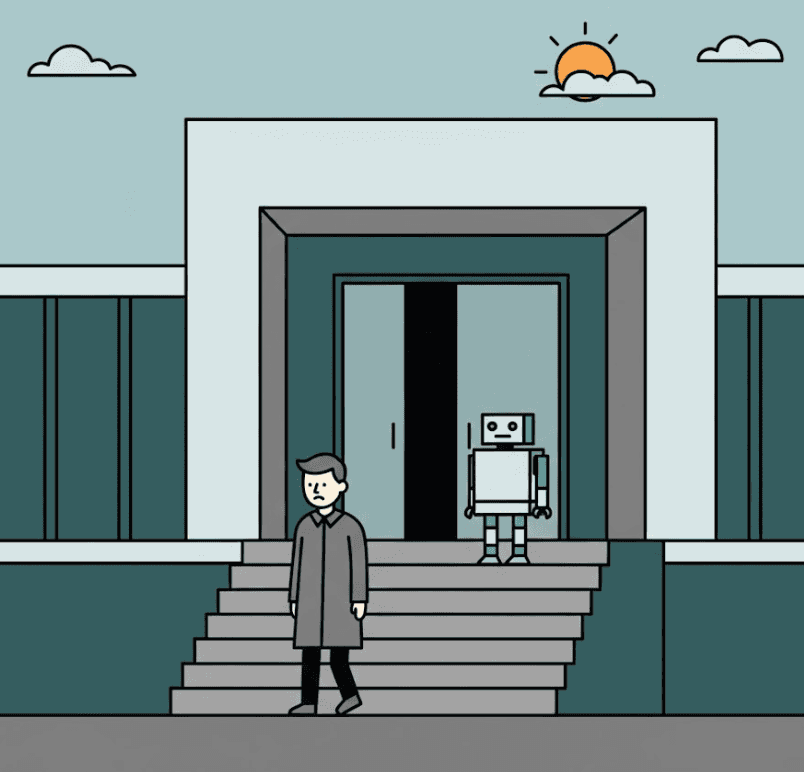
Nordic countries, long thought immune thanks to social cohesion and equality, are not spared. In the Adecco Group’s Global Workforce of the Future 2025 report, 76% of workers believe AI will create new jobs, and 70% see their roles evolving positively.
Yet the same report finds that only about one-third of workers feel able to measure the impact of their work, and those who lack purpose are far more likely to leave their employer. The numbers are stark: 99% of employees who feel a daily purpose plan to stay, compared to just 53% of those who don’t.
Such figures hint at a cultural contradiction. Even as Nordic firms pour resources into well-being and flexibility, attachment to why we work is weakening. Unless handled wisely, AI could turn that quiet drift into a full-blown crisis of purpose.
The double-edged machine
Artificial intelligence carries a seductive promise. Algorithms can lift drudgery from human shoulders, freeing people to focus on creativity, strategy, and empathy—the very areas where Nordic workers traditionally excel. The OECD notes that AI, properly applied, can make work safer and more engaging (OECD, The Impact of AI on the Workplace).
Yet early experience tells a more ambivalent story. A Frontiers in Artificial Intelligence study finds that while AI can reduce stress and routine, it can also weaken autonomy and blur the link between effort and outcome (Frontiersin.org, 2024). Harvard Business Review reports that employees using AI daily often feel lonelier and less connected to colleagues (HBR, 2024).
Meanwhile, a Guardian-covered study by the Institute for Work and Technology found that workplaces with higher exposure to AI, robotics, and digital tracking saw lower quality of life and a loss of perceived meaningfulness (The Guardian, 2024). The risk is not just technological displacement but existential displacement: when humans no longer see how their labour matters.
A 2025 empirical study on AI and employee well-being explains how AI adoption alone does not improve employee well-being (Journal of Business Research, Finland). Benefits arise only when technology enhances the aspects of work employees value — task clarity, autonomy, and safety. The authors conclude that “AI’s positive impact on well-being is conditional: it depends on its alignment with employees’ needs and values.”
In short: AI makes work better only when it makes work more human.
A Nordic paradox
Purpose hasn’t been a soft metric in the Nordics. It’s part of the social contract. High taxes and generous welfare systems are tolerated because work itself is meant to be dignified, participatory, and valuable.
If that glue weakens, so does the region’s edge. Nordic productivity and innovation have long rested on trust, psychological safety, and intrinsic motivation, the factors difficult to code into an algorithm.
Yet the region’s strengths of high digital maturity, social trust, and consensus-driven management mean it can pioneer a more human-centred approach to AI.
The Adecco report points to a clear blueprint: future-ready workers. These are the adaptable, tech-savvy third of the workforce who are at the forefront of using AI. They are those who receive guidance on how to deliver high-value work, understand how their role links to strategy, and take ownership of their skill development.
These traits of purpose, clarity, and autonomy are the same ones that define the Nordic work ethos.
Keeping purpose in the machine age
How can leaders keep that ethos alive as AI deepens its reach?
The evidence suggests three clear priorities:
1. Make the “why” explicit.
Every AI initiative should start with a conversation about purpose: what problem it solves, what value it creates, and how human roles evolve.
SwissCognitive (2025) finds that employees who understand this alignment report significantly higher engagement and meaning. The Adecco report echoes this: workers who connect their role to company strategy show higher retention and satisfaction.
2. Protect autonomy and mastery.
AI should support people, not override them. Transparent algorithms help preserve trust and human control — especially important in societies built on flat hierarchies.
Nordic labour relations, with their deep roots in co-determination, are ideally suited for this balance.
3. Invest in human connection.
Purpose thrives in collaboration and learning. The Adecco report says that 55% of employees expect to work with AI agents in the next year, but trust in AI is double among those involved in its implementation.
Leaders should channel AI-enabled time savings toward creativity, mentorship, and innovation — not more optimization.
Beyond efficiency
For all its power, AI has no sense of why. It mirrors intent, but cannot generate it.
In that void lies the modern leader’s duty: to ensure technology serves human purpose, not the reverse.
The Nordic model, pragmatic yet idealistic, remains uniquely placed to show how this can be done. But it will require vigilance. Purpose, once lost, is hard to automate back.
Sources:
The Adecco Group (2025): Global Workforce of the Future 2025 – Humanity at Work
California Management Review (2024): AI, Employees, and Trust: How the Nordic Model Can Help Future-Proof Organisations
Journal of Business Research (2025): AI and Employee Wellbeing in the Workplace: An Empirical Study
OECD (2024): The Impact of AI on the Workplace
Frontiers in Artificial Intelligence (2024): Exploring How AI Adoption in the Workplace Affects Employees
Harvard Business Review (2024): Using AI at Work Makes Us Lonelier and Less Healthy
The Guardian (2024): Workplace AI, Robots and Trackers Are Bad for Quality of Life
SwissCognitive (2025): AI and the Pursuit of Purpose
ResearchGate (2023): Systematic Review of Meaningful Work 2000–2020
·
5 min read

The Nordic model faces an existential test: can a region built on meaningful work keep its soul in the age of machines?
For decades, the Nordic world of work has been the envy of many: flat hierarchies, trust-based management, and a deeply held belief that work should be purposeful as well as productive. Now, artificial intelligence has arrived in Nordic boardrooms and break rooms alike — not with the menace of mass redundancy, but with a subtler challenge: meaning.
As the California Management Review (2024) notes, the Nordic model’s tradition of trust and worker involvement could be the region’s greatest advantage in navigating the AI transition. Yet new data suggest that the sense of meaning which underpins this model is eroding — and the spread of AI could accelerate the slide.
The meaning recession
Long before ChatGPT became a colleague, the sense of purpose in work had begun to fray. Across the developed world, surveys show that only a minority of employees feel their work is deeply meaningful. A systematic review of two decades of research (2000–2020) found that despite growing interest in the concept, meaningfulness in practice remains “alarmingly low” in many workplaces (ResearchGate).
Nordic countries, long thought immune thanks to social cohesion and equality, are not spared. In the Adecco Group’s Global Workforce of the Future 2025 report, 76% of workers believe AI will create new jobs, and 70% see their roles evolving positively.
Yet the same report finds that only about one-third of workers feel able to measure the impact of their work, and those who lack purpose are far more likely to leave their employer. The numbers are stark: 99% of employees who feel a daily purpose plan to stay, compared to just 53% of those who don’t.
Such figures hint at a cultural contradiction. Even as Nordic firms pour resources into well-being and flexibility, attachment to why we work is weakening. Unless handled wisely, AI could turn that quiet drift into a full-blown crisis of purpose.
The double-edged machine
Artificial intelligence carries a seductive promise. Algorithms can lift drudgery from human shoulders, freeing people to focus on creativity, strategy, and empathy—the very areas where Nordic workers traditionally excel. The OECD notes that AI, properly applied, can make work safer and more engaging (OECD, The Impact of AI on the Workplace).
Yet early experience tells a more ambivalent story. A Frontiers in Artificial Intelligence study finds that while AI can reduce stress and routine, it can also weaken autonomy and blur the link between effort and outcome (Frontiersin.org, 2024). Harvard Business Review reports that employees using AI daily often feel lonelier and less connected to colleagues (HBR, 2024).
Meanwhile, a Guardian-covered study by the Institute for Work and Technology found that workplaces with higher exposure to AI, robotics, and digital tracking saw lower quality of life and a loss of perceived meaningfulness (The Guardian, 2024). The risk is not just technological displacement but existential displacement: when humans no longer see how their labour matters.
A 2025 empirical study on AI and employee well-being explains how AI adoption alone does not improve employee well-being (Journal of Business Research, Finland). Benefits arise only when technology enhances the aspects of work employees value — task clarity, autonomy, and safety. The authors conclude that “AI’s positive impact on well-being is conditional: it depends on its alignment with employees’ needs and values.”
In short: AI makes work better only when it makes work more human.
A Nordic paradox
Purpose hasn’t been a soft metric in the Nordics. It’s part of the social contract. High taxes and generous welfare systems are tolerated because work itself is meant to be dignified, participatory, and valuable.
If that glue weakens, so does the region’s edge. Nordic productivity and innovation have long rested on trust, psychological safety, and intrinsic motivation, the factors difficult to code into an algorithm.
Yet the region’s strengths of high digital maturity, social trust, and consensus-driven management mean it can pioneer a more human-centred approach to AI.
The Adecco report points to a clear blueprint: future-ready workers. These are the adaptable, tech-savvy third of the workforce who are at the forefront of using AI. They are those who receive guidance on how to deliver high-value work, understand how their role links to strategy, and take ownership of their skill development.
These traits of purpose, clarity, and autonomy are the same ones that define the Nordic work ethos.
Keeping purpose in the machine age
How can leaders keep that ethos alive as AI deepens its reach?
The evidence suggests three clear priorities:
1. Make the “why” explicit.
Every AI initiative should start with a conversation about purpose: what problem it solves, what value it creates, and how human roles evolve.
SwissCognitive (2025) finds that employees who understand this alignment report significantly higher engagement and meaning. The Adecco report echoes this: workers who connect their role to company strategy show higher retention and satisfaction.
2. Protect autonomy and mastery.
AI should support people, not override them. Transparent algorithms help preserve trust and human control — especially important in societies built on flat hierarchies.
Nordic labour relations, with their deep roots in co-determination, are ideally suited for this balance.
3. Invest in human connection.
Purpose thrives in collaboration and learning. The Adecco report says that 55% of employees expect to work with AI agents in the next year, but trust in AI is double among those involved in its implementation.
Leaders should channel AI-enabled time savings toward creativity, mentorship, and innovation — not more optimization.
Beyond efficiency
For all its power, AI has no sense of why. It mirrors intent, but cannot generate it.
In that void lies the modern leader’s duty: to ensure technology serves human purpose, not the reverse.
The Nordic model, pragmatic yet idealistic, remains uniquely placed to show how this can be done. But it will require vigilance. Purpose, once lost, is hard to automate back.
Sources:
The Adecco Group (2025): Global Workforce of the Future 2025 – Humanity at Work
California Management Review (2024): AI, Employees, and Trust: How the Nordic Model Can Help Future-Proof Organisations
Journal of Business Research (2025): AI and Employee Wellbeing in the Workplace: An Empirical Study
OECD (2024): The Impact of AI on the Workplace
Frontiers in Artificial Intelligence (2024): Exploring How AI Adoption in the Workplace Affects Employees
Harvard Business Review (2024): Using AI at Work Makes Us Lonelier and Less Healthy
The Guardian (2024): Workplace AI, Robots and Trackers Are Bad for Quality of Life
SwissCognitive (2025): AI and the Pursuit of Purpose
ResearchGate (2023): Systematic Review of Meaningful Work 2000–2020






Investor Event
Listeds Investor Event · Defence
Nordic defence is in a once-in-a-generation growth cycle. Eight listed and pre-IPO companies pitch to 100+ invited investors at Valkoinen Sali, Helsinki
21 September 2026


Latest on Listeds