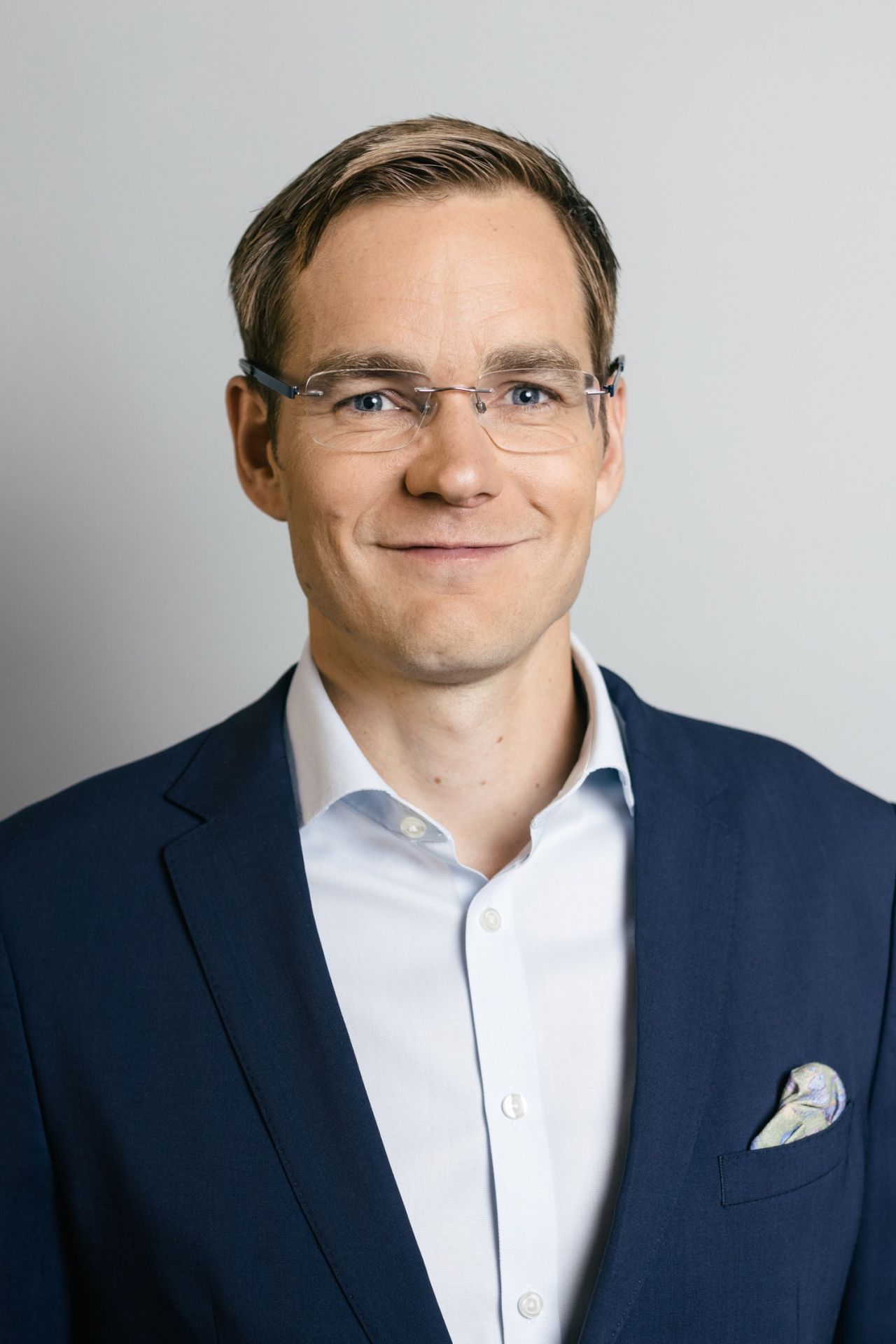
UPM has appointed Joonas Rauramo executive vice president of UPM Energy and a member of the group executive team, effective October 1. He will report directly to CEO Massimo Reynaudo.

The appointment comes at a notable time for the company. In May, UPM agreed to place its Communication Papers business into a joint venture with Sappi. The business generated €2.5 billion in revenue in 2025, equivalent to roughly a quarter of UPM's €9.7 billion group sales.

While the transaction remains subject to regulatory approval, it ranks among the company's most significant recent portfolio decisions. Against that backdrop, UPM has chosen an executive whose career has been built in power generation, renewable energy development, and industrial decarbonization.

An energy executive joins the group executive team

Rauramo arrives with nearly two decades of experience in the energy sector.

Most recently, he served as chief executive officer of Coolbrook, the Finnish industrial decarbonization technology company. Before that, he spent 14 years at Fortum, where he held several leadership positions, including vice president, wind, and vice president, solar and wind development.

He also serves on the board of renewable energy developer Korkia and on the International Energy Agency's Technology and Innovation Advisory Board.

His academic background combines engineering and business. Rauramo holds a Master of Science in Technology from Helsinki University of Technology and a Master of Science in Economics from Aalto University School of Economics.

In announcing the appointment, Reynaudo highlighted Rauramo's experience in power generation, industrial decarbonization, energy markets, project financing, mergers and acquisitions, and global partnerships.

"These are capabilities that are increasingly critical as demand for reliable, emission-free electricity continues to grow and the energy system undergoes profound transformation," Reynaudo said.

The appointment also comes after a strong start to the year for UPM Energy. In its first-quarter results, UPM described the business as having delivered record first-quarter results, supported by high electricity consumption in Finland.

Leadership changes continue across UPM

Rauramo's appointment is the latest in a series of leadership changes across the company.

In September 2025, Tuija Suur-Hamari joined the management team as executive vice president of UPM Plywood. At the annual general meeting in April 2026, shareholders elected Magnus Groth and Piia Karhu to the board, while Piia-Noora Kauppi and Kim Wahl stepped down. Henrik Ehrnrooth was re-elected chair, and Martin à Porta became deputy chair.

Taken together, the changes amount to a meaningful refresh of UPM's leadership structure over the past year.

A company in transition

The leadership changes have coincided with broader changes across the business.

In May, UPM signed a definitive agreement to combine UPM Communication Papers with Sappi's European paper business in a 50/50 joint venture. The transaction would place a €2.5 billion revenue business into a separately financed company, with UPM receiving €475 million in cash proceeds, a €98 million shareholder loan receivable, and a 50% ownership stake in the new entity.

The agreement followed another major decision in the paper business. In October 2025, UPM closed paper machine 1 at its Kaukas mill, reducing coated mechanical paper capacity by 300,000 tonnes annually and affecting 220 positions.

Together, the moves reduce UPM's exposure to graphic paper, a market that has been shrinking across Europe for years.

UPM's first-quarter results offered another snapshot of the company's changing mix. Group sales declined 5.3% to €2.5 billion and comparable EBIT fell 5% to €274 million. Yet UPM Energy delivered record first-quarter results, UPM Biofuels reported strong performance, and UPM Adhesive Materials announced an investment in a new slitting and distribution terminal near New Delhi, India.

Rauramo arrives from a different part of the industrial economy. His career has been built around power generation, renewable energy development, and industrial decarbonization. At the same time that UPM is reshaping its portfolio, it has brought that experience into its top leadership team.

A €2.5 billion revenue business is heading into a joint venture. Paper capacity has been reduced by 300,000 tonnes annually. UPM Energy has reported record first-quarter results. Rauramo's appointment is the latest addition to a growing list of changes across the company.

|

|

Leaders

Joonas Rauramo joins UPM's executive team as energy gains prominence

Joonas Rauramo joins UPM's executive team as energy gains prominence

·

5 min read

Explore and follow profiles from this article to get timely updates:
Credit: UPM, Joonas Rauramo

Credit: UPM, Joonas Rauramo

UPM has appointed Joonas Rauramo executive vice president of UPM Energy and a member of the group executive team, effective October 1. He will report directly to CEO Massimo Reynaudo.

The appointment comes at a notable time for the company. In May, UPM agreed to place its Communication Papers business into a joint venture with Sappi. The business generated €2.5 billion in revenue in 2025, equivalent to roughly a quarter of UPM's €9.7 billion group sales.

While the transaction remains subject to regulatory approval, it ranks among the company's most significant recent portfolio decisions. Against that backdrop, UPM has chosen an executive whose career has been built in power generation, renewable energy development, and industrial decarbonization.

An energy executive joins the group executive team

Rauramo arrives with nearly two decades of experience in the energy sector.

Most recently, he served as chief executive officer of Coolbrook, the Finnish industrial decarbonization technology company. Before that, he spent 14 years at Fortum, where he held several leadership positions, including vice president, wind, and vice president, solar and wind development.

He also serves on the board of renewable energy developer Korkia and on the International Energy Agency's Technology and Innovation Advisory Board.

His academic background combines engineering and business. Rauramo holds a Master of Science in Technology from Helsinki University of Technology and a Master of Science in Economics from Aalto University School of Economics.

In announcing the appointment, Reynaudo highlighted Rauramo's experience in power generation, industrial decarbonization, energy markets, project financing, mergers and acquisitions, and global partnerships.

"These are capabilities that are increasingly critical as demand for reliable, emission-free electricity continues to grow and the energy system undergoes profound transformation," Reynaudo said.

The appointment also comes after a strong start to the year for UPM Energy. In its first-quarter results, UPM described the business as having delivered record first-quarter results, supported by high electricity consumption in Finland.

Leadership changes continue across UPM

Rauramo's appointment is the latest in a series of leadership changes across the company.

In September 2025, Tuija Suur-Hamari joined the management team as executive vice president of UPM Plywood. At the annual general meeting in April 2026, shareholders elected Magnus Groth and Piia Karhu to the board, while Piia-Noora Kauppi and Kim Wahl stepped down. Henrik Ehrnrooth was re-elected chair, and Martin à Porta became deputy chair.

Taken together, the changes amount to a meaningful refresh of UPM's leadership structure over the past year.


Our Pulse newsletter

Your weekly leadership intelligence briefing.

What happened, why it matters, and what to watch across every CEO, board, and executive move in Nordic listed companies, starting with Finland. Fast, factual, and to the point.

Delivered every Monday.

By signing up, you agree to our Privacy Policy

Our Pulse newsletter

Your weekly leadership intelligence briefing.

What happened, why it matters, and what to watch across every CEO, board, and executive move in Nordic listed companies, starting with Finland. Fast, factual, and to the point.

Delivered every Monday.

By signing up, you agree to our Privacy Policy

A company in transition

The leadership changes have coincided with broader changes across the business.

In May, UPM signed a definitive agreement to combine UPM Communication Papers with Sappi's European paper business in a 50/50 joint venture. The transaction would place a €2.5 billion revenue business into a separately financed company, with UPM receiving €475 million in cash proceeds, a €98 million shareholder loan receivable, and a 50% ownership stake in the new entity.

The agreement followed another major decision in the paper business. In October 2025, UPM closed paper machine 1 at its Kaukas mill, reducing coated mechanical paper capacity by 300,000 tonnes annually and affecting 220 positions.

Together, the moves reduce UPM's exposure to graphic paper, a market that has been shrinking across Europe for years.

UPM's first-quarter results offered another snapshot of the company's changing mix. Group sales declined 5.3% to €2.5 billion and comparable EBIT fell 5% to €274 million. Yet UPM Energy delivered record first-quarter results, UPM Biofuels reported strong performance, and UPM Adhesive Materials announced an investment in a new slitting and distribution terminal near New Delhi, India.

Rauramo arrives from a different part of the industrial economy. His career has been built around power generation, renewable energy development, and industrial decarbonization. At the same time that UPM is reshaping its portfolio, it has brought that experience into its top leadership team.

A €2.5 billion revenue business is heading into a joint venture. Paper capacity has been reduced by 300,000 tonnes annually. UPM Energy has reported record first-quarter results. Rauramo's appointment is the latest addition to a growing list of changes across the company.

Follow moves like this on the Listeds Executive Intelligence Platform.
Nordic Listed Leaders Board Programme

Learn board work from
the people who do it.

Harvard cases, coaching and open dialogue with people who sit on and work with boards of Finnish publicly listed companies.

Next cohort

19 November 2026

Then January, April, August and October 2027

Nordic Listed Leaders Board Programme

Learn board work from
the people who do it.

Harvard cases, coaching and open dialogue with people who sit on and work with boards of Finnish publicly listed companies.

Next cohort

19 November 2026

Then January, April, August and October 2027

Authors

Emmi Laine is head of business content at Listeds and our lead for finance and business coverage. She sets the editorial agenda, interviews Nordic business leaders, and writes stories, newsletters, and social content on timely market and corporate topics. Emmi brings nearly eight years of experience from Shanghai's Yicai Global / Yicai Media Group, where she was awarded for reporting on China’s economy, finance sector, and technology innovation. She holds an MSc in Innovation and Entrepreneurship from ESADE Business School in Barcelona and a Master’s degree in International Design Business Management from Aalto University. She also holds a Bachelor’s degree in Culture Studies with a major in Journalism from Stockholm University and has studied Mandarin Chinese and Chinese culture. Emmi is a Finnish citizen and has lived in Finland, Sweden, China, and Portugal.

Emmi Laine is head of business content at Listeds and our lead for finance and business coverage. She sets the editorial agenda, interviews Nordic business leaders, and writes stories, newsletters, and social content on timely market and corporate topics. Emmi brings nearly eight years of experience from Shanghai's Yicai Global / Yicai Media Group, where she was awarded for reporting on China’s economy, finance sector, and technology innovation. She holds an MSc in Innovation and Entrepreneurship from ESADE Business School in Barcelona and a Master’s degree in International Design Business Management from Aalto University. She also holds a Bachelor’s degree in Culture Studies with a major in Journalism from Stockholm University and has studied Mandarin Chinese and Chinese culture. Emmi is a Finnish citizen and has lived in Finland, Sweden, China, and Portugal.

Devdatta Temgire is a data and business analyst at Listeds. He contributes research, data analysis, and pattern detection to the publication’s coverage of Nordic-listed companies, with a focus on board composition, leadership transitions, and financials. He holds an honors degree in artificial intelligence and data science alongside a bachelor’s in computer engineering, and previously worked at KPMG.

Devdatta Temgire is a data and business analyst at Listeds. He contributes research, data analysis, and pattern detection to the publication’s coverage of Nordic-listed companies, with a focus on board composition, leadership transitions, and financials. He holds an honors degree in artificial intelligence and data science alongside a bachelor’s in computer engineering, and previously worked at KPMG.

Authors

Journalist

Emmi Laine is head of business content at Listeds and our lead for finance and business coverage. She sets the editorial agenda, interviews Nordic business leaders, and writes stories, newsletters, and social content on timely market and corporate topics. Emmi brings nearly eight years of experience from Shanghai's Yicai Global / Yicai Media Group, where she was awarded for reporting on China’s economy, finance sector, and technology innovation. She holds an MSc in Innovation and Entrepreneurship from ESADE Business School in Barcelona and a Master’s degree in International Design Business Management from Aalto University. She also holds a Bachelor’s degree in Culture Studies with a major in Journalism from Stockholm University and has studied Mandarin Chinese and Chinese culture. Emmi is a Finnish citizen and has lived in Finland, Sweden, China, and Portugal.

Devdatta Temgire is a data and business analyst at Listeds. He contributes research, data analysis, and pattern detection to the publication’s coverage of Nordic-listed companies, with a focus on board composition, leadership transitions, and financials. He holds an honors degree in artificial intelligence and data science alongside a bachelor’s in computer engineering, and previously worked at KPMG.

All Listeds newsletters (bundle)

One sign-up, the full picture.

Get every Listeds newsletter: the daily signal drumbeat, the weekly Pulse briefing, the monthly Best of the Month, the CEO letter, and the Weekend read.

By signing up, you agree to our Privacy Policy

All Listeds newsletters (bundle)

One sign-up, the full picture.

Get every Listeds newsletter: the daily signal drumbeat, the weekly Pulse briefing, the monthly Best of the Month, the CEO letter, and the Weekend read.

By signing up, you agree to our Privacy Policy

Latest signalsLive feed
Moves trackerLive feed

Nordic Listed Leaders Board Programme

Learn board work from
the people who do it.

Harvard cases, coaching and open dialogue with people who sit on and work with boards of Finnish publicly listed companies.

Next cohort

19 November 2026

Then January, April, August and October 2027

Latest on Listeds

Executive Intelligence

Nineteen of 32 Helsinki large caps raised board fees this spring, and none cut

Board pay at Helsinki's large caps went one way this spring. Nineteen of the 32 boards raised their chair fee at the 2026 annual general meetings, 13 kept it unchanged, and none cut any fee.

Most raises were modest. Counting the boards that held, the typical chair fee rose 2.8%. Among the 19 boards that raised it, the typical increase was 5.2%. Eight raised it by less than 5%, seven by between 5% and 10%, and four by 10% or more.

Nineteen of 32 boards raised the chair fee; none cut it
Helsinki large caps by change in the annual chair fee, 2026 AGM against 2025
03691215Number of companies13Unchanged8Under 5%75% to under 10%410% or more
SSAB and Telia changes measured in kronor.
Source: Listeds board remuneration data, AGM resolution releases 2025 and 2026

Neste, Fortum and Sanoma made the biggest raises

Neste moved furthest. Its chair fee rose 18.2%, from €165,000 to €195,000, and its member fee 10.7% to €83,000. Fortum raised its chair fee 12.9%, from €155,000 to €175,000. Sanoma raised its chair fee 11.1% to €160,000, and its vice chair fee 19.0%, from €84,000 to €100,000, the biggest increase for any board role in the segment (Sanoma AGM release).

The fourth raise of 10% or more was Nordea's, which took its chair fee to €440,000, level with Nokia. Part 1 of this series looked at that move in detail.

The raises were spread across the table, not just among low payers

This was not a round of low-paying boards catching up. A year earlier, the boards that went on to raise their chair fee and the boards that held it had the same typical chair fee, €160,000.

At the very top, most boards held. Nokia, UPM, Stora Enso and KONE, four of the six highest payers, left every fee unchanged.

Board members got similar raises to their chairs

The rest of the board was not left behind. Nineteen boards also raised the fee for ordinary members. At the boards that raised fees, the typical increase was 5.2% for the chair, 5.3% for the vice chair and 4.4% for members, so the gap between the roles hardly changed.

In total, the chairs of the 32 large caps are now paid about €5.6 million a year, roughly €205,000 more than in 2025.

Executive Intelligence

Nordea catches Nokia at the top of Helsinki board pay

Nordea raised its chair fee by 10% this spring, to €440,000 a year. Its chair is now paid exactly as much as Nokia's, and both earn far more than the chair of any other Helsinki large cap.

A year ago Nordea paid its chair €400,000, the second-highest fee in the segment. This year's annual general meeting added €40,000. Nokia kept its chair fee unchanged at €440,000.

The gap to the rest is wide. The third-highest chair fee is Sampo's €250,000, followed by UPM at €240,000. The typical large cap chair earns €166,500, so Nordea and Nokia pay their chairs about 2.6 times as much.

Nordea now pays its chair as much as Nokia
Ten highest annual chair fees among Helsinki large caps, 2026 AGMs
Nokia€440,000Nordea€440,000Sampo€250,000UPM€240,000Stora Enso€221,728KONE€220,000Wärtsilä€212,000SSAB*€203,700Telia*€199,500Neste€195,000€0€100k€200k€300k€400k€500k€600k
*Set in SEK, converted at the ECB reference rate on the AGM date (SEK 10.8485 per euro for SSAB on 28 April 2026; SEK 10.8765 for Telia on 9 April 2026) and rounded to the nearest €100.
Source: Listeds board remuneration data, AGM resolution releases 2026

Nordea gave its chair a bigger raise than the rest of its board

The rest of the Nordea board received smaller raises. Ordinary members went up 3.1%, to €115,500, and the vice chair 5.6%, to €190,000. As a result, Nordea's chair now earns 3.8 times what an ordinary board member earns, up from 3.6 times a year ago. No other large cap has a wider gap between its chair and its members.

Nokia pays every board seat at the top of the market

Nokia spreads its money differently. An ordinary member of the Nokia board earns €185,000 a year, more than the chair is paid at 21 of the 32 large caps. Nokia's vice chair earns €210,000, the highest vice chair fee in the segment. Nordea pays most for the chair; Nokia pays the most, or joint most, for every seat.

The top fee has not risen, but two boards now pay it

For nomination boards preparing next year's proposals, the highest chair fee in Helsinki has not moved: Nokia already paid €440,000 in 2025. What has changed is that it is no longer a single outlier. Two of the largest boards in the market now pay the same top fee, and no other board comes close.

Join our Pulse, Best-of-the-Week, and Weekend newsletters

Join our Pulse, Best-of-the-Week, and Weekend newsletters