“Five and a half million people with modest purchasing power and even weaker willingness to spend,” says Riku Vassinen, CEO of marketing communications agency Hasan and Partners and a board member at Salama Brewing Company, describing the Finnish market. It is, he adds, “a difficult combination. The market exists elsewhere.”
For Salama, fragrance house SEES, and food delivery company Wolt, that reality has shaped strategy from the start. In a small home market, growth demands sharper positioning and earlier international moves, sometimes even at a Hollywood scale.
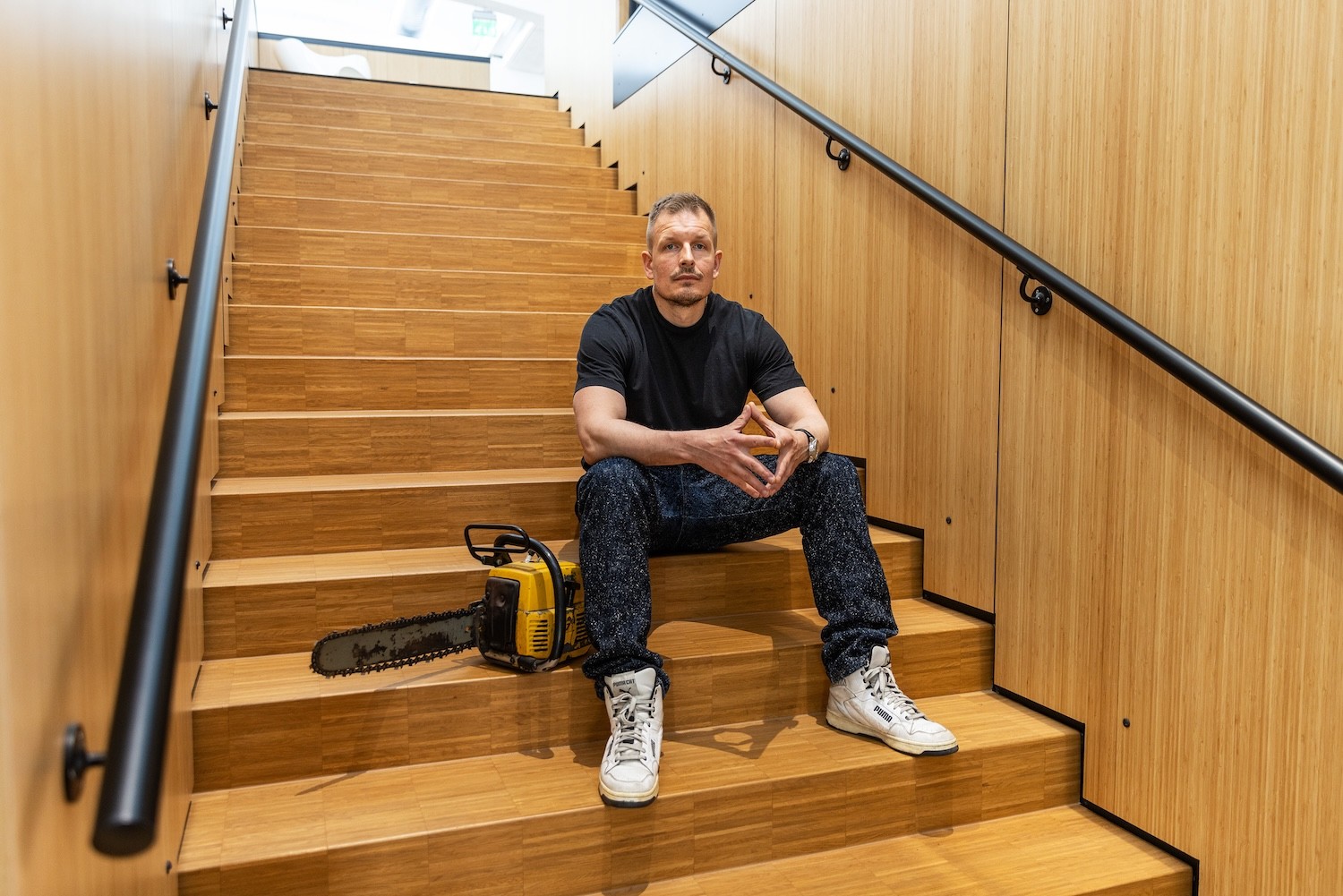
Riku Vassinen, CEO of marketing communications agency Hasan and Partners and a board member at Salama Brewing. Photo given by Vassinen.
Salama. Export as structure
Salama, a craft brewer founded by four friends in 2019, shows how quickly the domestic ceiling appears.
The Helsinki-based brewery recently began exporting to China, marking its 23rd export market. Export revenue is approaching half of the total turnover. At the current pace, Sweden may soon surpass Finland as its largest market.
International growth has been deliberate. Salama has maintained a steady presence at festivals, bars, and trade events outside Finland.
Recognition followed. Hop Culture selected Salama as one of the most interesting breweries in the world in 2025. The New York Times listed its Salamanation bar as a must-visit destination in Helsinki. In an ironic twist, fame abroad accelerated recognition at home.
SEES. Small and fast
SEES, led by CEO Elisa Koivumaa, represents a different kind of leverage.
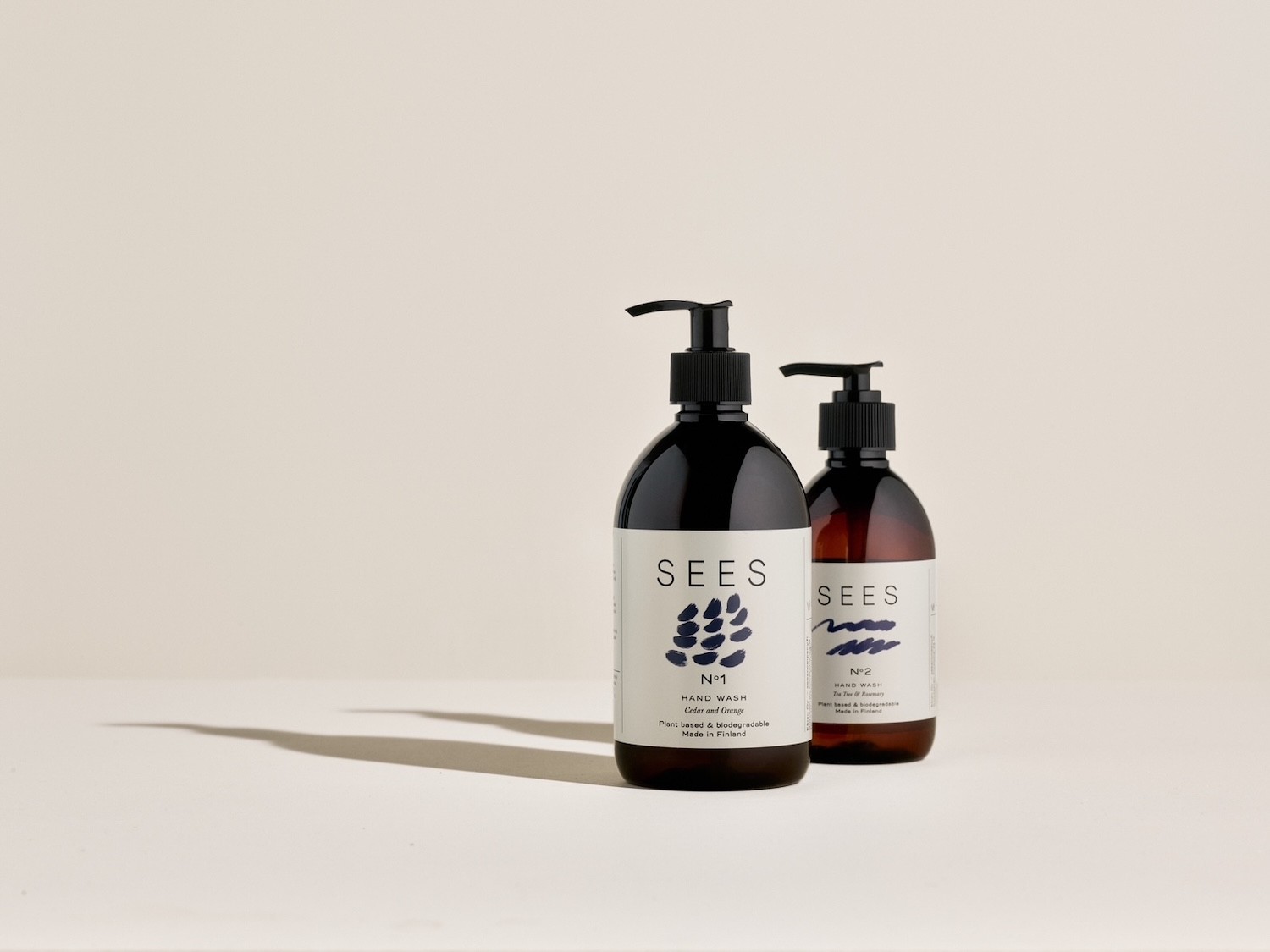
SEES hand wash products. Photographed by Christian Jakowleff.
Earlier this month, the Finnish fragrance house placed its products in the Grammy Awards goodie bags, Koivumaa shared on LinkedIn. International visibility had been building earlier. SEES products had appeared in the And Just Like That series, Koivumaa explains to Listeds.
The collaboration came without a marketing agency. Someone on the HBO team had discovered SEES on Instagram and was drawn to its minimalist aesthetic.
“Small can be an advantage,” Koivumaa says, adding that a niche brand like SEES should think globally from day one.
Her thinking was shaped by time spent living in Japan, where branding, storytelling, and restraint are highly valued. The experience led her to question why Finland’s strengths, pure nature, quiet design, and conceptual clarity, so rarely translate into global hit brands.
Part of the obstacle, she suspects, is fear of failure. Some founders worry that not entering large supermarket chains signals defeat. Koivumaa disagrees. When HBO requested products for the sequel to the HBO series Sex and the City, SEES was able to customize the products and meet the requirements immediately.
Being niche allows the brand to position itself as exclusive and premium. Producing biodegradable cosmetics, scents, and detergents in Finland is not a limitation. It enables SEES to say yes only to opportunities that align with its values. Above all, it leaves room to think internationally from day one.
Wolt. Hollywood without hesitation
Wolt, acquired by DoorDash in 2022, reflects the same small market logic at a greater scale, with the backing to think bigger.

Andrew MacDonald, CEO of MacWell (wearing black), photographed during filming with Owen Wilson in Australia. Photo provided by MacWell.
In its first global brand ambassador campaign, Wolt cast Owen Wilson, known from Midnight in Paris and Zoolander, and rolled out a cinematic campaign across 25 countries last year.
According to MacWell, the agency leading the project, the decisive factor was not the celebrity alone but the process. As Andrew MacDonald, CEO of MacWell, puts it: "Wolt was looking for an iconic face whose influence could travel across regions while still feeling neighborly and authentic.” Wilson was selected after extensive shortlisting, and the creative was written with his voice in mind. The guiding question was simple: how would Owen do this?"
The production took place in Australia over a single, tightly orchestrated day, involving multiple teams and remote collaboration. The more lasting lesson came afterward.
“A celebrity is not an idea. You need to match the persona's brand to your brand positioning,” says Liisa Paasio, executive creative director at MacWell. It requires investments, she states, but offers exponential returns.
MacWell's Executive Creative Producer Marc Stevenson urges Finnish companies to ask bigger questions. What kind of campaign could we build with an A-list star? What if it were possible? He sums it up: “If you do not ask, you do not receive.”
Built for beyond
Vassinen argues that the shift must happen early. “Companies must look beyond Finnish borders. This means that leaders must speak to global audiences and brands must be built for international relevance from the very beginning.”
For Salama, that has meant export markets accounting for nearly half of revenue. For SEES, it has meant designing a brand that can respond quickly when the global media calls. For Wolt, it has meant launching a campaign across 25 countries with a Hollywood actor at its center.
Finland’s 5.5 million consumers do not allow companies to rely solely on domestic depth. The constraint demands clarity, speed, and international orientation.
·
5 min read

“Five and a half million people with modest purchasing power and even weaker willingness to spend,” says Riku Vassinen, CEO of marketing communications agency Hasan and Partners and a board member at Salama Brewing Company, describing the Finnish market. It is, he adds, “a difficult combination. The market exists elsewhere.”
For Salama, fragrance house SEES, and food delivery company Wolt, that reality has shaped strategy from the start. In a small home market, growth demands sharper positioning and earlier international moves, sometimes even at a Hollywood scale.
Riku Vassinen, CEO of marketing communications agency Hasan and Partners and a board member at Salama Brewing. Photo given by Vassinen.
Salama. Export as structure
Salama, a craft brewer founded by four friends in 2019, shows how quickly the domestic ceiling appears.
The Helsinki-based brewery recently began exporting to China, marking its 23rd export market. Export revenue is approaching half of the total turnover. At the current pace, Sweden may soon surpass Finland as its largest market.
International growth has been deliberate. Salama has maintained a steady presence at festivals, bars, and trade events outside Finland.
Recognition followed. Hop Culture selected Salama as one of the most interesting breweries in the world in 2025. The New York Times listed its Salamanation bar as a must-visit destination in Helsinki. In an ironic twist, fame abroad accelerated recognition at home.
SEES. Small and fast
SEES, led by CEO Elisa Koivumaa, represents a different kind of leverage.
SEES hand wash products. Photographed by Christian Jakowleff.
Earlier this month, the Finnish fragrance house placed its products in the Grammy Awards goodie bags, Koivumaa shared on LinkedIn. International visibility had been building earlier. SEES products had appeared in the And Just Like That series, Koivumaa explains to Listeds.
The collaboration came without a marketing agency. Someone on the HBO team had discovered SEES on Instagram and was drawn to its minimalist aesthetic.
“Small can be an advantage,” Koivumaa says, adding that a niche brand like SEES should think globally from day one.
Her thinking was shaped by time spent living in Japan, where branding, storytelling, and restraint are highly valued. The experience led her to question why Finland’s strengths, pure nature, quiet design, and conceptual clarity, so rarely translate into global hit brands.
Part of the obstacle, she suspects, is fear of failure. Some founders worry that not entering large supermarket chains signals defeat. Koivumaa disagrees. When HBO requested products for the sequel to the HBO series Sex and the City, SEES was able to customize the products and meet the requirements immediately.
Being niche allows the brand to position itself as exclusive and premium. Producing biodegradable cosmetics, scents, and detergents in Finland is not a limitation. It enables SEES to say yes only to opportunities that align with its values. Above all, it leaves room to think internationally from day one.
Wolt. Hollywood without hesitation
Wolt, acquired by DoorDash in 2022, reflects the same small market logic at a greater scale, with the backing to think bigger.
Andrew MacDonald, CEO of MacWell (wearing black), photographed during filming with Owen Wilson in Australia. Photo provided by MacWell.
In its first global brand ambassador campaign, Wolt cast Owen Wilson, known from Midnight in Paris and Zoolander, and rolled out a cinematic campaign across 25 countries last year.
According to MacWell, the agency leading the project, the decisive factor was not the celebrity alone but the process. As Andrew MacDonald, CEO of MacWell, puts it: "Wolt was looking for an iconic face whose influence could travel across regions while still feeling neighborly and authentic.” Wilson was selected after extensive shortlisting, and the creative was written with his voice in mind. The guiding question was simple: how would Owen do this?"
The production took place in Australia over a single, tightly orchestrated day, involving multiple teams and remote collaboration. The more lasting lesson came afterward.
“A celebrity is not an idea. You need to match the persona's brand to your brand positioning,” says Liisa Paasio, executive creative director at MacWell. It requires investments, she states, but offers exponential returns.
MacWell's Executive Creative Producer Marc Stevenson urges Finnish companies to ask bigger questions. What kind of campaign could we build with an A-list star? What if it were possible? He sums it up: “If you do not ask, you do not receive.”
Built for beyond
Vassinen argues that the shift must happen early. “Companies must look beyond Finnish borders. This means that leaders must speak to global audiences and brands must be built for international relevance from the very beginning.”
For Salama, that has meant export markets accounting for nearly half of revenue. For SEES, it has meant designing a brand that can respond quickly when the global media calls. For Wolt, it has meant launching a campaign across 25 countries with a Hollywood actor at its center.
Finland’s 5.5 million consumers do not allow companies to rely solely on domestic depth. The constraint demands clarity, speed, and international orientation.




Investor Event
Listeds Investor Event · Defence
Nordic defence is in a once-in-a-generation growth cycle. Eight listed and pre-IPO companies pitch to 100+ invited investors at Valkoinen Sali, Helsinki
21 September 2026


Latest on Listeds


Our Pulse newsletter
Your weekly leadership intelligence briefing.
What happened, why it matters, and what to watch across every CEO, board, and executive move in Nordic listed companies, starting with Finland. Fast, factual, and to the point.
Delivered every Monday.

By signing up, you agree to our Privacy Policy