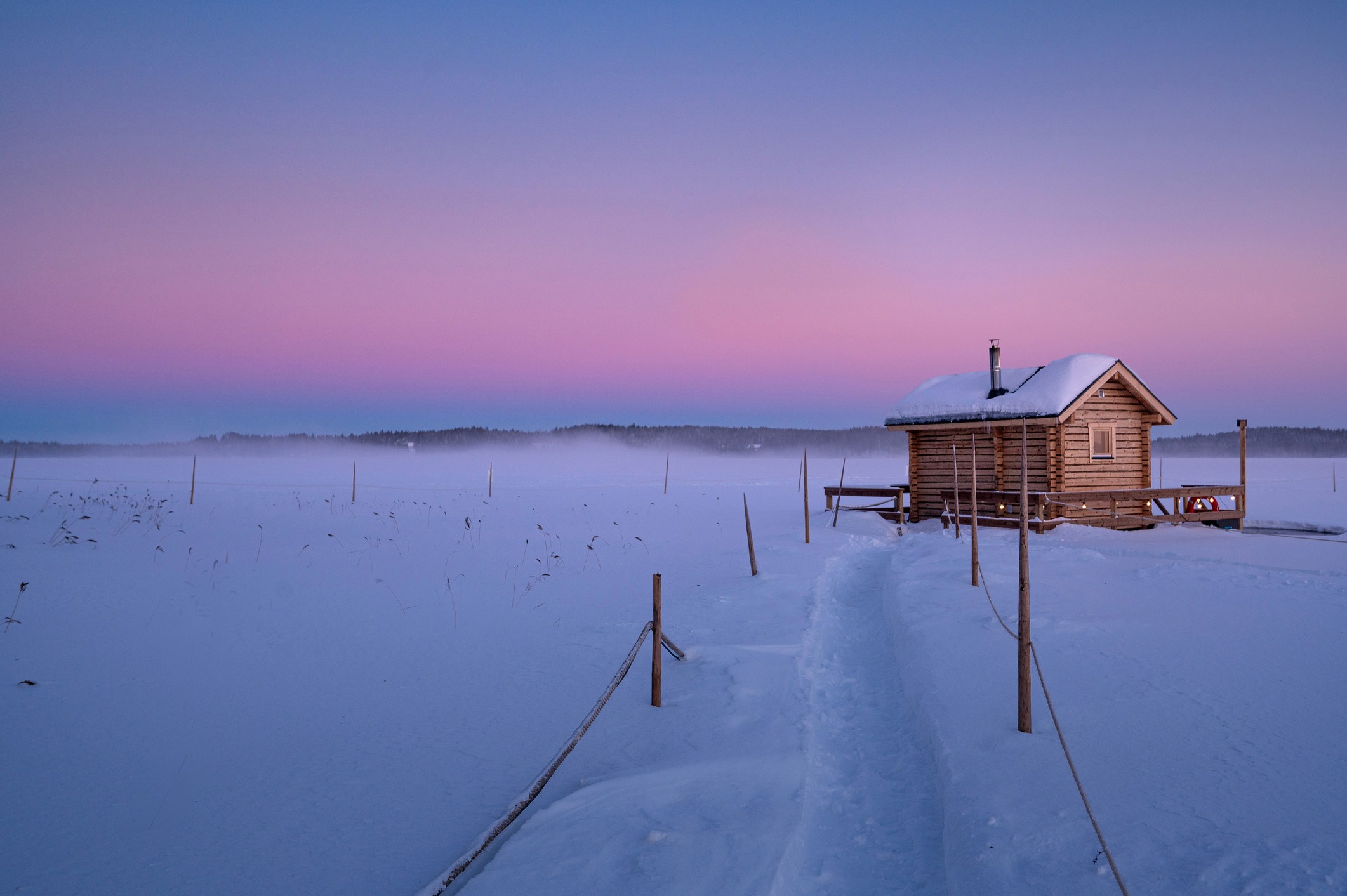
For many Nordic executives, the sauna is more than a wellness ritual. Finnish Sauna Society member Hanna Pakarinen — also known as the winner of the first season of Idols — frames the sauna not as leisure but as a structured environment that enables busy people to decompress, recalibrate, and connect. 

Approaching its 90th anniversary, the Finnish Sauna Society is a non-profit cultural institution dedicated to preserving and promoting Finland’s sauna traditions. Pakarinen — a member for a decade — has supported that mission by helping organize the mobile sauna showcased at the most recent Eurovision contest in Basel.

UNESCO’s decision to place Finnish sauna culture on its list of intangible cultural heritage further strengthened the sauna society’s identity and reach. Pakarinen recalls the scale of the campaign, noting that securing the designation “was a major undertaking and a significant moment for the community.”

A system for mental clarity

Finnish Sauna Society premises, photographed by Reetta Virtanen.

The modern lifestyle today demands constant cognitive switching and emotional endurance. The sauna forces the opposite. The heat, silence, and absence of devices narrow attention into the present moment.

Pakarinen captures this effect: during intense heat followed by a cold plunge, the mind “stops scanning everything else and focuses entirely on the physical present.” This narrowing of attention resembles what psychologists describe as transient hypofrontality, a temporary reduction in activity in the prefrontal cortex often associated with exercise or entering a state of flow.

What earlier generations felt in their bones is now showing up in peer-reviewed studies. Regular sauna use has been linked to significantly lower stress levels, improved autonomic balance, and better sleep quality (Harvard Health 2015; University of Eastern Finland 2018). Heat exposure also elevates heart rate and increases circulation in ways comparable to moderate exercise (UCLA Health 2022). Especially for executives dealing with high cognitive load, these effects translate into clearer thinking, faster recovery, and improved emotional regulation. 

A neutral zone for leadership behavior

Despite its informality, the Finnish Sauna Society enforces behavioral rules that encourage constructive interaction. Phones are banned. Only low-alcohol drinks are allowed. Conversations should remain respectful and considerate. These constraints create a rare leadership environment where hierarchy flattens.

Pakarinen notes that even long-standing members “do not stand above anyone else and everyone shares the same etiquette.” For people accustomed to environments defined by rank, the sauna becomes a behavioral equalizer. It promotes listening, patience, and unpressured dialogue — qualities that often erode in high-stakes corporate settings.

Community as resilience infrastructure

Inspired by Finnish mythology, the Louhi sauna is a specific hot, chimneyless (smoke) sauna located within the Finnish Sauna Society's complex in Vaskiniemi, Helsinki. Photography by Reetta Virtanen.

In contrast to the rise of individualistic wellness culture, the Finnish Sauna Society treats well-being as a shared experience. Pakarinen notes that many members, especially older ones, consider sauna days “an essential part of their routine and a deeply social anchor.”

This rhythm is as important as the heat itself. The Finnish Sauna Society maintains multiple wood-fired and electric saunas, limits the number of bathers, and enforces etiquette to preserve calm.

Pakarinen describes her own experience as a complete mental reset: after heat and cold immersion, “there is simply no room left for the clutter of the day.” The combination of exertion, silence, and nature creates a clean break from decision fatigue.

As jobs grow more cognitively demanding, environments that reinforce clarity and resilience become strategic assets. Finland’s sauna tradition quietly delivers this benefit. It sharpens focus, stabilizes mood, strengthens community, and instills norms that encourage humility and presence.

Best public saunas in Finland for executives:

  1. Löyly, Helsinki
    A frequent choice for executive meetups and visiting international leaders. Private lounge options, a high-quality restaurant, and direct sea access make it suitable for low-key discussions away from the office. The smoke sauna offers a quieter setting during off-peak hours.

  2. Kulttuurisauna, Helsinki
    Ideal for leaders who prefer minimalist surroundings and uninterrupted focus. Phones are banned, conversation stays subdued, and the rhythm encourages reflective thinking — a strong fit for executives seeking clarity rather than socializing.

  3. Tampereen Sauna Restaurant Kuuma, Tampere
    Excellent for executive teams holding off-site days in Tampere. The wood-heated saunas and lake swimming create a natural “reset cycle,” while the restaurant provides a neutral space for follow-up discussions over an early dinner.

  4. Rajaportin Sauna, Tampere
    Best suited for leaders who value authenticity and community. Its slower pace and historic character make it a good location for informal peer connections or grounding.

  5. Helsinki Allas Sea Pool Saunas
    Particularly useful for time-pressed executives staying near the city center. Early morning sessions offer privacy and space, and the combination of sauna heat with Baltic Sea swimming is an efficient way to reset before a full workday.

What is the Finnish Sauna Society?

The Finnish Sauna Society (Suomen Saunaseura ry) is a non-profit cultural organization founded in 1937 to preserve, research, and promote Finland’s sauna traditions. Based in Helsinki, the society maintains the historic Vaskiniemi sauna house, which includes several wood-fired, smoke, and electric saunas used exclusively by members.


Scientific sources

Harvard Health Publishing (2015). “Sauna use linked to longer life and fewer fatal heart problems.”
https://www.health.harvard.edu/blog/sauna-use-linked-longer-life-fewer-fatal-heart-problems-201502257755

UCLA Health (2022). “Benefits of sauna bathing for heart health.” https://www.uclahealth.org/news/article/benefits-sauna-bathing-heart-health

University of Eastern Finland – Laukkanen et al. Multiple longitudinal studies linking frequent sauna use with reduced cardiovascular and all-cause mortality. https://jamanetwork.com/journals/jamainternalmedicine/fullarticle/2130724



|

Weekend

Why Nordic people turn to the sauna for community and clear thinking

Why Nordic people turn to the sauna for community and clear thinking

·

5 min read

For many Nordic executives, the sauna is more than a wellness ritual. Finnish Sauna Society member Hanna Pakarinen — also known as the winner of the first season of Idols — frames the sauna not as leisure but as a structured environment that enables busy people to decompress, recalibrate, and connect. 

Approaching its 90th anniversary, the Finnish Sauna Society is a non-profit cultural institution dedicated to preserving and promoting Finland’s sauna traditions. Pakarinen — a member for a decade — has supported that mission by helping organize the mobile sauna showcased at the most recent Eurovision contest in Basel.

UNESCO’s decision to place Finnish sauna culture on its list of intangible cultural heritage further strengthened the sauna society’s identity and reach. Pakarinen recalls the scale of the campaign, noting that securing the designation “was a major undertaking and a significant moment for the community.”

A system for mental clarity

Finnish Sauna Society premises, photographed by Reetta Virtanen.

The modern lifestyle today demands constant cognitive switching and emotional endurance. The sauna forces the opposite. The heat, silence, and absence of devices narrow attention into the present moment.

Pakarinen captures this effect: during intense heat followed by a cold plunge, the mind “stops scanning everything else and focuses entirely on the physical present.” This narrowing of attention resembles what psychologists describe as transient hypofrontality, a temporary reduction in activity in the prefrontal cortex often associated with exercise or entering a state of flow.

What earlier generations felt in their bones is now showing up in peer-reviewed studies. Regular sauna use has been linked to significantly lower stress levels, improved autonomic balance, and better sleep quality (Harvard Health 2015; University of Eastern Finland 2018). Heat exposure also elevates heart rate and increases circulation in ways comparable to moderate exercise (UCLA Health 2022). Especially for executives dealing with high cognitive load, these effects translate into clearer thinking, faster recovery, and improved emotional regulation. 

A neutral zone for leadership behavior

Despite its informality, the Finnish Sauna Society enforces behavioral rules that encourage constructive interaction. Phones are banned. Only low-alcohol drinks are allowed. Conversations should remain respectful and considerate. These constraints create a rare leadership environment where hierarchy flattens.

Pakarinen notes that even long-standing members “do not stand above anyone else and everyone shares the same etiquette.” For people accustomed to environments defined by rank, the sauna becomes a behavioral equalizer. It promotes listening, patience, and unpressured dialogue — qualities that often erode in high-stakes corporate settings.

Community as resilience infrastructure

Inspired by Finnish mythology, the Louhi sauna is a specific hot, chimneyless (smoke) sauna located within the Finnish Sauna Society's complex in Vaskiniemi, Helsinki. Photography by Reetta Virtanen.

In contrast to the rise of individualistic wellness culture, the Finnish Sauna Society treats well-being as a shared experience. Pakarinen notes that many members, especially older ones, consider sauna days “an essential part of their routine and a deeply social anchor.”

This rhythm is as important as the heat itself. The Finnish Sauna Society maintains multiple wood-fired and electric saunas, limits the number of bathers, and enforces etiquette to preserve calm.

Pakarinen describes her own experience as a complete mental reset: after heat and cold immersion, “there is simply no room left for the clutter of the day.” The combination of exertion, silence, and nature creates a clean break from decision fatigue.

As jobs grow more cognitively demanding, environments that reinforce clarity and resilience become strategic assets. Finland’s sauna tradition quietly delivers this benefit. It sharpens focus, stabilizes mood, strengthens community, and instills norms that encourage humility and presence.

Best public saunas in Finland for executives:

  1. Löyly, Helsinki
    A frequent choice for executive meetups and visiting international leaders. Private lounge options, a high-quality restaurant, and direct sea access make it suitable for low-key discussions away from the office. The smoke sauna offers a quieter setting during off-peak hours.

  2. Kulttuurisauna, Helsinki
    Ideal for leaders who prefer minimalist surroundings and uninterrupted focus. Phones are banned, conversation stays subdued, and the rhythm encourages reflective thinking — a strong fit for executives seeking clarity rather than socializing.

  3. Tampereen Sauna Restaurant Kuuma, Tampere
    Excellent for executive teams holding off-site days in Tampere. The wood-heated saunas and lake swimming create a natural “reset cycle,” while the restaurant provides a neutral space for follow-up discussions over an early dinner.

  4. Rajaportin Sauna, Tampere
    Best suited for leaders who value authenticity and community. Its slower pace and historic character make it a good location for informal peer connections or grounding.

  5. Helsinki Allas Sea Pool Saunas
    Particularly useful for time-pressed executives staying near the city center. Early morning sessions offer privacy and space, and the combination of sauna heat with Baltic Sea swimming is an efficient way to reset before a full workday.

What is the Finnish Sauna Society?

The Finnish Sauna Society (Suomen Saunaseura ry) is a non-profit cultural organization founded in 1937 to preserve, research, and promote Finland’s sauna traditions. Based in Helsinki, the society maintains the historic Vaskiniemi sauna house, which includes several wood-fired, smoke, and electric saunas used exclusively by members.


Scientific sources

Harvard Health Publishing (2015). “Sauna use linked to longer life and fewer fatal heart problems.”
https://www.health.harvard.edu/blog/sauna-use-linked-longer-life-fewer-fatal-heart-problems-201502257755

UCLA Health (2022). “Benefits of sauna bathing for heart health.” https://www.uclahealth.org/news/article/benefits-sauna-bathing-heart-health

University of Eastern Finland – Laukkanen et al. Multiple longitudinal studies linking frequent sauna use with reduced cardiovascular and all-cause mortality. https://jamanetwork.com/journals/jamainternalmedicine/fullarticle/2130724


Board Programme

Built for Nordic listed company boards.

The only programme in the Nordics designed specifically for listed-company board work.
Five sessions, one cohort, twenty leaders in one room - Helsinki, 2026.

Board Programme

Built for Nordic listed company boards.

The only programme in the Nordics designed specifically for listed-company board work.
Five sessions, one cohort, twenty leaders in one room - Helsinki, 2026.

Authors

Anni, one of Finland’s best-known hosts with a two-decade career across radio, podcasts, and television, leads our weekend lifestyle section.

Anni, one of Finland’s best-known hosts with a two-decade career across radio, podcasts, and television, leads our weekend lifestyle section.

Emmi Laine is head of business content at Listeds and our lead for finance and business coverage. She sets the editorial agenda, interviews Nordic business leaders, and writes stories, newsletters, and social content on timely market and corporate topics. Emmi brings nearly eight years of experience from Shanghai's Yicai Global / Yicai Media Group, where she was awarded for reporting on China’s economy, finance sector, and technology innovation. She holds an MSc in Innovation and Entrepreneurship from ESADE Business School in Barcelona and a Master’s degree in International Design Business Management from Aalto University. She also holds a Bachelor’s degree in Culture Studies with a major in Journalism from Stockholm University and has studied Mandarin Chinese and Chinese culture. Emmi is a Finnish citizen and has lived in Finland, Sweden, China, and Portugal.

Emmi Laine is head of business content at Listeds and our lead for finance and business coverage. She sets the editorial agenda, interviews Nordic business leaders, and writes stories, newsletters, and social content on timely market and corporate topics. Emmi brings nearly eight years of experience from Shanghai's Yicai Global / Yicai Media Group, where she was awarded for reporting on China’s economy, finance sector, and technology innovation. She holds an MSc in Innovation and Entrepreneurship from ESADE Business School in Barcelona and a Master’s degree in International Design Business Management from Aalto University. She also holds a Bachelor’s degree in Culture Studies with a major in Journalism from Stockholm University and has studied Mandarin Chinese and Chinese culture. Emmi is a Finnish citizen and has lived in Finland, Sweden, China, and Portugal.

Authors

Content writer

Anni, one of Finland’s best-known hosts with a two-decade career across radio, podcasts, and television, leads our weekend lifestyle section.

Journalist

Emmi Laine is head of business content at Listeds and our lead for finance and business coverage. She sets the editorial agenda, interviews Nordic business leaders, and writes stories, newsletters, and social content on timely market and corporate topics. Emmi brings nearly eight years of experience from Shanghai's Yicai Global / Yicai Media Group, where she was awarded for reporting on China’s economy, finance sector, and technology innovation. She holds an MSc in Innovation and Entrepreneurship from ESADE Business School in Barcelona and a Master’s degree in International Design Business Management from Aalto University. She also holds a Bachelor’s degree in Culture Studies with a major in Journalism from Stockholm University and has studied Mandarin Chinese and Chinese culture. Emmi is a Finnish citizen and has lived in Finland, Sweden, China, and Portugal.

Our Weekend newsletter

Slow down. Breathe. Live.

A curated weekend read, mixing Nordic lifestyle, culture, wellbeing, and inspiration. The counterbalance to your business week.

Delivered one Saturday a month.

By signing up, you agree to our Privacy Policy

Our Weekend newsletter

Slow down. Breathe. Live.

A curated weekend read, mixing Nordic lifestyle, culture, wellbeing, and inspiration. The counterbalance to your business week.

Delivered one Saturday a month.

By signing up, you agree to our Privacy Policy

Latest signalsLive feed
Moves trackerLive feed

Investor Event

Listeds Investor Event · Defence

Nordic defence is in a once-in-a-generation growth cycle. Eight listed and pre-IPO companies pitch to 100+ invited investors at Valkoinen Sali, Helsinki

21 September 2026

Latest on Listeds

Executive Intelligence

Women hold 34.9% of Helsinki board seats. The chair's seat moved the other way.

Sep 14, 2026

The half in which the EU board gender directive fell due, measured against the Listeds board composition dataset. Women's share of board seats rose 1.3 points. The share of female chairs fell from 12.0% to 10.7%.

According to the Board Index — Finland H1 2026 study by Listeds and Admincontrol, women's share of board seats on Nasdaq Helsinki rose from 33.6% to 34.9% over the first half of the year. The gain was 1.3 percentage points in six months, continuing the upward trend that began in 2022 (28.2%). 30 June 2026 was the compliance deadline for the EU directive on gender balance on the boards of listed companies (Directive (EU) 2022/2381). The largest single-year gain, however, came in 2025, when the share climbed 3.0 points from 30.6% to 33.6% — a full year before the deadline took effect.

The 40% target applies to a narrower group than the market average covers

The market-wide average still falls short of the directive's 40% target. The directive's obligations, however, apply only to companies above certain size thresholds — in Finland, more than 250 employees and either a balance sheet above €43 million or turnover above €50 million — whereas the Board Index figures cover the whole of Nasdaq Helsinki and the First North market. In the Large Cap segment, which comes closest to the group in scope, the threshold was passed: women held 42.0% of board seats at the end of June. Market-cap segment is an approximation rather than the legal test: some Mid Cap companies clear the employee and turnover thresholds, while a few Large Cap companies with small workforces do not. The lowest shares sit in small companies and on First North, which are largely outside the directive's scope.

One woman on the board is no longer enough

The change over the first half was not only a matter of volume. The emphasis shifted from appointing a first woman to filling more than one seat: the share of companies with only one woman on the board fell from 26.2% to 21.9%. At the same time, the share of companies where more than 40% of directors are women rose from 24.0% to 27.8%.

By segment, the largest step was taken in Small Cap companies, where women's share rose from 29.6% to 32.4%. First North remains the most male-dominated market segment: women hold just 27.5% of board seats there. By industry, the sharpest gains came in consumer staples (36.1% → 40.0%) and technology (29.5% → 32.9%). Real estate remains the least gender-diverse industry, with women at 25.0%.

Eight all-male boards — and fewer female chairs than before

One indicator stood still, the other turned down. The number of all-male boards remained at eight companies (4.4% → 4.3% of companies), and all of them are Small Cap or First North companies: Digitalist Group, Dovre Group, Eagle Filters Group, Norrhydro Group, Pallas Air, Summa Defence, Sunborn International and Titanium.

The share of female chairs fell from 12.0% (22 companies) to 10.7% (20 companies). Progress in board membership has therefore not yet reached the head of the table.

At the other end of the range, a group of companies has reached or passed gender parity. The highest shares of women were at Suominen (66.7%), Aktia Bank and Verkkokauppa.com (both 57.1%) and Huhtamäki (55.6%). Fiskars, Kempower, Orion, Stora Enso, Administer and Modulight landed at exactly 50%.

Internationalisation did not move at all

The nationality mix was entirely unchanged: Finnish nationals held 77.3% of board seats both at the start and at the close of the half. In every reading since 2022 the figure has sat between 77% and 78%. The only real movement in the series came in 2025, when the Finnish share fell from 78.2% to 77.3%.

Internationalisation is concentrated in a small number of large companies and in certain industries. The most international industries are telecommunications (44.1% Finnish), health care (61.9%) and energy (62.5%). Among market segments, Large Cap is the most international (58.4% Finnish). The most domestic industries are consumer staples (88.0%) and industrials (85.3%); among segments, Small Cap (87.8%) and First North (86.1%). The internationalisation of Finnish listed companies' business has not carried through to their board composition, and new listings still arrive on the exchange with largely all-domestic boards.

“Finnish listed companies are internationalising their business faster than their boards. If a company's growth comes from outside its home market, the board should include at least one director who has relevant business experience from that market. Today's digital board meeting systems make high-quality, frictionless board work possible across borders as well.”
Henrikki Hirvonen
Henrikki HirvonenCountry Manager Finland, Admincontrol

Average age edged down

The average age of boards fell from 57.6 to 57.0 years over the half. Across the full series, however, boards have aged: the average has risen from 55.7 years at the end of 2022, with the sharpest single move — up 1.1 years — in 2025 alone. Millennials (born 1980–1999) rose from 12.0% to 12.2% of board seats, and directors under 50 from 18.1% to 18.5%. The share of companies with no millennial director fell from 50.3% to 47.1%.

Even the youngest boards sit at or above 45 years of age. The only exception is Talenom, whose board has a calculated average age of 40.8 years and where 80.0% of directors are millennials.

Most of the adjustment came before the deadline, not because of it

Progress over the first half was broader than regulation alone requires, as shares also rose outside the directive's size thresholds. The open question is whether it continues without a deadline attached to it. The pattern in the data suggests much of the adjustment was anticipatory: the largest annual gain came in 2025, before the deadline, and the pace roughly halved in the half when compliance actually fell due.

“Diversity is measured by gender, nationality and age because those are measurable. A board's real capability, however, is a question of expertise: does the board's expertise match the tactics and the strategy the company intends to execute over the coming years. Composition is only the starting point. Diverse board work is not automatically effective, because different perspectives produce better decisions only if the way the board works lets them reach the table.”
 Henrikki Hirvonen
Henrikki HirvonenCountry Manager Finland, Admincontrol

Summary

Metric

1 Jan 2026

30 Jun 2026

Women on boards

33.6%

34.9%

Boards with no women

4.4% (8 companies)

4.3% (8 companies)

Boards with only one woman

26.2%

21.9%

Boards above 40% women

24.0%

27.8%

Female board chairs

12.0%

10.7%

Finnish directors

77.3%

77.3%

Average board age

57.6

57.0

Millennial directors

12.0%

12.2%

Boards with no millennial

50.3%

47.1%

Read the full index: Board Index — Finland | H1 2026

Market Signals

The world will cross 1.5°C within a few years, UNEP says. The EU dropped the duty to plan for it in March.

Sep 11, 2026

Net-zero alone would not bring temperatures back to 1.5°C before the second half of the 22nd century. The report says most developed countries now need net-negative targets beyond 2050. The Omnibus made having a transition plan at all optional.

The UN Environment Programme published Limiting Overshoot: Navigating exceedance of 1.5°C and pathways towards return on 2 September 2026. Its opening line is a position, not a projection: global warming is set to cross 1.5°C above pre-industrial levels, likely within the next few years. Even an optimistic scenario of full implementation of all national climate plans plus additional net-zero targets puts expected peak temperature rise at 1.8°C.

"There are no good outcomes if we remain above 1.5°C," said Inger Andersen, UNEP's Executive Director, on publication.

The best available case and the breaking point are the same number

That 1.8°C appears twice, in two roles. It is the peak under the most optimistic scenario. It is also the level past which the return trip stops working: beyond around 1.8°C, decline to 1.5°C during the 21st century becomes increasingly challenging.

The best case available therefore sits at the threshold where coming back down becomes hard. The report's own verdict: by no means an acceptable or preferred pathway, simply the best remaining option.

Net-zero is a milestone towards net-negative

That is the report's own section heading, and its point is that mitigation policy can no longer be framed solely around reaching zero.

The math here deserves a second read. Global net-zero would produce a temperature decline of roughly 0.3°C per century, so if mitigation stops there, a return to 1.5°C is unlikely before the second half of the 22nd century, even at a 1.8°C peak. Keeping a return within credible reach relies at a minimum on net-negative targets for most developed countries beyond 2050. Every Nordic economy is in that group.

For a Nordic listed company holding a 2035 or 2040 net-zero commitment, the commitment is not what comes under pressure. Its sufficiency as an endpoint does.

The obligation went in March

The Omnibus I Directive was published in the Official Journal on 26 February 2026 and entered into force on 18 March. It removed from the CSDDD the requirement to adopt and implement a climate transition plan. Member states have until 19 March 2027 to transpose the reporting changes, so national law in Helsinki, Stockholm and Copenhagen is still catching up. Under the CSRD a company discloses information about a plan where it has one, and nothing obliges it to have one. Scope narrowed at the same time, to more than 1,000 employees and turnover above €450 million, leaving much of the Nordic mid-cap universe outside mandatory reporting. Outside banking and the Paris conditions on green bonds, the duty is voluntary.

Some of the Nordic names were on the other side of the rollback

The narrowing was not something Nordic large caps asked for. Nokia, Nordea, Ingka Group and Vattenfall were among 194 organisations that signed a joint statement on 1 July 2025 urging the EU not to weaken the CSRD and CSDDD. Listeds covered the case for holding the line in a commercial partnership column by Riikka Kuha of Hannes Snellman in November 2025.

What still moves the number

The report is not fatalistic, and it is specific about where the leverage sits.

Every fraction of a degree avoided, and every year by which overshoot is shortened, saves lives, protects ecosystems and reduces economic losses. The fastest lever in the immediate term is methane and other short-lived climate pollutants, because cutting them slows the rate of warming quickly rather than decades out. After that the sequence is deep and sustained decarbonisation to at least net-zero as temperatures peak, then sustained net-negative CO2 emissions as they decline.

The report is blunt about the deadline on that last capability. Decisions made during the coming decade will shape technology, infrastructure and land-use choices, determining whether countries retain the capacity to move beyond net zero if required.

Which is the practical translation for a Nordic board. March removed the requirement to hold a transition plan. It did not remove the decade in which the plan had to be made.

Our Pulse newsletter

Your weekly leadership intelligence briefing.

What happened, why it matters, and what to watch across every CEO, board, and executive move in Nordic listed companies, starting with Finland. Fast, factual, and to the point.

Delivered every Monday.

By signing up, you agree to our Privacy Policy

Join our Pulse, Best-of-the-Week, and Weekend newsletters

Join our Pulse, Best-of-the-Week, and Weekend newsletters