The hub for Nordic leaders and leadership signals.

Starting from Finland

Starting from Finland

Editor’s picks

Executive Intelligence

One number defines the Finnish CEO Index for Q2 2026: it is zero

Aug 18, 2026

Finland's boards are replacing chief executives briskly, just not at the top of the market, and not with women. The two blanks say more than the twelve appointments do.

In a market as small and closely watched as Finland's, the interest in a quarterly count of chief executives usually lies in the names. This quarter it lies in the gaps. The Listeds CEO Index — Finland for the second quarter of 2026, produced in partnership with SAM Headhunting, records twelve new listed-company chief executives and, around them, a single number that keeps recurring. It is zero. None of the twelve is a woman. And none of the country's largest companies changed its leader at all. It is a second quarter running with the top of the market completely still, a year after more than a third of those same companies replaced their CEO.

The renewal is real, just not at the top

That stillness is not a market slowing down. Below the largest companies, renewal is running at pace. Twenty-five new chief executives took up their roles across Finnish listed companies in the first half of 2026, a rate of about 50 a year against the 43 recorded across all of 2025, and it sits on top of a market that has already renewed roughly a third of its CEOs within eighteen months.

Every one of the twelve second-quarter changes happened below Large Cap: seven in Small Cap, four on First North, one in Mid Cap. The churn is real. It has simply stopped reaching the top.

New CEOs by segment
Q2 2026 · number of starts
024687410Small CapFirst NorthMid CapLarge Cap
Source: Listeds Executive Platform
Figure 1 — New CEOs by market segment, Q2 2026. Large Cap records a second consecutive quarter at zero.

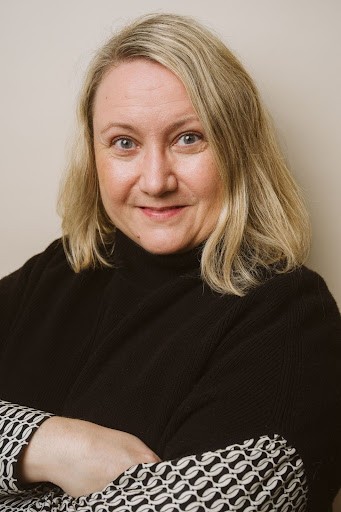
For a board, that combination is the point. "Many boards have already done the groundwork on a new direction and new focus areas, and where the sitting CEO cannot take the company there, they act," says Leena Hellfors, Managing Director of SAM Headhunting. "Succession has become a continuous capability, not an occasional project." 

“Many boards have already done the groundwork on a new direction and new focus areas, and where the sitting CEO cannot take the company there, they act. Succession has become a continuous capability, not an occasional project.”
Leena Hellfors
Leena HellforsManaging Director, SAM Headhunting

Across most of the market, that capability is visibly in use. At the very top, it is switched off.

Why the top sits still

The freeze reflects a specific instinct about the largest jobs, and the rest of the quarter shows the same instinct at work in who gets hired. The twelve new CEOs took up their roles at an average age of about 54, roughly four years older than the age at which the sitting population first became chief executives. Half were promoted from inside, and only two of the twelve came from outside Finland. Where boards did move, they reached for the experienced, the internal, the known.

"Leading a listed company is a genuinely different job, and boards look for proven experience and judgement," Hellfors notes. "There is a deep pool of capable, more senior leaders at the moment, so an experienced profile is often the natural choice." The index bears out the gradient: the largest companies appoint their CEOs oldest, and in practice do not hand the seat to a first-time or younger leader, which is understandable.

No women in Q2, but two are starting in Q3

The number that drew the most attention is the one that reads as a step back. Not one of the twelve new CEOs was a woman, against a sitting-population share of just 8.1%, and across the half-year only one of twenty-five appointments went to a woman. A market that consistently buys proven experience over runway narrows its pipeline of younger leaders, and does the same to an already thin pipeline of women.

Gender representation of new CEOs in H1 2026
4%96%4%womenWomen4%Men96%
Source: Listeds Executive Platform
Figure 2 — Gender of new CEOs across the first half of 2026 (25 starts).

The picture is not static, though. Because the index tracks the date a CEO starts, the turn is already visible. Two women are recorded as taking up CEO roles in the third quarter, both showing in the data before the quarter has even closed.

When the top does move, it moves as a team

There is a second reason the frozen tier matters: a CEO change is rarely a single change. 

Across the twelve companies that did change leader in Q2, management teams saw four arrivals and ten departures in the weeks that followed, concentrated in a few companies rather than spread evenly, but consistent in direction. 

“A CEO change is rarely a single appointment. The board has usually set the direction already, and the new CEO arrives to execute it, which is what pulls a wider management-team rebuild behind it. Increasingly the assignment is a whole core team rather than one person.”
Taru From
Taru FromSenior Partner, SAM Headhunting

Which means the stillness at the top is storing up scale. When one of Finland's largest companies does finally change its CEO, and eventually one will, the board, its investors and its management team should expect not a single appointment but a leadership-team change playing out over the following quarters.

Read the index here

Insider interviews

The work in between is ownership: Accendo's Kai Tavakka on First North small caps

Aug 18, 2026

Weak consumer confidence has made First North small caps look cheap. Kai Tavakka of Accendo Capital argues the real constraint is ownership, not price. Small listed companies need committed, long-term owners who work with boards and management when the market is not paying attention.

“Short-term mood does not change what a company can become. It changes what you pay to own it.”
Kai Tavakka
Kai TavakkaManaging Partner, Accendo Capital

First North has been a hard place to own. The Nasdaq First North Finland index is down about 29% over the past year and about 65% over the past five, as of 6 August 2026. For many investors, that is a reason to stay away. For Kai Tavakka, Managing Partner of the Nordic active-ownership investor Accendo Capital, it is closer to the opposite.

"The mistake is to read a falling small-cap index only as a verdict on the companies inside it," Tavakka says. "Often it is also a verdict on confidence, liquidity and who is willing to own these companies through the cycle."

Why the segment got cheaper

Accendo ties the sell-off to consumer confidence. Appetite for smaller, higher-risk listed companies tends to follow it, and on Accendo’s reading confidence in Finland and Sweden has stayed weak since 2021. When households feel poorer and investors become more cautious, money moves toward larger, more familiar names. In a retail-driven market, the buyers for small and micro caps can disappear quickly.

“When confidence is low, money goes to whatever feels safe or is mainstream.”
Kai Tavakka
Kai TavakkaManaging Partner, Accendo Capital

“That pulls valuations down across the small-cap segment,” Tavakka says, “even when the potential of selected companies has not deteriorated in the same way.”

The result, on Accendo's reading, is a market where price can detach from quality. Tavakka points to a sharp compression in valuation multiples over the past five years, even as many underlying companies have improved their products, technology and cost structures.

"Of course, several companies have not delivered on their original growth ambitions," he says. "But in selected cases, we see the potential getting better while valuations have moved to new lows. That is where we see the opportunity."

Why cheap is not enough

This is where Accendo's case parts company with a simple "buy the dip" theme.

"Short-term mood does not change what a company can become," Tavakka says. "It changes what you pay to own it. The work in between is ownership: the right board, the right management, focused strategy, disciplined capital allocation and enough patience for the company to become worth more."

That is the part Accendo does itself. It runs a concentrated portfolio of Northern European small caps and works closely with boards, nomination committees and management teams rather than trading in and out. Tavakka was named Young Board Member of the Year at the 2025 Nordic Listed Leaders gala, recognition for that hands-on work.

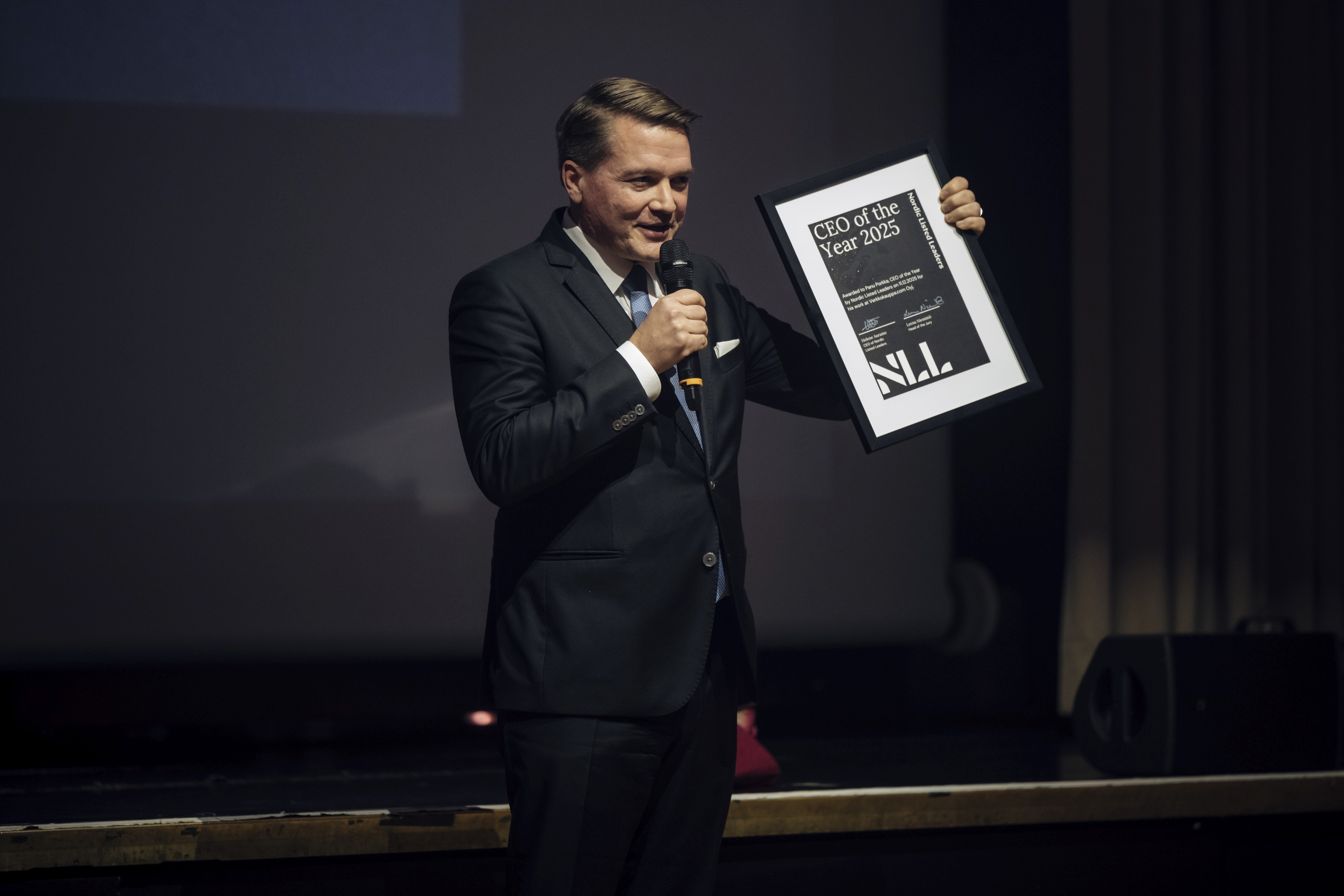
Kai Tavakka winning the award: Young Board Member of the Year at the 2025 Nordic Listed Leaders gala. Photographer: Eino Ansio. Nordic Listed Leaders is part of Listeds

The companies it has owned and engaged with as an active owner include Finnish cybersecurity firm SSH Communications Security and Helsinki-listed game studio Remedy Entertainment, alongside Swedish names such as the connectivity infrastructure group Hexatronic. On its own analysis, the entry point for the Nordic small- and micro-cap segment is among the most attractive it has seen in years.

The ownership gap

First North is, by Accendo’s description, largely a retail market, with private investors accounting for much of the trading. Today, those investors have access to a vast amount of information, but they complement rather than replace committed owners who work with the companies to strengthen strategy and governance.

Public small-cap markets, as Accendo frames it, need more committed, active and long-term owners. The market works best when it is not driven only by short-term traders or diversified portfolio managers, but also by owners willing to engage over several years. IPOs are one example. In Tavakka's view, the goal of an IPO should not be a strong first trading period. The more important question is whether the listing leaves the company with a better ownership structure: fresh capital, and owners with the incentive and the mandate to help in the next phase.

On our reading, the more useful lesson is not that First North is cheap. A two-thirds fall over five years establishes that on its own. It is that cheapness and a healthy market are not the same thing. A segment reprices back toward value only if someone is willing to own it through the doubt, and on First North that owner is often missing: the index has retail buyers and passive institutional money, but too few engaged, multi-year holders who take a board seat and stay.

Tavakka has a commercial interest in saying so; it is his company’s model. But the underlying point holds. A small-cap market can stay open and still be unhealthy: prices fall, good companies get sold too early or run out of steam, and the market grinds on. That is a governance problem before it is a pricing one, and it shows up in the ownership registers Listeds tracks company by company.

Accendo's model is typically a 10-30% stake and one or two board seats, including chair roles where it is needed. The work often includes recruiting board and management talent, focusing strategy, and strengthening financial and commercial discipline

Finland is one of the clearest cases. It has strong engineering and a deep research base, but has often struggled to turn that into global commercial winners before companies are sold or lose momentum. 

Tavakka welcomes the region's new unicorns and venture capital success stories, but argues that Europe also needs healthier listed small-cap markets. These markets allow a wider range of investors to participate in the next generation of technology companies, and give companies another route to scale if the venture capital path has not yet produced success.

Where patience matters

The market still has not recovered, and Tavakka is careful not to call a bottom. Confidence may be improving, but that does not mean valuations turn immediately. A market down roughly 65% over five years is cheap, but not risk-free.

What Accendo offers is not a prediction of the turn but a way of operating through it: concentrated positions, long holding periods and active involvement in the companies it owns. Tavakka says this patient, active-ownership approach has helped Accendo outperform its equity benchmarks since its inception in 2008. For a private investor without that toolkit, the same entry point carries more timing risk.

"We do not pretend to know the exact bottom, and we are not too concerned about it," Tavakka says. "We buy quality we understand, help companies improve, and seek value-adding exits. That is our way to invest in this part of the market."


Kai Tavakka

Managing Partner, Accendo Capital

He has been a Board Member of:

  • SSH Communications Security - Board Member since 2020

  • Remedy Entertainment - Board Member since 2024

  • Careium AB - Board Member from 2022 to 2026


Accendo Capital is a Nordic active-ownership investor focused on listed small and micro-cap technology companies in Northern Europe. Founded in 2008, Accendo typically takes concentrated ownership positions and works with companies through boards, nomination committees and management teams over multi-year periods. Its current portfolio includes companies such as SSH Communications Security, Remedy Entertainment, Hexatronic Group, Impact Coatings, and Modelon.

Insider interviews

The work in between is ownership: Accendo's Kai Tavakka on First North small caps

Aug 18, 2026

Weak consumer confidence has made First North small caps look cheap. Kai Tavakka of Accendo Capital argues the real constraint is ownership, not price. Small listed companies need committed, long-term owners who work with boards and management when the market is not paying attention.

“Short-term mood does not change what a company can become. It changes what you pay to own it.”
Kai Tavakka
Kai TavakkaManaging Partner, Accendo Capital

First North has been a hard place to own. The Nasdaq First North Finland index is down about 29% over the past year and about 65% over the past five, as of 6 August 2026. For many investors, that is a reason to stay away. For Kai Tavakka, Managing Partner of the Nordic active-ownership investor Accendo Capital, it is closer to the opposite.

"The mistake is to read a falling small-cap index only as a verdict on the companies inside it," Tavakka says. "Often it is also a verdict on confidence, liquidity and who is willing to own these companies through the cycle."

Why the segment got cheaper

Accendo ties the sell-off to consumer confidence. Appetite for smaller, higher-risk listed companies tends to follow it, and on Accendo’s reading confidence in Finland and Sweden has stayed weak since 2021. When households feel poorer and investors become more cautious, money moves toward larger, more familiar names. In a retail-driven market, the buyers for small and micro caps can disappear quickly.

“When confidence is low, money goes to whatever feels safe or is mainstream.”
Kai Tavakka
Kai TavakkaManaging Partner, Accendo Capital

“That pulls valuations down across the small-cap segment,” Tavakka says, “even when the potential of selected companies has not deteriorated in the same way.”

The result, on Accendo's reading, is a market where price can detach from quality. Tavakka points to a sharp compression in valuation multiples over the past five years, even as many underlying companies have improved their products, technology and cost structures.

"Of course, several companies have not delivered on their original growth ambitions," he says. "But in selected cases, we see the potential getting better while valuations have moved to new lows. That is where we see the opportunity."

Why cheap is not enough

This is where Accendo's case parts company with a simple "buy the dip" theme.

"Short-term mood does not change what a company can become," Tavakka says. "It changes what you pay to own it. The work in between is ownership: the right board, the right management, focused strategy, disciplined capital allocation and enough patience for the company to become worth more."

That is the part Accendo does itself. It runs a concentrated portfolio of Northern European small caps and works closely with boards, nomination committees and management teams rather than trading in and out. Tavakka was named Young Board Member of the Year at the 2025 Nordic Listed Leaders gala, recognition for that hands-on work.

Kai Tavakka winning the award: Young Board Member of the Year at the 2025 Nordic Listed Leaders gala. Photographer: Eino Ansio. Nordic Listed Leaders is part of Listeds

The companies it has owned and engaged with as an active owner include Finnish cybersecurity firm SSH Communications Security and Helsinki-listed game studio Remedy Entertainment, alongside Swedish names such as the connectivity infrastructure group Hexatronic. On its own analysis, the entry point for the Nordic small- and micro-cap segment is among the most attractive it has seen in years.

The ownership gap

First North is, by Accendo’s description, largely a retail market, with private investors accounting for much of the trading. Today, those investors have access to a vast amount of information, but they complement rather than replace committed owners who work with the companies to strengthen strategy and governance.

Public small-cap markets, as Accendo frames it, need more committed, active and long-term owners. The market works best when it is not driven only by short-term traders or diversified portfolio managers, but also by owners willing to engage over several years. IPOs are one example. In Tavakka's view, the goal of an IPO should not be a strong first trading period. The more important question is whether the listing leaves the company with a better ownership structure: fresh capital, and owners with the incentive and the mandate to help in the next phase.

On our reading, the more useful lesson is not that First North is cheap. A two-thirds fall over five years establishes that on its own. It is that cheapness and a healthy market are not the same thing. A segment reprices back toward value only if someone is willing to own it through the doubt, and on First North that owner is often missing: the index has retail buyers and passive institutional money, but too few engaged, multi-year holders who take a board seat and stay.

Tavakka has a commercial interest in saying so; it is his company’s model. But the underlying point holds. A small-cap market can stay open and still be unhealthy: prices fall, good companies get sold too early or run out of steam, and the market grinds on. That is a governance problem before it is a pricing one, and it shows up in the ownership registers Listeds tracks company by company.

Accendo's model is typically a 10-30% stake and one or two board seats, including chair roles where it is needed. The work often includes recruiting board and management talent, focusing strategy, and strengthening financial and commercial discipline

Finland is one of the clearest cases. It has strong engineering and a deep research base, but has often struggled to turn that into global commercial winners before companies are sold or lose momentum. 

Tavakka welcomes the region's new unicorns and venture capital success stories, but argues that Europe also needs healthier listed small-cap markets. These markets allow a wider range of investors to participate in the next generation of technology companies, and give companies another route to scale if the venture capital path has not yet produced success.

Where patience matters

The market still has not recovered, and Tavakka is careful not to call a bottom. Confidence may be improving, but that does not mean valuations turn immediately. A market down roughly 65% over five years is cheap, but not risk-free.

What Accendo offers is not a prediction of the turn but a way of operating through it: concentrated positions, long holding periods and active involvement in the companies it owns. Tavakka says this patient, active-ownership approach has helped Accendo outperform its equity benchmarks since its inception in 2008. For a private investor without that toolkit, the same entry point carries more timing risk.

"We do not pretend to know the exact bottom, and we are not too concerned about it," Tavakka says. "We buy quality we understand, help companies improve, and seek value-adding exits. That is our way to invest in this part of the market."


Kai Tavakka

Managing Partner, Accendo Capital

He has been a Board Member of:

  • SSH Communications Security - Board Member since 2020

  • Remedy Entertainment - Board Member since 2024

  • Careium AB - Board Member from 2022 to 2026


Accendo Capital is a Nordic active-ownership investor focused on listed small and micro-cap technology companies in Northern Europe. Founded in 2008, Accendo typically takes concentrated ownership positions and works with companies through boards, nomination committees and management teams over multi-year periods. Its current portfolio includes companies such as SSH Communications Security, Remedy Entertainment, Hexatronic Group, Impact Coatings, and Modelon.

Insider interviews

The work in between is ownership: Accendo's Kai Tavakka on First North small caps

Aug 18, 2026

Weak consumer confidence has made First North small caps look cheap. Kai Tavakka of Accendo Capital argues the real constraint is ownership, not price. Small listed companies need committed, long-term owners who work with boards and management when the market is not paying attention.

“Short-term mood does not change what a company can become. It changes what you pay to own it.”
Kai Tavakka
Kai TavakkaManaging Partner, Accendo Capital

First North has been a hard place to own. The Nasdaq First North Finland index is down about 29% over the past year and about 65% over the past five, as of 6 August 2026. For many investors, that is a reason to stay away. For Kai Tavakka, Managing Partner of the Nordic active-ownership investor Accendo Capital, it is closer to the opposite.

"The mistake is to read a falling small-cap index only as a verdict on the companies inside it," Tavakka says. "Often it is also a verdict on confidence, liquidity and who is willing to own these companies through the cycle."

Why the segment got cheaper

Accendo ties the sell-off to consumer confidence. Appetite for smaller, higher-risk listed companies tends to follow it, and on Accendo’s reading confidence in Finland and Sweden has stayed weak since 2021. When households feel poorer and investors become more cautious, money moves toward larger, more familiar names. In a retail-driven market, the buyers for small and micro caps can disappear quickly.

“When confidence is low, money goes to whatever feels safe or is mainstream.”
Kai Tavakka
Kai TavakkaManaging Partner, Accendo Capital

“That pulls valuations down across the small-cap segment,” Tavakka says, “even when the potential of selected companies has not deteriorated in the same way.”

The result, on Accendo's reading, is a market where price can detach from quality. Tavakka points to a sharp compression in valuation multiples over the past five years, even as many underlying companies have improved their products, technology and cost structures.

"Of course, several companies have not delivered on their original growth ambitions," he says. "But in selected cases, we see the potential getting better while valuations have moved to new lows. That is where we see the opportunity."

Why cheap is not enough

This is where Accendo's case parts company with a simple "buy the dip" theme.

"Short-term mood does not change what a company can become," Tavakka says. "It changes what you pay to own it. The work in between is ownership: the right board, the right management, focused strategy, disciplined capital allocation and enough patience for the company to become worth more."

That is the part Accendo does itself. It runs a concentrated portfolio of Northern European small caps and works closely with boards, nomination committees and management teams rather than trading in and out. Tavakka was named Young Board Member of the Year at the 2025 Nordic Listed Leaders gala, recognition for that hands-on work.

Kai Tavakka winning the award: Young Board Member of the Year at the 2025 Nordic Listed Leaders gala. Photographer: Eino Ansio. Nordic Listed Leaders is part of Listeds

The companies it has owned and engaged with as an active owner include Finnish cybersecurity firm SSH Communications Security and Helsinki-listed game studio Remedy Entertainment, alongside Swedish names such as the connectivity infrastructure group Hexatronic. On its own analysis, the entry point for the Nordic small- and micro-cap segment is among the most attractive it has seen in years.

The ownership gap

First North is, by Accendo’s description, largely a retail market, with private investors accounting for much of the trading. Today, those investors have access to a vast amount of information, but they complement rather than replace committed owners who work with the companies to strengthen strategy and governance.

Public small-cap markets, as Accendo frames it, need more committed, active and long-term owners. The market works best when it is not driven only by short-term traders or diversified portfolio managers, but also by owners willing to engage over several years. IPOs are one example. In Tavakka's view, the goal of an IPO should not be a strong first trading period. The more important question is whether the listing leaves the company with a better ownership structure: fresh capital, and owners with the incentive and the mandate to help in the next phase.

On our reading, the more useful lesson is not that First North is cheap. A two-thirds fall over five years establishes that on its own. It is that cheapness and a healthy market are not the same thing. A segment reprices back toward value only if someone is willing to own it through the doubt, and on First North that owner is often missing: the index has retail buyers and passive institutional money, but too few engaged, multi-year holders who take a board seat and stay.

Tavakka has a commercial interest in saying so; it is his company’s model. But the underlying point holds. A small-cap market can stay open and still be unhealthy: prices fall, good companies get sold too early or run out of steam, and the market grinds on. That is a governance problem before it is a pricing one, and it shows up in the ownership registers Listeds tracks company by company.

Accendo's model is typically a 10-30% stake and one or two board seats, including chair roles where it is needed. The work often includes recruiting board and management talent, focusing strategy, and strengthening financial and commercial discipline

Finland is one of the clearest cases. It has strong engineering and a deep research base, but has often struggled to turn that into global commercial winners before companies are sold or lose momentum. 

Tavakka welcomes the region's new unicorns and venture capital success stories, but argues that Europe also needs healthier listed small-cap markets. These markets allow a wider range of investors to participate in the next generation of technology companies, and give companies another route to scale if the venture capital path has not yet produced success.

Where patience matters

The market still has not recovered, and Tavakka is careful not to call a bottom. Confidence may be improving, but that does not mean valuations turn immediately. A market down roughly 65% over five years is cheap, but not risk-free.

What Accendo offers is not a prediction of the turn but a way of operating through it: concentrated positions, long holding periods and active involvement in the companies it owns. Tavakka says this patient, active-ownership approach has helped Accendo outperform its equity benchmarks since its inception in 2008. For a private investor without that toolkit, the same entry point carries more timing risk.

"We do not pretend to know the exact bottom, and we are not too concerned about it," Tavakka says. "We buy quality we understand, help companies improve, and seek value-adding exits. That is our way to invest in this part of the market."


Kai Tavakka

Managing Partner, Accendo Capital

He has been a Board Member of:

  • SSH Communications Security - Board Member since 2020

  • Remedy Entertainment - Board Member since 2024

  • Careium AB - Board Member from 2022 to 2026


Accendo Capital is a Nordic active-ownership investor focused on listed small and micro-cap technology companies in Northern Europe. Founded in 2008, Accendo typically takes concentrated ownership positions and works with companies through boards, nomination committees and management teams over multi-year periods. Its current portfolio includes companies such as SSH Communications Security, Remedy Entertainment, Hexatronic Group, Impact Coatings, and Modelon.

LATEST SIGNALS

Stay sharp on Finnish market in just two minutes a day.

The previous day's top signals across Finnish-listed companies: results, deals, board and leadership moves. Fast, factual, no noise.

Delivered from Monday to Friday, first thing.

By signing up, you agree to our Privacy Policy

Stay sharp on Finnish market in just two minutes a day.

The previous day's top signals across Finnish-listed companies: results, deals, board and leadership moves. Fast, factual, no noise.

Delivered from Monday to Friday, first thing.

By signing up, you agree to our Privacy Policy

Market Signals

Market Signals

OP Pohjola's best dividend payers on the Helsinki exchange, forecasts through 2028

Aug 31, 2026

Finnish companies under OP Pohjola's equity research coverage are set to offer an average dividend yield of roughly 6.5 per cent for the 2026 financial year, according to a review published by OP Media on 28 August 2026. For many names on the list, the forecast yield keeps rising through 2027 and 2028.

The top of the list is dominated by Mandatum, with a forecast dividend yield of 12.8 per cent for 2026, settling to 8.0 per cent in both 2027 and 2028. Terveystalo follows at 8.2 per cent for 2026 and 2027, climbing to 10.2 per cent by 2028, then Anora (7.8% → 9.1% → 9.1%) and HKFoods (7.5% → 8.7% → 9.9%).

OP Pohjola's dividend yield forecasts, 2026e–2028e

Company

2026e

2027e

2028e

Mandatum

12.8%

8.0%

8.0%

Terveystalo

8.2%

8.2%

10.2%

Anora

7.8%

9.1%

9.1%

HKFoods

7.5%

8.7%

9.9%

Elisa

6.8%

6.9%

7.1%

Aktia

6.5%

6.7%

6.7%

eQ

6.5%

7.1%

7.1%

Enento

6.4%

6.4%

6.4%

UPM-Kymmene

6.3%

6.3%

6.3%

Pihlajalinna

6.2%

7.2%

8.1%

Fiskars

6.2%

6.2%

6.5%

Raisio

6.0%

6.4%

6.4%

Lassila & Tikanoja

5.9%

6.4%

7.1%

Nordea

5.7%

6.0%

6.1%

Atria

5.3%

5.6%

5.9%

Marimekko

5.3%

5.8%

6.3%

Valmet

5.2%

5.6%

5.6%

Tokmanni

5.0%

5.7%

6.4%

Nurminen Logistics

5.0%

5.0%

6.7%

Telia

4.8%

5.1%

5.3%

Finnish companies under OP Pohjola's equity research coverage are set to offer an average dividend yield of roughly 6.5 per cent for the 2026 financial year, according to a review published by OP Media on 28 August 2026. For many names on the list, the forecast yield keeps rising through 2027 and 2028.

The top of the list is dominated by Mandatum, with a forecast dividend yield of 12.8 per cent for 2026, settling to 8.0 per cent in both 2027 and 2028. Terveystalo follows at 8.2 per cent for 2026 and 2027, climbing to 10.2 per cent by 2028, then Anora (7.8% → 9.1% → 9.1%) and HKFoods (7.5% → 8.7% → 9.9%).

OP Pohjola's dividend yield forecasts, 2026e–2028e

Company

2026e

2027e

2028e

Mandatum

12.8%

8.0%

8.0%

Terveystalo

8.2%

8.2%

10.2%

Anora

7.8%

9.1%

9.1%

HKFoods

7.5%

8.7%

9.9%

Elisa

6.8%

6.9%

7.1%

Aktia

6.5%

6.7%

6.7%

eQ

6.5%

7.1%

7.1%

Enento

6.4%

6.4%

6.4%

UPM-Kymmene

6.3%

6.3%

6.3%

Pihlajalinna

6.2%

7.2%

8.1%

Fiskars

6.2%

6.2%

6.5%

Raisio

6.0%

6.4%

6.4%

Lassila & Tikanoja

5.9%

6.4%

7.1%

Nordea

5.7%

6.0%

6.1%

Atria

5.3%

5.6%

5.9%

Marimekko

5.3%

5.8%

6.3%

Valmet

5.2%

5.6%

5.6%

Tokmanni

5.0%

5.7%

6.4%

Nurminen Logistics

5.0%

5.0%

6.7%

Telia

4.8%

5.1%

5.3%

Market Signals

Fourteen months in Finland, and second place among Helsinki's chief executives goes to Nokia's Hotard

Aug 26, 2026

Justin Hotard arrived from Intel with no history in the Finnish listed market. Investors have just placed him behind only Marimekko's Tiina Alahuhta-Kasko, and ahead of every other leader they rated.

Hotard took over as Nokia's chief executive on 1 April 2025, arriving from Intel with no record in the Finnish listed market. Fourteen months later he entered the chief executive table of Pörssiyhtiöiden Luottamus & Maine 2026 in second place, rated by 9,195 Finnish retail investors.

Pekka Lundmark, the man he replaced, held second place in the same index in 2023. And second again in 2024. Two people have now held that seat, and investors rated both of them second.

Reputation and Trust Analytics conducted the survey in collaboration with the Finnish Stock Exchange Foundation (Pörssisäätiö) and the Finnish Shareholders' Association (Suomen Osakesäästäjät), ranking listed companies and their chief executives separately. This edition appeared on 21 August, with fieldwork from 11 May to 1 June. Marimekko's Tiina Alahuhta-Kasko was named the best CEO for the third consecutive time. Kone topped the company table with a reputation score of 4.15.

Two chief executives reached the top ten from outside the market, one of them in a single edition

Only the top ten is published, so what follows is visible movement rather than a full ranking.

Chief executive

Came from

Took the seat

First top-ten place

Since

Justin Hotard

Intel

Nokia, Apr 2025

2nd (2026)

first top ten

Philippe Delorme

Schneider Electric

Kone, Jan 2024

10th (2024)

6th, then 3rd

Heikki Malinen

Outokumpu

Neste, Oct 2024

5th (2026)

first top ten

Topi Manner

Finnair

Elisa, Mar 2024

5th (2024)

10th, then 8th

Hotard and Delorme are the clean cases. Neither could have been ranked before arriving, because the index covers chief executives of Finnish listed companies and both were running divisions elsewhere. Delorme reached third in his third edition. Hotard reached second in his first.

Malinen and Manner do not prove the same thing, and it is worth saying why. Both were already running Finnish listed companies, Outokumpu and Finnair, when earlier editions were fielded. Neither appeared in those top tens, but with roughly 180 sitting chief executives, placing eleventh and placing hundredth look identical from outside. Their earlier standing is unmeasured, not absent.

Nokia is ranked 44th, and its chief executive is ranked second

Nokia scores 3.56 and sits 44th on the company table. Its chief executive sits second. Neste sits 27th; its chief executive sits fifth. Same survey, and in both cases the leader is rated far above the company. 

It is tempting to read this as company reputation being slow and personal reputation being fast. The study's own figures refuse that reading. Neste climbed from 71st to 27th in a single edition, gaining 0.47 points, the largest move in the study. Qt Group fell from 21st to 69th, down 0.51. Company standing can move violently inside one year, so the gap at Nokia is not a story about different speeds. It is a gap whose cause is not in the published data.

A third of Finnish listed leadership is being rated on intent rather than record

The Listeds CEO Index, produced in partnership with SAM Headhunting, counts 186 sitting chief executives on Nasdaq Helsinki and First North Finland. Sixty-eight of them, were appointed in 2025 or later. 

Hotard's second place is what that cohort looks like when investors are asked to rate it. He has held the mandate for fourteen months. Whatever the ranking is measuring, in his case it cannot be measuring a record of delivery, because there is not yet much of one to measure.

For a board, a chief executive's placing is the weaker of the two numbers

For a nomination committee that has just appointed, the useful caution is that a new chief executive's high personal rating is not evidence the hire worked. Hotard entered at second within a year of arriving from another market, and Delorme reached third inside three editions. Neither placing can carry information about performance that has not happened yet.

The company table is the harder number, and it does not seem to follow the chief executive.  Kone was already among the leading companies in 2023, under Henrik Ehrnrooth and before Delorme arrived. Nokia's 44th sits underneath a second-placed leader. Neste's 27th rose by 44 places in the year after a change at the top, which is suggestive and nothing more.

Justin Hotard arrived from Intel with no history in the Finnish listed market. Investors have just placed him behind only Marimekko's Tiina Alahuhta-Kasko, and ahead of every other leader they rated.

Hotard took over as Nokia's chief executive on 1 April 2025, arriving from Intel with no record in the Finnish listed market. Fourteen months later he entered the chief executive table of Pörssiyhtiöiden Luottamus & Maine 2026 in second place, rated by 9,195 Finnish retail investors.

Pekka Lundmark, the man he replaced, held second place in the same index in 2023. And second again in 2024. Two people have now held that seat, and investors rated both of them second.

Reputation and Trust Analytics conducted the survey in collaboration with the Finnish Stock Exchange Foundation (Pörssisäätiö) and the Finnish Shareholders' Association (Suomen Osakesäästäjät), ranking listed companies and their chief executives separately. This edition appeared on 21 August, with fieldwork from 11 May to 1 June. Marimekko's Tiina Alahuhta-Kasko was named the best CEO for the third consecutive time. Kone topped the company table with a reputation score of 4.15.

Two chief executives reached the top ten from outside the market, one of them in a single edition

Only the top ten is published, so what follows is visible movement rather than a full ranking.

Chief executive

Came from

Took the seat

First top-ten place

Since

Justin Hotard

Intel

Nokia, Apr 2025

2nd (2026)

first top ten

Philippe Delorme

Schneider Electric

Kone, Jan 2024

10th (2024)

6th, then 3rd

Heikki Malinen

Outokumpu

Neste, Oct 2024

5th (2026)

first top ten

Topi Manner

Finnair

Elisa, Mar 2024

5th (2024)

10th, then 8th

Hotard and Delorme are the clean cases. Neither could have been ranked before arriving, because the index covers chief executives of Finnish listed companies and both were running divisions elsewhere. Delorme reached third in his third edition. Hotard reached second in his first.

Malinen and Manner do not prove the same thing, and it is worth saying why. Both were already running Finnish listed companies, Outokumpu and Finnair, when earlier editions were fielded. Neither appeared in those top tens, but with roughly 180 sitting chief executives, placing eleventh and placing hundredth look identical from outside. Their earlier standing is unmeasured, not absent.

Nokia is ranked 44th, and its chief executive is ranked second

Nokia scores 3.56 and sits 44th on the company table. Its chief executive sits second. Neste sits 27th; its chief executive sits fifth. Same survey, and in both cases the leader is rated far above the company. 

It is tempting to read this as company reputation being slow and personal reputation being fast. The study's own figures refuse that reading. Neste climbed from 71st to 27th in a single edition, gaining 0.47 points, the largest move in the study. Qt Group fell from 21st to 69th, down 0.51. Company standing can move violently inside one year, so the gap at Nokia is not a story about different speeds. It is a gap whose cause is not in the published data.

A third of Finnish listed leadership is being rated on intent rather than record

The Listeds CEO Index, produced in partnership with SAM Headhunting, counts 186 sitting chief executives on Nasdaq Helsinki and First North Finland. Sixty-eight of them, were appointed in 2025 or later. 

Hotard's second place is what that cohort looks like when investors are asked to rate it. He has held the mandate for fourteen months. Whatever the ranking is measuring, in his case it cannot be measuring a record of delivery, because there is not yet much of one to measure.

For a board, a chief executive's placing is the weaker of the two numbers

For a nomination committee that has just appointed, the useful caution is that a new chief executive's high personal rating is not evidence the hire worked. Hotard entered at second within a year of arriving from another market, and Delorme reached third inside three editions. Neither placing can carry information about performance that has not happened yet.

The company table is the harder number, and it does not seem to follow the chief executive.  Kone was already among the leading companies in 2023, under Henrik Ehrnrooth and before Delorme arrived. Nokia's 44th sits underneath a second-placed leader. Neste's 27th rose by 44 places in the year after a change at the top, which is suggestive and nothing more.

Market Signals

Four of the five biggest BlackRock increases in Finland this half were never announced

Aug 20, 2026

In the first half of 2026, BlackRock's ownership grew in eight of the ten Finnish listed companies where its position is visible. Two of those increases were announced. The other six were not, because Finnish law only asks for an announcement when a holding crosses a reporting threshold. The lowest is 5 per cent, and none of these crossed it.

Ownership gained between the end of December 2025 and the end of June 2026, in basis points, with the number of BlackRock announcements each company published alongside. Register figures are drawn from Listeds executive intelligence.

Company

Ownership %

Gained

Shares, Dec 31 2025

Shares, Jun 30 2026

Change

Change %

Register rank

Announcements

Metso*

5.08 → 5.50

+42bp

n/a

n/a

n/a

n/a

n/a

8

Qt Group

1.48 → 1.74

+26bp

376,177

443,173

+66,996

+17.8%

7 → 5

none

Nordea Bank*

5.50 → 5.70

+20bp

~ 190,500,000

~ 194,600,000

~ +4,100,000

~ +2.2%

1 → 1

none

Harvia

1.91 → 2.10

+19bp

357,390

392,409

+35,019

+9.8%

12 → 13

none

Kempower

0.59 → 0.71

+12bp

329,991

396,845

+66,854

+20.3%

8 → 7

none

Orion*

5.00 → 5.11

+11bp

n/a

n/a

n/a

n/a

n/a

19

Neste

2.90 → 2.95

+5bp

22,275,300

22,669,111

+393,811

+1.8%

4 → 2

none

Revenio Group

1.59 → 1.61

+2bp

423,288

468,238

+44,950

+10.6%

7 → 8

none

Elisa

6.49 → 6.49

0bp

10,857,012

10,857,012

No change

0%

2 → 2

none

Stora Enso*

5.00 → 5.00

0bp

n/a

n/a

n/a

n/a

n/a

20

* For Metso, Orion and Stora Enso the readings are the holdings reported at the crossings closest to each end of the window: Metso 12 February and 30 June, Orion 5 January and 17 June, Stora Enso beginning of January and 26 June. Nordea's second reading is end-July 2026; all other companies are 31 December 2025 to 30 June 2026. Nordea discloses its major shareholders rounded to the nearest 0.1 million shares (e.g. 194.6 million shares), so the share counts and changes shown for Nordea are approximations.

Basis points of ownership are used here because they survive the two things that distort share counts, dilution and buybacks, and because they mean the same thing to a chair and to a portfolio manager. One caution before reading the table: the three companies with announcements are measured as combined holdings, shares plus financial instruments, as filed. The seven others are measured as shares registered in BlackRock's own name.

Four of the five biggest increases, ranks two through five, produced no announcement at all, and 77 basis points of ownership changed hands across those four companies in silence.The 47 announcements cluster at the two ends of the table, at rank one and rank nine.

Metso gained 42 basis points without changing the percentage of shares held

Metso's share holding reads 4.98 per cent on 12 February and 4.98 per cent on 30 June. Identical to the second decimal across four and a half months, on a net movement of 39,519 shares. Over the same period the holding through financial instruments went from 0.09 to 0.52 per cent, taking the combined position from 5.08 to 5.50 per cent.

That is the largest increase in exposure to any Finnish listed company in this dataset, and a share register would not show it. Metso published eight announcements while it happened, each one describing a line being crossed rather than a position being built.

Stora Enso published twenty times and ended the half exactly where it started

At the beginning of January the Stora Enso holding read 4.26 per cent in shares and 0.73 per cent through financial instruments, 5.00 per cent in total. On 26 June: 3.81 per cent in shares, 1.19 per cent through financial instruments. Total, 5.00 per cent. The shares fell forty-five basis points, the financial instruments rose forty-six, and twenty announcements describe the round trip.

Orion is the only one of the three where the share holding itself crossed the line, from 4.97 per cent on 5 January to 5.01 per cent on 17 June, with financial instruments marginal throughout at 0.02 to 0.09 per cent. Nineteen announcements, eleven basis points.

In the first half of 2026, BlackRock's ownership grew in eight of the ten Finnish listed companies where its position is visible. Two of those increases were announced. The other six were not, because Finnish law only asks for an announcement when a holding crosses a reporting threshold. The lowest is 5 per cent, and none of these crossed it.

Ownership gained between the end of December 2025 and the end of June 2026, in basis points, with the number of BlackRock announcements each company published alongside. Register figures are drawn from Listeds executive intelligence.

Company

Ownership %

Gained

Shares, Dec 31 2025

Shares, Jun 30 2026

Change

Change %

Register rank

Announcements

Metso*

5.08 → 5.50

+42bp

n/a

n/a

n/a

n/a

n/a

8

Qt Group

1.48 → 1.74

+26bp

376,177

443,173

+66,996

+17.8%

7 → 5

none

Nordea Bank*

5.50 → 5.70

+20bp

~ 190,500,000

~ 194,600,000

~ +4,100,000

~ +2.2%

1 → 1

none

Harvia

1.91 → 2.10

+19bp

357,390

392,409

+35,019

+9.8%

12 → 13

none

Kempower

0.59 → 0.71

+12bp

329,991

396,845

+66,854

+20.3%

8 → 7

none

Orion*

5.00 → 5.11

+11bp

n/a

n/a

n/a

n/a

n/a

19

Neste

2.90 → 2.95

+5bp

22,275,300

22,669,111

+393,811

+1.8%

4 → 2

none

Revenio Group

1.59 → 1.61

+2bp

423,288

468,238

+44,950

+10.6%

7 → 8

none

Elisa

6.49 → 6.49

0bp

10,857,012

10,857,012

No change

0%

2 → 2

none

Stora Enso*

5.00 → 5.00

0bp

n/a

n/a

n/a

n/a

n/a

20

* For Metso, Orion and Stora Enso the readings are the holdings reported at the crossings closest to each end of the window: Metso 12 February and 30 June, Orion 5 January and 17 June, Stora Enso beginning of January and 26 June. Nordea's second reading is end-July 2026; all other companies are 31 December 2025 to 30 June 2026. Nordea discloses its major shareholders rounded to the nearest 0.1 million shares (e.g. 194.6 million shares), so the share counts and changes shown for Nordea are approximations.

Basis points of ownership are used here because they survive the two things that distort share counts, dilution and buybacks, and because they mean the same thing to a chair and to a portfolio manager. One caution before reading the table: the three companies with announcements are measured as combined holdings, shares plus financial instruments, as filed. The seven others are measured as shares registered in BlackRock's own name.

Four of the five biggest increases, ranks two through five, produced no announcement at all, and 77 basis points of ownership changed hands across those four companies in silence.The 47 announcements cluster at the two ends of the table, at rank one and rank nine.

Metso gained 42 basis points without changing the percentage of shares held

Metso's share holding reads 4.98 per cent on 12 February and 4.98 per cent on 30 June. Identical to the second decimal across four and a half months, on a net movement of 39,519 shares. Over the same period the holding through financial instruments went from 0.09 to 0.52 per cent, taking the combined position from 5.08 to 5.50 per cent.

That is the largest increase in exposure to any Finnish listed company in this dataset, and a share register would not show it. Metso published eight announcements while it happened, each one describing a line being crossed rather than a position being built.

Stora Enso published twenty times and ended the half exactly where it started

At the beginning of January the Stora Enso holding read 4.26 per cent in shares and 0.73 per cent through financial instruments, 5.00 per cent in total. On 26 June: 3.81 per cent in shares, 1.19 per cent through financial instruments. Total, 5.00 per cent. The shares fell forty-five basis points, the financial instruments rose forty-six, and twenty announcements describe the round trip.

Orion is the only one of the three where the share holding itself crossed the line, from 4.97 per cent on 5 January to 5.01 per cent on 17 June, with financial instruments marginal throughout at 0.02 to 0.09 per cent. Nineteen announcements, eleven basis points.

Market Signals

Eighteen Finnish companies have climbed to the Helsinki main list. Ovaro wants to climb down.

Aug 19, 2026

Ovaro's board has costed its IFRS reporting at €300,000 a year and asked shareholders to move down to First North, with the share still publicly traded. Days earlier, Innofactor's Sami Ensio put his own exit price at €700,000.

On 18 August, the board of Ovaro Kiinteistösijoitus Oyj proposed that shareholders move the company from Nasdaq Helsinki's regulated main market to First North Growth Market Finland, while it remains publicly traded. An extraordinary general meeting decides on 8 September. The same morning, Ovaro withdrew its 2026 guidance.

The saving is a fifth of last year's profit

The move lets Ovaro drop IFRS, mandatory on the main market, for Finnish FAS, which First North permits.

The board puts the savings at approximately €300,000 a year. CEO Marko Huttunen told Keskisuomalainen that is about 14% of the company's administrative costs.

Set that against the company. Ovaro's 2025 revenue was €4.288m, down from €5.262m in 2024, on a net result of €1.468m. The saving is roughly a fifth of last year's profit, at a company with four employees and an €80.4m balance sheet at 31 March 2026.

Innofactor's founder priced the same listing at €700,000, then left entirely

Three days before Ovaro's announcement, Talouselämä reported Sami Ensio, founder and chief executive of the software company Innofactor, estimating that operating as a listed company meant roughly €700,000 a year in additional costs, and naming regulation as a central reason for leaving the exchange. Innofactor left by the other door: Onni Bidco's tender offer took it private, the company applied for delisting on 31 March 2025, and the shares were listed for the last time on Nasdaq Helsinki on 25 April 2025.

The two figures are not like-for-like. Ensio's €700,000 is a chief executive's estimate of the full cost of being listed; Ovaro's €300,000 is a board's estimate of one line item, the switch from IFRS to FAS reporting.

Ovaro's board has costed its IFRS reporting at €300,000 a year and asked shareholders to move down to First North, with the share still publicly traded. Days earlier, Innofactor's Sami Ensio put his own exit price at €700,000.

On 18 August, the board of Ovaro Kiinteistösijoitus Oyj proposed that shareholders move the company from Nasdaq Helsinki's regulated main market to First North Growth Market Finland, while it remains publicly traded. An extraordinary general meeting decides on 8 September. The same morning, Ovaro withdrew its 2026 guidance.

The saving is a fifth of last year's profit

The move lets Ovaro drop IFRS, mandatory on the main market, for Finnish FAS, which First North permits.

The board puts the savings at approximately €300,000 a year. CEO Marko Huttunen told Keskisuomalainen that is about 14% of the company's administrative costs.

Set that against the company. Ovaro's 2025 revenue was €4.288m, down from €5.262m in 2024, on a net result of €1.468m. The saving is roughly a fifth of last year's profit, at a company with four employees and an €80.4m balance sheet at 31 March 2026.

Innofactor's founder priced the same listing at €700,000, then left entirely

Three days before Ovaro's announcement, Talouselämä reported Sami Ensio, founder and chief executive of the software company Innofactor, estimating that operating as a listed company meant roughly €700,000 a year in additional costs, and naming regulation as a central reason for leaving the exchange. Innofactor left by the other door: Onni Bidco's tender offer took it private, the company applied for delisting on 31 March 2025, and the shares were listed for the last time on Nasdaq Helsinki on 25 April 2025.

The two figures are not like-for-like. Ensio's €700,000 is a chief executive's estimate of the full cost of being listed; Ovaro's €300,000 is a board's estimate of one line item, the switch from IFRS to FAS reporting.

Market Signals

OP Pohjola's best dividend payers on the Helsinki exchange, forecasts through 2028

Aug 31, 2026

Finnish companies under OP Pohjola's equity research coverage are set to offer an average dividend yield of roughly 6.5 per cent for the 2026 financial year, according to a review published by OP Media on 28 August 2026. For many names on the list, the forecast yield keeps rising through 2027 and 2028.

The top of the list is dominated by Mandatum, with a forecast dividend yield of 12.8 per cent for 2026, settling to 8.0 per cent in both 2027 and 2028. Terveystalo follows at 8.2 per cent for 2026 and 2027, climbing to 10.2 per cent by 2028, then Anora (7.8% → 9.1% → 9.1%) and HKFoods (7.5% → 8.7% → 9.9%).

OP Pohjola's dividend yield forecasts, 2026e–2028e

Company

2026e

2027e

2028e

Mandatum

12.8%

8.0%

8.0%

Terveystalo

8.2%

8.2%

10.2%

Anora

7.8%

9.1%

9.1%

HKFoods

7.5%

8.7%

9.9%

Elisa

6.8%

6.9%

7.1%

Aktia

6.5%

6.7%

6.7%

eQ

6.5%

7.1%

7.1%

Enento

6.4%

6.4%

6.4%

UPM-Kymmene

6.3%

6.3%

6.3%

Pihlajalinna

6.2%

7.2%

8.1%

Fiskars

6.2%

6.2%

6.5%

Raisio

6.0%

6.4%

6.4%

Lassila & Tikanoja

5.9%

6.4%

7.1%

Nordea

5.7%

6.0%

6.1%

Atria

5.3%

5.6%

5.9%

Marimekko

5.3%

5.8%

6.3%

Valmet

5.2%

5.6%

5.6%

Tokmanni

5.0%

5.7%

6.4%

Nurminen Logistics

5.0%

5.0%

6.7%

Telia

4.8%

5.1%

5.3%

Finnish companies under OP Pohjola's equity research coverage are set to offer an average dividend yield of roughly 6.5 per cent for the 2026 financial year, according to a review published by OP Media on 28 August 2026. For many names on the list, the forecast yield keeps rising through 2027 and 2028.

The top of the list is dominated by Mandatum, with a forecast dividend yield of 12.8 per cent for 2026, settling to 8.0 per cent in both 2027 and 2028. Terveystalo follows at 8.2 per cent for 2026 and 2027, climbing to 10.2 per cent by 2028, then Anora (7.8% → 9.1% → 9.1%) and HKFoods (7.5% → 8.7% → 9.9%).

OP Pohjola's dividend yield forecasts, 2026e–2028e

Company

2026e

2027e

2028e

Mandatum

12.8%

8.0%

8.0%

Terveystalo

8.2%

8.2%

10.2%

Anora

7.8%

9.1%

9.1%

HKFoods

7.5%

8.7%

9.9%

Elisa

6.8%

6.9%

7.1%

Aktia

6.5%

6.7%

6.7%

eQ

6.5%

7.1%

7.1%

Enento

6.4%

6.4%

6.4%

UPM-Kymmene

6.3%

6.3%

6.3%

Pihlajalinna

6.2%

7.2%

8.1%

Fiskars

6.2%

6.2%

6.5%

Raisio

6.0%

6.4%

6.4%

Lassila & Tikanoja

5.9%

6.4%

7.1%

Nordea

5.7%

6.0%

6.1%

Atria

5.3%

5.6%

5.9%

Marimekko

5.3%

5.8%

6.3%

Valmet

5.2%

5.6%

5.6%

Tokmanni

5.0%

5.7%

6.4%

Nurminen Logistics

5.0%

5.0%

6.7%

Telia

4.8%

5.1%

5.3%

Market Signals

Fourteen months in Finland, and second place among Helsinki's chief executives goes to Nokia's Hotard

Aug 26, 2026

Justin Hotard arrived from Intel with no history in the Finnish listed market. Investors have just placed him behind only Marimekko's Tiina Alahuhta-Kasko, and ahead of every other leader they rated.

Hotard took over as Nokia's chief executive on 1 April 2025, arriving from Intel with no record in the Finnish listed market. Fourteen months later he entered the chief executive table of Pörssiyhtiöiden Luottamus & Maine 2026 in second place, rated by 9,195 Finnish retail investors.

Pekka Lundmark, the man he replaced, held second place in the same index in 2023. And second again in 2024. Two people have now held that seat, and investors rated both of them second.

Reputation and Trust Analytics conducted the survey in collaboration with the Finnish Stock Exchange Foundation (Pörssisäätiö) and the Finnish Shareholders' Association (Suomen Osakesäästäjät), ranking listed companies and their chief executives separately. This edition appeared on 21 August, with fieldwork from 11 May to 1 June. Marimekko's Tiina Alahuhta-Kasko was named the best CEO for the third consecutive time. Kone topped the company table with a reputation score of 4.15.

Two chief executives reached the top ten from outside the market, one of them in a single edition

Only the top ten is published, so what follows is visible movement rather than a full ranking.

Chief executive

Came from

Took the seat

First top-ten place

Since

Justin Hotard

Intel

Nokia, Apr 2025

2nd (2026)

first top ten

Philippe Delorme

Schneider Electric

Kone, Jan 2024

10th (2024)

6th, then 3rd

Heikki Malinen

Outokumpu

Neste, Oct 2024

5th (2026)

first top ten

Topi Manner

Finnair

Elisa, Mar 2024

5th (2024)

10th, then 8th

Hotard and Delorme are the clean cases. Neither could have been ranked before arriving, because the index covers chief executives of Finnish listed companies and both were running divisions elsewhere. Delorme reached third in his third edition. Hotard reached second in his first.

Malinen and Manner do not prove the same thing, and it is worth saying why. Both were already running Finnish listed companies, Outokumpu and Finnair, when earlier editions were fielded. Neither appeared in those top tens, but with roughly 180 sitting chief executives, placing eleventh and placing hundredth look identical from outside. Their earlier standing is unmeasured, not absent.

Nokia is ranked 44th, and its chief executive is ranked second

Nokia scores 3.56 and sits 44th on the company table. Its chief executive sits second. Neste sits 27th; its chief executive sits fifth. Same survey, and in both cases the leader is rated far above the company. 

It is tempting to read this as company reputation being slow and personal reputation being fast. The study's own figures refuse that reading. Neste climbed from 71st to 27th in a single edition, gaining 0.47 points, the largest move in the study. Qt Group fell from 21st to 69th, down 0.51. Company standing can move violently inside one year, so the gap at Nokia is not a story about different speeds. It is a gap whose cause is not in the published data.

A third of Finnish listed leadership is being rated on intent rather than record

The Listeds CEO Index, produced in partnership with SAM Headhunting, counts 186 sitting chief executives on Nasdaq Helsinki and First North Finland. Sixty-eight of them, were appointed in 2025 or later. 

Hotard's second place is what that cohort looks like when investors are asked to rate it. He has held the mandate for fourteen months. Whatever the ranking is measuring, in his case it cannot be measuring a record of delivery, because there is not yet much of one to measure.

For a board, a chief executive's placing is the weaker of the two numbers

For a nomination committee that has just appointed, the useful caution is that a new chief executive's high personal rating is not evidence the hire worked. Hotard entered at second within a year of arriving from another market, and Delorme reached third inside three editions. Neither placing can carry information about performance that has not happened yet.

The company table is the harder number, and it does not seem to follow the chief executive.  Kone was already among the leading companies in 2023, under Henrik Ehrnrooth and before Delorme arrived. Nokia's 44th sits underneath a second-placed leader. Neste's 27th rose by 44 places in the year after a change at the top, which is suggestive and nothing more.

Justin Hotard arrived from Intel with no history in the Finnish listed market. Investors have just placed him behind only Marimekko's Tiina Alahuhta-Kasko, and ahead of every other leader they rated.

Hotard took over as Nokia's chief executive on 1 April 2025, arriving from Intel with no record in the Finnish listed market. Fourteen months later he entered the chief executive table of Pörssiyhtiöiden Luottamus & Maine 2026 in second place, rated by 9,195 Finnish retail investors.

Pekka Lundmark, the man he replaced, held second place in the same index in 2023. And second again in 2024. Two people have now held that seat, and investors rated both of them second.

Reputation and Trust Analytics conducted the survey in collaboration with the Finnish Stock Exchange Foundation (Pörssisäätiö) and the Finnish Shareholders' Association (Suomen Osakesäästäjät), ranking listed companies and their chief executives separately. This edition appeared on 21 August, with fieldwork from 11 May to 1 June. Marimekko's Tiina Alahuhta-Kasko was named the best CEO for the third consecutive time. Kone topped the company table with a reputation score of 4.15.

Two chief executives reached the top ten from outside the market, one of them in a single edition

Only the top ten is published, so what follows is visible movement rather than a full ranking.

Chief executive

Came from

Took the seat

First top-ten place

Since

Justin Hotard

Intel

Nokia, Apr 2025

2nd (2026)

first top ten

Philippe Delorme

Schneider Electric

Kone, Jan 2024

10th (2024)

6th, then 3rd

Heikki Malinen

Outokumpu

Neste, Oct 2024

5th (2026)

first top ten

Topi Manner

Finnair

Elisa, Mar 2024

5th (2024)

10th, then 8th

Hotard and Delorme are the clean cases. Neither could have been ranked before arriving, because the index covers chief executives of Finnish listed companies and both were running divisions elsewhere. Delorme reached third in his third edition. Hotard reached second in his first.

Malinen and Manner do not prove the same thing, and it is worth saying why. Both were already running Finnish listed companies, Outokumpu and Finnair, when earlier editions were fielded. Neither appeared in those top tens, but with roughly 180 sitting chief executives, placing eleventh and placing hundredth look identical from outside. Their earlier standing is unmeasured, not absent.

Nokia is ranked 44th, and its chief executive is ranked second

Nokia scores 3.56 and sits 44th on the company table. Its chief executive sits second. Neste sits 27th; its chief executive sits fifth. Same survey, and in both cases the leader is rated far above the company. 

It is tempting to read this as company reputation being slow and personal reputation being fast. The study's own figures refuse that reading. Neste climbed from 71st to 27th in a single edition, gaining 0.47 points, the largest move in the study. Qt Group fell from 21st to 69th, down 0.51. Company standing can move violently inside one year, so the gap at Nokia is not a story about different speeds. It is a gap whose cause is not in the published data.

A third of Finnish listed leadership is being rated on intent rather than record

The Listeds CEO Index, produced in partnership with SAM Headhunting, counts 186 sitting chief executives on Nasdaq Helsinki and First North Finland. Sixty-eight of them, were appointed in 2025 or later. 

Hotard's second place is what that cohort looks like when investors are asked to rate it. He has held the mandate for fourteen months. Whatever the ranking is measuring, in his case it cannot be measuring a record of delivery, because there is not yet much of one to measure.

For a board, a chief executive's placing is the weaker of the two numbers

For a nomination committee that has just appointed, the useful caution is that a new chief executive's high personal rating is not evidence the hire worked. Hotard entered at second within a year of arriving from another market, and Delorme reached third inside three editions. Neither placing can carry information about performance that has not happened yet.

The company table is the harder number, and it does not seem to follow the chief executive.  Kone was already among the leading companies in 2023, under Henrik Ehrnrooth and before Delorme arrived. Nokia's 44th sits underneath a second-placed leader. Neste's 27th rose by 44 places in the year after a change at the top, which is suggestive and nothing more.

Market Signals

Four of the five biggest BlackRock increases in Finland this half were never announced

Aug 20, 2026

In the first half of 2026, BlackRock's ownership grew in eight of the ten Finnish listed companies where its position is visible. Two of those increases were announced. The other six were not, because Finnish law only asks for an announcement when a holding crosses a reporting threshold. The lowest is 5 per cent, and none of these crossed it.

Ownership gained between the end of December 2025 and the end of June 2026, in basis points, with the number of BlackRock announcements each company published alongside. Register figures are drawn from Listeds executive intelligence.

Company

Ownership %

Gained

Shares, Dec 31 2025

Shares, Jun 30 2026

Change

Change %

Register rank

Announcements

Metso*

5.08 → 5.50

+42bp

n/a

n/a

n/a

n/a

n/a

8

Qt Group

1.48 → 1.74

+26bp

376,177

443,173

+66,996

+17.8%

7 → 5

none

Nordea Bank*

5.50 → 5.70

+20bp

~ 190,500,000

~ 194,600,000

~ +4,100,000

~ +2.2%

1 → 1

none

Harvia

1.91 → 2.10

+19bp

357,390

392,409

+35,019

+9.8%

12 → 13

none

Kempower

0.59 → 0.71

+12bp

329,991

396,845

+66,854

+20.3%

8 → 7

none

Orion*

5.00 → 5.11

+11bp

n/a

n/a

n/a

n/a

n/a

19

Neste

2.90 → 2.95

+5bp

22,275,300

22,669,111

+393,811

+1.8%

4 → 2

none

Revenio Group

1.59 → 1.61

+2bp

423,288

468,238

+44,950

+10.6%

7 → 8

none

Elisa

6.49 → 6.49

0bp

10,857,012

10,857,012

No change

0%

2 → 2

none

Stora Enso*

5.00 → 5.00

0bp

n/a

n/a

n/a

n/a

n/a

20

* For Metso, Orion and Stora Enso the readings are the holdings reported at the crossings closest to each end of the window: Metso 12 February and 30 June, Orion 5 January and 17 June, Stora Enso beginning of January and 26 June. Nordea's second reading is end-July 2026; all other companies are 31 December 2025 to 30 June 2026. Nordea discloses its major shareholders rounded to the nearest 0.1 million shares (e.g. 194.6 million shares), so the share counts and changes shown for Nordea are approximations.

Basis points of ownership are used here because they survive the two things that distort share counts, dilution and buybacks, and because they mean the same thing to a chair and to a portfolio manager. One caution before reading the table: the three companies with announcements are measured as combined holdings, shares plus financial instruments, as filed. The seven others are measured as shares registered in BlackRock's own name.

Four of the five biggest increases, ranks two through five, produced no announcement at all, and 77 basis points of ownership changed hands across those four companies in silence.The 47 announcements cluster at the two ends of the table, at rank one and rank nine.

Metso gained 42 basis points without changing the percentage of shares held

Metso's share holding reads 4.98 per cent on 12 February and 4.98 per cent on 30 June. Identical to the second decimal across four and a half months, on a net movement of 39,519 shares. Over the same period the holding through financial instruments went from 0.09 to 0.52 per cent, taking the combined position from 5.08 to 5.50 per cent.

That is the largest increase in exposure to any Finnish listed company in this dataset, and a share register would not show it. Metso published eight announcements while it happened, each one describing a line being crossed rather than a position being built.

Stora Enso published twenty times and ended the half exactly where it started

At the beginning of January the Stora Enso holding read 4.26 per cent in shares and 0.73 per cent through financial instruments, 5.00 per cent in total. On 26 June: 3.81 per cent in shares, 1.19 per cent through financial instruments. Total, 5.00 per cent. The shares fell forty-five basis points, the financial instruments rose forty-six, and twenty announcements describe the round trip.

Orion is the only one of the three where the share holding itself crossed the line, from 4.97 per cent on 5 January to 5.01 per cent on 17 June, with financial instruments marginal throughout at 0.02 to 0.09 per cent. Nineteen announcements, eleven basis points.

In the first half of 2026, BlackRock's ownership grew in eight of the ten Finnish listed companies where its position is visible. Two of those increases were announced. The other six were not, because Finnish law only asks for an announcement when a holding crosses a reporting threshold. The lowest is 5 per cent, and none of these crossed it.

Ownership gained between the end of December 2025 and the end of June 2026, in basis points, with the number of BlackRock announcements each company published alongside. Register figures are drawn from Listeds executive intelligence.

Company

Ownership %

Gained

Shares, Dec 31 2025

Shares, Jun 30 2026

Change

Change %

Register rank

Announcements

Metso*

5.08 → 5.50

+42bp

n/a

n/a

n/a

n/a

n/a

8

Qt Group

1.48 → 1.74

+26bp

376,177

443,173

+66,996

+17.8%

7 → 5

none

Nordea Bank*

5.50 → 5.70

+20bp

~ 190,500,000

~ 194,600,000

~ +4,100,000

~ +2.2%

1 → 1

none

Harvia

1.91 → 2.10

+19bp

357,390

392,409

+35,019

+9.8%

12 → 13

none

Kempower

0.59 → 0.71

+12bp

329,991

396,845

+66,854

+20.3%

8 → 7

none

Orion*

5.00 → 5.11

+11bp

n/a

n/a

n/a

n/a

n/a

19

Neste

2.90 → 2.95

+5bp

22,275,300

22,669,111

+393,811

+1.8%

4 → 2

none

Revenio Group

1.59 → 1.61

+2bp

423,288

468,238

+44,950

+10.6%

7 → 8

none

Elisa

6.49 → 6.49

0bp

10,857,012

10,857,012

No change

0%

2 → 2

none

Stora Enso*

5.00 → 5.00

0bp

n/a

n/a

n/a

n/a

n/a

20

* For Metso, Orion and Stora Enso the readings are the holdings reported at the crossings closest to each end of the window: Metso 12 February and 30 June, Orion 5 January and 17 June, Stora Enso beginning of January and 26 June. Nordea's second reading is end-July 2026; all other companies are 31 December 2025 to 30 June 2026. Nordea discloses its major shareholders rounded to the nearest 0.1 million shares (e.g. 194.6 million shares), so the share counts and changes shown for Nordea are approximations.

Basis points of ownership are used here because they survive the two things that distort share counts, dilution and buybacks, and because they mean the same thing to a chair and to a portfolio manager. One caution before reading the table: the three companies with announcements are measured as combined holdings, shares plus financial instruments, as filed. The seven others are measured as shares registered in BlackRock's own name.

Four of the five biggest increases, ranks two through five, produced no announcement at all, and 77 basis points of ownership changed hands across those four companies in silence.The 47 announcements cluster at the two ends of the table, at rank one and rank nine.

Metso gained 42 basis points without changing the percentage of shares held

Metso's share holding reads 4.98 per cent on 12 February and 4.98 per cent on 30 June. Identical to the second decimal across four and a half months, on a net movement of 39,519 shares. Over the same period the holding through financial instruments went from 0.09 to 0.52 per cent, taking the combined position from 5.08 to 5.50 per cent.

That is the largest increase in exposure to any Finnish listed company in this dataset, and a share register would not show it. Metso published eight announcements while it happened, each one describing a line being crossed rather than a position being built.

Stora Enso published twenty times and ended the half exactly where it started

At the beginning of January the Stora Enso holding read 4.26 per cent in shares and 0.73 per cent through financial instruments, 5.00 per cent in total. On 26 June: 3.81 per cent in shares, 1.19 per cent through financial instruments. Total, 5.00 per cent. The shares fell forty-five basis points, the financial instruments rose forty-six, and twenty announcements describe the round trip.

Orion is the only one of the three where the share holding itself crossed the line, from 4.97 per cent on 5 January to 5.01 per cent on 17 June, with financial instruments marginal throughout at 0.02 to 0.09 per cent. Nineteen announcements, eleven basis points.

Leadership moves

Leadership Moves

Nordea appoints four leaders, three to the Group Leadership Team

Aug 28, 2026

Nordea's 19 August release names Group Leadership Team membership four times and leaves it out once. Asked whether the omission was deliberate, the bank confirmed to Listeds that the incoming Chief Compliance Officer will not be a member.

Nordea announced four management changes on 19 August 2026. Two fill Group Leadership Team seats in the bank's two biggest customer units. The other two lead Risk and Compliance, which merge into one function on 1 January 2027. All four leaders come from inside the bank, and none of the appointments is final: The appointments are pending regulatory approval* the release states.

Personal Banking goes to the man who ran it in Sweden for six years

Per Långsved, currently Head of Nordea Life & Pension, becomes Head of Personal Banking and a member of the Group Leadership Team on 1 November 2026. He joined Nordea in 2019 as Head of Personal Banking Sweden and Country Senior Executive and held that role until he took over Nordea Life & Pension on 1 March 2025 

So the appointment is closer to a return than a first attempt: six years running the same business in one market, then approximately eighteen months in life and pensions, now the business again across four. The scale changes even though the subject matter does not. Chief executive Frank Vang-Jensen put it in growth terms: "Per is an experienced growth driver with a strong focus on customer focus, collaboration and inspiring leadership."

He replaces Sara Mella, who is stepping down from operational roles to embark on the next phase of her career as a non-executive after seven years leading Personal Banking. "I would like to extend a warm thank you to Sara for her valuable contributions and dedication," Vang-Jensen said.

A twenty-year insider takes Business Banking, and leaves a Norwegian seat open

Randi Marjamaa, currently Head of Personal Banking Norway and Country Senior Executive, becomes Deputy Head of Business Banking and a member of the Group Leadership Team on 1 January 2027 at the latest. She joined Nordea in 2006. Twenty years of tenure carries a different signal than a recent lateral hire.

"Randi brings a strong business understanding and a dedicated Norway focus into the Group Leadership Team," Vang-Jensen said. The release names no successor in Norway. It also does not name a Head of Business Banking, or say why the unit is getting a deputy head now.

The compliance chief loses the seat

Group Risk and Group Compliance will merge on 1 January 2027, and Nordea's account is efficiency with a safeguard attached: "This will strengthen the coordination between the units, drive efficiency by leveraging shared technology and data capabilities to enhance risk oversight, while preserving the independent second-line role of Compliance". Nothing in the release explains why the merger is happening now.

Mark Kandborg, Chief Risk Officer, heads the new Group Risk & Compliance unit and continues on the Group Leadership Team. Nahale Ståhl Hallengren, currently Head of Group Financial Crime Compliance, becomes Chief Compliance Officer on the same date, reporting to the Chief Risk Officer and Head of Group Risk & Compliance, with reporting lines also to the Group CEO and the Board of Directors.

Read the two announcements together and the structural point is visible in what the release does and does not say. Jamie Graham will step down as Chief Compliance Officer and a member of the Group Leadership Team as of 31 December 2026. His successor is named as Chief Compliance Officer with reporting lines, and not as a Group Leadership Team member. 

Asked whether that was deliberate, Nordea confirmed it in a written reply to Listeds on 28 August: "Nahale Ståhl Hallengren will as Chief Compliance Officer not be a member of the Group Leadership Team. She will be reporting to the Chief Risk Officer and Head of Group Risk & Compliance, with reporting lines also to the Group CEO and the Board of Directors as regulations require." Compliance keeps the escalation route a second line of defence needs when it reports to the first. It no longer sits in the room where senior management meets.

Graham advises for three months after the merger takes effect

Graham leaves the Group Leadership Team on 31 December 2026 for family reasons and stays on as senior adviser until 31 March 2027, giving the merged function about three months of overlap across year-end reporting. "I want to thank Jamie for his broad competence and strong commitment during the past ten years," Vang-Jensen said.

The board settled in March before management changed in August

At the annual general meeting on 24 March 2026, shareholders approved a dividend of EUR 0.96 per share for 2025 and authorised a mid-year dividend of about half of first-half net profit, capped at EUR 3bn. Sir Stephen Hester was re-elected chair, eight shareholder-elected members were re-elected, and Simon Cooper, formerly of HSBC and Standard Chartered, was newly elected. Lene Skole was elected vice chair at the statutory board meeting the same day.

Governance was settled first and management reorganised underneath it, with the executive changes taking effect between November 2026 and January 2027.

The changes land on solid earnings, not a weak quarter

First-quarter operating profit rose 2% to EUR 1,634M, even after the bank booked EUR 190M of restructuring costs as items affecting comparability, EUR 168M of it staff costs Total operating income fell 2% in that quarter, to EUR 2,910M, then rose 4% in the second quarter to EUR 3,032M. Return on equity was 15.4% in the first quarter and 15.9 per cent in the second, against 15.7 and 16.2 per cent a year earlier. Six days before the management announcement, the board confirmed to pay a mid-year dividend of EUR 0.34 per share on 13 August 2026 or as soon as possible thereafter.

Paying out while restructuring the control functions is a bank reorganising from a position of strength rather than under pressure. The restructuring charge, the streamlining language around the merger, and the 2030 strategy's emphasis on shared technology point the same way. What the release does not do is quantify what the merger saves, if it does.

Whether a reporting line to the chief executive and the board carries the weight the seat carried will be shown in the first year of the merged unit.

*Nordea is a significant institution under direct European Central Bank supervision, so senior appointments go through a fit-and-proper assessment. The supervisor tests reputation, experience, independence of mind, time commitment, and whether the management body remains suitable as a whole. 

Leadership Moves

Sweden cleared its 2027 target early. Kreate is changing the CEO anyway

Aug 25, 2026

Kenneth Wahlqvist leaves, Veli Taatila covers the interim, and Per Anders Quist arrives on 19 October from the agency that awarded Kreate Sverige its largest contract.

Kreate Group's subsidiary Kreate Sverige AB has appointed Per Anders Quist as chief executive officer, effective 19 October 2026. The company says the appointment is meant to support continued growth in Sweden and strengthen its position in the Nordic region, and notes that Kreate has already reached the target level set for its Swedish operations under the 2024–2027 strategy period, ahead of schedule. 

Quist joins from the Swedish Transport Administration, Trafikverket, where, according to the announcement, he was responsible for billion-scale infrastructure projects. He has more than 30 years of experience in infrastructure construction and has led major road, tunnel and other infrastructure projects in Sweden and Norway, including more than ten years at NCC in leadership roles in Norway and a board seat at NCC Norge AS. 

President and CEO Timo Vikström framed the hire around Kreate's next growth phase: "In Sweden, we have already reached a level that, a few years ago, we expected to achieve only in 2027. We intend to continue growing in the coming years. Per Anders' exceptionally broad experience in infrastructure construction from both the contractor's and the client's perspective provides him with excellent qualifications for the role. In addition, his straightforward and determined approach is a strong fit with Kreate's culture. We believe he is the right person to lead Kreate Sverige through its next phase of growth." 

Quist himself pointed to Norway as the next frontier: "Kreate has built a strong foundation for growth in Sweden. I see significant opportunities to continue growing the business in Sweden, while the Norwegian market also offers interesting opportunities. I look forward to developing our operations together with our employees and customers." The release notes Kreate currently explores Norway on a project-by-project basis and that Quist's Norwegian background supports a more permanent presence there. 

Outgoing CEO Kenneth Wahlqvist is leaving to pursue opportunities outside the company. Veli Taatila, Kreate Sverige's first CEO, will serve as interim CEO until Quist starts. 

The appointment lands on top of a record quarter

The Sweden CEO change follows weeks after Kreate's largest-ever Swedish contract and a group-wide guidance upgrade, the timing places a leadership change on top of the strongest operating momentum the unit has shown to date.

Kreate Group's April–June 2026 EBITA rose to EUR 9.3 million, or 5.0% of revenue, up from EUR 2.2 million, or 3.0% of revenue, a year earlier. Revenue for the quarter rose 152.3% to EUR 185.4 million, and the order backlog grew 215.2% to a record EUR 885.8 million. Much of that jump is acquisition-driven: KFS Finland Oy has been consolidated as a subsidiary since 1 April 2026, meaning the comparison is not like-for-like with the same quarter in 2025, when Kreate's full-year revenue was EUR 315 million. The half-year report attributes the broader growth to organizational scaling and strategic priorities including Sweden expansion, but Sweden itself, as the numbers below show, remains a small fraction of the group.Revenue for the quarter rose 152.3% to EUR 185.4 million, and the order backlog grew 215.2% to a record EUR 885.8 million. The company's half-year report linked the growth to organizational scaling and strategic priorities including Sweden expansion, and separately noted that KFS Finland Oy has been consolidated as a subsidiary since 1 April 2026.

On 16 June 2026, Kreate raised its full-year 2026 guidance to EUR 600–650 million in revenue and EUR 21–26 million in EBITA, up from a prior range of EUR 510–550 million and EUR 18–22 million, citing efficient project execution and stronger-than-expected order book development. A day after, Kreate Sverige had secured roughly SEK 320 million (about €30M) subcontract for the Lundby Tunnel renovation in Gothenburg, its largest contract to date, with Vikström saying, “We have systematically grown our business in Sweden, and the Lundby Tunnel contract is proof of our Swedish organisation’s ability to participate in increasingly larger projects based on its own special expertise. In line with our strategy, Sweden is developing into a second strong geographical pillar for the Group.”

The Swedish unit, in its own numbers

Kreate Group's half-year report gives the clearest picture of what Quist is inheriting. Sweden generated EUR 15.6 million of Group revenue in the second quarter of 2026, up 101.9% year-on-year, and EUR 31.1 million over the first half, up 82.8%; management describes this as revenue that "has developed according to plan." Sweden still accounts for a modest slice of the Group, about 10% of total revenue, against roughly 90% for Finland, but Kreate's own market assessment treats the two geographies identically: "stronger than usual" market conditions and a "strengthening" outlook in both. The backlog tells a tighter story: of the EUR 336 million Kreate expects to realize during 2026, Sweden's share is just EUR 21 million, about 6%, well below its 10% revenue weight, setting a modest ceiling on how much of this year's growth Quist's unit is expected to contribute before his own tenure begins. 

The half-year report also names underground rock construction as Kreate Sverige's largest business line, alongside growing concrete, earthworks and foundation engineering operations, and states that Kreate has become Sweden's leading contractor in tunnel lining, the same discipline underlying the Lundby Tunnel win. The report separately notes that a March 2026 tunnel-lining contract in Northern Norway marked a strategic entry into that market, which Kreate estimates at five to ten times the size of Sweden's, giving concrete shape to the Norway ambition both Vikström and Quist raised in the appointment release. 

What Kreate is aiming for

Kreate's own framing is that Sweden has outrun its 2024–2027 strategy target and is now being handed to an executive with Trafikverket and NCC Norway experience specifically to sustain that pace and to test a permanent Norwegian footprint. The Lundby Tunnel contract, running from September 2026 to August 2028, is described by the company as positioning Kreate Sverige for an expected growth phase in the Swedish tunnel construction market from 2027. Group-wide, the raised guidance implies management expects the momentum visible in the first half of 2026 to continue through year-end.

Leadership Moves

Nightingale Health removed its operating chief's role and put two commercial chiefs in its place

Aug 24, 2026

Two releases, on 19 August. Nightingale Health spent its operating chief's role on commercial leadership ten weeks after cutting its growth target — while the finance seat stays with the founder.

Nightingale Health published two leadership releases on 19 August. Janna Ranta, chief operating officer since May 2025, became Chief Commercial Officer, Research and Healthcare. Hugh Watson, who has spent 25 years in United States laboratory diagnostics, joined from outside as Chief Commercial Officer, Americas. Both changes took effect that day. Both changes took effect that day, and the operating role Ranta leaves behind will not be filled.

Taken separately, the two releases are a busy morning in Helsinki. Taken together, they are one decision: Nightingale Health has turned an operating seat into a selling seat, at the point where it needs the Americas to start producing revenue.

The appointments move two leadership roles fully onto the commercial side

Following the appointments, two new seats now hold fully commercial roles. Suna tied the timing to a completed build phase. "In the past year, we invested heavily in refreshing our core product, the Nightingale Health Check. That work required strong operational management, and Janna had a crucial role in completing the successful product refresh. With strong data on product-market fit, I'm excited to allocate more investment to our commercial scaling, and I warmly welcome Janna to her new role."

The growth downgrade came first

Nightingale Health entered its 2025 to 2026 financial year targeting revenue growth above 50%, and restated that target in March alongside half-year revenue of EUR 2.41 million and an operating loss of EUR 8.80 million for July to December 2025. 

On 8 June it reduced the target to approximately 20%, plus or minus 5%, after roughly EUR 2 million of revenue from one project moved into the following financial year for reasons the company said were outside its control.

Suna's framing at the time was that "the reason is timing, not lost business," with revenue in the next financial year expected to exceed EUR 10 million.

Ten weeks later that framing has resource attached to it. 

Watson runs execution in the Americas, Ranta keeps group-level oversight of it

The structure is worth noting. Ranta takes global research leadership and group-level oversight of the healthcare business in the Americas. Watson owns commercial execution in the region day to day, working alongside her rather than beneath her.

Watson's record sits squarely in the market the company is trying to open: two decades at Genova Diagnostics, rising from sales into vice-president roles, followed by a period as senior vice president at Boston Heart Diagnostics, a cardiometabolic laboratory in the United States. His own account of the move was about pace. "Throughout my career, I have built commercial organizations in laboratory diagnostics, and I am particularly drawn to companies where commercial execution must keep pace with scientific innovation. Nightingale Health is exactly that: technology validated at a scale our industry rarely sees, and a commercial opportunity in the Americas to match. I look forward to building it "

Suna was explicit about what the hire signals: "Attracting a commercial leader of Hugh's caliber says a lot about where Nightingale Health is heading."

A split like this buys two things at once, regional credibility from an outside hire and continuity from the insider who ran the product refresh. That reading of the split is interpretation.

Suna has been his own interim CFO for eight months

Nightingale Health's commercial organisation gained two chiefs in one morning. Its finance seat has been open since 8 December 2025, when Tuukka Paavola left after four years in the role and Suna stepped in on an interim basis while a search began. 

Four days later the company disclosed a wider management change: chief scientific officer Jeffrey Barrett would leave by March 2026, a chief medical officer would be recruited in his place rather than a new scientific officer, and the finance search would continue in order to support international sales growth.

Eight months on, based on the disclosures reviewed for this piece, no permanent appointment to that role has been announced. The founder is still carrying it, through a downgrade and now through a commercial build-out.

Leadership Moves

Finnair rebuilt four enabling functions in eight months and left the commercial core untouched

Aug 21, 2026

The digital and legal appointments announced on 18 August complete a set. People, finance, digital and legal, four of nine Executive Board functions, have a new holder named in 2026. The chief executive, operating, revenue, customer and communications seats have not moved. The rebuild is running from the strongest quarter Finnair has reported, and from a general meeting that rejected the company's pay report with 90 percent of the votes represented against it.

Finnair appointed Arti Zeighami, 55, as Chief Digital Officer from 19 August 2026, and Kaarina Ståhlberg, 59, as Senior Vice President and General Counsel from 31 August 2026. Both join the Executive Board and report to CEO Turkka Kuusisto. Zeighami succeeds Antti Kleemola, who supports the handover until the end of September. Ståhlberg succeeds Sami Sarelius, who continues as an executive advisor to Finnair until the end of the year.

The two profiles do not overlap, and neither comes from aviation. Zeighami was most recently Partner and Director at Boston Consulting Group working on the scaling of artificial intelligence, and before that Chief Data and Analytics Officer at H&M Group.

Ståhlberg holds a Master of Laws, was Assistant General Counsel at Nokia and General Counsel at both Posti Group and Fortum, and sits on the boards of Finnish listed companies like Aspo, Finnair, Fiskars group, Vincit.

Four of nine functions changed. None of them touch daily commercial execution.

Finnair discloses a nine-member Executive Board covering products and customers, revenue, operations, digital services, finance and strategy, people and culture, communications, and legal affairs. Four of those have a new holder named this year.

Two of the four are already in the job. Sini Kivekäs became Chief People Officer and joined the Executive Board on 2 June, the day Kaisa Aalto-Luoto left it, four months after Finnair disclosed the departure on 19 January.

Ståhlberg starts in legal on 31 August. Finance follows on 1 November, when Jussi Siitonen becomes Chief Financial Officer in place of Pia Aaltonen-Forsell, who is leaving for the same role at Valmet.

The finance change carried a governance step. Siitonen was re-elected to the Board of Directors on 24 March and resigned from it on 24 July, the day his appointment was announced. Crossing from a non-executive seat to an executive one requires exactly that, and the board consequently runs with seven of the eight directors elected in March until the next general meeting.

The rebuild is being done from a record quarter, not a bad one

Second-quarter revenue was EUR 916.7 million, up 16.4 percent from EUR 787.7 million. The comparable operating result was EUR 78.4 million against EUR 10.3 million a year earlier, and passenger numbers rose 7.6 percent to 3.314 million.

Across the half year, revenue reached EUR 1,694.8 million from EUR 1,481.9 million, and the comparable operating result turned to EUR 77.8 million from a loss of EUR 52.3 million. The first quarter had already improved, with revenue up 12.1 percent to EUR 778.1 million and a comparable operating result of EUR -0.6 million.

Finnair raised its 2026 outlook on 22 July to revenue of EUR 3.4 to 3.5 billion and a comparable operating result of EUR 120 to 190 million, assuming no material disruption to fuel availability. Kuusisto called the quarterly figure "a record-high 78.4 million euros", which is the company's characterisation of its own result. July passenger volume rose 9.3 percent year on year.

Enabling functions are often rebuilt after a shock. These are being rebuilt while the numbers improve.

The board survived the March general meeting intact. The pay report did not

The shareholders' nomination board proposed an unchanged board on 15 January, and the meeting on 24 March re-elected all eight directors, with Sanna Suvanto-Harsaae as chair and Mika Ihamuotila as vice chair. The 2025 accounts were adopted.

The remuneration report was rejected. Of the 140,441,158 shares and votes represented at the meeting, 126,215,985 were cast against approving it, approximately 94 percent of the votes cast in advance voting and approximately 90 percent of those represented. The minutes record that the resolution was advisory, that the rejection does not oblige Finnair to prepare a new report, and that it does not affect remuneration decisions already made. Rejections at this scale are uncommon in Finland.

Three dates decide whether the rebuild reads as strength

The third-quarter report in October is the first with the digital seat filled. The finance handover lands on 1 November. The 2027 nomination board proposal, due in January, is the first read on whether shareholders who rejected the pay report intend to press further. Whether four function changes in eight months speed execution or slow it remains an open question.

Leadership Moves

Nordea appoints four leaders, three to the Group Leadership Team

Aug 28, 2026

Nordea's 19 August release names Group Leadership Team membership four times and leaves it out once. Asked whether the omission was deliberate, the bank confirmed to Listeds that the incoming Chief Compliance Officer will not be a member.

Nordea announced four management changes on 19 August 2026. Two fill Group Leadership Team seats in the bank's two biggest customer units. The other two lead Risk and Compliance, which merge into one function on 1 January 2027. All four leaders come from inside the bank, and none of the appointments is final: The appointments are pending regulatory approval* the release states.

Personal Banking goes to the man who ran it in Sweden for six years

Per Långsved, currently Head of Nordea Life & Pension, becomes Head of Personal Banking and a member of the Group Leadership Team on 1 November 2026. He joined Nordea in 2019 as Head of Personal Banking Sweden and Country Senior Executive and held that role until he took over Nordea Life & Pension on 1 March 2025 

So the appointment is closer to a return than a first attempt: six years running the same business in one market, then approximately eighteen months in life and pensions, now the business again across four. The scale changes even though the subject matter does not. Chief executive Frank Vang-Jensen put it in growth terms: "Per is an experienced growth driver with a strong focus on customer focus, collaboration and inspiring leadership."

He replaces Sara Mella, who is stepping down from operational roles to embark on the next phase of her career as a non-executive after seven years leading Personal Banking. "I would like to extend a warm thank you to Sara for her valuable contributions and dedication," Vang-Jensen said.

A twenty-year insider takes Business Banking, and leaves a Norwegian seat open

Randi Marjamaa, currently Head of Personal Banking Norway and Country Senior Executive, becomes Deputy Head of Business Banking and a member of the Group Leadership Team on 1 January 2027 at the latest. She joined Nordea in 2006. Twenty years of tenure carries a different signal than a recent lateral hire.

"Randi brings a strong business understanding and a dedicated Norway focus into the Group Leadership Team," Vang-Jensen said. The release names no successor in Norway. It also does not name a Head of Business Banking, or say why the unit is getting a deputy head now.

The compliance chief loses the seat

Group Risk and Group Compliance will merge on 1 January 2027, and Nordea's account is efficiency with a safeguard attached: "This will strengthen the coordination between the units, drive efficiency by leveraging shared technology and data capabilities to enhance risk oversight, while preserving the independent second-line role of Compliance". Nothing in the release explains why the merger is happening now.

Mark Kandborg, Chief Risk Officer, heads the new Group Risk & Compliance unit and continues on the Group Leadership Team. Nahale Ståhl Hallengren, currently Head of Group Financial Crime Compliance, becomes Chief Compliance Officer on the same date, reporting to the Chief Risk Officer and Head of Group Risk & Compliance, with reporting lines also to the Group CEO and the Board of Directors.

Read the two announcements together and the structural point is visible in what the release does and does not say. Jamie Graham will step down as Chief Compliance Officer and a member of the Group Leadership Team as of 31 December 2026. His successor is named as Chief Compliance Officer with reporting lines, and not as a Group Leadership Team member. 

Asked whether that was deliberate, Nordea confirmed it in a written reply to Listeds on 28 August: "Nahale Ståhl Hallengren will as Chief Compliance Officer not be a member of the Group Leadership Team. She will be reporting to the Chief Risk Officer and Head of Group Risk & Compliance, with reporting lines also to the Group CEO and the Board of Directors as regulations require." Compliance keeps the escalation route a second line of defence needs when it reports to the first. It no longer sits in the room where senior management meets.

Graham advises for three months after the merger takes effect

Graham leaves the Group Leadership Team on 31 December 2026 for family reasons and stays on as senior adviser until 31 March 2027, giving the merged function about three months of overlap across year-end reporting. "I want to thank Jamie for his broad competence and strong commitment during the past ten years," Vang-Jensen said.

The board settled in March before management changed in August

At the annual general meeting on 24 March 2026, shareholders approved a dividend of EUR 0.96 per share for 2025 and authorised a mid-year dividend of about half of first-half net profit, capped at EUR 3bn. Sir Stephen Hester was re-elected chair, eight shareholder-elected members were re-elected, and Simon Cooper, formerly of HSBC and Standard Chartered, was newly elected. Lene Skole was elected vice chair at the statutory board meeting the same day.

Governance was settled first and management reorganised underneath it, with the executive changes taking effect between November 2026 and January 2027.

The changes land on solid earnings, not a weak quarter

First-quarter operating profit rose 2% to EUR 1,634M, even after the bank booked EUR 190M of restructuring costs as items affecting comparability, EUR 168M of it staff costs Total operating income fell 2% in that quarter, to EUR 2,910M, then rose 4% in the second quarter to EUR 3,032M. Return on equity was 15.4% in the first quarter and 15.9 per cent in the second, against 15.7 and 16.2 per cent a year earlier. Six days before the management announcement, the board confirmed to pay a mid-year dividend of EUR 0.34 per share on 13 August 2026 or as soon as possible thereafter.

Paying out while restructuring the control functions is a bank reorganising from a position of strength rather than under pressure. The restructuring charge, the streamlining language around the merger, and the 2030 strategy's emphasis on shared technology point the same way. What the release does not do is quantify what the merger saves, if it does.

Whether a reporting line to the chief executive and the board carries the weight the seat carried will be shown in the first year of the merged unit.

*Nordea is a significant institution under direct European Central Bank supervision, so senior appointments go through a fit-and-proper assessment. The supervisor tests reputation, experience, independence of mind, time commitment, and whether the management body remains suitable as a whole. 

Leadership Moves

Sweden cleared its 2027 target early. Kreate is changing the CEO anyway

Aug 25, 2026

Kenneth Wahlqvist leaves, Veli Taatila covers the interim, and Per Anders Quist arrives on 19 October from the agency that awarded Kreate Sverige its largest contract.

Kreate Group's subsidiary Kreate Sverige AB has appointed Per Anders Quist as chief executive officer, effective 19 October 2026. The company says the appointment is meant to support continued growth in Sweden and strengthen its position in the Nordic region, and notes that Kreate has already reached the target level set for its Swedish operations under the 2024–2027 strategy period, ahead of schedule. 

Quist joins from the Swedish Transport Administration, Trafikverket, where, according to the announcement, he was responsible for billion-scale infrastructure projects. He has more than 30 years of experience in infrastructure construction and has led major road, tunnel and other infrastructure projects in Sweden and Norway, including more than ten years at NCC in leadership roles in Norway and a board seat at NCC Norge AS. 

President and CEO Timo Vikström framed the hire around Kreate's next growth phase: "In Sweden, we have already reached a level that, a few years ago, we expected to achieve only in 2027. We intend to continue growing in the coming years. Per Anders' exceptionally broad experience in infrastructure construction from both the contractor's and the client's perspective provides him with excellent qualifications for the role. In addition, his straightforward and determined approach is a strong fit with Kreate's culture. We believe he is the right person to lead Kreate Sverige through its next phase of growth." 

Quist himself pointed to Norway as the next frontier: "Kreate has built a strong foundation for growth in Sweden. I see significant opportunities to continue growing the business in Sweden, while the Norwegian market also offers interesting opportunities. I look forward to developing our operations together with our employees and customers." The release notes Kreate currently explores Norway on a project-by-project basis and that Quist's Norwegian background supports a more permanent presence there. 

Outgoing CEO Kenneth Wahlqvist is leaving to pursue opportunities outside the company. Veli Taatila, Kreate Sverige's first CEO, will serve as interim CEO until Quist starts. 

The appointment lands on top of a record quarter

The Sweden CEO change follows weeks after Kreate's largest-ever Swedish contract and a group-wide guidance upgrade, the timing places a leadership change on top of the strongest operating momentum the unit has shown to date.

Kreate Group's April–June 2026 EBITA rose to EUR 9.3 million, or 5.0% of revenue, up from EUR 2.2 million, or 3.0% of revenue, a year earlier. Revenue for the quarter rose 152.3% to EUR 185.4 million, and the order backlog grew 215.2% to a record EUR 885.8 million. Much of that jump is acquisition-driven: KFS Finland Oy has been consolidated as a subsidiary since 1 April 2026, meaning the comparison is not like-for-like with the same quarter in 2025, when Kreate's full-year revenue was EUR 315 million. The half-year report attributes the broader growth to organizational scaling and strategic priorities including Sweden expansion, but Sweden itself, as the numbers below show, remains a small fraction of the group.Revenue for the quarter rose 152.3% to EUR 185.4 million, and the order backlog grew 215.2% to a record EUR 885.8 million. The company's half-year report linked the growth to organizational scaling and strategic priorities including Sweden expansion, and separately noted that KFS Finland Oy has been consolidated as a subsidiary since 1 April 2026.

On 16 June 2026, Kreate raised its full-year 2026 guidance to EUR 600–650 million in revenue and EUR 21–26 million in EBITA, up from a prior range of EUR 510–550 million and EUR 18–22 million, citing efficient project execution and stronger-than-expected order book development. A day after, Kreate Sverige had secured roughly SEK 320 million (about €30M) subcontract for the Lundby Tunnel renovation in Gothenburg, its largest contract to date, with Vikström saying, “We have systematically grown our business in Sweden, and the Lundby Tunnel contract is proof of our Swedish organisation’s ability to participate in increasingly larger projects based on its own special expertise. In line with our strategy, Sweden is developing into a second strong geographical pillar for the Group.”

The Swedish unit, in its own numbers

Kreate Group's half-year report gives the clearest picture of what Quist is inheriting. Sweden generated EUR 15.6 million of Group revenue in the second quarter of 2026, up 101.9% year-on-year, and EUR 31.1 million over the first half, up 82.8%; management describes this as revenue that "has developed according to plan." Sweden still accounts for a modest slice of the Group, about 10% of total revenue, against roughly 90% for Finland, but Kreate's own market assessment treats the two geographies identically: "stronger than usual" market conditions and a "strengthening" outlook in both. The backlog tells a tighter story: of the EUR 336 million Kreate expects to realize during 2026, Sweden's share is just EUR 21 million, about 6%, well below its 10% revenue weight, setting a modest ceiling on how much of this year's growth Quist's unit is expected to contribute before his own tenure begins. 

The half-year report also names underground rock construction as Kreate Sverige's largest business line, alongside growing concrete, earthworks and foundation engineering operations, and states that Kreate has become Sweden's leading contractor in tunnel lining, the same discipline underlying the Lundby Tunnel win. The report separately notes that a March 2026 tunnel-lining contract in Northern Norway marked a strategic entry into that market, which Kreate estimates at five to ten times the size of Sweden's, giving concrete shape to the Norway ambition both Vikström and Quist raised in the appointment release. 

What Kreate is aiming for

Kreate's own framing is that Sweden has outrun its 2024–2027 strategy target and is now being handed to an executive with Trafikverket and NCC Norway experience specifically to sustain that pace and to test a permanent Norwegian footprint. The Lundby Tunnel contract, running from September 2026 to August 2028, is described by the company as positioning Kreate Sverige for an expected growth phase in the Swedish tunnel construction market from 2027. Group-wide, the raised guidance implies management expects the momentum visible in the first half of 2026 to continue through year-end.

Leadership Moves

Nightingale Health removed its operating chief's role and put two commercial chiefs in its place

Aug 24, 2026

Two releases, on 19 August. Nightingale Health spent its operating chief's role on commercial leadership ten weeks after cutting its growth target — while the finance seat stays with the founder.

Nightingale Health published two leadership releases on 19 August. Janna Ranta, chief operating officer since May 2025, became Chief Commercial Officer, Research and Healthcare. Hugh Watson, who has spent 25 years in United States laboratory diagnostics, joined from outside as Chief Commercial Officer, Americas. Both changes took effect that day. Both changes took effect that day, and the operating role Ranta leaves behind will not be filled.

Taken separately, the two releases are a busy morning in Helsinki. Taken together, they are one decision: Nightingale Health has turned an operating seat into a selling seat, at the point where it needs the Americas to start producing revenue.

The appointments move two leadership roles fully onto the commercial side

Following the appointments, two new seats now hold fully commercial roles. Suna tied the timing to a completed build phase. "In the past year, we invested heavily in refreshing our core product, the Nightingale Health Check. That work required strong operational management, and Janna had a crucial role in completing the successful product refresh. With strong data on product-market fit, I'm excited to allocate more investment to our commercial scaling, and I warmly welcome Janna to her new role."

The growth downgrade came first

Nightingale Health entered its 2025 to 2026 financial year targeting revenue growth above 50%, and restated that target in March alongside half-year revenue of EUR 2.41 million and an operating loss of EUR 8.80 million for July to December 2025. 

On 8 June it reduced the target to approximately 20%, plus or minus 5%, after roughly EUR 2 million of revenue from one project moved into the following financial year for reasons the company said were outside its control.

Suna's framing at the time was that "the reason is timing, not lost business," with revenue in the next financial year expected to exceed EUR 10 million.

Ten weeks later that framing has resource attached to it. 

Watson runs execution in the Americas, Ranta keeps group-level oversight of it

The structure is worth noting. Ranta takes global research leadership and group-level oversight of the healthcare business in the Americas. Watson owns commercial execution in the region day to day, working alongside her rather than beneath her.

Watson's record sits squarely in the market the company is trying to open: two decades at Genova Diagnostics, rising from sales into vice-president roles, followed by a period as senior vice president at Boston Heart Diagnostics, a cardiometabolic laboratory in the United States. His own account of the move was about pace. "Throughout my career, I have built commercial organizations in laboratory diagnostics, and I am particularly drawn to companies where commercial execution must keep pace with scientific innovation. Nightingale Health is exactly that: technology validated at a scale our industry rarely sees, and a commercial opportunity in the Americas to match. I look forward to building it "

Suna was explicit about what the hire signals: "Attracting a commercial leader of Hugh's caliber says a lot about where Nightingale Health is heading."

A split like this buys two things at once, regional credibility from an outside hire and continuity from the insider who ran the product refresh. That reading of the split is interpretation.

Suna has been his own interim CFO for eight months

Nightingale Health's commercial organisation gained two chiefs in one morning. Its finance seat has been open since 8 December 2025, when Tuukka Paavola left after four years in the role and Suna stepped in on an interim basis while a search began. 

Four days later the company disclosed a wider management change: chief scientific officer Jeffrey Barrett would leave by March 2026, a chief medical officer would be recruited in his place rather than a new scientific officer, and the finance search would continue in order to support international sales growth.

Eight months on, based on the disclosures reviewed for this piece, no permanent appointment to that role has been announced. The founder is still carrying it, through a downgrade and now through a commercial build-out.

Insider interviews

Insider interviews

Six CFO seats, one lesson: Finnair’s Pia Aaltonen-Forsell on what survives every crisis

Aug 5, 2026

Few Nordic finance leaders have seen as many industries from the CFO chair as Pia Aaltonen-Forsell. Forestry at Munksjö and Ahlstrom Munksjö. Steel at Outokumpu. Batteries at Northvolt. Aviation at Finnair. She chairs UPM’s Audit Committee, and by January she takes on her next role as CFO of Valmet.

Each industry has its own logic, its own cycles, its own shocks. Yet across all of them, Finnair CFO Aaltonen-Forsell says, the fundamentals that decide whether a company survives disruption barely change.

"We just have to accept the world as it is. There are surprises, there is volatility, and we have to build the way we think, the frameworks we use and the way we act around that," the financial leader of Finland’s flag carrier told Listeds in an exclusive interview.

Before joining Finnair as CFO in 2024, Aaltonen-Forsell held senior finance roles at Vacon, Munksjö, Ahlstrom Munksjö, Outokumpu and Northvolt. She also chairs UPM's Audit Committee and will become CFO of industrial technology supplier Valmet by next January. The experience has shown that resilience depends less on accurate forecasts than on preserving the flexibility to adapt.

Few companies have tested that idea as thoroughly as Finnair. Russia's closure of its airspace dismantled the airline's long-standing advantage on Europe-Asia routes almost overnight, forcing longer flight times and a fundamental rethink of its network. More recently, conflict in the Middle East triggered another wave of disruption as oil prices climbed and airlines adjusted operations.

Many carriers felt the impact immediately. Scandinavian Airlines canceled hundreds of flights because of higher fuel costs. Finnair largely avoided cancellations and fuel surcharges, helped by a fuel hedging strategy that had locked in much of its fuel costs before prices surged. At the same time, reduced capacity from several Middle Eastern airlines increased demand on long-haul routes to Asia, supporting a record comparable operating profit of €78.4 million in the second quarter and prompting Finnair to raise its revenue guidance for 2026.

For Aaltonen-Forsell, the lesson is not how Finnair handled one disruption but how it prepared for many.

Optionality is a strategy

Ask Aaltonen-Forsell what resilience means, and the seasoned CFO starts with the balance sheet.

"From my perspective, resilience means that you have a certain readiness through the structure of your balance sheet, your cash reserves, your factual understanding of the situation, your shared knowledge and your shared view of the situation."

Preparation, however, is only part of the equation. "Because things can change, part of resilience is having that optionality. Not just saying, 'Here's the only right way to do it,' but thinking upfront that there may be two different alternatives. Depending on how things go, we can go this way, or we can go that way."

Few industries feel geopolitical shocks as quickly as aviation. When the Strait of Hormuz closed in late February, global jet fuel prices nearly doubled within weeks, reaching $188 a barrel in April. They eased briefly before jumping almost 30% again in July as renewed tensions disrupted shipping. For the airline industry, the volatility is expected to add around $100 billion to fuel bills this year.

It is why Aaltonen-Forsell returns to the idea of optionality. Rather than betting on a single forecast, companies need enough financial and operational flexibility to change course as conditions shift.

A veteran finance executive, Pia Aaltonen-Forsell has held CFO roles at Finnair, Northvolt, Outokumpu, Ahlstrom-Munksjö, and Vacon, alongside board appointments at several listed companies. Image credit: Finnair

Managing risk without predicting it

Airlines take different approaches to fuel price risk. Some, including American Airlines, have largely abandoned fuel hedging. Most European network carriers continue to hedge, although to varying degrees.

Finnair follows the latter approach. The airline relies on a hedging policy, but Aaltonen-Forsell says it still requires a close understanding of market conditions.

"We have a hedging policy that really gives us direction. But we also need to have our feet on the ground and understand the market. In very volatile markets, it's not a thing that you just call the bank and say, 'I would like to do this.' You still need to be very informed about what's going on and choose the right moments."

The strategy proved its value this summer. By the end of the second quarter, Finnair had hedged roughly three-quarters of its expected fuel consumption for the second half of the year, reducing its exposure as prices rose.

That discipline matters because markets rarely move in predictable ways. "You need to have a certain framework for your thinking. It can't jump around day to day based on the latest news or tweet. Here's the basic plan. Then here are some things we could potentially change in different situations."

Rather than reacting to each headline, whether a breakthrough in peace talks or a fresh escalation, Finnair follows a defined framework while adjusting its decisions as conditions evolve.

Complexity rewards collaboration

The changing nature of risk has reshaped Aaltonen-Forsell's view of leadership. "I think today the world is so complex that it's very difficult to imagine that leadership could be a one-man or one-woman show where one person knows everything. Rather, there needs to be a group of people with different perspectives that can bring in different points of view." 

The approach reflects research on collective intelligence, which suggests that how teams work together is a stronger predictor of group performance than the intelligence of individual members. At Finnair, that means bringing together finance, operations, network planning and commercial teams before decisions are made. 

"What has worked and been really important for us has been strong collaboration between the different teams, having a shared view of the situation and then agreeing on the next steps," Aaltonen-Forsell says. "You actually need several views to really form the full view of what's going on." 

Cash creates options

Working as both an executive and a board member has reinforced another principle. "I've learned to focus on the core of the topic and the fundamentals."

Across every industry she has worked in, one fundamental has never changed. "Cash. Cash is important for a business to run and develop in any industry. I always look at whether the business actually generates cash."

Profitability is essential, but it tells only part of the story. "A lot of people tend to focus on margins and profits, which is really good. That's the first step toward cash flow. But you really need to understand the cash flow itself."

Few industries make those trade-offs more visible than aviation. Airlines commit billions to aircraft that stay in service for decades, even as demand keeps shifting. Finnair's latest fleet renewal reflects that balancing act. The airline has ordered 18 Embraer E195-E2 aircraft, with options for 16 more and 12 purchase rights, while also planning to acquire up to 12 used Airbus A320/321ceo aircraft and lease six A320ceos. The mix is designed to support growth, replace older aircraft and give Finnair the flexibility to match capacity with changing demand.

redit: Finnair. 1: Embraer E190

Finnair is planning to renew its fleet with a mix of options, including Embraer E195 narrow-body jets. The image shows Embraer E190 jets used on short-haul European routes. Image credit: Finnair

For Aaltonen-Forsell, those decisions illustrate a broader principle about capital allocation. "The core of capital allocation is still that every euro has a purpose. But having seen very volatile situations, I've learned that you can have the best laid-out plan, but you still don't need to squeeze it to the last cent. You need to build a bit of optionality into those best laid-out plans."

Trust is built before it is needed

Besides optionality, trust is another idea Aaltonen-Forsell returns to. Trust, she says, also has to be built before it is needed. 

"You have to put a lot of effort into building that trust. It doesn't come overnight. It comes from consistently doing what you say you will do and delivering what you promise."

Trust allows management teams and boards to make difficult decisions together. It cannot be built in the middle of a crisis.

As Aaltonen-Forsell prepares to join Valmet, the industry will change, but the challenge will not. Companies cannot predict every geopolitical shock, supply chain disruption or commodity price swing. What they can decide is how prepared they will be when the next one arrives.

Insider interviews

Panu Porkka, the quiet engine behind Verkkokauppa.com's loudest bets

Jun 19, 2026

Panu Porkka was named CEO of the Year at the Nordic Listed Leaders Gala. He talks about the people he leans on, what he looks for in a leader, and why he thinks Finland could use a little more Swedishness.

When Panu Porkka stepped up to accept CEO of the Year 2025 at the Nordic Listed Leaders Gala, he didn’t talk much about himself; instead, he talked about his wife and his team. It was a telling choice for a man who runs one of the most closely watched retailer companies on the Nasdaq Helsinki, and a useful place to start, because the way Porkka leads has a lot to do with the people he chooses to lean on.

"I would not be sane without my wife," he says. Across the phases of a demanding career, she has, in his telling, made his personal and professional growth possible. The work of a listed-company chief executive is, by his own account, sometimes very lonely. 

What carries him through the dark stretches is having someone who reminds him he has done his best. With two children, aged five and seven, the ambition at home is shared too: to be as good a father as the hours allow. It is, he says, team play on both sides, and most of it sits in a place that never shows up in the work or on the newspaper pages.

A team that carries the weight

Ask what makes the job rewarding, and the answer is one word: team. Porkka describes a management group he rates as genuinely professional, working to a clear shared agenda and, crucially, carrying responsibility together rather than waiting to be told. 

The phrase he keeps returning to is shared ownership. The overlap between people, the way one steps in where another leaves off, would not function, he says, without it. 

Like-minded people, excited about the same thing, supporting each other and taking the weight: that is what turns a lonely job into a workable one.

It is also the lens through which he reads talent. Asked what he looks for, Porkka does not hesitate. Attitude is, by a distance, the most important quality: the drive to take hold of a problem and solve it, the instinct to say "I will handle that," the ability to get things done and bring people along. 

Curiosity is the second component, a genuine appetite to learn, to stay open, to ask the other person to tell you more, and to want to understand not just what they think but why. Over 25 years, he has come to trust those two signals above almost anything on a CV.

The German lesson

Much of how Porkka works was shaped in Germany.  Porkka spent around eight years with Lidl, much of it in Finland and later in Germany, where he steered international sales for Northern Europe and later ran Swiss operations as chief operating officer, including a market opening there. 

Germany was never foreign to him: he attended the German School of Helsinki, the language and culture are familiar, and the country is something of a second home.

The management culture left a mark. German business, as he describes it, is matter-of-fact, with the substance of the task firmly in the foreground. It prizes anticipation and planning, treats chance as something to be designed out, and rewards working out what you are trying to achieve before you set off to measure it. 

After Lidl, Porkka spent four years at Tokmanni, after which he made a move into specialty retail as chief executive of the Finnish bookshop chain Suomalainen Kirjakauppa.

No hundred-day plan

Porkka did not arrive at Verkkokauppa.com with a 100-day checklist. He joined the board in April 2017 and became CEO in March 2018, succeeding founder Samuli Seppälä, who had led the company for 26 years and built it from a basement startup into one of Finland's most recognizable retail brands before moving to the board.

There was no formal brief beyond the obvious one: growth had begun to slow, and the company needed to find its next chapter.

What Porkka inherited was a business shaped by an entrepreneurial culture that had been one of its greatest strengths. Seppälä's willingness to challenge convention, move quickly, and back bold ideas had helped create a company that stood apart from its competitors. Much of the spirit that defined Verkkokauppa.com, from its relentless focus on customers to its appetite for unconventional bets, was a direct product of its founder.

The challenge was that success had also created a company that still operated much like a fast-growing startup. Many decisions, processes, and ways of working reflected years of founder-led growth. Porkka's task was not to replace that culture but to preserve its strengths while building an organization that could scale beyond any one individual.

That meant developing a stronger management structure, broadening ownership across the leadership team, documenting processes, and introducing systems that made performance more transparent for investors and analysts. 

It was as much a cultural transition as an operational one: moving from a founder-led organization to a more distributed model of leadership without losing the ambition and boldness that had made the company successful in the first place. 

The one-hour bet

Much of that investment went into building a logistics platform designed for fast, cost-efficient delivery. After an extensive review in 2018 and 2019, the company selected Swisslog's AutoStore system and rolled it out at scale, including what Porkka describes as the world's only installation of its kind built into a multi-storey building.

The automation did not stop at storage. Packing processes were automated, internal goods flows were redesigned, and the company moved beyond a model that had once relied solely on Posti. Together, the changes laid the foundation for some of Verkkokauppa.com's most ambitious customer-facing innovations.

However, the boldest bet was the one-hour delivery. The doubters had a clear story, he recalls. Finns want to drive to the shop, see the fridge before they buy it, and talk to a salesperson. Nobody truly needs same-day delivery, let alone same-hour. 

Porkka and his team bet the opposite. Make it easy enough that the gift for tonight's birthday party arrives within the hour, and you have created real value. He saw it as the next disruption, and the company went after it with what he calls a startup mentality and a strong collective belief.

A dose of Swedishness

That belief is, if anything, stronger today. Porkka frames the present as his most accomplished stretch, a company competing hard in a tight market, with thin category margins, and still finding room to invest and rewrite how retail is done in Finland.

He closes on a national note that doubles as a leadership one. Finland's economy, he thinks, is showing signs of life, and the country could use a dose of Swedishness: more optimism, more willingness to celebrate when a company succeeds rather than defaulting to scepticism and asking why someone failed. 

The point is not that Finland lacks ambition. Rather, he believes that a culture that openly welcomes success makes it easier for companies to think bigger, attract investment, and pursue growth.

After all, companies rarely grow beyond the limits of what they believe they can become.

Insider interviews

Labor law expert Sanna Honkinen: Finnish companies face an AI restructuring question that the law hasn't fully answered

May 20, 2026

Chinese courts have ruled that AI adoption alone does not justify dismissing workers. Finnish employers have far broader discretion — but the legal risk emerges earlier than many boards realize.

When a Hangzhou tech company tried to replace its AI quality-assurance supervisor with a large language model — offering him a 40% pay cut to a different role, then firing him when he refused — China's courts ruled the dismissal illegal. The Hangzhou Intermediate People's Court decision, published in late April as part of a set of typical AI-related labor cases, established a principle now drawing international attention: AI adoption alone does not justify firing workers.

Finnish employers operate under very different rules, but the underlying question Chinese courts raised is one Finnish boards will face soon, if they aren't facing it already: at what point does deploying AI shift from being a productivity-driven investment to a decision that results in a reduction of the workforce?

"There is no black and white answer to that," says Sanna Honkinen, head of employment practice at Hannes Snellman. And that ambiguity, she warns, is where the legal risk lives.

The Chinese precedent

The Hangzhou ruling, upheld on appeal on April 28, centered on a quality assurance supervisor identified only as Zhou. Hired in 2022 at a monthly salary of 25,000 yuan (USD3,676) to oversee his employer's AI output, Zhou was told in 2025 that the company intended to replace his role with a large language model. He was offered a different position at 15,000 yuan — a 40% pay cut — and dismissed when he refused.

The Intermediate People's Court ruled that AI-driven job replacement does not constitute a "major change in objective circumstances" under China's Labor Contract Law, the legal threshold normally required to justify redundancy-based termination. The court also found the reassignment offer unreasonable on its own terms. The ruling built on a December 2024 Beijing arbitration decision involving a map data worker dismissed after AI took over his role, reaching the same conclusion: adopting AI is a business choice, not an unforeseen event, and its costs cannot be shifted unilaterally onto employees.

The cases have drawn international legal attention because they cut against the assumption — common in at-will jurisdictions like the United States — that AI-driven restructuring is a straightforward business decision. Finland's framework sits between these poles.

The Finnish legal reality

Finnish employers have considerably more discretion than their Chinese counterparts to restructure around AI.

"In Finland, the employer has the right to decide what business activities are operated and how business and roles within the company are organized," Honkinen says.

Roles can be terminated for financial, production-related, or reorganization reasons linked to technological development, including AI adoption, provided the amount of work has genuinely declined. But that discretion comes with procedural strings attached.

Under Finland's Co-operation Act, employers with at least 50 employees must begin change negotiations if planned measures could materially affect employees' work tasks, working methods, working hours, or lead to layoffs or dismissals on financial or production-related grounds. Employers with 20 to 49 employees face similar obligations in cases involving broader personnel reductions.

Employers must also assess whether employees can be reassigned or retrained before dismissals take place. "The employer has to consider whether the employee can be placed into another role or trained for another role," Honkinen says.

That retraining obligation is narrower than it sounds. Companies do not have to educate employees into entirely new professions — the expectation is shorter-term training into adjacent roles where employees already possess the core capabilities needed.

The timing trap

The harder question for Finnish boards is not whether they can reduce roles, but when AI adoption becomes serious enough to trigger the formal negotiation process.

That is Honkinen's central warning. Companies that drift from AI experimentation into operational deployment without recognizing the transition can find themselves on the wrong side of the procedural line.

"At what point does the company have sufficient information on the estimated impacts on employees?" she says. There is no clean answer in the statute — and the timing matters, because employers cannot make business decisions that directly result in headcount reductions before change negotiations have been completed. 

At the same time, change negotiations cannot be held on a “just in case” basis without a concrete plan and an assessment of workforce impacts. "That is something that needs to be remembered," Honkinen says.

As understanding of AI’s concrete impact on business operations grows, it becomes increasingly likely that we will see more change negotiations carried out already at the stage when new AI investments are being considered, she adds.

The Chinese rulings flagged a structurally similar issue from the opposite direction. Courts there argued that if AI restructuring becomes necessary, employers should first prioritize retraining workers, offer reasonable reassignment terms, and provide support measures before moving to dismissals. Two very different legal systems have landed on overlapping employer obligations.

The transition is already underway

A 2025 survey commissioned by OP Financial Group found that 38% of large Finnish companies had already replaced some work tasks with AI, while more than half said they planned to do so in the future. The same survey found that 84% of companies had trained employees to use AI tools.

An IMF paper published earlier this year estimated that around one-fifth of Finland's workforce faces a risk of AI-related job displacement, particularly in software development, finance, and administrative work — even as Finland remains among the countries best positioned to benefit from AI adoption overall.

Honkinen says the largest impact is likely to fall on knowledge-work sectors where companies can automate parts of expert workflows without removing the need for human oversight. She pointed particularly to junior roles, including in the legal sector itself, where AI can increasingly automate repetitive tasks previously handled by entry-level employees.

"The most junior roles are, of course, roles where there might be the most impact," Honkinen says. But she argued the issue is more complicated than simply reducing headcount. "You can't really have senior employees in the future without first having junior employees."

That tension is likely to become more visible across Nordic companies as AI takes over portions of administrative, analytical, and documentation-heavy work that traditionally formed the training ground for younger professionals.

Rather than eliminating entire professions, Honkinen says many companies are likely to redesign workflows and redistribute responsibilities. "It's more a matter of changes in the scope of work. New skills and new tasks might be introduced."

Most companies are still approaching AI cautiously rather than aggressively replacing workers. "At the moment, the general assumption is that individuals are still needed to verify the results of AI," she says.

What boards should actually ask

Honkinen says boards should focus less on immediate labor savings and more on whether management has a credible long-term workforce strategy.

"What they should ask from management is whether there is systematic development of employee skills and capabilities taking place in the company," she says.

She describes the current moment as a "strategic transformation of working life," where companies need clearer plans for training employees, introducing AI tools, and adapting organizational structures over time.

In practical terms, that points to several questions Finnish boards and management teams should be working through now:

  • Is there a documented workforce skills plan tied to the AI roadmap, not just a cost-savings case?

  • At what threshold does a pilot become a deployment that triggers change negotiation obligations — and who inside the company is responsible for flagging that line?

  • Are AI usage policies in place before deployment scales, including rules on what data employees can share with external tools and how confidential information is handled?

  • Are change-negotiation timelines built into AI rollout plans, rather than treated as an afterthought once decisions have effectively been made?

"In many companies, there is a growing need for new policies and new instructions to employees as to how to use AI," Honkinen says.

Despite the pace of technological change, she does not see a strong need for entirely new labor legislation in Finland. "The thing with law is that when we have technological innovation, it might be difficult to have a legal framework that is always able to follow the technological innovations."

The larger challenge for Finnish employers, she suggests, is operational rather than legislative. Companies need to decide when AI adoption stops being a technology experiment and becomes a workforce restructuring process — and act before the law makes that decision for them. At the same time, they need to ensure employees are systematically trained to use AI effectively and responsibly.

Insider interviews

Europe is focusing on the wrong tech problem, Columbia Law Professor Anu Bradford says

Apr 29, 2026

The idea that Europe is regulating itself out of competitiveness has become a familiar refrain. It surfaces in policy debates and boardrooms alike, often as a simple explanation for why the continent lags behind the United States in technology. But according to Anu Bradford, Henry L. Moses Professor of Law and International Organization at Columbia Law School, that diagnosis misses the point.

“The debate about digital regulation is a sideshow to the main problems underlying Europe’s technical system.”

Bradford does not dismiss the importance of competitiveness. On the contrary, she frames it as fundamental. “There’s no security without prosperity. Europe needs more economic growth, and technology is key to that.”

But focusing on regulation, she argues, risks distracting from deeper structural constraints that have shaped Europe’s tech ecosystem for years.

A fragmented market at home

The most immediate of these constraints is internal fragmentation. Despite decades of integration, Europe remains far from a seamless market.

“There’s no true digital single market in Europe. We still have a very fragmented marketplace.” For companies, this makes scaling fundamentally different from the United States. Instead of expanding within one large market, European firms must navigate many.

“European tech companies have to scale across 27 different markets, with different languages, consumer preferences, and regulatory fragmentation.”

The cost of this fragmentation is not abstract. “If you translate those internal barriers into tariff equivalents, it’s about 60% for goods and close to 100% for services.”

These are not formal tariffs, but they illustrate how difficult it is to operate across Europe as if it were a single market.

Why scaling remains difficult

Bradford zeroes in on four issues that explain why this competitiveness problem persists: market fragmentation, capital, risk culture, and talent.

She has already pointed to fragmentation as a core constraint. Capital is another. “European companies do well in early funding rounds, but when they need larger amounts of capital, they often turn to US investors or get acquired.”

Risk culture also plays a role. “In Europe, if you fail, you’re often done. It’s very hard to raise money again.”

She contrasts this with the United States. “In the US, failure is part of the model. After bankruptcy, investors may still back you if you’re working on something ambitious.”

Talent flows reinforce the gap. “Europe is losing talent to the US, where the capital, top universities, and concentration of talent are.”

Taken together, these factors describe a system where innovation exists, but scaling remains constrained.

Anu Bradford is the Henry L. Moses professor of law and international organization at Columbia Law School and director of its European Legal Studies Center. Her research focuses on international trade law, EU law, and antitrust.

A world without a dominant model

The global environment is also shifting. The expectation that one model of technology governance will prevail is fading.

“There won’t be a single regulatory model that becomes global.” Bradford explores this dynamic in Digital Empires, where she outlines competing American, Chinese, and European approaches to regulating technology.

In the interview, she notes that each model faces its own pressures. “They’re all having a moment, but also facing headwinds.”

The result is not convergence, but coexistence.

The rise of tech sovereignty

For companies, this fragmentation is already reshaping strategy.

“Tech companies are now expected to offer sovereign solutions, where governments retain control over data and operations.”

Meeting those expectations often requires duplication. “That means replicating infrastructure, like building data centers in different parts of the world.”

Global operations are becoming less uniform and more complex, as firms adapt to political and regulatory demands.

Leaders as geopolitical actors

This environment is changing what leadership requires.

“Leaders need to understand geopolitics. In many ways, they have to become diplomats.”

Executives are no longer navigating markets alone. Regulation, security concerns, and political expectations increasingly shape strategic decisions.

Bradford also emphasizes the importance of consistency. “You need to be agile, but also clear about your principles. Companies need to communicate who they are and how they make decisions.”

Europe’s unfinished agenda

Amid global complexity, Bradford returns to Europe’s internal challenges. “The digital single market should be the number one priority.”

She also highlights the need to improve how regulation is implemented. “We need to avoid overlaps and inconsistencies.”

The issue, in her view, is not whether Europe regulates too much, but whether it has built the conditions that allow companies to scale. For Nordic firms, the implications are direct. Their home markets are small, making European scale essential, yet difficult to achieve.

This question of scale also shapes how Bradford views the AI debate. She pushes back against the idea of it as a race to be won. “There won’t be a single country or company that wins the AI race.”

Instead, she shifts the focus to where value is created. The more important question is not who builds the most advanced models, but who applies them effectively. The real gains come from adoption and use, not necessarily just from dominating the underlying technology.

What emerges is a more complex environment, where competitiveness depends on structural reform at home and the ability to navigate a fragmented global system.

Insider interviews

Six CFO seats, one lesson: Finnair’s Pia Aaltonen-Forsell on what survives every crisis

Aug 5, 2026

Few Nordic finance leaders have seen as many industries from the CFO chair as Pia Aaltonen-Forsell. Forestry at Munksjö and Ahlstrom Munksjö. Steel at Outokumpu. Batteries at Northvolt. Aviation at Finnair. She chairs UPM’s Audit Committee, and by January she takes on her next role as CFO of Valmet.

Each industry has its own logic, its own cycles, its own shocks. Yet across all of them, Finnair CFO Aaltonen-Forsell says, the fundamentals that decide whether a company survives disruption barely change.

"We just have to accept the world as it is. There are surprises, there is volatility, and we have to build the way we think, the frameworks we use and the way we act around that," the financial leader of Finland’s flag carrier told Listeds in an exclusive interview.

Before joining Finnair as CFO in 2024, Aaltonen-Forsell held senior finance roles at Vacon, Munksjö, Ahlstrom Munksjö, Outokumpu and Northvolt. She also chairs UPM's Audit Committee and will become CFO of industrial technology supplier Valmet by next January. The experience has shown that resilience depends less on accurate forecasts than on preserving the flexibility to adapt.

Few companies have tested that idea as thoroughly as Finnair. Russia's closure of its airspace dismantled the airline's long-standing advantage on Europe-Asia routes almost overnight, forcing longer flight times and a fundamental rethink of its network. More recently, conflict in the Middle East triggered another wave of disruption as oil prices climbed and airlines adjusted operations.

Many carriers felt the impact immediately. Scandinavian Airlines canceled hundreds of flights because of higher fuel costs. Finnair largely avoided cancellations and fuel surcharges, helped by a fuel hedging strategy that had locked in much of its fuel costs before prices surged. At the same time, reduced capacity from several Middle Eastern airlines increased demand on long-haul routes to Asia, supporting a record comparable operating profit of €78.4 million in the second quarter and prompting Finnair to raise its revenue guidance for 2026.

For Aaltonen-Forsell, the lesson is not how Finnair handled one disruption but how it prepared for many.

Optionality is a strategy

Ask Aaltonen-Forsell what resilience means, and the seasoned CFO starts with the balance sheet.

"From my perspective, resilience means that you have a certain readiness through the structure of your balance sheet, your cash reserves, your factual understanding of the situation, your shared knowledge and your shared view of the situation."

Preparation, however, is only part of the equation. "Because things can change, part of resilience is having that optionality. Not just saying, 'Here's the only right way to do it,' but thinking upfront that there may be two different alternatives. Depending on how things go, we can go this way, or we can go that way."

Few industries feel geopolitical shocks as quickly as aviation. When the Strait of Hormuz closed in late February, global jet fuel prices nearly doubled within weeks, reaching $188 a barrel in April. They eased briefly before jumping almost 30% again in July as renewed tensions disrupted shipping. For the airline industry, the volatility is expected to add around $100 billion to fuel bills this year.

It is why Aaltonen-Forsell returns to the idea of optionality. Rather than betting on a single forecast, companies need enough financial and operational flexibility to change course as conditions shift.

A veteran finance executive, Pia Aaltonen-Forsell has held CFO roles at Finnair, Northvolt, Outokumpu, Ahlstrom-Munksjö, and Vacon, alongside board appointments at several listed companies. Image credit: Finnair

Managing risk without predicting it

Airlines take different approaches to fuel price risk. Some, including American Airlines, have largely abandoned fuel hedging. Most European network carriers continue to hedge, although to varying degrees.

Finnair follows the latter approach. The airline relies on a hedging policy, but Aaltonen-Forsell says it still requires a close understanding of market conditions.

"We have a hedging policy that really gives us direction. But we also need to have our feet on the ground and understand the market. In very volatile markets, it's not a thing that you just call the bank and say, 'I would like to do this.' You still need to be very informed about what's going on and choose the right moments."

The strategy proved its value this summer. By the end of the second quarter, Finnair had hedged roughly three-quarters of its expected fuel consumption for the second half of the year, reducing its exposure as prices rose.

That discipline matters because markets rarely move in predictable ways. "You need to have a certain framework for your thinking. It can't jump around day to day based on the latest news or tweet. Here's the basic plan. Then here are some things we could potentially change in different situations."

Rather than reacting to each headline, whether a breakthrough in peace talks or a fresh escalation, Finnair follows a defined framework while adjusting its decisions as conditions evolve.

Complexity rewards collaboration

The changing nature of risk has reshaped Aaltonen-Forsell's view of leadership. "I think today the world is so complex that it's very difficult to imagine that leadership could be a one-man or one-woman show where one person knows everything. Rather, there needs to be a group of people with different perspectives that can bring in different points of view." 

The approach reflects research on collective intelligence, which suggests that how teams work together is a stronger predictor of group performance than the intelligence of individual members. At Finnair, that means bringing together finance, operations, network planning and commercial teams before decisions are made. 

"What has worked and been really important for us has been strong collaboration between the different teams, having a shared view of the situation and then agreeing on the next steps," Aaltonen-Forsell says. "You actually need several views to really form the full view of what's going on." 

Cash creates options

Working as both an executive and a board member has reinforced another principle. "I've learned to focus on the core of the topic and the fundamentals."

Across every industry she has worked in, one fundamental has never changed. "Cash. Cash is important for a business to run and develop in any industry. I always look at whether the business actually generates cash."

Profitability is essential, but it tells only part of the story. "A lot of people tend to focus on margins and profits, which is really good. That's the first step toward cash flow. But you really need to understand the cash flow itself."

Few industries make those trade-offs more visible than aviation. Airlines commit billions to aircraft that stay in service for decades, even as demand keeps shifting. Finnair's latest fleet renewal reflects that balancing act. The airline has ordered 18 Embraer E195-E2 aircraft, with options for 16 more and 12 purchase rights, while also planning to acquire up to 12 used Airbus A320/321ceo aircraft and lease six A320ceos. The mix is designed to support growth, replace older aircraft and give Finnair the flexibility to match capacity with changing demand.

redit: Finnair. 1: Embraer E190

Finnair is planning to renew its fleet with a mix of options, including Embraer E195 narrow-body jets. The image shows Embraer E190 jets used on short-haul European routes. Image credit: Finnair

For Aaltonen-Forsell, those decisions illustrate a broader principle about capital allocation. "The core of capital allocation is still that every euro has a purpose. But having seen very volatile situations, I've learned that you can have the best laid-out plan, but you still don't need to squeeze it to the last cent. You need to build a bit of optionality into those best laid-out plans."

Trust is built before it is needed

Besides optionality, trust is another idea Aaltonen-Forsell returns to. Trust, she says, also has to be built before it is needed. 

"You have to put a lot of effort into building that trust. It doesn't come overnight. It comes from consistently doing what you say you will do and delivering what you promise."

Trust allows management teams and boards to make difficult decisions together. It cannot be built in the middle of a crisis.

As Aaltonen-Forsell prepares to join Valmet, the industry will change, but the challenge will not. Companies cannot predict every geopolitical shock, supply chain disruption or commodity price swing. What they can decide is how prepared they will be when the next one arrives.

Insider interviews

Panu Porkka, the quiet engine behind Verkkokauppa.com's loudest bets

Jun 19, 2026

Panu Porkka was named CEO of the Year at the Nordic Listed Leaders Gala. He talks about the people he leans on, what he looks for in a leader, and why he thinks Finland could use a little more Swedishness.

When Panu Porkka stepped up to accept CEO of the Year 2025 at the Nordic Listed Leaders Gala, he didn’t talk much about himself; instead, he talked about his wife and his team. It was a telling choice for a man who runs one of the most closely watched retailer companies on the Nasdaq Helsinki, and a useful place to start, because the way Porkka leads has a lot to do with the people he chooses to lean on.

"I would not be sane without my wife," he says. Across the phases of a demanding career, she has, in his telling, made his personal and professional growth possible. The work of a listed-company chief executive is, by his own account, sometimes very lonely. 

What carries him through the dark stretches is having someone who reminds him he has done his best. With two children, aged five and seven, the ambition at home is shared too: to be as good a father as the hours allow. It is, he says, team play on both sides, and most of it sits in a place that never shows up in the work or on the newspaper pages.

A team that carries the weight

Ask what makes the job rewarding, and the answer is one word: team. Porkka describes a management group he rates as genuinely professional, working to a clear shared agenda and, crucially, carrying responsibility together rather than waiting to be told. 

The phrase he keeps returning to is shared ownership. The overlap between people, the way one steps in where another leaves off, would not function, he says, without it. 

Like-minded people, excited about the same thing, supporting each other and taking the weight: that is what turns a lonely job into a workable one.

It is also the lens through which he reads talent. Asked what he looks for, Porkka does not hesitate. Attitude is, by a distance, the most important quality: the drive to take hold of a problem and solve it, the instinct to say "I will handle that," the ability to get things done and bring people along. 

Curiosity is the second component, a genuine appetite to learn, to stay open, to ask the other person to tell you more, and to want to understand not just what they think but why. Over 25 years, he has come to trust those two signals above almost anything on a CV.

The German lesson

Much of how Porkka works was shaped in Germany.  Porkka spent around eight years with Lidl, much of it in Finland and later in Germany, where he steered international sales for Northern Europe and later ran Swiss operations as chief operating officer, including a market opening there. 

Germany was never foreign to him: he attended the German School of Helsinki, the language and culture are familiar, and the country is something of a second home.

The management culture left a mark. German business, as he describes it, is matter-of-fact, with the substance of the task firmly in the foreground. It prizes anticipation and planning, treats chance as something to be designed out, and rewards working out what you are trying to achieve before you set off to measure it. 

After Lidl, Porkka spent four years at Tokmanni, after which he made a move into specialty retail as chief executive of the Finnish bookshop chain Suomalainen Kirjakauppa.

No hundred-day plan

Porkka did not arrive at Verkkokauppa.com with a 100-day checklist. He joined the board in April 2017 and became CEO in March 2018, succeeding founder Samuli Seppälä, who had led the company for 26 years and built it from a basement startup into one of Finland's most recognizable retail brands before moving to the board.

There was no formal brief beyond the obvious one: growth had begun to slow, and the company needed to find its next chapter.

What Porkka inherited was a business shaped by an entrepreneurial culture that had been one of its greatest strengths. Seppälä's willingness to challenge convention, move quickly, and back bold ideas had helped create a company that stood apart from its competitors. Much of the spirit that defined Verkkokauppa.com, from its relentless focus on customers to its appetite for unconventional bets, was a direct product of its founder.

The challenge was that success had also created a company that still operated much like a fast-growing startup. Many decisions, processes, and ways of working reflected years of founder-led growth. Porkka's task was not to replace that culture but to preserve its strengths while building an organization that could scale beyond any one individual.

That meant developing a stronger management structure, broadening ownership across the leadership team, documenting processes, and introducing systems that made performance more transparent for investors and analysts. 

It was as much a cultural transition as an operational one: moving from a founder-led organization to a more distributed model of leadership without losing the ambition and boldness that had made the company successful in the first place. 

The one-hour bet

Much of that investment went into building a logistics platform designed for fast, cost-efficient delivery. After an extensive review in 2018 and 2019, the company selected Swisslog's AutoStore system and rolled it out at scale, including what Porkka describes as the world's only installation of its kind built into a multi-storey building.

The automation did not stop at storage. Packing processes were automated, internal goods flows were redesigned, and the company moved beyond a model that had once relied solely on Posti. Together, the changes laid the foundation for some of Verkkokauppa.com's most ambitious customer-facing innovations.

However, the boldest bet was the one-hour delivery. The doubters had a clear story, he recalls. Finns want to drive to the shop, see the fridge before they buy it, and talk to a salesperson. Nobody truly needs same-day delivery, let alone same-hour. 

Porkka and his team bet the opposite. Make it easy enough that the gift for tonight's birthday party arrives within the hour, and you have created real value. He saw it as the next disruption, and the company went after it with what he calls a startup mentality and a strong collective belief.

A dose of Swedishness

That belief is, if anything, stronger today. Porkka frames the present as his most accomplished stretch, a company competing hard in a tight market, with thin category margins, and still finding room to invest and rewrite how retail is done in Finland.

He closes on a national note that doubles as a leadership one. Finland's economy, he thinks, is showing signs of life, and the country could use a dose of Swedishness: more optimism, more willingness to celebrate when a company succeeds rather than defaulting to scepticism and asking why someone failed. 

The point is not that Finland lacks ambition. Rather, he believes that a culture that openly welcomes success makes it easier for companies to think bigger, attract investment, and pursue growth.

After all, companies rarely grow beyond the limits of what they believe they can become.

Insider interviews

Labor law expert Sanna Honkinen: Finnish companies face an AI restructuring question that the law hasn't fully answered

May 20, 2026

Chinese courts have ruled that AI adoption alone does not justify dismissing workers. Finnish employers have far broader discretion — but the legal risk emerges earlier than many boards realize.

When a Hangzhou tech company tried to replace its AI quality-assurance supervisor with a large language model — offering him a 40% pay cut to a different role, then firing him when he refused — China's courts ruled the dismissal illegal. The Hangzhou Intermediate People's Court decision, published in late April as part of a set of typical AI-related labor cases, established a principle now drawing international attention: AI adoption alone does not justify firing workers.

Finnish employers operate under very different rules, but the underlying question Chinese courts raised is one Finnish boards will face soon, if they aren't facing it already: at what point does deploying AI shift from being a productivity-driven investment to a decision that results in a reduction of the workforce?

"There is no black and white answer to that," says Sanna Honkinen, head of employment practice at Hannes Snellman. And that ambiguity, she warns, is where the legal risk lives.

The Chinese precedent

The Hangzhou ruling, upheld on appeal on April 28, centered on a quality assurance supervisor identified only as Zhou. Hired in 2022 at a monthly salary of 25,000 yuan (USD3,676) to oversee his employer's AI output, Zhou was told in 2025 that the company intended to replace his role with a large language model. He was offered a different position at 15,000 yuan — a 40% pay cut — and dismissed when he refused.

The Intermediate People's Court ruled that AI-driven job replacement does not constitute a "major change in objective circumstances" under China's Labor Contract Law, the legal threshold normally required to justify redundancy-based termination. The court also found the reassignment offer unreasonable on its own terms. The ruling built on a December 2024 Beijing arbitration decision involving a map data worker dismissed after AI took over his role, reaching the same conclusion: adopting AI is a business choice, not an unforeseen event, and its costs cannot be shifted unilaterally onto employees.

The cases have drawn international legal attention because they cut against the assumption — common in at-will jurisdictions like the United States — that AI-driven restructuring is a straightforward business decision. Finland's framework sits between these poles.

The Finnish legal reality

Finnish employers have considerably more discretion than their Chinese counterparts to restructure around AI.

"In Finland, the employer has the right to decide what business activities are operated and how business and roles within the company are organized," Honkinen says.

Roles can be terminated for financial, production-related, or reorganization reasons linked to technological development, including AI adoption, provided the amount of work has genuinely declined. But that discretion comes with procedural strings attached.

Under Finland's Co-operation Act, employers with at least 50 employees must begin change negotiations if planned measures could materially affect employees' work tasks, working methods, working hours, or lead to layoffs or dismissals on financial or production-related grounds. Employers with 20 to 49 employees face similar obligations in cases involving broader personnel reductions.

Employers must also assess whether employees can be reassigned or retrained before dismissals take place. "The employer has to consider whether the employee can be placed into another role or trained for another role," Honkinen says.

That retraining obligation is narrower than it sounds. Companies do not have to educate employees into entirely new professions — the expectation is shorter-term training into adjacent roles where employees already possess the core capabilities needed.

The timing trap

The harder question for Finnish boards is not whether they can reduce roles, but when AI adoption becomes serious enough to trigger the formal negotiation process.

That is Honkinen's central warning. Companies that drift from AI experimentation into operational deployment without recognizing the transition can find themselves on the wrong side of the procedural line.

"At what point does the company have sufficient information on the estimated impacts on employees?" she says. There is no clean answer in the statute — and the timing matters, because employers cannot make business decisions that directly result in headcount reductions before change negotiations have been completed. 

At the same time, change negotiations cannot be held on a “just in case” basis without a concrete plan and an assessment of workforce impacts. "That is something that needs to be remembered," Honkinen says.

As understanding of AI’s concrete impact on business operations grows, it becomes increasingly likely that we will see more change negotiations carried out already at the stage when new AI investments are being considered, she adds.

The Chinese rulings flagged a structurally similar issue from the opposite direction. Courts there argued that if AI restructuring becomes necessary, employers should first prioritize retraining workers, offer reasonable reassignment terms, and provide support measures before moving to dismissals. Two very different legal systems have landed on overlapping employer obligations.

The transition is already underway

A 2025 survey commissioned by OP Financial Group found that 38% of large Finnish companies had already replaced some work tasks with AI, while more than half said they planned to do so in the future. The same survey found that 84% of companies had trained employees to use AI tools.

An IMF paper published earlier this year estimated that around one-fifth of Finland's workforce faces a risk of AI-related job displacement, particularly in software development, finance, and administrative work — even as Finland remains among the countries best positioned to benefit from AI adoption overall.

Honkinen says the largest impact is likely to fall on knowledge-work sectors where companies can automate parts of expert workflows without removing the need for human oversight. She pointed particularly to junior roles, including in the legal sector itself, where AI can increasingly automate repetitive tasks previously handled by entry-level employees.

"The most junior roles are, of course, roles where there might be the most impact," Honkinen says. But she argued the issue is more complicated than simply reducing headcount. "You can't really have senior employees in the future without first having junior employees."

That tension is likely to become more visible across Nordic companies as AI takes over portions of administrative, analytical, and documentation-heavy work that traditionally formed the training ground for younger professionals.

Rather than eliminating entire professions, Honkinen says many companies are likely to redesign workflows and redistribute responsibilities. "It's more a matter of changes in the scope of work. New skills and new tasks might be introduced."

Most companies are still approaching AI cautiously rather than aggressively replacing workers. "At the moment, the general assumption is that individuals are still needed to verify the results of AI," she says.

What boards should actually ask

Honkinen says boards should focus less on immediate labor savings and more on whether management has a credible long-term workforce strategy.

"What they should ask from management is whether there is systematic development of employee skills and capabilities taking place in the company," she says.

She describes the current moment as a "strategic transformation of working life," where companies need clearer plans for training employees, introducing AI tools, and adapting organizational structures over time.

In practical terms, that points to several questions Finnish boards and management teams should be working through now:

  • Is there a documented workforce skills plan tied to the AI roadmap, not just a cost-savings case?

  • At what threshold does a pilot become a deployment that triggers change negotiation obligations — and who inside the company is responsible for flagging that line?

  • Are AI usage policies in place before deployment scales, including rules on what data employees can share with external tools and how confidential information is handled?

  • Are change-negotiation timelines built into AI rollout plans, rather than treated as an afterthought once decisions have effectively been made?

"In many companies, there is a growing need for new policies and new instructions to employees as to how to use AI," Honkinen says.

Despite the pace of technological change, she does not see a strong need for entirely new labor legislation in Finland. "The thing with law is that when we have technological innovation, it might be difficult to have a legal framework that is always able to follow the technological innovations."

The larger challenge for Finnish employers, she suggests, is operational rather than legislative. Companies need to decide when AI adoption stops being a technology experiment and becomes a workforce restructuring process — and act before the law makes that decision for them. At the same time, they need to ensure employees are systematically trained to use AI effectively and responsibly.

Columnists

Columnists

As AI scales in 2026, governance will decide who wins

Jun 3, 2026

The AI race has moved past experimentation. 2026 is about execution at scale. The winners won’t be the fastest adopters. They’ll be the ones with the governance to deploy AI decisively across their organizations. Everyone else is already behind.

When I was considering joining Dell Technologies in 2022, one thing stood out above all else. It was the culture around artificial intelligence. Dell had decided to take AI seriously. The organization was thinking disruptively, moving with intent, and treating itself as the first test case, not just the advisor. It made me curious and convinced me.

Nearly four years later, I can say the leap we’ve made in AI, both as an organization and in my own leadership, has been remarkable. It has fundamentally changed how I work, how I lead, and how I see the future, with a strong sense of optimism.

This shift is not just about productivity. It is about whether organizations can scale AI safely, effectively, and continuously innovate. At its core, this is a question of governance.

The leader who cannot look away

There is a temptation among senior executives to treat AI as a technology matter, as something to delegate to the CIO or CTO, while the real business of leadership continues elsewhere. That temptation should be resisted firmly.

A leader must have a horizontal view across the organization. Strategy, culture, operations, finance, and risk are all now shaped by AI. This is not something that can be delegated away from the top. Leadership teams that try to do so are not reducing complexity; they are allowing it to build, unseen and unmanaged.

My own experience confirms this. Since embracing AI tools in my daily work, my leadership has genuinely moved forward. I use my time more intelligently. I produce more value in the role, and I see the same effect ripple through the organization: people doing more meaningful work, freed from the routine tasks that once consumed their days. This is not a marginal efficiency gain. It is a qualitative shift in what leadership and professional work can mean.

Governance: The leadership trend that cannot wait

Among the many dimensions of AI leadership, one has emerged as the defining challenge of 2026: governance.  This is where the AI race will be decided, not in pilots, but in the ability to scale with control.

This is not primarily a regulatory question, though regulation matters. It is a leadership and competitiveness question. 

"As John Roese, Dell's global CTO and chief AI officer, wrote in a Dell blog post last December, “Top on the list is governance. We haven’t established strong governance frameworks yet.” He added that “governance in general will be a big deal in 2026,” and that inside the enterprise, “investment in a structured approach to AI will become a requirement.”

Companies are often moving faster than their organizational structures can absorb, from AI pilots to genuine production environments. In that transition, governance gaps appear. Who is accountable for an AI system's outputs? How is training data governed? What happens when a model fails, or behaves unexpectedly, at scale?

These questions are already surfacing in boardrooms. And the leaders who have clear answers will have a competitive advantage over those who do not.

Data is the asset and the vulnerability

AI does not merely use data. It amplifies data's value and its risk simultaneously.

Modern AI platforms ingest vast volumes of information, generate new data continuously, and concentrate an organization's most sensitive intellectual property in ways that were not true even five years ago. 

The security implications are direct. As Dell's President and Chief Security Officer, John Scimone, observed in a blog post last October: "Hackers go where the data is," and increasingly, that means where the AI is. 

This changes the risk calculus for leadership teams in a fundamental way. AI governance and data security are not separate conversations to be routed to different functions. They are two sides of the same strategic question: can we trust the systems on which our business depends?

An integrated, whole-of-company approach to risk and opportunity is no longer a best practice. It is a baseline.

Infrastructure as strategy

For much of the past decade, infrastructure was treated as a commodity, something to outsource, abstract away, or procure from whichever cloud provider offered the best commercial terms. AI has reversed that logic.

Where data resides, who controls it, and under what jurisdictional framework it is processed have become board-level questions. The concept of sovereign AI ensuring that data sovereignty, model ownership, and operational continuity remain under an organization's own governance is moving to practical architecture decisions.

The question organizations must now answer is not merely which AI tools to deploy, but what kind of AI platform to build on. 

Finland's moment if it chooses to take it

Finland carries some genuine advantages into the AI era. 

The Nordic country has technology-oriented people. Digital literacy runs deep. Trust in institutions, a precondition for data-sharing and AI deployment at scale, remains comparatively high.

And yet the Finnish economy has not grown. That is the uncomfortable fact sitting alongside those advantages.

AI offers a path to a growth leap that organic development alone cannot provide. The United States offers a preview: a meaningful share of recent GDP growth is now attributable, directly or indirectly, to AI-driven productivity. Projections for the coming years are more striking still. The same potential exists here. But potential is not destiny.

What is required is a change from companies, from workers, and above all from leaders. The AI revolution is not arriving. It has arrived. The only useful question now is what each organization will do about it.

The best place to start is with oneself. Leaders who have done that internal work, who have actually changed how they operate, not merely approved a strategy slide, are the ones driving genuine transformation in their organizations. At Dell, we have trained for this, measured it, and held ourselves accountable to it. We want to be the best reference for what we preach.

Governance is not the brake. It is the engine

Some leaders worry that governance frameworks will slow AI innovation. The concern is understandable but misplaced.

Ungoverned AI does not move faster. It moves recklessly, accumulating hidden liabilities in data quality, security exposure, regulatory risk, and organisational trust that eventually force a costly reckoning. "Governance is not about slowing down innovation," Roese argues. "It's about building the guardrails that allow us all to accelerate safely and sustainably." 

The organizations that will succeed with AI over the next decade are not necessarily those with the most impressive early pilots. They will be those who built the infrastructure, governance, and cultural readiness to operate AI at scale reliably, securely, and with clear accountability.

AI can help address major global challenges. But that requires trust. And trust requires governance. The opportunity is immediate, and so is the risk of inaction. Delays now will be difficult to reverse later.

Finland has the technological capability and institutional foundations. What remains is leadership, the courage to build trust and take the growth leap within reach. The work does not start with another strategy document, but with each leader choosing to step into the unknown. In a race already underway, delay is not neutral. It is a decision to fall behind.

Columnists

Turning plastic waste into strategic capital

Mar 25, 2026

The circular economy is often discussed as an environmental necessity. But for many industrial companies, it is increasingly becoming an economic one as well.

Circularity can be understood as a system where waste materials are continuously upgraded into new industrial raw materials instead of being discarded. In this model, the goal is not only to reduce environmental impact but also to unlock the economic value that still exists in materials after their first use.

For policymakers, investors, and industry leaders, the discussion around circular plastics ultimately comes down to one key question: when does recycling become economically competitive?

When recycling becomes competitive

Circular plastics only become impactful at scale when recycled materials can compete with virgin raw materials in performance, price stability, and availability. When those conditions are met, recycled materials move from being a sustainability alternative to becoming a strategic resource.

Replacing virgin plastics with certified recycled materials can offer companies several advantages. It can open new revenue opportunities in recycled-content markets, reduce exposure to volatile raw material prices, lower regulatory and carbon risks, and strengthen supply chain resilience.

In this sense, profitability is not the outcome of the circular economy — it is the condition that allows it to grow.

Building the infrastructure of circular plastics

Turning this idea into practice requires industrial infrastructure and collaboration across the value chain. In Finland, this model is being developed together with recycling company Remeo. Remeo secures a steady and traceable supply of plastic waste streams, while Lamor upgrades these materials at a recycling facility in Kilpilahti in Porvoo.

At the facility, tens of thousands of tons of plastic waste are processed annually. Material that might otherwise be incinerated is transformed into recycled feedstock suitable for industrial use.

Through advanced sorting, washing, compounding, and quality control, the objective is not only to preserve material value but to increase it — turning waste into a competitive raw material for the plastics industry.

Regulation and demand are accelerating the shift

Across Europe, regulation, carbon policies, and new industry standards are accelerating demand for recycled materials. Companies are increasingly required to include recycled content in their products, while customers and investors expect stronger environmental performance throughout supply chains.

As a result, the strategic question is changing.

Instead of asking whether circular plastics will grow, companies and investors are beginning to ask who will control the material flows and value chains built around recycled resources.

The strategic race for recycled raw materials

Those who secure reliable sources of recycled raw materials today are likely to gain advantages in supply security, regulatory compliance, and market demand in the years ahead.

The broader goal is to build an industrial system where environmental performance and economic value reinforce each other — where waste is no longer treated as a disposal problem but as a strategic resource.

The circular economy will not scale through good intentions alone. It scales when recycled materials become reliable and competitive industrial resources.

The challenge now is to make recycled materials competitive enough that choosing them becomes the obvious business decision.

Insider views

Insider Views

What chairpersons often overlook about CEO performance: appreciation

Mar 18, 2026

Chairpersons shape more than governance. They shape how CEOs lead. A new Finnish study examining the relationship between CEOs and board chairs suggests that appreciation, expressed through trust, autonomy, and recognition, may be one of the most influential yet overlooked drivers of executive performance.

Boards devote significant attention to strategy, performance targets, and governance processes. Yet one factor that may strongly influence how a CEO performs often receives far less attention: appreciation.

My new research (CEO experiences of appreciative leadership in the interaction with the chairperson of the board 2025) explores the relationship between CEOs and chairmen and suggests that trust, autonomy, and recognition from the board can significantly affect a CEO’s motivation and leadership effectiveness based on a limited number of interviews with CEOs of limited Finnish companies. 

The findings highlight how the tone of this relationship can shape not only executive performance but also the culture and resilience of the entire organization, in addition to financial profitability. The study also reveals a latent expectation among CEOs for a more human-centered leadership style from their chairman. 

The study highlights that appreciation is not an interpersonal nicety but a core determinant of sustainable performance. By moving from a culture of control to a culture of appreciation, organizations can transform "performance management" into "performance enablement."

The difference between appreciation and its absence is felt powerfully by CEOs

In terms of performance, appreciation allows for faster and more confident decision-making and fosters the resilience needed to lead through crises. 

“When the board truly gets why we’re doing what we’re doing, it fuels my motivation to lead beyond the numbers,” one of the participants mentioned. Conversely, a lack of appreciation leads to emotional fatigue and disengagement, even at CEO positions. As one participant stated, "When results were ignored, my motivation faded despite the bonuses". 

When the relationship between the CEO and chairman demonstrated appreciation, one participant said: ''I felt my chair genuinely wanted me to succeed, not just as an executive, but as a person. That trust made all the difference." However, someone had a contrasting experience. One executive said: ''Silence from the board was harder than criticism. I had no idea where I stood; it was silence, not support." 

CEOs perceived a lack of preparation or industry knowledge among board members as a direct form of disrespect toward their own professional efforts. One participant mentioned that “Having a chair with actual experience in my industry made me sharper. The feedback was actionable”.

Primary enablers for CEO performance 

1. Trust: The foundation of performance

Trust emerged as the most significant motivational factor identified by CEOs. In the social exchange between a CEO and the chairman, trust is the intangible return that fosters a psychologically safe space for strategic dialogue. One of the participants noted that "Knowing where I stand keeps me focused and calm." Another participant mentioned that "He didn’t panic or pressure me—he just said, ‘I trust you’ll find a way.’ That’s powerful leadership."

2. Autonomy 

A recurring theme in the study results is the need for autonomy. Appreciative leadership is often expressed not just by what a chairman does, but by what they refrain from doing. CEOs feel most appreciated when they are granted "space for leadership"—the freedom to lead in their own voice and make decisions without being constantly second-guessed. “What keeps me motivated is the ability to make a real impact without being second-guessed constantly," stated one of the participants. Another CEO mentioned that "I perform best when I don’t have to constantly justify every step. Autonomy boosts execution."

3. Recognition

Despite the formal nature of board governance, interpersonal warmth and relatedness are critical. CEOs highly value chairmen who act as mentors and sparring partners rather than just overseers. "When the chair acknowledged my effort after a demanding quarter, it made me push harder, " mentioned one of the participants. Based on the study findings, CEOs also acknowledged verbal recognition over monetary rewards as seen in the following comment: "A simple acknowledgment after a tough meeting made me feel seen—it had more effect than a bonus."

From ''You learn to expect nothing'' to ''Appreciation fuels energy''

Based on the empirical findings, the study offers several practical suggestions for enhancing the CEO & chairperson relationship:

1. Enforce role clarity and autonomy: Chairmen must avoid daily operational interference. A joint role description should be defined to clarify responsibilities and decision-making authority between roles.

2. Build strong interpersonal connections: The chairman should actively seek to understand the CEO as a person, including their values and performance drivers. This connection is vital for honest dialogue during crises.

3. Provide consistent recognition and feedback: Intangible rewards like verbal acknowledgment are powerful motivators. Boards should use feedback not just to correct, but to model the culture they want the CEO to cascade through the company.

4. Close board competence gaps: Continuous development and structured onboarding for board members are essential. A board that lacks market understanding cannot provide the "appreciative challenge" a CEO needs to grow.

5. Define and develop organizational culture at the board level: Leadership models defined for the organization should also apply to the board. Only a unified culture ensures that the CEO is empowered to perform and lead with enchanted style. 

Conclusion: Appreciation as systemic capability

Based on the empirical findings, appreciation may be seen as a systemic capability referring to the integration of appreciation into the very fabric of an organization, its culture, structures, and routines, rather than being treated as merely an individual leadership style or a set of isolated behaviors. Therefore, it requires a foundation that normalizes respect, feedback, and mutual learning across the entire organization and demonstrates that it is a shared responsibility between the CEO and chairperson. 

The study findings concluded that when appreciation is a systemic capability, it fosters enduring conditions for performance, well-being, and organizational success, ensuring that the positive effects of appreciative leadership cascade through all levels of the company.

Insider Views

Reputation is built on what leaders choose not to ignore

Jan 27, 2026

For decades, Nordic leadership has been associated with trust, transparency, and low hierarchy. Leaders are expected to listen, explain, and lead by example rather than authority. In this context, reputation has never been built solely on words – but today, that expectation has become even more explicit.

In the Nordic business environment, reputation is shaped less by what leaders say in principle and more by how they act when values are tested, and by what they allow to pass without intervention. In the Nordics, silence is not interpreted as neutrality. It is interpreted as a choice.

One of the paradoxes of Nordic leadership is this: the higher the baseline trust, the higher the expectations when something goes wrong.

In hierarchical cultures, silence from leadership can be read as distance. In Nordic organizations, it is more often read as avoidance. Employees, customers, and partners expect leaders to step in, not because they demand perfection, but because they expect responsibility.

This is why hesitation or non-intervention can damage reputation faster in Nordic contexts than in many other environments. Trust is not lost gradually; it breaks when people feel leadership is unwilling to act when it matters.

Action, inaction, and the credibility gap

Recent years have provided several instructive examples across Nordic companies. When broader societal debates began to affect perceptions of Finland internationally, Finnair chose to intervene publicly despite not being the origin of the controversy, based on reporting by the BBC in December. The decision reflected a clear understanding that silence would have been interpreted as indifference, with real implications for international trust and business.

By contrast, the public discussion surrounding Gofore illustrates a leadership challenge that is increasingly common in modern organizations: the movement of internal communication into the public sphere. In this case, a discussion originally intended for an internal Slack channel entered the public domain and became a subject of broader societal discussion beyond the organization itself, as reported by Helsingin Sanomat earlier this month.

In such situations, reputational effects are shaped not only by the original internal exchange but also by how organizational leadership addresses the matter once it becomes public. As the case is still recent, its possible longer-term implications cannot yet be assessed. To date, Gofore has communicated its position in a clear manner through a combination of individual leaders’ social media statements and press releases

Finlayson, on the other hand, represents a distinctly proactive model. Rather than responding case by case, the company has repeatedly chosen to intervene publicly on issues it considers aligned with its values. This approach has not been without risk or criticism, but it demonstrates a critical leadership insight: reputation is not formed in isolated moments, but through consistent choices over time. By accepting the cost of intervention, leadership defines what the organization stands for and what it will not ignore.

In a Nordic context, this consistency matters deeply. Credibility is not built through consensus, but through coherence. People may disagree with individual positions, but they trust leaders who are predictable in their principles.

What these situations reveal is a broader truth: words without action erode trust. Organizations may speak convincingly about inclusion, respect, or psychological safety, but those values only gain meaning when leaders are willing to act on them, and especially when doing so is uncomfortable.

Inaction is still a decision

Nordic leaders are often cautious about overreacting. Dialogue, reflection, and fairness are deeply ingrained leadership traits. But in today’s environment, delay itself communicates priorities.

When leaders choose not to intervene, observers do not assume neutrality. They assume tolerance. In high-trust cultures, this assumption carries particular weight: If leadership does not act, people conclude that the behavior in question is acceptable or at least not important enough to challenge.

This is how reputation is shaped not only by action, but by tolerated inaction. Organizational culture is defined less by stated values than by the moments when leaders choose to step in or consciously step aside.

It is tempting to frame these situations as communication challenges or social media dynamics. In reality, they are leadership tests, and especially in Nordic organizations, where leaders are expected to take responsibility rather than hide behind process.

The question Nordic leaders must answer

In a region built on trust, equality, and openness, leaders must confront questions that go beyond messaging:

  • What are we willing to intervene in, and even when it is uncomfortable?

  • Where do we draw the line, knowing that inaction will be interpreted as acceptance?

  • What does our silence say about our leadership?

Reputation in the Nordic context is not built through slogans or statements. It is built through decisions that are visible, repeated, and sometimes difficult.

And more often than not, it is defined by the moments when leaders choose not to intervene.

Insights

Executive Intelligence

One number defines the Finnish CEO Index for Q2 2026: it is zero

Aug 18, 2026

Finland's boards are replacing chief executives briskly, just not at the top of the market, and not with women. The two blanks say more than the twelve appointments do.

In a market as small and closely watched as Finland's, the interest in a quarterly count of chief executives usually lies in the names. This quarter it lies in the gaps. The Listeds CEO Index — Finland for the second quarter of 2026, produced in partnership with SAM Headhunting, records twelve new listed-company chief executives and, around them, a single number that keeps recurring. It is zero. None of the twelve is a woman. And none of the country's largest companies changed its leader at all. It is a second quarter running with the top of the market completely still, a year after more than a third of those same companies replaced their CEO.

The renewal is real, just not at the top

That stillness is not a market slowing down. Below the largest companies, renewal is running at pace. Twenty-five new chief executives took up their roles across Finnish listed companies in the first half of 2026, a rate of about 50 a year against the 43 recorded across all of 2025, and it sits on top of a market that has already renewed roughly a third of its CEOs within eighteen months.

Every one of the twelve second-quarter changes happened below Large Cap: seven in Small Cap, four on First North, one in Mid Cap. The churn is real. It has simply stopped reaching the top.

New CEOs by segment
Q2 2026 · number of starts
024687410Small CapFirst NorthMid CapLarge Cap
Source: Listeds Executive Platform
Figure 1 — New CEOs by market segment, Q2 2026. Large Cap records a second consecutive quarter at zero.

For a board, that combination is the point. "Many boards have already done the groundwork on a new direction and new focus areas, and where the sitting CEO cannot take the company there, they act," says Leena Hellfors, Managing Director of SAM Headhunting. "Succession has become a continuous capability, not an occasional project." 

“Many boards have already done the groundwork on a new direction and new focus areas, and where the sitting CEO cannot take the company there, they act. Succession has become a continuous capability, not an occasional project.”
Leena Hellfors
Leena HellforsManaging Director, SAM Headhunting

Across most of the market, that capability is visibly in use. At the very top, it is switched off.

Why the top sits still

The freeze reflects a specific instinct about the largest jobs, and the rest of the quarter shows the same instinct at work in who gets hired. The twelve new CEOs took up their roles at an average age of about 54, roughly four years older than the age at which the sitting population first became chief executives. Half were promoted from inside, and only two of the twelve came from outside Finland. Where boards did move, they reached for the experienced, the internal, the known.

"Leading a listed company is a genuinely different job, and boards look for proven experience and judgement," Hellfors notes. "There is a deep pool of capable, more senior leaders at the moment, so an experienced profile is often the natural choice." The index bears out the gradient: the largest companies appoint their CEOs oldest, and in practice do not hand the seat to a first-time or younger leader, which is understandable.

No women in Q2, but two are starting in Q3

The number that drew the most attention is the one that reads as a step back. Not one of the twelve new CEOs was a woman, against a sitting-population share of just 8.1%, and across the half-year only one of twenty-five appointments went to a woman. A market that consistently buys proven experience over runway narrows its pipeline of younger leaders, and does the same to an already thin pipeline of women.

Gender representation of new CEOs in H1 2026
4%96%4%womenWomen4%Men96%
Source: Listeds Executive Platform
Figure 2 — Gender of new CEOs across the first half of 2026 (25 starts).

The picture is not static, though. Because the index tracks the date a CEO starts, the turn is already visible. Two women are recorded as taking up CEO roles in the third quarter, both showing in the data before the quarter has even closed.

When the top does move, it moves as a team

There is a second reason the frozen tier matters: a CEO change is rarely a single change. 

Across the twelve companies that did change leader in Q2, management teams saw four arrivals and ten departures in the weeks that followed, concentrated in a few companies rather than spread evenly, but consistent in direction. 

“A CEO change is rarely a single appointment. The board has usually set the direction already, and the new CEO arrives to execute it, which is what pulls a wider management-team rebuild behind it. Increasingly the assignment is a whole core team rather than one person.”
Taru From
Taru FromSenior Partner, SAM Headhunting

Which means the stillness at the top is storing up scale. When one of Finland's largest companies does finally change its CEO, and eventually one will, the board, its investors and its management team should expect not a single appointment but a leadership-team change playing out over the following quarters.

Read the index here

Monthly Leadership Moves

July's finance moves formed a single chain across five Helsinki-listed companies

Aug 17, 2026

Boards were quieter than at any point since the spring meetings. The month's only board departure happened because a director took a finance job.

According to Listeds data, Nordic listed companies recorded 30 board and management changes in July, down from 69 in June. Boards accounted for 2 — one appointment and one departure, against 18 recorded in June. Management teams recorded 28: 8 appointments, 16 departures, four role changes, nearly half of June's 51.

The drop is seasonal. What sits underneath it is not.

On 24 July, Finnair announced that Pia Aaltonen-Forsell was leaving as finance chief and that Jussi Siitonen would take the role from 1 November. On the same day, Valmet named Aaltonen-Forsell as its own next CFO, starting at the latest at the end of January 2027.One move, disclosed from both ends, three minutes apart.

Follow it in both directions and five Helsinki-listed companies sit on the same line.

Fiskars Group disclosed on 24 June that Siitonen, its CFO and deputy to the chief executive, would leave after August. Niko Haavisto, previously CFO at Nokian Tyres and CapMan, took the Fiskars finance role on 10 August. Siitonen went to Finnair on 1 November, and resigned from Finnair's board on 24 July to take it. Aaltonen-Forsell goes to Valmet, replacing Katri Hokkanen, who leaves at the end of September after nearly four years in the role and close to twenty years at the company. Hokkanen goes to Kalmar on 1 October, replacing Sakari Ahdekivi, who steps down on 30 September and stays in a transition role to 31 December. Ahdekivi is now among the proposed board members of WISA Group, the plywood business UPM is demerging.

Election to the WISA Group board is conditional on UPM's extraordinary general meeting of 31 August 2026 and completion of the demerger is expected on or about 31 October 2026.
Sources: company stock exchange releases, 24 June - 7 August 2026

Five companies. Four finance vacancies, each filled from another listed company — and the chain ends at a board seat.

“There is no shortage of Finnish finance chiefs. There is just a short list, and every board most likely knows who is on it.”
Helene Auramo
Helene AuramoCEO, Listeds

The disclosure sequence is worth noting on its own. Fiskars named Siitonen's exit on 24 June; Finnair named his destination on 24 July. A departing company discloses the vacancy roughly a month before the hiring company discloses the hire. Under the Nasdaq Helsinki inside-information regime that is the system working as intended, and it means the market reads a single move in two instalments — usually without knowing, at the first instalment, which company is at the other end. August and completion of the demerger is

The gaps the chain leaves behind

Orderly on paper, the sequence opens holes.

Valmet's finance chief leaves at the end of September. Her successor arrives at the latest at the end of January 2027. No interim arrangement is disclosed — a stretch of up to four months at the top of finance in a company weighing a two-company split.

Bioretec's Tuukka Paavola left with immediate effect on 2 July, six months after taking the role. Controller Anna-Mari Venola holds the duties on an interim basis while recruitment runs.

SSH Communications Security is the tightest case. Michael Kommonen held the finance role until the end of July. Cristian Arias, from Neural DSP Technologies, starts by 1 October at the latest. Cover for August and September is not disclosed. It is also the company's second appointment to that seat this year: Maria Alahuhta was named in April, and in June the company disclosed she would not take it up. Separately, on 17 July, SSH announced that Rami Raulas will retire as chief executive and that the board has opened a search. He remains in post until a successor is appointed.

Reaktor Group, listed on Nasdaq Helsinki's main market since June, named Antti Akkanen — currently finance chief of Ahlsell's Finnish operations — from 1 October, succeeding Ilkka Kosola, who leaves at the end of September. That one is covered end to end.

Boards: the quietest month since spring

Two of July's board changes bear on this story.

Telia Company's extraordinary general meeting on 2 July elected Susanne Blanke, VP AI Strategy and Transformation at Husqvarna Group, as a new director. The other was Siitonen leaving Finnair's board for its finance seat.

Betolar's nomination committee proposed Rainer Peltoniemi on 10 July; shareholders elected him on 7 August, expanding the board from six to seven. Vibeke Krohn became Betolar's president and chief executive on 1 August, succeeding Tuija Kalpala.

The month's heaviest governance item is not yet a change. On 16 July, UPM proposed the board of WISA Group: Tapio Korpeinen as chair, with Ahdekivi, Frank Herrmann, Nina Kiviranta, Mats Nordlander and Emmanuelle Picard as members. Korpeinen is UPM's own finance chief and leaves its group executive team on 31 December. The election is conditional on UPM's extraordinary general meeting of 31 August and on the demerger completing, expected on or about 31 October, with trading in WISA Group shares expected to start on or about 2 November.

Executive Intelligence

The easiest way to become CFO of a Finnish listed company? Already be one at another

Aug 13, 2026

Between December 2025 and August 2026, at least ten CFOs changed seats across Nasdaq Helsinki and First North. Read as a set, one feature stands out: every incoming CFO already held the title at another listed company. None was an internal promotion. None was a first-time CFO.

On 5 August 2026, Digia named Kimmo Kärkkäinen its next CFO, recruited from Vincit, itself a listed IT company. We got curious: is it normal for a Finnish listed company to hire its CFO from within the industry, straight out of another public company's finance seat? So we checked our own data, and got the answer.

On its own, the Digia appointment is a routine leadership-moves story, the kind Listeds covers dozens of times a year. But set it beside every other CFO move Listeds has tracked over the past months, and a pattern appears that no single release shows on its own.

Ten CFO hires, and not one was promoted from within

Across the ten moves in the table below, not one incoming CFO was promoted from within their new company, and not one was taking a CFO title for the first time. Every appointee arrived already holding the CFO role at another listed company.

That is the story worth telling. It is a stronger, more defensible claim than the "domino chains" it is tempting to draw from the same data, because, as set out below, chains are partly an artefact of how you connect the dots, whereas the absence of internal promotions is a genuine, countable pattern.

Ten CFOs changed companies between December 2025 and August 2026

This is not a sample. It is every CFO change Listeds tracked across Nasdaq Helsinki and First North in the window, verified against primary company releases.

Incoming CFO

New company

Came from (CFO seat)

Announced

Effective from

Kimmo Kärkkäinen

Digia

Vincit

5 Aug 2026

by Feb 2027

Pia Aaltonen-Forsell

Valmet

Finnair

24 Jul 2026

by end of Jan 2027

Jussi Siitonen

Finnair

Fiskars Group

24 Jul 2026

1 Nov 2026

Niko Haavisto

Fiskars Group

Nokian Tyres

24 Jun 2026

10 Aug 2026

Jukka Kainulainen

Revenio Group

Kempower

13 May 2026

24 Aug 2026

Minni Lempinen

KH Group

Endomines

6 May 2026

17 Aug 2026

Katri Hokkanen

Kalmar

Valmet

30 Mar 2026

1 Oct 2026

Tuomas Mäkipeska

Kemira

YIT

23 Oct 2025

1 April 2026

Robin Pulkkinen

F-Secure

Revenio Group

18 Dec 2025

by June 2026

Saara Ukkonen

Gofore

Witted Megacorp Oyj

18 Dec 2025

1 April 2026

Two dating notes, in the interest of precision: Minni Lempinen was acting CFO at Endomines before KH Group; and Tuomas Mäkipeska's move to Kemira was announced in October 2025 and took effect on 1 April 2026. The window is therefore best described as December 2025 to August 2026, not "the first seven months of 2026"; three of the ten were announced in 2025.

The "domino chains" oversell it; the real pattern is what's missing

It is tempting to connect these into cascades, because several of the seats link up. But a note of analytical caution belongs here: every CFO departure creates a vacancy that someone fills, so almost any set of same-role moves can be drawn as a "chain." Tracing a seat backwards through its last three occupants does not prove the moves caused one another. It mostly proves that finance-chief roles, once vacated, get filled.

So the chains below are offered as illustration, not as a discovered structure. They show how tightly the same small pool recirculates, but the load-bearing finding remains the one above: no internal promotions, no first-timers.

Chain 1: Industrial & transport circuit

Niko Haavisto left Nokian Tyres for Fiskars Group; Jussi Siitonen left Fiskars for Finnair; Pia Aaltonen-Forsell left Finnair for Valmet; Katri Hokkanen left Valmet for Kalmar. Each departure vacated the seat the next executive filled. The Finnair-to-Valmet link was confirmed in the companies' own releases; the Valmet-to-Kalmar and Fiskars-to-Finnair links likewise.

chain1_industrial_transport.svg

Chain 2: Energy & healthtech circuit

Jukka Kainulainen moved from Kempower to Revenio Group; Robin Pulkkinen then moved from Revenio Group to F-Secure.

Chain 3: the Digia hub

Kristiina Simola arrived at Digia from Digitalist Group in 2017; Kimmo Kärkkäinen arrives from Vincit in 2026. Two different companies, feeding the same seat, nine years apart.

chain3_digia_hub.svg

The same thing keeps happening in Finnish listed IT

This isn't only a 2026 story, either. Look at one corner of the market, Finnish listed IT, and the same thing keeps happening. The cases below aren't the whole picture, and plenty of IT names are missing from them. They're just a few real, publicly announced appointments, dropped in to show that the same move, hiring a CFO who already holds the job at another listed company, keeps turning up in the sector year after year rather than only last summer:

Incoming CFO

New company

Came from

Effective from

Kristiina Simola

Digia

Digitalist Group Plc

2017

Petri Hiljanen

Bittium

Detection Technology Oyj

Apr 2024

Mervi Kerkelä-Hiltunen

Teleste

QPR Software Oyj

Oct 2024

Familiarity, scarcity and caution could all explain it

None of this can be proved from the move data alone.

The simplest explanation is familiarity with the job's disclosure burden. A sitting Nasdaq Helsinki or First North CFO already knows the IFRS reporting cycle, the AGM calendar and the disclosure rules, so a board and CEO that hires one is buying a shorter learning curve than any outside candidate could offer.

A second explanation is scarcity. Finland's listed universe is small, and the number of executives who have actually run finance inside a public company is smaller still, so boards keep drawing from the same short list.

A third is caution. In a year when several of these companies are cutting costs and defending margins, a proven public-company track record reads as the safer appointment, and the safest appointment is the person already doing the job somewhere else.

Every listed-company CFO is already someone else's candidate

For boards, the takeaway is a little uncomfortable: the pool of finance chiefs in Helsinki is shallow, and it keeps recycling itself. If your CFO walks, the realistic replacement is another listed company's current CFO, which means your own CFO is, by the same logic, already on someone else's shortlist.

For investors, the thing to watch is the open seats. Vincit's vacancy, created by the Digia hire, is still unfilled as of writing, and where its next CFO comes from could carry the pattern on into 2027. And for the market as a whole, the real signal is what isn't happening: almost nobody is being promoted into these jobs from within. That points to thin internal succession for the finance chief across Finnish listed companies, a governance question worth a story of its own.

Executive Intelligence

Finland barely had CMOs. The US trend replacing them has now reached Nasdaq Helsinki

Aug 12, 2026

For three years, the reinvention of the marketing chief into a growth owner has been reshaping the C-suite of America's Fortune 500. Finland's listed-company management teams never carried many CMOs to begin with, yet the same shift is now surfacing on Nasdaq Helsinki, and it arrives as a question for boards and CEOs, not for marketing.

On 15 September 2025, the Chief Marketing and Sustainability Officer role at Rebl Group ended. Among the Chief titles the small-cap group kept was a different one: Chief Growth Officer. Taken alone, it is a single management change at one listed company. Taken against the wider record, it is one of the clearest Finnish instances yet of a shift documented at scale in the United States.
On 7 July 2026, Forrester published its third annual analysis of marketing leadership in the Fortune 500. Marketing executives who sit on the top team or report to the CEO are now found at 52% of F500 companies, down from 58% a year earlier.

The "chief marketing officer" title itself is used by just 36%, down from 49% in a single year. Forrester's Ian Bruce argues the decline reading misses the point: the role is not disappearing, it is being reinvented into chief growth officer, chief commercial officer and chief customer officer, giving one leader accountability for growth across the whole customer lifecycle.

Finland barely had CMOs to lose on the management teams

The temptation is to read this as an American story. Across the 188 companies actively listed on Nasdaq Helsinki and First North, seven have a standalone Chief Marketing Officer (not seven percent, seven companies), and not one of them is a large cap. All 33 Finnish large caps have zero. Where Forrester is tracking the CMO's decline at the top of the US market, the top of the Finnish market had already finished that decline before the story began.

Most senior marketing owner

Companies

Share of 188

Standalone Chief Marketing Officer

7

4%

Chief title with marketing bundled into other functions

9

5%

Below the Chief line (EVP, SVP, VP, Director, Head)

24

13%

No one with marketing in a management team title

148

79%

Most senior marketing owner
Share of 188 companies
5%13%79%188companiesStandalone Chief Marketing Officer4% · 7Chief title, marketing bundled5% · 9Below the Chief line13% · 24No marketing in management title79% · 148
Source: Listeds Executive Platform
Figure 1 — Most senior marketing owner, share of 188 Nasdaq Helsinki and First North companies. 79% carry no marketing role in their management team at all.

But the absence of the CMO title is the wrong thing to fix on. The part of the American trend that matters is not the marketing chief leaving; it is where the growth mandate goes next, and who at the top table is made to own the number. On that question, the change is visible in Finland too.

Rebl kept a growth title where a marketing one used to sit. Raute appointed Arto Kaikkola as Chief Commercial Officer effective 5 May 2026, a seat that folds sales, marketing, communications and commercial excellence into a single owner. And the inflow follows the same shape, though not the same title. Of nine senior marketing hires across Finnish listed companies in 2025 and 2026, only one — Framery's acting CMO — holds a marketing-only Chief title. Two more reached Chief level with marketing bundled into something else: sustainability at Gofore, commercial duties at Raute. The remaining six arrived below Chief level entirely, as EVPs, SVPs, VPs or a Director. The new senior marketing hire in Finland rarely gets a Chief title of any kind, let alone a marketing-only one.

Where the CMO title does survive, it clusters among recent arrivals. Companies that listed in 2021 or later carry a standalone CMO at four times the rate of those listed earlier (9% against 2%), and hold any Chief-level marketing seat at more than triple the rate (16% against 5%). But this is not evidence that going public designs the role in: in three of the five recent-listing CMOs the title predates the IPO, so the pattern is really the marketing title fading among long-listed incumbents, not newer companies inventing it. For boards, that is the point. The growth-ownership question is sharpest exactly where most of the market sits, at the long-established companies that have already let the marketing title go.

IPO cohort

Companies

Standalone CMO

Any Chief-level marketing seat

Listed 2021 or later

58

5 (9%)

9 (16%)

Listed before 2021

130

2 (2%)

7 (5%)

Two directions, not one

Here Finland diverges from the American script. The F500 reinvention runs in one direction: marketing consolidates upward into a commercial growth owner. The Finnish record splits in two. Some companies route the function up into a commercial or growth chief, as at Rebl and Raute. Others route it down into communications, the reputation and disclosure seat. Valmet's rebuilt leadership team placed communications inside an EVP for People, Communications and Culture, with no marketing role surviving at the top; around thirty listed companies now carry a senior communications owner whose title has no marketing scope at all.

These are opposite bets rather than two versions of one. Placing the function under a growth or commercial chief treats growth as a revenue-and-customer problem with a single accountable owner. Placing it under communications treats the senior storytelling seat as an investor-and-stakeholder function, with the growth number sitting elsewhere, typically spread across the CEO and sales. In a market as institutionally owned and disclosure-driven as the Nordic one, the pull toward communications is strong.

The question for the board

A Finnish listed-company board appoints and oversees the CEO and signs off on how the company frames its strategy and top team; the CEO builds that team beneath it. So the board's real question is broader than where the marketing title lands: it is whether someone visibly owns growth at all. When a company removes a marketing chief and names a growth or commercial chief in its place, the answer is easy to read. It is harder to read when no growth title exists.

Tokmanni shows how easily that case is misjudged. No executive there holds a marketing, growth or commercial title, which looks at first like an empty seat. But the growth mandate is owned. The CEO leads it; the Swedish Dollarstore segment, the acquisition meant to make Tokmanni "a Nordic leader in the variety discount retail market," sits on the executive team in its own right; and a newly created Chief Strategy and Transformation Officer joins from 1 September 2026. Growth is carried there by geography and strategy, not by a functional label.

That is the boardroom test, and the question is not "do we have a CMO." The data says most Finnish management teams never will. The sharper question: since the company will keep growth under a commercial, strategy or business-unit owner regardless, has the board decided which, and can it name the person who owns the number? What a board should refuse to accept is the outcome where the marketing title goes and nobody, by function, geography or strategy, visibly holds growth in its place.

Forrester's steadiest F500 finding is that once these reinvented leaders are appointed, they are given close to four years to deliver. The American trend is arriving in the Nordics. The question for boards and CEOs is not whether they will have a CMO, but whether they will design who owns growth, or inherit that answer by default.

Executive Intelligence

One number defines the Finnish CEO Index for Q2 2026: it is zero

Aug 18, 2026

Finland's boards are replacing chief executives briskly, just not at the top of the market, and not with women. The two blanks say more than the twelve appointments do.

In a market as small and closely watched as Finland's, the interest in a quarterly count of chief executives usually lies in the names. This quarter it lies in the gaps. The Listeds CEO Index — Finland for the second quarter of 2026, produced in partnership with SAM Headhunting, records twelve new listed-company chief executives and, around them, a single number that keeps recurring. It is zero. None of the twelve is a woman. And none of the country's largest companies changed its leader at all. It is a second quarter running with the top of the market completely still, a year after more than a third of those same companies replaced their CEO.

The renewal is real, just not at the top

That stillness is not a market slowing down. Below the largest companies, renewal is running at pace. Twenty-five new chief executives took up their roles across Finnish listed companies in the first half of 2026, a rate of about 50 a year against the 43 recorded across all of 2025, and it sits on top of a market that has already renewed roughly a third of its CEOs within eighteen months.

Every one of the twelve second-quarter changes happened below Large Cap: seven in Small Cap, four on First North, one in Mid Cap. The churn is real. It has simply stopped reaching the top.

New CEOs by segment
Q2 2026 · number of starts
024687410Small CapFirst NorthMid CapLarge Cap
Source: Listeds Executive Platform
Figure 1 — New CEOs by market segment, Q2 2026. Large Cap records a second consecutive quarter at zero.

For a board, that combination is the point. "Many boards have already done the groundwork on a new direction and new focus areas, and where the sitting CEO cannot take the company there, they act," says Leena Hellfors, Managing Director of SAM Headhunting. "Succession has become a continuous capability, not an occasional project." 

“Many boards have already done the groundwork on a new direction and new focus areas, and where the sitting CEO cannot take the company there, they act. Succession has become a continuous capability, not an occasional project.”
Leena Hellfors
Leena HellforsManaging Director, SAM Headhunting

Across most of the market, that capability is visibly in use. At the very top, it is switched off.

Why the top sits still

The freeze reflects a specific instinct about the largest jobs, and the rest of the quarter shows the same instinct at work in who gets hired. The twelve new CEOs took up their roles at an average age of about 54, roughly four years older than the age at which the sitting population first became chief executives. Half were promoted from inside, and only two of the twelve came from outside Finland. Where boards did move, they reached for the experienced, the internal, the known.

"Leading a listed company is a genuinely different job, and boards look for proven experience and judgement," Hellfors notes. "There is a deep pool of capable, more senior leaders at the moment, so an experienced profile is often the natural choice." The index bears out the gradient: the largest companies appoint their CEOs oldest, and in practice do not hand the seat to a first-time or younger leader, which is understandable.

No women in Q2, but two are starting in Q3

The number that drew the most attention is the one that reads as a step back. Not one of the twelve new CEOs was a woman, against a sitting-population share of just 8.1%, and across the half-year only one of twenty-five appointments went to a woman. A market that consistently buys proven experience over runway narrows its pipeline of younger leaders, and does the same to an already thin pipeline of women.

Gender representation of new CEOs in H1 2026
4%96%4%womenWomen4%Men96%
Source: Listeds Executive Platform
Figure 2 — Gender of new CEOs across the first half of 2026 (25 starts).

The picture is not static, though. Because the index tracks the date a CEO starts, the turn is already visible. Two women are recorded as taking up CEO roles in the third quarter, both showing in the data before the quarter has even closed.

When the top does move, it moves as a team

There is a second reason the frozen tier matters: a CEO change is rarely a single change. 

Across the twelve companies that did change leader in Q2, management teams saw four arrivals and ten departures in the weeks that followed, concentrated in a few companies rather than spread evenly, but consistent in direction. 

“A CEO change is rarely a single appointment. The board has usually set the direction already, and the new CEO arrives to execute it, which is what pulls a wider management-team rebuild behind it. Increasingly the assignment is a whole core team rather than one person.”
Taru From
Taru FromSenior Partner, SAM Headhunting

Which means the stillness at the top is storing up scale. When one of Finland's largest companies does finally change its CEO, and eventually one will, the board, its investors and its management team should expect not a single appointment but a leadership-team change playing out over the following quarters.

Read the index here

Monthly Leadership Moves

July's finance moves formed a single chain across five Helsinki-listed companies

Aug 17, 2026

Boards were quieter than at any point since the spring meetings. The month's only board departure happened because a director took a finance job.

According to Listeds data, Nordic listed companies recorded 30 board and management changes in July, down from 69 in June. Boards accounted for 2 — one appointment and one departure, against 18 recorded in June. Management teams recorded 28: 8 appointments, 16 departures, four role changes, nearly half of June's 51.

The drop is seasonal. What sits underneath it is not.

On 24 July, Finnair announced that Pia Aaltonen-Forsell was leaving as finance chief and that Jussi Siitonen would take the role from 1 November. On the same day, Valmet named Aaltonen-Forsell as its own next CFO, starting at the latest at the end of January 2027.One move, disclosed from both ends, three minutes apart.

Follow it in both directions and five Helsinki-listed companies sit on the same line.

Fiskars Group disclosed on 24 June that Siitonen, its CFO and deputy to the chief executive, would leave after August. Niko Haavisto, previously CFO at Nokian Tyres and CapMan, took the Fiskars finance role on 10 August. Siitonen went to Finnair on 1 November, and resigned from Finnair's board on 24 July to take it. Aaltonen-Forsell goes to Valmet, replacing Katri Hokkanen, who leaves at the end of September after nearly four years in the role and close to twenty years at the company. Hokkanen goes to Kalmar on 1 October, replacing Sakari Ahdekivi, who steps down on 30 September and stays in a transition role to 31 December. Ahdekivi is now among the proposed board members of WISA Group, the plywood business UPM is demerging.

Election to the WISA Group board is conditional on UPM's extraordinary general meeting of 31 August 2026 and completion of the demerger is expected on or about 31 October 2026.
Sources: company stock exchange releases, 24 June - 7 August 2026

Five companies. Four finance vacancies, each filled from another listed company — and the chain ends at a board seat.

“There is no shortage of Finnish finance chiefs. There is just a short list, and every board most likely knows who is on it.”
Helene Auramo
Helene AuramoCEO, Listeds

The disclosure sequence is worth noting on its own. Fiskars named Siitonen's exit on 24 June; Finnair named his destination on 24 July. A departing company discloses the vacancy roughly a month before the hiring company discloses the hire. Under the Nasdaq Helsinki inside-information regime that is the system working as intended, and it means the market reads a single move in two instalments — usually without knowing, at the first instalment, which company is at the other end. August and completion of the demerger is

The gaps the chain leaves behind

Orderly on paper, the sequence opens holes.

Valmet's finance chief leaves at the end of September. Her successor arrives at the latest at the end of January 2027. No interim arrangement is disclosed — a stretch of up to four months at the top of finance in a company weighing a two-company split.

Bioretec's Tuukka Paavola left with immediate effect on 2 July, six months after taking the role. Controller Anna-Mari Venola holds the duties on an interim basis while recruitment runs.

SSH Communications Security is the tightest case. Michael Kommonen held the finance role until the end of July. Cristian Arias, from Neural DSP Technologies, starts by 1 October at the latest. Cover for August and September is not disclosed. It is also the company's second appointment to that seat this year: Maria Alahuhta was named in April, and in June the company disclosed she would not take it up. Separately, on 17 July, SSH announced that Rami Raulas will retire as chief executive and that the board has opened a search. He remains in post until a successor is appointed.

Reaktor Group, listed on Nasdaq Helsinki's main market since June, named Antti Akkanen — currently finance chief of Ahlsell's Finnish operations — from 1 October, succeeding Ilkka Kosola, who leaves at the end of September. That one is covered end to end.

Boards: the quietest month since spring

Two of July's board changes bear on this story.

Telia Company's extraordinary general meeting on 2 July elected Susanne Blanke, VP AI Strategy and Transformation at Husqvarna Group, as a new director. The other was Siitonen leaving Finnair's board for its finance seat.

Betolar's nomination committee proposed Rainer Peltoniemi on 10 July; shareholders elected him on 7 August, expanding the board from six to seven. Vibeke Krohn became Betolar's president and chief executive on 1 August, succeeding Tuija Kalpala.

The month's heaviest governance item is not yet a change. On 16 July, UPM proposed the board of WISA Group: Tapio Korpeinen as chair, with Ahdekivi, Frank Herrmann, Nina Kiviranta, Mats Nordlander and Emmanuelle Picard as members. Korpeinen is UPM's own finance chief and leaves its group executive team on 31 December. The election is conditional on UPM's extraordinary general meeting of 31 August and on the demerger completing, expected on or about 31 October, with trading in WISA Group shares expected to start on or about 2 November.

Executive Intelligence

The easiest way to become CFO of a Finnish listed company? Already be one at another

Aug 13, 2026

Between December 2025 and August 2026, at least ten CFOs changed seats across Nasdaq Helsinki and First North. Read as a set, one feature stands out: every incoming CFO already held the title at another listed company. None was an internal promotion. None was a first-time CFO.

On 5 August 2026, Digia named Kimmo Kärkkäinen its next CFO, recruited from Vincit, itself a listed IT company. We got curious: is it normal for a Finnish listed company to hire its CFO from within the industry, straight out of another public company's finance seat? So we checked our own data, and got the answer.

On its own, the Digia appointment is a routine leadership-moves story, the kind Listeds covers dozens of times a year. But set it beside every other CFO move Listeds has tracked over the past months, and a pattern appears that no single release shows on its own.

Ten CFO hires, and not one was promoted from within

Across the ten moves in the table below, not one incoming CFO was promoted from within their new company, and not one was taking a CFO title for the first time. Every appointee arrived already holding the CFO role at another listed company.

That is the story worth telling. It is a stronger, more defensible claim than the "domino chains" it is tempting to draw from the same data, because, as set out below, chains are partly an artefact of how you connect the dots, whereas the absence of internal promotions is a genuine, countable pattern.

Ten CFOs changed companies between December 2025 and August 2026

This is not a sample. It is every CFO change Listeds tracked across Nasdaq Helsinki and First North in the window, verified against primary company releases.

Incoming CFO

New company

Came from (CFO seat)

Announced

Effective from

Kimmo Kärkkäinen

Digia

Vincit

5 Aug 2026

by Feb 2027

Pia Aaltonen-Forsell

Valmet

Finnair

24 Jul 2026

by end of Jan 2027

Jussi Siitonen

Finnair

Fiskars Group

24 Jul 2026

1 Nov 2026

Niko Haavisto

Fiskars Group

Nokian Tyres

24 Jun 2026

10 Aug 2026

Jukka Kainulainen

Revenio Group

Kempower

13 May 2026

24 Aug 2026

Minni Lempinen

KH Group

Endomines

6 May 2026

17 Aug 2026

Katri Hokkanen

Kalmar

Valmet

30 Mar 2026

1 Oct 2026

Tuomas Mäkipeska

Kemira

YIT

23 Oct 2025

1 April 2026

Robin Pulkkinen

F-Secure

Revenio Group

18 Dec 2025

by June 2026

Saara Ukkonen

Gofore

Witted Megacorp Oyj

18 Dec 2025

1 April 2026

Two dating notes, in the interest of precision: Minni Lempinen was acting CFO at Endomines before KH Group; and Tuomas Mäkipeska's move to Kemira was announced in October 2025 and took effect on 1 April 2026. The window is therefore best described as December 2025 to August 2026, not "the first seven months of 2026"; three of the ten were announced in 2025.

The "domino chains" oversell it; the real pattern is what's missing

It is tempting to connect these into cascades, because several of the seats link up. But a note of analytical caution belongs here: every CFO departure creates a vacancy that someone fills, so almost any set of same-role moves can be drawn as a "chain." Tracing a seat backwards through its last three occupants does not prove the moves caused one another. It mostly proves that finance-chief roles, once vacated, get filled.

So the chains below are offered as illustration, not as a discovered structure. They show how tightly the same small pool recirculates, but the load-bearing finding remains the one above: no internal promotions, no first-timers.

Chain 1: Industrial & transport circuit

Niko Haavisto left Nokian Tyres for Fiskars Group; Jussi Siitonen left Fiskars for Finnair; Pia Aaltonen-Forsell left Finnair for Valmet; Katri Hokkanen left Valmet for Kalmar. Each departure vacated the seat the next executive filled. The Finnair-to-Valmet link was confirmed in the companies' own releases; the Valmet-to-Kalmar and Fiskars-to-Finnair links likewise.

chain1_industrial_transport.svg

Chain 2: Energy & healthtech circuit

Jukka Kainulainen moved from Kempower to Revenio Group; Robin Pulkkinen then moved from Revenio Group to F-Secure.

Chain 3: the Digia hub

Kristiina Simola arrived at Digia from Digitalist Group in 2017; Kimmo Kärkkäinen arrives from Vincit in 2026. Two different companies, feeding the same seat, nine years apart.

chain3_digia_hub.svg

The same thing keeps happening in Finnish listed IT

This isn't only a 2026 story, either. Look at one corner of the market, Finnish listed IT, and the same thing keeps happening. The cases below aren't the whole picture, and plenty of IT names are missing from them. They're just a few real, publicly announced appointments, dropped in to show that the same move, hiring a CFO who already holds the job at another listed company, keeps turning up in the sector year after year rather than only last summer:

Incoming CFO

New company

Came from

Effective from

Kristiina Simola

Digia

Digitalist Group Plc

2017

Petri Hiljanen

Bittium

Detection Technology Oyj

Apr 2024

Mervi Kerkelä-Hiltunen

Teleste

QPR Software Oyj

Oct 2024

Familiarity, scarcity and caution could all explain it

None of this can be proved from the move data alone.

The simplest explanation is familiarity with the job's disclosure burden. A sitting Nasdaq Helsinki or First North CFO already knows the IFRS reporting cycle, the AGM calendar and the disclosure rules, so a board and CEO that hires one is buying a shorter learning curve than any outside candidate could offer.

A second explanation is scarcity. Finland's listed universe is small, and the number of executives who have actually run finance inside a public company is smaller still, so boards keep drawing from the same short list.

A third is caution. In a year when several of these companies are cutting costs and defending margins, a proven public-company track record reads as the safer appointment, and the safest appointment is the person already doing the job somewhere else.

Every listed-company CFO is already someone else's candidate

For boards, the takeaway is a little uncomfortable: the pool of finance chiefs in Helsinki is shallow, and it keeps recycling itself. If your CFO walks, the realistic replacement is another listed company's current CFO, which means your own CFO is, by the same logic, already on someone else's shortlist.

For investors, the thing to watch is the open seats. Vincit's vacancy, created by the Digia hire, is still unfilled as of writing, and where its next CFO comes from could carry the pattern on into 2027. And for the market as a whole, the real signal is what isn't happening: almost nobody is being promoted into these jobs from within. That points to thin internal succession for the finance chief across Finnish listed companies, a governance question worth a story of its own.

Weekend

Weekend

What Kyrö's Game of Thrones deal reveals about building a Finnish brand abroad

Jul 13, 2026

When Kyrö Distillery announced a Game of Thrones whisky partnership this spring, the collaboration seemed unusually ambitious for a company from Isokyrö, a municipality of fewer than 5,000 people on Finland's west coast.

The bottles may grab the headlines. The more interesting story is how Kyrö earned Warner Bros' attention in the first place. For many Finnish founders, global entertainment brands, luxury groups, and multinational corporations can feel inaccessible. Partnerships of that scale appear to belong to a different league. Kyrö found the gap was smaller than it looked.

According to Global Brand & Marketing Director Matti Kovanen, the partnership did not begin with a grand licensing strategy. The deal traces its origins to a chance introduction. A mutual contact introduced Kyrö to HBO Finland. The initial discussions focused on events and activations. 

Kyrö soon floated a bigger idea. "We kind of put out the idea that, hey, would it be possible to create proper collaborative products?"

The company was eventually introduced to Warner Bros' licensing organization. Discussions moved through several franchises before landing on Game of Thrones, resulting in two limited- edition rye whiskies inspired by House Targaryen and its motto, Fire and Blood.

"It's a matter of asking the first question rather than being afraid of the answer already," Kovanen says.

Matti Kovanen joined Kyrö in 2022 and became the global brand and marketing director in January 2026.

The real challenge came after the agreement

Securing the deal turned out to be the easy part. The agreement was signed in December. By January, key decisions around product concepts, packaging, approvals, and production needed to be finalized.

"We think of ourselves as being very agile. But even then, the schedule was very ambitious." The timeline would have been challenging for any consumer products company. Whisky added another layer of complexity.

"Whisky is not a hasty product to create," Kovanen says. While designers, licensing teams, and marketers worked against deadlines, Kyrö's distillers had to create products that could stand alongside both brands.

Kovanen is quick to credit the team. "Luckily, our distillers are so great at producing these beautiful liquids. They quickly came up with the answers to this concept and the proper products and liquids to put in the bottles."

Opportunities rarely arrive on a convenient schedule. By the time they appear, the capabilities already need to be there.

All of Kyrö's whiskies are produced at its distillery in Isokyrö, a municipality in Finland's South Ostrobothnia region near Vaasa.

Why Warner Bros took Kyrö seriously

Kyrö's story began more than a decade ago when five friends sat in a sauna drinking rye whisky and asking a simple question: why wasn't anyone making Finnish rye whisky?

That question eventually became a distillery. There was one problem. Whisky takes years. Once the first barrels were maturing, the founders realized they needed something else to sell while they waited. So they made a gin. As it turned out, the side project changed everything.

In 2015, while co-founder Miika Lipiäinen was on a cycling trip in Estonia, he received an unexpected phone call. Kyrö Napue Gin had been named the world's best gin for gin and tonic at the International Wine and Spirit Competition in the United Kingdom.

The recognition helped introduce Kyrö to audiences far beyond Finland. The company sold out of its gin within days.

More recently, Kyrö's whisky business has built a reputation that extends well beyond Finland. The distillery has appeared in Drinks International's World's Most Admired Whiskies list for five consecutive years, most recently in 2025. By the time Warner Bros entered the picture, Kyrö was no longer an unknown Nordic distillery.

Kovanen suspects that familiarity helped. "They already knew us, and they were kind of fans of our brand. They felt secure enough from the very beginning that this is a respected premium brand."

Many founders focus on the pitch. Kovanen's experience suggests that partnerships are often won long before the first conversation takes place.

Find your version of Finland

Kyrö's brand is deeply Finnish. The company was founded in a sauna. Its spirits are made from Finnish wholegrain rye. Production remains in Isokyrö.

Yet Kovanen draws a distinction between using Finnishness and relying on it. "We are not selling Finland abroad. We are selling ourselves and our brand."

The difference is subtle but important. For Kyrö, Finnishness works when it is connected to something specific: the founding story, the ingredients, the production methods, or the people behind the company.

A recent conversation with an American distributor reinforced that point. The distributor encouraged Kyrö to talk more about Finland's long summer days, foraging culture, and growing conditions. To Finns, those details can feel unremarkable. To international audiences, they can help explain why the product is different.

"Because of the long growth season, our crops tend to have a different taste profile than somewhere else in the world," Kovanen says. The lesson is not to hide where you're from. It is to understand which parts of your story matter to people who are not from there.

Finnishness looks different around the world

What resonates in one market often falls flat in another. 

Kovanen points to Germany and Asia as examples. In Germany, he says, Finnish eccentricity travels surprisingly well. "The quirkiness, the humor, the kind of craziness of Finnish culture resonates much more."

In Asia, he says, the appeal often comes from somewhere else. "There, the premiumness and the Nordic stillness are much more prominent."

The audience changes. The story adapts. Kyrö has learned to listen carefully to what different markets see in the brand.

Think neighborhoods, not countries

Kovanen believes many Finnish companies underestimate the scale of international markets.

"Thinking about Finland as a market, but then thinking about Berlin as a market, there is of course a big difference."

Kyrö learned that lesson during its growth in Germany. Instead of trying to build awareness across the entire country, the company concentrated its efforts in specific neighborhoods in Berlin. "We tried to make a big impact in a very small area."

Growth abroad also changed how the company thinks about distribution. Many smaller brands assume the best distributor is the biggest one. Kovanen has reached a different conclusion. "We've felt that we need to be the big brand in a certain distributor's portfolio rather than being one of the smaller players." The observation comes from experience. Large distributors can offer impressive reach, but they also divide their attention across dozens of brands.

Kyrö found greater success when it became strategically important to a partner rather than another label in a catalog. For a company from Isokyrö, being noticed has often mattered more than being everywhere.

Building for the long term

Asked what advice he would give Finnish founders building internationally, Kovanen does not talk about growth hacks, marketing tactics, or fundraising.

Instead, he talks about consistency. "We haven't had to change the fundamentals that much." He also talks about honesty. "Whatever we tell, we try to be as transparent and as honest as possible."

And he talks about Finland. "The fact that the company comes from Finland is a positive. You certainly shouldn't hide it."

More than a decade after five friends first discussed rye whisky in a sauna, those principles have taken Kyrö from Isokyrö to markets around the world and, eventually, to Westeros.

Weekend

AI is becoming part therapist, part advisor, part colleague, HBR analysis shows

Jun 19, 2026

Research published by Harvard Business Review suggests AI is evolving from a productivity tool into something far more personal.

For the past three years, AI has largely been framed as a workplace tool. It drafts emails, summarizes reports, writes code, and automates routine tasks.

But according to the latest AI in the Wild study, published in the Harvard Business Review, people are increasingly using AI for something else: support. The research analyzed more than 12,000 real-world AI use cases between March 2025 and February 2026 and found that therapy and companionship remained the most common use case for a second consecutive year. Relationship advice, workplace guidance, and decision support also ranked among the most popular applications.

The biggest shift from last year is not what sits at number one. It is what has risen around it. In 2025, users frequently turned to AI for enhanced learning, finding purpose, generating ideas, and organizing their lives. Those categories have largely given way to more interpersonal uses. People increasingly rely on AI to navigate relationships, workplace interactions, and difficult decisions.

The trend is visible across the dataset. Personal and professional support now accounts for 34% of observed AI use cases, up from 17% in 2024.

The new sounding board

For many professionals, AI has become a place to test ideas before sharing them with others.

One user described using it to pressure test arguments rather than generate them: "I use AI all the time to evaluate an argument I've written and have the AI try to poke holes in it. I then assess if I'm missing something and go back to refine it myself. AI is a mirror, not a genie."

Used this way, AI functions less as an assistant and more as a sparring partner. It helps users challenge assumptions, refine arguments, and think through decisions before taking action.

When support becomes dependence

The same study highlights a less comfortable possibility.

The researchers point to a growing risk they call "thinkslop" — the habit of outsourcing too much judgment to AI.

One participant described the shift in personal terms: "With excessive use of ChatGPT and all these AI tools, I realized I hadn't been using my brain the same way. It's so easy to let AI write for you. I was literally outsourcing my brain."

The concern is not simply that AI may produce poor answers. It is that people may stop wrestling with problems themselves.

The workplace relationship

Many respondents reported using AI for career advice, difficult conversations, and interpreting interactions with colleagues.

One user said: "I got stressed overthinking about a message my boss sent me so I got ChatGPT to be my emotional support and decipher the message for me."

The numbers suggest that example is far from unusual. Personal and professional support has doubled as a share of AI use since 2024, becoming the study's largest category. People are increasingly turning to AI not just for answers, but for advice.

All Listeds newsletters (bundle)

One sign-up, the full picture.

Get every Listeds newsletter: the daily signal drumbeat, the weekly Pulse briefing, the monthly Best of the Month, the CEO letter, and the Weekend read.

By signing up, you agree to our Privacy Policy

All Listeds newsletters (bundle)

One sign-up, the full picture.

Get every Listeds newsletter: the daily signal drumbeat, the weekly Pulse briefing, the monthly Best of the Month, the CEO letter, and the Weekend read.

By signing up, you agree to our Privacy Policy

Latest signalsLive feed
Moves trackerLive feed

All Listeds newsletters (bundle)

One sign-up, the full picture.

Get every Listeds newsletter: the daily signal drumbeat, the weekly Pulse briefing, the monthly Best of the Month, the CEO letter, and the Weekend read.

By signing up, you agree to our Privacy Policy

All Listeds newsletters (bundle)

One sign-up, the full picture.

Get every Listeds newsletter: the daily signal drumbeat, the weekly Pulse briefing, the monthly Best of the Month, the CEO letter, and the Weekend read.

By signing up, you agree to our Privacy Policy

Our Pulse newsletter

Your weekly leadership intelligence briefing.

What happened, why it matters, and what to watch across every CEO, board, and executive move in Nordic listed companies, starting with Finland. Fast, factual, and to the point.

Delivered every Monday.

By signing up, you agree to our Privacy Policy

Our Pulse newsletter

Your weekly leadership intelligence briefing.

What happened, why it matters, and what to watch across every CEO, board, and executive move in Nordic listed companies, starting with Finland. Fast, factual, and to the point.

Delivered every Monday.

By signing up, you agree to our Privacy Policy

Join our Pulse, Best-of-the-Week, and Weekend newsletters

Join our Pulse, Best-of-the-Week, and Weekend newsletters