“We are operating within very tight constraints,” says Zad, who recently moved from the startup world into politics. “That means we have to be extremely deliberate about where we allocate resources for growth.”
Earlier this month, Zad moved from chief economist at the Finnish Startup Community to a one-year economist position within the Social Democratic Parliamentary Group. The shift brings him closer to policymaking, even if indirectly. “I don’t hold decision-making power myself,” he notes, “but I now have a more direct channel to contribute ideas that shape policy.”
Capital is more pressing than talent in scaling phase
If one constraint stands out in his thinking, it is capital, though not at the expense of talent. “Talent is a challenge, but it is manageable through policy,” he explains, pointing to immigration and tax incentives. “The more pressing issue is access to capital.”
He notes that the United States has built much of its innovation capacity on the back of highly skilled immigration, a model Europe could draw from. In that sense, the talent question is solvable. Capital, however, becomes decisive as companies scale. “Competing with the scale of investment in the United States is difficult, and Europe needs stronger local funding mechanisms.”

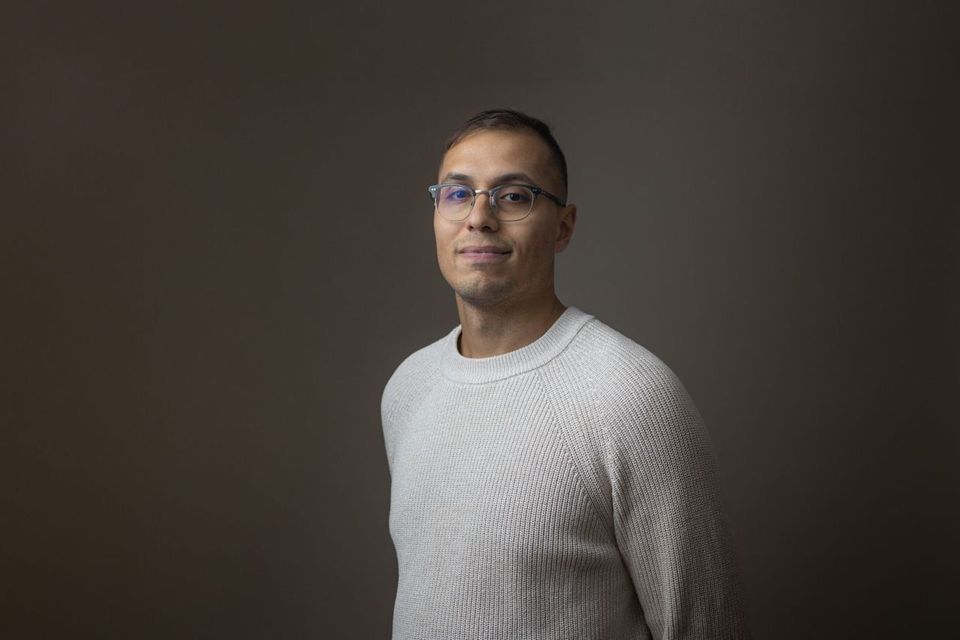
Before his latest appointment, Zad served the Finnish Startup Community first as an economist and later as chief economist for four years. Photo provided by Zad.
That perspective reflects his background in the startup ecosystem, where access to funding often determines whether ideas scale. The move into politics, however, has changed the pace of decision-making. “The biggest change is the pace of work,” he says. In the startup world, there is time to analyze and reflect. In politics, decisions move quickly. “You have to respond in real time, often without the luxury of deep background work.”
The shift itself is less ideological than it might appear. “Founders tend to be pragmatic. They are willing to work with any party that brings forward good ideas.” His own path followed a similar logic. “This wasn’t a predetermined choice. It evolved over time through collaboration and dialogue.”


Growth through technology
What remains consistent is his view on growth. “Sustainable economic growth ultimately comes from technological progress. Small, young companies are often the ones driving those breakthroughs.”
Artificial intelligence is a clear example. “AI is a foundational technology, comparable to electricity or the steam engine. The key question is not only who builds the best models, but who applies them most effectively across industries.”
He also sees a growing overlap between defense and energy policy. “Security today extends beyond traditional defense. It includes energy resilience and the ability to maintain critical systems under pressure.” Technologies that strengthen both areas, from renewable energy to dual-use innovations, are likely to play a larger role.
At the same time, innovation can emerge from less obvious sectors. He points to Finnish company Solar Foods, which produces a protein using a fermentation process powered by air and solar energy. “If food production can be decoupled from geography, it fundamentally changes how we think about supply chains and resilience.”
Underlying his thinking is a broader critique of Finland’s economic conversation. “There is a strong focus on fiscal adjustments and spending cuts,” he says. “But we need a more forward-looking discussion about growth. Without that, it becomes difficult to build a credible long-term strategy.”
For now, Zad is still adjusting to his new role, with his attention firmly on one issue: how to convert innovation into long-term economic growth.