In a shifting workplace culture, understanding emotions is no longer soft – it’s strategic.
In an era of accelerating change, driven by digitalization, geopolitical upheaval, and economic pressure, the emotional climate in the boardroom increasingly matters.
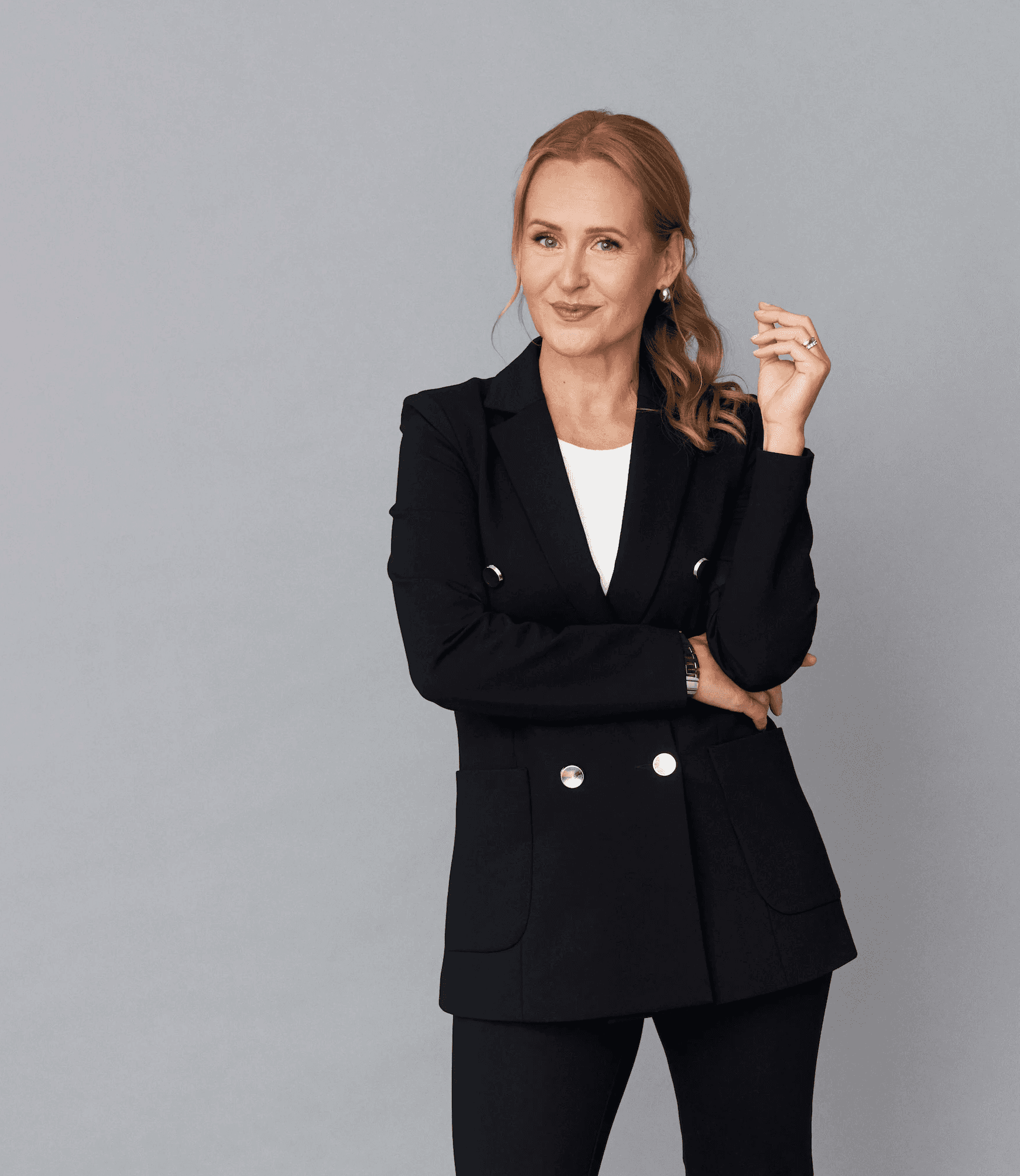
According to Camilla Tuominen, speaker, illustrator, author, and co-founder of The Emotion Startup (developer of the Emotion Tracker app), Finland is at a pivotal moment. Her decade of work in leaders’ emotional awareness at companies such as Kone, If Insurance, and Fortum suggests that the Nordic “cool” culture is transforming. Executives who understand emotion can gain a competitive edge, she argues.
The strange emotional culture of offices
“In many companies, there’s an atmosphere that you could describe with the words cautious, worry, really focused on efficiency and performance,” Tuominen says, explaining how the rapid pace of change, politics, and economic uncertainty affect organizational emotions.
The tense office atmosphere cannot be explained away by the pandemic or rising unemployment alone. “All these really strange behaviors regarding emotions are there and have been there for a long time.”
Tuominen encourages people to reflect on which emotions and habits tend to dominate their workplace. Is it more common to gather by the coffee machine to share complaints, or does envy surface when someone achieves strong sales results? “I have heard many instances where people say: ‘I cannot celebrate my sales; I have to go to the bathroom and celebrate by myself because people get envious,’” she says.
The cultural unease around open emotional expression runs deep—but it’s beginning to change.
The Nordic leadership shift
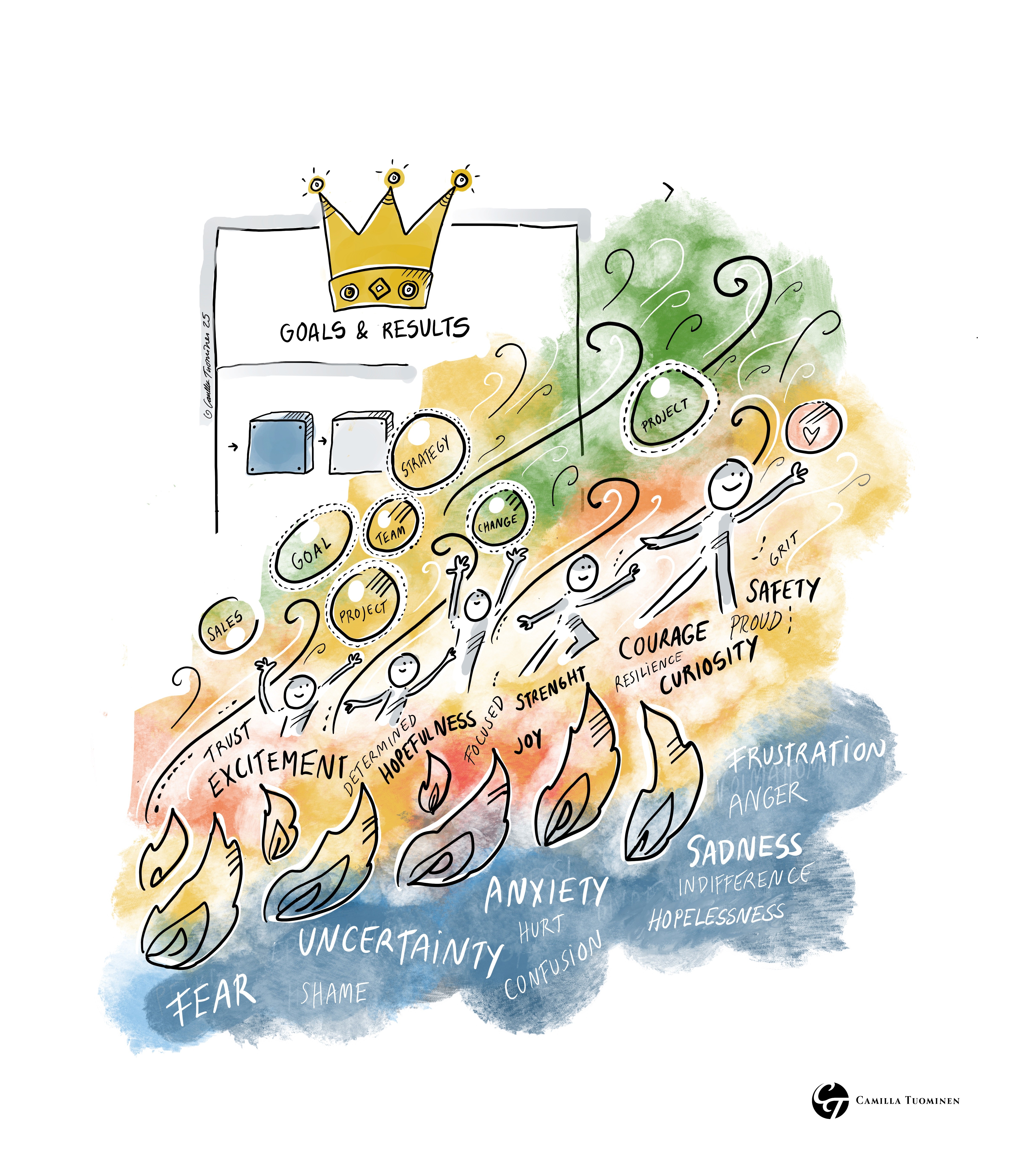
Tuominen argues that Finland’s long tradition of “just get the job done” is giving way to a leadership model where emotional intelligence is no longer optional. In the Nordic context – where leadership has historically emphasized consensus, structure, and rationality – this shift is both cultural and strategic.
“After the wars, there was this kind of need to just concentrate on efficiency: just work, work, work, and don’t think about anything else,” she says.
But today’s problems are no longer manual or repetitive. “They require more cognitive skills. And in that work, it's absolutely necessary that we also then take a look at what emotions we have because those have a direct impact on our ability, for example, to solve problems.”
The data support this. A 2024 Finnish study among nearly 500 participants found a statistically significant association between emotional intelligence and leadership competence. Emotional and interpersonal capacities are as critical as technical or cognitive skills, suggesting organizations should assess and develop EI as part of leadership development and succession planning.
Meanwhile, global research echoes this trend: a 2022 meta-analysis involving over 78,000 participants found that emotional intelligence correlates positively with job performance, satisfaction, and organizational commitment — and negatively with stress. McKinsey’s 2021 Global Survey further shows that leadership behaviors fostering trust and vulnerability drive innovation, adaptability, and performance. Ignoring emotions, in other words, leaves human potential untapped.
Finland’s cultural transformation
Finland’s traditional leadership culture – high-trust, low-hierarchy, and rational – is evolving. The “don’t show too much” mentality is being challenged as modern work demands new emotional literacy.
For example, Emilia Takala Helo’s 2022 study found that over 80% of employees said their leader’s emotional intelligence influenced their decision to stay. More than half had left a job due to a lack of EI. Only a small minority (less than 5%) considered it irrelevant.
The implication for Nordic listed companies is clear: emotional leadership is emerging as a strategic differentiator. As Tuominen puts it:
“In this very competitive environment, if we think about business life, it's not enough to just perform well or create services or products. Those are often copied really fast. But the emotional climate and the spirit that you have in the company, that is something that cannot be copied.”
Concrete actions for leaders
Tuominen offers pragmatic steps for executives leading Finnish or Nordic teams. Here’s how to operationalize emotional intelligence at work:
Speak the truth about the “elephant in the room.”
When a leader openly addresses the issue everyone knows about but few mention, participants perceive the leader as courageous and trustworthy, Tuominen says. “He or she can pick up the heavy stuff and carry it.”Name emotions, yours and others’.
Rather than suppressing frustration, fear, or envy, name emotions. Not only because it helps you release what’s inside, but also because it allows you to understand what’s truly going on beneath the surface. Tuominen calls them primary and secondary emotions.Model the behavior you expect.
“People are not stupid. So if they don't see [risk-taking] in the leadership or management, it's really not a situation where they feel safe to be courageous and vulnerable themselves.”Address chronic negativity directly.
Invite dialogue with persistent complainers. Be curious. “By just listening and appreciating, often it starts to solve itself,” Tuominen says.Embed daily emotional hygiene.
“When we suppress negative emotions, they start to pile up, and little by little, we start to notice that, for example, our sleep quality is deteriorating.” She recommends simple daily practices: write down your thoughts, worries, and wins, and connect regularly with trusted peers or mentors who understand your reality.
The challenge ahead
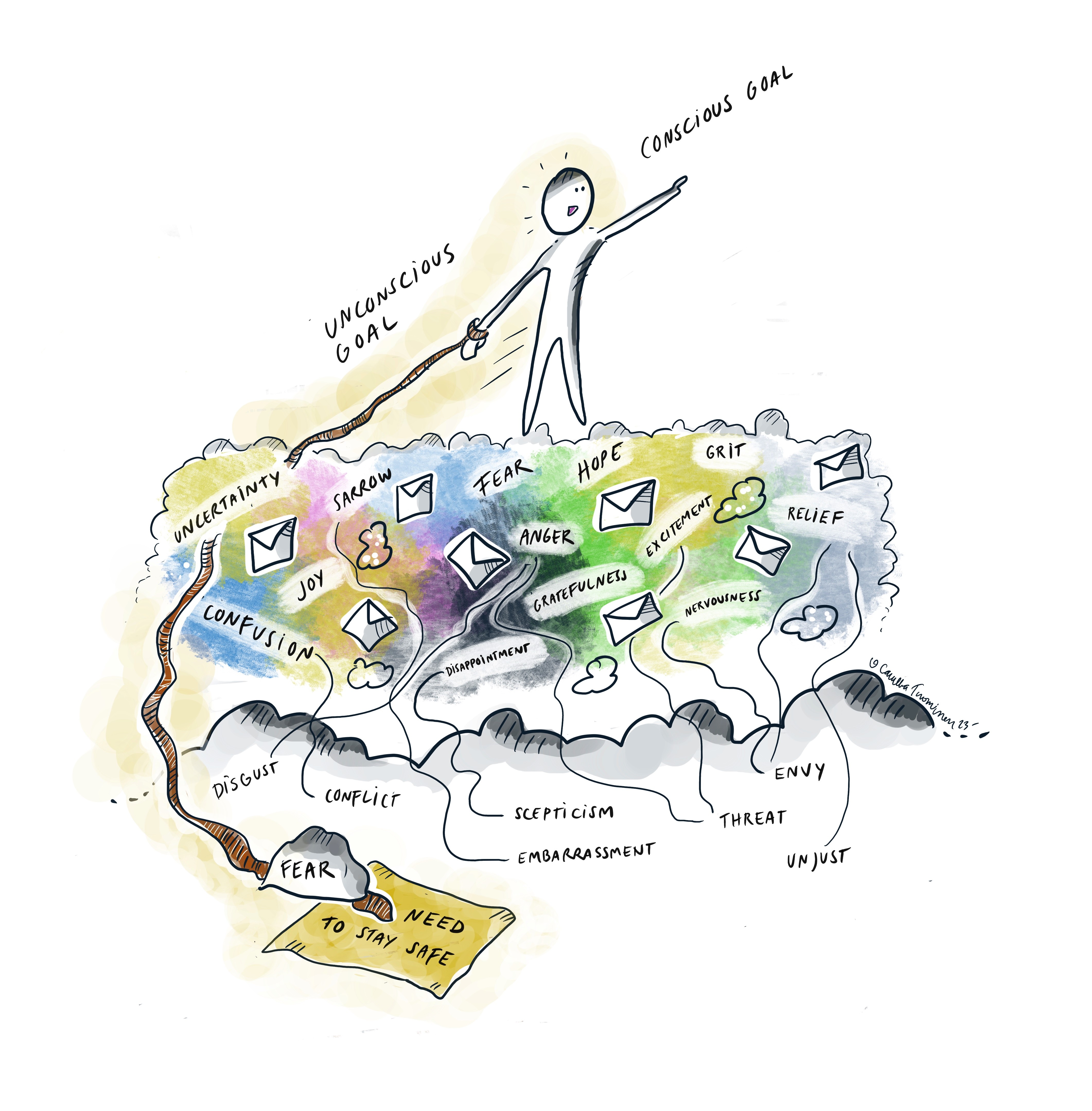
For Nordic executives, embracing emotion is not simple. Cultural habits such as stoicism, modesty, and a strict separation between personal and professional run deep. Tuominen points to common misconceptions and blind spots:
“Often, the emotion you first identify is only a secondary emotion. You might think, ‘I’m really angry,’ but beneath that, there might be frustration or loneliness.”
“Being truthful and showing emotions – or being emotionally intelligent – doesn’t mean being soft or weak. In fact, it’s the opposite. They treat emotions much like any other challenge: if there’s a leak in the ship, you don’t look away. You fix it.”
However, fixing it requires stepping away from linear problem-solving. It requires “emotional intelligence, which means being open, curious, respectful, and listening – and only then directing the behaviors.”
“People won’t jump in or share ideas if they feel there’s no trust. You can’t just command emotions. You have to be there with people. Meet them where they are emotionally. That’s where authenticity comes in.”
Another barrier is measurement: emotions cannot be counted. They are abstract. For many executives, this remains the hardest part: emotional intelligence does not fit neatly into an Excel cell. Efforts to translate empathy or trust into quarterly KPIs often miss the point.
Yet Tuominen has seen through her workshops that visuals can make emotions tangible. When words fail, illustrations help teams surface what is often left unsaid. Still, genuine transformation requires more than a creative exercise. It calls for systematic self-reflection across all levels of the organization.
For Tuominen, striving for a healthy emotional climate is worth the effort. “It will create this competitive advantage for the companies that will last. It's really sensitive and it cannot be just ordered. But once you create that, it's exponential power. It's not linear.”
About Camilla Tuominen
Camilla Tuominen (M.Econ) is an experienced speaker, having delivered over 500 keynotes to companies across industries. She is a bestselling author, doctoral researcher, illustrator, and former startup founder passionate about helping leaders and organizations rethink the role of emotions—not as a soft skill, but as a strategic advantage.
Illustrations by Camilla Tuominen.
·
5 min read

In a shifting workplace culture, understanding emotions is no longer soft – it’s strategic.
In an era of accelerating change, driven by digitalization, geopolitical upheaval, and economic pressure, the emotional climate in the boardroom increasingly matters.
According to Camilla Tuominen, speaker, illustrator, author, and co-founder of The Emotion Startup (developer of the Emotion Tracker app), Finland is at a pivotal moment. Her decade of work in leaders’ emotional awareness at companies such as Kone, If Insurance, and Fortum suggests that the Nordic “cool” culture is transforming. Executives who understand emotion can gain a competitive edge, she argues.
The strange emotional culture of offices
“In many companies, there’s an atmosphere that you could describe with the words cautious, worry, really focused on efficiency and performance,” Tuominen says, explaining how the rapid pace of change, politics, and economic uncertainty affect organizational emotions.
The tense office atmosphere cannot be explained away by the pandemic or rising unemployment alone. “All these really strange behaviors regarding emotions are there and have been there for a long time.”
Tuominen encourages people to reflect on which emotions and habits tend to dominate their workplace. Is it more common to gather by the coffee machine to share complaints, or does envy surface when someone achieves strong sales results? “I have heard many instances where people say: ‘I cannot celebrate my sales; I have to go to the bathroom and celebrate by myself because people get envious,’” she says.
The cultural unease around open emotional expression runs deep—but it’s beginning to change.
The Nordic leadership shift
Tuominen argues that Finland’s long tradition of “just get the job done” is giving way to a leadership model where emotional intelligence is no longer optional. In the Nordic context – where leadership has historically emphasized consensus, structure, and rationality – this shift is both cultural and strategic.
“After the wars, there was this kind of need to just concentrate on efficiency: just work, work, work, and don’t think about anything else,” she says.
But today’s problems are no longer manual or repetitive. “They require more cognitive skills. And in that work, it's absolutely necessary that we also then take a look at what emotions we have because those have a direct impact on our ability, for example, to solve problems.”
The data support this. A 2024 Finnish study among nearly 500 participants found a statistically significant association between emotional intelligence and leadership competence. Emotional and interpersonal capacities are as critical as technical or cognitive skills, suggesting organizations should assess and develop EI as part of leadership development and succession planning.
Meanwhile, global research echoes this trend: a 2022 meta-analysis involving over 78,000 participants found that emotional intelligence correlates positively with job performance, satisfaction, and organizational commitment — and negatively with stress. McKinsey’s 2021 Global Survey further shows that leadership behaviors fostering trust and vulnerability drive innovation, adaptability, and performance. Ignoring emotions, in other words, leaves human potential untapped.
Finland’s cultural transformation
Finland’s traditional leadership culture – high-trust, low-hierarchy, and rational – is evolving. The “don’t show too much” mentality is being challenged as modern work demands new emotional literacy.
For example, Emilia Takala Helo’s 2022 study found that over 80% of employees said their leader’s emotional intelligence influenced their decision to stay. More than half had left a job due to a lack of EI. Only a small minority (less than 5%) considered it irrelevant.
The implication for Nordic listed companies is clear: emotional leadership is emerging as a strategic differentiator. As Tuominen puts it:
“In this very competitive environment, if we think about business life, it's not enough to just perform well or create services or products. Those are often copied really fast. But the emotional climate and the spirit that you have in the company, that is something that cannot be copied.”
Concrete actions for leaders
Tuominen offers pragmatic steps for executives leading Finnish or Nordic teams. Here’s how to operationalize emotional intelligence at work:
Speak the truth about the “elephant in the room.”
When a leader openly addresses the issue everyone knows about but few mention, participants perceive the leader as courageous and trustworthy, Tuominen says. “He or she can pick up the heavy stuff and carry it.”Name emotions, yours and others’.
Rather than suppressing frustration, fear, or envy, name emotions. Not only because it helps you release what’s inside, but also because it allows you to understand what’s truly going on beneath the surface. Tuominen calls them primary and secondary emotions.Model the behavior you expect.
“People are not stupid. So if they don't see [risk-taking] in the leadership or management, it's really not a situation where they feel safe to be courageous and vulnerable themselves.”Address chronic negativity directly.
Invite dialogue with persistent complainers. Be curious. “By just listening and appreciating, often it starts to solve itself,” Tuominen says.Embed daily emotional hygiene.
“When we suppress negative emotions, they start to pile up, and little by little, we start to notice that, for example, our sleep quality is deteriorating.” She recommends simple daily practices: write down your thoughts, worries, and wins, and connect regularly with trusted peers or mentors who understand your reality.
The challenge ahead
For Nordic executives, embracing emotion is not simple. Cultural habits such as stoicism, modesty, and a strict separation between personal and professional run deep. Tuominen points to common misconceptions and blind spots:
“Often, the emotion you first identify is only a secondary emotion. You might think, ‘I’m really angry,’ but beneath that, there might be frustration or loneliness.”
“Being truthful and showing emotions – or being emotionally intelligent – doesn’t mean being soft or weak. In fact, it’s the opposite. They treat emotions much like any other challenge: if there’s a leak in the ship, you don’t look away. You fix it.”
However, fixing it requires stepping away from linear problem-solving. It requires “emotional intelligence, which means being open, curious, respectful, and listening – and only then directing the behaviors.”
“People won’t jump in or share ideas if they feel there’s no trust. You can’t just command emotions. You have to be there with people. Meet them where they are emotionally. That’s where authenticity comes in.”
Another barrier is measurement: emotions cannot be counted. They are abstract. For many executives, this remains the hardest part: emotional intelligence does not fit neatly into an Excel cell. Efforts to translate empathy or trust into quarterly KPIs often miss the point.
Yet Tuominen has seen through her workshops that visuals can make emotions tangible. When words fail, illustrations help teams surface what is often left unsaid. Still, genuine transformation requires more than a creative exercise. It calls for systematic self-reflection across all levels of the organization.
For Tuominen, striving for a healthy emotional climate is worth the effort. “It will create this competitive advantage for the companies that will last. It's really sensitive and it cannot be just ordered. But once you create that, it's exponential power. It's not linear.”
About Camilla Tuominen
Camilla Tuominen (M.Econ) is an experienced speaker, having delivered over 500 keynotes to companies across industries. She is a bestselling author, doctoral researcher, illustrator, and former startup founder passionate about helping leaders and organizations rethink the role of emotions—not as a soft skill, but as a strategic advantage.
Illustrations by Camilla Tuominen.





Investor Event
Listeds Investor Event · Defence
Nordic defence is in a once-in-a-generation growth cycle. Eight listed and pre-IPO companies pitch to 100+ invited investors at Valkoinen Sali, Helsinki
21 September 2026


Latest on Listeds