


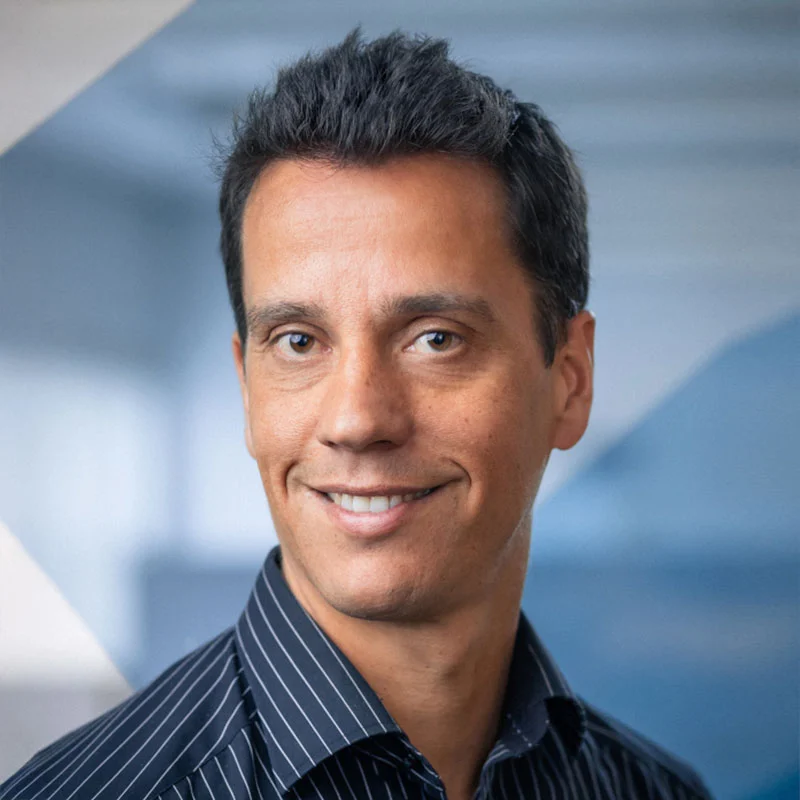
“We see AI agents being a new user group for our software,” Erkheikki says.
The idea represents a subtle but important shift in enterprise software. For decades, business applications have been designed for human users. In the next generation of digital systems, software may increasingly be built for AI agents instead.
“We are no longer making our software only for humans,” Erkheikki says. “We have a new user group and audience, which is the AI agents.”
But those users behave very differently from people. “They don’t use a user interface,” Erkheikki says. “They just need access to the data and insight.” QPR is developing an interface that allows AI agents to connect directly to its process intelligence platform. The company is not alone.
Major technology vendors are also building systems to manage the rise of autonomous software. Microsoft and Salesforce have introduced platforms designed to deploy and govern AI agents operating inside enterprise systems, while companies such as Nvidia are building the infrastructure that powers them.
The pace of technological change only adds urgency. “The changes are taking place faster and faster,” Erkheikki says.
A CEO who knows the company from the inside
Erkheikki took over as chief executive in February after more than two decades inside the company. He joined QPR in 2002 as a consultant and most recently served as chief product officer, responsible for the company’s product vision and portfolio.
After rising through the ranks at QPR, he knows its technology, customers, and strategy. Yet the leadership role still represents a significant shift. “It gives me extra energy to do something completely new but in a familiar environment,” he says.
His leadership philosophy reflects that long internal journey. “Leadership is really like a service profession,” Erkheikki says. “My duty is to provide people with the premises to succeed in their work.”
The Espoo-based company develops software that helps organizations analyze and improve how their operations run. QPR operates in the field of process mining and analytics, tools that reveal how work actually flows across systems and where inefficiencies occur.
Despite its modest market cap of EUR 11 million, QPR has built a global footprint. The company has active customers in nearly 40 countries, including enterprises like Sanofi, Ericsson, Wärtsilä, and Metsä Board. In 2025, about 39 percent of revenue came from Finland, roughly 47 percent from the rest of Europe, and around 14 percent from other regions.
Turning international reach into sustained growth remains a familiar challenge for smaller Nordic technology companies. QPR reported net sales of €5.6 million in 2025 as the company invested heavily in product development and international expansion, recording a net loss of about €1.05 million during this growth phase.
Monitoring agentic AI
The rapid development of agentic AI is one of the most significant shifts now unfolding in enterprise technology.
“The real potential of AI is when it is used to automate business processes,” Erkheikki says.
As companies begin to deploy AI systems that make operational decisions, a new question emerges. “Now that companies will have those AI agents independently making decisions, it becomes even more important to see what they are actually doing,” he says.
Software such as QPR’s ProcessAnalyzer examines the flow of work across information systems and reveals how processes actually unfold inside organizations.
In a world where automated agents execute those processes, that visibility becomes increasingly valuable.
The challenge of being heard
For smaller European software companies, technological capability alone is rarely enough to stand out globally.
“As a company, it is very difficult for us to get our voice heard if we are just a universal player among SAPs, Microsofts, and IBMs,” Erkheikki says.
The observation reflects a broader lesson for Nordic technology firms competing internationally. Instead of trying to match the breadth of global software platforms, smaller companies often succeed by solving a clearly defined problem exceptionally well.
For QPR, that focus lies in process intelligence and the growing intersection between operational analytics and artificial intelligence.
Choosing where to concentrate is not always straightforward. “The problem really is that there are so many opportunities,” Erkheikki says.


From individual customer wins to scalable growth
Like many enterprise software companies, QPR’s largest customer wins have often required navigating complex and highly individualized sales processes.
“Every great customer win has been more or less unique in its own way,” Erkheikki says.
The next phase is about identifying common patterns across customers and industries. “What success would look like is that those wins begin to share more common characteristics,” he says.
Once those patterns become clearer, new deals become easier to win, and growth becomes more predictable. “That’s when things start to scale,” he says.
The role of partners
Partnerships play a central role in that strategy. Instead of building large sales and consulting teams in every country, QPR works with regional partners that combine their industry expertise with the company’s technology platform.
These partners can develop specialized solutions for particular sectors or use cases and bring them to multiple customers.
“That is where partners play an important role,” Erkheikki says. “They combine their local competencies with our platform and build solutions that can be replicated across customers.”
The model allows a relatively small company to expand internationally while keeping its own organization lean.
AI inside the company
Artificial intelligence is also reshaping how software itself is developed.
“You can develop specific user interfaces or something similar without programming at all. Just prompting,” Erkheikki says.
Tools based on generative AI are already helping development teams move faster and experiment more freely. For smaller technology companies, that productivity boost can make a meaningful difference.
A new layer of enterprise technology
When AI agents become a normal part of how companies operate, organizations will still need ways to understand what those systems are doing.
Managers will want to see how processes evolve, where automated decisions are made, and whether the outcomes match expectations. In that environment, process intelligence platforms could become an essential layer of enterprise technology.
Balancing long-term strategy with immediate opportunities remains a constant challenge.
“One euro today is always better than a promise of two tomorrow,” Erkheikki says. “But you also have to avoid short-sighted decisions that will harm you later.”