Talenom has split into two. What remains is a simpler company with a sharper focus on financial management services. Now, its new CEO Juho Ahosola must show that focus can translate into performance.

“When you try to do many things at the same time, it’s hard to be excellent at everything.” Talenom CEO Juho Ahosola pauses briefly. “Now our focus is much more narrow. That makes it easier to be truly good at what we do.”

The comment comes at a moment when Finnish accounting behemoth Talenom has just reshaped itself. Following the demerger completed in February, the company has separated its software business into Easor and is now fully focused on accounting services.

Sitting in the Tampere office, Ahosola senses the shift. “This is a new era. Many feel it’s a fresh start. The focus is clearer, and clarity is usually a very good thing.” What replaces the old structure is a pure service business where performance depends on employees and clients.

Ahosola’s first weeks as CEO have been busy. “I’ve been visiting offices, meeting our people. That’s crucial,” he says, adding that as a service business, everything is about the employees. “In my thinking, it’s all about people.”

Listeds data show that Ahosola is one of Finland’s youngest CEOs, but he is also an insider who knows Talenom from the inside out. He was promoted to the role following the demerger in February after serving as deputy CEO, spending more than a decade rising through the ranks.

A company built around one way of working

At the center of the next phase is what Ahosola calls “One Talenom,” a shared way of operating across countries.

“If we continuously improve employee experience, our teams are more engaged. That leads to better customer experience. When clients are happy, they recommend us, and that drives growth. And growth creates more opportunities for our people.”

Technology supports that system, but does not define it. “We use AI to reduce manual work and free up time. That time should be used with clients.” However, AI accountants have their limitations. “When you have real challenges, you still want a human being.”
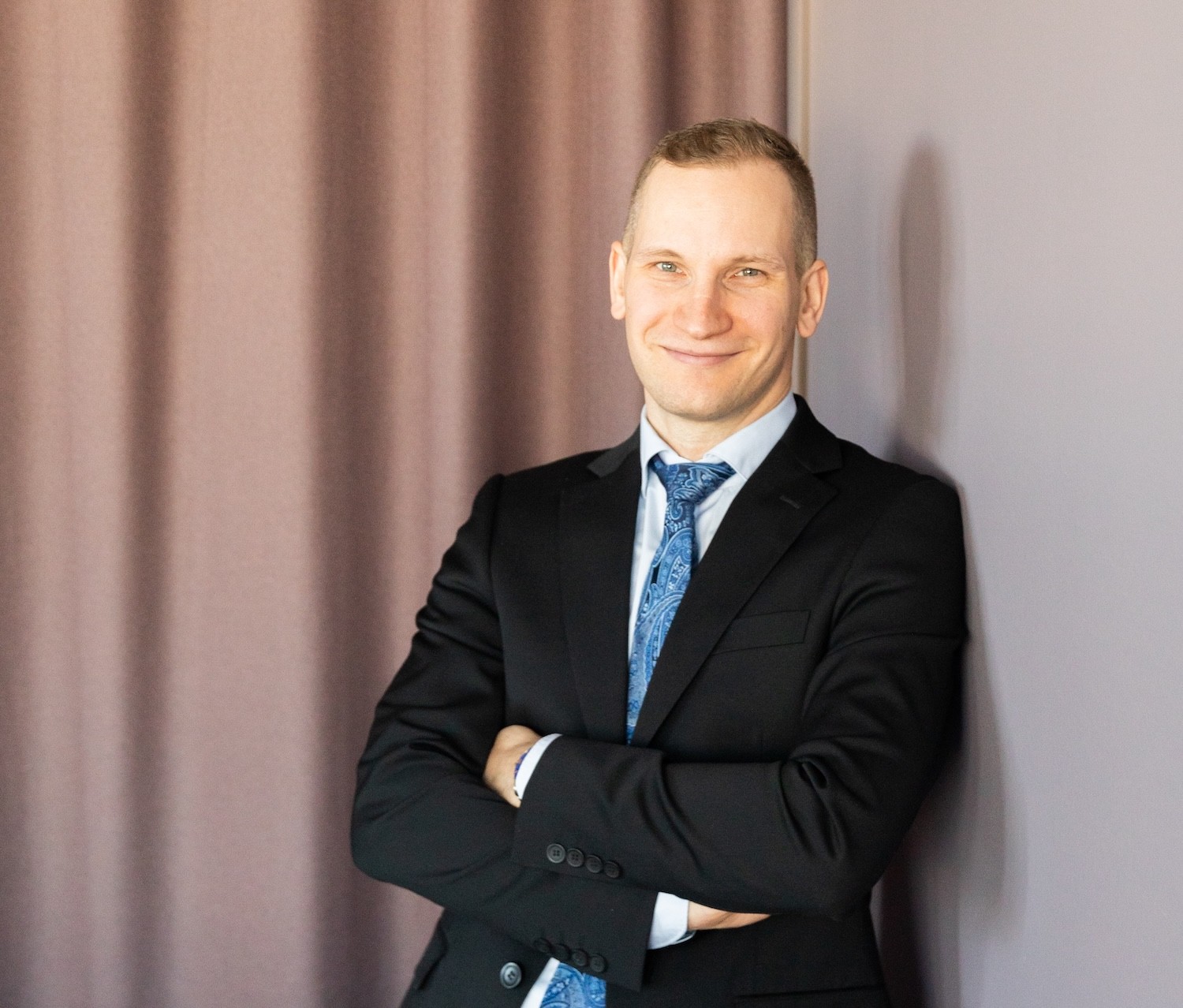
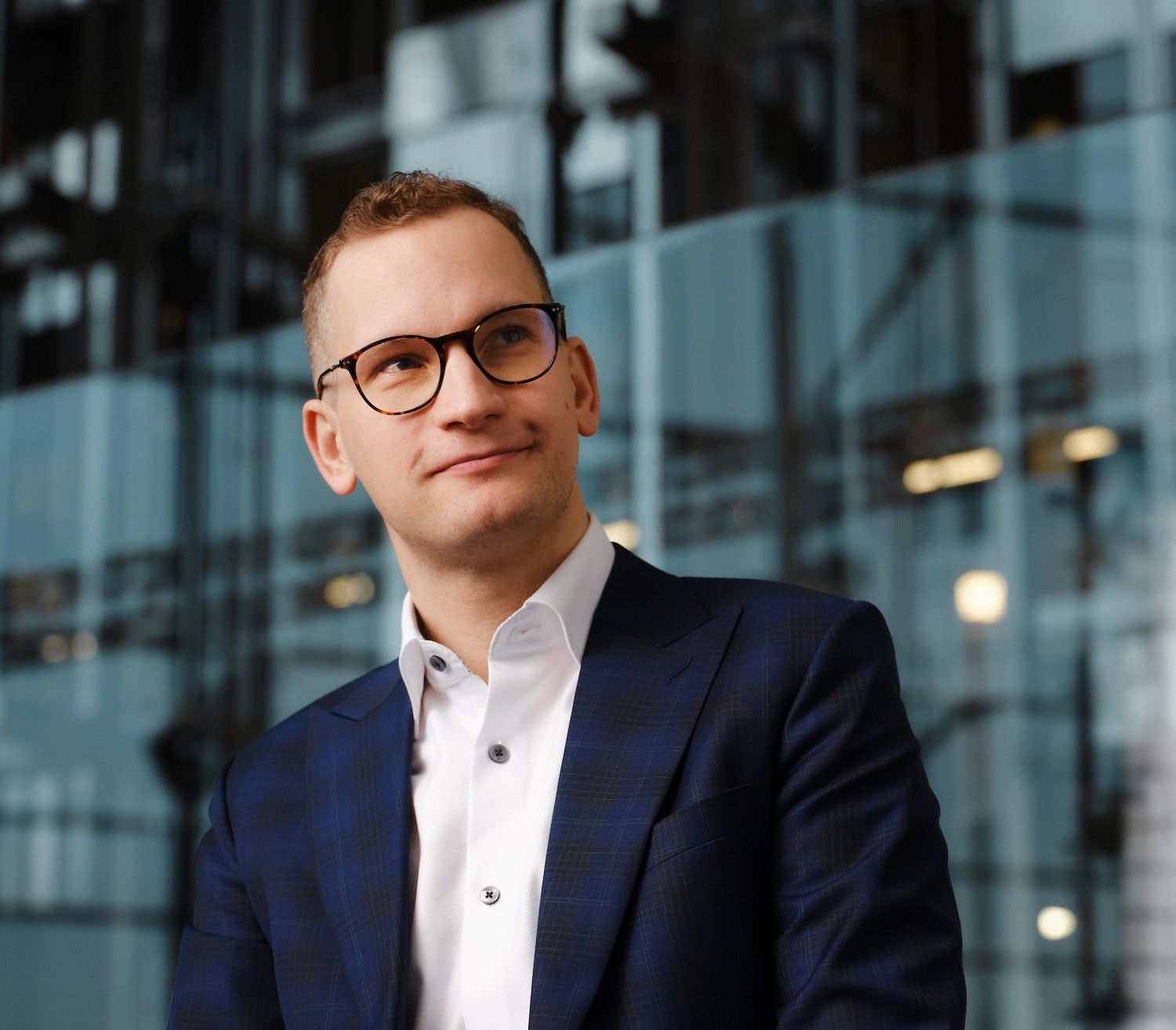
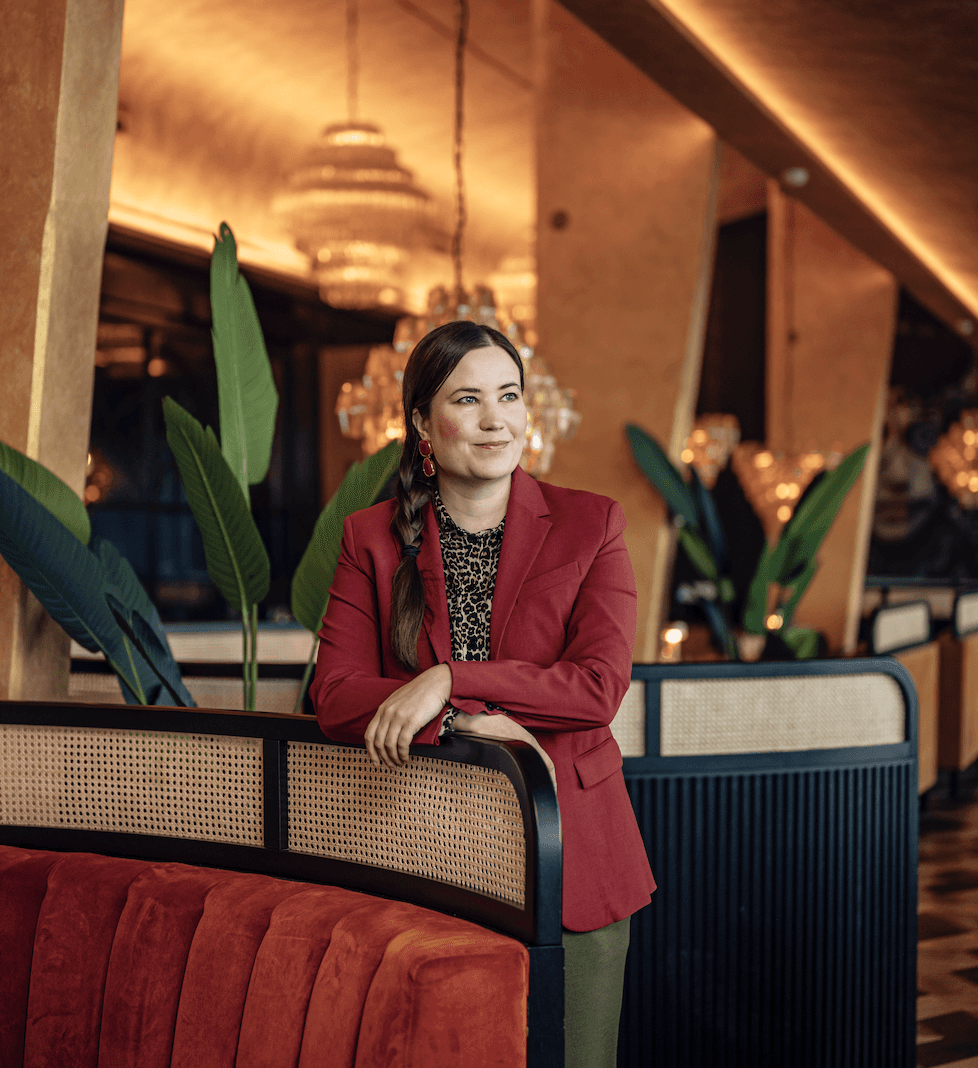
Juho Ahosola rose through the ranks, spending more than a decade at Talenom before stepping into the CEO role in February 2026. Photograph from Talenom.

A reset under pressure

The demerger comes after a year that fell short of expectations.

In 2025, Talenom’s continuing operations generated €109 million in revenue, growing 3.2 percent, according to its latest financial statement. Profitability weakened, and the company did not meet its financial targets. At the group level, operating profit declined sharply.

The market reaction has been visible. Talenom’s share price has fallen by more than 40 percent over the past year. Easor, the newly listed software company, has also traded below its initial levels.

“We are not happy that we didn’t reach our financial targets,” Ahosola says. “But we aim to learn from it and maintain strong confidence in the future.”

Still, the road looks clearer after the transition. “When you are executing a split like this, it takes a lot of energy from the organization.” Now, the focus shifts forward. “We can fully focus on what we are doing.”

A CEO who grew up inside the company

Ahosola’s way of thinking is closely tied to his own path. “I started as a financial accountant. I have basically been in all organizational levels.”

Over more than a decade, he has moved through expert roles, development, HR, and international leadership, which comes in handy now. “You understand what kind of concerns people might have in different roles.”

At 38, he is one of the six youngest CEOs of listed companies in Finland, according to data from the Listeds Executive Intelligence platform. Alongside Anna Wäck at Sitowise, Ahosola is one of only two who have taken on the role this year.

Looking back on his journey within one company, Ahosola is grateful for the chances Talenom gave him to grow. “When we are growing, it gives new challenges. That’s one reason why people stay.”

Growth, but on different terms

Growth remains central to the company’s ambitions.

Talenom continues to target more than 10 percent annual growth in the medium term. But Ahosola is clear about the source of that growth. It will not come from acquisitions alone.

“Organic growth is the real growth. It means your product must be better than your competitors’.”

Acquisitions remain part of the strategy, particularly in Spain, where Talenom has been actively building its presence. In 2025 alone, the company completed four acquisitions: Ascofi Berria and Harri Berri, Pagoa Consultoras, Querol & Querol Assessors, and Nova Ceteb, together adding roughly €4 million in annual revenue.

Still, Ahosola is careful to frame their role. “We don’t want to grow only through acquisitions,” he says, adding that above new purchases, the company prioritizes organic growth.

“If we are better day after day in employee experience, everything else follows.”

What Talenom is becoming

Asked what he wants to build for the future, Ahosola does not hesitate.

“I want Talenom to be the most recommended partner by our employees and our clients.” Then he adds, “We are never ready. The day you think you are good enough, that’s the first day of the end.”

The structure is now simpler. The direction is clearer. What remains is the harder part, making it work consistently across countries, teams, and clients. Still, for Ahosola, the foundation is set:

“It starts from people.”

|

|

Leaders

One Talenom: Juho Ahosola’s bet on focus after the split

One Talenom: Juho Ahosola’s bet on focus after the split

·

5 min read

Explore and follow profiles from this article to get timely updates:

Credit: Talenom, Juho Ahosola

Credit: Talenom, Juho Ahosola

Talenom has split into two. What remains is a simpler company with a sharper focus on financial management services. Now, its new CEO Juho Ahosola must show that focus can translate into performance.

“When you try to do many things at the same time, it’s hard to be excellent at everything.” Talenom CEO Juho Ahosola pauses briefly. “Now our focus is much more narrow. That makes it easier to be truly good at what we do.”

The comment comes at a moment when Finnish accounting behemoth Talenom has just reshaped itself. Following the demerger completed in February, the company has separated its software business into Easor and is now fully focused on accounting services.

Sitting in the Tampere office, Ahosola senses the shift. “This is a new era. Many feel it’s a fresh start. The focus is clearer, and clarity is usually a very good thing.” What replaces the old structure is a pure service business where performance depends on employees and clients.

Ahosola’s first weeks as CEO have been busy. “I’ve been visiting offices, meeting our people. That’s crucial,” he says, adding that as a service business, everything is about the employees. “In my thinking, it’s all about people.”

Listeds data show that Ahosola is one of Finland’s youngest CEOs, but he is also an insider who knows Talenom from the inside out. He was promoted to the role following the demerger in February after serving as deputy CEO, spending more than a decade rising through the ranks.

A company built around one way of working

At the center of the next phase is what Ahosola calls “One Talenom,” a shared way of operating across countries.

“If we continuously improve employee experience, our teams are more engaged. That leads to better customer experience. When clients are happy, they recommend us, and that drives growth. And growth creates more opportunities for our people.”

Technology supports that system, but does not define it. “We use AI to reduce manual work and free up time. That time should be used with clients.” However, AI accountants have their limitations. “When you have real challenges, you still want a human being.”

Juho Ahosola rose through the ranks, spending more than a decade at Talenom before stepping into the CEO role in February 2026. Photograph from Talenom.

A reset under pressure

The demerger comes after a year that fell short of expectations.

In 2025, Talenom’s continuing operations generated €109 million in revenue, growing 3.2 percent, according to its latest financial statement. Profitability weakened, and the company did not meet its financial targets. At the group level, operating profit declined sharply.

The market reaction has been visible. Talenom’s share price has fallen by more than 40 percent over the past year. Easor, the newly listed software company, has also traded below its initial levels.

“We are not happy that we didn’t reach our financial targets,” Ahosola says. “But we aim to learn from it and maintain strong confidence in the future.”

Still, the road looks clearer after the transition. “When you are executing a split like this, it takes a lot of energy from the organization.” Now, the focus shifts forward. “We can fully focus on what we are doing.”
CEO newsletter

For those carrying responsibility at the top.

A monthly letter on leadership, power, and transition in the Nordics. Written by Helene Auramo, drawn from real CEO conversations and leadership signals.

Delivered monthly.

By signing up, you agree to our Privacy Policy

CEO newsletter

For those carrying responsibility at the top.

A monthly letter on leadership, power, and transition in the Nordics. Written by Helene Auramo, drawn from real CEO conversations and leadership signals.

Delivered monthly.

By signing up, you agree to our Privacy Policy

A CEO who grew up inside the company

Ahosola’s way of thinking is closely tied to his own path. “I started as a financial accountant. I have basically been in all organizational levels.”

Over more than a decade, he has moved through expert roles, development, HR, and international leadership, which comes in handy now. “You understand what kind of concerns people might have in different roles.”

At 38, he is one of the six youngest CEOs of listed companies in Finland, according to data from the Listeds Executive Intelligence platform. Alongside Anna Wäck at Sitowise, Ahosola is one of only two who have taken on the role this year.

Looking back on his journey within one company, Ahosola is grateful for the chances Talenom gave him to grow. “When we are growing, it gives new challenges. That’s one reason why people stay.”

Growth, but on different terms

Growth remains central to the company’s ambitions.

Talenom continues to target more than 10 percent annual growth in the medium term. But Ahosola is clear about the source of that growth. It will not come from acquisitions alone.

“Organic growth is the real growth. It means your product must be better than your competitors’.”

Acquisitions remain part of the strategy, particularly in Spain, where Talenom has been actively building its presence. In 2025 alone, the company completed four acquisitions: Ascofi Berria and Harri Berri, Pagoa Consultoras, Querol & Querol Assessors, and Nova Ceteb, together adding roughly €4 million in annual revenue.

Still, Ahosola is careful to frame their role. “We don’t want to grow only through acquisitions,” he says, adding that above new purchases, the company prioritizes organic growth.

“If we are better day after day in employee experience, everything else follows.”

What Talenom is becoming

Asked what he wants to build for the future, Ahosola does not hesitate.

“I want Talenom to be the most recommended partner by our employees and our clients.” Then he adds, “We are never ready. The day you think you are good enough, that’s the first day of the end.”

The structure is now simpler. The direction is clearer. What remains is the harder part, making it work consistently across countries, teams, and clients. Still, for Ahosola, the foundation is set:

“It starts from people.”

Board Programme

Built for Nordic listed company boards.

The only programme in the Nordics designed specifically for listed-company board work.
Five sessions, one cohort, twenty leaders in one room - Helsinki, 2026.

Board Programme

Built for Nordic listed company boards.

The only programme in the Nordics designed specifically for listed-company board work.
Five sessions, one cohort, twenty leaders in one room - Helsinki, 2026.

Authors

Emmi Laine is head of business content at Listeds and our lead for finance and business coverage. She sets the editorial agenda, interviews Nordic business leaders, and writes stories, newsletters, and social content on timely market and corporate topics. Emmi brings nearly eight years of experience from Shanghai's Yicai Global / Yicai Media Group, where she was awarded for reporting on China’s economy, finance sector, and technology innovation. She holds an MSc in Innovation and Entrepreneurship from ESADE Business School in Barcelona and a Master’s degree in International Design Business Management from Aalto University. She also holds a Bachelor’s degree in Culture Studies with a major in Journalism from Stockholm University and has studied Mandarin Chinese and Chinese culture. Emmi is a Finnish citizen and has lived in Finland, Sweden, China, and Portugal.

Emmi Laine is head of business content at Listeds and our lead for finance and business coverage. She sets the editorial agenda, interviews Nordic business leaders, and writes stories, newsletters, and social content on timely market and corporate topics. Emmi brings nearly eight years of experience from Shanghai's Yicai Global / Yicai Media Group, where she was awarded for reporting on China’s economy, finance sector, and technology innovation. She holds an MSc in Innovation and Entrepreneurship from ESADE Business School in Barcelona and a Master’s degree in International Design Business Management from Aalto University. She also holds a Bachelor’s degree in Culture Studies with a major in Journalism from Stockholm University and has studied Mandarin Chinese and Chinese culture. Emmi is a Finnish citizen and has lived in Finland, Sweden, China, and Portugal.

Authors

Journalist

Emmi Laine is head of business content at Listeds and our lead for finance and business coverage. She sets the editorial agenda, interviews Nordic business leaders, and writes stories, newsletters, and social content on timely market and corporate topics. Emmi brings nearly eight years of experience from Shanghai's Yicai Global / Yicai Media Group, where she was awarded for reporting on China’s economy, finance sector, and technology innovation. She holds an MSc in Innovation and Entrepreneurship from ESADE Business School in Barcelona and a Master’s degree in International Design Business Management from Aalto University. She also holds a Bachelor’s degree in Culture Studies with a major in Journalism from Stockholm University and has studied Mandarin Chinese and Chinese culture. Emmi is a Finnish citizen and has lived in Finland, Sweden, China, and Portugal.

All Listeds newsletters (bundle)

One sign-up, the full picture.

Get every Listeds newsletter: the daily signal drumbeat, the weekly Pulse briefing, the monthly Best of the Month, the CEO letter, and the Weekend read.

By signing up, you agree to our Privacy Policy

All Listeds newsletters (bundle)

One sign-up, the full picture.

Get every Listeds newsletter: the daily signal drumbeat, the weekly Pulse briefing, the monthly Best of the Month, the CEO letter, and the Weekend read.

By signing up, you agree to our Privacy Policy

Latest signalsLive feed
Moves trackerLive feed

Investor Event

Listeds Investor Event · Defence

Nordic defence is in a once-in-a-generation growth cycle. Eight listed and pre-IPO companies pitch to 100+ invited investors at Valkoinen Sali, Helsinki

21 September 2026

Latest on Listeds

Leadership Moves

Aspocomp names Ville Raatikainen chief engineering and technology officer as new Oulu capacity arrives in 2027

Sep 25, 2026

Ville Raatikainen, a manufacturing engineering director at iLOQ with an R&D and product management background at Nokia, joins the Management Team on January 1, 2027. He is the second outside hire to the team since July, and he starts in the year the PCB maker commissions its expanded Oulu plant.

Aspocomp has appointed Ville Raatikainen (born 1984), M.Sc. (Eng.), as Chief Engineering and Technology Officer and a member of the Management Team from January 1, 2027. He currently serves as Director, Product Lifecycle and Manufacturing Engineering at iLOQ Oy and previously held R&D and product management roles at Nokia. Chief Technology Officer Mitri Mattila will stay with the company and report to Raatikainen. Mattila has worked at Aspocomp since 1997 and sat on the Management Team since 2018. 

Chief executive Manu Skyttä's endorsement speaks to production as much as to technology:

Ville has a strong track record in managing complex technical environments, improving production performance, and developing high-quality, cost-effective design operations. He has a strong background in both global listed companies like Nokia and fast-growing technology companies like iLOQ, and I am pleased to welcome him to Aspocomp. 

Six of seven Management Team members will have joined since 2024

Raatikainen follows Ilkka Lohi, who became Quality Director on September 2, 2026 in a role the company raised to Management Team level. Listeds data shows how far the renewal runs. Skyttä became chief executive in 2024 after serving as EVP, Operations at Patria, and Pekka Holopainen joined the team as operations chief the same year. Hanna-Leena Keskitalo and Terhi Launis followed in 2025, with Launis taking over finance on September, 2025. When the January 2027 line-up takes effect, Antti Ojala, a member since 2013, will be the only one whose seat predates 2024.

This is a team assembled for the expansion, not inherited from the loss years. The board supplies the sector memory. Chairman Ville Vuori is a former Incap chief executive, and director Anssi Korhonen was CTO of VTI Technologies.

The hire lands as Oulu moves from construction to yield

The Oulu program is worth more than EUR 10 million and aims to lift throughput capacity by up to 50%. Demand had already outrun the plant. At the strategy launch in November 2025, Skyttä said: “The capacity of the Oulu plant has been fully utilized throughout 2025, and demand has already exceeded our capacity.The growth in demand in our largest customer segments appears likely to continue over the next 5–10 years.” The building extension was finished on schedule and within budget, and new capacity is to be commissioned in phases throughout 2027. By July the automated warehouse was running, factory acceptance tests for new production lines had begun, and management said the second half would center on production quality and yield.

The risks are operational. Spare-parts shortages after an equipment manufacturer's bankruptcy slowed deliveries in the first quarter. Delivery times for laminates, fiberglass, resins and copper foil are lengthening and prices are rising, and the company warns that the installations may temporarily disrupt production. Those are manufacturing engineering problems, and that is the experience Raatikainen brings from iLOQ.

A record order book still has to turn into margin

Period

Net sales, EUR m

Operating result, EUR m

Orders received, EUR m

Order book, EUR m

Equity ratio

FY 2025 

38.2 (27.6)

0.9 (-4.0)

39.3 (37.0)

21.1 (19.9)

65.0%

Q1 2026 

9.7 (10.3)

0.2 (0.8)

12.2 (11.4)

23.5 (21.0)

63.9%

Q2 2026 

10.6 (10.1)

0.4 (0.2)

12.9 (8.8)

25.9 (19.8)

60.9%

H1 2026 

20.3 (20.4)

0.6 (1.0)

25.2 (20.3)

25.9 (19.8)

60.9%

The order book reached a record EUR 25.9 million at the end of June, with parts stretching to late 2027. Semiconductor customers placed 38% of second-quarter orders and defense customers 25%, while the five largest customers' share of net sales fell to 58% (75%). Profit has lagged, weighed down until the second quarter by low-margin orders agreed in 2024. Skyttä's position is unambiguous: “We expect profitability to improve in the second half of the year.”

Skyttä took that defense case to investors on September 21, 2026, when Aspocomp pitched at the Listeds Investor Event – Defence alongside Gofore, Kesla, Savox Communications and Betolar, with three more defense and dual-use companies presenting in a separate growth round. Helene Auramo, CEO of Listeds Oy opened the evening with the question “Can Europe build what it has ordered?” Skyttä gave his reply in a LinkedIn post afterward: “My answer, in short: not without PCBs.” In the same post he put Europe's share of global PCB production at 2.2% and said the number of European PCB makers has fallen from 593 to 168 since 2000. Aspocomp's order book already reflects that shortage, and its capacity to meet it is what the Oulu expansion will test. 

Aspocomp is aiming for EUR 100 million in sales and a double-digit margin

The 2026 to 2030 strategy targets more than EUR 100 million in net sales in the long term and an EBIT margin exceeding 10% in the midterm, with the aim of ranking among the top three PCB manufacturers and suppliers in selected European segments. Oulu alone will not deliver that. The company states that reaching the sales target depends on expanding its production network, also through M&A, alongside a wider partner network outside China. The expansion of Oulu plant  is funded by a directed share issue of about EUR 3.2 million and EUR 5.5 million in long-term loans, plus about EUR 1.75 million from the EU Just Transition Fund. For 2026, Aspocomp guides for higher net sales and a better operating result than the EUR 38.2 million and EUR 0.9 million of 2025.

Market Signals

Sensofusion seeks a €1.3 billion Helsinki listing with its founder keeping control

Sep 24, 2026

Drone countermeasures company Sensofusion plans to list on Nasdaq Helsinki in October at a pre-money valuation of up to €1.3 billion. That would make it the first growth company to join the Helsinki exchange valued above €1 billion. The company aims to raise about €300 million in new shares, and four Finnish institutions have already committed €170 million of that.

The anchor investors are Elo, Ilmarinen, Varma and funds managed by OP Fund Management . The offering will include a public offering in Finland and an institutional offering in Finland and internationally, including in the US. The majority shareholder, Haave Oy, and some other shareholders will also sell existing shares.

A 60.8% operating margin carries the valuation

Sensofusion's revenue rose almost 90% in 2025 to €35 million, with profit of more than €23 million. In the first half of 2026, revenue grew another 122%. In the 12 months to the end of June 2026, the operating margin was 60.8%. Revenue grew at an average annual rate of 91.1% between the 2024 financial year and that 12-month period. Earlier this decade, annual revenue was around €700,000.

The company's main product, Airfence, detects hostile drones and can disable them by radio jamming. Customers include Ukraine, NASA, the Finnish Defence Forces and the Finnish Border Guard. "A large number of our customers are operational in some way, involved in war," said founder and CEO Tuomas Rasila.

The company says most of its revenue already comes from outside conflict zones. Rasila expects demand to grow whether or not the war in Ukraine continues, pointing to NATO members' commitment to spend 3.5 to 5% of GDP on defence. "There is nothing we hope for more than the end of war," he said. Chairman Timo Ahopelto put the market's annual growth at about 30%. "By 2030, the market will increase approximately fivefold," he said.

The proceeds will fund research and development in software, detection and countermeasure technologies, artificial intelligence and satellite capabilities. They will also pay for more production and testing capacity and strengthen the balance sheet.

Rasila will remain the controlling owner

Rasila owns up to 82% of the company, according to Helsingin Sanomat. He says the listing is not an exit. "I want Sensofusion to grow bigger than its founder. At the same time, I intend to continue as CEO," he said. He also plans to sell only a small part of his holding: "I am selling maybe about one percent of my own share and I am committing to not selling the 99 percent"

Suppose the issue raises the full €300 million at the maximum valuation. The dividend policy puts reinvestment first, and any future payouts will depend on the company's financing needs for growth. New shareholders are paying for growth, not for influence. The board and management already include familiar names: Ahopelto as chairman, and Mikko Hyppönen, formerly of F-Secure, as research director.

Join our Pulse, Best-of-the-Week, and Weekend newsletters

Join our Pulse, Best-of-the-Week, and Weekend newsletters