When Niko Pakalén, a partner at Cevian Capital, compares the Finnish and Swedish economies and leadership cultures, he doesn’t hesitate to name what he sees: a structural and cultural gap that has held Finland back for more than a decade.
“It’s been a bit painful as a Finn living in Sweden for the past 15 years,” he says, “to have seen Sweden press ahead with reforms and see their economy really prosper, while Finland has practically been flatlining since the financial crisis.”
Pakalén knows what he is talking about since he has served on the boards of prominent listed companies such as Metso, SKF AB, Tietoevry, and Neles. He was also awarded the Young Board Member of the Year at the Nordic Listed Leaders Gala 2024.
Finland’s long period of economic stagnation is well-documented. Since the 2008 financial crisis, Finland’s GDP growth has lagged behind that of Sweden, as shown by an index compiled by the Technology Industries of Finland, using data from the OECD. Last year, Sweden’s GDP rose by 1% while Finland’s dropped by 0.2%, based on World Bank data (2025).
“We need bolder moves from both politicians and business leaders.”
But to Pakalén, the issue runs deeper than numbers. “We need bolder moves from both politicians and business leaders,” he says. “That means tax reforms that make it more attractive to work, start companies, and hire people – and a more flexible labor market.”
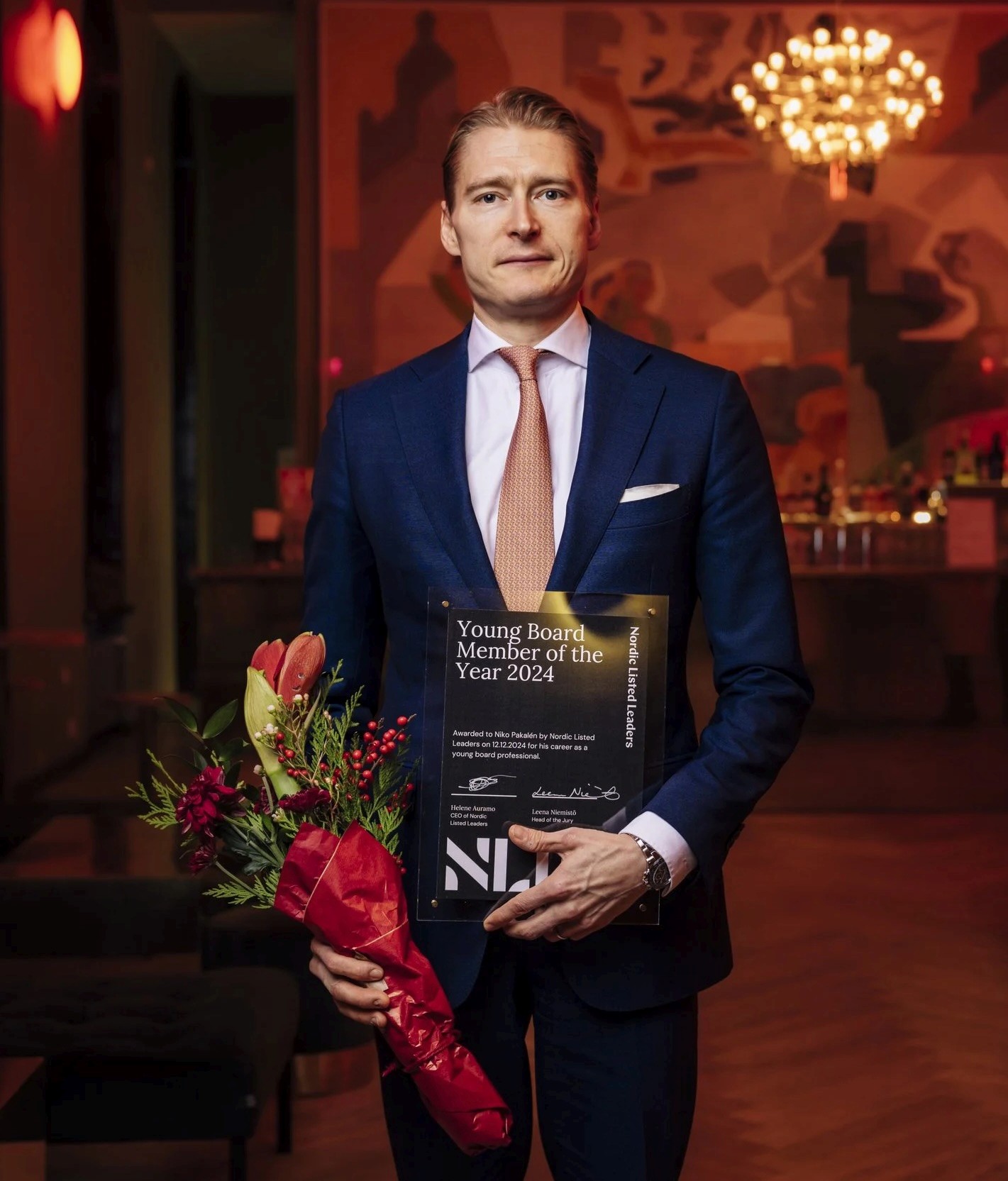
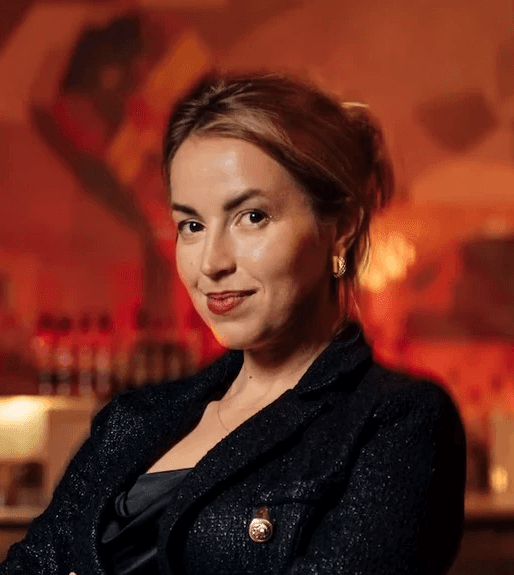
Niko Pakalén was awarded the Young Board Member of the Year in 2024 by Nordic Listed Leaders.
Structural barriers to risk-taking
Pakalén points to the two pillars that keep Finland’s growth potential constrained: taxation and labor rigidity. “It’s not about big reforms,” he says. “It’s smaller adjustments – making sure you incentivize people to work rather than not work. Don’t overcomplicate how it is to start companies or how you tax them.”
He argues that Finland’s system too often punishes ambition. “If things go wrong, there can be quite negative career consequences for taking risks. That shouldn’t be the case,” he says. “If you don’t dare to take risks and make some mistakes, you’ll never learn, grow, and truly get it right.”
Cultural caution versus confident optimism
The comparison between Finland and Sweden surfaces repeatedly in Pakalén’s reflections. Having lived and worked across both markets, he describes two national mindsets that diverge in their approach to ambition and optimism.
“We [Finns] keep our heads down, always preparing for the worst-case scenario. And of course, then you don’t take enough risk. No risk, no return.”
“Swedes are in general a lot more optimistic, daring to dream big, and believing that things will turn out all right — even when times are tough,” he says. “Finns, by nature, are unfortunately more pessimistic. We keep our heads down, always preparing for the worst-case scenario. And of course, then you don’t take enough risk. No risk, no return.”
Sweden’s accumulated wealth and scale give its leaders more room to take risks, Pakalén acknowledges, but the cultural difference in mindset still matters. “The rewards of risk-taking in Sweden are clearer,” he explains. “There’s better alignment between shareholder value creation and management incentives. And there are more opportunities for career advancement in a bigger, more international market.”
His claim is supported by research. According to a study by Ulf Jakobsson and Timo Korkeamäki, Sweden’s concentrated ownership and use of dual class shares enables stronger governance enforcement of incentive alignment, compared to the more dispersed or state-influenced ownership in Finnish listed firms. Moreover, in Finland, executive compensation disclosure remains relatively weak, and the structures of incentive plans are less transparent (Reward Agency 2022).
In addition, Sweden has created several international brands – such as H&M and Ericsson – while the most valuable brand, IKEA, is worth twice as much as Finland’s top brand, Nokia (EUR5.5 billion), according to Brand Finance.
Interestingly, Finland’s growing number of foreign CEOs might signal progress. “It can seem a bit sad that we haven’t raised enough Finnish CEOs homegrown,” he says, “but I think ultimately it’s a positive. It should lead to more cross-fertilization of the Swedish and international mindset — something we need in Finland.”

Niko in Africa, talking to school children at one of Human Practice Foundation's schools. HPF is a charity that builds schools in Nepal and Kenya. Niko is the chair of their Swedish chapter.
What good leadership looks like today
When asked what makes a good leader today, the chairman of Nordea Shareholders' Nomination Board doesn’t hesitate. “I look for a person with a growth mindset — someone who can flexibly change as times change, who knows how to create shareholder value, and who has hopefully already proven it.”
“The best leaders develop a strong successor pool.”
He believes the best leaders surround themselves with people who challenge them. “They should be able to hire people who are better than themselves into their teams without fear. The best leaders develop a strong successor pool,” he says. “In many Finnish companies, this has failed. When the CEO retires, there’s no clear successor — and that’s a sign of poor leadership.”
“That's one key aspect of how I evaluate a good leader: have they been able to hire, retain, and grow good talent under them who could eventually then take over?” Pakalén says. He adds that there are many business leaders who hesitate to do so because they fear competition from talented subordinates.
“You have a seat at the table for a reason.”
The mindset of “insecure overachievers,” as Pakalén calls it, can be both a strength and a weakness in Nordic leadership. “A lot of these executives are always worried: ‘Am I good enough?’ But they are there for a reason,” he says. “You have a seat at the table for a reason. Nobody’s going to remove you tomorrow.”
Pakalén is not the first to observe that constant overachievement can stem from insecurity. Leadership scholar Laura Empson argues in her book Leading Professionals: Power, Politics, and Prima Donnas (2017) that “overachieving” and “insecurity” often co-exist among professionals, especially in high-stakes roles.
For Pakalén, the true mark of a leader is the ability to elevate others. “I’ve always wanted to hire people who are better than myself,” he says. “Nothing’s more rewarding than seeing people grow. A leader should be meticulous about developing other people — it helps them develop themselves.”
“When everything is said and done, more should have been done than said.”
Moreover, a good leader doesn’t need to be a veteran in one industry, according to the board expert. “I don’t believe we need hierarchical, rigid leaders who have worked all their lives in one company or even in one sector. I think a lot of leadership skills are interchangeable across industries, and the most important aspects are motivation and drive – and executing without overcomplicating things. When everything is said and done, more should have been done than said. And execution and speed will always eat strategy for breakfast.”
Leadership and ownership: Two sides of the same coin
Finland’s leadership challenges, Pakalén argues, are inseparable from how companies are owned and governed. “Naturally, it all starts with the owners,” he says. “Shareholders should articulate a reason for existence for the company and set the agenda. But in today’s dispersed ownership, that voice is often lost.”
The rise of passive investing and index funds has weakened that connection. “If 100% of the market were index, everything would just move in lockstep — and there’s nobody for management to talk to,” he says. “Sometimes there’s a lack of an owner with a face and a voice.”
At Cevian Capital, that is precisely the gap they aim to fill. “Our business model allows us to be the owner with a face and a voice — to come in and articulate a vision for where we think the company should be headed.”
Looking ahead: cautious optimism
Asked whether he is optimistic about Finland’s ability to evolve, Pakalén pauses. “The further internationalization of Finland’s business culture should help to fertilize more risk-taking and boldness,” he says. “I’m probably more optimistic about the business culture changing, but less so about seeing much movement toward a more dynamic economic backdrop from politicians and labor unions. I'll believe it when I see it.”
Still, the tone is ultimately hopeful. As Finland integrates more international talent and embraces open-minded debate on tax, labor, and growth, the path to better leadership becomes clearer.
Good leadership, as Pakalén reminds us, is not about charisma or control — it’s about clarity, confidence, and courage. Finland’s next leap will require all three: structural reforms that reward initiative, and a leadership culture that dares to grow.
About Niko Pakalén:
Niko Pakalén has 15 years of international experience in capital markets and management. He has served on the boards of listed companies such as Metso, SKF AB, Tietoevry, and Neles. His current role is partner at Cevian Capital, one of Europe’s largest activist investment firms.
Image credit: Niko Pakalén.
·
5 min read
When Niko Pakalén, a partner at Cevian Capital, compares the Finnish and Swedish economies and leadership cultures, he doesn’t hesitate to name what he sees: a structural and cultural gap that has held Finland back for more than a decade.
“It’s been a bit painful as a Finn living in Sweden for the past 15 years,” he says, “to have seen Sweden press ahead with reforms and see their economy really prosper, while Finland has practically been flatlining since the financial crisis.”
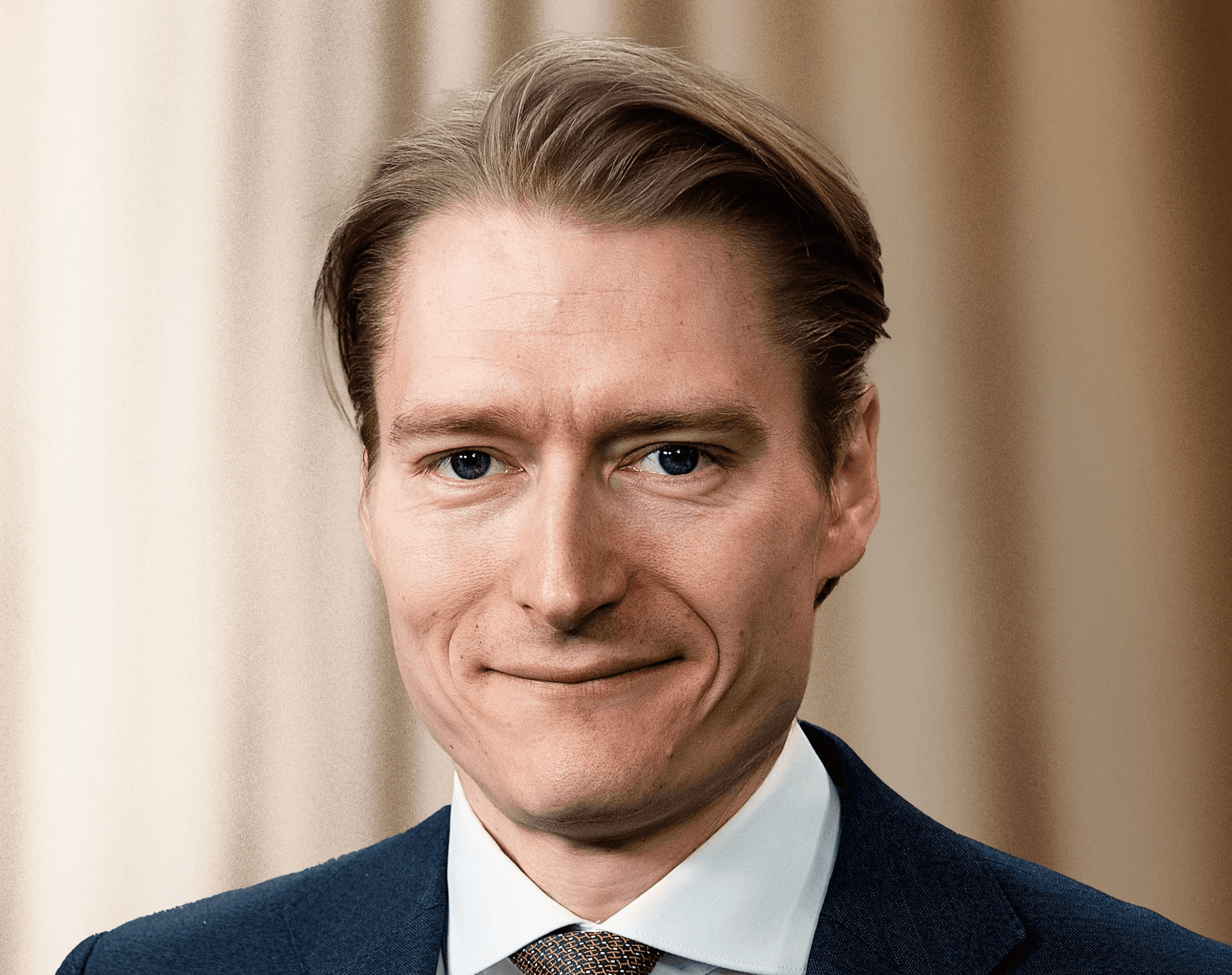
Pakalén knows what he is talking about since he has served on the boards of prominent listed companies such as Metso, SKF AB, Tietoevry, and Neles. He was also awarded the Young Board Member of the Year at the Nordic Listed Leaders Gala 2024.
Finland’s long period of economic stagnation is well-documented. Since the 2008 financial crisis, Finland’s GDP growth has lagged behind that of Sweden, as shown by an index compiled by the Technology Industries of Finland, using data from the OECD. Last year, Sweden’s GDP rose by 1% while Finland’s dropped by 0.2%, based on World Bank data (2025).
“We need bolder moves from both politicians and business leaders.”
But to Pakalén, the issue runs deeper than numbers. “We need bolder moves from both politicians and business leaders,” he says. “That means tax reforms that make it more attractive to work, start companies, and hire people – and a more flexible labor market.”
Niko Pakalén was awarded the Young Board Member of the Year in 2024 by Nordic Listed Leaders.
Structural barriers to risk-taking
Pakalén points to the two pillars that keep Finland’s growth potential constrained: taxation and labor rigidity. “It’s not about big reforms,” he says. “It’s smaller adjustments – making sure you incentivize people to work rather than not work. Don’t overcomplicate how it is to start companies or how you tax them.”
He argues that Finland’s system too often punishes ambition. “If things go wrong, there can be quite negative career consequences for taking risks. That shouldn’t be the case,” he says. “If you don’t dare to take risks and make some mistakes, you’ll never learn, grow, and truly get it right.”
Cultural caution versus confident optimism
The comparison between Finland and Sweden surfaces repeatedly in Pakalén’s reflections. Having lived and worked across both markets, he describes two national mindsets that diverge in their approach to ambition and optimism.
“We [Finns] keep our heads down, always preparing for the worst-case scenario. And of course, then you don’t take enough risk. No risk, no return.”
“Swedes are in general a lot more optimistic, daring to dream big, and believing that things will turn out all right — even when times are tough,” he says. “Finns, by nature, are unfortunately more pessimistic. We keep our heads down, always preparing for the worst-case scenario. And of course, then you don’t take enough risk. No risk, no return.”
Sweden’s accumulated wealth and scale give its leaders more room to take risks, Pakalén acknowledges, but the cultural difference in mindset still matters. “The rewards of risk-taking in Sweden are clearer,” he explains. “There’s better alignment between shareholder value creation and management incentives. And there are more opportunities for career advancement in a bigger, more international market.”
His claim is supported by research. According to a study by Ulf Jakobsson and Timo Korkeamäki, Sweden’s concentrated ownership and use of dual class shares enables stronger governance enforcement of incentive alignment, compared to the more dispersed or state-influenced ownership in Finnish listed firms. Moreover, in Finland, executive compensation disclosure remains relatively weak, and the structures of incentive plans are less transparent (Reward Agency 2022).
In addition, Sweden has created several international brands – such as H&M and Ericsson – while the most valuable brand, IKEA, is worth twice as much as Finland’s top brand, Nokia (EUR5.5 billion), according to Brand Finance.
Interestingly, Finland’s growing number of foreign CEOs might signal progress. “It can seem a bit sad that we haven’t raised enough Finnish CEOs homegrown,” he says, “but I think ultimately it’s a positive. It should lead to more cross-fertilization of the Swedish and international mindset — something we need in Finland.”
Niko in Africa, talking to school children at one of Human Practice Foundation's schools. HPF is a charity that builds schools in Nepal and Kenya. Niko is the chair of their Swedish chapter.
What good leadership looks like today
When asked what makes a good leader today, the chairman of Nordea Shareholders' Nomination Board doesn’t hesitate. “I look for a person with a growth mindset — someone who can flexibly change as times change, who knows how to create shareholder value, and who has hopefully already proven it.”
“The best leaders develop a strong successor pool.”
He believes the best leaders surround themselves with people who challenge them. “They should be able to hire people who are better than themselves into their teams without fear. The best leaders develop a strong successor pool,” he says. “In many Finnish companies, this has failed. When the CEO retires, there’s no clear successor — and that’s a sign of poor leadership.”
“That's one key aspect of how I evaluate a good leader: have they been able to hire, retain, and grow good talent under them who could eventually then take over?” Pakalén says. He adds that there are many business leaders who hesitate to do so because they fear competition from talented subordinates.
“You have a seat at the table for a reason.”
The mindset of “insecure overachievers,” as Pakalén calls it, can be both a strength and a weakness in Nordic leadership. “A lot of these executives are always worried: ‘Am I good enough?’ But they are there for a reason,” he says. “You have a seat at the table for a reason. Nobody’s going to remove you tomorrow.”
Pakalén is not the first to observe that constant overachievement can stem from insecurity. Leadership scholar Laura Empson argues in her book Leading Professionals: Power, Politics, and Prima Donnas (2017) that “overachieving” and “insecurity” often co-exist among professionals, especially in high-stakes roles.
For Pakalén, the true mark of a leader is the ability to elevate others. “I’ve always wanted to hire people who are better than myself,” he says. “Nothing’s more rewarding than seeing people grow. A leader should be meticulous about developing other people — it helps them develop themselves.”
“When everything is said and done, more should have been done than said.”
Moreover, a good leader doesn’t need to be a veteran in one industry, according to the board expert. “I don’t believe we need hierarchical, rigid leaders who have worked all their lives in one company or even in one sector. I think a lot of leadership skills are interchangeable across industries, and the most important aspects are motivation and drive – and executing without overcomplicating things. When everything is said and done, more should have been done than said. And execution and speed will always eat strategy for breakfast.”
Leadership and ownership: Two sides of the same coin
Finland’s leadership challenges, Pakalén argues, are inseparable from how companies are owned and governed. “Naturally, it all starts with the owners,” he says. “Shareholders should articulate a reason for existence for the company and set the agenda. But in today’s dispersed ownership, that voice is often lost.”
The rise of passive investing and index funds has weakened that connection. “If 100% of the market were index, everything would just move in lockstep — and there’s nobody for management to talk to,” he says. “Sometimes there’s a lack of an owner with a face and a voice.”
At Cevian Capital, that is precisely the gap they aim to fill. “Our business model allows us to be the owner with a face and a voice — to come in and articulate a vision for where we think the company should be headed.”
Looking ahead: cautious optimism
Asked whether he is optimistic about Finland’s ability to evolve, Pakalén pauses. “The further internationalization of Finland’s business culture should help to fertilize more risk-taking and boldness,” he says. “I’m probably more optimistic about the business culture changing, but less so about seeing much movement toward a more dynamic economic backdrop from politicians and labor unions. I'll believe it when I see it.”
Still, the tone is ultimately hopeful. As Finland integrates more international talent and embraces open-minded debate on tax, labor, and growth, the path to better leadership becomes clearer.
Good leadership, as Pakalén reminds us, is not about charisma or control — it’s about clarity, confidence, and courage. Finland’s next leap will require all three: structural reforms that reward initiative, and a leadership culture that dares to grow.
About Niko Pakalén:
Niko Pakalén has 15 years of international experience in capital markets and management. He has served on the boards of listed companies such as Metso, SKF AB, Tietoevry, and Neles. His current role is partner at Cevian Capital, one of Europe’s largest activist investment firms.
Image credit: Niko Pakalén.

Investor Event
Listeds Investor Event · Defence
Nordic defence is in a once-in-a-generation growth cycle. Eight listed and pre-IPO companies pitch to 100+ invited investors at Valkoinen Sali, Helsinki
21 September 2026


Latest on Listeds

