Research published by Harvard Business Review suggests AI is evolving from a productivity tool into something far more personal.
For the past three years, AI has largely been framed as a workplace tool. It drafts emails, summarizes reports, writes code, and automates routine tasks.
But according to the latest AI in the Wild study, published in the Harvard Business Review, people are increasingly using AI for something else: support. The research analyzed more than 12,000 real-world AI use cases between March 2025 and February 2026 and found that therapy and companionship remained the most common use case for a second consecutive year. Relationship advice, workplace guidance, and decision support also ranked among the most popular applications.
The biggest shift from last year is not what sits at number one. It is what has risen around it. In 2025, users frequently turned to AI for enhanced learning, finding purpose, generating ideas, and organizing their lives. Those categories have largely given way to more interpersonal uses. People increasingly rely on AI to navigate relationships, workplace interactions, and difficult decisions.
The trend is visible across the dataset. Personal and professional support now accounts for 34% of observed AI use cases, up from 17% in 2024.
The new sounding board
For many professionals, AI has become a place to test ideas before sharing them with others.
One user described using it to pressure test arguments rather than generate them: "I use AI all the time to evaluate an argument I've written and have the AI try to poke holes in it. I then assess if I'm missing something and go back to refine it myself. AI is a mirror, not a genie."
Used this way, AI functions less as an assistant and more as a sparring partner. It helps users challenge assumptions, refine arguments, and think through decisions before taking action.
When support becomes dependence
The same study highlights a less comfortable possibility.
The researchers point to a growing risk they call "thinkslop" — the habit of outsourcing too much judgment to AI.
One participant described the shift in personal terms: "With excessive use of ChatGPT and all these AI tools, I realized I hadn't been using my brain the same way. It's so easy to let AI write for you. I was literally outsourcing my brain."
The concern is not simply that AI may produce poor answers. It is that people may stop wrestling with problems themselves.
The workplace relationship
Many respondents reported using AI for career advice, difficult conversations, and interpreting interactions with colleagues.
One user said: "I got stressed overthinking about a message my boss sent me so I got ChatGPT to be my emotional support and decipher the message for me."
The numbers suggest that example is far from unusual. Personal and professional support has doubled as a share of AI use since 2024, becoming the study's largest category. People are increasingly turning to AI not just for answers, but for advice.
·
5 min read
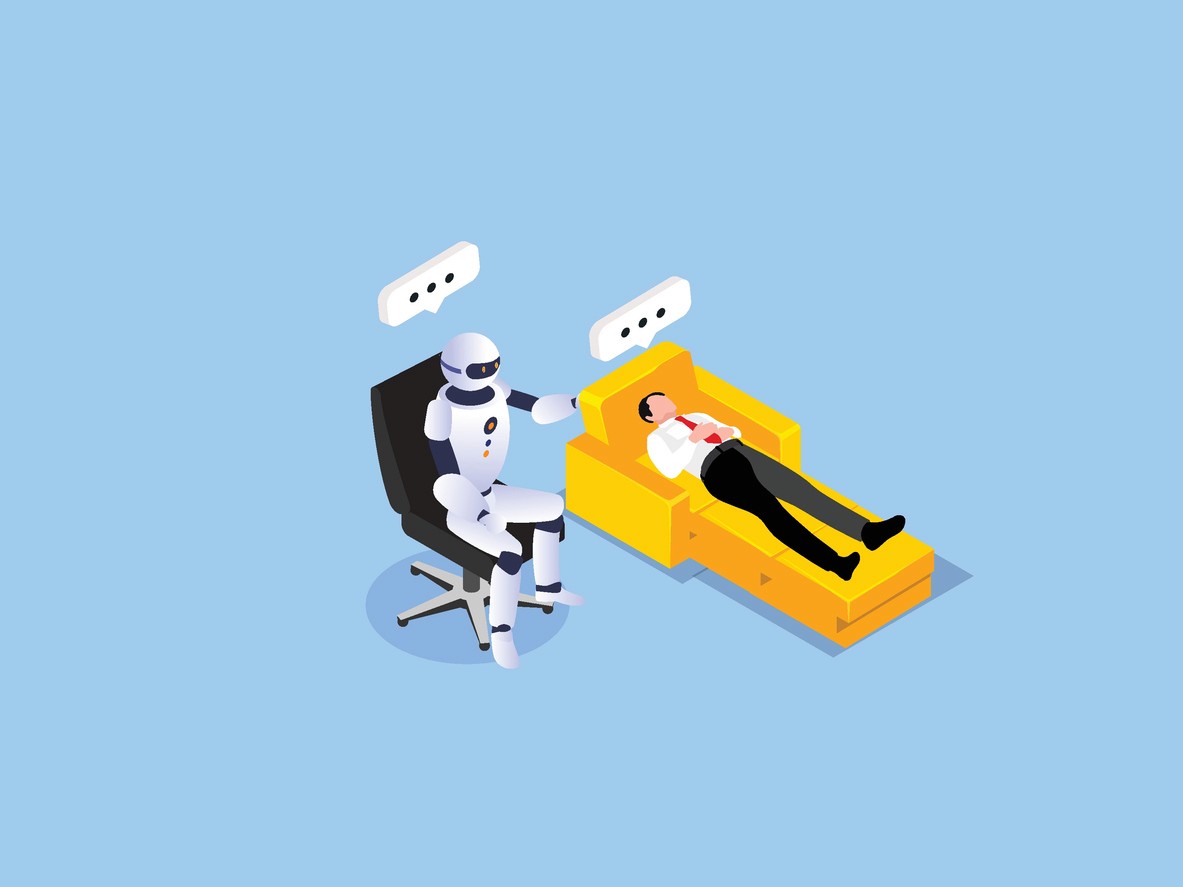
Research published by Harvard Business Review suggests AI is evolving from a productivity tool into something far more personal.
For the past three years, AI has largely been framed as a workplace tool. It drafts emails, summarizes reports, writes code, and automates routine tasks.
But according to the latest AI in the Wild study, published in the Harvard Business Review, people are increasingly using AI for something else: support. The research analyzed more than 12,000 real-world AI use cases between March 2025 and February 2026 and found that therapy and companionship remained the most common use case for a second consecutive year. Relationship advice, workplace guidance, and decision support also ranked among the most popular applications.
The biggest shift from last year is not what sits at number one. It is what has risen around it. In 2025, users frequently turned to AI for enhanced learning, finding purpose, generating ideas, and organizing their lives. Those categories have largely given way to more interpersonal uses. People increasingly rely on AI to navigate relationships, workplace interactions, and difficult decisions.
The trend is visible across the dataset. Personal and professional support now accounts for 34% of observed AI use cases, up from 17% in 2024.
The new sounding board
For many professionals, AI has become a place to test ideas before sharing them with others.
One user described using it to pressure test arguments rather than generate them: "I use AI all the time to evaluate an argument I've written and have the AI try to poke holes in it. I then assess if I'm missing something and go back to refine it myself. AI is a mirror, not a genie."
Used this way, AI functions less as an assistant and more as a sparring partner. It helps users challenge assumptions, refine arguments, and think through decisions before taking action.
When support becomes dependence
The same study highlights a less comfortable possibility.
The researchers point to a growing risk they call "thinkslop" — the habit of outsourcing too much judgment to AI.
One participant described the shift in personal terms: "With excessive use of ChatGPT and all these AI tools, I realized I hadn't been using my brain the same way. It's so easy to let AI write for you. I was literally outsourcing my brain."
The concern is not simply that AI may produce poor answers. It is that people may stop wrestling with problems themselves.
The workplace relationship
Many respondents reported using AI for career advice, difficult conversations, and interpreting interactions with colleagues.
One user said: "I got stressed overthinking about a message my boss sent me so I got ChatGPT to be my emotional support and decipher the message for me."
The numbers suggest that example is far from unusual. Personal and professional support has doubled as a share of AI use since 2024, becoming the study's largest category. People are increasingly turning to AI not just for answers, but for advice.





Investor Event
Listeds Investor Event · Defence
Nordic defence is in a once-in-a-generation growth cycle. Eight listed and pre-IPO companies pitch to 100+ invited investors at Valkoinen Sali, Helsinki
21 September 2026


Latest on Listeds


Our Pulse newsletter
Your weekly leadership intelligence briefing.
What happened, why it matters, and what to watch across every CEO, board, and executive move in Nordic listed companies, starting with Finland. Fast, factual, and to the point.
Delivered every Monday.

By signing up, you agree to our Privacy Policy