
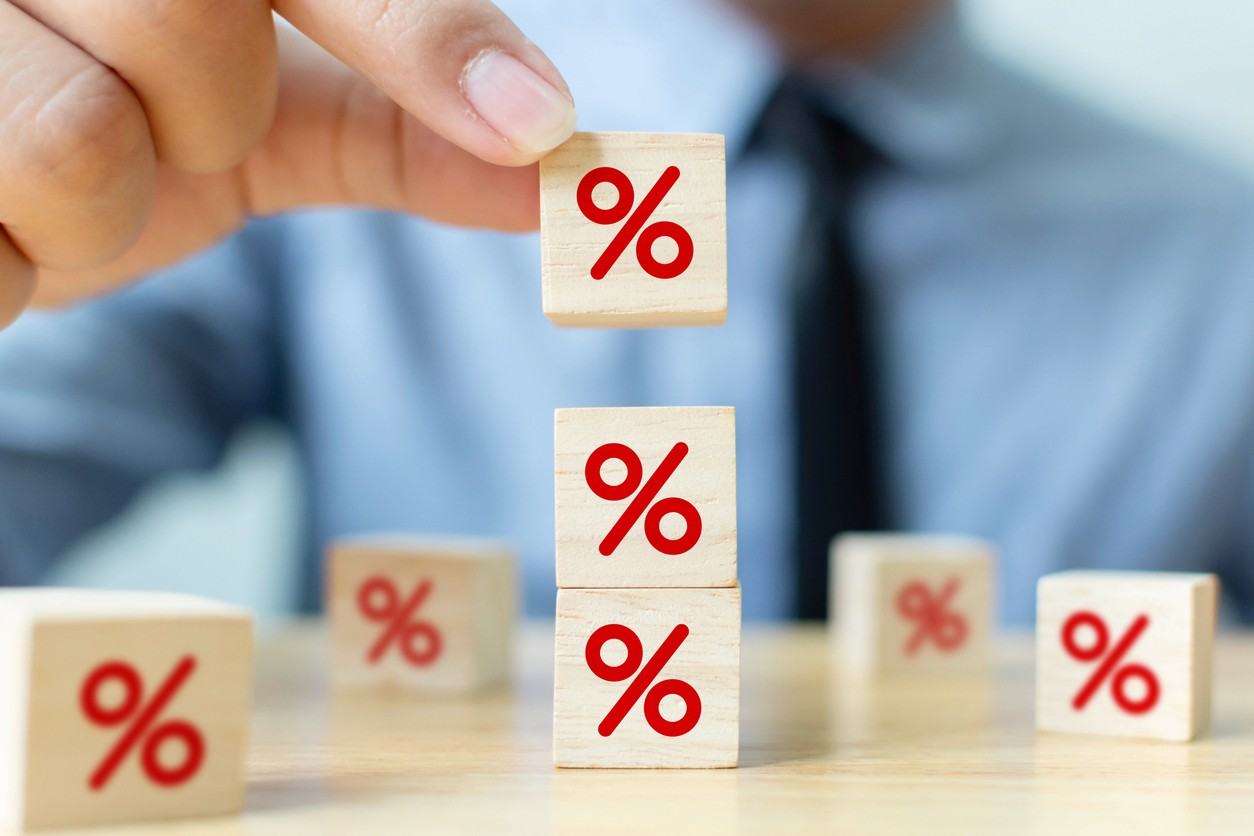
It is becoming increasingly clear that interest rates could rise as inflation pressures build, Kauppalehti reported today, citing Nordea CEO Frank Vang-Jensen, who points to energy markets and geopolitical tensions as key drivers.

His remarks add a more explicit macro view to Nordea’s first-quarter earnings release, which remained more restrained. The bank noted that markets were affected by “unexpected sharp increases in EUR and SEK interest rate expectations,” which “led to exceptional losses across certain desks.” 

“However, it is very difficult to say how much and how quickly interest rates will rise. Energy consumption is such a central part of the production of many goods and services, so changes in energy prices spread more widely across society, and then inflation accelerates and interest rates rise,” Vang-Jensen told Kauppalehti. “This has a negative impact on economic growth globally and also in the Nordic countries.” 

At the same time, uncertainty remains elevated. The pace and scale of rate increases will depend on how the geopolitical situation evolves and how persistent the energy shock proves to be. 

For now, Nordea’s financials still reflect a lower-rate environment. Net interest income was down 4 percent, “following policy rate reductions,” highlighting the lag between macroeconomic shifts and bank earnings.

For the bank, higher rates offer short-term support, but stability remains the preferred outcome. While official guidance is unchanged, the CEO’s comments suggest that rising inflation may soon translate into higher borrowing costs.

|

|

Business

Rates set to rise as Nordea CEO signals inflation pressure, Kauppalehti reports

·

5 min read

·

Market Signals

It is becoming increasingly clear that interest rates could rise as inflation pressures build, Kauppalehti reported today, citing Nordea CEO Frank Vang-Jensen, who points to energy markets and geopolitical tensions as key drivers.

Explore and follow profiles from this article to get timely updates:

His remarks add a more explicit macro view to Nordea’s first-quarter earnings release, which remained more restrained. The bank noted that markets were affected by “unexpected sharp increases in EUR and SEK interest rate expectations,” which “led to exceptional losses across certain desks.” 

“However, it is very difficult to say how much and how quickly interest rates will rise. Energy consumption is such a central part of the production of many goods and services, so changes in energy prices spread more widely across society, and then inflation accelerates and interest rates rise,” Vang-Jensen told Kauppalehti. “This has a negative impact on economic growth globally and also in the Nordic countries.” 

At the same time, uncertainty remains elevated. The pace and scale of rate increases will depend on how the geopolitical situation evolves and how persistent the energy shock proves to be. 

All Listeds newsletters (bundle)

One sign-up, the full picture.

Get every Listeds newsletter: the daily signal drumbeat, the weekly Pulse briefing, the monthly Best of the Month, the CEO letter, and the Weekend read.

By signing up, you agree to our Privacy Policy

All Listeds newsletters (bundle)

One sign-up, the full picture.

Get every Listeds newsletter: the daily signal drumbeat, the weekly Pulse briefing, the monthly Best of the Month, the CEO letter, and the Weekend read.

By signing up, you agree to our Privacy Policy

For now, Nordea’s financials still reflect a lower-rate environment. Net interest income was down 4 percent, “following policy rate reductions,” highlighting the lag between macroeconomic shifts and bank earnings.

For the bank, higher rates offer short-term support, but stability remains the preferred outcome. While official guidance is unchanged, the CEO’s comments suggest that rising inflation may soon translate into higher borrowing costs.

Nordic Listed Leaders Board Programme

Learn board work from
the people who do it.

Harvard cases, coaching and open dialogue with people who sit on and work with boards of Finnish publicly listed companies.

Next cohort

19 November 2026

Then January, April, August and October 2027

Nordic Listed Leaders Board Programme

Learn board work from
the people who do it.

Harvard cases, coaching and open dialogue with people who sit on and work with boards of Finnish publicly listed companies.

Next cohort

19 November 2026

Then January, April, August and October 2027

Authors

Journalist

Emmi Laine is head of business content at Listeds and our lead for finance and business coverage. She sets the editorial agenda, interviews Nordic business leaders, and writes stories, newsletters, and social content on timely market and corporate topics. Emmi brings nearly eight years of experience from Shanghai's Yicai Global / Yicai Media Group, where she was awarded for reporting on China’s economy, finance sector, and technology innovation. She holds an MSc in Innovation and Entrepreneurship from ESADE Business School in Barcelona and a Master’s degree in International Design Business Management from Aalto University. She also holds a Bachelor’s degree in Culture Studies with a major in Journalism from Stockholm University and has studied Mandarin Chinese and Chinese culture. Emmi is a Finnish citizen and has lived in Finland, Sweden, China, and Portugal.

Authors

Journalist

Emmi Laine is head of business content at Listeds and our lead for finance and business coverage. She sets the editorial agenda, interviews Nordic business leaders, and writes stories, newsletters, and social content on timely market and corporate topics. Emmi brings nearly eight years of experience from Shanghai's Yicai Global / Yicai Media Group, where she was awarded for reporting on China’s economy, finance sector, and technology innovation. She holds an MSc in Innovation and Entrepreneurship from ESADE Business School in Barcelona and a Master’s degree in International Design Business Management from Aalto University. She also holds a Bachelor’s degree in Culture Studies with a major in Journalism from Stockholm University and has studied Mandarin Chinese and Chinese culture. Emmi is a Finnish citizen and has lived in Finland, Sweden, China, and Portugal.

All Listeds newsletters (bundle)

One sign-up, the full picture.

Get every Listeds newsletter: the daily signal drumbeat, the weekly Pulse briefing, the monthly Best of the Month, the CEO letter, and the Weekend read.

By signing up, you agree to our Privacy Policy

All Listeds newsletters (bundle)

One sign-up, the full picture.

Get every Listeds newsletter: the daily signal drumbeat, the weekly Pulse briefing, the monthly Best of the Month, the CEO letter, and the Weekend read.

By signing up, you agree to our Privacy Policy

Latest signalsLive feed
Moves trackerLive feed

Nordic Listed Leaders Board Programme

Learn board work from
the people who do it.

Harvard cases, coaching and open dialogue with people who sit on and work with boards of Finnish publicly listed companies.

Next cohort

19 November 2026

Then January, April, August and October 2027

Latest on Listeds

Executive Intelligence

Twice the member fee is the going rate for a Helsinki large cap chair

At most Helsinki large caps, the board chair earns about twice what an ordinary board member earns. Nine boards set the chair fee at exactly twice the member fee, and the same nine did so a year ago.

KONE is a typical example. Its chair earns €220,000 and each ordinary member €110,000. Fiskars, Hiab, Kalmar, Lumo Kodit, Orion, Qt Group, Sanoma and UPM follow the same two-to-one rule. No other ratio is as common.

Most of the remaining boards pay their chair slightly more than twice. Fifteen companies pay their chair between 2.01 and 2.49 times the member fee. Across all 32, the typical chair earns 2.23 times as much as an ordinary member.

Nine boards pay the chair exactly twice the member fee
Helsinki large caps by chair fee as a multiple of the member fee, 2026 AGMs (n = 32)
0591418391532Below 2xExactly 2x2.01x to 2.49x2.50x to 2.99x3x and above
Source: Source: Listeds board remuneration data, AGM resolution releases 2026

Five boards raised fees and kept the two-to-one rule

The rule held through this year's raises. Hiab, Kalmar, Lumo Kodit, Orion and Sanoma all raised their fees in 2026 and lifted the chair and member fees together, so the chair still earns exactly twice. Orion, for example, moved from €112,000 and €56,000 to €120,000 and €60,000. Across all 32 companies, the typical ratio barely changed, from 2.20 to 2.23.

Nordea, SSAB and Telia pay their chairs the most relative to the board

Nordea's chair earns 3.8 times an ordinary member, up from 3.6 a year ago, the widest gap of any large cap. Part 1 of this series covered that move. SSAB and Telia, both Swedish companies, pay their chairs about three times the member fee.

The gap is smaller than it looks at Nordea and Telia, because their members also earn extra fees for committee work. Telia, for example, pays each audit committee member an additional SEK 215,000, about €19,800.

Metsä Board and Mandatum keep their top roles close together

At the other end, Metsä Board and Mandatum pay their chair 1.48 times the member fee, and Vaisala 1.5 times. Metsä Board and Mandatum also pay their vice chair 86% of what the chair earns, the closest the two roles come anywhere in the segment.

At most boards, the vice chair carries a much smaller premium. The typical vice chair earns about 27% more than an ordinary member, while the typical chair earns more than twice as much.

Executive Intelligence

Four boards paid their chair €160,000 last year. Konecranes kept it unchanged and fell five places

A year ago, Elisa, Hiab, Kalmar and Konecranes all paid their chair exactly €160,000, putting them joint 14th among Helsinki's 32 large caps. This spring three of them raised the fee and Konecranes did not. Konecranes is now joint 19th.

Hiab raised its chair fee from €160,000 to €170,000 and now ranks 15th. Kalmar raised it to €168,000 and ranks 16th. Elisa raised it by 3.1% to €165,000 and slipped to 17th. Konecranes kept its fee at €160,000 and fell five places, to joint 19th.

The ranking orders all 32 large caps by chair fee, with first place the highest. Companies paying the same fee share a place

Four boards were tied a year ago. Konecranes held, and fell five places
Rank by annual chair fee among 32 Helsinki large caps, 2025 and 2026 AGMs
2025 rank2026 rankClimbedFell
20th18th16th14th12th10thJoint 14th in 2025NesteUp 3 places, now 10th€165k to €195kFortumUp 4 places, now 14th€155k to €175kHiabDown 1 place, now 15th€160k to €170kKalmarDown 2 places, now 16th€160k to €168kElisaDown 3 places, now 17th€160k to €165kKonecranesDown 5 places, now joint 19thUnchanged at €160,000
Higher ranks to the right; 1st is the highest fee. SSAB and Telia ranked at constant 2026 exchange rates.
Source: Listeds board remuneration data, AGM resolution releases 2025 and 2026

Konecranes fell because others raised around it

Konecranes did not cut its fee. It lost ground because other boards moved past it. Fortum raised its chair fee from €155,000 to €175,000 and climbed four places to 14th. Neste went from €165,000 to €195,000 and rose three places to 10th. Sanoma, which paid €144,000 a year ago, now pays the same €160,000 as Konecranes.

Even a raise above the typical rate cost Elisa three places

Elisa's 3.1% raise was slightly above the typical 2.8% across all 32 companies. It still cost Elisa three places, because the boards around it raised by more: Hiab by 6.3% and Kalmar by 5.0%.

Thirteen boards held their fee, and their peers moved past them

Thirteen large caps held their chair fee this year. Much of the segment is tightly packed: 12 companies pay their chair between €150,000 and €200,000, so small differences in raises quickly reorder the ranking. That is what a nomination board will see when it compares next year's proposal with its peers.

Join our Pulse, Best-of-the-Week, and Weekend newsletters

Join our Pulse, Best-of-the-Week, and Weekend newsletters