/

Voices

Voices

Thought-provoking views from the voices defining the leadership agenda in the Nordics.

/

Voices

Voices

Thought-provoking views from the voices defining the leadership agenda in the Nordics.

/

Voices

Voices

Thought-provoking views from the voices defining the leadership agenda in the Nordics.

Columnists

The Next Nordic advantage‌ - What if talent, capital and innovation start flowing north?‌

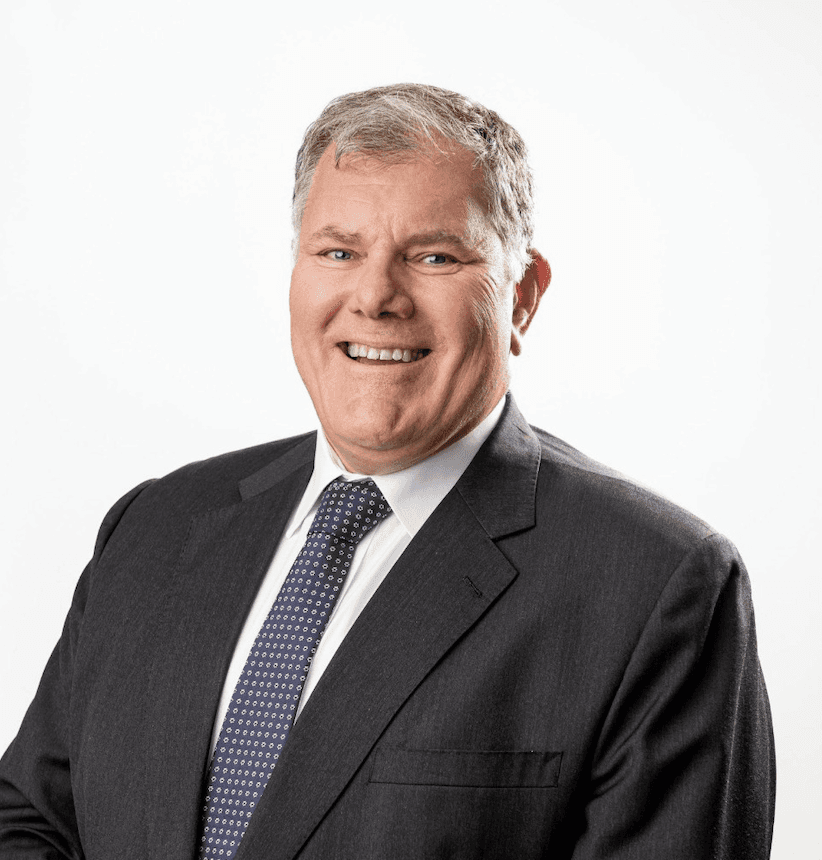
Minna Koskelo

Guest columnist

Sep 8, 2026

Geopolitical discussions have been framed through the lens of the Global West, Global East and Global South. Recently, a fourth concept has started to emerge in strategic discussions: the Global North.

The term is usually used more broadly to describe the developed world as a whole. In this column, I deliberately narrow it to the Nordic region because it represents a distinctive institutional model.

I first encountered the idea when Finland's President Alexander Stubb discussed the possibility of the Global North as an emerging geopolitical force during an interview on Ykkösaamu, one of Finland's leading current affairs programmes, in February 2026.
Strong Nordic cooperation is one dimension of this thinking.

Are we moving towards a new geopolitical geometry? The significance of the North has grown in recent years through developments such as NATO's enlargement and the increasing strategic importance of the Arctic region. The Arctic has received unprecedented international attention, not only because of security concerns, but also because of its growing relevance for energy, infrastructure, logistics and critical resources. 

The growing strategic importance of the Nordic region is reflected for instance in NATO's decision to establish its Forward Land Forces Multinational Staff Element in Rovaniemi, creating a permanent NATO presence in Northern Finland.

In 2026, the U.S. Coast Guard moved forward with plans to procure 11 new icebreakers from Finland, relying heavily on Finnish icebreaker expertise and shipbuilding capabilities.

The Nordic Effect

For decades, the United States has been the world's dominant magnet for talent, capital and innovation. Yet recent policy shifts and a growing emphasis on "America First" raise a strategic question worth putting to a board: What if America First ultimately makes America less attractive to global talent, capital and ideas? It is a possibility worth exploring. What if a more fragmented geopolitical environment gradually disperses global flows of talent, investment and innovation? What if some of these flows begin seeking more predictable destinations? This is where the Global North starts to matter commercially.

The defining characteristics of the Nordic region include stable societies, low levels of corruption, strong educational systems, safety and security, a strong rule of law, well-functioning institutions, advanced innovation ecosystems and a long tradition of diplomacy and cooperation. These are often described as social strengths. In an increasingly fragmented world, they may also become strategic economic assets.
For instance The World Justice Project's Rule of Law Index 2025 ranked Denmark 1st, with Norway and Finland immediately behind among the strongest rule-of-law countries in the world. Nordic countries also perform exceptionally well in innovation: in the Global Innovation Index 2024

When political risk increases elsewhere, predictability itself may become a competitive advantage and characteristics of an attractive investment environment. 

How could your company benefit if the Nordic region became an increasingly attractive destination for talent, investment and innovation?

No Nordic country can compete with the United States or China on scale alone. Together, however, the region represents a globally relevant platform for innovation, technology, research and investment. The four Nordic exchanges — Helsinki, Stockholm, Copenhagen and Oslo — are already a single functioning market.

Another signal of deeper Nordic integration can be seen in capital markets. In August 2026, Bloomberg reported that the Nordic Compass initiative was exploring a common Nordic stock exchange bringing together the markets of Sweden, Denmark, Norway and Finland. The initiative includes major Nordic actors such as Wallenberg Investments, EQT, Nordea, Nokia, Kone, Nasdaq and the Novo Nordisk Foundation. Its stated ambition is to strengthen the region's ability to compete for capital and support growth companies at a scale that individual Nordic markets struggle to achieve alone. Such discussions suggest that the idea of the Nordics acting as a more integrated economic platform is already moving from geopolitical speculation into practical business strategy.

If the twentieth century rewarded scale and the early twenty-first century rewarded speed, the next decade may reward trusted collaboration.

What's Next?

Whether the Global North emerges as a recognised centre of power remains uncertain. But uncertainty is precisely why boards should explore the possibility.

One of the core purposes of strategic foresight is not to predict what will happen, but to expand the range of possibilities organisations are prepared for. The most valuable strategic question is rarely "What will happen?" It is "What becomes possible if this happens?"

For boards, a practical starting point is visioning.

Imagine it is 2035 and the Global North has become one of the world's most attractive destinations for talent, investment and innovation.

  • What would be the desired role that your company wants to play in that future? 

  • What capabilities would that require?

  • Which partnerships should be built today?

  • What opportunities might competitors overlook?

The companies that benefit most from emerging shifts are rarely those that predict the future correctly. They are those that recognise new possibilities early and position themselves accordingly. 

The future is built, not forecast.

Minna Koskelo

Founder and CEO, 11Helsinki

She is also Founder and Chair of the Board of Futures Finland, a founding organisation of the Nordic Foresight Network. Her work focuses on strategic foresight, helping organisations turn foresight into action.

Nordic Foresight

Minna Koskelo

The Nordic Foresight Network is a network of foresight professionals advancing futures thinking across the Nordic region.

Nordic Foresight Network

The Nordic Foresight Column is a monthly series by Nordic Foresight Network in which foresight professionals from the five Nordic countries examine the shifts shaping the region.

Columnists

The Next Nordic advantage‌ - What if talent, capital and innovation start flowing north?‌

Minna Koskelo

Guest columnist

Sep 8, 2026

Geopolitical discussions have been framed through the lens of the Global West, Global East and Global South. Recently, a fourth concept has started to emerge in strategic discussions: the Global North.

The term is usually used more broadly to describe the developed world as a whole. In this column, I deliberately narrow it to the Nordic region because it represents a distinctive institutional model.

I first encountered the idea when Finland's President Alexander Stubb discussed the possibility of the Global North as an emerging geopolitical force during an interview on Ykkösaamu, one of Finland's leading current affairs programmes, in February 2026.
Strong Nordic cooperation is one dimension of this thinking.

Are we moving towards a new geopolitical geometry? The significance of the North has grown in recent years through developments such as NATO's enlargement and the increasing strategic importance of the Arctic region. The Arctic has received unprecedented international attention, not only because of security concerns, but also because of its growing relevance for energy, infrastructure, logistics and critical resources. 

The growing strategic importance of the Nordic region is reflected for instance in NATO's decision to establish its Forward Land Forces Multinational Staff Element in Rovaniemi, creating a permanent NATO presence in Northern Finland.

In 2026, the U.S. Coast Guard moved forward with plans to procure 11 new icebreakers from Finland, relying heavily on Finnish icebreaker expertise and shipbuilding capabilities.

The Nordic Effect

For decades, the United States has been the world's dominant magnet for talent, capital and innovation. Yet recent policy shifts and a growing emphasis on "America First" raise a strategic question worth putting to a board: What if America First ultimately makes America less attractive to global talent, capital and ideas? It is a possibility worth exploring. What if a more fragmented geopolitical environment gradually disperses global flows of talent, investment and innovation? What if some of these flows begin seeking more predictable destinations? This is where the Global North starts to matter commercially.

The defining characteristics of the Nordic region include stable societies, low levels of corruption, strong educational systems, safety and security, a strong rule of law, well-functioning institutions, advanced innovation ecosystems and a long tradition of diplomacy and cooperation. These are often described as social strengths. In an increasingly fragmented world, they may also become strategic economic assets.
For instance The World Justice Project's Rule of Law Index 2025 ranked Denmark 1st, with Norway and Finland immediately behind among the strongest rule-of-law countries in the world. Nordic countries also perform exceptionally well in innovation: in the Global Innovation Index 2024

When political risk increases elsewhere, predictability itself may become a competitive advantage and characteristics of an attractive investment environment. 

How could your company benefit if the Nordic region became an increasingly attractive destination for talent, investment and innovation?

No Nordic country can compete with the United States or China on scale alone. Together, however, the region represents a globally relevant platform for innovation, technology, research and investment. The four Nordic exchanges — Helsinki, Stockholm, Copenhagen and Oslo — are already a single functioning market.

Another signal of deeper Nordic integration can be seen in capital markets. In August 2026, Bloomberg reported that the Nordic Compass initiative was exploring a common Nordic stock exchange bringing together the markets of Sweden, Denmark, Norway and Finland. The initiative includes major Nordic actors such as Wallenberg Investments, EQT, Nordea, Nokia, Kone, Nasdaq and the Novo Nordisk Foundation. Its stated ambition is to strengthen the region's ability to compete for capital and support growth companies at a scale that individual Nordic markets struggle to achieve alone. Such discussions suggest that the idea of the Nordics acting as a more integrated economic platform is already moving from geopolitical speculation into practical business strategy.

If the twentieth century rewarded scale and the early twenty-first century rewarded speed, the next decade may reward trusted collaboration.

What's Next?

Whether the Global North emerges as a recognised centre of power remains uncertain. But uncertainty is precisely why boards should explore the possibility.

One of the core purposes of strategic foresight is not to predict what will happen, but to expand the range of possibilities organisations are prepared for. The most valuable strategic question is rarely "What will happen?" It is "What becomes possible if this happens?"

For boards, a practical starting point is visioning.

Imagine it is 2035 and the Global North has become one of the world's most attractive destinations for talent, investment and innovation.

  • What would be the desired role that your company wants to play in that future? 

  • What capabilities would that require?

  • Which partnerships should be built today?

  • What opportunities might competitors overlook?

The companies that benefit most from emerging shifts are rarely those that predict the future correctly. They are those that recognise new possibilities early and position themselves accordingly. 

The future is built, not forecast.

Minna Koskelo

Founder and CEO, 11Helsinki

She is also Founder and Chair of the Board of Futures Finland, a founding organisation of the Nordic Foresight Network. Her work focuses on strategic foresight, helping organisations turn foresight into action.

Nordic Foresight

Minna Koskelo

The Nordic Foresight Network is a network of foresight professionals advancing futures thinking across the Nordic region.

Nordic Foresight Network

The Nordic Foresight Column is a monthly series by Nordic Foresight Network in which foresight professionals from the five Nordic countries examine the shifts shaping the region.

Columnists

The Next Nordic advantage‌ - What if talent, capital and innovation start flowing north?‌

Minna Koskelo

Guest columnist

Sep 8, 2026

Geopolitical discussions have been framed through the lens of the Global West, Global East and Global South. Recently, a fourth concept has started to emerge in strategic discussions: the Global North.

The term is usually used more broadly to describe the developed world as a whole. In this column, I deliberately narrow it to the Nordic region because it represents a distinctive institutional model.

I first encountered the idea when Finland's President Alexander Stubb discussed the possibility of the Global North as an emerging geopolitical force during an interview on Ykkösaamu, one of Finland's leading current affairs programmes, in February 2026.
Strong Nordic cooperation is one dimension of this thinking.

Are we moving towards a new geopolitical geometry? The significance of the North has grown in recent years through developments such as NATO's enlargement and the increasing strategic importance of the Arctic region. The Arctic has received unprecedented international attention, not only because of security concerns, but also because of its growing relevance for energy, infrastructure, logistics and critical resources. 

The growing strategic importance of the Nordic region is reflected for instance in NATO's decision to establish its Forward Land Forces Multinational Staff Element in Rovaniemi, creating a permanent NATO presence in Northern Finland.

In 2026, the U.S. Coast Guard moved forward with plans to procure 11 new icebreakers from Finland, relying heavily on Finnish icebreaker expertise and shipbuilding capabilities.

The Nordic Effect

For decades, the United States has been the world's dominant magnet for talent, capital and innovation. Yet recent policy shifts and a growing emphasis on "America First" raise a strategic question worth putting to a board: What if America First ultimately makes America less attractive to global talent, capital and ideas? It is a possibility worth exploring. What if a more fragmented geopolitical environment gradually disperses global flows of talent, investment and innovation? What if some of these flows begin seeking more predictable destinations? This is where the Global North starts to matter commercially.

The defining characteristics of the Nordic region include stable societies, low levels of corruption, strong educational systems, safety and security, a strong rule of law, well-functioning institutions, advanced innovation ecosystems and a long tradition of diplomacy and cooperation. These are often described as social strengths. In an increasingly fragmented world, they may also become strategic economic assets.
For instance The World Justice Project's Rule of Law Index 2025 ranked Denmark 1st, with Norway and Finland immediately behind among the strongest rule-of-law countries in the world. Nordic countries also perform exceptionally well in innovation: in the Global Innovation Index 2024

When political risk increases elsewhere, predictability itself may become a competitive advantage and characteristics of an attractive investment environment. 

How could your company benefit if the Nordic region became an increasingly attractive destination for talent, investment and innovation?

No Nordic country can compete with the United States or China on scale alone. Together, however, the region represents a globally relevant platform for innovation, technology, research and investment. The four Nordic exchanges — Helsinki, Stockholm, Copenhagen and Oslo — are already a single functioning market.

Another signal of deeper Nordic integration can be seen in capital markets. In August 2026, Bloomberg reported that the Nordic Compass initiative was exploring a common Nordic stock exchange bringing together the markets of Sweden, Denmark, Norway and Finland. The initiative includes major Nordic actors such as Wallenberg Investments, EQT, Nordea, Nokia, Kone, Nasdaq and the Novo Nordisk Foundation. Its stated ambition is to strengthen the region's ability to compete for capital and support growth companies at a scale that individual Nordic markets struggle to achieve alone. Such discussions suggest that the idea of the Nordics acting as a more integrated economic platform is already moving from geopolitical speculation into practical business strategy.

If the twentieth century rewarded scale and the early twenty-first century rewarded speed, the next decade may reward trusted collaboration.

What's Next?

Whether the Global North emerges as a recognised centre of power remains uncertain. But uncertainty is precisely why boards should explore the possibility.

One of the core purposes of strategic foresight is not to predict what will happen, but to expand the range of possibilities organisations are prepared for. The most valuable strategic question is rarely "What will happen?" It is "What becomes possible if this happens?"

For boards, a practical starting point is visioning.

Imagine it is 2035 and the Global North has become one of the world's most attractive destinations for talent, investment and innovation.

  • What would be the desired role that your company wants to play in that future? 

  • What capabilities would that require?

  • Which partnerships should be built today?

  • What opportunities might competitors overlook?

The companies that benefit most from emerging shifts are rarely those that predict the future correctly. They are those that recognise new possibilities early and position themselves accordingly. 

The future is built, not forecast.

Minna Koskelo

Founder and CEO, 11Helsinki

She is also Founder and Chair of the Board of Futures Finland, a founding organisation of the Nordic Foresight Network. Her work focuses on strategic foresight, helping organisations turn foresight into action.

Nordic Foresight

Minna Koskelo

The Nordic Foresight Network is a network of foresight professionals advancing futures thinking across the Nordic region.

Nordic Foresight Network

The Nordic Foresight Column is a monthly series by Nordic Foresight Network in which foresight professionals from the five Nordic countries examine the shifts shaping the region.

Columnists

As AI scales in 2026, governance will decide who wins

Riikka Salminen

Guest columnist

Jun 3, 2026

The AI race has moved past experimentation. 2026 is about execution at scale. The winners won’t be the fastest adopters. They’ll be the ones with the governance to deploy AI decisively across their organizations. Everyone else is already behind.

When I was considering joining Dell Technologies in 2022, one thing stood out above all else. It was the culture around artificial intelligence. Dell had decided to take AI seriously. The organization was thinking disruptively, moving with intent, and treating itself as the first test case, not just the advisor. It made me curious and convinced me.

Nearly four years later, I can say the leap we’ve made in AI, both as an organization and in my own leadership, has been remarkable. It has fundamentally changed how I work, how I lead, and how I see the future, with a strong sense of optimism.

This shift is not just about productivity. It is about whether organizations can scale AI safely, effectively, and continuously innovate. At its core, this is a question of governance.

The leader who cannot look away

There is a temptation among senior executives to treat AI as a technology matter, as something to delegate to the CIO or CTO, while the real business of leadership continues elsewhere. That temptation should be resisted firmly.

A leader must have a horizontal view across the organization. Strategy, culture, operations, finance, and risk are all now shaped by AI. This is not something that can be delegated away from the top. Leadership teams that try to do so are not reducing complexity; they are allowing it to build, unseen and unmanaged.

My own experience confirms this. Since embracing AI tools in my daily work, my leadership has genuinely moved forward. I use my time more intelligently. I produce more value in the role, and I see the same effect ripple through the organization: people doing more meaningful work, freed from the routine tasks that once consumed their days. This is not a marginal efficiency gain. It is a qualitative shift in what leadership and professional work can mean.

Governance: The leadership trend that cannot wait

Among the many dimensions of AI leadership, one has emerged as the defining challenge of 2026: governance.  This is where the AI race will be decided, not in pilots, but in the ability to scale with control.

This is not primarily a regulatory question, though regulation matters. It is a leadership and competitiveness question. 

"As John Roese, Dell's global CTO and chief AI officer, wrote in a Dell blog post last December, “Top on the list is governance. We haven’t established strong governance frameworks yet.” He added that “governance in general will be a big deal in 2026,” and that inside the enterprise, “investment in a structured approach to AI will become a requirement.”

Companies are often moving faster than their organizational structures can absorb, from AI pilots to genuine production environments. In that transition, governance gaps appear. Who is accountable for an AI system's outputs? How is training data governed? What happens when a model fails, or behaves unexpectedly, at scale?

These questions are already surfacing in boardrooms. And the leaders who have clear answers will have a competitive advantage over those who do not.

Data is the asset and the vulnerability

AI does not merely use data. It amplifies data's value and its risk simultaneously.

Modern AI platforms ingest vast volumes of information, generate new data continuously, and concentrate an organization's most sensitive intellectual property in ways that were not true even five years ago. 

The security implications are direct. As Dell's President and Chief Security Officer, John Scimone, observed in a blog post last October: "Hackers go where the data is," and increasingly, that means where the AI is. 

This changes the risk calculus for leadership teams in a fundamental way. AI governance and data security are not separate conversations to be routed to different functions. They are two sides of the same strategic question: can we trust the systems on which our business depends?

An integrated, whole-of-company approach to risk and opportunity is no longer a best practice. It is a baseline.

Infrastructure as strategy

For much of the past decade, infrastructure was treated as a commodity, something to outsource, abstract away, or procure from whichever cloud provider offered the best commercial terms. AI has reversed that logic.

Where data resides, who controls it, and under what jurisdictional framework it is processed have become board-level questions. The concept of sovereign AI ensuring that data sovereignty, model ownership, and operational continuity remain under an organization's own governance is moving to practical architecture decisions.

The question organizations must now answer is not merely which AI tools to deploy, but what kind of AI platform to build on. 

Finland's moment if it chooses to take it

Finland carries some genuine advantages into the AI era. 

The Nordic country has technology-oriented people. Digital literacy runs deep. Trust in institutions, a precondition for data-sharing and AI deployment at scale, remains comparatively high.

And yet the Finnish economy has not grown. That is the uncomfortable fact sitting alongside those advantages.

AI offers a path to a growth leap that organic development alone cannot provide. The United States offers a preview: a meaningful share of recent GDP growth is now attributable, directly or indirectly, to AI-driven productivity. Projections for the coming years are more striking still. The same potential exists here. But potential is not destiny.

What is required is a change from companies, from workers, and above all from leaders. The AI revolution is not arriving. It has arrived. The only useful question now is what each organization will do about it.

The best place to start is with oneself. Leaders who have done that internal work, who have actually changed how they operate, not merely approved a strategy slide, are the ones driving genuine transformation in their organizations. At Dell, we have trained for this, measured it, and held ourselves accountable to it. We want to be the best reference for what we preach.

Governance is not the brake. It is the engine

Some leaders worry that governance frameworks will slow AI innovation. The concern is understandable but misplaced.

Ungoverned AI does not move faster. It moves recklessly, accumulating hidden liabilities in data quality, security exposure, regulatory risk, and organisational trust that eventually force a costly reckoning. "Governance is not about slowing down innovation," Roese argues. "It's about building the guardrails that allow us all to accelerate safely and sustainably." 

The organizations that will succeed with AI over the next decade are not necessarily those with the most impressive early pilots. They will be those who built the infrastructure, governance, and cultural readiness to operate AI at scale reliably, securely, and with clear accountability.

AI can help address major global challenges. But that requires trust. And trust requires governance. The opportunity is immediate, and so is the risk of inaction. Delays now will be difficult to reverse later.

Finland has the technological capability and institutional foundations. What remains is leadership, the courage to build trust and take the growth leap within reach. The work does not start with another strategy document, but with each leader choosing to step into the unknown. In a race already underway, delay is not neutral. It is a decision to fall behind.

Columnists

Turning plastic waste into strategic capital

Johan Grön

Guest columnist

Mar 25, 2026

The circular economy is often discussed as an environmental necessity. But for many industrial companies, it is increasingly becoming an economic one as well.

Circularity can be understood as a system where waste materials are continuously upgraded into new industrial raw materials instead of being discarded. In this model, the goal is not only to reduce environmental impact but also to unlock the economic value that still exists in materials after their first use.

For policymakers, investors, and industry leaders, the discussion around circular plastics ultimately comes down to one key question: when does recycling become economically competitive?

When recycling becomes competitive

Circular plastics only become impactful at scale when recycled materials can compete with virgin raw materials in performance, price stability, and availability. When those conditions are met, recycled materials move from being a sustainability alternative to becoming a strategic resource.

Replacing virgin plastics with certified recycled materials can offer companies several advantages. It can open new revenue opportunities in recycled-content markets, reduce exposure to volatile raw material prices, lower regulatory and carbon risks, and strengthen supply chain resilience.

In this sense, profitability is not the outcome of the circular economy — it is the condition that allows it to grow.

Building the infrastructure of circular plastics

Turning this idea into practice requires industrial infrastructure and collaboration across the value chain. In Finland, this model is being developed together with recycling company Remeo. Remeo secures a steady and traceable supply of plastic waste streams, while Lamor upgrades these materials at a recycling facility in Kilpilahti in Porvoo.

At the facility, tens of thousands of tons of plastic waste are processed annually. Material that might otherwise be incinerated is transformed into recycled feedstock suitable for industrial use.

Through advanced sorting, washing, compounding, and quality control, the objective is not only to preserve material value but to increase it — turning waste into a competitive raw material for the plastics industry.

Regulation and demand are accelerating the shift

Across Europe, regulation, carbon policies, and new industry standards are accelerating demand for recycled materials. Companies are increasingly required to include recycled content in their products, while customers and investors expect stronger environmental performance throughout supply chains.

As a result, the strategic question is changing.

Instead of asking whether circular plastics will grow, companies and investors are beginning to ask who will control the material flows and value chains built around recycled resources.

The strategic race for recycled raw materials

Those who secure reliable sources of recycled raw materials today are likely to gain advantages in supply security, regulatory compliance, and market demand in the years ahead.

The broader goal is to build an industrial system where environmental performance and economic value reinforce each other — where waste is no longer treated as a disposal problem but as a strategic resource.

The circular economy will not scale through good intentions alone. It scales when recycled materials become reliable and competitive industrial resources.

The challenge now is to make recycled materials competitive enough that choosing them becomes the obvious business decision.

Insider Views

What chairpersons often overlook about CEO performance: appreciation

Taina Hasselblad

Guest writer

Mar 18, 2026

Chairpersons shape more than governance. They shape how CEOs lead. A new Finnish study examining the relationship between CEOs and board chairs suggests that appreciation, expressed through trust, autonomy, and recognition, may be one of the most influential yet overlooked drivers of executive performance.

Boards devote significant attention to strategy, performance targets, and governance processes. Yet one factor that may strongly influence how a CEO performs often receives far less attention: appreciation.

My new research (CEO experiences of appreciative leadership in the interaction with the chairperson of the board 2025) explores the relationship between CEOs and chairmen and suggests that trust, autonomy, and recognition from the board can significantly affect a CEO’s motivation and leadership effectiveness based on a limited number of interviews with CEOs of limited Finnish companies. 

The findings highlight how the tone of this relationship can shape not only executive performance but also the culture and resilience of the entire organization, in addition to financial profitability. The study also reveals a latent expectation among CEOs for a more human-centered leadership style from their chairman. 

The study highlights that appreciation is not an interpersonal nicety but a core determinant of sustainable performance. By moving from a culture of control to a culture of appreciation, organizations can transform "performance management" into "performance enablement."

The difference between appreciation and its absence is felt powerfully by CEOs

In terms of performance, appreciation allows for faster and more confident decision-making and fosters the resilience needed to lead through crises. 

“When the board truly gets why we’re doing what we’re doing, it fuels my motivation to lead beyond the numbers,” one of the participants mentioned. Conversely, a lack of appreciation leads to emotional fatigue and disengagement, even at CEO positions. As one participant stated, "When results were ignored, my motivation faded despite the bonuses". 

When the relationship between the CEO and chairman demonstrated appreciation, one participant said: ''I felt my chair genuinely wanted me to succeed, not just as an executive, but as a person. That trust made all the difference." However, someone had a contrasting experience. One executive said: ''Silence from the board was harder than criticism. I had no idea where I stood; it was silence, not support." 

CEOs perceived a lack of preparation or industry knowledge among board members as a direct form of disrespect toward their own professional efforts. One participant mentioned that “Having a chair with actual experience in my industry made me sharper. The feedback was actionable”.

Primary enablers for CEO performance 

1. Trust: The foundation of performance

Trust emerged as the most significant motivational factor identified by CEOs. In the social exchange between a CEO and the chairman, trust is the intangible return that fosters a psychologically safe space for strategic dialogue. One of the participants noted that "Knowing where I stand keeps me focused and calm." Another participant mentioned that "He didn’t panic or pressure me—he just said, ‘I trust you’ll find a way.’ That’s powerful leadership."

2. Autonomy 

A recurring theme in the study results is the need for autonomy. Appreciative leadership is often expressed not just by what a chairman does, but by what they refrain from doing. CEOs feel most appreciated when they are granted "space for leadership"—the freedom to lead in their own voice and make decisions without being constantly second-guessed. “What keeps me motivated is the ability to make a real impact without being second-guessed constantly," stated one of the participants. Another CEO mentioned that "I perform best when I don’t have to constantly justify every step. Autonomy boosts execution."

3. Recognition

Despite the formal nature of board governance, interpersonal warmth and relatedness are critical. CEOs highly value chairmen who act as mentors and sparring partners rather than just overseers. "When the chair acknowledged my effort after a demanding quarter, it made me push harder, " mentioned one of the participants. Based on the study findings, CEOs also acknowledged verbal recognition over monetary rewards as seen in the following comment: "A simple acknowledgment after a tough meeting made me feel seen—it had more effect than a bonus."

From ''You learn to expect nothing'' to ''Appreciation fuels energy''

Based on the empirical findings, the study offers several practical suggestions for enhancing the CEO & chairperson relationship:

1. Enforce role clarity and autonomy: Chairmen must avoid daily operational interference. A joint role description should be defined to clarify responsibilities and decision-making authority between roles.

2. Build strong interpersonal connections: The chairman should actively seek to understand the CEO as a person, including their values and performance drivers. This connection is vital for honest dialogue during crises.

3. Provide consistent recognition and feedback: Intangible rewards like verbal acknowledgment are powerful motivators. Boards should use feedback not just to correct, but to model the culture they want the CEO to cascade through the company.

4. Close board competence gaps: Continuous development and structured onboarding for board members are essential. A board that lacks market understanding cannot provide the "appreciative challenge" a CEO needs to grow.

5. Define and develop organizational culture at the board level: Leadership models defined for the organization should also apply to the board. Only a unified culture ensures that the CEO is empowered to perform and lead with enchanted style. 

Conclusion: Appreciation as systemic capability

Based on the empirical findings, appreciation may be seen as a systemic capability referring to the integration of appreciation into the very fabric of an organization, its culture, structures, and routines, rather than being treated as merely an individual leadership style or a set of isolated behaviors. Therefore, it requires a foundation that normalizes respect, feedback, and mutual learning across the entire organization and demonstrates that it is a shared responsibility between the CEO and chairperson. 

The study findings concluded that when appreciation is a systemic capability, it fosters enduring conditions for performance, well-being, and organizational success, ensuring that the positive effects of appreciative leadership cascade through all levels of the company.

Columnists

What IKEA understood about the power of being Nordic

Antti Isokangas

Guest columnist

Mar 16, 2026

Walk into an IKEA anywhere in the world, and you are stepping into a carefully constructed version of Sweden. The surprise is not that IKEA built a global brand from that idea. The surprise is how few other Nordic companies have tried.

IKEA did not become the world's most recognizable furniture company by accident. It did it by being relentlessly, unapologetically Swedish – and by understanding that Sweden, as a brand, does a great deal of the selling before a single word of copy is written.

The flat-pack logic, the unpronounceable product names, the meatballs: none of this is accidental quirk. It is a coherent identity system built on a country image that maps almost perfectly onto what consumers around the world want to believe about the things they bring into their homes.

The question for other Nordic companies is why so few of them have leaned into this inheritance with anything like IKEA's confidence.

Country brand is a product feature, not a footnote

In international marketing and communications, people use a country’s brand image as a quality shortcut. German engineering, Italian design, French gastronomy: these associations function as warranties, reducing the cognitive effort required to trust an unfamiliar brand.

The Nordic countries are in a remarkably advantageous position here. Survey after survey places the Nordics among the most positively perceived regions on earth: nature, honesty, technological competence, social trust, and clean governance. These are not just flattering. They are commercially useful.

Yet many Nordic companies have historically treated their origins as a minor biographical detail, often actively suppressing them. Nokia at its peak is the instructive case. In 2007, the year it ranked as the world's fifth-most valuable brand, the nation branding guru Simon Anholt observed that Nokia executives, when asked why they didn't make more noise about being Finnish, would explain that companies need to localize their marketing, that Nokia was a global company with more non-Finnish than Finnish employees, and so forth.

Anholt's own diagnosis was blunter: Nokia knew it was a bigger brand than Finland, and feared that closer attachment would cause brand equity to flow from the stronger to the weaker, to Finland's benefit and Nokia's detriment. Ericsson made much the same calculation. So did many Nordic industrial and technology companies that followed, preferring to lead with ISO certifications and ROI projections while leaving a significant credibility multiplier untouched.

Anholt, who launched the Nation Brands Index in 2005, thought this was a miscalculation. Consumers who feel loyalty toward a brand, he argued, are unlikely to revise that loyalty upon discovering it comes from a small or unexpected country. They are more likely to revise their opinion of the country, and feel a quiet prestige at choosing something that doesn't come from the US, Japan, or Germany. Nokia's Finnishness, in other words, was an asset it was too cautious to spend. IKEA had no such inhibition.

What IKEA did, and what it did not do

IKEA did not simply stick a Swedish flag on its products. It constructed an experiential world that expressed Swedish values: democratic access to good design, functionality over ostentation, and informality as a form of respect. The Swedishness was not decoration. It was the load-bearing structure of the brand.

Equally important: IKEA adapted without diluting. When its furniture proved too large for Japanese apartments, it redesigned the furniture. When Middle Eastern families needed bigger dining tables, it built them. The Swedish identity stayed intact. The execution adapted. Many Nordic exporters miss this distinction: they interpret localisation as identity compromise, when adaptation is precisely what makes the identity land.

The Nordic country brands are, if anything, even more valuable in B2B contexts than in consumer markets. When a procurement manager in Southeast Asia or a hospital administrator in the Gulf is choosing between suppliers, they are managing risk. The Nordic association with institutional transparency, long-term reliability, and regulatory compliance functions as pre-sold credibility.

For companies in healthcare technology, cybersecurity, or critical infrastructure, telling a potential client that your company comes from a country consistently ranked as the world's least corrupt is not nationalism. It is relevant information that reduces their perceived risk.


How to make it work

Country brand is a multiplier, not a substitute for product-market fit. Three conditions seem necessary.

First, the Nordic dimension must be genuinely embedded in the proposition, not applied as a label. Authenticity counts: a company claiming Nordic values while running on the lowest-cost supply chains will be found out.

Second, the framing must adapt to market context: in Central Europe, Nordic signals design authority, in East Asia modernity and safety, in North America honest quality without pretension, and in the Gulf neutrality and competence. The core is consistent, but the emphasis shifts.

Third, and this is where many Nordic companies stumble: the story must be told with conviction. Nordic cultures tend toward understatement and a discomfort with self-promotion that, while admirable in a social context, can be commercially limiting. IKEA is not modest about being Swedish. It is proudly, insistently, structurally, operationally Swedish. The Nordic country brand is a shared asset. Most of the companies entitled to draw on it have barely started.

Columnists

Letting private capital compound will save both Finland's economy and budget

Peter Seligson

Guest columnist

Mar 5, 2026

I live outside Finland today, but I return often enough to sense when something shifts. Distance sharpens perception. You don’t just see statistics, you feel the atmosphere. The rhythm of the streets. The tone of conversations. The energy, or the lack of it.

Before the pandemic, the mindset felt aligned with the rest of Europe, outward-looking, confident, forward-moving. But we never fully rose from it. It’s as if the record stopped, and no one restarted the music. Feels like we have never really returned to the same drive as the other countries.

The question is why.

The diagnosis we avoid

We often explain slow growth through productivity gaps, demographic headwinds, and geopolitical uncertainty. All of these factors matter. But they are not the core constraint.

Finland’s growth problem is not the absence of capital overall, but the weakness of private capital formation.

By capital formation, I mean the process through which private wealth accumulates, remains invested, and compounds within domestic companies over time. Growth requires capital that is not merely consumed or redistributed, but reinvested, repeatedly, into productive risk.

Growth requires compounding capital

Sustained economic expansion depends on one structural dynamic: capital must accumulate, compound, and reallocate toward higher-return opportunities. 

Whether one looks at Sweden’s long-term family-owned industrial groups, Denmark’s pension-fund-backed global companies, and Israel’s reinvestment of tech exits, all show the same pattern: capital that stays close to companies and compounds over time tends to generate repeated growth waves. The common denominator is not only innovation or education. It is the ability of private capital to build up over time and then redeploy into productive risk-taking.

Capital that compounds inside companies strengthens balance sheets, enables acquisitions, finances international expansion, and funds experimentation. Over the decades, it creates new growth waves.

Finland has many strengths. We have a highly educated population, deep technical competence, strong institutions, legal predictability, and social trust that is the envy of many countries. But when it comes to private capital accumulation at scale, we are unfortunately structurally thin.

The structure of Finnish capital

A significant portion of Finland’s wealth is collectively managed through the state, municipalities, and pension funds. These capital pools are stable and important. Yet their mandate is preservation and long-term stability, not aggressive expansion or asymmetric risk-taking.

Private capital behaves differently. It tolerates volatility. It seeks outsized returns. It backs founders. It compounds inside companies over generations and creates reinvestment dynasties. That dynamism fuels structural growth. Yet, this layer of capital is comparatively narrow in Finland.

The inheritance tax example

The inheritance tax debate illustrates the challenge. In Finland, the discussion quickly becomes moral, centered on fairness, redistribution, or privilege. Yet the economic mechanism is rarely examined in detail.

In some cases, inheritance tax obligations can lead long-term owners to extract dividends primarily to meet tax liabilities; capital is removed from the company rather than allowed to compound inside it. Family-owned businesses may distribute profits for years to finance tax payments. This weakens balance sheets, reduces reinvestment capacity, limits acquisitions, and discourages consolidation.

The question is not whether wealth should be taxed. The question is whether taxation structures support or suppress long-term capital accumulation.

There are pragmatic alternatives. Tax obligations could be deferred while ownership remains unchanged. Taxation could be postponed if proceeds are reinvested in productive assets. Incentives could reward domestic reinvestment rather than encourage liquidation.

Capital as economic infrastructure

We have invested heavily in transport networks, digital infrastructure, and energy grids because we understand they enable growth. Capital accumulation should be treated with the same seriousness. In a modern economy, capital is infrastructure. Without current flowing through it, productivity stalls. 

Finland does not lack intelligence or stability. What it lacks is sufficient domestic capital accumulation and compounding at scale.

If we want stronger companies, more scaling success stories, and higher long-term living standards, we must treat capital accumulation not as a suspicious byproduct of success, but as a necessary condition for it.

We need domestic capital cycles that repeatedly finance industrial renewal, technological innovation, and entrepreneurial experimentation. Growth does not depend on a single national champion. It emerges when thousands of companies, from advanced manufacturing to software, from energy solutions to consumer brands, have access to risk capital at multiple stages of development.

That requires wealth that is allowed to accumulate, remain invested, and seek productive returns over time.

Finland has faced far worse than today’s slowdown. The early 1990s were a true national shock, and the country rebuilt. Capitalism does not move in straight lines; it moves in waves, with downturns and recoveries. The question is whether a country has the flexibility to renew itself before renewal becomes unavoidable.

The question is straightforward: Do we want capital to compound here or somewhere else? If the answer is here, then Finland must aim to be the most attractive small economy in which to incorporate, build, and scale a business. 

Let’s not tax our private capital to extinction or exile. This can be done without losing tax income. Quite the opposite will happen, as we can see from e.g. Sweden.

Insider Views

Reputation is built on what leaders choose not to ignore

Niko Rinta

Guest writer

Jan 27, 2026

For decades, Nordic leadership has been associated with trust, transparency, and low hierarchy. Leaders are expected to listen, explain, and lead by example rather than authority. In this context, reputation has never been built solely on words – but today, that expectation has become even more explicit.

In the Nordic business environment, reputation is shaped less by what leaders say in principle and more by how they act when values are tested, and by what they allow to pass without intervention. In the Nordics, silence is not interpreted as neutrality. It is interpreted as a choice.

One of the paradoxes of Nordic leadership is this: the higher the baseline trust, the higher the expectations when something goes wrong.

In hierarchical cultures, silence from leadership can be read as distance. In Nordic organizations, it is more often read as avoidance. Employees, customers, and partners expect leaders to step in, not because they demand perfection, but because they expect responsibility.

This is why hesitation or non-intervention can damage reputation faster in Nordic contexts than in many other environments. Trust is not lost gradually; it breaks when people feel leadership is unwilling to act when it matters.

Action, inaction, and the credibility gap

Recent years have provided several instructive examples across Nordic companies. When broader societal debates began to affect perceptions of Finland internationally, Finnair chose to intervene publicly despite not being the origin of the controversy, based on reporting by the BBC in December. The decision reflected a clear understanding that silence would have been interpreted as indifference, with real implications for international trust and business.

By contrast, the public discussion surrounding Gofore illustrates a leadership challenge that is increasingly common in modern organizations: the movement of internal communication into the public sphere. In this case, a discussion originally intended for an internal Slack channel entered the public domain and became a subject of broader societal discussion beyond the organization itself, as reported by Helsingin Sanomat earlier this month.

In such situations, reputational effects are shaped not only by the original internal exchange but also by how organizational leadership addresses the matter once it becomes public. As the case is still recent, its possible longer-term implications cannot yet be assessed. To date, Gofore has communicated its position in a clear manner through a combination of individual leaders’ social media statements and press releases

Finlayson, on the other hand, represents a distinctly proactive model. Rather than responding case by case, the company has repeatedly chosen to intervene publicly on issues it considers aligned with its values. This approach has not been without risk or criticism, but it demonstrates a critical leadership insight: reputation is not formed in isolated moments, but through consistent choices over time. By accepting the cost of intervention, leadership defines what the organization stands for and what it will not ignore.

In a Nordic context, this consistency matters deeply. Credibility is not built through consensus, but through coherence. People may disagree with individual positions, but they trust leaders who are predictable in their principles.

What these situations reveal is a broader truth: words without action erode trust. Organizations may speak convincingly about inclusion, respect, or psychological safety, but those values only gain meaning when leaders are willing to act on them, and especially when doing so is uncomfortable.

Inaction is still a decision

Nordic leaders are often cautious about overreacting. Dialogue, reflection, and fairness are deeply ingrained leadership traits. But in today’s environment, delay itself communicates priorities.

When leaders choose not to intervene, observers do not assume neutrality. They assume tolerance. In high-trust cultures, this assumption carries particular weight: If leadership does not act, people conclude that the behavior in question is acceptable or at least not important enough to challenge.

This is how reputation is shaped not only by action, but by tolerated inaction. Organizational culture is defined less by stated values than by the moments when leaders choose to step in or consciously step aside.

It is tempting to frame these situations as communication challenges or social media dynamics. In reality, they are leadership tests, and especially in Nordic organizations, where leaders are expected to take responsibility rather than hide behind process.

The question Nordic leaders must answer

In a region built on trust, equality, and openness, leaders must confront questions that go beyond messaging:

  • What are we willing to intervene in, and even when it is uncomfortable?

  • Where do we draw the line, knowing that inaction will be interpreted as acceptance?

  • What does our silence say about our leadership?

Reputation in the Nordic context is not built through slogans or statements. It is built through decisions that are visible, repeated, and sometimes difficult.

And more often than not, it is defined by the moments when leaders choose not to intervene.

Columnists

The 4.8 rating problem: Why Nordic board evaluations fail shareholders

Tuomo Salonen

Guest columnist

Dec 17, 2025

We like to believe that Nordic corporate governance is among the best in the world. We have codes, recommendations, committees, and beautifully written principles. And yet, one of the most critical elements of governance is still handled in a surprisingly superficial way: board evaluations.

In most listed companies, a board evaluation still means an annual self-assessment questionnaire, if any. A few boxes are ticked. A scale from one to five is used. And somehow, year after year, the result is almost always the same. The board rates itself at 4.8.

That number should worry every shareholder.

A board does not exist for its own comfort. It exists to represent the owners. It is entrusted with strategic oversight, CEO support, supervision, and decisions that can easily influence hundreds of millions in shareholder value. Yet the way boards assess their own performance would be unacceptable in almost any other part of the organisation.

If employees were evaluated the same way boards evaluate themselves, management would not accept it.

What makes this even more puzzling is that we already know how to do this properly. External financial audits are a non-negotiable, annual ritual. No one asks whether the company can “afford” them. No one suggests doing them lightly every four years. They are done every year, by an independent party, precisely because independence matters.

Board evaluations should follow the same logic. Instead, they are often handled internally, given cursory attention by the nomination committee, and effectively invisible to shareholders. The Finnish Corporate Governance Code recommends an annual evaluation of board performance and working methods. The evaluation may be conducted internally or externally, and the practice of conducting the evaluation must be described in the corporate governance statement, or explicitly explained if the recommendation is not followed, under the “comply or explain” principle.

Why does this fail?

Part of the answer is comfort. Board members are experienced, respected people. Arguably, no one enjoys hearing that their behaviour shuts down discussion, that their thinking is no longer operationally relevant, or that their presence adds less value than it once did. Another part is fear. Truly honest evaluations require anonymity, trust. and a skilled external facilitator. Without that, difficult truths remain unspoken.

And then there is the most common excuse of all: cost.

This is where the logic collapses. Boards routinely influence decisions worth tens or hundreds of millions, yet hesitate to invest a relatively modest sum in improving how they themselves function. The irony is painful. A well-run board is not a cost to the company. It is one of the highest-return investments a company can make.

In my experience, there are three fundamentally different types of board evaluations. The lightest is a simple self-review survey. It creates the illusion of reflection but rarely produces insight. A more advanced version combines structured questions with written commentary and can already surface useful signals. The most effective approach, however, combines a confidential survey with individual interviews conducted by an independent external evaluator.

This is where real value emerges.

When board members are interviewed one-on-one, anonymously, and with professional facilitation, patterns appear. A chairperson who dominates the discussion and speaks too early. A board member who has become quiet and disengaged. Another who opposes ideas reflexively and discourages debate. Skills that were once relevant but no longer match the company’s strategic reality. 

These are not personal attacks. They are governance issues. And they rarely surface without an external process that people trust.

A proper evaluation produces one clear report. Not multiple versions softened for different audiences. One honest synthesis that goes first to the nomination committee, then to the chair. Personal feedback is discussed privately. Development actions are agreed. And six months later, progress is checked.

Importantly, the evaluation also looks forward. What competencies will this board need in three to five years? How will AI, regulation, geopolitical risk, and strategic complexity change what good board work looks like? Who is still current, and who is slowly becoming obsolete? These are uncomfortable questions, but avoiding them does not make them disappear.

I have seen chairs genuinely change their behaviour when feedback is clear, fair, and professionally delivered. I have seen boards become more effective teams when unspoken tensions are finally addressed. And I have seen companies benefit when boards take their own development as seriously as they take management oversight.

The core problem in Nordic governance is not a lack of rules. It is a lack of ambition in how those rules are applied.

Board evaluations should not be a ceremonial exercise repeated every four years. They should be a continuous, annual process, comparable in rigour and independence to financial auditing. Shareholders deserve to know not only who sits on the board, but how well that board actually functions.

Good governance is not about optics. It is about effectiveness.

If Nordic companies want boards that truly add value, three changes are overdue.

  • First, board evaluations should be conducted annually by an independent external party, not internally.

  • Second, nomination committees must treat evaluation results as a real input into board composition and development, not as a formality.

  • Finally, a meaningful summary of the board’s performance and development areas should be communicated to shareholders as part of normal governance reporting.

Anything less falls short. 


Columnists

The new executive blind spot: Why every Nordic company now needs to think geopolitics

Antti Vasara

Guest columnist

Dec 9, 2025

For decades, many Nordic business leaders operated under a comforting illusion: our companies compete in markets and technologies, while geopolitics happens somewhere far away, handled by diplomats and superpowers. That world is gone.

Today, geopolitics sits directly inside your supply chain, your regulation pipeline, your customer access — and increasingly, your R&D roadmap. Trade routes, energy security, semiconductor access, data sovereignty, AI controls, sanctions regimes, and defense-related dual-use technologies are no longer abstract policy themes. They are board-level business risks and opportunities.

And while some Nordic leaders may still feel that geopolitics lies outside their personal interest or operational responsibility, geopolitics has become intensely interested in them. In their technology, their data, their infrastructure, and their people.

Technology and geopolitics have become inseparable

Every major technology domain we touch — from telecom and batteries to AI, quantum, biotech, and energy — is now a strategic asset in the global contest of power. Some industries, like telecom, have known this for decades. Battery and energy value chains are increasingly shaped by national dependencies, while quantum, space, and biotech startups now operate in an environment where export controls, sanctions, and competing sovereignties determine their market access.

Rising tariffs, expanding trade restrictions, the EU’s push for technological sovereignty, and the resurgence of dual-use technologies make the picture undeniable: the central axis of global competition now cuts directly through technology. 

This is precisely why leading global companies are now appointing chief geopolitical officers. In Finland, some companies have been ahead of the curve. Nokia, for example, has long integrated geopolitical expertise into its top-level decision-making, drawing on figures such as former ambassador Mikko Hautala and earlier Esko Aho, former prime minister of Finland, to help interpret how shifting power dynamics, security policy, and regulation translate into corporate risk and opportunity.

Supply chains: The fragility we can no longer ignore

If the fusion of technology and geopolitics is the first awakening, the second comes from supply chains. Nothing has exposed corporate vulnerability more brutally than the shocks of the last fifteen years. The Japanese earthquake in 2011 forced Nokia to confront how little it understood about the extent of its own supply chain; critical components were sourced from sub-tier suppliers nobody had fully mapped. Covid-19 revealed the fragility of globalised efficiency models when every region faced disruption at the same time. The war in Ukraine then demonstrated how a single factory producing a seemingly insignificant automotive component could halt production lines across Europe.

Again and again, Nordic leaders discovered how deeply their operations depended on places and suppliers they had never considered politically risky. Supply chain security has become geopolitical security. It requires a new level of visibility, data, and foresight — not only knowing direct suppliers but understanding the entire ecosystem behind them. It demands scenario planning for tariffs, export controls, and political crises, and elevates procurement from an operational function to a strategic one. Boards must ask a different kind of question: not merely how much a supplier costs, but what kind of geopolitical exposure that supplier represents.

The dual-use pivot: From taboo to strategic necessity

Another shift has transformed the corporate landscape: the rapid normalisation of defence-related and dual-use technologies. For years, defence was considered a taboo sector in the Nordics. Investors avoided it; startups avoided it; ESG frameworks left little room for products with military relevance. Only a small number of companies in Finland, such as Patria, operated comfortably in this space. Everything changed with the war in Ukraine. The moral compass moved, and the idea of national resilience and security — once confined to policy circles — became a shared responsibility across society and business.

This shift has already reshaped investment and innovation. Companies like ICEYE show how space technologies built for civilian use can become essential tools for national defence and European security. Solidium’s investment in ICEYE signalled that public capital now recognises defence tech as legitimate and necessary. Nokia has openly integrated defence considerations into its strategy, and AI, quantum, robotics, and energy startups across the Nordics are being drawn into resilience and sovereignty initiatives. Meanwhile, the ESG conversation is evolving from avoidance to responsibility: strengthening democratic resilience is a moral duty. Defence is no longer a liability; it is a necessity.

Boards must see the world as it truly is

These geopolitical forces place new demands on Nordic boards. Many still operate as if geopolitics were an occasional external shock rather than a structural force shaping markets, investment flows, and technological trajectories. 

Boards must understand their long-term geopolitical exposure, ensure they receive structured intelligence, and integrate geopolitical considerations into everything from supply chain planning and customer focus to R&D investment. Short-term shocks such as Ukraine must be distinguished from long-term structural changes that are reshaping the global economy. Resilience must be built before it is needed, not after a crisis hits.

Nordic companies may prefer to see business as clean, predictable, and global. But geopolitics no longer respects those boundaries. Even if technology is not interested in geopolitics, geopolitics is very interested in technology — and in the companies that build it. The leaders who recognise this early will shape the next decade of Nordic competitiveness. The rest will discover, too late, that geopolitics was the blind spot that determined their fate.


Columnists

Brands in the age of AI — It’s time to rewire the corporate mind

Kati Sulin

Guest columnist

Dec 5, 2025

Strategy is no longer an annual exercise or a controlled process with a beginning and an end. It sits permanently on the board table, constantly challenged by forces that move faster than corporate cycles. Among these forces, one has become utterly inescapable: artificial intelligence.

What changed is not only the technology itself, but the parameters of the world in which we operate. When new interfaces like ChatGPT, Claude, and Copilot made intelligence universally accessible and computation globally scalable, the competitive landscape shifted in a way that many companies still underestimate. AI is a fundamental rewiring of how businesses are built, how brands are discovered, how decisions are made, and how power is distributed.

In the future, brands will not primarily live on websites, campaigns, or controlled touchpoints. They will live in conversations. Not only the ones between people, but in the dialogues happening inside large language models — the “thinking substrate” of the AI era. Consumers and investors are already asking these models questions like: “Why do people choose this product?” “Is this company trustworthy?” “What are the alternatives?” If your brand is not part of those conversations, in the right context and with the right information, it effectively does not exist.

This applies equally to consumer brands and to B2B companies, professional services, and listed companies. In a world where people no longer search but converse, discoverability becomes conversational, not algorithmic. Traditional SEO is being replaced by something more fluid: the ability to be found, understood, and recommended within AI-driven dialogues.

Leaders need to internalize that this is not a communication issue; it is a resilience and competitiveness issue. Corporate thinking has been shaped over decades — in some cases, half a century — with assumptions built for a linear, often predictable world. But AI introduces competitors who didn’t exist before, markets you’ve never looked at, and dialogues you cannot control. It produces narratives about your company by reading everything: disclosures, earnings calls, consumer reviews, Reddit threads, academic papers, news cycles, and thousands of micro-signals across languages and regions. And often, unfortunately, also hallucinates the answers. 

For a listed company, this creates a new governance challenge. Disclosures are regulated. AI conversations are not. Yet they shape investor sentiment, consumer perception, employer reputation, and strategic positioning. What happens when your carefully crafted regulatory announcement is reduced to a single sentence by an AI model that interprets it differently from your intention? What happens when the model draws conclusions from unofficial sources and merges them into one narrative? And how do you govern something that spreads across languages, markets, and platforms without boundaries?

This is why the board must now ask: Are we truly AI-ready as a leadership body? Readiness is not about whether the company has pilots, models, or dashboards. It is about whether the board understands the implications of autonomy, speed, scale, and non-linearity. Some boards have already limited the use of tools out of caution. Others have leaned in and allowed automated transcription, analysis, and model-assisted briefings in their governance processes. The next step will be deciding how much autonomy to give to agents. This discussion will change industries.

A brand in the age of AI is not a visual identity or a messaging framework. It is a living information system that moves through global models. It is shaped as much by earned media as by AI-mediated interpretations. It does not respect borders or linguistic limits. You may suddenly find your company referenced in a university case study in a country you’ve never operated in, simply because the model connected your data to a theme.

Boards and leadership teams must therefore understand that the relationship between formal and informal information has changed. People trust AI tools even when they have not followed every link or verified every source. This creates a responsibility for companies to ensure that the data feeding these systems is correct, coherent, and strategically aligned.

We have reached the moment where AI must be brought into the core context of the company: brand, reputation, disclosures, marketing, sales, stakeholder networks, internal processes, and governance. It is not enough to talk about what AI could enable. The question now is what AI will do if we do nothing, because the world around us is already shifting.

In the end, the board’s responsibility is not to predict the future but to prepare the organization to operate in it. That preparation begins with clarity, courage, and a shift in mindset.

And it ends with three unavoidable questions that belong on every board agenda:

  1. How will our brand be found and understood in AI-driven conversations?

  2. How do we ensure our data, disclosures, and narratives remain accurate as models interpret them?

  3. How much autonomy are we willing to grant to AI agents, and where does responsibility lie when they act?

These questions define the next era of brand leadership. They also define which companies will remain relevant in a world where intelligence is no longer scarce, but universal and instantly accessible.


About Kati Sulin:

Kati Sulin is a Nordic business leader with experience in digital transformation across companies such as DNA Oyj, Terveystalo, Ifolor, and Fazer. Her work covers digital operations, e-commerce, data use, and customer processes in multiple industries. 

Sulin has held leadership roles in strategy and digital development and has worked with projects involving brand development, AI deployment, automation, and operational renewal.

Sulin serves on the boards of Apetit Oyj, Madara, LähiTapiola Henkivakuutusyhtiö, and Viestimedia Oy, and has previously served on the boards of Pihlajalinna, Witted Megacorp, and Kalevala Koru Oy.

Stay on the pulse, catch the signals

Register to Listeds Platform to follow companies and leaders

Stay on the pulse, catch the signals

Register to Listeds Platform to follow companies and leaders

Latest signalsLive feed
Moves trackerLive feed

Investor Event

Listeds Investor Event · Defence

Nordic defence is in a once-in-a-generation growth cycle. Eight listed and pre-IPO companies pitch to 100+ invited investors at Valkoinen Sali, Helsinki

21 September 2026

Stay on the pulse, catch the signals

Subscribe to Listeds Leadership Intelligence Platform:

  • leader and company database access

  • email alerts

  • career, boards and interim opportunities

Our Pulse newsletter

Your weekly leadership intelligence briefing.

What happened, why it matters, and what to watch across every CEO, board, and executive move in Nordic listed companies, starting with Finland. Fast, factual, and to the point.

Delivered every Monday.

By signing up, you agree to our Privacy Policy