Martela's leadership transition is turning into something broader than a CEO change.

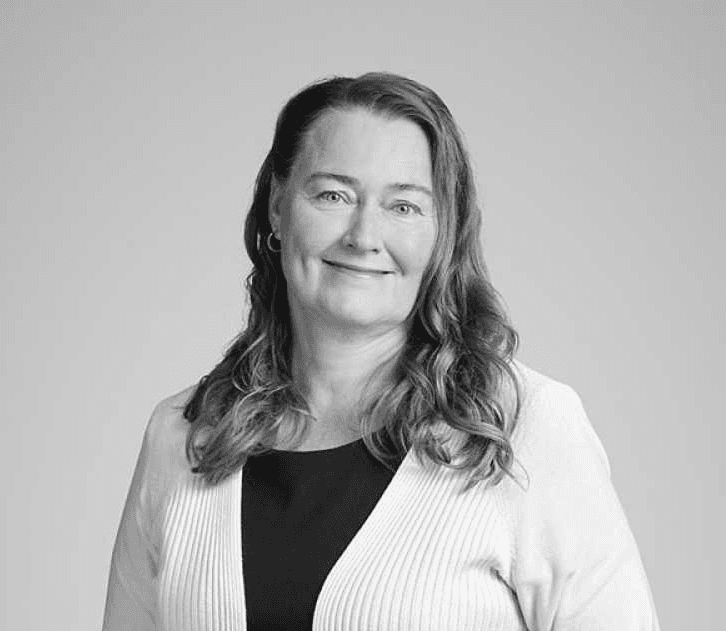
The Finnish workspace company said today that VP, HR & Sustainability Suvi-Maarit Kario and VP, Brand & Portfolio Eeva Terävä will leave in August to pursue opportunities outside the company.

The announcement follows the departure of VP, Customer Success Kimmo Hakkala in May and comes less than two weeks after Panu Ala-Nikkola returned as CEO, as Listeds reported.

A smaller management team

Three departures in a short period would attract attention at any company. What matters more is how Martela plans to respond. The company is not appointing replacements.

Instead, Martela will reduce the size of its group management team. Brand and portfolio will report directly to the CEO, while the remaining responsibilities will be distributed across the existing leadership team. The decision provides one of the first indications of how Ala-Nikkola intends to organize the company.

The move points to a simpler organization with fewer reporting layers and more authority concentrated around the CEO. It also arrives at a time when Martela is under pressure. In April, the company cut its 2026 revenue guidance to EUR 75–85 million and withdrew expectations of a profitable year.

Portfolio moves closer to the CEO

The decision is particularly notable because of the function moving under Ala-Nikkola's direct oversight.

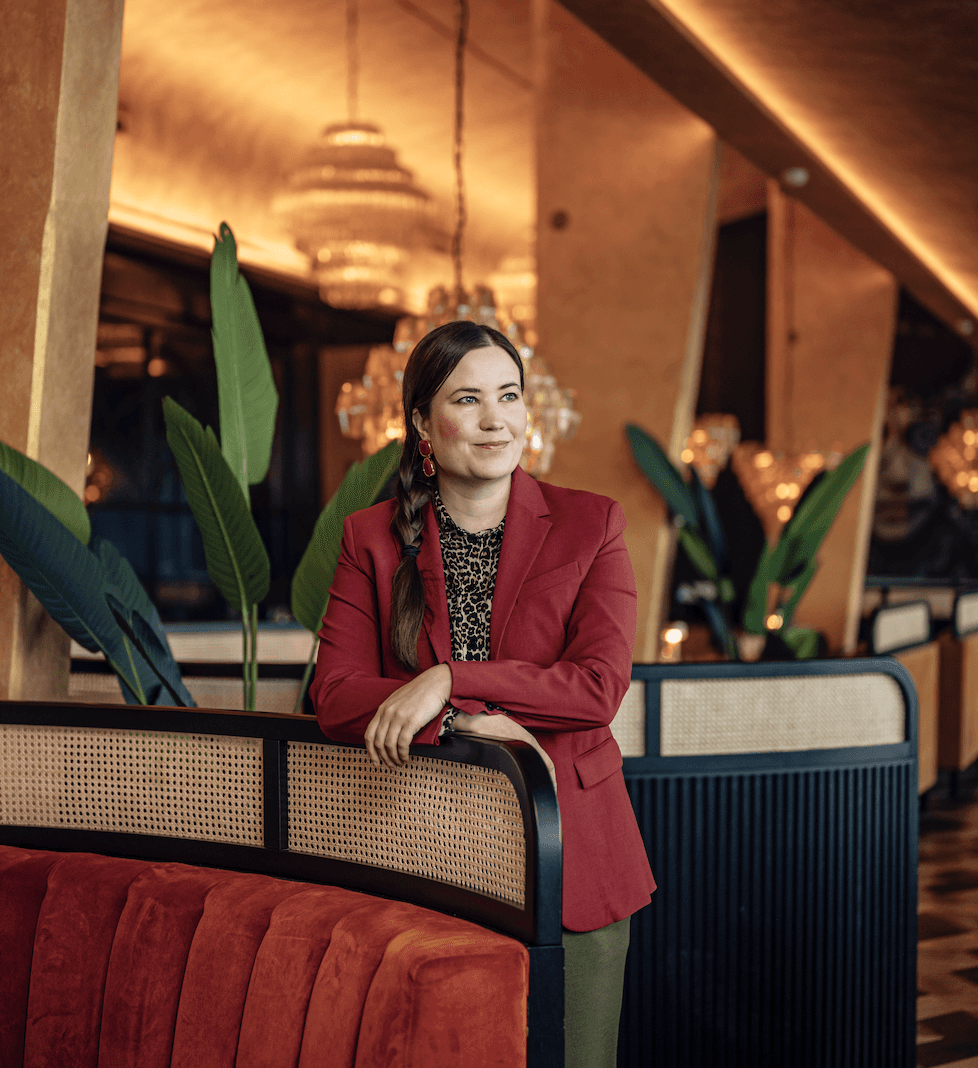
Terävä joined Martela in 2016 and has led the company's brand and portfolio work since joining the group management team in 2021. During that period, she helped shape much of the product offering Martela is relying on to meet changing workplace demand.

By bringing portfolio responsibility under the CEO, Martela is concentrating oversight of one of its most important commercial functions.

Different departures, one direction

The two departures represent different losses for the company.

Terävä leaves after nearly a decade at Martela and with deep knowledge of the company's products and workplace strategy. Kario joined in 2023 and brought experience from Finnlines, Destia, Alstom Finland, GS-Hydro, and HKScan, helping integrate people management and sustainability into the broader business.

Yet the announcement is less about who is leaving than about the structure that remains.

An early indicator of leadership

Ala-Nikkola has inherited a company navigating weaker demand and declining profitability. Martela's response to the departures is to streamline the management structure rather than rebuild it.

Whether that proves to be a temporary arrangement or a longer-term operating model remains unclear. What is clear is that Martela's leadership transition is now extending beyond the CEO office and into the way the company itself is organized.

|

|

Leaders

Martela shrinks management team as new CEO takes direct control of portfolio

Martela shrinks management team as new CEO takes direct control of portfolio

·

5 min read

Explore and follow profiles from this article to get timely updates:
Credit: Martela

Credit: Martela

Martela's leadership transition is turning into something broader than a CEO change.

The Finnish workspace company said today that VP, HR & Sustainability Suvi-Maarit Kario and VP, Brand & Portfolio Eeva Terävä will leave in August to pursue opportunities outside the company.

The announcement follows the departure of VP, Customer Success Kimmo Hakkala in May and comes less than two weeks after Panu Ala-Nikkola returned as CEO, as Listeds reported.

A smaller management team

Three departures in a short period would attract attention at any company. What matters more is how Martela plans to respond. The company is not appointing replacements.

Instead, Martela will reduce the size of its group management team. Brand and portfolio will report directly to the CEO, while the remaining responsibilities will be distributed across the existing leadership team. The decision provides one of the first indications of how Ala-Nikkola intends to organize the company.

The move points to a simpler organization with fewer reporting layers and more authority concentrated around the CEO. It also arrives at a time when Martela is under pressure. In April, the company cut its 2026 revenue guidance to EUR 75–85 million and withdrew expectations of a profitable year.

Portfolio moves closer to the CEO

The decision is particularly notable because of the function moving under Ala-Nikkola's direct oversight.

Terävä joined Martela in 2016 and has led the company's brand and portfolio work since joining the group management team in 2021. During that period, she helped shape much of the product offering Martela is relying on to meet changing workplace demand.

By bringing portfolio responsibility under the CEO, Martela is concentrating oversight of one of its most important commercial functions.

CEO newsletter

For those carrying responsibility at the top.

A monthly letter on leadership, power, and transition in the Nordics. Written by Helene Auramo, drawn from real CEO conversations and leadership signals.

Delivered monthly.

By signing up, you agree to our Privacy Policy

CEO newsletter

For those carrying responsibility at the top.

A monthly letter on leadership, power, and transition in the Nordics. Written by Helene Auramo, drawn from real CEO conversations and leadership signals.

Delivered monthly.

By signing up, you agree to our Privacy Policy

Different departures, one direction

The two departures represent different losses for the company.

Terävä leaves after nearly a decade at Martela and with deep knowledge of the company's products and workplace strategy. Kario joined in 2023 and brought experience from Finnlines, Destia, Alstom Finland, GS-Hydro, and HKScan, helping integrate people management and sustainability into the broader business.

Yet the announcement is less about who is leaving than about the structure that remains.

An early indicator of leadership

Ala-Nikkola has inherited a company navigating weaker demand and declining profitability. Martela's response to the departures is to streamline the management structure rather than rebuild it.

Whether that proves to be a temporary arrangement or a longer-term operating model remains unclear. What is clear is that Martela's leadership transition is now extending beyond the CEO office and into the way the company itself is organized.

Follow moves like this on the Listeds Executive Intelligence Platform.
Board Programme

Built for Nordic listed company boards.

The only programme in the Nordics designed specifically for listed-company board work.
Five sessions, one cohort, twenty leaders in one room - Helsinki, 2026.

Board Programme

Built for Nordic listed company boards.

The only programme in the Nordics designed specifically for listed-company board work.
Five sessions, one cohort, twenty leaders in one room - Helsinki, 2026.

Topics

# Topics

Authors

Emmi Laine is head of business content at Listeds and our lead for finance and business coverage. She sets the editorial agenda, interviews Nordic business leaders, and writes stories, newsletters, and social content on timely market and corporate topics. Emmi brings nearly eight years of experience from Shanghai's Yicai Global / Yicai Media Group, where she was awarded for reporting on China’s economy, finance sector, and technology innovation. She holds an MSc in Innovation and Entrepreneurship from ESADE Business School in Barcelona and a Master’s degree in International Design Business Management from Aalto University. She also holds a Bachelor’s degree in Culture Studies with a major in Journalism from Stockholm University and has studied Mandarin Chinese and Chinese culture. Emmi is a Finnish citizen and has lived in Finland, Sweden, China, and Portugal.

Emmi Laine is head of business content at Listeds and our lead for finance and business coverage. She sets the editorial agenda, interviews Nordic business leaders, and writes stories, newsletters, and social content on timely market and corporate topics. Emmi brings nearly eight years of experience from Shanghai's Yicai Global / Yicai Media Group, where she was awarded for reporting on China’s economy, finance sector, and technology innovation. She holds an MSc in Innovation and Entrepreneurship from ESADE Business School in Barcelona and a Master’s degree in International Design Business Management from Aalto University. She also holds a Bachelor’s degree in Culture Studies with a major in Journalism from Stockholm University and has studied Mandarin Chinese and Chinese culture. Emmi is a Finnish citizen and has lived in Finland, Sweden, China, and Portugal.

Devdatta Temgire is a data and business analyst at Listeds. He contributes research, data analysis, and pattern detection to the publication’s coverage of Nordic-listed companies, with a focus on board composition, leadership transitions, and financials. He holds an honors degree in artificial intelligence and data science alongside a bachelor’s in computer engineering, and previously worked at KPMG.

Devdatta Temgire is a data and business analyst at Listeds. He contributes research, data analysis, and pattern detection to the publication’s coverage of Nordic-listed companies, with a focus on board composition, leadership transitions, and financials. He holds an honors degree in artificial intelligence and data science alongside a bachelor’s in computer engineering, and previously worked at KPMG.

Authors

Journalist

Emmi Laine is head of business content at Listeds and our lead for finance and business coverage. She sets the editorial agenda, interviews Nordic business leaders, and writes stories, newsletters, and social content on timely market and corporate topics. Emmi brings nearly eight years of experience from Shanghai's Yicai Global / Yicai Media Group, where she was awarded for reporting on China’s economy, finance sector, and technology innovation. She holds an MSc in Innovation and Entrepreneurship from ESADE Business School in Barcelona and a Master’s degree in International Design Business Management from Aalto University. She also holds a Bachelor’s degree in Culture Studies with a major in Journalism from Stockholm University and has studied Mandarin Chinese and Chinese culture. Emmi is a Finnish citizen and has lived in Finland, Sweden, China, and Portugal.

Devdatta Temgire is a data and business analyst at Listeds. He contributes research, data analysis, and pattern detection to the publication’s coverage of Nordic-listed companies, with a focus on board composition, leadership transitions, and financials. He holds an honors degree in artificial intelligence and data science alongside a bachelor’s in computer engineering, and previously worked at KPMG.

All Listeds newsletters (bundle)

One sign-up, the full picture.

Get every Listeds newsletter: the daily signal drumbeat, the weekly Pulse briefing, the monthly Best of the Month, the CEO letter, and the Weekend read.

By signing up, you agree to our Privacy Policy

All Listeds newsletters (bundle)

One sign-up, the full picture.

Get every Listeds newsletter: the daily signal drumbeat, the weekly Pulse briefing, the monthly Best of the Month, the CEO letter, and the Weekend read.

By signing up, you agree to our Privacy Policy

Latest signalsLive feed
Moves trackerLive feed

Investor Event

Listeds Investor Event · Defence

Nordic defence is in a once-in-a-generation growth cycle. Eight listed and pre-IPO companies pitch to 100+ invited investors at Valkoinen Sali, Helsinki

21 September 2026

Latest on Listeds

Leadership Moves

Two new listed CEOs, no search, no external hire

Sep 2, 2026

No Large Cap company changed its chief executive in the first half of 2026. The demergers at UPM and Aspo have produced two new listed-CEO seats anyway — and both went to the parent's own executive, named before the board that will supervise them existed.

Two people will become chief executives of Nasdaq Helsinki-listed companies in the next five months. Neither was recruited. Neither was chosen by the board of the company they will run, because at the time they were appointed that board had not been elected and the company did not yet exist.

Tuija Suur-Hamari becomes President and CEO of WISA Group Plc when UPM's plywood demerger completes, expected on or about 31 October, with trading due to start on 2 November. Matti-Mikael Koskinen becomes CEO of ESL Shipping Group Plc when Aspo's demerger completes on 31 December, with trading expected on or about 4 January 2027

Both are internal. Both were named by the demerging parent's board. And both arrive in a market where, on the Listeds CEO Index — Finland, produced in partnership with SAM Headhunting, the largest Finnish listed companies did not appoint a single new chief executive in either quarter of the first half of 2026.

Two names, both from inside

Suur-Hamari has run UPM Plywood since 1 November 2025 at the latest, on an appointment announced on 17 April 2025. She joined UPM from Wihuri, where she had been Managing Director of Wipak Oy since 2016, and before that was President and CEO of Kotkamills Oy. Born in 1969, she holds a Master's degree in engineering from Helsinki University of Technology. WISA will be her first listed-company chief executive role, and it arrives almost exactly a year after she joined UPM.

Koskinen has been Managing Director of ESL Shipping Ltd since 1 May 2013, appointed at the age of 41 from Meriaura, where he had been Managing Director since 2007. Thirteen years in the same operating role, and the company he runs is being listed around him.

Neither is a first-time chief executive. Both are first-time listed-company chief executives, and neither reached the seat through a search.

Against a market that stopped hiring at the top

The index recorded 12 new CEO starts in the second quarter of 2026 and 25 across the first half, an annualised pace of about 50 against 44 for all of 2025. Every one of the Q2 starts happened below Large Cap: seven Small Cap, four First North, one Mid Cap. Large Cap recorded zero changes for a second consecutive quarter, a year after more than a third of that tier replaced its CEO.

Set the demerger appointments against that and the pattern is consistent rather than contrary. External hires were 50% of Q2 starts, or 60% of the ten starts that actually changed the leader. The two demerger appointments are internal promotions, the share of external hires on seats created by corporate structure so far is zero. Where boards did hire in Q2, the average age at start was about 54, roughly four years above the age at which the sitting population first took the role. A 1969 birth year puts Suur-Hamari at 56 or 57 on day one; Koskinen, 41 in March 2013, will be in his mid-fifties.

So the demerger wave is not widening the pool. It is creating seats and filling them with the profile Finnish boards were already buying.

One thing it does change: Suur-Hamari will be one of a small number of women running a Nasdaq Helsinki-listed company. Women held 8.1% of the 186 sitting CEO roles at 30 June, and one of the 25 first-half starts. The CEO index already records two women taking up CEO roles in the third quarter; WISA adds a fourth-quarter one, and it arrives by demerger rather than by succession.

The seat is created by a structural vote, not a succession decision

Under the Finnish Corporate Governance Code, appointing the chief executive is the board's own duty. A demerger inverts the sequence, unavoidably. UPM announced Suur-Hamari as WISA's President and CEO on 29 April. Tapio Korpeinen as chair, Mats Nordlander as deputy chair, and Sakari Ahdekivi, Frank Herrmann, Nina Kiviranta and Emmanuelle Picard were elected as board members by UPM's extraordinary general meeting six weeks later, on 31 August. Aspo's board intended that Rolf Jansson will be elected as Chair of the Board and Matti-Mikael Koskinen as CEO of ESL Shipping Group on 3 August; ESL Shipping Group's own board will not be elected until the extraordinary general meeting on 7 December, four months after the fact.

Shareholders in both cases vote on a structure. The chief executive comes attached to it.

That is not a criticism of any of the people named — there is no other way to staff a company that does not yet exist. 

Valmet is the one that would break the freeze

WISA and ESL Shipping Group are not Large Cap businesses. WISA reported EUR 409 million in plywood sales in 2025; ESL Shipping Group generated EUR 178.4 million over the twelve months to June 2026, and Telko Group EUR 294.6 million.

Valmet is a different order. Its board announced on 24 July that it would review separating Biomaterial Solutions and Services from Process Performance Solutions into two listed companies. Process Performance Solutions runs at roughly EUR 1.7 billion in annual net sales after the Severn acquisition, with close to 70% of that now outside pulp and paper. Group net sales were about EUR 5.2 billion in 2025, leaving Biomaterial Solutions and Services as much the larger of the two, though Valmet has not disclosed a standalone figure for it in this release. Chair Pekka Vauramo said the board would proceed only if separation proved "clearly in the best interests of our shareholders." An update is due no later than the full-year 2026 results.

If it happens, one board decision produces two Large Cap-scale chief executive seats in a tier that recorded no CEO change at all in the first half of 2026. No leadership has been named for either. President and CEO Thomas Hinnerskov runs both today.

There is a second thing to watch at Valmet. CFO Katri Hokkanen leaves at the end of September; her successor Pia Aaltonen-Forsell arrives at the latest at the end of January 2027, and no interim arrangement has been disclosed. The company is weighing a two-company split across that gap.

The seat nobody has named

Aspo's demerger creates one more chief executive question than it answers. Rolf Jansson has been Aspo's CEO and, since 23 January 2026, also Managing Director of Telko. He is intended to be elected chair of ESL Shipping Group's board. Who leads Telko Group Plc, the continuing company, renamed, is not disclosed in the demerger plan. The prospectus is due in November.

What to watch

Three things follow for boards and nomination committees.

A demerger is a leadership decision at least a year before it is a market event. The CEO, the leadership team and the board of a company that will not trade until 2027 were all settled in the summer of 2026, and shareholders approved them inside a structural vote.

The route does not widen the pipeline. Every demerger-created seat named so far has gone to an executive already inside the parent, at the age profile Finnish boards have been favouring anyway.

And the counting matters. These starts land in the Q4 2026 and Q1 2027 CEO Index, not the current one, which means the index will register CEO appointments that no board actually searched for. Whether Valmet adds two Large Cap entries to that count is the open question of the next two quarters.

Executive Intelligence

Helsinki's boards run 270 committees under 60 different names

Sep 1, 2026

Around forty of those names belong to a single company each. Citycon has the only cyber committee on the exchange, and last year it did not meet.

Citycon's board has a Cyber Committee. It is the only one on Nasdaq Helsinki. The company's own governance disclosure records that in 2025, the Cyber Committee did not convene. Its Audit and Governance Committee met four times that year. Its Nomination and Remuneration Committee met seven.

A cyber committee is a defensible answer to a real exposure for a listed property owner. What stands out is that no other Helsinki-listed board has formalised the same risk in the same way, or in many cases at all.

35+ committee names belong to a single company each

Citycon is not the only board with a committee nobody else has. Raisio established an M&A Committee at its 2025 annual general meeting, chaired by board chair Arto Tiitinen. Orion runs an R&D Committee, chaired by Hilpi Rautelin, the only one of its kind in the Finnish listed market. Revenio has an Integration Committee. GRK Infra has a Tender and Project Committee. HKFoods runs a Working Committee and a Special Committee. Fortum has folded technology and investment into one body, and YIT has done the same with investment and projects.

Audit and remuneration still do almost all of the work

Across 184 Helsinki-listed companies, 127 have at least one board committee. Fifty-seven have none. Those 127 boards run 270 committees between them.

The functions concentrate tightly. Audit appears in 122 committee mandates, remuneration in 71, and people, personnel or human resources in 59. Nomination or governance appears in 26, sustainability in 14, risk in 13.

Another 11 committees use "Compensation" instead of remuneration, so a body explicitly charged with pay appears in 82 of the 270 — and that still excludes the 17 Personnel, People and Human Resources committees holding the same mandate without naming pay.

The names do not concentrate at all. After normalising for capitalisation and ampersands, those 270 committees carry 60 distinct labels, and 38 of them are used by exactly one company.

Most of that variety is cosmetic. People and Sustainability. Sustainability and Personnel. Sustainability and HR. Remuneration and HR. HR and Compensation. People and Compensation. Human Resources and Remuneration. Seven labels, one mandate.

The Code mandates the function, not the label

None of this is a compliance failure. The Finnish Corporate Governance Code 2026 is explicit: "Companies do not have an obligation under the Corporate Governance Code to establish committees or a shareholders' nomination board. As the establishment of the committees is not obligatory, the lack of committees is not deemed to be a departure from the code and therefore there is no need to report or explain it."

The Code also lets boards merge mandates, stating that "the board of directors may combine duties of the committees referred to in the Corporate Governance Code into a single committee or also establish other permanent or temporary committees, combine the duties assigned to different committees, or decide that a certain matter be prepared by the entire board of directors ". It requires only that the statutory audit duties sit somewhere, whether in a dedicated audit committee, in another committee, or with the board as a whole.

Committee data does not aggregate across Helsinki

For a board, a specialist committee is a statement about where directors spend their hours. Orion formalising research and development, and Nokia formalising both technology and strategy, tell a reader something that the committee list in an annual report otherwise flattens.

For anyone reading across the market, the absence of a shared vocabulary is the cost. Screening Nasdaq Helsinki for boards with a technology committee returns no reliable answer. Nokia, Kalmar, Kempower and Revenio call it Technology. Fortum calls it Technology and Investment. Sotkamo Silver calls it Technical. Citycon has carved cyber out on its own. (That reading is interpretation. It is a comparability problem for investors and index work, not a governance failing at any individual company.)

Worth watching is whether specialist committees spread beyond the handful of boards that run them. Technology-type committees number seven across the market. Cyber committees number one, and last year it did not meet.

Join our Pulse, Best-of-the-Week, and Weekend newsletters

Join our Pulse, Best-of-the-Week, and Weekend newsletters