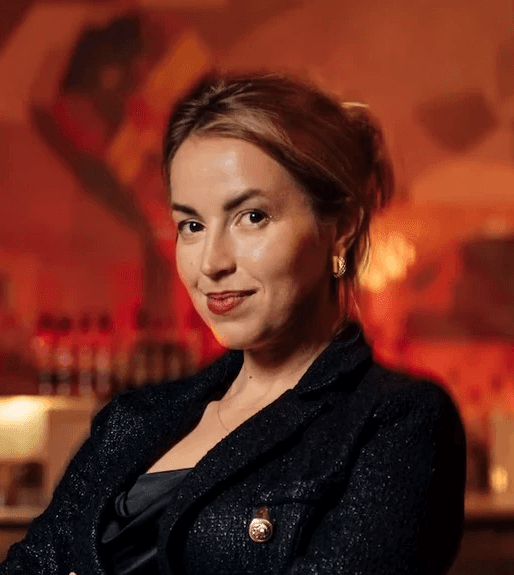
In Helsinki this November, the startup world once again convened under the LED glow of Messukeskus. Slush, the Helsinki-based annual startup event often described as the largest founder-focused gathering in the world, brought together over 13,000 attendees, including investors with more than USD4 trillion in assets under management. Yet amid the buzz of pitch decks and caffeine, its CEO, 26-year-old Aino Bergius, moved with studied calm.
Her leadership, she says, is guided by a simple but increasingly radical principle: trust by default. That idea, once considered a soft trait of consensus-driven cultures, is now at the core of how Nordic firms aim to remain fast, innovative, and globally competitive.
The Nordics have long built prosperity on high levels of social trust. More than 60 % of Swedes and Norwegians say “most people can be trusted,” compared to under 10 % in many Latin American countries (World Values Survey). In Finland, trust in institutions regularly ranks among the highest in the world (OECD Trust Report). But the application of this trust is shifting – from a pillar of welfare states to a tool of organizational speed.
Bergius exemplifies the new model. She joined Slush at 15 as a volunteer. At 26, she leads it. Between those points, she was not groomed so much as trusted. “From day one, Slush trusts you more than you trust yourself,” she explains. “Starting as a volunteer at 15 taught me to just take responsibility and figure things out as I go. That mindset still shapes how I lead and who we hire.”
The new rules of risk
Traditional corporate leadership models, particularly in lower-trust societies, rely on controls: performance metrics, tight oversight, and hierarchy. Nordic startups invert that logic. Authority is diffuse, titles are light, and decisions are often made by consensus. Employees, including interns, are expected to act autonomously from day one.
This is not management by idealism. It is pragmatism in a low-friction culture. Trust, research suggests, shortens feedback loops. In a 2020 study of Norwegian healthcare innovation, higher trust levels reduced defensive behavior and emotional bottlenecks, speeding up innovation adoption (Mitcheltree, University of Oslo). Elsewhere, companies ranked high in trust consistently outperform on learning speed and innovation (Great Place to Work Institute).
When trust becomes infrastructure
Startups in Stockholm and Helsinki increasingly treat trust not as a virtue but as infrastructure. It powers horizontal communication and decentralized decisions. It lowers transaction costs. In low-trust organizations, communication becomes saturated with status updates, requests for approval, and second-guessing. In high-trust teams, problems get solved without managerial bottlenecks.
At Slush, this takes the form of radical delegation. A 22-year-old may be responsible for programming stages, recruiting top-tier speakers, or managing multi-million-euro production budgets. The assumption is clear: trust precedes competence, not the other way around. As Bergius puts it: “Our job as leaders is to give people clarity, values, purpose, direction, and then design the frameworks where they can succeed.”
For traditional companies – especially listed giants now experimenting with innovation labs and internal ventures – this model is instructive. Slush’s approach, Bergius says, is not anti-corporate. It is “a leadership lab” where risk appetite is natural, and humility does not preclude ambition.
Quiet power, competitive edge
Nordic leadership has long been marked by restraint. “Nordic leadership is quiet but strong. It is low ego, shared responsibility, and the belief that the team matters more than the individual,” Bergius says. In global surveys, Nordic executives score low on ego and high on consensus (Martela, Aalto University). Decision-making is slower, but buy-in is deeper. The paradox is that this “quiet power” consistently produces world-class companies: IKEA, Spotify, Klarna.
In the past, such traits were associated with economic stability. Now they are being retooled for adaptive advantage. According to the Møller Institute, the emerging “New Nordic” leadership model fuses traditional trust and ethical reflection with agility and experimentation. It is post-welfare capitalism with startup metabolism.
In this model, trust is not the absence of control. It is the precondition for speed. Studies from the Center for Creative Leadership show that in high-trust environments, teams respond better to change, share knowledge more freely, and rebound faster from failure. In a crisis, employees follow trusted leaders even when plans are incomplete.
Trust, exported
This trust-driven logic is starting to cross borders. American companies are experimenting with flatter hierarchies and default-to-open cultures. Asian firms, while operating in higher power-distance contexts, are adopting startup governance models that assume more distributed ownership.
Yet cultural limits persist. In societies with lower baseline trust, such as Brazil or parts of East Asia, organizational trust must be constructed deliberately – through contracts, rituals, and reputation. The Nordic model, in contrast, rests on a wide cultural base of generalised trust, reducing the need for such scaffolding (Hofstede Insights; Pew Global Attitudes Survey).
Still, Nordic companies have their own blind spots. Bergius warns that trust can shade into caution. “In Finland especially, we need to be more ambitious,” she says. Too many startups, she argues, are “built to exit,” not to endure. Funding remains a constraint: Nordic startups lead Europe in growth per capita (ScaleUp Institute Report 2024), but still trail the U.S. dramatically in capital raised (Forbes Europe VC Trends 2024).
The logic of learning
If trust is the fuel, curiosity is the engine. Bergius sees leadership less as authority than as orchestration: creating space where others can grow. “I didn’t have a CV, I had broken English,” she recalls. “Slush saw a capability to learn.”
This inversion – that experience should not gate opportunity – is itself a product of trust. It reflects a worldview in which capability is emergent, not fixed. And it underwrites the most distinctive element of the Nordic startup ecosystem: the belief that the newest voice may offer the sharpest insight. “For me, success means staying deeply curious and creating space for others to learn and evolve,” Bergius says.
“Established leaders have as much to learn from 25-year-old founders,” Bergius says, “as those founders have to learn from CEOs.”
Sources:
Brighter by Aalto. (2023, July 4). Nordic leadership: Minimalism over charisma (Frank Martela). https://brighter.fi/2023/07/04/nordic-leadership-minimalism-over-charisma/
Center for Creative Leadership. (n.d.). Why trust matters at work. https://www.ccl.org/articles/leading-effectively-articles/why-trust-matters-at-work/
Forbes. (2024, January 15). European VC trends 2024: Funding gap with U.S. https://www.forbes.com/sites/qai/2024/01/15/european-vc-slowdown/
Great Place to Work. (n.d.). Building a high-trust workplace culture. https://www.greatplacetowork.com/resources/reports/building-a-high-trust-workplace-culture
Hofstede Insights. (n.d.). National culture dimensions. https://www.hofstede-insights.com/models/national-culture/
Møller Institute. (n.d.). The Nordic leadership model. https://www.mollerinstitute.com/insights/the-nordic-leadership-model/
OECD. (n.d.). Trust in government and institutions. https://www.oecd.org/gov/trust-in-government.htm
Pew Research Center. (n.d.). Global attitudes and trust surveys. https://www.pewresearch.org/global/
ScaleUp Institute. (2024). European ScaleUp report 2024. https://www.scaleupinstitute.org.uk
University of Oslo. (2020). Trust and innovation adoption in healthcare (Mitcheltree). https://www.duo.uio.no/handle/10852/80286
World Values Survey. (n.d.). Global trust levels.https://www.worldvaluessurvey.org/wvs.jsp
·
5 min read

In Helsinki this November, the startup world once again convened under the LED glow of Messukeskus. Slush, the Helsinki-based annual startup event often described as the largest founder-focused gathering in the world, brought together over 13,000 attendees, including investors with more than USD4 trillion in assets under management. Yet amid the buzz of pitch decks and caffeine, its CEO, 26-year-old Aino Bergius, moved with studied calm.
Her leadership, she says, is guided by a simple but increasingly radical principle: trust by default. That idea, once considered a soft trait of consensus-driven cultures, is now at the core of how Nordic firms aim to remain fast, innovative, and globally competitive.
The Nordics have long built prosperity on high levels of social trust. More than 60 % of Swedes and Norwegians say “most people can be trusted,” compared to under 10 % in many Latin American countries (World Values Survey). In Finland, trust in institutions regularly ranks among the highest in the world (OECD Trust Report). But the application of this trust is shifting – from a pillar of welfare states to a tool of organizational speed.
Bergius exemplifies the new model. She joined Slush at 15 as a volunteer. At 26, she leads it. Between those points, she was not groomed so much as trusted. “From day one, Slush trusts you more than you trust yourself,” she explains. “Starting as a volunteer at 15 taught me to just take responsibility and figure things out as I go. That mindset still shapes how I lead and who we hire.”
The new rules of risk
Traditional corporate leadership models, particularly in lower-trust societies, rely on controls: performance metrics, tight oversight, and hierarchy. Nordic startups invert that logic. Authority is diffuse, titles are light, and decisions are often made by consensus. Employees, including interns, are expected to act autonomously from day one.
This is not management by idealism. It is pragmatism in a low-friction culture. Trust, research suggests, shortens feedback loops. In a 2020 study of Norwegian healthcare innovation, higher trust levels reduced defensive behavior and emotional bottlenecks, speeding up innovation adoption (Mitcheltree, University of Oslo). Elsewhere, companies ranked high in trust consistently outperform on learning speed and innovation (Great Place to Work Institute).
When trust becomes infrastructure
Startups in Stockholm and Helsinki increasingly treat trust not as a virtue but as infrastructure. It powers horizontal communication and decentralized decisions. It lowers transaction costs. In low-trust organizations, communication becomes saturated with status updates, requests for approval, and second-guessing. In high-trust teams, problems get solved without managerial bottlenecks.
At Slush, this takes the form of radical delegation. A 22-year-old may be responsible for programming stages, recruiting top-tier speakers, or managing multi-million-euro production budgets. The assumption is clear: trust precedes competence, not the other way around. As Bergius puts it: “Our job as leaders is to give people clarity, values, purpose, direction, and then design the frameworks where they can succeed.”
For traditional companies – especially listed giants now experimenting with innovation labs and internal ventures – this model is instructive. Slush’s approach, Bergius says, is not anti-corporate. It is “a leadership lab” where risk appetite is natural, and humility does not preclude ambition.
Quiet power, competitive edge
Nordic leadership has long been marked by restraint. “Nordic leadership is quiet but strong. It is low ego, shared responsibility, and the belief that the team matters more than the individual,” Bergius says. In global surveys, Nordic executives score low on ego and high on consensus (Martela, Aalto University). Decision-making is slower, but buy-in is deeper. The paradox is that this “quiet power” consistently produces world-class companies: IKEA, Spotify, Klarna.
In the past, such traits were associated with economic stability. Now they are being retooled for adaptive advantage. According to the Møller Institute, the emerging “New Nordic” leadership model fuses traditional trust and ethical reflection with agility and experimentation. It is post-welfare capitalism with startup metabolism.
In this model, trust is not the absence of control. It is the precondition for speed. Studies from the Center for Creative Leadership show that in high-trust environments, teams respond better to change, share knowledge more freely, and rebound faster from failure. In a crisis, employees follow trusted leaders even when plans are incomplete.
Trust, exported
This trust-driven logic is starting to cross borders. American companies are experimenting with flatter hierarchies and default-to-open cultures. Asian firms, while operating in higher power-distance contexts, are adopting startup governance models that assume more distributed ownership.
Yet cultural limits persist. In societies with lower baseline trust, such as Brazil or parts of East Asia, organizational trust must be constructed deliberately – through contracts, rituals, and reputation. The Nordic model, in contrast, rests on a wide cultural base of generalised trust, reducing the need for such scaffolding (Hofstede Insights; Pew Global Attitudes Survey).
Still, Nordic companies have their own blind spots. Bergius warns that trust can shade into caution. “In Finland especially, we need to be more ambitious,” she says. Too many startups, she argues, are “built to exit,” not to endure. Funding remains a constraint: Nordic startups lead Europe in growth per capita (ScaleUp Institute Report 2024), but still trail the U.S. dramatically in capital raised (Forbes Europe VC Trends 2024).
The logic of learning
If trust is the fuel, curiosity is the engine. Bergius sees leadership less as authority than as orchestration: creating space where others can grow. “I didn’t have a CV, I had broken English,” she recalls. “Slush saw a capability to learn.”
This inversion – that experience should not gate opportunity – is itself a product of trust. It reflects a worldview in which capability is emergent, not fixed. And it underwrites the most distinctive element of the Nordic startup ecosystem: the belief that the newest voice may offer the sharpest insight. “For me, success means staying deeply curious and creating space for others to learn and evolve,” Bergius says.
“Established leaders have as much to learn from 25-year-old founders,” Bergius says, “as those founders have to learn from CEOs.”
Sources:
Brighter by Aalto. (2023, July 4). Nordic leadership: Minimalism over charisma (Frank Martela). https://brighter.fi/2023/07/04/nordic-leadership-minimalism-over-charisma/
Center for Creative Leadership. (n.d.). Why trust matters at work. https://www.ccl.org/articles/leading-effectively-articles/why-trust-matters-at-work/
Forbes. (2024, January 15). European VC trends 2024: Funding gap with U.S. https://www.forbes.com/sites/qai/2024/01/15/european-vc-slowdown/
Great Place to Work. (n.d.). Building a high-trust workplace culture. https://www.greatplacetowork.com/resources/reports/building-a-high-trust-workplace-culture
Hofstede Insights. (n.d.). National culture dimensions. https://www.hofstede-insights.com/models/national-culture/
Møller Institute. (n.d.). The Nordic leadership model. https://www.mollerinstitute.com/insights/the-nordic-leadership-model/
OECD. (n.d.). Trust in government and institutions. https://www.oecd.org/gov/trust-in-government.htm
Pew Research Center. (n.d.). Global attitudes and trust surveys. https://www.pewresearch.org/global/
ScaleUp Institute. (2024). European ScaleUp report 2024. https://www.scaleupinstitute.org.uk
University of Oslo. (2020). Trust and innovation adoption in healthcare (Mitcheltree). https://www.duo.uio.no/handle/10852/80286
World Values Survey. (n.d.). Global trust levels.https://www.worldvaluessurvey.org/wvs.jsp



Investor Event
Listeds Investor Event · Defence
Nordic defence is in a once-in-a-generation growth cycle. Eight listed and pre-IPO companies pitch to 100+ invited investors at Valkoinen Sali, Helsinki
21 September 2026


Latest on Listeds

