After the previous CEO left in the middle of Titanium’s business model makeover, the board chose a legal insider to guide the real-estate-focused asset manager’s shift into a wealth management company. Investors are now closely watching the speed of execution.
When Katarina Rosenström stepped into the role of interim CEO at Titanium Oyj last November, the Finnish asset manager was already in motion.
“It was quite an interesting time to step into these shoes,” she said in an interview with Listeds, without exaggeration. The big break came without warning. “I was pleasantly surprised to be chosen,” she says, recalling the board discussions that preceded the announcement.
Titanium — long associated with its real-estate-focused fund business — is in the middle of a strategic shift that could redefine its identity. In 2024, Hoivakiinteistö, a care property fund that rents out senior care facilities, health centers, and kindergartens to operators in Finland, accounted for roughly 70 percent of Titanium’s revenue. Now, amid a soft property cycle and narrowing margins, the company is facing pressure that has turned into an existential challenge – stay still and wither or diversify.
What has made the pivot more dramatic is the sudden CEO transition. Rosenström was appointed after the departure of former CEO Walter Ahlström, who left after less than two years of service, leaving the team to fulfill the vision he had worked to establish.
Rosenström had been closely involved in preparing the blueprint. “It was quite natural to start taking over the wheel and keep running with what we had already started,” she says, adding that the personnel have embraced the new strategy “quite head-on.”
The insider decision
When Ahlströn resigned last November, Inderes analyst Sauli Vilén suggested that Titanium should quickly seek a permanent CEO with wealth management credentials. For now, the board chose differently: an insider with a legal background.
“In this specific situation, I believe it was a good decision to have someone from within the company,” Rosenström says. “We are in the middle of a large transformation. There have already been many changes. I believe it was a relief for the personnel that it was a person they knew.”
The board picked a legal director who knows the company inside out. Rosenström has spent nearly five years at Titanium, heading compliance and serving as board secretary. “I’ve been part of every project, every deal, everything we’ve done throughout the years.”
She also knows the people. “I know their strengths, and I know that I can trust every one of them.” That familiarity matters when bringing people on board with a strategic overhaul.
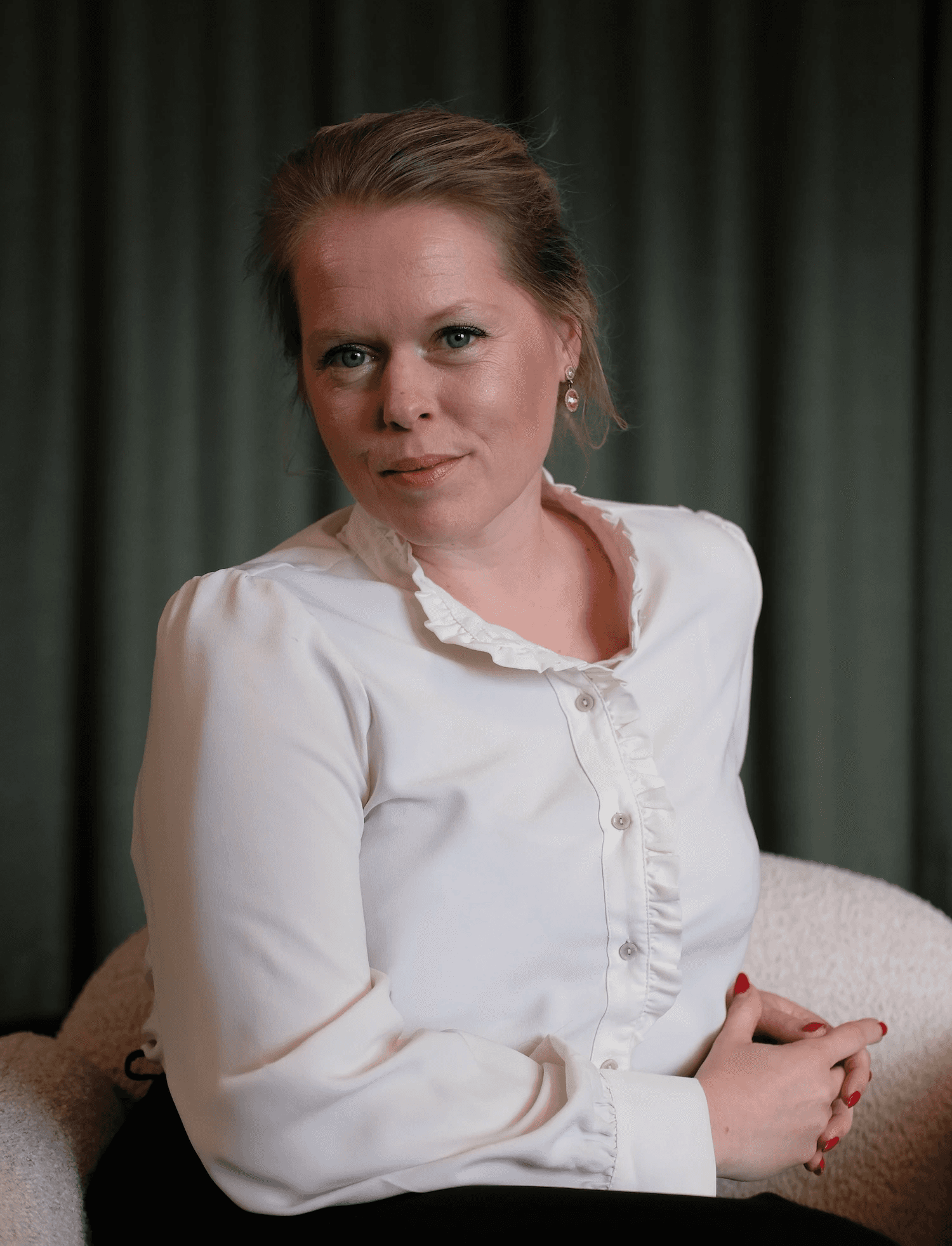
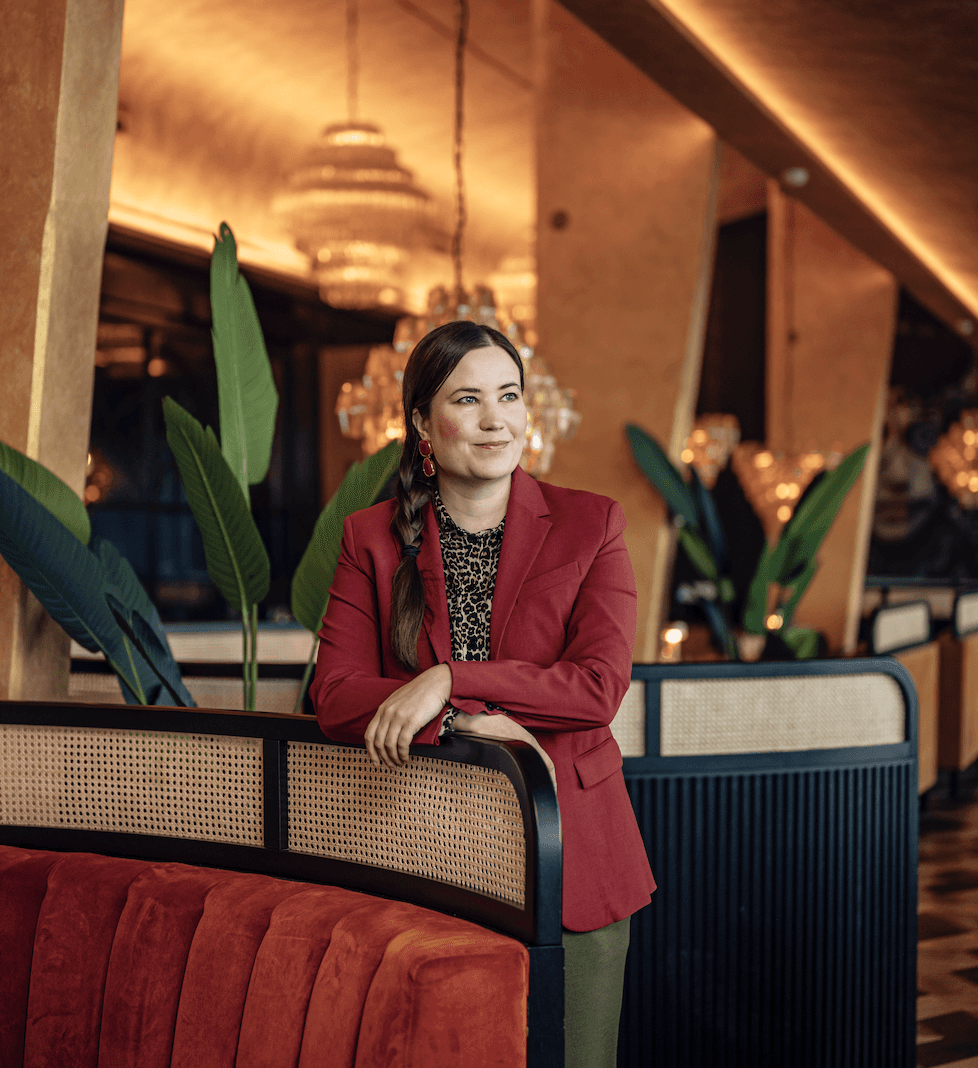
Katarina Rosenström, formerly legal director at Titanium, stepped into her role as interim CEO last November.
Diversifying beyond care property income
Titanium’s financials underline the urgency of the pivot.
According to its latest annual report, fee income declined 7.5 percent to €20.2 million. Operating profit fell to €6.9 million from €9.1 million the previous year. Margins narrowed from 41.6 percent to 34 percent. Investors have taken notice of the faltering financial health since Titanium’s stock price has fallen over 10 percent in the past 12 months.
Still, the balance sheet remains strong. The equity ratio exceeds 80 percent, and net gearing is negative, per the annual report. The board recently proposed a €0.50 dividend per share for 2025.
A ray of hope is that the real estate market is beginning to regain strength, according to Rosenström, pointing to renewed activity from Nordic investors and a recent portfolio sale to a Norwegian buyer. “We do see that we are heading into better markets at this point.”
Still, recovery alone is not the strategy. "Real estate continues to be a core part of our business. At the same time, we are gradually broadening our offering to ensure a more balanced revenue base across different asset classes," she explains. “We believe that we can provide better service for all our clients by doing that.”
Titanium’s newly introduced wealth management service model integrates multiple asset classes under one structure and has been welcomed by clients, according to the latest annual report. Among the concrete steps is the launch of Titanium Private Equity, marking the company’s entry into a new asset class and including a dedicated institutional share class.
Titanium has not provided earnings guidance for 2026, but over the longer term, it targets annual fee income growth of 10–15 percent and an EBIT margin above 40 percent. Analysts are likely to scrutinize any upcoming reporting closely. In November, Inderes lowered its target price for Titanium to €6.22, below today’s €7.36, citing concerns that the expansion in wealth management may not fully offset weaker income from property funds. Execution speed will therefore be critical.
From compliance to chief executive
Rosenström, a seasoned compliance expert with experience at Ålandsbanken and law firm Waselius & Wist, did not set out to become a finance executive. She entered the field through a financial trainee position at law firm Hannes and Snellman, and “then it just started flowing.”
Over the years, her goal took shape: to become a “reliable expert” in her field. When entering Titanium as a legal director in 2021, she found her home. “I quickly realized that this is the right place for me.”
The transition from legal director to CEO has expanded the scope of decision-making. “I have never had any problem making decisions in my old role,” she says. “It’s in my backbone.” As CEO, the field of view is wider. "As CEO, I now have to consider a much broader range of issues than in my previous role."
She describes the position as a “fast learning track,” where judgment must synthesize financial, strategic, cultural, and market considerations. Her advantage, she argues, is analytical discipline. “I’m used to getting into really large pieces of information and getting the most important bits out to make decisions.”
Rosenström describes her leadership style as “tough but fair.” In operational terms, that means clear expectations and accountability. “As long as demands are clear and expectations are clear, and you show accountability and show up, we get a long way.”
Breaking the culture of caution
Rosenström’s commentary extends beyond Titanium’s walls.
When asked about Finland’s broader growth challenge, she begins with capital flow. “We need a plan to make capital flow more freely,” she says, without advocating specific policy changes.
But her sharper critique is cultural. “We have this fear of failure. If you don’t succeed, you’re a failure. And I believe we shouldn’t be afraid of that.”
Failure, she argues, is information. “Every time you feel like you failed, you actually learn something new.”
She observes that many companies appear to be waiting — delaying investment decisions in a cautious capital market. “It feels like everyone is just waiting for something to happen. Someone needs to push through that bottleneck.”
Her critique extends to governance structures. “We’re used to seeing the same people in management teams and on the boards,” she says. “We need new people. We need new ideas. We need to bring younger people into the mix.”
When the same names circulate between companies, strategic thinking risks becoming incremental. Corporate renewal, in her view, is partly generational. “The things we did 20 years ago might not work today.”
The parallel with Titanium’s transformation is clear. Long anchored to one dominant product, the company is now moving to reinvent itself deliberately, before the market compels a more painful adjustment.
More than a temporary mandate
If asked to continue permanently as CEO, would she accept?
“Actually, yes,” she says. “I’m really committed to the journey we are on at this moment,” adding that there are still milestones to meet and issues to resolve. The transformation is underway, not complete.
The current setup could last for a while, as it took more than a year for Titanium to find her predecessor, Ahlström. And Rosenström, for her part, is committed to the vision. “I really believe in our new strategy and all the work we’re doing toward those goals.”
In a company reshaping its revenue base, commitment may matter as much as credentials. For now, Titanium’s reinvention rests with a leader who knows the institution from the inside and intends to see the shift through.
·
5 min read
Explore and follow profiles from this article to get timely updates:
After the previous CEO left in the middle of Titanium’s business model makeover, the board chose a legal insider to guide the real-estate-focused asset manager’s shift into a wealth management company. Investors are now closely watching the speed of execution.
When Katarina Rosenström stepped into the role of interim CEO at Titanium Oyj last November, the Finnish asset manager was already in motion.
“It was quite an interesting time to step into these shoes,” she said in an interview with Listeds, without exaggeration. The big break came without warning. “I was pleasantly surprised to be chosen,” she says, recalling the board discussions that preceded the announcement.
Titanium — long associated with its real-estate-focused fund business — is in the middle of a strategic shift that could redefine its identity. In 2024, Hoivakiinteistö, a care property fund that rents out senior care facilities, health centers, and kindergartens to operators in Finland, accounted for roughly 70 percent of Titanium’s revenue. Now, amid a soft property cycle and narrowing margins, the company is facing pressure that has turned into an existential challenge – stay still and wither or diversify.
What has made the pivot more dramatic is the sudden CEO transition. Rosenström was appointed after the departure of former CEO Walter Ahlström, who left after less than two years of service, leaving the team to fulfill the vision he had worked to establish.
Rosenström had been closely involved in preparing the blueprint. “It was quite natural to start taking over the wheel and keep running with what we had already started,” she says, adding that the personnel have embraced the new strategy “quite head-on.”
The insider decision
When Ahlströn resigned last November, Inderes analyst Sauli Vilén suggested that Titanium should quickly seek a permanent CEO with wealth management credentials. For now, the board chose differently: an insider with a legal background.
“In this specific situation, I believe it was a good decision to have someone from within the company,” Rosenström says. “We are in the middle of a large transformation. There have already been many changes. I believe it was a relief for the personnel that it was a person they knew.”
The board picked a legal director who knows the company inside out. Rosenström has spent nearly five years at Titanium, heading compliance and serving as board secretary. “I’ve been part of every project, every deal, everything we’ve done throughout the years.”
She also knows the people. “I know their strengths, and I know that I can trust every one of them.” That familiarity matters when bringing people on board with a strategic overhaul.
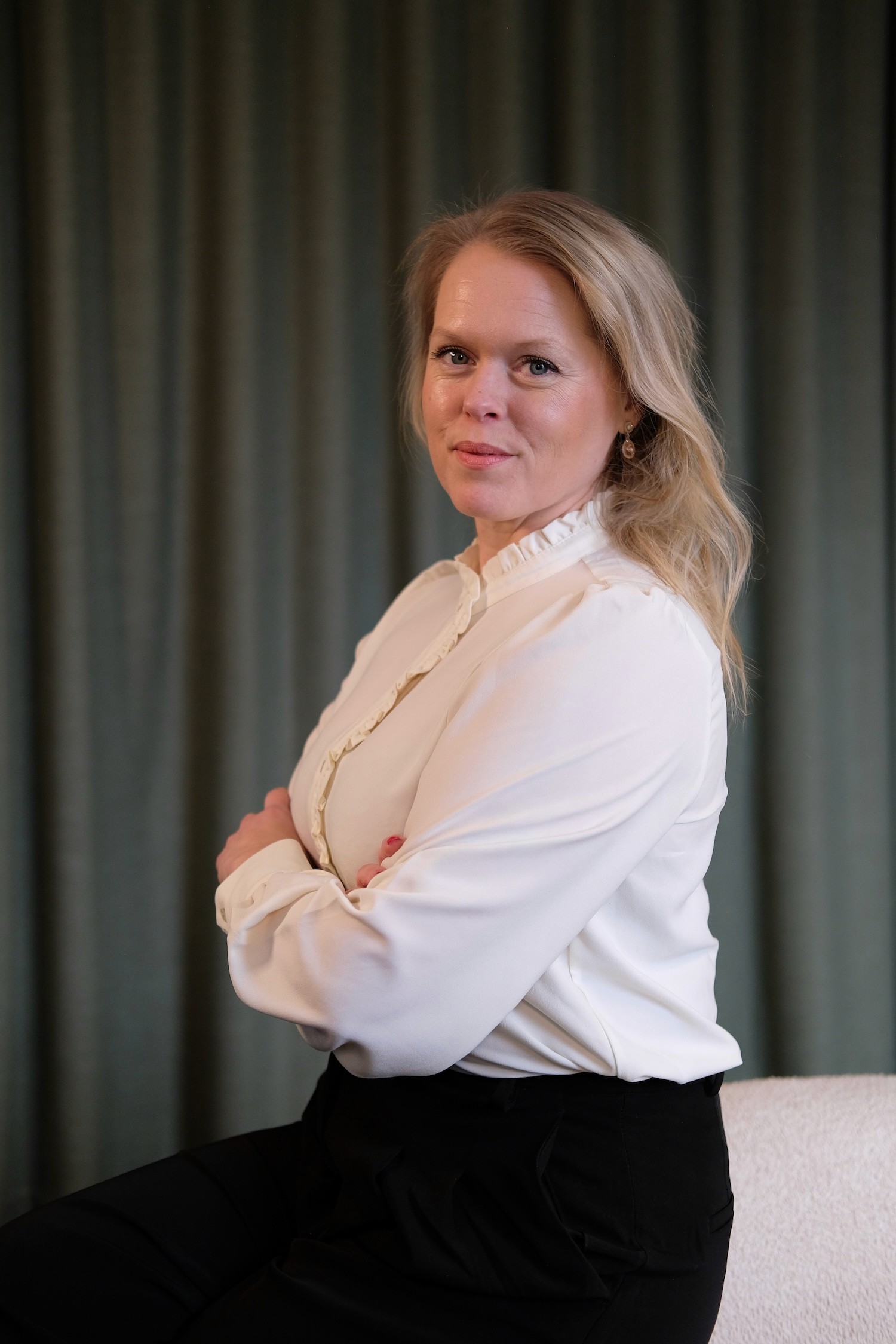
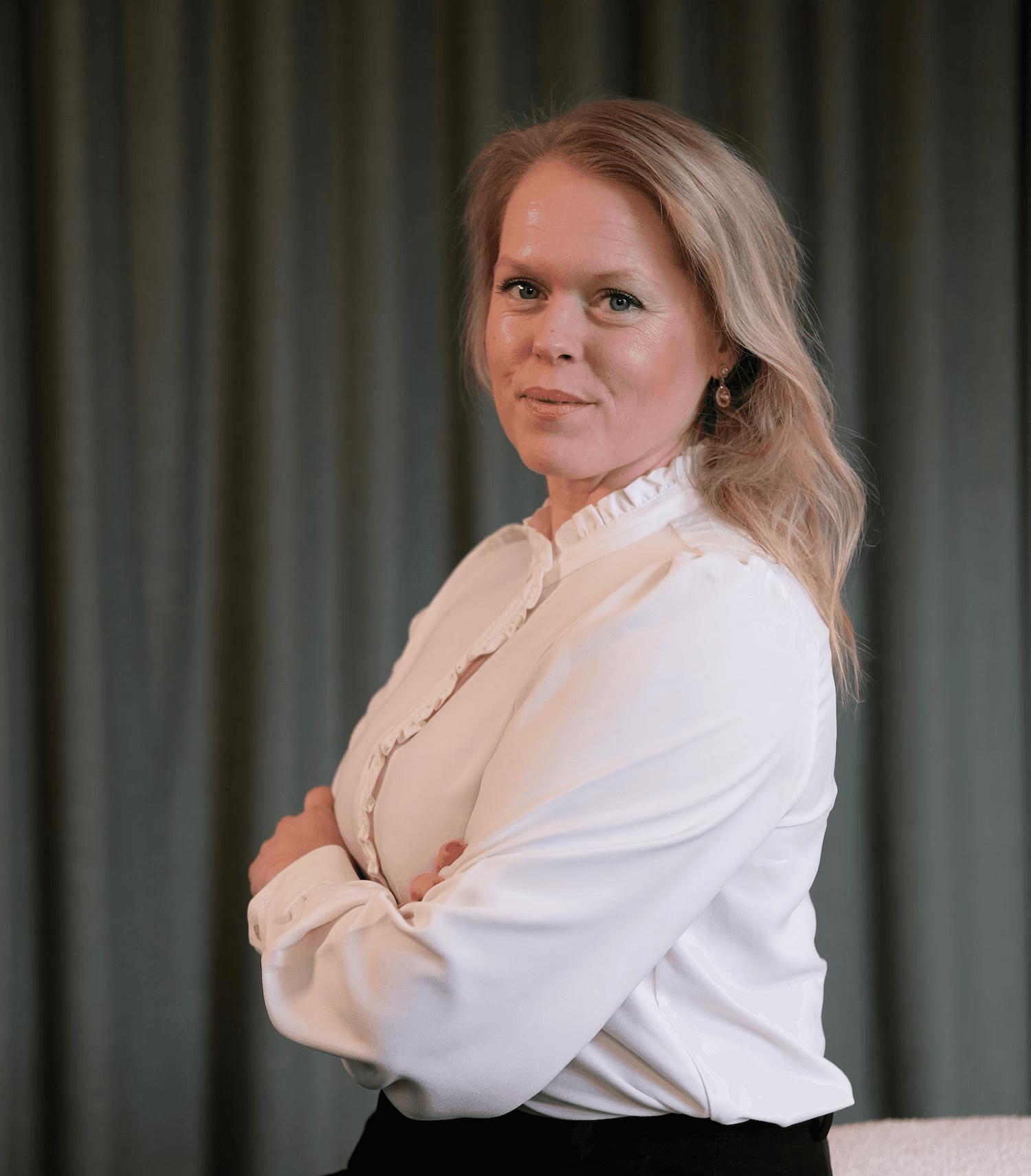
Katarina Rosenström, formerly legal director at Titanium, stepped into her role as interim CEO last November.
Diversifying beyond care property income
Titanium’s financials underline the urgency of the pivot.
According to its latest annual report, fee income declined 7.5 percent to €20.2 million. Operating profit fell to €6.9 million from €9.1 million the previous year. Margins narrowed from 41.6 percent to 34 percent. Investors have taken notice of the faltering financial health since Titanium’s stock price has fallen over 10 percent in the past 12 months.
Still, the balance sheet remains strong. The equity ratio exceeds 80 percent, and net gearing is negative, per the annual report. The board recently proposed a €0.50 dividend per share for 2025.
A ray of hope is that the real estate market is beginning to regain strength, according to Rosenström, pointing to renewed activity from Nordic investors and a recent portfolio sale to a Norwegian buyer. “We do see that we are heading into better markets at this point.”
Still, recovery alone is not the strategy. "Real estate continues to be a core part of our business. At the same time, we are gradually broadening our offering to ensure a more balanced revenue base across different asset classes," she explains. “We believe that we can provide better service for all our clients by doing that.”
Titanium’s newly introduced wealth management service model integrates multiple asset classes under one structure and has been welcomed by clients, according to the latest annual report. Among the concrete steps is the launch of Titanium Private Equity, marking the company’s entry into a new asset class and including a dedicated institutional share class.
Titanium has not provided earnings guidance for 2026, but over the longer term, it targets annual fee income growth of 10–15 percent and an EBIT margin above 40 percent. Analysts are likely to scrutinize any upcoming reporting closely. In November, Inderes lowered its target price for Titanium to €6.22, below today’s €7.36, citing concerns that the expansion in wealth management may not fully offset weaker income from property funds. Execution speed will therefore be critical.
From compliance to chief executive
Rosenström, a seasoned compliance expert with experience at Ålandsbanken and law firm Waselius & Wist, did not set out to become a finance executive. She entered the field through a financial trainee position at law firm Hannes and Snellman, and “then it just started flowing.”
Over the years, her goal took shape: to become a “reliable expert” in her field. When entering Titanium as a legal director in 2021, she found her home. “I quickly realized that this is the right place for me.”
The transition from legal director to CEO has expanded the scope of decision-making. “I have never had any problem making decisions in my old role,” she says. “It’s in my backbone.” As CEO, the field of view is wider. "As CEO, I now have to consider a much broader range of issues than in my previous role."
She describes the position as a “fast learning track,” where judgment must synthesize financial, strategic, cultural, and market considerations. Her advantage, she argues, is analytical discipline. “I’m used to getting into really large pieces of information and getting the most important bits out to make decisions.”
Rosenström describes her leadership style as “tough but fair.” In operational terms, that means clear expectations and accountability. “As long as demands are clear and expectations are clear, and you show accountability and show up, we get a long way.”
Breaking the culture of caution
Rosenström’s commentary extends beyond Titanium’s walls.
When asked about Finland’s broader growth challenge, she begins with capital flow. “We need a plan to make capital flow more freely,” she says, without advocating specific policy changes.
But her sharper critique is cultural. “We have this fear of failure. If you don’t succeed, you’re a failure. And I believe we shouldn’t be afraid of that.”
Failure, she argues, is information. “Every time you feel like you failed, you actually learn something new.”
She observes that many companies appear to be waiting — delaying investment decisions in a cautious capital market. “It feels like everyone is just waiting for something to happen. Someone needs to push through that bottleneck.”
Her critique extends to governance structures. “We’re used to seeing the same people in management teams and on the boards,” she says. “We need new people. We need new ideas. We need to bring younger people into the mix.”
When the same names circulate between companies, strategic thinking risks becoming incremental. Corporate renewal, in her view, is partly generational. “The things we did 20 years ago might not work today.”
The parallel with Titanium’s transformation is clear. Long anchored to one dominant product, the company is now moving to reinvent itself deliberately, before the market compels a more painful adjustment.
More than a temporary mandate
If asked to continue permanently as CEO, would she accept?
“Actually, yes,” she says. “I’m really committed to the journey we are on at this moment,” adding that there are still milestones to meet and issues to resolve. The transformation is underway, not complete.
The current setup could last for a while, as it took more than a year for Titanium to find her predecessor, Ahlström. And Rosenström, for her part, is committed to the vision. “I really believe in our new strategy and all the work we’re doing toward those goals.”
In a company reshaping its revenue base, commitment may matter as much as credentials. For now, Titanium’s reinvention rests with a leader who knows the institution from the inside and intends to see the shift through.
After this story, Titanium announced the next CEO hire on March 2. Read more about it here.


Investor Event
Listeds Investor Event · Defence
Nordic defence is in a once-in-a-generation growth cycle. Eight listed and pre-IPO companies pitch to 100+ invited investors at Valkoinen Sali, Helsinki
21 September 2026


Latest on Listeds

