Lindex Group, previously known as Stockmann Group plc, is edging closer to a structural separation of its businesses, as improving operating performance in the department store unit continues to be overshadowed by negative cash flow and heavy lease liabilities.
In a stock exchange release today, the board said it has concluded that “separating the department store business would be the best strategic path forward,” following an extensive review of strategic alternatives for Stockmann, an iconic department store chain in Finland. While several options have been explored, their feasibility is constrained by balance sheet realities.
The decision carries historical weight and illustrates how, over time, an acquisition can outgrow its acquirer. Stockmann bought Sweden’s Lindex, one of Northern Europe’s leading fashion chains, in 2007 as part of its international expansion. What began as diversification now anchors the group’s investment case, as the traditional department store business continues to struggle.
Third-quarter results prove the case. Between July and September 2025, group revenue rose 2.5% to EUR 227.6 million. Lindex grew faster, with revenue up 3.8% to EUR 165.4 million, while Stockmann’s revenue of EUR 62.4 million remained flat year on year. The Stockmann division’s adjusted operating result improved to EUR –2.6 million from –4.5 million, mainly due to systematic operational and cost efficiency measures. Even after six consecutive quarters of improvement, the unit remains loss-making.
This context explains the board’s stance. It explicitly noted that “despite improved profitability during 2025, the department store business continues to generate negative cash flow and has significant lease liabilities.” These factors complicate all separation scenarios, whether a sale, spin-off, or other structural solution.
For investors, the strategic message is becoming clearer. Lindex represents growth and international scale. Stockmann, founded in 1862 and still culturally significant in Finland and the Baltics, is improving operationally but remains structurally constrained. The board’s challenge is no longer whether separation makes sense, but how to execute it without eroding long-term value.
·
5 min read
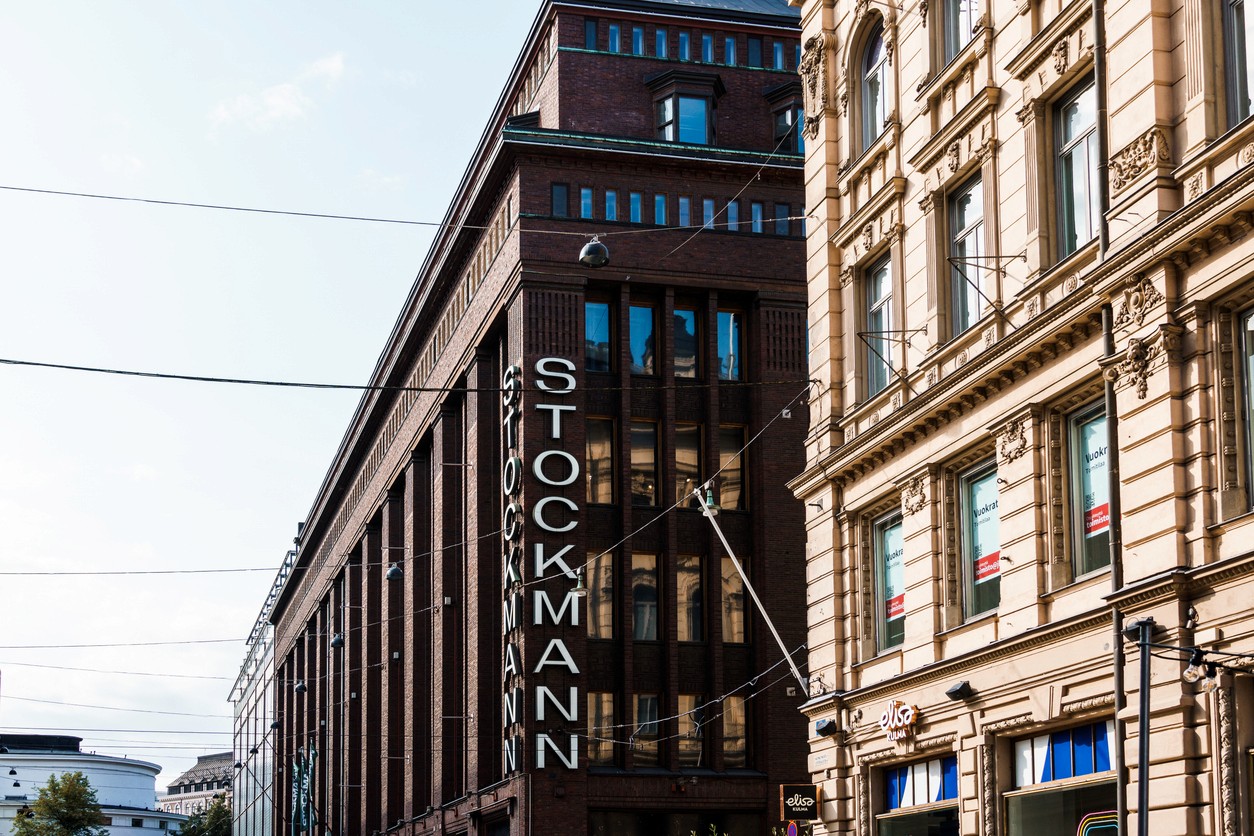
Lindex Group, previously known as Stockmann Group plc, is edging closer to a structural separation of its businesses, as improving operating performance in the department store unit continues to be overshadowed by negative cash flow and heavy lease liabilities.
In a stock exchange release today, the board said it has concluded that “separating the department store business would be the best strategic path forward,” following an extensive review of strategic alternatives for Stockmann, an iconic department store chain in Finland. While several options have been explored, their feasibility is constrained by balance sheet realities.
The decision carries historical weight and illustrates how, over time, an acquisition can outgrow its acquirer. Stockmann bought Sweden’s Lindex, one of Northern Europe’s leading fashion chains, in 2007 as part of its international expansion. What began as diversification now anchors the group’s investment case, as the traditional department store business continues to struggle.
Third-quarter results prove the case. Between July and September 2025, group revenue rose 2.5% to EUR 227.6 million. Lindex grew faster, with revenue up 3.8% to EUR 165.4 million, while Stockmann’s revenue of EUR 62.4 million remained flat year on year. The Stockmann division’s adjusted operating result improved to EUR –2.6 million from –4.5 million, mainly due to systematic operational and cost efficiency measures. Even after six consecutive quarters of improvement, the unit remains loss-making.
This context explains the board’s stance. It explicitly noted that “despite improved profitability during 2025, the department store business continues to generate negative cash flow and has significant lease liabilities.” These factors complicate all separation scenarios, whether a sale, spin-off, or other structural solution.
For investors, the strategic message is becoming clearer. Lindex represents growth and international scale. Stockmann, founded in 1862 and still culturally significant in Finland and the Baltics, is improving operationally but remains structurally constrained. The board’s challenge is no longer whether separation makes sense, but how to execute it without eroding long-term value.




Investor Event
Listeds Investor Event · Defence
Nordic defence is in a once-in-a-generation growth cycle. Eight listed and pre-IPO companies pitch to 100+ invited investors at Valkoinen Sali, Helsinki
21 September 2026


Latest on Listeds

