For most of its 25-year history, Nexstim Oyj has looked like a familiar case in medical technology: strong science, slow commercialization, and years spent in what founders often call the “valley of death.” Now, that patience is starting to pay off.
As Nexstim approaches its first profitable year, its stock price has risen over 60 percent in the past 12 months, and CEO Mikko Karvinen has reasons to be optimistic.
“I've been happy that the markets have recognized the good things that have happened in the company,” Karvinen says, pointing to several factors behind the share price increase. “We are growing, and we are gaining better results,” he says, also highlighting long-term partnerships now in place.
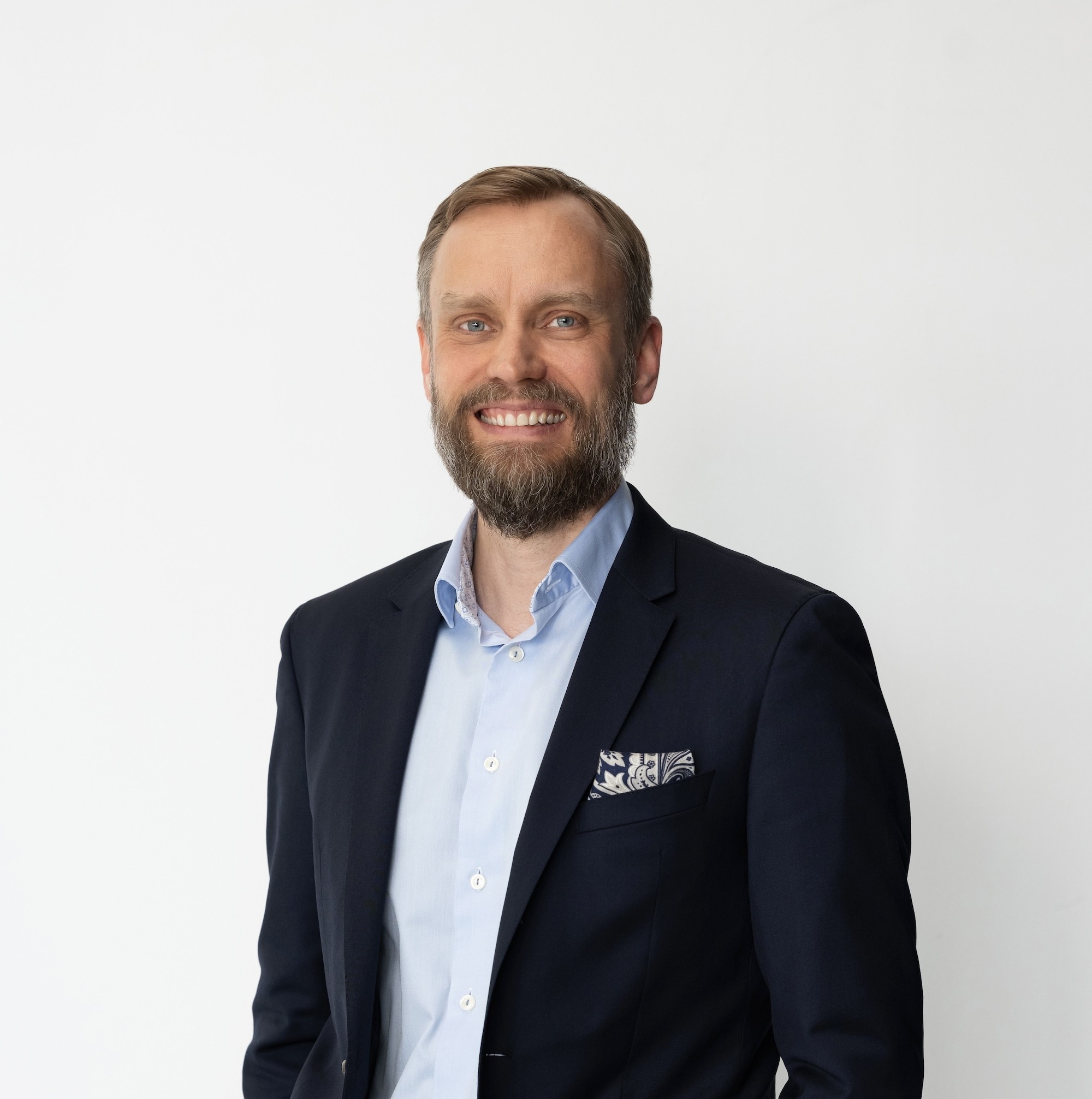
Mikko Karvinen is the CEO of Nexstim, who has also served as the company's CFO over the past decade.
Karvinen has much to share from the deep-tech company’s quarter-century journey and what it reveals about getting it right in user-centric design, partnerships, and talent retention. Above all, the story underscores the power of patience. “Things take longer than you ever think,” Karvinen says. “They just do.”
Founded in 2000 as a Finnish university spin-off, Nexstim invested heavily in research, clinical trials, and regulatory approvals long before profitability was a realistic goal. For years, progress was measured in studies completed and approvals gained, not in revenue growth.
Today, the tipping point is finally in sight. Analysts expect Nexstim to move into profitability in 2025, with forecasts pointing to a 41% year-over-year revenue growth and a swing from a net loss to a EUR 1.25 million operating profit, according to an Inderes analyst update on January 5. After a turbulent decade on the stock market, the company is now valued at roughly EUR 102 million.
Twenty-five years is a long time, even in a regulation-heavy industry such as medical devices. In neuromodulation, however, this kind of timeline is not unusual. Jerusalem-based TMS company BrainsWay, a peer of Nexstim, reached profitability in 2023, nearly two decades after its founding. Long development cycles are not a flaw of the sector but its defining feature, gradually separating the few winners from the rest.
What makes Nexstim’s brain stimulation different
Nexstim operates in navigated transcranial magnetic stimulation, a niche where precision, clinical evidence, and regulatory approval matter more than speed. Its NBS System 6 is currently the only FDA-cleared and CE-marked navigated TMS system for pre-surgical mapping of speech and motor cortices.
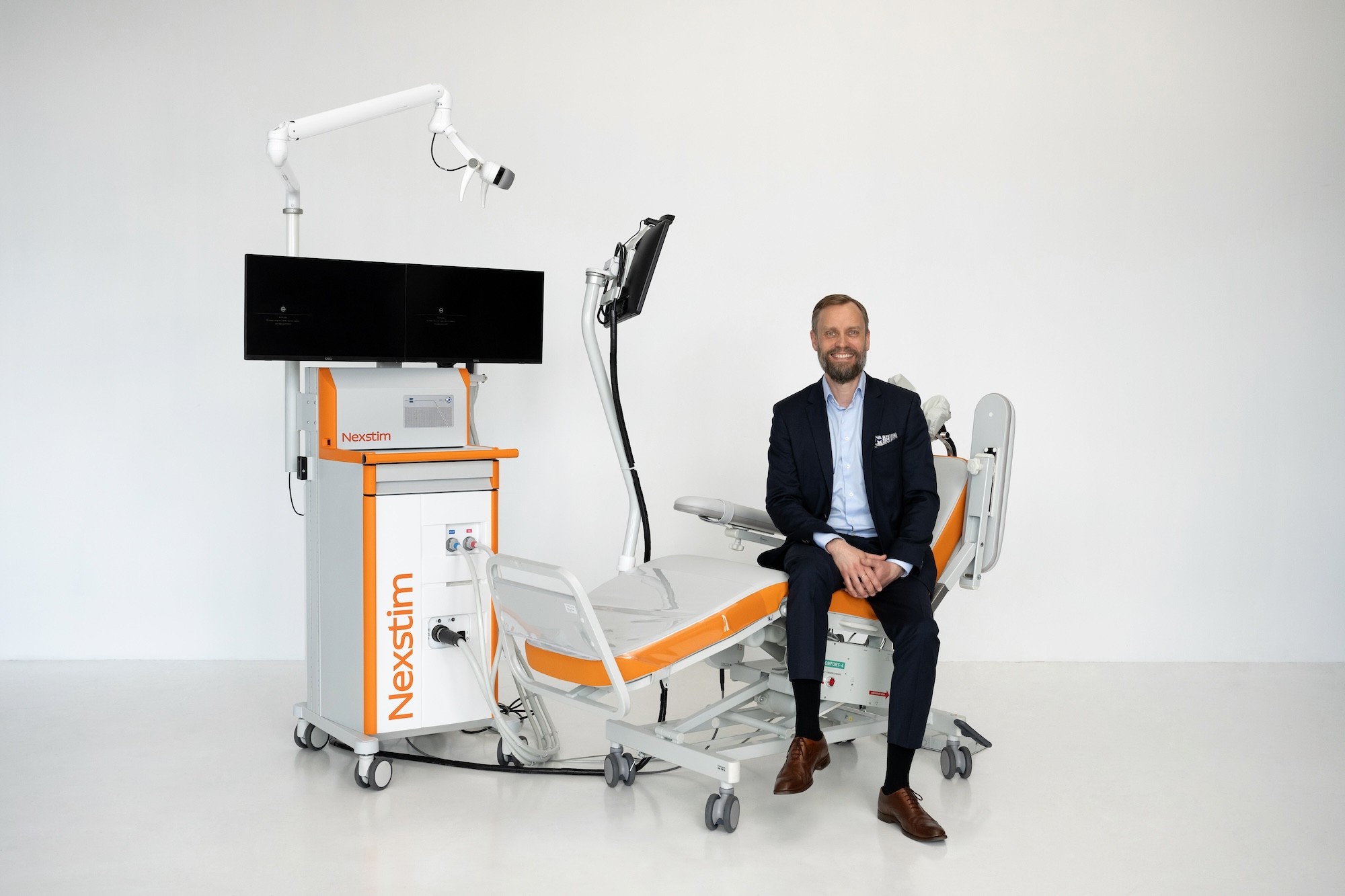
What makes Nexstim’s devices different is that the company combines magnetic stimulation with MRI-based neuronavigation, allowing clinicians to see and stimulate precise brain areas in individual patients. The system is used both to map critical brain functions before surgery and to deliver repeated stimulation treatments for patients with major depressive disorder who have not responded to medication.
From Nexstim’s rare dual-use position in the TMS field, its improving financial outlook looks less like a sudden breakthrough and more like a long-delayed release. Part of that release stems from a decisive export-oriented strategy, with an early focus on the United States, an approach that has proven essential for survival.
“We learned that the company should be there [the US] because that’s the most competitive environment in medical devices,” Karvinen says, pointing to the high purchasing power and faster adoption rates.
In the US, treatment-resistant depression is widely reimbursed by private insurance, whereas in Finland, coverage levels are lower for TMS treatments, costing around EUR 300 per session, Karvinen notes.
Few Finnish companies can expect a more than 40 percent surge in net sales this year. That gives Nexstim a rare position to share lessons from its long journey toward profitability. Karvinen, who joined Nexstim as CFO more than a decade ago, now reflects on what that journey has taught him.
Lesson one: Time is part of the business model
Medical technology does not move in straight lines. Nexstim’s early years were spent turning academic research into something regulators and hospitals could trust.
That meant nearly a decade of product development, clinical validation, and regulatory approvals without meaningful sales. In contrast to many business cycles, Karvinen stresses a strict sequence: first research, then trials, then approvals, then reimbursement. Only after that do sales follow. “This is a decade business.”
Boards that try to compress this timeline in their expectations often create unnecessary tension. In medical technology, time is a necessary input that demands capital resilience, while also building an economic moat that keeps rivals at bay.
Lesson two: Hospitals buy workflows, not just technology
One of Nexstim’s less visible strengths is not the technology itself, but how it fits into hospital reality. Hospitals operate under constant pressure, particularly when it comes to staffing. Staff turnover is high, training time is limited, and systems that are difficult to use tend to sit idle.
Ease of use, Karvinen argues, is not a cosmetic feature. It determines whether a system is actually used. “Easier to use systems get used.”
Even when clinicians support a product, decisions rarely rest with them alone. Purchasing departments control budgets and are often structurally incentivized to delay or avoid new investments, making it feel as if their “mission is not to buy anything.”
Nexstim’s response has been to design its systems around hospital economics. By combining diagnostics and therapy in one modular system, hospitals can use the same device for tumor surgery planning and for depression or chronic pain treatment during idle time.
The dual-use model is easier to justify to procurement because it ensures hospitals do not have expensive equipment gathering dust, but delivering value. “That’s beneficial for a lot of hospitals.”
Lesson three: Cash buys time, and time buys survival
Long development cycles bring uncertainty, and uncertainty requires cash. Karvinen is direct about this.
“Be prepared. It will take a lot of time and money, and you will have surprises in between.” Running out of money is rarely the result of a single mistake. It is usually the result of underestimating how long everything takes.
Even after listing, the mindset does not change. “You are always fundraising, even as a public company.”
Although Nexstim is not raising money right now, Karvinen emphasizes the importance of being aware of the cash position. “Even if you are publicly listed, take care that you have a strong financial position, talk to the shareholders, and make sure that you're well-funded.”
Lesson four: Partnerships take years and demand patience
Scale, distribution, and credibility matter in medical technology. Partnerships are often the only way to reach them, and they are slow by design.
Nexstim’s collaboration with Brainlab, a Munich-based neurosurgical technology company, took years to finalize. The length of the process did not mean yielding ground. “Be tough in the negotiations,” Karvinen advises.
He stresses the importance of getting to know the people on the other side of the table well before signing, because what follows is a long commitment. “It’s kind of like getting engaged and married.”
The same patience applies to Nexstim’s planned collaboration with Sinaptica Therapeutics in Alzheimer’s disease. In December, the companies moved into the next phase of their exclusivity agreement, completing Sinaptica’s EUR 1.5 million payment obligation and paving the way for a potential 10-year global partnership built on Nexstim’s NBS 6 platform.
After the deal is clinched, Karvinen suggests celebrating together with both teams. “The fun part starts after the contract. Before that, it’s brutal work.”
Lesson five: Long-term belief attracts talent when short-term rewards are limited
Attracting and retaining talent in medical technology is difficult precisely because rewards arrive late. At the same time, companies must hire top-tier talent to push technological breakthroughs. How to do that is a recurring challenge.
“New hires need to have a long-term perspective. They need to know that this team will be the winners in the future.”
Nexstim operates globally with around 50 people serving customers across the US, Europe, the Middle East, and Asia. In an organization that small, every hire matters.
The logic is forward-looking. “I invest my time now. Maybe I will not make the most of the revenue right now, but during those decades of success, then things will go well.”
Hiring is deliberately selective. Financial incentives exist, including a company-wide stock option program, but Karvinen is clear that money alone does not sustain commitment over long cycles.
Trust does. “People cannot be fooled.” People stay when leadership behaves consistently over time and when the mission feels real.
One advantage Nexstim has is meaningful work. “If you’re working toward patients getting help for brain disorders, it’s pretty easy to get the right people.”
That sense of purpose, Karvinen believes, ultimately attracts the right people. Meaningful work is a powerful motivator, and without shared motivation, no company creates lasting value. “The CEO cannot do anything by himself.”
The final lesson Karvinen has learned could apply to anyone trying to build something enduring. “Be patient. Be patient and believe in your thing.”
In medical technology, long timelines are not a warning signal. They are the price of entry.
·
5 min read
Explore and follow profiles from this article to get timely updates:
For most of its 25-year history, Nexstim Oyj has looked like a familiar case in medical technology: strong science, slow commercialization, and years spent in what founders often call the “valley of death.” Now, that patience is starting to pay off.
As Nexstim approaches its first profitable year, its stock price has risen over 60 percent in the past 12 months, and CEO Mikko Karvinen has reasons to be optimistic.
“I've been happy that the markets have recognized the good things that have happened in the company,” Karvinen says, pointing to several factors behind the share price increase. “We are growing, and we are gaining better results,” he says, also highlighting long-term partnerships now in place.
Mikko Karvinen is the CEO of Nexstim, who has also served as the company's CFO over the past decade.
Karvinen has much to share from the deep-tech company’s quarter-century journey and what it reveals about getting it right in user-centric design, partnerships, and talent retention. Above all, the story underscores the power of patience. “Things take longer than you ever think,” Karvinen says. “They just do.”
Founded in 2000 as a Finnish university spin-off, Nexstim invested heavily in research, clinical trials, and regulatory approvals long before profitability was a realistic goal. For years, progress was measured in studies completed and approvals gained, not in revenue growth.
Today, the tipping point is finally in sight. Analysts expect Nexstim to move into profitability in 2025, with forecasts pointing to a 41% year-over-year revenue growth and a swing from a net loss to a EUR 1.25 million operating profit, according to an Inderes analyst update on January 5. After a turbulent decade on the stock market, the company is now valued at roughly EUR 102 million.
Twenty-five years is a long time, even in a regulation-heavy industry such as medical devices. In neuromodulation, however, this kind of timeline is not unusual. Jerusalem-based TMS company BrainsWay, a peer of Nexstim, reached profitability in 2023, nearly two decades after its founding. Long development cycles are not a flaw of the sector but its defining feature, gradually separating the few winners from the rest.
What makes Nexstim’s brain stimulation different
Nexstim operates in navigated transcranial magnetic stimulation, a niche where precision, clinical evidence, and regulatory approval matter more than speed. Its NBS System 6 is currently the only FDA-cleared and CE-marked navigated TMS system for pre-surgical mapping of speech and motor cortices.
What makes Nexstim’s devices different is that the company combines magnetic stimulation with MRI-based neuronavigation, allowing clinicians to see and stimulate precise brain areas in individual patients. The system is used both to map critical brain functions before surgery and to deliver repeated stimulation treatments for patients with major depressive disorder who have not responded to medication.
From Nexstim’s rare dual-use position in the TMS field, its improving financial outlook looks less like a sudden breakthrough and more like a long-delayed release. Part of that release stems from a decisive export-oriented strategy, with an early focus on the United States, an approach that has proven essential for survival.
“We learned that the company should be there [the US] because that’s the most competitive environment in medical devices,” Karvinen says, pointing to the high purchasing power and faster adoption rates.
In the US, treatment-resistant depression is widely reimbursed by private insurance, whereas in Finland, coverage levels are lower for TMS treatments, costing around EUR 300 per session, Karvinen notes.
Few Finnish companies can expect a more than 40 percent surge in net sales this year. That gives Nexstim a rare position to share lessons from its long journey toward profitability. Karvinen, who joined Nexstim as CFO more than a decade ago, now reflects on what that journey has taught him.
Lesson one: Time is part of the business model
Medical technology does not move in straight lines. Nexstim’s early years were spent turning academic research into something regulators and hospitals could trust.
That meant nearly a decade of product development, clinical validation, and regulatory approvals without meaningful sales. In contrast to many business cycles, Karvinen stresses a strict sequence: first research, then trials, then approvals, then reimbursement. Only after that do sales follow. “This is a decade business.”
Boards that try to compress this timeline in their expectations often create unnecessary tension. In medical technology, time is a necessary input that demands capital resilience, while also building an economic moat that keeps rivals at bay.
Lesson two: Hospitals buy workflows, not just technology
One of Nexstim’s less visible strengths is not the technology itself, but how it fits into hospital reality. Hospitals operate under constant pressure, particularly when it comes to staffing. Staff turnover is high, training time is limited, and systems that are difficult to use tend to sit idle.
Ease of use, Karvinen argues, is not a cosmetic feature. It determines whether a system is actually used. “Easier to use systems get used.”
Even when clinicians support a product, decisions rarely rest with them alone. Purchasing departments control budgets and are often structurally incentivized to delay or avoid new investments, making it feel as if their “mission is not to buy anything.”
Nexstim’s response has been to design its systems around hospital economics. By combining diagnostics and therapy in one modular system, hospitals can use the same device for tumor surgery planning and for depression or chronic pain treatment during idle time.
The dual-use model is easier to justify to procurement because it ensures hospitals do not have expensive equipment gathering dust, but delivering value. “That’s beneficial for a lot of hospitals.”
Lesson three: Cash buys time, and time buys survival
Long development cycles bring uncertainty, and uncertainty requires cash. Karvinen is direct about this.
“Be prepared. It will take a lot of time and money, and you will have surprises in between.” Running out of money is rarely the result of a single mistake. It is usually the result of underestimating how long everything takes.
Even after listing, the mindset does not change. “You are always fundraising, even as a public company.”
Although Nexstim is not raising money right now, Karvinen emphasizes the importance of being aware of the cash position. “Even if you are publicly listed, take care that you have a strong financial position, talk to the shareholders, and make sure that you're well-funded.”
Lesson four: Partnerships take years and demand patience
Scale, distribution, and credibility matter in medical technology. Partnerships are often the only way to reach them, and they are slow by design.
Nexstim’s collaboration with Brainlab, a Munich-based neurosurgical technology company, took years to finalize. The length of the process did not mean yielding ground. “Be tough in the negotiations,” Karvinen advises.
He stresses the importance of getting to know the people on the other side of the table well before signing, because what follows is a long commitment. “It’s kind of like getting engaged and married.”
The same patience applies to Nexstim’s planned collaboration with Sinaptica Therapeutics in Alzheimer’s disease. In December, the companies moved into the next phase of their exclusivity agreement, completing Sinaptica’s EUR 1.5 million payment obligation and paving the way for a potential 10-year global partnership built on Nexstim’s NBS 6 platform.
After the deal is clinched, Karvinen suggests celebrating together with both teams. “The fun part starts after the contract. Before that, it’s brutal work.”
Lesson five: Long-term belief attracts talent when short-term rewards are limited
Attracting and retaining talent in medical technology is difficult precisely because rewards arrive late. At the same time, companies must hire top-tier talent to push technological breakthroughs. How to do that is a recurring challenge.
“New hires need to have a long-term perspective. They need to know that this team will be the winners in the future.”
Nexstim operates globally with around 50 people serving customers across the US, Europe, the Middle East, and Asia. In an organization that small, every hire matters.
The logic is forward-looking. “I invest my time now. Maybe I will not make the most of the revenue right now, but during those decades of success, then things will go well.”
Hiring is deliberately selective. Financial incentives exist, including a company-wide stock option program, but Karvinen is clear that money alone does not sustain commitment over long cycles.
Trust does. “People cannot be fooled.” People stay when leadership behaves consistently over time and when the mission feels real.
One advantage Nexstim has is meaningful work. “If you’re working toward patients getting help for brain disorders, it’s pretty easy to get the right people.”
That sense of purpose, Karvinen believes, ultimately attracts the right people. Meaningful work is a powerful motivator, and without shared motivation, no company creates lasting value. “The CEO cannot do anything by himself.”
The final lesson Karvinen has learned could apply to anyone trying to build something enduring. “Be patient. Be patient and believe in your thing.”
In medical technology, long timelines are not a warning signal. They are the price of entry.


Investor Event
Listeds Investor Event · Defence
Nordic defence is in a once-in-a-generation growth cycle. Eight listed and pre-IPO companies pitch to 100+ invited investors at Valkoinen Sali, Helsinki
21 September 2026