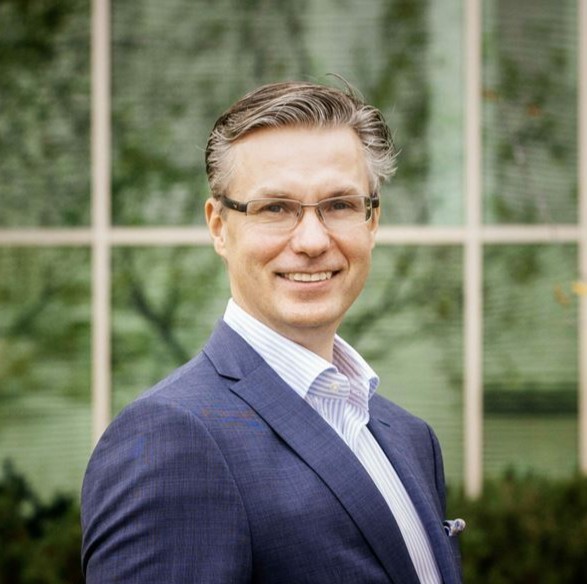
Pasi Flinkman is leaving Raisio less than two years after taking over as CEO of the Finnish food company. The announcement landed today as an inside information release on the Helsinki stock exchange, nine days after Raisio reported one of its strongest quarterly profitability improvements in recent years.
Flinkman will remain in the role until November 2026 or until a successor is appointed. The board has already started the search process.
The timing is unusual because Raisio is not in crisis. The company enters the transition with improving profitability, a more focused portfolio, and a strategy already in motion. In practice, the next CEO inherits a business that has largely completed its restructuring phase and is now trying to turn operational discipline into sustained growth.
Chairman Arto Tiitinen framed the handover as continuity rather than redirection. In the company’s release, he credited Flinkman with renewing Raisio’s operations and improving profitability, adding that the company now has “strong foundations to continue the determined execution of its strategy.”
That strategy has become considerably clearer during Flinkman’s tenure.
The executive who simplified Raisio
Flinkman, 56, joined Raisio in June 2024 after spending most of his career inside Nordic consumer goods and food companies.
Before Raisio, he served as CEO of Orkla Suomi between 2018 and 2024, having previously worked as deputy CEO and earlier as CEO of Orkla Confectionery & Snacks Finland. Earlier roles included leadership positions at Chips, Leaf, and CSM in Finland, the Baltics, China, and the Netherlands. He holds a Master of Science in Economics and lives in Turku.
He also serves on the board of the Finnish Food and Drink Industries Federation and sits on Varma’s consultative committee for employers.
At Raisio, his main task was simplification.
The company had spent years balancing businesses with uneven strategic fit and inconsistent profitability. Under Flinkman, Raisio sold its plant protein business and concentrated resources around two areas where it still had category strength and pricing power: Benecol® and Elovena®.
The financial impact became increasingly visible during 2025 and early 2026.
Comparable EBIT from continuing operations reached EUR 28.5 million in 2025 on net sales of EUR 224.2 million, equivalent to a margin of 12.7%. In the first quarter of 2026, comparable EBIT rose to EUR 7.5 million on net sales of EUR 57.5 million, lifting the margin to 13.1% from 10.6% a year earlier. Cash flow improved, and return on invested capital increased to 11.3%.
The company also maintained enough balance sheet flexibility to continue investing while distributing EUR 0.15 per share in dividends in April.
More importantly, Raisio now looks strategically coherent in a way it did not several years ago.
The next phase is harder
The next CEO will not be starting with a turnaround mandate. The operational cleanup is largely done.
Instead, the challenge shifts toward execution: scaling brands internationally, maintaining margin discipline, and modernizing the company’s operating systems simultaneously.
Raisio’s current strategy rests on three connected priorities.
Benecol® still carries the international ambition
The Heart Health division remains central to Raisio’s long-term plans even though recent performance has been mixed.
First-quarter net sales in the segment declined 2.0% to EUR 29.3 million, partly because of pound sterling weakness and the timing of industrial sales. Flinkman nevertheless described the business foundation as solid and pointed toward expected improvement during the rest of the year.
The company is investing heavily in the Benecol® brand.
In March, Raisio launched Benecol® yogurt drinks in Spain, extending the brand further into Southern Europe. At the same time, the company is carrying out the largest redesign of Benecol®’s visual identity and communications in more than three decades.
The shift is not cosmetic. Raisio is trying to reposition the brand from a narrowly clinical cholesterol product toward a broader lifestyle and wellness proposition.
That creates both opportunity and risk.
Benecol® remains Raisio’s most internationally exposed business, and European consumer health categories are expensive to build across fragmented markets with different retail structures and consumer habits. The next CEO will inherit that expansion effort midway through execution.
Elovena® has become Raisio’s strongest operating asset
The stronger momentum currently sits inside Breakfast, Snacking & Food Solutions.
Net sales in the segment increased 4.8% in the first quarter to EUR 27.3 million. The Elovena® brand grew by almost 11%, supported by strong domestic demand and favorable raw material costs.
Elovena® matters strategically because it combines several trends at once: health-focused consumption, oats, sustainability, and domestic sourcing credibility. In March, consumers once again ranked it as Finland’s most sustainable brand.
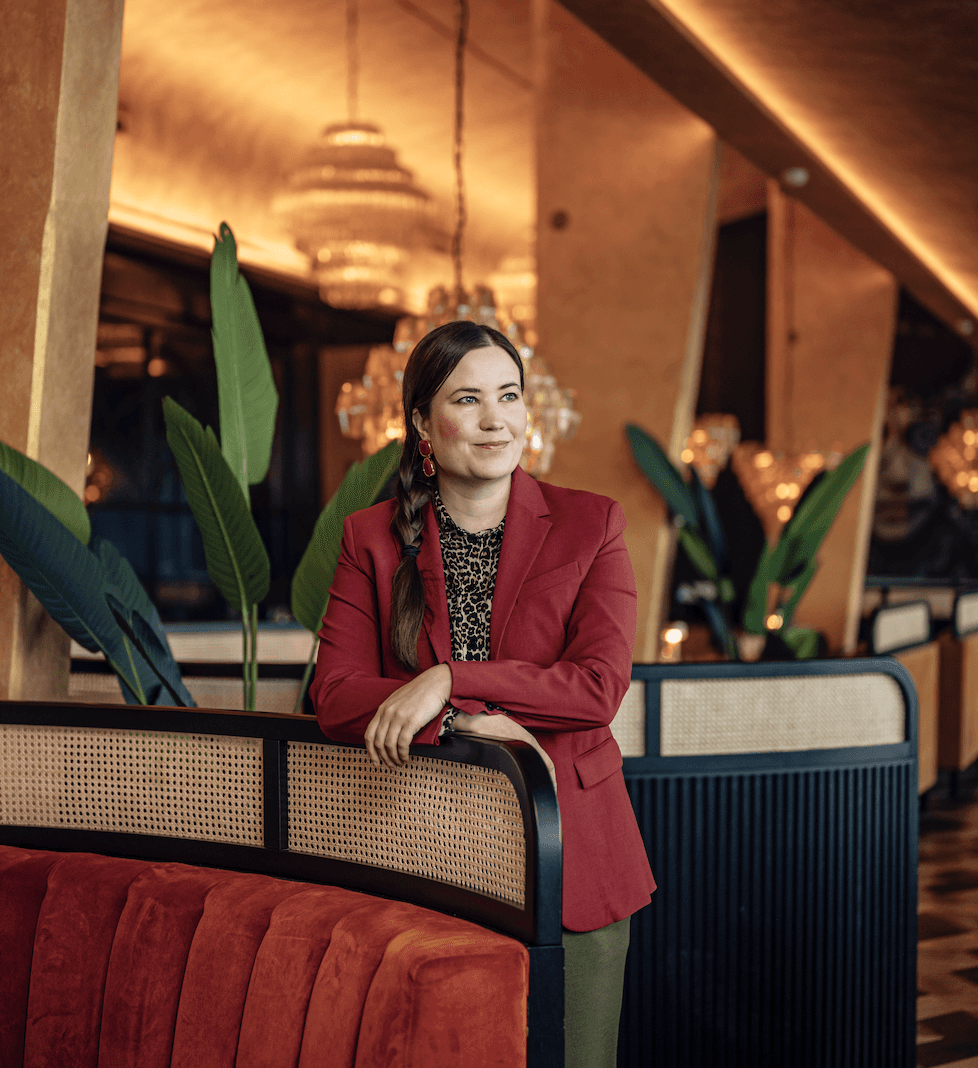
The division is now led by Noora Pöyhönen, who joined Raisio as chief business officer in February 2026. Her arrival adds another relatively new executive voice to the company’s growth phase.
One of the larger unanswered questions for Raisio is whether Elovena® can remain primarily a strong Finnish category leader or evolve into a broader Nordic consumer brand over time.
The ERP transformation may define the next CEO’s tenure
Alongside brand expansion, Raisio is carrying out a company-wide enterprise resource planning system renewal.
ERP projects rarely attract much public attention unless they fail, but strategically, the overhaul may become one of the most consequential parts of Raisio’s transition.
Flinkman consistently described the project as a growth foundation rather than a cost reduction exercise. The objective is to create a more unified and scalable operating structure as the company becomes increasingly focused on fewer international brands.
The project is progressing according to plan, but continues to create near-term cost pressure.
That balance will become one of the defining management questions for the next CEO: how aggressively Raisio can invest in systems, international growth, and innovation without losing the profitability discipline that rebuilt investor confidence in the first place.
Raisio is also tightening its supply chain
The company has simultaneously taken steps to strengthen its domestic sourcing position.
On May 7, Raisio announced that it would shorten grain payment terms to 14 days from the industry standard of 30 days. The change affects more than 700 farmers in southwestern Finland and takes effect in June.
The decision reflects how strategically important Finnish grain has become for Raisio, particularly oats, which sit at the center of the company’s largest growth category.
The move also comes during a period when food producers across Europe are paying closer attention to supply resilience, domestic sourcing, and agricultural cost pressure.
A board in transition, but not in reset
The succession process will be overseen by a partially refreshed board following Raisio’s annual general meeting in April.
Shareholders elected Satu Ahomäki and Patrik Lundell as new directors, while Arto Tiitinen, Reija Airas, Antti Elevuori, Leena Niemistö, and Pekka Tennilä were re-elected.
Nothing in the company’s language around the transition suggests a strategic reset is under consideration.
Raisio maintained its 2026 guidance and continues to invest in innovation, capacity expansion, and the ERP transformation while expanding internationally. The company enters the CEO transition period with improved profitability, a narrower portfolio, and a clearer operating structure than it had only a few years ago.
The harder part begins now.
The next CEO inherits a company that has already done much of the painful restructuring work. The question is whether Raisio can turn that cleaner structure into durable international consumer brand growth without sacrificing the operational discipline that produced the turnaround in the first place.
·
5 min read
Explore and follow profiles from this article to get timely updates:
Pasi Flinkman is leaving Raisio less than two years after taking over as CEO of the Finnish food company. The announcement landed today as an inside information release on the Helsinki stock exchange, nine days after Raisio reported one of its strongest quarterly profitability improvements in recent years.
Flinkman will remain in the role until November 2026 or until a successor is appointed. The board has already started the search process.
The timing is unusual because Raisio is not in crisis. The company enters the transition with improving profitability, a more focused portfolio, and a strategy already in motion. In practice, the next CEO inherits a business that has largely completed its restructuring phase and is now trying to turn operational discipline into sustained growth.
Chairman Arto Tiitinen framed the handover as continuity rather than redirection. In the company’s release, he credited Flinkman with renewing Raisio’s operations and improving profitability, adding that the company now has “strong foundations to continue the determined execution of its strategy.”
That strategy has become considerably clearer during Flinkman’s tenure.
The executive who simplified Raisio
Flinkman, 56, joined Raisio in June 2024 after spending most of his career inside Nordic consumer goods and food companies.
Before Raisio, he served as CEO of Orkla Suomi between 2018 and 2024, having previously worked as deputy CEO and earlier as CEO of Orkla Confectionery & Snacks Finland. Earlier roles included leadership positions at Chips, Leaf, and CSM in Finland, the Baltics, China, and the Netherlands. He holds a Master of Science in Economics and lives in Turku.
He also serves on the board of the Finnish Food and Drink Industries Federation and sits on Varma’s consultative committee for employers.
At Raisio, his main task was simplification.
The company had spent years balancing businesses with uneven strategic fit and inconsistent profitability. Under Flinkman, Raisio sold its plant protein business and concentrated resources around two areas where it still had category strength and pricing power: Benecol® and Elovena®.
The financial impact became increasingly visible during 2025 and early 2026.
Comparable EBIT from continuing operations reached EUR 28.5 million in 2025 on net sales of EUR 224.2 million, equivalent to a margin of 12.7%. In the first quarter of 2026, comparable EBIT rose to EUR 7.5 million on net sales of EUR 57.5 million, lifting the margin to 13.1% from 10.6% a year earlier. Cash flow improved, and return on invested capital increased to 11.3%.
The company also maintained enough balance sheet flexibility to continue investing while distributing EUR 0.15 per share in dividends in April.
More importantly, Raisio now looks strategically coherent in a way it did not several years ago.
The next phase is harder
The next CEO will not be starting with a turnaround mandate. The operational cleanup is largely done.
Instead, the challenge shifts toward execution: scaling brands internationally, maintaining margin discipline, and modernizing the company’s operating systems simultaneously.
Raisio’s current strategy rests on three connected priorities.
Benecol® still carries the international ambition
The Heart Health division remains central to Raisio’s long-term plans even though recent performance has been mixed.
First-quarter net sales in the segment declined 2.0% to EUR 29.3 million, partly because of pound sterling weakness and the timing of industrial sales. Flinkman nevertheless described the business foundation as solid and pointed toward expected improvement during the rest of the year.
The company is investing heavily in the Benecol® brand.
In March, Raisio launched Benecol® yogurt drinks in Spain, extending the brand further into Southern Europe. At the same time, the company is carrying out the largest redesign of Benecol®’s visual identity and communications in more than three decades.
The shift is not cosmetic. Raisio is trying to reposition the brand from a narrowly clinical cholesterol product toward a broader lifestyle and wellness proposition.
That creates both opportunity and risk.
Benecol® remains Raisio’s most internationally exposed business, and European consumer health categories are expensive to build across fragmented markets with different retail structures and consumer habits. The next CEO will inherit that expansion effort midway through execution.
Elovena® has become Raisio’s strongest operating asset
The stronger momentum currently sits inside Breakfast, Snacking & Food Solutions.
Net sales in the segment increased 4.8% in the first quarter to EUR 27.3 million. The Elovena® brand grew by almost 11%, supported by strong domestic demand and favorable raw material costs.
Elovena® matters strategically because it combines several trends at once: health-focused consumption, oats, sustainability, and domestic sourcing credibility. In March, consumers once again ranked it as Finland’s most sustainable brand.
The division is now led by Noora Pöyhönen, who joined Raisio as chief business officer in February 2026. Her arrival adds another relatively new executive voice to the company’s growth phase.
One of the larger unanswered questions for Raisio is whether Elovena® can remain primarily a strong Finnish category leader or evolve into a broader Nordic consumer brand over time.
The ERP transformation may define the next CEO’s tenure
Alongside brand expansion, Raisio is carrying out a company-wide enterprise resource planning system renewal.
ERP projects rarely attract much public attention unless they fail, but strategically, the overhaul may become one of the most consequential parts of Raisio’s transition.
Flinkman consistently described the project as a growth foundation rather than a cost reduction exercise. The objective is to create a more unified and scalable operating structure as the company becomes increasingly focused on fewer international brands.
The project is progressing according to plan, but continues to create near-term cost pressure.
That balance will become one of the defining management questions for the next CEO: how aggressively Raisio can invest in systems, international growth, and innovation without losing the profitability discipline that rebuilt investor confidence in the first place.
Raisio is also tightening its supply chain
The company has simultaneously taken steps to strengthen its domestic sourcing position.
On May 7, Raisio announced that it would shorten grain payment terms to 14 days from the industry standard of 30 days. The change affects more than 700 farmers in southwestern Finland and takes effect in June.
The decision reflects how strategically important Finnish grain has become for Raisio, particularly oats, which sit at the center of the company’s largest growth category.
The move also comes during a period when food producers across Europe are paying closer attention to supply resilience, domestic sourcing, and agricultural cost pressure.
A board in transition, but not in reset
The succession process will be overseen by a partially refreshed board following Raisio’s annual general meeting in April.
Shareholders elected Satu Ahomäki and Patrik Lundell as new directors, while Arto Tiitinen, Reija Airas, Antti Elevuori, Leena Niemistö, and Pekka Tennilä were re-elected.
Nothing in the company’s language around the transition suggests a strategic reset is under consideration.
Raisio maintained its 2026 guidance and continues to invest in innovation, capacity expansion, and the ERP transformation while expanding internationally. The company enters the CEO transition period with improved profitability, a narrower portfolio, and a clearer operating structure than it had only a few years ago.
The harder part begins now.
The next CEO inherits a company that has already done much of the painful restructuring work. The question is whether Raisio can turn that cleaner structure into durable international consumer brand growth without sacrificing the operational discipline that produced the turnaround in the first place.
Follow moves like this on the Listeds Executive Intelligence Platform.



Investor Event
Listeds Investor Event · Defence
Nordic defence is in a once-in-a-generation growth cycle. Eight listed and pre-IPO companies pitch to 100+ invited investors at Valkoinen Sali, Helsinki
21 September 2026


Latest on Listeds