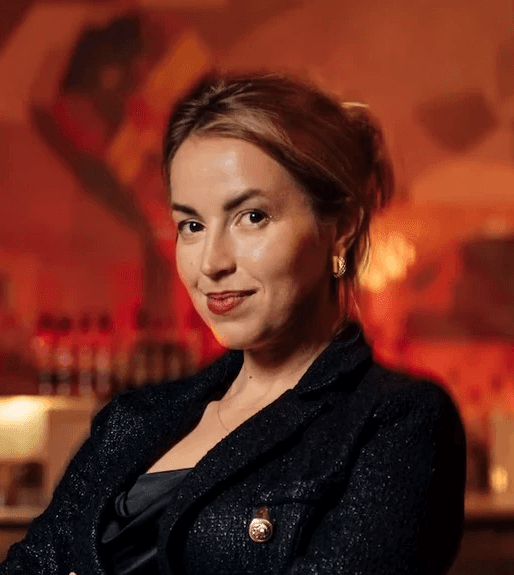

Maria Alahuhta will no longer join SSH Communications Security Corporation as chief financial officer, reversing a high-profile executive appointment announced just two months ago and extending the cybersecurity company's search for finance leadership.

Alahuhta, CFO and COO at Yousician Oy, had been appointed CFO and a member of SSH’s executive management team in April, with a planned start date of Oct. 1, 2026. The company said today that she has decided to join another employer and will therefore not take up the position. 

SSH has launched a new recruitment process while putting measures in place to ensure continuity of its finance function. The change is not expected to have a material impact on financial reporting or business operations.


The development follows a broader leadership reset at SSH, a Finnish cybersecurity company focused on Zero Trust privileged access controls and quantum-safe network security. In Listeds’ earlier coverage, Alahuhta’s appointment was presented as part of a significant management overhaul under CEO Rami Raulas. The company had removed six management team members during 2026 and was seeking to return to growth after reporting 2025 net sales of EUR 21.6 million, down 2% year-over-year, alongside a wider operating loss.

When announcing Alahuhta’s appointment in April, Raulas highlighted her experience in scaling international technology companies, driving growth and leading turnarounds. SSH must now restart its CFO search as it continues executing its turnaround plans and expansion into defense, critical infrastructure, manufacturing operational technology security and public safety markets.

|

|

Leaders

SSH Communications loses incoming CFO before start date

SSH Communications loses incoming CFO before start date

·

5 min read

Explore and follow profiles from this article to get timely updates:

Maria Alahuhta will no longer join SSH Communications Security Corporation as chief financial officer, reversing a high-profile executive appointment announced just two months ago and extending the cybersecurity company's search for finance leadership.

Alahuhta, CFO and COO at Yousician Oy, had been appointed CFO and a member of SSH’s executive management team in April, with a planned start date of Oct. 1, 2026. The company said today that she has decided to join another employer and will therefore not take up the position. 

SSH has launched a new recruitment process while putting measures in place to ensure continuity of its finance function. The change is not expected to have a material impact on financial reporting or business operations.

Best of the Month Newsletter

Your executive essentials in one place.

The month’s most important stories, leadership insights, and benchmarks across Nordic business, starting from Finland, curated so you never miss what truly matters.

Delivered monthly.

By signing up, you agree to our Privacy Policy

Best of the Month Newsletter

Your executive essentials in one place.

The month’s most important stories, leadership insights, and benchmarks across Nordic business, starting from Finland, curated so you never miss what truly matters.

Delivered monthly.

By signing up, you agree to our Privacy Policy

The development follows a broader leadership reset at SSH, a Finnish cybersecurity company focused on Zero Trust privileged access controls and quantum-safe network security. In Listeds’ earlier coverage, Alahuhta’s appointment was presented as part of a significant management overhaul under CEO Rami Raulas. The company had removed six management team members during 2026 and was seeking to return to growth after reporting 2025 net sales of EUR 21.6 million, down 2% year-over-year, alongside a wider operating loss.

When announcing Alahuhta’s appointment in April, Raulas highlighted her experience in scaling international technology companies, driving growth and leading turnarounds. SSH must now restart its CFO search as it continues executing its turnaround plans and expansion into defense, critical infrastructure, manufacturing operational technology security and public safety markets.

Follow moves like this on the Listeds Executive Intelligence Platform.

Board Programme

Built for Nordic listed company boards.

The only programme in the Nordics designed specifically for listed-company board work.
Five sessions, one cohort, twenty leaders in one room - Helsinki, 2026.

Board Programme

Built for Nordic listed company boards.

The only programme in the Nordics designed specifically for listed-company board work.
Five sessions, one cohort, twenty leaders in one room - Helsinki, 2026.

Topics

# Topics

Authors

Emmi Laine is head of business content at Listeds and our lead for finance and business coverage. She sets the editorial agenda, interviews Nordic business leaders, and writes stories, newsletters, and social content on timely market and corporate topics. Emmi brings nearly eight years of experience from Shanghai's Yicai Global / Yicai Media Group, where she was awarded for reporting on China’s economy, finance sector, and technology innovation. She holds an MSc in Innovation and Entrepreneurship from ESADE Business School in Barcelona and a Master’s degree in International Design Business Management from Aalto University. She also holds a Bachelor’s degree in Culture Studies with a major in Journalism from Stockholm University and has studied Mandarin Chinese and Chinese culture. Emmi is a Finnish citizen and has lived in Finland, Sweden, China, and Portugal.

Emmi Laine is head of business content at Listeds and our lead for finance and business coverage. She sets the editorial agenda, interviews Nordic business leaders, and writes stories, newsletters, and social content on timely market and corporate topics. Emmi brings nearly eight years of experience from Shanghai's Yicai Global / Yicai Media Group, where she was awarded for reporting on China’s economy, finance sector, and technology innovation. She holds an MSc in Innovation and Entrepreneurship from ESADE Business School in Barcelona and a Master’s degree in International Design Business Management from Aalto University. She also holds a Bachelor’s degree in Culture Studies with a major in Journalism from Stockholm University and has studied Mandarin Chinese and Chinese culture. Emmi is a Finnish citizen and has lived in Finland, Sweden, China, and Portugal.

Authors

Journalist

Emmi Laine is head of business content at Listeds and our lead for finance and business coverage. She sets the editorial agenda, interviews Nordic business leaders, and writes stories, newsletters, and social content on timely market and corporate topics. Emmi brings nearly eight years of experience from Shanghai's Yicai Global / Yicai Media Group, where she was awarded for reporting on China’s economy, finance sector, and technology innovation. She holds an MSc in Innovation and Entrepreneurship from ESADE Business School in Barcelona and a Master’s degree in International Design Business Management from Aalto University. She also holds a Bachelor’s degree in Culture Studies with a major in Journalism from Stockholm University and has studied Mandarin Chinese and Chinese culture. Emmi is a Finnish citizen and has lived in Finland, Sweden, China, and Portugal.

All Listeds newsletters (bundle)

One sign-up, the full picture.

Get every Listeds newsletter: the daily signal drumbeat, the weekly Pulse briefing, the monthly Best of the Month, the CEO letter, and the Weekend read.

By signing up, you agree to our Privacy Policy

All Listeds newsletters (bundle)

One sign-up, the full picture.

Get every Listeds newsletter: the daily signal drumbeat, the weekly Pulse briefing, the monthly Best of the Month, the CEO letter, and the Weekend read.

By signing up, you agree to our Privacy Policy

Latest signalsLive feed
Moves trackerLive feed

Investor Event

Listeds Investor Event · Defence

Nordic defence is in a once-in-a-generation growth cycle. Eight listed and pre-IPO companies pitch to 100+ invited investors at Valkoinen Sali, Helsinki

21 September 2026

Latest on Listeds

Market Signals

Finland lands Google's €13bn; Fortum sells half of Loviisa's output to 2049

Sep 10, 2026

Google will invest at least €13 billion in Finnish digital infrastructure across 2027 and 2028, with data centres and supporting infrastructure in Hamina, Kajaani, Muhos and Vaala. It is the company's largest single investment in Europe. For scale: annual industrial investment in Finland normally totals around €10 billion, and Etla puts the €13 billion at roughly a fifth of all investment flowing into the country in a year. 

Google announced the investment on 9 September. It has operated in Finland since 2009 and is developing new infrastructure in Hamina, Kajaani, Muhos and Vaala 

Fortum has signed a 22-year power purchase agreement with Google covering up to 50% of Loviisa's capacity. Offtake begins in 2028 at a reduced volume and runs at half the plant's capacity from 2030 to 2049. The two parties also signed a memorandum of understanding to explore new flexibility capacity and new generation, including potential new reactors at Loviisa

The political reception 

Every named Finnish voice in Google's release welcomed the investment without qualification: the prime minister, the climate and environment minister, and the municipal leaders of all four host locations. The caution came from outside it.

Prime Minister Petteri Orpo said “Finland is an attractive destination for investments, and attracting further investment remains a top priority". Speaking at Google's announcement event, he took on the question the build raises for households: energy prices will not rise because of the investments. He also said public debate in Finland tends to underestimate data centres, and that the investments mean jobs for Finns.

Climate and Environment Minister Sari Multala tied her support to supply, saying “These investments are very welcome in Finland and demonstrate that it is possible to invest in AI infrastructure in a way that benefits both local communities and the broader energy system, including other energy users. This long-term approach and commitment are exactly what we need to generate value for both investors and Finnish society. A long-term agreement with an energy company helps ensure that new electricity generation capacity is developed to meet growing demand"

The four municipalities emphasised grid position and local business. Vaala's municipal manager Minna Kärkkäinen said the municipality "is located at a key point in Finland's main electricity grid, which makes it an attractive location for industry and energy projects"; Hamina, Kajaani and Muhos pointed to regional economy, jobs and the data economy.

Outside the release, EK director Sami Pakarinen told Verkkouutiset that "this is, if anything, fantastic news for the Finnish economy." 

The market reaction 

Fortum closed at €21.36 on 8 September, a quiet 0.7% gain that left it up 17.5% from the 2025 year-end close of €18.18. The next session was anything but quiet. The stock jumped 15.8% on 9 September to close at €24.74 after the Google nuclear deal, its sharpest one-day gain in at least a year, taking the year-to-date advance to 36.1%

Fortum has said the agreement is expected to raise the group's comparable return on net assets by approximately 1.4 percentage points over time, once half the plant's output is contracted.

What the contract secures

Loviisa's two units are licensed by the end of 2050. The Finnish government granted that extension in February 2023, replacing licences valid to 2027 and 2030. Fortum has a lifetime-extension investment programme of about €1 billion under way — ten portfolios, more than 300 projects and states that without those investments the plant could not continue producing after 2030.

CEO Markus Rauramo said long-term partnerships are essential "especially in today's uncertain market environment characterized by low visibility and highly volatile electricity prices." Loviisa supplies around 10% of Finland's electricity and employs about 580 people.

Ownership and disclosure

Fortum is majority state-owned; the Finnish State holds just over half the shares. Half of the plant's capacity is contracted to one counterparty for the years 2030–2049. Neither party has disclosed the contract price, and Fortum's 1.4-percentage-point RONA guidance is the only quantification of the deal's value available to shareholders. The MoU on new capacity at Loviisa carries no announced timetable or investment figure.

The rest of the energy package

Onshore wind PPAs with Valorem (Ostrobothnia) and Suomen Hyötytuuli (Ostrobothnia and Central Finland) take Google's new-to-grid onshore wind capacity to 629 MW more than the roughly 446 MW Google had previously contracted across five announced PPAs in Finland. A contracted 94 MW battery system near Kajaani is expected operational in late 2027. Fingrid CEO Asta Sihvonen-Punkka said of the site choices: "Our aim is to keep the costs of the growing electricity system competitive, while reducing environmental impacts."

Google also committed €31 million over four years across the four municipalities, including €10 million for research and innovation, AI skills training for over 4,400 workers through Google.org's AI Opportunity Fund, and a programme with EKAMI to train up to 100 students a year for data centre roles.

The economic projections, and the challenge to them

Google projects an average €3.6 billion annual contribution to Finnish GDP during construction, more than 37,000 jobs nationwide — about 16,000 in construction, at an average €911 million in annual labour income — and 7,000 jobs a year once operational, at wages 24% above the Finnish median. 

Yle put the projections to Google's own Gemini, which judged the claim "economically and in scale heavily exaggerated, and conceptually misleading". Etla senior researcher Sakari Lähdemäki was more measured: "I'm critical too, but not that critical." He said €13 billion equals roughly a fifth of all annual investment into Finland, and that the decisive question is how much of it leaves the country again as imported hardware. On Yle's calculation from Google's own figures, about half the €13 billion goes on semiconductors and other materials and equipment imported from abroad, which do not add to Finnish GDP. "Imports aren't 100% of it, so some production inevitably stays in Finland too," Lähdemäki said. On the employment figures: "Google has calculated these perhaps more optimistically than with any great precautionary principle." Data centres, he said, employ heavily during construction and are largely automated afterwards.

Against Google's own capital budget, the Finnish commitment is small: Alphabet's reported 2026 capital expenditure guidance is between USD 195 billion and USD 205 billion, up from a previous range of USD 180 billion to USD 190 billion.

Indices

Board Index — Finland | H1 2026

Sep 10, 2026

Momentum on gender, a standstill on nationality

Women held 33.6% of board seats on 1 January and 34.9% by 30 June — a 1.3-point gain in six months, on top of the longer climb from 28.2% in 2022. Most of that climb happened in 2025, when the share jumped 3.0 points — the largest annual move in the series, and a full year before the compliance deadline. Boards with only one woman fell from 26.2% to 21.9% of the market, while boards above the 40% mark rose from 24.0% to 27.8%. Representation is broadening beyond a single seat. Yet the count of all-male boards held flat at eight companies, all of them Small Cap or First North, and the share of women serving as chair slipped from 12.0% (22 companies) to 10.7% (20 companies) — progress in membership has not yet reached the top of the table.

Nationality diversity did not move: Finnish nationals held 77.3% of seats at both the start and end of the period. The figure has sat between 77.3% and 78.2% in every reading since 2022, and the only real move was a 0.9-point fall in the Finnish share during 2025. Internationalisation stays concentrated in a handful of large, global companies and in telecommunications, health care and energy, while industrials, technology and consumer staples remain overwhelmingly domestic. Average board age eased from 57.6 to 57.0 over the half, though boards are older than they were: the average has climbed from 55.7 in 2022, and millennial representation ticked up from 12.0% to 12.2% — renewal at the margin, not in structure.

Highlights
  • Women reached 34.9% of board seats by 30 June, up from 33.6% on 1 January — a 1.3-point H1 gain
  • Women's share rose fastest in 2025 (+3.0 points), a year before the deadline; H1 2026 added 1.3
  • Boards above 40% women rose to 27.8% of the market; single-woman boards fell to 21.9%
  • Eight companies still report fully male boards; the female-chair share slipped to 10.7%
  • Finnish nationals held 77.3% of seats at both the start and close of the half — and between 77.3% and 78.2% in every reading since 2022
  • Average board age eased to 57.0 but is up from 55.7 in 2022, and 47.1% of boards still have no millennial director
  • Large Cap leads on both gender and nationality (42.0% women, 58.4% Finnish); First North is the most homogeneous segment (27.5% women, 86.1% Finnish)
  • Large Cap is used throughout as an approximation of the companies within the directive's scope; the legal test is employee- and size-based, not segment-based
34.9%
of board seats are held by women
77.3%
of directors are Finnish
57.0
years is the average director age (up from 55.7 in 2022)
12.2%
of directors are millennials

From a single seat toward balance

The half shows continued momentum rather than a plateau, with the character of change shifting from "adding a first woman" toward "moving past a single seat." Women rose from 33.6% to 34.9% of all board seats, and the share of boards above 40% women climbed from 24.0% to 27.8%. The pace, however, has slowed: the 3.0-point gain in 2025 was more than double the 1.3 points added in H1 2026. The persistence of eight all-male boards and the dip in female chairs mark where progress has not reached: the smallest companies, and the most senior board role.

Women on boards
% of seats · 2022–2026 H1
Share of womenCompanies with 0 women (%)
0.0%10.0%20.0%30.0%40.0%28.2%30.4%30.6%33.6%34.9%7.5%6.5%6.6%4.4%4.3%2022 End2023 End2024 End2025 End / 2026Start2026 H1 End
Source: Listeds Executive Platform
Figure 1 — Women on boards and companies with zero women, 2022–2026 H1.

Boards with only one woman fell from 26.2% to 21.9% of companies; boards above 40% women rose from 24.0% to 27.8%. All-male boards held flat at eight companies (4.4% to 4.3% of the market). Female chairs slipped from 12.0% (22 companies) to 10.7% (20 companies).

Board gender distribution
% of companies
0 women1 woman2+ women (≤40%)>40% women
1 Jan 202626.2%45.4%24.0%30 Jun 202621.9%46.0%27.8%
Source: Listeds Executive Platform
Figure 2 — Distribution of boards by gender composition, 1 January vs 30 June 2026.
Female board chairs
% of companies
5.0%7.5%10.0%12.5%15.0%7.5%9.7%11.9%12.0%10.7%2022 End2023 End2024 End2025 End / 2026Start2026 H1 End
Source: Listeds Executive Platform
Figure 3 — Female board chairs, 2022–2026 H1.

Still stalled

Finnish nationals accounted for 77.3% of seats at both start and end of the period — no meaningful change. The figure has held between 77.3% and 78.2% in every reading since 2022; the only real move came in 2025, when the Finnish share fell from 78.2% to 77.3%. The most international industries are telecommunications (44.1% Finnish), health care (61.9%), and energy (62.5%) among market segments, Large Cap is the most international (58.4%). The most domestic industries are consumer staples (88.0%) and industrials (85.3%); among segments, Small Cap (87.8%) and First North (86.1%). Despite the continued global expansion of Finnish issuers, board internationalisation has not followed, and new listings still tend to arrive with fully domestic boards.

Board nationality
% of seats
FinnishForeign
2022 End77.7%22.3%2023 End77.6%22.4%2024 End78.2%21.8%2025 End / 2026 Start77.3%22.7%2026 H1 End77.3%22.7%
Source: Listeds Executive Platform
Figure 4 — Board nationality mix, Finnish versus foreign directors, 2022–2026 H1.
“Finnish listed companies are internationalising their business faster than their boards. If a company's growth comes from outside its home market, the board should include at least one director who has relevant business experience from that market. Today's digital board meeting systems make high-quality, frictionless board work possible across borders as well.”
Henrikki Hirvonen
Henrikki HirvonenCountry Manager Finland, Admincontrol

Older over four years, marginally younger this half

Average board age eased from 57.6 to 57.0 over the half, and millennials (born 1980–1999) rose from 12.0% to 12.2% of seats. Over the full series, however, boards have aged by 1.3 years — from 55.7 at the end of 2022. Directors under 50 rose from 18.1% to 18.5%. Companies with no millennial director fell from 50.3% to 47.1% — still nearly half. Boardrooms remain anchored around directors in their late fifties.

Average board age
years
54.055.056.057.058.055.756.156.557.657.02022 End2023 End2024 End2026 Start2026 H1 End
Source: Listeds Executive Platform
Figure 5 — Average board age, 2022–2026 H1 (annual year-end snapshots; 2026 split into 1 Jan and 30 Jun to show the within-half move).
“Diversity is measured by gender, nationality and age because those are measurable. A board's real capability, however, is a question of expertise: does the board's expertise match the tactics and the strategy the company intends to execute over the coming years. Composition is only the starting point. Diverse board work is not automatically effective, because different perspectives produce better decisions only if the way the board works lets them reach the table.”
Henrikki Hirvonen
Henrikki HirvonenCountry Manager Finland, Admincontrol

Large Cap leads, First North lags

Large Cap companies continue to lead on gender and nationality, reaching 42.0% women by 30 June against 58.4% Finnish — the most balanced and most international segment. Small Cap posted the largest H1 gender gain of any segment (29.6% → 32.4%) and has the highest share of Finnish board members (87.8%), while First North remains the most homogeneous segment — the lowest share of women (27.5%) alongside the second-highest Finnish share (86.1%). By industry, consumer staples and technology posted the sharpest gender gains (36.1% → 40.0% and 29.5% → 32.9% respectively), and real estate remains the least gender-diverse at 25.0% women.

Diversity by segment
% · 30 June 2026
WomenForeign
First North (n = 244)27.5%13.9%Small Cap (n = 312)32.4%12.2%Mid Cap (n = 338)37.3%24.0%Large Cap (n = 262)42.0%41.6%
Source: Listeds Executive Platform
Figure 6 — Women and foreign directors by market segment, 30 June 2026. n = total number of directors in the segment.
Industry patterns
  • Consumer staples and technology posted the sharpest gender gain (36.1% → 40.0% women and 29.5% → 32.9% respectively)
  • Consumer staples and basic materials both reached about 40.0% women
  • Telecommunications is the most international (44.1% Finnish); health care (61.9%) and energy (62.5%) follow
  • Real estate remains the least gender-diverse (25.0% women)

Gender — leaders and all-male boards, 30 June 2026

The ten highest of sixteen companies at or above 50% female representation, spanning large caps and small caps alike.

Company

Women (%)

Board size

Suominen

66.7%

6

Aktia Bank

57.1%

7

Verkkokauppa.com

57.1%

7

Huhtamäki

55.6%

9

Fiskars

50.0%

8

Kempower

50.0%

8

Orion

50.0%

8

Stora Enso

50.0%

8

Administer

50.0%

6

Modulight

50.0%

4

Eight companies still reported all-male boards. All of those are either First North or small cap companies.

Company

Women (%)

Board size

Digitalist Group

0%

5

Dovre Group

0%

3

Eagle Filters Group

0%

5

Norrhydro Group

0%

5

Pallas Air

0%

4

Summa Defence

0%

6

Sunborn International

0%

4

Titanium

0%

5

Nationality, age and generational outliers

Companies with the lowest share of Finnish directors are not all the same case. Telia and Tallink Grupp are foreign-domiciled, where a fully non-Finnish board follows from where the company sits. Citycon is the more instructive one: a Finnish-domiciled Oyj that lost its last Finnish director inside this half, when its April AGM cut the board from ten seats to eight. Three of the eight remaining directors are tied to G City, the Israeli controlling shareholder. The board is not internationalising — it is consolidating around its owner.

Company

Finnish (%)

Board size

Telia Company

0%

9

Citycon

0%

8

Tallink Grupp

0%

6

Afarak Group

0%

3

Musti Group

16.7%

6

Nordea Bank

20.0%

10

Tecnotree

20.0%

5

Revenio Group

25.0%

8

Telia Company and Tallink Grupp are foreign-domiciled companies with secondary listings, included because the dataset covers Nasdaq Helsinki and First North Growth Market Finland listings regardless of country of domicile.

Even the youngest boards cluster at or above 45 — Talenom, at 40.8, is the only exception, underlining how rare a truly young board remains in the Finnish market.

Company

Avg birth year

Avg age (2026)

Talenom

1985.2

40.8

Easor

1981.0

45.0

Nokian Panimo

1980.7

45.3

Saga Furs

1978.6

47.4

Trainers' House

1978.4

47.6

Rebl Group

1976.9

49.1

Wulff-Yhtiöt

1976.8

49.2

Siili Solutions

1976.2

49.8

Etteplan

1976.0

50.0

SSH Communications Security

1976.0

50.0

Inderes

1975.8

50.2

LeadDesk

1975.8

50.2

Highest millennial representation

Company

Millennial (%)

Millennial Directors

Talenom

80.0%

4

Nokian Panimo

66.7%

4

Saga Furs

62.5%

5

Lemonsoft

50.0%

3

Easor

50.0%

2

What the next reading will test

The gains ran ahead of what the rule required. Women hold 34.9% of board seats across the market and 42.0% in Large Cap, but the lowest shares sit in small caps and on First North — the segments largely outside the directive's size thresholds.

The open question is whether it continues without a deadline attached to it. Three things to watch: whether the eight all-male boards change at the 2027 AGMs, whether the female-chair share recovers the two chair positions it lost, and whether nationality moves at all after four years of essentially flat readings.

Risks 2026–2028

  • A falling female-chair share suggests the pipeline into board leadership, not only membership, needs attention

  • Persistently domestic boards may weigh on international competitiveness

  • A director base still anchored in its late fifties poses succession questions

  • Most of the four-year gender gain landed in 2025, before the deadline; the H1 2026 pace was roughly half that. Whether the trend survives the deadline is the question the next reading answers

Opportunities 2026–2028

  • The 34.9% market average masks a working model: Large Cap already sits at 42.0%, so the pipeline exists — it has not reached the smaller segments

  • The most international boards sit in the most international industries — telecommunications at 44.1% Finnish, Large Cap segment at 58.4%. Board composition follows the business

At a glance

Metric

1 Jan 2026

30 Jun 2026

Women on boards

33.6%

34.9%

Boards with 0 women

4.4% (8 firms)

4.3% (8 firms)

Boards with 1 woman only

26.2%

21.9%

Boards above 40% women

24.0%

27.8%

Female board chairs

12.0%

10.7%

Finnish directors

77.3%

77.3%

Average board age

57.6

57.0

Millennial directors

12.0%

12.2%

Boards with no millennial

50.3%

47.1%

Women, Large Cap segment

40.3%

42.0%

Directors under 50

18.1%

18.5%

Join our Pulse, Best-of-the-Week, and Weekend newsletters

Join our Pulse, Best-of-the-Week, and Weekend newsletters