Appointment follows 56% EBITDA decline and first-quarter loss

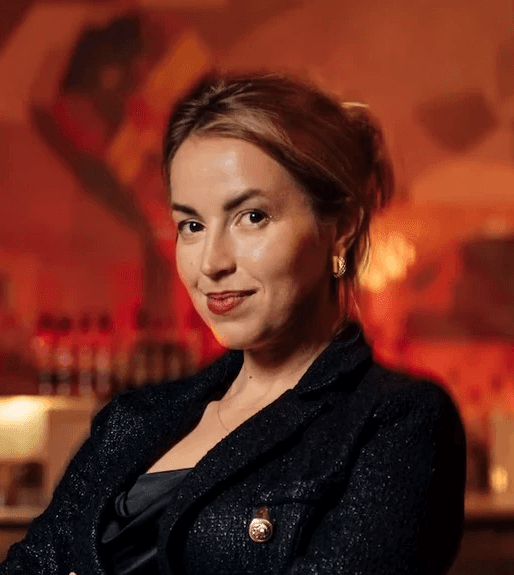
Cristian Arias, CFO of Neural DSP Technologies, will join SSH Communications Security as chief financial officer and a member of the executive management team by Oct. 1, 2026, following the withdrawal of the company's previous CFO appointee. He joins the Helsinki-listed cybersecurity company as it works to convert its Leonardo partnership into revenue, expand recurring software sales and return to stronger profitability.

Arias succeeds Michael Kommonen, who will remain CFO until the end of July, SSH announced yesterday. The appointment follows an unusual leadership sequence after Maria Alahuhta, who was appointed CFO in April, decided not to take up the role and joined another employer instead, prompting SSH to reopen the search.

Founded in 1995, SSH Communications Security develops cybersecurity software that helps organizations control access to critical systems and protect communications from emerging cyber threats.

Arias arrives as SSH looks to improve its financial performance after a weaker 2025 and a soft start to 2026. Last year, net sales declined 2% to EUR 21.6 million, and EBITDA fell 56% to EUR 1.5 million. The pressure continued into the first quarter, when net sales slipped another 2% to EUR 5.3 million and EBITDA moved to a EUR 0.6 million loss from a EUR 0.2 million profit a year earlier. One bright spot was operating cash flow, which improved to EUR 2.1 million from EUR 0.7 million. Management attributed the weaker profitability to increased investment in PrivX integrations and expanded sales and marketing, while maintaining its guidance for positive full-year EBITDA and operating cash flow.

CEO Rami Raulas said Arias' experience leading international finance organizations and supporting growth made him well-suited to the role. "His strategic mindset and broad operational experience make him an excellent addition to our Executive Management Team," Raulas said. Arias previously held senior finance positions at Nokia and Techint in Italy, where his responsibilities included finance, strategy, business development, and business transformation.

Arias said SSH's technology foundation and growth ambitions attracted him to the role. "I look forward to working together to strengthen the company's financial performance and accelerate its long-term growth," he said. 

What SSH is trying to accomplish

SSH has outlined several priorities over the past year that will shape the finance function under Arias.

The company's immediate focus is on converting its strategic partnership with Leonardo into revenue. Leonardo, an Italian aerospace, defense, and security group, became SSH's largest shareholder following a EUR 20 million investment in 2025, and management expects the partnership to begin contributing to revenue in 2026 after integration work delayed the initial impact.

SSH is also expanding recurring software revenue. Subscription-based annual recurring revenue grew 13% in 2025 to EUR 13.8 million, while recurring revenue accounted for about 97% of total sales. PrivX, its privileged access management platform, recorded revenue growth of 20% in the first quarter as SSH expanded the product with support for non-human identities and agentic AI. The company also announced new customer agreements, adding close to EUR 1 million in annual recurring revenue.

SSH is increasing its focus on defense, critical infrastructure, manufacturing operational technology, and public-sector customers while positioning quantum-safe network security as a long-term growth area. Financially, management has maintained its guidance for positive full-year EBITDA and operating cash flow after reporting a first-quarter EBITDA loss, making profitability, recurring revenue growth and cash generation the company's main financial priorities for 2026.

Investor watchpoints

The finance leadership transition remains one area to monitor. Michael Kommonen will leave at the end of July, while Arias is scheduled to begin up to two months after that, leaving a possible handover period before the new CFO takes office.

Investors are also likely to watch whether the Leonardo partnership begins contributing to revenue during 2026 after integration work delayed the initial commercial impact. Progress in PrivX, recurring subscription revenue, and new annual recurring revenue will indicate whether SSH's software strategy continues to offset weaker license sales.

Profitability will remain in focus after first-quarter EBITDA turned negative. Management continues to guide for positive full-year EBITDA and operating cash flow, making margin development and cash generation important indicators through the remainder of 2026.

|

|

Leaders

Finland’s SSH hires Neural DSP CFO Cristian Arias to improve profitability

Finland’s SSH hires Neural DSP CFO Cristian Arias to improve profitability

·

5 min read

Explore and follow profiles from this article to get timely updates:

Appointment follows 56% EBITDA decline and first-quarter loss

Cristian Arias, CFO of Neural DSP Technologies, will join SSH Communications Security as chief financial officer and a member of the executive management team by Oct. 1, 2026, following the withdrawal of the company's previous CFO appointee. He joins the Helsinki-listed cybersecurity company as it works to convert its Leonardo partnership into revenue, expand recurring software sales and return to stronger profitability.

Arias succeeds Michael Kommonen, who will remain CFO until the end of July, SSH announced yesterday. The appointment follows an unusual leadership sequence after Maria Alahuhta, who was appointed CFO in April, decided not to take up the role and joined another employer instead, prompting SSH to reopen the search.

Founded in 1995, SSH Communications Security develops cybersecurity software that helps organizations control access to critical systems and protect communications from emerging cyber threats.

Arias arrives as SSH looks to improve its financial performance after a weaker 2025 and a soft start to 2026. Last year, net sales declined 2% to EUR 21.6 million, and EBITDA fell 56% to EUR 1.5 million. The pressure continued into the first quarter, when net sales slipped another 2% to EUR 5.3 million and EBITDA moved to a EUR 0.6 million loss from a EUR 0.2 million profit a year earlier. One bright spot was operating cash flow, which improved to EUR 2.1 million from EUR 0.7 million. Management attributed the weaker profitability to increased investment in PrivX integrations and expanded sales and marketing, while maintaining its guidance for positive full-year EBITDA and operating cash flow.

CEO Rami Raulas said Arias' experience leading international finance organizations and supporting growth made him well-suited to the role. "His strategic mindset and broad operational experience make him an excellent addition to our Executive Management Team," Raulas said. Arias previously held senior finance positions at Nokia and Techint in Italy, where his responsibilities included finance, strategy, business development, and business transformation.

Arias said SSH's technology foundation and growth ambitions attracted him to the role. "I look forward to working together to strengthen the company's financial performance and accelerate its long-term growth," he said. 

Our Pulse newsletter

Your weekly leadership intelligence briefing.

What happened, why it matters, and what to watch across every CEO, board, and executive move in Nordic listed companies, starting with Finland. Fast, factual, and to the point.

Delivered every Monday.

By signing up, you agree to our Privacy Policy

Our Pulse newsletter

Your weekly leadership intelligence briefing.

What happened, why it matters, and what to watch across every CEO, board, and executive move in Nordic listed companies, starting with Finland. Fast, factual, and to the point.

Delivered every Monday.

By signing up, you agree to our Privacy Policy

What SSH is trying to accomplish

SSH has outlined several priorities over the past year that will shape the finance function under Arias.

The company's immediate focus is on converting its strategic partnership with Leonardo into revenue. Leonardo, an Italian aerospace, defense, and security group, became SSH's largest shareholder following a EUR 20 million investment in 2025, and management expects the partnership to begin contributing to revenue in 2026 after integration work delayed the initial impact.

SSH is also expanding recurring software revenue. Subscription-based annual recurring revenue grew 13% in 2025 to EUR 13.8 million, while recurring revenue accounted for about 97% of total sales. PrivX, its privileged access management platform, recorded revenue growth of 20% in the first quarter as SSH expanded the product with support for non-human identities and agentic AI. The company also announced new customer agreements, adding close to EUR 1 million in annual recurring revenue.

SSH is increasing its focus on defense, critical infrastructure, manufacturing operational technology, and public-sector customers while positioning quantum-safe network security as a long-term growth area. Financially, management has maintained its guidance for positive full-year EBITDA and operating cash flow after reporting a first-quarter EBITDA loss, making profitability, recurring revenue growth and cash generation the company's main financial priorities for 2026.

Investor watchpoints

The finance leadership transition remains one area to monitor. Michael Kommonen will leave at the end of July, while Arias is scheduled to begin up to two months after that, leaving a possible handover period before the new CFO takes office.

Investors are also likely to watch whether the Leonardo partnership begins contributing to revenue during 2026 after integration work delayed the initial commercial impact. Progress in PrivX, recurring subscription revenue, and new annual recurring revenue will indicate whether SSH's software strategy continues to offset weaker license sales.

Profitability will remain in focus after first-quarter EBITDA turned negative. Management continues to guide for positive full-year EBITDA and operating cash flow, making margin development and cash generation important indicators through the remainder of 2026.

Follow moves like this on the Listeds Executive Intelligence Platform.

Board Programme

Built for Nordic listed company boards.

The only programme in the Nordics designed specifically for listed-company board work.
Five sessions, one cohort, twenty leaders in one room - Helsinki, 2026.

Board Programme

Built for Nordic listed company boards.

The only programme in the Nordics designed specifically for listed-company board work.
Five sessions, one cohort, twenty leaders in one room - Helsinki, 2026.

Authors

Emmi Laine is head of business content at Listeds and our lead for finance and business coverage. She sets the editorial agenda, interviews Nordic business leaders, and writes stories, newsletters, and social content on timely market and corporate topics. Emmi brings nearly eight years of experience from Shanghai's Yicai Global / Yicai Media Group, where she was awarded for reporting on China’s economy, finance sector, and technology innovation. She holds an MSc in Innovation and Entrepreneurship from ESADE Business School in Barcelona and a Master’s degree in International Design Business Management from Aalto University. She also holds a Bachelor’s degree in Culture Studies with a major in Journalism from Stockholm University and has studied Mandarin Chinese and Chinese culture. Emmi is a Finnish citizen and has lived in Finland, Sweden, China, and Portugal.

Emmi Laine is head of business content at Listeds and our lead for finance and business coverage. She sets the editorial agenda, interviews Nordic business leaders, and writes stories, newsletters, and social content on timely market and corporate topics. Emmi brings nearly eight years of experience from Shanghai's Yicai Global / Yicai Media Group, where she was awarded for reporting on China’s economy, finance sector, and technology innovation. She holds an MSc in Innovation and Entrepreneurship from ESADE Business School in Barcelona and a Master’s degree in International Design Business Management from Aalto University. She also holds a Bachelor’s degree in Culture Studies with a major in Journalism from Stockholm University and has studied Mandarin Chinese and Chinese culture. Emmi is a Finnish citizen and has lived in Finland, Sweden, China, and Portugal.

Authors

Journalist

Emmi Laine is head of business content at Listeds and our lead for finance and business coverage. She sets the editorial agenda, interviews Nordic business leaders, and writes stories, newsletters, and social content on timely market and corporate topics. Emmi brings nearly eight years of experience from Shanghai's Yicai Global / Yicai Media Group, where she was awarded for reporting on China’s economy, finance sector, and technology innovation. She holds an MSc in Innovation and Entrepreneurship from ESADE Business School in Barcelona and a Master’s degree in International Design Business Management from Aalto University. She also holds a Bachelor’s degree in Culture Studies with a major in Journalism from Stockholm University and has studied Mandarin Chinese and Chinese culture. Emmi is a Finnish citizen and has lived in Finland, Sweden, China, and Portugal.

All Listeds newsletters (bundle)

One sign-up, the full picture.

Get every Listeds newsletter: the daily signal drumbeat, the weekly Pulse briefing, the monthly Best of the Month, the CEO letter, and the Weekend read.

By signing up, you agree to our Privacy Policy

All Listeds newsletters (bundle)

One sign-up, the full picture.

Get every Listeds newsletter: the daily signal drumbeat, the weekly Pulse briefing, the monthly Best of the Month, the CEO letter, and the Weekend read.

By signing up, you agree to our Privacy Policy

Latest signalsLive feed
Moves trackerLive feed

Investor Event

Listeds Investor Event · Defence

Nordic defence is in a once-in-a-generation growth cycle. Eight listed and pre-IPO companies pitch to 100+ invited investors at Valkoinen Sali, Helsinki

21 September 2026

Latest on Listeds

Leadership Moves

Boreo names Lassi Simola CFO, ending nearly a year of a split finance function

Oct 6, 2026

Boreo has appointed Lassi Simola, currently Workout and Restructuring Executive at Nordea, as Chief Financial Officer and a member of the Group Management Team. He starts no later than 4 January 2027, ending an interim arrangement that has divided the finance role between two people since February.

Boreo brings back a CFO after deciding in February to manage without one

In December 2025, Boreo announced that CFO Jesse Petäjä would step down and said it had started recruiting a successor. In February 2026, it changed course and decided not to appoint a CFO for the time being. Rafael Osmanov became Head of M&A and Financing, and Vice President Finance Sami Hanerva took over financial reporting.

Once Simola starts, Hanerva will report to him in his current role. Osmanov will support the onboarding, and his contract ends by the end of March 2027.

The new CFO and the CEO both come from private equity and consulting dealmaking

Simola has more than 15 years in finance, over 10 of them in private equity, and is a CFA charterholder. Tuomas Kahri, CEO since 1 April 2026, was previously a partner at McKinsey & Company and Intera Partners. The hire is the first CFO appointment under Kahri.

“Lassi brings to Boreo strong expertise in mergers and acquisitions and corporate finance. He has extensive experience working with small and medium-sized companies and possesses an excellent understanding of the challenges and opportunities these businesses face,” says Tuomas Kahri, CEO of Boreo, in the press release.

Boreo has spent 2026 preparing its balance sheet for acquisitions

Boreo grew 2025 net sales by 14% to EUR 153.3 million and operational EBIT by 17% to EUR 8.0 million, and its board proposed no dividend to strengthen the financial position. The April 2026 AGM approved that proposal. First-half 2026 net sales rose 14% to EUR 84.6 million, operational EBIT rose 21% to EUR 4.3 million, and operating cash flow improved to EUR 3.7 million.

The portfolio is moving in both directions. In July, subsidiary Floby Nya Bilverkstad sold its vehicle painting business Lackmästar'n. On 1 October, Boreo bought technical textiles maker TEXpro for an enterprise value of EUR 1.6 million, paid from existing cash.

“With its strengthened financial position and renewed focus on acquisitions, I believe the company is well positioned to pursue its growth strategy,” says Lassi Simola.

TEXpro, with EUR 1.7 million in net sales, shows the scale of Boreo's deals so far this year. A CFO hired for his acquisition record suggests the board expects that scale to grow.

Columnists

Who will build the next shared vision?

Oct 6, 2026

Currently there appears to be a widespread feeling of rising uncertainty and a lack of a shared vision for the future. During Sweden’s recent election campaign commentators repeatedly asked where the larger visions for the country had gone. Amid promises of quick fixes and tactical positioning, the question of what society we should build seemed harder to answer. Similar examples with voices calling for a new vision have also been heard in the other Nordic countries recently. The most obvious example is perhaps Finnish Sitra that explicitly describes the need for “an inspiring new promise about the future”. 

Considering the turbulent situation in the world in the last decade, it is perhaps not surprising that we find feelings of uncertainty. It is in fact something we could expect if we apply the long-term cyclical perspective of thinkers such as Neil Howe who describes how long cycles shape the characteristics of our societies and how the change from cycle to cycle typically results in crises. Viewed through the ‘wheel of seasons’ model developed by my colleagues Mats Lindgren and Jörgen Jedbratt, our current situation may represent a transition from winter to spring, during which crises will lead to new dominant paradigms. If reality were to follow the model, this should mean that we are slowly shifting towards an increased focus on long-term perspectives and finally also a rising belief in a positive future. 

Another sign of the uncertainty is the rising interest in scenario planning. This is a well-known pattern that goes back to the oil crisis of the 1970s when Shell’s scenario planning rose to fame and it is now perhaps the most familiar tool in the foresight toolbox. There is furthermore a general acceptance of scenario planning as a relevant tool for our time, but if we want to get broad participation and support for changes the map provided by the scenarios also needs to be accompanied by something more visionary.

The Nordic effect

So, if we are approaching a period of renewal maybe it is time to start thinking about how Nordic companies and other organisations could help bring this new future into being and shape it? How can we contribute to the creation of a new vision that can guide and speed up necessary changes so that we can balance sustainability and resilience, productivity and family life, and so on? Even though there exists a joint Nordic vision for 2030 that was adopted by the Nordic Council of Ministers in 2019 this is apparently not sufficient (and to be honest, how many of you have read it? I have, but that’s more or less required as part of my job). 

Maybe it is safe to say that it is time for a new Nordic vision? And maybe this time we should start the process as soon as possible ourselves in our own organisations so that we together can create small pieces of the great puzzle that would make up a new shared vision.

For boards, this means connecting the vision to investment priorities, capabilities and partnerships, and deciding how the organisation can contribute to a wider Nordic ambition.

Questions we need to answer in this process include:

  1. What future do we want to contribute to over the next ten to fifteen years?

  2. What can we influence? Which partners and capabilities will we need?

  3. What decisions do we need to make?

The last point may seem a bit obvious but as most of us know, foresight without action means nothing. There is in fact even a risk that foresight in some cases could become counterproductive and hinder necessary changes.

Decades ago, Kets de Vries and Miller described how some organisations become trapped in endless studies and analyses without taking action. Today, the abundance of foresight consultants and methods can give this tendency even more room to grow. An organisation may find itself contemplating a million possible futures, watching doors close one by one while trying to identify the perfect course of action. Foresight should help us choose a direction, prepare for different outcomes and move forward. A good analysis that leads to action is better than a perfect analysis that does not.

What's next

Let’s apply the tools from our foresight toolkits and start working! A new shared vision is needed and unless you take part in shaping it someone else will. So, let’s start small in our own organisations and launch processes to formulate our own visions and in this process also define our roles and purpose. This is often best done using collaborative methods – not just for the formulation of the vision but also to get people on board from the start because another thing that we need to remember is this. Scenarios and visions can give us a map of the future. But we still have to make the journey ourselves.

Johan Hammarlund

Collaborative Foresight Advisor, Kairos Future

Johan Hammarlund is a Senior Consultant at Kairos Future, a leading foresight and strategy consultancy that for more than 30 years has helped organisations anticipate change, explore future opportunities, and design strategies for long-term success. Johan specialises in collaborative foresight and democratic innovations and is active in professional networks across Sweden, the Nordic region and Europe.

Johan Hammarlund

Nordic Foresight

The Nordic Foresight Network is a network of foresight professionals advancing futures thinking across the Nordic region.

Nordic Foresight Network

Sources 

  1. Mats Lindgren - Winter is Coming or Springtime with Trump, 2016

  2. Kets de Vries and Miller - The Neurotic Organization, 1984

  3. Neil Howe - The Fourth Turning: Why American 'Crisis' May Last Until 2030, 2020

  4. Monteiro and Dal Borgo - Supporting decision making with strategic foresight, 2023

  5. Nordic prime ministers - Our Vision 2030, 2019

  6. Anna Solovjew-Wartiovaara - Sitra Megatrends Report, 2026

Latest on Listeds

Leadership Moves

Boreo names Lassi Simola CFO, ending nearly a year of a split finance function

Oct 6, 2026

Boreo has appointed Lassi Simola, currently Workout and Restructuring Executive at Nordea, as Chief Financial Officer and a member of the Group Management Team. He starts no later than 4 January 2027, ending an interim arrangement that has divided the finance role between two people since February.

Boreo brings back a CFO after deciding in February to manage without one

In December 2025, Boreo announced that CFO Jesse Petäjä would step down and said it had started recruiting a successor. In February 2026, it changed course and decided not to appoint a CFO for the time being. Rafael Osmanov became Head of M&A and Financing, and Vice President Finance Sami Hanerva took over financial reporting.

Once Simola starts, Hanerva will report to him in his current role. Osmanov will support the onboarding, and his contract ends by the end of March 2027.

The new CFO and the CEO both come from private equity and consulting dealmaking

Simola has more than 15 years in finance, over 10 of them in private equity, and is a CFA charterholder. Tuomas Kahri, CEO since 1 April 2026, was previously a partner at McKinsey & Company and Intera Partners. The hire is the first CFO appointment under Kahri.

“Lassi brings to Boreo strong expertise in mergers and acquisitions and corporate finance. He has extensive experience working with small and medium-sized companies and possesses an excellent understanding of the challenges and opportunities these businesses face,” says Tuomas Kahri, CEO of Boreo, in the press release.

Boreo has spent 2026 preparing its balance sheet for acquisitions

Boreo grew 2025 net sales by 14% to EUR 153.3 million and operational EBIT by 17% to EUR 8.0 million, and its board proposed no dividend to strengthen the financial position. The April 2026 AGM approved that proposal. First-half 2026 net sales rose 14% to EUR 84.6 million, operational EBIT rose 21% to EUR 4.3 million, and operating cash flow improved to EUR 3.7 million.

The portfolio is moving in both directions. In July, subsidiary Floby Nya Bilverkstad sold its vehicle painting business Lackmästar'n. On 1 October, Boreo bought technical textiles maker TEXpro for an enterprise value of EUR 1.6 million, paid from existing cash.

“With its strengthened financial position and renewed focus on acquisitions, I believe the company is well positioned to pursue its growth strategy,” says Lassi Simola.

TEXpro, with EUR 1.7 million in net sales, shows the scale of Boreo's deals so far this year. A CFO hired for his acquisition record suggests the board expects that scale to grow.

Columnists

Who will build the next shared vision?

Oct 6, 2026

Currently there appears to be a widespread feeling of rising uncertainty and a lack of a shared vision for the future. During Sweden’s recent election campaign commentators repeatedly asked where the larger visions for the country had gone. Amid promises of quick fixes and tactical positioning, the question of what society we should build seemed harder to answer. Similar examples with voices calling for a new vision have also been heard in the other Nordic countries recently. The most obvious example is perhaps Finnish Sitra that explicitly describes the need for “an inspiring new promise about the future”. 

Considering the turbulent situation in the world in the last decade, it is perhaps not surprising that we find feelings of uncertainty. It is in fact something we could expect if we apply the long-term cyclical perspective of thinkers such as Neil Howe who describes how long cycles shape the characteristics of our societies and how the change from cycle to cycle typically results in crises. Viewed through the ‘wheel of seasons’ model developed by my colleagues Mats Lindgren and Jörgen Jedbratt, our current situation may represent a transition from winter to spring, during which crises will lead to new dominant paradigms. If reality were to follow the model, this should mean that we are slowly shifting towards an increased focus on long-term perspectives and finally also a rising belief in a positive future. 

Another sign of the uncertainty is the rising interest in scenario planning. This is a well-known pattern that goes back to the oil crisis of the 1970s when Shell’s scenario planning rose to fame and it is now perhaps the most familiar tool in the foresight toolbox. There is furthermore a general acceptance of scenario planning as a relevant tool for our time, but if we want to get broad participation and support for changes the map provided by the scenarios also needs to be accompanied by something more visionary.

The Nordic effect

So, if we are approaching a period of renewal maybe it is time to start thinking about how Nordic companies and other organisations could help bring this new future into being and shape it? How can we contribute to the creation of a new vision that can guide and speed up necessary changes so that we can balance sustainability and resilience, productivity and family life, and so on? Even though there exists a joint Nordic vision for 2030 that was adopted by the Nordic Council of Ministers in 2019 this is apparently not sufficient (and to be honest, how many of you have read it? I have, but that’s more or less required as part of my job). 

Maybe it is safe to say that it is time for a new Nordic vision? And maybe this time we should start the process as soon as possible ourselves in our own organisations so that we together can create small pieces of the great puzzle that would make up a new shared vision.

For boards, this means connecting the vision to investment priorities, capabilities and partnerships, and deciding how the organisation can contribute to a wider Nordic ambition.

Questions we need to answer in this process include:

  1. What future do we want to contribute to over the next ten to fifteen years?

  2. What can we influence? Which partners and capabilities will we need?

  3. What decisions do we need to make?

The last point may seem a bit obvious but as most of us know, foresight without action means nothing. There is in fact even a risk that foresight in some cases could become counterproductive and hinder necessary changes.

Decades ago, Kets de Vries and Miller described how some organisations become trapped in endless studies and analyses without taking action. Today, the abundance of foresight consultants and methods can give this tendency even more room to grow. An organisation may find itself contemplating a million possible futures, watching doors close one by one while trying to identify the perfect course of action. Foresight should help us choose a direction, prepare for different outcomes and move forward. A good analysis that leads to action is better than a perfect analysis that does not.

What's next

Let’s apply the tools from our foresight toolkits and start working! A new shared vision is needed and unless you take part in shaping it someone else will. So, let’s start small in our own organisations and launch processes to formulate our own visions and in this process also define our roles and purpose. This is often best done using collaborative methods – not just for the formulation of the vision but also to get people on board from the start because another thing that we need to remember is this. Scenarios and visions can give us a map of the future. But we still have to make the journey ourselves.

Johan Hammarlund

Collaborative Foresight Advisor, Kairos Future

Johan Hammarlund is a Senior Consultant at Kairos Future, a leading foresight and strategy consultancy that for more than 30 years has helped organisations anticipate change, explore future opportunities, and design strategies for long-term success. Johan specialises in collaborative foresight and democratic innovations and is active in professional networks across Sweden, the Nordic region and Europe.

Johan Hammarlund

Nordic Foresight

The Nordic Foresight Network is a network of foresight professionals advancing futures thinking across the Nordic region.

Nordic Foresight Network

Sources 

  1. Mats Lindgren - Winter is Coming or Springtime with Trump, 2016

  2. Kets de Vries and Miller - The Neurotic Organization, 1984

  3. Neil Howe - The Fourth Turning: Why American 'Crisis' May Last Until 2030, 2020

  4. Monteiro and Dal Borgo - Supporting decision making with strategic foresight, 2023

  5. Nordic prime ministers - Our Vision 2030, 2019

  6. Anna Solovjew-Wartiovaara - Sitra Megatrends Report, 2026

Latest on Listeds

Leadership Moves

Boreo names Lassi Simola CFO, ending nearly a year of a split finance function

Oct 6, 2026

Boreo has appointed Lassi Simola, currently Workout and Restructuring Executive at Nordea, as Chief Financial Officer and a member of the Group Management Team. He starts no later than 4 January 2027, ending an interim arrangement that has divided the finance role between two people since February.

Boreo brings back a CFO after deciding in February to manage without one

In December 2025, Boreo announced that CFO Jesse Petäjä would step down and said it had started recruiting a successor. In February 2026, it changed course and decided not to appoint a CFO for the time being. Rafael Osmanov became Head of M&A and Financing, and Vice President Finance Sami Hanerva took over financial reporting.

Once Simola starts, Hanerva will report to him in his current role. Osmanov will support the onboarding, and his contract ends by the end of March 2027.

The new CFO and the CEO both come from private equity and consulting dealmaking

Simola has more than 15 years in finance, over 10 of them in private equity, and is a CFA charterholder. Tuomas Kahri, CEO since 1 April 2026, was previously a partner at McKinsey & Company and Intera Partners. The hire is the first CFO appointment under Kahri.

“Lassi brings to Boreo strong expertise in mergers and acquisitions and corporate finance. He has extensive experience working with small and medium-sized companies and possesses an excellent understanding of the challenges and opportunities these businesses face,” says Tuomas Kahri, CEO of Boreo, in the press release.

Boreo has spent 2026 preparing its balance sheet for acquisitions

Boreo grew 2025 net sales by 14% to EUR 153.3 million and operational EBIT by 17% to EUR 8.0 million, and its board proposed no dividend to strengthen the financial position. The April 2026 AGM approved that proposal. First-half 2026 net sales rose 14% to EUR 84.6 million, operational EBIT rose 21% to EUR 4.3 million, and operating cash flow improved to EUR 3.7 million.

The portfolio is moving in both directions. In July, subsidiary Floby Nya Bilverkstad sold its vehicle painting business Lackmästar'n. On 1 October, Boreo bought technical textiles maker TEXpro for an enterprise value of EUR 1.6 million, paid from existing cash.

“With its strengthened financial position and renewed focus on acquisitions, I believe the company is well positioned to pursue its growth strategy,” says Lassi Simola.

TEXpro, with EUR 1.7 million in net sales, shows the scale of Boreo's deals so far this year. A CFO hired for his acquisition record suggests the board expects that scale to grow.

Columnists

Who will build the next shared vision?

Oct 6, 2026

Currently there appears to be a widespread feeling of rising uncertainty and a lack of a shared vision for the future. During Sweden’s recent election campaign commentators repeatedly asked where the larger visions for the country had gone. Amid promises of quick fixes and tactical positioning, the question of what society we should build seemed harder to answer. Similar examples with voices calling for a new vision have also been heard in the other Nordic countries recently. The most obvious example is perhaps Finnish Sitra that explicitly describes the need for “an inspiring new promise about the future”. 

Considering the turbulent situation in the world in the last decade, it is perhaps not surprising that we find feelings of uncertainty. It is in fact something we could expect if we apply the long-term cyclical perspective of thinkers such as Neil Howe who describes how long cycles shape the characteristics of our societies and how the change from cycle to cycle typically results in crises. Viewed through the ‘wheel of seasons’ model developed by my colleagues Mats Lindgren and Jörgen Jedbratt, our current situation may represent a transition from winter to spring, during which crises will lead to new dominant paradigms. If reality were to follow the model, this should mean that we are slowly shifting towards an increased focus on long-term perspectives and finally also a rising belief in a positive future. 

Another sign of the uncertainty is the rising interest in scenario planning. This is a well-known pattern that goes back to the oil crisis of the 1970s when Shell’s scenario planning rose to fame and it is now perhaps the most familiar tool in the foresight toolbox. There is furthermore a general acceptance of scenario planning as a relevant tool for our time, but if we want to get broad participation and support for changes the map provided by the scenarios also needs to be accompanied by something more visionary.

The Nordic effect

So, if we are approaching a period of renewal maybe it is time to start thinking about how Nordic companies and other organisations could help bring this new future into being and shape it? How can we contribute to the creation of a new vision that can guide and speed up necessary changes so that we can balance sustainability and resilience, productivity and family life, and so on? Even though there exists a joint Nordic vision for 2030 that was adopted by the Nordic Council of Ministers in 2019 this is apparently not sufficient (and to be honest, how many of you have read it? I have, but that’s more or less required as part of my job). 

Maybe it is safe to say that it is time for a new Nordic vision? And maybe this time we should start the process as soon as possible ourselves in our own organisations so that we together can create small pieces of the great puzzle that would make up a new shared vision.

For boards, this means connecting the vision to investment priorities, capabilities and partnerships, and deciding how the organisation can contribute to a wider Nordic ambition.

Questions we need to answer in this process include:

  1. What future do we want to contribute to over the next ten to fifteen years?

  2. What can we influence? Which partners and capabilities will we need?

  3. What decisions do we need to make?

The last point may seem a bit obvious but as most of us know, foresight without action means nothing. There is in fact even a risk that foresight in some cases could become counterproductive and hinder necessary changes.

Decades ago, Kets de Vries and Miller described how some organisations become trapped in endless studies and analyses without taking action. Today, the abundance of foresight consultants and methods can give this tendency even more room to grow. An organisation may find itself contemplating a million possible futures, watching doors close one by one while trying to identify the perfect course of action. Foresight should help us choose a direction, prepare for different outcomes and move forward. A good analysis that leads to action is better than a perfect analysis that does not.

What's next

Let’s apply the tools from our foresight toolkits and start working! A new shared vision is needed and unless you take part in shaping it someone else will. So, let’s start small in our own organisations and launch processes to formulate our own visions and in this process also define our roles and purpose. This is often best done using collaborative methods – not just for the formulation of the vision but also to get people on board from the start because another thing that we need to remember is this. Scenarios and visions can give us a map of the future. But we still have to make the journey ourselves.

Johan Hammarlund

Collaborative Foresight Advisor, Kairos Future

Johan Hammarlund is a Senior Consultant at Kairos Future, a leading foresight and strategy consultancy that for more than 30 years has helped organisations anticipate change, explore future opportunities, and design strategies for long-term success. Johan specialises in collaborative foresight and democratic innovations and is active in professional networks across Sweden, the Nordic region and Europe.

Johan Hammarlund

Nordic Foresight

The Nordic Foresight Network is a network of foresight professionals advancing futures thinking across the Nordic region.

Nordic Foresight Network

Sources 

  1. Mats Lindgren - Winter is Coming or Springtime with Trump, 2016

  2. Kets de Vries and Miller - The Neurotic Organization, 1984

  3. Neil Howe - The Fourth Turning: Why American 'Crisis' May Last Until 2030, 2020

  4. Monteiro and Dal Borgo - Supporting decision making with strategic foresight, 2023

  5. Nordic prime ministers - Our Vision 2030, 2019

  6. Anna Solovjew-Wartiovaara - Sitra Megatrends Report, 2026

Join our Pulse, Best-of-the-Week, and Weekend newsletters

Join our Pulse, Best-of-the-Week, and Weekend newsletters