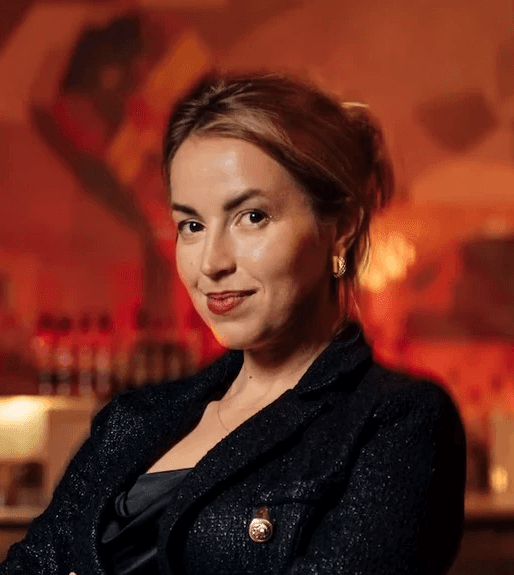
Glaston's appointment of Tuomo Nuottimäki to its executive leadership team is notable. The restructuring behind it is more so.

The Finnish glass-processing technology company announced today that Nuottimäki will become SVP EMEAI and a member of the executive leadership team, effective July 1. He succeeds Kimmo Kuusela, who leaves the company at the end of June.

At the same time, Glaston is dismantling the regional structure it put in place only a year ago.

The former EMEA and APAC organization will be split into two management areas. Nuottimäki will lead Europe, the Middle East, Africa, and India (EMEAI). China and Southeast Asia will report directly to President and CEO Miika Äppelqvist.

The change reduces the span of control of one of Glaston's largest commercial roles and places responsibility closer to individual markets.

"I am very pleased that we can fill this role from within Glaston with a person who has a thorough knowledge of our customers and industry. Tuomo brings decades of experience to our commercial leadership and is committed to developing how we serve customers and enable growth," Äppelqvist said in the company's stock exchange release.

A key market gets dedicated leadership

The decision matters because EMEA remains Glaston's most important region.

In 2025, EMEA generated around 45 percent of group revenue, compared with 31 percent from the Americas and 24 percent from APAC. For a company whose fortunes are closely tied to customer investment cycles, the region remains the center of gravity.

Most of Glaston's equipment ends up in the architectural glass industry, serving residential and commercial construction markets. Those markets have been weak for an extended period. Customers have postponed investments, demand for new tempering capacity has been limited, and activity in insulating glass equipment has slowed.

Management has pointed to potential support from recovery programs in countries including Germany and Austria. The Middle East also showed signs of improving activity toward the end of 2025.

If demand recovers, EMEA is likely to be one of the first places where it becomes visible in Glaston's order book.

An internal appointment with deep market knowledge

Nuottimäki brings more than 20 years of experience at Glaston and has spent most of his career in customer-facing roles.

Most recently, he led sales across the Middle East, Africa, Southeast Asia, and India. His promotion gives the leadership team someone with long-standing customer relationships across many of the markets that now form the new EMEAI region.

That experience could prove valuable in a market where equipment purchases are infrequent, sales cycles are long, and service relationships often continue for years after an installation is completed.

The appointment also continues a broader pattern within Glaston. Since Äppelqvist became CEO in 2025, the company has largely rebuilt its executive team through a combination of internal promotions and targeted external hires.

Although Nuottimäki is the newest member of the leadership team, his tenure at the company makes him one of its most experienced executives.

China moves closer to the CEO

The other half of the restructuring may prove just as important.

Rather than appointing a separate executive to oversee China and Southeast Asia, Glaston has chosen to place the region directly under Äppelqvist.

That decision reflects the different dynamics facing the business in Asia.

While architectural glass markets remained weak across much of APAC during 2025, China continues to play an important role in automotive glass, solar energy and other segments where glass content is increasing. The electrification of transport and growing investment in energy-efficient technologies continue to support long-term demand for advanced glass processing equipment.

Direct CEO oversight does not necessarily mean further organizational changes are coming. It does suggest that management wants a closer view of developments in a region that remains strategically important despite near-term market weakness.

The timing is challenging

The restructuring comes as Glaston navigates a difficult market environment.

First-quarter net sales fell 21 percent year-on-year to EUR 40.9 million, while orders received declined 14 percent to EUR 40.5 million. Although profitability improved, management maintained guidance that both net sales and comparable EBITA will fall below 2025 levels.

The company has also cited uncertainty around customer investment decisions and geopolitical tensions in the Middle East as factors weighing on demand.

That leaves Nuottimäki with a clear assignment from day one: strengthen commercial execution in the region that contributes nearly half of group revenue while preparing for a recovery that has yet to materialize.

The appointment itself is unlikely to change investor expectations. The organizational structure behind it may. Glaston is placing more accountability in its largest market and bringing Asia closer to the CEO. The first indication of whether that approach is working will come in the second half of 2026, when investors begin looking for signs that orders are recovering.

|

|

Leaders

Glaston redraws its commercial map as Tuomo Nuottimäki joins leadership team

Glaston redraws its commercial map as Tuomo Nuottimäki joins leadership team

·

5 min read

Explore and follow profiles from this article to get timely updates:

Credit: Glaston, Tuomo Nuottimäki

Credit: Glaston, Tuomo Nuottimäki

Glaston's appointment of Tuomo Nuottimäki to its executive leadership team is notable. The restructuring behind it is more so.

The Finnish glass-processing technology company announced today that Nuottimäki will become SVP EMEAI and a member of the executive leadership team, effective July 1. He succeeds Kimmo Kuusela, who leaves the company at the end of June.

At the same time, Glaston is dismantling the regional structure it put in place only a year ago.

The former EMEA and APAC organization will be split into two management areas. Nuottimäki will lead Europe, the Middle East, Africa, and India (EMEAI). China and Southeast Asia will report directly to President and CEO Miika Äppelqvist.

The change reduces the span of control of one of Glaston's largest commercial roles and places responsibility closer to individual markets.

"I am very pleased that we can fill this role from within Glaston with a person who has a thorough knowledge of our customers and industry. Tuomo brings decades of experience to our commercial leadership and is committed to developing how we serve customers and enable growth," Äppelqvist said in the company's stock exchange release.

A key market gets dedicated leadership

The decision matters because EMEA remains Glaston's most important region.

In 2025, EMEA generated around 45 percent of group revenue, compared with 31 percent from the Americas and 24 percent from APAC. For a company whose fortunes are closely tied to customer investment cycles, the region remains the center of gravity.

Most of Glaston's equipment ends up in the architectural glass industry, serving residential and commercial construction markets. Those markets have been weak for an extended period. Customers have postponed investments, demand for new tempering capacity has been limited, and activity in insulating glass equipment has slowed.

Management has pointed to potential support from recovery programs in countries including Germany and Austria. The Middle East also showed signs of improving activity toward the end of 2025.

If demand recovers, EMEA is likely to be one of the first places where it becomes visible in Glaston's order book.

An internal appointment with deep market knowledge

Nuottimäki brings more than 20 years of experience at Glaston and has spent most of his career in customer-facing roles.

Most recently, he led sales across the Middle East, Africa, Southeast Asia, and India. His promotion gives the leadership team someone with long-standing customer relationships across many of the markets that now form the new EMEAI region.

That experience could prove valuable in a market where equipment purchases are infrequent, sales cycles are long, and service relationships often continue for years after an installation is completed.

The appointment also continues a broader pattern within Glaston. Since Äppelqvist became CEO in 2025, the company has largely rebuilt its executive team through a combination of internal promotions and targeted external hires.

Although Nuottimäki is the newest member of the leadership team, his tenure at the company makes him one of its most experienced executives.

CEO newsletter

For those carrying responsibility at the top.

A monthly letter on leadership, power, and transition in the Nordics. Written by Helene Auramo, drawn from real CEO conversations and leadership signals.

Delivered monthly.

By signing up, you agree to our Privacy Policy

CEO newsletter

For those carrying responsibility at the top.

A monthly letter on leadership, power, and transition in the Nordics. Written by Helene Auramo, drawn from real CEO conversations and leadership signals.

Delivered monthly.

By signing up, you agree to our Privacy Policy

China moves closer to the CEO

The other half of the restructuring may prove just as important.

Rather than appointing a separate executive to oversee China and Southeast Asia, Glaston has chosen to place the region directly under Äppelqvist.

That decision reflects the different dynamics facing the business in Asia.

While architectural glass markets remained weak across much of APAC during 2025, China continues to play an important role in automotive glass, solar energy and other segments where glass content is increasing. The electrification of transport and growing investment in energy-efficient technologies continue to support long-term demand for advanced glass processing equipment.

Direct CEO oversight does not necessarily mean further organizational changes are coming. It does suggest that management wants a closer view of developments in a region that remains strategically important despite near-term market weakness.

The timing is challenging

The restructuring comes as Glaston navigates a difficult market environment.

First-quarter net sales fell 21 percent year-on-year to EUR 40.9 million, while orders received declined 14 percent to EUR 40.5 million. Although profitability improved, management maintained guidance that both net sales and comparable EBITA will fall below 2025 levels.

The company has also cited uncertainty around customer investment decisions and geopolitical tensions in the Middle East as factors weighing on demand.

That leaves Nuottimäki with a clear assignment from day one: strengthen commercial execution in the region that contributes nearly half of group revenue while preparing for a recovery that has yet to materialize.

The appointment itself is unlikely to change investor expectations. The organizational structure behind it may. Glaston is placing more accountability in its largest market and bringing Asia closer to the CEO. The first indication of whether that approach is working will come in the second half of 2026, when investors begin looking for signs that orders are recovering.

Follow moves like this on the Listeds Executive Intelligence Platform.

Board Programme

Built for Nordic listed company boards.

The only programme in the Nordics designed specifically for listed-company board work.
Five sessions, one cohort, twenty leaders in one room - Helsinki, 2026.

Board Programme

Built for Nordic listed company boards.

The only programme in the Nordics designed specifically for listed-company board work.
Five sessions, one cohort, twenty leaders in one room - Helsinki, 2026.

Authors

Emmi Laine is head of business content at Listeds and our lead for finance and business coverage. She sets the editorial agenda, interviews Nordic business leaders, and writes stories, newsletters, and social content on timely market and corporate topics. Emmi brings nearly eight years of experience from Shanghai's Yicai Global / Yicai Media Group, where she was awarded for reporting on China’s economy, finance sector, and technology innovation. She holds an MSc in Innovation and Entrepreneurship from ESADE Business School in Barcelona and a Master’s degree in International Design Business Management from Aalto University. She also holds a Bachelor’s degree in Culture Studies with a major in Journalism from Stockholm University and has studied Mandarin Chinese and Chinese culture. Emmi is a Finnish citizen and has lived in Finland, Sweden, China, and Portugal.

Emmi Laine is head of business content at Listeds and our lead for finance and business coverage. She sets the editorial agenda, interviews Nordic business leaders, and writes stories, newsletters, and social content on timely market and corporate topics. Emmi brings nearly eight years of experience from Shanghai's Yicai Global / Yicai Media Group, where she was awarded for reporting on China’s economy, finance sector, and technology innovation. She holds an MSc in Innovation and Entrepreneurship from ESADE Business School in Barcelona and a Master’s degree in International Design Business Management from Aalto University. She also holds a Bachelor’s degree in Culture Studies with a major in Journalism from Stockholm University and has studied Mandarin Chinese and Chinese culture. Emmi is a Finnish citizen and has lived in Finland, Sweden, China, and Portugal.

Devdatta Temgire is a data and business analyst at Listeds. He contributes research, data analysis, and pattern detection to the publication’s coverage of Nordic-listed companies, with a focus on board composition, leadership transitions, and financials. He holds an honors degree in artificial intelligence and data science alongside a bachelor’s in computer engineering, and previously worked at KPMG.

Devdatta Temgire is a data and business analyst at Listeds. He contributes research, data analysis, and pattern detection to the publication’s coverage of Nordic-listed companies, with a focus on board composition, leadership transitions, and financials. He holds an honors degree in artificial intelligence and data science alongside a bachelor’s in computer engineering, and previously worked at KPMG.

Authors

Journalist

Emmi Laine is head of business content at Listeds and our lead for finance and business coverage. She sets the editorial agenda, interviews Nordic business leaders, and writes stories, newsletters, and social content on timely market and corporate topics. Emmi brings nearly eight years of experience from Shanghai's Yicai Global / Yicai Media Group, where she was awarded for reporting on China’s economy, finance sector, and technology innovation. She holds an MSc in Innovation and Entrepreneurship from ESADE Business School in Barcelona and a Master’s degree in International Design Business Management from Aalto University. She also holds a Bachelor’s degree in Culture Studies with a major in Journalism from Stockholm University and has studied Mandarin Chinese and Chinese culture. Emmi is a Finnish citizen and has lived in Finland, Sweden, China, and Portugal.

Devdatta Temgire is a data and business analyst at Listeds. He contributes research, data analysis, and pattern detection to the publication’s coverage of Nordic-listed companies, with a focus on board composition, leadership transitions, and financials. He holds an honors degree in artificial intelligence and data science alongside a bachelor’s in computer engineering, and previously worked at KPMG.

All Listeds newsletters (bundle)

One sign-up, the full picture.

Get every Listeds newsletter: the daily signal drumbeat, the weekly Pulse briefing, the monthly Best of the Month, the CEO letter, and the Weekend read.

By signing up, you agree to our Privacy Policy

All Listeds newsletters (bundle)

One sign-up, the full picture.

Get every Listeds newsletter: the daily signal drumbeat, the weekly Pulse briefing, the monthly Best of the Month, the CEO letter, and the Weekend read.

By signing up, you agree to our Privacy Policy

Latest signalsLive feed
Moves trackerLive feed

Investor Event

Listeds Investor Event · Defence

Nordic defence is in a once-in-a-generation growth cycle. Eight listed and pre-IPO companies pitch to 100+ invited investors at Valkoinen Sali, Helsinki

21 September 2026

Latest on Listeds

Leadership Moves

Juuso Pajunen joins Tieto from Terveystalo, and Finland's CFO chain runs one seat longer

Sep 18, 2026

Two stock exchange releases at 9:00 a.m. on 16 September moved one CFO between two Helsinki large caps that had cut guidance two days apart in July. Terveystalo named no successor and opened the search the same day — twelve days after handing Pajunen a second executive brief. Tieto filled the seat with a sitting CFO, which is the only way the job has been filled in Finland since December 2025.

Terveystalo and Tieto published matching stock exchange releases at 9:00 a.m. EEST on 16 September 2026. Pajunen, Terveystalo's Chief Financial Officer since November 2022, leaves on 15 December 2026 and joins Tieto by 1 January 2027 at the latest, reporting to Endre Rangnes. Terveystalo named no successor and opened the search the same day. The same Tieto release confirmed Johan Enger Nygaard at Tieto Tech Consulting and Bent Philipps at Tieto Indtech from 1 October, both interim since May 2026. 

Tieto's last first-time CFO is leaving; the next one arrives with the title

In August, Listeds counted atleast ten CFO changes across Nasdaq Helsinki and First North between December 2025 and August 2026. Every incoming CFO already held the title at another listed company. None was promoted from inside. None was taking the job for the first time. 

Tomi Hyryläinen, who steps down at the end of December 2026 after nearly eight years, joined Tieto in 2018 from PwC Finland, where he had been an assurance leader and partner. Tieto was his first listed-company CFO seat. Tieto has now filled it with a CFO already running finance at another Helsinki large cap, and before that at AFRY and Pöyry Group. 

Terveystalo widened Pajunen's job twelve days before losing him

Terveystalo reports in three segments today: Healthcare Services, Portfolio Businesses and Sweden. On 4 September it said Portfolio Businesses would be split from 1 January 2027, with Oral Health and Public Partnerships each becoming a reportable segment in their own right, and named Pajunen EVP of Portfolio Businesses until the end of 2026. He was covering for Henri Mäenalanen, who had announced on 29 June that he was leaving on 1 October to run Yliopiston Apteekki. Twelve days after taking the second brief, Pajunen announced his own exit. 

The date lands inside a crowded quarter. The EUR 574 million Silmäasema acquisition is expected to close by late 2026 or in the first quarter of 2027, the four-segment reporting starts on 1 January, and the Shareholders' Nomination Board must deliver its proposals by 1 February 2027. The CFO search runs across all of it.

Ville Iho put it in the company's own words: "Juuso has played a key role in the implementation of Terveystalo's profit improvement program and significant acquisitions, as well as in the development of financial leadership.”

One balance sheet is being levered up, the other handed back

Terveystalo reported first-half revenue of EUR 601.5 million, down 10.0%, adjusted operating profit of EUR 59.8 million, down 29.3%, and earnings per share of EUR 0.24, down 44.4%. On 15 July it cut 2026 adjusted operating profit guidance to EUR 120–140 million from EUR 135–165 million, against EUR 156.3 million delivered in 2025. It has raised its leverage ceiling to 3x net debt to adjusted EBITDA, cut dividend distribution to at least 50% of net result, and committed EUR 275 million in cash plus 36,500,000 new shares to Silmäasema, roughly 22.4% of shares outstanding after completion. 

Tieto reported second-quarter revenue of EUR 426.6 million, down 7.9%, with adjusted operating profit up 45.1% to EUR 63.4 million and margin at 14.9% against 9.4%. It cut its organic growth outlook on 17 July to between –5% and –3% and held the margin range at 14.8–15.8%. 

At Tieto he set the brief himself: "Tieto has a strong position in technological transformation and is well positioned for digital opportunities. At the same time, both Tieto and the entire industry are undergoing rapid changes, driven by AI. I am excited to join this fast-paced industry and believe that, with my broad experience across multiple businesses, I can contribute to the execution of Tieto’s ambitious strategy. As a CFO, I will focus on ensuring profitable growth and value creation while I believe that it all starts with culture." 

The audit committee chair moved between CFOs too

The annual general meeting on 24 March 2026 elected Petri Castrén, Kemira's Chief Financial Officer from 2013 to 2026 and its interim chief executive in 2023 and 2024. He chairs the audit committee, taking the seat from Kristian Pullola, formerly Nokia's and Finnair’s CFO, who left the board at the same meeting. 

What each company has committed to deliver

Terveystalo is running its ARC strategy toward adjusted earnings per share growth of 10% a year, leverage of no more than 3x and dividend distribution of at least 50% of net result. Nearer term it has to land 2026 adjusted operating profit inside EUR 120–140 million, close Silmäasema and capture the EUR 11–15 million of annual pre-tax run-rate synergies it has disclosed, complete the Solo Health acquisition in the first half of 2027. 

Tieto has to hold an adjusted operating margin of 14.8–15.8% while organic revenue contracts by 3% to 5%, finish resetting Tieto Tech Consulting by integrating Infopulse, Avega, EVRY India and Mentormate and reducing up to 500 roles, run the EUR 90 million buyback to March 2027.  That agenda is what the incoming CFO is being hired to pay for.

Terveystalo's next appointment is the cleanest test of the pattern

Whoever Terveystalo names will either confirm the August finding or be the first genuine exception to it, and the answer should arrive before the nomination board files its proposals on 1 February 2027. Watch also whether an interim covers the gap from 15 December, and how much of a handover Tieto gets: Hyryläinen leaves at the end of December and Pajunen arrives by 1 January at the latest. 

Monthly Leadership Moves

August's biggest seats were filled without a search

Sep 17, 2026

Two new listed chief executives, and neither was chosen by the board that will supervise them. Four finance seats moved, and not one went to a first-time CFO.

On 3 August, Aspo named the chief executive of a company that will not trade until January. On 31 August, UPM's shareholders elected the board of one that will not trade until November, six weeks after its chief executive had already been named. Both appointments were internal. Neither went through a search.

According to Listeds Executive Intelligence, Nordic listed companies recorded 57 board and management changes in August: 51 in management teams and 6 at board level. Boards accounted for roughly one change in ten for a second consecutive month — and most of the board activity that did happen was produced by corporate structure rather than by nomination committees. Every one of the month's larger moves was at a Helsinki issuer or at a Helsinki issuer's Nordic subsidiary.

The demergers set the month's bookends

Aspo's board approved the demerger plan separating ESL Shipping into a new listed company on 3 August and appointed Matti-Mikael Koskinen as chief executive of ESL Shipping Group Plc the same day. Koskinen has run ESL Shipping Ltd since 2013. The demerger completes on 31 December, trading is expected to start on or about 4 January 2027, and the company's own board will not be elected until an extraordinary general meeting on 7 December, four months after its chief executive was named. Rolf Jansson, Aspo's chief executive, is intended to be elected chair.

At the other end of the month, UPM's extraordinary general meeting on 31 August approved the plywood demerger and elected WISA Group Plc's board: Tapio Korpeinen as chair, Mats Nordlander as deputy chair, and Sakari Ahdekivi, Frank Herrmann, Nina Kiviranta and Emmanuelle Picard as members. Tuija Suur-Hamari had been named WISA's President and CEO six weeks earlier, on 16 July. The demerger is expected to complete on or about 31 October, with trading from 2 November, nine weeks after the board was seated.

Under the Finnish Corporate Governance Code, appointing the chief executive is the board's own duty. A demerger inverts that sequence, and there is no other way to staff a company that does not yet exist. The consequence, on this author's reading rather than anything either company has said, is that both new boards take office with their most consequential appointment already made, and their first exercise of that duty will be a review rather than a choice.

One thing the WISA sequence does change: Suur-Hamari will be one of a small number of women running a Helsinki-listed company. Listeds’ CEO Index — Finland | Q2 2026 shows women holding 8.1 per cent of the 186 sitting chief executive roles at 30 June, and one of the 25 first-half starts. Women held 8.1 per cent of the 186 sitting chief executive roles at 30 June, and one of the 25 first-half starts. August added a second name to that pipeline — Elli Siltala, appointed chief executive of Raisio plc on 7 August.

The finance seat moved sideways, or not at all

The month's finance moves were the mirror image of a market hiring new talent into the role.

Digia filled its chief financial officer seat on 5 August by taking Vincit's sitting CFO, Kärkkäinen — the second time since 2017 that Digia has filled the role with a sitting CFO from another Nasdaq Helsinki company. Bioretec named Panu Mikkonen chief financial officer from 6 October, the fourth person named to that seat since September 2025, two of them interim. Kempower appointed Juha Jaatinen interim chief financial officer on 13 August. 

No Helsinki company promoted a first-time chief financial officer into the role in August. 

Eight executives named in two days

Three companies named eight executives across 18 and 19 August.

Nordea's 19 August release did two things at once. It merged Group Risk and Group Compliance into a single function under Mark Kandborg, who continues on the Group Leadership Team, with Nahale Ståhl Hallengren as Chief Compliance Officer from the same date, outside the Group Leadership Team. And it filled leadership in the bank's two largest customer units: Per Långsved, who joined Nordea in 2019 as Head of Personal Banking Sweden and Country Senior Executive, becomes Head of Personal Banking and joins the Group Leadership Team; Randi Marjamaa, at Nordea since 2006, takes a newly created Business Banking leadership post and also joins the Group Leadership Team. Sara Mella steps back from operational roles.

Nightingale Health removed its operating chief's role on 19 August and put two commercial chiefs in its place, at the point where its Americas business needs to produce revenue. Janna Ranta, chief operating officer since May 2025, became Chief Commercial Officer, Research and Healthcare. Hugh Watson, who has spent 25 years in United States laboratory diagnostics, joined from outside as Chief Commercial Officer, Americas.

Finnair named its digital and legal chiefs on 18 August. With those two, four of the nine Executive Board functions — people, digital, legal and finance — have a new holder named in 2026. The chief executive, operating, revenue, customer and communications seats have not moved. The rebuild is running from the strongest quarter Finnair has reported, and from a general meeting that rejected the company's remuneration report with 90 per cent of the votes represented against it.

Helsinki issuers hired for their Swedish operations

Two of the month's chief executive appointments were at Swedish subsidiaries, and both went to local candidates rather than to executives moved out from Finland.

Kreate Group appointed Per Anders Quist chief executive of Kreate Sverige AB on 24 August. Quist joins from Trafikverket, the Swedish Transport Administration, where he was responsible for major infrastructure projects, and has NCC Norway experience behind him. Kreate's own framing is that Sweden has run ahead of its strategy target and is now being handed to an executive expected to sustain that pace and to test a permanent Norwegian footprint. Luotea named Rikard Nyhrén, who joins from Intea and Newsec, chief executive of Luotea Sweden, starting by February 2027.

Talent moved the other way too. Siili Solutions' Chief People Officer, Taru Salo, left on 4 August for Attendo, with Timo Miiluniemi stepping in on an interim basis.

What August actually says

Three things follow for boards and nomination committees.

A demerger is a leadership decision long before it is a market event. The chief executives of two companies that will not trade until November and January were settled in July and early August, and shareholders approved them inside a structural vote.

Board changes remain an AGM-season phenomenon. Six board changes against 51 in management teams, with the largest single block produced by one extraordinary general meeting, says that off-cycle board activity in Helsinki is driven by corporate structure rather than by committee work.

And the finance function is where succession planning is thinnest — but the evidence for that is a lateral market and an interim bench, not a hiring pattern break. August's finance seats were filled by people who already held the title, or left open. Whether September's first-time appointments turn into a pattern or revert to the lateral hire is the question the next two months answer.

Join our Pulse, Best-of-the-Week, and Weekend newsletters

Join our Pulse, Best-of-the-Week, and Weekend newsletters