True innovation culture reveals itself when conditions are toughest. In this interview, Tuija Kalpala shares how a changing market forced Betolar to question its original path, and how that process unlocked a far more powerful vision. What began as a response to external pressure became a strategic turning point: a reminder that breakthroughs often emerge not from perfect plans, but from the courage to rethink them. This is a story of resilience, scientific curiosity, and leadership that chooses progress over comfort at Betolar.
In theory, strategy is deliberate. In practice, it often emerges through reaction — what Henry Mintzberg famously described as “a pattern in a stream of decisions.”
For large industrial groups, strategic change tends to take the form of divestments, spin-offs, or portfolio pruning. Business units are sold, split, or shut down when markets turn or returns disappoint. For smaller listed growth companies, the reality is starker: when the market no longer pulls as expected, every assumption must be re-examined.
That moment arrived for Betolar.
Founded on the promise of replacing cement with industrial sidestreams, Betolar entered the market at a time when sustainability was not just fashionable but funded. Two years later, the environment had changed radically. Interest rates rose. Construction activity collapsed, particularly in Finland, and parts of Europe, and the willingness to pay a premium for green solutions diminished sharply.
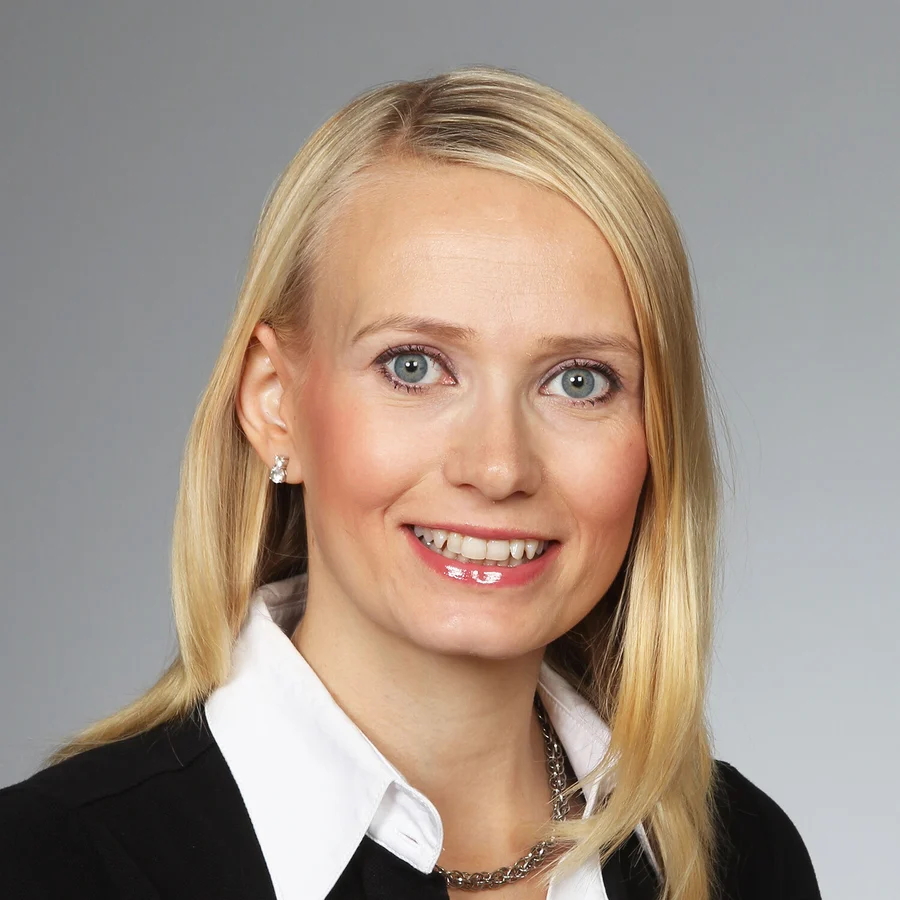
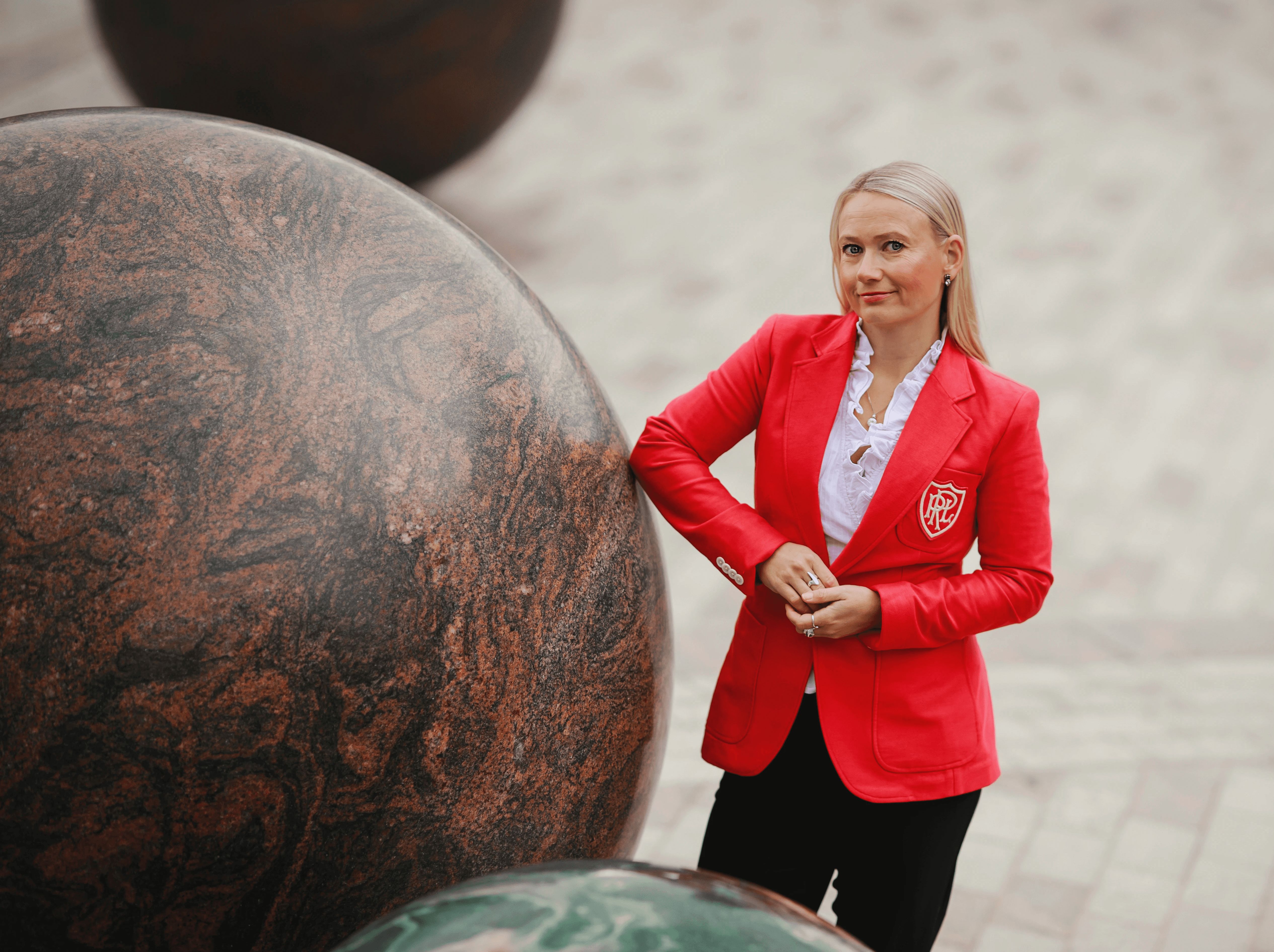
“The interest is still there,” says Tuija Kalpala, CEO of Betolar. “But the ability to commit to low-carbon projects, especially on the private side, has weakened significantly.”
In other words: demand in principle, but not in practice.
When construction hits the brakes
Construction markets are inherently cyclical, yet the current downturn has been unusually severe.
Finnish listed construction companies such as YIT and SRV have repeatedly reported constrained housing demand. Analysts and economists broadly share this view, pointing to a lack of new projects, tight financing conditions, and persistently weak visibility. According to the Finnish Ministry of Finance, while a gradual recovery is expected over 2025–26, the pace is likely to remain slow, and uncertainty persists as to when private construction activity will regain momentum.
For Betolar, whose original business relied on replacing cement with low carbon alternatives in concrete applications, this posed a fundamental challenge. Even more problematic was a parallel shift in raw material markets.
The company had built its early technology on widely used industrial sidestreams such as blast furnace slag, a recognized and standardized substitute for cement. When Betolar was founded, slag was cheap and plentiful. During the pandemic-era green boom, that changed.
Large global cement players locked in long-term supply contracts. Prices rose sharply, in some cases approaching the price of cement itself. At the same time, the slag market became tight and many customers complained about the availability of slag.
“The world changed on us from two directions at once,” Kalpala notes. “The construction market weakened with the demand for low-carbon solutions, and the availability and economics of sidestreams changed dramatically.”
Turning over every stone
For a small growth company, such conditions allow little margin for gradual course correction. Strategy must be questioned more often than in large corporations, and usually with far fewer buffers.
The question Betolar faced was blunt: what happens to growth when the market it was built for disappears?
The answer did not emerge from the boardroom, but from experimental work.
In the company’s laboratory in Kannonkoski, researchers were testing alternative industrial residues — materials that the cement industry had largely ignored due to high metal content. The original objective was simply purification: could these underutilized slags be cleaned enough to function as binders?
Almost accidentally, the team discovered something else.
“We realized we could remove the metals entirely including the strategic and critical metals,” Kalpala explains. “Not partially — but 99%.”
This was not a pre-defined target. It was an unexpected technological breakthrough in metal extraction.
From cement substitute to metallurgical platform
What emerged was a fundamentally different value proposition: a metallurgical separation technology capable of extracting valuable metals from industrial residues and producing a cement-like green binder as a by-product.
The implications were profound.
Betolar has since filed ten patents related to the technology and validated the process with universities and research institutions. External testing has confirmed the results.
“This is not just about construction anymore,” Kalpala says. “This is about unlocking value from materials that are currently considered as waste.”
The company’s first commercial project reflects that shift. Betolar is working with global mining company Anglo American on the Sakatti mining project in Sodankylä, testing how future tailings could be processed using Betolar’s method. The goal is twofold: recover remaining metals from tailings and produce a green binder that could replace cement entirely within mining operations.
The ambition is nothing less than cement-free mines.
The long road to commercialisation
For all the technological promise, Kalpala is pragmatic about the realities of commercialization.
“Innovation takes time. Much more time than people expect,” she says. “Nothing happens overnight, especially when you are selling new technology.”
The immediate priorities are not scale, but credibility: raising the technology readiness level, building a proof-of-concept facility, and enabling in-house pilot-scale processing. This allows Betolar to test more materials, refine the process, and sell the technology globally.
It is a patient strategy, and a necessary one.
Lessons for companies facing a pivot
Betolar’s experience offers broader lessons for listed growth companies navigating structural change.
First, strategic pivots require openness. “You cannot be emotionally attached to the original plan,” Kalpala says. “You have to be willing to turn every stone.”
Second, experimentation must be embraced. Betolar launched five new products to market in 2025, not because they are all guaranteed successes, but because learning also happens through testing and selling.
Third, sales skills and marketing matter, especially in Finland.
“There is still a belief that good technology sells itself,” Kalpala notes. “It doesn’t. First you need to understand the customer needs and then have targeted marketing, presence at conferences, and the courage to speak about what you’re building.”
Betolar has invested in focused social media, industry visibility, and partnerships. Collaboration with stainless steel giant Outokumpu has been particularly valuable. For a small company, references are hard to secure, especially in industries that are mainly dominated by giants.
Being listed on First North has helped. “It brings a certain level of trust, and it has opened some doors,” Kalpala says.
Can it become a billion-euro business?
She believes it can, though not overnight, and not without execution risk.
“The market potential is significant,” Kalpala emphasises. “For example, mine tailings represent one of the world’s largest waste challenges. When combined with opportunities in mining, metallurgy, and industrial sidestreams, we are looking at industries measured in the hundreds of billions of euros globally.”
“At the same time, we are advancing our technology and continuing to increase its technology readiness level. Importantly, we are already seeing clear traction. Our collaboration with Anglo American in the Sakatti project is a good example of how our solutions are gaining real industrial interest.”
The pivot is still underway, and customer adoption and the scaling of commercial operations remain critical.
However, the direction is clear, and Kalpala remains optimistic about the long-term opportunity.
·
5 min read
Explore and follow profiles from this article to get timely updates:
True innovation culture reveals itself when conditions are toughest. In this interview, Tuija Kalpala shares how a changing market forced Betolar to question its original path, and how that process unlocked a far more powerful vision. What began as a response to external pressure became a strategic turning point: a reminder that breakthroughs often emerge not from perfect plans, but from the courage to rethink them. This is a story of resilience, scientific curiosity, and leadership that chooses progress over comfort at Betolar.
In theory, strategy is deliberate. In practice, it often emerges through reaction — what Henry Mintzberg famously described as “a pattern in a stream of decisions.”
For large industrial groups, strategic change tends to take the form of divestments, spin-offs, or portfolio pruning. Business units are sold, split, or shut down when markets turn or returns disappoint. For smaller listed growth companies, the reality is starker: when the market no longer pulls as expected, every assumption must be re-examined.
That moment arrived for Betolar.
Founded on the promise of replacing cement with industrial sidestreams, Betolar entered the market at a time when sustainability was not just fashionable but funded. Two years later, the environment had changed radically. Interest rates rose. Construction activity collapsed, particularly in Finland, and parts of Europe, and the willingness to pay a premium for green solutions diminished sharply.
“The interest is still there,” says Tuija Kalpala, CEO of Betolar. “But the ability to commit to low-carbon projects, especially on the private side, has weakened significantly.”
In other words: demand in principle, but not in practice.
When construction hits the brakes
Construction markets are inherently cyclical, yet the current downturn has been unusually severe.
Finnish listed construction companies such as YIT and SRV have repeatedly reported constrained housing demand. Analysts and economists broadly share this view, pointing to a lack of new projects, tight financing conditions, and persistently weak visibility. According to the Finnish Ministry of Finance, while a gradual recovery is expected over 2025–26, the pace is likely to remain slow, and uncertainty persists as to when private construction activity will regain momentum.
For Betolar, whose original business relied on replacing cement with low carbon alternatives in concrete applications, this posed a fundamental challenge. Even more problematic was a parallel shift in raw material markets.
The company had built its early technology on widely used industrial sidestreams such as blast furnace slag, a recognized and standardized substitute for cement. When Betolar was founded, slag was cheap and plentiful. During the pandemic-era green boom, that changed.
Large global cement players locked in long-term supply contracts. Prices rose sharply, in some cases approaching the price of cement itself. At the same time, the slag market became tight and many customers complained about the availability of slag.
“The world changed on us from two directions at once,” Kalpala notes. “The construction market weakened with the demand for low-carbon solutions, and the availability and economics of sidestreams changed dramatically.”
Turning over every stone
For a small growth company, such conditions allow little margin for gradual course correction. Strategy must be questioned more often than in large corporations, and usually with far fewer buffers.
The question Betolar faced was blunt: what happens to growth when the market it was built for disappears?
The answer did not emerge from the boardroom, but from experimental work.
In the company’s laboratory in Kannonkoski, researchers were testing alternative industrial residues — materials that the cement industry had largely ignored due to high metal content. The original objective was simply purification: could these underutilized slags be cleaned enough to function as binders?
Almost accidentally, the team discovered something else.
“We realized we could remove the metals entirely including the strategic and critical metals,” Kalpala explains. “Not partially — but 99%.”
This was not a pre-defined target. It was an unexpected technological breakthrough in metal extraction.
From cement substitute to metallurgical platform
What emerged was a fundamentally different value proposition: a metallurgical separation technology capable of extracting valuable metals from industrial residues and producing a cement-like green binder as a by-product.
The implications were profound.
Betolar has since filed ten patents related to the technology and validated the process with universities and research institutions. External testing has confirmed the results.
“This is not just about construction anymore,” Kalpala says. “This is about unlocking value from materials that are currently considered as waste.”
The company’s first commercial project reflects that shift. Betolar is working with global mining company Anglo American on the Sakatti mining project in Sodankylä, testing how future tailings could be processed using Betolar’s method. The goal is twofold: recover remaining metals from tailings and produce a green binder that could replace cement entirely within mining operations.
The ambition is nothing less than cement-free mines.

The long road to commercialisation
For all the technological promise, Kalpala is pragmatic about the realities of commercialization.
“Innovation takes time. Much more time than people expect,” she says. “Nothing happens overnight, especially when you are selling new technology.”
The immediate priorities are not scale, but credibility: raising the technology readiness level, building a proof-of-concept facility, and enabling in-house pilot-scale processing. This allows Betolar to test more materials, refine the process, and sell the technology globally.
It is a patient strategy, and a necessary one.
Lessons for companies facing a pivot
Betolar’s experience offers broader lessons for listed growth companies navigating structural change.
First, strategic pivots require openness. “You cannot be emotionally attached to the original plan,” Kalpala says. “You have to be willing to turn every stone.”
Second, experimentation must be embraced. Betolar launched five new products to market in 2025, not because they are all guaranteed successes, but because learning also happens through testing and selling.
Third, sales skills and marketing matter, especially in Finland.
“There is still a belief that good technology sells itself,” Kalpala notes. “It doesn’t. First you need to understand the customer needs and then have targeted marketing, presence at conferences, and the courage to speak about what you’re building.”
Betolar has invested in focused social media, industry visibility, and partnerships. Collaboration with stainless steel giant Outokumpu has been particularly valuable. For a small company, references are hard to secure, especially in industries that are mainly dominated by giants.
Being listed on First North has helped. “It brings a certain level of trust, and it has opened some doors,” Kalpala says.
Can it become a billion-euro business?
She believes it can, though not overnight, and not without execution risk.
“The market potential is significant,” Kalpala emphasises. “For example, mine tailings represent one of the world’s largest waste challenges. When combined with opportunities in mining, metallurgy, and industrial sidestreams, we are looking at industries measured in the hundreds of billions of euros globally.”
“At the same time, we are advancing our technology and continuing to increase its technology readiness level. Importantly, we are already seeing clear traction. Our collaboration with Anglo American in the Sakatti project is a good example of how our solutions are gaining real industrial interest.”
The pivot is still underway, and customer adoption and the scaling of commercial operations remain critical.
However, the direction is clear, and Kalpala remains optimistic about the long-term opportunity.




Investor Event
Listeds Investor Event · Defence
Nordic defence is in a once-in-a-generation growth cycle. Eight listed and pre-IPO companies pitch to 100+ invited investors at Valkoinen Sali, Helsinki
21 September 2026


Latest on Listeds

