“In Finland, we need further alignment regarding the notion that strong value creation is important from a national interest perspective. The more successful our companies are, the more growth, investment, and well-being they generate for Finnish society,” says Solidium’s new CEO, Matts Rosenberg.
For Rosenberg, the current environment creates increased demand for active ownership. There is a deeper structural issue in Finland, one that goes beyond strategy and into how companies are owned, governed, and ultimately pushed to perform.
Learnings from Sweden
Matts Rosenberg has over 20 years of experience in active ownership, of which a decade was in Sweden, a country with a strong culture and heritage of active ownership and ambitious value creation. That experience shapes his view of what Finland could become.
“Finland has more potential than it has so far managed to realize,” he says.
In Sweden, ownership culture is more explicit and more assertive. Long-term owners, such as the Wallenberg sphere, have demonstrated how active and engaged ownership can shape companies across generations. In that context, value creation and national interest are not competing priorities, but mutually reinforcing outcomes.
Rosenberg’s perspective reflects that model. The guiding principle is that ownership is not a passive position, but a continuous responsibility to communicate the owner’s view in relation to the level of ambition, direction, and targets.
Finland’s structure has been different. A smaller capital base and a fragmented ownership landscape with a lack of active owners have left a gap that Solidium was originally created to fill.
The real bottleneck: execution, not strategy
Beneath the surface, a more uncomfortable reality is emerging. Finnish publicly listed companies do not appear to lack strategic ambition. What they lack is the ability to execute change consistently.
Evidence of this has been highlighted in research by Saara Karasvirta, featured in Helsingin Sanomat HS Visio. Based on interviews with 33 change leaders across 11 large companies, the study finds that transformation efforts are often inconsistent and dependent on individuals rather than institutionalized processes.
What begins as a management challenge increasingly points elsewhere. In that sense, the problem is not only operational. It is one of ownership and governance.
From passive owner to active partner
As the Finnish State’s investment arm and a minority shareholder in nationally important companies, Solidium sits at the intersection of ownership and influence. Its updated strategy places greater emphasis on growth, transformation, and long-term value creation—not only for its portfolio companies, but for Finnish society more broadly.
Historically, state ownership in Finland has been associated with stability and long-term stewardship. But it has also, at times, been perceived as passive. Solidium’s new direction challenges that legacy. Rather than acting as a traditional asset manager, the organization is seeking to operate as an active owner—one that shapes outcomes inside its portfolio companies rather than merely observing them.
“We don’t see ourselves as just managing assets. Our role is to be an active owner—creating impact through nomination committees, board work, and continuous, constructive dialogue with co-investors and key stakeholders, particularly board chairs. The level of ambition and competence within boards is critical, and if we want stronger outcomes, for example, in terms of value-creating growth, we need to actively ensure that we have the right people around the table,” says Rosenberg.
In practice, this means influencing board composition, strengthening governance, and using ownership as a lever to drive the level of ambition and direction. Value creation is pursued not only through capital allocation, but through sustained engagement with companies and their leadership.
The shift is subtle in language, but significant in implication: the shift from passive to active and engaged ownership is centered on communicating educated shareholder views regarding the ambition level. Creating strong alignment among key stakeholders (owners, boards, and management) is a prerequisite for successful value creation journeys. Target setting and incentive design play an important role in achieving this.
This shift is not happening in isolation. Similar themes have recently emerged from other major Finnish institutional owners. As explored in Listeds’ article on Ilmarinen’s governance approach, nomination committees have become one of the most strategic tools for shaping company direction, effectively determining who sits around the table when the most consequential decisions are made.
Together, these developments point to a broader evolution in Finnish ownership culture: from passive stewardship toward active, engaged governance.
That ambition carries weight. Solidium’s portfolio includes some of Finland’s most significant companies, such as Nokia, Sampo, Stora Enso, Valmet, Outokumpu, Nokian Tyres, Anora, and ICEYE. Changing how they are owned and guided has implications far beyond individual balance sheets.
Defining full potential
At the core of Solidium’s approach is a simple but demanding question: what is the full potential of each company?
“Active ownership starts with ambition. We need to define what the full potential of a company really is, and then align everything behind reaching that.”
This is about setting a level of ambition that reflects what the company could achieve under optimal conditions.
Making ownership visible through dialogue
Equally important is the role of continuous dialogue.
“Active ownership is not about occasional intervention. It is about continuous, constructive dialogue — building a shared understanding of direction and targets,” says Rosenberg.
Yet the long-term ambition is not to entrench the ownership indefinitely.
“In the long run, it would be a positive development if the market evolves to a point where Solidium's role could be smaller,” says Rosenberg.
A long-term horizon in a changing world
Solidium operates with a horizon measured in years, not quarters. The focus is on driving tangible value creation within its existing portfolio while also identifying new opportunities in Finnish growth companies that can benefit from strong anchor ownership.
Investments such as ICEYE illustrate this dual perspective, combining immediate impact with long-term strategic importance.
At the same time, geopolitical considerations are becoming increasingly relevant.
“The operating environment is changing. Geopolitics is becoming a more important dimension in ownership decisions.”
Solidium wants to reframe ownership as a driver of renewal, not just a guardian of stability. And it challenges Finnish business leaders, boards, and policymakers to reconsider what is expected from those who hold influence.
“We need to raise the level of ambition across the entire Finnish business landscape.”
The issue is not a lack of companies, talent, or strategy. It is execution. Finland has struggled to consistently turn ambition into results.
Solidium’s answer is active ownership. By building high-performing, ambitious boards, it aims to unlock the full potential of its portfolio companies—and potentially influence the broader ecosystem.
At its core, the message is simple: value creation and national interest are not in conflict.
If Solidium fails, the diagnosis remains unchanged: strong strategies, weak execution, and a system that struggles to convert ambition into results. If it succeeds, it may help redefine what ownership means in Finland—shifting it from passive stewardship to active performance.
·
5 min read
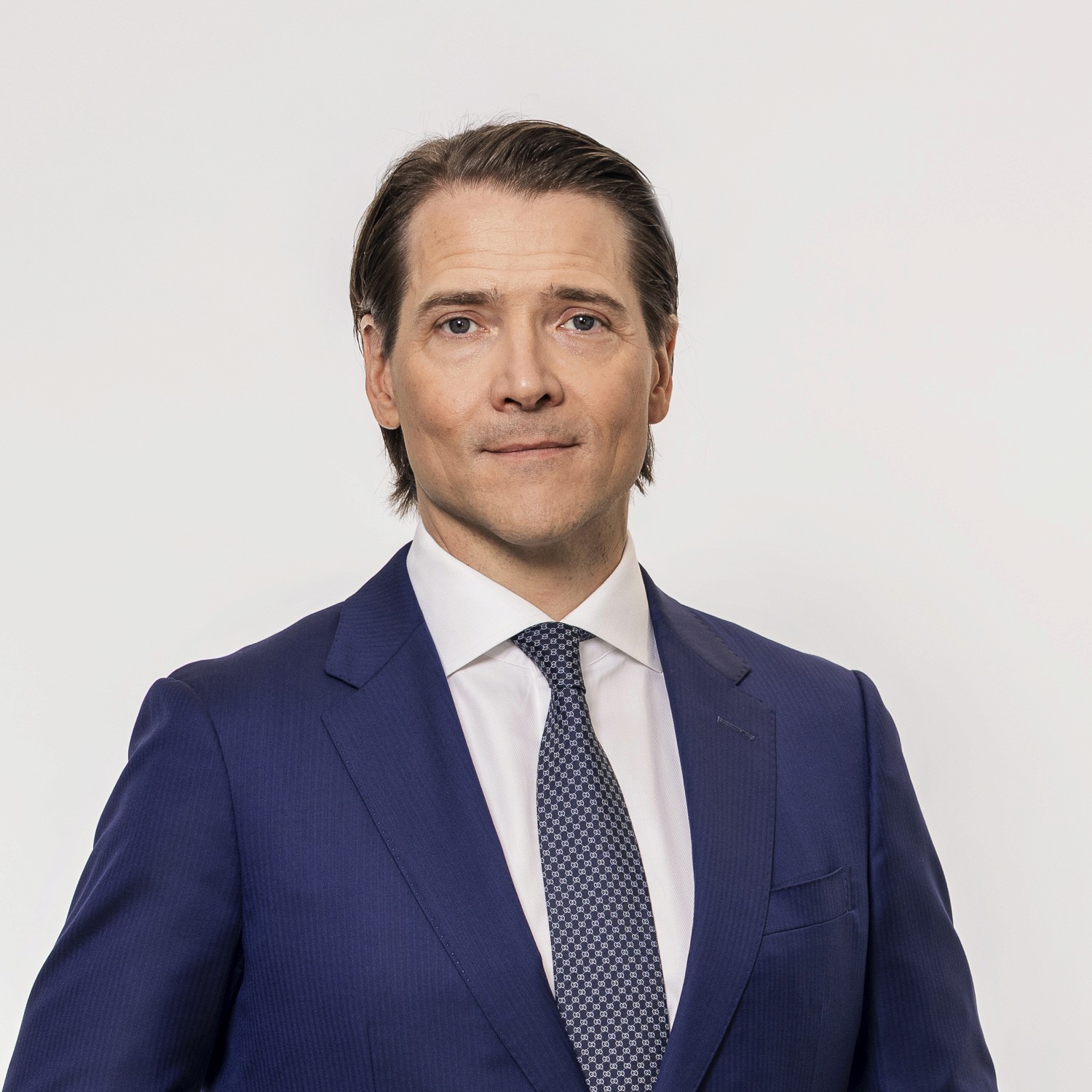
“In Finland, we need further alignment regarding the notion that strong value creation is important from a national interest perspective. The more successful our companies are, the more growth, investment, and well-being they generate for Finnish society,” says Solidium’s new CEO, Matts Rosenberg.
For Rosenberg, the current environment creates increased demand for active ownership. There is a deeper structural issue in Finland, one that goes beyond strategy and into how companies are owned, governed, and ultimately pushed to perform.
Learnings from Sweden
Matts Rosenberg has over 20 years of experience in active ownership, of which a decade was in Sweden, a country with a strong culture and heritage of active ownership and ambitious value creation. That experience shapes his view of what Finland could become.
“Finland has more potential than it has so far managed to realize,” he says.
In Sweden, ownership culture is more explicit and more assertive. Long-term owners, such as the Wallenberg sphere, have demonstrated how active and engaged ownership can shape companies across generations. In that context, value creation and national interest are not competing priorities, but mutually reinforcing outcomes.
Rosenberg’s perspective reflects that model. The guiding principle is that ownership is not a passive position, but a continuous responsibility to communicate the owner’s view in relation to the level of ambition, direction, and targets.
Finland’s structure has been different. A smaller capital base and a fragmented ownership landscape with a lack of active owners have left a gap that Solidium was originally created to fill.
The real bottleneck: execution, not strategy
Beneath the surface, a more uncomfortable reality is emerging. Finnish publicly listed companies do not appear to lack strategic ambition. What they lack is the ability to execute change consistently.
Evidence of this has been highlighted in research by Saara Karasvirta, featured in Helsingin Sanomat HS Visio. Based on interviews with 33 change leaders across 11 large companies, the study finds that transformation efforts are often inconsistent and dependent on individuals rather than institutionalized processes.
What begins as a management challenge increasingly points elsewhere. In that sense, the problem is not only operational. It is one of ownership and governance.
From passive owner to active partner
As the Finnish State’s investment arm and a minority shareholder in nationally important companies, Solidium sits at the intersection of ownership and influence. Its updated strategy places greater emphasis on growth, transformation, and long-term value creation—not only for its portfolio companies, but for Finnish society more broadly.
Historically, state ownership in Finland has been associated with stability and long-term stewardship. But it has also, at times, been perceived as passive. Solidium’s new direction challenges that legacy. Rather than acting as a traditional asset manager, the organization is seeking to operate as an active owner—one that shapes outcomes inside its portfolio companies rather than merely observing them.
“We don’t see ourselves as just managing assets. Our role is to be an active owner—creating impact through nomination committees, board work, and continuous, constructive dialogue with co-investors and key stakeholders, particularly board chairs. The level of ambition and competence within boards is critical, and if we want stronger outcomes, for example, in terms of value-creating growth, we need to actively ensure that we have the right people around the table,” says Rosenberg.
In practice, this means influencing board composition, strengthening governance, and using ownership as a lever to drive the level of ambition and direction. Value creation is pursued not only through capital allocation, but through sustained engagement with companies and their leadership.
The shift is subtle in language, but significant in implication: the shift from passive to active and engaged ownership is centered on communicating educated shareholder views regarding the ambition level. Creating strong alignment among key stakeholders (owners, boards, and management) is a prerequisite for successful value creation journeys. Target setting and incentive design play an important role in achieving this.
This shift is not happening in isolation. Similar themes have recently emerged from other major Finnish institutional owners. As explored in Listeds’ article on Ilmarinen’s governance approach, nomination committees have become one of the most strategic tools for shaping company direction, effectively determining who sits around the table when the most consequential decisions are made.
Together, these developments point to a broader evolution in Finnish ownership culture: from passive stewardship toward active, engaged governance.
That ambition carries weight. Solidium’s portfolio includes some of Finland’s most significant companies, such as Nokia, Sampo, Stora Enso, Valmet, Outokumpu, Nokian Tyres, Anora, and ICEYE. Changing how they are owned and guided has implications far beyond individual balance sheets.
Defining full potential
At the core of Solidium’s approach is a simple but demanding question: what is the full potential of each company?
“Active ownership starts with ambition. We need to define what the full potential of a company really is, and then align everything behind reaching that.”
This is about setting a level of ambition that reflects what the company could achieve under optimal conditions.
Making ownership visible through dialogue
Equally important is the role of continuous dialogue.
“Active ownership is not about occasional intervention. It is about continuous, constructive dialogue — building a shared understanding of direction and targets,” says Rosenberg.
Yet the long-term ambition is not to entrench the ownership indefinitely.
“In the long run, it would be a positive development if the market evolves to a point where Solidium's role could be smaller,” says Rosenberg.

A long-term horizon in a changing world
Solidium operates with a horizon measured in years, not quarters. The focus is on driving tangible value creation within its existing portfolio while also identifying new opportunities in Finnish growth companies that can benefit from strong anchor ownership.
Investments such as ICEYE illustrate this dual perspective, combining immediate impact with long-term strategic importance.
At the same time, geopolitical considerations are becoming increasingly relevant.
“The operating environment is changing. Geopolitics is becoming a more important dimension in ownership decisions.”
Solidium wants to reframe ownership as a driver of renewal, not just a guardian of stability. And it challenges Finnish business leaders, boards, and policymakers to reconsider what is expected from those who hold influence.
“We need to raise the level of ambition across the entire Finnish business landscape.”
The issue is not a lack of companies, talent, or strategy. It is execution. Finland has struggled to consistently turn ambition into results.
Solidium’s answer is active ownership. By building high-performing, ambitious boards, it aims to unlock the full potential of its portfolio companies—and potentially influence the broader ecosystem.
At its core, the message is simple: value creation and national interest are not in conflict.
If Solidium fails, the diagnosis remains unchanged: strong strategies, weak execution, and a system that struggles to convert ambition into results. If it succeeds, it may help redefine what ownership means in Finland—shifting it from passive stewardship to active performance.

Investor Event
Listeds Investor Event · Defence
Nordic defence is in a once-in-a-generation growth cycle. Eight listed and pre-IPO companies pitch to 100+ invited investors at Valkoinen Sali, Helsinki
21 September 2026


Latest on Listeds

