Listeds met Joel Huttunen, who has been responsible for successful Nordic brands in both B2B and B2C contexts throughout his career. Based in Denmark, he shares his insights on what Finnish companies can learn about brand building and marketing. “If you want a brand to perform, the first question is whether the organization is truly committed to building it and being brave internally. Brand has to become a leadership tool – and one that leaders actually use.”
Brand is too often seen as a communicative fluffy layer – a surface added to help companies face their customers. That way of thinking is misguided. In reality, a brand should be understood as a business lever and growth driver, a tool that supports leadership and decision-making. This is how Joel Huttunen puts it. Over his 15-year career, he has been responsible for both global and national brands in Finland and Denmark, working in large international companies as well as on the agency side.
Listeds spoke with Huttunen about the role of the brand in driving company growth.
Denmark is known for its strong design culture, vibrant urban life, and successful brands. This naturally raises the classic question: what can Finland learn from Denmark when it comes to building brands?
Long-term commitment. Huttunen’s answer comes without hesitation. It is an area where both Denmark and Sweden are ahead of Finland.
“In Finland, it’s common to say that Swedes are simply very good at branding and almost just accept it as a natural law. In reality, Finland has exactly the same potential to stand out. The difference is that we don’t commit to long-term brand development in the same way as Sweden and Denmark do. In marketing, there’s a simple rule: ambition and effectiveness start to fade when focus slips.”
For a brand to truly function as a growth driver, companies must commit to repetition and continuity rather than isolated efforts.
Company culture is the brand’s ultimate truth test
What about courage? Courage and risk-taking are not Finland’s natural strengths in the field of branding, and in times of economic uncertainty, bravery is often the first thing to give way to caution and safe choices. How is courage nurtured in Denmark?
“The key difference, in my view, is that in Denmark there is open discussion about the level of courage across the organization, including at the leadership level. Courage also requires repetition – not just short-lived spikes like individual campaigns,” Huttunen says. “Courage also means saying something that not everyone will like. If a company focuses solely on not upsetting anyone and on saying things everyone wants to hear, it ends up saying nothing at all. That’s the path of jargon, where there is no differentiation and no value creation. Modern audiences are quick to see through this.”
Both courage and long-term thinking are only possible if there is genuine internal commitment to the brand. According to Huttunen, this commitment is often the hardest part.
“I’ve seen many brand transformations driven by the same underlying question: the brand isn’t delivering results right now – could it deliver next year? If you want a brand to perform, the first question is whether the organization is truly committed to building it and being brave internally. Brand has to become a leadership tool – and one that leaders actually use. It’s unnerving how many times I’ve seen senior leadership just waiting to see the new logo, even in the 2020s.”
In Denmark, Huttunen was initially surprised by how little people talked about brands. He quickly understood why. When a brand is truly lived through company culture, there is no need to constantly define it in meetings and steering groups. Brand is not a separate layer of activity; optimally product development, innovation, ways of working, and strategic initiatives all rest on it.
Everything starts with a clearly defined and shared core mission. Across the organization, people understand why the company exists, what it is striving for, and how their own work contributes to the whole. This is where purpose comes in – a word often dismissed as marketing jargon or even treated as a buzzword.
According to Huttunen, purpose is directly linked to how well a brand is understood – and lived internally. Company culture is every brand’s ultimate truth test.
“As a leader, you can deliver the most inspiring speeches and commission a beautifully polished brand from a prestigious London agency, but if your products, actions, decisions, and people don’t reflect what you claim the brand stands for, it simply isn’t true.”
Beyond performance metrics, the big picture still matters
Purpose also accelerates decision-making, Huttunen says. It provides a clear filter: is this at the core of who we are, or not? Does it support our goals, or does it pull us away from them?
“We live in a time when all kinds of issues surface as controversies, and everything gets broken down into parts. Brands must dare to speak – and stand behind what they say. If a company’s purpose never leads to difficult decisions, it’s probably too generic.”
But how should companies evaluate and justify the business impact of their brand?
“Marketing and communications professionals must be able to demonstrate the value of the brand through data, but organizations shouldn’t get lost in numbers alone. When too much emphasis is placed on short-term performance wins, it’s easy to lose sight of what we’re actually trying to build. The big picture and long-term perspective have to be present all the time.”
B2B brands need emotion too
Throughout his career, Huttunen has worked with massive global brands as well as smaller, local companies and businesses at the very beginning of their journey. He has experience in both B2C and B2B contexts. What can they learn from each other?
“Building a B2B brand from scratch is often extremely difficult. It’s easy to fall back on messages that lack differentiation – saying you’re fast, high-quality, and efficient. What is often forgotten, and what B2B can learn from B2C, is that beyond credibility and reliability, a brand also needs emotion. It’s people that make purchasing decisions in B2B as well.”
For Huttunen, brand is ultimately an emotional bond that forms between a company and people over time. Organizational culture, ways of working, communication, outward expression, and products all contribute to building this connection. Once that bond exists, it begins to guide choices and decisions.
Ideally, brand building is supported by both courage and investment. However, large budgets alone are never the solution.
“The fundamental principles of brand building are the same regardless of budget size. When money is limited, the bar for courage and creativity must be raised. Successful brand work requires strong expertise in using different media, as well as an understanding of weak signals and emerging trends. You need to know what your audience wants right now and how your brand connects to the phenomena of the moment. Customer understanding must be deep, and there has to be genuine curiosity about how to turn change into opportunity.”
·
5 min read
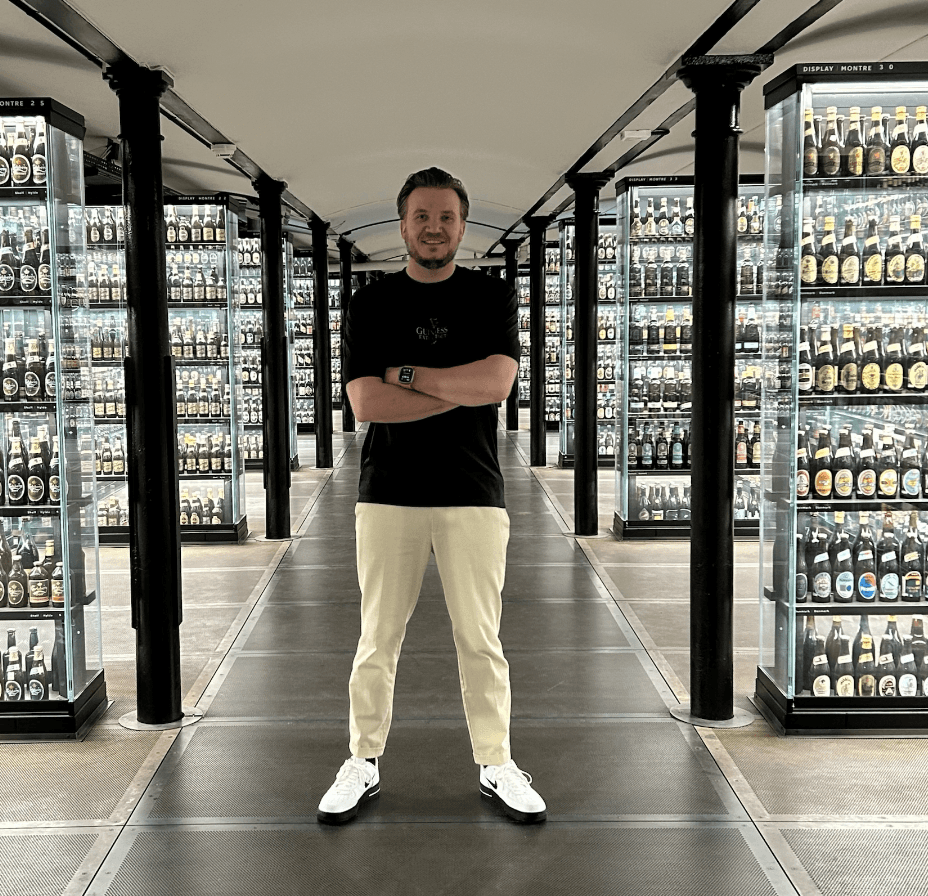
Listeds met Joel Huttunen, who has been responsible for successful Nordic brands in both B2B and B2C contexts throughout his career. Based in Denmark, he shares his insights on what Finnish companies can learn about brand building and marketing. “If you want a brand to perform, the first question is whether the organization is truly committed to building it and being brave internally. Brand has to become a leadership tool – and one that leaders actually use.”
Brand is too often seen as a communicative fluffy layer – a surface added to help companies face their customers. That way of thinking is misguided. In reality, a brand should be understood as a business lever and growth driver, a tool that supports leadership and decision-making. This is how Joel Huttunen puts it. Over his 15-year career, he has been responsible for both global and national brands in Finland and Denmark, working in large international companies as well as on the agency side.
Listeds spoke with Huttunen about the role of the brand in driving company growth.
Denmark is known for its strong design culture, vibrant urban life, and successful brands. This naturally raises the classic question: what can Finland learn from Denmark when it comes to building brands?
Long-term commitment. Huttunen’s answer comes without hesitation. It is an area where both Denmark and Sweden are ahead of Finland.
“In Finland, it’s common to say that Swedes are simply very good at branding and almost just accept it as a natural law. In reality, Finland has exactly the same potential to stand out. The difference is that we don’t commit to long-term brand development in the same way as Sweden and Denmark do. In marketing, there’s a simple rule: ambition and effectiveness start to fade when focus slips.”
For a brand to truly function as a growth driver, companies must commit to repetition and continuity rather than isolated efforts.
Company culture is the brand’s ultimate truth test
What about courage? Courage and risk-taking are not Finland’s natural strengths in the field of branding, and in times of economic uncertainty, bravery is often the first thing to give way to caution and safe choices. How is courage nurtured in Denmark?
“The key difference, in my view, is that in Denmark there is open discussion about the level of courage across the organization, including at the leadership level. Courage also requires repetition – not just short-lived spikes like individual campaigns,” Huttunen says. “Courage also means saying something that not everyone will like. If a company focuses solely on not upsetting anyone and on saying things everyone wants to hear, it ends up saying nothing at all. That’s the path of jargon, where there is no differentiation and no value creation. Modern audiences are quick to see through this.”
Both courage and long-term thinking are only possible if there is genuine internal commitment to the brand. According to Huttunen, this commitment is often the hardest part.
“I’ve seen many brand transformations driven by the same underlying question: the brand isn’t delivering results right now – could it deliver next year? If you want a brand to perform, the first question is whether the organization is truly committed to building it and being brave internally. Brand has to become a leadership tool – and one that leaders actually use. It’s unnerving how many times I’ve seen senior leadership just waiting to see the new logo, even in the 2020s.”
In Denmark, Huttunen was initially surprised by how little people talked about brands. He quickly understood why. When a brand is truly lived through company culture, there is no need to constantly define it in meetings and steering groups. Brand is not a separate layer of activity; optimally product development, innovation, ways of working, and strategic initiatives all rest on it.
Everything starts with a clearly defined and shared core mission. Across the organization, people understand why the company exists, what it is striving for, and how their own work contributes to the whole. This is where purpose comes in – a word often dismissed as marketing jargon or even treated as a buzzword.
According to Huttunen, purpose is directly linked to how well a brand is understood – and lived internally. Company culture is every brand’s ultimate truth test.
“As a leader, you can deliver the most inspiring speeches and commission a beautifully polished brand from a prestigious London agency, but if your products, actions, decisions, and people don’t reflect what you claim the brand stands for, it simply isn’t true.”

Beyond performance metrics, the big picture still matters
Purpose also accelerates decision-making, Huttunen says. It provides a clear filter: is this at the core of who we are, or not? Does it support our goals, or does it pull us away from them?
“We live in a time when all kinds of issues surface as controversies, and everything gets broken down into parts. Brands must dare to speak – and stand behind what they say. If a company’s purpose never leads to difficult decisions, it’s probably too generic.”
But how should companies evaluate and justify the business impact of their brand?
“Marketing and communications professionals must be able to demonstrate the value of the brand through data, but organizations shouldn’t get lost in numbers alone. When too much emphasis is placed on short-term performance wins, it’s easy to lose sight of what we’re actually trying to build. The big picture and long-term perspective have to be present all the time.”
B2B brands need emotion too
Throughout his career, Huttunen has worked with massive global brands as well as smaller, local companies and businesses at the very beginning of their journey. He has experience in both B2C and B2B contexts. What can they learn from each other?
“Building a B2B brand from scratch is often extremely difficult. It’s easy to fall back on messages that lack differentiation – saying you’re fast, high-quality, and efficient. What is often forgotten, and what B2B can learn from B2C, is that beyond credibility and reliability, a brand also needs emotion. It’s people that make purchasing decisions in B2B as well.”
For Huttunen, brand is ultimately an emotional bond that forms between a company and people over time. Organizational culture, ways of working, communication, outward expression, and products all contribute to building this connection. Once that bond exists, it begins to guide choices and decisions.
Ideally, brand building is supported by both courage and investment. However, large budgets alone are never the solution.
“The fundamental principles of brand building are the same regardless of budget size. When money is limited, the bar for courage and creativity must be raised. Successful brand work requires strong expertise in using different media, as well as an understanding of weak signals and emerging trends. You need to know what your audience wants right now and how your brand connects to the phenomena of the moment. Customer understanding must be deep, and there has to be genuine curiosity about how to turn change into opportunity.”





Investor Event
Listeds Investor Event · Defence
Nordic defence is in a once-in-a-generation growth cycle. Eight listed and pre-IPO companies pitch to 100+ invited investors at Valkoinen Sali, Helsinki
21 September 2026