/

Topics

/

Nordic leadership

Nordic leadership

Leaders

Six CFO seats, one lesson: Finnair’s Pia Aaltonen-Forsell on what survives every crisis

Aug 5, 2026

Few Nordic finance leaders have seen as many industries from the CFO chair as Pia Aaltonen-Forsell. Forestry at Munksjö and Ahlstrom Munksjö. Steel at Outokumpu. Batteries at Northvolt. Aviation at Finnair. She chairs UPM’s Audit Committee, and by January she takes on her next role as CFO of Valmet.

Each industry has its own logic, its own cycles, its own shocks. Yet across all of them, Finnair CFO Aaltonen-Forsell says, the fundamentals that decide whether a company survives disruption barely change.

"We just have to accept the world as it is. There are surprises, there is volatility, and we have to build the way we think, the frameworks we use and the way we act around that," the financial leader of Finland’s flag carrier told Listeds in an exclusive interview.

Before joining Finnair as CFO in 2024, Aaltonen-Forsell held senior finance roles at Vacon, Munksjö, Ahlstrom Munksjö, Outokumpu and Northvolt. She also chairs UPM's Audit Committee and will become CFO of industrial technology supplier Valmet by next January. The experience has shown that resilience depends less on accurate forecasts than on preserving the flexibility to adapt.

Few companies have tested that idea as thoroughly as Finnair. Russia's closure of its airspace dismantled the airline's long-standing advantage on Europe-Asia routes almost overnight, forcing longer flight times and a fundamental rethink of its network. More recently, conflict in the Middle East triggered another wave of disruption as oil prices climbed and airlines adjusted operations.

Many carriers felt the impact immediately. Scandinavian Airlines canceled hundreds of flights because of higher fuel costs. Finnair largely avoided cancellations and fuel surcharges, helped by a fuel hedging strategy that had locked in much of its fuel costs before prices surged. At the same time, reduced capacity from several Middle Eastern airlines increased demand on long-haul routes to Asia, supporting a record comparable operating profit of €78.4 million in the second quarter and prompting Finnair to raise its revenue guidance for 2026.

For Aaltonen-Forsell, the lesson is not how Finnair handled one disruption but how it prepared for many.

Optionality is a strategy

Ask Aaltonen-Forsell what resilience means, and the seasoned CFO starts with the balance sheet.

"From my perspective, resilience means that you have a certain readiness through the structure of your balance sheet, your cash reserves, your factual understanding of the situation, your shared knowledge and your shared view of the situation."

Preparation, however, is only part of the equation. "Because things can change, part of resilience is having that optionality. Not just saying, 'Here's the only right way to do it,' but thinking upfront that there may be two different alternatives. Depending on how things go, we can go this way, or we can go that way."

Few industries feel geopolitical shocks as quickly as aviation. When the Strait of Hormuz closed in late February, global jet fuel prices nearly doubled within weeks, reaching $188 a barrel in April. They eased briefly before jumping almost 30% again in July as renewed tensions disrupted shipping. For the airline industry, the volatility is expected to add around $100 billion to fuel bills this year.

It is why Aaltonen-Forsell returns to the idea of optionality. Rather than betting on a single forecast, companies need enough financial and operational flexibility to change course as conditions shift.

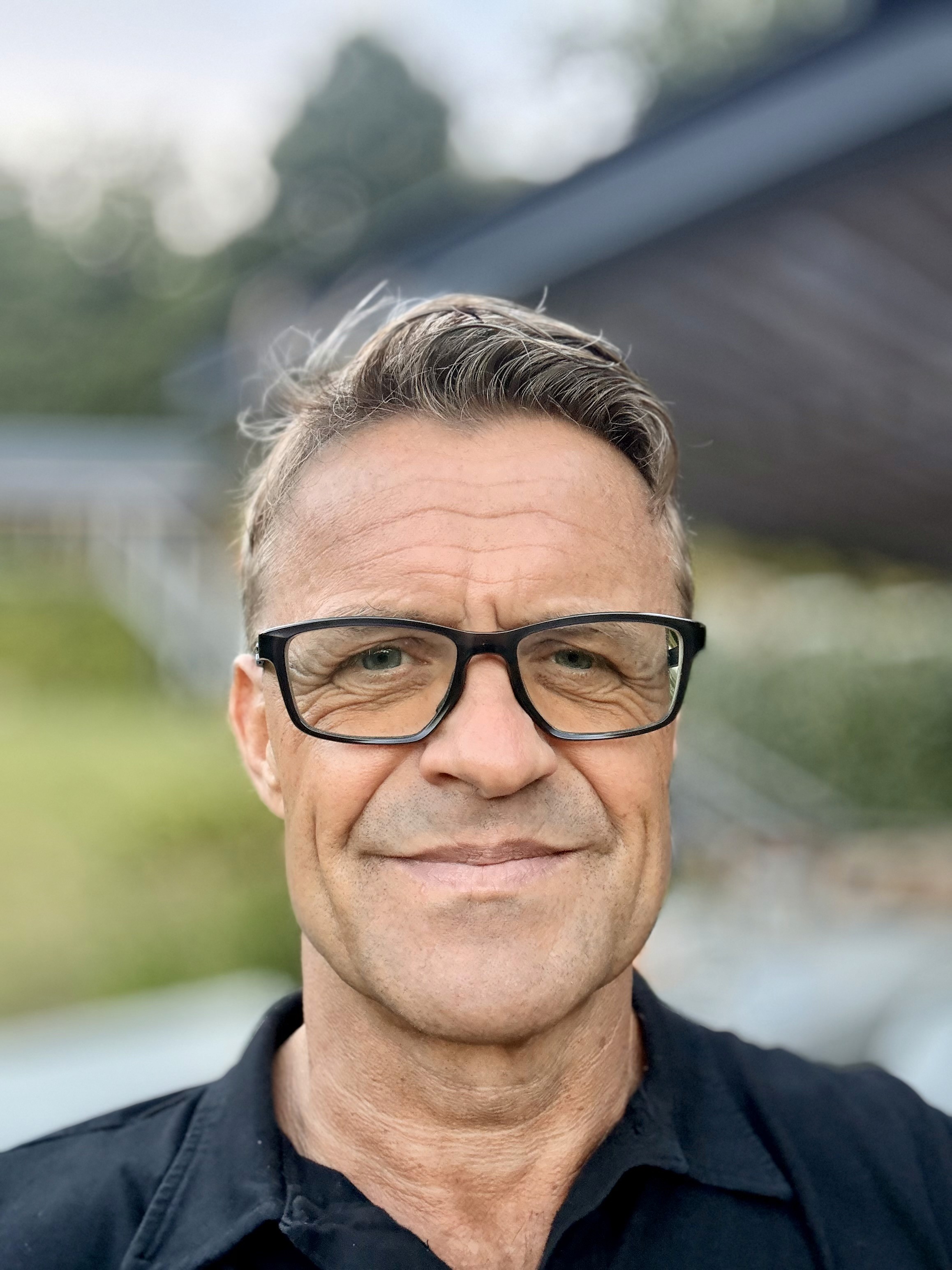
A veteran finance executive, Pia Aaltonen-Forsell has held CFO roles at Finnair, Northvolt, Outokumpu, Ahlstrom-Munksjö, and Vacon, alongside board appointments at several listed companies. Image credit: Finnair

Managing risk without predicting it

Airlines take different approaches to fuel price risk. Some, including American Airlines, have largely abandoned fuel hedging. Most European network carriers continue to hedge, although to varying degrees.

Finnair follows the latter approach. The airline relies on a hedging policy, but Aaltonen-Forsell says it still requires a close understanding of market conditions.

"We have a hedging policy that really gives us direction. But we also need to have our feet on the ground and understand the market. In very volatile markets, it's not a thing that you just call the bank and say, 'I would like to do this.' You still need to be very informed about what's going on and choose the right moments."

The strategy proved its value this summer. By the end of the second quarter, Finnair had hedged roughly three-quarters of its expected fuel consumption for the second half of the year, reducing its exposure as prices rose.

That discipline matters because markets rarely move in predictable ways. "You need to have a certain framework for your thinking. It can't jump around day to day based on the latest news or tweet. Here's the basic plan. Then here are some things we could potentially change in different situations."

Rather than reacting to each headline, whether a breakthrough in peace talks or a fresh escalation, Finnair follows a defined framework while adjusting its decisions as conditions evolve.

Complexity rewards collaboration

The changing nature of risk has reshaped Aaltonen-Forsell's view of leadership. "I think today the world is so complex that it's very difficult to imagine that leadership could be a one-man or one-woman show where one person knows everything. Rather, there needs to be a group of people with different perspectives that can bring in different points of view." 

The approach reflects research on collective intelligence, which suggests that how teams work together is a stronger predictor of group performance than the intelligence of individual members. At Finnair, that means bringing together finance, operations, network planning and commercial teams before decisions are made. 

"What has worked and been really important for us has been strong collaboration between the different teams, having a shared view of the situation and then agreeing on the next steps," Aaltonen-Forsell says. "You actually need several views to really form the full view of what's going on." 

Cash creates options

Working as both an executive and a board member has reinforced another principle. "I've learned to focus on the core of the topic and the fundamentals."

Across every industry she has worked in, one fundamental has never changed. "Cash. Cash is important for a business to run and develop in any industry. I always look at whether the business actually generates cash."

Profitability is essential, but it tells only part of the story. "A lot of people tend to focus on margins and profits, which is really good. That's the first step toward cash flow. But you really need to understand the cash flow itself."

Few industries make those trade-offs more visible than aviation. Airlines commit billions to aircraft that stay in service for decades, even as demand keeps shifting. Finnair's latest fleet renewal reflects that balancing act. The airline has ordered 18 Embraer E195-E2 aircraft, with options for 16 more and 12 purchase rights, while also planning to acquire up to 12 used Airbus A320/321ceo aircraft and lease six A320ceos. The mix is designed to support growth, replace older aircraft and give Finnair the flexibility to match capacity with changing demand.

redit: Finnair. 1: Embraer E190

Finnair is planning to renew its fleet with a mix of options, including Embraer E195 narrow-body jets. The image shows Embraer E190 jets used on short-haul European routes. Image credit: Finnair

For Aaltonen-Forsell, those decisions illustrate a broader principle about capital allocation. "The core of capital allocation is still that every euro has a purpose. But having seen very volatile situations, I've learned that you can have the best laid-out plan, but you still don't need to squeeze it to the last cent. You need to build a bit of optionality into those best laid-out plans."

Trust is built before it is needed

Besides optionality, trust is another idea Aaltonen-Forsell returns to. Trust, she says, also has to be built before it is needed. 

"You have to put a lot of effort into building that trust. It doesn't come overnight. It comes from consistently doing what you say you will do and delivering what you promise."

Trust allows management teams and boards to make difficult decisions together. It cannot be built in the middle of a crisis.

As Aaltonen-Forsell prepares to join Valmet, the industry will change, but the challenge will not. Companies cannot predict every geopolitical shock, supply chain disruption or commodity price swing. What they can decide is how prepared they will be when the next one arrives.

Voices

What chairpersons often overlook about CEO performance: appreciation

Mar 18, 2026

Chairpersons shape more than governance. They shape how CEOs lead. A new Finnish study examining the relationship between CEOs and board chairs suggests that appreciation, expressed through trust, autonomy, and recognition, may be one of the most influential yet overlooked drivers of executive performance.

Boards devote significant attention to strategy, performance targets, and governance processes. Yet one factor that may strongly influence how a CEO performs often receives far less attention: appreciation.

My new research (CEO experiences of appreciative leadership in the interaction with the chairperson of the board 2025) explores the relationship between CEOs and chairmen and suggests that trust, autonomy, and recognition from the board can significantly affect a CEO’s motivation and leadership effectiveness based on a limited number of interviews with CEOs of limited Finnish companies. 

The findings highlight how the tone of this relationship can shape not only executive performance but also the culture and resilience of the entire organization, in addition to financial profitability. The study also reveals a latent expectation among CEOs for a more human-centered leadership style from their chairman. 

The study highlights that appreciation is not an interpersonal nicety but a core determinant of sustainable performance. By moving from a culture of control to a culture of appreciation, organizations can transform "performance management" into "performance enablement."

The difference between appreciation and its absence is felt powerfully by CEOs

In terms of performance, appreciation allows for faster and more confident decision-making and fosters the resilience needed to lead through crises. 

“When the board truly gets why we’re doing what we’re doing, it fuels my motivation to lead beyond the numbers,” one of the participants mentioned. Conversely, a lack of appreciation leads to emotional fatigue and disengagement, even at CEO positions. As one participant stated, "When results were ignored, my motivation faded despite the bonuses". 

When the relationship between the CEO and chairman demonstrated appreciation, one participant said: ''I felt my chair genuinely wanted me to succeed, not just as an executive, but as a person. That trust made all the difference." However, someone had a contrasting experience. One executive said: ''Silence from the board was harder than criticism. I had no idea where I stood; it was silence, not support." 

CEOs perceived a lack of preparation or industry knowledge among board members as a direct form of disrespect toward their own professional efforts. One participant mentioned that “Having a chair with actual experience in my industry made me sharper. The feedback was actionable”.

Primary enablers for CEO performance 

1. Trust: The foundation of performance

Trust emerged as the most significant motivational factor identified by CEOs. In the social exchange between a CEO and the chairman, trust is the intangible return that fosters a psychologically safe space for strategic dialogue. One of the participants noted that "Knowing where I stand keeps me focused and calm." Another participant mentioned that "He didn’t panic or pressure me—he just said, ‘I trust you’ll find a way.’ That’s powerful leadership."

2. Autonomy 

A recurring theme in the study results is the need for autonomy. Appreciative leadership is often expressed not just by what a chairman does, but by what they refrain from doing. CEOs feel most appreciated when they are granted "space for leadership"—the freedom to lead in their own voice and make decisions without being constantly second-guessed. “What keeps me motivated is the ability to make a real impact without being second-guessed constantly," stated one of the participants. Another CEO mentioned that "I perform best when I don’t have to constantly justify every step. Autonomy boosts execution."

3. Recognition

Despite the formal nature of board governance, interpersonal warmth and relatedness are critical. CEOs highly value chairmen who act as mentors and sparring partners rather than just overseers. "When the chair acknowledged my effort after a demanding quarter, it made me push harder, " mentioned one of the participants. Based on the study findings, CEOs also acknowledged verbal recognition over monetary rewards as seen in the following comment: "A simple acknowledgment after a tough meeting made me feel seen—it had more effect than a bonus."

From ''You learn to expect nothing'' to ''Appreciation fuels energy''

Based on the empirical findings, the study offers several practical suggestions for enhancing the CEO & chairperson relationship:

1. Enforce role clarity and autonomy: Chairmen must avoid daily operational interference. A joint role description should be defined to clarify responsibilities and decision-making authority between roles.

2. Build strong interpersonal connections: The chairman should actively seek to understand the CEO as a person, including their values and performance drivers. This connection is vital for honest dialogue during crises.

3. Provide consistent recognition and feedback: Intangible rewards like verbal acknowledgment are powerful motivators. Boards should use feedback not just to correct, but to model the culture they want the CEO to cascade through the company.

4. Close board competence gaps: Continuous development and structured onboarding for board members are essential. A board that lacks market understanding cannot provide the "appreciative challenge" a CEO needs to grow.

5. Define and develop organizational culture at the board level: Leadership models defined for the organization should also apply to the board. Only a unified culture ensures that the CEO is empowered to perform and lead with enchanted style. 

Conclusion: Appreciation as systemic capability

Based on the empirical findings, appreciation may be seen as a systemic capability referring to the integration of appreciation into the very fabric of an organization, its culture, structures, and routines, rather than being treated as merely an individual leadership style or a set of isolated behaviors. Therefore, it requires a foundation that normalizes respect, feedback, and mutual learning across the entire organization and demonstrates that it is a shared responsibility between the CEO and chairperson. 

The study findings concluded that when appreciation is a systemic capability, it fosters enduring conditions for performance, well-being, and organizational success, ensuring that the positive effects of appreciative leadership cascade through all levels of the company.

Leaders

When stability slows change: Strategists Apostolatos and Tujunen on Finland’s growth challenge

Mar 17, 2026

Finland is one of Europe’s most stable societies, yet its economy has grown slowly for years. Strategist Konstantinos Apostolatos argues the country lacks urgency and focus. Political strategist Taru Tujunen agrees reform can be slow, but says stability and consensus politics are also central to Finland’s success.

That contradiction brought a Brussels-based strategist to Helsinki for a week of meetings with political leaders, investors, family offices, and founders. 

Konstantinos Apostolatos, a Greek-born advisor who has worked across governments and corporations, arrived with a simple argument: Finland’s challenge is not capability but ambition, focus, governance, and execution.
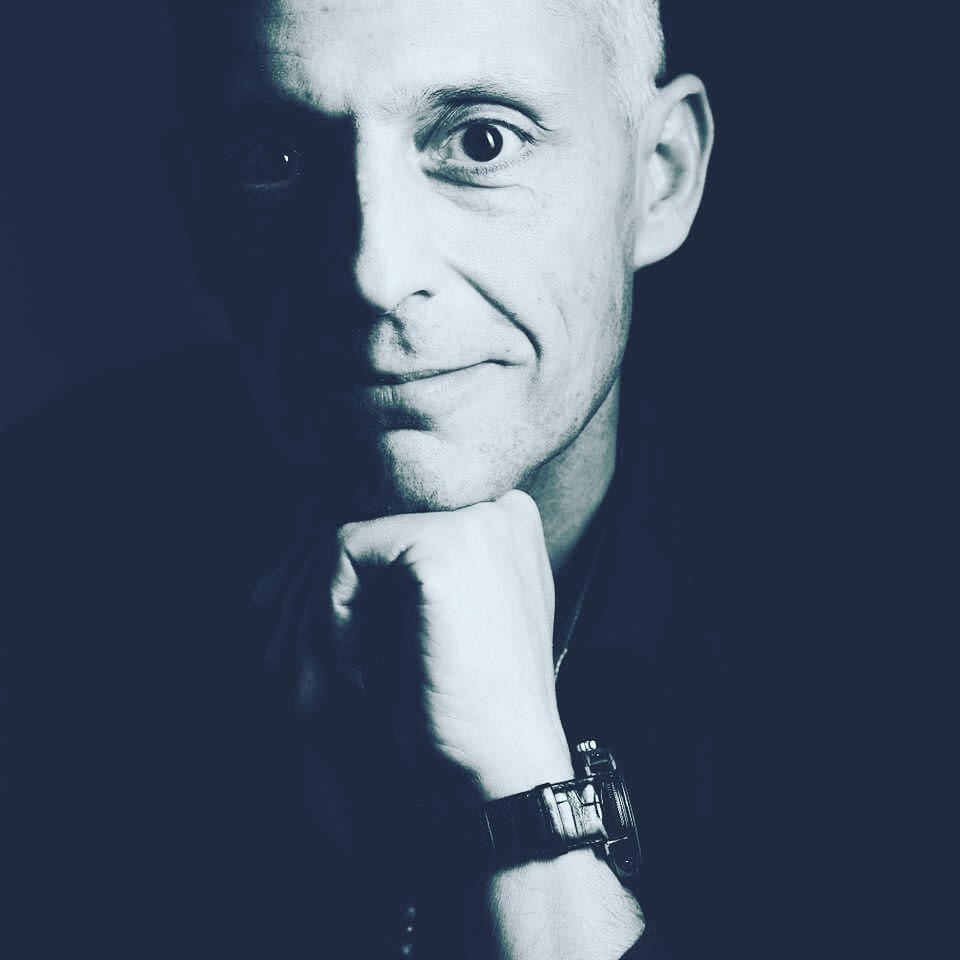
Konstantinos Apostolatos is a Greek-born advisor who has worked across governments and corporations. Photo by Apostolatos.

During the visit, Apostolatos met a small group of decision-makers in private discussions about how a country that functions well might still be underperforming economically. 

His message, repeated in conversations and in a memo shared with Finnish leaders and politicians, was simple. Finland is one of Europe’s most stable, intelligent, and well-functioning societies, yet its economic growth remains weak.

The comfort paradox

To Apostolatos, Finland suffers from what might be called a comfort paradox. 

Its institutions function well, and society is stable. These qualities make the country resilient and trustworthy. They also make it slower to act. 

Countries often move fastest when they are forced to. Greece faced a debt crisis that left little room for delay and pushed through sweeping reforms. 

Today, it has returned to growth and regained investor confidence. The difference, he argues, was urgency and the political alignment that came with it. 

Faced with collapse, political leaders, ministers, and business executives adopted a collective “let’s get it done” mindset. Under pressure, Greece aligned around a few priorities — digitalization, tax reform, tourism, and green energy — pushed through reforms quickly, and has since outgrown eurozone averages while regaining investor confidence.

Finland faces the opposite situation: no immediate crisis and therefore less pressure to make difficult, concentrated bets or to align politics and business behind a small set of priorities.

In Apostolato’s view, the country lacks a clearly stated and aligned national ambition definition of success for the next decade.

Without measurable goals for growth, employment, and competitiveness relative to other countries, strategies risk becoming diffuse. 

Successful transformations, he writes in his memo, begin with a stretch ambition defined in concrete terms and benchmarked against peers.

Competing only with oneself, he suggests, is not enough.

Over the past fifteen years, Finland’s economic performance has lagged behind many comparable European economies. Recent economic data suggest that Apostolato’s concerns are not easily dismissed. 

Since the financial crisis, GDP growth has been significantly weaker than in Sweden and Denmark, while productivity growth has remained largely stagnant. Investment levels have also trailed several peer countries. For a nation that consistently ranks among the world’s most stable, educated, and well-governed societies, the gap between institutional strength and economic dynamism has become increasingly difficult to ignore.

A Finnish perspective

Taru Tujunen, a senior advisor for Finnish Innovation Fund Sitra, broadly agrees that stability can slow reform.

“Finland’s stability has been an enormous strength,” says Tujunen, who has worked closely with governments and national decision-makers. “But it has also meant we have often been slow to implement major societal changes. In a rapidly changing global environment, this can make it harder to respond to new opportunities.”

In her view, the link between stability and slower reform has not always been fully acknowledged in Finnish political debate.

Over the decades, Finland has evolved from what was once described as a “nation of melancholy songs” into the world’s happiest society. Yet success has also reduced the perceived urgency for structural change.

The consequences, she argues, can be seen in modest economic growth, expanding bureaucracy, and increasingly complex public administrative structures.

Consensus politics and the limits of urgency

Tujunen believes the explanation lies as much in political culture as in institutional design.

“Finns have historically not demanded large societal changes,” she says. “We are still a strongly consensus-oriented society, even though political polarization has increased somewhat in recent years.”

Finland’s electoral system reinforces this dynamic. Coalition governments composed of several parties require continuous negotiation and compromise.

“This collaborative model is excellent from a democratic perspective,” she notes. “But the downside is that making large strategic prioritizations can be difficult.”

Still, she cautions that urgency can emerge quickly when a situation is widely perceived as a crisis.

“Very few societies change without some form of external pressure,” she says.

Finland’s decision to join NATO illustrates the point. Public opinion shifted rapidly following Russia’s invasion of Ukraine, and the political system moved with unusual speed.

“Consensus formed almost overnight,” Tujunen says. “And the political system carried the decision through very effectively.”

Fewer priorities, bigger bets

Apostolatos's diagnosis follows his central prescription. 

He argues Finland should align around a measurable national ambition and select a small number of flagship initiatives for the next decade.

These initiatives should be treated less like traditional policy programs and more like investment vehicles: clear mandates, measurable outcomes, professional management, stable multi-year funding, and continuity across political cycles.

Transparent metrics and independent evaluation would allow programmes to be adjusted or abandoned if they fail to deliver. Structured correctly, such initiatives could also attract private capital through new forms of public-private partnerships.

He suggests Finland could position itself as a European “resilience lab”, integrating education, security, clean industry, and social cohesion into a competitive model.

Potential focus areas include higher education, cybersecurity, energy systems, clean industrial value chains, and advanced biomaterials — sectors where Finland already has strong capabilities but has yet to scale its efforts globally.

Tujunen believes strategic prioritisation is politically possible, but only to a point.

Finland has experience with nationally agreed initiatives prepared through parliamentary cooperation, she notes, and there is broad consensus on the importance of investing in education and research.

“The difficulty is rarely agreeing on what to support,” she says. “The difficulty is deciding what not to support.”

Competing for talent and capital

Apostolatos also points to competitiveness for talent and investment.

In a global market for entrepreneurs and highly skilled professionals, Finland’s tax and incentive structures are often seen as uncompetitive, he argues. Without stronger conditions for founders and high-skill workers, reversing slow growth and relatively high unemployment will be difficult.

Tujunen agrees that Finland could strengthen its attractiveness but believes the country often underestimates its own advantages.

“Finland is in many ways a better place to build a company or pursue education than its reputation suggests,” she says.

From strategy to execution

Apostolatos is equally critical of what he sees as the gap between strategy and execution.

National strategies, he argues, often look compelling on paper but lack financial rigour and clear accountability. Each major initiative should therefore be backed by what he calls “investor-grade” planning — specifying capital commitments, expected returns, timelines, and responsibility.

Regular independent evaluations would allow programs to be adjusted or discontinued if they fail to deliver. Long-term public–private partnerships would also be essential, he adds, rather than expecting governments alone to drive the transformation.

Tujunen notes that the challenge is not uniquely Finnish.

“Implementing strategies is difficult for public institutions everywhere,” she says. “Politics operates in a world of dispersed power, where decision-making and execution are intentionally separated.”

Private companies operate differently, with more centralized authority and faster decision-making.

“That comparison is not entirely fair,” she says. “But if the question is whether the public sector needs stronger execution capability, the answer is clearly yes.”

Choosing the future

If Finland were forced to concentrate its efforts, Tujunen believes the country should build on areas where it already has structural strengths.

Energy systems are one example. Finland has successfully developed a diversified energy sector spanning nuclear power, wind, and emerging hydrogen infrastructure.

Education remains another obvious priority, both for raising domestic skill levels and attracting international talent and researchers.

Digitalization should cut across all policy areas, she argues, while industries such as pharmaceuticals and defence technology also hold significant potential.

The challenge is not identifying promising sectors but making difficult choices about where to concentrate resources.

In a world of intensifying economic competition, she suggests, the real test for Finland will be whether it can move from broad consensus to focused national ambition.

Finland’s challenge may therefore not be whether it has the capabilities to succeed, but whether a country that functions well can generate enough urgency to compete in a faster-moving world.

Weekend

Executive coach Thoby Solheim on addiction, ambition, and the hidden pressure of high-performance leadership

Mar 13, 2026

“I have a choice about when I start drinking. But once I start, I don’t have a choice about when I stop.” For many years, that sentence described the private reality of Thoby Solheim’s life while his professional life told a very different story.

At the time, Solheim was a successful investment banker working with some of the world’s largest institutional investors. From the outside, everything looked exactly as it should for a high-performing leader in global finance.

Yet behind the scenes, something was slipping out of control.

Today, Solheim speaks about that period openly. After leaving banking, he retrained as an executive coach and now works with leaders navigating pressure, identity, and performance. His perspective on leadership is shaped not only by years inside the financial industry but also by his own experience with alcohol addiction.

“We still have a level of shame about alcoholism,” he says. “We moralize it.” That shame often prevents leaders from speaking about what they are going through — even when they know something is wrong.

Success and silence

Solheim began his career in the mid-1990s as an equity sales trader in London, a world defined by long hours, intense competition, and relentless expectations.

“You worked hard, you worked long hours, you got up early,” he recalls. “And then you had at least two nights a week of socializing and drinking.”

Alcohol was woven into the rhythm of the industry. Deals were celebrated with drinks. Lost opportunities were softened with drinks. Success and disappointment triggered the same ritual.

“We would win a deal, we would celebrate, and go big. We’d lose a deal, we’d commiserate and go big.”

Over time, both outcomes started to produce the same thought. “Oh, I did so well today — I’ll have a drink. Oh, I didn’t do well today — I’ll have a drink.”

For Solheim, alcohol also served another purpose. As an extrovert with a hint of introversion working in an intensely social profession, it helped him loosen up in situations that demanded constant networking and relationship building.

But gradually something changed. Drinking stopped being casual. It became intentional. That realization led to a darker understanding: the moment drinking began, control disappeared.

The illusion of the high-functioning leader

Despite his growing dependence, Solheim’s career continued to advance.

He eventually became head of trading at Portuguese investment bank Banco BPI and later worked with Macquarie Group in South Africa. His professional performance remained strong. His reputation remained intact.

Externally, he appeared to be thriving. Internally, however, the dynamic was becoming more fragile. Solheim describes himself during that period as what many would call a high-functioning alcoholic — someone whose outward success masked an escalating personal struggle. “Often people realize their problem long before the system notices,” he says.

Leaders in positions of authority are rarely confronted directly about risky behavior. Performance can mask warning signs, and power often creates distance between the individual and honest feedback.

“From the outside, everything can look successful,” Solheim says. “The system is reasonably blissfully unaware.” Eventually, however, the effects begin to surface. Substance abuse gradually weakens the very capabilities leaders rely on most: judgment, impulse control, and emotional regulation under pressure.

The pressure behind ambition

Looking back, Solheim believes there is often a deeper connection between ambition and vulnerability.

“In the drive for high performance, maybe there is a sacrifice on the other side,” he reflects. For many leaders, that sacrifice can involve mental health. “There can be a link between anxiety and self-worth,” he says. “And that can become exposed in highly competitive environments.”

Research increasingly supports this observation. Studies show a strong relationship between anxiety disorders and alcohol misuse. Anxiety increases the likelihood of alcohol dependency, while alcohol use can intensify anxiety over time.

Alcohol can also act as a signal that the workday is over. High achievers often compress recovery into short bursts of intense decompression — what Solheim describes as accelerated “me time.”

“Alcohol was a medicator that helped tone down excitement,” he says.

Crossing the line

For Solheim, the turning point came with a simple but difficult realization.

“Alcoholism is a progressive disease,” he says, admitting that once you cross a certain line, the only direction left is down. The hardest step was acknowledging the loss of control.

“The most difficult part was admitting I was powerless over alcohol.” But the moment of acceptance also created relief. “I’m not a bad person,” he says. “I’m a sick person.”

Solheim entered treatment and began the process of rebuilding his life. The path included rehabilitation, withdrawal treatment, and a clear commitment to both his family and employer to seek immediate support in case of relapse.

Returning to normal life required adjustments. “You can’t just slot back into the way you used to live,” he says. Recovery meant building new routines, new boundaries, and a different relationship with ambition itself.

A different kind of leadership work

After leaving banking, Solheim began searching for a new sense of purpose.

He retrained as an executive coach, completing a Master’s degree in Management Coaching at Stellenbosch University in 2015, along with additional certifications, including Neurozone and Time To Think.

Today, he works with senior leaders dealing with many of the same pressures he once experienced. His coaching focuses on resilience, self-awareness, and sustainable leadership.

“I understand the environment they operate in,” he says. “I’ve lived it.” That lived experience often allows him to see patterns early — especially when leaders are silently carrying more pressure than they admit.

The courage to ask for help

For individuals facing similar struggles, Solheim believes the first step remains the most difficult.

“Asking for help,” he says. For many leaders, particularly in Nordic cultures where independence and resilience are highly valued, vulnerability can feel uncomfortable. Yet Solheim insists it is the turning point.

Today, he does not see quitting alcohol as a loss. “I gave up nothing,” he says. What he gained instead was clarity, purpose, and a different relationship with success. Because behind many high-performance careers, he believes, there is a reality leaders rarely speak about.

And sometimes the strongest leadership decision a person can make is admitting they cannot solve everything alone.

Stay on the pulse, catch the signals

Subscribe to Listeds Leadership Intelligence Platform:

  • leader and company database access

  • email alerts

  • career, boards and interim opportunities

Our Pulse newsletter

Your weekly leadership intelligence briefing.

What happened, why it matters, and what to watch across every CEO, board, and executive move in Nordic listed companies, starting with Finland. Fast, factual, and to the point.

Delivered every Monday.

By signing up, you agree to our Privacy Policy