/

Topics

/

culture

culture

Weekend

Top restaurants to visit now, according to the one person I always call

Jan 9, 2026

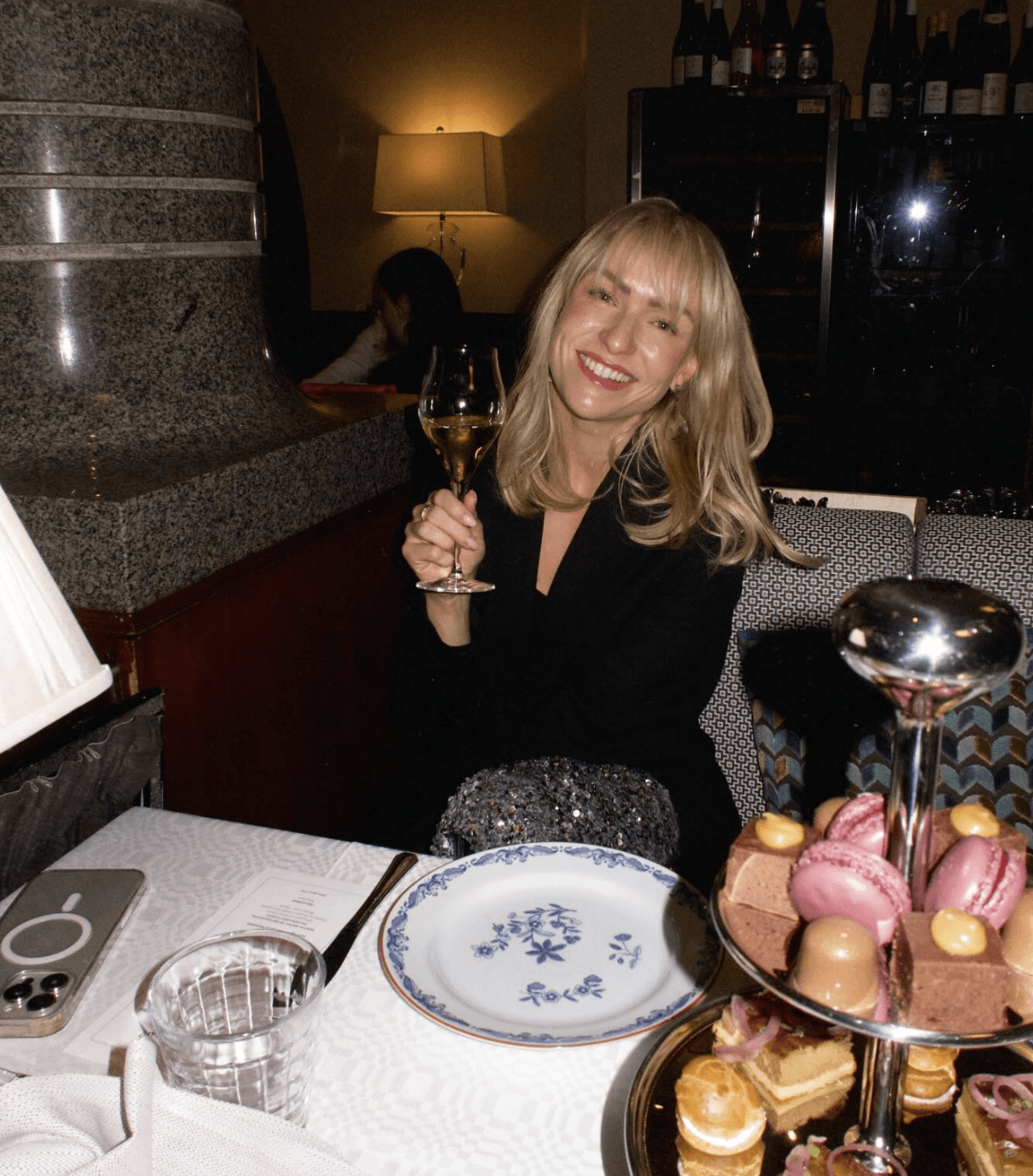
When I want to know where to eat next — not just a good restaurant, but the right one — I have one person I always call: Sara Vanninen.

She has a rare talent for spotting places before they feel obvious, introducing me to restaurants, cafés, and excellent spots I wouldn’t have found on my own. I trust her instinct.

Vanninen is a Helsinki-based fashion and food curator best known for her blog Tickle Your Fancy. You can also follow her on Instagram.

Here’s where she sends me — and you — right now.

The top three Sara Vanninen wants to visit and try next

Restaurant Jason

📍 Yrjönkatu 5 E, Helsinki
Jason is Michelin-recognized chef Jari Vesivalo’s first fully independent restaurant in central Helsinki. The cooking is Nordic at heart, gently influenced by Asia, with a focus on precision rather than spectacle. It’s the kind of place where you can commit to a full menu or simply stop by for one beautifully composed dish.

Esmes

📍 Iso Roobertinkatu 24, Helsinki
Esmes is shaped by season, availability, and close relationships with producers. The menu changes constantly, guided by what’s freshest on any given day.

Boreal

📍 Uudenmaankatu 9, Design District, Helsinki
Boreal is deeply rooted in Finnish nature and seasonality. Its contemporary approach draws on organic agriculture, foraging, and carefully sourced produce. Especially in winter, the food feels grounding and thoughtful — a place for slower dinners and deeper conversations.

Three spots she recommends

Le Grec

📍  Rikhardinkatu 2, Helsinki
A modern Greek restaurant in the heart of the city, Le Grec combines straightforward surroundings with genuinely good food. 

Laivakoira

📍 Tehtaankatu 34 D, Helsinki
Known affectionately as Laivis, Laivakoira is a low-threshold neighbourhood restaurant in Eira. Inspired by classic culinary traditions, it plays with modern techniques, bold seasoning, and a relaxed atmosphere. 

Gina Bakery

📍 Aleksanterinkatu 13, Helsinki
Gina Bakery is stylish, sweet, and easy to love. Opened by restaurateur Hans Välimäki, it offers porridge, pastries, and baked goods. 

If you live in or are visiting Helsinki, these are places worth visiting right now.

Weekend

Why Nordic people turn to the sauna for community and clear thinking

Dec 19, 2025

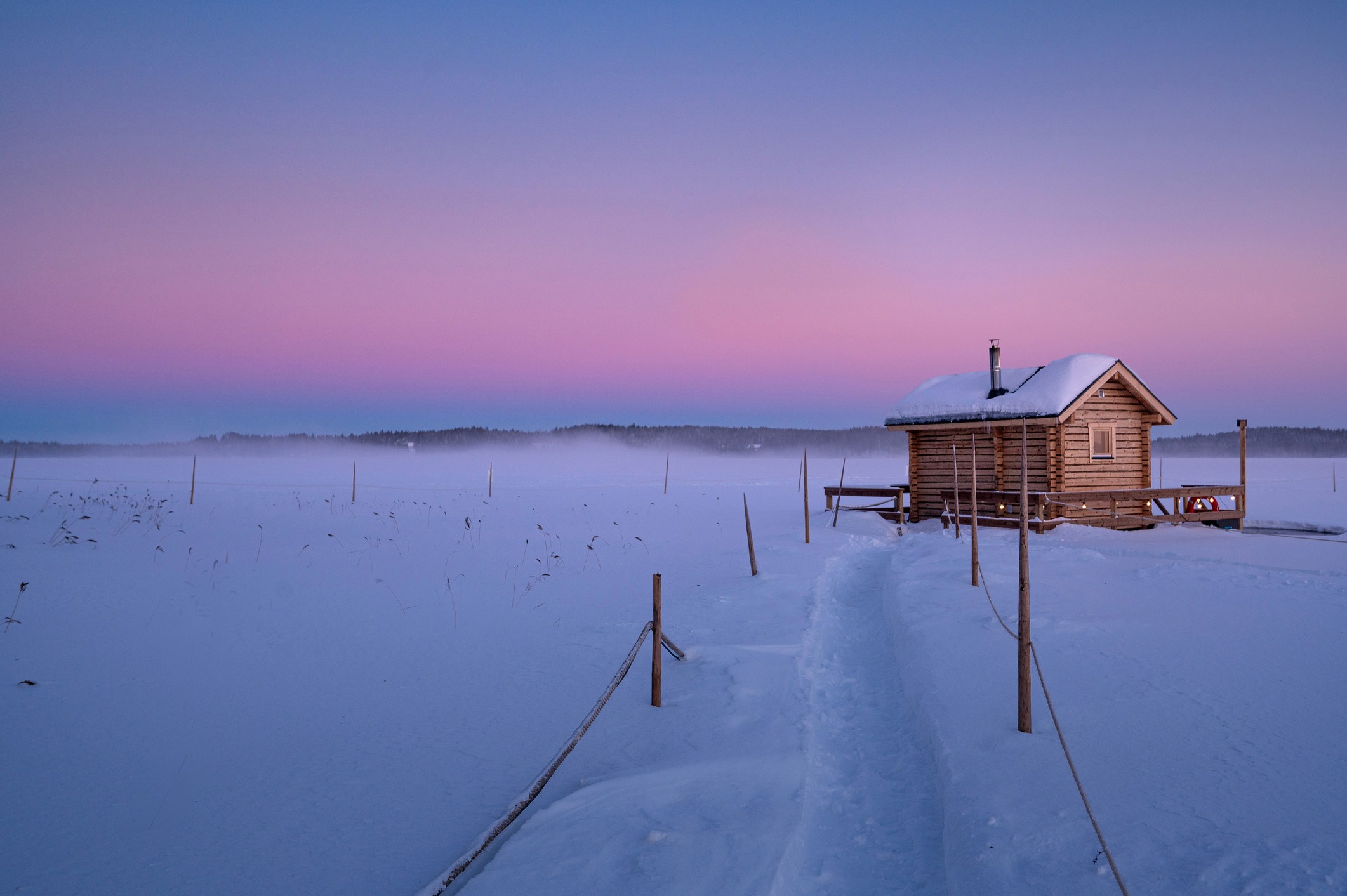
For many Nordic executives, the sauna is more than a wellness ritual. Finnish Sauna Society member Hanna Pakarinen — also known as the winner of the first season of Idols — frames the sauna not as leisure but as a structured environment that enables busy people to decompress, recalibrate, and connect. 

Approaching its 90th anniversary, the Finnish Sauna Society is a non-profit cultural institution dedicated to preserving and promoting Finland’s sauna traditions. Pakarinen — a member for a decade — has supported that mission by helping organize the mobile sauna showcased at the most recent Eurovision contest in Basel.

UNESCO’s decision to place Finnish sauna culture on its list of intangible cultural heritage further strengthened the sauna society’s identity and reach. Pakarinen recalls the scale of the campaign, noting that securing the designation “was a major undertaking and a significant moment for the community.”

A system for mental clarity

Finnish Sauna Society premises, photographed by Reetta Virtanen.

The modern lifestyle today demands constant cognitive switching and emotional endurance. The sauna forces the opposite. The heat, silence, and absence of devices narrow attention into the present moment.

Pakarinen captures this effect: during intense heat followed by a cold plunge, the mind “stops scanning everything else and focuses entirely on the physical present.” This narrowing of attention resembles what psychologists describe as transient hypofrontality, a temporary reduction in activity in the prefrontal cortex often associated with exercise or entering a state of flow.

What earlier generations felt in their bones is now showing up in peer-reviewed studies. Regular sauna use has been linked to significantly lower stress levels, improved autonomic balance, and better sleep quality (Harvard Health 2015; University of Eastern Finland 2018). Heat exposure also elevates heart rate and increases circulation in ways comparable to moderate exercise (UCLA Health 2022). Especially for executives dealing with high cognitive load, these effects translate into clearer thinking, faster recovery, and improved emotional regulation. 

A neutral zone for leadership behavior

Despite its informality, the Finnish Sauna Society enforces behavioral rules that encourage constructive interaction. Phones are banned. Only low-alcohol drinks are allowed. Conversations should remain respectful and considerate. These constraints create a rare leadership environment where hierarchy flattens.

Pakarinen notes that even long-standing members “do not stand above anyone else and everyone shares the same etiquette.” For people accustomed to environments defined by rank, the sauna becomes a behavioral equalizer. It promotes listening, patience, and unpressured dialogue — qualities that often erode in high-stakes corporate settings.

Community as resilience infrastructure

Inspired by Finnish mythology, the Louhi sauna is a specific hot, chimneyless (smoke) sauna located within the Finnish Sauna Society's complex in Vaskiniemi, Helsinki. Photography by Reetta Virtanen.

In contrast to the rise of individualistic wellness culture, the Finnish Sauna Society treats well-being as a shared experience. Pakarinen notes that many members, especially older ones, consider sauna days “an essential part of their routine and a deeply social anchor.”

This rhythm is as important as the heat itself. The Finnish Sauna Society maintains multiple wood-fired and electric saunas, limits the number of bathers, and enforces etiquette to preserve calm.

Pakarinen describes her own experience as a complete mental reset: after heat and cold immersion, “there is simply no room left for the clutter of the day.” The combination of exertion, silence, and nature creates a clean break from decision fatigue.

As jobs grow more cognitively demanding, environments that reinforce clarity and resilience become strategic assets. Finland’s sauna tradition quietly delivers this benefit. It sharpens focus, stabilizes mood, strengthens community, and instills norms that encourage humility and presence.

Best public saunas in Finland for executives:

  1. Löyly, Helsinki
    A frequent choice for executive meetups and visiting international leaders. Private lounge options, a high-quality restaurant, and direct sea access make it suitable for low-key discussions away from the office. The smoke sauna offers a quieter setting during off-peak hours.

  2. Kulttuurisauna, Helsinki
    Ideal for leaders who prefer minimalist surroundings and uninterrupted focus. Phones are banned, conversation stays subdued, and the rhythm encourages reflective thinking — a strong fit for executives seeking clarity rather than socializing.

  3. Tampereen Sauna Restaurant Kuuma, Tampere
    Excellent for executive teams holding off-site days in Tampere. The wood-heated saunas and lake swimming create a natural “reset cycle,” while the restaurant provides a neutral space for follow-up discussions over an early dinner.

  4. Rajaportin Sauna, Tampere
    Best suited for leaders who value authenticity and community. Its slower pace and historic character make it a good location for informal peer connections or grounding.

  5. Helsinki Allas Sea Pool Saunas
    Particularly useful for time-pressed executives staying near the city center. Early morning sessions offer privacy and space, and the combination of sauna heat with Baltic Sea swimming is an efficient way to reset before a full workday.

What is the Finnish Sauna Society?

The Finnish Sauna Society (Suomen Saunaseura ry) is a non-profit cultural organization founded in 1937 to preserve, research, and promote Finland’s sauna traditions. Based in Helsinki, the society maintains the historic Vaskiniemi sauna house, which includes several wood-fired, smoke, and electric saunas used exclusively by members.


Scientific sources

Harvard Health Publishing (2015). “Sauna use linked to longer life and fewer fatal heart problems.”
https://www.health.harvard.edu/blog/sauna-use-linked-longer-life-fewer-fatal-heart-problems-201502257755

UCLA Health (2022). “Benefits of sauna bathing for heart health.” https://www.uclahealth.org/news/article/benefits-sauna-bathing-heart-health

University of Eastern Finland – Laukkanen et al. Multiple longitudinal studies linking frequent sauna use with reduced cardiovascular and all-cause mortality. https://jamanetwork.com/journals/jamainternalmedicine/fullarticle/2130724


Leaders

We’ve entered the era of hard leadership

Nov 26, 2025

Leadership fashions rarely move in straight lines. Our discussion with Sami Itani, professor of practice at Aalto University School of Business, suggests they may once again be shifting away from three decades of soft, empathetic management and toward a harder style built on clarity, accountability, and performance.

Drawing on the cyclical patterns identified by Barley and Kunda, this article explores why the change is happening, what it asks of today’s leaders, and how to operate in a moment when empathy alone no longer suffices, yet coldness won’t work either.

In 1992, Stephen Barley and Gideon Kunda published a now-classic study, Design and Devotion: Surges of Rational and Normative Ideologies of Control in Managerial Discourse, a work that Sami Itani counts among his personal favorites.

Their finding was simple but profound: leadership and management thinking don’t evolve in a straight line from authoritarian to humane, from rational to emotional. Instead, they move in cycles. Periods of rational (“hard”) and normative (“soft”) ideologies alternate, reflecting the broader economic and cultural tides of their times.

Today, as the world grapples with geopolitical instability, cost pressures, AI-driven transformation, and rising societal polarization, the pendulum is swinging again. After three decades of “human-centric leadership,” we are seeing the signs that we are entering what could be called the hard leadership era.

From empathy to accountability

“When we talk about hard leadership, it is often about clarity, measurability, and performance,” says Itani. “It’s result-driven, consistent, and built on individual accountability. Reward systems are personal and logical.”

Soft leadership, by contrast, views employees as holistic individuals. “It’s about understanding the person behind the role, influencing through values and emotions, and supporting personal growth,” he says.

Itani cautions against moralizing these styles. “Hard isn’t bad, and soft isn’t good. Each has its benefits and flaws. Nothing fits all.”

He traces the current shift back to the early 1990s, when the “soft era” began. Hierarchies flattened, purpose became a mantra, and emotional intelligence entered the leadership discussion. “Now, after more than 30 years, it looks like the wave is turning,” Itani notes. “We are seeing a return to structure, performance, and results.”

Culture and the corporate mirror

Tommi Lehtinen, organizational psychologist and founding partner at SCCG, argues that leadership cultures mirror their societies. “Organizational leadership is always, at least in part, a reflection of the surrounding value culture,” he says. “When societies lean toward liberalism and softness, a counterforce emerges — hardness and conservatism. The same pattern appears inside companies and is often triggered by shifts in performance. After years of strong margins and purpose-driven leadership, a downturn swings the pendulum back to clarity, control, and efficiency.”

Lehtinen calls the dynamic cyclical, since societies and organizations always search for balance. “Good leaders do not get lost in the swing; they navigate it,” he explains. “Experienced leaders read these cycles, see the system and their financial context, and align with the business context and strategy.”

The generational challenge

For many leaders, the transition is disorienting. “We have a whole generation of 40- and 50-year-olds who built their careers in an era of empowerment, empathy, and coaching,” Itani says. “Now the world around them, if moving to the hard leadership era, values decisiveness, speed, and measurable outcomes.”

He believes historical awareness helps. “When you understand that these cycles always come and go, it’s easier not to panic. The key is contextual leadership, knowing your organization, your industry, and your people.”

Clarity as the new kindness

So what does effective leadership look like in this harder era?

“Honesty and consistency,” Itani says. “People still value fairness and trust. Hard leadership doesn’t mean cold leadership; it means clarity.”

He sees courage as timeless. “The ability to have difficult conversations is the most consistent trait of good leaders across eras. You can’t outsource it to HR or consultants.”

The new cycle

If the 1990s to 2020s were defined by empathy, flexibility, and purpose, the coming decade may be remembered for discipline, decisiveness, and performance. Yet the human dimension isn’t disappearing, it’s being reframed.

The pendulum is shifting, and leaders must adapt to it. Hard leadership isn’t the end of empathy; it’s a shift toward clarity, direction, and accountability. The real challenge is not choosing soft or hard, but reading the moment and adapting.

Leaders

Radical trust: The silent force powering Nordic innovation

Dec 3, 2025

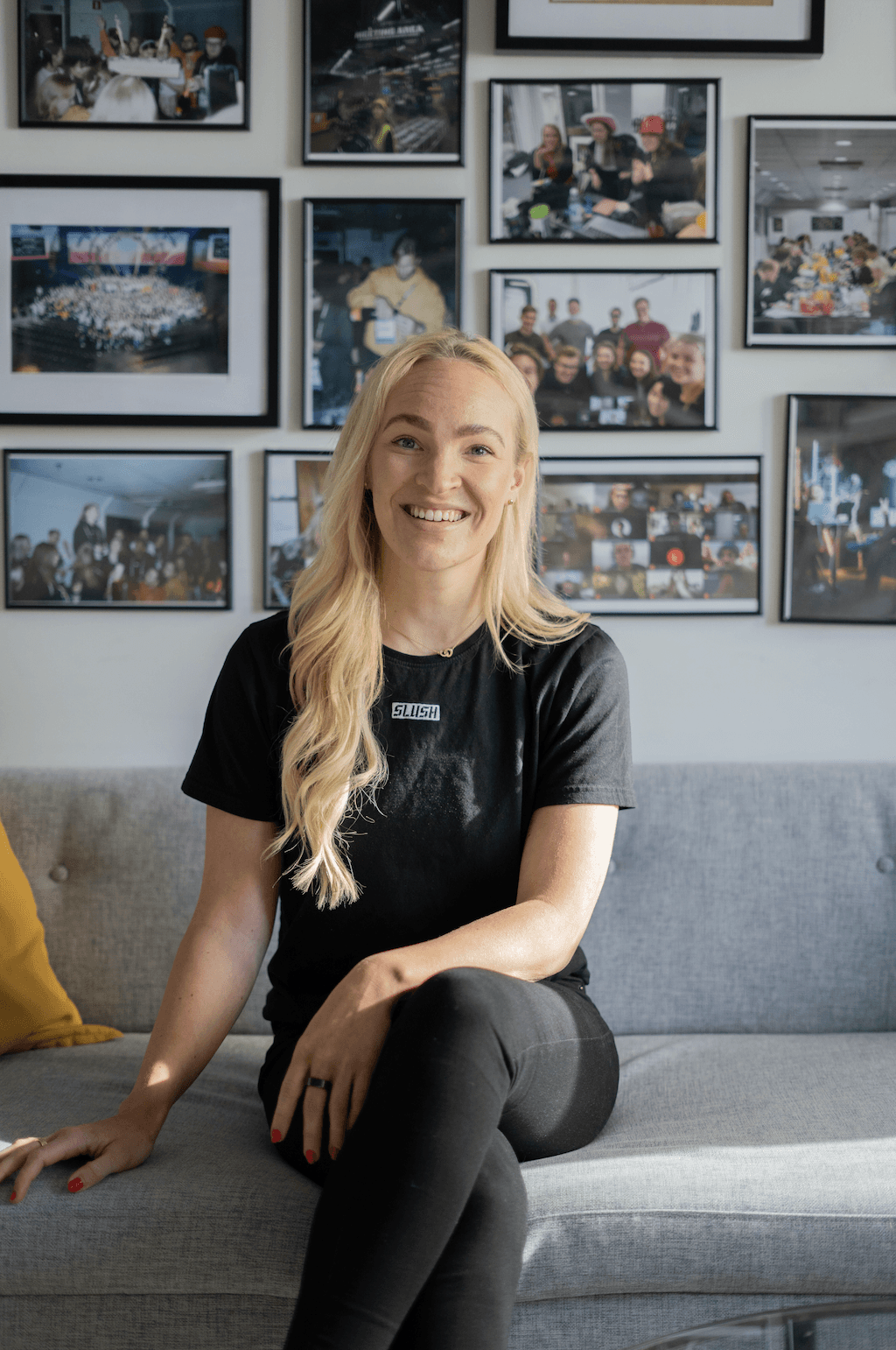
In Helsinki this November, the startup world once again convened under the LED glow of Messukeskus. Slush, the Helsinki-based annual startup event often described as the largest founder-focused gathering in the world, brought together over 13,000 attendees, including investors with more than USD4 trillion in assets under management. Yet amid the buzz of pitch decks and caffeine, its CEO, 26-year-old Aino Bergius, moved with studied calm.

Her leadership, she says, is guided by a simple but increasingly radical principle: trust by default. That idea, once considered a soft trait of consensus-driven cultures, is now at the core of how Nordic firms aim to remain fast, innovative, and globally competitive.

The Nordics have long built prosperity on high levels of social trust. More than 60 % of Swedes and Norwegians say “most people can be trusted,” compared to under 10 % in many Latin American countries (World Values Survey). In Finland, trust in institutions regularly ranks among the highest in the world (OECD Trust Report). But the application of this trust is shifting – from a pillar of welfare states to a tool of organizational speed.

Bergius exemplifies the new model. She joined Slush at 15 as a volunteer. At 26, she leads it. Between those points, she was not groomed so much as trusted. “From day one, Slush trusts you more than you trust yourself,” she explains. “Starting as a volunteer at 15 taught me to just take responsibility and figure things out as I go. That mindset still shapes how I lead and who we hire.”

The new rules of risk

Traditional corporate leadership models, particularly in lower-trust societies, rely on controls: performance metrics, tight oversight, and hierarchy. Nordic startups invert that logic. Authority is diffuse, titles are light, and decisions are often made by consensus. Employees, including interns, are expected to act autonomously from day one.

This is not management by idealism. It is pragmatism in a low-friction culture. Trust, research suggests, shortens feedback loops. In a 2020 study of Norwegian healthcare innovation, higher trust levels reduced defensive behavior and emotional bottlenecks, speeding up innovation adoption (Mitcheltree, University of Oslo). Elsewhere, companies ranked high in trust consistently outperform on learning speed and innovation (Great Place to Work Institute).

When trust becomes infrastructure

Startups in Stockholm and Helsinki increasingly treat trust not as a virtue but as infrastructure. It powers horizontal communication and decentralized decisions. It lowers transaction costs. In low-trust organizations, communication becomes saturated with status updates, requests for approval, and second-guessing. In high-trust teams, problems get solved without managerial bottlenecks.

At Slush, this takes the form of radical delegation. A 22-year-old may be responsible for programming stages, recruiting top-tier speakers, or managing multi-million-euro production budgets. The assumption is clear: trust precedes competence, not the other way around. As Bergius puts it: “Our job as leaders is to give people clarity, values, purpose, direction, and then design the frameworks where they can succeed.”

For traditional companies – especially listed giants now experimenting with innovation labs and internal ventures – this model is instructive. Slush’s approach, Bergius says, is not anti-corporate. It is “a leadership lab” where risk appetite is natural, and humility does not preclude ambition.

Quiet power, competitive edge

Nordic leadership has long been marked by restraint. “Nordic leadership is quiet but strong. It is low ego, shared responsibility, and the belief that the team matters more than the individual,” Bergius says. In global surveys, Nordic executives score low on ego and high on consensus (Martela, Aalto University). Decision-making is slower, but buy-in is deeper. The paradox is that this “quiet power” consistently produces world-class companies: IKEA, Spotify, Klarna.

In the past, such traits were associated with economic stability. Now they are being retooled for adaptive advantage. According to the Møller Institute, the emerging “New Nordic” leadership model fuses traditional trust and ethical reflection with agility and experimentation. It is post-welfare capitalism with startup metabolism.

In this model, trust is not the absence of control. It is the precondition for speed. Studies from the Center for Creative Leadership show that in high-trust environments, teams respond better to change, share knowledge more freely, and rebound faster from failure. In a crisis, employees follow trusted leaders even when plans are incomplete.

Trust, exported

This trust-driven logic is starting to cross borders. American companies are experimenting with flatter hierarchies and default-to-open cultures. Asian firms, while operating in higher power-distance contexts, are adopting startup governance models that assume more distributed ownership.

Yet cultural limits persist. In societies with lower baseline trust, such as Brazil or parts of East Asia, organizational trust must be constructed deliberately – through contracts, rituals, and reputation. The Nordic model, in contrast, rests on a wide cultural base of generalised trust, reducing the need for such scaffolding (Hofstede Insights; Pew Global Attitudes Survey).

Still, Nordic companies have their own blind spots. Bergius warns that trust can shade into caution. “In Finland especially, we need to be more ambitious,” she says. Too many startups, she argues, are “built to exit,” not to endure. Funding remains a constraint: Nordic startups lead Europe in growth per capita (ScaleUp Institute Report 2024), but still trail the U.S. dramatically in capital raised (Forbes Europe VC Trends 2024).

The logic of learning

If trust is the fuel, curiosity is the engine. Bergius sees leadership less as authority than as orchestration: creating space where others can grow. “I didn’t have a CV, I had broken English,” she recalls. “Slush saw a capability to learn.”

This inversion – that experience should not gate opportunity – is itself a product of trust. It reflects a worldview in which capability is emergent, not fixed. And it underwrites the most distinctive element of the Nordic startup ecosystem: the belief that the newest voice may offer the sharpest insight. “For me, success means staying deeply curious and creating space for others to learn and evolve,” Bergius says.

“Established leaders have as much to learn from 25-year-old founders,” Bergius says, “as those founders have to learn from CEOs.”


Sources:

  • Brighter by Aalto. (2023, July 4). Nordic leadership: Minimalism over charisma (Frank Martela). https://brighter.fi/2023/07/04/nordic-leadership-minimalism-over-charisma/

  • Center for Creative Leadership. (n.d.). Why trust matters at work. https://www.ccl.org/articles/leading-effectively-articles/why-trust-matters-at-work/

  • Forbes. (2024, January 15). European VC trends 2024: Funding gap with U.S. https://www.forbes.com/sites/qai/2024/01/15/european-vc-slowdown/

  • Great Place to Work. (n.d.). Building a high-trust workplace culture. https://www.greatplacetowork.com/resources/reports/building-a-high-trust-workplace-culture

  • Hofstede Insights. (n.d.). National culture dimensions. https://www.hofstede-insights.com/models/national-culture/

  • Møller Institute. (n.d.). The Nordic leadership model. https://www.mollerinstitute.com/insights/the-nordic-leadership-model/

  • OECD. (n.d.). Trust in government and institutions. https://www.oecd.org/gov/trust-in-government.htm

  • Pew Research Center. (n.d.). Global attitudes and trust surveys. https://www.pewresearch.org/global/

  • ScaleUp Institute. (2024). European ScaleUp report 2024. https://www.scaleupinstitute.org.uk

  • University of Oslo. (2020). Trust and innovation adoption in healthcare (Mitcheltree). https://www.duo.uio.no/handle/10852/80286

  • World Values Survey. (n.d.). Global trust levels.https://www.worldvaluessurvey.org/wvs.jsp
Stay on the pulse, catch the signals

Subscribe to Listeds Leadership Intelligence Platform:

  • leader and company database access

  • email alerts

  • career, boards and interim opportunities

Our Pulse newsletter

Your weekly leadership intelligence briefing.

What happened, why it matters, and what to watch across every CEO, board, and executive move in Nordic listed companies, starting with Finland. Fast, factual, and to the point.

Delivered every Monday.

By signing up, you agree to our Privacy Policy