/

Topics

/

AI

AI

Business

AI is raising the value of human skills, not replacing them, PwC AI Jobs Barometer finds

Jun 25, 2026

Artificial intelligence is creating two distinct labor markets, and companies that use AI to strengthen expertise rather than simply automate routine work are pulling ahead in productivity, hiring, and wages, according to PwC Finland.

"The companies seeing the greatest benefits from AI use it to strengthen human expertise, accelerate innovation, and create entirely new sources of value," Juuso Laatikainen, partner, markets leader, and strategy consulting at PwC Finland, said in the Finnish release today on the 2026 Global AI Jobs Barometer. "As a result, they are increasing productivity and growing their business faster than companies focused primarily on automation."

PwC argues that AI is reshaping jobs in two ways. For some occupations, the technology removes repetitive work and raises the value of judgment, creativity, and specialist knowledge. For others, it lowers the skill threshold, allowing less experienced employees to perform tasks that previously required deeper expertise.

The conclusions are based on PwC's global report, released on June 15, which analyzed more than one billion job advertisements across 27 countries alongside company and productivity data. The study finds that occupations where AI increases the need for human expertise are growing twice as fast as jobs where the technology reduces the expertise required. Workers with AI skills now command a 62 percent wage premium, while demand for AI specialists grew 69 percent in 2025, nearly eight times faster than the overall labor market.

The report also challenges one of the most common assumptions about AI adoption. Companies operating in the sectors most exposed to AI recorded productivity growth of 34 percent between 2018 and 2025, compared with 24 percent for sectors with the lowest exposure. Headcount grew faster as well, rising 52 percent versus 36 percent. The top fifth of AI-exposed companies increased productivity by 163 percent over the period, suggesting the biggest gains come from redesigning work rather than simply replacing people with software.

The shift is reshaping hiring as much as technology. According to the global report, entry-level jobs in AI-exposed occupations are now seven times more likely to require leadership, creativity, judgment, and face-to-face communication skills than comparable roles with limited AI exposure. 

In the Finnish release, PwC Finland's HR and Workforce Services Leader Leenamaija Heinonen said organizations should rethink how they develop talent as employees are expected to demonstrate these capabilities much earlier in their careers. As routine work disappears, companies will need to give younger employees opportunities to build judgment, leadership, and decision-making skills sooner than in traditional career paths.

Weekend

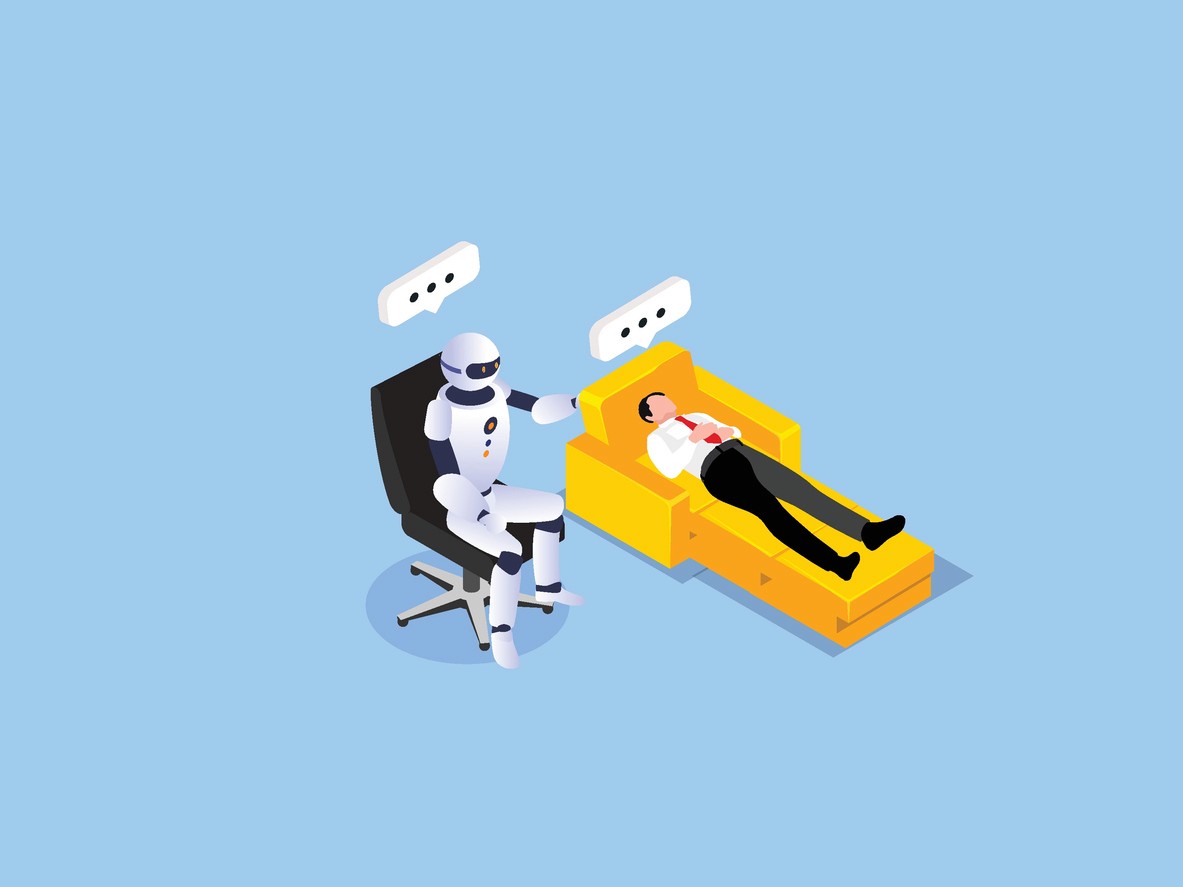
AI is becoming part therapist, part advisor, part colleague, HBR analysis shows

Jun 19, 2026

Research published by Harvard Business Review suggests AI is evolving from a productivity tool into something far more personal.

For the past three years, AI has largely been framed as a workplace tool. It drafts emails, summarizes reports, writes code, and automates routine tasks.

But according to the latest AI in the Wild study, published in the Harvard Business Review, people are increasingly using AI for something else: support. The research analyzed more than 12,000 real-world AI use cases between March 2025 and February 2026 and found that therapy and companionship remained the most common use case for a second consecutive year. Relationship advice, workplace guidance, and decision support also ranked among the most popular applications.

The biggest shift from last year is not what sits at number one. It is what has risen around it. In 2025, users frequently turned to AI for enhanced learning, finding purpose, generating ideas, and organizing their lives. Those categories have largely given way to more interpersonal uses. People increasingly rely on AI to navigate relationships, workplace interactions, and difficult decisions.

The trend is visible across the dataset. Personal and professional support now accounts for 34% of observed AI use cases, up from 17% in 2024.

The new sounding board

For many professionals, AI has become a place to test ideas before sharing them with others.

One user described using it to pressure test arguments rather than generate them: "I use AI all the time to evaluate an argument I've written and have the AI try to poke holes in it. I then assess if I'm missing something and go back to refine it myself. AI is a mirror, not a genie."

Used this way, AI functions less as an assistant and more as a sparring partner. It helps users challenge assumptions, refine arguments, and think through decisions before taking action.

When support becomes dependence

The same study highlights a less comfortable possibility.

The researchers point to a growing risk they call "thinkslop" — the habit of outsourcing too much judgment to AI.

One participant described the shift in personal terms: "With excessive use of ChatGPT and all these AI tools, I realized I hadn't been using my brain the same way. It's so easy to let AI write for you. I was literally outsourcing my brain."

The concern is not simply that AI may produce poor answers. It is that people may stop wrestling with problems themselves.

The workplace relationship

Many respondents reported using AI for career advice, difficult conversations, and interpreting interactions with colleagues.

One user said: "I got stressed overthinking about a message my boss sent me so I got ChatGPT to be my emotional support and decipher the message for me."

The numbers suggest that example is far from unusual. Personal and professional support has doubled as a share of AI use since 2024, becoming the study's largest category. People are increasingly turning to AI not just for answers, but for advice.

Voices

As AI scales in 2026, governance will decide who wins

Jun 3, 2026

The AI race has moved past experimentation. 2026 is about execution at scale. The winners won’t be the fastest adopters. They’ll be the ones with the governance to deploy AI decisively across their organizations. Everyone else is already behind.

When I was considering joining Dell Technologies in 2022, one thing stood out above all else. It was the culture around artificial intelligence. Dell had decided to take AI seriously. The organization was thinking disruptively, moving with intent, and treating itself as the first test case, not just the advisor. It made me curious and convinced me.

Nearly four years later, I can say the leap we’ve made in AI, both as an organization and in my own leadership, has been remarkable. It has fundamentally changed how I work, how I lead, and how I see the future, with a strong sense of optimism.

This shift is not just about productivity. It is about whether organizations can scale AI safely, effectively, and continuously innovate. At its core, this is a question of governance.

The leader who cannot look away

There is a temptation among senior executives to treat AI as a technology matter, as something to delegate to the CIO or CTO, while the real business of leadership continues elsewhere. That temptation should be resisted firmly.

A leader must have a horizontal view across the organization. Strategy, culture, operations, finance, and risk are all now shaped by AI. This is not something that can be delegated away from the top. Leadership teams that try to do so are not reducing complexity; they are allowing it to build, unseen and unmanaged.

My own experience confirms this. Since embracing AI tools in my daily work, my leadership has genuinely moved forward. I use my time more intelligently. I produce more value in the role, and I see the same effect ripple through the organization: people doing more meaningful work, freed from the routine tasks that once consumed their days. This is not a marginal efficiency gain. It is a qualitative shift in what leadership and professional work can mean.

Governance: The leadership trend that cannot wait

Among the many dimensions of AI leadership, one has emerged as the defining challenge of 2026: governance.  This is where the AI race will be decided, not in pilots, but in the ability to scale with control.

This is not primarily a regulatory question, though regulation matters. It is a leadership and competitiveness question. 

"As John Roese, Dell's global CTO and chief AI officer, wrote in a Dell blog post last December, “Top on the list is governance. We haven’t established strong governance frameworks yet.” He added that “governance in general will be a big deal in 2026,” and that inside the enterprise, “investment in a structured approach to AI will become a requirement.”

Companies are often moving faster than their organizational structures can absorb, from AI pilots to genuine production environments. In that transition, governance gaps appear. Who is accountable for an AI system's outputs? How is training data governed? What happens when a model fails, or behaves unexpectedly, at scale?

These questions are already surfacing in boardrooms. And the leaders who have clear answers will have a competitive advantage over those who do not.

Data is the asset and the vulnerability

AI does not merely use data. It amplifies data's value and its risk simultaneously.

Modern AI platforms ingest vast volumes of information, generate new data continuously, and concentrate an organization's most sensitive intellectual property in ways that were not true even five years ago. 

The security implications are direct. As Dell's President and Chief Security Officer, John Scimone, observed in a blog post last October: "Hackers go where the data is," and increasingly, that means where the AI is. 

This changes the risk calculus for leadership teams in a fundamental way. AI governance and data security are not separate conversations to be routed to different functions. They are two sides of the same strategic question: can we trust the systems on which our business depends?

An integrated, whole-of-company approach to risk and opportunity is no longer a best practice. It is a baseline.

Infrastructure as strategy

For much of the past decade, infrastructure was treated as a commodity, something to outsource, abstract away, or procure from whichever cloud provider offered the best commercial terms. AI has reversed that logic.

Where data resides, who controls it, and under what jurisdictional framework it is processed have become board-level questions. The concept of sovereign AI ensuring that data sovereignty, model ownership, and operational continuity remain under an organization's own governance is moving to practical architecture decisions.

The question organizations must now answer is not merely which AI tools to deploy, but what kind of AI platform to build on. 

Finland's moment if it chooses to take it

Finland carries some genuine advantages into the AI era. 

The Nordic country has technology-oriented people. Digital literacy runs deep. Trust in institutions, a precondition for data-sharing and AI deployment at scale, remains comparatively high.

And yet the Finnish economy has not grown. That is the uncomfortable fact sitting alongside those advantages.

AI offers a path to a growth leap that organic development alone cannot provide. The United States offers a preview: a meaningful share of recent GDP growth is now attributable, directly or indirectly, to AI-driven productivity. Projections for the coming years are more striking still. The same potential exists here. But potential is not destiny.

What is required is a change from companies, from workers, and above all from leaders. The AI revolution is not arriving. It has arrived. The only useful question now is what each organization will do about it.

The best place to start is with oneself. Leaders who have done that internal work, who have actually changed how they operate, not merely approved a strategy slide, are the ones driving genuine transformation in their organizations. At Dell, we have trained for this, measured it, and held ourselves accountable to it. We want to be the best reference for what we preach.

Governance is not the brake. It is the engine

Some leaders worry that governance frameworks will slow AI innovation. The concern is understandable but misplaced.

Ungoverned AI does not move faster. It moves recklessly, accumulating hidden liabilities in data quality, security exposure, regulatory risk, and organisational trust that eventually force a costly reckoning. "Governance is not about slowing down innovation," Roese argues. "It's about building the guardrails that allow us all to accelerate safely and sustainably." 

The organizations that will succeed with AI over the next decade are not necessarily those with the most impressive early pilots. They will be those who built the infrastructure, governance, and cultural readiness to operate AI at scale reliably, securely, and with clear accountability.

AI can help address major global challenges. But that requires trust. And trust requires governance. The opportunity is immediate, and so is the risk of inaction. Delays now will be difficult to reverse later.

Finland has the technological capability and institutional foundations. What remains is leadership, the courage to build trust and take the growth leap within reach. The work does not start with another strategy document, but with each leader choosing to step into the unknown. In a race already underway, delay is not neutral. It is a decision to fall behind.

Leaders

Labor law expert Sanna Honkinen: Finnish companies face an AI restructuring question that the law hasn't fully answered

May 20, 2026

Chinese courts have ruled that AI adoption alone does not justify dismissing workers. Finnish employers have far broader discretion — but the legal risk emerges earlier than many boards realize.

When a Hangzhou tech company tried to replace its AI quality-assurance supervisor with a large language model — offering him a 40% pay cut to a different role, then firing him when he refused — China's courts ruled the dismissal illegal. The Hangzhou Intermediate People's Court decision, published in late April as part of a set of typical AI-related labor cases, established a principle now drawing international attention: AI adoption alone does not justify firing workers.

Finnish employers operate under very different rules, but the underlying question Chinese courts raised is one Finnish boards will face soon, if they aren't facing it already: at what point does deploying AI shift from being a productivity-driven investment to a decision that results in a reduction of the workforce?

"There is no black and white answer to that," says Sanna Honkinen, head of employment practice at Hannes Snellman. And that ambiguity, she warns, is where the legal risk lives.

The Chinese precedent

The Hangzhou ruling, upheld on appeal on April 28, centered on a quality assurance supervisor identified only as Zhou. Hired in 2022 at a monthly salary of 25,000 yuan (USD3,676) to oversee his employer's AI output, Zhou was told in 2025 that the company intended to replace his role with a large language model. He was offered a different position at 15,000 yuan — a 40% pay cut — and dismissed when he refused.

The Intermediate People's Court ruled that AI-driven job replacement does not constitute a "major change in objective circumstances" under China's Labor Contract Law, the legal threshold normally required to justify redundancy-based termination. The court also found the reassignment offer unreasonable on its own terms. The ruling built on a December 2024 Beijing arbitration decision involving a map data worker dismissed after AI took over his role, reaching the same conclusion: adopting AI is a business choice, not an unforeseen event, and its costs cannot be shifted unilaterally onto employees.

The cases have drawn international legal attention because they cut against the assumption — common in at-will jurisdictions like the United States — that AI-driven restructuring is a straightforward business decision. Finland's framework sits between these poles.

The Finnish legal reality

Finnish employers have considerably more discretion than their Chinese counterparts to restructure around AI.

"In Finland, the employer has the right to decide what business activities are operated and how business and roles within the company are organized," Honkinen says.

Roles can be terminated for financial, production-related, or reorganization reasons linked to technological development, including AI adoption, provided the amount of work has genuinely declined. But that discretion comes with procedural strings attached.

Under Finland's Co-operation Act, employers with at least 50 employees must begin change negotiations if planned measures could materially affect employees' work tasks, working methods, working hours, or lead to layoffs or dismissals on financial or production-related grounds. Employers with 20 to 49 employees face similar obligations in cases involving broader personnel reductions.

Employers must also assess whether employees can be reassigned or retrained before dismissals take place. "The employer has to consider whether the employee can be placed into another role or trained for another role," Honkinen says.

That retraining obligation is narrower than it sounds. Companies do not have to educate employees into entirely new professions — the expectation is shorter-term training into adjacent roles where employees already possess the core capabilities needed.

The timing trap

The harder question for Finnish boards is not whether they can reduce roles, but when AI adoption becomes serious enough to trigger the formal negotiation process.

That is Honkinen's central warning. Companies that drift from AI experimentation into operational deployment without recognizing the transition can find themselves on the wrong side of the procedural line.

"At what point does the company have sufficient information on the estimated impacts on employees?" she says. There is no clean answer in the statute — and the timing matters, because employers cannot make business decisions that directly result in headcount reductions before change negotiations have been completed. 

At the same time, change negotiations cannot be held on a “just in case” basis without a concrete plan and an assessment of workforce impacts. "That is something that needs to be remembered," Honkinen says.

As understanding of AI’s concrete impact on business operations grows, it becomes increasingly likely that we will see more change negotiations carried out already at the stage when new AI investments are being considered, she adds.

The Chinese rulings flagged a structurally similar issue from the opposite direction. Courts there argued that if AI restructuring becomes necessary, employers should first prioritize retraining workers, offer reasonable reassignment terms, and provide support measures before moving to dismissals. Two very different legal systems have landed on overlapping employer obligations.

The transition is already underway

A 2025 survey commissioned by OP Financial Group found that 38% of large Finnish companies had already replaced some work tasks with AI, while more than half said they planned to do so in the future. The same survey found that 84% of companies had trained employees to use AI tools.

An IMF paper published earlier this year estimated that around one-fifth of Finland's workforce faces a risk of AI-related job displacement, particularly in software development, finance, and administrative work — even as Finland remains among the countries best positioned to benefit from AI adoption overall.

Honkinen says the largest impact is likely to fall on knowledge-work sectors where companies can automate parts of expert workflows without removing the need for human oversight. She pointed particularly to junior roles, including in the legal sector itself, where AI can increasingly automate repetitive tasks previously handled by entry-level employees.

"The most junior roles are, of course, roles where there might be the most impact," Honkinen says. But she argued the issue is more complicated than simply reducing headcount. "You can't really have senior employees in the future without first having junior employees."

That tension is likely to become more visible across Nordic companies as AI takes over portions of administrative, analytical, and documentation-heavy work that traditionally formed the training ground for younger professionals.

Rather than eliminating entire professions, Honkinen says many companies are likely to redesign workflows and redistribute responsibilities. "It's more a matter of changes in the scope of work. New skills and new tasks might be introduced."

Most companies are still approaching AI cautiously rather than aggressively replacing workers. "At the moment, the general assumption is that individuals are still needed to verify the results of AI," she says.

What boards should actually ask

Honkinen says boards should focus less on immediate labor savings and more on whether management has a credible long-term workforce strategy.

"What they should ask from management is whether there is systematic development of employee skills and capabilities taking place in the company," she says.

She describes the current moment as a "strategic transformation of working life," where companies need clearer plans for training employees, introducing AI tools, and adapting organizational structures over time.

In practical terms, that points to several questions Finnish boards and management teams should be working through now:

  • Is there a documented workforce skills plan tied to the AI roadmap, not just a cost-savings case?

  • At what threshold does a pilot become a deployment that triggers change negotiation obligations — and who inside the company is responsible for flagging that line?

  • Are AI usage policies in place before deployment scales, including rules on what data employees can share with external tools and how confidential information is handled?

  • Are change-negotiation timelines built into AI rollout plans, rather than treated as an afterthought once decisions have effectively been made?

"In many companies, there is a growing need for new policies and new instructions to employees as to how to use AI," Honkinen says.

Despite the pace of technological change, she does not see a strong need for entirely new labor legislation in Finland. "The thing with law is that when we have technological innovation, it might be difficult to have a legal framework that is always able to follow the technological innovations."

The larger challenge for Finnish employers, she suggests, is operational rather than legislative. Companies need to decide when AI adoption stops being a technology experiment and becomes a workforce restructuring process — and act before the law makes that decision for them. At the same time, they need to ensure employees are systematically trained to use AI effectively and responsibly.

Stay on the pulse, catch the signals

Subscribe to Listeds Leadership Intelligence Platform:

  • leader and company database access

  • email alerts

  • career, boards and interim opportunities

Our Pulse newsletter

Your weekly leadership intelligence briefing.

What happened, why it matters, and what to watch across every CEO, board, and executive move in Nordic listed companies, starting with Finland. Fast, factual, and to the point.

Delivered every Monday.

By signing up, you agree to our Privacy Policy