Global CEO confidence is cooling, with only a minority expecting revenue growth in the year ahead. In contrast, Finnish CEOs are more optimistic about their companies’ 12-month revenue prospects than peers in the United States, Germany, and the United Kingdom, according to PwC’s latest survey.
There is a quiet shift underway in Finnish leadership teams.
Globally, CEO confidence is cooling. Only about 30 percent of CEOs worldwide believe their company’s revenue will grow in 2026, down from 38 percent in the previous survey and lower than the recent peak of 56 percent in 2022, according to PwC’s latest Global CEO Survey report. Uncertainty, geopolitics, technology disruption, and trade tensions are weighing on leaders almost everywhere.
But Finland is moving in the opposite direction.
According to the findings of the annual survey, Finnish CEOs are more optimistic about their own companies’ growth than many of their international peers. While short-term confidence has declined sharply across most major economies, Finland and Sweden stand out as exceptions. Over a three-year horizon, Finnish CEOs are also more confident than their counterparts in Germany and the UK.
The central bank expects Finland’s gross domestic product to edge up by a modest 0.3% in 2025, so the optimism reported by PwC suggests recovery.
As PwC Finland CEO Kauko Storbacka puts it: “Finnish CEOs see their own company’s growth over the next twelve months more optimistically than in many other countries and appear to trust that a turnaround for the better is coming. The same positive tone can be seen in the responses from Finland’s key trading partners, such as Sweden and Germany.”
The paradox: global caution, local confidence
Globally, the mood remains cautious. CEOs report feeling increasingly exposed to near-term threats, particularly cyber risks, macroeconomic volatility, and geopolitical conflict.
Cybersecurity has become one of the biggest concerns globally, with nearly a third of CEOs seeing it as a major threat. In Finland, concern about cyber risk is even greater than in many other countries, reflecting both geopolitical realities and the digital nature of many Finnish industries.
Geopolitical tensions and macroeconomic volatility are also rising on the risk agenda. Interestingly, tariffs, a major concern globally, are less prominent for Finnish CEOs, though companies with strong US exposure remain vulnerable.
Storbacka notes that companies are learning to operate in this new reality: “Companies appear to have adapted well to the new situation. For firms with significant business operations in the United States, the risk is naturally higher, as tariffs have recently become a central instrument in international trade policy,” Storbacka notes.
Renewal is no longer optional
Perhaps the most important signal from the survey is this: CEOs know they must renew their companies faster. Besides leaps in AI, companies eye diversification.
Globally, 42 percent of CEOs say their companies have entered new industries in the past five years. Nearly half of those planning acquisitions expect to invest outside their core sector.
Finnish CEOs are also planning deals. “More than half of Finnish CEOs are planning to complete one or more acquisitions in Finland over the next three years. When looking abroad, Finnish CEOs say they will invest, in addition to the United States, in nearby regions, with Sweden cited as the most important, followed by Estonia and Norway,” says Aitor de la Torre, partner at PwC Finland.
Still, there is a structural constraint. CEOs report spending nearly half of their time on short-term issues. In Finland, the share is similarly high. In an uncertain environment, that is understandable. Yet it inevitably reduces the space available for long-term reinvention.
Confidence may be returning. The more difficult question is whether transformation can keep pace with it.
·
5 min read
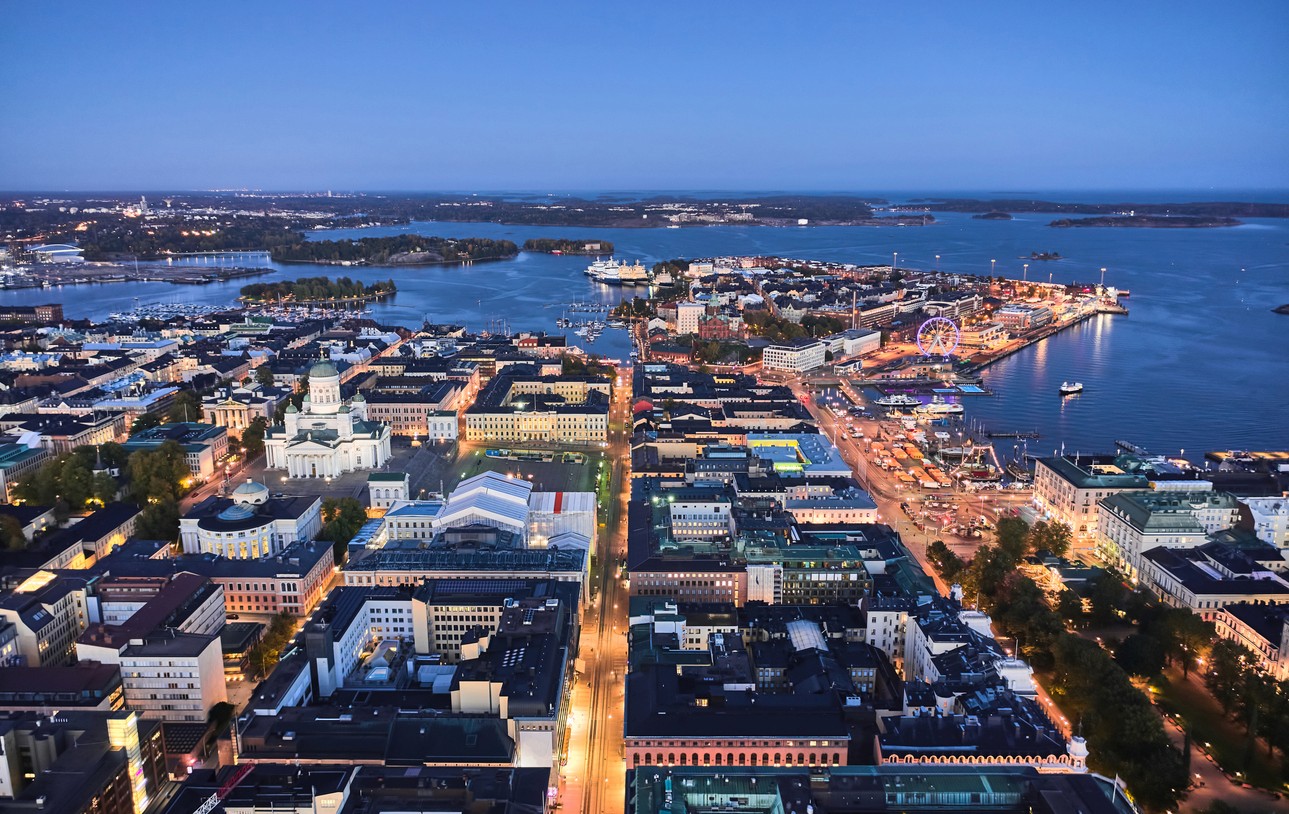
Global CEO confidence is cooling, with only a minority expecting revenue growth in the year ahead. In contrast, Finnish CEOs are more optimistic about their companies’ 12-month revenue prospects than peers in the United States, Germany, and the United Kingdom, according to PwC’s latest survey.
There is a quiet shift underway in Finnish leadership teams.
Globally, CEO confidence is cooling. Only about 30 percent of CEOs worldwide believe their company’s revenue will grow in 2026, down from 38 percent in the previous survey and lower than the recent peak of 56 percent in 2022, according to PwC’s latest Global CEO Survey report. Uncertainty, geopolitics, technology disruption, and trade tensions are weighing on leaders almost everywhere.
But Finland is moving in the opposite direction.
According to the findings of the annual survey, Finnish CEOs are more optimistic about their own companies’ growth than many of their international peers. While short-term confidence has declined sharply across most major economies, Finland and Sweden stand out as exceptions. Over a three-year horizon, Finnish CEOs are also more confident than their counterparts in Germany and the UK.
The central bank expects Finland’s gross domestic product to edge up by a modest 0.3% in 2025, so the optimism reported by PwC suggests recovery.
As PwC Finland CEO Kauko Storbacka puts it: “Finnish CEOs see their own company’s growth over the next twelve months more optimistically than in many other countries and appear to trust that a turnaround for the better is coming. The same positive tone can be seen in the responses from Finland’s key trading partners, such as Sweden and Germany.”

The paradox: global caution, local confidence
Globally, the mood remains cautious. CEOs report feeling increasingly exposed to near-term threats, particularly cyber risks, macroeconomic volatility, and geopolitical conflict.
Cybersecurity has become one of the biggest concerns globally, with nearly a third of CEOs seeing it as a major threat. In Finland, concern about cyber risk is even greater than in many other countries, reflecting both geopolitical realities and the digital nature of many Finnish industries.
Geopolitical tensions and macroeconomic volatility are also rising on the risk agenda. Interestingly, tariffs, a major concern globally, are less prominent for Finnish CEOs, though companies with strong US exposure remain vulnerable.
Storbacka notes that companies are learning to operate in this new reality: “Companies appear to have adapted well to the new situation. For firms with significant business operations in the United States, the risk is naturally higher, as tariffs have recently become a central instrument in international trade policy,” Storbacka notes.
Renewal is no longer optional
Perhaps the most important signal from the survey is this: CEOs know they must renew their companies faster. Besides leaps in AI, companies eye diversification.
Globally, 42 percent of CEOs say their companies have entered new industries in the past five years. Nearly half of those planning acquisitions expect to invest outside their core sector.
Finnish CEOs are also planning deals. “More than half of Finnish CEOs are planning to complete one or more acquisitions in Finland over the next three years. When looking abroad, Finnish CEOs say they will invest, in addition to the United States, in nearby regions, with Sweden cited as the most important, followed by Estonia and Norway,” says Aitor de la Torre, partner at PwC Finland.
Still, there is a structural constraint. CEOs report spending nearly half of their time on short-term issues. In Finland, the share is similarly high. In an uncertain environment, that is understandable. Yet it inevitably reduces the space available for long-term reinvention.
Confidence may be returning. The more difficult question is whether transformation can keep pace with it.




Investor Event
Listeds Investor Event · Defence
Nordic defence is in a once-in-a-generation growth cycle. Eight listed and pre-IPO companies pitch to 100+ invited investors at Valkoinen Sali, Helsinki
21 September 2026


Latest on Listeds

