Leadership fashions rarely move in straight lines. Our discussion with Sami Itani, professor of practice at Aalto University School of Business, suggests they may once again be shifting away from three decades of soft, empathetic management and toward a harder style built on clarity, accountability, and performance.

Drawing on the cyclical patterns identified by Barley and Kunda, this article explores why the change is happening, what it asks of today’s leaders, and how to operate in a moment when empathy alone no longer suffices, yet coldness won’t work either.

In 1992, Stephen Barley and Gideon Kunda published a now-classic study, Design and Devotion: Surges of Rational and Normative Ideologies of Control in Managerial Discourse, a work that Sami Itani counts among his personal favorites.

Their finding was simple but profound: leadership and management thinking don’t evolve in a straight line from authoritarian to humane, from rational to emotional. Instead, they move in cycles. Periods of rational (“hard”) and normative (“soft”) ideologies alternate, reflecting the broader economic and cultural tides of their times.

Today, as the world grapples with geopolitical instability, cost pressures, AI-driven transformation, and rising societal polarization, the pendulum is swinging again. After three decades of “human-centric leadership,” we are seeing the signs that we are entering what could be called the hard leadership era.

From empathy to accountability

“When we talk about hard leadership, it is often about clarity, measurability, and performance,” says Itani. “It’s result-driven, consistent, and built on individual accountability. Reward systems are personal and logical.”

Soft leadership, by contrast, views employees as holistic individuals. “It’s about understanding the person behind the role, influencing through values and emotions, and supporting personal growth,” he says.

Itani cautions against moralizing these styles. “Hard isn’t bad, and soft isn’t good. Each has its benefits and flaws. Nothing fits all.”

He traces the current shift back to the early 1990s, when the “soft era” began. Hierarchies flattened, purpose became a mantra, and emotional intelligence entered the leadership discussion. “Now, after more than 30 years, it looks like the wave is turning,” Itani notes. “We are seeing a return to structure, performance, and results.”

Culture and the corporate mirror

Tommi Lehtinen, organizational psychologist and founding partner at SCCG, argues that leadership cultures mirror their societies. “Organizational leadership is always, at least in part, a reflection of the surrounding value culture,” he says. “When societies lean toward liberalism and softness, a counterforce emerges — hardness and conservatism. The same pattern appears inside companies and is often triggered by shifts in performance. After years of strong margins and purpose-driven leadership, a downturn swings the pendulum back to clarity, control, and efficiency.”

Lehtinen calls the dynamic cyclical, since societies and organizations always search for balance. “Good leaders do not get lost in the swing; they navigate it,” he explains. “Experienced leaders read these cycles, see the system and their financial context, and align with the business context and strategy.”

The generational challenge

For many leaders, the transition is disorienting. “We have a whole generation of 40- and 50-year-olds who built their careers in an era of empowerment, empathy, and coaching,” Itani says. “Now the world around them, if moving to the hard leadership era, values decisiveness, speed, and measurable outcomes.”

He believes historical awareness helps. “When you understand that these cycles always come and go, it’s easier not to panic. The key is contextual leadership, knowing your organization, your industry, and your people.”

Clarity as the new kindness

So what does effective leadership look like in this harder era?

“Honesty and consistency,” Itani says. “People still value fairness and trust. Hard leadership doesn’t mean cold leadership; it means clarity.”

He sees courage as timeless. “The ability to have difficult conversations is the most consistent trait of good leaders across eras. You can’t outsource it to HR or consultants.”

The new cycle

If the 1990s to 2020s were defined by empathy, flexibility, and purpose, the coming decade may be remembered for discipline, decisiveness, and performance. Yet the human dimension isn’t disappearing, it’s being reframed.

The pendulum is shifting, and leaders must adapt to it. Hard leadership isn’t the end of empathy; it’s a shift toward clarity, direction, and accountability. The real challenge is not choosing soft or hard, but reading the moment and adapting.


|

|

Leaders

We’ve entered the era of hard leadership

We’ve entered the era of hard leadership

·

5 min read

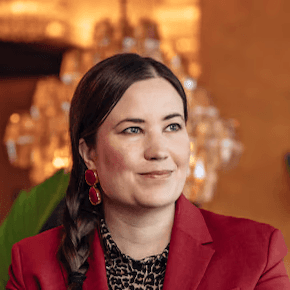
Credit: Sami Itani's camera roll.

Credit: Sami Itani's camera roll.

Leadership fashions rarely move in straight lines. Our discussion with Sami Itani, professor of practice at Aalto University School of Business, suggests they may once again be shifting away from three decades of soft, empathetic management and toward a harder style built on clarity, accountability, and performance.

Drawing on the cyclical patterns identified by Barley and Kunda, this article explores why the change is happening, what it asks of today’s leaders, and how to operate in a moment when empathy alone no longer suffices, yet coldness won’t work either.

In 1992, Stephen Barley and Gideon Kunda published a now-classic study, Design and Devotion: Surges of Rational and Normative Ideologies of Control in Managerial Discourse, a work that Sami Itani counts among his personal favorites.

Their finding was simple but profound: leadership and management thinking don’t evolve in a straight line from authoritarian to humane, from rational to emotional. Instead, they move in cycles. Periods of rational (“hard”) and normative (“soft”) ideologies alternate, reflecting the broader economic and cultural tides of their times.

Today, as the world grapples with geopolitical instability, cost pressures, AI-driven transformation, and rising societal polarization, the pendulum is swinging again. After three decades of “human-centric leadership,” we are seeing the signs that we are entering what could be called the hard leadership era.

From empathy to accountability

“When we talk about hard leadership, it is often about clarity, measurability, and performance,” says Itani. “It’s result-driven, consistent, and built on individual accountability. Reward systems are personal and logical.”

Soft leadership, by contrast, views employees as holistic individuals. “It’s about understanding the person behind the role, influencing through values and emotions, and supporting personal growth,” he says.

Itani cautions against moralizing these styles. “Hard isn’t bad, and soft isn’t good. Each has its benefits and flaws. Nothing fits all.”

He traces the current shift back to the early 1990s, when the “soft era” began. Hierarchies flattened, purpose became a mantra, and emotional intelligence entered the leadership discussion. “Now, after more than 30 years, it looks like the wave is turning,” Itani notes. “We are seeing a return to structure, performance, and results.”

Culture and the corporate mirror

Tommi Lehtinen, organizational psychologist and founding partner at SCCG, argues that leadership cultures mirror their societies. “Organizational leadership is always, at least in part, a reflection of the surrounding value culture,” he says. “When societies lean toward liberalism and softness, a counterforce emerges — hardness and conservatism. The same pattern appears inside companies and is often triggered by shifts in performance. After years of strong margins and purpose-driven leadership, a downturn swings the pendulum back to clarity, control, and efficiency.”

Lehtinen calls the dynamic cyclical, since societies and organizations always search for balance. “Good leaders do not get lost in the swing; they navigate it,” he explains. “Experienced leaders read these cycles, see the system and their financial context, and align with the business context and strategy.”

The generational challenge

For many leaders, the transition is disorienting. “We have a whole generation of 40- and 50-year-olds who built their careers in an era of empowerment, empathy, and coaching,” Itani says. “Now the world around them, if moving to the hard leadership era, values decisiveness, speed, and measurable outcomes.”

He believes historical awareness helps. “When you understand that these cycles always come and go, it’s easier not to panic. The key is contextual leadership, knowing your organization, your industry, and your people.”

Clarity as the new kindness

So what does effective leadership look like in this harder era?

“Honesty and consistency,” Itani says. “People still value fairness and trust. Hard leadership doesn’t mean cold leadership; it means clarity.”

He sees courage as timeless. “The ability to have difficult conversations is the most consistent trait of good leaders across eras. You can’t outsource it to HR or consultants.”

The new cycle

If the 1990s to 2020s were defined by empathy, flexibility, and purpose, the coming decade may be remembered for discipline, decisiveness, and performance. Yet the human dimension isn’t disappearing, it’s being reframed.

The pendulum is shifting, and leaders must adapt to it. Hard leadership isn’t the end of empathy; it’s a shift toward clarity, direction, and accountability. The real challenge is not choosing soft or hard, but reading the moment and adapting.
Board Programme

Built for Nordic listed company boards.

The only programme in the Nordics designed specifically for listed-company board work.
Five sessions, one cohort, twenty leaders in one room - Helsinki, 2026.

Board Programme

Built for Nordic listed company boards.

The only programme in the Nordics designed specifically for listed-company board work.
Five sessions, one cohort, twenty leaders in one room - Helsinki, 2026.

Authors

Founder and ceo

Helene Auramo is a co-founder of Listeds and Nordic Listed Leaders. She has previously co-founded Slush, Indiedays, Zipipop, and Okimo Clinic, building ventures at the intersection of media, technology, and community. She holds board positions at the Finnish Business School Graduates (Suomen Ekonomit) and Finnvera, and serves as Chair of the Investment Committee at the Finnish Business School Graduates. Helene is also a columnist for Talouselämä, Finland’s leading business magazine, and Aamulehti, one of the country’s largest newspapers. Her work focuses on leadership, growth, and the structures that shape decision-making in Nordic companies. She was awarded Future Board Member of the Year in 2022 by Future Board.

Founder and ceo

Helene Auramo is a co-founder of Listeds and Nordic Listed Leaders. She has previously co-founded Slush, Indiedays, Zipipop, and Okimo Clinic, building ventures at the intersection of media, technology, and community. She holds board positions at the Finnish Business School Graduates (Suomen Ekonomit) and Finnvera, and serves as Chair of the Investment Committee at the Finnish Business School Graduates. Helene is also a columnist for Talouselämä, Finland’s leading business magazine, and Aamulehti, one of the country’s largest newspapers. Her work focuses on leadership, growth, and the structures that shape decision-making in Nordic companies. She was awarded Future Board Member of the Year in 2022 by Future Board.

Authors

Founder and ceo

Helene Auramo is a co-founder of Listeds and Nordic Listed Leaders. She has previously co-founded Slush, Indiedays, Zipipop, and Okimo Clinic, building ventures at the intersection of media, technology, and community. She holds board positions at the Finnish Business School Graduates (Suomen Ekonomit) and Finnvera, and serves as Chair of the Investment Committee at the Finnish Business School Graduates. Helene is also a columnist for Talouselämä, Finland’s leading business magazine, and Aamulehti, one of the country’s largest newspapers. Her work focuses on leadership, growth, and the structures that shape decision-making in Nordic companies. She was awarded Future Board Member of the Year in 2022 by Future Board.

All Listeds newsletters (bundle)

One sign-up, the full picture.

Get every Listeds newsletter: the daily signal drumbeat, the weekly Pulse briefing, the monthly Best of the Month, the CEO letter, and the Weekend read.

By signing up, you agree to our Privacy Policy

All Listeds newsletters (bundle)

One sign-up, the full picture.

Get every Listeds newsletter: the daily signal drumbeat, the weekly Pulse briefing, the monthly Best of the Month, the CEO letter, and the Weekend read.

By signing up, you agree to our Privacy Policy

Latest signalsLive feed
Moves trackerLive feed

Investor Event

Listeds Investor Event · Defence

Nordic defence is in a once-in-a-generation growth cycle. Eight listed and pre-IPO companies pitch to 100+ invited investors at Valkoinen Sali, Helsinki

21 September 2026

Latest on Listeds

Leadership Moves

Honkarakenne puts Sanna Hovila on its executive group as new CEO rewrites strategy

Oct 12, 2026

Honkarakenne has appointed HR Director Sanna Hovila as Vice President, People and Communications and a member of the Executive Group from 9 October 2026. She reports to President and CEO Magnus Hindström, and the Executive Group now has six members.

“Sanna has strong expertise and insight in personnel matters and in developing our culture. As a member of the Executive Group, she will ensure that the employee perspective is included in decisions from the very beginning and that they are communicated clearly,” said Magnus Hindström, President and CEO.

Hindström brings people and communications to the top table two months into the job

Hindström took over on 3 August, succeeding Marko Saarelainen, who moved to lead subsidiary Honka Japan. He joined from Metsä Wood, where he was vice president for Kerto LVL sales. Hovila has been HR Director at Honkarakenne since 2021 and previously worked at Atria.

The appointment follows a profit warning and an unfinished strategy update

In August, Honkarakenne dropped its numerical 2026 guidance of EUR 42 to 45 million in net sales and now only expects net sales and operating profit to exceed 2025 levels. It cited weaker export orders and a profitability programme that missed its early-year targets. First-half net sales fell 5% to EUR 15.8 million and operational EBIT, excluding non-recurring items, was EUR -2.2 million, while the order book rose 28% to EUR 33.6 million.

“We are currently updating our strategy, and implementing it requires clear decisions, openness about the rationale and consistent action. The decisions affect the everyday work of every employee, which is why human resources management and communications belong in the Executive Group,” comments Magnus Hindström, President and CEO.

Alongside the strategy update, Hindström is focusing on adjusting the cost structure and strengthening cash flow. Decisions of that kind reach every employee, which is why the company wants the people's perspective in the room when they are made.

“Change will only succeed if each of us knows where we are heading and why, and that is what I will focus on first,” says Sanna Hovila.

Monthly Leadership Moves

September's finance seats started filling from inside

Oct 9, 2026

Through August, every incoming chief financial officer at a Helsinki issuer since December 2025 already held the title somewhere else. In September, Vincit promoted from its own controlling team and UPM made WISA's interim finance chief permanent. The lateral market did not close: Tieto and Relais both hired sitting finance chiefs, and Terveystalo is now searching for one.

Listeds had recorded at least ten CFO changes across Nasdaq Helsinki and First North between December 2025 and August 2026, and not one incoming finance chief was taking the job for the first time. Last month's roundup ended on whether September would break that run. It did, at the smaller end of the market.

The month's second signal was structural. Viking Line, Kalmar, Terveystalo and the planned UPM and Sappi graphic paper joint venture each redrew an organization in September and named the people to run it. Board-level change stayed thin, and most of it was nomination-board formation for the 2027 annual general meetings rather than turnover in the boardroom itself.

Vincit and WISA broke the lateral run with internal finance appointments

The Digia and Vincit chain that opened in August closed in September. Vincit named a successor on September 01, and went inside to do it. Paula Kuittinen, Head of Management Accounting and Business Control since March 2026 and before that more than 12 years in finance roles at CGI, most recently she has been the Finance Director, now becoming the CFO on November 1. "It is great to be able to appoint our new CFO from within the company," said chief executive Julius Manni.

On September 18, UPM's board appointed Lasse von Hertzen, previously WISA's interim CFO, its permanent Senior Vice President and Chief Financial Officer, effective when the plywood demerger completes. That finishes a WISA leadership team named in full by the parent's board, with trading expected from November 2.

LapWall took a third route. Tuomo Riihonen's employment ended on September 24, and the next day the company named Tiina Määttä Chief Financial Officer and Legal Officer from October 1. Her record runs through finance and legal advisory roles at Talenom and Greenstep and the chief executive seat at Kymsol Group.

Kempower named Lasse Hatinen on September 9, bringing more than 15 years of finance leadership in listed industrial companies. He joins by March 1, 2027 at the latest, from Metso where he has served as Senior Vice President, Group Controller. Juha Jaatinen, interim since August 13, holds the seat until then.

Larger issuers kept buying finance chiefs who already hold the title

The lateral market remains the default above small cap. Tieto appointed Juuso Pajunen from Terveystalo on September 16, and Terveystalo opened its search the same day. Relais Group appointed Joonas Mäkipeska on September 14 from Technopolis, where he is Chief Financial and Strategy Officer, after CFO roles at Holiday Club Resorts, Sponda and ALD Automotive. Chief executive Christian Gebauer framed the brief as "continued profitable growth, supported by financial discipline, strong cash conversion and investment discipline."

Stora Enso moved the other way on the same theme: on September 17 CFO Niclas Rosenlew was named deputy chief executive to President & CEO Hans Sohlström while keeping the finance role. Tallink appointed Armin Penner as its new CFO on September 8. He has worked for more than six years as CFO and Management Board Member of Circle K Eesti and has also served as CFO of Euroapteek and Ragn-Sells Eesti. 

SSH went outside for its chief executive, Arvo went to its own board

September's two listed-issuer CEO appointments took opposite routes. SSH Communications Security named Lars Bell from Omada, where he was Chief Customer Officer and interim chief executive, effective October 1. The share rose 49.5% in the five sessions to September 7. Bell inherits a business whose second-quarter revenue recovered to EUR 5.7 million, up 6.8%, while EBITDA fell 40.7%, and he starts on the same day as CFO Cristian Arias. The third-quarter report will be the first one a rebuilt executive team owns.

Arvo Sijoitusosuuskunta named Teemu Kokko, a member of its board of directors since 2021, deputy chief executive from December and chief executive from April 1, 2027. The selection ran through a nomination committee drawn from the cooperative's supervisory board, one level above the board Kokko sits on. He inherits first-half operating profit of EUR 8.5 million against EUR 6.5 million a year earlier, most of the step-up traced to an approximately EUR 6.9 million gain on the HANZA exit.

Reorganizations, not departures, produced most management-team changes

The month's largest management-team changes came attached to new structures. Kalmar announced plans on September 3 to simplify its operating model by combining divisions. Terveystalo said on September 4 it will report in four segments from 2027, Healthcare Services, Oral Health, Public Partnerships and Sweden, and named Ville Pesonen senior vice president for oral health. Viking Line renewed its management structure on September 8 and established a Viking Leadership Team. UPM and Sappi nominated Gunnar Eberhardt and Stephen Blyth to lead their planned graphic paper joint venture on September 8, and the wider management team on September 14. 

Technology seats moved alongside. Aspocomp named Ville Raatikainen Chief Engineering and Technology Officer from January 1, 2027, the second outside hire to its team since July, timed to the phased commissioning of its expanded Oulu plant.

Directors moving into executive roles drove September's committee changes

Only one board chair left. Kari Syrjänen resigned as chair of Biohit on September 2. The two committee changes that followed shared a cause: a director taking an executive job. Tulikivi's audit committee chair Niko Haavisto left the board after becoming CFO of Fiskars, and Panu Paappanen became the chairperson on September 14. At Olvi, director Tarmo Noop left the audit committee to run the Estonian subsidiary A. Le Coq on an interim basis, and board chair Nora Hortling replaced him.

September split the finance pipeline by company size

September broke the lateral CFO run, but only at the smaller end of the market: Vincit and WISA filled their finance seats from inside, while Tieto and Relais kept hiring sitting finance chiefs. At chief executive level, Arvo promoted from its own board and SSH went outside. Most management-team changes followed reorganizations rather than departures. On boards, the committee changes came from directors moving into executive roles, and most other activity was nomination-board formation for 2027. With interim finance cover at Kempower and Relais and an open seat at Terveystalo, the next test is whether larger issuers start filling finance seats from within. 

Join our Pulse, Best-of-the-Week, and Weekend newsletters

Join our Pulse, Best-of-the-Week, and Weekend newsletters