Where previous technology waves have typically unfolded over 15 to 20 years, the main wave of artificial intelligence is expected to last only five to 10 years. “Change capability means that a company is able to learn and renew itself at least as fast as its operating environment is changing,” says Riikka Tanner.
The ability to adapt may now be the most decisive factor in corporate competitiveness, says Riikka Tanner, a strategy and leadership consultant and author. In today’s business environment, companies are no longer competing solely through products, customer experience, or technology – they are increasingly competing on whether they can benefit from ongoing change faster than their rivals.
Tanner’s latest leadership book, Muutoskyvykkyys (“Change Capability”), will be published by Alma Insights in March. The core idea behind the book stems from a striking observation: previous technology waves have typically unfolded over 15 to 20 years, whereas the main wave of artificial intelligence is expected to last only five to 10 years.
“Change capability means that a company is able to learn and renew itself at least as fast as its operating environment is changing,” Tanner says.
While products, processes, and technologies can often be copied, Tanner argues that the behavioral and cognitive patterns of an organization are what truly determine long-term success – and they are nearly impossible to replicate.
In a change-capable organization, change is not driven by projects. Instead, it is embedded into everyday ways of working. Leadership is not about control, but about creating rhythm. Rather than merely reacting, organizations must learn to anticipate developments and detect weak signals – learning and adapting before they are forced to.
Traditional organizations tend to focus on execution, efficiency, and metrics. In capability-driven organizations, the emphasis shifts toward learning, thinking, and the quality of decision-making.
“In a performance-driven culture, what matters is a result,” Tanner says. “In a change-capable organization, it’s equally important how the organization’s thinking develops along the way.”
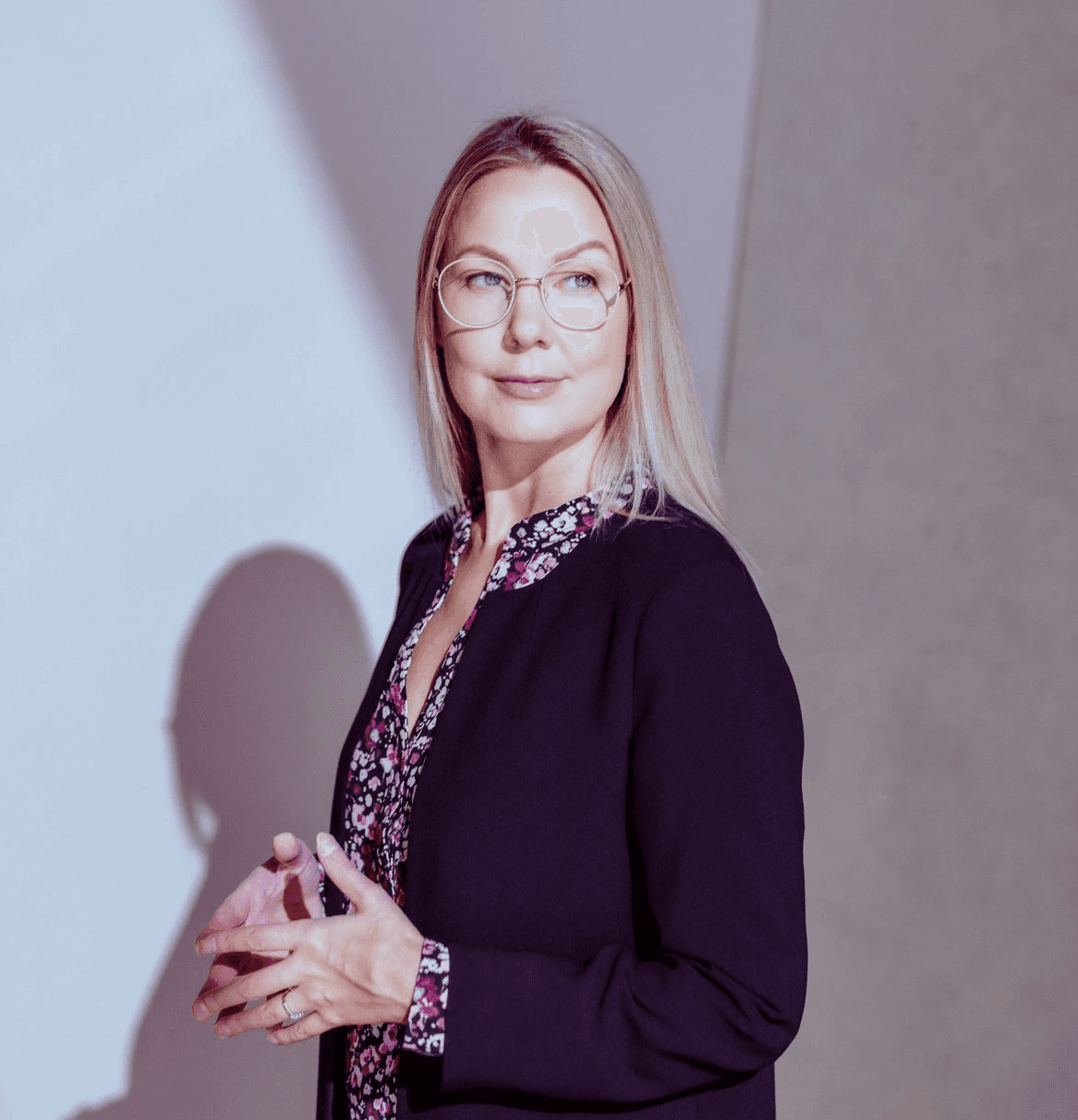
Riikka Tanner is the author of the upcoming leadership book Muutoskyvykkyys (“Change Capability”), to be published by Alma Insights in March.
Learning must be led, too
According to Tanner, Finnish companies are in a relatively strong position when it comes to building change capability. Psychological safety is often high, and organizational hierarchies tend to be low.
However, learning is an area that requires particular attention.
“In Finnish working culture, we treat learning as a by-product,” Tanner says. “The prevailing idea is that learning accumulates alongside business, without us actively leading it. This means the majority of learning potential is left unused.”
Tanner argues that learning needs to be systematically aligned with the company’s strategy and growth – not only at the individual level, but also at the team level.
The question, she says, must be faced directly: if an organization aims to change as fast as its environment, what pace of learning does that actually require?
The World Economic Forum estimates that by 2030, nearly 40% of core skills at work will have changed. Tanner notes what this means in practice: companies would need to update 6–7% of skills every year. To keep up, employees would need to dedicate roughly 8–15% of their weekly working time to learning—equivalent to one working day every two weeks.
Leaders must make their thinking visible
Do organizations have enough time for thinking? Tanner believes the answer is largely no.
She is involved in the annual Johdon agendalla (“On the Leadership Agenda”) trend report, which this year gathered responses from more than 200 business decision-makers in Finland. Of those respondents, 42% believed that there is not enough time for thinking in organizations. Only one in 10 felt that their own manager makes their thinking visible.
“I believe an organization can interpret the world, anticipate changes in its environment, and learn to think collectively only if leaders make their own thinking visible,” Tanner says.
In today’s environment, Tanner argues, a leader’s most important task is directing attention.
“Results follow what we choose to focus on,” she says.
Focus, in this context, is ultimately about sense-making – building a shared understanding of reality and direction across the organization. “As change becomes both faster and more intense than ever, the goal is not simply to run twice as fast. It is about whether companies dare to let go of half of what they are currently doing, in order to make room for something new and fundamentally necessary for renewal.”
In practice, this means saying no more often—and dismantling old, cemented ways of working.
"The real question for leaders is not what to add next – but what they are prepared to let go of, " Tanner says. "As change accelerates, unlearning becomes the real advantage.”
·
5 min read

Where previous technology waves have typically unfolded over 15 to 20 years, the main wave of artificial intelligence is expected to last only five to 10 years. “Change capability means that a company is able to learn and renew itself at least as fast as its operating environment is changing,” says Riikka Tanner.
The ability to adapt may now be the most decisive factor in corporate competitiveness, says Riikka Tanner, a strategy and leadership consultant and author. In today’s business environment, companies are no longer competing solely through products, customer experience, or technology – they are increasingly competing on whether they can benefit from ongoing change faster than their rivals.
Tanner’s latest leadership book, Muutoskyvykkyys (“Change Capability”), will be published by Alma Insights in March. The core idea behind the book stems from a striking observation: previous technology waves have typically unfolded over 15 to 20 years, whereas the main wave of artificial intelligence is expected to last only five to 10 years.

“Change capability means that a company is able to learn and renew itself at least as fast as its operating environment is changing,” Tanner says.
While products, processes, and technologies can often be copied, Tanner argues that the behavioral and cognitive patterns of an organization are what truly determine long-term success – and they are nearly impossible to replicate.
In a change-capable organization, change is not driven by projects. Instead, it is embedded into everyday ways of working. Leadership is not about control, but about creating rhythm. Rather than merely reacting, organizations must learn to anticipate developments and detect weak signals – learning and adapting before they are forced to.
Traditional organizations tend to focus on execution, efficiency, and metrics. In capability-driven organizations, the emphasis shifts toward learning, thinking, and the quality of decision-making.
“In a performance-driven culture, what matters is a result,” Tanner says. “In a change-capable organization, it’s equally important how the organization’s thinking develops along the way.”
Riikka Tanner is the author of the upcoming leadership book Muutoskyvykkyys (“Change Capability”), to be published by Alma Insights in March.
Learning must be led, too
According to Tanner, Finnish companies are in a relatively strong position when it comes to building change capability. Psychological safety is often high, and organizational hierarchies tend to be low.
However, learning is an area that requires particular attention.
“In Finnish working culture, we treat learning as a by-product,” Tanner says. “The prevailing idea is that learning accumulates alongside business, without us actively leading it. This means the majority of learning potential is left unused.”
Tanner argues that learning needs to be systematically aligned with the company’s strategy and growth – not only at the individual level, but also at the team level.
The question, she says, must be faced directly: if an organization aims to change as fast as its environment, what pace of learning does that actually require?
The World Economic Forum estimates that by 2030, nearly 40% of core skills at work will have changed. Tanner notes what this means in practice: companies would need to update 6–7% of skills every year. To keep up, employees would need to dedicate roughly 8–15% of their weekly working time to learning—equivalent to one working day every two weeks.
Leaders must make their thinking visible
Do organizations have enough time for thinking? Tanner believes the answer is largely no.
She is involved in the annual Johdon agendalla (“On the Leadership Agenda”) trend report, which this year gathered responses from more than 200 business decision-makers in Finland. Of those respondents, 42% believed that there is not enough time for thinking in organizations. Only one in 10 felt that their own manager makes their thinking visible.
“I believe an organization can interpret the world, anticipate changes in its environment, and learn to think collectively only if leaders make their own thinking visible,” Tanner says.
In today’s environment, Tanner argues, a leader’s most important task is directing attention.
“Results follow what we choose to focus on,” she says.
Focus, in this context, is ultimately about sense-making – building a shared understanding of reality and direction across the organization. “As change becomes both faster and more intense than ever, the goal is not simply to run twice as fast. It is about whether companies dare to let go of half of what they are currently doing, in order to make room for something new and fundamentally necessary for renewal.”
In practice, this means saying no more often—and dismantling old, cemented ways of working.
"The real question for leaders is not what to add next – but what they are prepared to let go of, " Tanner says. "As change accelerates, unlearning becomes the real advantage.”




Investor Event
Listeds Investor Event · Defence
Nordic defence is in a once-in-a-generation growth cycle. Eight listed and pre-IPO companies pitch to 100+ invited investors at Valkoinen Sali, Helsinki
21 September 2026


Latest on Listeds

