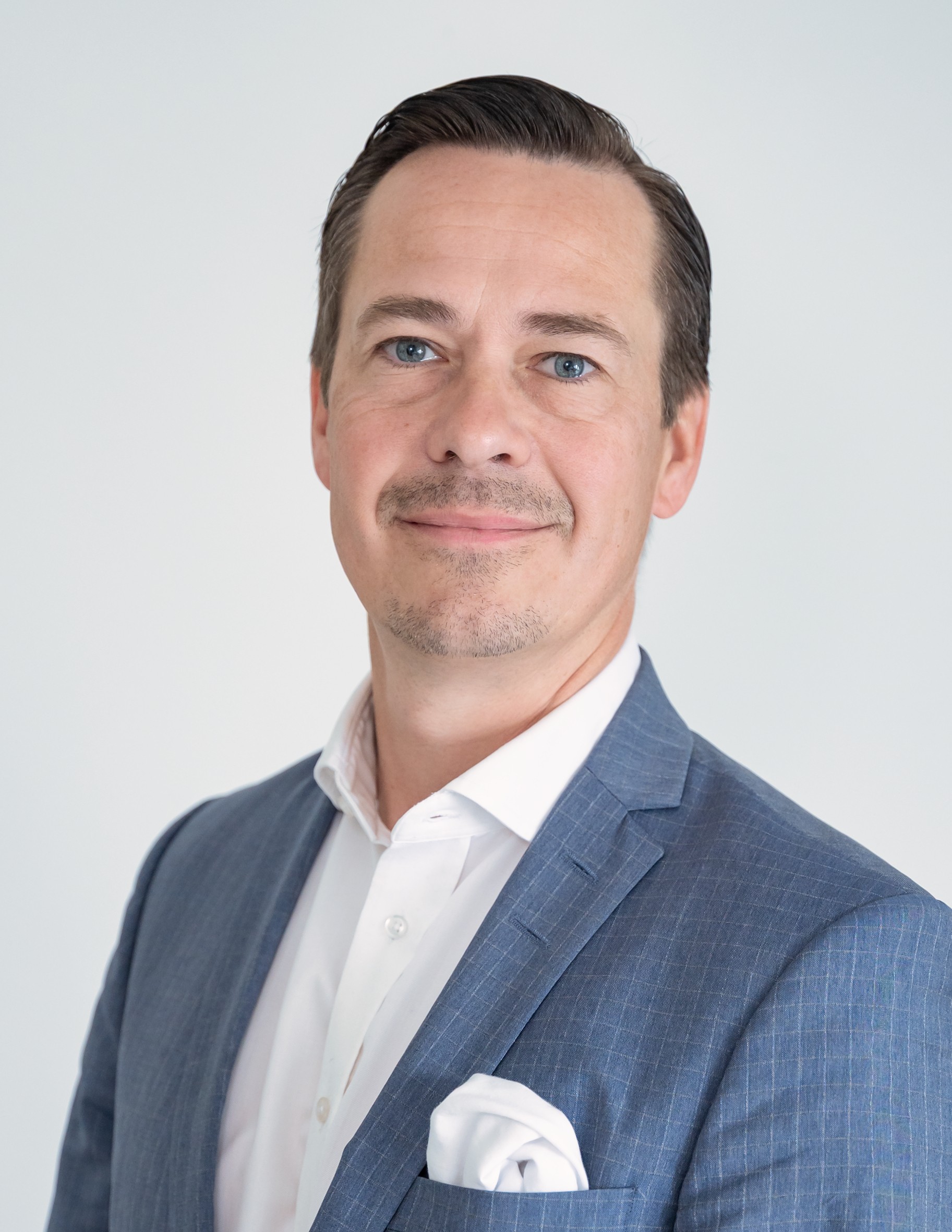
When Carl Haglund became chief executive of KH Group, the transition did not unfold over months. It took days.
From the outside, such speed can look reckless. In reality, it reflected prior preparation.
Haglund had joined the board of KH Group at the beginning of 2025. He was not new to the business: since 2020, he had served on the board of Nordic Rescue Group, one of KH Group’s core assets. NRG manufactures Saurus-branded fire trucks.
By late summer, the board of KH Group had reached a decisive conclusion. The company’s transformation required momentum, focus, and execution. The question was no longer whether change was needed, but how fast it could be delivered.
Why speed was possible
A listed-company transformation is not a clean-slate exercise. It requires immediate credibility with investors and employees. For an outsider CEO, the learning curve would have been steep and the honeymoon brief.
Haglund already knew the company well. He understood the group structure, the subsidiaries, and the drag created by Indoor Group — the loss-making consumer businesses of Asko and Sotka that had absorbed disproportionate management attention and financial resources.
When Haglund’s own professional situation unexpectedly opened up, the pieces fell into place. A phone call from the Chair, Juha Karttunen, came on a Monday evening. From the outset, one thing was clear: if he entered the process, he would do so fully, without considering any other roles. There was, however, one condition. Without unanimous support from the board, he would not accept the position.
The board agreed. Haglund took a few days to reflect. The decision was made.
No honeymoon, only reality
Many new chief executives inherit a grace period. Haglund inherited a profit warning issued on the very day his appointment was announced.
The profit warning reflected deeper constraints. Indoor Group’s performance had weighed on KH Groups’ two other companies: construction machinery maker KH Koneet and Nordic Rescue Group. But also, expectations of a recovery in construction and infrastructure markets had not materialized.
“The warning did not change the situation,” Haglund says. “It clarified it.”
The first 120 days: three priorities
In his first four months, Haglund focused on three things.
The first was executing a decision already taken: exiting Indoor Group, which included the Sotka and Asko furniture businesses and represented a 56.4% ownership stake. Strategically, the case had been clear for some time. What remained was to find a financially workable solution and push it through. That happened in early November.
The second priority was refinancing. Indoor’s losses had weakened the group’s balance sheet and reduced financial flexibility. With two other businesses — KH Koneet and Nordic Rescue Group — the task was to restore competitiveness in funding and free management capacity.
The third was strategic simplification. KH Group had long been difficult for investors to categorise: part industrial operator, part investment structure. Haglund has been explicit that the future is industrial. The group’s core is equipment trading and rescue vehicles, and the structure must serve that reality.
“If the structure consumes more energy than the businesses,” he says, “it is wrong.”
How transformation actually works
Haglund describes himself as someone who enjoys change projects — not because they are dramatic, but because they demand discipline. His approach to transformation is pragmatic rather than rhetorical.
A successful change, he argues, depends on a shared understanding of the end state, a common view of where the organization stands today, and a clear sequence of actions. Transparency matters, but so does order. Improvisation is sometimes necessary — but only within a framework.
“You need a clear and understandable plan,” he says. “And you need the ability to adapt when reality disagrees with it.”
The core leadership team communicates daily, extending beyond the formal group management to key operational leaders. The focus is firmly on execution. Sales activity, in particular, is something Haglund follows closely. His hands-on approach gives him a real-time sense of how the transformation is progressing — not through reports, but through the business itself.
Four months in, Haglund says there have been no strategic surprises — a sign that the speed of the transition was underpinned by preparation, not haste. He knew, broadly, where he was landing.
When a fast CEO change works
Rapid leadership changes in listed companies often fail. They fail when the diagnosis is unclear, when boards have not done sufficient groundwork, or when incoming executives must learn the business while running it.
KH Group avoided that trap by doing the opposite. The strategic direction was already known. And the incoming chief executive did not need to be briefed as he was already on the train.
There was also an element of timing, even luck. Board members are rarely available at precisely the right moment. In this case, circumstances aligned.
Whether the transformation will ultimately be reflected in the share price will take time. But structurally, the company already looks different, and in turnarounds, that is often where recovery begins.
Haglund believes the shift is already visible. After nearly five years of decline — close to -60% — the share price has risen around 8% over the past three months. He has also invested personally, purchasing €20,000 worth of shares just last week. The Chairman, Juha Karttunen, has likewise increased his stake, buying €80,000 worth of shares at the end of December 2025.
It is not a promise of outcome, but a clear statement of belief.
·
5 min read
Explore and follow profiles from this article to get timely updates:
When Carl Haglund became chief executive of KH Group, the transition did not unfold over months. It took days.
From the outside, such speed can look reckless. In reality, it reflected prior preparation.
Haglund had joined the board of KH Group at the beginning of 2025. He was not new to the business: since 2020, he had served on the board of Nordic Rescue Group, one of KH Group’s core assets. NRG manufactures Saurus-branded fire trucks.
By late summer, the board of KH Group had reached a decisive conclusion. The company’s transformation required momentum, focus, and execution. The question was no longer whether change was needed, but how fast it could be delivered.
Why speed was possible
A listed-company transformation is not a clean-slate exercise. It requires immediate credibility with investors and employees. For an outsider CEO, the learning curve would have been steep and the honeymoon brief.
Haglund already knew the company well. He understood the group structure, the subsidiaries, and the drag created by Indoor Group — the loss-making consumer businesses of Asko and Sotka that had absorbed disproportionate management attention and financial resources.

When Haglund’s own professional situation unexpectedly opened up, the pieces fell into place. A phone call from the Chair, Juha Karttunen, came on a Monday evening. From the outset, one thing was clear: if he entered the process, he would do so fully, without considering any other roles. There was, however, one condition. Without unanimous support from the board, he would not accept the position.
The board agreed. Haglund took a few days to reflect. The decision was made.
No honeymoon, only reality
Many new chief executives inherit a grace period. Haglund inherited a profit warning issued on the very day his appointment was announced.
The profit warning reflected deeper constraints. Indoor Group’s performance had weighed on KH Groups’ two other companies: construction machinery maker KH Koneet and Nordic Rescue Group. But also, expectations of a recovery in construction and infrastructure markets had not materialized.
“The warning did not change the situation,” Haglund says. “It clarified it.”
The first 120 days: three priorities
In his first four months, Haglund focused on three things.
The first was executing a decision already taken: exiting Indoor Group, which included the Sotka and Asko furniture businesses and represented a 56.4% ownership stake. Strategically, the case had been clear for some time. What remained was to find a financially workable solution and push it through. That happened in early November.
The second priority was refinancing. Indoor’s losses had weakened the group’s balance sheet and reduced financial flexibility. With two other businesses — KH Koneet and Nordic Rescue Group — the task was to restore competitiveness in funding and free management capacity.
The third was strategic simplification. KH Group had long been difficult for investors to categorise: part industrial operator, part investment structure. Haglund has been explicit that the future is industrial. The group’s core is equipment trading and rescue vehicles, and the structure must serve that reality.
“If the structure consumes more energy than the businesses,” he says, “it is wrong.”
How transformation actually works
Haglund describes himself as someone who enjoys change projects — not because they are dramatic, but because they demand discipline. His approach to transformation is pragmatic rather than rhetorical.
A successful change, he argues, depends on a shared understanding of the end state, a common view of where the organization stands today, and a clear sequence of actions. Transparency matters, but so does order. Improvisation is sometimes necessary — but only within a framework.
“You need a clear and understandable plan,” he says. “And you need the ability to adapt when reality disagrees with it.”
The core leadership team communicates daily, extending beyond the formal group management to key operational leaders. The focus is firmly on execution. Sales activity, in particular, is something Haglund follows closely. His hands-on approach gives him a real-time sense of how the transformation is progressing — not through reports, but through the business itself.
Four months in, Haglund says there have been no strategic surprises — a sign that the speed of the transition was underpinned by preparation, not haste. He knew, broadly, where he was landing.
When a fast CEO change works
Rapid leadership changes in listed companies often fail. They fail when the diagnosis is unclear, when boards have not done sufficient groundwork, or when incoming executives must learn the business while running it.
KH Group avoided that trap by doing the opposite. The strategic direction was already known. And the incoming chief executive did not need to be briefed as he was already on the train.
There was also an element of timing, even luck. Board members are rarely available at precisely the right moment. In this case, circumstances aligned.
Whether the transformation will ultimately be reflected in the share price will take time. But structurally, the company already looks different, and in turnarounds, that is often where recovery begins.
Haglund believes the shift is already visible. After nearly five years of decline — close to -60% — the share price has risen around 8% over the past three months. He has also invested personally, purchasing €20,000 worth of shares just last week. The Chairman, Juha Karttunen, has likewise increased his stake, buying €80,000 worth of shares at the end of December 2025.
It is not a promise of outcome, but a clear statement of belief.




Investor Event
Listeds Investor Event · Defence
Nordic defence is in a once-in-a-generation growth cycle. Eight listed and pre-IPO companies pitch to 100+ invited investors at Valkoinen Sali, Helsinki
21 September 2026


Latest on Listeds

