/

Author

Anu Ubaud

Content writer

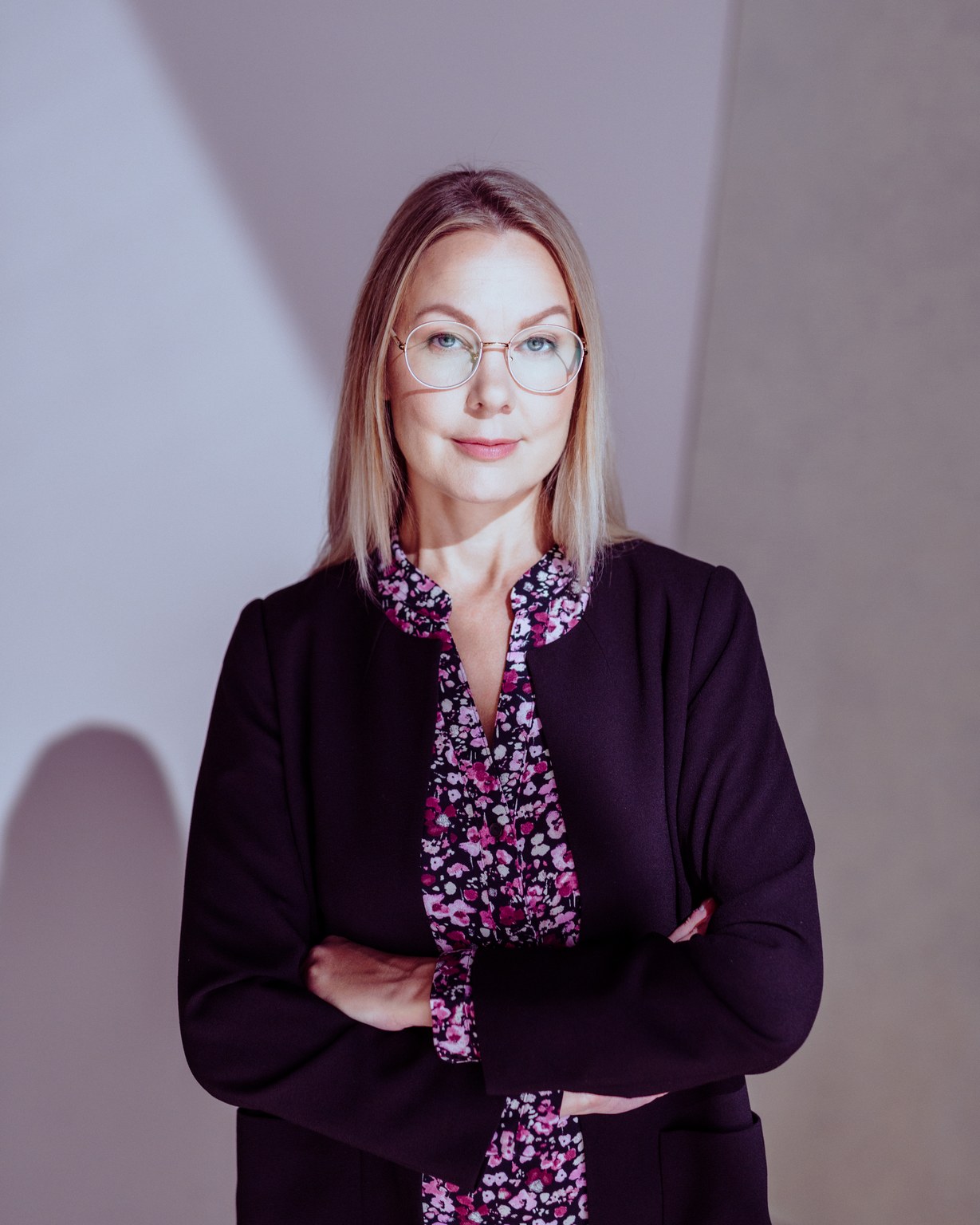
Anu, a co-founder of the brand and communications agency United Imaginations and former editor-in-chief of Helsingin Sanomat, is our head of content.

/

Author

Anu Ubaud

Content writer

Anu, a co-founder of the brand and communications agency United Imaginations and former editor-in-chief of Helsingin Sanomat, is our head of content.

/

Author

Anu Ubaud

Content writer

Anu, a co-founder of the brand and communications agency United Imaginations and former editor-in-chief of Helsingin Sanomat, is our head of content.

Leaders

Finns need to learn long-term brand commitment to drive growth

Feb 23, 2026

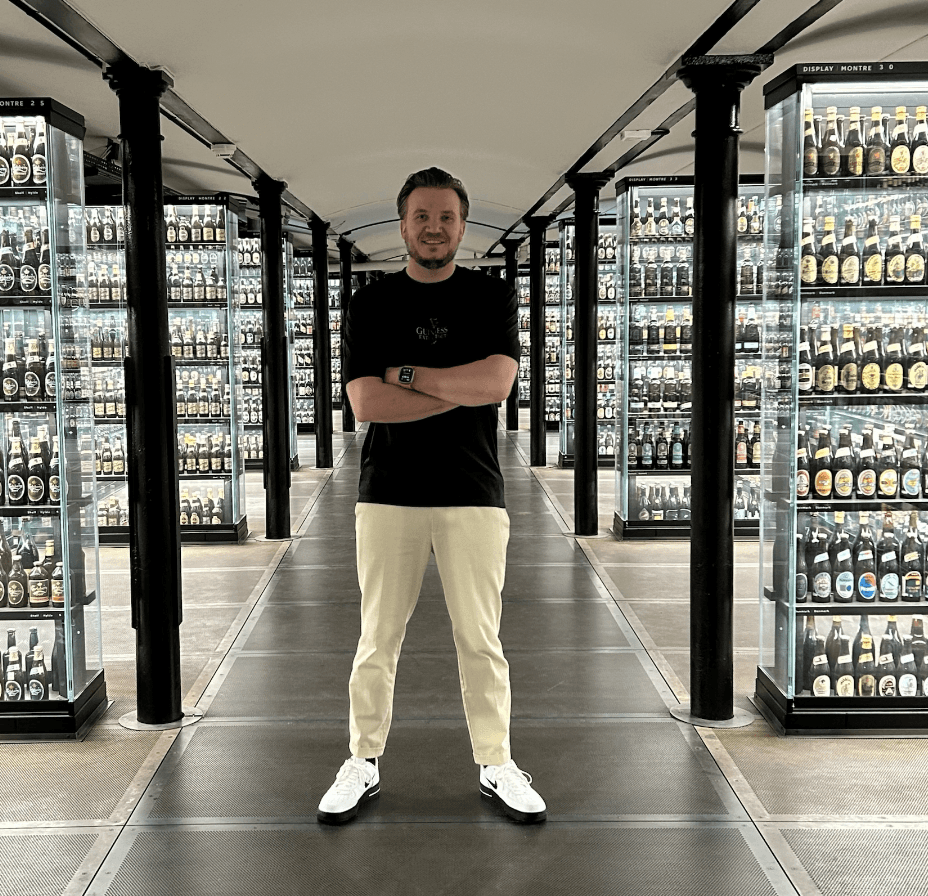
Listeds met Joel Huttunen, who has been responsible for successful Nordic brands in both B2B and B2C contexts throughout his career. Based in Denmark, he shares his insights on what Finnish companies can learn about brand building and marketing. “If you want a brand to perform, the first question is whether the organization is truly committed to building it and being brave internally. Brand has to become a leadership tool – and one that leaders actually use.”

Brand is too often seen as a communicative fluffy layer – a surface added to help companies face their customers. That way of thinking is misguided. In reality, a brand should be understood as a business lever and growth driver, a tool that supports leadership and decision-making. This is how Joel Huttunen puts it. Over his 15-year career, he has been responsible for both global and national brands in Finland and Denmark, working in large international companies as well as on the agency side.

Listeds spoke with Huttunen about the role of the brand in driving company growth. 

Denmark is known for its strong design culture, vibrant urban life, and successful brands. This naturally raises the classic question: what can Finland learn from Denmark when it comes to building brands?

Long-term commitment. Huttunen’s answer comes without hesitation. It is an area where both Denmark and Sweden are ahead of Finland.

“In Finland, it’s common to say that Swedes are simply very good at branding and almost just accept it as a natural law. In reality, Finland has exactly the same potential to stand out. The difference is that we don’t commit to long-term brand development in the same way as Sweden and Denmark do. In marketing, there’s a simple rule: ambition and effectiveness start to fade when focus slips.”

For a brand to truly function as a growth driver, companies must commit to repetition and continuity rather than isolated efforts.

Company culture is the brand’s ultimate truth test

What about courage? Courage and risk-taking are not Finland’s natural strengths in the field of branding, and in times of economic uncertainty, bravery is often the first thing to give way to caution and safe choices. How is courage nurtured in Denmark? 

“The key difference, in my view, is that in Denmark there is open discussion about the level of courage across the organization, including at the leadership level. Courage also requires repetition – not just short-lived spikes like individual campaigns,” Huttunen says. “Courage also means saying something that not everyone will like. If a company focuses solely on not upsetting anyone and on saying things everyone wants to hear, it ends up saying nothing at all. That’s the path of jargon, where there is no differentiation and no value creation. Modern audiences are quick to see through this.”

Both courage and long-term thinking are only possible if there is genuine internal commitment to the brand. According to Huttunen, this commitment is often the hardest part.

“I’ve seen many brand transformations driven by the same underlying question: the brand isn’t delivering results right now – could it deliver next year? If you want a brand to perform, the first question is whether the organization is truly committed to building it and being brave internally. Brand has to become a leadership tool – and one that leaders actually use. It’s unnerving how many times I’ve seen senior leadership just waiting to see the new logo, even in the 2020s.”

In Denmark, Huttunen was initially surprised by how little people talked about brands. He quickly understood why. When a brand is truly lived through company culture, there is no need to constantly define it in meetings and steering groups. Brand is not a separate layer of activity; optimally product development, innovation, ways of working, and strategic initiatives all rest on it.

Everything starts with a clearly defined and shared core mission. Across the organization, people understand why the company exists, what it is striving for, and how their own work contributes to the whole. This is where purpose comes in – a word often dismissed as marketing jargon or even treated as a buzzword.

According to Huttunen, purpose is directly linked to how well a brand is understood – and lived internally. Company culture is every brand’s ultimate truth test.

“As a leader, you can deliver the most inspiring speeches and commission a beautifully polished brand from a prestigious London agency, but if your products, actions, decisions, and people don’t reflect what you claim the brand stands for, it simply isn’t true.”

Beyond performance metrics, the big picture still matters

Purpose also accelerates decision-making, Huttunen says. It provides a clear filter: is this at the core of who we are, or not? Does it support our goals, or does it pull us away from them?

“We live in a time when all kinds of issues surface as controversies, and everything gets broken down into parts. Brands must dare to speak – and stand behind what they say. If a company’s purpose never leads to difficult decisions, it’s probably too generic.”

But how should companies evaluate and justify the business impact of their brand?

“Marketing and communications professionals must be able to demonstrate the value of the brand through data, but organizations shouldn’t get lost in numbers alone. When too much emphasis is placed on short-term performance wins, it’s easy to lose sight of what we’re actually trying to build. The big picture and long-term perspective have to be present all the time.”

B2B brands need emotion too

Throughout his career, Huttunen has worked with massive global brands as well as smaller, local companies and businesses at the very beginning of their journey. He has experience in both B2C and B2B contexts. What can they learn from each other?

“Building a B2B brand from scratch is often extremely difficult. It’s easy to fall back on messages that lack differentiation – saying you’re fast, high-quality, and efficient. What is often forgotten, and what B2B can learn from B2C, is that beyond credibility and reliability, a brand also needs emotion. It’s people that make purchasing decisions in B2B as well.”

For Huttunen, brand is ultimately an emotional bond that forms between a company and people over time. Organizational culture, ways of working, communication, outward expression, and products all contribute to building this connection. Once that bond exists, it begins to guide choices and decisions.

Ideally, brand building is supported by both courage and investment. However, large budgets alone are never the solution.

“The fundamental principles of brand building are the same regardless of budget size. When money is limited, the bar for courage and creativity must be raised. Successful brand work requires strong expertise in using different media, as well as an understanding of weak signals and emerging trends. You need to know what your audience wants right now and how your brand connects to the phenomena of the moment. Customer understanding must be deep, and there has to be genuine curiosity about how to turn change into opportunity.”

Leaders

Change capability is becoming companies’ most critical competitive advantage

Jan 28, 2026

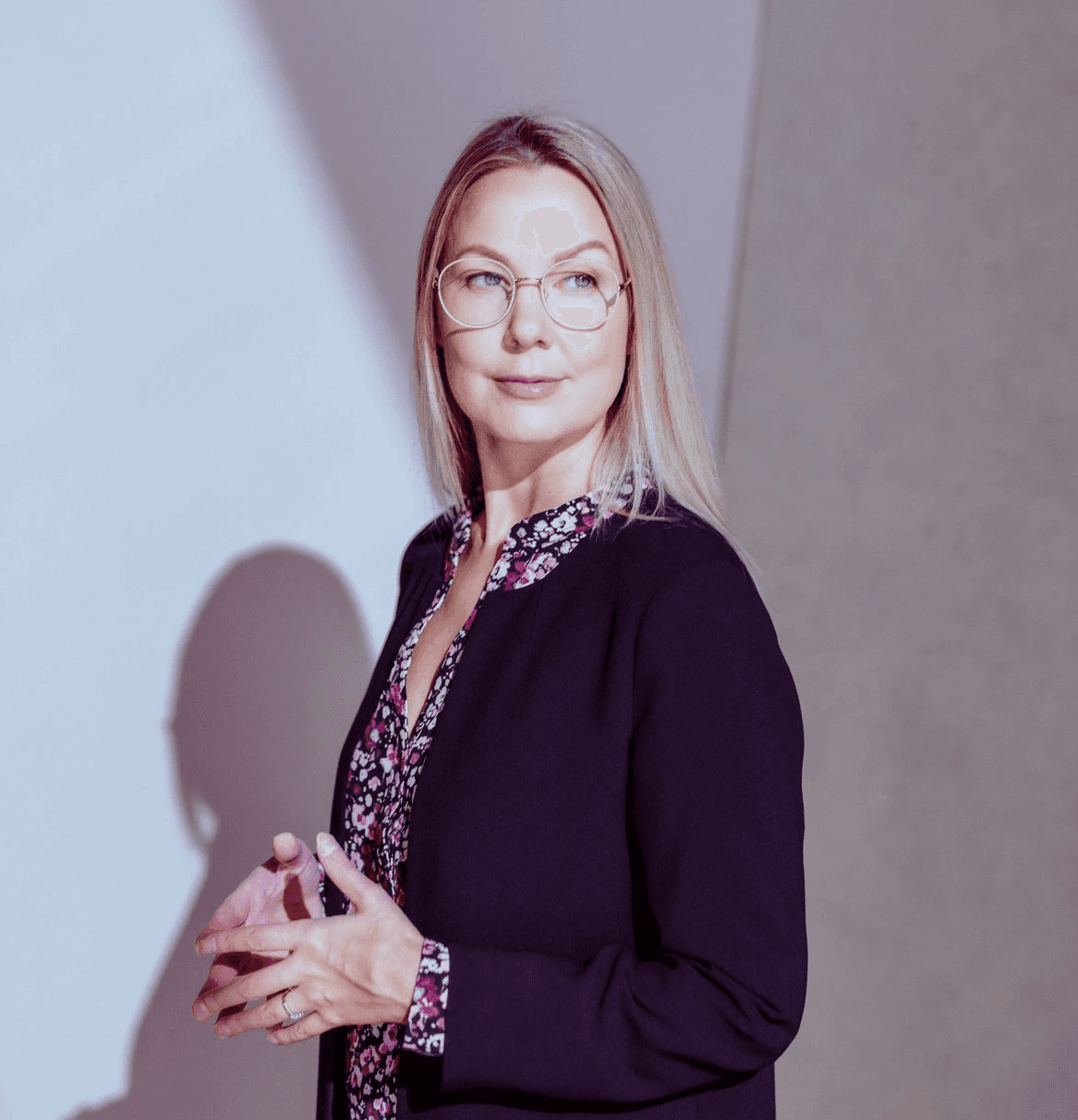
Where previous technology waves have typically unfolded over 15 to 20 years, the main wave of artificial intelligence is expected to last only five to 10 years. “Change capability means that a company is able to learn and renew itself at least as fast as its operating environment is changing,” says Riikka Tanner.

The ability to adapt may now be the most decisive factor in corporate competitiveness, says Riikka Tanner, a strategy and leadership consultant and author. In today’s business environment, companies are no longer competing solely through products, customer experience, or technology – they are increasingly competing on whether they can benefit from ongoing change faster than their rivals.

Tanner’s latest leadership book, Muutoskyvykkyys (“Change Capability”), will be published by Alma Insights in March. The core idea behind the book stems from a striking observation: previous technology waves have typically unfolded over 15 to 20 years, whereas the main wave of artificial intelligence is expected to last only five to 10 years.

“Change capability means that a company is able to learn and renew itself at least as fast as its operating environment is changing,” Tanner says.

While products, processes, and technologies can often be copied, Tanner argues that the behavioral and cognitive patterns of an organization are what truly determine long-term success – and they are nearly impossible to replicate.

In a change-capable organization, change is not driven by projects. Instead, it is embedded into everyday ways of working. Leadership is not about control, but about creating rhythm. Rather than merely reacting, organizations must learn to anticipate developments and detect weak signals – learning and adapting before they are forced to.

Traditional organizations tend to focus on execution, efficiency, and metrics. In capability-driven organizations, the emphasis shifts toward learning, thinking, and the quality of decision-making.

“In a performance-driven culture, what matters is a result,” Tanner says. “In a change-capable organization, it’s equally important how the organization’s thinking develops along the way.”

Riikka Tanner is the author of the upcoming leadership book Muutoskyvykkyys (“Change Capability”), to be published by Alma Insights in March.

Learning must be led, too

According to Tanner, Finnish companies are in a relatively strong position when it comes to building change capability. Psychological safety is often high, and organizational hierarchies tend to be low.

However, learning is an area that requires particular attention.

“In Finnish working culture, we treat learning as a by-product,” Tanner says. “The prevailing idea is that learning accumulates alongside business, without us actively leading it. This means the majority of learning potential is left unused.”

Tanner argues that learning needs to be systematically aligned with the company’s strategy and growth – not only at the individual level, but also at the team level.

The question, she says, must be faced directly: if an organization aims to change as fast as its environment, what pace of learning does that actually require?

The World Economic Forum estimates that by 2030, nearly 40% of core skills at work will have changed. Tanner notes what this means in practice: companies would need to update 6–7% of skills every year. To keep up, employees would need to dedicate roughly 8–15% of their weekly working time to learning—equivalent to one working day every two weeks.

Leaders must make their thinking visible

Do organizations have enough time for thinking? Tanner believes the answer is largely no.

She is involved in the annual Johdon agendalla (“On the Leadership Agenda”) trend report, which this year gathered responses from more than 200 business decision-makers in Finland. Of those respondents, 42% believed that there is not enough time for thinking in organizations. Only one in 10 felt that their own manager makes their thinking visible.

“I believe an organization can interpret the world, anticipate changes in its environment, and learn to think collectively only if leaders make their own thinking visible,” Tanner says.

In today’s environment, Tanner argues, a leader’s most important task is directing attention.

“Results follow what we choose to focus on,” she says.

Focus, in this context, is ultimately about sense-making – building a shared understanding of reality and direction across the organization. “As change becomes both faster and more intense than ever, the goal is not simply to run twice as fast. It is about whether companies dare to let go of half of what they are currently doing, in order to make room for something new and fundamentally necessary for renewal.”

In practice, this means saying no more often—and dismantling old, cemented ways of working.

"The real question for leaders is not what to add next – but what they are prepared to let go of, " Tanner says. "As change accelerates, unlearning becomes the real advantage.” 

Leaders

Finnish companies could increase their influence by improving their lobbying skills

Jan 13, 2026

The Finnish business community does not yet fully understand how crucial it is to seek influence over EU decision-making in Brussels, says Member of the European Parliament Aura Salla. She offers companies practical tips on how to improve their lobbying efforts. She also urges companies with a clear message: risk financing is now available, so apply for an InvestEU loan guarantee.

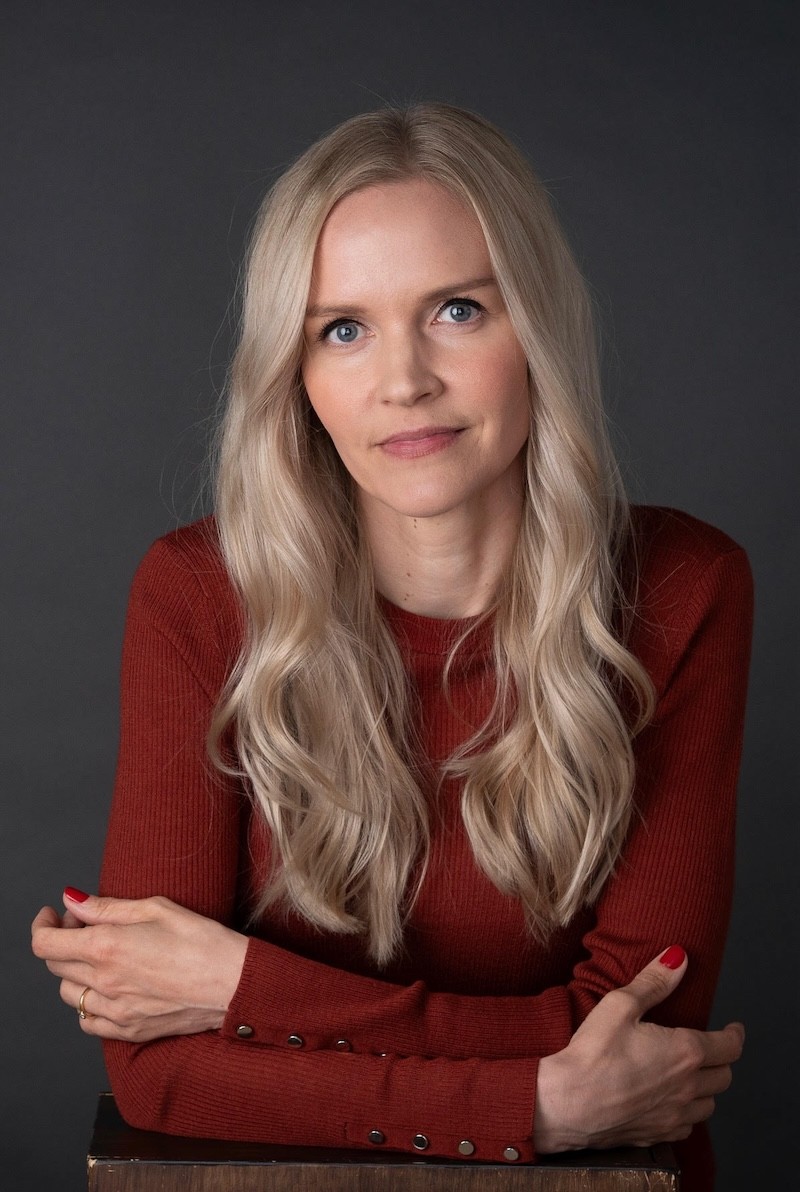
Finnish companies are too often weak at lobbying for their interests in the EU, says Aura Salla, who is serving her first term as an MEP in Brussels. A member of the National Coalition Party and the European People’s Party (EPP), Salla focuses in particular on technology, defense, and dismantling unnecessary EU regulation. 

Aura Salla, who is serving her first term as an MEP in Brussels, is known for her work on technology and defense, and dismantling unnecessary EU regulation. 

“EU decision-making and the opportunities it enables are poorly understood in Finland. When companies come to lobby, they haven’t done their homework. They often don’t know what is currently happening in the EU, and their lobbying lacks a sharp edge – what it is they actually want to influence,” Salla says.

She highlights Italy and Germany as masters of lobbying.

“Italy gets things through very effectively because they have professional lobbyists, companies understand the importance of gathering information in advance, and networks are built tightly. Germans are also highly skilled and efficient in this. Finnish companies, instead, tell decision-makers that the situation is difficult. But we already know that – we understand the operating environments. Instead of situation analysis, companies should be concrete and choose a precise focus: what exactly they want to influence and what they want to change.”

How to improve lobbying efforts

Aura Salla has a long work history in Brussels. Before her term in the European Parliament, she worked within the EU for years, including in the cabinet of Vice-President Jyrki Katainen and as an adviser in the in-house advisory service of Jean-Claude Juncker, the former president of the European Commission. She subsequently worked at Meta as the head of EU affairs and public policy. 

Salla’s first piece of advice to companies is: always hire a professional lobbyist. Small companies can do this together as a coalition. Her second piece of advice is: know the EU’s current topics and decision-making processes. Barriers to growth can only be influenced if one makes the effort to understand the current state of legislation and how it is progressing.

The third suggestion concerns opportunities that Finnish companies, in Salla’s view, still do not recognize well enough.

“Brussels is not a necessary evil – the EU is worth knowing inside out. You can influence things here, regulations are dismantled here, and major decisions are made here. Companies are used to trying to influence decision-makers in Finland. So I wonder why they are not active at the EU level in Brussels.”

At present, funding opportunities are available for companies. Salla served as the chief negotiator for the InvestEU loan guarantee program, which the European Parliament approved recently. The program enables at least €55 billion in private investments to be mobilized across Europe. In addition, it secured €2.9 billion in additional guarantees and eased reporting requirements for SMEs.

The program is a loan guarantee scheme that has been used to finance growth-oriented companies in Europe for over 10 years. In Finland, for example, Swappie received €17 million last year to expand its circular economy business.

Salla is now encouraging companies to apply for InvestEU financing.

“Risk financing must be brought to Europe. I don’t believe in direct company subsidies, but loan guarantees are a smart use of the EU budget. This won’t solve the problem, but it is a way to get private capital moving. My message to companies is simple: risk financing is now available, so go to your bank and apply for this loan guarantee.”

In pursuit of technological sovereignty

In the field of technology, Salla advocates European sovereignty and calls for disengagement from Microsoft. Europe’s technological dependence on the United States is a significant risk that must be addressed, she says.

“I often hear that we already lost this game and that Europe should have acted 10 years ago. And we should have – but that doesn’t mean nothing can be solved anymore. The reality is that U.S. companies could, on any given day, cut off our access to things like email and other critical infrastructure. That’s why Europe must rely on European technology. It’s protectionist, but there is no other way.”

Listeds’ Brussels Briefings is a series of articles in which decision-makers and experts in Brussels discuss current issues and share their insights with Nordic companies.

Leaders

It’s time to have a better conversation about remote work – that’s why we’ve gathered recent research on the topic

Nov 27, 2025

The pandemic period firmly rooted remote work across expert and knowledge-based organizations. The shift happened rapidly due to the crisis, leaving many practices unplanned. The pandemic has passed, but remote work habits have remained. After leading the chart, Finland now ranks No. 2 in Europe after Ireland in the share of remote workers within its working population (Eurostat 2024).

After the pandemic, a new dilemma emerged among leaders and teams: how to attract people back to the office? Major business-related questions remain on the table: Does widespread remote work harm productivity, culture, engagement, or innovation capacity? And what kinds of practices should be developed around different work models?

Globally, some companies have already drawn stricter lines. For example, Amazon required its employees to return to the office five days a week at the beginning of the year. In Finland, most organizations have settled into hybrid models, with employees expected to be present two or three days a week. In many workplaces, however, no clear policy was ever made.

Recently, Iltalehti reported that employees at Finland’s Social Insurance Institution (Kela) were unhappy with a new policy, which requires staff to work from the office at least once a week. The issue soon sparked political commentary. Finance Minister Riikka Purra called the one-day-a-week requirement “ridiculous,” noting that despite the time elapsed since the pandemic, public-sector remote work practices have hardly been tightened.

Remote work has become a complex and emotionally charged topic. The discussion is often driven by personal motivations: some passionately defend the employee’s right to choose how and where to work, while others emphasize the employer’s right to set boundaries. Many leaders worry about the effects of remote work on business performance but hesitate to speak up publicly for fear of criticism.

Finland and its Nordic neighbors remain Europe’s most advanced regions for remote work, and new research shows that the key question is no longer whether hybrid work can be sustained, but how to design it strategically.

This article brings together recent studies related to remote and on-site work. It is time to discuss the organization of hybrid work more broadly and analytically – drawing conclusions based on research. After all, when we talk about how work is done, we are ultimately talking about the very foundations of growth, development, meaning, and productivity.

Finland leads Europe’s shift to hybrid

According to Eurostat’s Labour Force data, Finland has been one of the highest-ranked EU countries for remote work since 2020, with 37% of employees in the Helsinki region usually working from home — the highest share in the bloc.

By 2023, a Statista analysis of Eurostat data confirmed that the Nordic countries — Finland, Sweden, Norway, and Denmark — continue to lead Europe’s hybrid trend. While the EU average for remote work was 22.2%, the Nordic average stood above 40%.

The conclusion is clear: hybrid work is no longer a pandemic experiment. It is the Nordic baseline.

Research points to a new leadership model

While much of the public debate still revolves around attendance rules, research across Finland and the wider Nordics converges on a more sophisticated message: hybrid work succeeds when trust, structure, and purpose align.

A 2025 doctoral study by Johanna Jansson at the University of Vaasa identifies three interlocking foundations for sustainable hybrid work:

  1. Organizational design that supports trust, autonomy, and clear expectations.


  2. Supervisor–employee relationships built on mutual accountability and open communication.


  3. Employee self-leadership, encompassing digital collaboration, time management, and shared responsibility for team success.

When these elements are in balance, companies can achieve both productivity and well-being gains.

“If an organisation’s structure is still designed for office work, tweaking HR practices is like putting winter tyres on a convertible,” Jansson notes. You might get a bit more grip, but the design is wrong for the conditions, she adds.
(University of Vaasa, 2025)

Her findings reframe the issue. Hybrid work is not a tug-of-war between managers and employees. Instead, it is a coordination challenge that demands redesign at every level of the organization.

Nordic and European evidence point in the same way

The Finnish Institute of Occupational Health (FIOH) reports that hybrid models can enhance both well-being and efficiency when expectations are clear and leadership is active. Poorly structured versions, however, risk isolation and blurred accountability.

The Nordregio “Remote Work” project (2021–2024) reaches similar conclusions: remote work has supported regional balance, decentralized talent, and reduced commuting, but requires renewed approaches to culture and collaboration.

Meanwhile, the Scandinavian Journal of Work, Environment & Health stresses that the long-term post-pandemic impacts of hybrid work still need longitudinal evidence — but early findings already show its permanence.

Together, Nordic research frames hybrid work as a systemic organizational issue, not a temporary HR concern.

Corporate strategy: quality over quantity

A broader, global perspective reinforces the same point. The Leesman Focus Forward 2025 study, based on responses from 132 senior corporate real-estate leaders, identifies three themes shaping future workplace strategies:

  1. Hybrid is here to stay. Most companies now see it as the default model.


  2. Purpose and experience matter. Organizations must define a clear “workplace why” and use data to optimise the employee experience.


  3. Quality over quantity. About 74% of firms have already reduced, or plan to reduce, their office footprint — investing instead in higher-quality collaboration spaces.

As the Fyra Nordic Workplace Data Study (2024) similarly observes, Nordic firms are shifting their office strategies “from square metres to meaning.” The best offices now function as brand environments and social anchors — not attendance checkboxes.

From control to coordination: actionable insights for Nordic executives

For leaders of listed Nordic companies, the message is clear: hybrid work is no longer a phase. It’s a performance architecture.
To make it work, organizations must manage structure, culture, and leadership as an integrated system.

1. Design for trust and accountability.
Rigid attendance rules do not create engagement. Replace symbolic mandates with clear roles, decision rights, and shared outcomes.

2. Redefine the office as a cultural hub.
Following Leesman and Fyra insights, invest in offices that drive collaboration, innovation, and belonging — not mere presence.

3. Empower middle managers as orchestrators.
Train managers to balance flexibility with coordination. As Jansson’s research shows, success depends on dialogue and empathy, not control.

4. Build employee self-leadership.
Hybrid productivity depends on autonomy, digital fluency, and peer accountability. Treat these as professional competencies, not personality traits.

5. Use data continuously.
Integrate Eurostat metrics, Leesman analytics, and internal engagement data to refine hybrid strategies. Measure how people work, not where.

Sources:

  • Eurostat Labour Force Survey (2020). The Finnish capital region: 37% remote workers.

  • Eurostat (2024). Employed persons working from home by professional status - % of total employment.

  • FIOH (2025) – Latest Research Results on Remote and Hybrid Work in Finland.

  • Fyra (2024) – Looking Back to Look Ahead: A Nordic Workplace Data Study.

  • Iltalehti, (2025, Nov. 4). “Lasse Lehtosen käytös kuohuttaa Kelassa – ‘Karannut lapasesta’.”

  • Jansson, J. (2025). Balancing Employee Preferences and Organizational Expectations for Mutual Gains. University of Vaasa. 

  • Leesman (2025). Focus Forward: Insights from the Top.

  • Nordregio (2024). Remote Work: Effects on Nordic People, Places and Planning.

  • Purra, R. (2025, Nov 5). X post.

  • Scandinavian Journal of Work, Environment & Health (2023). Remote Work: The New Normal Needs More Research.

  • Statista  (2023). The Nordic hybrid average >40%, EU average 22.2%.

Leaders

“Doing more with less”: Why Finland’s growth problem is cultural, not just economic

Nov 24, 2025

Annakerttu Aranko, CEO of the Helsinki-based strategy consultancy Noren, has built her company around a simple but unusual premise: understanding business through the lens of human sciences to advise some of Finland’s leading listed companies.

In this conversation with Listeds, she brings a new perspective to Finland’s sluggish growth – the perspective of the national psyche. A history of scarcity, caution, and quiet resilience has made the Finnish leadership culture and the leaders exceptionally capable operators, but often reluctant risk-takers.  

From scarcity to survival

Finland’s growth problem cannot be separated from its geography and culture, Annakerttu Aranko says. “We’re basically a small island, and a small language area. Our whole business culture has been built around the idea that you must reach everyone. When your domestic market is minuscule, companies learn to optimize for inclusivity rather than focus or scale.”

According to Aranko, Finland’s scarcity mindset stems from a survival-driven history, geographic isolation, and limited exposure to cross-cultural trade. These conditions cultivated operational excellence and resilience, but also a cautious attitude toward risk. The country’s rapid transformation from an agrarian economy to a welfare state and digital forerunner left little time for cultural recalibration, and Finnish leadership culture still reflects the logic of deprivation. It prizes discipline, technical expertise, and engineering precision, strengths that have driven Finland’s competitiveness but also anchored leadership thinking in predictability and control.

“If there’s one thing we do well, it’s making more out of less. That ingenuity has defined Finland’s success stories. However, scarcity thinking and growth thinking run on very different logics.” 

Aranko’s view is supported by academic research. For example, a 2019 study in the Journal of Business Research found that “scarcity thinking” – an overemphasis on exploiting existing resources, minimizing risk, and optimizing the familiar – and “growth thinking” – exploring new domains, accepting ambiguity, and tolerating short-term losses – operate under fundamentally different performance logics.

Companies anchored in scarcity thinking may perform well in the short term, but in dynamic markets, they tend to fall behind, as their focus on refinement leaves them less able to adapt. That dynamic helps explain why Finland often leads in efficiency-intensive industries yet struggles to generate new growth engines.

Creativity is not a slogan

Asked about claims that Finnish leaders lack creativity, Aranko doesn’t mince words. “To be honest, the whole creativity debate in Finland frustrates me,” she says. “People keep calling for more creativity, but few can even define what they mean by it.” She’s referring to the recent wave of public discussion on whether Finnish companies and their leaders have lost their creative edge – debates that she considers more rhetorical than diagnostic.

“For me, creativity means the ability to think abstractly”, she explains. “To see complex systems and the causal links within them.” That kind of thinking, she argues, isn’t cultivated enough in Finland’s education or management traditions. Aranko herself has a Master’s degree in International Design Business Management from Finland’s Aalto University, a unique program that highlights cross-disciplinary collaboration and radical creativity.

“Our strength has been in optimizing production and running profitable businesses”, she continues. “But you can’t expect to keep a core business profitable and at the same time chase something completely new.” Growth, in her view, requires rules – and a tolerance for temporary unprofitability.

Two playbooks, not one

That duality between efficiency and exploration sits at the heart of Finland’s growth dilemma. The two goals of achieving growth and maintaining profitability require different playbooks, she says. Yet many Finnish companies insist on running both logics through the same structure and the same people. “Our executive teams are extremely homogeneous. If everyone comes from the same pipeline, that’s where it goes wrong. If you look at Finland’s education system – at how many different kinds of talent it produces – it’s astonishing how little of that diversity ever reaches senior leadership.”

According to data from the Listeds Platform, more than half of the 32 chairperson appointments among listed Finnish companies this year have involved people with an MSc in Economics or an MBA.

Learning to have difficult conversations

Cultural renewal, Aranko believes, depends on the quality of internal dialogue. “It takes skills to have truly hard conversations, the kind that feel really uncomfortable”, she says.

That defensiveness suffocates innovation. “There needs to be a healthy amount of uncertainty”, she says. “Not as weakness, but as vigilance. A constant awareness of whether we’re still in tune with the market.”

Finland’s corporate mindset, Aranko observes, is full of contradictions. “At the same time as we’re extremely cautious about taking risks, we’re also strangely arrogant. Convinced that we’re already the best”, she says.

Despite the challenges, Aranko is optimistic. “I can feel that the pressure cooker is about to burst”, she says.

A new generation of Finnish leaders, she believes, is emerging with a more global and experimental mindset. “They look at things through a completely different logic,” she says. Companies like Oura illustrate that shift.

The question, she adds, is not whether the change will happen, but whether established companies can adapt fast enough.


More about Annakerttu Aranko

Annakerttu Aranko is the CEO and founding partner of the Helsinki-based strategy consultancy Noren, which specializes in using human sciences to drive business innovation. Before joining Noren, Aranko was involved in founding a consultancy focused on strategic customer insight.

Stay on the pulse, catch the signals

Subscribe to Listeds Leadership Intelligence Platform:

  • leader and company database access

  • email alerts

  • career, boards and interim opportunities

Our Pulse newsletter

Your weekly leadership intelligence briefing.

What happened, why it matters, and what to watch across every CEO, board, and executive move in Nordic listed companies, starting with Finland. Fast, factual, and to the point.

Delivered every Monday.

By signing up, you agree to our Privacy Policy

Join our Pulse, Best-of-the-Week, and Weekend newsletters

Join our Pulse, Best-of-the-Week, and Weekend newsletters