A Finnish fashion brand worn by Jennifer Lawrence, Rosie Huntington-Whiteley, and Kelly Rutherford may look like an overnight success story. In reality, Almada Label’s rise into Hollywood closets has been the result of deliberate global positioning from day one. It is also a reminder that in a small market, scale begins with mindset.
Almada Label, a Finnish fashion brand founded by friends Alexa Dagmar and Linda Juhola, has quietly found its way into the wardrobes of Hollywood actors and global influencers. Its pieces have appeared on red carpets, in editorials, and on the social feeds of stylists whose client lists define global taste.
From the outside, it may look sudden, but in reality, it was built deliberately, and globally, from day one.

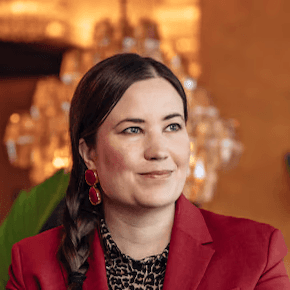
Almada Label founders Linda Juhola and Alexa Dagmar (right). Photo by the brand.
“Finland is such a small market. There simply aren’t enough people here to build a sustainable consumer business at scale,” the founder, Alexa Dagmar, says. “The world is full of opportunity, and through the internet, you can reach anyone. It would be foolish not to try to do this globally.”
Neither founder studied fashion formally. But Alexa grew up around consumer business through her family and learned early that building a brand meant thinking beyond borders.
From the start, Almada treated itself as an international project rather than a local label, hoping to expand later. The early instinct was to look first toward Sweden, Norway, and Denmark. Being nearby made those markets feel like the natural next step.
But something unexpected happened.
Through social media, organic interest began to come not from nearby markets, but from Germany and the United States. Stylists and influencers in those countries responded strongly to the minimalist Finnish aesthetic.
“We realized it doesn’t matter what is physically close,” she says. “What matters is where the organic interest starts. There’s no point pushing into a market unless there is a real reason to be there.”
In Germany, the market lacked strong local brands in the same niche. In the US, Nordic minimalism carried cultural cachet. Influencers began discovering the label through social media. Stylists began requesting pieces.
Building visibility without big budgets
Unlike many fashion brands, Almada did not launch with major funding. The company has always been self-financed. There was no large marketing budget, no global PR machine in the early years.
Instead, the founders relied on a focused digital strategy and persistence.
Performance marketing on Meta, Google, and Pinterest supported e-commerce growth, but most visibility came through relationships. The founders personally reached out to stylists and influencers. They offered products to try without pressure and without expectation.
“We’ve never forced placements. We’ve simply asked if someone would like to try the pieces.”
This approach carried risk. There were no guarantees of coverage or exposure. But it allowed the brand to remain selective and authentic. When a stylist with a strong network discovered the label, new opportunities followed quickly. One placement led to another. The effect was cumulative — a snowball rolling downhill.
Over time, the PR and gifting pool expanded organically. For years, this was handled entirely in-house. Only recently has the brand partnered with a PR agency with offices in London and New York to coordinate loans and products to media and stylists more systematically.
Distribution: fewer places, better places
From the beginning, Almada Label prioritized quality over scale in distribution. The goal was never to be everywhere. It was to be in the right places.

Almada Label is known for its minimalistic and clean aesthetic. Photo by the brand.
Premium positioning requires patience. Entering too many stores too quickly risks diluting the brand. Instead, the founders waited until they could secure placement in the specific boutiques and department stores they wanted. If the right partner wasn’t available, they waited longer.
E-commerce has been the backbone. Even recently, in 2025, nearly 80 percent of turnover has come from e-commerce, with Finland representing less than 20 percent of total sales.
Retail expansion has followed credibility, not the other way around. Today, Almada is present in locations such as Le Bon Marché in Paris, Harrods in London, and department stores within the KaDeWe Group in Germany. In many cases, buyers have discovered the brand through influencers and stylists rather than traditional wholesale outreach.
An international sales agency and consultants have supported the expansion, but the core strategy has remained consistent: treat the brand as global from the beginning.
Lessons from building globally from day one
Dagmar believes small Finnish labels can think globally from the start.
“You have to treat your brand as an international project,” she says. “All copy, all communication, all visuals. Otherwise, it’s very hard to be found organically.”
Trade fairs and industry events also played a role. Attending international fashion fairs allowed the founders to understand budgets, meet contacts, and test assumptions. Many of the practical realities of scaling globally became clear only through these experiences.
The founders’ own influencer backgrounds gave them an advantage. They understood how digital ecosystems worked and how stylists and creators discover new brands. That knowledge helped them navigate the early stages without large budgets.
The lesson for B2C founders is not that Hollywood is the goal. It is that global positioning must be the starting point.
In a small market, you rarely grow into the world by first dominating Finland. More often, you grow into Finland by first mattering somewhere else.
·
5 min read

A Finnish fashion brand worn by Jennifer Lawrence, Rosie Huntington-Whiteley, and Kelly Rutherford may look like an overnight success story. In reality, Almada Label’s rise into Hollywood closets has been the result of deliberate global positioning from day one. It is also a reminder that in a small market, scale begins with mindset.
Almada Label, a Finnish fashion brand founded by friends Alexa Dagmar and Linda Juhola, has quietly found its way into the wardrobes of Hollywood actors and global influencers. Its pieces have appeared on red carpets, in editorials, and on the social feeds of stylists whose client lists define global taste.
From the outside, it may look sudden, but in reality, it was built deliberately, and globally, from day one.
Almada Label founders Linda Juhola and Alexa Dagmar (right). Photo by the brand.
“Finland is such a small market. There simply aren’t enough people here to build a sustainable consumer business at scale,” the founder, Alexa Dagmar, says. “The world is full of opportunity, and through the internet, you can reach anyone. It would be foolish not to try to do this globally.”
Neither founder studied fashion formally. But Alexa grew up around consumer business through her family and learned early that building a brand meant thinking beyond borders.
From the start, Almada treated itself as an international project rather than a local label, hoping to expand later. The early instinct was to look first toward Sweden, Norway, and Denmark. Being nearby made those markets feel like the natural next step.
But something unexpected happened.
Through social media, organic interest began to come not from nearby markets, but from Germany and the United States. Stylists and influencers in those countries responded strongly to the minimalist Finnish aesthetic.
“We realized it doesn’t matter what is physically close,” she says. “What matters is where the organic interest starts. There’s no point pushing into a market unless there is a real reason to be there.”
In Germany, the market lacked strong local brands in the same niche. In the US, Nordic minimalism carried cultural cachet. Influencers began discovering the label through social media. Stylists began requesting pieces.
Building visibility without big budgets
Unlike many fashion brands, Almada did not launch with major funding. The company has always been self-financed. There was no large marketing budget, no global PR machine in the early years.
Instead, the founders relied on a focused digital strategy and persistence.
Performance marketing on Meta, Google, and Pinterest supported e-commerce growth, but most visibility came through relationships. The founders personally reached out to stylists and influencers. They offered products to try without pressure and without expectation.
“We’ve never forced placements. We’ve simply asked if someone would like to try the pieces.”
This approach carried risk. There were no guarantees of coverage or exposure. But it allowed the brand to remain selective and authentic. When a stylist with a strong network discovered the label, new opportunities followed quickly. One placement led to another. The effect was cumulative — a snowball rolling downhill.
Over time, the PR and gifting pool expanded organically. For years, this was handled entirely in-house. Only recently has the brand partnered with a PR agency with offices in London and New York to coordinate loans and products to media and stylists more systematically.
Distribution: fewer places, better places
From the beginning, Almada Label prioritized quality over scale in distribution. The goal was never to be everywhere. It was to be in the right places.
Almada Label is known for its minimalistic and clean aesthetic. Photo by the brand.
Premium positioning requires patience. Entering too many stores too quickly risks diluting the brand. Instead, the founders waited until they could secure placement in the specific boutiques and department stores they wanted. If the right partner wasn’t available, they waited longer.
E-commerce has been the backbone. Even recently, in 2025, nearly 80 percent of turnover has come from e-commerce, with Finland representing less than 20 percent of total sales.
Retail expansion has followed credibility, not the other way around. Today, Almada is present in locations such as Le Bon Marché in Paris, Harrods in London, and department stores within the KaDeWe Group in Germany. In many cases, buyers have discovered the brand through influencers and stylists rather than traditional wholesale outreach.
An international sales agency and consultants have supported the expansion, but the core strategy has remained consistent: treat the brand as global from the beginning.
Lessons from building globally from day one
Dagmar believes small Finnish labels can think globally from the start.
“You have to treat your brand as an international project,” she says. “All copy, all communication, all visuals. Otherwise, it’s very hard to be found organically.”
Trade fairs and industry events also played a role. Attending international fashion fairs allowed the founders to understand budgets, meet contacts, and test assumptions. Many of the practical realities of scaling globally became clear only through these experiences.
The founders’ own influencer backgrounds gave them an advantage. They understood how digital ecosystems worked and how stylists and creators discover new brands. That knowledge helped them navigate the early stages without large budgets.
The lesson for B2C founders is not that Hollywood is the goal. It is that global positioning must be the starting point.
In a small market, you rarely grow into the world by first dominating Finland. More often, you grow into Finland by first mattering somewhere else.




Investor Event
Listeds Investor Event · Defence
Nordic defence is in a once-in-a-generation growth cycle. Eight listed and pre-IPO companies pitch to 100+ invited investors at Valkoinen Sali, Helsinki
21 September 2026


Latest on Listeds


Our Pulse newsletter
Your weekly leadership intelligence briefing.
What happened, why it matters, and what to watch across every CEO, board, and executive move in Nordic listed companies, starting with Finland. Fast, factual, and to the point.
Delivered every Monday.

By signing up, you agree to our Privacy Policy