Few Nordic finance leaders have seen as many industries from the CFO chair as Pia Aaltonen-Forsell. Forestry at Munksjö and Ahlstrom Munksjö. Steel at Outokumpu. Batteries at Northvolt. Aviation at Finnair. She chairs UPM’s Audit Committee, and by January she takes on her next role as CFO of Valmet.
Each industry has its own logic, its own cycles, its own shocks. Yet across all of them, Finnair CFO Aaltonen-Forsell says, the fundamentals that decide whether a company survives disruption barely change.
"We just have to accept the world as it is. There are surprises, there is volatility, and we have to build the way we think, the frameworks we use and the way we act around that," the financial leader of Finland’s flag carrier told Listeds in an exclusive interview.
Before joining Finnair as CFO in 2024, Aaltonen-Forsell held senior finance roles at Vacon, Munksjö, Ahlstrom Munksjö, Outokumpu and Northvolt. She also chairs UPM's Audit Committee and will become CFO of industrial technology supplier Valmet by next January. The experience has shown that resilience depends less on accurate forecasts than on preserving the flexibility to adapt.
Few companies have tested that idea as thoroughly as Finnair. Russia's closure of its airspace dismantled the airline's long-standing advantage on Europe-Asia routes almost overnight, forcing longer flight times and a fundamental rethink of its network. More recently, conflict in the Middle East triggered another wave of disruption as oil prices climbed and airlines adjusted operations.
Many carriers felt the impact immediately. Scandinavian Airlines canceled hundreds of flights because of higher fuel costs. Finnair largely avoided cancellations and fuel surcharges, helped by a fuel hedging strategy that had locked in much of its fuel costs before prices surged. At the same time, reduced capacity from several Middle Eastern airlines increased demand on long-haul routes to Asia, supporting a record comparable operating profit of €78.4 million in the second quarter and prompting Finnair to raise its revenue guidance for 2026.
For Aaltonen-Forsell, the lesson is not how Finnair handled one disruption but how it prepared for many.
Optionality is a strategy
Ask Aaltonen-Forsell what resilience means, and the seasoned CFO starts with the balance sheet.
"From my perspective, resilience means that you have a certain readiness through the structure of your balance sheet, your cash reserves, your factual understanding of the situation, your shared knowledge and your shared view of the situation."
Preparation, however, is only part of the equation. "Because things can change, part of resilience is having that optionality. Not just saying, 'Here's the only right way to do it,' but thinking upfront that there may be two different alternatives. Depending on how things go, we can go this way, or we can go that way."
Few industries feel geopolitical shocks as quickly as aviation. When the Strait of Hormuz closed in late February, global jet fuel prices nearly doubled within weeks, reaching $188 a barrel in April. They eased briefly before jumping almost 30% again in July as renewed tensions disrupted shipping. For the airline industry, the volatility is expected to add around $100 billion to fuel bills this year.
It is why Aaltonen-Forsell returns to the idea of optionality. Rather than betting on a single forecast, companies need enough financial and operational flexibility to change course as conditions shift.
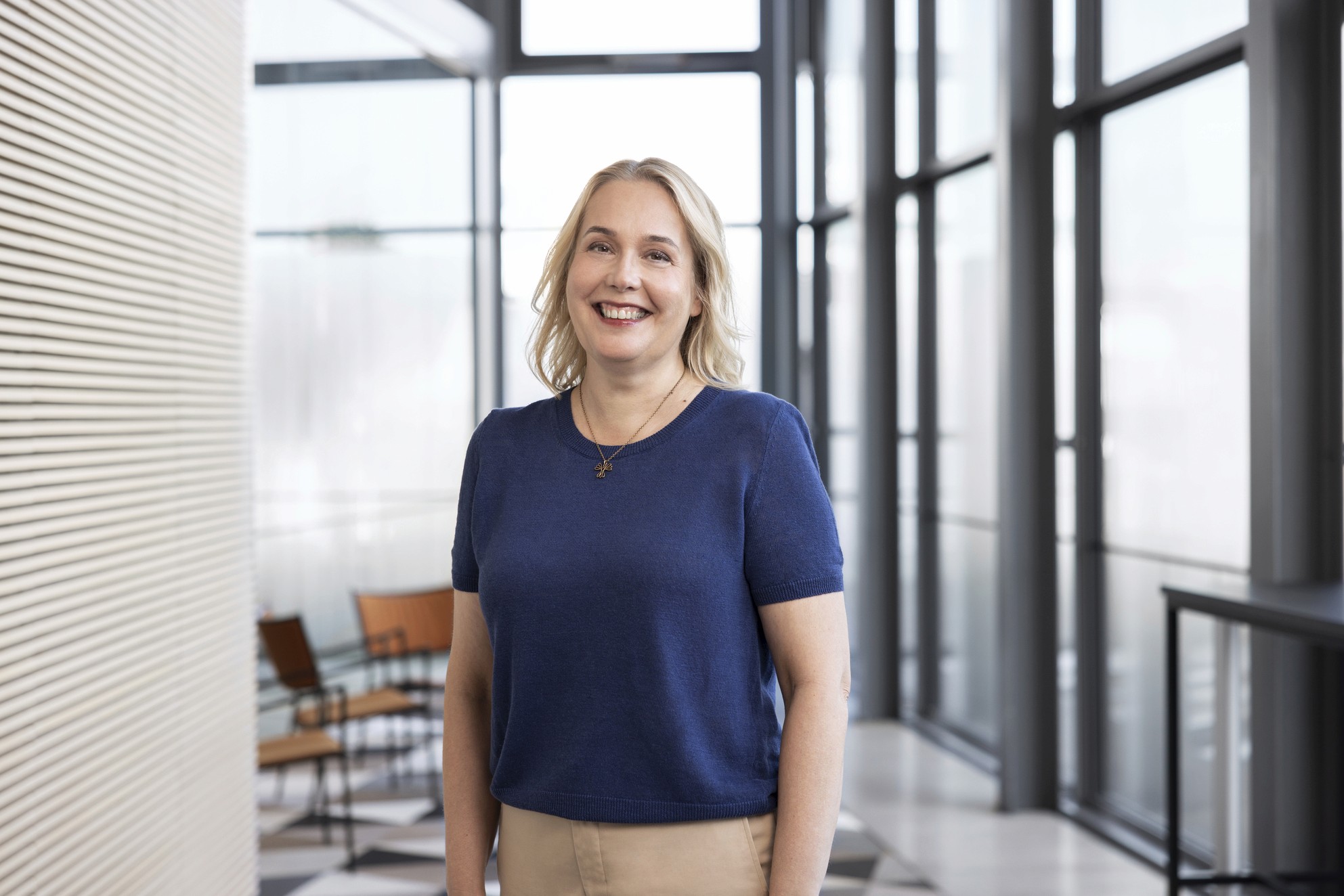
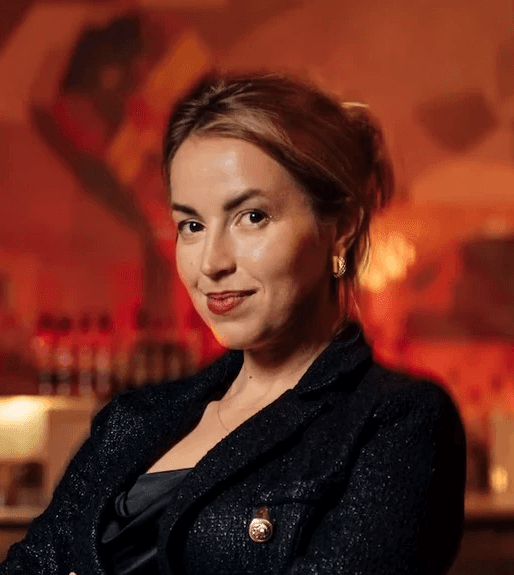
A veteran finance executive, Pia Aaltonen-Forsell has held CFO roles at Finnair, Northvolt, Outokumpu, Ahlstrom-Munksjö, and Vacon, alongside board appointments at several listed companies. Image credit: Finnair
Managing risk without predicting it
Airlines take different approaches to fuel price risk. Some, including American Airlines, have largely abandoned fuel hedging. Most European network carriers continue to hedge, although to varying degrees.
Finnair follows the latter approach. The airline relies on a hedging policy, but Aaltonen-Forsell says it still requires a close understanding of market conditions.
"We have a hedging policy that really gives us direction. But we also need to have our feet on the ground and understand the market. In very volatile markets, it's not a thing that you just call the bank and say, 'I would like to do this.' You still need to be very informed about what's going on and choose the right moments."
The strategy proved its value this summer. By the end of the second quarter, Finnair had hedged roughly three-quarters of its expected fuel consumption for the second half of the year, reducing its exposure as prices rose.
That discipline matters because markets rarely move in predictable ways. "You need to have a certain framework for your thinking. It can't jump around day to day based on the latest news or tweet. Here's the basic plan. Then here are some things we could potentially change in different situations."
Rather than reacting to each headline, whether a breakthrough in peace talks or a fresh escalation, Finnair follows a defined framework while adjusting its decisions as conditions evolve.
Complexity rewards collaboration
The changing nature of risk has reshaped Aaltonen-Forsell's view of leadership. "I think today the world is so complex that it's very difficult to imagine that leadership could be a one-man or one-woman show where one person knows everything. Rather, there needs to be a group of people with different perspectives that can bring in different points of view."
The approach reflects research on collective intelligence, which suggests that how teams work together is a stronger predictor of group performance than the intelligence of individual members. At Finnair, that means bringing together finance, operations, network planning and commercial teams before decisions are made.
"What has worked and been really important for us has been strong collaboration between the different teams, having a shared view of the situation and then agreeing on the next steps," Aaltonen-Forsell says. "You actually need several views to really form the full view of what's going on."
Cash creates options
Working as both an executive and a board member has reinforced another principle. "I've learned to focus on the core of the topic and the fundamentals."
Across every industry she has worked in, one fundamental has never changed. "Cash. Cash is important for a business to run and develop in any industry. I always look at whether the business actually generates cash."
Profitability is essential, but it tells only part of the story. "A lot of people tend to focus on margins and profits, which is really good. That's the first step toward cash flow. But you really need to understand the cash flow itself."
Few industries make those trade-offs more visible than aviation. Airlines commit billions to aircraft that stay in service for decades, even as demand keeps shifting. Finnair's latest fleet renewal reflects that balancing act. The airline has ordered 18 Embraer E195-E2 aircraft, with options for 16 more and 12 purchase rights, while also planning to acquire up to 12 used Airbus A320/321ceo aircraft and lease six A320ceos. The mix is designed to support growth, replace older aircraft and give Finnair the flexibility to match capacity with changing demand.
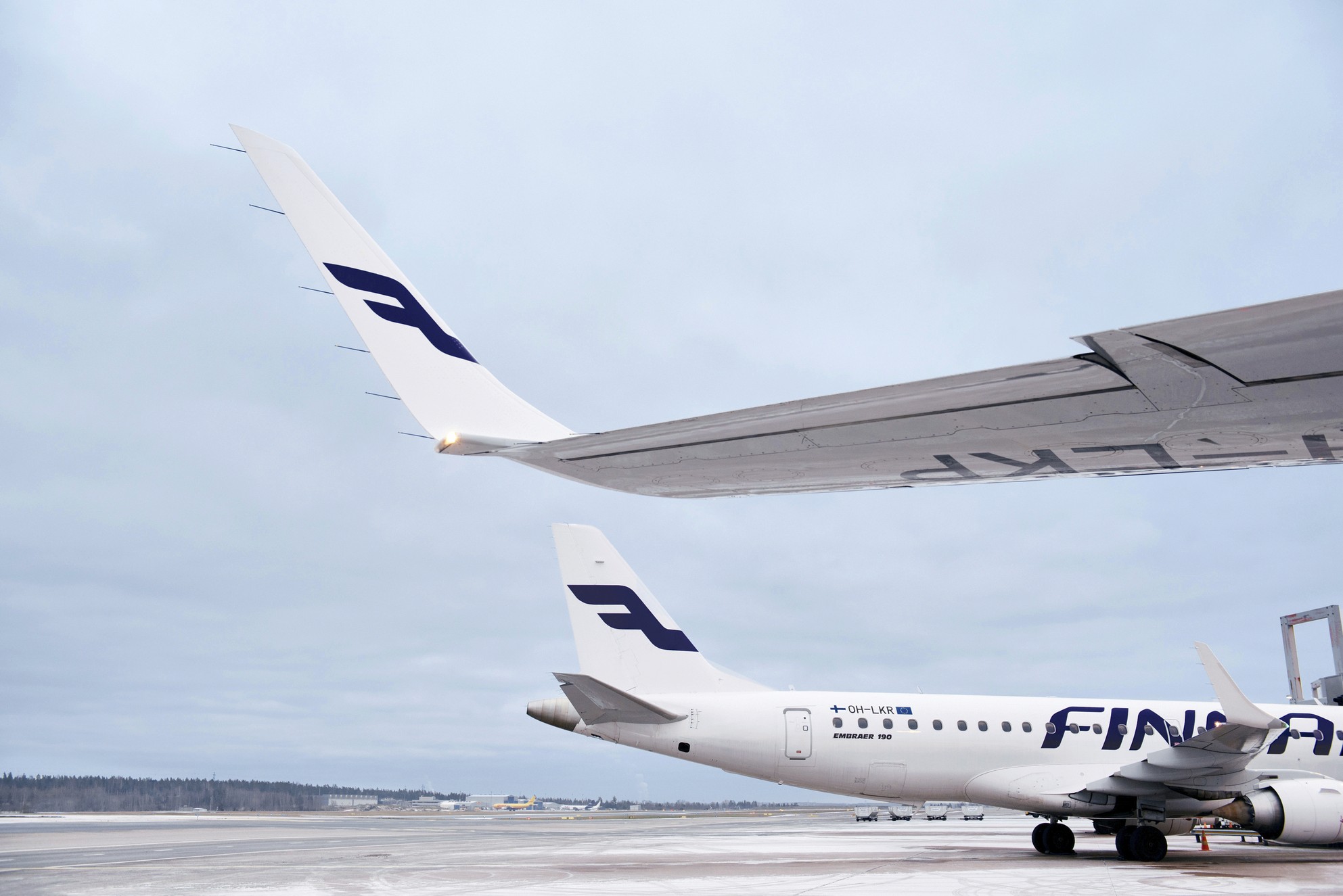
Finnair is planning to renew its fleet with a mix of options, including Embraer E195 narrow-body jets. The image shows Embraer E190 jets used on short-haul European routes. Image credit: Finnair
For Aaltonen-Forsell, those decisions illustrate a broader principle about capital allocation. "The core of capital allocation is still that every euro has a purpose. But having seen very volatile situations, I've learned that you can have the best laid-out plan, but you still don't need to squeeze it to the last cent. You need to build a bit of optionality into those best laid-out plans."
Trust is built before it is needed
Besides optionality, trust is another idea Aaltonen-Forsell returns to. Trust, she says, also has to be built before it is needed.
"You have to put a lot of effort into building that trust. It doesn't come overnight. It comes from consistently doing what you say you will do and delivering what you promise."
Trust allows management teams and boards to make difficult decisions together. It cannot be built in the middle of a crisis.
As Aaltonen-Forsell prepares to join Valmet, the industry will change, but the challenge will not. Companies cannot predict every geopolitical shock, supply chain disruption or commodity price swing. What they can decide is how prepared they will be when the next one arrives.
·
5 min read
Explore and follow profiles from this article to get timely updates:


Few Nordic finance leaders have seen as many industries from the CFO chair as Pia Aaltonen-Forsell. Forestry at Munksjö and Ahlstrom Munksjö. Steel at Outokumpu. Batteries at Northvolt. Aviation at Finnair. She chairs UPM’s Audit Committee, and by January she takes on her next role as CFO of Valmet.
Each industry has its own logic, its own cycles, its own shocks. Yet across all of them, Finnair CFO Aaltonen-Forsell says, the fundamentals that decide whether a company survives disruption barely change.
"We just have to accept the world as it is. There are surprises, there is volatility, and we have to build the way we think, the frameworks we use and the way we act around that," the financial leader of Finland’s flag carrier told Listeds in an exclusive interview.
Before joining Finnair as CFO in 2024, Aaltonen-Forsell held senior finance roles at Vacon, Munksjö, Ahlstrom Munksjö, Outokumpu and Northvolt. She also chairs UPM's Audit Committee and will become CFO of industrial technology supplier Valmet by next January. The experience has shown that resilience depends less on accurate forecasts than on preserving the flexibility to adapt.
Few companies have tested that idea as thoroughly as Finnair. Russia's closure of its airspace dismantled the airline's long-standing advantage on Europe-Asia routes almost overnight, forcing longer flight times and a fundamental rethink of its network. More recently, conflict in the Middle East triggered another wave of disruption as oil prices climbed and airlines adjusted operations.
Many carriers felt the impact immediately. Scandinavian Airlines canceled hundreds of flights because of higher fuel costs. Finnair largely avoided cancellations and fuel surcharges, helped by a fuel hedging strategy that had locked in much of its fuel costs before prices surged. At the same time, reduced capacity from several Middle Eastern airlines increased demand on long-haul routes to Asia, supporting a record comparable operating profit of €78.4 million in the second quarter and prompting Finnair to raise its revenue guidance for 2026.
For Aaltonen-Forsell, the lesson is not how Finnair handled one disruption but how it prepared for many.
Optionality is a strategy
Ask Aaltonen-Forsell what resilience means, and the seasoned CFO starts with the balance sheet.
"From my perspective, resilience means that you have a certain readiness through the structure of your balance sheet, your cash reserves, your factual understanding of the situation, your shared knowledge and your shared view of the situation."
Preparation, however, is only part of the equation. "Because things can change, part of resilience is having that optionality. Not just saying, 'Here's the only right way to do it,' but thinking upfront that there may be two different alternatives. Depending on how things go, we can go this way, or we can go that way."
Few industries feel geopolitical shocks as quickly as aviation. When the Strait of Hormuz closed in late February, global jet fuel prices nearly doubled within weeks, reaching $188 a barrel in April. They eased briefly before jumping almost 30% again in July as renewed tensions disrupted shipping. For the airline industry, the volatility is expected to add around $100 billion to fuel bills this year.
It is why Aaltonen-Forsell returns to the idea of optionality. Rather than betting on a single forecast, companies need enough financial and operational flexibility to change course as conditions shift.
A veteran finance executive, Pia Aaltonen-Forsell has held CFO roles at Finnair, Northvolt, Outokumpu, Ahlstrom-Munksjö, and Vacon, alongside board appointments at several listed companies. Image credit: Finnair
Managing risk without predicting it
Airlines take different approaches to fuel price risk. Some, including American Airlines, have largely abandoned fuel hedging. Most European network carriers continue to hedge, although to varying degrees.
Finnair follows the latter approach. The airline relies on a hedging policy, but Aaltonen-Forsell says it still requires a close understanding of market conditions.
"We have a hedging policy that really gives us direction. But we also need to have our feet on the ground and understand the market. In very volatile markets, it's not a thing that you just call the bank and say, 'I would like to do this.' You still need to be very informed about what's going on and choose the right moments."
The strategy proved its value this summer. By the end of the second quarter, Finnair had hedged roughly three-quarters of its expected fuel consumption for the second half of the year, reducing its exposure as prices rose.
That discipline matters because markets rarely move in predictable ways. "You need to have a certain framework for your thinking. It can't jump around day to day based on the latest news or tweet. Here's the basic plan. Then here are some things we could potentially change in different situations."
Rather than reacting to each headline, whether a breakthrough in peace talks or a fresh escalation, Finnair follows a defined framework while adjusting its decisions as conditions evolve.

Complexity rewards collaboration
The changing nature of risk has reshaped Aaltonen-Forsell's view of leadership. "I think today the world is so complex that it's very difficult to imagine that leadership could be a one-man or one-woman show where one person knows everything. Rather, there needs to be a group of people with different perspectives that can bring in different points of view."
The approach reflects research on collective intelligence, which suggests that how teams work together is a stronger predictor of group performance than the intelligence of individual members. At Finnair, that means bringing together finance, operations, network planning and commercial teams before decisions are made.
"What has worked and been really important for us has been strong collaboration between the different teams, having a shared view of the situation and then agreeing on the next steps," Aaltonen-Forsell says. "You actually need several views to really form the full view of what's going on."
Cash creates options
Working as both an executive and a board member has reinforced another principle. "I've learned to focus on the core of the topic and the fundamentals."
Across every industry she has worked in, one fundamental has never changed. "Cash. Cash is important for a business to run and develop in any industry. I always look at whether the business actually generates cash."
Profitability is essential, but it tells only part of the story. "A lot of people tend to focus on margins and profits, which is really good. That's the first step toward cash flow. But you really need to understand the cash flow itself."
Few industries make those trade-offs more visible than aviation. Airlines commit billions to aircraft that stay in service for decades, even as demand keeps shifting. Finnair's latest fleet renewal reflects that balancing act. The airline has ordered 18 Embraer E195-E2 aircraft, with options for 16 more and 12 purchase rights, while also planning to acquire up to 12 used Airbus A320/321ceo aircraft and lease six A320ceos. The mix is designed to support growth, replace older aircraft and give Finnair the flexibility to match capacity with changing demand.
Finnair is planning to renew its fleet with a mix of options, including Embraer E195 narrow-body jets. The image shows Embraer E190 jets used on short-haul European routes. Image credit: Finnair
For Aaltonen-Forsell, those decisions illustrate a broader principle about capital allocation. "The core of capital allocation is still that every euro has a purpose. But having seen very volatile situations, I've learned that you can have the best laid-out plan, but you still don't need to squeeze it to the last cent. You need to build a bit of optionality into those best laid-out plans."
Trust is built before it is needed
Besides optionality, trust is another idea Aaltonen-Forsell returns to. Trust, she says, also has to be built before it is needed.
"You have to put a lot of effort into building that trust. It doesn't come overnight. It comes from consistently doing what you say you will do and delivering what you promise."
Trust allows management teams and boards to make difficult decisions together. It cannot be built in the middle of a crisis.
As Aaltonen-Forsell prepares to join Valmet, the industry will change, but the challenge will not. Companies cannot predict every geopolitical shock, supply chain disruption or commodity price swing. What they can decide is how prepared they will be when the next one arrives.



Investor Event
Listeds Investor Event · Defence
Nordic defence is in a once-in-a-generation growth cycle. Eight listed and pre-IPO companies pitch to 100+ invited investors at Valkoinen Sali, Helsinki
21 September 2026


Latest on Listeds

