/

Topics

/

resilience

resilience

Leaders

Six CFO seats, one lesson: Finnair’s Pia Aaltonen-Forsell on what survives every crisis

Aug 5, 2026

Few Nordic finance leaders have seen as many industries from the CFO chair as Pia Aaltonen-Forsell. Forestry at Munksjö and Ahlstrom Munksjö. Steel at Outokumpu. Batteries at Northvolt. Aviation at Finnair. She chairs UPM’s Audit Committee, and by January she takes on her next role as CFO of Valmet.

Each industry has its own logic, its own cycles, its own shocks. Yet across all of them, Finnair CFO Aaltonen-Forsell says, the fundamentals that decide whether a company survives disruption barely change.

"We just have to accept the world as it is. There are surprises, there is volatility, and we have to build the way we think, the frameworks we use and the way we act around that," the financial leader of Finland’s flag carrier told Listeds in an exclusive interview.

Before joining Finnair as CFO in 2024, Aaltonen-Forsell held senior finance roles at Vacon, Munksjö, Ahlstrom Munksjö, Outokumpu and Northvolt. She also chairs UPM's Audit Committee and will become CFO of industrial technology supplier Valmet by next January. The experience has shown that resilience depends less on accurate forecasts than on preserving the flexibility to adapt.

Few companies have tested that idea as thoroughly as Finnair. Russia's closure of its airspace dismantled the airline's long-standing advantage on Europe-Asia routes almost overnight, forcing longer flight times and a fundamental rethink of its network. More recently, conflict in the Middle East triggered another wave of disruption as oil prices climbed and airlines adjusted operations.

Many carriers felt the impact immediately. Scandinavian Airlines canceled hundreds of flights because of higher fuel costs. Finnair largely avoided cancellations and fuel surcharges, helped by a fuel hedging strategy that had locked in much of its fuel costs before prices surged. At the same time, reduced capacity from several Middle Eastern airlines increased demand on long-haul routes to Asia, supporting a record comparable operating profit of €78.4 million in the second quarter and prompting Finnair to raise its revenue guidance for 2026.

For Aaltonen-Forsell, the lesson is not how Finnair handled one disruption but how it prepared for many.

Optionality is a strategy

Ask Aaltonen-Forsell what resilience means, and the seasoned CFO starts with the balance sheet.

"From my perspective, resilience means that you have a certain readiness through the structure of your balance sheet, your cash reserves, your factual understanding of the situation, your shared knowledge and your shared view of the situation."

Preparation, however, is only part of the equation. "Because things can change, part of resilience is having that optionality. Not just saying, 'Here's the only right way to do it,' but thinking upfront that there may be two different alternatives. Depending on how things go, we can go this way, or we can go that way."

Few industries feel geopolitical shocks as quickly as aviation. When the Strait of Hormuz closed in late February, global jet fuel prices nearly doubled within weeks, reaching $188 a barrel in April. They eased briefly before jumping almost 30% again in July as renewed tensions disrupted shipping. For the airline industry, the volatility is expected to add around $100 billion to fuel bills this year.

It is why Aaltonen-Forsell returns to the idea of optionality. Rather than betting on a single forecast, companies need enough financial and operational flexibility to change course as conditions shift.

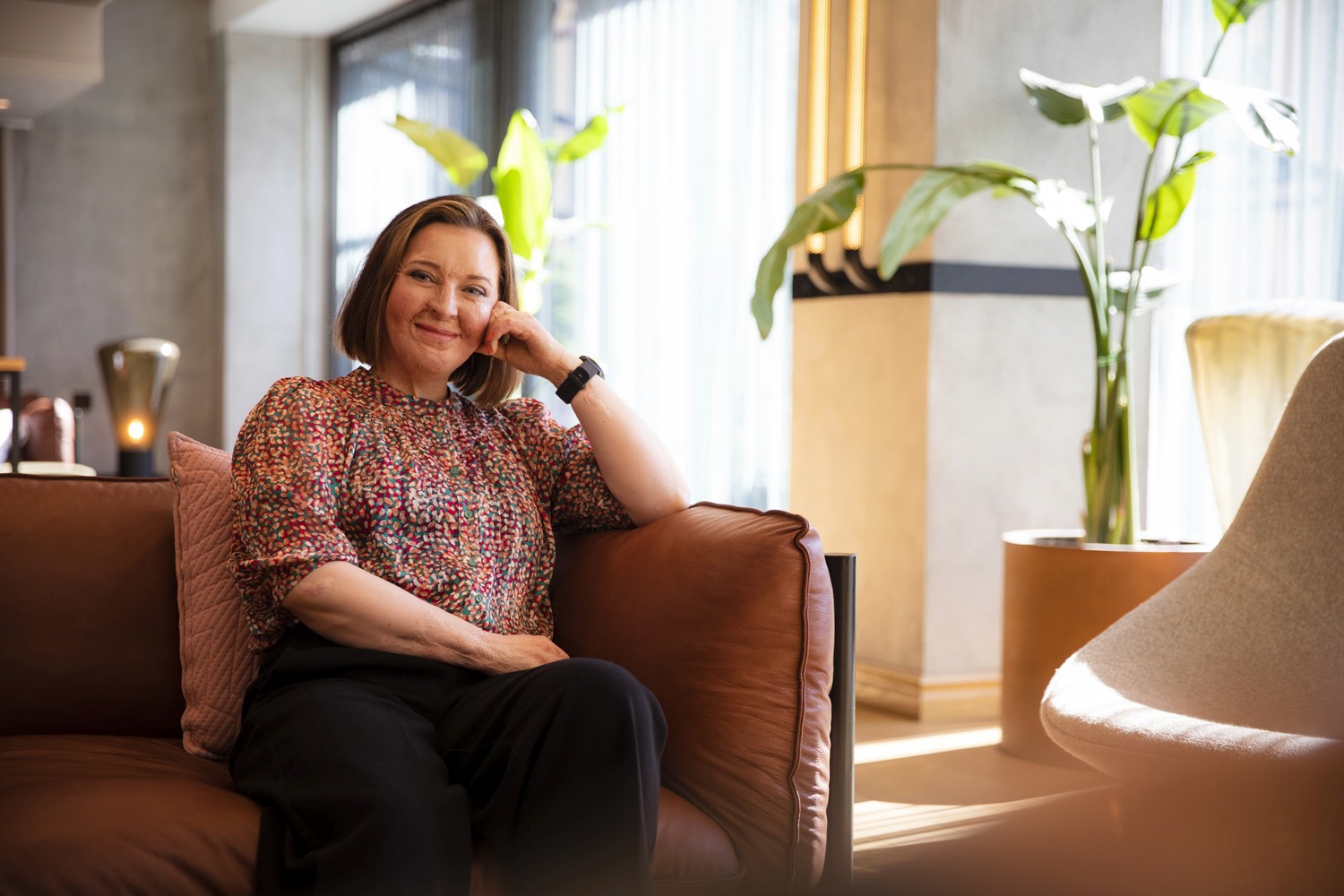
A veteran finance executive, Pia Aaltonen-Forsell has held CFO roles at Finnair, Northvolt, Outokumpu, Ahlstrom-Munksjö, and Vacon, alongside board appointments at several listed companies. Image credit: Finnair

Managing risk without predicting it

Airlines take different approaches to fuel price risk. Some, including American Airlines, have largely abandoned fuel hedging. Most European network carriers continue to hedge, although to varying degrees.

Finnair follows the latter approach. The airline relies on a hedging policy, but Aaltonen-Forsell says it still requires a close understanding of market conditions.

"We have a hedging policy that really gives us direction. But we also need to have our feet on the ground and understand the market. In very volatile markets, it's not a thing that you just call the bank and say, 'I would like to do this.' You still need to be very informed about what's going on and choose the right moments."

The strategy proved its value this summer. By the end of the second quarter, Finnair had hedged roughly three-quarters of its expected fuel consumption for the second half of the year, reducing its exposure as prices rose.

That discipline matters because markets rarely move in predictable ways. "You need to have a certain framework for your thinking. It can't jump around day to day based on the latest news or tweet. Here's the basic plan. Then here are some things we could potentially change in different situations."

Rather than reacting to each headline, whether a breakthrough in peace talks or a fresh escalation, Finnair follows a defined framework while adjusting its decisions as conditions evolve.

Complexity rewards collaboration

The changing nature of risk has reshaped Aaltonen-Forsell's view of leadership. "I think today the world is so complex that it's very difficult to imagine that leadership could be a one-man or one-woman show where one person knows everything. Rather, there needs to be a group of people with different perspectives that can bring in different points of view." 

The approach reflects research on collective intelligence, which suggests that how teams work together is a stronger predictor of group performance than the intelligence of individual members. At Finnair, that means bringing together finance, operations, network planning and commercial teams before decisions are made. 

"What has worked and been really important for us has been strong collaboration between the different teams, having a shared view of the situation and then agreeing on the next steps," Aaltonen-Forsell says. "You actually need several views to really form the full view of what's going on." 

Cash creates options

Working as both an executive and a board member has reinforced another principle. "I've learned to focus on the core of the topic and the fundamentals."

Across every industry she has worked in, one fundamental has never changed. "Cash. Cash is important for a business to run and develop in any industry. I always look at whether the business actually generates cash."

Profitability is essential, but it tells only part of the story. "A lot of people tend to focus on margins and profits, which is really good. That's the first step toward cash flow. But you really need to understand the cash flow itself."

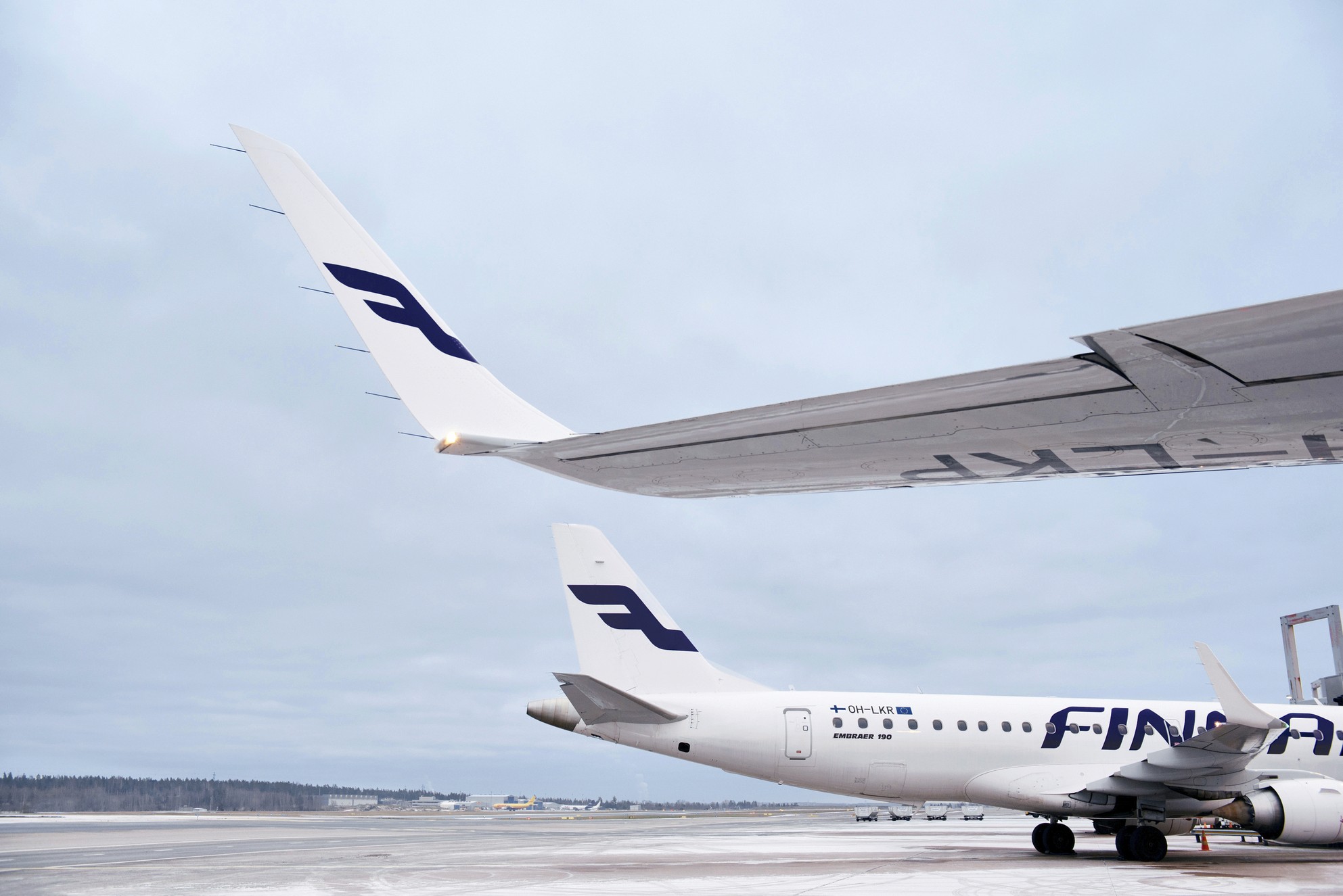
Few industries make those trade-offs more visible than aviation. Airlines commit billions to aircraft that stay in service for decades, even as demand keeps shifting. Finnair's latest fleet renewal reflects that balancing act. The airline has ordered 18 Embraer E195-E2 aircraft, with options for 16 more and 12 purchase rights, while also planning to acquire up to 12 used Airbus A320/321ceo aircraft and lease six A320ceos. The mix is designed to support growth, replace older aircraft and give Finnair the flexibility to match capacity with changing demand.

redit: Finnair. 1: Embraer E190

Finnair is planning to renew its fleet with a mix of options, including Embraer E195 narrow-body jets. The image shows Embraer E190 jets used on short-haul European routes. Image credit: Finnair

For Aaltonen-Forsell, those decisions illustrate a broader principle about capital allocation. "The core of capital allocation is still that every euro has a purpose. But having seen very volatile situations, I've learned that you can have the best laid-out plan, but you still don't need to squeeze it to the last cent. You need to build a bit of optionality into those best laid-out plans."

Trust is built before it is needed

Besides optionality, trust is another idea Aaltonen-Forsell returns to. Trust, she says, also has to be built before it is needed. 

"You have to put a lot of effort into building that trust. It doesn't come overnight. It comes from consistently doing what you say you will do and delivering what you promise."

Trust allows management teams and boards to make difficult decisions together. It cannot be built in the middle of a crisis.

As Aaltonen-Forsell prepares to join Valmet, the industry will change, but the challenge will not. Companies cannot predict every geopolitical shock, supply chain disruption or commodity price swing. What they can decide is how prepared they will be when the next one arrives.

Leaders

Beyond sisu: A short guide to building organizational resilience

Dec 18, 2025

Listeds met with Ulrika Björkstam to discuss resilience, a skill that can be developed at both the individual and organizational levels. Based on her work with Nordic executive teams, low organizational resilience tends to surface in recurring patterns.

In business culture, resilience is often confused with individual toughness. According to Ulrika Björkstam, author and certified resilience coach, that assumption is increasingly part of the problem.

“Resilience is not a personal trait that some people have, and others don’t. It’s a skill set,” says Björkstam, the author of the book Develop Resilience (Kehitä Resilienssiä, 2025). “No one is resilient on their own.”

Björkstam has worked extensively with companies and executive teams after becoming certified as a resilience coach, drawing in part on her own experience of surviving a plane crash in Mexico City in 2008. Her perspective aligns closely with resilience science.

She points to the work of psychologist Ann Masten, who defines resilience as the capacity of dynamic systems to withstand or recover from significant disturbances. Masten’s research shows that resilience emerges from interacting systems, involving individuals, teams, leadership, and communities, working together rather than from personal strength alone.

The Nordic context: strong cultures, fragile assumptions
Ulrika Björkstam, photographed by Dorit Salutskij.

Nordic companies are built on trust, autonomy, and low hierarchy. These remain real strengths. At the same time, fewer people are able to show up fully at work.

Yle reported last year, citing Finland’s social insurance institution Kela, that mental health-related sick leaves cost Finnish society at least €1 billion annually, equivalent to around 26,000 full-time workers being absent for a year. The figure has risen steadily over the past decade.

Finland is not an outlier. Research summarized by Karolinska Institutet (2025) shows that common mental disorders – including depression, anxiety, and stress-related ill health – are now the most common cause of sick leave benefits in Sweden, underscoring a broader Nordic trend.

Yet many organizations still respond with individual-level solutions: wellbeing apps, coaching, or occupational health services that intervene only once people are already exhausted.

“People tend to lean towards occupational health services when they are already in the red zone,” Björkstam says. She challenges the logic behind this approach.

“It’s a blind spot if we think resilience is only the individual’s responsibility and we don’t look at how leadership and management affect it.”

International research supports this view. Harvard Business Review (2025) argues that stress is often misframed as a personal issue rather than an organizational risk, and that companies should link employee stress to outcomes such as revenue and performance in order to design targeted interventions that strengthen long-term competitiveness.

Why tenacity alone no longer works

Those who take pride in being tenacious, sisukas, may need a moment of self-reflection. As Björkstam points out, resilience does not mean gritting your teeth and figuring everything out alone – the familiar Finnish instinct captured in the phrase “ei tartte auttaa,” meaning no need to help.

“Perseverance and tenacity are not a guarantee of moving forward,” she says. “We can be very adamant about holding on to what used to be, even when the situation has changed.”

Resilience, as she defines it, is not about returning to a previous state. It is about adapting to new conditions and continuing to function despite change. That requires skills beyond endurance: emotional regulation, stress recovery, critical thinking, cooperation, and clarity of direction.

Organizations that rely solely on individual toughness often appear resilient on the surface until fatigue, silence, and disengagement begin to accumulate.

How lack of resilience shows up inside companies

“There’s a limit to all of our resilience. If we’re facing too much at the same time, all of us have our breaking points,” Björkstam says. Individual factors such as poor sleep, nutrition, and lack of movement all play a role, but she emphasizes that the decisive factor is how work itself is designed.

From her work with Nordic executive teams, low organizational resilience tends to surface in recurring patterns.

  • Unclear priorities and decision paralysis
    When leaders avoid trade-offs, work accumulates and stress compounds.


  • Silence during meetings
    People do not challenge decisions openly, but discuss risks informally afterward. “That silence is often a signal of not having enough psychological safety,” Björkstam says.


  • Overreliance on a few high performers
    Responsibility concentrates until burnout becomes inevitable.


  • Fear of mistakes
    Problems are hidden, or blame is shifted, slowing learning and increasing risk.


  • Prolonged uncertainty without anchors
    Leaders emphasize what is unknown but fail to communicate what will remain stable.

These are not individual failures. They are organizational signals.

Psychological safety is the infrastructure of resilience

Resilience is tested most during uncertainty, disagreement, and change. That is where psychological safety becomes operational rather than theoretical.

“In situations where we need resilience, we often need difficult conversations. And we cannot have difficult conversations if we don’t have psychological safety.”

Executives often delay communication until they have full answers. Björkstam argues that this creates more anxiety, not less.

“The change has already happened,” she says. “You have already created an environment of uncertainty.”

Ignoring the emotional impact of that uncertainty undermines trust and weakens resilience. Psychological safety allows teams to surface risks early, challenge assumptions, and adapt without fear.

“Sometimes you might be the one who sees that a decision is based on false assumptions, but you won’t speak up if it doesn’t feel safe,” she says. Björkstam notes that one of the most common situations she encounters with clients is a fear of speaking up and taking space, driven by concerns about being labeled a pessimist or the bearer of bad news.

How leaders know whether their organization is resilient

Before turning to leadership practices, Björkstam suggests assessing whether resilience is already present in everyday work.

Signs of resilience show up in how flexible decision-making is, how problems are received, how teams adapt to shifting priorities, and how absence levels evolve over time. Employee and customer feedback also provide early signals of whether the organization is prepared for shocks or already close to its breaking point.

For boards in particular, Björkstam argues that resilience rarely requires new metrics. It becomes visible in existing data if leaders know what to look for.

What resilient leadership looks like in everyday practice

Resilience is not built through 12-hour workdays or martyrdom, but through consistent leadership behavior repeated every day.

“If leaders reply to emails at 10 in the evening, they send a message about what is really expected,” Björkstam says.

Björkstam shares her best practices that strengthen organizational resilience:

  • Ask people to prepare questions and challenges in advance for meetings

  • Normalize constructive disagreement, including upward

  • Model stress recovery through breaks, realistic pacing, and boundaries

  • Communicate clearly what will not change during uncertainty

  • Lower the threshold for raising problems, even without solutions

  • Lead with authenticity rather than minimizing anxiety

The practices are not complex, but they require consistent leadership behavior.

A resilience checklist for 2026 strategy work

For CEOs and boards, resilience should be treated as a strategic capability, not a personal expectation.

Key questions to ask:

  • Where does stress accumulate in our organization, and why?

  • Which priorities are unclear or competing?

  • Do leaders model recovery, or only endurance?

  • How safe is it to challenge decisions upward?

  • What do we need to stop doing to become more resilient?

That final question matters most. As Björkstam notes, leaders often focus on adding initiatives rather than removing behaviors that quietly undermine resilience.

For Nordic companies facing slower growth, technological disruption, and geopolitical uncertainty, resilience is no longer about toughness. It is about organizational systems that allow people to think clearly, adapt intelligently, and move forward together.

“Sometimes the right question is not what we need to do more of, but what we need to stop doing,” Björkstam concludes.


Sources:

Harvard Business Review. (2025). Stress is a business risk, not just a personal problem. Harvard Business Review. https://hbr.org

Karolinska Institutet. (2025). Mental health and sick leave in Sweden. Karolinska Institutet. https://ki.se

Kela. (2024). Mental health-related sickness absence in Finland. The Social Insurance Institution of Finland. https://www.kela.fi

Masten, A. S. (2014). Ordinary magic: Resilience in development. New York, NY: Guilford Press.

Yle. (2024). Mental health-related sick leave costs Finland at least one billion euros annually. Yle News. https://yle.fi

Stay on the pulse, catch the signals

Subscribe to Listeds Leadership Intelligence Platform:

  • leader and company database access

  • email alerts

  • career, boards and interim opportunities

Our Pulse newsletter

Your weekly leadership intelligence briefing.

What happened, why it matters, and what to watch across every CEO, board, and executive move in Nordic listed companies, starting with Finland. Fast, factual, and to the point.

Delivered every Monday.

By signing up, you agree to our Privacy Policy