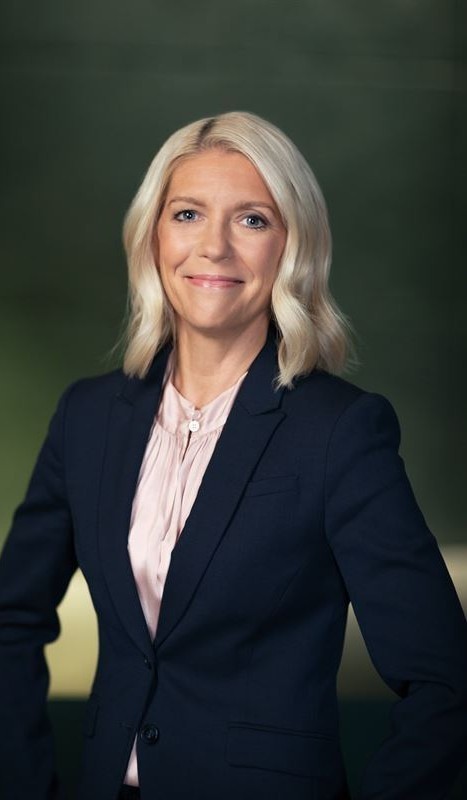
Finnair is looking outside aviation for one of its most important leadership appointments.

The Helsinki-based carrier has named Sini Kivekäs, 51, as chief people officer and a member of the executive board from June 1, 2026. Kivekäs joins from financial services after nearly three decades at Nordea and Aktia, a move that says as much about Finnair’s strategic priorities as it does about her background.

The appointment, disclosed in a stock exchange release today, comes at a moment when Finnair’s operational performance is strengthening, and its leadership team is being reshaped around the next phase of the airline’s strategy.

Kivekäs succeeds Kaisa Aalto-Luoto, who announced in January 2026 that she would leave Finnair by the end of June for a position outside the company.

Why Finnair hired outside aviation

Kivekäs holds a Master of Laws and most recently served on Aktia’s group executive committee, where she oversaw group functions and HR. Before joining Aktia, she held several senior leadership roles at Nordea. She arrives without aviation industry experience, but with deep exposure to talent management, organizational change, and leadership development in one of the Nordic region’s most competitive white-collar sectors.

That appears intentional.

“I warmly welcome Sini to Finnair, as we continue to develop our employee experience as a key enabler of our Finnair strategy,” CEO Turkka Kuusisto said in the release. “Sini brings with her a wealth of experience, and a solid understanding of how a holistic people plan and leading employee experience contribute to a company’s success.”

Kivekäs framed the role in similar terms. “Finnair’s clear strategy and values, and its determined forward-looking approach in a changing and increasingly unpredictable world, strongly resonate with me,” she said. “ I believe that engaged and highly skilled personnel are key to a company’s success, as employee and customer experience ultimately form one shared experience and differentiating factor.”

That distinction matters for Finnair. The airline has won Skytrax’s Best Airline in Northern Europe award 15 consecutive times, and service quality remains one of the few defensible advantages available to a mid-sized Nordic carrier competing against larger European rivals and Gulf airlines with structurally lower costs.

A broader leadership reset

The appointment also fits into a broader reshaping of Finnair’s leadership group.

In August 2025, Pia Aaltonen-Forsell joined as chief financial officer, replacing Kristian Pullola. At the board level, three long-serving directors departed at the March 2025 AGM and were replaced by Andreas Bierwirth, Nicolas Boutin, Lisa Farrar, and Mika Ihamuotila. All four were re-elected in March 2026 alongside Chair Sanna Suvanto Harsaae.

Taken together, the changes point to a company that has refreshed much of its senior leadership within a relatively short period while keeping continuity at the top.

Operational momentum supports the strategy

The timing is favorable. Finnair’s April 2026 traffic figures showed clear operational momentum. Passenger volumes rose 6.3% year on year to 1.03 million, while revenue per available seat kilometer (RASK) increased 14.7%. Passenger load factor improved to 78.0%, and Asia traffic continued to outperform, with passenger growth of 12.7% and load factors reaching 84.9%.

The strength in Asia is central to Finnair’s strategy. The airline has added frequencies to Osaka and Nagoya while scaling back parts of its North Atlantic network, reinforcing its long-standing positioning around Helsinki’s geography as a shorter connection point between Europe and Asia.

At the same time, operational reliability improved materially. On-time performance reached 87.5% in April, up from 80.2% a year earlier.

There are still constraints. Finnair suspended Middle East flights in February because of the regional security situation, leaving capacity and passenger numbers on those routes at zero in April. But industry-wide disruptions have also tightened capacity across overlapping corridors, helping support pricing elsewhere in the network.

What the hire says about Finnair’s next phase

Against that backdrop, the Kivekäs hire looks less like a routine HR appointment and more like a statement about where Finnair believes competitive advantage will come from next.

Kuusisto appears to be building a leadership team around two assumptions: that Asia remains the airline’s strongest structural opportunity, and that customer experience will increasingly depend on employee engagement rather than scale alone.

The choice of a banking executive to lead that effort reflects a broader shift in how the company views people strategy. Financial services may not be a traditional talent pipeline for airlines, but it is an industry shaped by constant transformation, sophisticated workforce expectations, and intense competition for high performers.

Those capabilities transfer.

Kivekäs will arrive just as Finnair enters its busiest summer travel period. Her first months will offer an early indication of how aggressively the airline intends to turn workforce culture into a commercial advantage rather than simply an HR function.

|

|

Leaders

Finnair brings in financial services veteran Sini Kivekäs to lead people strategy as Asia traffic grows

Finnair brings in financial services veteran Sini Kivekäs to lead people strategy as Asia traffic grows

·

5 min read

Explore and follow profiles from this article to get timely updates:
Credit: Finnair, Sini Kivekäs

Credit: Finnair, Sini Kivekäs

Finnair is looking outside aviation for one of its most important leadership appointments.

The Helsinki-based carrier has named Sini Kivekäs, 51, as chief people officer and a member of the executive board from June 1, 2026. Kivekäs joins from financial services after nearly three decades at Nordea and Aktia, a move that says as much about Finnair’s strategic priorities as it does about her background.

The appointment, disclosed in a stock exchange release today, comes at a moment when Finnair’s operational performance is strengthening, and its leadership team is being reshaped around the next phase of the airline’s strategy.

Kivekäs succeeds Kaisa Aalto-Luoto, who announced in January 2026 that she would leave Finnair by the end of June for a position outside the company.

Why Finnair hired outside aviation

Kivekäs holds a Master of Laws and most recently served on Aktia’s group executive committee, where she oversaw group functions and HR. Before joining Aktia, she held several senior leadership roles at Nordea. She arrives without aviation industry experience, but with deep exposure to talent management, organizational change, and leadership development in one of the Nordic region’s most competitive white-collar sectors.

That appears intentional.

“I warmly welcome Sini to Finnair, as we continue to develop our employee experience as a key enabler of our Finnair strategy,” CEO Turkka Kuusisto said in the release. “Sini brings with her a wealth of experience, and a solid understanding of how a holistic people plan and leading employee experience contribute to a company’s success.”

Kivekäs framed the role in similar terms. “Finnair’s clear strategy and values, and its determined forward-looking approach in a changing and increasingly unpredictable world, strongly resonate with me,” she said. “ I believe that engaged and highly skilled personnel are key to a company’s success, as employee and customer experience ultimately form one shared experience and differentiating factor.”

That distinction matters for Finnair. The airline has won Skytrax’s Best Airline in Northern Europe award 15 consecutive times, and service quality remains one of the few defensible advantages available to a mid-sized Nordic carrier competing against larger European rivals and Gulf airlines with structurally lower costs.

A broader leadership reset

The appointment also fits into a broader reshaping of Finnair’s leadership group.

In August 2025, Pia Aaltonen-Forsell joined as chief financial officer, replacing Kristian Pullola. At the board level, three long-serving directors departed at the March 2025 AGM and were replaced by Andreas Bierwirth, Nicolas Boutin, Lisa Farrar, and Mika Ihamuotila. All four were re-elected in March 2026 alongside Chair Sanna Suvanto Harsaae.

Taken together, the changes point to a company that has refreshed much of its senior leadership within a relatively short period while keeping continuity at the top.

CEO newsletter

For those carrying responsibility at the top.

A monthly letter on leadership, power, and transition in the Nordics. Written by Helene Auramo, drawn from real CEO conversations and leadership signals.

Delivered monthly.

By signing up, you agree to our Privacy Policy

CEO newsletter

For those carrying responsibility at the top.

A monthly letter on leadership, power, and transition in the Nordics. Written by Helene Auramo, drawn from real CEO conversations and leadership signals.

Delivered monthly.

By signing up, you agree to our Privacy Policy

Operational momentum supports the strategy

The timing is favorable. Finnair’s April 2026 traffic figures showed clear operational momentum. Passenger volumes rose 6.3% year on year to 1.03 million, while revenue per available seat kilometer (RASK) increased 14.7%. Passenger load factor improved to 78.0%, and Asia traffic continued to outperform, with passenger growth of 12.7% and load factors reaching 84.9%.

The strength in Asia is central to Finnair’s strategy. The airline has added frequencies to Osaka and Nagoya while scaling back parts of its North Atlantic network, reinforcing its long-standing positioning around Helsinki’s geography as a shorter connection point between Europe and Asia.

At the same time, operational reliability improved materially. On-time performance reached 87.5% in April, up from 80.2% a year earlier.

There are still constraints. Finnair suspended Middle East flights in February because of the regional security situation, leaving capacity and passenger numbers on those routes at zero in April. But industry-wide disruptions have also tightened capacity across overlapping corridors, helping support pricing elsewhere in the network.

What the hire says about Finnair’s next phase

Against that backdrop, the Kivekäs hire looks less like a routine HR appointment and more like a statement about where Finnair believes competitive advantage will come from next.

Kuusisto appears to be building a leadership team around two assumptions: that Asia remains the airline’s strongest structural opportunity, and that customer experience will increasingly depend on employee engagement rather than scale alone.

The choice of a banking executive to lead that effort reflects a broader shift in how the company views people strategy. Financial services may not be a traditional talent pipeline for airlines, but it is an industry shaped by constant transformation, sophisticated workforce expectations, and intense competition for high performers.

Those capabilities transfer.

Kivekäs will arrive just as Finnair enters its busiest summer travel period. Her first months will offer an early indication of how aggressively the airline intends to turn workforce culture into a commercial advantage rather than simply an HR function.

Follow moves like this on the Listeds Executive Intelligence Platform.

Board Programme

Built for Nordic listed company boards.

The only programme in the Nordics designed specifically for listed-company board work.
Five sessions, one cohort, twenty leaders in one room - Helsinki, 2026.

Board Programme

Built for Nordic listed company boards.

The only programme in the Nordics designed specifically for listed-company board work.
Five sessions, one cohort, twenty leaders in one room - Helsinki, 2026.

Authors

Emmi Laine is head of business content at Listeds and our lead for finance and business coverage. She sets the editorial agenda, interviews Nordic business leaders, and writes stories, newsletters, and social content on timely market and corporate topics. Emmi brings nearly eight years of experience from Shanghai's Yicai Global / Yicai Media Group, where she was awarded for reporting on China’s economy, finance sector, and technology innovation. She holds an MSc in Innovation and Entrepreneurship from ESADE Business School in Barcelona and a Master’s degree in International Design Business Management from Aalto University. She also holds a Bachelor’s degree in Culture Studies with a major in Journalism from Stockholm University and has studied Mandarin Chinese and Chinese culture. Emmi is a Finnish citizen and has lived in Finland, Sweden, China, and Portugal.

Emmi Laine is head of business content at Listeds and our lead for finance and business coverage. She sets the editorial agenda, interviews Nordic business leaders, and writes stories, newsletters, and social content on timely market and corporate topics. Emmi brings nearly eight years of experience from Shanghai's Yicai Global / Yicai Media Group, where she was awarded for reporting on China’s economy, finance sector, and technology innovation. She holds an MSc in Innovation and Entrepreneurship from ESADE Business School in Barcelona and a Master’s degree in International Design Business Management from Aalto University. She also holds a Bachelor’s degree in Culture Studies with a major in Journalism from Stockholm University and has studied Mandarin Chinese and Chinese culture. Emmi is a Finnish citizen and has lived in Finland, Sweden, China, and Portugal.

Devdatta Temgire is a data and business analyst at Listeds. He contributes research, data analysis, and pattern detection to the publication’s coverage of Nordic-listed companies, with a focus on board composition, leadership transitions, and financials. He holds an honors degree in artificial intelligence and data science alongside a bachelor’s in computer engineering, and previously worked at KPMG.

Devdatta Temgire is a data and business analyst at Listeds. He contributes research, data analysis, and pattern detection to the publication’s coverage of Nordic-listed companies, with a focus on board composition, leadership transitions, and financials. He holds an honors degree in artificial intelligence and data science alongside a bachelor’s in computer engineering, and previously worked at KPMG.

Authors

Journalist

Emmi Laine is head of business content at Listeds and our lead for finance and business coverage. She sets the editorial agenda, interviews Nordic business leaders, and writes stories, newsletters, and social content on timely market and corporate topics. Emmi brings nearly eight years of experience from Shanghai's Yicai Global / Yicai Media Group, where she was awarded for reporting on China’s economy, finance sector, and technology innovation. She holds an MSc in Innovation and Entrepreneurship from ESADE Business School in Barcelona and a Master’s degree in International Design Business Management from Aalto University. She also holds a Bachelor’s degree in Culture Studies with a major in Journalism from Stockholm University and has studied Mandarin Chinese and Chinese culture. Emmi is a Finnish citizen and has lived in Finland, Sweden, China, and Portugal.

Devdatta Temgire is a data and business analyst at Listeds. He contributes research, data analysis, and pattern detection to the publication’s coverage of Nordic-listed companies, with a focus on board composition, leadership transitions, and financials. He holds an honors degree in artificial intelligence and data science alongside a bachelor’s in computer engineering, and previously worked at KPMG.

All Listeds newsletters (bundle)

One sign-up, the full picture.

Get every Listeds newsletter: the daily signal drumbeat, the weekly Pulse briefing, the monthly Best of the Month, the CEO letter, and the Weekend read.

By signing up, you agree to our Privacy Policy

All Listeds newsletters (bundle)

One sign-up, the full picture.

Get every Listeds newsletter: the daily signal drumbeat, the weekly Pulse briefing, the monthly Best of the Month, the CEO letter, and the Weekend read.

By signing up, you agree to our Privacy Policy

Latest signalsLive feed
Moves trackerLive feed

Investor Event

Listeds Investor Event · Defence

Nordic defence is in a once-in-a-generation growth cycle. Eight listed and pre-IPO companies pitch to 100+ invited investors at Valkoinen Sali, Helsinki

21 September 2026

Latest on Listeds

Leadership Moves

Elecster keeps leadership inside the board as Juuso Halonen becomes CEO

Oct 2, 2026

Elecster's board has named Deputy CEO Juuso Halonen as chief executive from 1 December 2026. Arto Kinnunen, CEO since 2017 and with the group for more than 30 years, leaves the role on 30 November and stays on as management advisor. On the same day, CFO Veronika Halonen becomes deputy CEO, eleven months after taking the finance role.

The March deputy appointment was the succession plan

On 5 March, Elecster appointed Halonen deputy CEO and a member of the management team from 30 March, reporting to Kinnunen. The stated remit was global sales and marketing and the development of management systems. Seven months later, the board has confirmed what that move signalled.

Halonen is an insider in every sense. He joined the group in 2011, has been CIO since 2019 and has sat on the board since 2024. At the time of the March appointment he held 32,705 Elecster shares. The company says Kinnunen's advisory role is meant to secure continuity through the year-end financial statement process, which places the first results under the new CEO in early 2027.

“Juuso knows Elecster, its business, personnel and international operating environment very well. The Board believes that his long experience with the company and the close work with Arto in recent months create a strong foundation for transferring the CEO's responsibility and further developing Elecster's operations,” says Jukka Halonen, Chairman of the Board, in the press release.

“I am pleased that the change of CEO can be implemented in a planned and controlled manner. I have worked closely with Juuso, and I can confidently transfer the responsibility of CEO to him,” says Arto Kinnunen.

He inherits a company whose order book has halved since March

The numbers Halonen takes over are thin. First-half 2026 revenue fell around 5.2% to EUR 15.8 million, and operating profit dropped to EUR 0.1 million from EUR 0.5 million a year earlier. The order backlog stood at EUR 4.8 million at the end of June, down from EUR 8.6 million at the end of March, as the Middle East conflict delayed customer investment decisions. A fire at the Kenyan subsidiary in Nairobi added around EUR 0.4 million in one-off costs.

The longer trend points the same way. Full-year 2025 revenue fell around 3.6% to EUR 32.7 million, and operating margin narrowed to 3.0% from 4.7%. The April AGM approved no dividend. The Russian packaging business, which the company says it will keep running for now, is the risk it flags most directly in the H1 report. Elecster still guides for revenue growth and improved earnings per share in 2026.

Halonen's own priorities match the gap. He names international sales and marketing, the service business and presence in core markets as the areas to develop, while keeping profitability as a cornerstone.

“Reliability, customer focus and profitability remain the cornerstones of our operations. At the same time, we must develop international sales and marketing, service business, our products and operating methods, and strengthen our presence and customer cooperation in our key market areas,” says Juuso Halonen in the press release.

Halonen family will hold both top executive roles and four of six board seats

The appointment concentrates leadership further. The board elected at the April 2026 AGM has six members: Aija Bärlund, Jarmo Halonen, Jukka Halonen as chair, Juuso Halonen, Veronika Halonen and Timo Kangas. From December, the CEO and deputy CEO will both come from that board.

“With her analytical and dynamic approach, Veronika Halonen has taken on the responsibilities of her current position well, and with this appointment as Deputy CEO, we are clarifying the Group's overall management structure,” says Jukka Halonen.

For a company of Elecster's size, an internal successor with seven months of supervised handover is a defensible choice. It also means the board chose continuity over an external search at a point when the business needs commercial renewal. Whether that trade pays off will show first in the order book, not in the governance chart.

Market Signals

Nightingale Health's USD 6.5 million brain health deal lands as it targets EUR 10 million in revenue

Oct 1, 2026

The Michael J. Fox Foundation will pay USD 6.5 million for Nightingale Health to analyse 60,000 UK Biobank samples for neurodegeneration markers. The company disclosed the agreement as inside information on 30 September. A day later, Nightingale published an annual report setting a revenue target of at least EUR 10 million for the current financial year.

The work will use Alamar Biosciences' NULISAseq™ Neuro 220 Panel, which is designed for neurodegeneration and other brain health conditions. At the Foundation's direction, the dataset goes to UK Biobank and opens to the wider research community in 2027. The aim is to find blood markers that change years before the symptoms of Alzheimer's and Parkinson's appear.

CEO and founder Teemu Suna said the company believes the deal will produce the world's largest brain health-focused proteomics study on a single research cohort.

The contract puts Nightingale's move into proteomics to work

The annual report says Nightingale expanded its offering into proteomics in response to growing interest in multiomics, strengthening its position in the research market. The step came through its November 2025 partnership with Alamar.

The report describes research as a separate business with its own customers and products. It is also where much of the evidence for Nightingale's healthcare business comes from, including measurements of all roughly 500,000 UK Biobank participants. The largest research agreements the report lists for the past financial year were with Aalborg University, at about EUR 2.4 million, and the Moli-sani study, at about EUR 0.7 million.

Revenue follows the samples, and the first read comes in March

Nightingale's revenue for the financial year ended June 2026 was EUR 5.50 million, up from EUR 4.69 million. That fell short of the more than 50% growth the company had targeted. In June, Nightingale warned that a EUR 2.4 million project announced in September 2025 had been delayed for reasons outside its control. As a result, about EUR 2 million of revenue moves into the current financial year. Suna called it "timing, not lost business".

The company recognises revenue over time as samples are analysed. It collects advance payments for most of its services, and the gap between payment and analysis is typically three to six months. The release gives no timeline for analysing the 60,000 samples.

The company expects its liquid funds of EUR 36.8 million to last until the end of the 2027/2028 financial year. The half-year report on 9 March 2027 will be the first chance to see how much of the delayed project and the Fox Foundation contract has turned into revenue towards the EUR 10 million target.

Join our Pulse, Best-of-the-Week, and Weekend newsletters

Join our Pulse, Best-of-the-Week, and Weekend newsletters