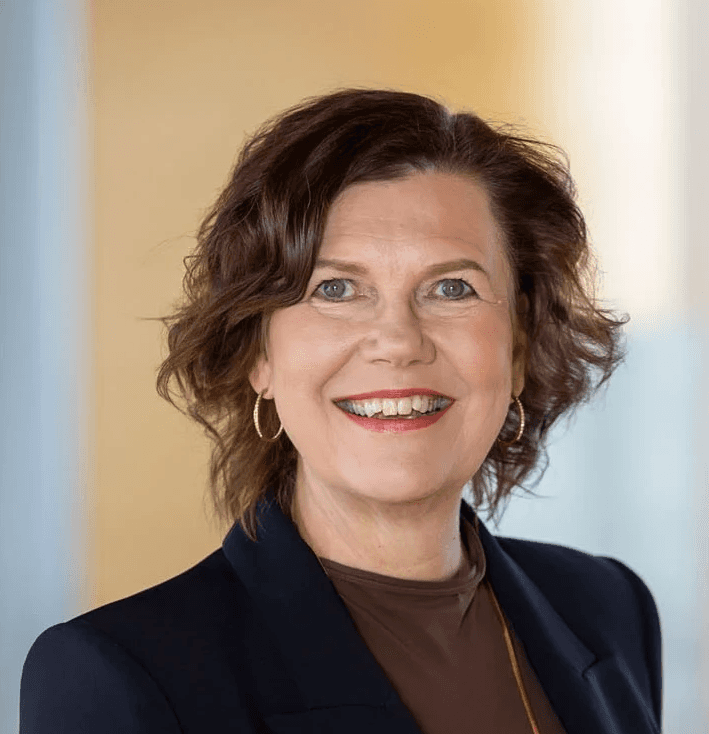
Elecster's board has named Deputy CEO Juuso Halonen as chief executive from 1 December 2026. Arto Kinnunen, CEO since 2017 and with the group for more than 30 years, leaves the role on 30 November and stays on as management advisor. On the same day, CFO Veronika Halonen becomes deputy CEO, eleven months after taking the finance role.

The March deputy appointment was the succession plan

On 5 March, Elecster appointed Halonen deputy CEO and a member of the management team from 30 March, reporting to Kinnunen. The stated remit was global sales and marketing and the development of management systems. Seven months later, the board has confirmed what that move signalled.

Halonen is an insider in every sense. He joined the group in 2011, has been CIO since 2019 and has sat on the board since 2024. At the time of the March appointment he held 32,705 Elecster shares. The company says Kinnunen's advisory role is meant to secure continuity through the year-end financial statement process, which places the first results under the new CEO in early 2027.

“Juuso knows Elecster, its business, personnel and international operating environment very well. The Board believes that his long experience with the company and the close work with Arto in recent months create a strong foundation for transferring the CEO's responsibility and further developing Elecster's operations,” says Jukka Halonen, Chairman of the Board, in the press release.

“I am pleased that the change of CEO can be implemented in a planned and controlled manner. I have worked closely with Juuso, and I can confidently transfer the responsibility of CEO to him,” says Arto Kinnunen.

He inherits a company whose order book has halved since March

The numbers Halonen takes over are thin. First-half 2026 revenue fell around 5.2% to EUR 15.8 million, and operating profit dropped to EUR 0.1 million from EUR 0.5 million a year earlier. The order backlog stood at EUR 4.8 million at the end of June, down from EUR 8.6 million at the end of March, as the Middle East conflict delayed customer investment decisions. A fire at the Kenyan subsidiary in Nairobi added around EUR 0.4 million in one-off costs.

The longer trend points the same way. Full-year 2025 revenue fell around 3.6% to EUR 32.7 million, and operating margin narrowed to 3.0% from 4.7%. The April AGM approved no dividend. The Russian packaging business, which the company says it will keep running for now, is the risk it flags most directly in the H1 report. Elecster still guides for revenue growth and improved earnings per share in 2026.

Halonen's own priorities match the gap. He names international sales and marketing, the service business and presence in core markets as the areas to develop, while keeping profitability as a cornerstone.

“Reliability, customer focus and profitability remain the cornerstones of our operations. At the same time, we must develop international sales and marketing, service business, our products and operating methods, and strengthen our presence and customer cooperation in our key market areas,” says Juuso Halonen in the press release.

Halonen family will hold both top executive roles and four of six board seats

The appointment concentrates leadership further. The board elected at the April 2026 AGM has six members: Aija Bärlund, Jarmo Halonen, Jukka Halonen as chair, Juuso Halonen, Veronika Halonen and Timo Kangas. From December, the CEO and deputy CEO will both come from that board.

“With her analytical and dynamic approach, Veronika Halonen has taken on the responsibilities of her current position well, and with this appointment as Deputy CEO, we are clarifying the Group's overall management structure,” says Jukka Halonen.

For a company of Elecster's size, an internal successor with seven months of supervised handover is a defensible choice. It also means the board chose continuity over an external search at a point when the business needs commercial renewal. Whether that trade pays off will show first in the order book, not in the governance chart.

|

|

Leaders

Elecster keeps leadership inside the board as Juuso Halonen becomes CEO

Elecster keeps leadership inside the board as Juuso Halonen becomes CEO

·

5 min read

Elecster's board has named Deputy CEO Juuso Halonen as chief executive from 1 December 2026. Arto Kinnunen, CEO since 2017 and with the group for more than 30 years, leaves the role on 30 November and stays on as management advisor. On the same day, CFO Veronika Halonen becomes deputy CEO, eleven months after taking the finance role.

The March deputy appointment was the succession plan

On 5 March, Elecster appointed Halonen deputy CEO and a member of the management team from 30 March, reporting to Kinnunen. The stated remit was global sales and marketing and the development of management systems. Seven months later, the board has confirmed what that move signalled.

Halonen is an insider in every sense. He joined the group in 2011, has been CIO since 2019 and has sat on the board since 2024. At the time of the March appointment he held 32,705 Elecster shares. The company says Kinnunen's advisory role is meant to secure continuity through the year-end financial statement process, which places the first results under the new CEO in early 2027.

“Juuso knows Elecster, its business, personnel and international operating environment very well. The Board believes that his long experience with the company and the close work with Arto in recent months create a strong foundation for transferring the CEO's responsibility and further developing Elecster's operations,” says Jukka Halonen, Chairman of the Board, in the press release.

“I am pleased that the change of CEO can be implemented in a planned and controlled manner. I have worked closely with Juuso, and I can confidently transfer the responsibility of CEO to him,” says Arto Kinnunen.

He inherits a company whose order book has halved since March

The numbers Halonen takes over are thin. First-half 2026 revenue fell around 5.2% to EUR 15.8 million, and operating profit dropped to EUR 0.1 million from EUR 0.5 million a year earlier. The order backlog stood at EUR 4.8 million at the end of June, down from EUR 8.6 million at the end of March, as the Middle East conflict delayed customer investment decisions. A fire at the Kenyan subsidiary in Nairobi added around EUR 0.4 million in one-off costs.

The longer trend points the same way. Full-year 2025 revenue fell around 3.6% to EUR 32.7 million, and operating margin narrowed to 3.0% from 4.7%. The April AGM approved no dividend. The Russian packaging business, which the company says it will keep running for now, is the risk it flags most directly in the H1 report. Elecster still guides for revenue growth and improved earnings per share in 2026.

Halonen's own priorities match the gap. He names international sales and marketing, the service business and presence in core markets as the areas to develop, while keeping profitability as a cornerstone.

“Reliability, customer focus and profitability remain the cornerstones of our operations. At the same time, we must develop international sales and marketing, service business, our products and operating methods, and strengthen our presence and customer cooperation in our key market areas,” says Juuso Halonen in the press release.

Stay sharp on Finnish market in just two minutes a day.

The previous day's top signals across Finnish-listed companies: results, deals, board and leadership moves. Fast, factual, no noise.

Delivered from Monday to Friday, first thing.

By signing up, you agree to our Privacy Policy

Stay sharp on Finnish market in just two minutes a day.

The previous day's top signals across Finnish-listed companies: results, deals, board and leadership moves. Fast, factual, no noise.

Delivered from Monday to Friday, first thing.

By signing up, you agree to our Privacy Policy

Halonen family will hold both top executive roles and four of six board seats

The appointment concentrates leadership further. The board elected at the April 2026 AGM has six members: Aija Bärlund, Jarmo Halonen, Jukka Halonen as chair, Juuso Halonen, Veronika Halonen and Timo Kangas. From December, the CEO and deputy CEO will both come from that board.

“With her analytical and dynamic approach, Veronika Halonen has taken on the responsibilities of her current position well, and with this appointment as Deputy CEO, we are clarifying the Group's overall management structure,” says Jukka Halonen.

For a company of Elecster's size, an internal successor with seven months of supervised handover is a defensible choice. It also means the board chose continuity over an external search at a point when the business needs commercial renewal. Whether that trade pays off will show first in the order book, not in the governance chart.

Follow moves like this on the Listeds Executive Intelligence Platform.

Board Programme

Built for Nordic listed company boards.

The only programme in the Nordics designed specifically for listed-company board work.
Five sessions, one cohort, twenty leaders in one room - Helsinki, 2026.

Board Programme

Built for Nordic listed company boards.

The only programme in the Nordics designed specifically for listed-company board work.
Five sessions, one cohort, twenty leaders in one room - Helsinki, 2026.

Authors

Devdatta Temgire is a data and business analyst at Listeds. He contributes research, data analysis, and pattern detection to the publication’s coverage of Nordic-listed companies, with a focus on board composition, leadership transitions, and financials. He holds an honors degree in artificial intelligence and data science alongside a bachelor’s in computer engineering, and previously worked at KPMG.

Devdatta Temgire is a data and business analyst at Listeds. He contributes research, data analysis, and pattern detection to the publication’s coverage of Nordic-listed companies, with a focus on board composition, leadership transitions, and financials. He holds an honors degree in artificial intelligence and data science alongside a bachelor’s in computer engineering, and previously worked at KPMG.

Authors

Devdatta Temgire is a data and business analyst at Listeds. He contributes research, data analysis, and pattern detection to the publication’s coverage of Nordic-listed companies, with a focus on board composition, leadership transitions, and financials. He holds an honors degree in artificial intelligence and data science alongside a bachelor’s in computer engineering, and previously worked at KPMG.

All Listeds newsletters (bundle)

One sign-up, the full picture.

Get every Listeds newsletter: the daily signal drumbeat, the weekly Pulse briefing, the monthly Best of the Month, the CEO letter, and the Weekend read.

By signing up, you agree to our Privacy Policy

All Listeds newsletters (bundle)

One sign-up, the full picture.

Get every Listeds newsletter: the daily signal drumbeat, the weekly Pulse briefing, the monthly Best of the Month, the CEO letter, and the Weekend read.

By signing up, you agree to our Privacy Policy

Latest signalsLive feed
Moves trackerLive feed

Investor Event

Listeds Investor Event · Defence

Nordic defence is in a once-in-a-generation growth cycle. Eight listed and pre-IPO companies pitch to 100+ invited investors at Valkoinen Sali, Helsinki

21 September 2026

Latest on Listeds

Market Signals

Nightingale Health's USD 6.5 million brain health deal lands as it targets EUR 10 million in revenue

Oct 1, 2026

The Michael J. Fox Foundation will pay USD 6.5 million for Nightingale Health to analyse 60,000 UK Biobank samples for neurodegeneration markers. The company disclosed the agreement as inside information on 30 September. A day later, Nightingale published an annual report setting a revenue target of at least EUR 10 million for the current financial year.

The work will use Alamar Biosciences' NULISAseq™ Neuro 220 Panel, which is designed for neurodegeneration and other brain health conditions. At the Foundation's direction, the dataset goes to UK Biobank and opens to the wider research community in 2027. The aim is to find blood markers that change years before the symptoms of Alzheimer's and Parkinson's appear.

CEO and founder Teemu Suna said the company believes the deal will produce the world's largest brain health-focused proteomics study on a single research cohort.

The contract puts Nightingale's move into proteomics to work

The annual report says Nightingale expanded its offering into proteomics in response to growing interest in multiomics, strengthening its position in the research market. The step came through its November 2025 partnership with Alamar.

The report describes research as a separate business with its own customers and products. It is also where much of the evidence for Nightingale's healthcare business comes from, including measurements of all roughly 500,000 UK Biobank participants. The largest research agreements the report lists for the past financial year were with Aalborg University, at about EUR 2.4 million, and the Moli-sani study, at about EUR 0.7 million.

Revenue follows the samples, and the first read comes in March

Nightingale's revenue for the financial year ended June 2026 was EUR 5.50 million, up from EUR 4.69 million. That fell short of the more than 50% growth the company had targeted. In June, Nightingale warned that a EUR 2.4 million project announced in September 2025 had been delayed for reasons outside its control. As a result, about EUR 2 million of revenue moves into the current financial year. Suna called it "timing, not lost business".

The company recognises revenue over time as samples are analysed. It collects advance payments for most of its services, and the gap between payment and analysis is typically three to six months. The release gives no timeline for analysing the 60,000 samples.

The company expects its liquid funds of EUR 36.8 million to last until the end of the 2027/2028 financial year. The half-year report on 9 March 2027 will be the first chance to see how much of the delayed project and the Fox Foundation contract has turned into revenue towards the EUR 10 million target.

Commercial partnership

Vivicta

Insider interviews

A new item for the board agenda: seven in ten are investing, three in ten are in control

Sep 30, 2026

Digital sovereignty is moving off the IT compliance list and onto the board's risk agenda. Vivicta's Nordic Digital Sovereignty Survey 2026, published on 22 September, finds that seven in ten organisations expect to increase their sovereignty investment over the next twelve months, while fewer than three in ten are confident they control their critical data.

Not long ago, the CIO of a large Swedish company told Vivicta's CEO Satu Kiiskinen what his single highest priority was. It was knowing where the company's business-critical data actually sits. He knew a moment would come when the executive team and the board would ask him that question, and he wanted the answer ready.

The question stopped being technical

Digital sovereignty means an organisation's ability to retain control and decision-making authority over its critical data, systems and operational continuity, including when the operating environment changes.

The definition might sound like an IT matter. According to Kiiskinen, that is precisely the problem. In executive teams and boardrooms the subject is still treated too often as a compliance and technology question. Her own view is different: this is first and foremost about business continuity, risk management and the capacity to keep operating when conditions shift.

“It’s clear that sovereignty has become an increasingly important priority in the current geopolitical environment. Digital sovereignty has become a leadership priority linked to business continuity and risk management, and it’s no longer seen as just a compliance issue”
Satu Kiiskinen
Satu KiiskinenCEO, Vivicta

The gap is not in the budget

The survey, run by Vivicta in collaboration with the research company Kairos Future, drew 320 senior decision-makers and key advisers in Finland, Sweden and Norway between June and July 2026. All worked in organisations employing more than 500 people.

The findings describe a subject that is recognised but not yet governed:

  • 70 per cent expect sovereignty-related investment to increase over the next 12 months.

  • 46 per cent have a formal, explicit sovereignty strategy.

  • 29 per cent strongly believe they control their critical data to a sufficient standard.

This, Kiiskinen says, is the most interesting result in the dataset. The subject is recognised, it is discussed, and organisations are willing to put money behind it. The capability still does not match the ambition. A gap has opened between intent and execution.

For a board, that is a familiar situation in unfamiliar clothing: an investment decision is coming up on a matter that too often has no strategy, no named owner and no metric.

Finland invests most. Sweden is further ahead on strategy.

Seventy-four per cent of Finnish organisations plan to increase investment, more than in Norway (69 per cent) or Sweden (68 per cent). On strategy the order reverses: a formal sovereignty strategy exists at 53 per cent of Swedish organisations, 44 per cent of Finnish ones and 39 per cent of Norwegian ones.

On control of critical data, Finland leads the comparison at 35 per cent, with Sweden and Norway at 26 per cent. Finland is ahead of its Nordic peers, and still only one Finnish organisation in three strongly believes it has sufficient control of its critical data.

Sweden, Kiiskinen notes, put sovereignty on the table some time ago. The CIO in the opening example represents that stage: the question is no longer whether the subject matters, but whether the organisation can answer when asked.

The opportunity is competitiveness.

Kiiskinen does not frame the subject as a threat. She sees it primarily as an opportunity to strengthen an organisation's resilience and competitiveness, and, ultimately, shareholder value.

Artificial intelligence connects to this directly. When the AI conversation runs hot and business benefits are wanted quickly, control of data determines whether AI can be adopted in a governed way, with risks identified in advance rather than reconstructed afterwards. Twenty-seven per cent of respondents rank AI, data use and control of decision-making among their most important sovereignty priorities. Seventeen per cent see AI as a new obstacle to data control.

On the risk side, Kiiskinen names one above the others: excessive dependency on individual providers.

Respondents agree. Dependency on external service providers tops the entire list of obstacles at 28 per cent. Cost and the complexity of an organisation's own environment follow at 23 per cent each, vendor lock-in at 16 per cent, and the absence of a strategy, owner or governance model at 14 per cent.

Dependency is rarely anyone's decision. It accumulates. Each individual choice was defensible at the time, and the result is a structure no one designed. It becomes visible only when something has to change quickly.

Full control is not the goal

Kiiskinen is careful not to overstate what the survey shows.

Complete sovereignty across every system is neither realistic nor the point, Kiiskinen says. What matters is distinguishing what is business-critical from what is not. The organisations that find a sensible balance are the ones that find resilience when conditions change

The data supports her. Only 8 per cent of respondents consider standard or global cloud sufficient for all critical workloads, and exactly the same share require full national sovereignty with elevated security. Everyone else sits somewhere in between. Seventeen per cent have not assessed the question at all.

“Ultimately, sovereignty is about freedom of action: the ability to remain in control when technology, suppliers or circumstances change. Organisations that find the right balance will be better positioned to innovate, grow and manage risk simultaneously”
Satu Kiiskinen
Satu KiiskinenCEO, Vivicta

What the board should ask

Kiiskinen does not present this as an easy topic for a board. The natural route onto the agenda, she says, runs through the audit committee, as part of risk management and business continuity. That does not mean it stays there. The whole board needs to take an interest.

Five questions a board can put to management at its next meeting:

  1. Do we share a view of which data is business-critical to us?

  2. Which systems are business-critical, and do we understand the difference between the two?

  3. Where does our business-critical data actually reside, and how is it governed?

  4. Who has access to it?

  5. To what extent are our data, systems and decision-making genuinely under our own control, and which part of our preparedness is an assumption rather than something tested?

None of these requires technical expertise to ask. On the evidence of this survey, many organisations would struggle to answer them.

Which leaves one question on the table, and it belongs to the board rather than to IT: are boards challenging management hard enough, before the next disruption reveals the real state of their readiness?

Join our Pulse, Best-of-the-Week, and Weekend newsletters

Join our Pulse, Best-of-the-Week, and Weekend newsletters