Artificial intelligence is entering the newsroom. For years, the fear has been that it might replace journalists. But the real disruption may come from something else entirely: a flood of AI-generated content.

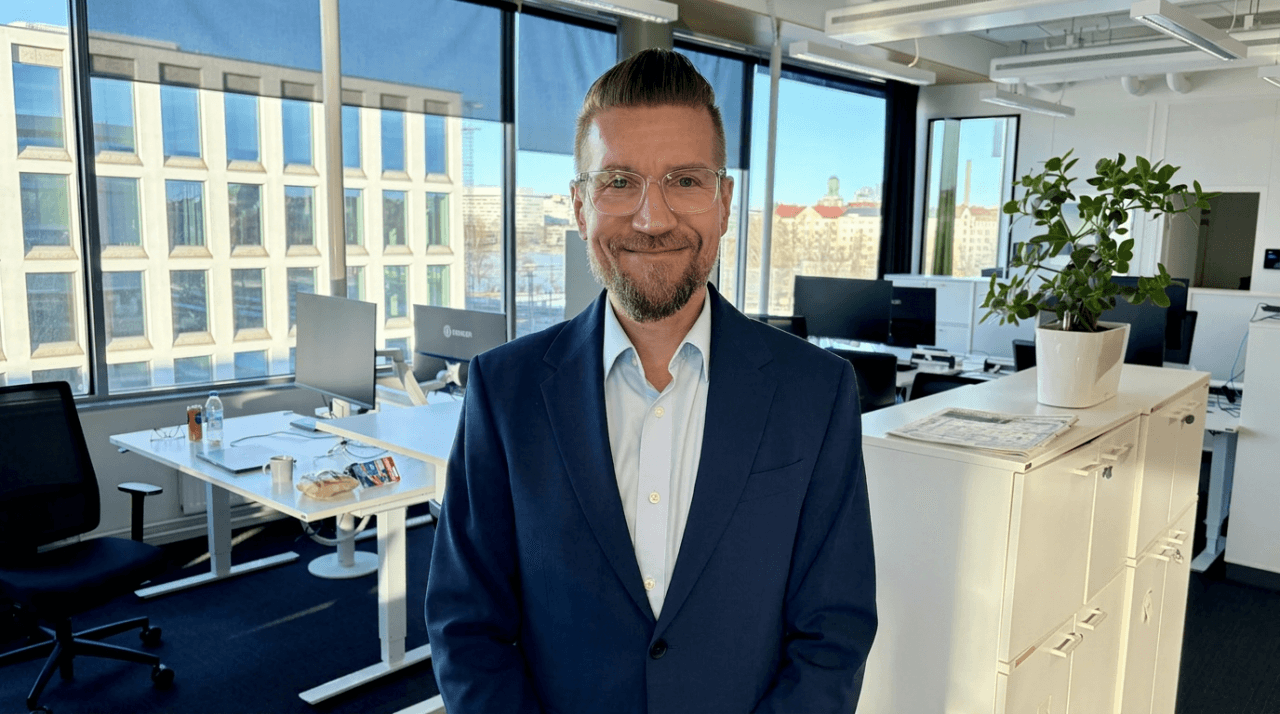
Timo Kämäräinen, the newly appointed AI director at Alma Media, sees it differently. “Humans are the real competitive edge,” he says.

Rather than replacing reporters, Kämäräinen believes artificial intelligence will reshape how journalism is done. Machines will increasingly handle routine tasks, while human journalists focus on work that requires judgment, relationships, and credibility.

“AI has already changed the work of journalists a lot,” he says. “At the moment, I feel that we are getting more speed in the transition.”

Kämäräinen spent more than two decades at Finland’s public broadcaster Yle before joining Alma Media in 2024. His new role reflects how central artificial intelligence has become to the strategy of the Helsinki-listed media company.

And AI is already deeply embedded in the newsroom. “We have over 30 different tools for our journalists,” he says.

These systems assist with tasks such as translation, language editing, research support, and headline suggestions. The goal is not to automate journalism but to make everyday editorial work more efficient.

Alma Media itself has been transforming for years. The company has evolved from a traditional newspaper publisher into a digital media and services business operating across Europe. In Finland, its best-known brands include Kauppalehti, Talouselämä, and Iltalehti, alongside marketplaces such as Etuovi.com, Nettiauto, and Nettimoto. The group also operates recruitment platforms in Central and Eastern Europe.

Artificial intelligence is becoming the next step in that transformation. But AI does more than change newsroom workflows. It also changes the economics of information.

The abundance paradox

The most immediate effect of AI is that it makes producing text extremely easy.

“Everybody can use AI to create masses of content, and the internet is full of AI-created content,” Kämäräinen says.

That shift changes the economics of information.

More than fifty years ago, economist and Nobel laureate Herbert Simon described the dynamic that follows when information becomes abundant: attention becomes scarce.

AI accelerates the shift. Publishing is easy. For readers, the challenge is knowing what to trust.

“They want something authentic, unique,” Kämäräinen says.

The trust premium

“In the Nordic markets, we have a very strong relationship with our audience,” Kämäräinen says. “People really come to the front page or the app.”

That direct connection with readers reduces reliance on social media platforms and external traffic. “We are not as dependent on external traffic as, for example, US companies are,” he says.

Strong audience relationships are a defining feature of Nordic media markets. Finland consistently ranks among the countries with the highest levels of trust in news globally. In the Reuters Institute Digital News Report 2025, roughly seven in 10 Finns say they trust most news most of the time.

In an information environment increasingly filled with AI-generated content, that trust becomes a strategic advantage.

“Humans make the news brand credible,” Kämäräinen says. Or as he puts it more bluntly: “Humans are the real competitive edge.”

The centaur newsroom

One way to understand the future newsroom is through what researchers call the centaur model. The term comes from chess, where the strongest teams turned out not to be humans or computers alone, but combinations of both. Humans provided judgment and strategy, while machines handled calculation and pattern recognition.

Researchers writing in Harvard Business Review argue that organizations often gain the most value when AI systems augment human expertise rather than replace it.

Kämäräinen believes journalism is moving in a similar direction.

“It’s a combination of human lead and AI,” he says.

Inside Alma Media’s editorial teams, that collaboration is already visible in daily workflows. Artificial intelligence is used to assist reporters rather than replace them.

One example is the company’s headline generation system. Based on historical data, the AI headline generator produces a range of headline options and then highlights the five with the highest predicted hit potential, Kämäräinen explains.

“The reporter can choose the best one or combine them or even invent something on top.”

The human-led model reflects a broader principle. “In journalism, there’s a strong need for humans to make the last decisions,” Kämäräinen says.

A different job for journalists

As AI takes over routine newsroom tasks, the role of reporters is shifting.

Much of the daily work in journalism involves repetitive processes—rewriting agency copy, translating material, or polishing language. AI can handle many of these tasks faster.

Few reporters are likely to miss transcribing long interviews or checking grammar. “Reporters can already spend more time on research or, for example, meeting people,” Kämäräinen says.

But some parts of journalism cannot be outsourced to machines. “AI doesn’t go to the war zone and interview local people,” he says.

Reporting often depends on trust between journalists and sources, as well as the ability to interpret events in context—tasks that remain difficult for machines to replicate.

“Quite often the most valuable part is something which AI can’t replace,” the AI director says. 

In other words, Kämäräinen encourages journalists to ask themselves: “Where are you better than the machine?”

Investigative reporting, deep interviews, and field reporting still depend on human judgment and access.

Experimentation and leadership

AI in journalism is not a one-time upgrade. It requires constant testing.

“You basically have to try and test tools every day,” Kämäräinen says, adding that his advice to young journalists is: “Use AI tools. Test them. Be open-minded.”

Regarding newsrooms, the question for Kämäräinen is not whether media companies should adopt AI but how they use it.

“Best media companies have found ways to use AI to the max while at the same time giving human reporters room to flourish,” he says. 

Organizations that treat AI purely as a cost-cutting tool may miss the bigger opportunity. Those that combine machine efficiency with human expertise could gain an advantage.

Asked how optimistic he is about the future of journalism, Kämäräinen answers without hesitation. “Nine.”

He believes the future of journalism will depend less on the technology itself and more on how it is used.

“If we play the game right and use AI wisely, we have all the ingredients for success.”

|

|

Leaders

When AI floods the internet, trust becomes a scarce resource, says Alma Media’s new AI director

When AI floods the internet, trust becomes a scarce resource, says Alma Media’s new AI director

·

5 min read

Explore and follow profiles from this article to get timely updates:

Credit: Alma Media, Timo Kämäräinen

Credit: Alma Media, Timo Kämäräinen

Artificial intelligence is entering the newsroom. For years, the fear has been that it might replace journalists. But the real disruption may come from something else entirely: a flood of AI-generated content.

Timo Kämäräinen, the newly appointed AI director at Alma Media, sees it differently. “Humans are the real competitive edge,” he says.

Rather than replacing reporters, Kämäräinen believes artificial intelligence will reshape how journalism is done. Machines will increasingly handle routine tasks, while human journalists focus on work that requires judgment, relationships, and credibility.

“AI has already changed the work of journalists a lot,” he says. “At the moment, I feel that we are getting more speed in the transition.”

Kämäräinen spent more than two decades at Finland’s public broadcaster Yle before joining Alma Media in 2024. His new role reflects how central artificial intelligence has become to the strategy of the Helsinki-listed media company.

And AI is already deeply embedded in the newsroom. “We have over 30 different tools for our journalists,” he says.

These systems assist with tasks such as translation, language editing, research support, and headline suggestions. The goal is not to automate journalism but to make everyday editorial work more efficient.

Alma Media itself has been transforming for years. The company has evolved from a traditional newspaper publisher into a digital media and services business operating across Europe. In Finland, its best-known brands include Kauppalehti, Talouselämä, and Iltalehti, alongside marketplaces such as Etuovi.com, Nettiauto, and Nettimoto. The group also operates recruitment platforms in Central and Eastern Europe.

Artificial intelligence is becoming the next step in that transformation. But AI does more than change newsroom workflows. It also changes the economics of information.

The abundance paradox

The most immediate effect of AI is that it makes producing text extremely easy.

“Everybody can use AI to create masses of content, and the internet is full of AI-created content,” Kämäräinen says.

That shift changes the economics of information.

More than fifty years ago, economist and Nobel laureate Herbert Simon described the dynamic that follows when information becomes abundant: attention becomes scarce.

AI accelerates the shift. Publishing is easy. For readers, the challenge is knowing what to trust.

“They want something authentic, unique,” Kämäräinen says.

The trust premium

“In the Nordic markets, we have a very strong relationship with our audience,” Kämäräinen says. “People really come to the front page or the app.”

That direct connection with readers reduces reliance on social media platforms and external traffic. “We are not as dependent on external traffic as, for example, US companies are,” he says.

Strong audience relationships are a defining feature of Nordic media markets. Finland consistently ranks among the countries with the highest levels of trust in news globally. In the Reuters Institute Digital News Report 2025, roughly seven in 10 Finns say they trust most news most of the time.

In an information environment increasingly filled with AI-generated content, that trust becomes a strategic advantage.

“Humans make the news brand credible,” Kämäräinen says. Or as he puts it more bluntly: “Humans are the real competitive edge.”

The centaur newsroom

One way to understand the future newsroom is through what researchers call the centaur model. The term comes from chess, where the strongest teams turned out not to be humans or computers alone, but combinations of both. Humans provided judgment and strategy, while machines handled calculation and pattern recognition.

Researchers writing in Harvard Business Review argue that organizations often gain the most value when AI systems augment human expertise rather than replace it.

Kämäräinen believes journalism is moving in a similar direction.

“It’s a combination of human lead and AI,” he says.

Inside Alma Media’s editorial teams, that collaboration is already visible in daily workflows. Artificial intelligence is used to assist reporters rather than replace them.

One example is the company’s headline generation system. Based on historical data, the AI headline generator produces a range of headline options and then highlights the five with the highest predicted hit potential, Kämäräinen explains.

“The reporter can choose the best one or combine them or even invent something on top.”

The human-led model reflects a broader principle. “In journalism, there’s a strong need for humans to make the last decisions,” Kämäräinen says.

CEO newsletter

For those carrying responsibility at the top.

A monthly letter on leadership, power, and transition in the Nordics. Written by Helene Auramo, drawn from real CEO conversations and leadership signals.

Delivered monthly.

By signing up, you agree to our Privacy Policy

CEO newsletter

For those carrying responsibility at the top.

A monthly letter on leadership, power, and transition in the Nordics. Written by Helene Auramo, drawn from real CEO conversations and leadership signals.

Delivered monthly.

By signing up, you agree to our Privacy Policy

A different job for journalists

As AI takes over routine newsroom tasks, the role of reporters is shifting.

Much of the daily work in journalism involves repetitive processes—rewriting agency copy, translating material, or polishing language. AI can handle many of these tasks faster.

Few reporters are likely to miss transcribing long interviews or checking grammar. “Reporters can already spend more time on research or, for example, meeting people,” Kämäräinen says.

But some parts of journalism cannot be outsourced to machines. “AI doesn’t go to the war zone and interview local people,” he says.

Reporting often depends on trust between journalists and sources, as well as the ability to interpret events in context—tasks that remain difficult for machines to replicate.

“Quite often the most valuable part is something which AI can’t replace,” the AI director says. 

In other words, Kämäräinen encourages journalists to ask themselves: “Where are you better than the machine?”

Investigative reporting, deep interviews, and field reporting still depend on human judgment and access.

Experimentation and leadership

AI in journalism is not a one-time upgrade. It requires constant testing.

“You basically have to try and test tools every day,” Kämäräinen says, adding that his advice to young journalists is: “Use AI tools. Test them. Be open-minded.”

Regarding newsrooms, the question for Kämäräinen is not whether media companies should adopt AI but how they use it.

“Best media companies have found ways to use AI to the max while at the same time giving human reporters room to flourish,” he says. 

Organizations that treat AI purely as a cost-cutting tool may miss the bigger opportunity. Those that combine machine efficiency with human expertise could gain an advantage.

Asked how optimistic he is about the future of journalism, Kämäräinen answers without hesitation. “Nine.”

He believes the future of journalism will depend less on the technology itself and more on how it is used.

“If we play the game right and use AI wisely, we have all the ingredients for success.”

Board Programme

Built for Nordic listed company boards.

The only programme in the Nordics designed specifically for listed-company board work.
Five sessions, one cohort, twenty leaders in one room - Helsinki, 2026.

Board Programme

Built for Nordic listed company boards.

The only programme in the Nordics designed specifically for listed-company board work.
Five sessions, one cohort, twenty leaders in one room - Helsinki, 2026.

Topics

# Topics

Authors

Emmi Laine is head of business content at Listeds and our lead for finance and business coverage. She sets the editorial agenda, interviews Nordic business leaders, and writes stories, newsletters, and social content on timely market and corporate topics. Emmi brings nearly eight years of experience from Shanghai's Yicai Global / Yicai Media Group, where she was awarded for reporting on China’s economy, finance sector, and technology innovation. She holds an MSc in Innovation and Entrepreneurship from ESADE Business School in Barcelona and a Master’s degree in International Design Business Management from Aalto University. She also holds a Bachelor’s degree in Culture Studies with a major in Journalism from Stockholm University and has studied Mandarin Chinese and Chinese culture. Emmi is a Finnish citizen and has lived in Finland, Sweden, China, and Portugal.

Emmi Laine is head of business content at Listeds and our lead for finance and business coverage. She sets the editorial agenda, interviews Nordic business leaders, and writes stories, newsletters, and social content on timely market and corporate topics. Emmi brings nearly eight years of experience from Shanghai's Yicai Global / Yicai Media Group, where she was awarded for reporting on China’s economy, finance sector, and technology innovation. She holds an MSc in Innovation and Entrepreneurship from ESADE Business School in Barcelona and a Master’s degree in International Design Business Management from Aalto University. She also holds a Bachelor’s degree in Culture Studies with a major in Journalism from Stockholm University and has studied Mandarin Chinese and Chinese culture. Emmi is a Finnish citizen and has lived in Finland, Sweden, China, and Portugal.

Authors

Journalist

Emmi Laine is head of business content at Listeds and our lead for finance and business coverage. She sets the editorial agenda, interviews Nordic business leaders, and writes stories, newsletters, and social content on timely market and corporate topics. Emmi brings nearly eight years of experience from Shanghai's Yicai Global / Yicai Media Group, where she was awarded for reporting on China’s economy, finance sector, and technology innovation. She holds an MSc in Innovation and Entrepreneurship from ESADE Business School in Barcelona and a Master’s degree in International Design Business Management from Aalto University. She also holds a Bachelor’s degree in Culture Studies with a major in Journalism from Stockholm University and has studied Mandarin Chinese and Chinese culture. Emmi is a Finnish citizen and has lived in Finland, Sweden, China, and Portugal.

All Listeds newsletters (bundle)

One sign-up, the full picture.

Get every Listeds newsletter: the daily signal drumbeat, the weekly Pulse briefing, the monthly Best of the Month, the CEO letter, and the Weekend read.

By signing up, you agree to our Privacy Policy

All Listeds newsletters (bundle)

One sign-up, the full picture.

Get every Listeds newsletter: the daily signal drumbeat, the weekly Pulse briefing, the monthly Best of the Month, the CEO letter, and the Weekend read.

By signing up, you agree to our Privacy Policy

Latest signalsLive feed
Moves trackerLive feed

Investor Event

Listeds Investor Event · Defence

Nordic defence is in a once-in-a-generation growth cycle. Eight listed and pre-IPO companies pitch to 100+ invited investors at Valkoinen Sali, Helsinki

21 September 2026

Latest on Listeds

Leadership Moves

Juuso Pajunen joins Tieto from Terveystalo, and Finland's CFO chain runs one seat longer

Sep 18, 2026

Two stock exchange releases at 9:00 a.m. on 16 September moved one CFO between two Helsinki large caps that had cut guidance two days apart in July. Terveystalo named no successor and opened the search the same day — twelve days after handing Pajunen a second executive brief. Tieto filled the seat with a sitting CFO, which is the only way the job has been filled in Finland since December 2025.

Terveystalo and Tieto published matching stock exchange releases at 9:00 a.m. EEST on 16 September 2026. Pajunen, Terveystalo's Chief Financial Officer since November 2022, leaves on 15 December 2026 and joins Tieto by 1 January 2027 at the latest, reporting to Endre Rangnes. Terveystalo named no successor and opened the search the same day. The same Tieto release confirmed Johan Enger Nygaard at Tieto Tech Consulting and Bent Philipps at Tieto Indtech from 1 October, both interim since May 2026. 

Tieto's last first-time CFO is leaving; the next one arrives with the title

In August, Listeds counted atleast ten CFO changes across Nasdaq Helsinki and First North between December 2025 and August 2026. Every incoming CFO already held the title at another listed company. None was promoted from inside. None was taking the job for the first time. 

Tomi Hyryläinen, who steps down at the end of December 2026 after nearly eight years, joined Tieto in 2018 from PwC Finland, where he had been an assurance leader and partner. Tieto was his first listed-company CFO seat. Tieto has now filled it with a CFO already running finance at another Helsinki large cap, and before that at AFRY and Pöyry Group. 

Terveystalo widened Pajunen's job twelve days before losing him

Terveystalo reports in three segments today: Healthcare Services, Portfolio Businesses and Sweden. On 4 September it said Portfolio Businesses would be split from 1 January 2027, with Oral Health and Public Partnerships each becoming a reportable segment in their own right, and named Pajunen EVP of Portfolio Businesses until the end of 2026. He was covering for Henri Mäenalanen, who had announced on 29 June that he was leaving on 1 October to run Yliopiston Apteekki. Twelve days after taking the second brief, Pajunen announced his own exit. 

The date lands inside a crowded quarter. The EUR 574 million Silmäasema acquisition is expected to close by late 2026 or in the first quarter of 2027, the four-segment reporting starts on 1 January, and the Shareholders' Nomination Board must deliver its proposals by 1 February 2027. The CFO search runs across all of it.

Ville Iho put it in the company's own words: "Juuso has played a key role in the implementation of Terveystalo's profit improvement program and significant acquisitions, as well as in the development of financial leadership.”

One balance sheet is being levered up, the other handed back

Terveystalo reported first-half revenue of EUR 601.5 million, down 10.0%, adjusted operating profit of EUR 59.8 million, down 29.3%, and earnings per share of EUR 0.24, down 44.4%. On 15 July it cut 2026 adjusted operating profit guidance to EUR 120–140 million from EUR 135–165 million, against EUR 156.3 million delivered in 2025. It has raised its leverage ceiling to 3x net debt to adjusted EBITDA, cut dividend distribution to at least 50% of net result, and committed EUR 275 million in cash plus 36,500,000 new shares to Silmäasema, roughly 22.4% of shares outstanding after completion. 

Tieto reported second-quarter revenue of EUR 426.6 million, down 7.9%, with adjusted operating profit up 45.1% to EUR 63.4 million and margin at 14.9% against 9.4%. It cut its organic growth outlook on 17 July to between –5% and –3% and held the margin range at 14.8–15.8%. 

At Tieto he set the brief himself: "Tieto has a strong position in technological transformation and is well positioned for digital opportunities. At the same time, both Tieto and the entire industry are undergoing rapid changes, driven by AI. I am excited to join this fast-paced industry and believe that, with my broad experience across multiple businesses, I can contribute to the execution of Tieto’s ambitious strategy. As a CFO, I will focus on ensuring profitable growth and value creation while I believe that it all starts with culture." 

The audit committee chair moved between CFOs too

The annual general meeting on 24 March 2026 elected Petri Castrén, Kemira's Chief Financial Officer from 2013 to 2026 and its interim chief executive in 2023 and 2024. He chairs the audit committee, taking the seat from Kristian Pullola, formerly Nokia's and Finnair’s CFO, who left the board at the same meeting. 

What each company has committed to deliver

Terveystalo is running its ARC strategy toward adjusted earnings per share growth of 10% a year, leverage of no more than 3x and dividend distribution of at least 50% of net result. Nearer term it has to land 2026 adjusted operating profit inside EUR 120–140 million, close Silmäasema and capture the EUR 11–15 million of annual pre-tax run-rate synergies it has disclosed, complete the Solo Health acquisition in the first half of 2027. 

Tieto has to hold an adjusted operating margin of 14.8–15.8% while organic revenue contracts by 3% to 5%, finish resetting Tieto Tech Consulting by integrating Infopulse, Avega, EVRY India and Mentormate and reducing up to 500 roles, run the EUR 90 million buyback to March 2027.  That agenda is what the incoming CFO is being hired to pay for.

Terveystalo's next appointment is the cleanest test of the pattern

Whoever Terveystalo names will either confirm the August finding or be the first genuine exception to it, and the answer should arrive before the nomination board files its proposals on 1 February 2027. Watch also whether an interim covers the gap from 15 December, and how much of a handover Tieto gets: Hyryläinen leaves at the end of December and Pajunen arrives by 1 January at the latest. 

Monthly Leadership Moves

August's biggest seats were filled without a search

Sep 17, 2026

Two new listed chief executives, and neither was chosen by the board that will supervise them. Four finance seats moved, and not one went to a first-time CFO.

On 3 August, Aspo named the chief executive of a company that will not trade until January. On 31 August, UPM's shareholders elected the board of one that will not trade until November, six weeks after its chief executive had already been named. Both appointments were internal. Neither went through a search.

According to Listeds Executive Intelligence, Nordic listed companies recorded 57 board and management changes in August: 51 in management teams and 6 at board level. Boards accounted for roughly one change in ten for a second consecutive month — and most of the board activity that did happen was produced by corporate structure rather than by nomination committees. Every one of the month's larger moves was at a Helsinki issuer or at a Helsinki issuer's Nordic subsidiary.

The demergers set the month's bookends

Aspo's board approved the demerger plan separating ESL Shipping into a new listed company on 3 August and appointed Matti-Mikael Koskinen as chief executive of ESL Shipping Group Plc the same day. Koskinen has run ESL Shipping Ltd since 2013. The demerger completes on 31 December, trading is expected to start on or about 4 January 2027, and the company's own board will not be elected until an extraordinary general meeting on 7 December, four months after its chief executive was named. Rolf Jansson, Aspo's chief executive, is intended to be elected chair.

At the other end of the month, UPM's extraordinary general meeting on 31 August approved the plywood demerger and elected WISA Group Plc's board: Tapio Korpeinen as chair, Mats Nordlander as deputy chair, and Sakari Ahdekivi, Frank Herrmann, Nina Kiviranta and Emmanuelle Picard as members. Tuija Suur-Hamari had been named WISA's President and CEO six weeks earlier, on 16 July. The demerger is expected to complete on or about 31 October, with trading from 2 November, nine weeks after the board was seated.

Under the Finnish Corporate Governance Code, appointing the chief executive is the board's own duty. A demerger inverts that sequence, and there is no other way to staff a company that does not yet exist. The consequence, on this author's reading rather than anything either company has said, is that both new boards take office with their most consequential appointment already made, and their first exercise of that duty will be a review rather than a choice.

One thing the WISA sequence does change: Suur-Hamari will be one of a small number of women running a Helsinki-listed company. Listeds’ CEO Index — Finland | Q2 2026 shows women holding 8.1 per cent of the 186 sitting chief executive roles at 30 June, and one of the 25 first-half starts. Women held 8.1 per cent of the 186 sitting chief executive roles at 30 June, and one of the 25 first-half starts. August added a second name to that pipeline — Elli Siltala, appointed chief executive of Raisio plc on 7 August.

The finance seat moved sideways, or not at all

The month's finance moves were the mirror image of a market hiring new talent into the role.

Digia filled its chief financial officer seat on 5 August by taking Vincit's sitting CFO, Kärkkäinen — the second time since 2017 that Digia has filled the role with a sitting CFO from another Nasdaq Helsinki company. Bioretec named Panu Mikkonen chief financial officer from 6 October, the fourth person named to that seat since September 2025, two of them interim. Kempower appointed Juha Jaatinen interim chief financial officer on 13 August. 

No Helsinki company promoted a first-time chief financial officer into the role in August. 

Eight executives named in two days

Three companies named eight executives across 18 and 19 August.

Nordea's 19 August release did two things at once. It merged Group Risk and Group Compliance into a single function under Mark Kandborg, who continues on the Group Leadership Team, with Nahale Ståhl Hallengren as Chief Compliance Officer from the same date, outside the Group Leadership Team. And it filled leadership in the bank's two largest customer units: Per Långsved, who joined Nordea in 2019 as Head of Personal Banking Sweden and Country Senior Executive, becomes Head of Personal Banking and joins the Group Leadership Team; Randi Marjamaa, at Nordea since 2006, takes a newly created Business Banking leadership post and also joins the Group Leadership Team. Sara Mella steps back from operational roles.

Nightingale Health removed its operating chief's role on 19 August and put two commercial chiefs in its place, at the point where its Americas business needs to produce revenue. Janna Ranta, chief operating officer since May 2025, became Chief Commercial Officer, Research and Healthcare. Hugh Watson, who has spent 25 years in United States laboratory diagnostics, joined from outside as Chief Commercial Officer, Americas.

Finnair named its digital and legal chiefs on 18 August. With those two, four of the nine Executive Board functions — people, digital, legal and finance — have a new holder named in 2026. The chief executive, operating, revenue, customer and communications seats have not moved. The rebuild is running from the strongest quarter Finnair has reported, and from a general meeting that rejected the company's remuneration report with 90 per cent of the votes represented against it.

Helsinki issuers hired for their Swedish operations

Two of the month's chief executive appointments were at Swedish subsidiaries, and both went to local candidates rather than to executives moved out from Finland.

Kreate Group appointed Per Anders Quist chief executive of Kreate Sverige AB on 24 August. Quist joins from Trafikverket, the Swedish Transport Administration, where he was responsible for major infrastructure projects, and has NCC Norway experience behind him. Kreate's own framing is that Sweden has run ahead of its strategy target and is now being handed to an executive expected to sustain that pace and to test a permanent Norwegian footprint. Luotea named Rikard Nyhrén, who joins from Intea and Newsec, chief executive of Luotea Sweden, starting by February 2027.

Talent moved the other way too. Siili Solutions' Chief People Officer, Taru Salo, left on 4 August for Attendo, with Timo Miiluniemi stepping in on an interim basis.

What August actually says

Three things follow for boards and nomination committees.

A demerger is a leadership decision long before it is a market event. The chief executives of two companies that will not trade until November and January were settled in July and early August, and shareholders approved them inside a structural vote.

Board changes remain an AGM-season phenomenon. Six board changes against 51 in management teams, with the largest single block produced by one extraordinary general meeting, says that off-cycle board activity in Helsinki is driven by corporate structure rather than by committee work.

And the finance function is where succession planning is thinnest — but the evidence for that is a lateral market and an interim bench, not a hiring pattern break. August's finance seats were filled by people who already held the title, or left open. Whether September's first-time appointments turn into a pattern or revert to the lateral hire is the question the next two months answer.

Join our Pulse, Best-of-the-Week, and Weekend newsletters

Join our Pulse, Best-of-the-Week, and Weekend newsletters