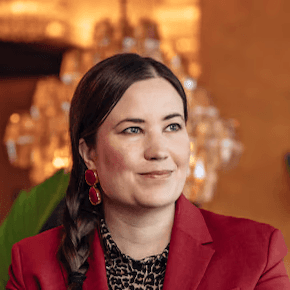
Kokko becomes deputy CEO in December and chief executive on 1 April 2027, after five years on Arvo's board of directors. The nomination committee that selected him sits under the supervisory board, one level above that board; Arvo has not disclosed whether he keeps his seat.
On 1 September 2026, Arvo Sijoitusosuuskunta released as inside information that Teemu Kokko will become its chief executive. He starts as deputy CEO in early December 2026 and takes over on 1 April 2027.
Kokko joins from the insurance underwriter Arch Underwriters Europe Oy, where he is regional director. He has also been a member of Arvo's board of directors since 2021.
The committee sits one level up
Arvo is a cooperative. Its highest governing body is not the board of directors but the supervisory board which represents the members, has 18 to 30 seats, serves three-year terms and meets roughly three times a year. That body appoints a nomination committee from among its own members.
When Jari Pirinen announced on 8 September 2025 that he would retire in spring 2027 on turning 66, Arvo said management succession planning sat with that committee, and supervisory board chair Tuomo Tamminen said it would report on progress later.
So the body that selected Kokko is not the board Kokko sits on. It is drawn from a members' organ and answers to the members.
In a listed limited company there is no such layer. The board appoints the chief executive itself. That is the comparison for any Finnish board weighing one of its own directors as a successor: Arvo can point to a committee above the board; a listed board has to show its process instead.
Two things Arvo has not disclosed. The release does not say whether Kokko remains a member of the board of directors once he becomes deputy CEO in December or chief executive in April. Nor does it say how the board handled his candidacy, he has been a director throughout the period covered by the succession process announced in September 2025.
Arvo's board was re-elected in February 2026 and comprises Marjo Kolehmainen as chair (a director since 2018, chair since 2022), Mika Kiljala as vice chair (director since 2017), Juha Laakkonen and Kokko (both since 2021), and Titta Mantila (since 2024).
The handover runs 19 months end to end
Retirement flagged in September 2025. Successor named in September 2026. Four months as deputy chief executive from early December 2026. Handover on 1 April 2027. Pirinen then moves to special duties on the board of directors from that date, takes accrued leave, and retires on 31 May 2027.
That is a longer and more pre-committed sequence than Helsinki practice, where chief executive changes are often announced with an interim in place and a search still running.

The numbers he inherits, and the transaction inside them
Arvo reported group operating profit of EUR 8.5 million for the first half of 2026, against EUR 6.5 million a year earlier, and a net result of EUR 7.0 million against EUR 2.7 million. Annualised return on invested capital was 17.0 per cent, against 10.3 per cent. Equity per unit rose to EUR 123 from EUR 117.
Most of the step-up traces to one position. Arvo sold its entire holding of 896,806 shares in Nasdaq Stockholm-listed HANZA AB in March 2026 for a capital gain of approximately EUR 6.9 million. It had taken those shares in 2025 as part of the price for exiting Leden Group — a Finnish seller accepting equity in a Swedish listed acquirer, then realising it inside twelve months. That structure is the more transferable lesson in the half-year for anyone selling a Finnish asset across the Gulf of Bothnia.
Underlying performance was already ahead of target before the disposal. Parent-company return on invested capital was 10.1 per cent for full-year 2025, which the company said clearly exceeded the board's return target, and the board proposed a per-unit interest of EUR 5.77, which Arvo characterised as about 60 per cent of the year's earnings. At the end of 2025 the cooperative had 22,373 members and 814,470 units.
The units closed at EUR 84.20 on 3 September 2026. Equity per unit was EUR 123 at 30 June 2026. On those two dates the units traded roughly 32 per cent below reported equity per unit — a gap readers should weigh themselves, and one measured across a two-month interval rather than at a single date. Inderes rates the units Accumulate as at 21 August 2026; Arvo is a commissioned research client of Inderes, and its coverage should be read with that in mind.
The mandate points one way, the reported share the other
Tamminen set the direction in the appointment release:
"Under Teemu's leadership, we believe Arvo's investment operations will develop further and the share of direct investments will grow."
He paired it with a constraint in the same release:
"We continue to regard it as important that Arvo remains a stable payer of the per-unit interest, as in previous years."
Grow the illiquid share; keep the cash distribution steady. Those two pull against each other, and holding both is the substance of the job.
The measured direct share has been moving the other way. Direct investments were 47 per cent of the portfolio at fair value at the end of 2025, up from 44 per cent a year earlier. At 30 June 2026 they were 40 per cent, against 45 per cent at 30 June 2025.
The profit and the fall have a common cause: the HANZA exit produced the gain and removed a direct holding. So the growth mandate starts from a lower base than the 2025 figures suggest.
Deal activity has continued. Arvo took a minority stake in bus operator Wiimax Oy alongside Wiimax's acquisition of J.M. Eskelisen Lapin Linjat Oy, and joined a Helmet Capital-led investor group in Oskutuote Oy, a wild bird food specialist.
Why it matters beyond one cooperative
Arvo listed its units on Nasdaq First North Growth Market Finland, Cooperatives segment, on 20 June 2023 under the ticker ARVOSK — the first cooperative units listed on Nasdaq's Nordic markets. It is a listed issuer with a members' register the size of a mid-cap shareholder base and a governance architecture most Finnish listed companies gave up decades ago.
Three questions for any company announcing a new chief executive.
Who runs the process, and does that body sit above the candidate or beside him? Arvo can point one level up.
What gets disclosed at the moment of appointment? Whether the incoming chief executive keeps a board seat, and how his candidacy was handled, are reasonable things for a market to be told at announcement rather than to reconstruct afterwards.
What is the mandate measured against? Kokko is asked to grow direct investments while keeping the per-unit interest stable, from a direct share that fell in the most recent reported period, after a disposal that produced the profit he inherits credit for.
·
5 min read
Explore and follow profiles from this article to get timely updates:

Kokko becomes deputy CEO in December and chief executive on 1 April 2027, after five years on Arvo's board of directors. The nomination committee that selected him sits under the supervisory board, one level above that board; Arvo has not disclosed whether he keeps his seat.
On 1 September 2026, Arvo Sijoitusosuuskunta released as inside information that Teemu Kokko will become its chief executive. He starts as deputy CEO in early December 2026 and takes over on 1 April 2027.
Kokko joins from the insurance underwriter Arch Underwriters Europe Oy, where he is regional director. He has also been a member of Arvo's board of directors since 2021.
The committee sits one level up
Arvo is a cooperative. Its highest governing body is not the board of directors but the supervisory board which represents the members, has 18 to 30 seats, serves three-year terms and meets roughly three times a year. That body appoints a nomination committee from among its own members.
When Jari Pirinen announced on 8 September 2025 that he would retire in spring 2027 on turning 66, Arvo said management succession planning sat with that committee, and supervisory board chair Tuomo Tamminen said it would report on progress later.
So the body that selected Kokko is not the board Kokko sits on. It is drawn from a members' organ and answers to the members.
In a listed limited company there is no such layer. The board appoints the chief executive itself. That is the comparison for any Finnish board weighing one of its own directors as a successor: Arvo can point to a committee above the board; a listed board has to show its process instead.
Two things Arvo has not disclosed. The release does not say whether Kokko remains a member of the board of directors once he becomes deputy CEO in December or chief executive in April. Nor does it say how the board handled his candidacy, he has been a director throughout the period covered by the succession process announced in September 2025.
Arvo's board was re-elected in February 2026 and comprises Marjo Kolehmainen as chair (a director since 2018, chair since 2022), Mika Kiljala as vice chair (director since 2017), Juha Laakkonen and Kokko (both since 2021), and Titta Mantila (since 2024).
The handover runs 19 months end to end
Retirement flagged in September 2025. Successor named in September 2026. Four months as deputy chief executive from early December 2026. Handover on 1 April 2027. Pirinen then moves to special duties on the board of directors from that date, takes accrued leave, and retires on 31 May 2027.
That is a longer and more pre-committed sequence than Helsinki practice, where chief executive changes are often announced with an interim in place and a search still running.
The numbers he inherits, and the transaction inside them
Arvo reported group operating profit of EUR 8.5 million for the first half of 2026, against EUR 6.5 million a year earlier, and a net result of EUR 7.0 million against EUR 2.7 million. Annualised return on invested capital was 17.0 per cent, against 10.3 per cent. Equity per unit rose to EUR 123 from EUR 117.
Most of the step-up traces to one position. Arvo sold its entire holding of 896,806 shares in Nasdaq Stockholm-listed HANZA AB in March 2026 for a capital gain of approximately EUR 6.9 million. It had taken those shares in 2025 as part of the price for exiting Leden Group — a Finnish seller accepting equity in a Swedish listed acquirer, then realising it inside twelve months. That structure is the more transferable lesson in the half-year for anyone selling a Finnish asset across the Gulf of Bothnia.
Underlying performance was already ahead of target before the disposal. Parent-company return on invested capital was 10.1 per cent for full-year 2025, which the company said clearly exceeded the board's return target, and the board proposed a per-unit interest of EUR 5.77, which Arvo characterised as about 60 per cent of the year's earnings. At the end of 2025 the cooperative had 22,373 members and 814,470 units.
The units closed at EUR 84.20 on 3 September 2026. Equity per unit was EUR 123 at 30 June 2026. On those two dates the units traded roughly 32 per cent below reported equity per unit — a gap readers should weigh themselves, and one measured across a two-month interval rather than at a single date. Inderes rates the units Accumulate as at 21 August 2026; Arvo is a commissioned research client of Inderes, and its coverage should be read with that in mind.
The mandate points one way, the reported share the other
Tamminen set the direction in the appointment release:
"Under Teemu's leadership, we believe Arvo's investment operations will develop further and the share of direct investments will grow."
He paired it with a constraint in the same release:
"We continue to regard it as important that Arvo remains a stable payer of the per-unit interest, as in previous years."
Grow the illiquid share; keep the cash distribution steady. Those two pull against each other, and holding both is the substance of the job.
The measured direct share has been moving the other way. Direct investments were 47 per cent of the portfolio at fair value at the end of 2025, up from 44 per cent a year earlier. At 30 June 2026 they were 40 per cent, against 45 per cent at 30 June 2025.
The profit and the fall have a common cause: the HANZA exit produced the gain and removed a direct holding. So the growth mandate starts from a lower base than the 2025 figures suggest.
Deal activity has continued. Arvo took a minority stake in bus operator Wiimax Oy alongside Wiimax's acquisition of J.M. Eskelisen Lapin Linjat Oy, and joined a Helmet Capital-led investor group in Oskutuote Oy, a wild bird food specialist.
Why it matters beyond one cooperative
Arvo listed its units on Nasdaq First North Growth Market Finland, Cooperatives segment, on 20 June 2023 under the ticker ARVOSK — the first cooperative units listed on Nasdaq's Nordic markets. It is a listed issuer with a members' register the size of a mid-cap shareholder base and a governance architecture most Finnish listed companies gave up decades ago.
Three questions for any company announcing a new chief executive.
Who runs the process, and does that body sit above the candidate or beside him? Arvo can point one level up.
What gets disclosed at the moment of appointment? Whether the incoming chief executive keeps a board seat, and how his candidacy was handled, are reasonable things for a market to be told at announcement rather than to reconstruct afterwards.
What is the mandate measured against? Kokko is asked to grow direct investments while keeping the per-unit interest stable, from a direct share that fell in the most recent reported period, after a disposal that produced the profit he inherits credit for.
Follow moves like this on the Listeds Executive Intelligence Platform.

Investor Event
Listeds Investor Event · Defence
Nordic defence is in a once-in-a-generation growth cycle. Eight listed and pre-IPO companies pitch to 100+ invited investors at Valkoinen Sali, Helsinki
21 September 2026


Latest on Listeds