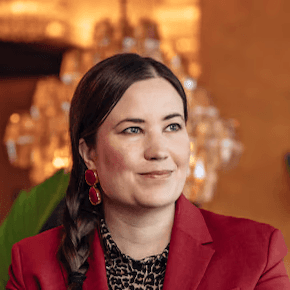
Raisio spent 2025 preparing to grow: it sold off a loss-making plant-protein unit, set hard 2027 targets and built a standing M&A function. Then it handed the company to Elli Siltala, a food-industry veteran of around 25 years at Valio, who has said her first priority is to listen and learn before setting a direction. The plan is already built. The open question is how Raisio's new chief executive chooses to take it forward.

Raisio is a Finnish brand house. It’s worth sits in names: Benecol, brand sold on cholesterol lowering products, and Elovena, the oats brand, both marketed well beyond Finland, alongside home-market staples such as Sunnuntai baking goods, Torino pasta and Nalle cereals.

Growing a brand house means one of two things: build the brands harder, or buy new ones. Raisio's board has said, in writing, that it intends to do both, and it has spent the past eighteen months building the capacity to do the buying.

On Wednesday, 12 August 2026, the company publishes its half-year report. Elli Siltala, appointed CEO on 7 August, does not start until 1 September; until then the outgoing Pasi Flinkman holds the seat.

The board chose the tool. The CEO chose to listen

Chairman Arto Tiitinen said in the appointment release that "under Elli Siltala's leadership our ambition is to grow the company through both organic growth and acquisitions." Read against the run of Nordic CEO-change releases, that is a pointed line. Boards usually credential the incoming chief executive and gesture at a "next phase." Tiitinen named the instrument, acquisitions, and set the direction before Siltala set foot in the building.

Siltala's own words went the other way. After the standard opening, she closed on this: "My first priority will be to listen, learn and build a shared understanding of how we can create long-term value for our shareholders, customers and employees."

Across the incoming-CEO releases on Listeds Executive Intelligence database, that is unusual. Most new chief executives arrive with at least a directional theme on day one: a capability to strengthen, a strategy to keep executing, a model to scale. Siltala, in this set, is the only one to make listening itself the priority and to leave the agenda more open.

The growth plan was built a year before its CEO

Here is what makes the contrast matter. The growth Tiitinen named is not merely an intention waiting on a new leader. It is a plan already in operation, and Flinkman built it.

Raisio narrowed before it aimed to grow. On 13 February 2025 it agreed to sell its entire plant-protein business, including the Härkis and Beanit brands, the Kauhava production assets and 16 employees, to Valio for EUR 7 million in cash: a unit that had booked EUR 4.5 million in net sales but a EUR 2.6 million loss in 2024.

A month later, on 13 March 2025, it published a 2025 to 2027 strategy built on three growth areas: breakfast and snacking, heart health, and new business. The sequence is the point: sell the loss-maker, then concentrate on the brands that pay.

The strategy set targets for the end of 2027: net sales of EUR 250 million and EBIT of over EUR 30 million, up from 2025 comparable figures of EUR 224.2 million and EUR 28.5 million. Acquisitions were written into the plan from the start.

Raisio then built the capacity to act on them. It created a dedicated M&A Director role, hiring Anni Palmio, a strategy-and-M&A lead from Paulig with earlier brand roles at Findus and Haribo, with effect from 1 September 2025, and set up a committee to steer the board's M&A work. A mid-cap food company of around 350 people does not stand up a permanent acquisition function by accident.

Two dates belong side by side. Palmio's M&A seat took effect on 1 September 2025. Siltala's CEO seat takes effect on 1 September 2026. The acquisition machinery is exactly one year older, and it was assembled under the CEO now leaving to other opportunities.

A brand builder, handed a buyer's mandate

Siltala's career has largely followed the commercial side of the business, with a strong focus on sales and marketing. She was at Valio from 2001 to 2025, progressing from various business, sales and marketing roles to executive positions including EVP Domestic Sales and Marketing, EVP Markets, EVP Core Businesses and Brands, and finally EVP Core Businesses, Home Markets and Primary Production.

She left Valio in November 2025. From May 2026 she was Chief Loyalty and Media Officer at SOK, a seat spanning marketing, loyalty, retail media, communications and public affairs, which she held for roughly three months before Raisio named her.

There is a Nordic small-world footnote here. The plant-protein business Raisio sold in early 2025 went to Valio, the company where Siltala spent her career and sat on the executive team at the time. She now leads the company that sold it.

That profile also runs against the Nordic grain. Marketing and brand titles rarely reach the top table of Finnish listed companies at all, based on ongoing preliminary Listeds analysis, only a handful carry a standalone chief marketing officer, and large caps are notably absent from that list

A sales-and-marketing leader moving up to run a listed company is rarer again. At a brand house, though, the fit is a natural one: when a company's value lives in names like Benecol and Elovena, a chief executive who has spent a career close to sales, brands and customers is on home ground.

The open question is how she chooses to balance the two: carry the acquisition programme forward as set out, or lean toward the organic, category-led growth she seems to know well.

|

|

Leaders

Raisio built its growth plan before it hired Elli Siltala. Her first move is to listen

Raisio built its growth plan before it hired Elli Siltala. Her first move is to listen

·

5 min read

Explore and follow profiles from this article to get timely updates:

Credit: Raisio, Elli Siltala

Credit: Raisio, Elli Siltala

Raisio spent 2025 preparing to grow: it sold off a loss-making plant-protein unit, set hard 2027 targets and built a standing M&A function. Then it handed the company to Elli Siltala, a food-industry veteran of around 25 years at Valio, who has said her first priority is to listen and learn before setting a direction. The plan is already built. The open question is how Raisio's new chief executive chooses to take it forward.

Raisio is a Finnish brand house. It’s worth sits in names: Benecol, brand sold on cholesterol lowering products, and Elovena, the oats brand, both marketed well beyond Finland, alongside home-market staples such as Sunnuntai baking goods, Torino pasta and Nalle cereals.

Growing a brand house means one of two things: build the brands harder, or buy new ones. Raisio's board has said, in writing, that it intends to do both, and it has spent the past eighteen months building the capacity to do the buying.

On Wednesday, 12 August 2026, the company publishes its half-year report. Elli Siltala, appointed CEO on 7 August, does not start until 1 September; until then the outgoing Pasi Flinkman holds the seat.

The board chose the tool. The CEO chose to listen

Chairman Arto Tiitinen said in the appointment release that "under Elli Siltala's leadership our ambition is to grow the company through both organic growth and acquisitions." Read against the run of Nordic CEO-change releases, that is a pointed line. Boards usually credential the incoming chief executive and gesture at a "next phase." Tiitinen named the instrument, acquisitions, and set the direction before Siltala set foot in the building.

Siltala's own words went the other way. After the standard opening, she closed on this: "My first priority will be to listen, learn and build a shared understanding of how we can create long-term value for our shareholders, customers and employees."

Across the incoming-CEO releases on Listeds Executive Intelligence database, that is unusual. Most new chief executives arrive with at least a directional theme on day one: a capability to strengthen, a strategy to keep executing, a model to scale. Siltala, in this set, is the only one to make listening itself the priority and to leave the agenda more open.

Our Pulse newsletter

Your weekly leadership intelligence briefing.

What happened, why it matters, and what to watch across every CEO, board, and executive move in Nordic listed companies, starting with Finland. Fast, factual, and to the point.

Delivered every Monday.

By signing up, you agree to our Privacy Policy

Our Pulse newsletter

Your weekly leadership intelligence briefing.

What happened, why it matters, and what to watch across every CEO, board, and executive move in Nordic listed companies, starting with Finland. Fast, factual, and to the point.

Delivered every Monday.

By signing up, you agree to our Privacy Policy

The growth plan was built a year before its CEO

Here is what makes the contrast matter. The growth Tiitinen named is not merely an intention waiting on a new leader. It is a plan already in operation, and Flinkman built it.

Raisio narrowed before it aimed to grow. On 13 February 2025 it agreed to sell its entire plant-protein business, including the Härkis and Beanit brands, the Kauhava production assets and 16 employees, to Valio for EUR 7 million in cash: a unit that had booked EUR 4.5 million in net sales but a EUR 2.6 million loss in 2024.

A month later, on 13 March 2025, it published a 2025 to 2027 strategy built on three growth areas: breakfast and snacking, heart health, and new business. The sequence is the point: sell the loss-maker, then concentrate on the brands that pay.

The strategy set targets for the end of 2027: net sales of EUR 250 million and EBIT of over EUR 30 million, up from 2025 comparable figures of EUR 224.2 million and EUR 28.5 million. Acquisitions were written into the plan from the start.

Raisio then built the capacity to act on them. It created a dedicated M&A Director role, hiring Anni Palmio, a strategy-and-M&A lead from Paulig with earlier brand roles at Findus and Haribo, with effect from 1 September 2025, and set up a committee to steer the board's M&A work. A mid-cap food company of around 350 people does not stand up a permanent acquisition function by accident.

Two dates belong side by side. Palmio's M&A seat took effect on 1 September 2025. Siltala's CEO seat takes effect on 1 September 2026. The acquisition machinery is exactly one year older, and it was assembled under the CEO now leaving to other opportunities.

A brand builder, handed a buyer's mandate

Siltala's career has largely followed the commercial side of the business, with a strong focus on sales and marketing. She was at Valio from 2001 to 2025, progressing from various business, sales and marketing roles to executive positions including EVP Domestic Sales and Marketing, EVP Markets, EVP Core Businesses and Brands, and finally EVP Core Businesses, Home Markets and Primary Production.

She left Valio in November 2025. From May 2026 she was Chief Loyalty and Media Officer at SOK, a seat spanning marketing, loyalty, retail media, communications and public affairs, which she held for roughly three months before Raisio named her.

There is a Nordic small-world footnote here. The plant-protein business Raisio sold in early 2025 went to Valio, the company where Siltala spent her career and sat on the executive team at the time. She now leads the company that sold it.

That profile also runs against the Nordic grain. Marketing and brand titles rarely reach the top table of Finnish listed companies at all, based on ongoing preliminary Listeds analysis, only a handful carry a standalone chief marketing officer, and large caps are notably absent from that list

A sales-and-marketing leader moving up to run a listed company is rarer again. At a brand house, though, the fit is a natural one: when a company's value lives in names like Benecol and Elovena, a chief executive who has spent a career close to sales, brands and customers is on home ground.

The open question is how she chooses to balance the two: carry the acquisition programme forward as set out, or lean toward the organic, category-led growth she seems to know well.

Follow moves like this on the Listeds Executive Intelligence Platform.

Board Programme

Built for Nordic listed company boards.

The only programme in the Nordics designed specifically for listed-company board work.
Five sessions, one cohort, twenty leaders in one room - Helsinki, 2026.

Board Programme

Built for Nordic listed company boards.

The only programme in the Nordics designed specifically for listed-company board work.
Five sessions, one cohort, twenty leaders in one room - Helsinki, 2026.

Authors

Founder and ceo

Helene Auramo is a co-founder of Listeds and Nordic Listed Leaders. She has previously co-founded Slush, Indiedays, Zipipop, and Okimo Clinic, building ventures at the intersection of media, technology, and community. She holds board positions at the Finnish Business School Graduates (Suomen Ekonomit) and Finnvera, and serves as Chair of the Investment Committee at the Finnish Business School Graduates. Helene is also a columnist for Talouselämä, Finland’s leading business magazine, and Aamulehti, one of the country’s largest newspapers. Her work focuses on leadership, growth, and the structures that shape decision-making in Nordic companies. She was awarded Future Board Member of the Year in 2022 by Future Board.

Founder and ceo

Helene Auramo is a co-founder of Listeds and Nordic Listed Leaders. She has previously co-founded Slush, Indiedays, Zipipop, and Okimo Clinic, building ventures at the intersection of media, technology, and community. She holds board positions at the Finnish Business School Graduates (Suomen Ekonomit) and Finnvera, and serves as Chair of the Investment Committee at the Finnish Business School Graduates. Helene is also a columnist for Talouselämä, Finland’s leading business magazine, and Aamulehti, one of the country’s largest newspapers. Her work focuses on leadership, growth, and the structures that shape decision-making in Nordic companies. She was awarded Future Board Member of the Year in 2022 by Future Board.

Devdatta Temgire is a data and business analyst at Listeds. He contributes research, data analysis, and pattern detection to the publication’s coverage of Nordic-listed companies, with a focus on board composition, leadership transitions, and financials. He holds an honors degree in artificial intelligence and data science alongside a bachelor’s in computer engineering, and previously worked at KPMG.

Devdatta Temgire is a data and business analyst at Listeds. He contributes research, data analysis, and pattern detection to the publication’s coverage of Nordic-listed companies, with a focus on board composition, leadership transitions, and financials. He holds an honors degree in artificial intelligence and data science alongside a bachelor’s in computer engineering, and previously worked at KPMG.

Authors

Founder and ceo

Helene Auramo is a co-founder of Listeds and Nordic Listed Leaders. She has previously co-founded Slush, Indiedays, Zipipop, and Okimo Clinic, building ventures at the intersection of media, technology, and community. She holds board positions at the Finnish Business School Graduates (Suomen Ekonomit) and Finnvera, and serves as Chair of the Investment Committee at the Finnish Business School Graduates. Helene is also a columnist for Talouselämä, Finland’s leading business magazine, and Aamulehti, one of the country’s largest newspapers. Her work focuses on leadership, growth, and the structures that shape decision-making in Nordic companies. She was awarded Future Board Member of the Year in 2022 by Future Board.

Devdatta Temgire is a data and business analyst at Listeds. He contributes research, data analysis, and pattern detection to the publication’s coverage of Nordic-listed companies, with a focus on board composition, leadership transitions, and financials. He holds an honors degree in artificial intelligence and data science alongside a bachelor’s in computer engineering, and previously worked at KPMG.

All Listeds newsletters (bundle)

One sign-up, the full picture.

Get every Listeds newsletter: the daily signal drumbeat, the weekly Pulse briefing, the monthly Best of the Month, the CEO letter, and the Weekend read.

By signing up, you agree to our Privacy Policy

All Listeds newsletters (bundle)

One sign-up, the full picture.

Get every Listeds newsletter: the daily signal drumbeat, the weekly Pulse briefing, the monthly Best of the Month, the CEO letter, and the Weekend read.

By signing up, you agree to our Privacy Policy

Latest signalsLive feed
Moves trackerLive feed

Investor Event

Listeds Investor Event · Defence

Nordic defence is in a once-in-a-generation growth cycle. Eight listed and pre-IPO companies pitch to 100+ invited investors at Valkoinen Sali, Helsinki

21 September 2026

Latest on Listeds

Leadership Moves

Aspocomp names Ville Raatikainen chief engineering and technology officer as new Oulu capacity arrives in 2027

Sep 25, 2026

Ville Raatikainen, a manufacturing engineering director at iLOQ with an R&D and product management background at Nokia, joins the Management Team on January 1, 2027. He is the second outside hire to the team since July, and he starts in the year the PCB maker commissions its expanded Oulu plant.

Aspocomp has appointed Ville Raatikainen (born 1984), M.Sc. (Eng.), as Chief Engineering and Technology Officer and a member of the Management Team from January 1, 2027. He currently serves as Director, Product Lifecycle and Manufacturing Engineering at iLOQ Oy and previously held R&D and product management roles at Nokia. Chief Technology Officer Mitri Mattila will stay with the company and report to Raatikainen. Mattila has worked at Aspocomp since 1997 and sat on the Management Team since 2018. 

Chief executive Manu Skyttä's endorsement speaks to production as much as to technology:

Ville has a strong track record in managing complex technical environments, improving production performance, and developing high-quality, cost-effective design operations. He has a strong background in both global listed companies like Nokia and fast-growing technology companies like iLOQ, and I am pleased to welcome him to Aspocomp. 

Six of seven Management Team members will have joined since 2024

Raatikainen follows Ilkka Lohi, who became Quality Director on September 2, 2026 in a role the company raised to Management Team level. Listeds data shows how far the renewal runs. Skyttä became chief executive in 2024 after serving as EVP, Operations at Patria, and Pekka Holopainen joined the team as operations chief the same year. Hanna-Leena Keskitalo and Terhi Launis followed in 2025, with Launis taking over finance on September, 2025. When the January 2027 line-up takes effect, Antti Ojala, a member since 2013, will be the only one whose seat predates 2024.

This is a team assembled for the expansion, not inherited from the loss years. The board supplies the sector memory. Chairman Ville Vuori is a former Incap chief executive, and director Anssi Korhonen was CTO of VTI Technologies.

The hire lands as Oulu moves from construction to yield

The Oulu program is worth more than EUR 10 million and aims to lift throughput capacity by up to 50%. Demand had already outrun the plant. At the strategy launch in November 2025, Skyttä said: “The capacity of the Oulu plant has been fully utilized throughout 2025, and demand has already exceeded our capacity.The growth in demand in our largest customer segments appears likely to continue over the next 5–10 years.” The building extension was finished on schedule and within budget, and new capacity is to be commissioned in phases throughout 2027. By July the automated warehouse was running, factory acceptance tests for new production lines had begun, and management said the second half would center on production quality and yield.

The risks are operational. Spare-parts shortages after an equipment manufacturer's bankruptcy slowed deliveries in the first quarter. Delivery times for laminates, fiberglass, resins and copper foil are lengthening and prices are rising, and the company warns that the installations may temporarily disrupt production. Those are manufacturing engineering problems, and that is the experience Raatikainen brings from iLOQ.

A record order book still has to turn into margin

Period

Net sales, EUR m

Operating result, EUR m

Orders received, EUR m

Order book, EUR m

Equity ratio

FY 2025 

38.2 (27.6)

0.9 (-4.0)

39.3 (37.0)

21.1 (19.9)

65.0%

Q1 2026 

9.7 (10.3)

0.2 (0.8)

12.2 (11.4)

23.5 (21.0)

63.9%

Q2 2026 

10.6 (10.1)

0.4 (0.2)

12.9 (8.8)

25.9 (19.8)

60.9%

H1 2026 

20.3 (20.4)

0.6 (1.0)

25.2 (20.3)

25.9 (19.8)

60.9%

The order book reached a record EUR 25.9 million at the end of June, with parts stretching to late 2027. Semiconductor customers placed 38% of second-quarter orders and defense customers 25%, while the five largest customers' share of net sales fell to 58% (75%). Profit has lagged, weighed down until the second quarter by low-margin orders agreed in 2024. Skyttä's position is unambiguous: “We expect profitability to improve in the second half of the year.”

Skyttä took that defense case to investors on September 21, 2026, when Aspocomp pitched at the Listeds Investor Event – Defence alongside Gofore, Kesla, Savox Communications and Betolar, with three more defense and dual-use companies presenting in a separate growth round. Helene Auramo, CEO of Listeds Oy opened the evening with the question “Can Europe build what it has ordered?” Skyttä gave his reply in a LinkedIn post afterward: “My answer, in short: not without PCBs.” In the same post he put Europe's share of global PCB production at 2.2% and said the number of European PCB makers has fallen from 593 to 168 since 2000. Aspocomp's order book already reflects that shortage, and its capacity to meet it is what the Oulu expansion will test. 

Aspocomp is aiming for EUR 100 million in sales and a double-digit margin

The 2026 to 2030 strategy targets more than EUR 100 million in net sales in the long term and an EBIT margin exceeding 10% in the midterm, with the aim of ranking among the top three PCB manufacturers and suppliers in selected European segments. Oulu alone will not deliver that. The company states that reaching the sales target depends on expanding its production network, also through M&A, alongside a wider partner network outside China. The expansion of Oulu plant  is funded by a directed share issue of about EUR 3.2 million and EUR 5.5 million in long-term loans, plus about EUR 1.75 million from the EU Just Transition Fund. For 2026, Aspocomp guides for higher net sales and a better operating result than the EUR 38.2 million and EUR 0.9 million of 2025.

Market Signals

Sensofusion seeks a €1.3 billion Helsinki listing with its founder keeping control

Sep 24, 2026

Drone countermeasures company Sensofusion plans to list on Nasdaq Helsinki in October at a pre-money valuation of up to €1.3 billion. That would make it the first growth company to join the Helsinki exchange valued above €1 billion. The company aims to raise about €300 million in new shares, and four Finnish institutions have already committed €170 million of that.

The anchor investors are Elo, Ilmarinen, Varma and funds managed by OP Fund Management . The offering will include a public offering in Finland and an institutional offering in Finland and internationally, including in the US. The majority shareholder, Haave Oy, and some other shareholders will also sell existing shares.

A 60.8% operating margin carries the valuation

Sensofusion's revenue rose almost 90% in 2025 to €35 million, with profit of more than €23 million. In the first half of 2026, revenue grew another 122%. In the 12 months to the end of June 2026, the operating margin was 60.8%. Revenue grew at an average annual rate of 91.1% between the 2024 financial year and that 12-month period. Earlier this decade, annual revenue was around €700,000.

The company's main product, Airfence, detects hostile drones and can disable them by radio jamming. Customers include Ukraine, NASA, the Finnish Defence Forces and the Finnish Border Guard. "A large number of our customers are operational in some way, involved in war," said founder and CEO Tuomas Rasila.

The company says most of its revenue already comes from outside conflict zones. Rasila expects demand to grow whether or not the war in Ukraine continues, pointing to NATO members' commitment to spend 3.5 to 5% of GDP on defence. "There is nothing we hope for more than the end of war," he said. Chairman Timo Ahopelto put the market's annual growth at about 30%. "By 2030, the market will increase approximately fivefold," he said.

The proceeds will fund research and development in software, detection and countermeasure technologies, artificial intelligence and satellite capabilities. They will also pay for more production and testing capacity and strengthen the balance sheet.

Rasila will remain the controlling owner

Rasila owns up to 82% of the company, according to Helsingin Sanomat. He says the listing is not an exit. "I want Sensofusion to grow bigger than its founder. At the same time, I intend to continue as CEO," he said. He also plans to sell only a small part of his holding: "I am selling maybe about one percent of my own share and I am committing to not selling the 99 percent"

Suppose the issue raises the full €300 million at the maximum valuation. The dividend policy puts reinvestment first, and any future payouts will depend on the company's financing needs for growth. New shareholders are paying for growth, not for influence. The board and management already include familiar names: Ahopelto as chairman, and Mikko Hyppönen, formerly of F-Secure, as research director.

Join our Pulse, Best-of-the-Week, and Weekend newsletters

Join our Pulse, Best-of-the-Week, and Weekend newsletters