Some of the hardest board decisions are made when performance is solid, and the pressure is internally driven. In 2025, Aspo’s board chose to act anyway, applying private-equity-style discipline to make structural decisions that will reshape the company.
Transformations are easy to admire once they’re complete. Much harder to lead in real time.
In 2025, the board of Aspo made a series of decisions that fundamentally reshaped the company. Leipurin, the smallest of its units, was agreed to be divested, sharpening the company’s strategic focus. The future of the two remaining businesses — ESL Shipping and Telko — is currently being reassessed, including an evaluation of forming two independent listed companies.
This was not fine-tuning. It was a set of bold, structural decisions, taken openly, under the scrutiny that comes with being a listed company.
We spoke with Heikki Westerlund, chair of Aspo, to focus less on what the board decided and more on how it governed under high pressure. In this conversation, he shares his key lessons on disciplined self-control, trust, decision-making under pressure, and what boards often underestimate when leading real transformation.
What shaped the chair behind the board
Westerlund’s approach to board work has been formed over decades with a clear focus on value creation. A strong private equity influence runs through it: disciplined execution, clear ownership of outcomes, and timetables that force decisions rather than defer them.
Early exposure to board effectiveness debates through Sitra and the Finnish Venture Capital Association laid the theoretical groundwork. CapMan later provided a practical environment to apply those ideas under active, performance-driven ownership. Leadership roles in well-run listed companies such as Orion and Tikkurila added perspective on how rigorous governance translates into long-term performance in public markets.
Along the way, Westerlund has consciously absorbed best practices from role models, including Lauri Ratia, Ari Tolppanen, Hannu Syrjänen, and Jari Paasikivi. The result is a chairmanship style that pairs discipline and judgment with the ability to act decisively.
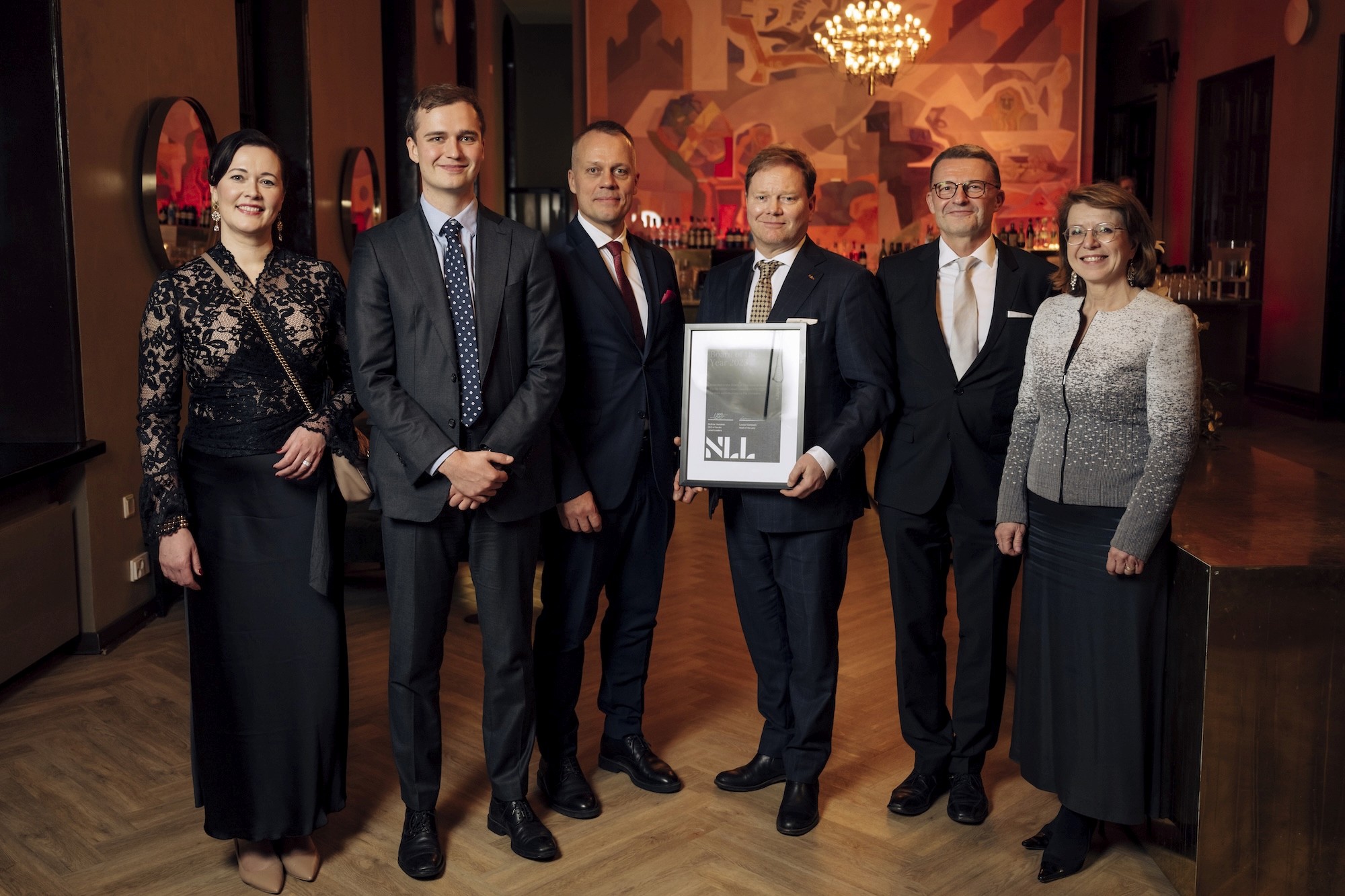
Aspo’s board was awarded Board of the Year 2025 at the Nordic Listed Leaders Gala. From left to right: Annika Ekman, Tatu Vehmas, Tapio Kolunsarka, Heikki Westerlund, Mikael Laine, and Kaarina Ståhlberg. The photo is missing one board member: Patricia Allam.
“The chair should speak last”
One principle comes up repeatedly in Westerlund’s description of board leadership: disciplined self-control.
“In most companies, I used to be the youngest in the room,” he reflects. “Most probably, that led me to ask questions rather than provide answers. The guideline that the chair speaks last is important — you want to hear real views, not polite consensus.”
That philosophy shapes Aspo’s board dynamics in a very practical way. Meetings are built around ensuring a shared understanding of the business at a granular level: where the company stands today, how and where money is actually made, and which assumptions may no longer hold.
“Surprisingly often, boards initially lack a common understanding of the basics,” he says. “If you don’t fix that, you can’t prioritize the right discussions and actions.”
From portfolio logic to hard decisions
Aspo’s recent transformation didn’t start with a crisis. It started with a portfolio question.
How should Aspo be structured to meet current equity market expectations?
The answer was not about fine-tuning the existing structure. The board chose to move toward a model of two clearer entities — Aspo Infra and Aspo Compounder — while exiting businesses that no longer fit the long-term vision. In parallel, the company accelerated its shift away from Russia and toward acquisitions in the Nordics, divesting nearly 10 businesses and acquiring almost the same number.
“Excluding moving from East to West based on our values, these decisions were not easy,” Westerlund says plainly. “But we were convinced they would add shareholder value, benefit the businesses, and open new opportunities for our people.”
That confidence did not come naturally; it was built deliberately. The board worked closely with management, applying what he describes as “private-equity-style discipline,” involving clear timetables, execution focus, and a relentless link between strategy and value creation.
When boards become “too active,” and why that’s sometimes necessary
One of Westerlund’s most revealing reflections concerns how the board’s role changes during transformation compared to more stable periods.
“It’s a function of two things,” he explains. “How much trust the board has in management, and how clear the strategy is. If either is missing, the board naturally becomes more active.”
That intensity, however, must be temporary.
“In PE-style governance, deviation leads to intervention, but only until clarity is restored. Then the board must step back again. Otherwise, you risk blurring roles.”
The line between support and interference is thin and constantly moving during change.
Board development needs to be continuous
Selecting the right people is only the starting point. Effective boards treat development as a constant responsibility, not a one-off phase at the beginning of a term.
“Many new board members lack deep industry knowledge,” Westerlund notes. “You have to build that. Getting to know customers and understanding industry dynamics.”
In practice, this means boards must actively create space for learning. Management is expected to speak openly about customers, competitors, and market shifts, while board members are encouraged to bring in external perspectives from their own networks and experiences.
Over time, relevance is maintained not through tenure, but through curiosity, preparation, and continuous engagement with the business.
Evaluation, feedback, and uncomfortable truths
Board evaluations at Aspo combine structured surveys with open dialogue. But Westerlund is candid about what feedback hurts most.
“In a listed company, disappointing share price development is always uncomfortable,” he says. “At the same time, many factors limit what and when you can communicate externally. From the outside, it may look like nothing is happening, even when internally a lot is being done.”
That tension between perception and reality is something many boards recognize, and few talk about openly.
Despite the seriousness of the decisions, one thing stands out: the boardroom atmosphere. “We take our responsibilities very seriously,” Westerlund says, “but we also have a very good spirit. Sometimes we laugh a lot.”
That psychological safety isn’t accidental. It’s built outside formal meetings: through preparation, one-on-one conversations, and ensuring every voice is genuinely heard before decisions are made.
“In most cases, real disagreements are rare if you’ve done your homework in advance,” he concludes.
·
5 min read

Some of the hardest board decisions are made when performance is solid, and the pressure is internally driven. In 2025, Aspo’s board chose to act anyway, applying private-equity-style discipline to make structural decisions that will reshape the company.
Transformations are easy to admire once they’re complete. Much harder to lead in real time.
In 2025, the board of Aspo made a series of decisions that fundamentally reshaped the company. Leipurin, the smallest of its units, was agreed to be divested, sharpening the company’s strategic focus. The future of the two remaining businesses — ESL Shipping and Telko — is currently being reassessed, including an evaluation of forming two independent listed companies.
This was not fine-tuning. It was a set of bold, structural decisions, taken openly, under the scrutiny that comes with being a listed company.
We spoke with Heikki Westerlund, chair of Aspo, to focus less on what the board decided and more on how it governed under high pressure. In this conversation, he shares his key lessons on disciplined self-control, trust, decision-making under pressure, and what boards often underestimate when leading real transformation.
What shaped the chair behind the board
Westerlund’s approach to board work has been formed over decades with a clear focus on value creation. A strong private equity influence runs through it: disciplined execution, clear ownership of outcomes, and timetables that force decisions rather than defer them.
Early exposure to board effectiveness debates through Sitra and the Finnish Venture Capital Association laid the theoretical groundwork. CapMan later provided a practical environment to apply those ideas under active, performance-driven ownership. Leadership roles in well-run listed companies such as Orion and Tikkurila added perspective on how rigorous governance translates into long-term performance in public markets.
Along the way, Westerlund has consciously absorbed best practices from role models, including Lauri Ratia, Ari Tolppanen, Hannu Syrjänen, and Jari Paasikivi. The result is a chairmanship style that pairs discipline and judgment with the ability to act decisively.
Aspo’s board was awarded Board of the Year 2025 at the Nordic Listed Leaders Gala. From left to right: Annika Ekman, Tatu Vehmas, Tapio Kolunsarka, Heikki Westerlund, Mikael Laine, and Kaarina Ståhlberg. The photo is missing one board member: Patricia Allam.
“The chair should speak last”
One principle comes up repeatedly in Westerlund’s description of board leadership: disciplined self-control.
“In most companies, I used to be the youngest in the room,” he reflects. “Most probably, that led me to ask questions rather than provide answers. The guideline that the chair speaks last is important — you want to hear real views, not polite consensus.”
That philosophy shapes Aspo’s board dynamics in a very practical way. Meetings are built around ensuring a shared understanding of the business at a granular level: where the company stands today, how and where money is actually made, and which assumptions may no longer hold.
“Surprisingly often, boards initially lack a common understanding of the basics,” he says. “If you don’t fix that, you can’t prioritize the right discussions and actions.”
From portfolio logic to hard decisions
Aspo’s recent transformation didn’t start with a crisis. It started with a portfolio question.
How should Aspo be structured to meet current equity market expectations?
The answer was not about fine-tuning the existing structure. The board chose to move toward a model of two clearer entities — Aspo Infra and Aspo Compounder — while exiting businesses that no longer fit the long-term vision. In parallel, the company accelerated its shift away from Russia and toward acquisitions in the Nordics, divesting nearly 10 businesses and acquiring almost the same number.
“Excluding moving from East to West based on our values, these decisions were not easy,” Westerlund says plainly. “But we were convinced they would add shareholder value, benefit the businesses, and open new opportunities for our people.”
That confidence did not come naturally; it was built deliberately. The board worked closely with management, applying what he describes as “private-equity-style discipline,” involving clear timetables, execution focus, and a relentless link between strategy and value creation.
When boards become “too active,” and why that’s sometimes necessary
One of Westerlund’s most revealing reflections concerns how the board’s role changes during transformation compared to more stable periods.
“It’s a function of two things,” he explains. “How much trust the board has in management, and how clear the strategy is. If either is missing, the board naturally becomes more active.”
That intensity, however, must be temporary.
“In PE-style governance, deviation leads to intervention, but only until clarity is restored. Then the board must step back again. Otherwise, you risk blurring roles.”
The line between support and interference is thin and constantly moving during change.

Board development needs to be continuous
Selecting the right people is only the starting point. Effective boards treat development as a constant responsibility, not a one-off phase at the beginning of a term.
“Many new board members lack deep industry knowledge,” Westerlund notes. “You have to build that. Getting to know customers and understanding industry dynamics.”
In practice, this means boards must actively create space for learning. Management is expected to speak openly about customers, competitors, and market shifts, while board members are encouraged to bring in external perspectives from their own networks and experiences.
Over time, relevance is maintained not through tenure, but through curiosity, preparation, and continuous engagement with the business.
Evaluation, feedback, and uncomfortable truths
Board evaluations at Aspo combine structured surveys with open dialogue. But Westerlund is candid about what feedback hurts most.
“In a listed company, disappointing share price development is always uncomfortable,” he says. “At the same time, many factors limit what and when you can communicate externally. From the outside, it may look like nothing is happening, even when internally a lot is being done.”
That tension between perception and reality is something many boards recognize, and few talk about openly.
Despite the seriousness of the decisions, one thing stands out: the boardroom atmosphere. “We take our responsibilities very seriously,” Westerlund says, “but we also have a very good spirit. Sometimes we laugh a lot.”
That psychological safety isn’t accidental. It’s built outside formal meetings: through preparation, one-on-one conversations, and ensuring every voice is genuinely heard before decisions are made.
“In most cases, real disagreements are rare if you’ve done your homework in advance,” he concludes.

Investor Event
Listeds Investor Event · Defence
Nordic defence is in a once-in-a-generation growth cycle. Eight listed and pre-IPO companies pitch to 100+ invited investors at Valkoinen Sali, Helsinki
21 September 2026


Latest on Listeds