/

Topics

/

corporate governance

corporate governance

Leaders

Luotea names asset-management executive Rikard Nyhrén to lead the Swedish business to accelerate improvement in profitability

Aug 6, 2026

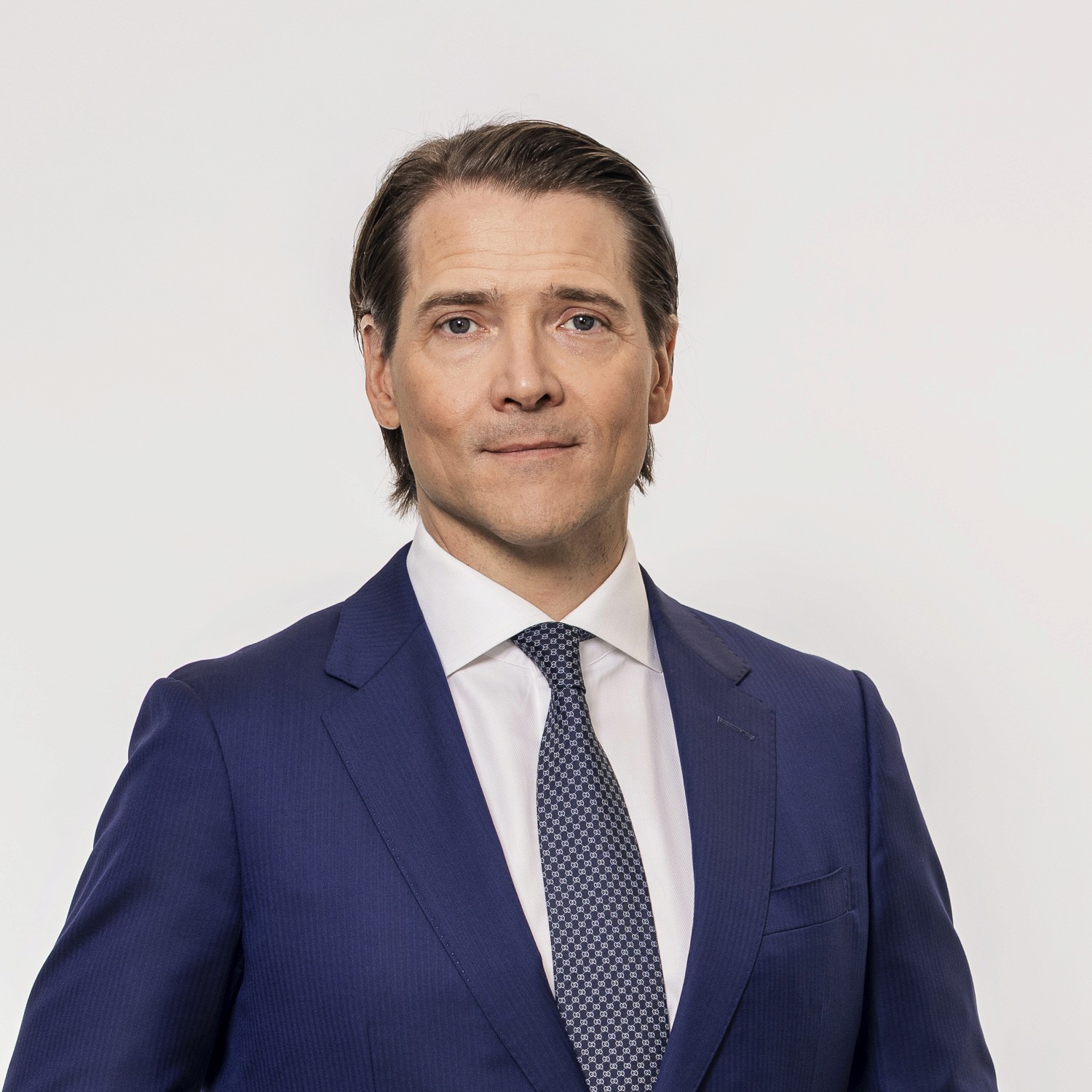
A day before Luotea posted half-year results showing Sweden pulling ahead of a lagging Finland, the group named Rikard Nyhrén, most recently of Intea and Newsec, as CEO of its Swedish operations from February 2027 with the group’s profit guidance now resting on Sweden.

He succeeds Mikko Taipale, who has stepped down from the role and from Luotea's Group Management Team effective immediately; Saman Khalilian, CFO of Luotea Sweden, will run the unit on an interim basis until Nyhrén arrives. CEO Antti Niitynpää said the appointment supports Luotea's aim to "accelerate improvement in profitability" in Sweden.

The change lands at the point where Sweden has become the group's growth engine. Swedish net sales rose roughly 10% in the first quarter and 9% in the second, even as Finnish cleaning and support services fell a further 7%, and the reaffirmed full-year guidance, adjusted EBITA to increase, or increase significantly, against 2025's EUR 7.0 million, increasingly rests on Sweden holding its trajectory.

Two features of the appointment stand out. Management is changing the leadership of its best-performing region at the moment that region is working; and it has gone outside facility services to do it.

Nyhrén, born in 1981, joins from Intea Fastigheter, where he heads asset management. He has held senior roles at Newsec, Hemsö and Parmaco, and was chief technical officer at Hemsö. He trained as a construction engineer at Mälardalen University. So his background spans both sides of the business Luotea wants to build: property and asset management, and the technical side, not cleaning or facility management.

His background points to where Luotea wants to grow: property services and data-driven services, both central to its 2026–2028 strategy. This is our read of the hire, not a reason the company has given.

The numbers behind the timing

The appointment landed one day before Luotea published half-year results. Group net sales for the second quarter rose 1.5% to EUR 88.1 million and adjusted EBITA rose to EUR 2.5 million, with Swedish net sales up 9%.

For the first half, net sales increased 0.4% to EUR 174.2 million, adjusted EBITA improved to EUR 2.9 million, and operating profit stood at EUR 0.5 million.

The improvement builds on the first quarter, when Luotea said that the "turnaround in Sweden proceeds as planned" even as group net sales dipped on price competition and delayed investment decisions in Finland.

Governance and group context

The change follows Luotea's AGM on 29 April 2026, which re-elected the six-member board under chair Johan Mild and vice chair Pasi Tolppanen, approved a EUR 0.07 per share dividend for 2025, and authorised repurchases of up to 2 million shares (about 5.2%).

Hanna Inget is also the latest in a run of Group Management Team moves since Luotea's creation. Hanna Inget joined as Chief Commercial Officer from 1 March 2026 to lead commercial operations and customer experience.

Luotea is a recent listing, created on 31 December 2025 when Lassila & Tikanoja plc completed a partial demerger; the remaining facility services operations were renamed Luotea Plc and continued on Nasdaq Helsinki under the ticker LUOTEA. For full-year 2025, continuing operations reported adjusted EBITA of EUR 7.0 million, up from EUR 1.2 million a year earlier, on net sales of EUR 346.0 million, a 1.0% decline.

Financial snapshot

Period

Net sales

Adjusted EBITA

Operating profit

EPS

FY2025 (cont. ops)

EUR 346.0m (-1.0%)

EUR 7.0M

EUR 3.0M

EUR 0.03

Q1 2026

EUR 86.0m (-0.6%)

EUR 0.3M

EUR -0.4M

EUR -0.02

Q2 2026

EUR 88.1m (+1.5%)

EUR 2.5M

EUR 0.9M

EUR 0.01

H1 2026

EUR 174.2m (+0.4%)

EUR 2.9

EUR 0.5M

EUR -0.01

Why this move matters

Sweden is no small unit. It brought in EUR 121.9 million of Luotea's EUR 346.0 million in 2025 net sales, about 35% of the group, and the only part growing, up 9% while Finland fell 5.7%.

The company frames Nyhrén's job around its stated aim to "accelerate improvement in profitability" in Sweden.

Leadership continuity there is the exception within the group: the CEO role has moved now twice in a single announcement, a faster cadence than the rest of the Group Management Team, stable since the December 2025 demerger.

The full-year outlook has been reaffirmed unchanged through both the Q1 and H1 reports despite the results in Finland have been declining.

With Sweden's leadership in transition, Nyhrén's stated priority "driving profitable and sustainable growth in Sweden", puts him at the centre of whether Luotea keeps that guidance intact through 2027.

Voices

As AI scales in 2026, governance will decide who wins

Jun 3, 2026

The AI race has moved past experimentation. 2026 is about execution at scale. The winners won’t be the fastest adopters. They’ll be the ones with the governance to deploy AI decisively across their organizations. Everyone else is already behind.

When I was considering joining Dell Technologies in 2022, one thing stood out above all else. It was the culture around artificial intelligence. Dell had decided to take AI seriously. The organization was thinking disruptively, moving with intent, and treating itself as the first test case, not just the advisor. It made me curious and convinced me.

Nearly four years later, I can say the leap we’ve made in AI, both as an organization and in my own leadership, has been remarkable. It has fundamentally changed how I work, how I lead, and how I see the future, with a strong sense of optimism.

This shift is not just about productivity. It is about whether organizations can scale AI safely, effectively, and continuously innovate. At its core, this is a question of governance.

The leader who cannot look away

There is a temptation among senior executives to treat AI as a technology matter, as something to delegate to the CIO or CTO, while the real business of leadership continues elsewhere. That temptation should be resisted firmly.

A leader must have a horizontal view across the organization. Strategy, culture, operations, finance, and risk are all now shaped by AI. This is not something that can be delegated away from the top. Leadership teams that try to do so are not reducing complexity; they are allowing it to build, unseen and unmanaged.

My own experience confirms this. Since embracing AI tools in my daily work, my leadership has genuinely moved forward. I use my time more intelligently. I produce more value in the role, and I see the same effect ripple through the organization: people doing more meaningful work, freed from the routine tasks that once consumed their days. This is not a marginal efficiency gain. It is a qualitative shift in what leadership and professional work can mean.

Governance: The leadership trend that cannot wait

Among the many dimensions of AI leadership, one has emerged as the defining challenge of 2026: governance.  This is where the AI race will be decided, not in pilots, but in the ability to scale with control.

This is not primarily a regulatory question, though regulation matters. It is a leadership and competitiveness question. 

"As John Roese, Dell's global CTO and chief AI officer, wrote in a Dell blog post last December, “Top on the list is governance. We haven’t established strong governance frameworks yet.” He added that “governance in general will be a big deal in 2026,” and that inside the enterprise, “investment in a structured approach to AI will become a requirement.”

Companies are often moving faster than their organizational structures can absorb, from AI pilots to genuine production environments. In that transition, governance gaps appear. Who is accountable for an AI system's outputs? How is training data governed? What happens when a model fails, or behaves unexpectedly, at scale?

These questions are already surfacing in boardrooms. And the leaders who have clear answers will have a competitive advantage over those who do not.

Data is the asset and the vulnerability

AI does not merely use data. It amplifies data's value and its risk simultaneously.

Modern AI platforms ingest vast volumes of information, generate new data continuously, and concentrate an organization's most sensitive intellectual property in ways that were not true even five years ago. 

The security implications are direct. As Dell's President and Chief Security Officer, John Scimone, observed in a blog post last October: "Hackers go where the data is," and increasingly, that means where the AI is. 

This changes the risk calculus for leadership teams in a fundamental way. AI governance and data security are not separate conversations to be routed to different functions. They are two sides of the same strategic question: can we trust the systems on which our business depends?

An integrated, whole-of-company approach to risk and opportunity is no longer a best practice. It is a baseline.

Infrastructure as strategy

For much of the past decade, infrastructure was treated as a commodity, something to outsource, abstract away, or procure from whichever cloud provider offered the best commercial terms. AI has reversed that logic.

Where data resides, who controls it, and under what jurisdictional framework it is processed have become board-level questions. The concept of sovereign AI ensuring that data sovereignty, model ownership, and operational continuity remain under an organization's own governance is moving to practical architecture decisions.

The question organizations must now answer is not merely which AI tools to deploy, but what kind of AI platform to build on. 

Finland's moment if it chooses to take it

Finland carries some genuine advantages into the AI era. 

The Nordic country has technology-oriented people. Digital literacy runs deep. Trust in institutions, a precondition for data-sharing and AI deployment at scale, remains comparatively high.

And yet the Finnish economy has not grown. That is the uncomfortable fact sitting alongside those advantages.

AI offers a path to a growth leap that organic development alone cannot provide. The United States offers a preview: a meaningful share of recent GDP growth is now attributable, directly or indirectly, to AI-driven productivity. Projections for the coming years are more striking still. The same potential exists here. But potential is not destiny.

What is required is a change from companies, from workers, and above all from leaders. The AI revolution is not arriving. It has arrived. The only useful question now is what each organization will do about it.

The best place to start is with oneself. Leaders who have done that internal work, who have actually changed how they operate, not merely approved a strategy slide, are the ones driving genuine transformation in their organizations. At Dell, we have trained for this, measured it, and held ourselves accountable to it. We want to be the best reference for what we preach.

Governance is not the brake. It is the engine

Some leaders worry that governance frameworks will slow AI innovation. The concern is understandable but misplaced.

Ungoverned AI does not move faster. It moves recklessly, accumulating hidden liabilities in data quality, security exposure, regulatory risk, and organisational trust that eventually force a costly reckoning. "Governance is not about slowing down innovation," Roese argues. "It's about building the guardrails that allow us all to accelerate safely and sustainably." 

The organizations that will succeed with AI over the next decade are not necessarily those with the most impressive early pilots. They will be those who built the infrastructure, governance, and cultural readiness to operate AI at scale reliably, securely, and with clear accountability.

AI can help address major global challenges. But that requires trust. And trust requires governance. The opportunity is immediate, and so is the risk of inaction. Delays now will be difficult to reverse later.

Finland has the technological capability and institutional foundations. What remains is leadership, the courage to build trust and take the growth leap within reach. The work does not start with another strategy document, but with each leader choosing to step into the unknown. In a race already underway, delay is not neutral. It is a decision to fall behind.

Leaders

Solidium aims to be a change agent for nationally important Finnish companies

Apr 27, 2026

“In Finland, we need further alignment regarding the notion that strong value creation is important from a national interest perspective. The more successful our companies are, the more growth, investment, and well-being they generate for Finnish society,” says Solidium’s new CEO, Matts Rosenberg.

For Rosenberg, the current environment creates increased demand for active ownership. There is a deeper structural issue in Finland, one that goes beyond strategy and into how companies are owned, governed, and ultimately pushed to perform.

Learnings from Sweden

Matts Rosenberg has over 20 years of experience in active ownership, of which a decade was in Sweden, a country with a strong culture and heritage of active ownership and ambitious value creation. That experience shapes his view of what Finland could become.

“Finland has more potential than it has so far managed to realize,” he says.

In Sweden, ownership culture is more explicit and more assertive. Long-term owners, such as the Wallenberg sphere, have demonstrated how active and engaged ownership can shape companies across generations. In that context, value creation and national interest are not competing priorities, but mutually reinforcing outcomes.

Rosenberg’s perspective reflects that model. The guiding principle is that ownership is not a passive position, but a continuous responsibility to communicate the owner’s view in relation to the level of ambition, direction, and targets.

Finland’s structure has been different. A smaller capital base and a fragmented ownership landscape with a lack of active owners have left a gap that Solidium was originally created to fill.

The real bottleneck: execution, not strategy

Beneath the surface, a more uncomfortable reality is emerging. Finnish publicly listed companies do not appear to lack strategic ambition. What they lack is the ability to execute change consistently.

Evidence of this has been highlighted in research by Saara Karasvirta, featured in Helsingin Sanomat HS Visio. Based on interviews with 33 change leaders across 11 large companies, the study finds that transformation efforts are often inconsistent and dependent on individuals rather than institutionalized processes.

What begins as a management challenge increasingly points elsewhere. In that sense, the problem is not only operational. It is one of ownership and governance.

From passive owner to active partner

As the Finnish State’s investment arm and a minority shareholder in nationally important companies, Solidium sits at the intersection of ownership and influence. Its updated strategy places greater emphasis on growth, transformation, and long-term value creation—not only for its portfolio companies, but for Finnish society more broadly.

Historically, state ownership in Finland has been associated with stability and long-term stewardship. But it has also, at times, been perceived as passive. Solidium’s new direction challenges that legacy. Rather than acting as a traditional asset manager, the organization is seeking to operate as an active owner—one that shapes outcomes inside its portfolio companies rather than merely observing them.

“We don’t see ourselves as just managing assets. Our role is to be an active owner—creating impact through nomination committees, board work, and continuous, constructive dialogue with co-investors and key stakeholders, particularly board chairs. The level of ambition and competence within boards is critical, and if we want stronger outcomes, for example, in terms of value-creating growth, we need to actively ensure that we have the right people around the table,” says Rosenberg.

In practice, this means influencing board composition, strengthening governance, and using ownership as a lever to drive the level of ambition and direction. Value creation is pursued not only through capital allocation, but through sustained engagement with companies and their leadership. 

The shift is subtle in language, but significant in implication: the shift from passive to active and engaged ownership is centered on communicating educated shareholder views regarding the ambition level. Creating strong alignment among key stakeholders (owners, boards, and management) is a prerequisite for successful value creation journeys. Target setting and incentive design play an important role in achieving this.

This shift is not happening in isolation. Similar themes have recently emerged from other major Finnish institutional owners. As explored in Listeds’ article on Ilmarinen’s governance approach, nomination committees have become one of the most strategic tools for shaping company direction, effectively determining who sits around the table when the most consequential decisions are made.

Together, these developments point to a broader evolution in Finnish ownership culture: from passive stewardship toward active, engaged governance.

That ambition carries weight. Solidium’s portfolio includes some of Finland’s most significant companies, such as Nokia, Sampo, Stora Enso, Valmet, Outokumpu, Nokian Tyres, Anora, and ICEYE. Changing how they are owned and guided has implications far beyond individual balance sheets.

Defining full potential

At the core of Solidium’s approach is a simple but demanding question: what is the full potential of each company? 

“Active ownership starts with ambition. We need to define what the full potential of a company really is, and then align everything behind reaching that.”

This is about setting a level of ambition that reflects what the company could achieve under optimal conditions.

Making ownership visible through dialogue

Equally important is the role of continuous dialogue.

“Active ownership is not about occasional intervention. It is about continuous, constructive dialogue — building a shared understanding of direction and targets,” says Rosenberg.

Yet the long-term ambition is not to entrench the ownership indefinitely.

“In the long run, it would be a positive development if the market evolves to a point where Solidium's role could be smaller,” says Rosenberg.

A long-term horizon in a changing world

Solidium operates with a horizon measured in years, not quarters. The focus is on driving tangible value creation within its existing portfolio while also identifying new opportunities in Finnish growth companies that can benefit from strong anchor ownership.

Investments such as ICEYE illustrate this dual perspective, combining immediate impact with long-term strategic importance.

At the same time, geopolitical considerations are becoming increasingly relevant.

“The operating environment is changing. Geopolitics is becoming a more important dimension in ownership decisions.”

Solidium wants to reframe ownership as a driver of renewal, not just a guardian of stability. And it challenges Finnish business leaders, boards, and policymakers to reconsider what is expected from those who hold influence.

“We need to raise the level of ambition across the entire Finnish business landscape.”

The issue is not a lack of companies, talent, or strategy. It is execution. Finland has struggled to consistently turn ambition into results.

Solidium’s answer is active ownership. By building high-performing, ambitious boards, it aims to unlock the full potential of its portfolio companies—and potentially influence the broader ecosystem.

At its core, the message is simple: value creation and national interest are not in conflict.

If Solidium fails, the diagnosis remains unchanged: strong strategies, weak execution, and a system that struggles to convert ambition into results. If it succeeds, it may help redefine what ownership means in Finland—shifting it from passive stewardship to active performance. 

Leaders

The hidden risk in CEO transitions: executive team derailers

Mar 3, 2026

CEO transitions are a consistent focal point in annual reports and board discussions. What receives far less attention, in research and in practice, is how the executive team prepares itself for the change. And yet, this is where success or failure often begins.

A change at the top extends beyond strategy. It alters relationships, shifts influence, and resets informal power structures. “When a new leader joins the executive team, something has irreversibly changed,” says Tommi Lehtinen, owner and lead consultant at SCCG, who has been assessing leaders for decades. “As an executive team member, it is important to recognize that all the dynamics that start unfolding immediately will be reflected throughout the entire organization.”

Tommi Lehtinen, owner and lead consultant at SCCG, is an executive-level HR consultant and organizational psychologist, specializing in leadership assessment and executive team development and dynamics. Photo by SCCG.

These internal dynamics are the underexamined side of CEO succession. The scale of change alone suggests they deserve more scrutiny. According to the CEO Index — Finland | 2025, produced in partnership with SAM Headhunting, 44 CEO changes took place in listed Finnish companies during 2025 alone, meaning that almost a quarter of them welcomed new leaders. Large-cap companies experienced the highest relative turnover, with more than one-third changing CEOs during the year. In many cases, leadership change triggered broader reshuffling at the top.

“It is important to recognize that the executive team acts as a mirror to the organization,” Lehtinen says. “If members do not commit to and trust the new CEO, this will be reflected throughout the organization and may paralyze the whole.”

The human side of succession

Boards sometimes assume that seasoned executives will simply adjust and move forward. Lehtinen considers this a flawed assumption. “They are ordinary human beings with emotions, facing something new. Everyone reacts in their own way,” he says.

Uncertainty, curiosity, concern, and even quiet fear can surface. Under pressure, predictable patterns emerge. In organizational psychology, these are known as derailers: stress reactions that push capable leaders off track.

“One common reaction is withdrawal,” Lehtinen explains. “People become quiet. They observe from the sidelines.”

Another frequent response, particularly in Nordic contexts, is passive aggression. “In the executive team, people may appear constructive. Decisions may be slowed down. Behind the scenes, actions may even go against agreed decisions.”

The most subtle version is superficial cooperation. “It is a withdrawal from genuine collaboration, replaced by superficial cooperation.”

A capable CEO will interpret many of these reactions as normal responses to change. But Lehtinen stresses that responsibility does not rest solely with the incoming leader.

“There should be responsibility at the executive team level. Members should recognize their own emotions and process them so that they do not surface destructively.”

Four ways executives can prepare for a CEO transition

Lehtinen outlines four practical starting points to help executives navigate a CEO transition.

Recognize your own derailers

Before debating strategy, examine your defensive reactions. Do you withdraw? Tighten control? Become overly critical? “Members should recognize their own emotions and process them so that they do not surface destructively,” Lehtinen says. 

Separate ego from enterprise

Transitions inevitably trigger status concerns. That is human. But protecting personal territory at the expense of enterprise coherence is costly. Leaders must, in Lehtinen’s words, “let go of individual drivers that only protect one’s own ego and instead commit, take responsibility, and help the whole succeed.”

Start from trust

The baseline assumption shapes behavior. “The new CEO was hired for a reason. It is reasonable to assume that he or she wants to do the job well.” Trust does not imply blind loyalty. It means enabling collaboration first and recalibrating based on evidence rather than fear.

Make commitment visible

After clearing the “ego cache,” proactively shape the next phase of growth through clear, deliberate communication. Reinforce consistent messaging, define sharp priorities, and foster open yet constructive debate to project stability to employees at a moment when reassurance matters most.

Moving deeper into a new year of slow economic growth, CEO changes are likely to remain a defining feature among listed Nordic companies. The differentiator will not only be the choice of leader, but the readiness of the executive team to step into the next chapter together.

Stay on the pulse, catch the signals

Subscribe to Listeds Leadership Intelligence Platform:

  • leader and company database access

  • email alerts

  • career, boards and interim opportunities

Our Pulse newsletter

Your weekly leadership intelligence briefing.

What happened, why it matters, and what to watch across every CEO, board, and executive move in Nordic listed companies, starting with Finland. Fast, factual, and to the point.

Delivered every Monday.

By signing up, you agree to our Privacy Policy