
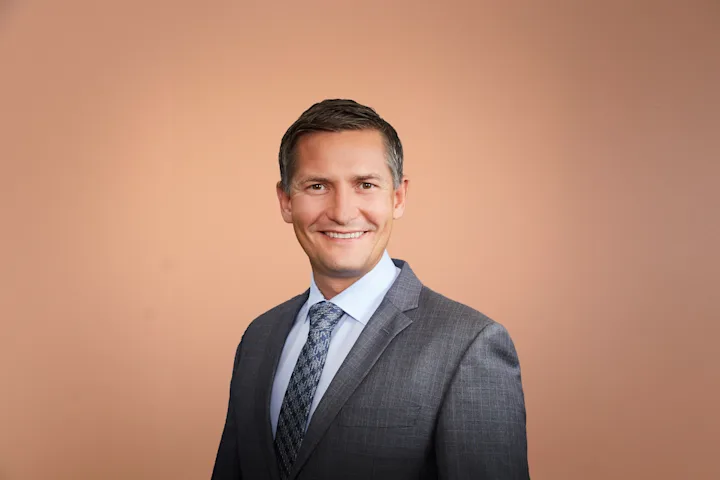
A company linked to Pihlajalinna’s founder and board member Mikko Wirén has sold more than 1.1 million shares in the Finnish healthcare provider in off-exchange transactions.

MWW Yhtiö Oy, a legal entity associated with Wirén, disposed of 1,131,006 shares on March 11 at a volume-weighted average price of EUR 13.55 per share, according to a regulatory filing yesterday.

The sale was executed in three tranches: 850,000 shares at EUR 13.68, 257,566 shares at EUR 13.15, and 23,440 shares at EUR 13.15. The total value of the transactions was about EUR 15.3 million.


Pihlajalinna recently reported improved profitability. In 2025, adjusted EBITA rose 18.3% to EUR 65.3 million, and earnings per share increased to EUR 1.58, although full-year revenue declined 7.4% to EUR 652.3 million following changes in public sector outsourcing agreements and the divestment of residential care units.

Wirén, a medical doctor, founded Pihlajalinna in 2001 and currently serves as a member of the company’s board. He previously led the healthcare group as chief executive and chaired its board between 2016 and 2023.

The company’s shares were trading around EUR 13.15 this morning, slightly below the previous close of EUR 13.20.

|

|

Business

Entity linked to Pihlajalinna founder Mikko Wirén sells EUR 15.3 million worth of shares

Entity linked to Pihlajalinna founder Mikko Wirén sells EUR 15.3 million worth of shares

·

5 min read

Explore and follow profiles from this article to get timely updates:

A company linked to Pihlajalinna’s founder and board member Mikko Wirén has sold more than 1.1 million shares in the Finnish healthcare provider in off-exchange transactions.

MWW Yhtiö Oy, a legal entity associated with Wirén, disposed of 1,131,006 shares on March 11 at a volume-weighted average price of EUR 13.55 per share, according to a regulatory filing yesterday.

The sale was executed in three tranches: 850,000 shares at EUR 13.68, 257,566 shares at EUR 13.15, and 23,440 shares at EUR 13.15. The total value of the transactions was about EUR 15.3 million.

Our Pulse newsletter

Your weekly leadership intelligence briefing.

What happened, why it matters, and what to watch across every CEO, board, and executive move in Nordic listed companies, starting with Finland. Fast, factual, and to the point.

Delivered every Monday.

By signing up, you agree to our Privacy Policy

Our Pulse newsletter

Your weekly leadership intelligence briefing.

What happened, why it matters, and what to watch across every CEO, board, and executive move in Nordic listed companies, starting with Finland. Fast, factual, and to the point.

Delivered every Monday.

By signing up, you agree to our Privacy Policy

Pihlajalinna recently reported improved profitability. In 2025, adjusted EBITA rose 18.3% to EUR 65.3 million, and earnings per share increased to EUR 1.58, although full-year revenue declined 7.4% to EUR 652.3 million following changes in public sector outsourcing agreements and the divestment of residential care units.

Wirén, a medical doctor, founded Pihlajalinna in 2001 and currently serves as a member of the company’s board. He previously led the healthcare group as chief executive and chaired its board between 2016 and 2023.

The company’s shares were trading around EUR 13.15 this morning, slightly below the previous close of EUR 13.20.

Board Programme

Built for Nordic listed company boards.

The only programme in the Nordics designed specifically for listed-company board work.
Five sessions, one cohort, twenty leaders in one room - Helsinki, 2026.

Board Programme

Built for Nordic listed company boards.

The only programme in the Nordics designed specifically for listed-company board work.
Five sessions, one cohort, twenty leaders in one room - Helsinki, 2026.

Authors

Emmi Laine is head of business content at Listeds and our lead for finance and business coverage. She sets the editorial agenda, interviews Nordic business leaders, and writes stories, newsletters, and social content on timely market and corporate topics. Emmi brings nearly eight years of experience from Shanghai's Yicai Global / Yicai Media Group, where she was awarded for reporting on China’s economy, finance sector, and technology innovation. She holds an MSc in Innovation and Entrepreneurship from ESADE Business School in Barcelona and a Master’s degree in International Design Business Management from Aalto University. She also holds a Bachelor’s degree in Culture Studies with a major in Journalism from Stockholm University and has studied Mandarin Chinese and Chinese culture. Emmi is a Finnish citizen and has lived in Finland, Sweden, China, and Portugal.

Emmi Laine is head of business content at Listeds and our lead for finance and business coverage. She sets the editorial agenda, interviews Nordic business leaders, and writes stories, newsletters, and social content on timely market and corporate topics. Emmi brings nearly eight years of experience from Shanghai's Yicai Global / Yicai Media Group, where she was awarded for reporting on China’s economy, finance sector, and technology innovation. She holds an MSc in Innovation and Entrepreneurship from ESADE Business School in Barcelona and a Master’s degree in International Design Business Management from Aalto University. She also holds a Bachelor’s degree in Culture Studies with a major in Journalism from Stockholm University and has studied Mandarin Chinese and Chinese culture. Emmi is a Finnish citizen and has lived in Finland, Sweden, China, and Portugal.

Authors

Journalist

Emmi Laine is head of business content at Listeds and our lead for finance and business coverage. She sets the editorial agenda, interviews Nordic business leaders, and writes stories, newsletters, and social content on timely market and corporate topics. Emmi brings nearly eight years of experience from Shanghai's Yicai Global / Yicai Media Group, where she was awarded for reporting on China’s economy, finance sector, and technology innovation. She holds an MSc in Innovation and Entrepreneurship from ESADE Business School in Barcelona and a Master’s degree in International Design Business Management from Aalto University. She also holds a Bachelor’s degree in Culture Studies with a major in Journalism from Stockholm University and has studied Mandarin Chinese and Chinese culture. Emmi is a Finnish citizen and has lived in Finland, Sweden, China, and Portugal.

All Listeds newsletters (bundle)

One sign-up, the full picture.

Get every Listeds newsletter: the daily signal drumbeat, the weekly Pulse briefing, the monthly Best of the Month, the CEO letter, and the Weekend read.

By signing up, you agree to our Privacy Policy

All Listeds newsletters (bundle)

One sign-up, the full picture.

Get every Listeds newsletter: the daily signal drumbeat, the weekly Pulse briefing, the monthly Best of the Month, the CEO letter, and the Weekend read.

By signing up, you agree to our Privacy Policy

Latest signalsLive feed
Moves trackerLive feed

Investor Event

Listeds Investor Event · Defence

Nordic defence is in a once-in-a-generation growth cycle. Eight listed and pre-IPO companies pitch to 100+ invited investors at Valkoinen Sali, Helsinki

21 September 2026

Latest on Listeds

Leadership Moves

Lars Bell arrives at the end of SSH's rebuild. The share is up 49.5% in five days.

Sep 9, 2026

Since January, SSH Communications Security has lowered its sales outlook, watched an incoming chief financial officer withdraw before her start date, and completed a tender offer on its convertible capital securities. Lars Bell's appointment as chief executive, announced 3 September and effective 1 October, is the most visible event in that sequence. It is not the first.

Read on its own, a planned CEO succession looks orderly. Read against the year behind it, it is the last announced piece of a rebuild that began eight months earlier.

The share price read it the other way round. Most of that sequence passed with barely a mark: the three CFO events moved the share −2.2%, +0.5% and −0.5%. Then, in the five sessions to 7 September, SSH's share (SSH1V, Nasdaq Helsinki) rose from EUR 1.786 to EUR 2.67, up 49.5%, on 569,004 shares against August's 403,172 across 21 sessions.

Three CFO plans, and a quarter with EBITDA negative

SSH lowered its 2025 net sales outlook on 2 January. Full-year 2025 net sales came in down 2.4%; Q1 2026 turned EBITDA negative; Q2 revenue recovered to EUR 5.7 million, up 6.8% year on year, while EBITDA was down 40.7%.

The finance seat moved three times in three months. Maria Alahuhta was appointed CFO on 2 April, her start date was brought forward to 1 October, and on 12 June SSH disclosed she would not take up the role. Cristian Arias was appointed on 7 July, starting 1 October, the same day Bell begins.

What the market paid for

Date

Event

Close (EUR)

Move

Volume

15 Jan

Two New Partnerships with COMIT Corporation in Vietnam and ChyunYao in Taiwan. 

3.47

+24.4%

607,544

17 Feb

FY2025 results

2.41

−6.9%

176,389

2 Apr

Alahuhta appointed CFO

2.19

−2.2%

33,058

12 Jun

Alahuhta withdraws

2.10

+0.5%

40,611

7 Jul

Arias appointed CFO

1.98

−0.5%

38,468

17 Jul

CEO retirement + Q2

2.035

−8.7%

39,444

3 Sep

Bell appointed CEO

2.11

+11.1%

98,535

7 Sep

Bank selects PrivX for Zero Trust


2.67

+18.7%

209,389

Three CFO events: −2.2%, +0.5%, −0.5%. None traded an average day's volume for the year (55,597 shares). On the day SSH disclosed that an incoming CFO would not take up the role, the share rose half a per cent on 40,611 shares.

The disclosures that did move it were the outlook cut on 2 January (−7.9%), the full-year results on 17 February (−6.9%), and the CEO seat. The 17 July release, which carried the retirement of Rami Raulas alongside the Q2 figures, took the share down 8.7% that day, and 18.2% from the 16 July close to the 23 July close.

The largest single day of the September run came two sessions after the appointment was public, on 7 September, +18.7%, as one of the world's largest banks selected SSH Communications Security's PrivX solution to implement Zero Trust with Zero Standing Access. 

Same buyer, different product

Bell comes from Omada A/S, where he was Chief Customer Officer and, from November 2025 to April 2026, interim chief executive. Before that: chief executive of Pedab Denmark, and long tenures at Microsoft, HP and IBM: more than twenty-five years in enterprise software.

His discipline is Identity Governance and Administration. SSH sells Zero Trust privileged access and quantum-safe network encryption. The two compete for the same security budget and often reach the same buyer, but they are not the same product. 

What to watch

Bell and Arias both start on 1 October, which makes SSH's Q3 report the first disclosure a rebuilt executive team owns rather than inherits. It is also the first test of whether the Q2 revenue recovery survives these changes.

Columnists

The Next Nordic advantage‌ - What if talent, capital and innovation start flowing north?‌

Sep 8, 2026

Geopolitical discussions have been framed through the lens of the Global West, Global East and Global South. Recently, a fourth concept has started to emerge in strategic discussions: the Global North.

The term is usually used more broadly to describe the developed world as a whole. In this column, I deliberately narrow it to the Nordic region because it represents a distinctive institutional model.

I first encountered the idea when Finland's President Alexander Stubb discussed the possibility of the Global North as an emerging geopolitical force during an interview on Ykkösaamu, one of Finland's leading current affairs programmes, in February 2026.
Strong Nordic cooperation is one dimension of this thinking.

Are we moving towards a new geopolitical geometry? The significance of the North has grown in recent years through developments such as NATO's enlargement and the increasing strategic importance of the Arctic region. The Arctic has received unprecedented international attention, not only because of security concerns, but also because of its growing relevance for energy, infrastructure, logistics and critical resources. 

The growing strategic importance of the Nordic region is reflected for instance in NATO's decision to establish its Forward Land Forces Multinational Staff Element in Rovaniemi, creating a permanent NATO presence in Northern Finland.

In 2026, the U.S. Coast Guard moved forward with plans to procure 11 new icebreakers from Finland, relying heavily on Finnish icebreaker expertise and shipbuilding capabilities.

The Nordic Effect

For decades, the United States has been the world's dominant magnet for talent, capital and innovation. Yet recent policy shifts and a growing emphasis on "America First" raise a strategic question worth putting to a board: What if America First ultimately makes America less attractive to global talent, capital and ideas? It is a possibility worth exploring. What if a more fragmented geopolitical environment gradually disperses global flows of talent, investment and innovation? What if some of these flows begin seeking more predictable destinations? This is where the Global North starts to matter commercially.

The defining characteristics of the Nordic region include stable societies, low levels of corruption, strong educational systems, safety and security, a strong rule of law, well-functioning institutions, advanced innovation ecosystems and a long tradition of diplomacy and cooperation. These are often described as social strengths. In an increasingly fragmented world, they may also become strategic economic assets.
For instance The World Justice Project's Rule of Law Index 2025 ranked Denmark 1st, with Norway and Finland immediately behind among the strongest rule-of-law countries in the world. Nordic countries also perform exceptionally well in innovation: in the Global Innovation Index 2024

When political risk increases elsewhere, predictability itself may become a competitive advantage and characteristics of an attractive investment environment. 

How could your company benefit if the Nordic region became an increasingly attractive destination for talent, investment and innovation?

No Nordic country can compete with the United States or China on scale alone. Together, however, the region represents a globally relevant platform for innovation, technology, research and investment. The four Nordic exchanges — Helsinki, Stockholm, Copenhagen and Oslo — are already a single functioning market.

Another signal of deeper Nordic integration can be seen in capital markets. In August 2026, Bloomberg reported that the Nordic Compass initiative was exploring a common Nordic stock exchange bringing together the markets of Sweden, Denmark, Norway and Finland. The initiative includes major Nordic actors such as Wallenberg Investments, EQT, Nordea, Nokia, Kone, Nasdaq and the Novo Nordisk Foundation. Its stated ambition is to strengthen the region's ability to compete for capital and support growth companies at a scale that individual Nordic markets struggle to achieve alone. Such discussions suggest that the idea of the Nordics acting as a more integrated economic platform is already moving from geopolitical speculation into practical business strategy.

If the twentieth century rewarded scale and the early twenty-first century rewarded speed, the next decade may reward trusted collaboration.

What's Next?

Whether the Global North emerges as a recognised centre of power remains uncertain. But uncertainty is precisely why boards should explore the possibility.

One of the core purposes of strategic foresight is not to predict what will happen, but to expand the range of possibilities organisations are prepared for. The most valuable strategic question is rarely "What will happen?" It is "What becomes possible if this happens?"

For boards, a practical starting point is visioning.

Imagine it is 2035 and the Global North has become one of the world's most attractive destinations for talent, investment and innovation.

  • What would be the desired role that your company wants to play in that future? 

  • What capabilities would that require?

  • Which partnerships should be built today?

  • What opportunities might competitors overlook?

The companies that benefit most from emerging shifts are rarely those that predict the future correctly. They are those that recognise new possibilities early and position themselves accordingly. 

The future is built, not forecast.

Minna Koskelo

Founder and CEO, 11Helsinki

She is also Founder and Chair of the Board of Futures Finland, a founding organisation of the Nordic Foresight Network. Her work focuses on strategic foresight, helping organisations turn foresight into action.

Nordic Foresight

Minna Koskelo

The Nordic Foresight Network is a network of foresight professionals advancing futures thinking across the Nordic region.

Nordic Foresight Network

The Nordic Foresight Column is a monthly series by Nordic Foresight Network in which foresight professionals from the five Nordic countries examine the shifts shaping the region.

Latest on Listeds

Leadership Moves

Lars Bell arrives at the end of SSH's rebuild. The share is up 49.5% in five days.

Sep 9, 2026

Since January, SSH Communications Security has lowered its sales outlook, watched an incoming chief financial officer withdraw before her start date, and completed a tender offer on its convertible capital securities. Lars Bell's appointment as chief executive, announced 3 September and effective 1 October, is the most visible event in that sequence. It is not the first.

Read on its own, a planned CEO succession looks orderly. Read against the year behind it, it is the last announced piece of a rebuild that began eight months earlier.

The share price read it the other way round. Most of that sequence passed with barely a mark: the three CFO events moved the share −2.2%, +0.5% and −0.5%. Then, in the five sessions to 7 September, SSH's share (SSH1V, Nasdaq Helsinki) rose from EUR 1.786 to EUR 2.67, up 49.5%, on 569,004 shares against August's 403,172 across 21 sessions.

Three CFO plans, and a quarter with EBITDA negative

SSH lowered its 2025 net sales outlook on 2 January. Full-year 2025 net sales came in down 2.4%; Q1 2026 turned EBITDA negative; Q2 revenue recovered to EUR 5.7 million, up 6.8% year on year, while EBITDA was down 40.7%.

The finance seat moved three times in three months. Maria Alahuhta was appointed CFO on 2 April, her start date was brought forward to 1 October, and on 12 June SSH disclosed she would not take up the role. Cristian Arias was appointed on 7 July, starting 1 October, the same day Bell begins.

What the market paid for

Date

Event

Close (EUR)

Move

Volume

15 Jan

Two New Partnerships with COMIT Corporation in Vietnam and ChyunYao in Taiwan. 

3.47

+24.4%

607,544

17 Feb

FY2025 results

2.41

−6.9%

176,389

2 Apr

Alahuhta appointed CFO

2.19

−2.2%

33,058

12 Jun

Alahuhta withdraws

2.10

+0.5%

40,611

7 Jul

Arias appointed CFO

1.98

−0.5%

38,468

17 Jul

CEO retirement + Q2

2.035

−8.7%

39,444

3 Sep

Bell appointed CEO

2.11

+11.1%

98,535

7 Sep

Bank selects PrivX for Zero Trust


2.67

+18.7%

209,389

Three CFO events: −2.2%, +0.5%, −0.5%. None traded an average day's volume for the year (55,597 shares). On the day SSH disclosed that an incoming CFO would not take up the role, the share rose half a per cent on 40,611 shares.

The disclosures that did move it were the outlook cut on 2 January (−7.9%), the full-year results on 17 February (−6.9%), and the CEO seat. The 17 July release, which carried the retirement of Rami Raulas alongside the Q2 figures, took the share down 8.7% that day, and 18.2% from the 16 July close to the 23 July close.

The largest single day of the September run came two sessions after the appointment was public, on 7 September, +18.7%, as one of the world's largest banks selected SSH Communications Security's PrivX solution to implement Zero Trust with Zero Standing Access. 

Same buyer, different product

Bell comes from Omada A/S, where he was Chief Customer Officer and, from November 2025 to April 2026, interim chief executive. Before that: chief executive of Pedab Denmark, and long tenures at Microsoft, HP and IBM: more than twenty-five years in enterprise software.

His discipline is Identity Governance and Administration. SSH sells Zero Trust privileged access and quantum-safe network encryption. The two compete for the same security budget and often reach the same buyer, but they are not the same product. 

What to watch

Bell and Arias both start on 1 October, which makes SSH's Q3 report the first disclosure a rebuilt executive team owns rather than inherits. It is also the first test of whether the Q2 revenue recovery survives these changes.

Columnists

The Next Nordic advantage‌ - What if talent, capital and innovation start flowing north?‌

Sep 8, 2026

Geopolitical discussions have been framed through the lens of the Global West, Global East and Global South. Recently, a fourth concept has started to emerge in strategic discussions: the Global North.

The term is usually used more broadly to describe the developed world as a whole. In this column, I deliberately narrow it to the Nordic region because it represents a distinctive institutional model.

I first encountered the idea when Finland's President Alexander Stubb discussed the possibility of the Global North as an emerging geopolitical force during an interview on Ykkösaamu, one of Finland's leading current affairs programmes, in February 2026.
Strong Nordic cooperation is one dimension of this thinking.

Are we moving towards a new geopolitical geometry? The significance of the North has grown in recent years through developments such as NATO's enlargement and the increasing strategic importance of the Arctic region. The Arctic has received unprecedented international attention, not only because of security concerns, but also because of its growing relevance for energy, infrastructure, logistics and critical resources. 

The growing strategic importance of the Nordic region is reflected for instance in NATO's decision to establish its Forward Land Forces Multinational Staff Element in Rovaniemi, creating a permanent NATO presence in Northern Finland.

In 2026, the U.S. Coast Guard moved forward with plans to procure 11 new icebreakers from Finland, relying heavily on Finnish icebreaker expertise and shipbuilding capabilities.

The Nordic Effect

For decades, the United States has been the world's dominant magnet for talent, capital and innovation. Yet recent policy shifts and a growing emphasis on "America First" raise a strategic question worth putting to a board: What if America First ultimately makes America less attractive to global talent, capital and ideas? It is a possibility worth exploring. What if a more fragmented geopolitical environment gradually disperses global flows of talent, investment and innovation? What if some of these flows begin seeking more predictable destinations? This is where the Global North starts to matter commercially.

The defining characteristics of the Nordic region include stable societies, low levels of corruption, strong educational systems, safety and security, a strong rule of law, well-functioning institutions, advanced innovation ecosystems and a long tradition of diplomacy and cooperation. These are often described as social strengths. In an increasingly fragmented world, they may also become strategic economic assets.
For instance The World Justice Project's Rule of Law Index 2025 ranked Denmark 1st, with Norway and Finland immediately behind among the strongest rule-of-law countries in the world. Nordic countries also perform exceptionally well in innovation: in the Global Innovation Index 2024

When political risk increases elsewhere, predictability itself may become a competitive advantage and characteristics of an attractive investment environment. 

How could your company benefit if the Nordic region became an increasingly attractive destination for talent, investment and innovation?

No Nordic country can compete with the United States or China on scale alone. Together, however, the region represents a globally relevant platform for innovation, technology, research and investment. The four Nordic exchanges — Helsinki, Stockholm, Copenhagen and Oslo — are already a single functioning market.

Another signal of deeper Nordic integration can be seen in capital markets. In August 2026, Bloomberg reported that the Nordic Compass initiative was exploring a common Nordic stock exchange bringing together the markets of Sweden, Denmark, Norway and Finland. The initiative includes major Nordic actors such as Wallenberg Investments, EQT, Nordea, Nokia, Kone, Nasdaq and the Novo Nordisk Foundation. Its stated ambition is to strengthen the region's ability to compete for capital and support growth companies at a scale that individual Nordic markets struggle to achieve alone. Such discussions suggest that the idea of the Nordics acting as a more integrated economic platform is already moving from geopolitical speculation into practical business strategy.

If the twentieth century rewarded scale and the early twenty-first century rewarded speed, the next decade may reward trusted collaboration.

What's Next?

Whether the Global North emerges as a recognised centre of power remains uncertain. But uncertainty is precisely why boards should explore the possibility.

One of the core purposes of strategic foresight is not to predict what will happen, but to expand the range of possibilities organisations are prepared for. The most valuable strategic question is rarely "What will happen?" It is "What becomes possible if this happens?"

For boards, a practical starting point is visioning.

Imagine it is 2035 and the Global North has become one of the world's most attractive destinations for talent, investment and innovation.

  • What would be the desired role that your company wants to play in that future? 

  • What capabilities would that require?

  • Which partnerships should be built today?

  • What opportunities might competitors overlook?

The companies that benefit most from emerging shifts are rarely those that predict the future correctly. They are those that recognise new possibilities early and position themselves accordingly. 

The future is built, not forecast.

Minna Koskelo

Founder and CEO, 11Helsinki

She is also Founder and Chair of the Board of Futures Finland, a founding organisation of the Nordic Foresight Network. Her work focuses on strategic foresight, helping organisations turn foresight into action.

Nordic Foresight

Minna Koskelo

The Nordic Foresight Network is a network of foresight professionals advancing futures thinking across the Nordic region.

Nordic Foresight Network

The Nordic Foresight Column is a monthly series by Nordic Foresight Network in which foresight professionals from the five Nordic countries examine the shifts shaping the region.

Latest on Listeds

Leadership Moves

Lars Bell arrives at the end of SSH's rebuild. The share is up 49.5% in five days.

Sep 9, 2026

Since January, SSH Communications Security has lowered its sales outlook, watched an incoming chief financial officer withdraw before her start date, and completed a tender offer on its convertible capital securities. Lars Bell's appointment as chief executive, announced 3 September and effective 1 October, is the most visible event in that sequence. It is not the first.

Read on its own, a planned CEO succession looks orderly. Read against the year behind it, it is the last announced piece of a rebuild that began eight months earlier.

The share price read it the other way round. Most of that sequence passed with barely a mark: the three CFO events moved the share −2.2%, +0.5% and −0.5%. Then, in the five sessions to 7 September, SSH's share (SSH1V, Nasdaq Helsinki) rose from EUR 1.786 to EUR 2.67, up 49.5%, on 569,004 shares against August's 403,172 across 21 sessions.

Three CFO plans, and a quarter with EBITDA negative

SSH lowered its 2025 net sales outlook on 2 January. Full-year 2025 net sales came in down 2.4%; Q1 2026 turned EBITDA negative; Q2 revenue recovered to EUR 5.7 million, up 6.8% year on year, while EBITDA was down 40.7%.

The finance seat moved three times in three months. Maria Alahuhta was appointed CFO on 2 April, her start date was brought forward to 1 October, and on 12 June SSH disclosed she would not take up the role. Cristian Arias was appointed on 7 July, starting 1 October, the same day Bell begins.

What the market paid for

Date

Event

Close (EUR)

Move

Volume

15 Jan

Two New Partnerships with COMIT Corporation in Vietnam and ChyunYao in Taiwan. 

3.47

+24.4%

607,544

17 Feb

FY2025 results

2.41

−6.9%

176,389

2 Apr

Alahuhta appointed CFO

2.19

−2.2%

33,058

12 Jun

Alahuhta withdraws

2.10

+0.5%

40,611

7 Jul

Arias appointed CFO

1.98

−0.5%

38,468

17 Jul

CEO retirement + Q2

2.035

−8.7%

39,444

3 Sep

Bell appointed CEO

2.11

+11.1%

98,535

7 Sep

Bank selects PrivX for Zero Trust


2.67

+18.7%

209,389

Three CFO events: −2.2%, +0.5%, −0.5%. None traded an average day's volume for the year (55,597 shares). On the day SSH disclosed that an incoming CFO would not take up the role, the share rose half a per cent on 40,611 shares.

The disclosures that did move it were the outlook cut on 2 January (−7.9%), the full-year results on 17 February (−6.9%), and the CEO seat. The 17 July release, which carried the retirement of Rami Raulas alongside the Q2 figures, took the share down 8.7% that day, and 18.2% from the 16 July close to the 23 July close.

The largest single day of the September run came two sessions after the appointment was public, on 7 September, +18.7%, as one of the world's largest banks selected SSH Communications Security's PrivX solution to implement Zero Trust with Zero Standing Access. 

Same buyer, different product

Bell comes from Omada A/S, where he was Chief Customer Officer and, from November 2025 to April 2026, interim chief executive. Before that: chief executive of Pedab Denmark, and long tenures at Microsoft, HP and IBM: more than twenty-five years in enterprise software.

His discipline is Identity Governance and Administration. SSH sells Zero Trust privileged access and quantum-safe network encryption. The two compete for the same security budget and often reach the same buyer, but they are not the same product. 

What to watch

Bell and Arias both start on 1 October, which makes SSH's Q3 report the first disclosure a rebuilt executive team owns rather than inherits. It is also the first test of whether the Q2 revenue recovery survives these changes.

Columnists

The Next Nordic advantage‌ - What if talent, capital and innovation start flowing north?‌

Sep 8, 2026

Geopolitical discussions have been framed through the lens of the Global West, Global East and Global South. Recently, a fourth concept has started to emerge in strategic discussions: the Global North.

The term is usually used more broadly to describe the developed world as a whole. In this column, I deliberately narrow it to the Nordic region because it represents a distinctive institutional model.

I first encountered the idea when Finland's President Alexander Stubb discussed the possibility of the Global North as an emerging geopolitical force during an interview on Ykkösaamu, one of Finland's leading current affairs programmes, in February 2026.
Strong Nordic cooperation is one dimension of this thinking.

Are we moving towards a new geopolitical geometry? The significance of the North has grown in recent years through developments such as NATO's enlargement and the increasing strategic importance of the Arctic region. The Arctic has received unprecedented international attention, not only because of security concerns, but also because of its growing relevance for energy, infrastructure, logistics and critical resources. 

The growing strategic importance of the Nordic region is reflected for instance in NATO's decision to establish its Forward Land Forces Multinational Staff Element in Rovaniemi, creating a permanent NATO presence in Northern Finland.

In 2026, the U.S. Coast Guard moved forward with plans to procure 11 new icebreakers from Finland, relying heavily on Finnish icebreaker expertise and shipbuilding capabilities.

The Nordic Effect

For decades, the United States has been the world's dominant magnet for talent, capital and innovation. Yet recent policy shifts and a growing emphasis on "America First" raise a strategic question worth putting to a board: What if America First ultimately makes America less attractive to global talent, capital and ideas? It is a possibility worth exploring. What if a more fragmented geopolitical environment gradually disperses global flows of talent, investment and innovation? What if some of these flows begin seeking more predictable destinations? This is where the Global North starts to matter commercially.

The defining characteristics of the Nordic region include stable societies, low levels of corruption, strong educational systems, safety and security, a strong rule of law, well-functioning institutions, advanced innovation ecosystems and a long tradition of diplomacy and cooperation. These are often described as social strengths. In an increasingly fragmented world, they may also become strategic economic assets.
For instance The World Justice Project's Rule of Law Index 2025 ranked Denmark 1st, with Norway and Finland immediately behind among the strongest rule-of-law countries in the world. Nordic countries also perform exceptionally well in innovation: in the Global Innovation Index 2024

When political risk increases elsewhere, predictability itself may become a competitive advantage and characteristics of an attractive investment environment. 

How could your company benefit if the Nordic region became an increasingly attractive destination for talent, investment and innovation?

No Nordic country can compete with the United States or China on scale alone. Together, however, the region represents a globally relevant platform for innovation, technology, research and investment. The four Nordic exchanges — Helsinki, Stockholm, Copenhagen and Oslo — are already a single functioning market.

Another signal of deeper Nordic integration can be seen in capital markets. In August 2026, Bloomberg reported that the Nordic Compass initiative was exploring a common Nordic stock exchange bringing together the markets of Sweden, Denmark, Norway and Finland. The initiative includes major Nordic actors such as Wallenberg Investments, EQT, Nordea, Nokia, Kone, Nasdaq and the Novo Nordisk Foundation. Its stated ambition is to strengthen the region's ability to compete for capital and support growth companies at a scale that individual Nordic markets struggle to achieve alone. Such discussions suggest that the idea of the Nordics acting as a more integrated economic platform is already moving from geopolitical speculation into practical business strategy.

If the twentieth century rewarded scale and the early twenty-first century rewarded speed, the next decade may reward trusted collaboration.

What's Next?

Whether the Global North emerges as a recognised centre of power remains uncertain. But uncertainty is precisely why boards should explore the possibility.

One of the core purposes of strategic foresight is not to predict what will happen, but to expand the range of possibilities organisations are prepared for. The most valuable strategic question is rarely "What will happen?" It is "What becomes possible if this happens?"

For boards, a practical starting point is visioning.

Imagine it is 2035 and the Global North has become one of the world's most attractive destinations for talent, investment and innovation.

  • What would be the desired role that your company wants to play in that future? 

  • What capabilities would that require?

  • Which partnerships should be built today?

  • What opportunities might competitors overlook?

The companies that benefit most from emerging shifts are rarely those that predict the future correctly. They are those that recognise new possibilities early and position themselves accordingly. 

The future is built, not forecast.

Minna Koskelo

Founder and CEO, 11Helsinki

She is also Founder and Chair of the Board of Futures Finland, a founding organisation of the Nordic Foresight Network. Her work focuses on strategic foresight, helping organisations turn foresight into action.

Nordic Foresight

Minna Koskelo

The Nordic Foresight Network is a network of foresight professionals advancing futures thinking across the Nordic region.

Nordic Foresight Network

The Nordic Foresight Column is a monthly series by Nordic Foresight Network in which foresight professionals from the five Nordic countries examine the shifts shaping the region.

Join our Pulse, Best-of-the-Week, and Weekend newsletters

Join our Pulse, Best-of-the-Week, and Weekend newsletters