On Monday mornings, Susanna Nipuli wakes up in Heinola with her partner and their one-year-old child. A few hours later, she is in Tampere, stepping into her role as business director at Finland Events and a member of the management team at Tampereen Messut.

By Friday evening, the family returns home again.

Living between two cities was not part of a long-term plan. It was a consequence of careers, timing, and life unfolding faster than traditional housing models allow.

A workable home for modern professional life

At one point, the family explored staying in hotels during the week. Logistically, it worked. In reality, it didn’t.

“Hotels aren’t designed for everyday life, especially not with a small child,” Nipuli explains. “There’s nowhere to settle in, to keep things, to build routines. And financially, it didn’t make sense.”

A long-term lease felt equally misaligned. The work itself was clearly defined, but the family was in transition. Committing to a new permanent address, or another house, felt premature.

What they needed was flexible living that supported real life as it is now, not as it might look in five years.

That was when they moved into UNITY in Tampere.
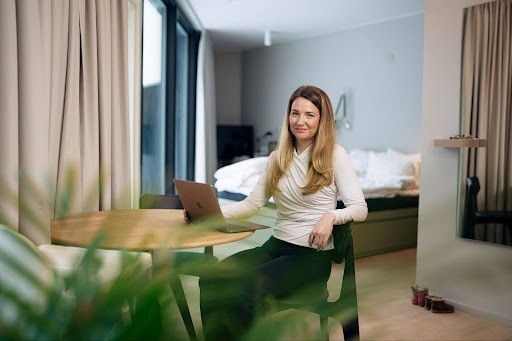
Susanna Nipuli at UNITY in Tampere, photographed by Eino Ansio.

A place that accommodates real life

The apartment was ready from day one. Fully furnished. Calm. Functional.

There was space to cook, do laundry, and live at a normal pace, without turning housing into another project to manage. A dishwasher and washing machine simplified daily routines. The gym was open 24/7. The sauna was just steps away, with the lake close enough for a quick swim when time and weather allowed.

Besides its Tampere location, UNITY operates the same hybrid concept in Helsinki, Stockholm, and Malmö, combining a hotel, coworking space, and serviced apartment under one roof. The model is designed for professionals, families, and teams moving between cities or assignments.

“With work, a child, and two careers, ease matters,” Nipuli says. “You don’t want housing to become something you need to optimize.”

The initial plan was to stay for three months. Then they extended for another three.

What surprised them most was how well the apartment suited family life. It was quiet, child-friendly, and thoughtfully designed for everyday living rather than short stays.

Shared living without intrusion

UNITY is often described as community living, but not in a way that demands participation.

Shared spaces bring together people in similar life phases, even if their reasons for moving in differ. One morning over breakfast, Nipuli spoke with another resident who had temporarily relocated due to a plumbing renovation.

“Different reasons, same need,” she says. 

It’s a low-key form of community. Conversations happen naturally. Recommendations are exchanged. And everyone returns to their own schedules.

When time allows, the family enjoys the neighborhood. Walks by the water, a nearby gym, and the occasional pizza at Mad Finn. When work calls, co-working spaces and meeting rooms are close at hand, making it easy to shift between family life and professional focus without friction.

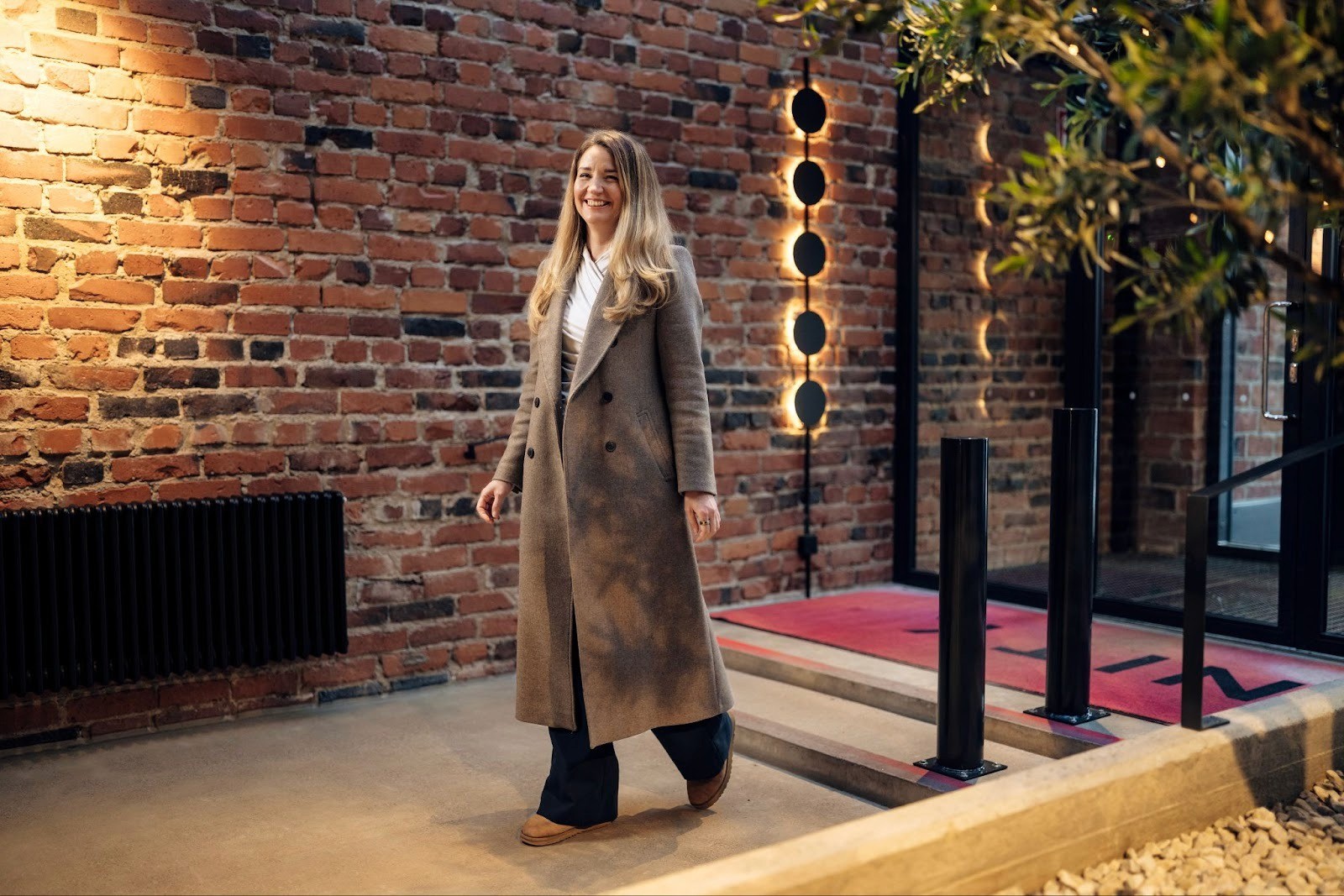
Susanna Nipuli can even schedule meetings at the community space in UNITY. Photographer: Eino Ansio.

Living between chapters

Practical considerations, including cost, naturally play a role, especially when compared to extended hotel stays. But for Nipuli, the real value went beyond numbers.

“It fit this phase of life,” she says. “We didn’t need to decide everything at once. We could focus on work, family, and being present.”

For professionals navigating hybrid work, dual-city careers, or transitional life stages, that balance is becoming essential.

UNITY is not about settling forever, nor about living out of suitcases.

Sometimes, where you live needs to be a temporary solution that still feels like home.
UNITY is designed exactly for that.

UNITY is not for people who have everything figured out. It’s for all of us who are in the middle of it; cities, decisions, chapters, and want a place that feels like home.


|

|

Sponsored

How Business Director Susanna Nipuli made two-city life work with UNITY

How Business Director Susanna Nipuli made two-city life work with UNITY

In partnership with:

·

5 min read

Credit: Susanna Nipuli, photographed by Eino Ansio.

Credit: Susanna Nipuli, photographed by Eino Ansio.

On Monday mornings, Susanna Nipuli wakes up in Heinola with her partner and their one-year-old child. A few hours later, she is in Tampere, stepping into her role as business director at Finland Events and a member of the management team at Tampereen Messut.

By Friday evening, the family returns home again.

Living between two cities was not part of a long-term plan. It was a consequence of careers, timing, and life unfolding faster than traditional housing models allow.

A workable home for modern professional life

At one point, the family explored staying in hotels during the week. Logistically, it worked. In reality, it didn’t.

“Hotels aren’t designed for everyday life, especially not with a small child,” Nipuli explains. “There’s nowhere to settle in, to keep things, to build routines. And financially, it didn’t make sense.”

A long-term lease felt equally misaligned. The work itself was clearly defined, but the family was in transition. Committing to a new permanent address, or another house, felt premature.

What they needed was flexible living that supported real life as it is now, not as it might look in five years.

That was when they moved into UNITY in Tampere.

Susanna Nipuli at UNITY in Tampere, photographed by Eino Ansio.

A place that accommodates real life

The apartment was ready from day one. Fully furnished. Calm. Functional.

There was space to cook, do laundry, and live at a normal pace, without turning housing into another project to manage. A dishwasher and washing machine simplified daily routines. The gym was open 24/7. The sauna was just steps away, with the lake close enough for a quick swim when time and weather allowed.

Besides its Tampere location, UNITY operates the same hybrid concept in Helsinki, Stockholm, and Malmö, combining a hotel, coworking space, and serviced apartment under one roof. The model is designed for professionals, families, and teams moving between cities or assignments.

“With work, a child, and two careers, ease matters,” Nipuli says. “You don’t want housing to become something you need to optimize.”

The initial plan was to stay for three months. Then they extended for another three.

What surprised them most was how well the apartment suited family life. It was quiet, child-friendly, and thoughtfully designed for everyday living rather than short stays.

Shared living without intrusion

UNITY is often described as community living, but not in a way that demands participation.

Shared spaces bring together people in similar life phases, even if their reasons for moving in differ. One morning over breakfast, Nipuli spoke with another resident who had temporarily relocated due to a plumbing renovation.

“Different reasons, same need,” she says. 

It’s a low-key form of community. Conversations happen naturally. Recommendations are exchanged. And everyone returns to their own schedules.

When time allows, the family enjoys the neighborhood. Walks by the water, a nearby gym, and the occasional pizza at Mad Finn. When work calls, co-working spaces and meeting rooms are close at hand, making it easy to shift between family life and professional focus without friction.

Susanna Nipuli can even schedule meetings at the community space in UNITY. Photographer: Eino Ansio.

Living between chapters

Practical considerations, including cost, naturally play a role, especially when compared to extended hotel stays. But for Nipuli, the real value went beyond numbers.

“It fit this phase of life,” she says. “We didn’t need to decide everything at once. We could focus on work, family, and being present.”

For professionals navigating hybrid work, dual-city careers, or transitional life stages, that balance is becoming essential.

UNITY is not about settling forever, nor about living out of suitcases.

Sometimes, where you live needs to be a temporary solution that still feels like home.
UNITY is designed exactly for that.

UNITY is not for people who have everything figured out. It’s for all of us who are in the middle of it; cities, decisions, chapters, and want a place that feels like home.

Board Programme

Built for Nordic listed company boards.

The only programme in the Nordics designed specifically for listed-company board work.
Five sessions, one cohort, twenty leaders in one room - Helsinki, 2026.

Board Programme

Built for Nordic listed company boards.

The only programme in the Nordics designed specifically for listed-company board work.
Five sessions, one cohort, twenty leaders in one room - Helsinki, 2026.

Topics

# Topics

Authors

Listeds Editorial Team — reporting on Finnish listed-company leadership, boards and governance, built on Listeds’ own leadership, ownership and governance data. Nordic coverage expanding.

Listeds Editorial Team — reporting on Finnish listed-company leadership, boards and governance, built on Listeds’ own leadership, ownership and governance data. Nordic coverage expanding.

Authors

Founder and ceo

Listeds Editorial Team — reporting on Finnish listed-company leadership, boards and governance, built on Listeds’ own leadership, ownership and governance data. Nordic coverage expanding.

All Listeds newsletters (bundle)

One sign-up, the full picture.

Get every Listeds newsletter: the daily signal drumbeat, the weekly Pulse briefing, the monthly Best of the Month, the CEO letter, and the Weekend read.

By signing up, you agree to our Privacy Policy

All Listeds newsletters (bundle)

One sign-up, the full picture.

Get every Listeds newsletter: the daily signal drumbeat, the weekly Pulse briefing, the monthly Best of the Month, the CEO letter, and the Weekend read.

By signing up, you agree to our Privacy Policy

Latest signalsLive feed
Moves trackerLive feed

Investor Event

Listeds Investor Event · Defence

Nordic defence is in a once-in-a-generation growth cycle. Eight listed and pre-IPO companies pitch to 100+ invited investors at Valkoinen Sali, Helsinki

21 September 2026

Latest on Listeds

Leadership Moves

Oma Savings Bank CEO Karri Alameri steps down weeks after S-Bank takes 96% control

Oma Savings Bank and CEO Karri Alameri have agreed that he will leave the role on 5 November 2026, with his employment ending on 5 May 2027. Alameri will stand for election to the board, which is starting a process to nominate his successor.

Alameri was hired in 2024 to steady the bank after a turbulent year. 

OmaSp’s board appointed Alameri in September 2024, with a start date no later than 1 April 2025, and Sarianna Liiri served as interim CEO until he took over. He joined from the Savings Banks Group, where he had been CEO since 2022, after earlier management roles at OP Financial Group and Danske Bank.

At the time, Alameri said the news flow around OmaSp had been exceptionally challenging in recent months, and that the aim was to “bring the bank back to a good growth and earnings track”.

The exit follows S-Bank’s takeover of the bank

Bloomberg reported in July that S-Bank had agreed to buy OmaSp for EUR 17.20 a share in cash, valuing its equity at about EUR 571 million and representing a premium of about 47% to the previous day’s closing price. According to the report, OmaSp’s board unanimously recommended the offer, and S-Bank said it aims to delist the bank from Nasdaq Helsinki. 

After settling the offer, S-Bank owned 96.40% of OmaSp’s shares and votes on 7 October. OmaSp now describes itself as part of S-Bank Group.

Bloomberg also reported that S-Bank expected the deal to have no immediate material effect on OmaSp’s operations, employees or branch network, but that it intended to change the board after completion and keep the bank as a subsidiary.

S&P raised its long-term rating on the bank to BBB+ from BBB, calling it a highly strategic subsidiary that would benefit from group support if needed.

The January strategy now sits inside a larger group

In January, the board approved a 2026 to 2029 strategy with targets including comparable return on equity above 14%, a cost-to-income ratio below 50% and annual fee and commission income growth above 10%. The cost-to-income ratio stood at 56.1% in 2025. How much of that plan survives integration into S-Bank is now a question for the new owner.

Alameri leaves with guidance cut

Profit has been under pressure throughout his final year. Comparable profit before taxes fell 34% to EUR 56.9 million in 2025 from EUR 86.7 million, as net interest income dropped 20.9%. In the first half of 2026, comparable profit before taxes held at EUR 23.6 million, but net interest income fell a further 20.7%.

In February, OmaSp expected 2026 profit to decline slightly. On 29 September, it said profit will instead fall significantly, citing a shrinking loan portfolio, slower fee income growth, non-performing loans declining more slowly than expected and costs from the tender offer process.

S-Bank will replace most of the board on the day Alameri steps down

OmaSp has called an extraordinary general meeting for 5 November. S-Bank holds about 96.79% of the shares and votes excluding treasury shares, and has decided to redeem the remaining shares under the Finnish Limited Liability Companies Act.

S-Bank proposes cutting the board to five members from the eight elected at the April AGM. The candidates are S-Bank CEO Riikka Laine-Tolonen, Mika Heikkilä, Jussi Sokka, Karri Alameri and current director Irma Gillberg-Hjelt. Gillberg-Hjelt is the only one independent of both the company and its significant shareholders, while Laine-Tolonen, Heikkilä and Sokka are not independent of a significant shareholder. Regulatory approvals are pending for all five.

The meeting is also set to disband the shareholders’ nomination committee and remove it from the articles of association. S-Bank proposes replacing PwC, which the April AGM elected as auditor and sustainability reporting assurer until the 2027 AGM, with KPMG, which already holds both roles at S-Bank. Board members in full-time employment or a similar relationship with an S-Bank Group company would receive no board remuneration or expense reimbursement 

On 5 November, Alameri is set to move from the CEO office to a five-member board on which three directors are not independent of S-Bank. The search for his successor will run under the bank’s new ownership.

Market Signals

Netum rebuilds its top team for a smaller, sharper business

Netum Group has reorganised into four business areas, added two directors to its management team and set a 10% EBITA margin target for 2029. The structure is coherent. The test is whether a team that has turned over repeatedly since 2025 can hold still long enough to deliver.

Netum Group made three announcements on Monday morning. It put its strategy, its structure and its top team on the table. The Board approved a refined strategy with new targets for 2027 to 2029. It announced a reorganisation into four business areas, with EUR 1.4 to 1.8 million in annual cost savings. It also named the directors who will run them. Taken together, the releases do more than adjust costs. They move accountability into the business areas and add a management seat while headcount falls. They also commit Netum to a 10% EBITA margin by 2029 from a loss-making start. Netum expects 2026 revenue to fall well below the 2025 level of EUR 37.8 million and comparable EBITA to be negative. In the first half, revenue fell 25.5% and EBITA was negative at 2.4% of revenue.  

Netum says its Group Management Team “remains largely unchanged.” By head count that holds, with six of seven current members continuing. From 1 January 2027 at the latest, half of the eight-member team will be business area directors, each accountable for financial performance, personnel and capacity. Two of those four are new to the team, and Mikko Pitkänen, director of Netum Solutions, has resigned. He will not take a management role in the new organisation and will carry out separately agreed duties until his notice period ends.

The centre holds steady while every business area director starts a new role

Chief Executive Repe Harmanen, CFO Peter Ahlskog, HR and Marketing Director Liina Kangas and Sales Director Sami Rantanen keep their roles.

The change sits in delivery. Sebastian Pönkkö takes Core Systems, Integrations & Operations. The appointments have an external-origin that came in through an acquisition.Aapo Cederberg joins the team to lead Cybersecurity, Regulation & Data Protection. He founded and ran Cyberwatch Oy, which Netum bought in April 2026.  Outi Mattila will run Data, Digital & AI; she was previously Business Director of Expert Services at Buutti Oy. Liisa Rusanen will head Education Solutions & Products while continuing as CEO of Studyo Oy. Buutti and Cyberwatch will be integrated operationally into the business areas. Studyo stays a separate legal entity.

The structure is also flatter. No more than two management levels will sit between the CEO and a specialist: the business area director and the team lead, who will also deliver client work. Sales and Group Services become shared functions alongside the four areas, with capacity managed across the group. The model replaces the current split into Solutions, Expert Services and Products.

Each area has a defined job. Data, Digital & AI holds the core of Netum's AI capability. Core Systems covers systems critical to society, along with continuity services. Cybersecurity, which combines Netum's security services with Cyberwatch, is the area the strategy names for growth. Education Solutions & Products is the outlier. Through Studyo and Peppi it earns from subscriptions rather than billable hours, so its profit does not depend on how busy Netum's specialists are. 

Revenue fell EUR 6.2 million in a year. The management layer did not.

The reorganisation release explains the cause directly. Revenue was EUR 44.0 million in 2024 and EUR 37.8 million in 2025. Most of the decline came from three large customer contracts that ended in July 2025 and from weaker demand for subcontracting in specialist services. Netum says its support functions and management were "designed for a substantially larger business." 

The fix is structural rather than incremental, and the cuts follow that diagnosis. Change negotiations cover 40 employees, with 10 to 20 positions expected to go, mainly in shared functions, sales, and management, supervisory and coordination roles. Temporary layoffs are planned from this quarter. Specialists doing client work are not the target. 

Harmanen frames it as a break with the old approach: "This is no longer about an individual cost-saving measure. We are reshaping the entire organisation to align with our strategy." That is a clear break from August, when negotiations covering 30 people targeted about EUR 350,000 in savings. 

The team has turned over almost completely around Harmanen since 2025

Netum’s management team has changed almost completely since Repe Harmanen moved from the Board to the CEO role on 10 January 2025, and seven members have left it, counting Pitkänen. Matti Mujunen retired as CEO. Lauri Stigell followed in April 2025 when he stepped down from his position as CEO of Studyo Oy. Mujunen however continues as an advisor to the Board of Directors. Liisa Rusanen was appointed, transferring from the role of CEO of Codeo Oy. Kimmo Koivisto and Juha-Pekka Leskinen left the team in July 2025, when it was cut from nine members to seven, though both kept their roles. Altti Raali, CEO of the subsidiary Netum Ltd, left with immediate effect in October 2025, and Mikko Koistinen moved to a strategic account role in January 2026. Of the eight members who will run Netum from January, only Liina Kangas, Sami Rantanen and Peter Ahlskog have sat on the team before 2025. Three of them, Harmanen, Mattila and Rusanen, have been on it for less than a year.

Pitkänen’s exit is the one to read closely. He was appointed in September 2025 to simplify the Netum Ltd business area and “build a strong foundation for profitable growth.” Until the end of his notice period, he will carry out separately agreed duties until his notice period ends. The unit he led, Netum Solutions, went through change negotiations twice: in December 2025, involving 223 people and again in August 2026. The outcome of the December round, announced in February 2026, was two dismissals, 26 lay-offs and material changes to the employment terms of two people. Its operations are now divided among the other business areas. 

The structure fits the business, but the team now has to stay in place

Recent contracts map onto the new areas: integration work for the cities of Turku and Järvenpää, and security testing for Statistics Finland. The risk is the record above. In August, Netum said its previous change negotiations had raised employee turnover more than expected and reduced delivery capacity. The new round covers 40 people just as utilisation needs to rise. A management seat added in a company that has gone from 394 employees to 308 pays off only if the business area directors run their areas as owners of results, not as another layer of coordination.

The third-quarter review in early November will show whether the second-half recovery has started. The end of the change negotiations will settle where savings land within the EUR 1.4 to 1.8 million range. The year 2027, the first full year under the new structure, will be the first real test of the path to a 10% margin. 

Join our Pulse, Best-of-the-Week, and Weekend newsletters

Join our Pulse, Best-of-the-Week, and Weekend newsletters