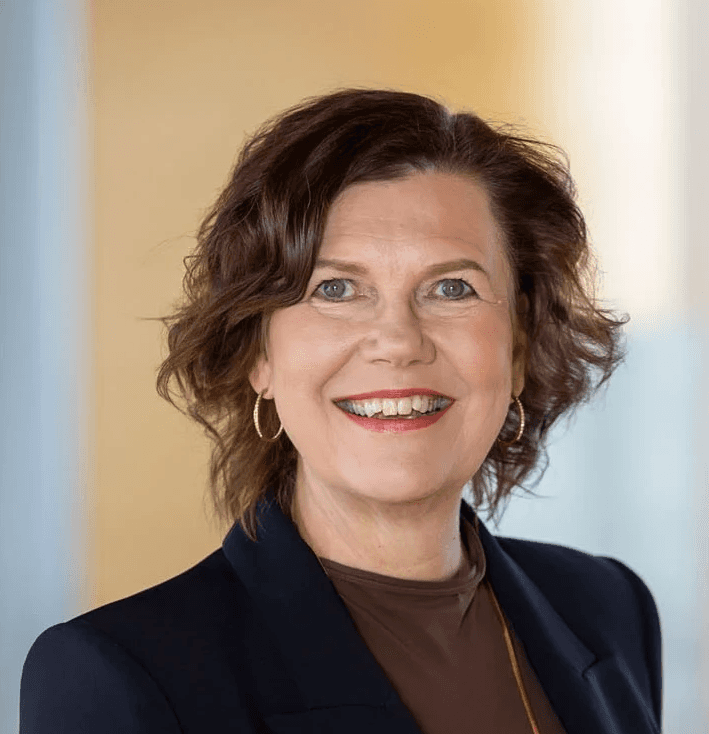
Joakim Achrén had done most of the things founders aim for.

He built a mobile games company and exited to Netflix. He spent years as a VC. And still, there was one problem he hadn’t been able to solve: sleep.

That is what eventually led him to write Sleep Again (April, 2026), an attempt to understand what’s really going on beneath the surface for high-performing people who can’t switch off.

The problem isn’t stress. It’s stimulation.

For a long time, Achrén assumed his sleep issues were stress-related. That made sense during his burnout in 2019.

But what confused him was what came after recovery. The work wasn’t heavy anymore. If anything, it was the opposite. He wasn’t under pressure. He was enjoying it. And yet, the sleep didn’t improve.

At some point, that contradiction forced a different conclusion: “The job was fun. I wasn’t worrying. And I still slept badly.”

It wasn’t stress keeping him awake. It was something harder to switch off. “My nervous system cannot quiet for the night.” And the more engaging the work became, the clearer that pattern got: “It is so much fun that it becomes the problem.”

There’s a biological reason for this. In Sleep Again, Achrén describes how the body is designed to shift out of alert mode in the evening. Cortisol drops, melatonin rises, and the system prepares for recovery. But if you stay mentally active too late, that transition doesn’t happen. The body stays in “on” mode. Once that pattern repeats, the system stops resetting properly, even if you’re technically getting enough hours.

There’s another layer. Sleep isn’t just rest. It’s processing. Sleep researchers describe it as a form of “emotional metabolism.” During REM sleep, the brain processes unresolved thoughts and tensions from the day. Without that, the system never fully resets, as Achrén painfully found out. 

Modern work makes this harder. In the 1970s, around 10–15% of adults reported insomnia. Today, it’s closer to 30%, the book shows. Constant stimulation, global work hours, and always-on expectations have made recovery more fragile.

Why high performers break their own sleep

Like many founders, Achrén approached the problem of sleep with data. He tracked it, measured it, and looked for patterns. At first, it helped. Then it became something else.

“I was looking at streaks. Consecutive nights of above seven hours.” What started as awareness turned into a game that felt obsessive. “That’s a compulsion loop that is not good.”

In Sleep Again, Achrén describes orthosomnia, the fear of not sleeping well. For him, it was reinforced by exposure to content like Andrew Huberman’s, which links poor sleep to Alzheimer’s and cognitive decline, a fear he describes as one of his biggest triggers. Sleep started to feel less like rest and more like risk management, turning it into something he had to get right, which made switching off harder.

The shift: from control to understanding

The breakthrough didn’t come from a better routine. It came after trying the obvious fixes and realizing they weren’t working.

At one point, Achrén experimented with melatonin. “It was like a poison for me. I felt like I didn’t sleep at all.” That forced a deeper question: what is actually causing this? Because the pattern wasn’t random.

When he looked closer, bad nights weren’t just about long days or late screens. They were tied to what carried over from the day. Sometimes anxiety. Often the opposite. “I’m just too excited about something that I’m doing… I can’t stop thinking about it.”

That shifted the focus. Instead of fixing sleep directly, he started looking at inputs. What he was working on. How stimulating it was. Whether his mind had any chance to slow down. Eventually, he created a detailed wind-down routine to calm his racing mind.

Another realization came from something more basic: when he actually worked best. For years, Achrén tried to follow the standard early-founder routine. It never quite fit. 

In Sleep Again, he describes discovering he’s a late chronotype — and how a simple 90-minute shift in his sleep-wake cycle improved both sleep and mental clarity.

What actually helps (according to Achrén)

During the interview, Achrén shared a few pieces of advice for bad sleepers, and Listeds compiled the list below:

1. Track trends, not nights

“It’s more important to follow the trend.”
Use data to understand direction, not judge daily results.

2. Don’t gamify recovery

Once sleep becomes a score, it introduces pressure.

3. Focus on what you do, not just the screen

“Reading a book is very different from scrolling social media.”
It’s about stimulation, not devices.

4. Create a clear shutdown signal

End the day intentionally. Journaling, writing down tomorrow’s tasks, or switching to low-stimulus activities signals the system to power down.

5. Slow down on purpose

“I try to do everything at 0.5x speed in the evening.”
A direct way to shift out of active mode.

6. Anchor your wake-up time

“The timer starts at the same time every morning.”
Consistency in waking matters more than going to be at the right time.

7. Reduce evening intensity

Your brain doesn’t distinguish much between stress and excitement.

The real takeaway

Busy people with poor sleep often assume their biggest constraint is time. But Achrén’s experience points somewhere else.

The real constraint is your ability to switch off. Because if the work is engaging enough, it won’t happen on its own. At some point, the tradeoff becomes visible: “You have to decide: do you sleep better, or do you live this exciting entrepreneur life?”

For a long time, that tension creates pressure — the feeling that sleep is something you need to fix. What changed for Achrén wasn’t eliminating the tradeoff, but understanding it.

“It’s better to be informed and make the decision to sleep badly than not have any information and have anxiety about it.”

And with that shift, something unexpected disappeared:

“When you know what’s going on, the pressure goes away.”

|

Weekend

Founder and VC Joakim Achrén: When work became the sleep problem, and why he wrote Sleep Again

Founder and VC Joakim Achrén: When work became the sleep problem, and why he wrote Sleep Again

·

5 min read

Credit: Joakim Achrén

Credit: Joakim Achrén

Joakim Achrén had done most of the things founders aim for.

He built a mobile games company and exited to Netflix. He spent years as a VC. And still, there was one problem he hadn’t been able to solve: sleep.

That is what eventually led him to write Sleep Again (April, 2026), an attempt to understand what’s really going on beneath the surface for high-performing people who can’t switch off.

The problem isn’t stress. It’s stimulation.

For a long time, Achrén assumed his sleep issues were stress-related. That made sense during his burnout in 2019.

But what confused him was what came after recovery. The work wasn’t heavy anymore. If anything, it was the opposite. He wasn’t under pressure. He was enjoying it. And yet, the sleep didn’t improve.

At some point, that contradiction forced a different conclusion: “The job was fun. I wasn’t worrying. And I still slept badly.”

It wasn’t stress keeping him awake. It was something harder to switch off. “My nervous system cannot quiet for the night.” And the more engaging the work became, the clearer that pattern got: “It is so much fun that it becomes the problem.”

There’s a biological reason for this. In Sleep Again, Achrén describes how the body is designed to shift out of alert mode in the evening. Cortisol drops, melatonin rises, and the system prepares for recovery. But if you stay mentally active too late, that transition doesn’t happen. The body stays in “on” mode. Once that pattern repeats, the system stops resetting properly, even if you’re technically getting enough hours.

There’s another layer. Sleep isn’t just rest. It’s processing. Sleep researchers describe it as a form of “emotional metabolism.” During REM sleep, the brain processes unresolved thoughts and tensions from the day. Without that, the system never fully resets, as Achrén painfully found out. 

Modern work makes this harder. In the 1970s, around 10–15% of adults reported insomnia. Today, it’s closer to 30%, the book shows. Constant stimulation, global work hours, and always-on expectations have made recovery more fragile.

Why high performers break their own sleep

Like many founders, Achrén approached the problem of sleep with data. He tracked it, measured it, and looked for patterns. At first, it helped. Then it became something else.

“I was looking at streaks. Consecutive nights of above seven hours.” What started as awareness turned into a game that felt obsessive. “That’s a compulsion loop that is not good.”

In Sleep Again, Achrén describes orthosomnia, the fear of not sleeping well. For him, it was reinforced by exposure to content like Andrew Huberman’s, which links poor sleep to Alzheimer’s and cognitive decline, a fear he describes as one of his biggest triggers. Sleep started to feel less like rest and more like risk management, turning it into something he had to get right, which made switching off harder.

The shift: from control to understanding

The breakthrough didn’t come from a better routine. It came after trying the obvious fixes and realizing they weren’t working.

At one point, Achrén experimented with melatonin. “It was like a poison for me. I felt like I didn’t sleep at all.” That forced a deeper question: what is actually causing this? Because the pattern wasn’t random.

When he looked closer, bad nights weren’t just about long days or late screens. They were tied to what carried over from the day. Sometimes anxiety. Often the opposite. “I’m just too excited about something that I’m doing… I can’t stop thinking about it.”

That shifted the focus. Instead of fixing sleep directly, he started looking at inputs. What he was working on. How stimulating it was. Whether his mind had any chance to slow down. Eventually, he created a detailed wind-down routine to calm his racing mind.

Another realization came from something more basic: when he actually worked best. For years, Achrén tried to follow the standard early-founder routine. It never quite fit. 

In Sleep Again, he describes discovering he’s a late chronotype — and how a simple 90-minute shift in his sleep-wake cycle improved both sleep and mental clarity.

Our Pulse newsletter

Your weekly leadership intelligence briefing.

What happened, why it matters, and what to watch across every CEO, board, and executive move in Nordic listed companies, starting with Finland. Fast, factual, and to the point.

Delivered every Monday.

By signing up, you agree to our Privacy Policy

Our Pulse newsletter

Your weekly leadership intelligence briefing.

What happened, why it matters, and what to watch across every CEO, board, and executive move in Nordic listed companies, starting with Finland. Fast, factual, and to the point.

Delivered every Monday.

By signing up, you agree to our Privacy Policy

What actually helps (according to Achrén)

During the interview, Achrén shared a few pieces of advice for bad sleepers, and Listeds compiled the list below:

1. Track trends, not nights

“It’s more important to follow the trend.”
Use data to understand direction, not judge daily results.

2. Don’t gamify recovery

Once sleep becomes a score, it introduces pressure.

3. Focus on what you do, not just the screen

“Reading a book is very different from scrolling social media.”
It’s about stimulation, not devices.

4. Create a clear shutdown signal

End the day intentionally. Journaling, writing down tomorrow’s tasks, or switching to low-stimulus activities signals the system to power down.

5. Slow down on purpose

“I try to do everything at 0.5x speed in the evening.”
A direct way to shift out of active mode.

6. Anchor your wake-up time

“The timer starts at the same time every morning.”
Consistency in waking matters more than going to be at the right time.

7. Reduce evening intensity

Your brain doesn’t distinguish much between stress and excitement.

The real takeaway

Busy people with poor sleep often assume their biggest constraint is time. But Achrén’s experience points somewhere else.

The real constraint is your ability to switch off. Because if the work is engaging enough, it won’t happen on its own. At some point, the tradeoff becomes visible: “You have to decide: do you sleep better, or do you live this exciting entrepreneur life?”

For a long time, that tension creates pressure — the feeling that sleep is something you need to fix. What changed for Achrén wasn’t eliminating the tradeoff, but understanding it.

“It’s better to be informed and make the decision to sleep badly than not have any information and have anxiety about it.”

And with that shift, something unexpected disappeared:

“When you know what’s going on, the pressure goes away.”
Board Programme

Built for Nordic listed company boards.

The only programme in the Nordics designed specifically for listed-company board work.
Five sessions, one cohort, twenty leaders in one room - Helsinki, 2026.

Board Programme

Built for Nordic listed company boards.

The only programme in the Nordics designed specifically for listed-company board work.
Five sessions, one cohort, twenty leaders in one room - Helsinki, 2026.

Authors

Emmi Laine is head of business content at Listeds and our lead for finance and business coverage. She sets the editorial agenda, interviews Nordic business leaders, and writes stories, newsletters, and social content on timely market and corporate topics. Emmi brings nearly eight years of experience from Shanghai's Yicai Global / Yicai Media Group, where she was awarded for reporting on China’s economy, finance sector, and technology innovation. She holds an MSc in Innovation and Entrepreneurship from ESADE Business School in Barcelona and a Master’s degree in International Design Business Management from Aalto University. She also holds a Bachelor’s degree in Culture Studies with a major in Journalism from Stockholm University and has studied Mandarin Chinese and Chinese culture. Emmi is a Finnish citizen and has lived in Finland, Sweden, China, and Portugal.

Emmi Laine is head of business content at Listeds and our lead for finance and business coverage. She sets the editorial agenda, interviews Nordic business leaders, and writes stories, newsletters, and social content on timely market and corporate topics. Emmi brings nearly eight years of experience from Shanghai's Yicai Global / Yicai Media Group, where she was awarded for reporting on China’s economy, finance sector, and technology innovation. She holds an MSc in Innovation and Entrepreneurship from ESADE Business School in Barcelona and a Master’s degree in International Design Business Management from Aalto University. She also holds a Bachelor’s degree in Culture Studies with a major in Journalism from Stockholm University and has studied Mandarin Chinese and Chinese culture. Emmi is a Finnish citizen and has lived in Finland, Sweden, China, and Portugal.

Authors

Journalist

Emmi Laine is head of business content at Listeds and our lead for finance and business coverage. She sets the editorial agenda, interviews Nordic business leaders, and writes stories, newsletters, and social content on timely market and corporate topics. Emmi brings nearly eight years of experience from Shanghai's Yicai Global / Yicai Media Group, where she was awarded for reporting on China’s economy, finance sector, and technology innovation. She holds an MSc in Innovation and Entrepreneurship from ESADE Business School in Barcelona and a Master’s degree in International Design Business Management from Aalto University. She also holds a Bachelor’s degree in Culture Studies with a major in Journalism from Stockholm University and has studied Mandarin Chinese and Chinese culture. Emmi is a Finnish citizen and has lived in Finland, Sweden, China, and Portugal.

Our Weekend newsletter

Slow down. Breathe. Live.

A curated weekend read, mixing Nordic lifestyle, culture, wellbeing, and inspiration. The counterbalance to your business week.

Delivered one Saturday a month.

By signing up, you agree to our Privacy Policy

Our Weekend newsletter

Slow down. Breathe. Live.

A curated weekend read, mixing Nordic lifestyle, culture, wellbeing, and inspiration. The counterbalance to your business week.

Delivered one Saturday a month.

By signing up, you agree to our Privacy Policy

Latest signalsLive feed
Moves trackerLive feed

Investor Event

Listeds Investor Event · Defence

Nordic defence is in a once-in-a-generation growth cycle. Eight listed and pre-IPO companies pitch to 100+ invited investors at Valkoinen Sali, Helsinki

21 September 2026

Latest on Listeds

Insider interviews

A new item for the board agenda: seven in ten are investing, three in ten are in control

Sep 30, 2026

Digital sovereignty is moving off the IT compliance list and onto the board's risk agenda. Vivicta's Nordic Digital Sovereignty Survey 2026, published on 22 September, finds that seven in ten organisations expect to increase their sovereignty investment over the next twelve months, while fewer than three in ten are confident they control their critical data.

Not long ago, the CIO of a large Swedish company told Vivicta's CEO Satu Kiiskinen what his single highest priority was. It was knowing where the company's business-critical data actually sits. He knew a moment would come when the executive team and the board would ask him that question, and he wanted the answer ready.

The question stopped being technical

Digital sovereignty means an organisation's ability to retain control and decision-making authority over its critical data, systems and operational continuity, including when the operating environment changes.

The definition might sound like an IT matter. According to Kiiskinen, that is precisely the problem. In executive teams and boardrooms the subject is still treated too often as a compliance and technology question. Her own view is different: this is first and foremost about business continuity, risk management and the capacity to keep operating when conditions shift.

“It’s clear that sovereignty has become an increasingly important priority in the current geopolitical environment. Digital sovereignty has become a leadership priority linked to business continuity and risk management, and it’s no longer seen as just a compliance issue”
Satu Kiiskinen
Satu KiiskinenCEO, Vivicta

The gap is not in the budget

The survey, run by Vivicta in collaboration with the research company Kairos Future, drew 320 senior decision-makers and key advisers in Finland, Sweden and Norway between June and July 2026. All worked in organisations employing more than 500 people.

The findings describe a subject that is recognised but not yet governed:

  • 70 per cent expect sovereignty-related investment to increase over the next 12 months.

  • 46 per cent have a formal, explicit sovereignty strategy.

  • 29 per cent strongly believe they control their critical data to a sufficient standard.

This, Kiiskinen says, is the most interesting result in the dataset. The subject is recognised, it is discussed, and organisations are willing to put money behind it. The capability still does not match the ambition. A gap has opened between intent and execution.

For a board, that is a familiar situation in unfamiliar clothing: an investment decision is coming up on a matter that too often has no strategy, no named owner and no metric.

Finland invests most. Sweden is further ahead on strategy.

Seventy-four per cent of Finnish organisations plan to increase investment, more than in Norway (69 per cent) or Sweden (68 per cent). On strategy the order reverses: a formal sovereignty strategy exists at 53 per cent of Swedish organisations, 44 per cent of Finnish ones and 39 per cent of Norwegian ones.

On control of critical data, Finland leads the comparison at 35 per cent, with Sweden and Norway at 26 per cent. Finland is ahead of its Nordic peers, and still only one Finnish organisation in three strongly believes it has sufficient control of its critical data.

Sweden, Kiiskinen notes, put sovereignty on the table some time ago. The CIO in the opening example represents that stage: the question is no longer whether the subject matters, but whether the organisation can answer when asked.

The opportunity is competitiveness.

Kiiskinen does not frame the subject as a threat. She sees it primarily as an opportunity to strengthen an organisation's resilience and competitiveness, and, ultimately, shareholder value.

Artificial intelligence connects to this directly. When the AI conversation runs hot and business benefits are wanted quickly, control of data determines whether AI can be adopted in a governed way, with risks identified in advance rather than reconstructed afterwards. Twenty-seven per cent of respondents rank AI, data use and control of decision-making among their most important sovereignty priorities. Seventeen per cent see AI as a new obstacle to data control.

On the risk side, Kiiskinen names one above the others: excessive dependency on individual providers.

Respondents agree. Dependency on external service providers tops the entire list of obstacles at 28 per cent. Cost and the complexity of an organisation's own environment follow at 23 per cent each, vendor lock-in at 16 per cent, and the absence of a strategy, owner or governance model at 14 per cent.

Dependency is rarely anyone's decision. It accumulates. Each individual choice was defensible at the time, and the result is a structure no one designed. It becomes visible only when something has to change quickly.

Full control is not the goal

Kiiskinen is careful not to overstate what the survey shows.

Complete sovereignty across every system is neither realistic nor the point, Kiiskinen says. What matters is distinguishing what is business-critical from what is not. The organisations that find a sensible balance are the ones that find resilience when conditions change

The data supports her. Only 8 per cent of respondents consider standard or global cloud sufficient for all critical workloads, and exactly the same share require full national sovereignty with elevated security. Everyone else sits somewhere in between. Seventeen per cent have not assessed the question at all.

“Ultimately, sovereignty is about freedom of action: the ability to remain in control when technology, suppliers or circumstances change. Organisations that find the right balance will be better positioned to innovate, grow and manage risk simultaneously”
Satu Kiiskinen
Satu KiiskinenCEO, Vivicta

What the board should ask

Kiiskinen does not present this as an easy topic for a board. The natural route onto the agenda, she says, runs through the audit committee, as part of risk management and business continuity. That does not mean it stays there. The whole board needs to take an interest.

Five questions a board can put to management at its next meeting:

  1. Do we share a view of which data is business-critical to us?

  2. Which systems are business-critical, and do we understand the difference between the two?

  3. Where does our business-critical data actually reside, and how is it governed?

  4. Who has access to it?

  5. To what extent are our data, systems and decision-making genuinely under our own control, and which part of our preparedness is an assumption rather than something tested?

None of these requires technical expertise to ask. On the evidence of this survey, many organisations would struggle to answer them.

Which leaves one question on the table, and it belongs to the board rather than to IT: are boards challenging management hard enough, before the next disruption reveals the real state of their readiness?

Market Signals

Finnish consumers see the national recovery, but not yet in their own finances

Sep 29, 2026

Consumer confidence in Finland slipped in September, ending a three-month climb from April's low. Beneath the headline figure, a sharper pattern is forming. Households now rate Finland's prospects at their long-term average, while their view of their own past year remains well below pre-2022 levels, and the lowest earners are still losing purchasing power.

The consumer confidence indicator stood at 4.9 below zero in September, down from 3.0 below zero in August. August had been the strongest reading since February 2022. The long-term average since 1995 is 2.9 below zero. The indicator has now been below zero for 55 consecutive months, every month since March 2022. 

The rebound itself was fast. In April the indicator sat at 12.5 below zero, and by August it had recovered 9.5 points. September's dip is small, and one month does not make a reversal. What matters more is which parts of the survey carried the recovery, and which did not.

Consumer confidence indicator (CCI, A1)

2016M09–2026M09

Balance figure
-20-10010202017201820192020202120222023202420252026
Source: Statistics Finland, consumer confidence
Updated: 28/09/2026

The national outlook has recovered 18 points since April, the household view far less

Most of the improvement since April's low has come from how consumers see Finland. The national outlook accounts for about 60 per cent of the indicator's 7.6-point rise. Consumers' view of their own past year has moved far less.

Expectations for Finland's economy over the next 12 months improved from a balance of 23.2 below zero in April to 4.7 below zero in September, which is on its long-term average level. Between March 2022 and August 2026, the same measure averaged 16.9 below zero.

Households' assessment of their own finances tells a different story. The balance for own economy now stood at 1.9 below zero in September, against an average of 4.9 above zero in the five and a half years before March 2022. Expectations for one's own economy in 12 months fell to 5.8 from 8.1 in August, short of the pre-2022 average of 9.8. Twenty-eight per cent of consumers said their finances were worse than a year earlier, while 25 per cent said better.

Consumers' views concerning their own and Finland's economy

2016M09–2026M09

Balance figure
-40-20020402017201820192020202120222023202420252026
Source: Statistics Finland, consumer confidence
Updated: 28/09/2026

The gap follows income, not prices

Labour Institute for Economic Research Labore estimates that purchasing power in the bottom income decile will decline by 3.5 per cent this year, while the top decile gains 2.2 per cent. Between 2023 and 2026, the difference in purchasing power growth between the two groups will exceed 16 percentage points, with renters and single parents facing the weakest outlook. Senior researcher Milla Nyyssölä attributes the split to "different income trajectories" rather than prices.

Labore describes this as unusual by historical standards. Even in the growth years after Finland's 1990s recession, when income growth varied widely between groups, purchasing power in the lowest decile did not fall.

The confidence survey shows the same fault line. Upper-level salaried employees posted a confidence reading of 1.1 above zero in September, while the unemployed stood at 13.1 below zero and pensioners at 11.5 below zero. Greater Helsinki recorded 2.4 below zero and Eastern Finland 10.7 below zero. Women's reading of 7.4 below zero remained well under men's 2.4 below zero.

Job security is part of the explanation. Among employed consumers, 27 per cent felt their personal risk of unemployment or lay-off had increased, and only 5 per cent felt it had lessened (Statistics Finland). Price pressure has not eased either: consumers estimated inflation at 4.9 per cent over the past year and expect 4.1 per cent over the next.

Durable spending sentiment has been negative for 55 months, yet car and loan plans run above usual

The balance for whether now is a good time to buy durable goods stood at 13.0 below zero in September. It has been below zero every month since March 2022, after averaging 19.2 above zero in the preceding five and a half years. Only 15 per cent of consumers considered the time favourable for expensive purchases, and 37 per cent planned to cut spending on durables over the next year, against 13 per cent planning to increase it.

The exception is big-ticket purchases. Seventeen per cent of consumers were definitely or possibly planning to buy a car within 12 months, and 19 per cent planned to take out a loan, both clearly more than usual according to Statistics Finland . The published figures do not show which households hold those plans. One reading fits Labore's data: the top income decile is gaining purchasing power this year, and those households are best placed to finance a car. The other is that some borrowing plans reflect strain rather than confidence. The data cannot yet separate the two. 

Consumers' intentions to spend money on durable goods

2016M09–2026M09

Balance figure
-40-20020402017201820192020202120222023202420252026
Source: Statistics Finland, consumer confidence
Updated: 28/09/2026

For consumer-facing companies on Nasdaq Helsinki, that uncertainty is itself the finding. September's survey describes a recovery in expectations, not yet in household income, and it is arriving at different speeds for different customers. The signal to watch is whether consumers' view of their own past year starts to follow the national outlook. Until it does, plans built on the Finnish average will be calibrated to sentiment rather than spending power.

Our Pulse newsletter

Your weekly leadership intelligence briefing.

What happened, why it matters, and what to watch across every CEO, board, and executive move in Nordic listed companies, starting with Finland. Fast, factual, and to the point.

Delivered every Monday.

By signing up, you agree to our Privacy Policy

Join our Pulse, Best-of-the-Week, and Weekend newsletters

Join our Pulse, Best-of-the-Week, and Weekend newsletters