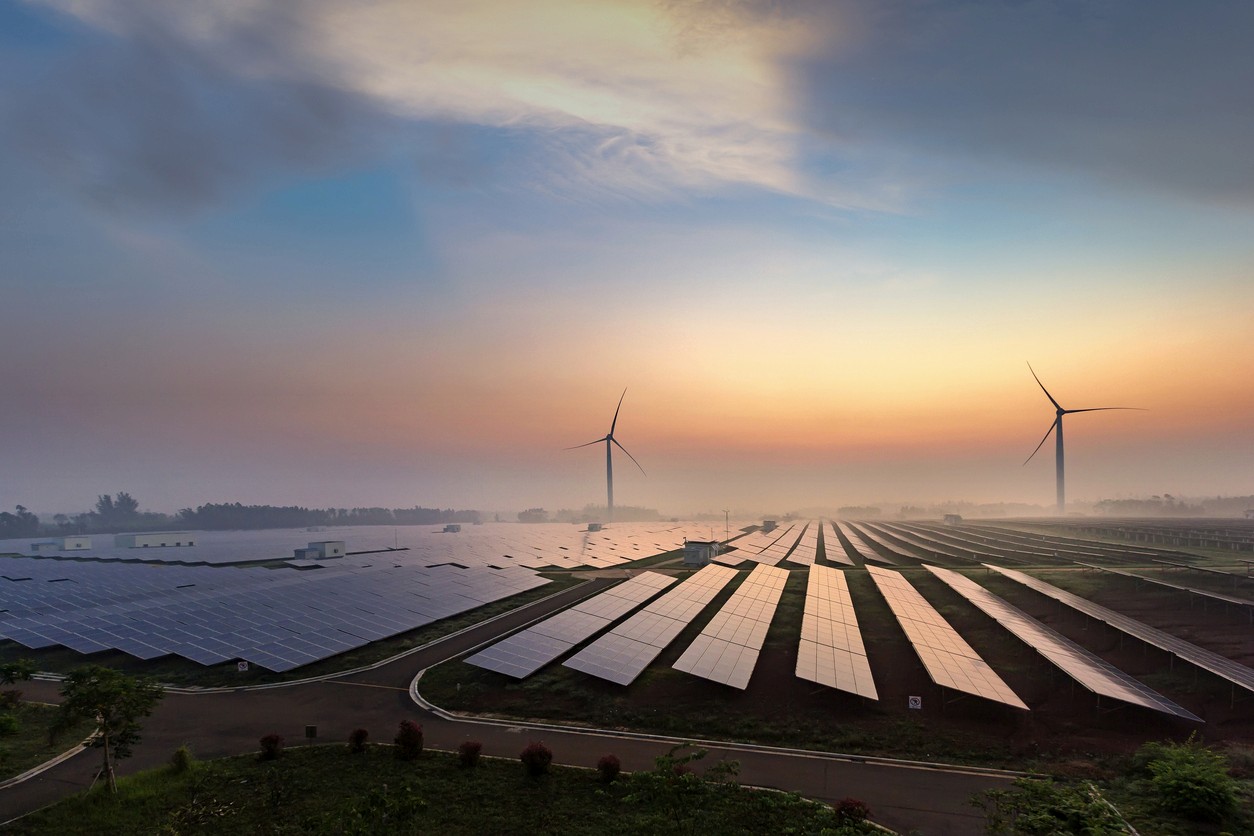
Dovre Group’s long-running troubles in renewable construction crystallized today. The board of Suvic Oy, the primary execution unit for Dovre’s core business of renewable energy, has filed for bankruptcy, after a sequence of losses, disputes, and terminated projects finally closed off room for maneuver.

The bankruptcy petition was filed with the Oulu District Court on 2 January, based on Dovre’s release on the same day. Chairman Kalervo Rötsä said that the business of Dovre and its other subsidiaries, Proha, Renetec, and the business unit eSite, will continue as usual.

A single subsidiary becomes systemic risk

Solar and wind farm builder Suvic has been the operational backbone of Dovre’s renewable energy segment, responsible for large-scale solar and wind construction projects in Finland and Sweden. In the first three quarters of this year, Dovre earned almost all of its income from this segment. Over the past year, it also became the group’s main source of financial risk.

Before the final step, pressure had been building. In December, Suvic lost a district court case related to a wind farm earthworks and cabling contract, according to Dovre’s release. The ruling required Suvic to pay roughly EUR 3.2 million in instalments, damages, and legal costs. Dovre had already recognized a EUR 3.5 million provision tied to dispute risks in its October profit warning.

On Friday morning, the pressure intensified further when Alight Ukko Oy terminated Suvic’s Eurajoki solar park construction contract, removing a key revenue stream just moments after the bankruptcy filing.

Guarantees move to center stage

The immediate concern for investors is no longer Suvic’s operations but Dovre’s guarantees. The parent company estimates that joint and several guarantees linked to Suvic total around EUR 63 million, with an additional EUR 26 million in counter guarantees to financial institutions.

Dovre says negotiations on these arrangements are ongoing and will be reported separately. Crucially, the parent company has stopped financing Suvic, drawing a legal and financial line between the two.

This matters because Dovre already warned in October that, without new financing or project revenue, it would struggle to meet payment obligations in early 2026. The bankruptcy of the revenue-generating unit further aggravates an already fragile situation.

Management changes and late transparency

The collapse did not come out of nowhere. In its Q3 trading statement, Dovre acknowledged that financial transparency at Suvic had been insufficient, with underestimated project costs and weak project management only becoming fully visible during last summer.

“The root causes of the weak financial performance have been identified as underestimated project costs, inadequate project management capabilities, and insufficient forward-looking reporting practices,” the company said at the time.

Management turnover followed. Acting CEO Sanna Outa-Ollila resigned in November, and interim CFO Timo Saarinen stepped in as acting CEO, combining both roles at a time when liquidity risks were intensifying.

Shareholders face dilution risk

An extraordinary general meeting on 23 January will ask shareholders to authorize the board to issue up to 400 million new shares, with a significant portion potentially issued without payment. The stated aims include strengthening the capital structure, reducing guarantee liabilities, and improving liquidity.

In practice, this signals that equity dilution is now a realistic scenario, not a remote contingency.

For Dovre, the coming weeks will be about survival rather than strategy. The Suvic bankruptcy simplifies the structure, but it does not end the reckoning. That will depend on how much of the guarantee exposure ultimately lands back on the parent, and whether investors are willing to fund the next chapter.

Trading in Dovre’s shares has been suspended since 30 December. The stock has fallen by more than 70 percent over the past 12 months.


|

|

Business

Dovre’s renewable bet hits a hard stop as Suvic heads to bankruptcy

Dovre’s renewable bet hits a hard stop as Suvic heads to bankruptcy

·

5 min read

Explore and follow profiles from this article to get timely updates:

Dovre Group’s long-running troubles in renewable construction crystallized today. The board of Suvic Oy, the primary execution unit for Dovre’s core business of renewable energy, has filed for bankruptcy, after a sequence of losses, disputes, and terminated projects finally closed off room for maneuver.

The bankruptcy petition was filed with the Oulu District Court on 2 January, based on Dovre’s release on the same day. Chairman Kalervo Rötsä said that the business of Dovre and its other subsidiaries, Proha, Renetec, and the business unit eSite, will continue as usual.

A single subsidiary becomes systemic risk

Solar and wind farm builder Suvic has been the operational backbone of Dovre’s renewable energy segment, responsible for large-scale solar and wind construction projects in Finland and Sweden. In the first three quarters of this year, Dovre earned almost all of its income from this segment. Over the past year, it also became the group’s main source of financial risk.

Before the final step, pressure had been building. In December, Suvic lost a district court case related to a wind farm earthworks and cabling contract, according to Dovre’s release. The ruling required Suvic to pay roughly EUR 3.2 million in instalments, damages, and legal costs. Dovre had already recognized a EUR 3.5 million provision tied to dispute risks in its October profit warning.

On Friday morning, the pressure intensified further when Alight Ukko Oy terminated Suvic’s Eurajoki solar park construction contract, removing a key revenue stream just moments after the bankruptcy filing.

Guarantees move to center stage

The immediate concern for investors is no longer Suvic’s operations but Dovre’s guarantees. The parent company estimates that joint and several guarantees linked to Suvic total around EUR 63 million, with an additional EUR 26 million in counter guarantees to financial institutions.

Dovre says negotiations on these arrangements are ongoing and will be reported separately. Crucially, the parent company has stopped financing Suvic, drawing a legal and financial line between the two.

This matters because Dovre already warned in October that, without new financing or project revenue, it would struggle to meet payment obligations in early 2026. The bankruptcy of the revenue-generating unit further aggravates an already fragile situation.

Management changes and late transparency

The collapse did not come out of nowhere. In its Q3 trading statement, Dovre acknowledged that financial transparency at Suvic had been insufficient, with underestimated project costs and weak project management only becoming fully visible during last summer.

“The root causes of the weak financial performance have been identified as underestimated project costs, inadequate project management capabilities, and insufficient forward-looking reporting practices,” the company said at the time.

Management turnover followed. Acting CEO Sanna Outa-Ollila resigned in November, and interim CFO Timo Saarinen stepped in as acting CEO, combining both roles at a time when liquidity risks were intensifying.

Shareholders face dilution risk

An extraordinary general meeting on 23 January will ask shareholders to authorize the board to issue up to 400 million new shares, with a significant portion potentially issued without payment. The stated aims include strengthening the capital structure, reducing guarantee liabilities, and improving liquidity.

In practice, this signals that equity dilution is now a realistic scenario, not a remote contingency.

For Dovre, the coming weeks will be about survival rather than strategy. The Suvic bankruptcy simplifies the structure, but it does not end the reckoning. That will depend on how much of the guarantee exposure ultimately lands back on the parent, and whether investors are willing to fund the next chapter.

Trading in Dovre’s shares has been suspended since 30 December. The stock has fallen by more than 70 percent over the past 12 months.



Board Programme

Built for Nordic listed company boards.

The only programme in the Nordics designed specifically for listed-company board work.
Five sessions, one cohort, twenty leaders in one room - Helsinki, 2026.

Board Programme

Built for Nordic listed company boards.

The only programme in the Nordics designed specifically for listed-company board work.
Five sessions, one cohort, twenty leaders in one room - Helsinki, 2026.

Topics

# Topics

Authors

Emmi Laine is head of business content at Listeds and our lead for finance and business coverage. She sets the editorial agenda, interviews Nordic business leaders, and writes stories, newsletters, and social content on timely market and corporate topics. Emmi brings nearly eight years of experience from Shanghai's Yicai Global / Yicai Media Group, where she was awarded for reporting on China’s economy, finance sector, and technology innovation. She holds an MSc in Innovation and Entrepreneurship from ESADE Business School in Barcelona and a Master’s degree in International Design Business Management from Aalto University. She also holds a Bachelor’s degree in Culture Studies with a major in Journalism from Stockholm University and has studied Mandarin Chinese and Chinese culture. Emmi is a Finnish citizen and has lived in Finland, Sweden, China, and Portugal.

Emmi Laine is head of business content at Listeds and our lead for finance and business coverage. She sets the editorial agenda, interviews Nordic business leaders, and writes stories, newsletters, and social content on timely market and corporate topics. Emmi brings nearly eight years of experience from Shanghai's Yicai Global / Yicai Media Group, where she was awarded for reporting on China’s economy, finance sector, and technology innovation. She holds an MSc in Innovation and Entrepreneurship from ESADE Business School in Barcelona and a Master’s degree in International Design Business Management from Aalto University. She also holds a Bachelor’s degree in Culture Studies with a major in Journalism from Stockholm University and has studied Mandarin Chinese and Chinese culture. Emmi is a Finnish citizen and has lived in Finland, Sweden, China, and Portugal.

Authors

Journalist

Emmi Laine is head of business content at Listeds and our lead for finance and business coverage. She sets the editorial agenda, interviews Nordic business leaders, and writes stories, newsletters, and social content on timely market and corporate topics. Emmi brings nearly eight years of experience from Shanghai's Yicai Global / Yicai Media Group, where she was awarded for reporting on China’s economy, finance sector, and technology innovation. She holds an MSc in Innovation and Entrepreneurship from ESADE Business School in Barcelona and a Master’s degree in International Design Business Management from Aalto University. She also holds a Bachelor’s degree in Culture Studies with a major in Journalism from Stockholm University and has studied Mandarin Chinese and Chinese culture. Emmi is a Finnish citizen and has lived in Finland, Sweden, China, and Portugal.

All Listeds newsletters (bundle)

One sign-up, the full picture.

Get every Listeds newsletter: the daily signal drumbeat, the weekly Pulse briefing, the monthly Best of the Month, the CEO letter, and the Weekend read.

By signing up, you agree to our Privacy Policy

All Listeds newsletters (bundle)

One sign-up, the full picture.

Get every Listeds newsletter: the daily signal drumbeat, the weekly Pulse briefing, the monthly Best of the Month, the CEO letter, and the Weekend read.

By signing up, you agree to our Privacy Policy

Latest signalsLive feed
Moves trackerLive feed

Investor Event

Listeds Investor Event · Defence

Nordic defence is in a once-in-a-generation growth cycle. Eight listed and pre-IPO companies pitch to 100+ invited investors at Valkoinen Sali, Helsinki

21 September 2026

Latest on Listeds

Monthly Leadership Moves

September's finance seats started filling from inside

Oct 9, 2026

Through August, every incoming chief financial officer at a Helsinki issuer since December 2025 already held the title somewhere else. In September, Vincit promoted from its own controlling team and UPM made WISA's interim finance chief permanent. The lateral market did not close: Tieto and Relais both hired sitting finance chiefs, and Terveystalo is now searching for one.

Listeds had recorded at least ten CFO changes across Nasdaq Helsinki and First North between December 2025 and August 2026, and not one incoming finance chief was taking the job for the first time. Last month's roundup ended on whether September would break that run. It did, at the smaller end of the market.

The month's second signal was structural. Viking Line, Kalmar, Terveystalo and the planned UPM and Sappi graphic paper joint venture each redrew an organization in September and named the people to run it. Board-level change stayed thin, and most of it was nomination-board formation for the 2027 annual general meetings rather than turnover in the boardroom itself.

Vincit and WISA broke the lateral run with internal finance appointments

The Digia and Vincit chain that opened in August closed in September. Vincit named a successor on September 01, and went inside to do it. Paula Kuittinen, Head of Management Accounting and Business Control since March 2026 and before that more than 12 years in finance roles at CGI, most recently she has been the Finance Director, now becoming the CFO on November 1. "It is great to be able to appoint our new CFO from within the company," said chief executive Julius Manni.

On September 18, UPM's board appointed Lasse von Hertzen, previously WISA's interim CFO, its permanent Senior Vice President and Chief Financial Officer, effective when the plywood demerger completes. That finishes a WISA leadership team named in full by the parent's board, with trading expected from November 2.

LapWall took a third route. Tuomo Riihonen's employment ended on September 24, and the next day the company named Tiina Määttä Chief Financial Officer and Legal Officer from October 1. Her record runs through finance and legal advisory roles at Talenom and Greenstep and the chief executive seat at Kymsol Group.

Kempower named Lasse Hatinen on September 9, bringing more than 15 years of finance leadership in listed industrial companies. He joins by March 1, 2027 at the latest, from Metso where he has served as Senior Vice President, Group Controller. Juha Jaatinen, interim since August 13, holds the seat until then.

Larger issuers kept buying finance chiefs who already hold the title

The lateral market remains the default above small cap. Tieto appointed Juuso Pajunen from Terveystalo on September 16, and Terveystalo opened its search the same day. Relais Group appointed Joonas Mäkipeska on September 14 from Technopolis, where he is Chief Financial and Strategy Officer, after CFO roles at Holiday Club Resorts, Sponda and ALD Automotive. Chief executive Christian Gebauer framed the brief as "continued profitable growth, supported by financial discipline, strong cash conversion and investment discipline."

Stora Enso moved the other way on the same theme: on September 17 CFO Niclas Rosenlew was named deputy chief executive to President & CEO Hans Sohlström while keeping the finance role. Tallink appointed Armin Penner as its new CFO on September 8. He has worked for more than six years as CFO and Management Board Member of Circle K Eesti and has also served as CFO of Euroapteek and Ragn-Sells Eesti. 

SSH went outside for its chief executive, Arvo went to its own board

September's two listed-issuer CEO appointments took opposite routes. SSH Communications Security named Lars Bell from Omada, where he was Chief Customer Officer and interim chief executive, effective October 1. The share rose 49.5% in the five sessions to September 7. Bell inherits a business whose second-quarter revenue recovered to EUR 5.7 million, up 6.8%, while EBITDA fell 40.7%, and he starts on the same day as CFO Cristian Arias. The third-quarter report will be the first one a rebuilt executive team owns.

Arvo Sijoitusosuuskunta named Teemu Kokko, a member of its board of directors since 2021, deputy chief executive from December and chief executive from April 1, 2027. The selection ran through a nomination committee drawn from the cooperative's supervisory board, one level above the board Kokko sits on. He inherits first-half operating profit of EUR 8.5 million against EUR 6.5 million a year earlier, most of the step-up traced to an approximately EUR 6.9 million gain on the HANZA exit.

Reorganizations, not departures, produced most management-team changes

The month's largest management-team changes came attached to new structures. Kalmar announced plans on September 3 to simplify its operating model by combining divisions. Terveystalo said on September 4 it will report in four segments from 2027, Healthcare Services, Oral Health, Public Partnerships and Sweden, and named Ville Pesonen senior vice president for oral health. Viking Line renewed its management structure on September 8 and established a Viking Leadership Team. UPM and Sappi nominated Gunnar Eberhardt and Stephen Blyth to lead their planned graphic paper joint venture on September 8, and the wider management team on September 14. 

Technology seats moved alongside. Aspocomp named Ville Raatikainen Chief Engineering and Technology Officer from January 1, 2027, the second outside hire to its team since July, timed to the phased commissioning of its expanded Oulu plant.

Directors moving into executive roles drove September's committee changes

Only one board chair left. Kari Syrjänen resigned as chair of Biohit on September 2. The two committee changes that followed shared a cause: a director taking an executive job. Tulikivi's audit committee chair Niko Haavisto left the board after becoming CFO of Fiskars, and Panu Paappanen became the chairperson on September 14. At Olvi, director Tarmo Noop left the audit committee to run the Estonian subsidiary A. Le Coq on an interim basis, and board chair Nora Hortling replaced him.

September split the finance pipeline by company size

September broke the lateral CFO run, but only at the smaller end of the market: Vincit and WISA filled their finance seats from inside, while Tieto and Relais kept hiring sitting finance chiefs. At chief executive level, Arvo promoted from its own board and SSH went outside. Most management-team changes followed reorganizations rather than departures. On boards, the committee changes came from directors moving into executive roles, and most other activity was nomination-board formation for 2027. With interim finance cover at Kempower and Relais and an open seat at Terveystalo, the next test is whether larger issuers start filling finance seats from within. 

Join our Pulse, Best-of-the-Week, and Weekend newsletters

Join our Pulse, Best-of-the-Week, and Weekend newsletters