/

Topics

/

CSR

CSR

Leaders

Remeo built one of Europe’s most advanced recycling plants. Now demand must follow, CEO says

Mar 19, 2026

The next phase of the circular economy will depend on market-driven demand and economic viability, which can be supported by EU regulation. Recycled materials must be reliable, traceable, and competitive with virgin inputs. In Finland, circular economy company Remeo Group has undergone a major transformation and invested € 35 million in building one of Europe’s most advanced waste processing and materials recycling facilities. 

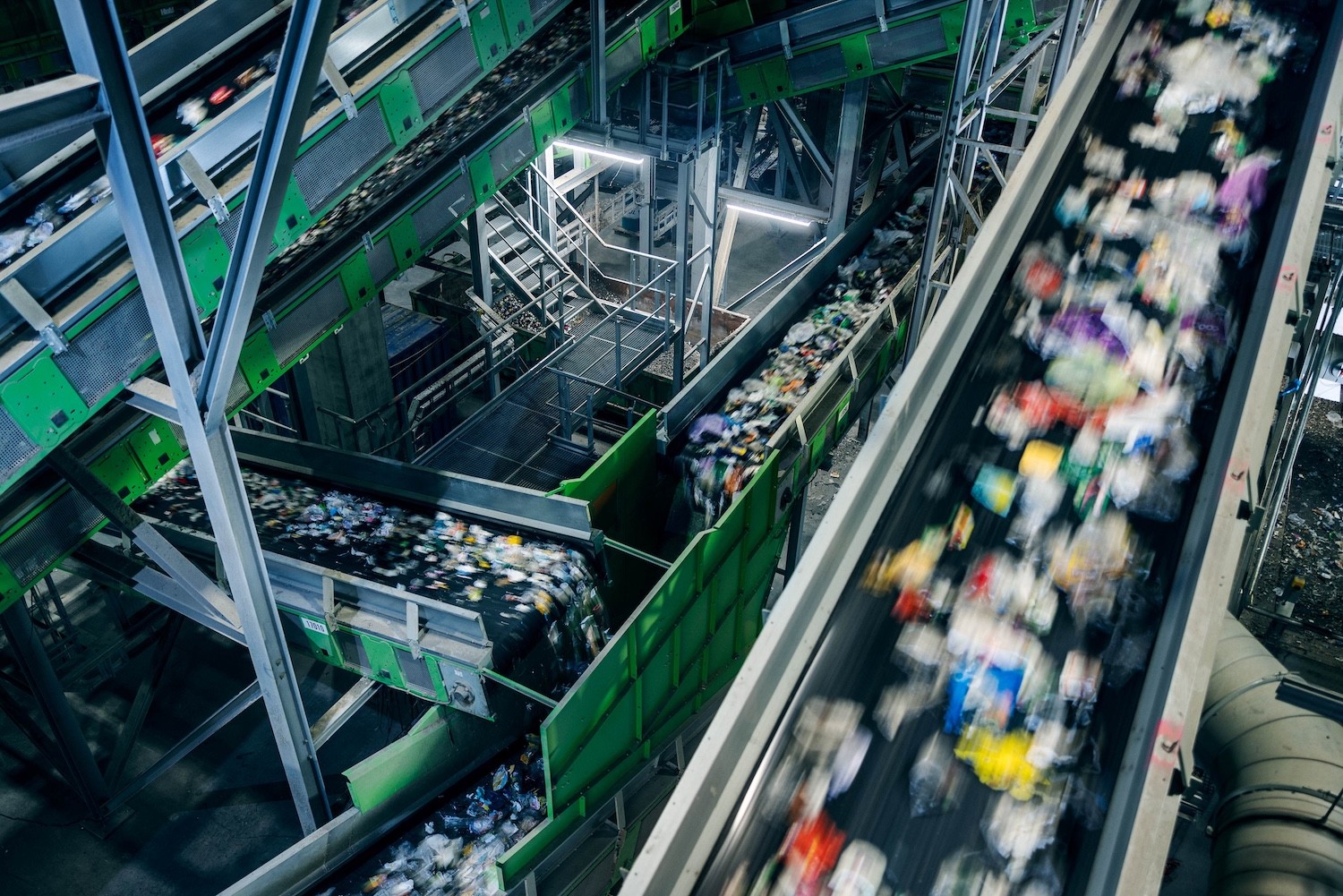
The modern processing plant in Vantaa operates at the forefront of Europe in technical capability, innovation, and flexibility, with continuous data collection used to improve processes and enable the sorting of new material types. The facility includes two advanced sorting lines: optical sorting using near-infrared technology to identify plastics and fibers, and AI-controlled robotic sorting for construction waste materials.

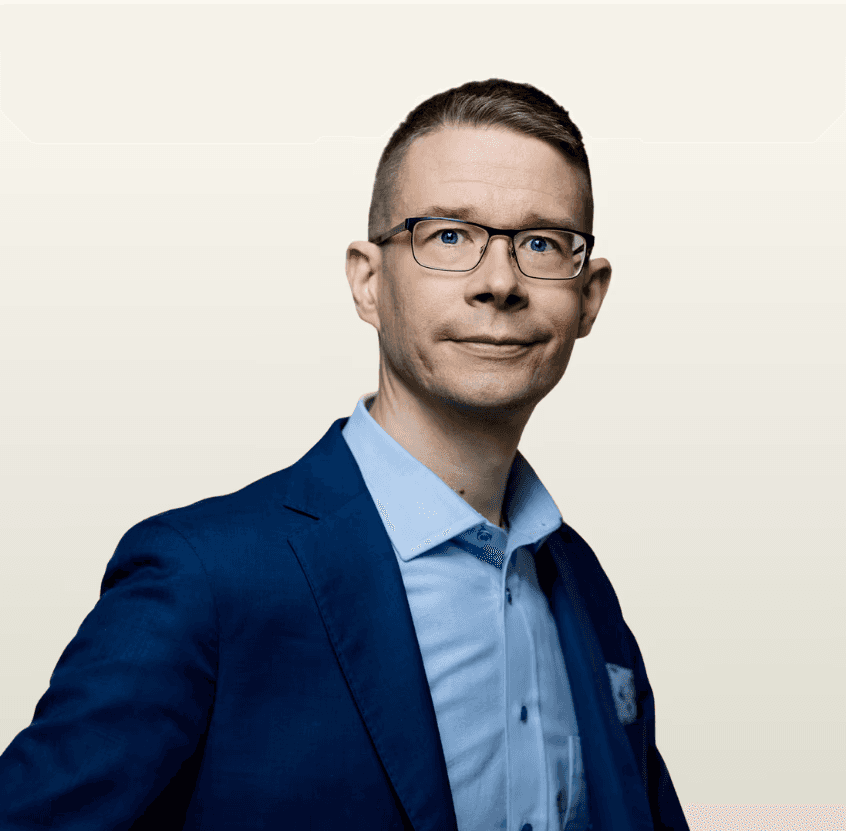
For Remeo CEO Panu Routasalo, the pioneering facility in Finland represents something much bigger than a new industrial site. It reflects a shift happening across the entire sector: waste management companies are becoming circular economy companies.

“The goal is simple,” Routasalo says. “We want materials to circulate as efficiently as possible and reduce the need for virgin raw materials.”

But achieving the goal, he argues, requires that the circular economy is truly seen as a great business opportunity across industries. Driving the circular economy business must also be profitable.

From waste logistics to industrial processing

Remeo’s business has changed significantly in recent years.

Traditionally, companies in the sector focused on collecting and transporting waste. But the value of the circular economy lies further down the chain: in sorting, processing, and transforming waste into new raw materials.

Remeo has been steadily expanding its role in that value chain.

“We have invested heavily in processing and sorting capabilities,” Routasalo explains. “Instead of simply moving waste from one place to another, we want to refine materials so they can be used again as recycled raw materials.”

The shift has required both technological investments and operational transformation. But it has also improved the economics of the business. Processing and material recovery, Routasalo says, can be significantly more profitable than traditional waste logistics.

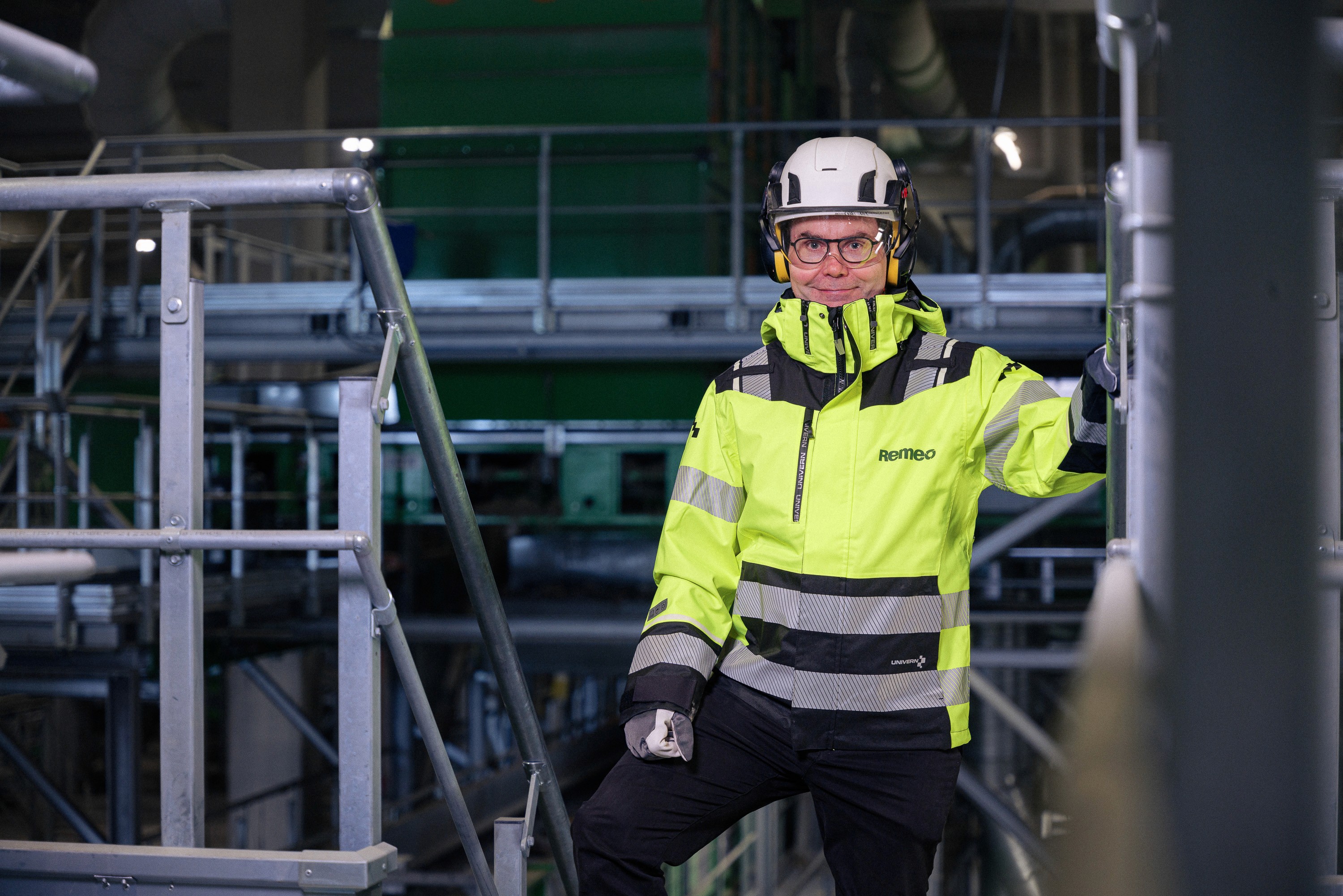
Remeo's materials recovery facility in Vantaa processes plastics. The photo is provided by Remeo, and the photographer is Jussi Hellsten.

The missing piece in the circular economy

Although the importance of the circular economy and material recycling is widely recognized, it has yet to become a mainstream market choice. According to Routasalo, the real bottleneck is not only technology or infrastructure. It is demand.

“The circular economy only works if recycled materials have real economic value,” he says. “There needs to be demand for those materials in the market.”

Without that demand, recycling systems cannot scale efficiently. Materials may be collected and sorted, but if industries are not willing to use recycled inputs, the loop remains incomplete.

That is why Routasalo believes the next phase of the circular economy will focus increasingly on creating markets for recycled materials.

Scaling circular raw materials

One example of this challenge can be seen in plastics.

The amount of plastic waste continues to grow globally, and so has recycling capacity, but demand for recycled plastics has not expanded at the same pace.

Remeo processes large volumes of plastic waste. Technically, the company’s processing capacity could handle up to around 100,000 tons annually, but the broader system still depends on multiple players across the value chain.

Household and industrial recycling also remains uneven.

“In Finland, recycling could be done better,” Routasalo says. “Both households and companies still have room to improve in sorting.”

The issue has broader implications. Finland faces increasing pressure to meet recycling targets, paying penalties of around 90 million euros annually to the EU for non-recycled plastic packaging waste alone. The EU’s 2025 target aimed to recycle 55% of all plastic packaging waste. 

Turning circular economy ideas into practice requires industrial infrastructure and collaboration across the value chain. As a concrete example, Remeo has partnered with Lamor to develop a model for supplying sorted plastic waste as feedstock to Lamor Recycling’s chemical recycling facility in Kilpilahti, Finland. Remeo ensures a steady and traceable supply of plastic waste streams, while Lamor upgrades these materials at its Kilpilahti facility.

The circular economy is only as strong as its value chain

For Routasalo, the future of the circular economy depends on a strong, well-functioning end-to-end value chain that creates value for all stakeholders.

Collection, sorting, processing, and end use must function as a connected system.

“You cannot push the circular economy forward with good intentions alone,” he says. “All the pieces of the value chain have to work together.”

That includes creating solutions where recycled raw materials are attractive for industrial buyers and manufacturers.

“If recycled raw materials can compete economically with virgin materials, the market will naturally grow.”

The next phase for Remeo

Over the next two to five years, Routasalo envisions Remeo positioning itself higher in the industrial value chain, focusing on supporting decision-making that maximizes the use of recycled raw materials. 

Rather than processing waste, Remeo aims to deliver the recycled materials of the future, enabling industries to integrate them effectively into their operations.
That goal sits at the heart of the circular economy.

But as Routasalo emphasizes, it will only succeed if environmental impact and economic value move in the same direction.

“The circular economy cannot be driven by regulation alone,” he says. “It has to make business sense as well.”

Business

Nordic companies press ahead on ESG despite political backtracking

Dec 8, 2025

Across Europe and the United States, sustainability policy is entering a more hesitant phase. Several governments have delayed or softened climate targets, and companies could be forgiven for matching that tempo. Yet Nordic companies are moving in the opposite direction — continuing to advance climate and sustainability work even as regulatory momentum cools.

This is the throughline from our conversations with gold miner Endomines’ Chief Sustainability Officer Hanne Mäkelä—one of the few in Finland dedicated solely to that role—and Kimmo Lipponen, CEO of FIBS, the largest corporate responsibility network in the Nordic countries. Both CSR experts describe companies pressing ahead because the business case is strong, not because regulation demands it.

Regulation retreats, but companies don’t

The EU has signaled a substantial shift in sustainability reporting. Under the proposed Omnibus I Package, policymakers have discussed exempting up to 80% of companies originally covered by the Corporate Sustainability Reporting Directive. The reform would dramatically narrow the scope of mandatory ESG reporting — a notable retreat from the EU’s original intent (ESG Today, 2025).

At the same time, the ESG ratings industry continues to face questions about transparency and consistency. Ratings agencies have been criticized for methodological opacity and potential conflicts of interest (Financial Times, 2025).

Despite this, Nordic companies are showing little sign of slowing down. Mäkelä noted: “I haven’t really noticed companies backing down… companies with a strategic approach to sustainability continue on the science-based track and stick to their commitments.”
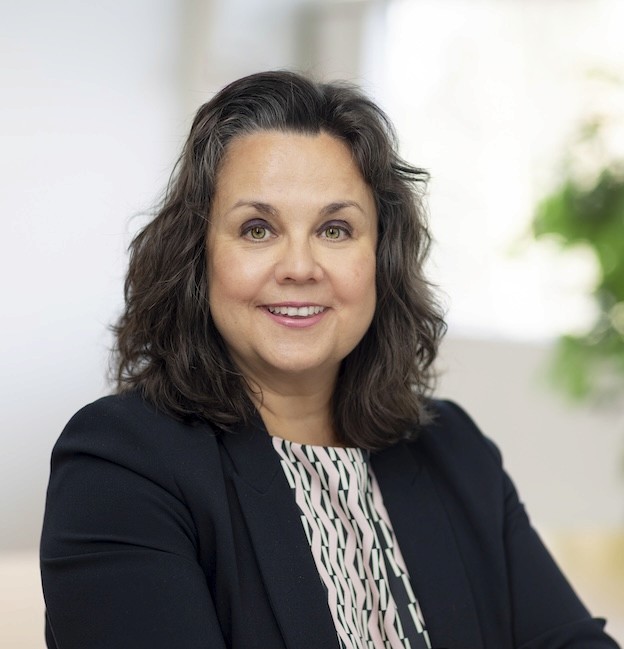
Hanne Mäkelä, CSO at Endomines.

Lipponen sees the same trend. “We don't see companies backtracking… companies are very aware of the business implications of climate change.”

Even in the U.S. — where national policy has fluctuated — Lipponen points out that climate-related investments remain resilient. “The investments in green transition are still growing.”

Data from Nordea supports the two experts. Nordic companies continue to perform strongly in ESG assessments, even amid macroeconomic volatility (Nordea, 2025). Investors increasingly reward companies with transparent sustainability governance, consistent transition plans, and credible science-based targets, the report adds.

For Nordic companies, ESG has become structural rather than reactive. As Mäkelä put it: “It’s not about what governments require. It's about what we want to do and how we see business needs to be done nowadays in order to have the license to operate.”

Governance matters more than job titles

Although ESG integration is progressing, organizations differ in how they formalize the work. Finland has fewer standalone CSOs than its neighbors, but both interviewees emphasize that the real driver is governance, not titles.

Mäkelä argues that when sustainability is bundled under communications, meaningful action suffers. “The risk in divided roles is that reporting guides the process… impactful actions get buried under daily business.”

At Endomines, sustainability spans multiple layers:

  • an ESG committee linking the board and management,

  • monthly follow-up at the management team level,

  • cross-functional working groups engaging all business units.

She highlights that local community engagement is a core part of governance: “The most important stakeholder group is the local community with whom we interact constantly — providing information about our activities and listening to their concerns, hopes and wishes.”

The company also collaborates with academic and research institutions, specialized technology companies, and innovation networks in Northern Karelia and nationally, embedding sustainability into broader ecosystems.

Is the answer more CSOs — or fewer?

According to Listeds data, Mäkelä is among the few Finnish CSOs whose role is dedicated to sustainability, rather than adding communications or other executive functions.

Should Finland have more standalone CSOs? Mäkelä believes the answer depends on ambition, but she is clear about the benefits of dedicated leadership. “When sustainability is a dedicated person’s responsibility… it’s more about making things happen, leading actions, and then the reporting comes after that.”

By contrast, when sustainability is combined with other executive duties, reporting often dominates. “It is quite common to have communications and sustainability in the same role… but at least in my opinion, it reflects that sustainability is a continuation of reporting.”
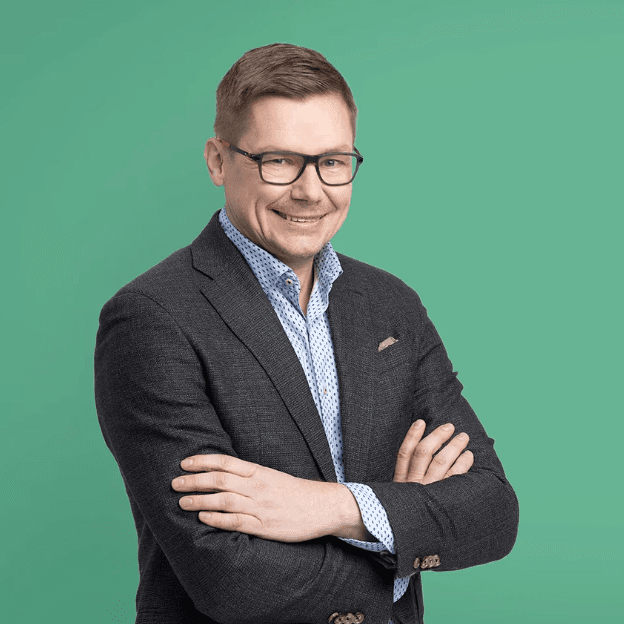
Kimmo Lipponen, CEO of FIBS.

Lipponen points out that integration beats titles. “Most big companies do have chief sustainability officers or similar roles, but the title is not the most important thing.” What matters, he says, is that “sustainability is on the non-executive board agenda, the executive board agenda, and the strategic agenda of the company.”

He notes that hybrid roles — such as chief strategy and sustainability officer — may even better reflect the strategic nature of sustainability today.

Measurement: the hardest problem no one has solved yet

Even among committed companies, impact measurement remains the biggest unresolved challenge.

Lipponen put it bluntly: “Whoever solves impact measurement probably deserves a Nobel Prize.” He notes that while CSRD’s ESRS standards provide structure, they do not offer a universal method for calculating actual environmental or social impact. The result is a landscape where companies are expected to measure deeply — but without consensus on how.

The wider context supports his concern. Analysts observe that even advanced companies struggle to convert sustainability activity into tangible, comparable, outcome-level data (Skadden, 2025).

One promising Finnish innovation Lipponen highlights is the Upright Project, an AI-driven model that calculates a company’s net positive and negative impacts across its entire value chain (Upright Project, 2025). He adds that while many companies are quick to report progress, stakeholders should always ask what metric that progress is actually based on.

Mäkelä acknowledged she had not yet examined Endomines’ Upright score — a negative 101 percent, placing it in a similar range with other mining companies and heavy emitters such as Saudi Aramco and Exxon Mobil — but said she was not surprised that mining companies often score poorly in such models. “I understand that our industry probably has quite low scores due to the nature of our business… There are definitely things we can improve, and we should improve.”

But she also emphasized a nuance these models often miss: mining in Finland is not the same as mining in jurisdictions with weaker standards. “It is good to mine metals and minerals in Finland sustainably instead of in countries where standards may not be as high,” she said. “You cannot do mining without impacts, but you can minimize these impacts.”

For Endomines, impact measurement therefore extends beyond traditional environmental metrics. “Local employment, use of local services, supporting local initiatives, and tax contribution to local communities are important indicators that should be considered as well.”

These indicators, she says, feed directly into the company’s social license to operate. “For us, the most important stakeholder group is the local community… we interact constantly, providing information about our activities and listening to their concerns, hopes and wishes.”

She also highlights that measurement is not only about environmental effects but about how well a company communicates them: “Some global sustainability metrics are very complex… we focus on metrics understandable also for our local stakeholders.”

And while mining will always be scrutinized for its environmental footprint, Endomines is working to reduce its impact using operational metrics that locals can see and verify.

Water management is the clearest example. “We are constantly developing new metrics… water remains the most important topic,” she said. The company, for example, aims for a closed-loop system that reuses water rather than extracting new water from the environment.

Companies move ahead because the business case is now unavoidable

Why do Nordic companies continue investing even as regulation softens? Because the financial, physical, and supply-chain risks of climate change are becoming clearer. Lipponen emphasized that companies are not in denial about the “business implications climate change has.”

Mäkelä summarized the sentiment common among Nordic leaders: “It’s about how we want to act… how we want to be proud of what we have done.”

Political cycles may shift, but sustainability is becoming embedded in Nordic business strategy. For many companies, ESG is no longer a compliance exercise — it is risk management, value creation, and stakeholder trust.


References

  • ESG Today. (2025). EU to exempt 80% of companies from CSRD sustainability reporting requirements. ESG Today.

  • Financial Times. (2025). ESG ratings face transparency questions. Financial Times.

  • Upright Project. (2025). Net impact model overview. Upright Project.

  • Skadden. (2025). ESG in 2025 – A midyear review. Skadden, Arps, Slate, Meagher & Flom LLP.

  • Nordea. (2025). How are Nordic companies performing on ESG?. Nordea Bank Abp.

  • Deloitte. (2025). EU 2025 sustainability regulation outlook. Deloitte Insights.
Voices

Forget the sustainability strategy

Nov 24, 2025

Sustainability — and its sibling, responsibility — are comforting words. They look impressive in glossy reports and sound good, sending a reassuring message: we are doing something worthwhile.

But in business, these words often mean very little. No company admits to being irresponsible or unsustainable, so most sustainability talk just states the obvious. Worse, we tend to define the words to suit ourselves. It’s not unlike politicians using the word “just,” which usually translates to: money should flow from other candidates' voters'  pockets into my voters' pockets.

Along with sprinkling the words around, many companies produce a separate sustainability (or responsibility) strategy. Even if well-intentioned, this risks sending us in the wrong direction. Defining sustainability is notoriously difficult; the literature is full of competing versions. My pragmatic definition: a sustainable business is future-proof, built to thrive in the world of tomorrow. That includes environmental and social aspects, and also profitability. No business can be sustainable if it does not create value.

By that measure, nearly every business wants to be sustainable. Unsustainable businesses will not survive in tomorrow’s world; their value lasts only as long as they can exploit before they sink. Of course, if the ownership strategy is simply to grab the money and run, sustainability won’t be high on the list.

So, should we then have a sustainability strategy? The answer is no. Sustainability must be at the core of strategy itself, not a bolt-on. We don’t have a separate “money-making strategy,” because making money is central to strategy. Sustainability should be treated the same way. 

Sustainability is a newcomer in business. Most of us agree it needs to be there, but it’s still not instinctive. One part of the story is that our perspective has been distorted by reporting rules. Sustainability is now seen as primarily a reporting or marketing exercise. Good governance requires reporting, but most businesses see it as a mandatory duty with little business benefit. This might even be true; very few sustainability reports are bestsellers. 

Marketing can benefit from sustainability, as customers may prefer sustainable producers. Or, more precisely, customers prefer companies that create an aura of sustainability around them. True sustainability with strong marketing is powerful. But a coat of green paint never makes a company sustainable.

The true value of sustainability lies in embedding it into the strategy. The CSRD (Corporate Sustainability Reporting Directive) has been criticized as bureaucratic. I tend to agree; some of its qualitative data points are just words without much meaning. But one concept is truly vital: double materiality.

Double materiality forces us to look in two directions: Outside in — how the world affects the business. Extreme weather can increase costs, while demand for clean technology may create new sales opportunities.

Secondly, the concept of double materiality inspires us to look inside out — how the business affects the world, for better or worse. A product can either create problems or solve them. On the surface, this may sound like risk management and damage control, but the real prize is opportunity. The task is not just to avoid harm, but to actively shape positive impacts and to grow stronger by spotting the new possibilities this thinking reveals.

Let’s ditch the separate sustainability strategies. Let’s stop staring at our shoes. Let’s embed sustainability into strategy — and look further ahead.

Stay on the pulse, catch the signals

Subscribe to Listeds Leadership Intelligence Platform:

  • leader and company database access

  • email alerts

  • career, boards and interim opportunities

Our Pulse newsletter

Your weekly leadership intelligence briefing.

What happened, why it matters, and what to watch across every CEO, board, and executive move in Nordic listed companies, starting with Finland. Fast, factual, and to the point.

Delivered every Monday.

By signing up, you agree to our Privacy Policy