/

Topics

/

Brussels Briefings

Brussels Briefings

Listeds’ Brussels Briefings is a series of articles in which decision-makers and experts in Brussels discuss current issues and share their insights with Nordic companies.

Leaders

Europe is focusing on the wrong tech problem, Columbia Law Professor Anu Bradford says

Apr 29, 2026

The idea that Europe is regulating itself out of competitiveness has become a familiar refrain. It surfaces in policy debates and boardrooms alike, often as a simple explanation for why the continent lags behind the United States in technology. But according to Anu Bradford, Henry L. Moses Professor of Law and International Organization at Columbia Law School, that diagnosis misses the point.

“The debate about digital regulation is a sideshow to the main problems underlying Europe’s technical system.”

Bradford does not dismiss the importance of competitiveness. On the contrary, she frames it as fundamental. “There’s no security without prosperity. Europe needs more economic growth, and technology is key to that.”

But focusing on regulation, she argues, risks distracting from deeper structural constraints that have shaped Europe’s tech ecosystem for years.

A fragmented market at home

The most immediate of these constraints is internal fragmentation. Despite decades of integration, Europe remains far from a seamless market.

“There’s no true digital single market in Europe. We still have a very fragmented marketplace.” For companies, this makes scaling fundamentally different from the United States. Instead of expanding within one large market, European firms must navigate many.

“European tech companies have to scale across 27 different markets, with different languages, consumer preferences, and regulatory fragmentation.”

The cost of this fragmentation is not abstract. “If you translate those internal barriers into tariff equivalents, it’s about 60% for goods and close to 100% for services.”

These are not formal tariffs, but they illustrate how difficult it is to operate across Europe as if it were a single market.

Why scaling remains difficult

Bradford zeroes in on four issues that explain why this competitiveness problem persists: market fragmentation, capital, risk culture, and talent.

She has already pointed to fragmentation as a core constraint. Capital is another. “European companies do well in early funding rounds, but when they need larger amounts of capital, they often turn to US investors or get acquired.”

Risk culture also plays a role. “In Europe, if you fail, you’re often done. It’s very hard to raise money again.”

She contrasts this with the United States. “In the US, failure is part of the model. After bankruptcy, investors may still back you if you’re working on something ambitious.”

Talent flows reinforce the gap. “Europe is losing talent to the US, where the capital, top universities, and concentration of talent are.”

Taken together, these factors describe a system where innovation exists, but scaling remains constrained.

Anu Bradford is the Henry L. Moses professor of law and international organization at Columbia Law School and director of its European Legal Studies Center. Her research focuses on international trade law, EU law, and antitrust.

A world without a dominant model

The global environment is also shifting. The expectation that one model of technology governance will prevail is fading.

“There won’t be a single regulatory model that becomes global.” Bradford explores this dynamic in Digital Empires, where she outlines competing American, Chinese, and European approaches to regulating technology.

In the interview, she notes that each model faces its own pressures. “They’re all having a moment, but also facing headwinds.”

The result is not convergence, but coexistence.

The rise of tech sovereignty

For companies, this fragmentation is already reshaping strategy.

“Tech companies are now expected to offer sovereign solutions, where governments retain control over data and operations.”

Meeting those expectations often requires duplication. “That means replicating infrastructure, like building data centers in different parts of the world.”

Global operations are becoming less uniform and more complex, as firms adapt to political and regulatory demands.

Leaders as geopolitical actors

This environment is changing what leadership requires.

“Leaders need to understand geopolitics. In many ways, they have to become diplomats.”

Executives are no longer navigating markets alone. Regulation, security concerns, and political expectations increasingly shape strategic decisions.

Bradford also emphasizes the importance of consistency. “You need to be agile, but also clear about your principles. Companies need to communicate who they are and how they make decisions.”

Europe’s unfinished agenda

Amid global complexity, Bradford returns to Europe’s internal challenges. “The digital single market should be the number one priority.”

She also highlights the need to improve how regulation is implemented. “We need to avoid overlaps and inconsistencies.”

The issue, in her view, is not whether Europe regulates too much, but whether it has built the conditions that allow companies to scale. For Nordic firms, the implications are direct. Their home markets are small, making European scale essential, yet difficult to achieve.

This question of scale also shapes how Bradford views the AI debate. She pushes back against the idea of it as a race to be won. “There won’t be a single country or company that wins the AI race.”

Instead, she shifts the focus to where value is created. The more important question is not who builds the most advanced models, but who applies them effectively. The real gains come from adoption and use, not necessarily just from dominating the underlying technology.

What emerges is a more complex environment, where competitiveness depends on structural reform at home and the ability to navigate a fragmented global system.

Leaders

Europe, finally thinking like a founder with EU Inc

Jan 21, 2026

Startup founders and investors across Europe paid close attention when Ursula von der Leyen, president of the European Commission, took the stage at the World Economic Forum in Davos yesterday.

Not because Europe suddenly promised more subsidies or grand strategies. But because, for once, the language sounded familiar. Practical. Almost founder-like.

When von der Leyen said, “We call it EU Inc,” she gave a name to a frustration that has quietly shaped European startup life for over a decade. Europe has talent, capital, research, ambition, and world-class founders. What it has lacked is the ability to move at the speed those founders need.

This time, the problem was not framed as cultural or philosophical. It was framed as structural. And that alone made people lean forward.

The single market in theory and in practice

For years, Europe has marketed itself as a single market of 450 million people. On paper, that is true. In reality, any founder who has tried to scale beyond their home country knows how quickly that promise collapses. Each new member state brings new company law, new capital rules, new option structures, and new paperwork. Expansion becomes an administrative exercise rather than a growth decision. Many companies quietly decide it is easier to incorporate elsewhere.

Von der Leyen said the quiet part out loud: “We live in an age where capital and data can cross Europe in a second. And business must be able to move just as freely.” The gap between those two realities acts as a handbrake on growth, profitability, and ambition.

EU Inc, also known in Brussels as the “28th regime,” is the first serious attempt to remove that handbrake. The idea is deceptively simple. A new, optional, pan-European company structure that works across the union with one coherent rulebook. A company that is European, not just in spirit, but in legal reality.

Execution, not intention

One voice urging a measure of realism is Jaakko Lindgren, partner at business law firm Dottir. From a legal perspective, he sees EU Inc as both necessary and long overdue. Europe’s internal market has been constrained by fragmented company law for decades, and the fact that the EU is now actively trying to fix this is, in his view, clearly the right direction. The open question is execution.
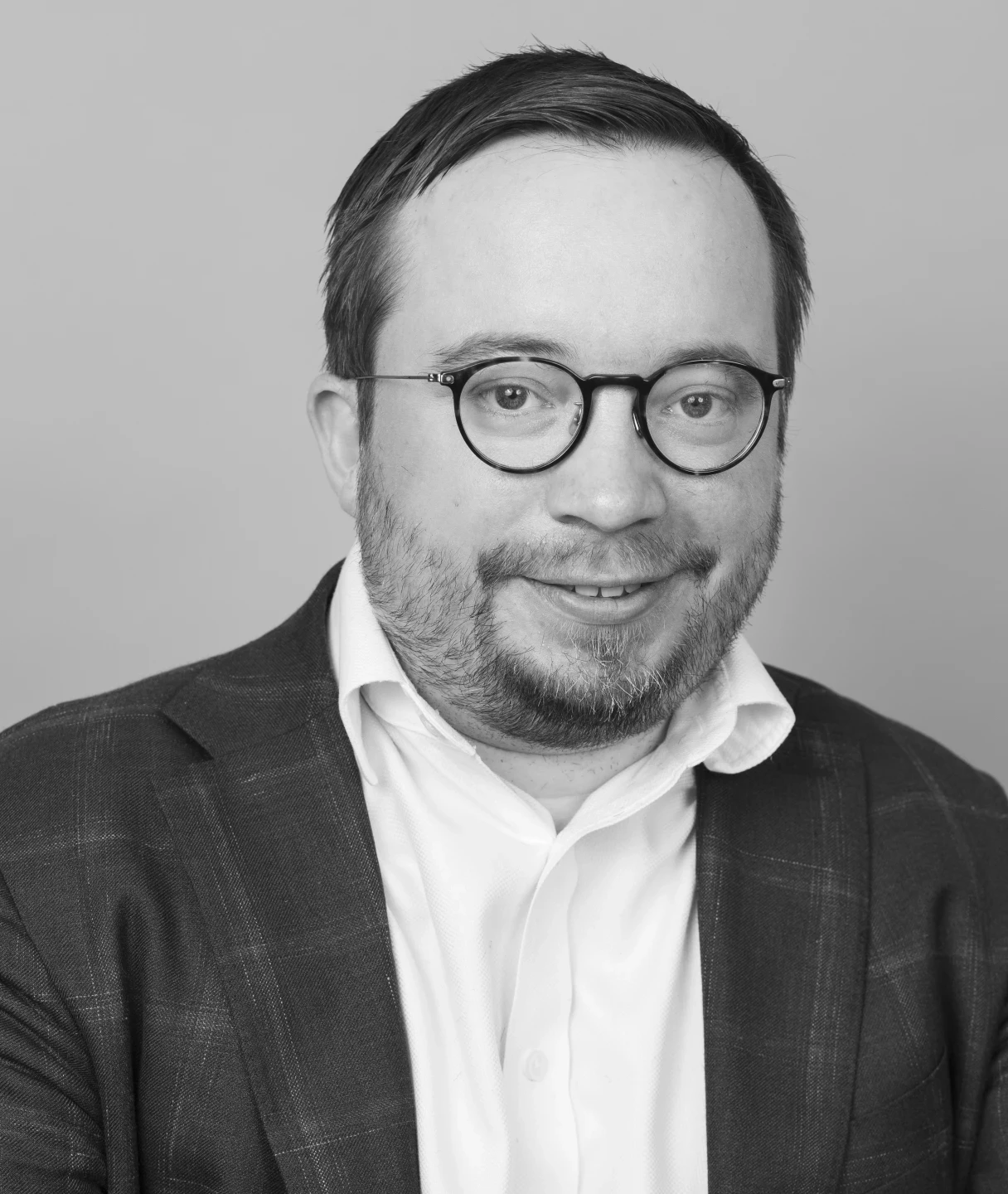
Jaakko Lindgren is a partner at Dottir, a business law firm specializing in technology.

Lindgren cautions that EU Inc must become a genuinely usable structure rather than a symbolic one. Europe has introduced ambitious company forms before, such as the European Company, which exists on paper but has seen limited real-world adoption. Avoiding the same fate will require legal clarity, simplicity, and real commitment from member states.

He also points to a likely side effect. Implementation speed will matter. If some countries adapt their legal, tax, and registry systems faster than others, startups and investors will naturally gravitate toward those jurisdictions. In that sense, EU Inc could quietly turn into a competition between member states.

Could Finland benefit from this? Lindgren hopes so, but he is realistic. Rolling out a new EU-level company form requires deep legislative changes and coordination across ministries and authorities. That kind of reform takes years, not months. Optimism is warranted, he says, but only if political will and legal execution keep pace with ambition.

Why founders and investors care

For founders, EU Inc is not about ideology. It is about being able to raise money, issue stock options, expand teams, and operate across borders without constantly re-architecting the company. It is about staying focused on building products instead of navigating regulatory mosaics. In the end, it is about choosing Europe not because it feels right, but because it finally works.

Investors heard something equally important in von der Leyen’s speech. She linked EU Inc to a broader push to build a deeper, more liquid European capital market. Not fragmented pools of national capital, but an integrated system where money can flow to scaleups, SMEs, innovation, and industry. That matters because venture capital is not just about ideas. It is about scale, exits, and confidence that Europe can support companies all the way through.

From hope to process

For many founders, this moment brought something increasingly rare in the current climate: hope. Not hype or empty optimism, but the sense that Europe may finally be offering something concrete to believe in again. A new point of orientation at a time when many are questioning where growth, ambition, and long-term value can realistically be built. In uncertain times, symbolic signals matter. And this one landed.

The breadth of support behind EU Inc makes that clear. According to Finnish public broadcaster YLE, prominent Finnish startup figures such as Ilkka Paananen, CEO of Supercell, Miki Kuusi, founder and CEO of Wolt, and Aino Bergius, former CEO of Slush, have voiced their support. This is not a fringe idea. It is a shared conclusion reached independently by thousands of people building and funding companies across Europe.

A point of no return

The European Commission has formally launched preparatory work for the 28th regime, and based on its current work program, a legislative proposal is scheduled for the first quarter of 2026.

That timeline does not guarantee that the policy will become law. But it does mark something important. Once an idea reaches this level of formal process and public commitment, it cannot simply be ignored or quietly shelved.

And perhaps that is why this moment resonated so deeply. For once, Europe did not tell its entrepreneurs to wait, to be patient, or to adapt to the system as it is. It signaled that it wants to move faster, too.

That is why, after Davos, so many people arrived at the same quiet conclusion. Europe is finally starting to think like a founder. The real test now is whether it keeps going.


Leaders

Finnish companies could increase their influence by improving their lobbying skills

Jan 13, 2026

The Finnish business community does not yet fully understand how crucial it is to seek influence over EU decision-making in Brussels, says Member of the European Parliament Aura Salla. She offers companies practical tips on how to improve their lobbying efforts. She also urges companies with a clear message: risk financing is now available, so apply for an InvestEU loan guarantee.

Finnish companies are too often weak at lobbying for their interests in the EU, says Aura Salla, who is serving her first term as an MEP in Brussels. A member of the National Coalition Party and the European People’s Party (EPP), Salla focuses in particular on technology, defense, and dismantling unnecessary EU regulation. 

Aura Salla, who is serving her first term as an MEP in Brussels, is known for her work on technology and defense, and dismantling unnecessary EU regulation. 

“EU decision-making and the opportunities it enables are poorly understood in Finland. When companies come to lobby, they haven’t done their homework. They often don’t know what is currently happening in the EU, and their lobbying lacks a sharp edge – what it is they actually want to influence,” Salla says.

She highlights Italy and Germany as masters of lobbying.

“Italy gets things through very effectively because they have professional lobbyists, companies understand the importance of gathering information in advance, and networks are built tightly. Germans are also highly skilled and efficient in this. Finnish companies, instead, tell decision-makers that the situation is difficult. But we already know that – we understand the operating environments. Instead of situation analysis, companies should be concrete and choose a precise focus: what exactly they want to influence and what they want to change.”

How to improve lobbying efforts

Aura Salla has a long work history in Brussels. Before her term in the European Parliament, she worked within the EU for years, including in the cabinet of Vice-President Jyrki Katainen and as an adviser in the in-house advisory service of Jean-Claude Juncker, the former president of the European Commission. She subsequently worked at Meta as the head of EU affairs and public policy. 

Salla’s first piece of advice to companies is: always hire a professional lobbyist. Small companies can do this together as a coalition. Her second piece of advice is: know the EU’s current topics and decision-making processes. Barriers to growth can only be influenced if one makes the effort to understand the current state of legislation and how it is progressing.

The third suggestion concerns opportunities that Finnish companies, in Salla’s view, still do not recognize well enough.

“Brussels is not a necessary evil – the EU is worth knowing inside out. You can influence things here, regulations are dismantled here, and major decisions are made here. Companies are used to trying to influence decision-makers in Finland. So I wonder why they are not active at the EU level in Brussels.”

At present, funding opportunities are available for companies. Salla served as the chief negotiator for the InvestEU loan guarantee program, which the European Parliament approved recently. The program enables at least €55 billion in private investments to be mobilized across Europe. In addition, it secured €2.9 billion in additional guarantees and eased reporting requirements for SMEs.

The program is a loan guarantee scheme that has been used to finance growth-oriented companies in Europe for over 10 years. In Finland, for example, Swappie received €17 million last year to expand its circular economy business.

Salla is now encouraging companies to apply for InvestEU financing.

“Risk financing must be brought to Europe. I don’t believe in direct company subsidies, but loan guarantees are a smart use of the EU budget. This won’t solve the problem, but it is a way to get private capital moving. My message to companies is simple: risk financing is now available, so go to your bank and apply for this loan guarantee.”

In pursuit of technological sovereignty

In the field of technology, Salla advocates European sovereignty and calls for disengagement from Microsoft. Europe’s technological dependence on the United States is a significant risk that must be addressed, she says.

“I often hear that we already lost this game and that Europe should have acted 10 years ago. And we should have – but that doesn’t mean nothing can be solved anymore. The reality is that U.S. companies could, on any given day, cut off our access to things like email and other critical infrastructure. That’s why Europe must rely on European technology. It’s protectionist, but there is no other way.”

Listeds’ Brussels Briefings is a series of articles in which decision-makers and experts in Brussels discuss current issues and share their insights with Nordic companies.

Stay on the pulse, catch the signals

Subscribe to Listeds Leadership Intelligence Platform:

  • leader and company database access

  • email alerts

  • career, boards and interim opportunities

Our Pulse newsletter

Your weekly leadership intelligence briefing.

What happened, why it matters, and what to watch across every CEO, board, and executive move in Nordic listed companies, starting with Finland. Fast, factual, and to the point.

Delivered every Monday.

By signing up, you agree to our Privacy Policy